German Summer Traditions That Quietly Became American Traditions
From beer gardens and sizzling sausages to picnic tables, outdoor concerts and festival weekends, some of America’s most familiar warm-weather pleasures carry a distinctly German-American echo.

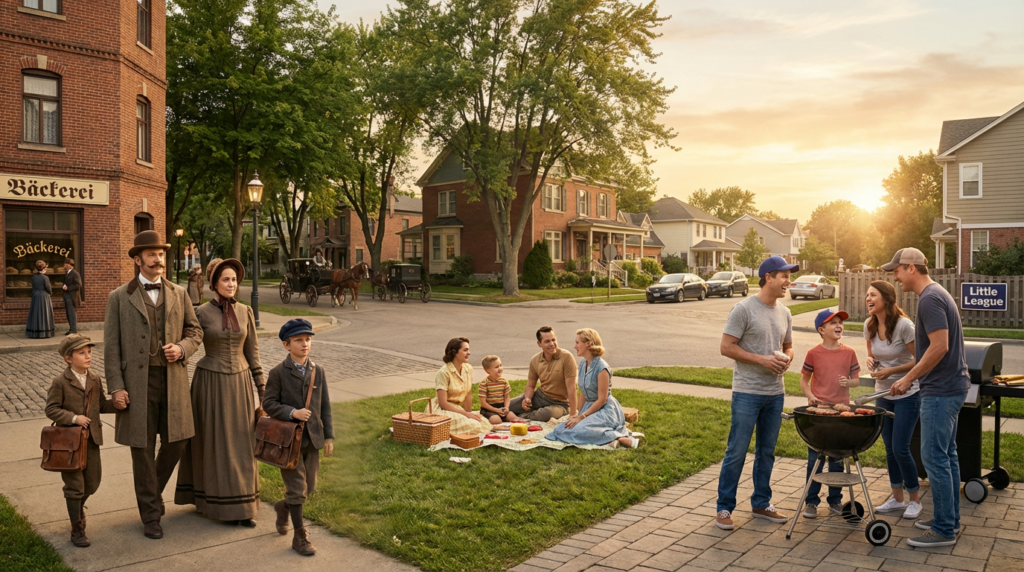
Late August has its own soundtrack in America. A grill crackles somewhere beyond the backyard fence. Glasses clink beneath patio lights. A brass band warms up at a community festival. Potato salad waits under a sheet of foil while someone asks whether the mustard is in the cooler. Children race across the grass, adults claim the shady tables, and nobody is in a hurry to go home.

It all feels thoroughly American.

And it is. But some of it is also quietly German.

Over generations, German-speaking immigrants brought more than recipes and holiday customs to the United States. They brought ways of gathering: long shared tables, family-friendly beer gardens, singing societies, athletic clubs, Sunday outings, sausage-centered meals and festivals designed to turn an ordinary patch of ground into a temporary village.
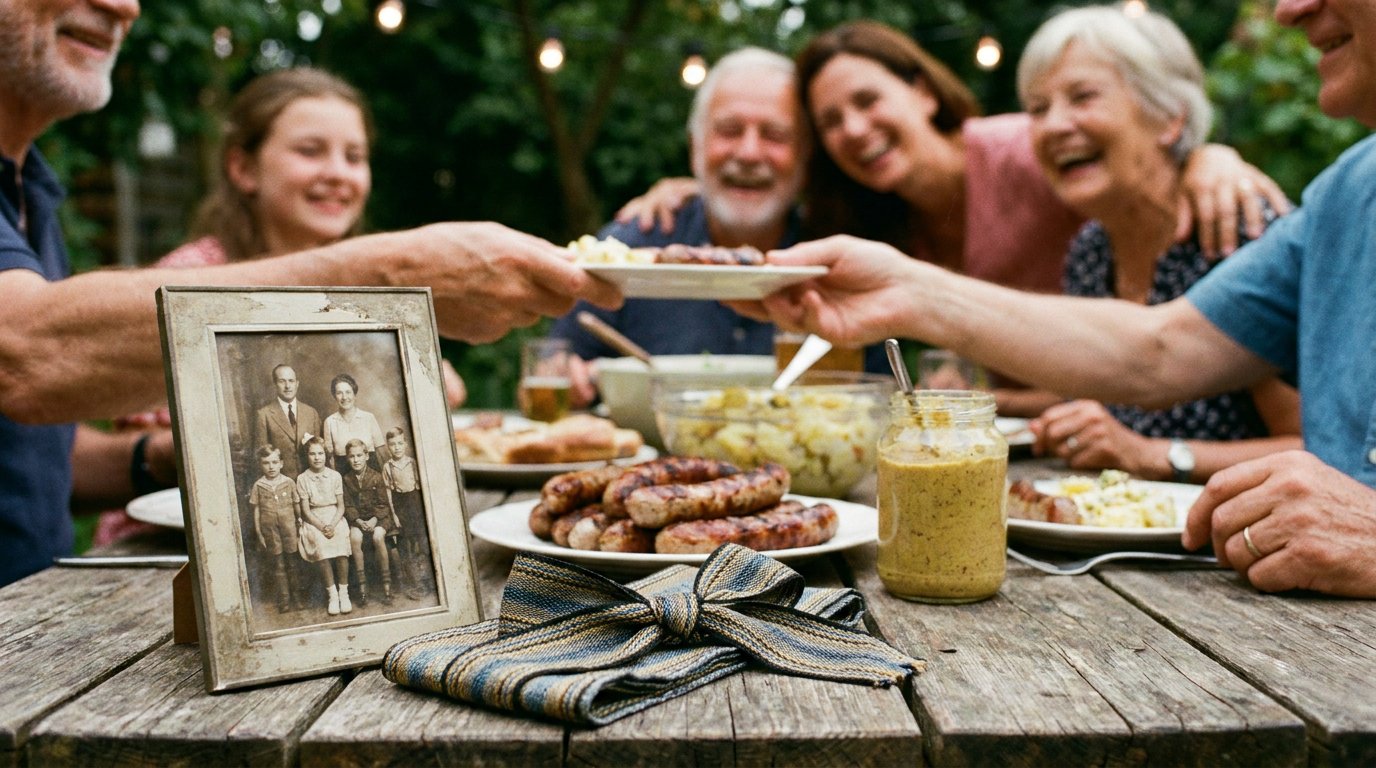
The remarkable part is not that Americans copied these customs exactly. They did something more interesting. They mixed them with traditions carried by other immigrant communities, adapted them to local climates and ingredients, and made them part of a shared summer culture. Names changed. Recipes wandered. German words disappeared from signs. Yet the rhythm remained.

“Traditions rarely cross an ocean wearing name tags. Sometimes they simply pull up a chair, pass the mustard and become part of the family.” — GERMAN HERITAGE USA

So, before summer slips into Oktoberfest season, let us look at several warm-weather traditions that traveled from German lands, grew in German-American communities—and became so familiar that many Americans no longer notice their roots.

1. The Biergarten Became America’s Favorite Kind of Patio

The traditional German Biergarten was never merely an outdoor bar. At its best, it was a social landscape: shade, shared tables, simple food, conversation, music and the wonderful permission to linger. Families and friends could gather without turning every visit into a formal occasion.

German immigrants carried that idea into American cities and towns. Nineteenth-century beer gardens became important social spaces in places with large German populations, including New York, Cincinnati, Milwaukee, St. Louis, Chicago, New Orleans and cities across Texas. Some were modest courtyards. Others were elaborate entertainment grounds with trees, pavilions, orchestras, dancing and special events.
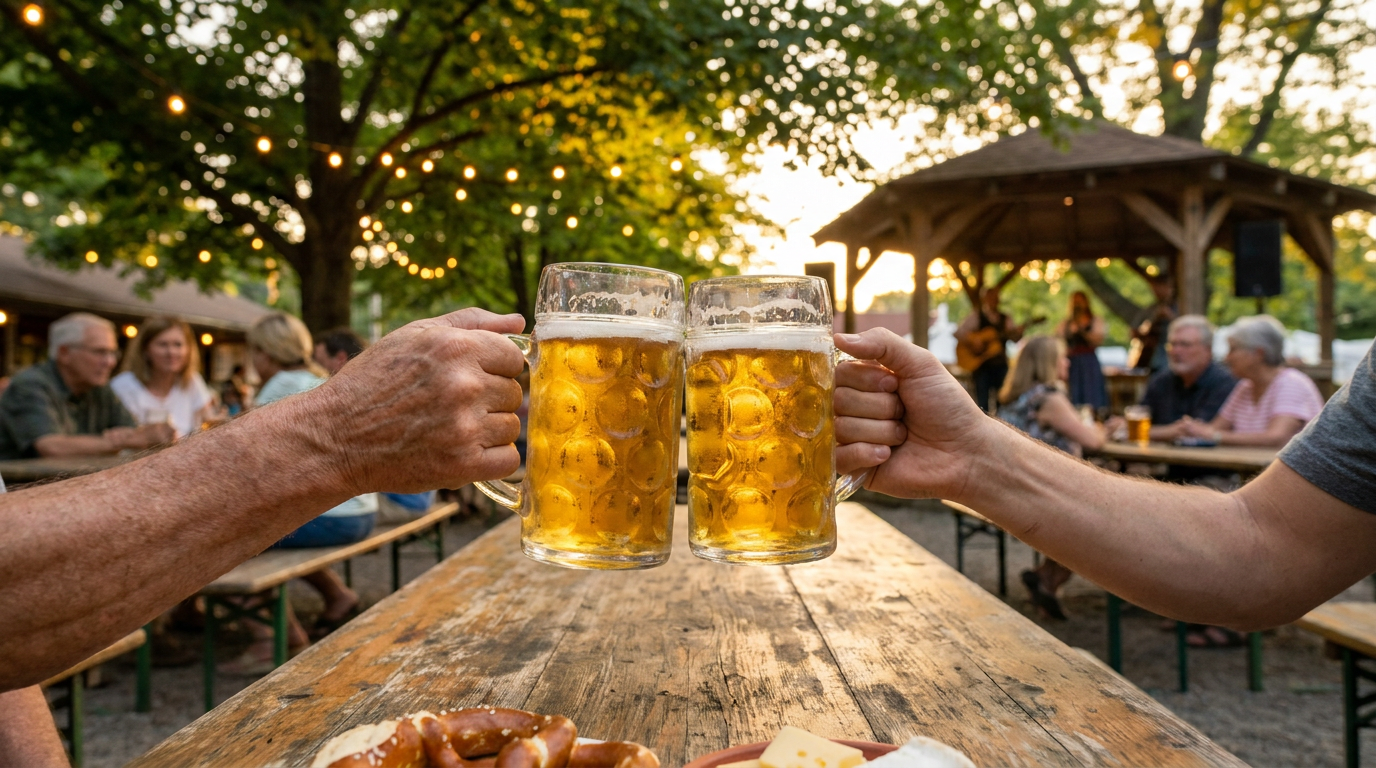
Austin’s historic Scholz Garten offers a vivid example. Founded by German immigrant August Scholz in 1866, its Sunday concerts grew from a German tradition of convivial music and beer but attracted the broader public as well. The garden did not remain sealed inside an immigrant enclave; it became part of the city’s identity.

That pattern repeated across the country. The German sign might eventually vanish, but the appealing formula survived: put refreshments outside, add shade and music, invite groups to sit together, and let the evening unfold.

Today we call it a brewery patio, a courtyard, a rooftop garden, a food-hall lawn or an outdoor taproom. We string lights overhead, order something cold and search for the longest table. The setting looks modern, but the social instinct behind it would feel familiar to generations of German Americans.

The real inheritance may be one untranslatable word: Gemütlichkeit—a sense of warmth, belonging, good cheer and comfortable togetherness. It is not the furniture that makes a beer garden. It is the feeling that there is room for one more person at the table.

2. Wurst on the Grill Became the Sound of Summer

Few aromas announce an American summer gathering faster than sausages hitting a hot grill.

German-speaking Europe has an extraordinary sausage tradition: Bratwurst, Frankfurter, Wiener, Knackwurst, Weisswurst and many more. Immigrants brought recipes, butchering knowledge and regional preferences with them. In America, those traditions met industrial cities, street carts, baseball crowds, amusement resorts, backyard grills and a growing appetite for portable food.

Then the family tree becomes delightfully messy.

The hot dog clearly has European sausage ancestors, especially within German-speaking food culture, but its precise American origin story is famously difficult to prove. Competing legends credit different vendors, cities and moments. The Smithsonian’s food-history reporting has wisely described hot-dog history as a thicket of myths, promotion and incomplete evidence.

That uncertainty is part of the fun. The hot dog is not simply a German food that Americans renamed. It is an American creation shaped by immigrant sausage traditions. The same is true of the summer grill itself: German wurst joined Southern barbecue, Indigenous food knowledge, Caribbean techniques, Central European smokehouses and countless family preferences.

Still, when Americans grill bratwurst, pile sauerkraut onto a frankfurter, add spicy mustard or argue about the proper toppings for a ballpark dog, they are participating in a food story with unmistakable German chapters.

And there is one rule that survived every translation: make more than you think you need.

3. The German-American Picnic Plate Hid in Plain Sight

Look closely at a classic American picnic table and the clues begin to gather.

There is potato salad—sometimes warm and tangy with vinegar, onions and bacon; sometimes cool and creamy with mayonnaise and mustard. There are pretzels, pickles, rolls, sliced sausages, cabbage slaw and a mustard bottle that somehow becomes the center of attention.

Not every dish on that table is exclusively German, of course. Potatoes, pickling, cabbage dishes and sausages belong to many cultures. But German and German-American cooking played a major role in the way these foods entered the American mainstream.
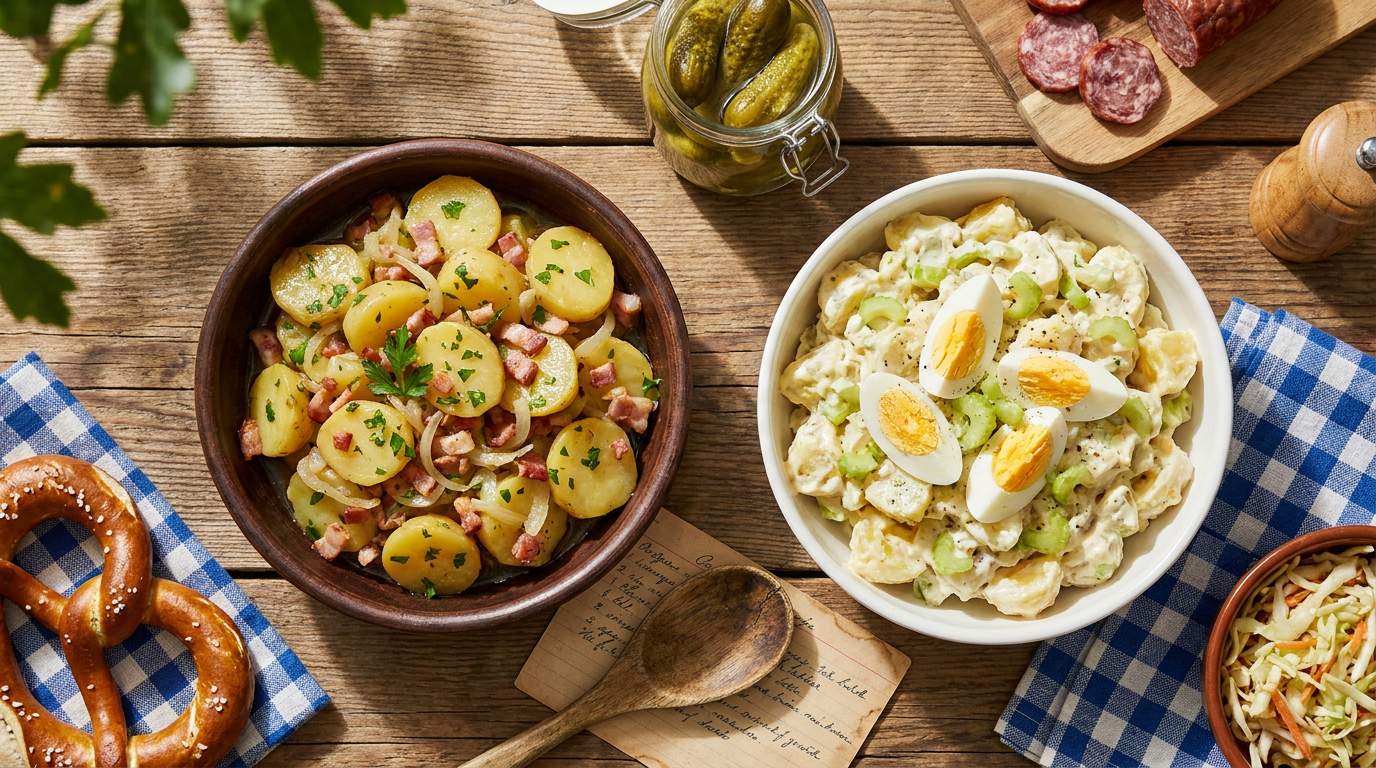
Potato salad is a particularly tasty example of cultural blending. Germany has never had only one potato-salad recipe. Regional and family variations abound. In the United States, those traditions interacted with American ingredients, commercial mayonnaise, local tastes and recipes shared across community lines. A Mississippi State University study devoted to German-American culinary assimilation uses potato salad to show how immigrant and native-born cooks exchanged ideas and helped create a new American food identity.

That means the bowl at your reunion may not match a recipe from Bavaria, Westphalia or Schleswig-Holstein—and it does not have to. The American version is evidence of the journey. Recipes change when neighbors taste them, daughters-in-law adapt them, grocery products replace hard-to-find ingredients, and someone decides that Grandma’s “pinch” should become half a teaspoon.

Food traditions survive because people keep making them, not because they remain frozen in time.

4. The Vereins Picnic Became the Community Get-Together

German immigrants were enthusiastic builders of Vereine—clubs or associations organized around singing, gymnastics, mutual aid, trades, religion, marksmanship, politics, hometown connections and social life.

There were Sängerbünde for singers, Turnvereine for gymnastics and physical culture, Schützenvereine for target shooting, and many other groups with banners, bylaws, committees and calendars. If that sounds serious, remember that many clubs also knew how to throw a splendid picnic.

Summer outings allowed members to leave crowded neighborhoods, bring their families, eat outdoors, hear music, play games and renew friendships. A picnic might include a procession, speeches, children’s activities, athletic demonstrations, dancing and enough food to make the journey worthwhile. German-American parks and picnic groves became gathering places where culture was practiced rather than merely remembered.

The broader American community embraced the same social architecture. Churches, labor unions, fire companies, schools, veterans’ groups, businesses and extended families all developed their own summer picnics. Their traditions came from many sources, but German-American club culture helped demonstrate how a voluntary organization could create belonging through recurring public gatherings.
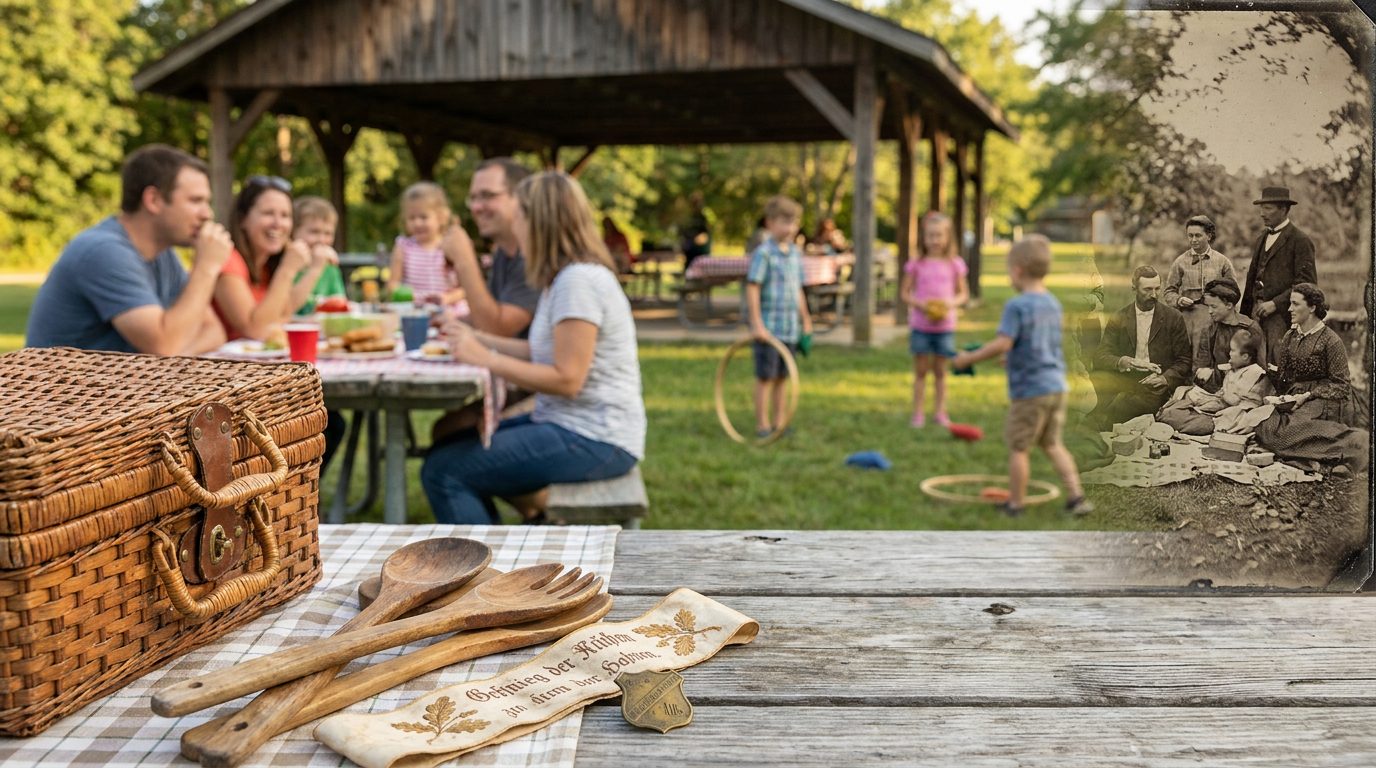
We can still see the pattern at company picnics, church socials, family reunions and civic cookouts: reserve a shelter, assign the side dishes, organize games, locate folding chairs and hope the person carrying the ice actually arrives.

Some customs become American not through a grand announcement, but through a signup sheet.

5. Singing Societies Helped Put Music in the Summer Air

Long before amplified festival stages, German-American communities were filling halls, parks and streets with song.

Singing societies were a major part of nineteenth- and early twentieth-century German-American life. Local choirs joined regional organizations, and large Sängerfeste brought multiple groups together for ambitious musical celebrations. Archival records from Philadelphia document a particularly extensive network. These events could include formal choral works, parades, banquets, informal singing, dancing and outdoor concerts.

The movement was culturally specific, but it was not always culturally closed. Historical records from Philadelphia show how extensive the singing-society network became, while accounts of festivals describe non-German spectators joining concerts and picnics. Music made the boundary between “their festival” and “our town’s festival” wonderfully porous.
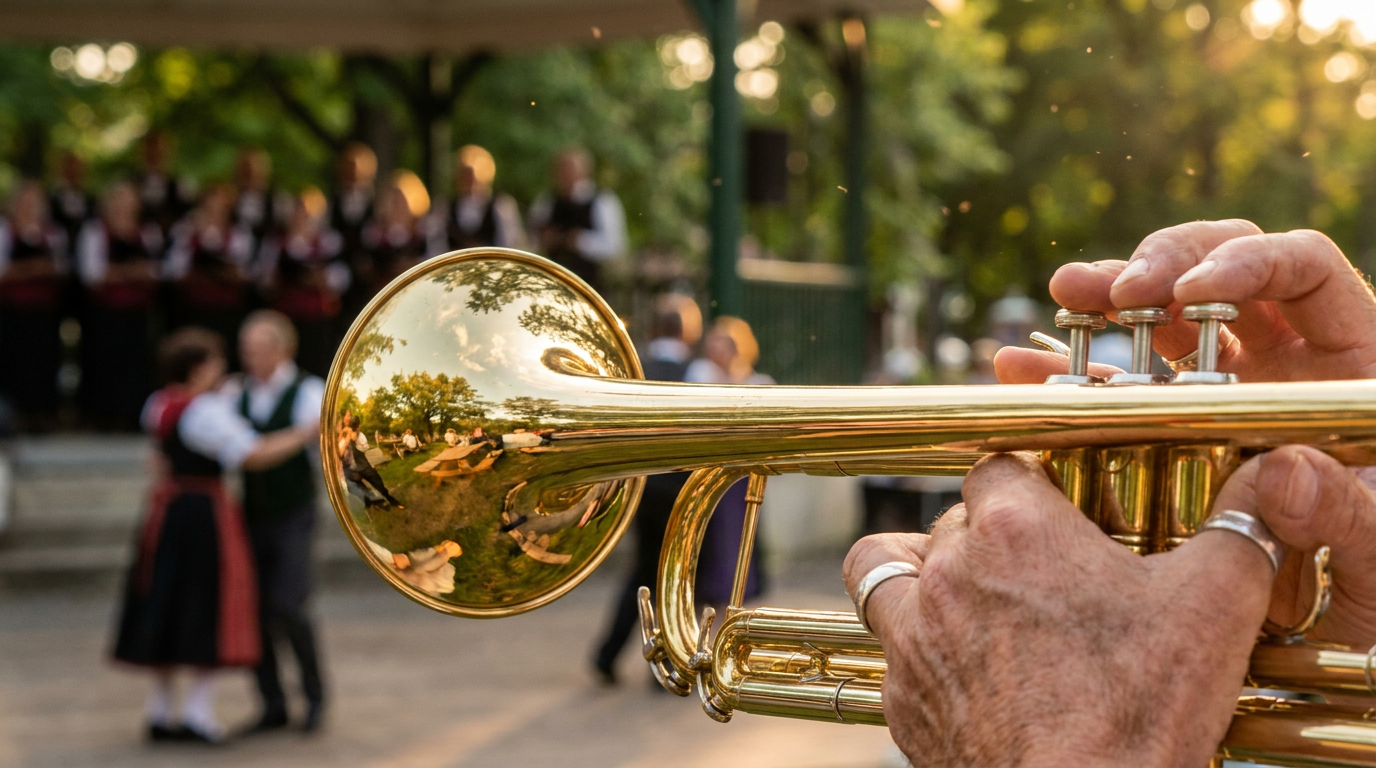
German musicians and conductors were only part of America’s developing concert culture, but they were an influential part. Brass ensembles, community bands, choral festivals and park performances became expected ingredients of civic celebration. Add a dance floor or pavilion, and the evening could move easily from listening to participation.

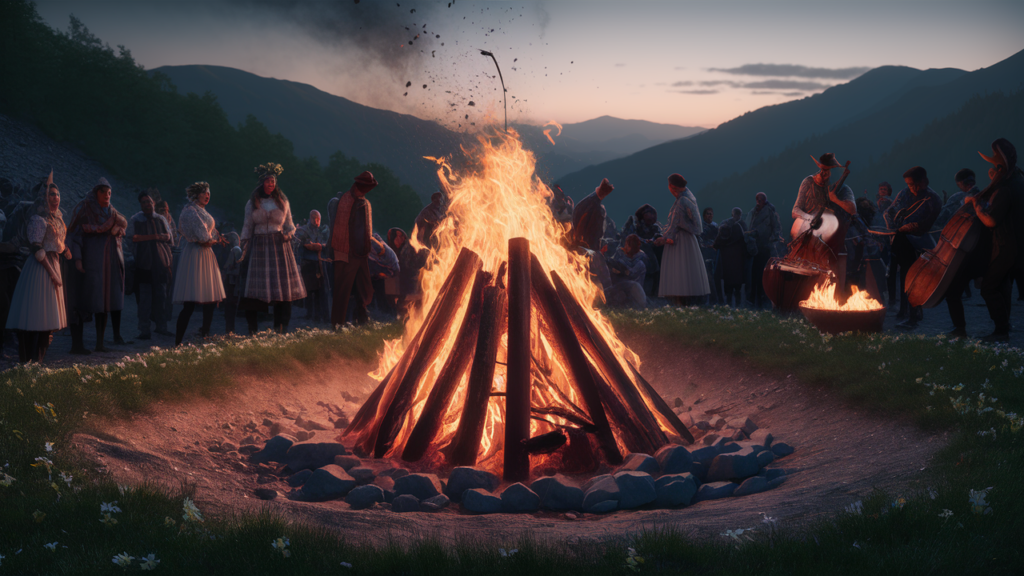
You can hear the descendant of that tradition whenever a municipal band plays in a park, a polka spills from a festival tent, a community choir performs outdoors or a summer concert invites strangers to share the same lawn.

The songs may change. The folding chairs do not.

6. The Turner Spirit Made Recreation a Community Project

The American Turners grew from the German Turnverein movement, which combined physical fitness with education, civic participation and social life. Turner halls appeared in communities across the United States, offering gymnastics and other activities while also serving as important gathering places.

The American Turners did not invent American exercise, hiking or outdoor recreation. Those practices have many origins. But they helped advance the idea that physical activity could be organized, communal, educational and open to families—not merely military training or private competition.
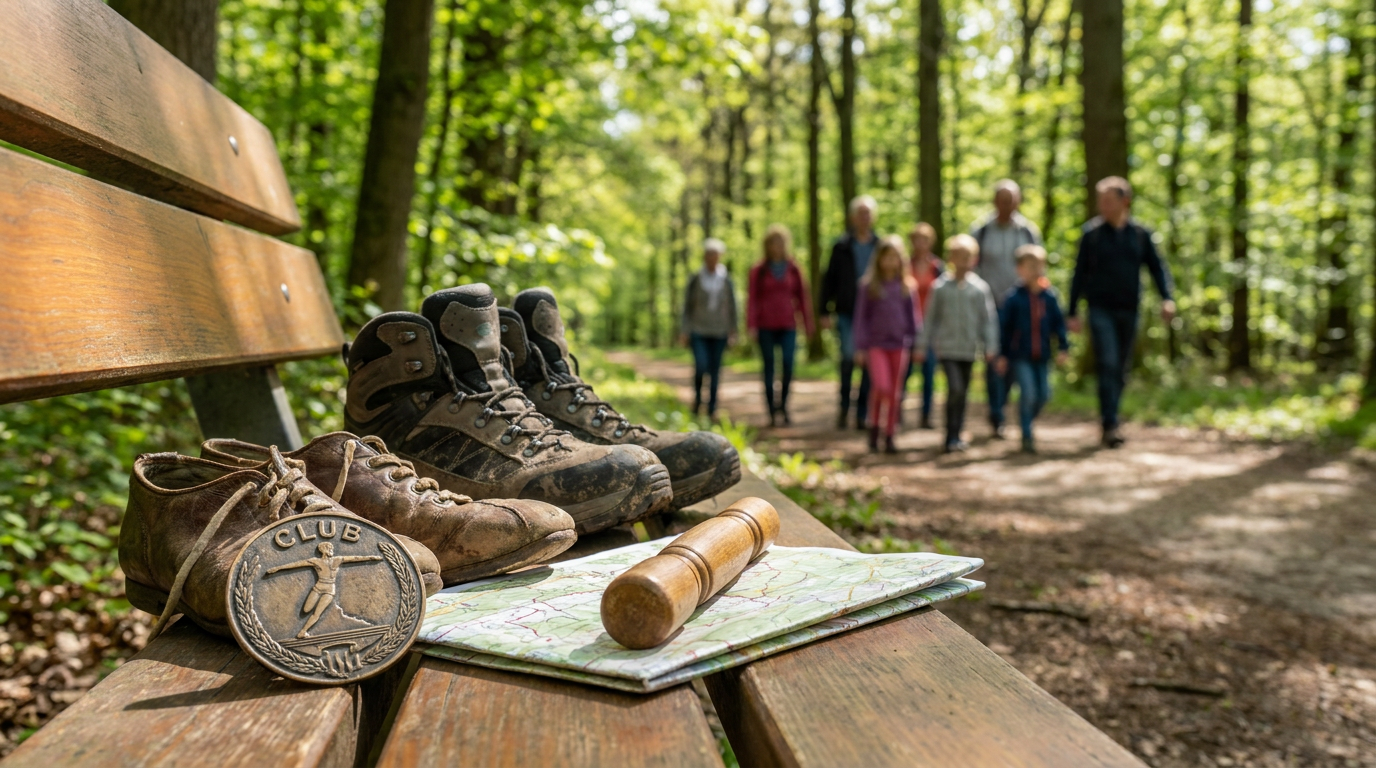
In summer, that spirit naturally moved outdoors. Club excursions, field days, demonstrations, games and picnics connected fresh air with fellowship. The result feels surprisingly current. Think of recreation leagues, community fitness events, charity walks, park programs and family field days. The activities differ, but the larger belief is familiar: a healthy community should create places where people move together.

Even the German phrase frische Luft—fresh air—carries an entire philosophy in two words. Go outside. Walk. Stretch. Let the children run. Meet someone. Come home pleasantly tired.

That may be the most practical summer tradition on this list, and it requires no translation at all.

7. Volksfest Energy Became Part of American Festival DNA

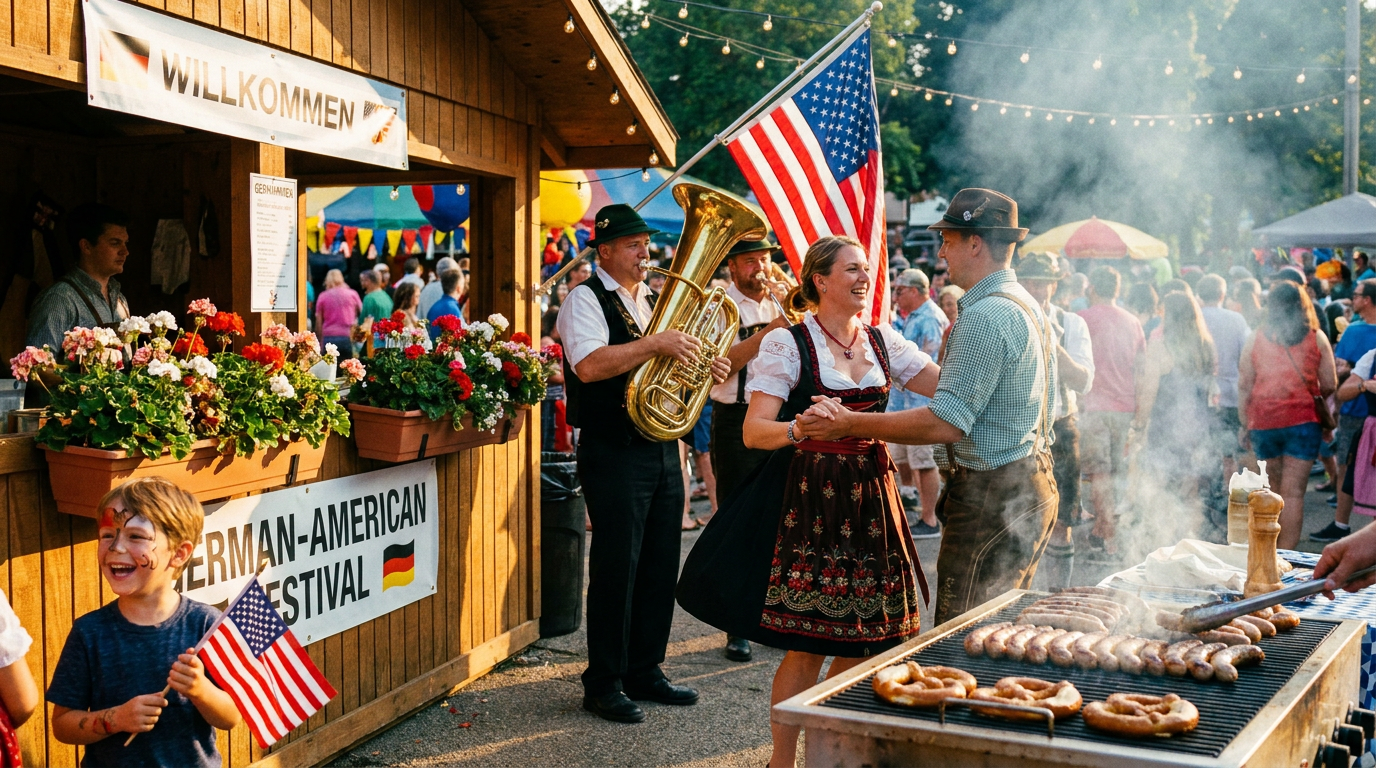
A German Volksfest is, literally, a people’s festival. The form varies, but the essential ingredients are recognizable: food, drink, music, games, decorated grounds, rides or amusements, local pride and a crowd that temporarily turns public space into a shared celebration.

America already had fairs, market days, harvest gatherings, religious celebrations and public entertainments from many cultural sources. German immigrants did not invent the American county fair or street festival. What they contributed was a powerful festival vocabulary—beer gardens, music pavilions, club processions, sausage stands, communal tables and a style of organized merriment that traveled well.

This is why German-American summer festivals can feel both distinctive and completely familiar. A visitor may arrive for the bratwurst or polka and recognize the larger format immediately: wristbands, food booths, children’s games, craft vendors, live music, old friends and a volunteer committee quietly solving seventeen problems behind the scenes.
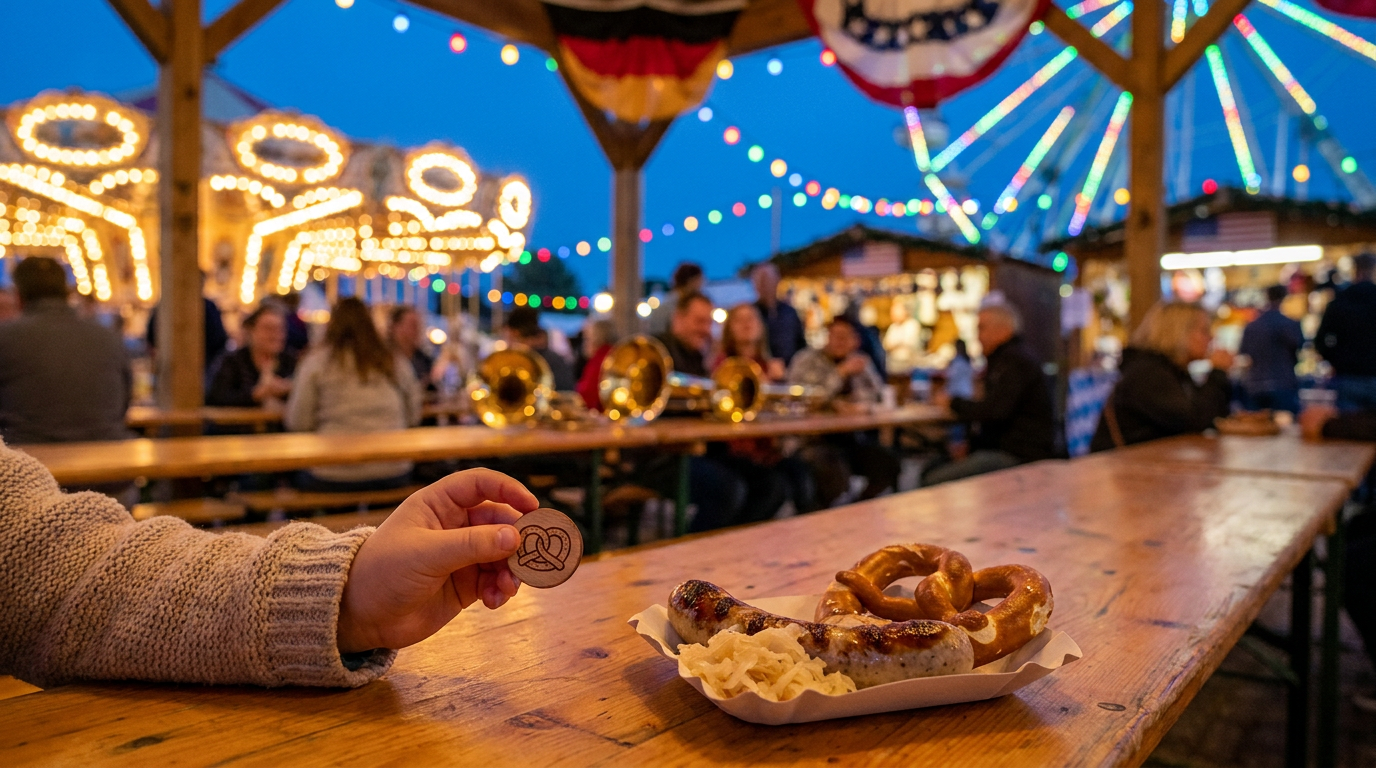
By late August, that festival energy begins leaning toward Oktoberfest. Although Munich’s famous Oktoberfest starts in September, American celebrations often stretch across the early fall calendar. The transition feels natural because the groundwork was laid all summer: gather outside, invite the community, feed everyone and give them a reason to stay for one more song.

8. Why the German Roots Became So Easy to Miss

If these influences are so widespread, why do they often go unnoticed?

Success is one reason. A tradition can become almost invisible when the larger culture adopts it. “German-American potato salad” shortens to “potato salad.” A Biergarten becomes “the patio.” A sausage shaped by Old World knowledge becomes a hot dog at an American ballpark.

Assimilation also played a role. German surnames were Anglicized. Families intermarried. Recipes were rewritten in English. German-language institutions declined. During the First World War, intense anti-German pressure led many communities and families to suppress language, names and public expressions of heritage. Some customs disappeared; others survived by shedding their labels.
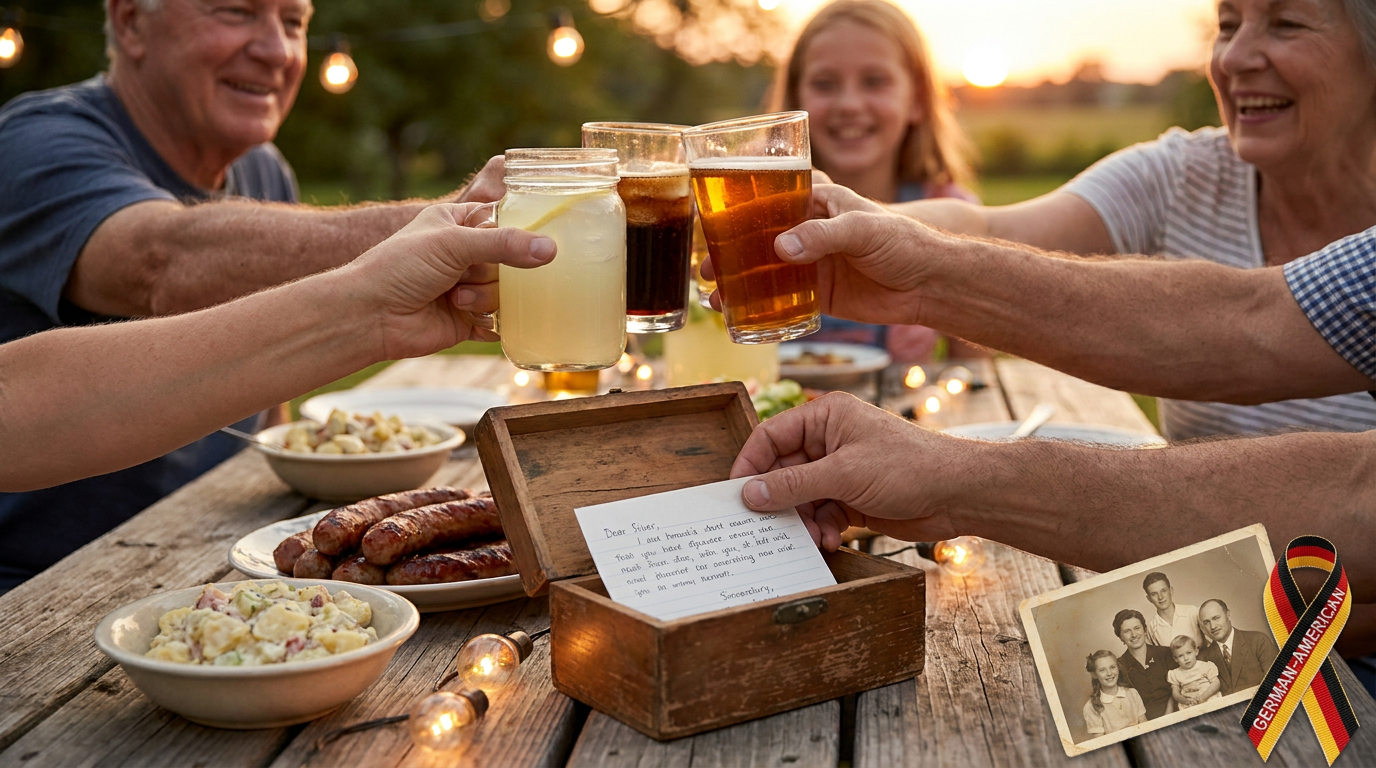
That is why German Heritage discovery can feel less like finding something foreign and more like recognizing something familiar. The evidence may be on a recipe card, in a club photograph, inside a picnic basket or in the way your family automatically gathers around the longest table.

“America did not simply preserve German traditions under glass. It welcomed them to the picnic, changed the recipe and carried the best parts forward.” — GERMAN HERITAGE USA

Before Summer Ends, Put Your Heritage on the Table

Late August is a perfect time to conduct a little family-history experiment.

At your next cookout, reunion, festival or patio evening, look around. Is there a recipe with a German surname attached to it? A preference for bratwurst over burgers? A family story from Milwaukee, Cincinnati, St. Louis, Texas, Pennsylvania or another German-American center? An old photograph of a singing society, Turner hall, brewery picnic or summer gathering?

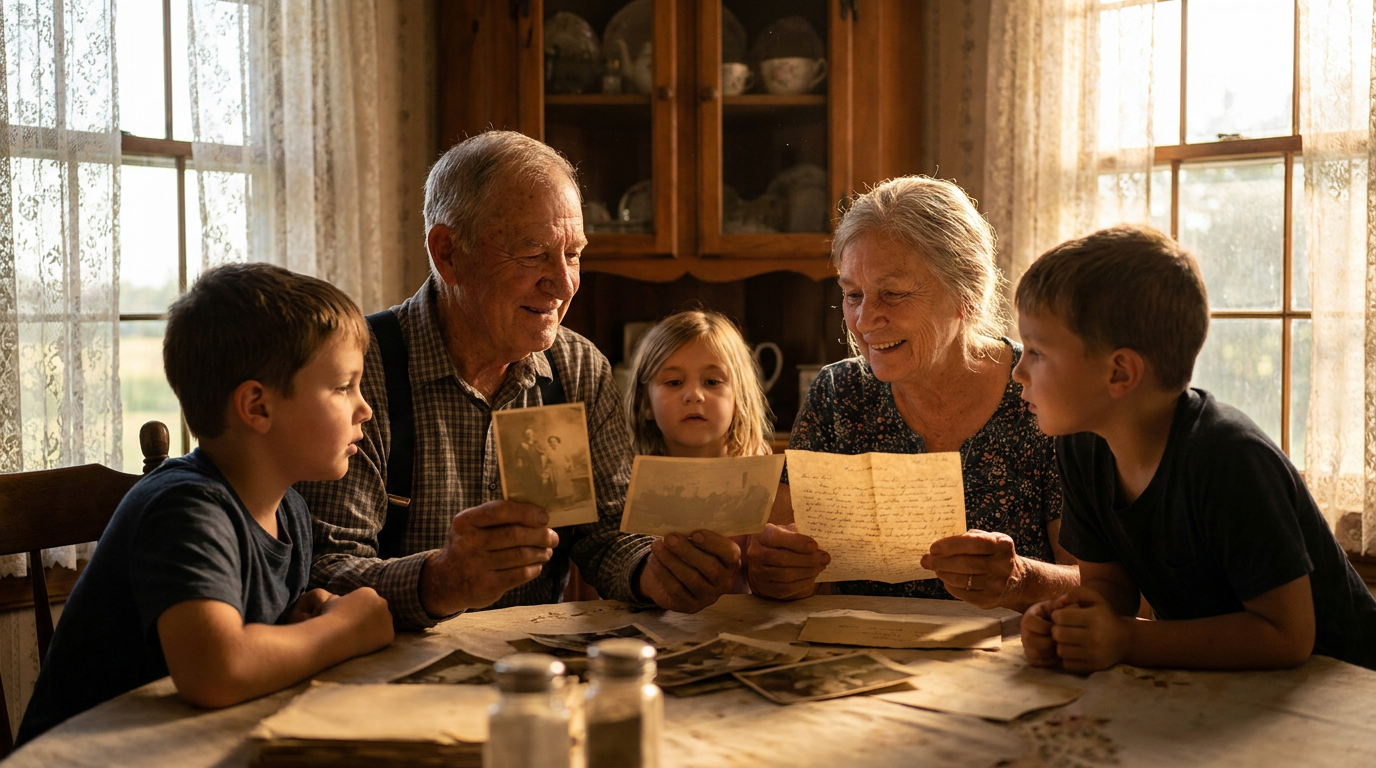
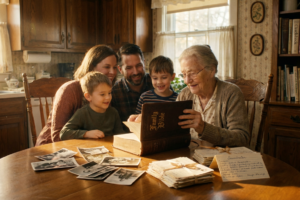
Ask the oldest person present what summer looked like when they were young. Record the answer. Photograph the recipe card. Write down the name of the town, club, church or picnic grove they mention. Heritage often returns through small details.

Then create a tradition of your own. Set up a long table. Grill sausages. Serve two kinds of potato salad and let everyone debate them. Play music. Invite a neighbor. Teach the children one German word—perhaps Gemütlichkeit—and show them what it means by making room for them in the celebration.
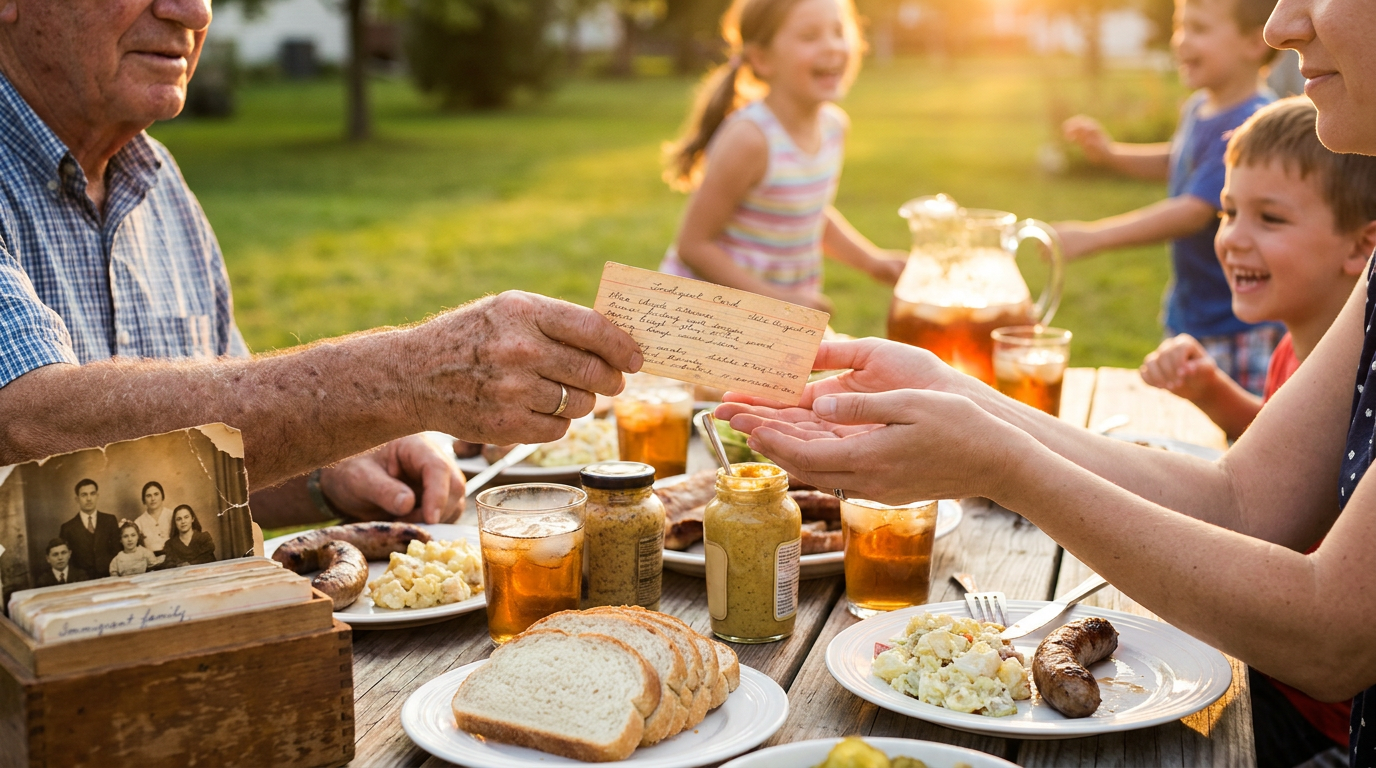
Because German-American heritage is not limited to a museum case, a passenger list or a once-a-year festival. It lives in the ways people gather, eat, sing, laugh and welcome one another.

You may have been celebrating it all summer.

Got A Little German In You? Your German Heritage Is Calling You!

GERMAN HERITAGE USA — Discovering German Heritage Traditions, Foods, Music and Festivals All Across America.
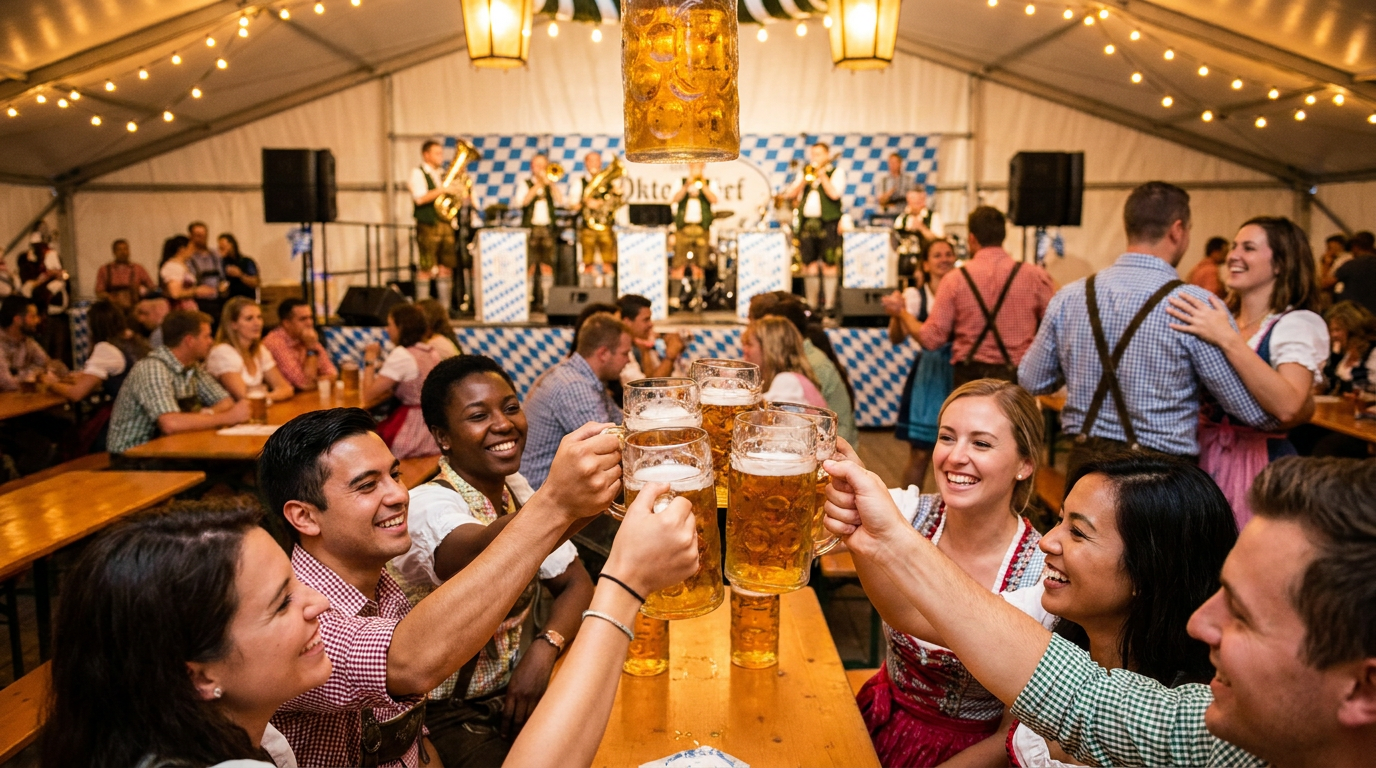
German Heritage Bucket List: 9 Experiences Every German-American Should Do

From finding the village behind your surname to raising a stein at Oktoberfest, these nine experiences will help turn German ancestry into a heritage you can see, taste, hear, explore and pass forward.

Late August has a way of making us look both backward and forward. Summer is still holding on, but fall is beginning to whisper. Festival tents will soon rise, kitchens will fill with the scent of warm bread and spices, and Oktoberfest calendars will start appearing on refrigerators across America.
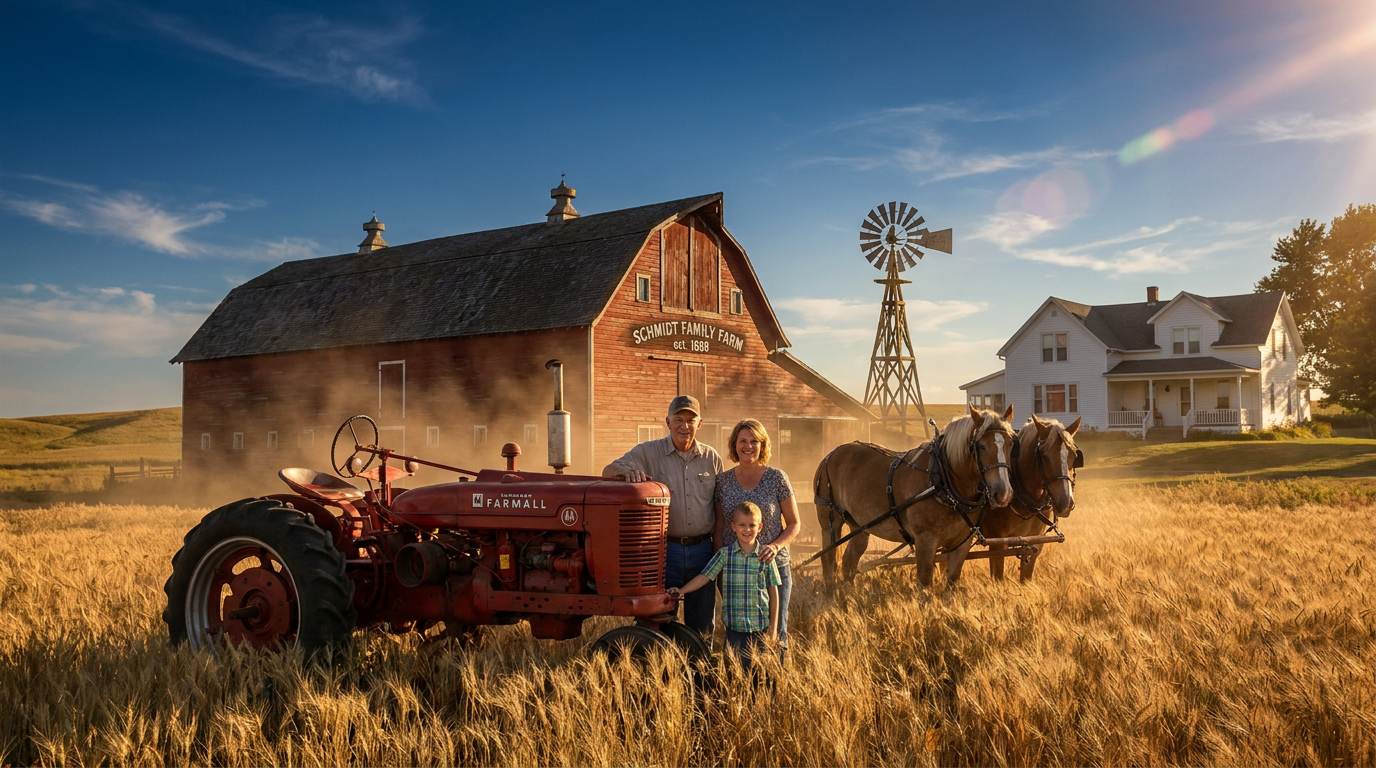
It is also an ideal time to ask a wonderfully simple question:

What have I actually experienced of my German Heritage?

More than 40 million Americans report German ancestry, according to the U.S. Census Bureau, yet German-American identity rarely looks the same from one family to the next. One family may still make a grandmother’s potato salad exactly as she taught them. Another may have an old photograph labeled only “Germany.” Some know the precise village their ancestors left. Others inherited an Anglicized surname, a few family sayings and a feeling that an important chapter has gone missing.

That is what makes a German heritage bucket list so much fun. It is not a test of how “German” you are. You do not need to speak fluent German, own Lederhosen or know the proper number of turns in a polka. The goal is to move heritage out of the attic and into real life.

“Heritage is not only something we inherit. It is something we experience, preserve and pass forward.” — German Heritage USA

Whether your family arrived in the 1700s, stepped off a ship in the 1880s or came to America much more recently, here are nine meaningful—and genuinely enjoyable—experiences to put on your list.

1. Find the German Place Behind Your Family Name

A surname is a clue. A hometown is a doorway.

One of the most rewarding moments in family research is discovering the actual village, town or region where an ancestor lived. Before Germany became a unified nation in 1871, records might identify a person with Prussia, Bavaria, Saxony, Württemberg, Hesse, Hanover or one of many smaller states and territories. Borders shifted. Town spellings changed. Handwriting can look as if it were produced during a bumpy wagon ride.

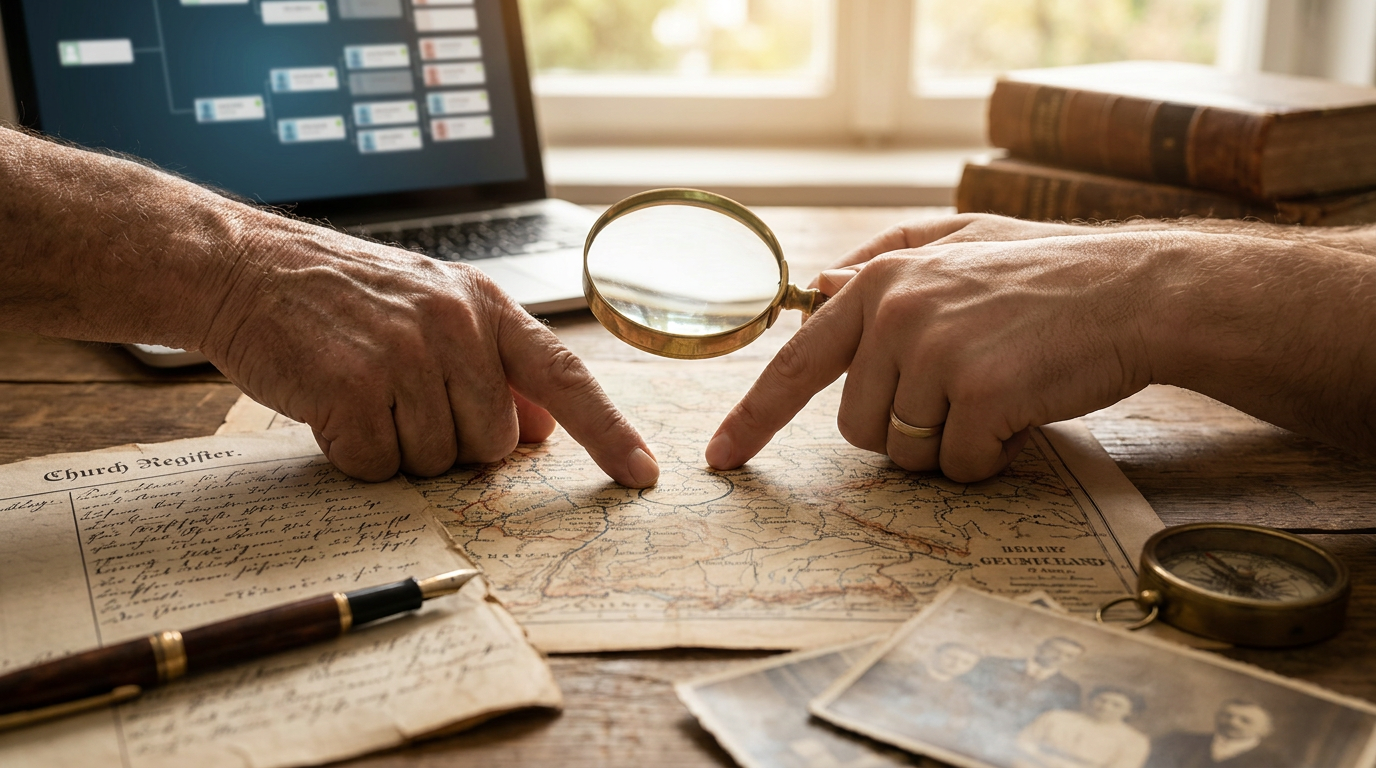
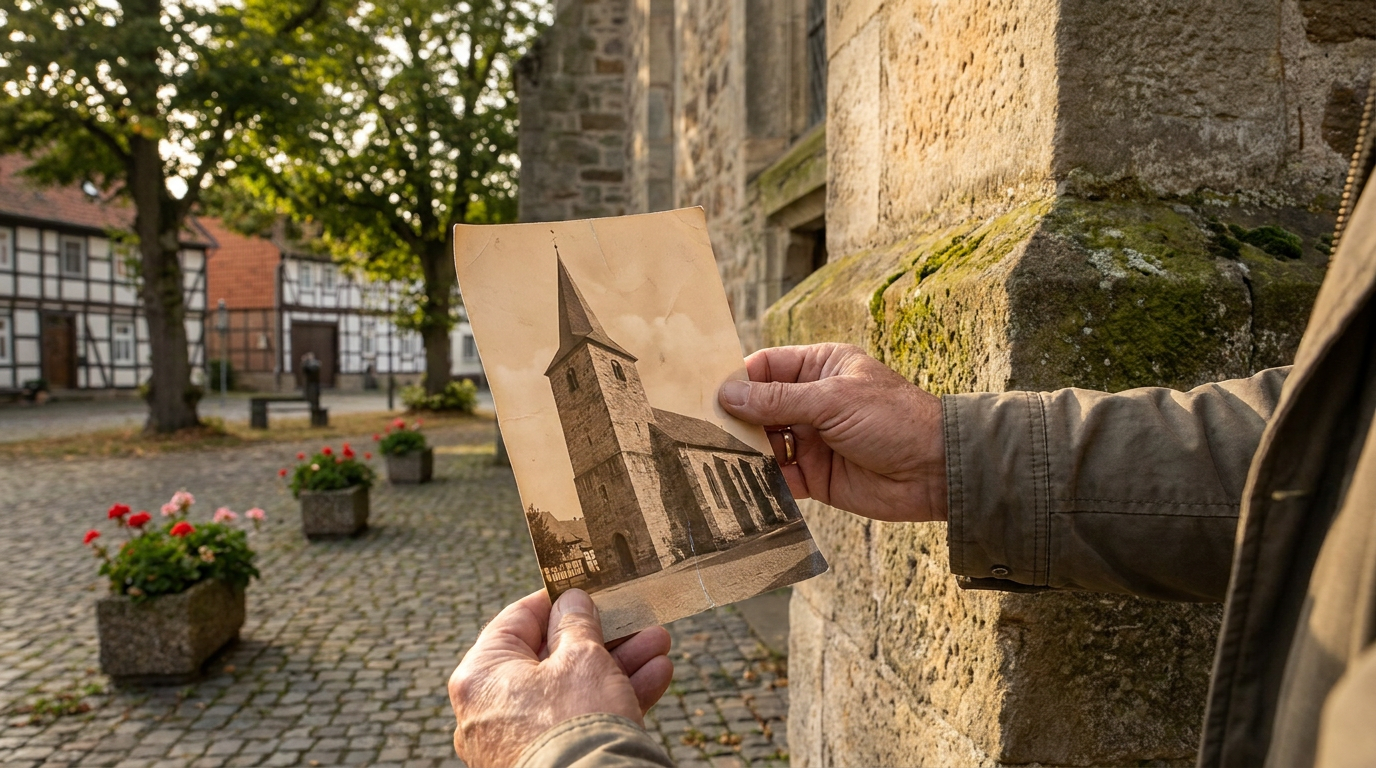
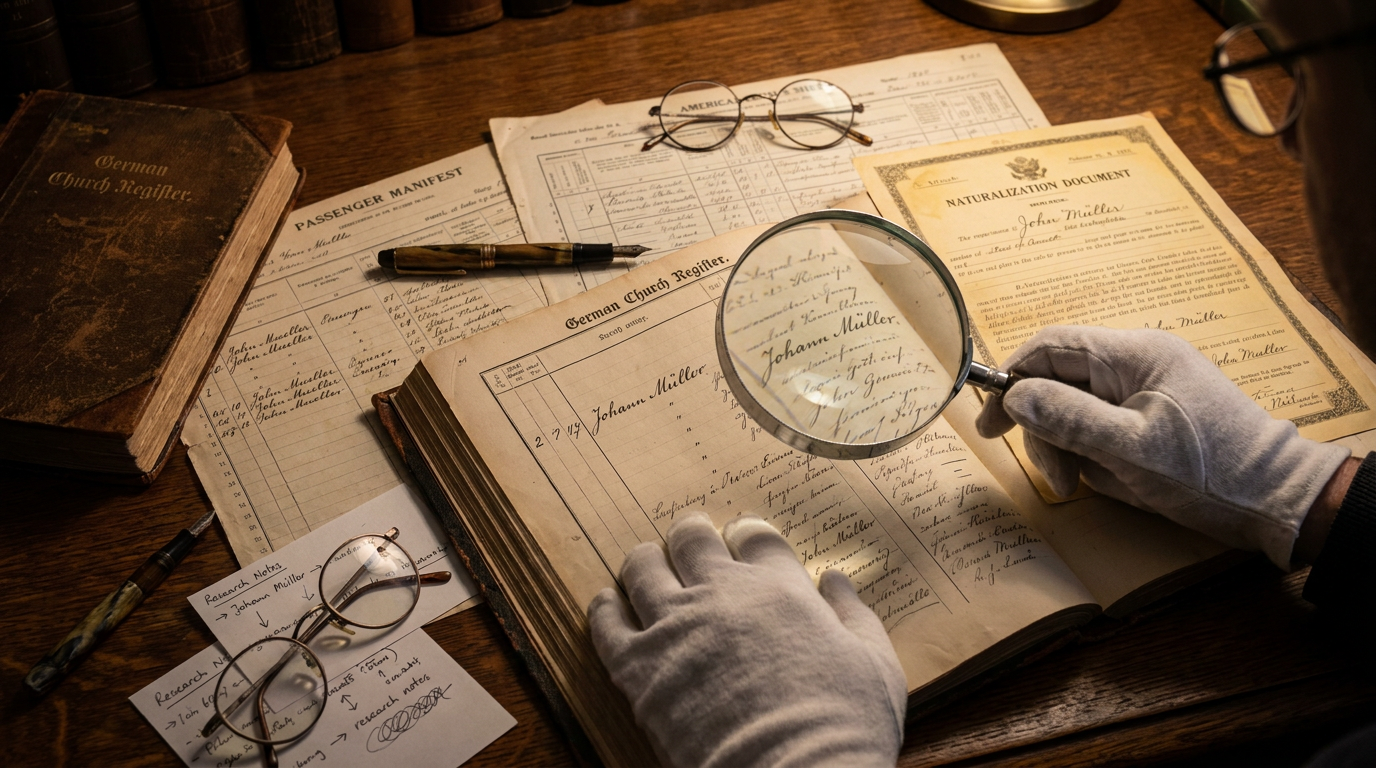
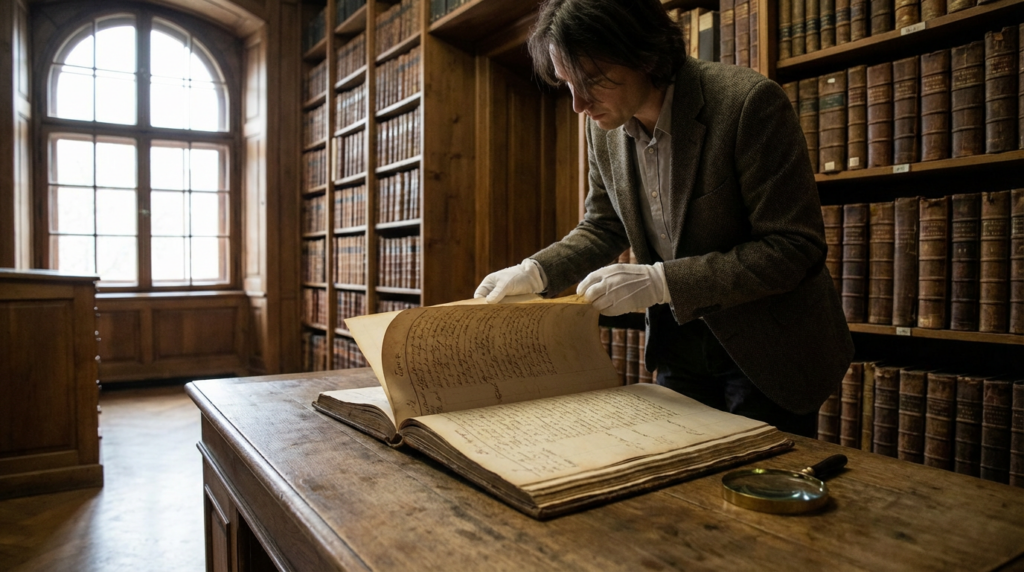
Begin with what your family already knows. Interview the oldest relatives. Examine the backs of photographs. Gather birth, marriage, church, census, military and naturalization records. Then look for passenger manifests and records from the ancestor’s American church or county. The National Archives recommends many of these same record groups—including census, immigration, naturalization, military and land records—as starting points for genealogy.

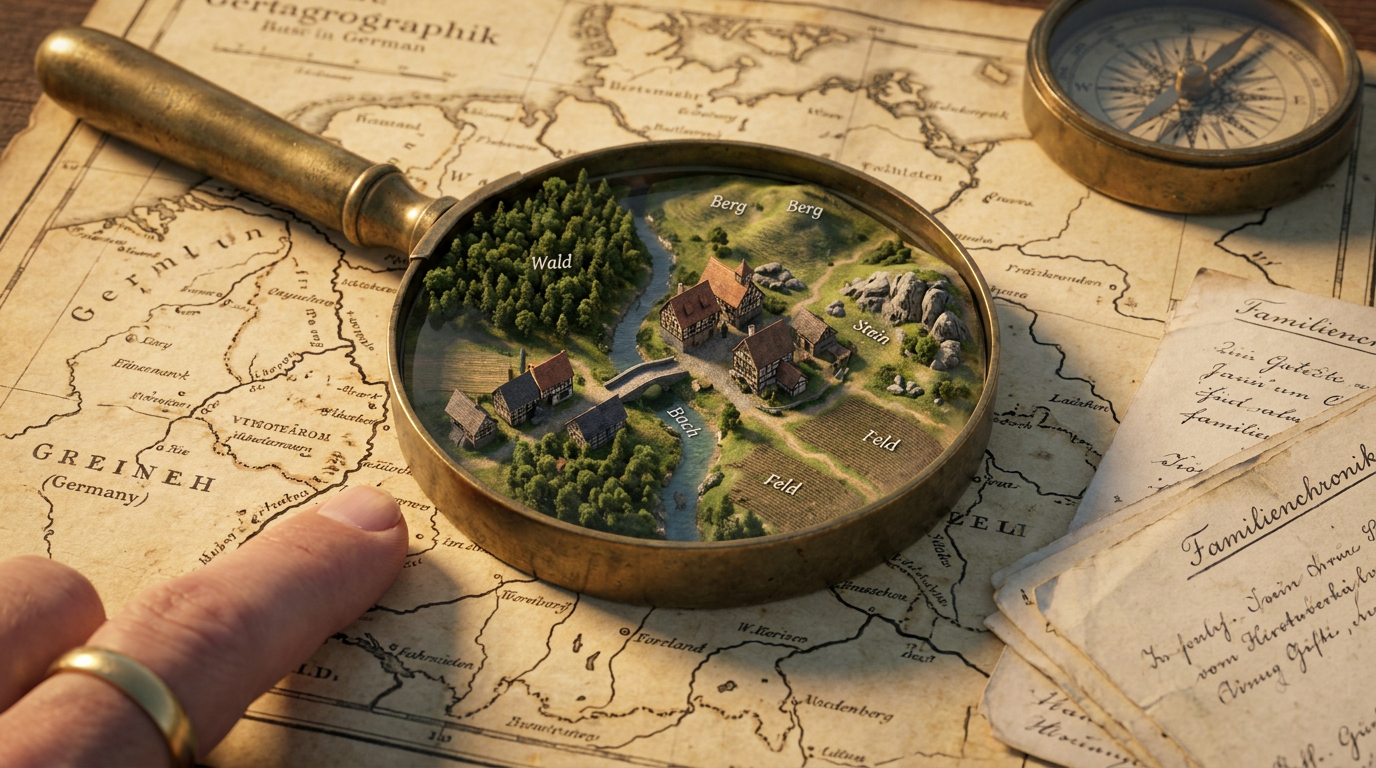
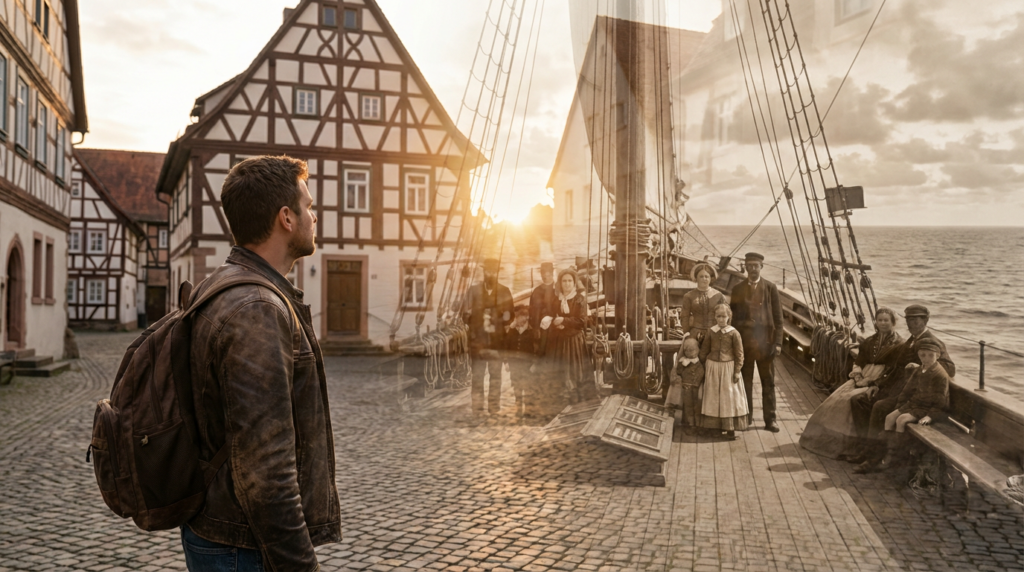
The breakthrough detail is often not “Germany,” but a precise place: a village near Kiel, a parish outside Stuttgart or a farm community along the Rhine. Once you find it, mark it on a map. Look at the landscape. Learn what the region ate, built, celebrated and sounded like.

Bucket-list moment: Locate one ancestral hometown and say its name aloud. That dot on the map may change the way your entire family story feels.

2. Hold an Immigration Record—and Visit a Gateway if You Can

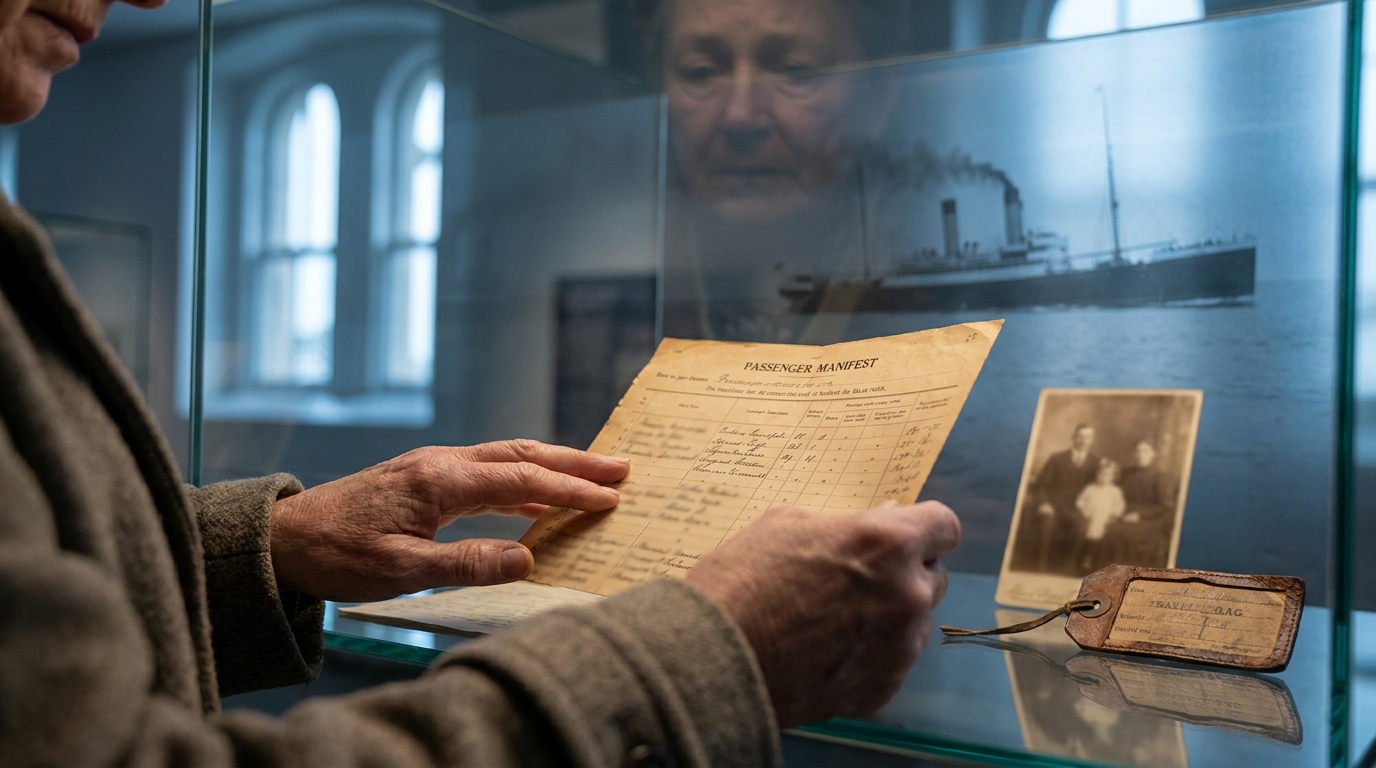
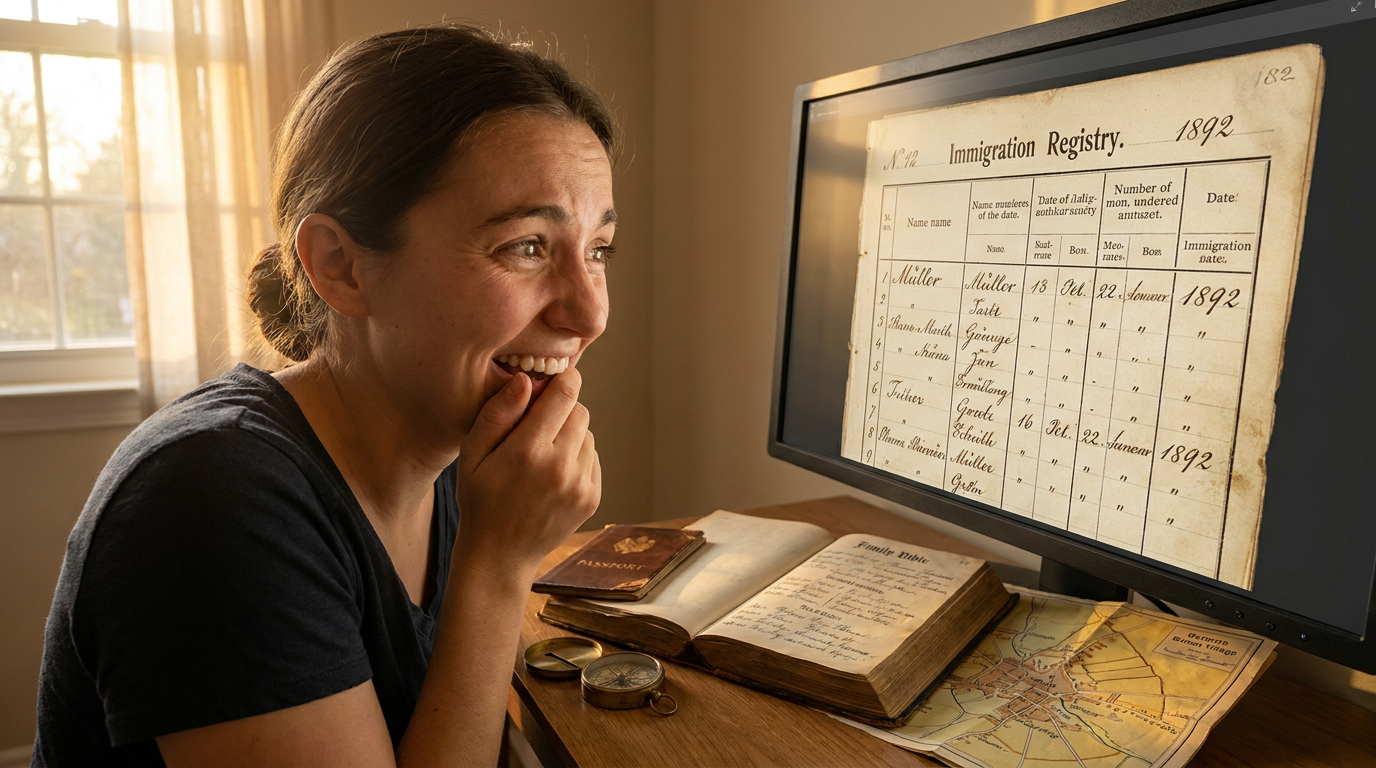
There is something electric about seeing an ancestor’s name on a passenger list or naturalization petition. Suddenly, history has handwriting.

Search for the ship, departure port, arrival date, occupation, traveling companions and final destination. A single line may reveal that an ancestor crossed with a sibling no one remembered, carried only a modest amount of money or was headed toward a relative already established in America.

If the journey included New York, visit Ellis Island and the National Museum of Immigration. From 1892 to 1924, more than 12 million immigrants were processed there. But do not force every German-American story through Ellis Island. Large numbers of German-speaking immigrants arrived before it opened, and families also entered through ports such as Baltimore, Philadelphia, New Orleans and Galveston.

If travel is not possible, create the experience at home. Print a copy of the manifest. Find an image of the vessel. Map the route across the Atlantic. Read about conditions aboard ships during that era. Then imagine the mixture of relief, fear and expectation your relatives may have felt as land came into view.

Bucket-list moment: Hold a copy of an original immigration document and trace the journey from the old home to the new one.

3. Spend a Weekend in a German-American Town

You can travel through German-American history without crossing the Atlantic.

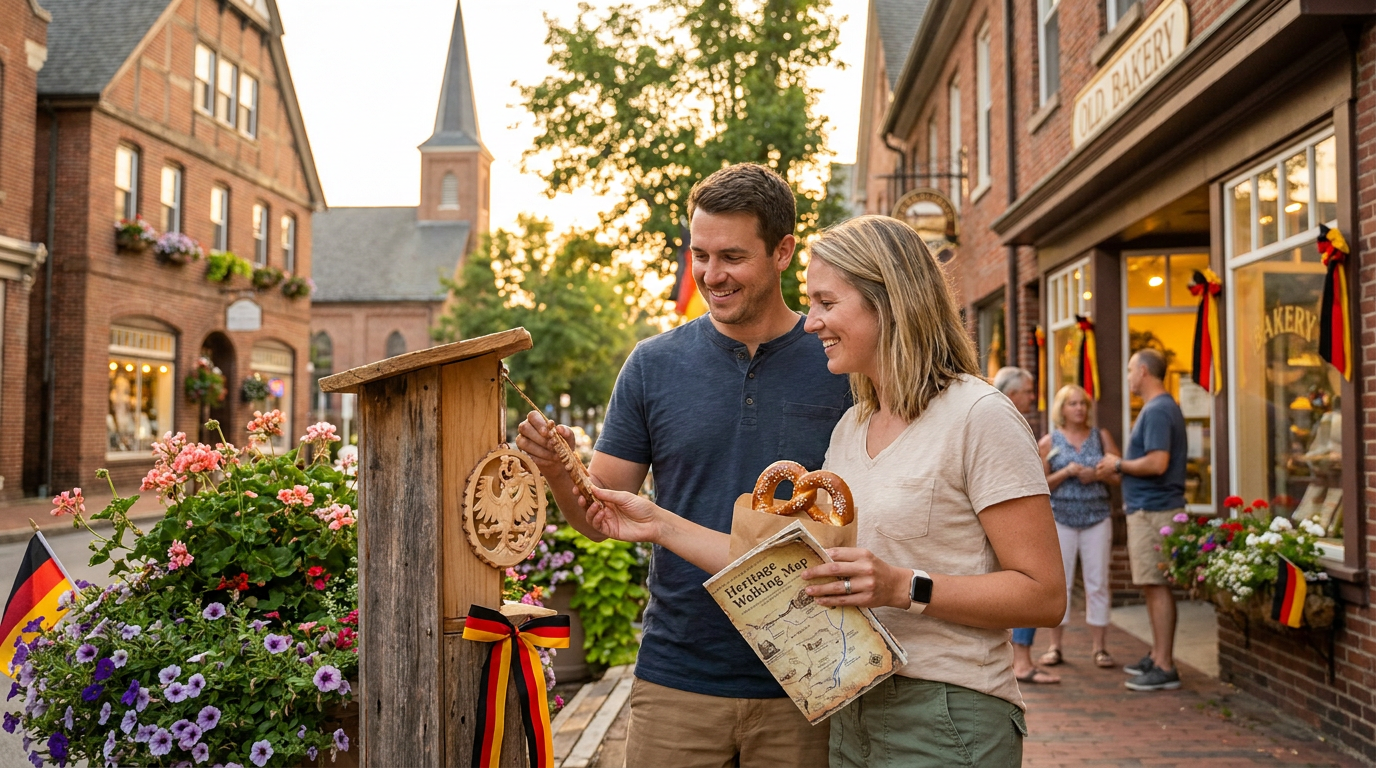
Choose a community where immigrant culture is still visible in streets, churches, architecture, food and local traditions. Walk through Hermann, Missouri, where the Deutschheim State Historic Site preserves buildings from the German settlement of the Missouri River Valley. Visit New Ulm, Minnesota, and its towering Hermann Monument. Explore Fredericksburg, Texas, founded by German settlers in 1846. Wander through Columbus’s German Village, Cincinnati’s Over-the-Rhine or the Amana Colonies in Iowa. For a playful Bavarian-style getaway, Frankenmuth, Michigan, adds festivals, food and plenty of gemütlich atmosphere.

Do more than shop. Take a walking tour. Visit the local history museum. Read cemetery stones. Notice church architecture. Ask a baker or shopkeeper how the town’s traditions changed over time. Order something you have never tried instead of the safest item on the menu.

The most interesting discovery may be how German customs blended with the local landscape. German-Texan culture is not German-Minnesotan culture—and neither is a museum piece. Each tells a different American story.

Bucket-list moment: Plan one heritage weekend and leave room for an unplanned conversation with someone who helps keep the town’s story alive.

4. Attend an Oktoberfest—and Experience More Than the Beer

Yes, raise a stein. But first, raise your curiosity.

Munich’s Oktoberfest began in 1810 with festivities celebrating the marriage of Bavarian Crown Prince Ludwig and Princess Therese. A horse race helped launch what became the world’s most famous Volksfest. Today, communities across the United States transform that spirit into local celebrations filled with music, food, dancing, parades, crafts and family traditions.

Attend a festival run by a German-American club, cultural society, church or town with genuine German roots. Listen to the brass band. Watch a dance performance. Learn the words to Ein Prosit. Try a regional dish. Ask about the organization behind the celebration, then support it by buying from local vendors or becoming a member.

Traditional clothing can add to the fun, but remember that Dirndl and Lederhosen are rooted primarily in Alpine and Bavarian traditions; they are not a uniform for every part of Germany. Wear Tracht respectfully if you choose—or simply arrive ready to participate.

Bucket-list moment: Join the communal toast, meet someone new and learn one tradition that existed long before the souvenir tent opened.

5. Cook One Heritage Meal Completely From Scratch

Food may be the shortest route between generations.

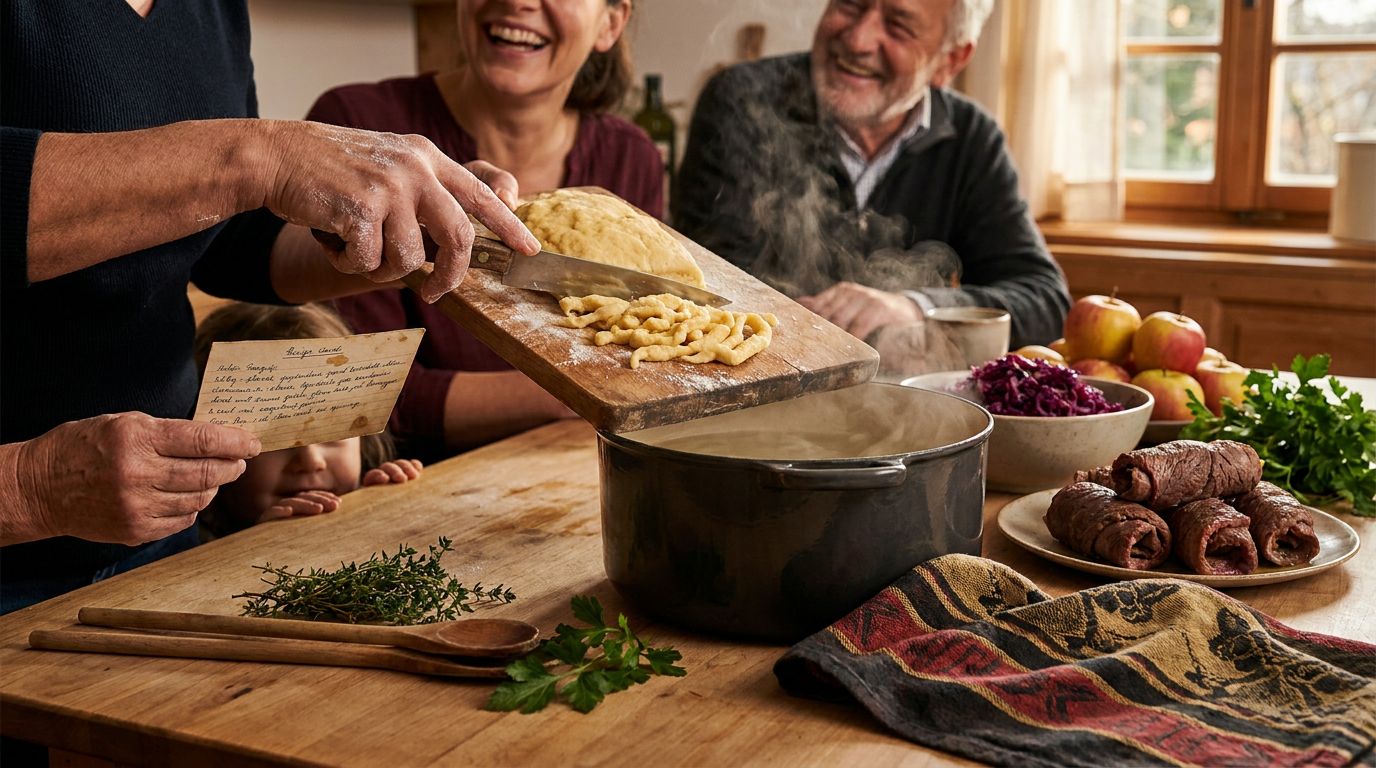
Choose one family recipe or one dish from your ancestors’ region and make the entire meal an experience. Roll Rouladen. Cut fresh Spätzle. Fold Maultaschen. Bake a proper Apfelkuchen. Try Königsberger Klopse, Sauerbraten, Labskaus, Thüringer-style sausage or a North German fish dish. Germany is not one kitchen, and discovering regional differences is half the pleasure.

Invite relatives to cook with you. Set the table properly. Play German music. Tell the story of the person connected to the recipe. If the instructions say “add flour until it feels right,” stop and measure what “right” means so the next generation has a fighting chance.

No inherited recipe? Adopt one thoughtfully. Research where it comes from, learn how it was traditionally served and write down what you changed. A tradition does not have to be ancient to become meaningful; it simply has to be repeated with intention.

Bucket-list moment: Host a German heritage supper at which every guest brings either a dish, a photograph or a family story.

6. Learn Enough German to Open a Door

Fluency is wonderful, but connection begins much earlier—sometimes with only five brave words and a smile.

Learn how to introduce yourself, pronounce your family name and explain where your ancestors came from. Practice useful phrases such as Guten Tag (good day), Woher kommt Ihre Familie? (Where does your family come from?), Meine Familie kommt aus … (My family comes from …), Danke schön (thank you) and Auf Wiedersehen (goodbye).

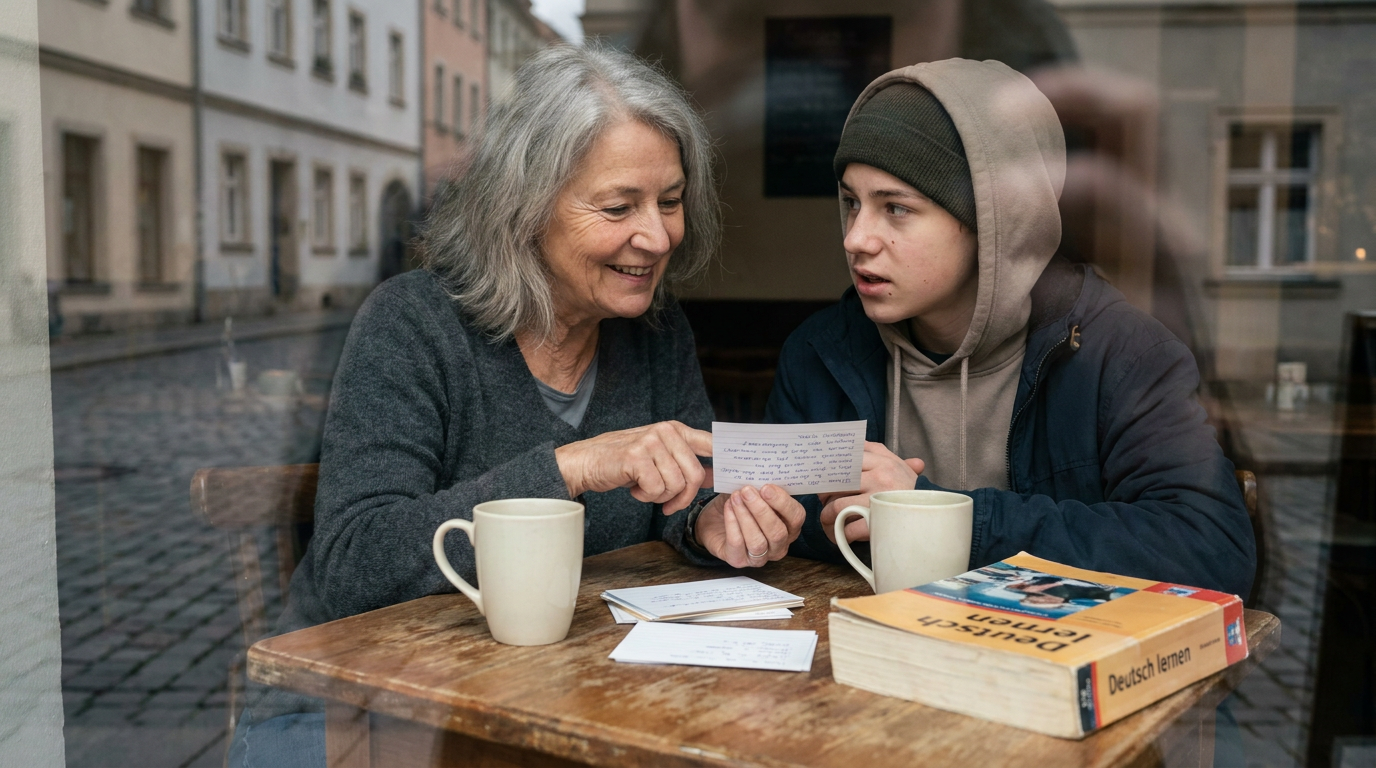
Label a few objects around your home. Learn the words to a traditional song. Watch a German film with subtitles. Join a conversation group or take a beginner course. Most importantly, allow yourself to sound imperfect. Every new speaker has to cross that bridge.

Johann Wolfgang von Goethe wrote:

“Wer fremde Sprachen nicht kennt, weiß nichts von seiner eigenen.”

It is often translated as:

“Those who know nothing of foreign languages know nothing of their own.”

Learning German can reveal patterns, meanings and family-name clues that an English translation alone cannot provide.

Bucket-list moment: Have one short conversation in German—even if you rehearse every line beforehand.

7. Experience a Living Tradition With Your Own Hands and Feet

Heritage becomes memorable when it moves.

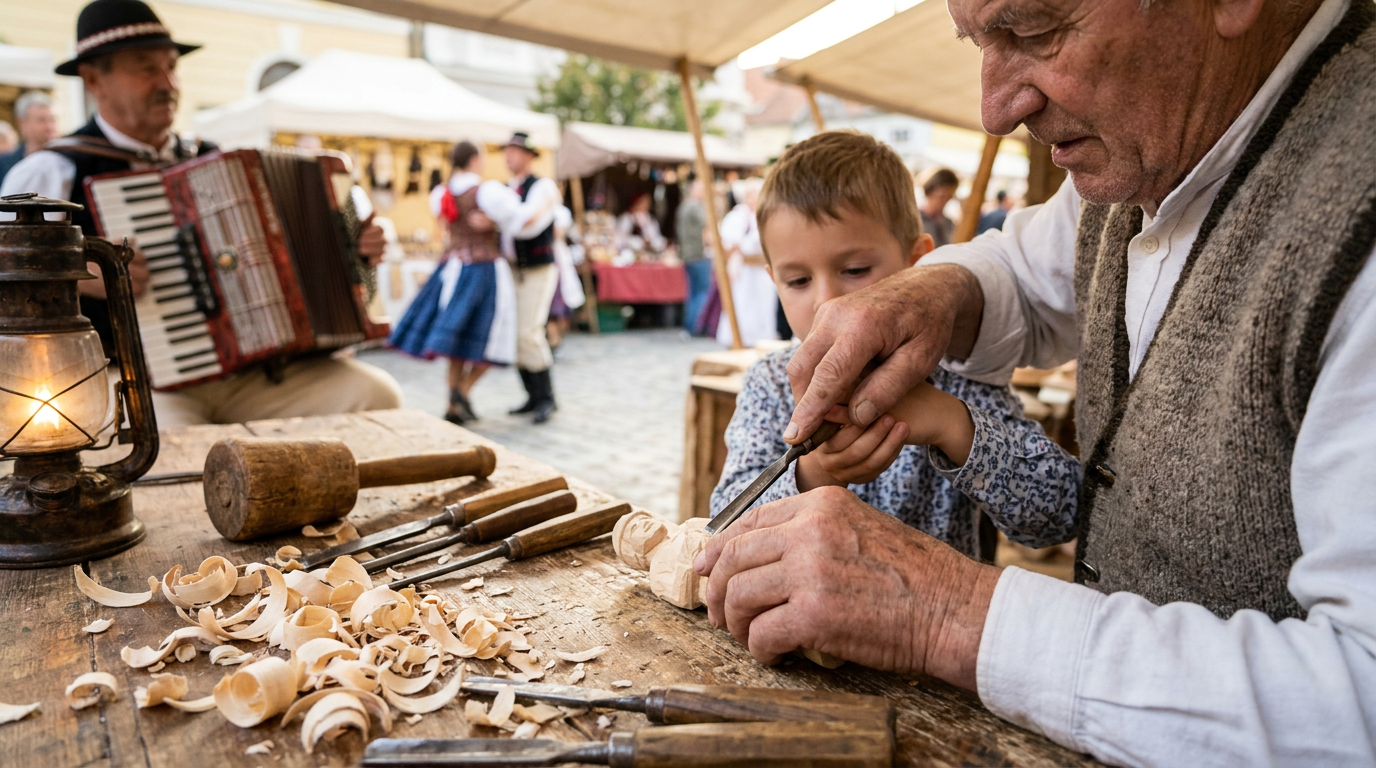
Attend a Sängerfest or German choir concert. Learn a folk dance from a cultural group. Watch a woodcarver, brewer, baker, glassworker or instrument maker demonstrate a traditional craft. Visit a Christmas market and speak with the artisans. Try decorative egg painting, paper cutting, embroidery, bread baking or wreath making. If your family came from a particular region, look for a tradition connected specifically to that place.

The point is not to pretend it is still 1850. Living culture survives because each generation adapts it. A young accordionist can bring new energy to an old melody. A baker may preserve a grandmother’s method while using a modern kitchen. A festival can honor its founders while welcoming neighbors whose families came from everywhere.

Do not remain at the edge taking pictures. Ask to try. Sing the chorus. Take the dance lesson. Make the ornament. Volunteer for setup. The fastest route from spectator to community is often carrying a folding table.

Bucket-list moment: Participate in one tradition instead of merely watching it.

8. Make the Ancestral Journey to Germany

This is the dream trip—the one that can make a century collapse in a single afternoon.

Once you have identified a hometown or region, build the journey around it rather than squeezing it between famous attractions. Contact the local archive, parish or historical society before you arrive. Learn whether the family church, home, workshop or cemetery still exists. Hire a local guide or genealogist if old handwriting, language or access rules create barriers.

Then slow down. Sit in the town square. Hear the church bells. Walk the road toward the fields. Eat what the region actually eats. Germany stretches from North Sea harbors and Schleswig-Holstein lakes to Rhineland vineyards, central forests, eastern cities and the Bavarian Alps. Your family’s Germany may not resemble the castle-and-Lederhosen image on a travel poster—and that is precisely why it is worth finding.

Leave space for emotion, but also for ordinary life. The grocery store, bus stop and weather are part of the experience. You are not entering a frozen ancestral world; you are meeting a real place that continued living after your family left.

Bucket-list moment: Stand in your ancestors’ community, take one quiet photograph and write down exactly how the moment feels before the details fade.

9. Become the Ancestor Future Generations Will Thank

The final experience is not about looking backward. It is about deciding what travels forward.

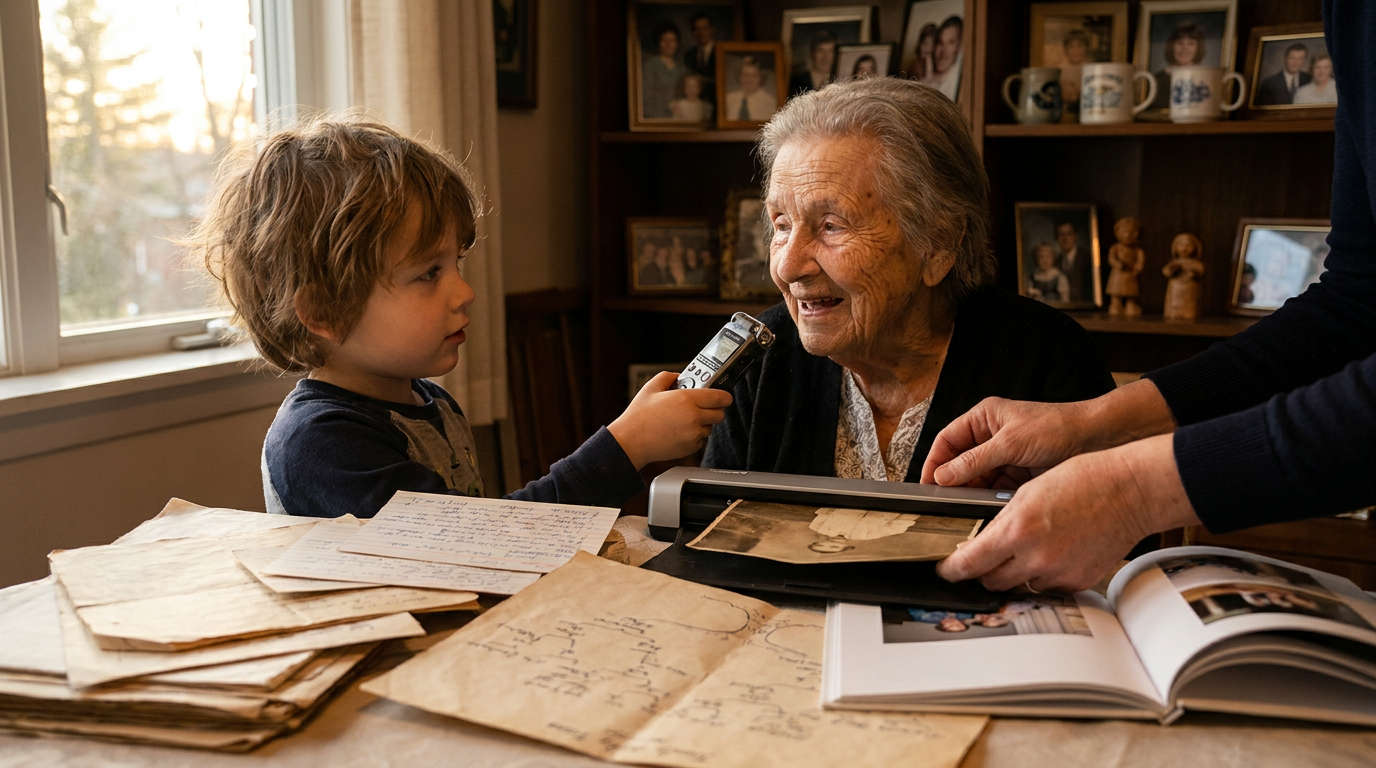
Create a small family archive. Scan photographs at high resolution. Label every person, place and approximate date you can identify. Record grandparents, parents, aunts and uncles telling their stories in their own voices. Save recipes, letters, military records, baptism certificates, immigration documents and translations in more than one secure location.

Then make the history enjoyable. Build a photo book. Create a short family documentary. Start an annual German supper. Celebrate German-American Day on October 6. Take children or grandchildren to a festival and let them choose the dessert. Give each person a copy of the family tree rather than keeping the only version on one laptop.

Most family history is not lost in a fire or flood. It disappears quietly when no one writes a name on the back of a photograph. Your contribution does not have to be perfect or complete. It simply needs to give the next curious person a place to begin.

Bucket-list moment: Record one 20-minute family interview this month and ask, “What do you remember that you never want us to forget?”

Your German Heritage Is Calling—What Will You Do First?

A bucket list works best when it leaves the page.

Circle the experience that excites you most. If a trip to Germany is years away, begin with a recipe. If the family tree feels overwhelming, interview one relative. If you already know the ancestral village, learn five German sentences you could use when you arrive. Small acts accumulate into living heritage.

Late August is an especially good time to begin. Fall festivals are approaching. Families will soon gather around holiday tables. Archives, museums, language courses and cultural clubs can turn a spark of curiosity into a year of discovery.

And remember: there is no single correct way to be German-American. Your heritage may be loud with brass music and festival laughter, or quiet as an ancestor’s name written on a ship manifest. It may live in a Lutheran church record, a Jewish family archive, a Catholic cemetery, a farmhouse recipe, a union song, a Texas town, a Midwestern workshop or a photograph from a Baltic village.

The important thing is to experience it—and then help someone else experience it too.

Got A Little German In You? Your German Heritage Is Calling You!


What Does Your German Last Name Mean? The Fascinating Stories Behind America’s German Surnames

If your last name is Schmidt, Müller, Schneider, Fischer, Weber, Becker, Wagner, Meyer, Bauer, Hoffmann—or something that doesn’t look nearly as German as it once did—your surname may be carrying a story hundreds of years old.

It may tell you what one of your ancestors did for a living.

It might describe the village where your family lived, the landscape surrounding their home, a physical characteristic, or even the name of a father who lived centuries before anyone imagined crossing the Atlantic.

And sometimes, the surname Americans know today isn’t quite the surname their German ancestors originally used.

For millions of Americans exploring their German heritage, a last name can be one of the most fascinating clues connecting the present to the past.

Your surname isn’t necessarily a complete family history—but it can be a wonderful place to begin discovering one.

“Every family name is a doorway. Sometimes all it takes is learning what the name meant to begin discovering the people who carried it.”

So grab your family tree, pull out those old photographs, and take another look at the name printed across the top.

There may be more history hiding there than you ever imagined.


Your German Last Name May Be a 500-Year-Old Clue

Today, we rarely think about why people have surnames.

They’re simply part of who we are.

But travel backward into medieval Europe and surnames become much more interesting.

As communities grew and populations became increasingly mobile, identifying someone simply as Johann or Heinrich wasn’t always sufficient. Which Johann? Which Heinrich?

People began distinguishing one person from another by adding descriptions.

Johann might become Johann the smith.

Another could be Johann from the hill.

Someone else might be Johann, Heinrich’s son.

Over generations, many of those descriptions developed into hereditary family names.

German surnames therefore frequently developed from several broad categories:

Occupations • Locations • Geography • Personal characteristics • Family relationships

That means your surname could contain a tiny historical snapshot of an ancestor’s life.


1. Occupational Names: What Did Your Ancestors Do?

Some of Germany’s most familiar surnames originated from occupations.

Imagine walking into a German village centuries ago.

You would probably encounter a blacksmith, miller, baker, carpenter, farmer, weaver and wagon maker.

Their professions were essential to everyday life—and eventually many occupations became family names.

Schmidt — The Smith

Schmidt, along with variations such as Schmitt and Schmid, is derived from the German word associated with a smith.

The village smith was an important craftsman who produced and repaired tools, horseshoes and other metal goods.

It is essentially the German cousin of the English surname Smith.

Müller — The Miller

Müller originally referred to someone who operated or worked in a mill.

Mills were crucial economic centers where grain was processed into flour, making the miller an important member of the community.

In America, Müller might become Mueller, Muller, Miller, or another variation.

Schneider — The Tailor

Schneider comes from the German verb schneiden, meaning “to cut.”

A Schneider was traditionally someone who cut cloth—a tailor.

Fischer — The Fisherman

This one remains fairly recognizable.

Fischer generally originated as an occupational surname for someone involved in fishing.

Weber — The Weaver

A Weber was a weaver—someone who produced cloth from yarn or thread.

Becker or Bäcker — The Baker

These names are associated with baking and the traditional occupation of baker.

Wagner — The Wagon Maker

Long before automobiles and interstate highways, wagons were indispensable.

A Wagner was traditionally associated with making wagons or wagon wheels.

Suddenly these aren’t just names.

They’re jobs.

They’re workshops.

They’re trades handed from one generation to another.

And they’re little glimpses into everyday German life centuries ago.


2. Your Surname Might Tell You Where Your Family Lived

Not every German surname described a profession.

Some described place.

Before street addresses, ZIP codes and driver’s licenses, geography was a convenient way of identifying people.

A person might be known by the town he came from or by a recognizable landscape near his home.

Names associated with words such as Berg (mountain or hill), Bach (stream), Wald (forest), Stein (stone), Feld (field) and Brück/Brücke (bridge) can sometimes contain geographical clues.

Consider surnames such as:

Steinberg — stone + mountain/hill

Grünwald/Grunwald — green + forest

Bachmann — associated with a stream or brook

Feldmann — associated with fields or open land

But be careful.

Surname meanings are rarely a GPS coordinate.

The same surname could have developed independently in different places, and spelling and meaning may have changed considerably over centuries.

Think of surname research as detective work rather than a simple translation exercise.


3. Some German Names Describe People

Imagine receiving your surname because your ancestor had curly hair, was particularly tall or possessed some memorable personality trait.

It happened.

Some German surnames developed from nicknames or descriptive characteristics.

Names involving words such as Klein (small), Groß/Gross (large), Lang/Lange (long or tall), Jung (young) and Alt (old) may have originated as descriptions distinguishing one individual from another.

A man called Heinrich might become “Heinrich Klein” to distinguish him from another Heinrich.

Eventually, what began as a nickname could become a hereditary surname carried by descendants who no longer shared the original characteristic.

So if your surname means “small,” don’t start measuring everyone at the next family reunion.

Your ancestor may have earned that description 600 years ago!


4. Patronymic Names: Who Was Your Father?

Some surnames developed from relationships between generations.

A person could be identified as the son or descendant of another person.

This practice was especially significant in parts of northern Germany and neighboring German-speaking or culturally connected regions.

Names could develop from personal names such as Hermann, Friedrich, Heinrich, Peters, Hansen and others.

But German naming traditions varied enormously by region.

That’s an important point when researching German genealogy:

There was never just one universal “German surname system.”

Germany as a unified nation-state did not exist until 1871.

Before that, German-speaking ancestors lived within a complicated landscape of kingdoms, duchies, principalities, free cities and other territories.

A surname from Schleswig-Holstein might have evolved differently from one in Bavaria, Saxony, Württemberg or the Rhineland.

Understanding where your ancestors lived can therefore be just as important as understanding what their surname means.

» Read more

Why Millions of Americans Are Rediscovering Their German Roots

There has never been a more exciting time to explore your family history.

For generations, millions of Americans knew only fragments of their ancestry. Perhaps they remembered hearing a grandparent mention that the family came from Germany.

Maybe there was an old black-and-white photograph tucked away in a box, a weathered family Bible, or a recipe that had been prepared every Christmas for as long as anyone could remember. They knew enough to say, “We’re part German,” but rarely knew much more than that.

The unanswered questions often lingered for decades.

Who was the first person in our family to come to America?

Why did they leave Germany?

Where exactly did they live?

What was their life like before they crossed the Atlantic?

Do distant relatives still live there today?

For most of the twentieth century, finding those answers required enormous patience. Research meant traveling to libraries, writing letters to historical societies, searching courthouse records, visiting cemeteries, or spending countless hours scrolling through rolls of microfilm. Many people simply didn’t have the time, resources, or opportunity to pursue the search, so their family’s story remained largely untold.

Today, everything has changed

With a few keystrokes, Americans can now search passenger manifests, census records, military documents, church registers, immigration records, historical newspapers, old maps, and millions of digitized family trees from anywhere in the world. DNA testing has opened entirely new doors, revealing cousins, ancestral regions, and surprising family connections that previous generations could never have imagined.

Yet perhaps the greatest discovery isn’t found in a database.

It’s realizing that millions of other Americans are asking the very same questions.

Every day, people from every corner of the country are rediscovering a heritage that quietly helped shape the United States. They’re researching old family surnames, identifying villages their ancestors once called home, learning traditional recipes, attending Oktoberfests, visiting historic German-American communities, and discovering customs that have survived for generations without realizing they had German origins.

What often begins as simple curiosity quickly becomes something much deeper

A search for a surname turns into an afternoon of genealogy research.

An old family photograph leads to an entire immigration story.

A DNA result inspires a visit to a local German festival.

A single question becomes a lifelong journey of discovery.

Along the way, people realize they aren’t researching strangers—they’re rediscovering the people whose courage, sacrifices, and dreams made their own lives possible.

That shared journey is exactly why GERMAN HERITAGE USA was created.

Our mission is not simply to publish articles about Germany or celebrate Oktoberfest once a year. We exist to serve as a bridge—connecting millions of Americans who share German ancestry, curiosity, traditions, and family stories.

Whether your ancestors arrived in Pennsylvania in the 1700s, settled the Midwest during the great immigration waves of the nineteenth century, established farms across Texas, or built communities throughout nearly every state in America, your family’s story is part of a much larger American story.

For many people, discovering German heritage begins with a single question.

For others, it starts with a family recipe, an old photograph, or a last name they’ve carried their entire lives without knowing its meaning.

Whatever sparks that first moment of curiosity, today’s technology makes it easier than ever to follow the trail. More importantly, it makes it possible to connect with thousands of others who are traveling the same path.

That’s what makes this moment so unique.

For the first time in history, family history isn’t something hidden away in dusty archives. It has become an interactive experience. Social media groups bring together descendants from every state.

Genealogy websites connect distant cousins separated for generations. Online archives place centuries of history at our fingertips. Videos, podcasts, digital museums, and virtual tours make learning about German heritage more engaging than ever before.
» Read more

How German Immigrants Helped Build America | German Heritage Travel Guide (2026)

By German Heritage USA
Discovering German Heritage Traditions, Foods, Music and Festivals All Across America


“The American story is not the story of one people—it is the story of many peoples whose dreams, determination, and hard work shaped a nation. German immigrants stand among the most influential of them all.”

Every Fourth of July, families across America gather beneath brilliant fireworks, proudly wave the Stars and Stripes, fire up backyard grills, and celebrate the freedoms that define our nation. It is one of America’s most cherished traditions. Yet behind every Independence Day celebration lies another remarkable story—one of millions of immigrants who helped transform a young republic into one of the world’s most prosperous and diverse nations.

Among those immigrants, few groups have left a larger or more enduring legacy than German-Americans.

For more than 300 years, German immigrants have helped cultivate America’s farmland, establish thriving businesses, build schools and churches, serve in every major American conflict, pioneer scientific discoveries, develop world-renowned breweries, compose beautiful music, and preserve cultural traditions that continue to enrich communities from coast to coast.

Today, more Americans claim German ancestry than any other single ethnic heritage. Whether your family proudly carries a German surname, recently uncovered German ancestors through genealogy research, or simply enjoys bratwurst, pretzels, Oktoberfest celebrations, or charming German-inspired towns, you’ll discover that German heritage is deeply woven into the American experience.

The best part?

You don’t need a passport to experience it.

Across the United States are remarkable towns, museums, festivals, historic districts, and cultural organizations where German traditions continue to thrive. They offer visitors an opportunity to experience centuries of history while creating unforgettable family memories.

A Legacy That Began Long Before America Was 250 Years Old

German immigration to North America dates back to the colonial era.

As early as the late 1600s, German-speaking settlers began establishing communities in Pennsylvania and other colonies. Throughout the 1700s and 1800s, millions more arrived seeking religious freedom, economic opportunity, fertile farmland, and a better future for their families.

These immigrants didn’t simply settle—they built.

Entire towns sprang from their determination.

Church steeples rose above rolling farmland.

Family-owned businesses became local institutions.

Schools educated future generations.

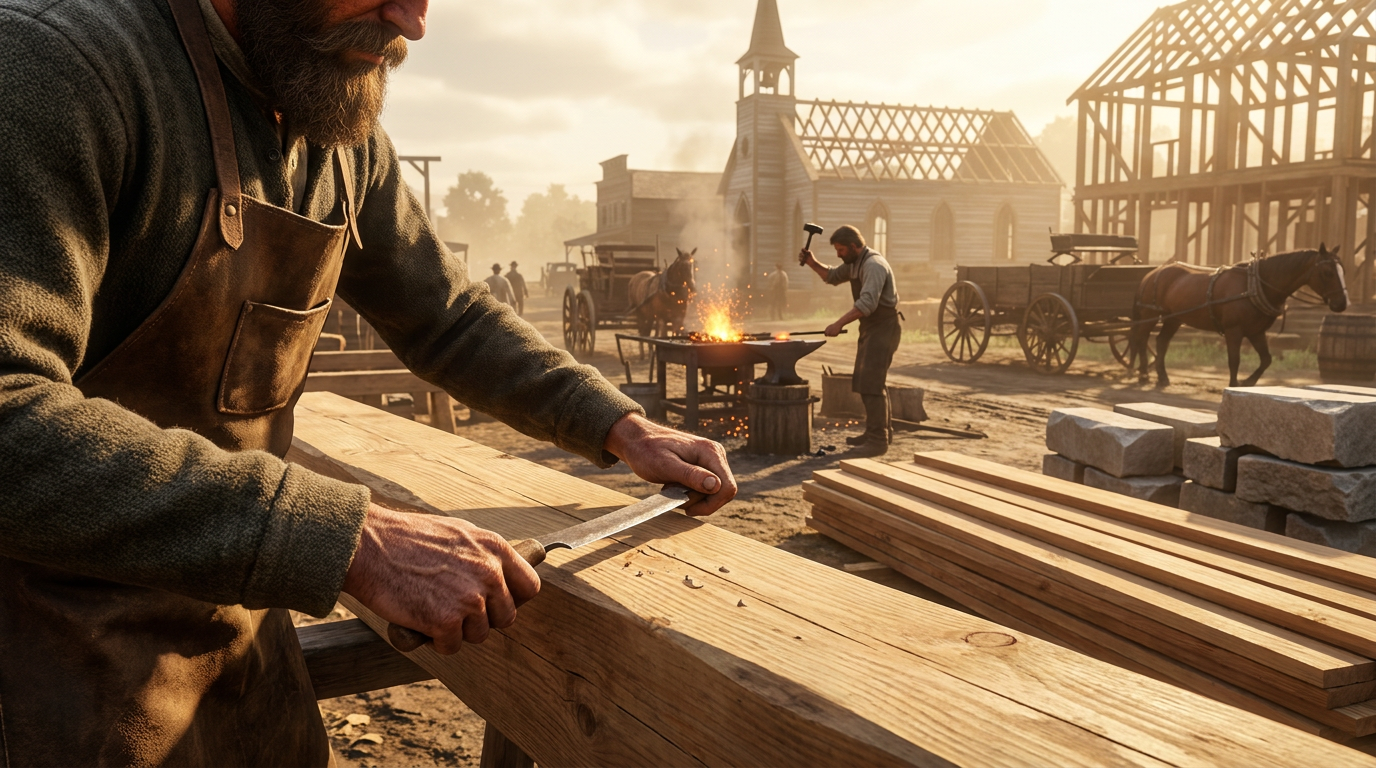
Craftsmen introduced remarkable woodworking, masonry, blacksmithing, and brewing traditions.

Farmers transformed fertile valleys into productive agricultural regions.

Their influence spread steadily westward as America expanded, eventually reaching nearly every corner of the nation.

Today, countless American communities still reflect those early German roots through architecture, food, festivals, family traditions, and a strong sense of community.

“Heritage isn’t something you simply inherit—it’s something you discover, celebrate, and pass on.”

More Than Bratwurst and Beer

When many Americans think of German culture, delicious food and Oktoberfest celebrations often come to mind first—and for good reason.

German culinary traditions have become part of everyday American life.

Bratwurst.

Pretzels.

Sauerkraut.

Apple strudel.

Black Forest cake.

Potato salad.

Fresh-baked breads.

Craft beer.

Yet German contributions reach far beyond the dinner table.

German-Americans helped shape nearly every aspect of American society, including:

  • Agriculture and farming innovations
  • Engineering and manufacturing
  • Brewing science
  • Public education
  • Architecture
  • Banking and finance
  • Medicine
  • Music and performing arts
  • Printing and publishing
  • Scientific research
  • Military service
  • Skilled trades and craftsmanship

Generations of German immigrants believed in hard work, education, faith, family, and community—values that continue to influence America today.

Pennsylvania: Where German Heritage Took Root

No discussion of German-American history would be complete without Pennsylvania.

Many of America’s earliest German settlements flourished throughout southeastern Pennsylvania, where German-speaking immigrants established farms, churches, schools, and thriving communities.

The term “Pennsylvania Dutch” actually comes from the word “Deutsch,” meaning German.

Visitors today can explore picturesque countryside filled with:

  • Historic covered bridges
  • Family farms
  • Farmers markets
  • Traditional bakeries
  • Handcrafted furniture shops
  • Historic churches
  • Heritage museums
  • Amish and Mennonite communities with German roots

Fresh pretzels, homemade pies, smoked meats, quilts, and warm hospitality continue to welcome travelers from around the world.

Walking through these communities often feels like stepping into another century.

Texas: German Heritage Meets the Lone Star State

Central Texas offers one of America’s most fascinating blends of German culture and Texas hospitality.

Beginning in the mid-1800s, German immigrants founded communities that still proudly celebrate their heritage today.

Historic downtowns feature:

  • Bavarian-inspired architecture
  • Authentic German restaurants
  • Local biergartens
  • Historic dance halls
  • Boutique shopping
  • Museums
  • Seasonal festivals
  • Family-owned wineries

The rolling hills of the Texas Hill Country create an unforgettable backdrop for road trips, especially during summer.

Visitors quickly discover that German traditions remain very much alive through food, music, architecture, and community celebrations.

Wisconsin: A Tradition of Craftsmanship

Wisconsin’s German influence extends far beyond beer.

German immigrants helped establish thriving dairy farms, manufacturing businesses, schools, churches, and civic organizations.

Today, visitors can enjoy:

  • Historic breweries
  • Cheese factories
  • Summer festivals
  • Riverfront parks
  • Outdoor concerts
  • Farmers markets
  • German restaurants
  • Historic neighborhoods

Communities proudly celebrate their heritage while embracing modern tourism, making Wisconsin one of America’s most rewarding destinations for travelers interested in German culture.

» Read more

Raise a Stein: The Best Craft Breweries Keeping German Traditions Alive in America

There is something special about raising a frosty stein filled with a beautifully crafted lager.

Maybe it is the rich aroma of toasted malt. Perhaps it is the crisp finish of a perfectly brewed Helles. Or maybe it is the feeling that every sip connects us to generations of German brewers who perfected their craft long before modern America existed.

For millions of Americans with German ancestry, beer is more than just a beverage. It is a living connection to heritage, tradition, community, and craftsmanship.

In fact, German immigrants helped transform the entire American beer industry during the 1800s, introducing lager brewing techniques that would eventually become the dominant style of beer in the United States. Cities such as Milwaukee, Cincinnati, St. Louis, and countless smaller communities grew thriving brewing cultures thanks to German immigrant families who brought their recipes, techniques, and brewing philosophies with them.

Today, a new generation of craft brewers is rediscovering those traditions. Across America, passionate brewery owners are reviving German beer styles such as Märzen, Dunkel, Kölsch, Helles, Pilsner, Bock, Altbier, Kellerbier, and Weissbier. Rather than chasing trends, they are embracing balance, quality ingredients, patience, and centuries-old brewing methods.

As lager brewing experiences a major resurgence across the craft beer world, German-inspired breweries are becoming some of the most respected names in American brewing.

Before we visit some of America’s best German-inspired breweries, let’s raise a toast to the heritage that made it all possible.

“Beer makes every meal a feast, every table more elegant, every day more civilized.”
— Traditional German Proverb

A growing number of beer enthusiasts are discovering that sometimes the most exciting beer isn’t the hoppiest or strongest—it is the one brewed with the most discipline and respect for tradition.

German brewing has always been about exactly that.

Just as German-American communities have preserved their language, festivals, foods, and customs, these breweries are preserving a brewing legacy that spans centuries.

A beautiful pint of German-style lager begins with patience, precision, and craftsmanship.

https://images.openai.com/static-rsc-4/SPZXZZH_flITHcKueDS6ia_INxoihErUetUbdsTXhItUv0zzkJA1GSfm8i0HRylX58rDtWlEhb5n7nByZ51res4I9nHmzYEOk-hB8MigV2wV8Eb-pY9pg4ntrSEZJ3ufOtJRLl0mJwBZ_xgsBCzJEM8JdzUc5c79GzWL8QTZHxOM8CguwNwn8P1EynaZ5ZiH?purpose=fullsize

Why German Beer Traditions Still Matter

Many beer lovers are surprised to learn that some of the world’s most technically difficult beers are also among the simplest.

A classic German Helles may contain only a handful of ingredients. Yet every step of the brewing process must be executed perfectly.

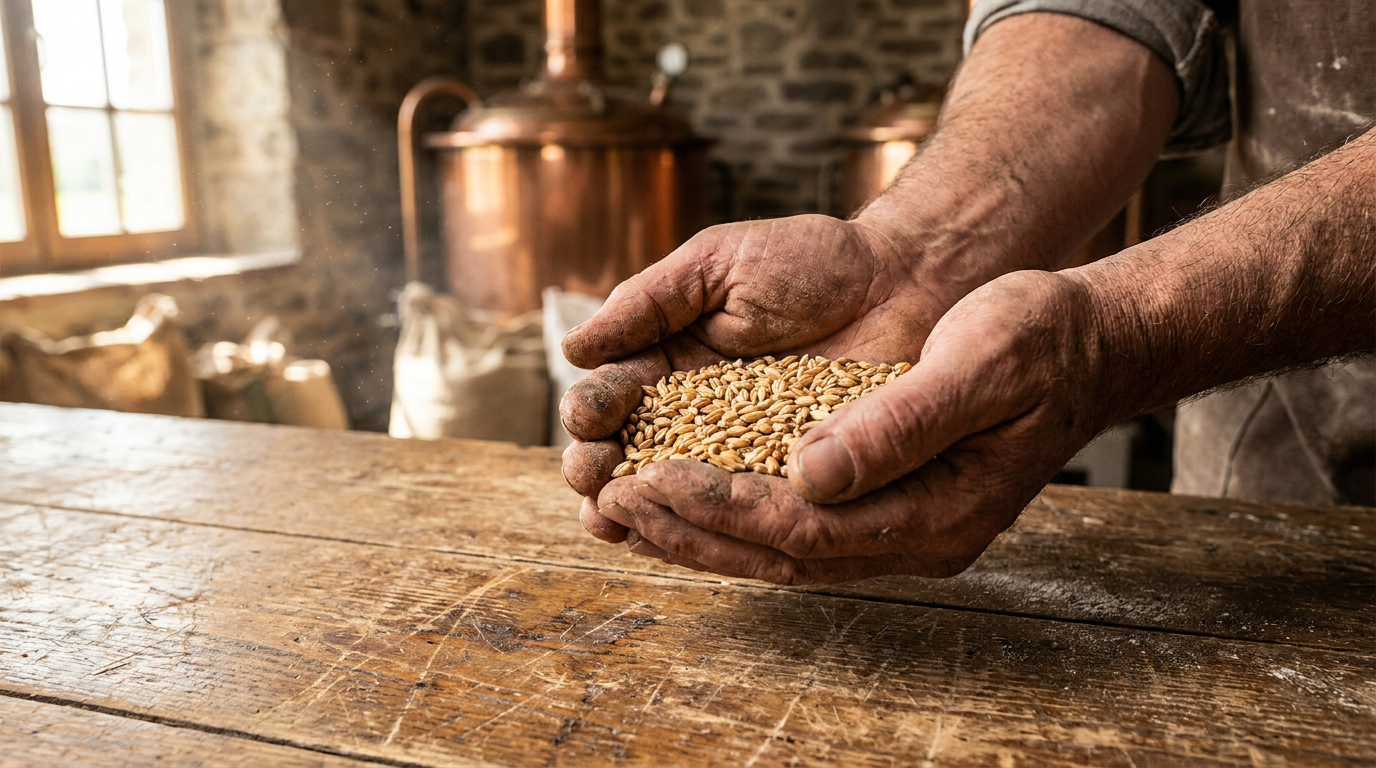
The word “lager” itself comes from the German word lagern, meaning “to store.” Traditional lagers are fermented at cooler temperatures and conditioned for weeks or months before serving. That extra time creates the smooth, clean, crisp character that has made German beer famous around the world.

Unlike heavily hopped beers that can sometimes mask imperfections, lagers leave nowhere to hide. Every flaw becomes noticeable.

That’s why German brewers have long viewed brewing as both a science and an art.

German Styles Making a Big Comeback

Today’s craft beer fans are rediscovering:

  • Helles
  • Pilsner
  • Märzen
  • Dunkel
  • Kölsch
  • Altbier
  • Kellerbier
  • Bock
  • Doppelbock
  • Weissbier

Many American breweries are now building entire reputations around these styles rather than following the latest beer trends.


Dovetail Brewery – Chicago’s Love Letter to Europe

Among serious lager enthusiasts, one name appears repeatedly: Dovetail Brewery in Chicago.

Beer fans frequently praise Dovetail for producing European-style beers using traditional methods and focusing on classic German and Central European styles. Reddit beer communities often describe their lagers as some of the most authentic available in the United States.

Rather than constantly reinventing recipes, Dovetail embraces:

  • Hefeweizen
  • Helles
  • Vienna Lager
  • Kölsch-inspired beers
  • Traditional fermentation techniques

Their philosophy reflects a distinctly German mindset: perfect the classics.

A traditional lager cellar remains one of the most fascinating parts of German-inspired brewing.

https://images.openai.com/static-rsc-4/wxY39axsFvrhhamAt6qq20Rn9wNjRB3SRRMk-C3nGM2XUFWLSyxde2olU0moXvLwoHtBPU9Zg6K5Fa7lt1w3QsteMcfQWxzgBGk88wNGlWxqC_UnjqqK-bZ-ty7wHFT-1dYlhwcsuRJc7j06Ie8U1UCPWeZjdMxN_mA8GwAWHmplpzodKLMwP3X2bUuXpYWk?purpose=fullsize

Von Trapp Brewing – Alpine Brewing in Vermont

If the name sounds familiar, it should.

The brewery was founded by descendants of the famous Von Trapp family of The Sound of Music fame.

Located amid Vermont’s stunning mountain scenery, the brewery specializes in Austrian and German-style lagers and has earned praise among beer enthusiasts for its Helles, Dunkel, Pilsner, and Vienna-style offerings. Beer lovers frequently cite the brewery as one of America’s most underrated lager producers.

The brewery’s setting feels remarkably Alpine, creating an experience that combines heritage, scenery, and exceptional beer.

For travelers exploring German heritage destinations in America, this belongs high on the list.


Rosenstadt Brewery – German Purity in Portland

Portland may be famous for craft beer innovation, but one brewery there focuses on tradition.

Rosenstadt Brewery was founded with a mission to produce authentic German-style beer while following the Reinheitsgebot—the German Beer Purity Law. Founded by brewers passionate about German brewing culture, the brewery has become known for faithfully representing classic styles rather than reinventing them.

The Reinheitsgebot, first established in 1516, remains one of the most influential brewing laws in history.

Its original principle was simple:

Beer should be made using only a few pure ingredients.

That philosophy still inspires brewers around the world today.

» Read more

Family-Friendly German Heritage Destinations for Your Summer Road Trip

Summer in America is road trip season—the open highway, quirky roadside attractions, local diners, and family memories made one mile at a time. But what if your next family vacation could also become a journey through German-American history?

Across the United States, German Heritage is alive and thriving in towns where bratwurst sizzles on street corners, half-timbered architecture lines Main Street, and festivals celebrate traditions brought here by millions of German immigrants.

From Texas dance halls to Midwest beer gardens, from Bavarian-style mountain villages to hands-on immigrant museums, German heritage destinations offer more than beer steins and lederhosen—they offer kid-friendly fun, rich history, and unforgettable summer experiences.

German immigrants helped shape American farming, brewing, architecture, education, music, and holiday traditions. In fact, many beloved American staples—from kindergarten to Christmas trees—trace directly back to German roots.

“A people without the knowledge of their past history, origin and culture is like a tree without roots.” — Marcus Garvey

So pack the car, load up the kids, and prepare for a road trip where history meets fun. Here are some of the best family-friendly German heritage destinations across the USA.


For many families, the first surprise is discovering just how deeply German culture influenced America’s heartland from visiting various German Heritage Museaums.

In the 1800s, German immigrants became one of the largest ethnic groups in the United States, settling in Texas, Wisconsin, Missouri, Ohio, Pennsylvania, and beyond. They built breweries, churches, farms, schools, and entire towns that still reflect their roots today.

These destinations are perfect for summer because they combine culture with entertainment—think tubing rivers in Texas after schnitzel, alpine coaster rides in Washington after visiting a Bavarian village, or museum scavenger hunts before enjoying giant pretzels.

And unlike some historical destinations, German-American road trip stops often feel like mini theme parks—music, costumes, candy shops, and festivals included.

https://images.openai.com/static-rsc-4/MEm4vvtRVR1III2qvQl4x2y6a4iJ_FEO8GKUnrZQKE2FvXf_GbAYmpJGK9vdh5msjuwLTIsaFzM3UuRyTTH-v5W7HaJgG7Z9ViKsgqq0QMqQ8atA2BIgOloF03LihUZJMNKM2c0f7m5Avf3qH1-jA1Uo8Um3lZ3dyH7MrQDiNGlCusTWVWSSovOoNKlpI52Q?purpose=fullsize
1. Fredericksburg, Texas – Germany Deep in the Heart of Texas

Founded in 1846 by German settlers, Fredericksburg blends Lone Star spirit with old-world charm. Located in Texas Hill Country, this town is one of America’s most unique German heritage experiences.

Family Highlights:

  • Pioneer Museum with immersive German settler exhibits
  • Enchanted Rock hiking nearby
  • Authentic German bakeries and biergartens
  • Wildseed Farms and peach orchards
  • Main Street shopping for cuckoo clocks, toys, and sweets

Kids can learn how German immigrants adapted to frontier life, while parents enjoy schnitzel and sausage platters. Summer peach season makes this stop especially sweet.

Road Trip Bonus: Pair with nearby Luckenbach for music and dancing.


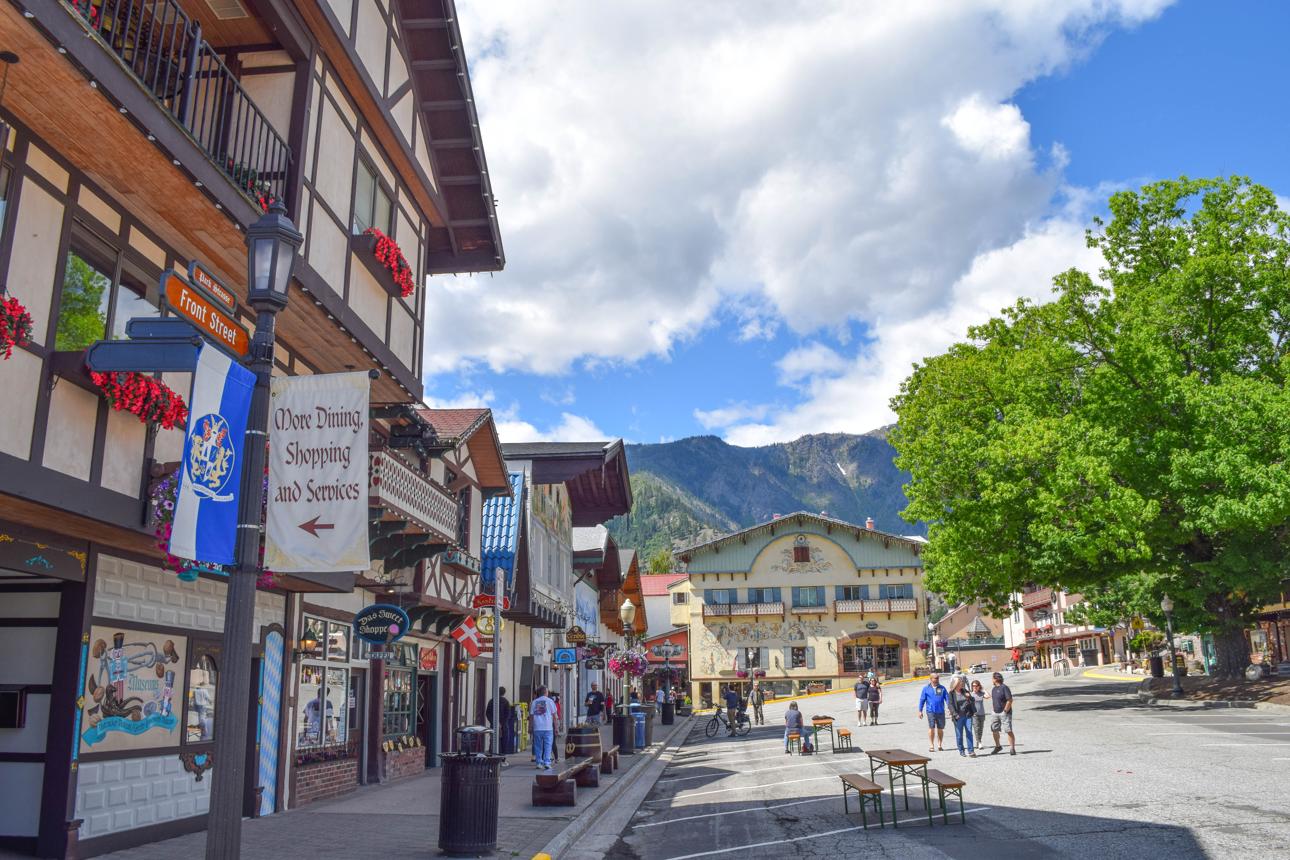
2. Leavenworth, Washington – Bavarian Alps Without the Passport

Nestled in the Cascade Mountains, Leavenworth looks like a Bavarian postcard. This transformed alpine town intentionally adopted German architecture in the 1960s and became a cultural tourism phenomenon.

Family Highlights:

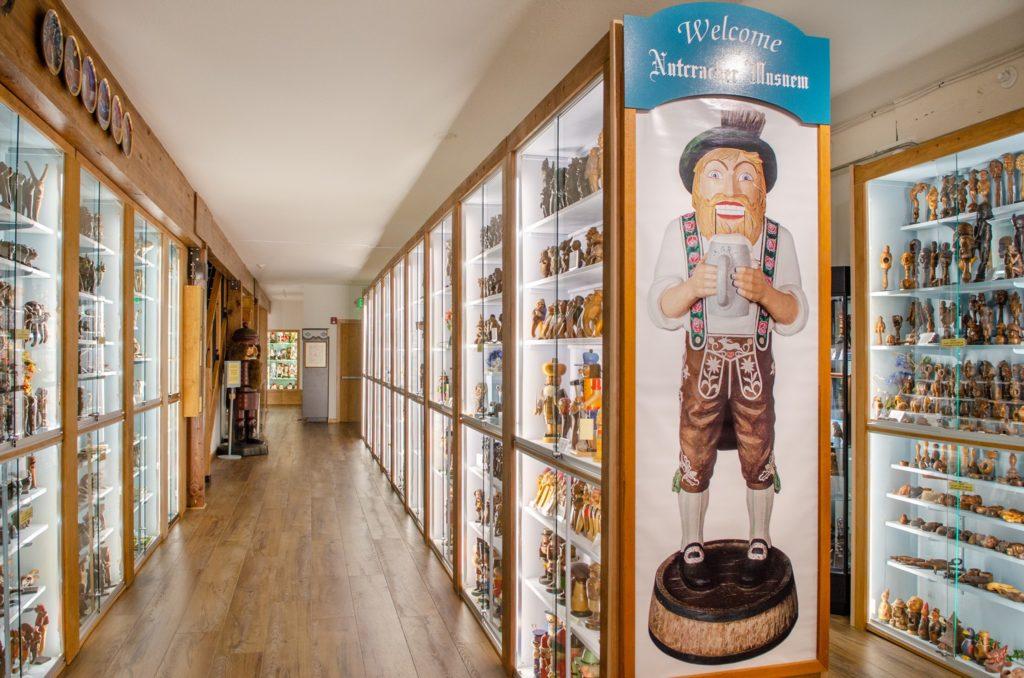
  • Nutcracker Museum
  • Alpine coaster and mountain adventures
  • River rafting and hiking
  • Bavarian candy shops
  • Summer outdoor concerts

Leavenworth is especially magical because it feels immersive—flower boxes, murals, and mountain backdrops create an almost European fantasy.

“Travel makes one modest. You see what a tiny place you occupy in the world.” — Gustave Flaubert

https://images.openai.com/static-rsc-4/bFScNPmkNqCBmnMKA4PaepGgxh7yyEcamtbrQGf-U_mChiB6wJUSf3kszAy9Xdm6yjMHX0-0fwkGVJ7BGsUXBXo6tUN9iU13roRLIZKL1nSJheQOXn7X-D5uFqZ0ibQI7OF1TgObnW3ERfRISF7iOi-1ECCr1x-_20Ipm5H6GduLgvLAPXOVyC23nl2kM678?purpose=fullsize

3. New Glarus, Wisconsin – America’s Little Switzerland with Germanic Roots

Though Swiss-inspired, New Glarus shares deep German-speaking cultural roots and offers Midwestern charm with rolling green landscapes.

Family Highlights:

  • Swiss Historical Village
  • Toy trains and local cheese shops
  • New Glarus Woods State Park
  • Family festivals with folk music
  • Root beer and brewery tours for older family members

Nearby Wisconsin communities also showcase German Heritage through food, architecture, and summer festivals.


4. Amana Colonies, Iowa – Old World Craftsmanship Meets Family Fun

Founded by German Pietists, the Amana Colonies preserve communal living traditions, craftsmanship, and foodways.

Family Highlights:

  • Traditional woodworking shops
  • Family-style German meals
  • Woolen mills and craft demonstrations
  • Ox Yoke Inn
  • Seasonal festivals and village strolls

This stop feels educational without being boring—children can watch artisans at work while parents enjoy handmade goods.

» Read more

Tracing the German Coast: Exploring Louisiana’s Hidden Heritage Near New Orleans

Long before jazz floated through the French Quarter and before Mardi Gras beads glittered in the Louisiana sun, German-speaking farmers were carving out a life along the Mississippi River. Their story is one of resilience, adaptation, and quiet influence — a heritage woven into the soil, cuisine, architecture, and even the surnames of southern Louisiana.

Today, just west of New Orleans, a stretch of river communities still echoes with this legacy. Known historically as the German Coast, this region tells a lesser-known but deeply American story: how German immigrants in the early 1700s helped feed a struggling French colony and laid foundations that endure nearly three centuries later.

For readers of German Heritage USA, this is more than a history lesson — it’s a travel invitation. Whether you’re a genealogy enthusiast tracing family roots, a foodie seeking authentic flavors, or simply a heritage traveler looking for your next meaningful getaway, Louisiana’s German Coast offers something uniquely unforgettable.

“Heritage isn’t always loud,” as one local historian once said. “Sometimes it whispers through recipes, riverbanks, and family names.”

Let’s follow that whisper.


The Origins: Germans on the Mississippi

In 1721, ships carrying German-speaking settlers — many from the Rhineland and Swiss cantons — arrived in French Louisiana. They had been recruited to strengthen the struggling colony and provide agricultural expertise. Conditions were harsh, but the settlers adapted quickly.

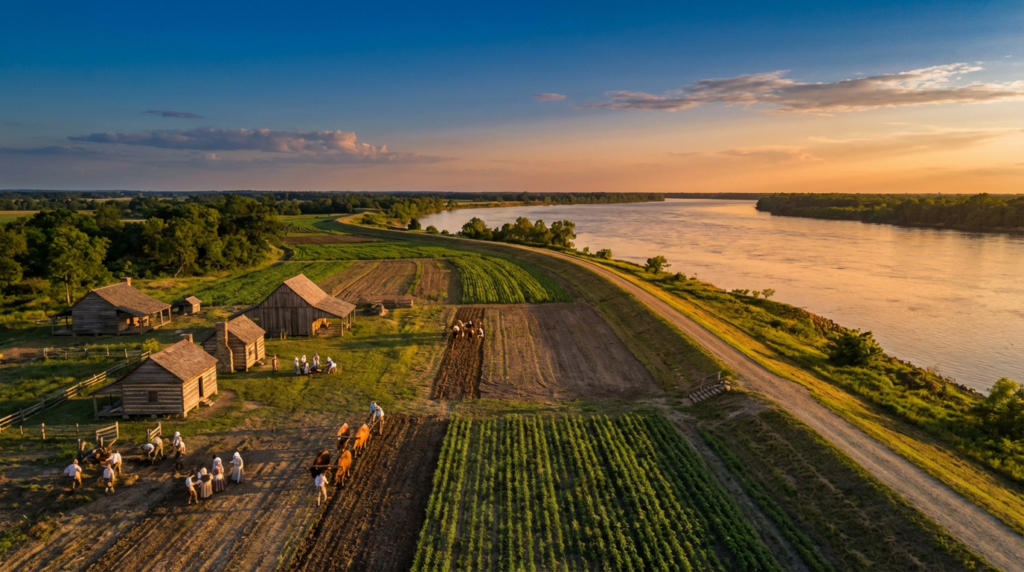
They established farming communities along the Mississippi River in what is now St. Charles Parish and St. John the Baptist Parish, transforming swampy terrain into productive farmland. Their crops — especially vegetables and grains — sustained early Louisiana settlements and even saved the colony from famine.

This region became known as the German Coast — La Côte des Allemands.

Their surnames — Waguespack, Schexnayder, Zeringue, Trosclair — still appear across southeastern Louisiana today.


Walking the River Road: A Journey Through Time

https://upload.wikimedia.org/wikipedia/commons/thumb/9/9f/Mapofgermancoast-1775.jpg/500px-Mapofgermancoast-1775.jpg
Driving west from New Orleans along River Road feels like entering a living museum. Towering oaks arch over historic homes. Sugarcane fields ripple in the breeze. The Mississippi flows thick and steady, just as it did 300 years ago.

While much of the River Road is known for grand plantation homes, the German Coast story is quieter and more agrarian. These settlers were small farmers, not plantation elites. Their strength was community cooperation, craftsmanship, and agricultural skill.

Today, visitors can explore:

  • Local parish museums
  • Historic cemeteries with German surnames
  • Preserved churches rooted in 18th-century Catholic traditions
  • Community heritage festivals celebrating German ancestry

This is heritage tourism at its most authentic — less commercial, more personal.


St. Charles Parish: Where the Story Began

In Destrehan, located in St. Charles Parish, you’ll find some of the strongest German Coast roots.

Local Catholic churches, such as St. Charles Borromeo, became centers of community life. Baptismal and marriage records from the 1700s reveal the blending of German, French, and Spanish influences that shaped Louisiana’s identity.

The German settlers integrated into French Louisiana society while preserving elements of their language and customs. Over generations, their dialect evolved into what historians call “Louisiana German.”

Many of their traditions survive through:

  • Family-run farms
  • Parish festivals
  • Culinary heritage
  • Genealogical societies

For ancestry researchers, parish church archives are treasure troves of early colonial records.


A Culinary Legacy: From Bratwurst to Andouille

If you love German food traditions, Louisiana might surprise you.

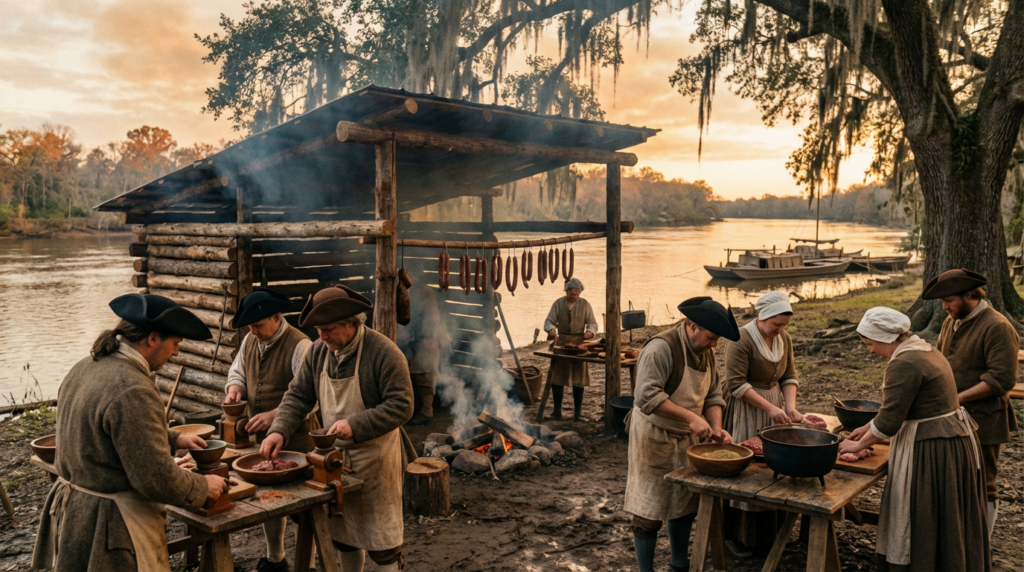
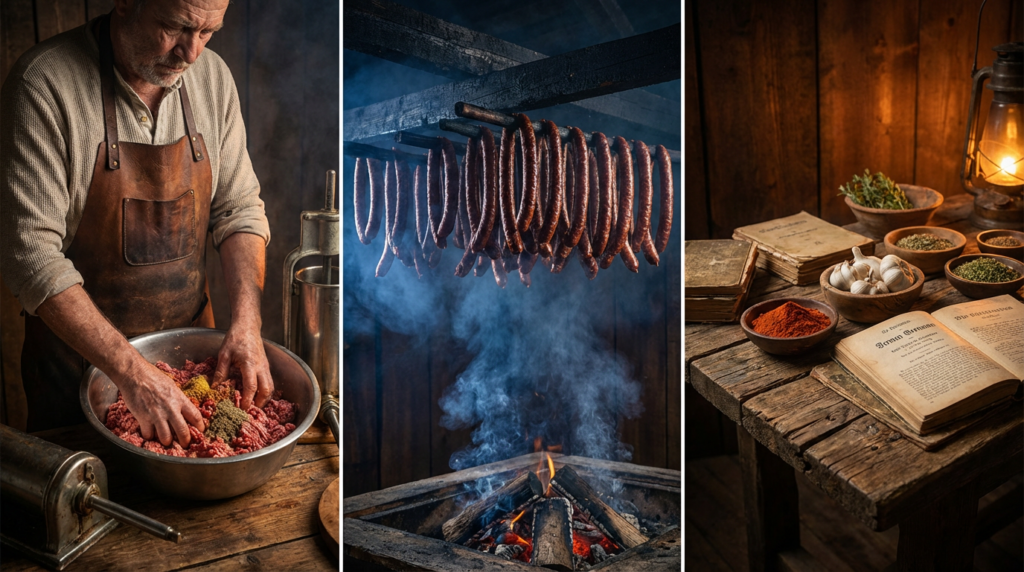
The German Coast settlers brought sausage-making techniques that heavily influenced Louisiana’s famous andouille sausage.

While Cajun and Creole flavors evolved over time, the smoking methods and spice traditions show clear European roots.

The German influence also extended to:

  • Bread baking traditions
  • Pickling methods
  • Hearty stews
  • Beer brewing (in later generations)

“Food is the most delicious form of memory,” says a chef from the River Parishes. “Every bite carries a story.”

Today, travelers can sample heritage-inspired dishes in local restaurants near New Orleans while knowing that the flavors reflect centuries of cultural blending.

» Read more

Ancestry, DNA & Discovery: Tracing Your German Roots

For millions of Americans, the journey to discover German roots begins with a simple question: “Where did my family come from?” Maybe it’s a last name that ends in -mann, -berg, or -schmidt. Maybe it’s a grandmother’s recipe for sauerbraten or a dusty Bible written in Gothic script. Or perhaps it’s a DNA test result that flashes “40% Germanic Europe” and sparks curiosity.

German Americans represent one of the largest ancestry groups in the United States. From Pennsylvania to Texas, Wisconsin to Nebraska, their influence is stitched into the American story—through farming traditions, music, architecture, Christmas customs, language, and even food staples like hot dogs and pretzels.

But tracing German ancestry can feel overwhelming. Borders changed. Names were Americanized. Records were handwritten in old German script. Entire regions shifted from kingdoms to empires to modern states. Yet, with today’s digital tools, DNA testing, and global archives, discovering your German heritage has never been more accessible—or more exciting.

“Genealogy is not about names and dates. It’s about stories, identity, and belonging.”

Let’s explore how to trace your German roots—step by step—while uncovering the rich cultural tapestry behind your family’s story.


Step 1: Start at Home – The Power of Family Stories

Before diving into DNA databases and European archives, begin with what you already have.

https://images.openai.com/static-rsc-3/-A1N5CCnGVFUa97BcVhJ69JWmVpAk7ImAkCJIVvj6Q0ROE0NOzMYa83gOUymPnsiQfiJxNF5ScOI4zMKBPB-Ll0252HEIcYYV3giyfJNWuI?purpose=fullsize&v=1
Family Bibles, immigration papers, naturalization certificates, handwritten letters, and photo albums are treasure troves. Interview older relatives. Record their stories. Ask questions like:
  • Do you remember the original spelling of our surname?
  • Was our family Catholic or Lutheran?
  • Did anyone mention a specific town in Germany?
  • When did our family come to America?

Even small details matter. A city name like “Bremen” or “Bavaria” may actually refer to a departure port or a larger region rather than a specific village. German genealogy often hinges on identifying the exact town of origin.

» Read more

The Case for 60 Million: How Anglicization and Assimilation Expanded German Heritage

For generations, Americans of German ancestry have been everywhere—and almost nowhere at the same time.

They helped build towns, farms, breweries, churches, universities, businesses, and entire regions of the United States. German words entered American English. German customs became American traditions. German family names filled phone books, gravestones, and town records—often without anyone realizing their origins.

And yet, when modern Americans are asked about ancestry, German heritage often seems quieter than expected.

But what if that quietness doesn’t reflect absence at all?

What if it reflects something far more powerful: successful assimilation, cultural blending, and identity expansion?

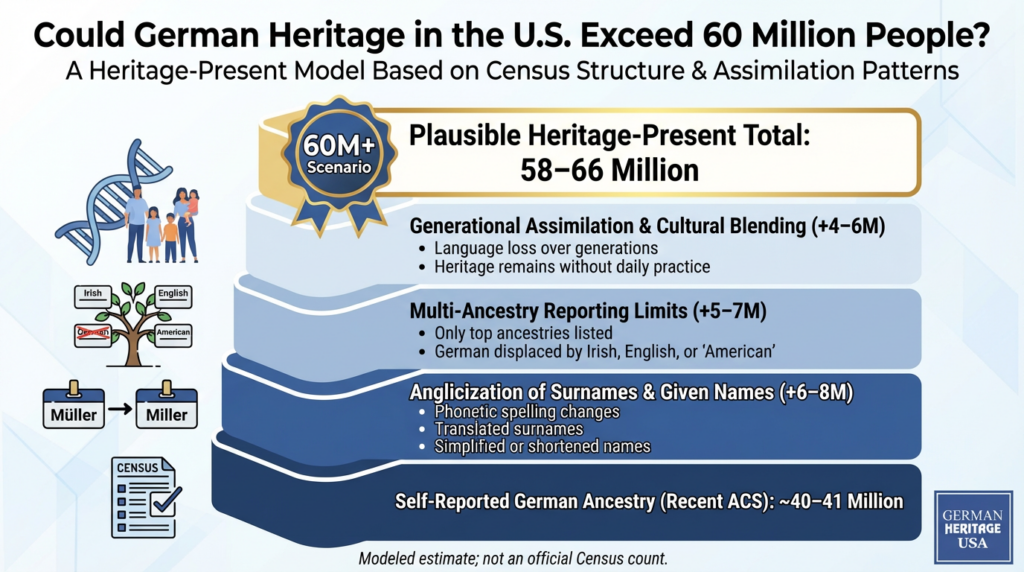
Recent self-reported U.S. Census and American Community Survey (ACS) data places Americans identifying as German at roughly 40–41 million people, already making German ancestry the single largest self-reported European heritage group in the United States.

However, when we examine how ancestry is reported, how names changed, how families blended, and how identity simplified over generations, a compelling case emerges:

Americans of German ancestry may realistically exceed 60 million people—making German heritage the largest national ancestry group in the United States.

This article explores how and why that happened—not through disappearance, but through integration.


The Starting Point: What the Census Actually Measures

Before diving deeper, it’s important to understand what U.S. ancestry data does and does not measure.

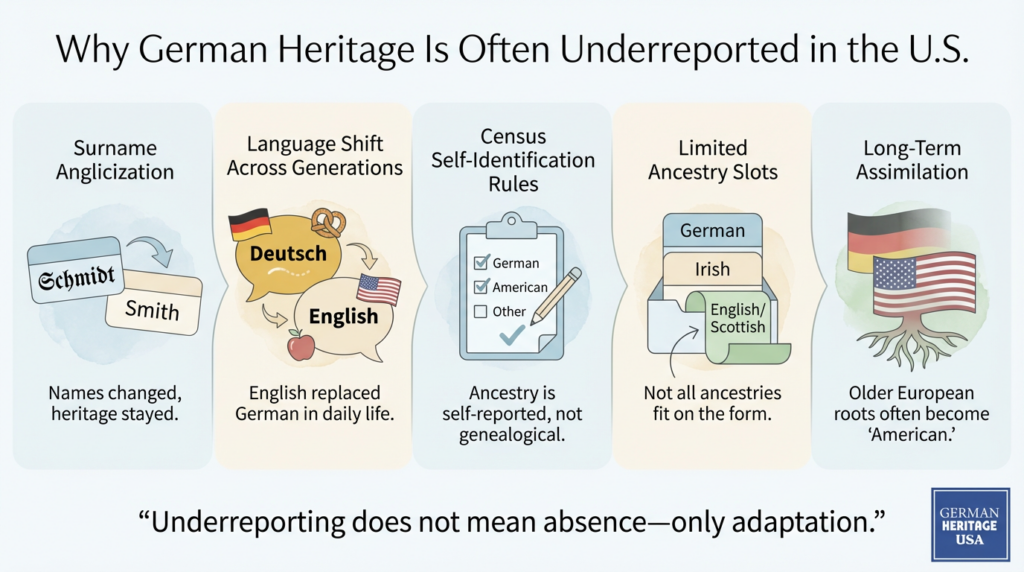
The Census and ACS rely on self-reported ancestry, not genealogical verification. Individuals answer based on:

  • What they know
  • What they were told
  • What feels most relevant to their identity
  • What fits on the form

Ancestry is not ranked by genetic percentage, nor does it capture every ancestral line. In many cases, respondents list only one or two ancestries—even when their family history is far more complex.

That matters deeply for German Americans, whose history in the U.S. stretches back centuries and intersects with nearly every other major European heritage group.


Anglicization: When Names Changed but Heritage Stayed

https://i0.wp.com/familylocket.com/wp-content/uploads/2021/04/family-picture.png?resize=745%2C712&ssl=1
One of the most powerful—and least controversial—factors shaping German heritage visibility is anglicization.

German immigrants and their descendants frequently adapted names for:

  • Pronunciation
  • Employment opportunities
  • Social integration
  • Simplicity in an English-speaking society

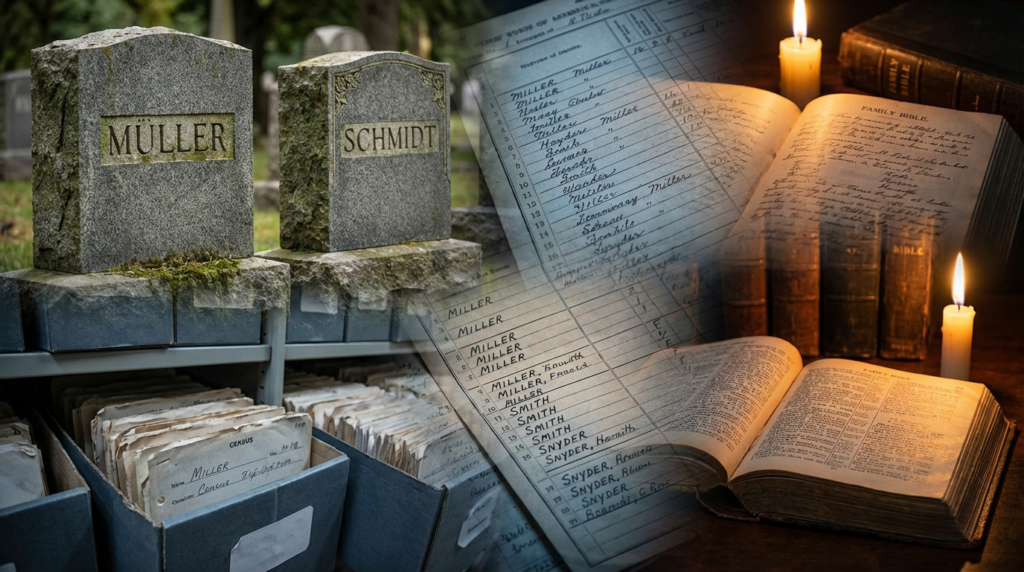
This process was rarely about erasing heritage. More often, it was about belonging.

Müller became Miller
Schmidt became Smith
Schneider became Taylor
Zimmermann became Carpenter

Over generations, those changes made German roots less immediately visible, especially to descendants who grew up with English surnames and little exposure to German language.

As one historian famously noted:

“Names didn’t disappear. They translated.”

The infographics included throughout this article visually demonstrate how millions of German descendants remain genetically and historically connected—despite name evolution.

» Read more

Old World Charm, New World Pride: German Heritage Across America

German Heritage in the United States is both timeless and evolving. With roots tracing back to the earliest waves of settlers in the 17th century, German Americans have infused their traditions, culture, and industrious spirit into the very fabric of American life.

Today, nearly one in four Americans claim some German ancestry, making it the largest self-identified ancestry group in the country. From beer gardens to Oktoberfest, from polka music to pioneering agricultural innovations, German influence is everywhere.

This article celebrates that journey—how the Old World charm of Germany crossed the Atlantic and blossomed into a New World pride across America.

A Journey Across the Atlantic: German Immigration to America

The story begins in 1683, when the first permanent German settlement was established in Germantown, Pennsylvania. These settlers came seeking religious freedom, economic opportunity, and a chance to build new lives.

Over the next two centuries, millions of Germans arrived, particularly during the mid-1800s when economic hardship and political unrest in Europe spurred emigration.

  • Pennsylvania Germans (often called “Pennsylvania Dutch”) were known for their farming skills, craftsmanship, and frugality.
  • Midwestern German immigrants settled heavily in Ohio, Wisconsin, Illinois, and Missouri, bringing with them traditions that would transform America’s Midwest into the “breadbasket of the world.”
  • Texas Germans created unique communities blending frontier life with German language, music, and architecture.

German immigration wasn’t just about numbers—it was about building lasting communities that blended old traditions with American ideals.


Faith, Family, and Festivals: Cultural Foundations

Germans brought with them three pillars that shaped their lives in America: faith, family, and festivals.

Faith

German-speaking congregations were some of the earliest Protestant and Catholic churches in America. Lutherans, Reformed, and Mennonites established communities where worship was central to life. Many churches doubled as schools, helping preserve the German language for generations.
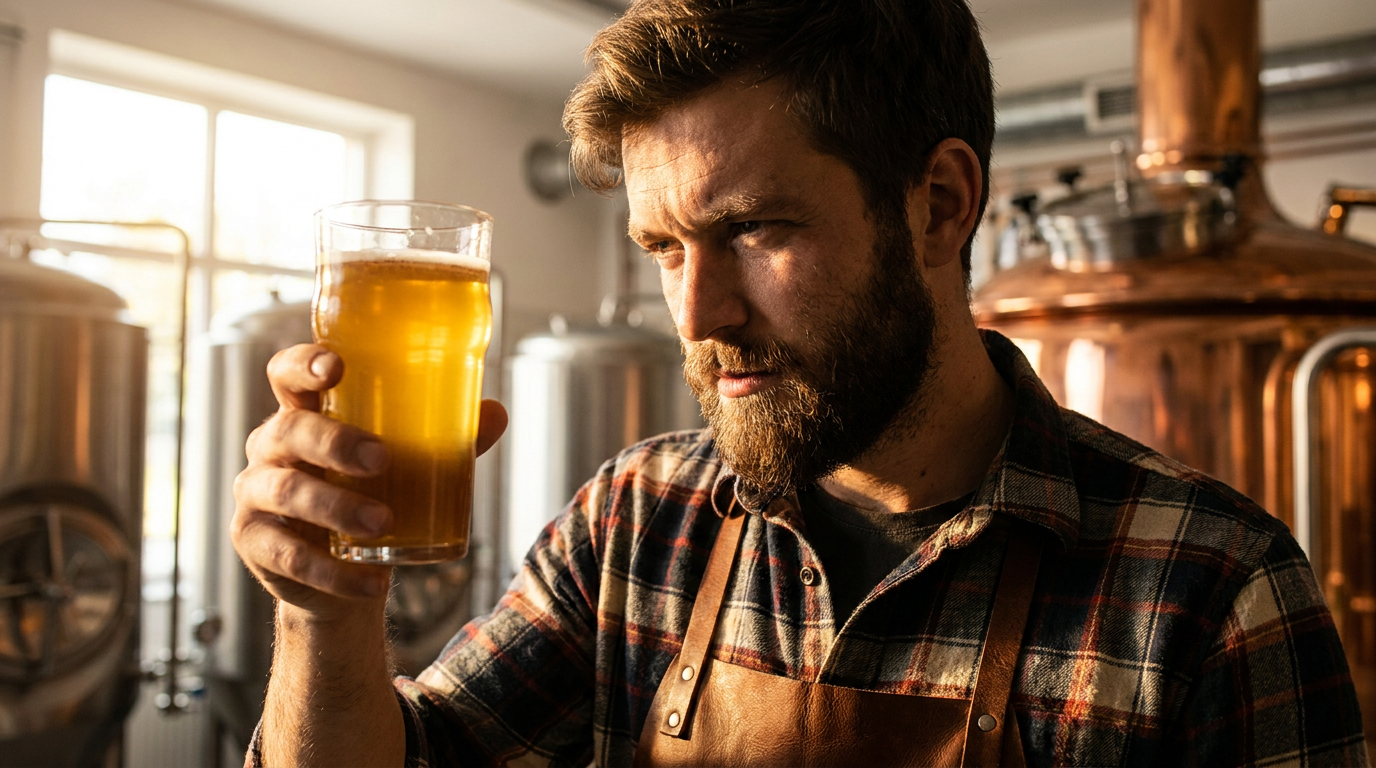
Family

German Americans placed strong emphasis on education, family structure, and work ethic. Family farms, passed down through generations, became the heart of rural America.

Festivals

From Oktoberfest to Christkindlmarkets, German festivals celebrated music, dance, and food. Even today, cities like Cincinnati, Milwaukee, and Frankenmuth, Michigan host annual festivals drawing crowds from around the world.


The German-American Contribution to American Life

German Americans shaped countless aspects of daily life in the U.S. Some of their most influential contributions include:

Family and Holiday Traditions

German immigrants brought with them beloved customs that soon became woven into the fabric of American life. The Christmas tree (Tannenbaum), decorated with candles, ornaments, and garlands, was popularized in the 19th century and is now an essential part of the holiday season in nearly every American home.

Traditions like Santa Claus (Kris Kringle), Easter eggs, and the Easter Bunny also arrived with German settlers, giving families cherished rituals that continue to bring joy each year. These celebrations highlight the German love of family, festivity, and togetherness—values that remain cornerstones of American culture.

» Read more

Embracing German-American Family Names: Uncovering the Stories Behind Them

In American history, German-American family names are like threads in a colorful tapestry. They carry rich stories and deep cultural roots. Exploring these names brings to light a legacy that influenced not just the lives of many but also America itself.1

This article takes you on a journey from the first German immigrants through to today. We will look at what these names mean and where they come from. This helps us understand the strength, successes, and ongoing impact of German-Americans.2

Key Takeaways

  • Discover the captivating tales behind German-American family names and the rich cultural heritage they represent.
  • Explore the history of German immigration to the United States and the lasting impact of German culture on American society.
  • Uncover the significance of family names, particularly those with German origins, and the stories and histories behind them.
  • Learn about the diversity and prevalence of German-American family names and the cultural influences that have shaped them over time.
  • Delve into the process of uncovering one’s ancestral roots, including genealogical research methods and DNA testing for German ancestry.

Tracing German Heritage in America

Generations of German immigrants have shaped America’s culture, social life, and economy. Their influence started with colonial settlers and grew with 19th-century immigrants.3

The Arrival of German Immigrants

German immigrants came from places like Württemberg, Pfalz, Saxony, and Westphalia. The Pennsylvania Dutch were among the first, arriving in the 18th century. Around 65,000 came to North America from 1727 to 1775.3 The 19th century saw a huge wave, with over 7 million Germans arriving. This period marked one of the largest immigrant movements in America’s history.3

They left Germany for various reasons, including political issues, poverty, and religious freedom. As they settled, they shared their culture, shaping American society.3

The Influence of German Culture on American Society

German culture is deeply ingrained in America, seen in its literature, art, and more. From Oktoberfest to beloved German foods, their traditions enrich American culture.3

German-Americans also had a big impact on science, tech, and the economy. Famous names such as Albert Einstein and Henry J. Heinz highlight this influence.3

Today, German heritage is a key part of American culture. The stories of German immigrants and their descendants remind us of America’s diverse fabric.

The Significance of Family Names

Family names are more than just words. They connect us to our past and culture. For German-Americans, these names tell meaningful tales. Since the 1100s, German surnames have been doing just that, sharing stories from different sources. These sources include names based on parents’ names, what people did for a living, how they looked, and even where they lived.4

» Read more

German Ancestry Tracing: How to Research Your Family History

Researching your German roots is a journey full of rewards. This guide will show you how to trace your German Heritage in America. It includes tips on finding family records and using genealogy tools online. These steps will help you dig into your German ancestry and get in touch with your heritage. No matter if you’re just starting or want to dig deeper, this article is here to guide you in discovering your family’s unique story.
Key Takeaways

  • The United States has conducted censuses every ten years since 1790, providing a wealth of ancestral data.1
  • German civil and church records can date back centuries, though strict privacy laws limit access.1
  • Navigating Germany’s historical regions and evolving borders is crucial for effective German ancestry research.1,2
  • Online resources like MeyersGaz.org, Kartenmeister, and Compgen.de can aid in locating ancestors’ hometowns.2
  • Professional genealogists with specialized German research expertise can provide invaluable guidance.

Uncovering Your German Roots

Looking into your German family history is much more than a pastime. It’s about finding yourself through understanding where you come from. This journey shows you your family’s past, their culture, and your personal story. You’ll learn about your ancestors’ lives, traditions, and what made your family who they are. Doing this can help you feel closer to your heritage and proud of your German and American mix.

The Importance of Tracing Your Ancestry

Start by talking to family members. Even distant relatives might have old family items that hold clues. These could be family Bibles, certificates, or letters. Such personal items often carry important details about your ancestors, like when and where they were born, got married, and passed away.

This information is key and will kick-start your search.

Starting Your Journey: Gathering Family Records

In today’s world, there are many digital tools for tracing your German roots. Websites, including RootsWeb and FamilySearch, are great starts. They give you access to a wealth of historical information. For example, you can find old records and ship logs that shed light on your ancestors’ lives.3 These sites let you do specific searches and offer maps to help you explore your family’s history.

Utilizing Online Genealogy Resources

With services like AncestryDNA, you can dig even deeper. This type of DNA test connects you to various German and European communities based on your genetics.3 Pairing this with an Ancestry membership opens the door to more info. The service recently added 266 communities specific to Germanic Europe. This makes it easier for those of German descent to find their roots.3

In a specific scenario, the DNA test was able to link someone to the Pomeranian and Mecklenburg regions.3 Using records from Eastern Prussian Provinces, Germany [Poland], individuals could find more. Details like date of birth, parents’ names, and spouse’s information can be uncovered.3 The availability of records, such as the 1819 Mecklenburg-Schwerin, Germany Census, is highlighted. Records from this particular census include people like Ferdinand Stiller.3

» Read more

The Enduring Legacy of German-American Inventors and Innovators

Did you know that German-American inventors and innovators have changed the world? They made big leaps in many areas. These include science and technology, medicine, music, and how things are built.

German Heritage

  • German-American inventors and innovators have made significant contributions to science, technology, medicine, music, and infrastructure.
  • Their German heritage has shaped their breakthroughs and innovations, reflecting their enduring legacy in America’s growth and advancement.
  • German-American entrepreneurship and business innovations have also played a vital role in shaping the country’s economic landscape.
  • German immigrants brought their brewing expertise to America, establishing a rich brewing tradition that continues to influence the beer industry.
  • German-American scholars and educators have advanced knowledge in various academic disciplines, contributing to the fields of education and research.

German-American Contributions to Science and Technology

Many important inventions and ideas come from German-American thinkers. They have changed how we live and work. Their hard work has led to new breakthroughs in science, engineering, and technology. This has made a big difference in many fields.

Albert Einstein is a well-known example of this. Born in Germany, he moved to the U.S. because of political differences. His work on the theory of relativity and the photoelectric effect won him the Nobel Prize. Einstein’s ideas have greatly impacted physics and our knowledge of the universe.

“Imagination is more important than knowledge. For knowledge is limited, whereas imagination embraces the entire world, stimulating progress, giving birth to evolution.” – Albert Einstein

Another example is Nikola Tesla, who was from Croatia and later became a U.S. citizen. He is famous for his work on electricity and wireless communication. Tesla’s inventions set the stage for our modern technology.

» Read more

Celebrate Spring’s Arrival: The Magic of Walpurgis Night

As the veil of winter loosens its grip and spring whispers promises of renewal, a vibrant festival ignites across pockets of Germany – Walpurgis Night (Walpurgisnacht).

Celebrated on the night of April 30th, this lively event is a heady mix of pre-Christian traditions, pagan rituals, and joyous revelry. Bonfires crackle, casting an orange glow on costumed revelers, while lively music fills the air, marking the symbolic banishment of winter and the jubilant welcome of spring.

This article delves into the history, traditions, and spirit of Walpurgis Night, exploring its significance in Germany and offering insights on how to capture its magic in the USA.

A Timeline of Traditions: Unveiling the Roots of Walpurgis Night

The origins of Walpurgis Night weave together a fascinating story of both history and folklore. The name itself is believed to be derived from Saint Walpurga, an 8th-century abbess revered for her missionary work in Germany. Over time, her feast day, coinciding with the pagan celebration of spring, became intertwined, creating a unique blend of Christian and pre-Christian traditions.

  • Pagan Roots: Prior to Christianity, Germanic tribes celebrated spring with bonfires to ward off evil spirits and promote fertility. These bonfires, believed to cleanse the land and usher in a bountiful harvest, formed the core of the pre-Christian celebration.
  • Christianization: With the arrival of Christianity, Saint Walpurga’s feast day became associated with the protection against evil spirits. 

» Read more

A Celebration of Spring’s Delicacy: Unveiling the Asparagus Festival that is Spargelfest

Spring awakens the senses with vibrant colors, blooming flowers, and a bounty of fresh produce. In Germany, the arrival of this season is heralded by a delightful festival – the Spargelfest, or Asparagus Festival.

This regional celebration honors the humble asparagus, a vegetable cherished for its delicate flavor and versatility. From delectable dishes prepared by restaurants to vibrant displays showcasing the harvest of local producers, the Spargelfest is a sensory feast that awakens taste buds and celebrates the bounty of spring.

A Tale of Two Colors: Unveiling White and Green Asparagus

Asparagus, a member of the lily family, boasts two distinct varieties: white and green. Both offer a unique taste and culinary experience.

  • White Asparagus (Spargel): This prized springtime delicacy is the star of the Spargelfest. Grown underground and meticulously harvested to prevent sunlight exposure, white asparagus boasts a tender texture, a slightly sweet flavor with subtle earthy notes, and a milder taste compared to its green counterpart. Germany takes immense pride in its white asparagus, with specific regions like Lower Saxony and Baden-Württemberg holding prominent positions as leading producers.
  • Green Asparagus: This readily available variety soaks up the sunshine, resulting in its vibrant green color. Green asparagus has a more robust flavor profile, offering a grassy note alongside its sweetness. While not the star of the Spargelfest, green asparagus is a versatile ingredient enjoyed year-round and often features in menus alongside its white cousin.

» Read more

A Total Eclipse Adventure: Chasing the Shadow Across Texas Hill Country’s German Gems

On April 8th, 2024, a celestial spectacle unlike any other will unfold across the skies of Texas. A rare total solar eclipse will plunge parts of the state into momentary darkness, creating a breathtaking natural phenomenon.

There is concern of cloudy conditions in the upcoming weather forecast on April 8th for much of the entire state of Texas. You may be wondering if you still must wear the special protective sunglasses because of the heavy cloud cover, and the answer is still yes.


Image by Great American Eclipse.com

Nestled within the eclipse path lies a string of charming towns steeped in German heritage, offering a unique blend of astronomical wonder and cultural immersion. This article charts your course through these Texas Hill Country gems, from Fredericksburg, bathed in totality, to nearby towns offering stunning partial views, all primed for an unforgettable eclipse experience.

Fredericksburg, Texas: Where Totality Reigns Supreme

Fredericksburg, a vibrant town founded by German immigrants in the mid-19th century, takes center stage on eclipse day.

This picturesque town, known for its rich heritage, delectable food, and welcoming atmosphere, will be the epicenter of totality, experiencing a complete blackout of the sun for a brief but awe-inspiring period.

  • Eclipse Viewing in Fredericksburg: The town is gearing up for the event, with organizations like the EclipseInFBGTX.com committee planning viewing parties, educational workshops, and special events. Expect the Main Street, lined with charming shops and restaurants, to be abuzz with excitement. Mark your calendars and secure your eclipse glasses well in advance, as Fredericksburg is likely to be a prime destination for eclipse chasers.

» Read more

EGG-citing Easter Traditions: A German-American Kid’s Perspective

This is for all my fellow Easter Egg enthusiasts and Easter Bunny believers! Buckle up because we’re about to embark on a journey through the colorful and chocolatey world of Easter traditions, from a German-American kid’s perspective.

Growing up in the heartland of America in the 60s and 70s, Easter was a time of excitement and wonder. But let me tell you, it wasn’t all about the theological aspects – oh no! For us, Easter was a fusion of German immigrant traditions and American flair, featuring none other than the elusive Easter Bunny.

Now, picture this: it’s Easter morning, the sun is rising, it’s still early before Church and there’s a sense of anticipation in the air. As we groggily stumbled out of bed, our eyes widened at the sight of large, colorful eggs scattered around the house. These weren’t your ordinary eggs; they were candy-filled delights, half the size of a real egg but twice as sweet.

» Read more

A Spectacular Speckled Spectacle: The Story of the 10,000 Egg Tree and the Tradition of German Easter Trees

A family in Germany has a tradition of decorating a tree outside their home with 10,000 Easter eggs! It takes them about two weeks to complete this amazing feat.

Their tradition began in 1965 and has continued ever since. These colorful decorated trees, called Eierbaum, Osterbaum or Ostereierbäume in German, are a common sight in Germany during Easter.

See the original 10,000 easter egg tree decoration article by clicking here

Spring is a time of renewal, and for many cultures, Easter marks a joyous celebration of new beginnings. In Germany, the tradition of decorating trees with eggs takes this celebration to a whole new level. This article dives into the fascinating story of the 10,000 Egg Tree in Saalfeld, Germany, explores the history and variations of German Easter trees (Ostereierbäume), and provides tips for creating your own dazzling display and appreciating the art of intricately decorated eggs.

The Legendary 10,000 Egg Tree: A Feat of Dedication and Dazzling Display

Nestled in the heart of eastern Germany lies the town of Saalfeld, forever linked to a remarkable Easter tradition. For over 50 years, the Kraft family, led by Volker Kraft, meticulously adorned an apple tree in their garden with hand-painted Easter eggs. This wasn’t your average Easter basket decoration. By 2012, the tree boasted a staggering 10,000 eggs, a testament to the family’s dedication and the sheer joy of the tradition.

Sadly, due to storage limitations and the sheer volume of eggs, the Kraft family decided to stop adding to the tree in 2015. However, the legend of the 10,000 Egg Tree lives on, a reminder of the transformative power of Easter decorations and the enduring spirit of German traditions.

Beyond Saalfeld: Unveiling the History of German Easter Trees

The tradition of decorating trees with eggs in Germany, known as Ostereierbaum or Osterbaum, stretches back centuries. The exact origins remain unclear, but some historians believe it stems from pagan fertility rituals that were later incorporated into Christian Easter celebrations. Eggs, symbolizing new life and rebirth, became a natural choice for adorning trees during this springtime holiday.

Over time, the tradition evolved. Initially, real eggs were used, but as the practice gained popularity, hand-painted wooden eggs became more common. Today, Ostereierbäume come in all shapes and sizes, adorned with a dazzling array of colorful eggs, ribbons, and other decorations.

» Read more

Unveiling the Mythical World of Continental Giant German Rabbits

Imagine a rabbit the size of a medium-sized dog, with a gentle temperament and a love for cuddles. That’s the reality of the Continental Giant rabbit, also known as the German Giant. These majestic creatures are not your average cottontails – they’re the undisputed heavyweight champions of the rabbit world.

This article dives into the fascinating world of Continental Giants, exploring their typical size, historical origins, presence in America, and suitability as pets.

Gentle Giants: Unveiling the Mythical World of Continental Giant Rabbits

For centuries, rabbits have captured our hearts with their fluffy fur, twitchy noses, and playful personalities. But some rabbit breeds take cuteness to a whole new level, pushing the boundaries of size and temperament.

Enter the Continental Giant, both German and Flemish Giants fall under this Continental breed category are giant breeds that can challenge our perception of what a rabbit size maximum can really be.

Size Matters: Unveiling the Continental Giant’s Impressive Stature

So, just how big are these gentle giants? Continental Giants are true behemoths in the rabbit kingdom. On average, they can reach a staggering length of 4 feet (1.2 meters) and weigh a hefty 15-25 pounds (7-11 kilograms). The Guinness World Record holder, Ralph, a Continental Giant from England, tipped the scales at a whopping 53 pounds (24 kilograms)!

Their impressive size is matched by their impressive appetites. These giants can munch through a surprising amount of hay, vegetables, and specialized pellets daily.

One of the very first publicized Giant Rabbits was “Herman the German.” He was massive. Of course rabbits in Germany are also known as “hasenpfeffer” a German Rabbit Stew. Yikes!

Many say that this “Herman the German” Giant Rabbit popularized Continental Giant Rabbits as adorable pets for anyone.

When Herman first appeared on YouTube years ago, he became an instant sensation. You had to wonder how much and what did he actually eat every day?

See the original article of Herman the Giant German Rabbit by clicking here

Despite their size, Continental Giants are renowned for their docile and affectionate personalities. Often referred to as “gentle giants,” they are known to be calm, friendly, and even enjoy being cuddled.

» Read more

From Humble Brewers to Beer Barons: The German Brewmasters Who Shaped American Beer

The story of American beer is deeply intertwined with the story of German immigrants. In the mid-19th century, a wave of Germans arrived in the United States, bringing with them their love for a crisp, refreshing beverage called lager.

German Bier Barons of America

These skilled brewers, later dubbed “Beer Barons,” not only revolutionized the American beer industry but also left an indelible mark on the nation’s social and cultural landscape.

German Roots:

Brewing in Germany has a long and rich history dating back centuries. Monasteries were often the centers of brewing innovation, and by the 16th century, lager beers, brewed with bottom-fermenting yeast at cooler temperatures, became popular. These lagers were smoother and crisper than traditional ales, making them perfect for warmer climates.

Brewing Boom in America:

German immigrants faced many challenges upon arriving in America. Discrimination and competition were rampant, but their brewing skills offered a valuable opportunity.
Starting in the 1840s, German brewers began opening small breweries in major cities like Milwaukee, Chicago, and St. Louis. By the 1880’s, like many factory building, the brewery buildings grew in both size and production too. These breweries catered to the growing German immigrant population, but their delicious lagers soon attracted a wider audience.

Rise of the Barons:

While many German brewers operated small, local businesses, some rose to become industry giants. These individuals, later known as the “Beer Barons,” combined their brewing expertise with shrewd business acumen to build vast brewing empires.

» Read more

Unveiling the Dance of the Masks: A Journey into Rottweil’s Enchanting Fasnacht Tradition

In the heart of Europe, amidst the picturesque landscapes of Swabia, Germany, lies the charming town of Rottweil. Every February, Rottweil transforms into a stage for a captivating spectacle – the Tanz der Masken, also known as the Dance of the Masks.

This traditional Swabian festival, steeped in history and vibrant folklore, is a mesmerizing display of elaborately carved wooden masks, some dating back centuries.

This article delves into the enchanting world of Rottweil’s Tanz der Masken, exploring the types and themes of masks used, the origins of the festival, and the possibility of experiencing similar celebrations in the US. We’ll also explore the connection between Rottweil and the Rottweiler dog breed, and delve into the geographical location of Swabia.

A Symphony of Wood and Wonder: Unveiling the Masks of the Tanz der Masken

The heart of the Tanz der Masken lies in its remarkable collection of masks. These aren’t your average Halloween masks.

These intricately hand-carved wooden masterpieces, some as tall as the wearer, are true works of art, passed down through generations and meticulously cared for.

» Read more

Exploring the Heartfelt Traditions of German Valentine’s Day

Forget the pressure of red roses and dozen boxes of chocolates! Valentine’s Day in Germany offers a unique blend of tradition and romance, with a focus on experiences over extravagance.

While couples certainly enjoy celebrating their love, it’s not a day for grand gestures, but rather a chance to cherish your connection.

A Love Story with a Different Dialect

Valentine’s Day in the United States is a full-blown commercial affair, with children exchanging cards in classrooms and couples splurging on expensive gifts. In Germany, it’s a more intimate affair. Children don’t participate in the festivities, and adults in romantic relationships take center stage. This creates a more personal and focused celebration on your special someone.

A Touch of Germany: Geschenkideen (Gift Ideas)

So, how can you incorporate a touch of Germany into your Valentine’s Day celebration? Here are some ideas:

  • Schweinerei der Liebe (Pigs of Love): Pigs symbolize luck and lust in German culture. Surprise your loved one with a playful pig figurine, a box of marzipan pigs, or a funny card featuring a cartoon pig.
  • Lebkuchenherzen (Gingerbread Hearts): These beautifully decorated heart-shaped cookies, often inscribed with romantic messages like “Ich liebe dich” (I love you), are a delicious and traditional Valentine’s Day treat in Germany. You can find them online or try your hand at baking your own!
  • Blumen sagen viel (Flowers Speak Volumes): While flowers are always appreciated, consider some typically German blooms. Red roses are still popular, but why not surprise your sweetheart with a bouquet of lilies (reinheit – purity) or Edelweiss (ewige Liebe – eternal love)?

Süße Verführungen (Sweet Seductions):

Chocolates are a universal symbol of love, but why not add a German twist? Look for chocolates flavored with liqueurs like Kirschwasser (cherry brandy) or marzipan, a sweet almond paste that Germans love.

» Read more

The Many Faces of the German Carnival Season

Unleashing the Fun: A Guide to Germany’s Fascinating Fasching

Germany isn’t just about efficiency and bratwurst (although those are pretty awesome too).
Come February, the country transforms into a kaleidoscope of color, music, and merrymaking,
all thanks to the vibrant carnival season known as Fasching, Fastnacht, or Karneval. But wait, aren’t these three different things? Well, not quite.

Understanding the Names: A Carnival of Confusion Cleared Up

Fasching, Fastnacht, and Karneval all refer to the same thing: Germany’s epic pre-Lenten celebration. The terms are used interchangeably depending on the region. Fasching is more common in southern Germany, while Fastnacht reigns supreme in the west, and Karneval dominates the Rhineland. So, no matter which name you hear, you’re referring to the same fantastic festival.

When the Party Starts: Kicking Off the Carnival Countdown

Fasching/Fastnacht/Karneval isn’t a one-day bash; it’s a full-blown season of merriment. Technically, celebrations begin on November 11th at 11:11 am,
marked by the symbolic awakening of an elderly woman named ‘Frau Fasching’ in some regions. However, February is when things truly explode into a frenzy of fun.

The Grand Finale: Ash Wednesday and Beyond

Fasching/Fastnacht/Karneval doesn’t adhere to a fixed date in February. Instead, its conclusion hinges on a specific Christian holy day: Ash Wednesday.

This movable feast falls 46 days before Easter Sunday, meaning Fasching festivities can culminate anywhere between early and late February.

Celebrating in Style: The Hallmarks of a German Carnival

Now that you know the lingo and the loose timeframe, let’s delve into the heart of the celebrations. Expect a dazzling display of costumes – the more outrageous, the better! Think elaborate feathered headdresses, sparkling gowns, and quirky creature creations. Parades snake through the streets, pulsating with music and overflowing with infectious energy.

People dance in the streets, public squares transform into party zones, and laughter fills the air. And of course, no German celebration is complete without delicious food and drinks. Sample regional specialties, indulge in sweet treats, and raise a toast to the spirit of Fasching.

A Carnival for Everyone: Experiencing Fasching Beyond Germany

The magic of Fasching isn’t confined to German borders. Many cities with sizeable German-American populations host their own Fasching or Karneval celebrations in February. These events typically feature traditional food, music, and dancing, offering a fantastic opportunity to experience a slice of German culture without leaving the US.

So, if you’re looking for a unique way to shake off the winter blues, consider joining the revelry. Dust off your most creative costume, grab your dancing shoes, and get ready to immerse yourself in the joyous chaos that is Germany’s Fasching/Fastnacht/Karneval!

Fasching vs. Fastnacht vs. Karneval

While Fasching, Fastnacht, and Karneval all refer to the same celebration, there are some slight regional variations in traditions and celebrations. Here’s a quick breakdown:

Region
Name
Traditions
Southern Germany Fasching Focus on elaborate costumes and balls.
Western Germany Fastnacht More emphasis on street parades and feasting.
Rhineland Karneval Known for its satirical floats and commentary on political and social issues.

Fasching Fever in the USA: Partying Like a German across the Pond

The spirit of Fasching isn’t just for Germany. Many American cities with strong German heritage come alive in February with their own Fasching or Karneval celebrations. Here are a few highlights:

  • New Orleans, Louisiana: Once known as the “German Coast”, the Big Easy knows how to throw a party, and Fasching is no exception. Head to the historic French Quarter for Rex, King of Carnival, a flamboyant parade known for its throw beads and elaborate costumes.
  • Cincinnati, Ohio: Nicknamed “Fahrneytown” (Pigtown) by German immigrants in the 19th century, Cincinnati boasts a rich German heritage. Their Fasching celebration, held in February, is one of the largest in the US, featuring lively music, traditional food like bratwurst and potato pancakes, and of course, plenty of beer.
  • New Braunfels, Texas: Founded by German immigrants in 1845, New Braunfels holds a legendary Wurstfest every year in mid-November. While not exactly a Fasching celebration, it captures the spirit of German merrymaking with ten days of live music, polka dancing, and, as the name suggests, an endless variety of delicious sausages.
  • Milwaukee, Wisconsin: Home to a large German-American population, Milwaukee throws a fantastic Karneval bash in February. Expect vibrant parades, energetic dance performances, and a chance to sample Milwaukee’s famous beers.
  • Sausalito, California: This charming San Francisco Bay Area town holds a unique Fasching celebration that blends German traditions with a Californian twist. Think lively music, delicious food trucks, and a stunning backdrop of the Golden Gate Bridge.

These are just a few examples, and there are many other places across the US that hold Fasching or Karneval celebrations in February. Do some research to see if there’s a celebration happening near you!

Beyond the Parties: Exploring German Culture

While the parties are a blast, Fasching celebrations also offer a chance to delve deeper into German culture. Many events feature traditional music and dance performances, giving you a glimpse into German artistic heritage.

Additionally, you might find booths selling German crafts and souvenirs, making for a perfect opportunity to take home a piece of the Fasching spirit.

So, this February, why not ditch the ordinary and embrace the extraordinary? Join a Fasching celebration, don a wacky costume, and let loose with the infectious joy that defines this vibrant German tradition!

Groundhog Day: A Holiday with Deep German Roots

Every February 2nd, a furry oracle emerges from its burrow, its shadow dictating the fate of winter’s grip. This, of course, is the legendary Groundhog Day, a uniquely North American tradition steeped in folklore and fun.

But did you know its roots lie not in snowy fields, but in the sun-drenched meadows of Germany? That’s right, Groundhog Day, with its quirky charm and weather predictions, bears the distinct paw prints of German immigrants. So, grab your lederhosen (or maybe just a warm coat) and burrow into the surprising history of this beloved holiday.

From Sunbeams to Shadows: The Germanic Origins

Imagine the scene: It’s the Christian holiday of Candlemas, February 2nd, in medieval Germany. Sunlight peeks through the clouds, casting hopeful beams on shivering peasants. They rejoice, for according to an ancient belief, sunshine on this day promises a harsh “second winter” with six more weeks of cold. But wait, what scurries across the sunlit path?

A badger, emerging from its winter slumber! If the badger sees its shadow, folklore warns, the extended winter is assured. This “Dachstag,” or Badger Day, held immense significance for farmers, their livelihoods hinging on the season’s whims.

Planting Traditions in Pennsylvania

Fast forward to the 18th and 19th centuries. German immigrants, particularly those settling in Pennsylvania Dutch Country, brought their customs and folklore across the Atlantic. However, the American landscape lacked badgers. Enter the resourceful groundhog, a close relative with similar hibernating habits. Presto! The tradition was reborn, with the furry Pennsylvanian cousin assuming the weather-predicting mantle.

The first documented mention of a groundhog forecasting winter dates back to 1840, and by the late 19th century, the custom had firmly rooted itself in American soil.

» Read more

A Celebration of the Humble Pinecone: Unveiling the Quirky Fun of Tannzapfenfest

Festivals come in all shapes and sizes, celebrating everything from food and music to history and culture. But have you ever heard of a festival dedicated to the pinecone?

In the charming town of Isny im Allgäu, nestled in the Bavarian Alps of Germany, lies a unique tradition – the Tannzapfenfest, or Pinecone Festival.

This build-up to this quirky pine cone celebration, begins in late January with the hunting and gathering thousands of pinecones that are needed to make this event happen, but the actual celebration is held annually in the month of February and is a testament to the ingenuity and lighthearted spirit of the region.

This article delves into the history and festivities of Tannzapfenfest, explores the surprising versatility of the pinecone, and even offers tips for incorporating this unique theme into celebrations in the US, pinecones and all!

Tannzapfenfest: A Celebration Rooted in Tradition

The exact origins of Tannzapfenfest remain shrouded in a bit of mystery. Some believe it originated from a practical need. Foresters, who collected pinecones for replanting purposes, might have held a festival to mark the end of the collection season. Another theory suggests it stemmed from a playful competition between villages, each vying to collect the most pinecones.

Regardless of its exact origin, Tannzapfenfest has become a beloved tradition in Isny im Allgäu. The festival takes place over several days in February, with the exact dates varying from year to year.

A Festival Fit for a King (or Queen) of Cones

Tannzapfenfest is a vibrant celebration that offers something for everyone. 

  • The Grand Pinecone Parade: The highlight of the festival is undoubtedly the parade. Imagine a spectacle of floats adorned with thousands of pinecones, marching bands playing lively tunes, and people dressed in colorful costumes, all celebrating the humble cone.

» Read more

Exploring America’s Top 25 Towns with German Influences

The tapestry of American history is woven with threads from many cultures, and German immigrants have played a significant role in shaping its landscape. Their influence is evident not just in traditions and cuisine, but also in the names of countless towns scattered across the nation.

Today, we embark on a linguistic and cultural journey, exploring the origins and stories behind 25 American towns with charmingly German names:

1. New Braunfels, Texas: Founded in 1845 by a group of German nobles seeking religious freedom, New Braunfels (“New Braunfels”) retains its European charm with its historic architecture, lively festivals like Wurstfest, and the iconic Schlitterbahn waterpark.

2. Frankenmuth, Michigan: Nicknamed “Little Bavaria,” Frankenmuth (“Franconian Courage”) boasts the world’s largest Christmas store, Bronner’s Christmas Wonderland. Founded in 1845 by Lutheran Bavarians, the town celebrates its heritage with Oktoberfests, traditional Bavarian meals, and lively polka music.

3. Karlsruhe, North Dakota: Established in 1883 by German settlers, Karlsruhe (“Charles’s Rest”) reflects its European roots in its Lutheran church, German restaurants, and traditional Maifest celebrations.

» Read more

Embracing German Traditions: January Celebrations in America with a Twist

It’s almost January in Germany, and the party is just getting started in America. While Octoberfest might be the first thing that comes to mind when considering German-American celebrations, the truth is, the rich heritage of German culture offers unique celebrations throughout the year.
January, often painted as a quiet month after the holiday flurry, holds vibrant traditions in Germany that have found a warm welcome in the hearts of German-Americans. Prepare to delve into the magic of these winter festivities, where customs from the old world intertwine with American flair, creating a truly unique experience.

Neujahr: Ringing in the New Year with German Cheer

New Year’s Day, or Neujahr in German, is a national holiday in both Germany and the United States. While Americans raise champagne flutes at midnight, German-Americans often enjoy a different kind of bubbly cheer: Feuerzangenbowle. This fiery punch, prepared with rum-soaked sugar set ablaze, brings warmth and excitement to the festivities.

German-American communities often host Bleigießen, a traditional fortune-telling ritual using melted lead poured into water. The resulting shapes are interpreted to provide glimpses into the coming year, adding a touch of playful mysticism to the celebrations.

Heilige Drei Könige: Epiphany with a Caroling Twist

Epiphany, celebrated on January 6th, holds special significance for both religious and cultural reasons. In Germany, it’s known as Heilige Drei Könige (Three Kings’ Day), marking the arrival of the Magi. While it’s not a national holiday in the US, German-American communities keep the tradition alive with unique twists.

» Read more