
Erntedankfest vs. Thanksgiving: Two Nations, Two Traditions, One Beautiful Reason to Celebrate!
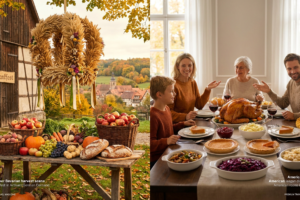
From Germany’s golden harvest fields to America’s Thanksgiving dinner tables, discover the fascinating histories, cherished customs, delicious foods, and German-American family traditions that celebrate gratitude across generations.

Two Countries, Two Celebrations, and One Beautiful Connection

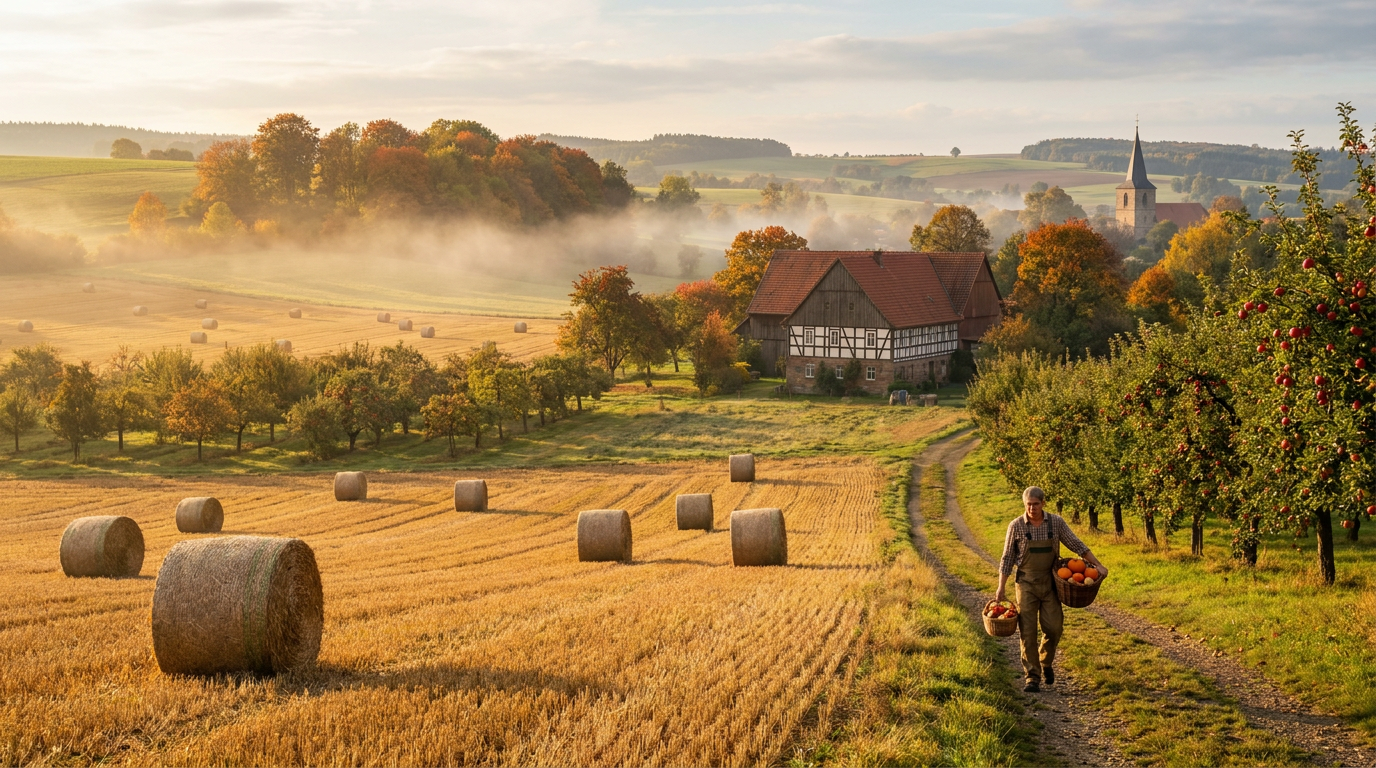
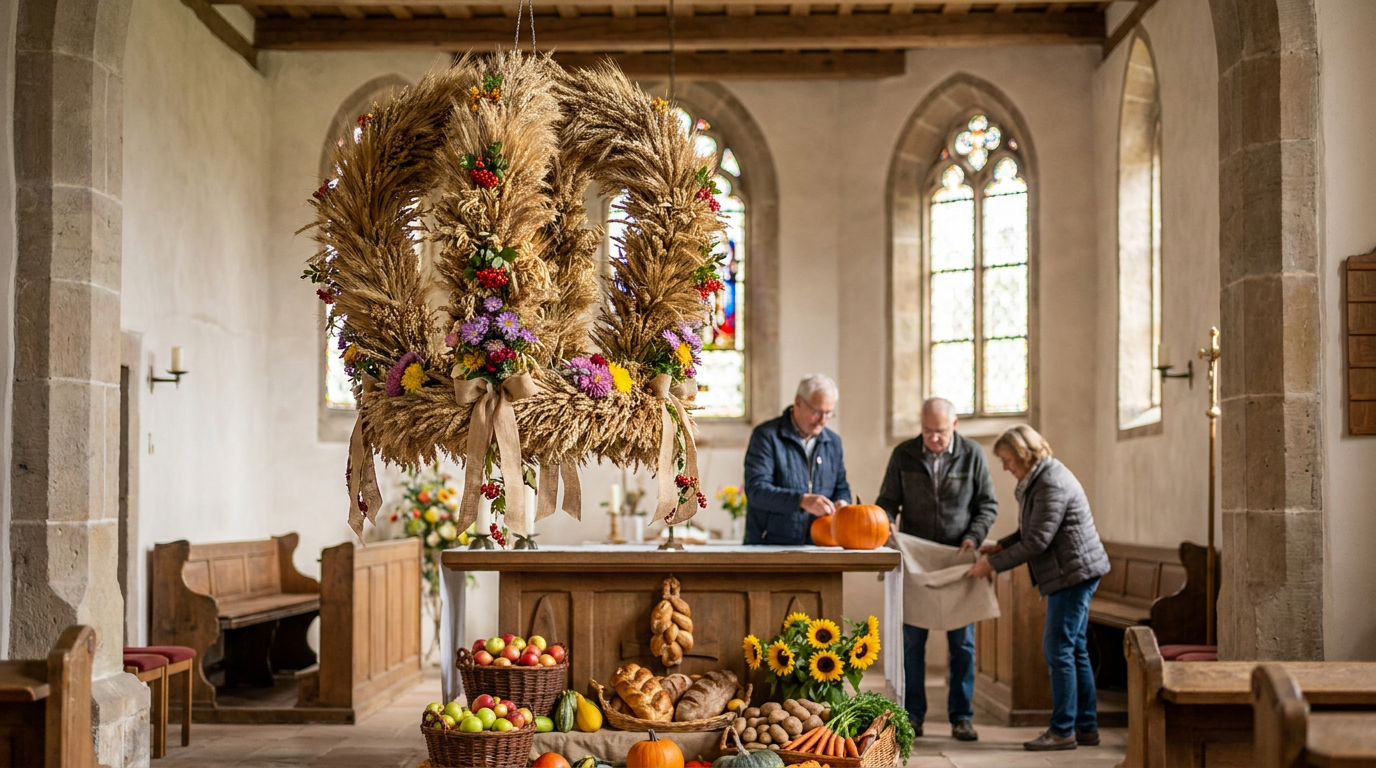
Imagine a picturesque German village on a crisp October morning. Golden leaves drift through the streets, church bells ring in the distance, and baskets overflow with freshly harvested apples, pumpkins, vegetables, and fragrant loaves of bread. Inside the village church, a magnificent crown woven from golden stalks of grain stands as a symbol of gratitude for another successful harvest.
Now imagine an American home several weeks later.

It’s Thanksgiving morning. A turkey is roasting in the oven, pumpkin pies are cooling on the counter, and family members are gathering around a beautifully decorated dining table. In a German-American household, perhaps there’s also a bowl of homemade sauerkraut, German red cabbage, or a beloved potato dish prepared from Grandma’s handwritten recipe.

Two countries. Two different celebrations. Yet one unmistakable connection: the importance of giving thanks for life’s blessings.

Germany celebrates Erntedankfest, its traditional harvest thanksgiving festival. America celebrates Thanksgiving, one of its most cherished national holidays.

Although these celebrations have distinct histories, they share themes of gratitude, community, family, food, and appreciation for the harvest.

And when generations of German immigrants made America their new home, something wonderful happened: German customs and American traditions began finding places together in the lives of German-American families.

Let’s explore the history, the differences, the similarities, and the delicious cultural connections that make these two celebrations so special.

1. What Exactly Is Erntedankfest? Germany’s Beautiful Harvest Thanksgiving

The German word Erntedankfest (approximately pronounced EHRN-tuh-dahnk-fest) translates to “harvest thanksgiving festival.”

Break the word into three parts:

  • Ernte — Harvest
  • Dank — Thanks or gratitude
  • Fest — Festival or celebration

Put them together and you have a celebration devoted to expressing appreciation for the harvest and the blessings that sustain everyday life.
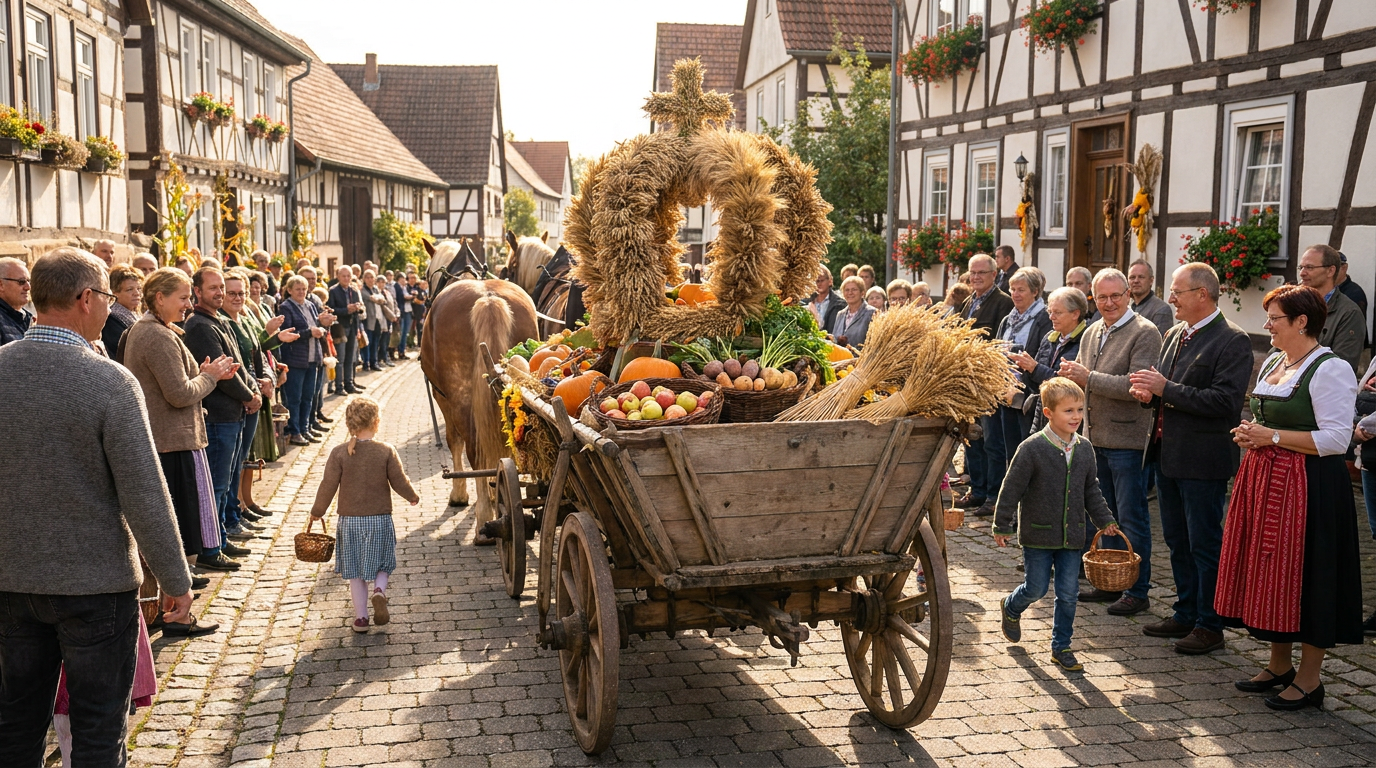
For generations, farming communities throughout German-speaking regions have recognized the importance of successful crops, healthy livestock, and the people whose labor provides food for everyone.

Today, Erntedankfest is primarily associated with Christian thanksgiving services, particularly in Protestant and Catholic communities.

Church altars are adorned with colorful produce, freshly baked bread, wheat, flowers, and other symbols of agricultural abundance.

In some communities, celebrations extend beyond the church to include processions, music, festivals, and shared meals.

When is Erntedankfest celebrated?

Traditionally, many German communities observe the festival on the first Sunday in October, although regional practices vary. In wine-growing regions, celebrations may take place later in the harvest season.

In 2026, the commonly observed date was Sunday, October 4.

Unlike Thanksgiving in the United States, Erntedankfest is not a nationwide public holiday in Germany.

That distinction reveals something interesting: Germany’s harvest thanksgiving is traditionally rooted in religious and community life rather than a nationally mandated day of celebration.
» Read more

Erntedankfest and Thanksgiving: A Celebration of Gratitude

Harvest festivals unite people worldwide to thank nature for its gifts. Erntedankfest in Germany and Thanksgiving in the U.S. share gratitude but have their own traditions.

Erntedankfest happens in early autumn in Germany. It’s a time of joy, mixing faith with community spirit. In contrast, American Thanksgiving is a national holiday for family and big meals.

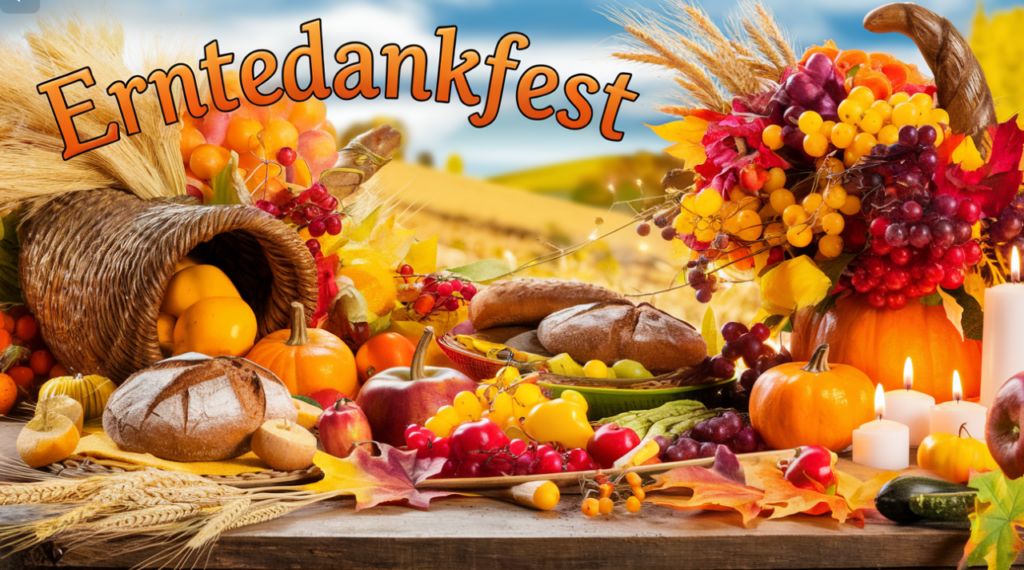
A vibrant Erntedankfest celebration scene featuring a traditional rustic harvest table adorned with colorful autumnal fruits, vegetables, and freshly baked bread. Nearby, a lush cornucopia overflowing with seasonal produce in warm hues, surrounded by decorative wheat sheaves and candles. The backdrop includes a picturesque countryside landscape with golden fields and a bright blue sky, evoking a sense of abundance and gratitude.

Erntedankfest has church services and parades, with local twists. American Thanksgiving is about turkey dinners and football games.

Both festivals celebrate thankfulness and togetherness. They help us think about our blessings and bond with family and friends, connecting us all.

Key Takeaways

  • Erntedankfest is usually celebrated in early autumn in Germany
  • American Thanksgiving is a national holiday in November
  • Both festivals focus on gratitude for the harvest
  • Erntedankfest often includes religious services and parades
  • American Thanksgiving is known for family gatherings and turkey dinners
  • Both celebrations emphasize community and thankfulness

Understanding the Rich Heritage of Harvest Festivals

Harvest festivals in Germany and Thanksgiving in the USA have deep roots. They come from ancient times when people celebrated the end of the growing season. Over time, they have mixed religious and cultural elements, becoming beloved holidays in both countries.

Ancient Agricultural Roots

Harvest festivals started long ago, when people celebrated the end of harvest. In Germany, these early events led to Erntedankfest. In the USA, Native American harvest rituals helped shape Thanksgiving.

Evolution into Modern Celebrations

Erntedankfest in Germany began in the 17th century, thanks to Protestant churches. By the 19th century, it was celebrated all over Germany. Thanksgiving in America started in 1621, with a feast in Plymouth, Massachusetts. Both have become national holidays, each with its own traditions.

Religious and Cultural Significance

Today, these festivals mix spiritual and cultural elements. Erntedankfest in Germany happens on the first Sunday in October. It includes church services, parades, and community events. American Thanksgiving, on the fourth Thursday of November, focuses on family and food.

Both holidays celebrate gratitude, unity, and the role of farming in our lives.

“Erntedankfest and Thanksgiving remind us to appreciate the abundance of nature and the hard work of farmers who bring food to our tables.”

» Read more

How German immigrants embraced the American Turkey on Thanksgiving

Thanksgiving, a quintessential American holiday, has a complex and fascinating history that intertwines with the tales of immigrants who brought their traditions across oceans. Among these pioneers were German immigrants, whose gradual adoption of turkey as the centerpiece of the Thanksgiving feast unfolded over generations, leaving an indelible mark on the evolving culinary landscape of America.

When German immigrants arrived in America, they brought with them a rich history of traditions, including their own version of a Thanksgiving celebration known as “Erntedankfest.” In Germany, Erntedankfest typically takes place in September or October, marking the end of the harvest season. It is a time for communities to come together and express gratitude for the abundance of the harvest, often featuring church services, parades, and festive meals.

Upon settling in America, German immigrants found themselves in a new cultural landscape, and one of the first adjustments they made was to the timing of Thanksgiving. In the United States, Thanksgiving is celebrated on the fourth Thursday of November, a date that holds historical significance dating back to the early days of the nation. The German immigrants embraced this new tradition, blending elements of Erntedankfest with the American Thanksgiving festivities.

» Read more

Harvesting Gratitude: Exploring the Rich Traditions of Erntedankfest, Germany’s Thanksgiving

We are already in the autumn month of November and if you think that you are just in time to learn about Germany’s Thanksgiving… sorry you missed it already.

Erntedankfest, the German equivalent of Thanksgiving, is a joyful celebration of the harvest and a time to express gratitude for the year’s bounty. While the exact date varies depending on the region, it is typically held in September or October and sometimes into early November.

In some parts of Germany, Erntedankfest falls on the first Sunday in October, often coinciding with the first Sunday following Michaelistag or Michaelmas (September 29th). In other regions, the celebration takes place on the first Sunday in November.

Just know that in the heart of Germany, nestled between the golden hues of September and October, lies a celebration that echoes with the same spirit of gratitude as its American counterpart.

Erntedankfest, known as Thanksgiving in Germany, is a festival that transcends time, weaving together ancient roots and modern traditions.

Join us on a journey through the bountiful fields of Erntedankfest, exploring its origins, traditions, and the vibrant tapestry of symbols that define this festive occasion.

» Read more