From Bratwurst to Black Forest Cake: A Delicious Journey Through German-American Food Traditions
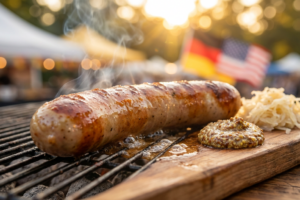
For generations, food has been one of the most enduring ways German-Americans have preserved their heritage. Long after languages faded, family names changed, and old-country customs blended into American life, recipes remained.

A plate of bratwurst at a summer festival. A warm pretzel shared at a county fair. A holiday table featuring red cabbage, potato salad, and sauerbraten. A slice of Black Forest cake served at a family reunion.
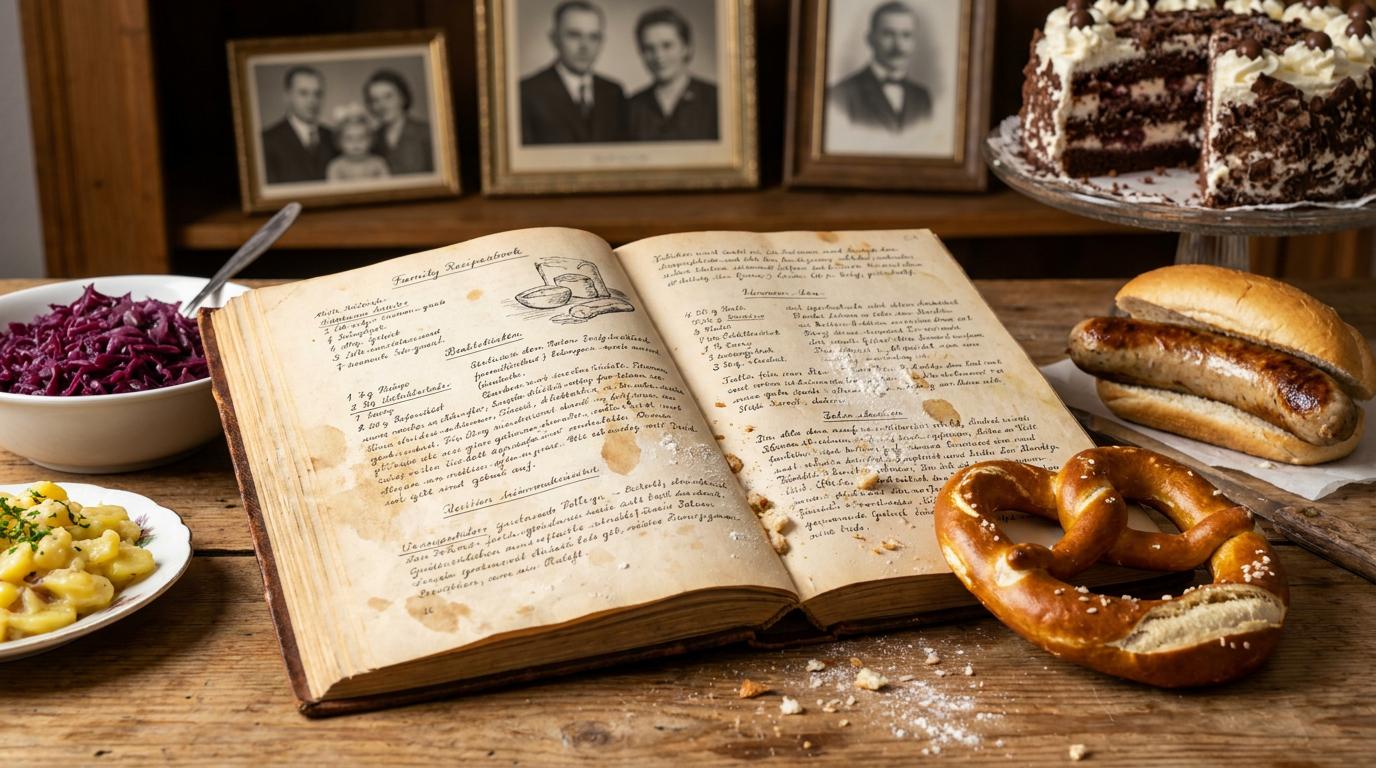
These foods tell stories.

They tell of immigrants who crossed the Atlantic seeking opportunity. They tell of communities built across Pennsylvania, Ohio, Wisconsin, Iowa, Nebraska, Minnesota, Texas, Tennessee, and countless other states. They tell of family traditions carried from generation to generation—sometimes changing slightly with local ingredients, but always retaining a taste of home.
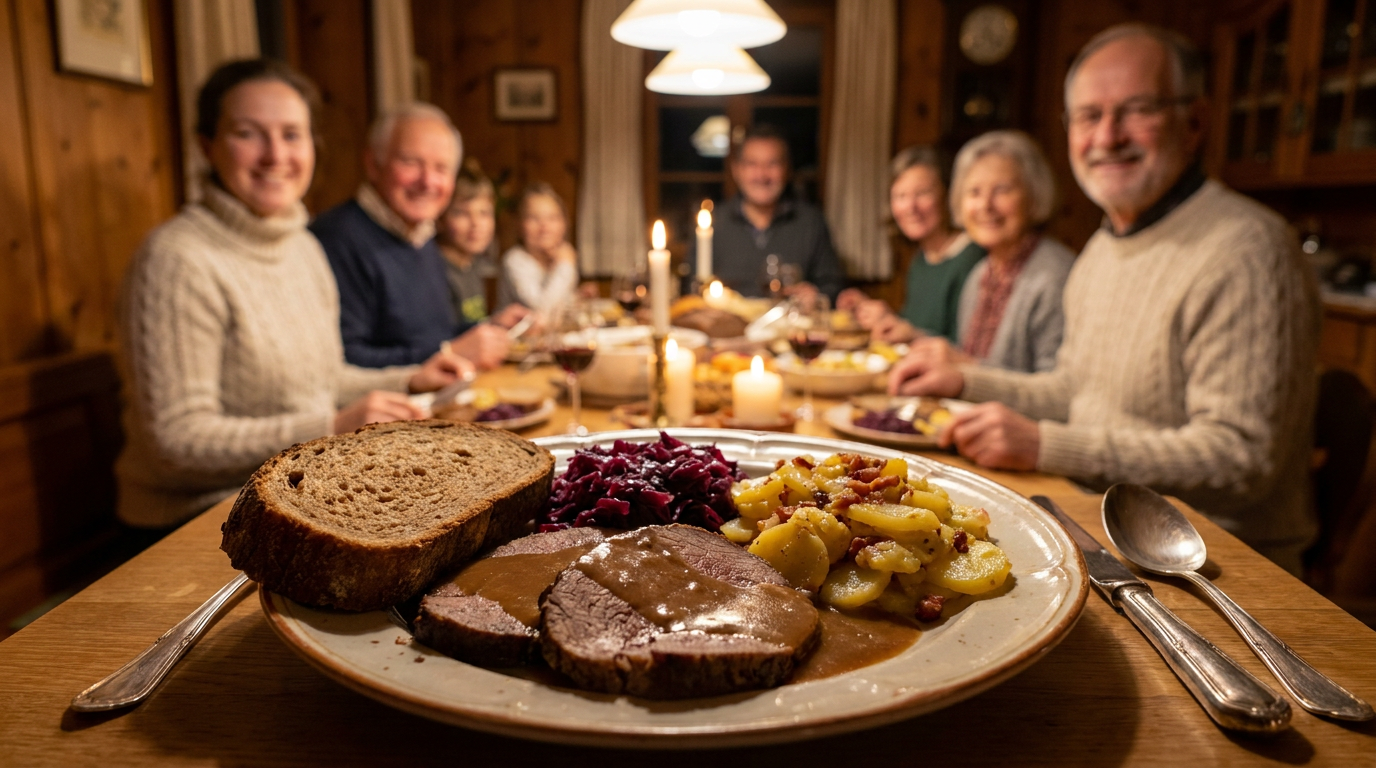
Today, millions of Americans may have only a trace of German ancestry, yet they still enjoy foods whose roots stretch back centuries into the villages, farms, forests, and cities of Germany. Whether you know your family’s German origins or are just beginning to explore them, one of the most enjoyable ways to connect with that heritage is through food.

After all, every recipe has a story.

The German-American Table: Where Two Cultures Meet

German immigration to America occurred in several major waves beginning in the 1700s and continuing well into the early 1900s.

Wherever German immigrants settled, they brought their culinary traditions with them.

https://images.openai.com/static-rsc-4/BZGqqG_msSt_RRjykhCGmnjy7wC0AM-I8OSOZ5AzWWQjFn50fXTN77wBhBnXG18de4_g7-Y9py9jLd3YbIcU56i2EQ82MrS41bglAtT_CQuim3beGzV2j90NrSbnJYywMrLLoxhf4AMpH7Wl7ASo4F_Z7QG8YEXsTyOqf-Wr1MK7BbqIXKTMjRk1Rjqz6qz2?purpose=fullsize
Over time, these foods adapted to local ingredients and American tastes. The result was not merely German food and not entirely American food—it became something uniquely German-American.
https://images.openai.com/static-rsc-4/1Tkjv9dwhDU0yy68QQ2MuLRFYGXaJnUg1-HvtNyVo1kZ-T4Tb9y9iY_dF8SehL0RVIikh4jF8hHOJWNfZurTZTaKS0TurJRJV15s-Xp_HA8y93p_x8G23zQbbzDTVyAE_fDeDOLINXfHNsxyBtzfrzd3eGhKGjlng2l9wQwAaHOdAL_L3rgXiCcqIiRK2-LZ?purpose=fullsize

The hearty farm cooking of Bavaria, the sausages of Franconia, the breads of Swabia, and the cakes of the Black Forest region all found new life in America.

Many dishes became so integrated into American culture that people often forget their German origins.

As food historian James Beard once observed:

“Food is our common ground, a universal experience.”

For German-Americans, that experience is often served one delicious plate at a time.


Bratwurst: America’s Favorite German Sausage

Few foods are more closely associated with German heritage than bratwurst.

The word “bratwurst” originates from Germany and refers to a finely minced sausage traditionally made from pork, veal, or beef.

https://images.openai.com/static-rsc-4/VX8KhWwn1B5acWynDBUxRDUjzTMn81GyIMLKGGGcqFmRFgxo6wUXZMKT7MxTO1b9eVoJ27IzhltDNMSxAaRxIlqfjyJQcGzabASoXdfm-MuliF9z75CLG5LOEdOCbrKZX-NN4VorRqh0zzDLcG0EdD7vfWpBgQ7UoXYoRdK_QgOLign-BRzEokka_MQf3Tem?purpose=fullsize
German immigrants brought countless regional sausage recipes to America, particularly to states such as Wisconsin, Minnesota, Nebraska, Iowa, and Ohio.

Today, bratwurst is practically a cultural institution in parts of the Midwest.

Whether served at baseball games, Oktoberfests, church picnics, county fairs, or backyard cookouts, bratwurst represents one of the most successful culinary exports Germany ever produced.

Popular toppings include:

  • Sauerkraut
  • Spicy brown mustard
  • Grilled onions
  • Pickled vegetables
  • Beer-braised cabbage

Every family seems to have its own preferred way of serving a brat.

And every German-American gathering seems to have someone insisting theirs is the “authentic” version.


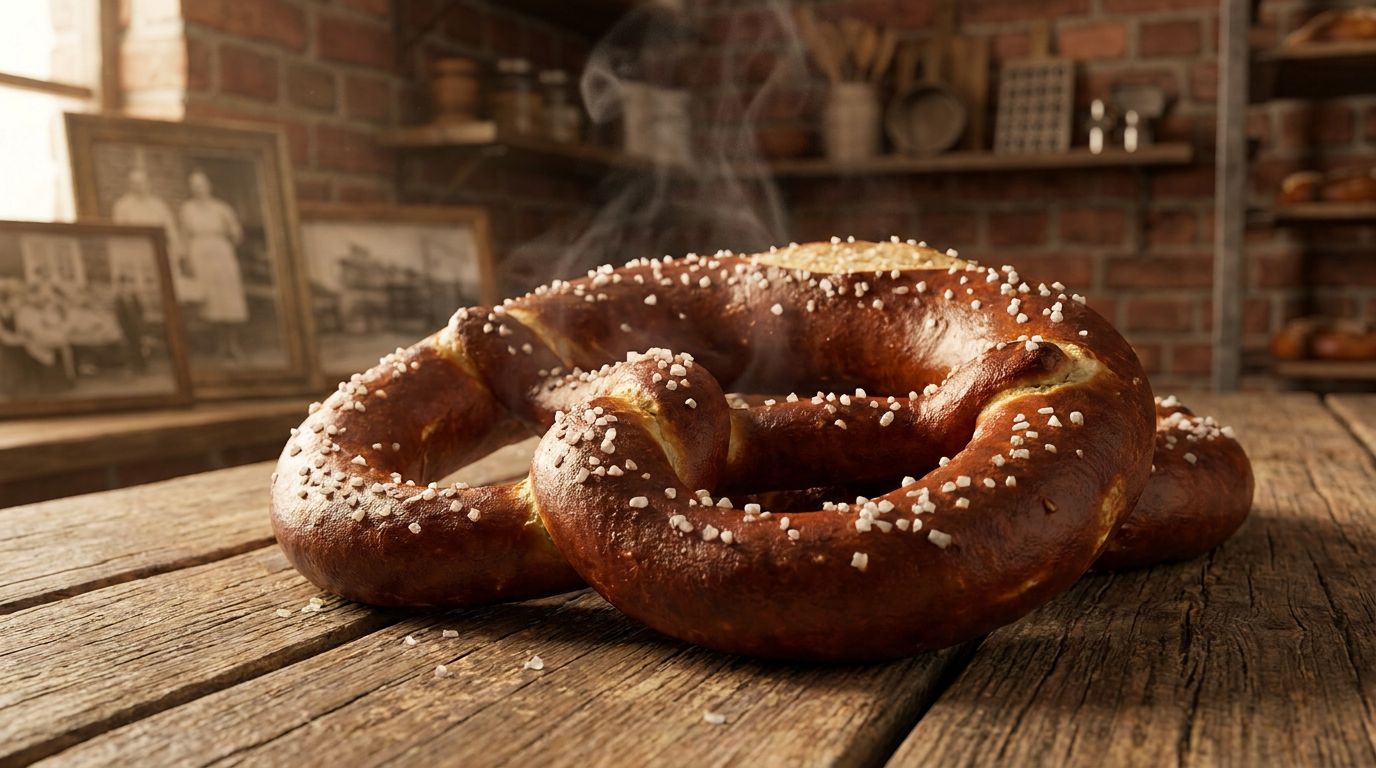
Pretzels: The Twist That Conquered America

The humble pretzel may be one of Germany’s greatest gifts to American snack culture.

German immigrants introduced pretzels to Pennsylvania during the colonial era, where they eventually became a major industry.

https://images.openai.com/static-rsc-4/3GdixS-spAexLLxihpmIvo6EssJq0IRozFK5aNPS3bhU-XUT-ut9zTdusZenI1axP3xHBQGMn4zT7Keq4wMyai_YSOjWlegaLRqYfx3i_hJUyeM8a-GRrzsR1T7plbcbLyMtOZTU-B_Mn22z_v-hDh44YGwaxi4ThTLUI0EDaLygFGdgeUkcfl7smjGTIXKQ?purpose=fullsize

Today, Pennsylvania remains one of America’s pretzel capitals.

https://images.openai.com/static-rsc-4/5wB7u9pgeARumZHKjxtBfsCCL0LyJ8DFYmJ3YS_gweY4HPQeIKIHrl-pB0N8xvz9-1X8hmbZ6qKMKQycglV-8jbrHyw04Tt3vdp3zdE1hyiNa4eegA6WuzWGE_Sav5caT2z1CBlhG2uj6DaG-2pTbM_0ZT4_jxtpa_zu9kr-rJ2Fiqcb52Gyz4ZTD0ccyw_9?purpose=fullsize

Traditional German pretzels feature:

  • A dark, glossy crust
  • Chewy interior
  • Coarse salt topping
  • Distinctive twisted shape

Modern variations include:

  • Beer cheese pretzels
  • Cinnamon sugar pretzels
  • Stuffed pretzels
  • Giant festival pretzels

No Oktoberfest feels complete without one.

And let’s be honest—few foods pair better with a cold German-style lager.


Sauerkraut: More Than Just a Condiment

For many Americans, sauerkraut is simply a hot dog topping.

For German-Americans, it’s much more.

Sauerkraut has been a staple of Central European cuisine for centuries. Made from fermented cabbage, it provided essential nutrition throughout long winters.

https://images.openai.com/static-rsc-4/xdSrI1XRkHiBaP8e42ufupf9Lnqpo-vcjAe8pI0EfKSK12JIhjxppuwKQz0i51yLvX2F-qn006Es6hJInyrjKVs5CuKX9khl6SViYjP1bWf27TKyXHhNlrZurR9w1KW5Rs8vTsSG0ThkkVWyMnXASW1jnVr6UU9DFsSaGNxeFfroOAdcdiBzfDPIo0vN9spH?purpose=fullsize

German immigrants brought fermentation traditions with them to America, where sauerkraut quickly became a practical and economical food source.

Today it remains a beloved companion to:

  • Bratwurst
  • Pork roasts
  • Kielbasa
  • Potato dishes
  • Holiday meals

Modern nutrition experts also appreciate sauerkraut for its probiotics and digestive benefits.

It turns out great-grandma was onto something all along.


The Bread Basket of German Heritage

Bread occupies a sacred place in German culinary culture.

Germany is famous for producing hundreds of varieties of bread, many of which inspired baking traditions throughout German-American communities.

https://images.openai.com/static-rsc-4/B-A_VVMGCIv3ziollKEkd322zjEhfWvhKBjyNof3vPs4gHRDcrALB_plSUM7U0Mt-ZjXsOxC3Pq7YIzb9vizAx4q-0Xm_hwq25ybUSdlybCyrvx9M6HejVJ4KCTwPCB1jDayi8Xngtty2rvcpZJ5JQpvdrnIZFWn2Fj-OshqA_1FmbRo54hXTMjfnVFBYepD?purpose=fullsize

Popular German-inspired breads include:

  • Rye bread
  • Pumpernickel
  • Bauernbrot (farmer’s bread)
  • Pretzel rolls
  • Seeded country loaves

Many German-American bakeries became community gathering places where immigrants could purchase familiar foods while maintaining connections to their heritage.

Even today, walking into a traditional German bakery can feel like stepping into another era.


The Potato: An Unexpected German-American Hero

While Germany did not invent potatoes, Germans certainly embraced them.

As German immigrants spread across America’s agricultural regions, potatoes became a cornerstone of family meals.

Some favorites include:

German Potato Salad

Unlike many American versions, traditional German potato salad often features:

  • Vinegar dressing
  • Bacon
  • Onions
  • Fresh herbs

Kartoffelpuffer

Also known as potato pancakes, these crispy treats remain festival favorites.

Potato Dumplings

A comforting side dish often served with roasts and gravies.

Potatoes offered affordability, versatility, and hearty nourishment—qualities highly valued by immigrant farming families.


Sweet Traditions: Cakes, Pastries, and Family Celebrations

German heritage isn’t only about savory dishes.

Some of the world’s most beloved desserts originated in Germany.

https://images.openai.com/static-rsc-4/yGxNAYT_3fyp70lEzDAWjEHhicES1HctLUJ0cgUXYwgYBomhXwrPPz10akZjXVjrq7Bx4go9U_LkfBhdKi3pT44vS5_d3d4LtAYp_jThyi_6-w8mRpFTyqjbUYblOlUlhy3AKc9vI3ZpNehTKmhFgix2k4woVBi1vCCtF0RlaU_TtWQdc2WsVtPLyQPnbUIx?purpose=fullsize
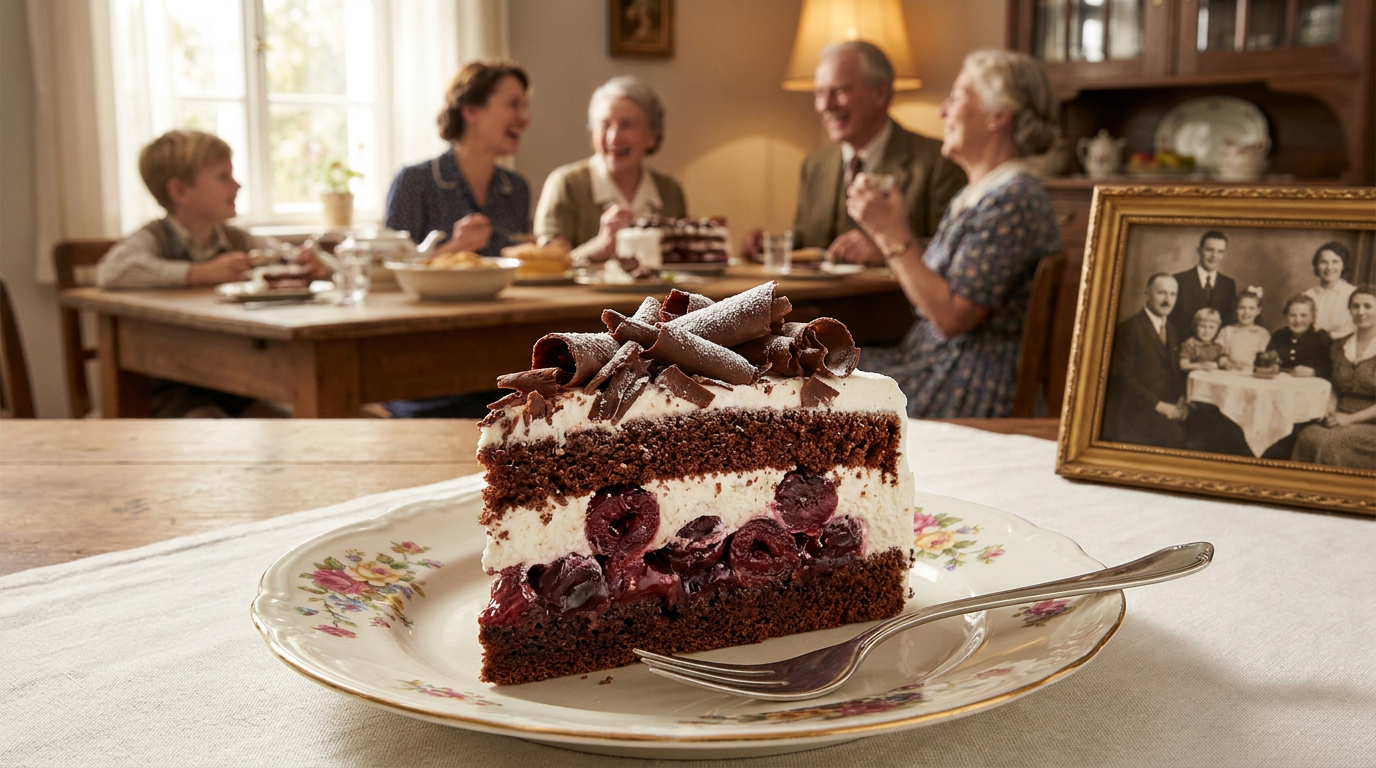
Black Forest Cake (Schwarzwälder Kirschtorte)

Perhaps Germany’s most famous dessert, this masterpiece features:

  • Chocolate cake
  • Cherries
  • Whipped cream
  • Chocolate shavings

It remains a showstopper at weddings, anniversaries, and special celebrations.

Apple Strudel

Though associated with Central Europe generally, strudel became a staple in many German-American homes.

Stollen

This fruit-filled Christmas bread remains a beloved holiday tradition.

Bee Sting Cake (Bienenstich)

A delicious combination of sweet yeast dough, cream filling, and caramelized almonds.

These desserts helped transform family gatherings into memorable celebrations.


German-American Beer and Food: A Perfect Partnership

No discussion of German food traditions would be complete without mentioning beer culture.

German immigrants helped establish many of America’s earliest brewing traditions.

German-American Favorites

Classic Pairings

Food Traditional Beverage Pairing
Bratwurst Märzen Lager
Pretzels Helles Lager
Schnitzel Pilsner
Roast Pork Dunkel
Black Forest Cake Coffee or Dark Lager

German beer gardens became social centers where families gathered, musicians performed, and communities celebrated.

Food was never just nourishment.

It was fellowship.


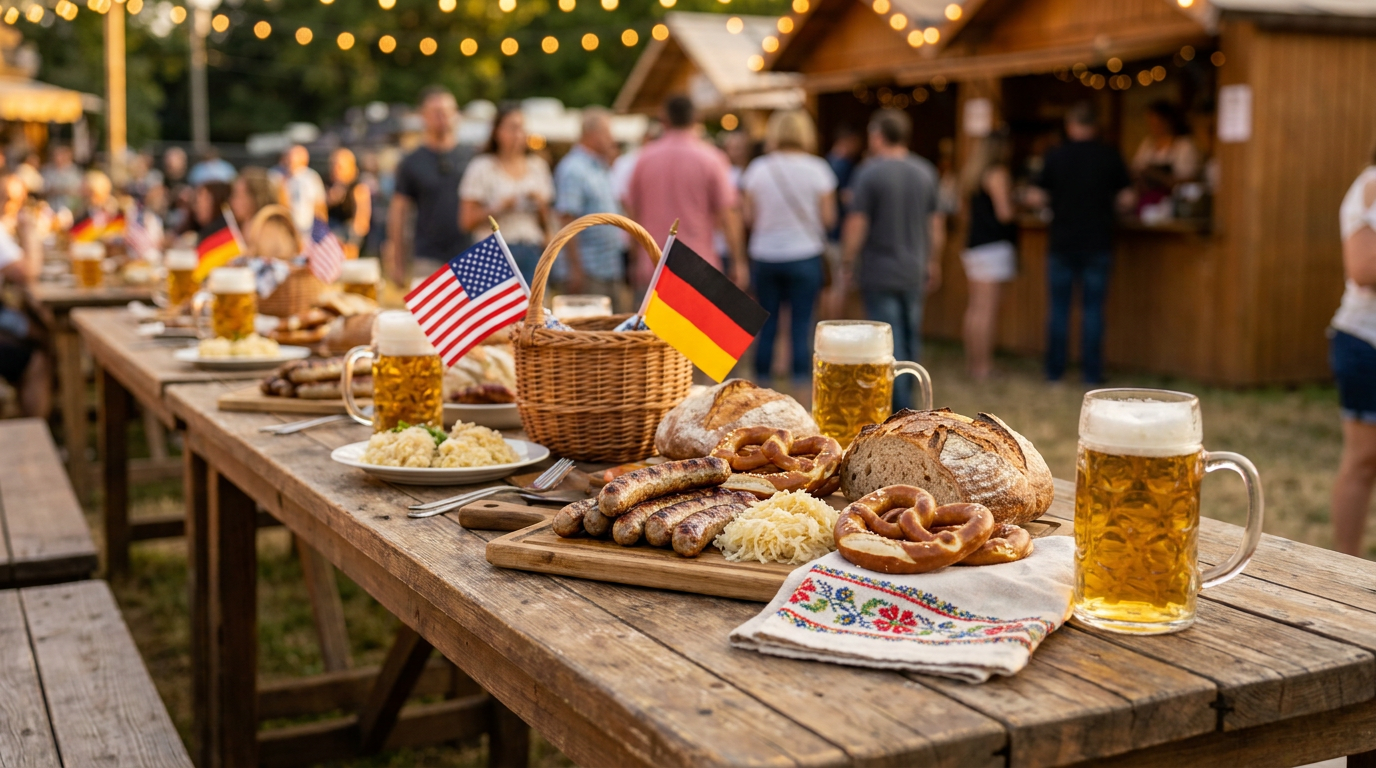
A Taste of German Heritage at Festivals Across America

One of the easiest ways to experience German-American culinary traditions is by attending a festival.

https://images.openai.com/static-rsc-4/nhSWSeUH5TeMZrH3E40Vao0VmaauNj7G4dSeHZNev26Tds9ypkd57vuW2LDHvlafiNsf7n-n7-nVpiOW4o8V5PhlIWHOuTesD8VsLmGDa2zz9l3M_j7oADjq5c5UdaQYL5eppTUHNAcQed3tG_WVdU8LkmKWHWoXeiVnrDuKceDce5H0vpJJfIbUSIHfBWo2?purpose=fullsize
Visitors can sample foods ranging from traditional recipes to creative modern interpretations.
https://images.openai.com/static-rsc-4/NuEgir6vtiWtfAKpSpE7TekDBFWlU-6Wnc4AHclYlznRs1nAWyRCew1c_vH1igK0M1srJiYkdH08FMiGx8FkgY4UlKvprdTO0rSV9GDuIYGzMd54Ma6mHumlgcLmysNIL1wBX2yljVfoWkkK1mv2ORc0u-tG90C0i-22FgZdGQrWXCZ5WNgb4x23W2_R5UOy?purpose=fullsize

Across America, communities host:
  • Oktoberfests
  • Maifests
  • Christkindlmarkts
  • Heritage festivals
  • County fairs with German roots

For many attendees, the food becomes the gateway to learning more about their ancestry, history, and cultural traditions.


Food as a Family Time Machine

Perhaps the most remarkable aspect of German-American food traditions is their ability to connect generations.
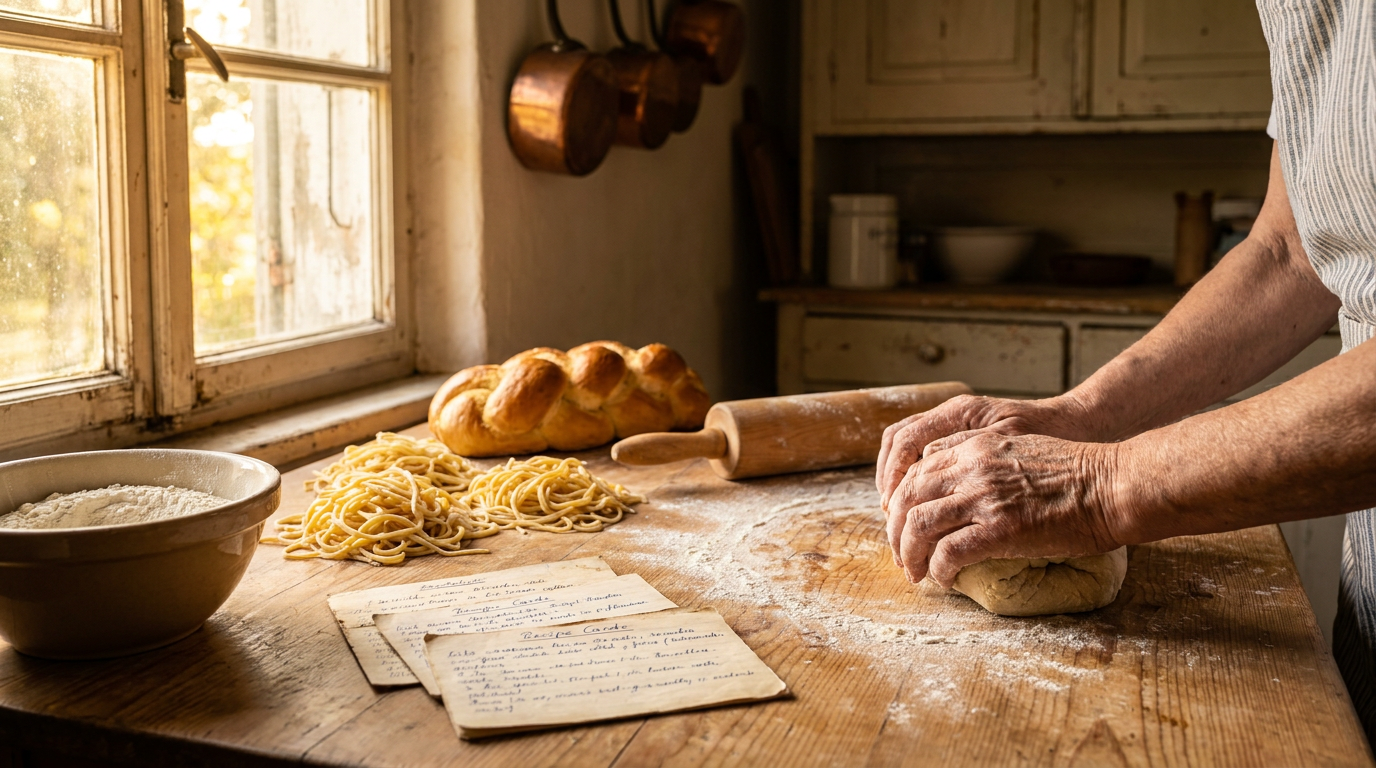
A recipe card handwritten by a grandmother.

A family sausage recipe passed down through decades.

A Christmas stollen baked exactly as it was 100 years ago.

These foods preserve memories in ways few other traditions can.

As author Laura Esquivel famously wrote:

“The table is a meeting place, a gathering ground, the source of sustenance and nourishment.”

For German-Americans, it is also a bridge to the past.


Bringing German Heritage to Your Own Kitchen

You don’t need to speak German or travel overseas to celebrate your heritage.
You can begin right at home.

Try:

✅ Making homemade bratwurst recipes
✅ Visiting a local German bakery
✅ Learning to bake pretzels
✅ Exploring regional German cookbooks
✅ Attending a local Oktoberfest
✅ Recreating family recipes from old recipe boxes
✅ Researching foods connected to your ancestral region in Germany

Each meal becomes an opportunity to explore your family’s story.


Final Thoughts

From sizzling bratwurst at summer festivals to elegant slices of Black Forest cake shared during family celebrations, German-American food traditions remain one of the most enjoyable ways to connect with heritage.

These dishes are more than recipes.

They are edible history.

They tell stories of courage, immigration, family, hard work, faith, community, and cultural pride. They remind us that heritage is not confined to museums or genealogy records—it lives in kitchens, bakeries, restaurants, festivals, and family dining rooms across America.
So the next time you enjoy a warm pretzel, a hearty bratwurst, or a slice of Black Forest cake, remember:

You may be tasting a small piece of the German-American story.

And that story is still being written—one delicious bite at a time.


Quick Heritage Food Fact

GERMAN-AMERICAN FOODS YOU PROBABLY EAT REGULARLY

🥨 Pretzels
🌭 Bratwurst
🥬 Sauerkraut
🍞 Rye Bread
🥔 German Potato Salad
🍰 Black Forest Cake
🍎 Apple Strudel
🍺 German-Style Lager

Heritage Insight: Many of these foods arrived with German immigrants during the 1700s–1900s and became permanent parts of American culinary culture, especially throughout Pennsylvania, the Midwest, Texas, and Tennessee.

German Heritage USA™
Discovering German Heritage Traditions, Foods, Music, and Festivals All Across America

Defying the Winter Chill: 5 Beloved German Dishes to Warm Your January

Germany might conjure images of lush green landscapes and vibrant summer festivals, but winter holds its own magic in the land of hearty food and heartwarming traditions.

As January paints the world white, Germans turn to a culinary repertoire specifically designed to combat the cold. These dishes are more than just meals; they’re comforting embraces, flavor-packed escapes from the winter blues.

So, grab your mittens, crank up the heat, and prepare to embark on a delicious journey through 5 iconic German dishes that will chase away the January chill:

1. Linsensuppe (Lentil Soup): A Humble Hero

Starting off with a classic, Linsensuppe is the epitome of German comfort food. This humble lentil soup, simmered with aromatic vegetables and seasoned with smoked sausage and bay leaves, is not only soul-warming but also incredibly nutritious.

Lentils are packed with protein and fiber, keeping you energized throughout the long winter days. The smoky depth of the sausage adds a delightful savory twist, while the vegetables lend pops of flavor and essential vitamins. A sprinkle of fresh herbs on top and a slice of crusty bread for dipping make this simple soup an absolute winner.

Lentil Soup Recipe

Ingredients: 1 cup brown lentils, 1 onion, diced, 2 carrots, diced, 2 celery stalks, diced, 4 cups vegetable broth, 1 bay leaf, 1 smoked sausage (like kielbasa), sliced, salt, pepper, fresh herbs for garnish (optional).

Instructions: Rinse lentils and soak in water for 30 minutes. Sauté onion, carrots, and celery in olive oil until softened. Add lentils, broth, and bay leaf. Bring to a boil, then simmer for 30 minutes or until lentils are tender. Add sliced sausage and season with salt and pepper. Simmer for another 10 minutes. Garnish with fresh herbs before serving.

2. Grünkohl mit Pinkel (Kale with Sausage): A North German Delight

Venture north, where the wind blows fiercely and the kale grows strong. Grünkohl mit Pinkel is a traditional dish from Lower Saxony, a hearty stew featuring dunkelbunt (a garlicky blood sausage) nestled amongst a bed of savory kale.

The kale is typically cooked with onions, bacon, and goose fat, resulting in a rich, flavorful base.

» Read more

German Bierock and Runza Awesomeness

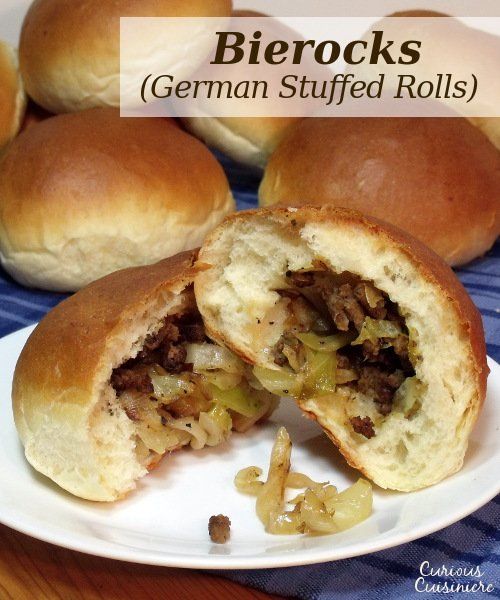
Bierocks are very popular amongst Midwesterners in the USA mainly because they are an easy to prepare recipe that was brought to America from Germany sometime in the 1800’s.Bier Rocks

Courtesy of pinterest via:  Curious Cuisiniere

The Bierock is comprised as a delicious yeast dough roll pocket sandwich with savory filling made up with a simple mixture of cooked ground beef, shredded cabbage, onions that is seasoned with salt and pepper to taste. Carrots were also often used in this filling too on occassion.

Bierocks are very popular amongst Midwesterners in the USA mainly because it’s easy to prepare recipe was brought to America from Germany and Eastern Europe.

It was real staple food for native German-Russian Mennonite immigrants that settled in western and northern Kansas in the Volga Community as they assimilated into American culture.

The word Bierock is pronounced often as “brock” or “brook” in parts of the state of Nebraska and widely pronounced another way as “beer-rock” in parts of western Kansas and Oklahoma.

The state of Nebraska has another name for a Bierock. There the tasty little rolls of cooked meat, cabbage onions & spices are known popularly as a Runza’s.

runza

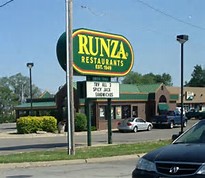
runza restIn fact a RUNZA is so popular in Nebraska that they started a very successful chain of fast food restaurants named after it to cater to it’s high demand.
A few years back I attended a Nebraska football game in Lincoln versus Penn State.


It was quite amazing to me to see that there were literally thousands of Runza’s being consumed at pregame parties all around Memorial Stadium. It was obviously a tradition.

There were tailgaters making their own, to people that had just purchased them from the Runza restaurant just prior to coming to the game. There were also private vendors selling Runza’s from a hotdog karts too.

runza nebraska

You just suddenly get how traditional having a Runza can be once you cross the Nebraska state line.  Runza’s are indeed  king in Husker Nation.

Toto, I don’t think we’re in Kansas anymore!

Speaking of Kansas, the Runza’s there are known as Bierocks.

Bierock Drive thru

At this point, they may not have the fancy Brand or Restaurant image like the Runza’s do to the north… however their recipes are pretty much the same thing.

Be sure to create some Bierock’s or Runza’s for you family today!

They sure are tasty!


GermanNationUSA – Your German Heritage Is Calling You…

About GermanNationUSA – Your German Heritage Is Calling You…

If you are of German ancestry, you will really come to love visiting our ever populating German Heritage website named, “GermanNationUSA”. It is here where you will always discover new and interesting stories, videos, pictures, commentary and facts regarding your German heritage. It is always a fun German Heritage related “Hub” to frequent!

German Heritage in the USA!

Your German Heritage Is Calling You...

www.GermanNationUSA.com

The GermanNationUSA website is designed to be informative, educational, entertaining and quite a captivating for anyone of German Heritage and other people with German related interest and passion.

The primary focal point for GermanNationUSA will certainly be structured around the presentation of German related heritage, tourism & commerce within the confines of the USA and parts of Canada too.

We will showcase everything from German restaurants, deli’s and bakeries to German influenced tourism destinations and special events like Oktoberfest all across the USA!


As one would observe it from a German-American perspective, it seems to be somewhat of an emotional destiny quest for thousands of German-Americans that are both curious and anxious to get back in touch with their Germanic roots to seek out and experience anything German… it’s truly a genuine attraction phenomenon.

Although GermanNationUSA is still in its early stages of development, consider it an ever evolving effort as its pages are continually being populated and updated with relevant fresh content, pictures, videos, music, widgets, advertising and multiple viral social features as well to ensure mass visitor traffic and visitor interactive participation too!

Come explore www.GermanNationUSA.com and The Guten Tag Times newsletter as we continue to expand on your German Heritage experience in the USA and create a lot of fun and entertainment doing it!

~ Prost!

GermanNationUSA is the Official Site of German heritage, tourism and commerce within the USA.

Discover Amerika… visit Germany stateside!

The German Cookbook: A Complete Guide to Mastering Authentic German Cooking


The German Cookbook: A Complete Guide to Mastering Authentic German Cooking


4.5 out of 5 stars


Price: $22.29


Here is the completely authentic book of German cuisine, from delicious soups to the greatest baking specialties of the world, complete with indexes and both English and German. In addition to the easy-to-follow recipes, the author discusses some of the great restaurants in Germany and how to order the traditional dishes. She researched these recipes for a year in the United States, eating almost every night in German restaurants, from the most expensive, to small neighborhood eateries, then traveled throughour Germany itself. Every recipe has been tested in her own kitchen–she guarantees that the ingredients are readily available and that the average person needs no special equipment in order to cook it.

“Few countries in Europe,” the author writes in her introduction, “have landscapes more beautiful or maore varied than those of Germany. It is not a large country, slightly smaller than the state of Montana, but within this area there is almost every kind of terrain one finds in the Temperate Zone. The German cuisine is almost as varied as the terrain. Just as Bavaria passes as the archetype for the entire country, so the food of that section–the dumplings, sausages, beer, pork, and cabbage dishes–represents German cooking to the outside world Delicious though these dishes may be, they hardly begin to give even a clue to the whole spectrum of German cooking, which has more appeal than the average American palate than that of any other foreign country. Think of all the German dishes that have been taken over by Americans–not only hamburgers and frankfurters, with or without sauerkraut, but the jelly doughnut that was first the Berliner Pfannkuchen, Boston Creme Pie, that in Germany is ‘Moor’s Head’; the range of Christmas cookies; and even that old stand-by of ladies’ luncheons, creamed chicken in a patty shell, that appears in every German Konditorei as Koniginpastetchen.”

Here they all are, hundreds of them. So Prosit and gut essen: your health and good eating.


Customer Reviews:

228 of 229 people found the following review helpful
5.0 out of 5 stars Outstanding for use by Americans., October 22, 1999
By A Customer
This review is from: The German Cookbook: A Complete Guide to Mastering Authentic German Cooking (Hardcover)

This German cookbook is specially designed for use by Americans: measures, ingredients, temperatures, cuts of meat, etc. However, all of the recipes are very authenic and wonderfully traditional. One does not have to fear conjuring up some strange variation of a traditional German recipe; something that is bad enough to make a German epicurian flee from the table! Included with the recipes one will find ample text that describes the qualities and goals of the German chef, plus valuable techniques that can make all the difference between average and excellent results. There are two complete recipe indexes: English and German. For the record, I lived in Germany for a number of years, and worked with Germans in the states for many more. This is the only German cuisine cookbook that I have ever found, which is truly great in all respects.


Leave Your Reviews & Feedback Below:


The Pride of German Heritage in the USA

German Heritage in the USAWhen you grow up in the heartland of America with some little known German Heritage in your bloodline, you can’t but one day but notice a certain connection to the all the German immigrants that once migrated to the United States to start a new life, help build a great country and preserve some of their homeland traditions, values and cultural heritage.

What a life changing risk/reward opportunity proposition that must have been for the millions of German emigrants to make. The sacrifices to endure this change had to be monumental. The discovery of your German Heritage probably started with your own surname as a child as you inquired to your parents of its meaning and origin.

Shortly after came the association of German Heritage food dishes, as family recipes were handed down through the generations to continue the sentimental connection prompting more questions regarding your genealogical “roots” history. The family dinner table was always considered the centerpiece and cornerstone of family history and heritage because the dialog that taken place there over the years.

Did you know that to this day, science and common sense agrees that the quickest association to your brain is literally through your stomach?

When you find pleasure eating good food, then that will surely turn into a strong favorable emotion. If there are other attachments to your dining experience like ambiance, heritage and traditional history, then there is no turning back. The emotion is locked in for life.

Don’t know much about your German Heritage yet?

No worries because we created a website that may help you out on your discovery journey to get you up to speed. It’s called GermanNationUSA and is designed to become the official site of German Heritage related tourism and commerce within the USA.

The ever populating GermanNationUSA website is still quite young as we continue to update and upgrade it at every chance, putting emphasis on German Restaurants and food related businesses across America.

We are creating a huge data base so you can hopefully locate a German Restaurant in your immediate area, or if you are anytime away from home so you can experience a bit of Germany, in a eating kind of way.

Of course within GermanNationUSA you will discover how German Heritage is thriving all across America with news headline updates, dedicated sections on German food, German restaurants, German recipes, German festivals & events (like Oktoberfest), German cars, German clubs, societies and organizations, German gifts, German costumes, German genealogy, German music, German dance and notable German themed destinations within the USA.

Got a little German in you?

Why not start exploring your German Heritage today within GermanNationUSA and then with a visit to a local German Restaurant near you and start connecting your stomach to your brain – and get in touch with your German Heritage.


~ Prost!  (cheers)

Brian Hingst

For more German Heritage information within the USA… visit www.GermanNationUSA.com

Also “like” us on facebook at:
www.facebook.com/GermanHeritageUSA