The Actual Real Story of How the Chicken Dance Originated

From an Alpine accordion tune to a missing duck costume in Oklahoma, the true story is even more entertaining than the dance.

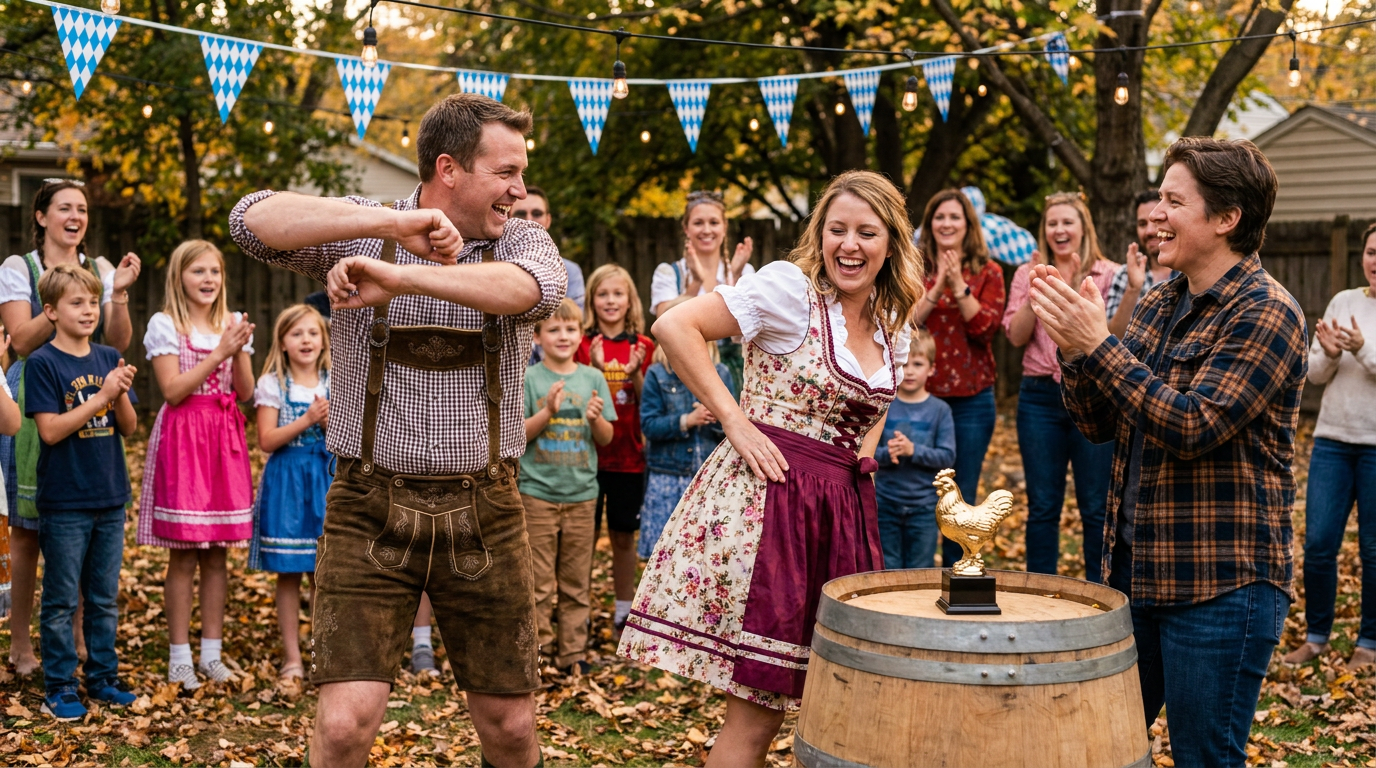
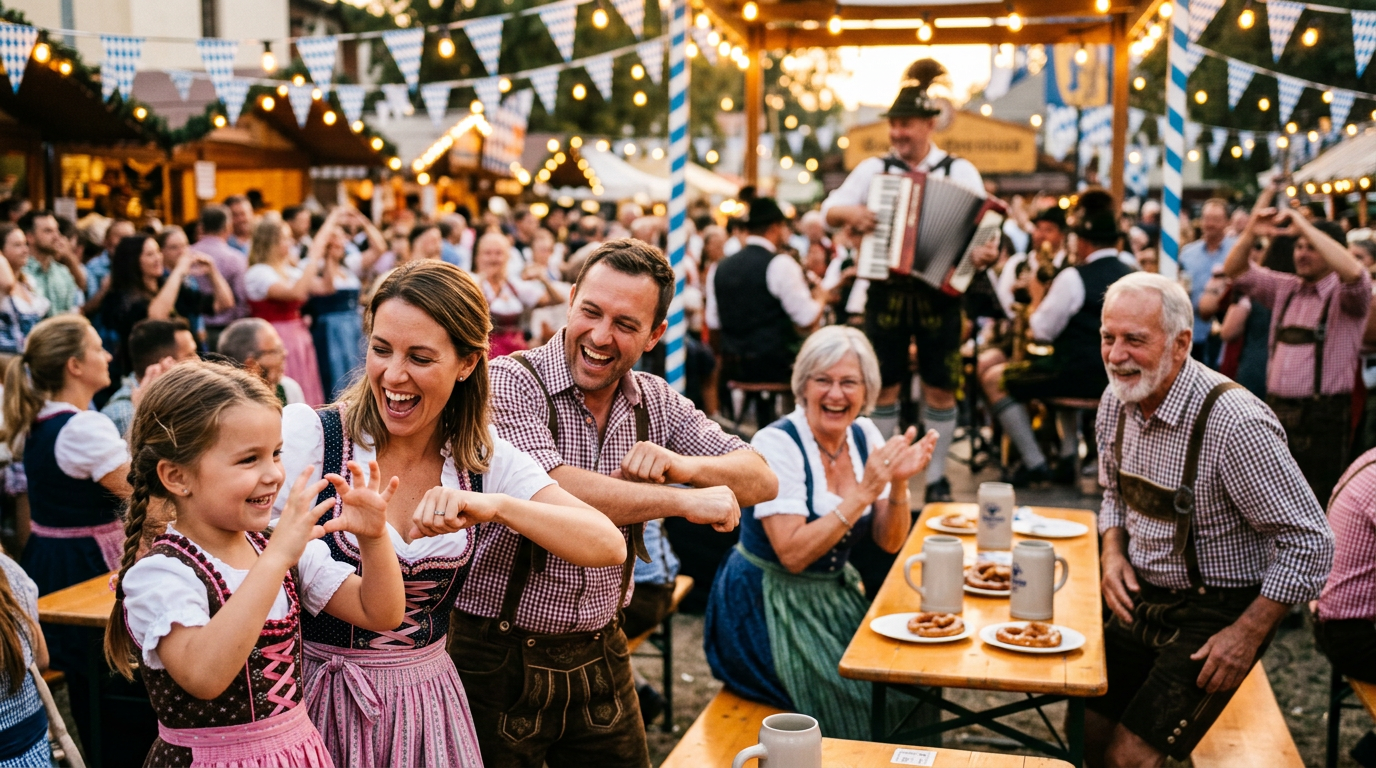
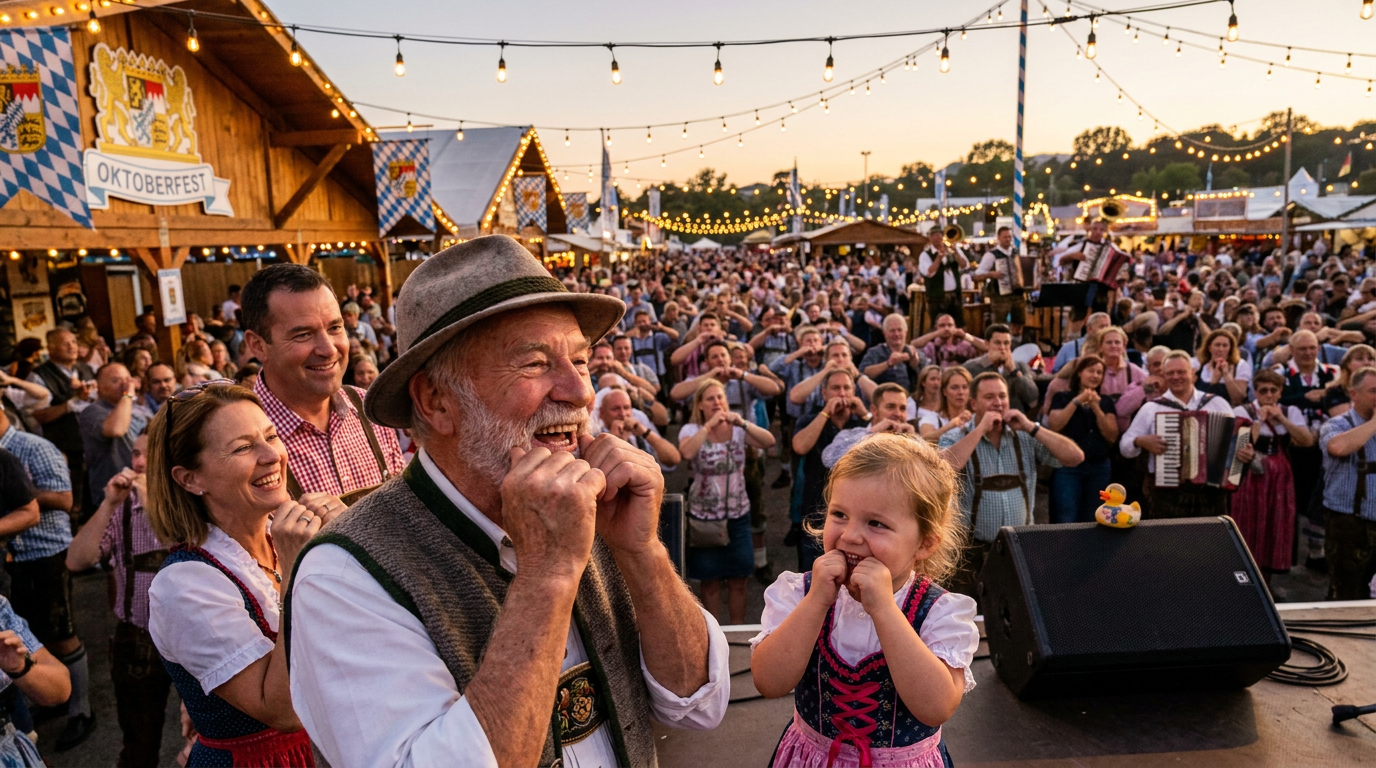
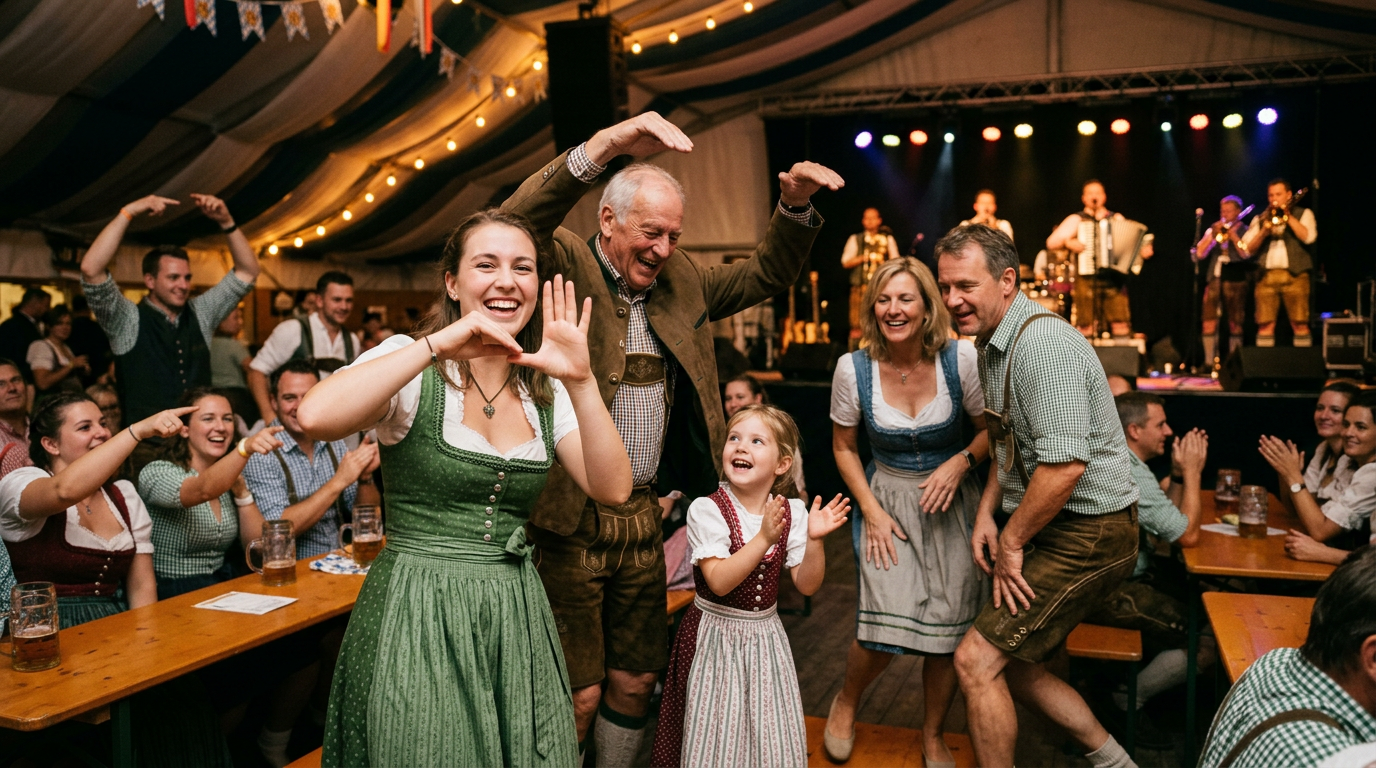
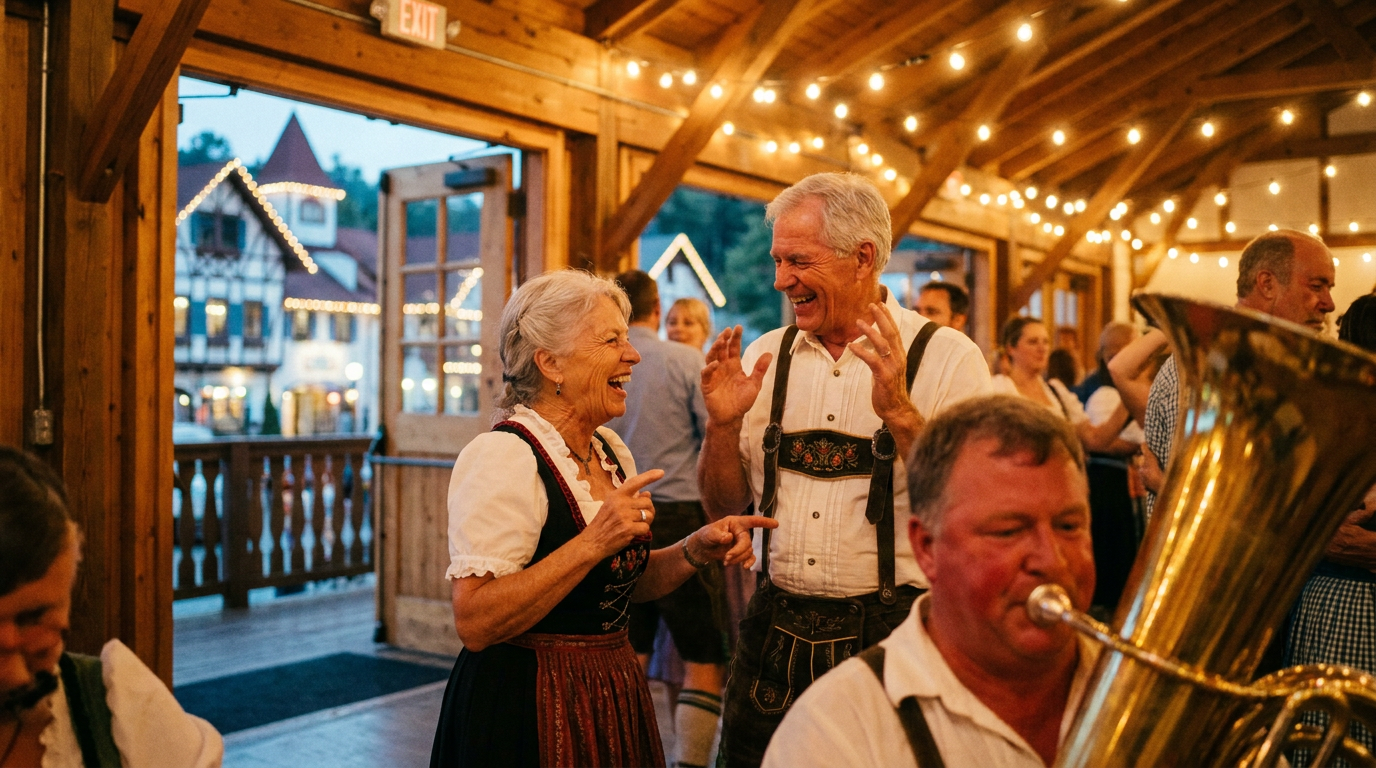
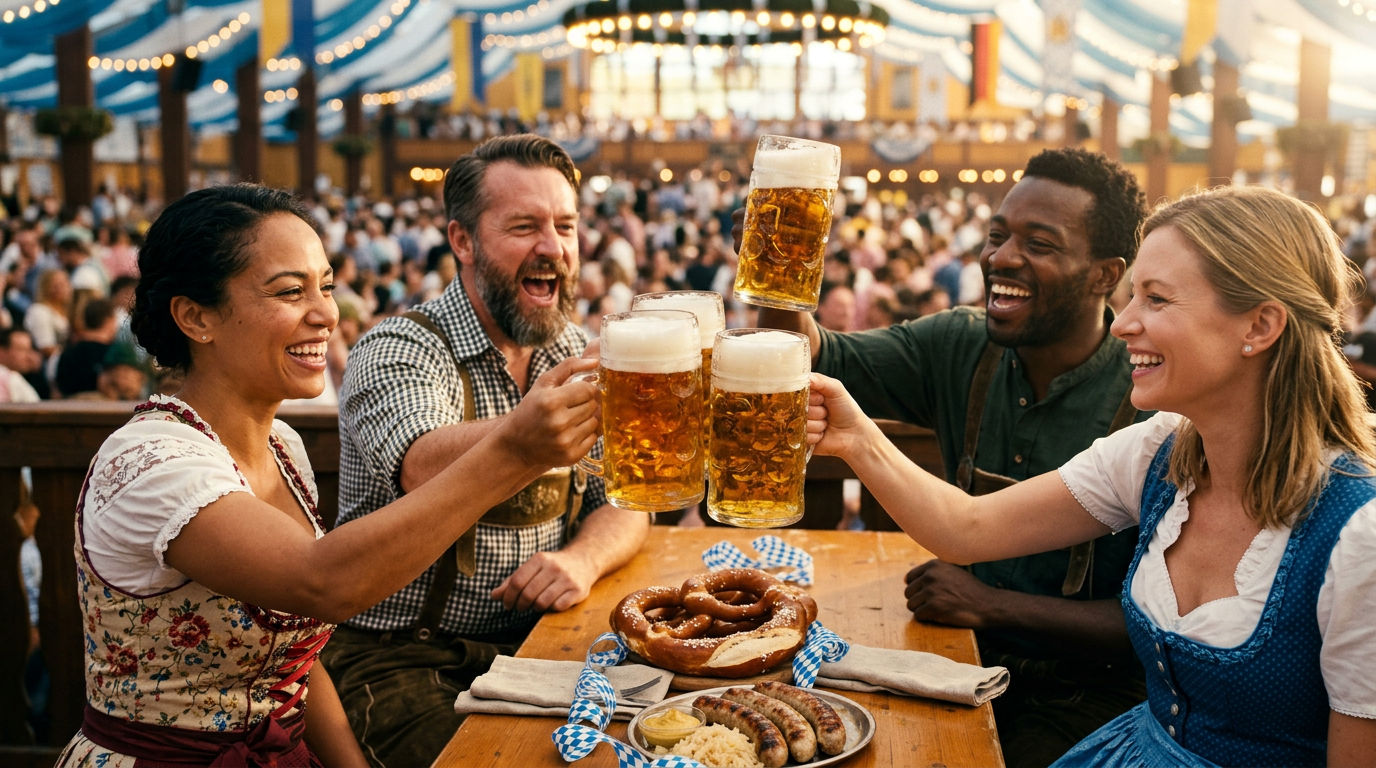
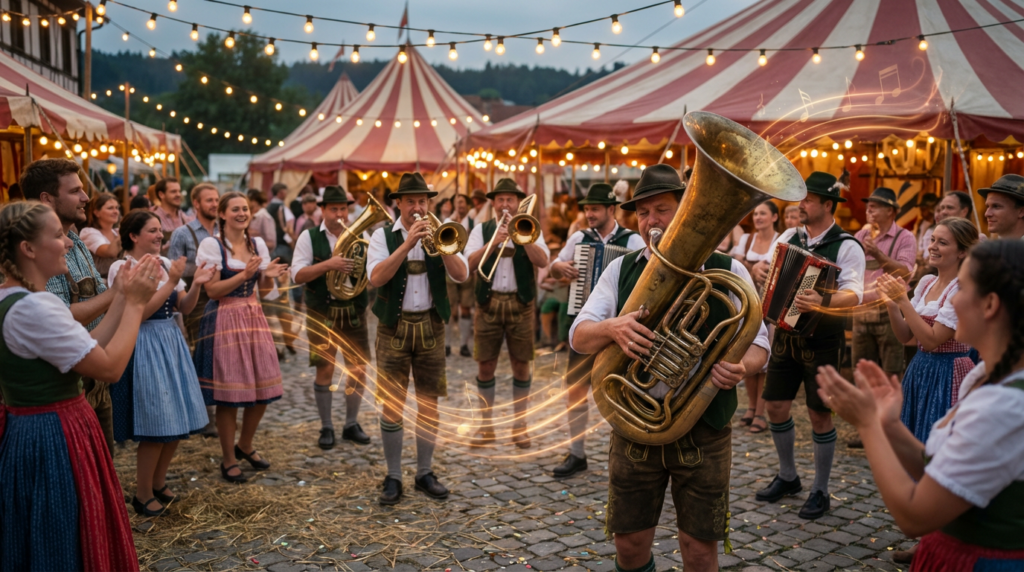
You know the moment. A few bright notes rise above the chatter at an Oktoberfest, wedding reception, or community festival. Someone lifts both hands to their face and starts opening and closing their fingers. A child copies them. Then an uncle who swore he wasn’t going to dance pushes back his chair.

Beaks. Wings. A wiggle. A clap.

The Chicken Dance is underway.

It asks almost nothing of its dancers. You don’t need a partner, a lesson, or even much coordination. A five-year-old and an eighty-five-year-old can join the same circle and understand each other instantly. The movements are deliberately silly, which is precisely why they work: nobody has to worry about looking like the best dancer in the room.
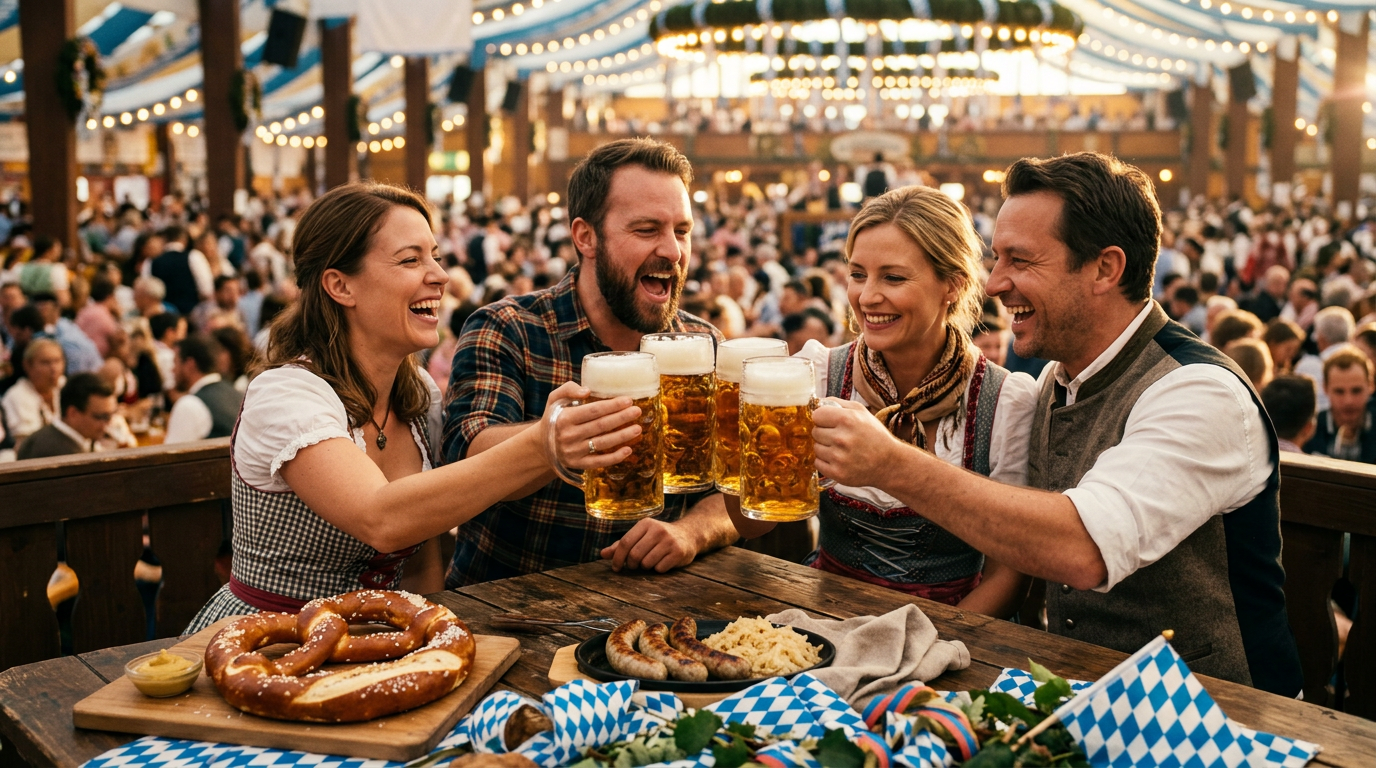
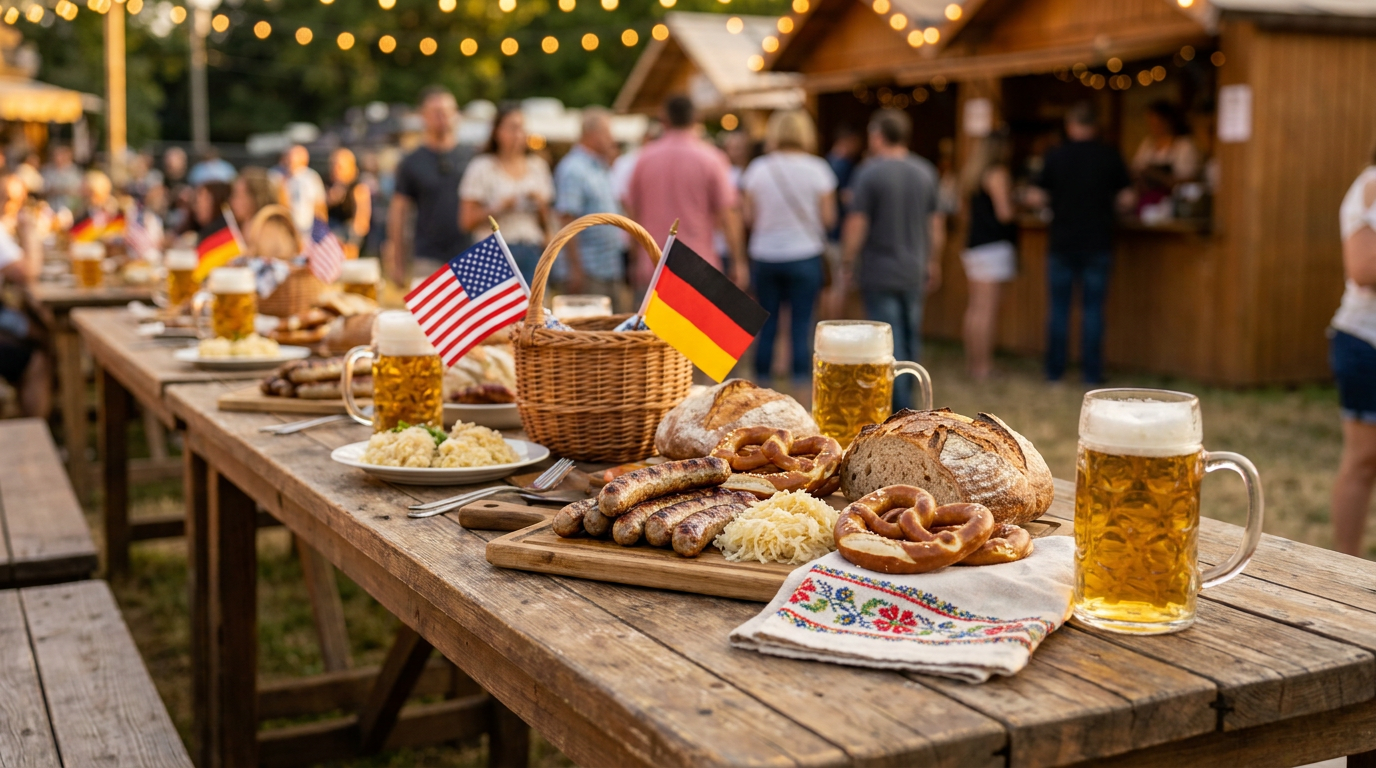
For many Americans, this familiar scene feels inseparable from German heritage celebrations. Play the tune near an accordion, a bratwurst stand, and a blue-and-white tent, and it seems to have arrived directly from Bavaria.

But the melody was composed in Switzerland. Its first bird was a duck. And the story of how it became an American chicken runs through Belgium, Britain, Oklahoma, and Ohio. The route is wonderfully tangled—and it says something useful about how traditions actually grow.

A duck waddles out of the Swiss Alps

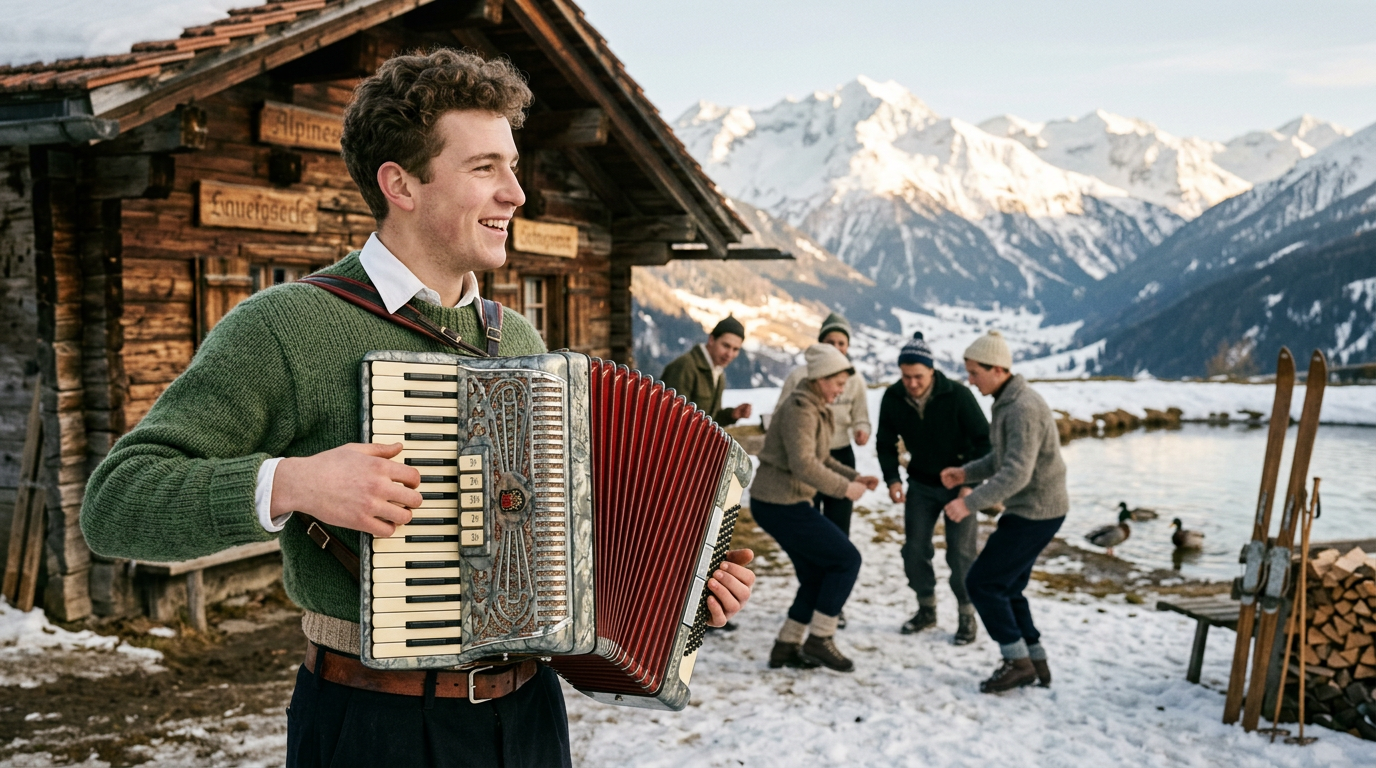
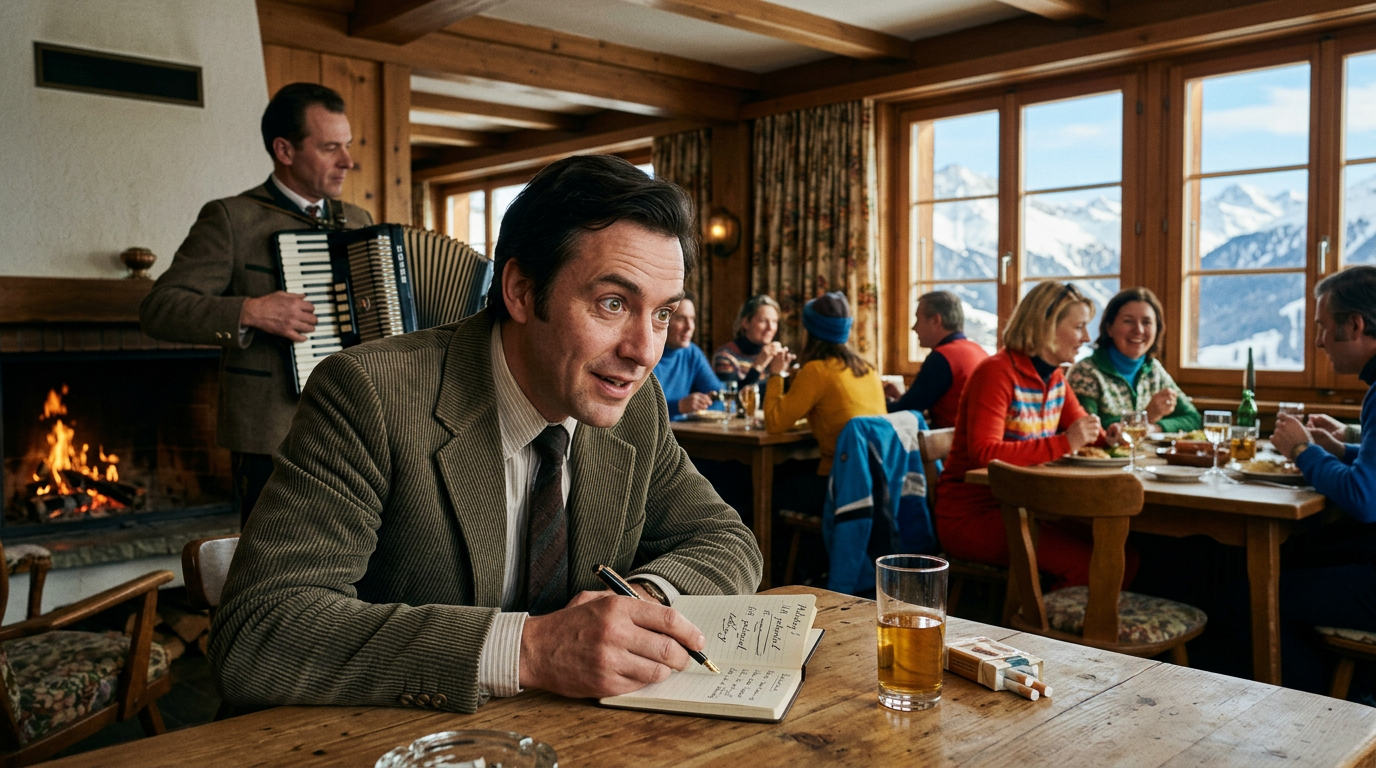
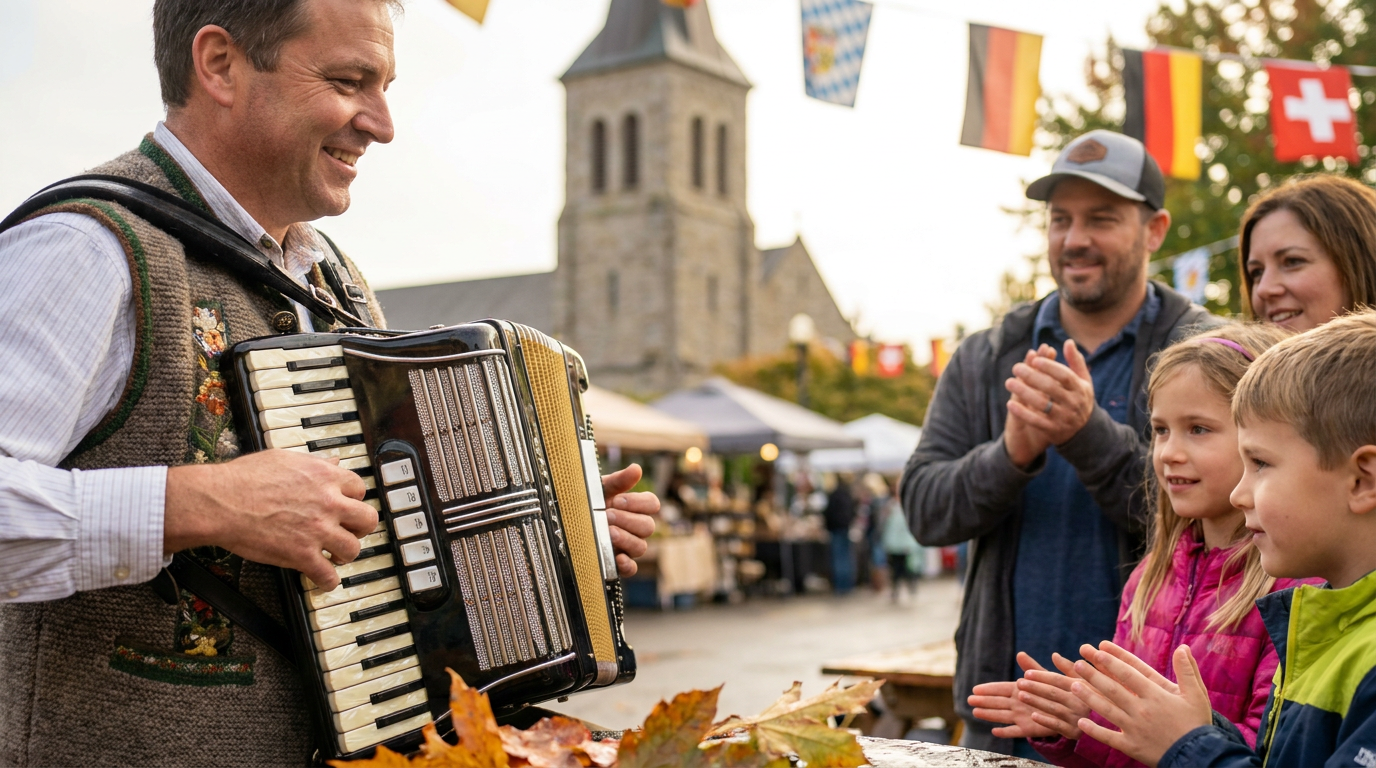
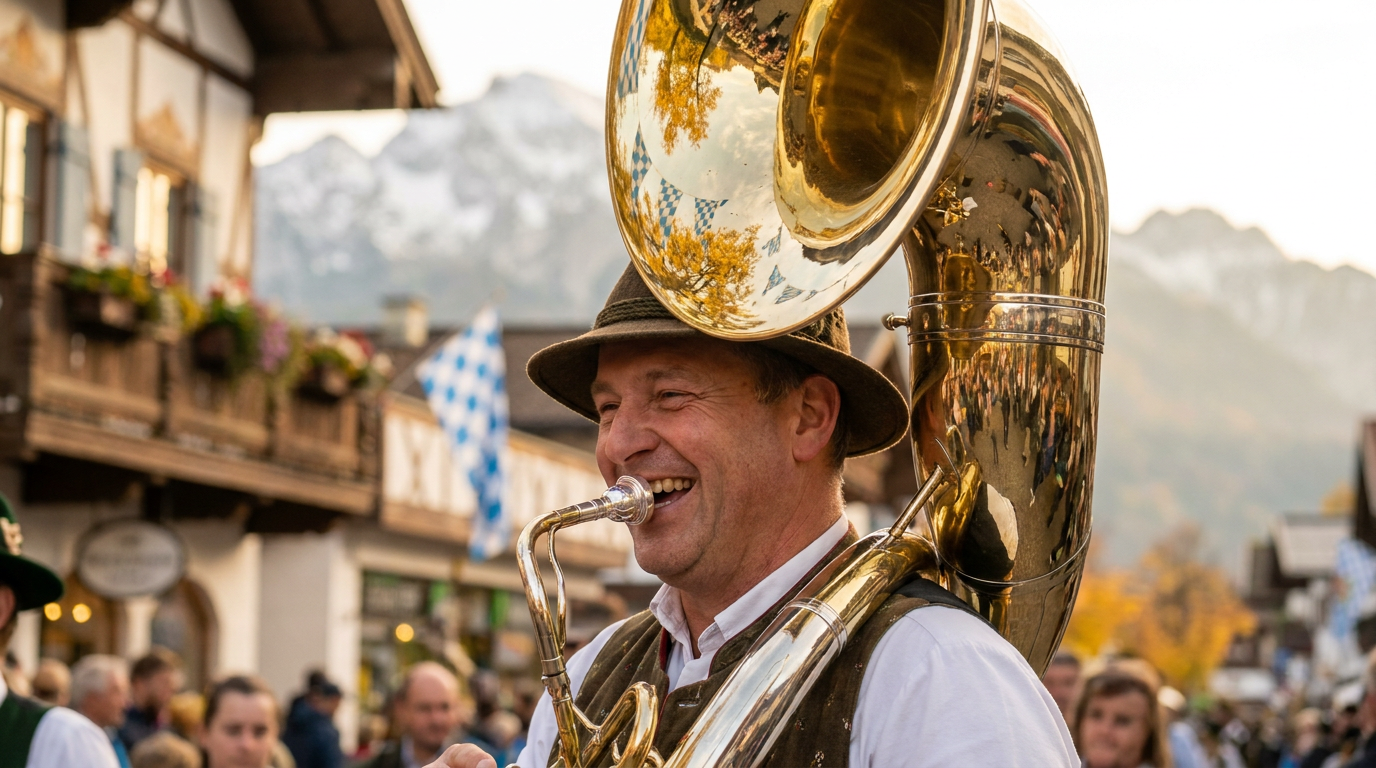
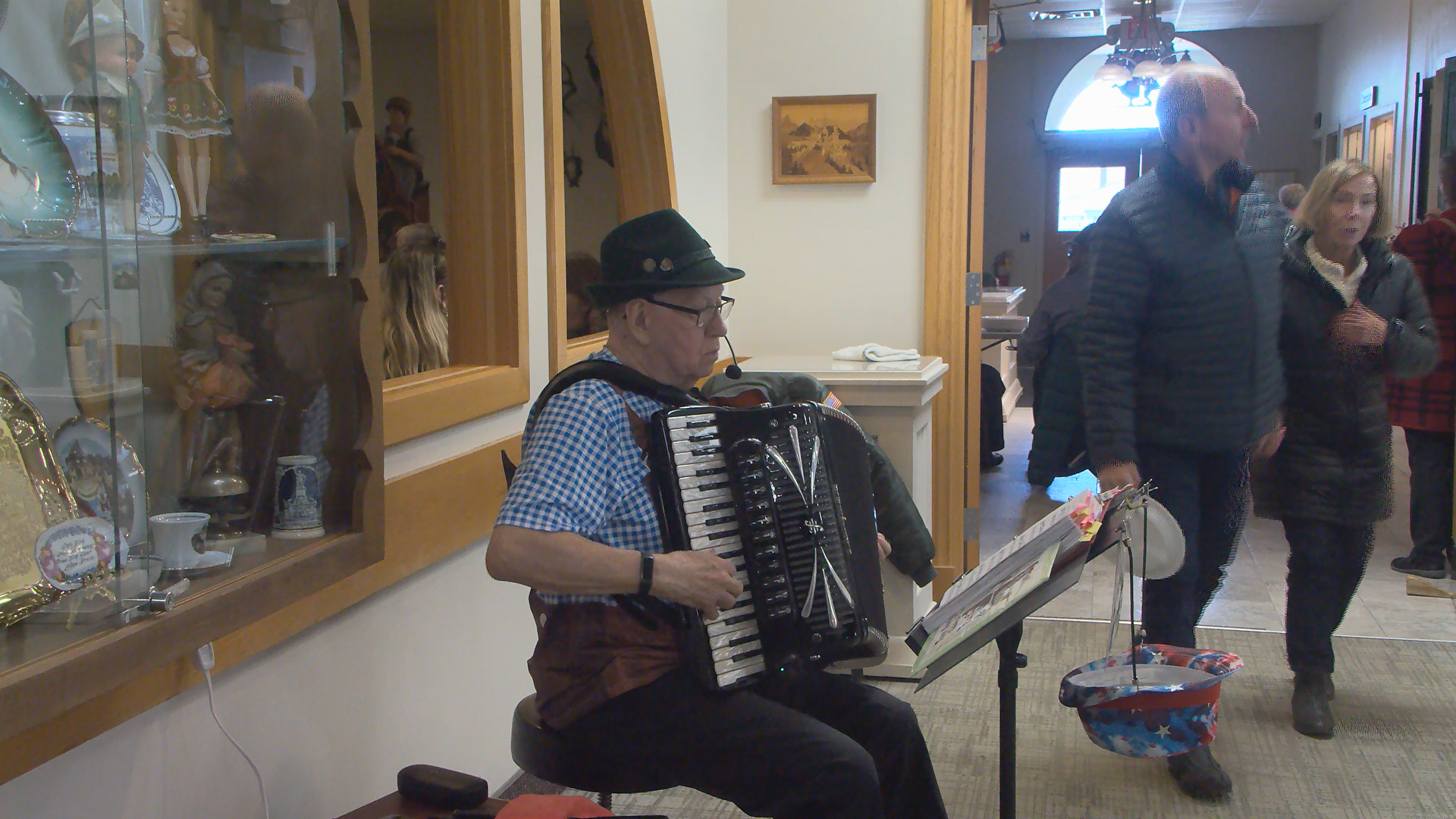
In the 1950s, Werner Thomas was entertaining guests in the Alpine resorts of eastern Switzerland. An accordionist from the canton of Thurgau, he performed in restaurants and après-ski settings around places such as Davos. He developed a short, cheerful instrumental melody, initially something he could use between parts of a performance. Sources commonly place its beginnings in the mid-1950s; 1957 is the year often attached to it.

Thomas had something more memorable than an ordinary musical interlude. Guests recognized the tune. Its bouncy phrases invited movement, and over time the music became linked to a dance called Der Ententanz, German for “The Duck Dance.”

Now picture the familiar choreography with a duck in mind. The fingers make a bill. Bent elbows become wings. The knees dip, the backside wiggles, and the body starts to waddle. Suddenly the movements that Americans call “chicken” look suspiciously ducklike.

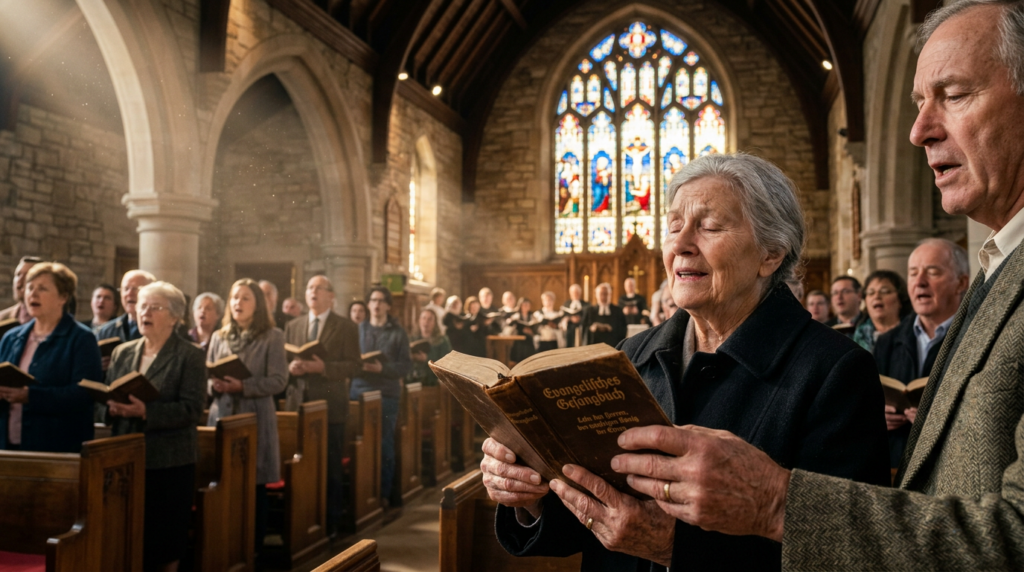
Thomas later said his inspiration came partly from birds and partly from the skiers he watched around the resorts. The knee-bending motion of people on skis worked its way into the dance. Its unlikely ingredients were an Alpine musician, a simple melody, birds, and people preparing to glide down a snowy slope. Swissinfo’s account of Werner Thomas’s career draws on interviews and reporting about the composer.

For years, Thomas played the piece live without the world treating it as a potential hit. Then a Belgian music producer went on vacation.

A producer hears more than a little interlude

In the early 1970s, Louis van Rijmenant heard Thomas’s tune while visiting Davos. He recognized that its instantly memorable melody might travel beyond the mountains. The Belgian group Cash & Carry released a synthesizer-driven recording in 1973 called “Tchip Tchip.”

Thomas was reportedly disappointed when he first heard the electronic arrangement. The sound was a long way from the accordion music he had imagined. Listeners, however, took to it. The recording became a success in Belgium and Switzerland, and van Rijmenant helped take the tune to the wider music industry. Swissinfo traces that early recording history.

From there, the melody migrated through new recordings and new names. A version by the Dutch group De Electronica’s became a major hit in Germany. The British group The Tweets released “The Birdie Song,” which reached No. 2 on the UK singles chart in 1981. Their bird costumes on television made the movements hard to forget. Elsewhere, dancers knew versions such as France’s La Danse des Canards and Italy’s Il ballo del qua qua. The Official Charts Company confirms the Tweets’ chart peak.

Duck, bird, little bird, chicken: the name changed with the country and the performer. The appeal stayed remarkably constant. You could hear the tune once, watch somebody do the motions, and join in before it ended. Even without knowing a word of another language, you were part of the dance.

The scale of its travels is surprising, too. Swiss reporting counts roughly 400 recorded versions and estimates sales of more than 50 million copies across over 40 countries. Those are broad retrospective estimates, but they convey how far the tune moved from Thomas’s restaurant performances. The same melody could be a synthesizer novelty in one place, a children’s party song in another, and a familiar festival cue somewhere else. Each new arrangement gave listeners a different way into essentially the same joke: a room full of people agreeing, for a minute or two, to act like birds. Swissinfo surveys its international recordings.

The melody had become an international traveler. America was about to give it a particularly memorable new identity.

The missing duck costume in Tulsa

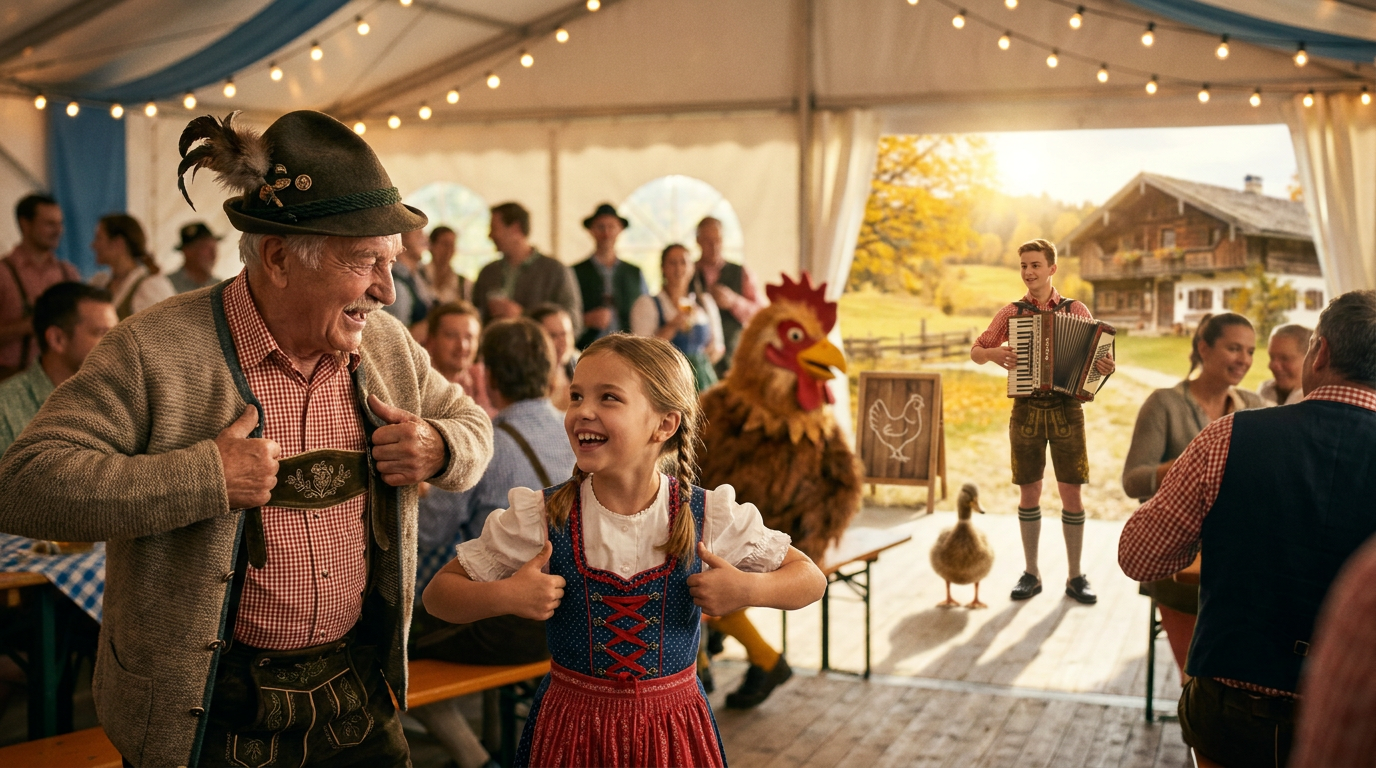
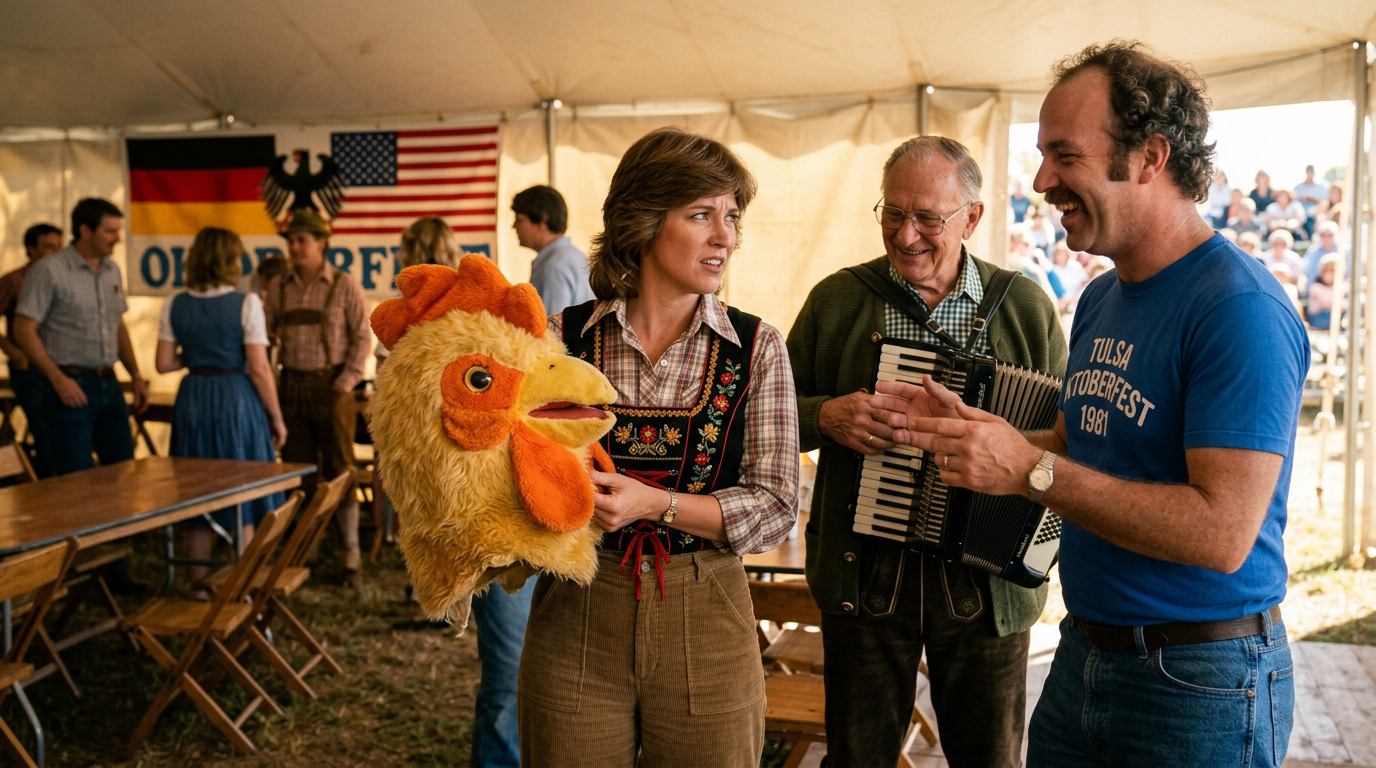
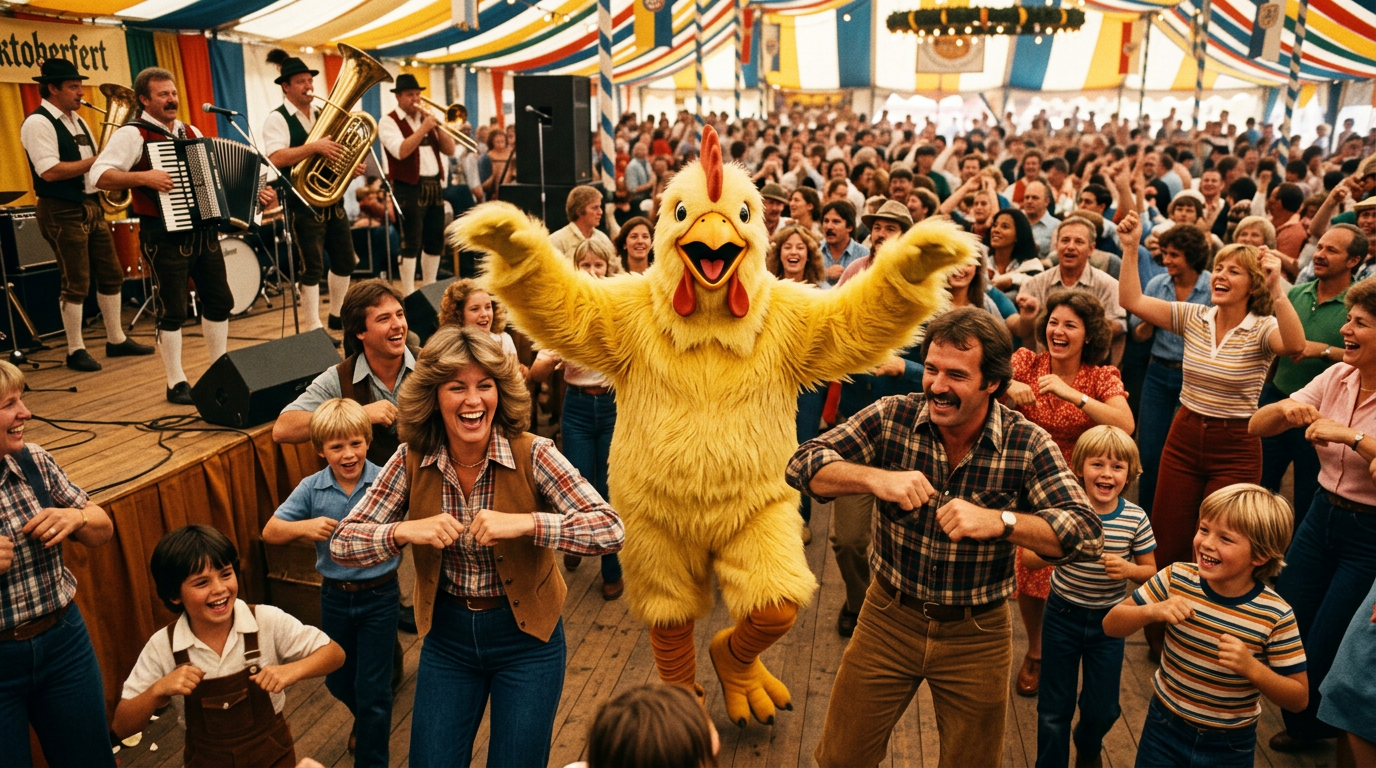
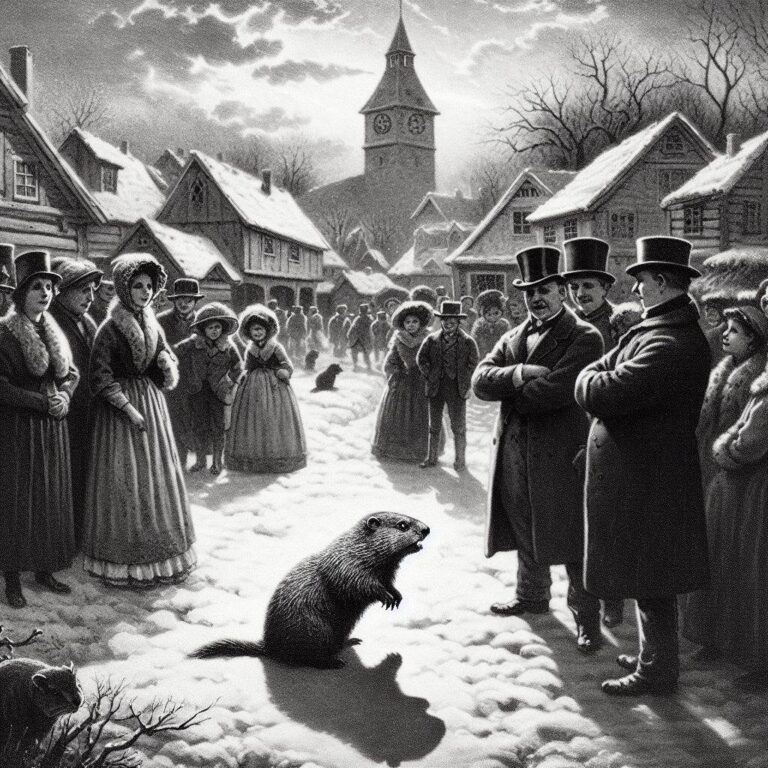
The most famous American naming story takes place at Tulsa Oktoberfest in 1981. A visiting band introduced the Duck Dance. Festival participants wanted someone in a duck costume to demonstrate it, but they couldn’t find one. A local television station did, however, have a chicken costume.

So the organizers used what they had.

Imagine seeing the dance for the first time under those circumstances. A costumed chicken appears. The music starts. The bird onstage opens its “beak,” flaps its wings, wiggles, and claps. If someone asks what the crowd is watching, the answer seems obvious: the Chicken Dance.

This is more than a charming tale copied from one festival brochure. In an Oklahoma public-radio investigation, Carol Wright, who attended the muddy 1981 festival and later led Tulsa’s German-American folk dance group, recalled the missing duck costume and the chicken outfit borrowed from Channel 2. She also recalled that the festival kept promoting its chicken connection.

Tulsa deserves its place in the story. It does not follow that every American first encountered the melody there. The same radio investigation found memories of polka musicians playing it in the United States during the late 1970s. Musicologist Jonathan Kregor has also cautioned that the tune likely arrived by more than one route. Touring performers, families, DJs, ethnic dance halls, and recordings could all carry a song from one place to another. Cincinnati Public Radio explored those parallel paths.

The careful version is also the most interesting one: Tulsa gave an already traveling bird a terrific chicken story, a visible costume, and a festival eager to keep the joke going.

Why Americans hear it as “German”

If a Swiss musician wrote the melody, why does it feel so at home at a German-American Oktoberfest?

Because a celebration’s soundtrack is shaped by what its guests embrace. The dance traveled through European recordings and community musicians. Accordion-led versions fit the atmosphere of German-American festivals. Polka bands and other entertainers found that the tune could fill a dance floor in seconds. It gave families a way to participate together, regardless of age, dance experience, or ancestry.

There is a distinction here that makes the story richer. A musicologist at the University of Cincinnati notes that the melody has polka-like qualities, while the polka itself is a different dance. Calling the Chicken Dance an ancient German polka skips the surprising journey it really took. At an American Oktoberfest, though, the tune’s decades of use have made it a recognizable part of the celebration.

An example from Munich turns this journey around.

Neil Diamond’s “Sweet Caroline” is an American pop song. It was not written for Oktoberfest and has no connection to its nineteenth-century origins. Yet Munich’s official Oktoberfest website lists it among songs heard in today’s beer tents. When that chorus reaches the crowd, visitors from Germany, America, and far beyond can answer together with the familiar “Bah! Bah! Bah!” Munich’s Oktoberfest music guide includes “Sweet Caroline”.

That is the Chicken Dance story in reverse. Munich can welcome an American song into its modern festival soundtrack. German-American celebrations can welcome a Swiss melody into theirs. The song’s birthplace remains part of its history; the shared experience gives it another chapter.

And the Chicken Dance is unusually good at creating that experience. It doesn’t ask the audience merely to listen. It gives everybody a part.

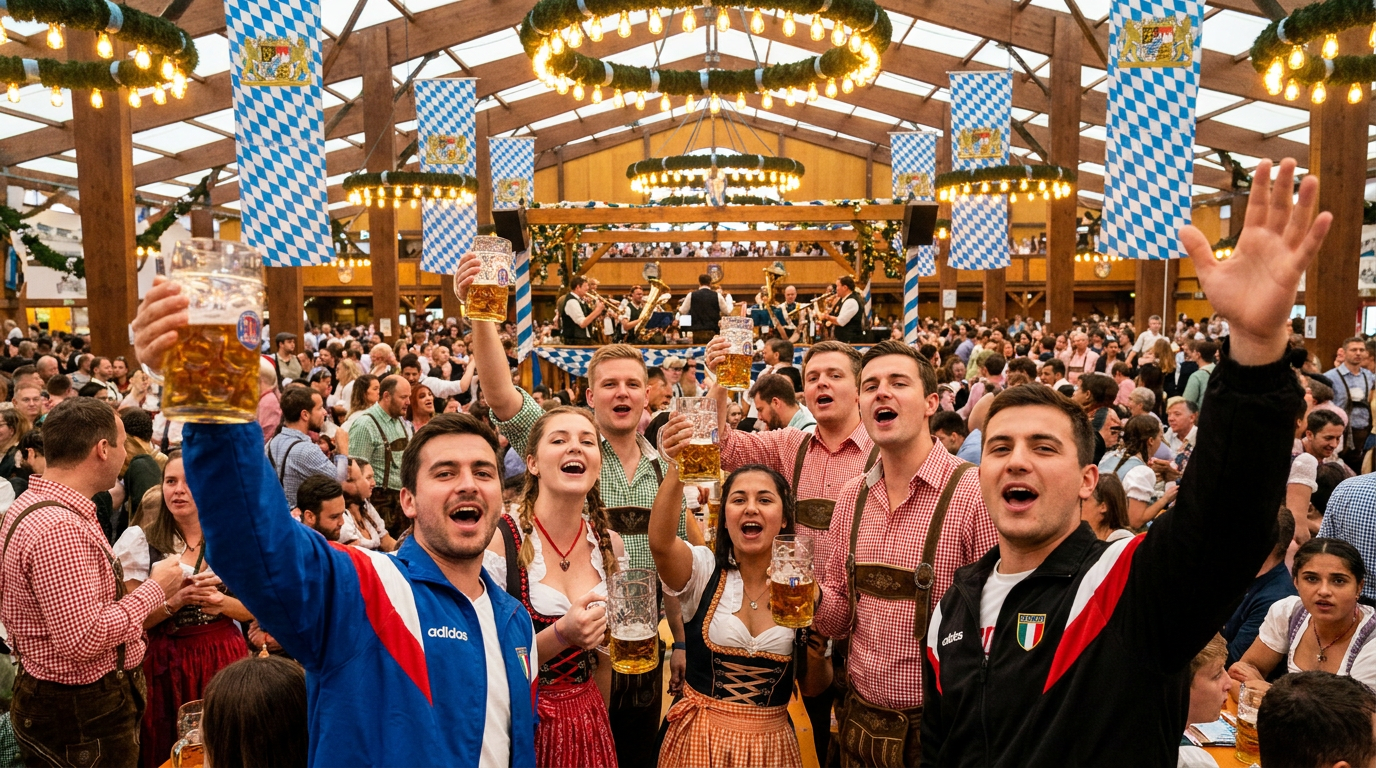
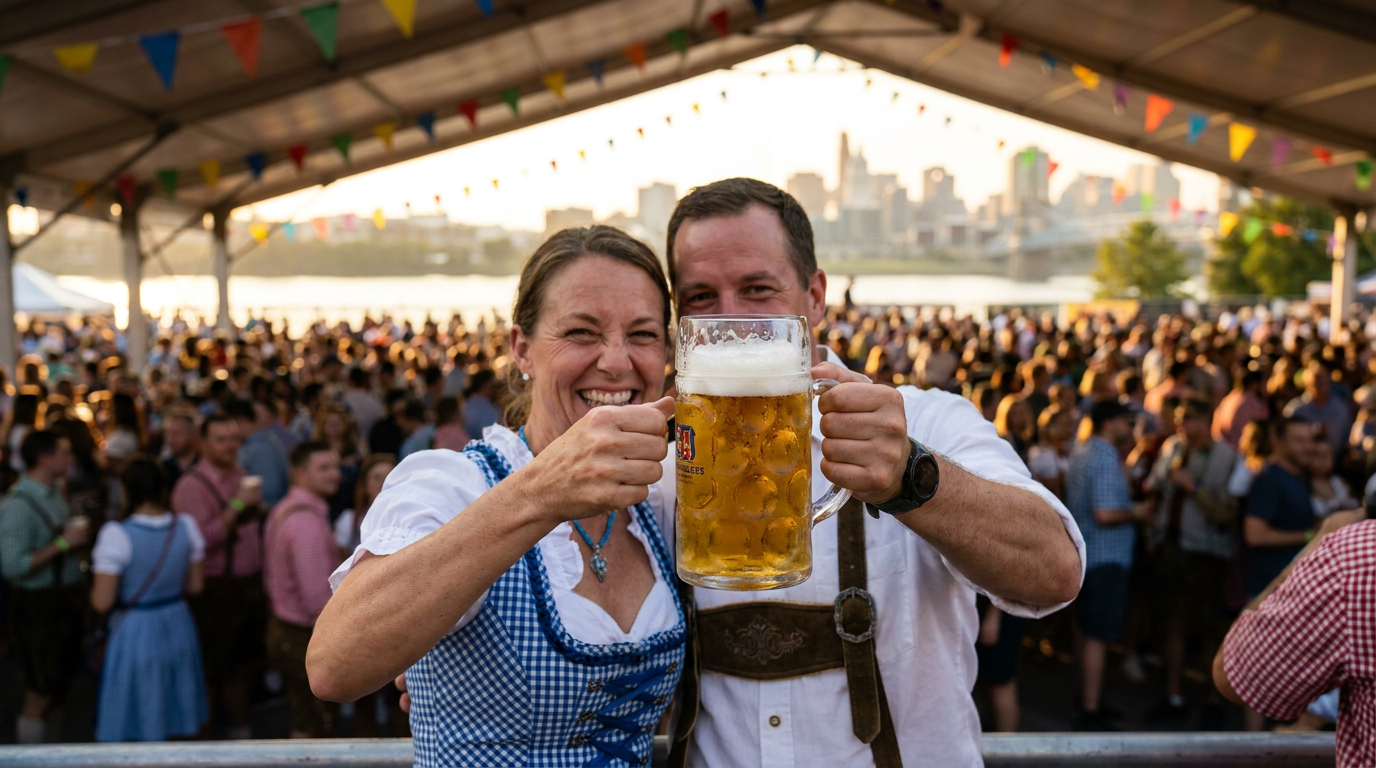
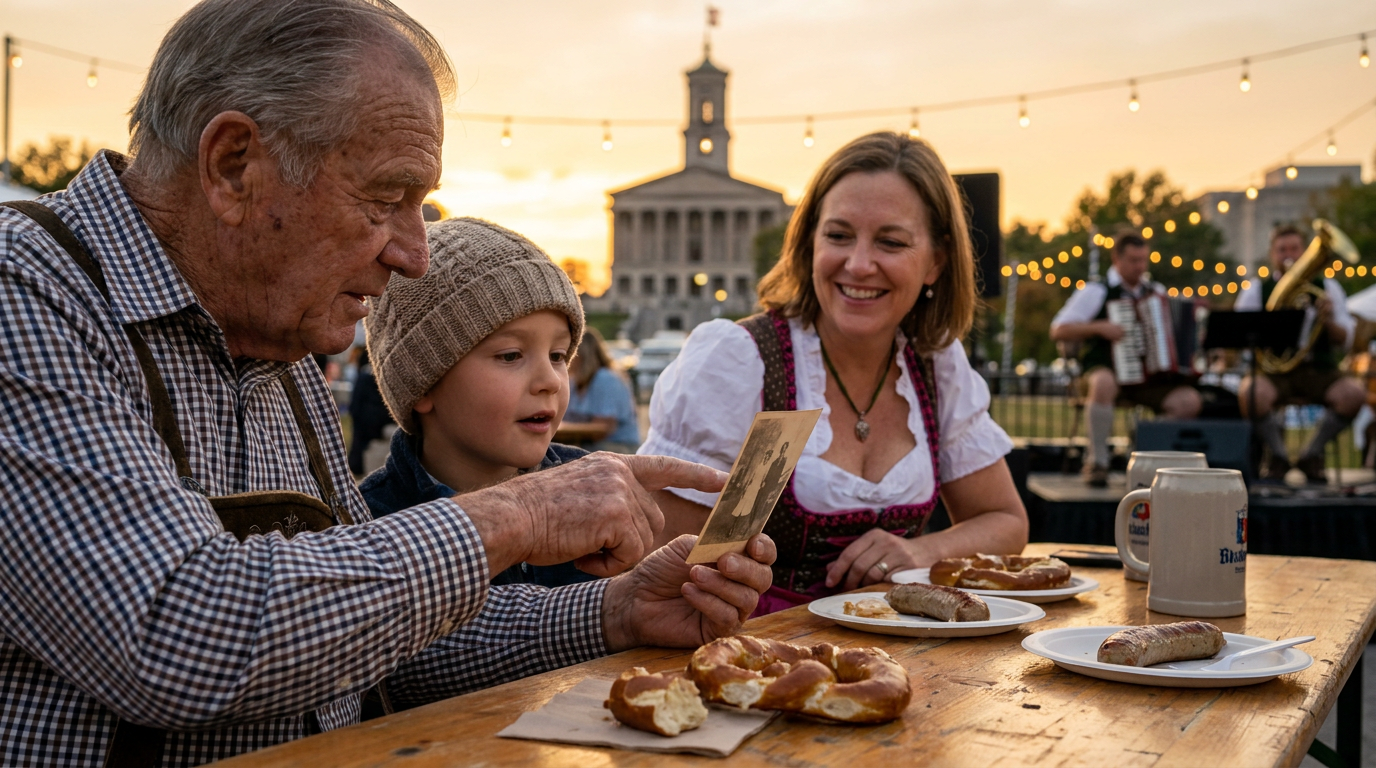
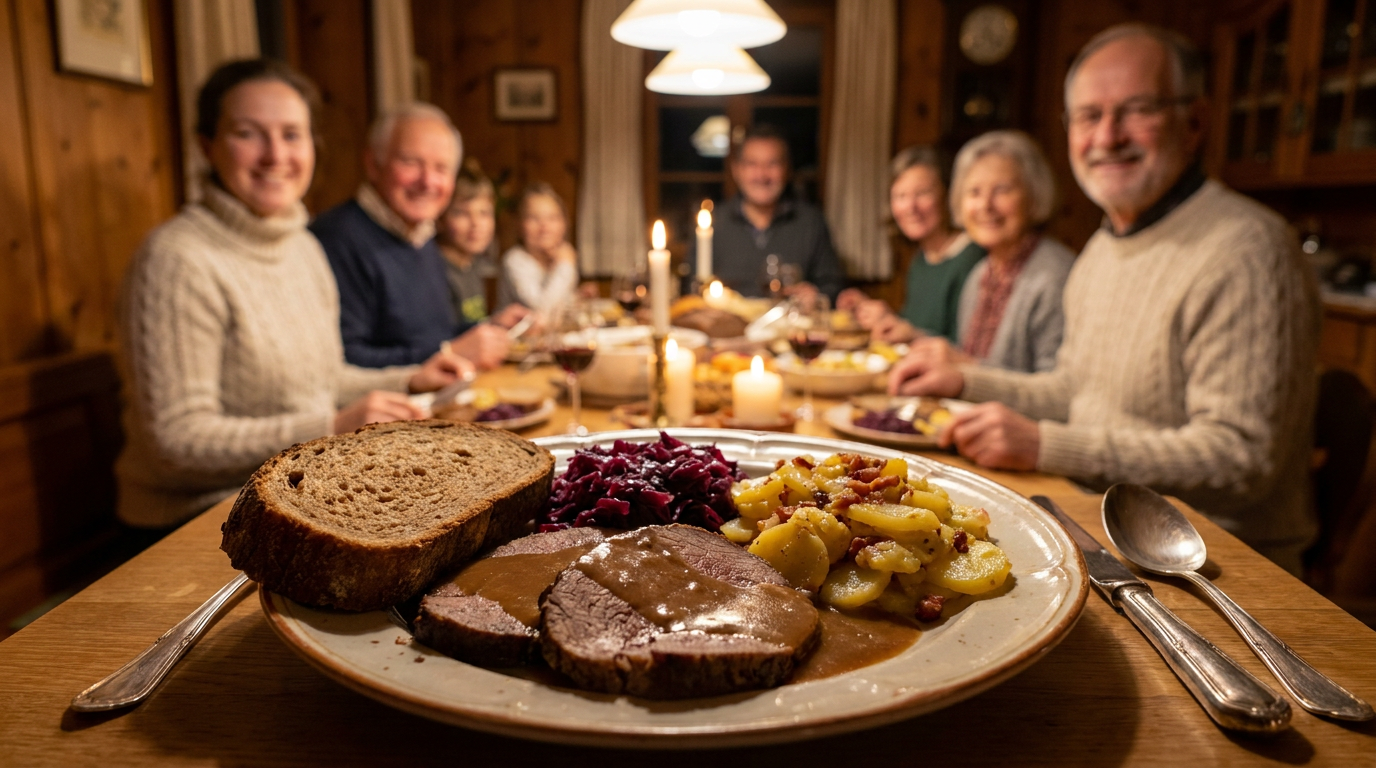
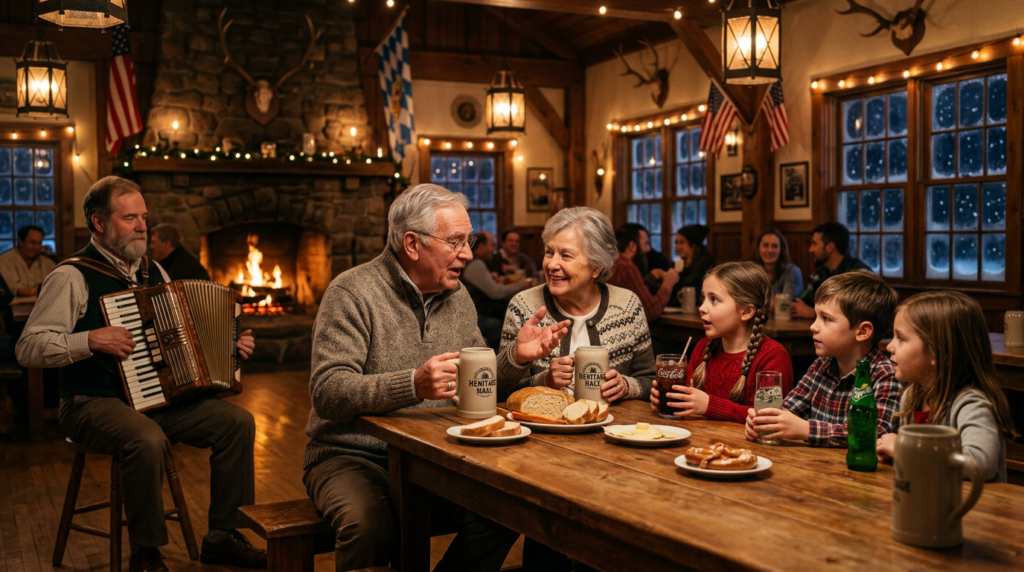
Picture an Oktoberfest tent with several generations at one table. The grandparents recognize the opening notes. The children learn the beak movement by watching. Someone halfway through a conversation starts flapping without leaving their seat. Another person tries to resist and is soon laughing at everyone else. By the first clap, the boundary between spectators and dancers has begun to disappear.

That is why bands keep returning to the tune. The crowd makes the moment together.

Was it played at the first Oktoberfest?

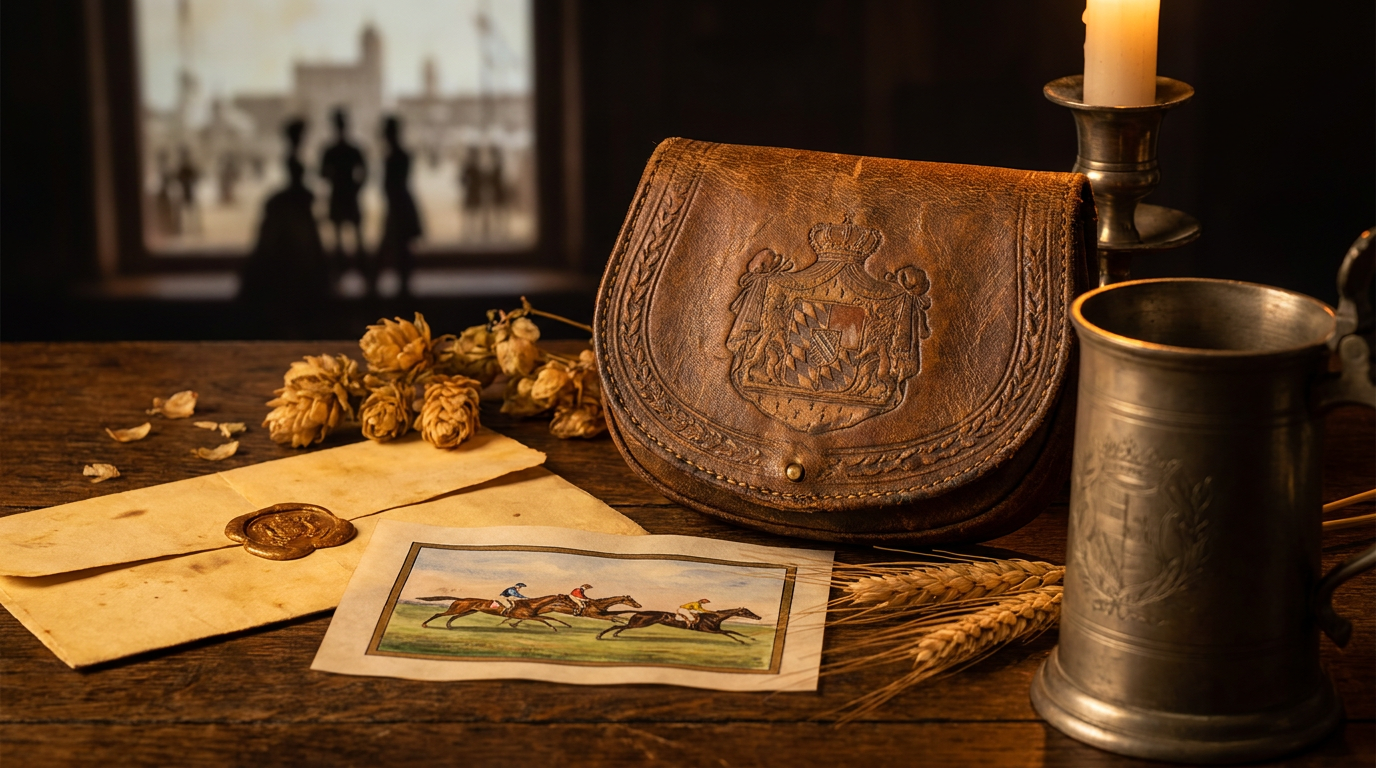
Absolutely not. The first Munich Oktoberfest grew out of the 1810 wedding celebrations for Crown Prince Ludwig of Bavaria and Princess Therese of Saxe-Hildburghausen. The couple married on October 12. Five days later, on October 17, 1810, a horse race outside Munich concluded the public celebrations and became the starting point for the recurring festival. The City of Munich describes the wedding and race in its festival history.

Thomas’s melody appeared roughly a century and a half later. Nobody at the royal race was making beaks with their fingers. The dance belongs to the modern history of festivals, music recordings, and German-American community life.

There is no need to move it back to 1810 to make it meaningful. Heritage celebrations carry old customs forward and acquire new favorites along the way. Some songs arrive with immigrant families. Some come from neighboring cultures. Some make their way in through a record, a wedding band, or a borrowed chicken suit.

Cincinnati raises 48,000 pairs of wings

If Tulsa supplied the American dance with a marvelous origin story, Cincinnati showed how big that story could become. The Ohio city, shaped deeply by German immigration, made the Chicken Dance a signature moment at Oktoberfest Zinzinnati.

In 1994, an estimated 48,000 participants danced together, setting a record reported in editions of the Guinness Book of World Records. Helping lead them was Luitpold Prinz von Bayern, a member of Bavaria’s Wittelsbach family—the dynasty of the Ludwig whose wedding had set Munich’s Oktoberfest tradition in motion. Ohio Magazine records the 48,000 figure, and a Cincinnati retrospective identifies Luitpold as the leader.

Think of the route to that moment. A Swiss accordionist creates a duck dance. A Belgian producer makes it a record. Performers and audiences across Europe give it new names. A Tulsa festival borrows a chicken costume. Then a Bavarian prince helps lead tens of thousands of Americans through the motions in Cincinnati.

Even 48,000 dancers didn’t end the competition. Guinness currently lists an estimated 72,000 participants at the Canfield Fair in Ohio on September 1, 1996. Ohio apparently has a remarkable talent for organizing enormous flocks.

The secret ingredient is everybody

Why has a small Alpine tune outlasted so many novelty songs? Its melody is easy to recognize, but the answer is on the dance floor.

At most dances, somebody worries about getting the steps wrong. At the Chicken Dance, the person beside you is making a beak with their hands. Nobody expects elegance. Everyone gets permission to be ridiculous at the same time.

The movements also create a story families can tell afterward. A child may forget the name of the band but remember watching Grandpa flap his elbows. Wedding guests may forget the order of the songs but remember the entire party wiggling in formal clothes. A parent may start the music for a toddler and end up dancing with three generations.

The joke also renews itself. At five, you are delighted to know the moves. At fifteen, you may act too embarrassed to try them. Years later, you might be the adult who starts the dance because a child at your table wants company. The steps have barely changed, but your place in the story has. That is a powerful advantage for a tradition passed from one celebration to the next.

It is easy to describe that as “just a silly song.” Try to think of another piece of music that so reliably persuades strangers to do the same ridiculous thing together.

For German Heritage USA, that is the heart of this unlikely tradition. Its composition is Swiss. Its recordings crossed borders. Its American chicken identity has a memorable Tulsa chapter. Its enormous gatherings include a Bavarian prince in Cincinnati. The dance belongs to all those histories—and to the families who keep choosing it at their celebrations.

So the next time the opening notes begin, take a moment before you flap. Picture Thomas at his accordion in the Swiss Alps. Picture the duck. Picture the borrowed Oklahoma costume. Picture a sea of Cincinnati dancers making their own beaks.

Then join them.

Beak. Wings. Wiggle. Clap.

Somewhere underneath that American chicken is still a Swiss duck.

Prost!

The Ultimate Guide to America’s Biggest Oktoberfests: Where to Celebrate German Heritage This Fall

From Cincinnati’s enormous riverfront celebration to Bavarian-style towns in Georgia and Washington, these unforgettable festivals invite German-Americans—and everyone who loves the culture—to eat, dance, explore and raise a cheerful “Prost!” in fall 2026.

September arrives with a wonderful change in the air. The evenings grow cooler. Brass music seems to sound a little better. Pretzels suddenly look larger, sausages smell more tempting, and somewhere in America a dachshund is being fitted for its racing number.

Oktoberfest season is here.

For German-Americans, an Oktoberfest can be much more than a beer festival. It can be a joyful doorway into family history—a place where a familiar surname appears on a banner, an old melody awakens a memory, or a grandparent’s stories begin to feel real. For visitors without German ancestry, it offers the same invitation: pull up a bench, share a table and discover why Gemütlichkeit—the warm feeling of welcome, comfort and good fellowship—may be Germany’s most irresistible export.

America now hosts hundreds of Oktoberfest celebrations, from neighborhood church picnics to citywide gatherings. This guide focuses on events that stand out through some combination of size, longevity, national reputation, cultural depth and destination atmosphere. It is not a rigid attendance ranking. Crowd estimates vary, and a month-long town celebration cannot be measured fairly against a concentrated four-day festival.

What these celebrations share is something more important: they turn heritage into an experience.

“An Oktoberfest is not merely a place to drink a beer. It is a place to hear history singing at the next table.” — GERMAN HERITAGE USA

Before the Road Trip: What Are We Actually Celebrating?

The original Oktoberfest began in Munich in 1810 with festivities honoring the marriage of Bavarian Crown Prince Ludwig and Princess Therese of Saxe-Hildburghausen. A public horse race helped conclude the celebration on grounds that became known as the Theresienwiese—“Therese’s Meadow.” The celebration returned, evolved and eventually became the enormous Munich festival recognized around the world.

Why does Oktoberfest often begin in September? The event gradually moved earlier to take advantage of longer days and milder weather while still finishing in early October. In 2026, Munich’s official Oktoberfest runs September 19 through October 4.

It is also worth remembering that Oktoberfest is specifically Bavarian in origin. Germany contains many regional cultures, foods, dialects and traditions. A family from Schleswig-Holstein, Hesse, Saxony or the Rhineland may not have inherited lederhosen or dirndls as ancestral dress. Still, Oktoberfest has become a lively international celebration of German and German-American culture. Enjoy the Bavarian traditions—and let them inspire you to discover your family’s own regional story.

America’s Oktoberfest Calendar at a Glance

Celebration Location 2026 dates Best for
Oktoberfest Zinzinnati Cincinnati, Ohio Sept. 17–20 The biggest crowds and enormous citywide energy
Mount Angel Oktoberfest Mount Angel, Oregon Sept. 17–20 German-Swiss tradition and a community-wide festival
Addison Oktoberfest Addison, Texas Sept. 17–20 Bavarian celebration with a Texas personality
Denver Oktoberfest Denver, Colorado Sept. 18–20 and 25–27 Urban excitement, games and two full weekends
Helen Oktoberfest Helen, Georgia Sept. 10–Nov. 1 The longest festival season and Alpine-town atmosphere
Nashville Oktoberfest Nashville, Tennessee Oct. 1–4 A large Southern city celebration with music and contests
Leavenworth Oktoberfest Leavenworth, Washington Oct. 2–3, 9–10 and 16–17 Mountain scenery and a Bavarian-style destination town
Zeeco Oktoberfest Tulsa Tulsa, Oklahoma Oct. 22–25 A high-energy grand finale patterned after Munich

Dates and details were checked against official 2026 event information. Always confirm hours, admission rules and schedules before traveling.

1. Oktoberfest Zinzinnati — Cincinnati, Ohio

Best for: Experiencing America’s attendance giant

If your Oktoberfest dream includes a riverfront filled with music, food, beer and a crowd large enough to qualify as its own city, begin in Cincinnati. The official event calls Oktoberfest Zinzinnati America’s largest Oktoberfest, and more than 800,000 people attended in 2025. The 2026 celebration marks its 50th anniversary at Sawyer Point Park and Yeatman’s Cove.

Cincinnati’s German roots run deep. Nineteenth-century German immigration shaped local neighborhoods, brewing, food, music and civic life. That history helps the celebration feel less like an imported theme and more like a city turning up the volume on part of its identity.

Admission is free, making it especially approachable for families and first-time visitors. Expect giant tents, stages, beer gardens, abundant German-inspired food and wonderfully unserious spectacle. The famous mass participation and exuberant atmosphere are part of the point: this is heritage with its sleeves rolled up.

Do not miss: The ceremonial events, live music and sheer thrill of seeing Cincinnati’s German-American pride take over the Ohio Riverfront.

2. Mount Angel Oktoberfest — Mount Angel, Oregon

Best for: Old-world community atmosphere in the Pacific Northwest

Mount Angel brings a distinctive German-Swiss character to Oregon’s Willamette Valley. Rather than containing the celebration inside one isolated hall, the festival fills the streets and multiple venues across town. In 2026, it runs September 17–20.

This is a rewarding choice for travelers who want far more than an evening beer tent. The celebration combines music and dancing with food, family activities, races, arts and crafts, and community institutions. More than 120 artisans are scheduled for the 2026 arts-and-crafts show alone.

Mount Angel’s appeal is intimacy at festival scale. Bells, Alpine design, friendly volunteers and a strong sense of local ownership give the weekend a personality that cannot be manufactured.

Do not miss: Exploring the different festival venues instead of staying in one tent—each corner of town adds another chapter to the experience.

3. Addison Oktoberfest — Addison, Texas

Best for: Bavarian tradition served with Texas hospitality

In North Texas, Addison Circle Park becomes a four-day celebration of beer, brats, music, dancing and playful competition. Addison Oktoberfest runs September 17–20 in 2026 and deliberately pairs Bavarian festival customs with a confident Texas twist.

That combination makes Addison accessible to newcomers without losing the visual excitement people hope to find at Oktoberfest. Visitors can move between performance areas, food experiences and family activities, then join the official keg tapping or simply settle in and listen to the music.

The practical advantage is location. Travelers can build the festival into a Dallas-area weekend, while local families can enjoy a major cultural event without an interstate expedition.

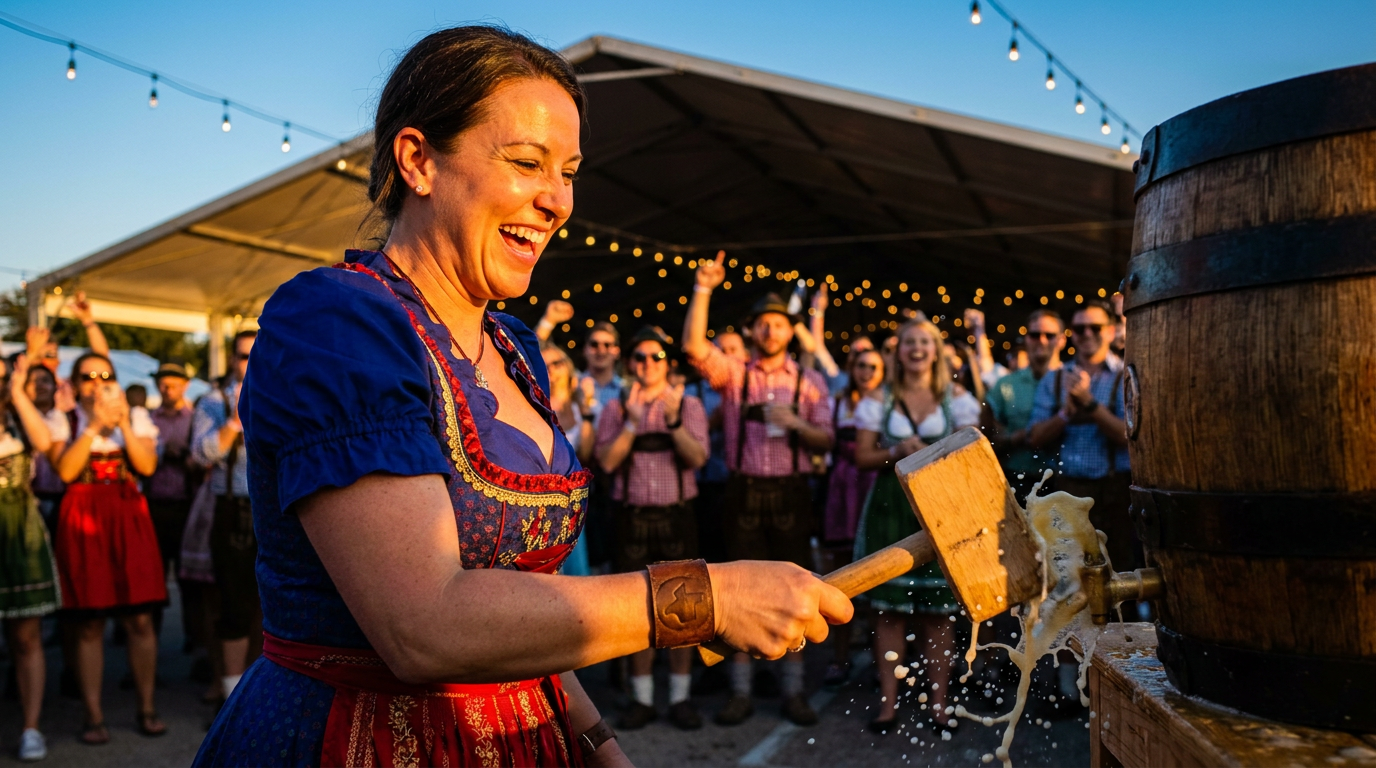
Do not miss: The ceremonial keg tapping and the delightful moment when polka rhythm, Texas friendliness and a packed Partyhalle become one celebration.

4. Denver Oktoberfest — Denver, Colorado

Best for: A high-energy urban street festival

Denver has celebrated Oktoberfest since 1969, and its 56th annual edition fills two weekends in the Ballpark District: September 18–20 and September 25–27. The setting on Larimer Street creates a different experience from a small heritage town. This one feels like an urban block party wearing lederhosen.

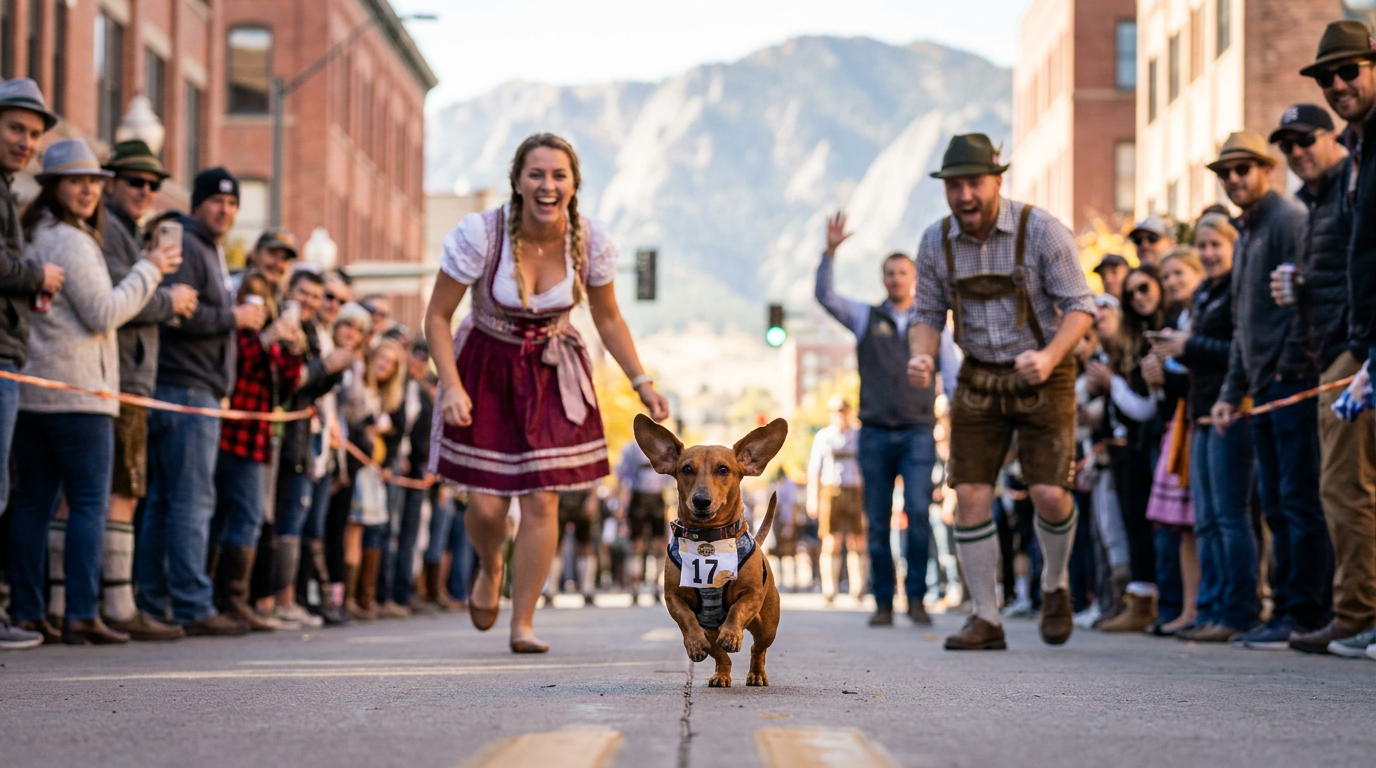
Along with food, beer and music, Denver leans enthusiastically into American Oktoberfest games. The 2026 schedule includes the Long Dog Derby on both Sundays and a sausage-eating contest on September 26. It is spirited, funny and built for groups of friends who want action between songs.

Denver also works well for travelers who prefer choices. Spend part of the day at the festival, then explore the city’s breweries, museums, restaurants or nearby mountain scenery.

Do not miss: The dachshund races—because few things unite a crowd faster than very short legs chasing very large glory.

5. Helen Oktoberfest — Helen, Georgia

Best for: Turning Oktoberfest into an extended Alpine getaway

Helen offers one of the most visually distinctive Oktoberfest trips in America. The North Georgia mountain town adopted a Bavarian-inspired architectural identity decades ago, so the celebration continues beyond the doors of its Festhalle and into the surrounding streets, shops and scenery.

The 56th annual Helen Oktoberfest begins September 10. It operates Thursday through Sunday during September, then nightly from October 1 through November 1. That extraordinary run gives visitors unusual flexibility and makes Helen the choice for anyone who wants fall foliage, a cabin weekend and German music in one itinerary.

The opening parade takes place September 12, followed by the first keg tapping. Inside the Festhalle, bands, dancing, food and drink supply the classic experience. Outside, the Blue Ridge foothills provide the backdrop.

Do not miss: Pairing an afternoon scenic drive or waterfall walk with an evening of dancing at the Festhalle.

6. Nashville Oktoberfest — Nashville, Tennessee

Best for: German heritage with a Music City pulse

Nashville’s celebration has run consecutively since 1980 and returns October 1–4, 2026, at Bicentennial Capitol Mall State Park. It combines live music, German fare, beer, a 5K Bier Run, competitions and a pup parade in a setting close to downtown.

For Middle Tennessee families, this is proof that meaningful heritage discovery does not always require a cross-country trip. A festival afternoon can become the beginning of a larger family conversation: Which part of Germany did our ancestors leave? What recipes survived? Which names were changed or Anglicized? What should we preserve next?

Nashville also demonstrates how German-American traditions continue to evolve. The music and contests feel distinctly American, yet the communal tables, food, toasts and fellowship still point toward the festival’s Bavarian source.

Do not miss: Arrive for the cultural programming, stay for the music, and use the experience to start one new family-heritage tradition.

7. Leavenworth Oktoberfest — Leavenworth, Washington

Best for: The most cinematic setting

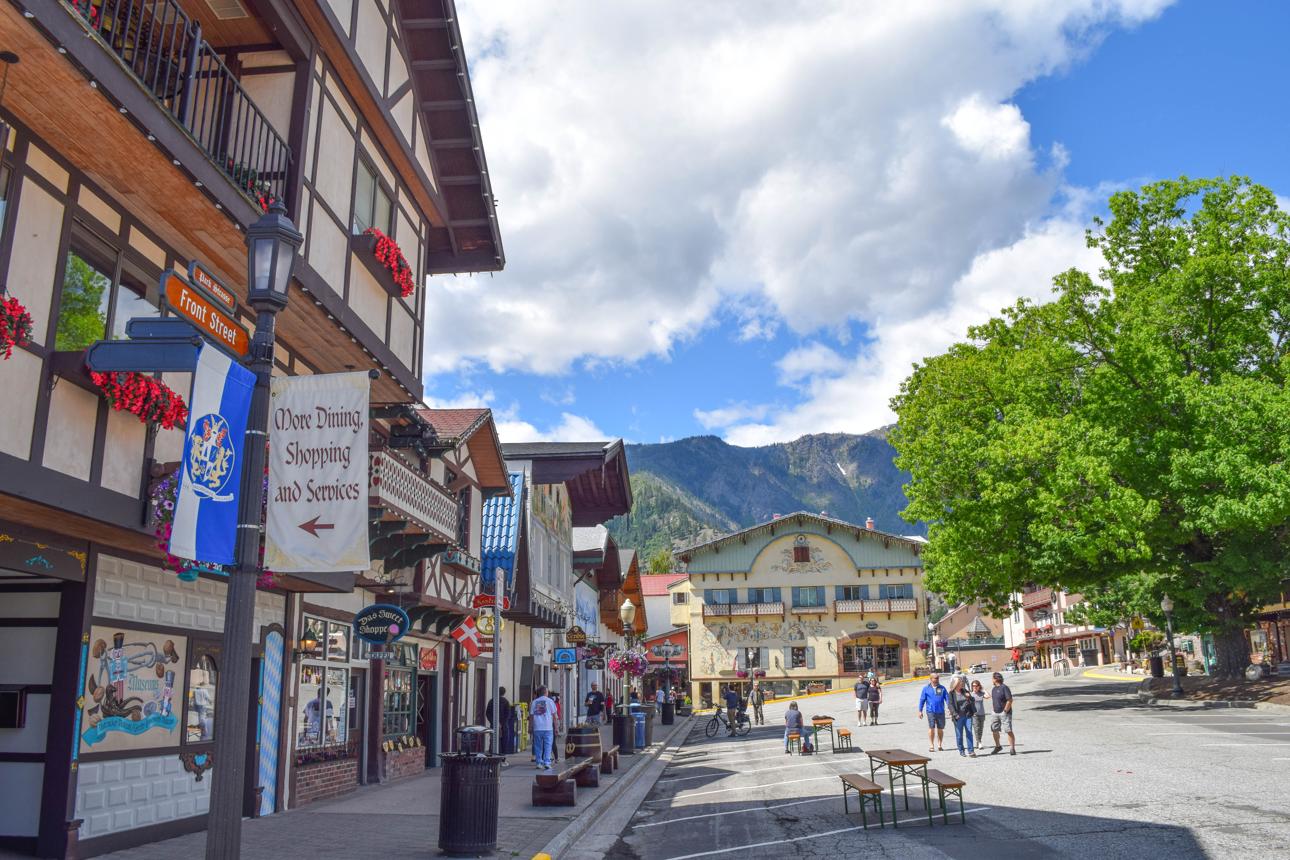
Leavenworth sits against the Cascade Mountains, and its Bavarian-style downtown gives Oktoberfest an almost storybook backdrop. The official 2026 celebration runs on October 2–3, 9–10 and 16–17, with three stages across the Festhalle and Front Street Park venues.

This is the Oktoberfest to choose when the journey matters as much as the tent. Mountain views, autumn color, local businesses and walkable streets turn a festival ticket into a full destination weekend. The programmed beer gardens offer local and German beers, food, bands and dancing, while the Kinderplatz gives families a dedicated area.

Lodging can fill quickly, so planning ahead matters here more than at many single-day city events.

Do not miss: The contrast of a lively brass band in the foreground and the quiet Cascades rising behind the town.

8. Zeeco Oktoberfest Tulsa — Tulsa, Oklahoma

Best for: Ending the season with one enormous “Prost!”

Tulsa saves one of America’s most energetic celebrations for late October. Running October 22–25, 2026, at River West Festival Park, Zeeco Oktoberfest Tulsa describes itself as an authentic Bavarian celebration patterned after Munich.

Large tents, bands, German-inspired food, beer and an enthusiastic schedule of competitions create the immersive atmosphere. The games include stein holding, a MassKrug relay, dachshund racing and a beer-barrel race. The Markthaus adds more than 60 arts-and-crafts booths with handmade items and German wares.

Because Tulsa arrives after many September festivals have packed away their banners, it makes a natural season finale. By then, your stein-holding arm should be properly trained.

Do not miss: Move between the tents, watch a competition and stay long enough to experience the evening crowd at full song.

Four More Celebrations Worth the Detour

The American Oktoberfest map is too rich to stop at eight. Consider these heritage destinations as well:

  • New Ulm, Minnesota — October 2–3 and 9–10: A city with unusually visible German heritage, multiple celebration sites, music, food, parades and a strong community identity.
  • Fredericksburg, Texas — October 2–4: German-Texan history, five stages of continuous music, artisan vendors, children’s activities, beer and Texas wine in the Hill Country.
  • Hermann, Missouri — weekends throughout October: A relaxed, town-wide celebration pairing German heritage with Missouri wine country, autumn scenery, food, music and historic streets.
  • South Florida: Oktoberfest Miami and the American German Club of the Palm Beaches offer long-running, club-based celebrations where German-American organizations remain at the heart of the experience.

How to Choose—and Enjoy—Your Oktoberfest

Start with the kind of memory you want to make. Choose Cincinnati for scale, Helen or Leavenworth for a destination escape, Mount Angel or New Ulm for a community-centered heritage experience, Denver or Nashville for city energy, Addison or Fredericksburg for Texas flair, and Tulsa for the late-season grand finale.

Then plan like a seasoned festival traveler:

  • Check the official site immediately before leaving; schedules, weather policies and entry rules can change.
  • Reserve lodging early in destination towns, especially Helen and Leavenworth.
  • Use shuttles or public transportation when available, and always arrange a sober ride.
  • Visit earlier in the day for a calmer, more family-focused atmosphere.
  • Wear a dirndl or lederhosen if you enjoy it—but remember that participation matters more than costume.
  • Try something beyond the first bratwurst. Look for regional sausages, schnitzel, potato pancakes, red cabbage, strudel, tortes and local specialties.
  • Ask musicians, cooks, craftspeople and heritage organizations about the traditions they preserve.
  • Bring home a story, recipe, family photograph or new German word—not only a souvenir mug.

“The best Oktoberfest souvenir is the moment your group of friends or family decides, ‘We should do this together again next year.’”
— GERMAN HERITAGE USA

America’s Oktoberfests are not replicas of Munich, and they do not need to be. They are German-American creations: part inheritance, part reinvention and part open invitation. Each city adds its own landscape, accent and personality. Together, they show that heritage stays alive when people gather around it.

So choose your city. Mark the calendar. Invite the relatives who always say, “We need to get together more often.” Learn the story behind one family name or recipe before you go. Then step beneath the festival banners and listen for that flare in the darkness—the old culture shining into a new generation.

Discover it. Celebrate it. Preserve it.

Got A Little German In You? Your German Heritage Is Calling You!

What Foods Did Your German Ancestors Eat? Traditional Recipes That Still Bring Families Together

An early-September journey from the farm kitchens and coastal tables of 1800s Germany to the German-American suppers, holiday recipes and treasured family traditions of the Midwest.

Early September is a delicious time to think about family history. Gardens are still offering tomatoes, beans and late-summer herbs. Apple trees are beginning to bend under their fruit. Kitchens are slowly shifting from quick summer meals to breads, roasts, soups and recipes that seem to belong to cooler evenings.

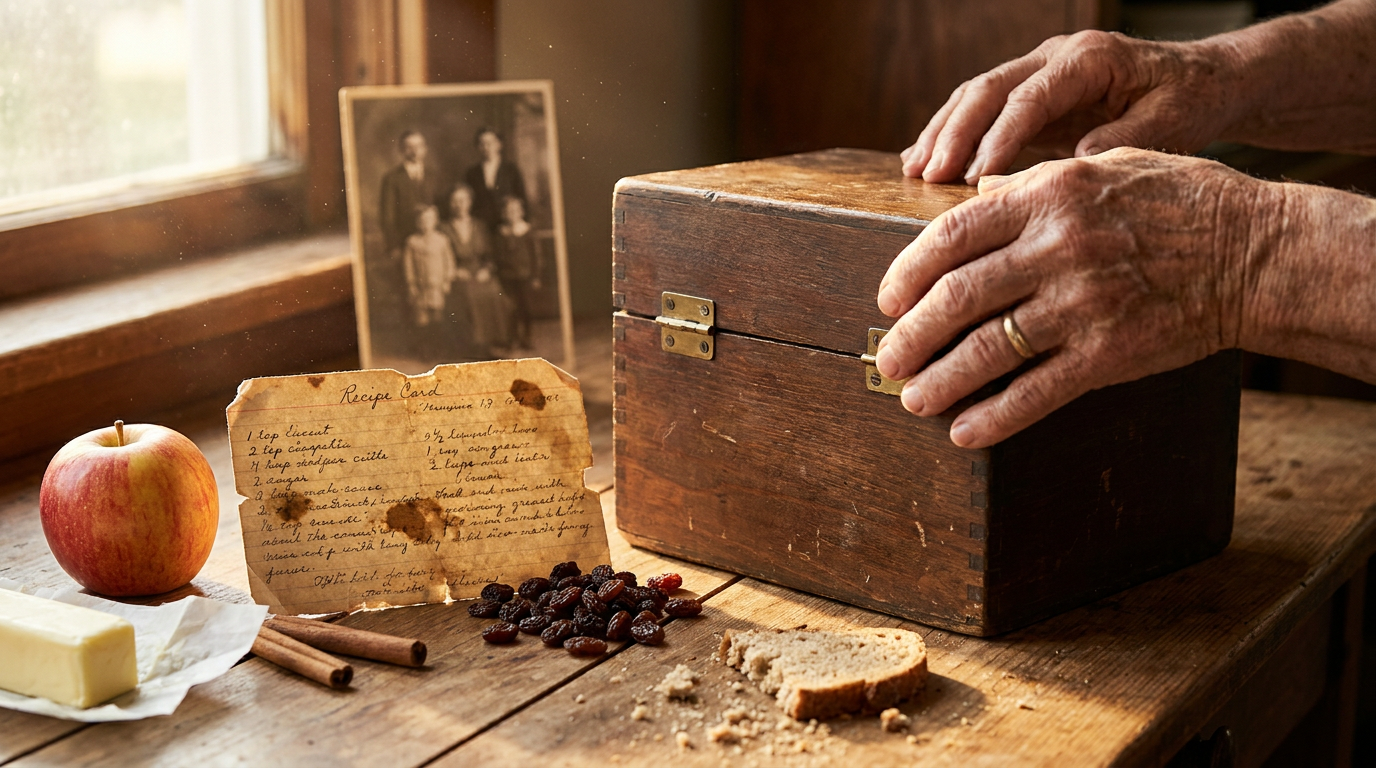
And somewhere in America, someone is opening an old recipe box.

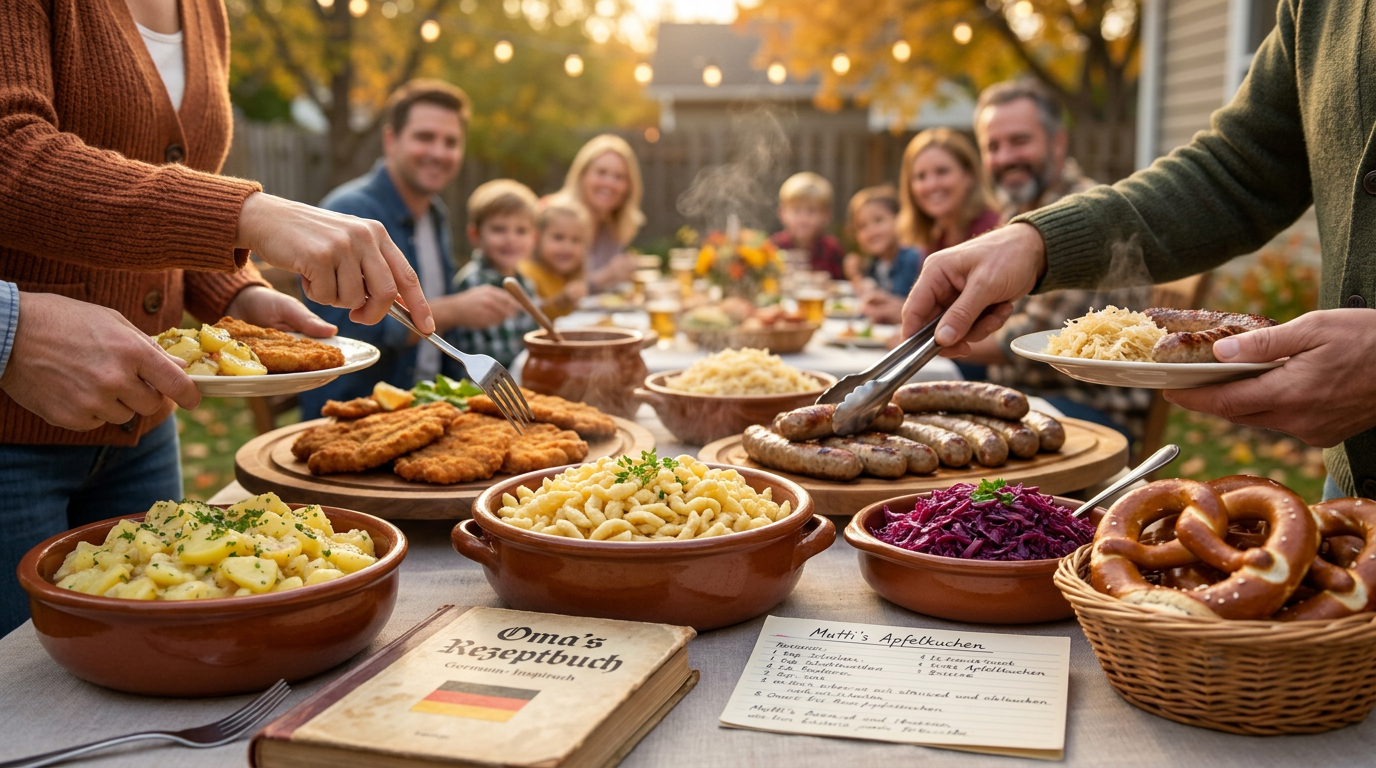
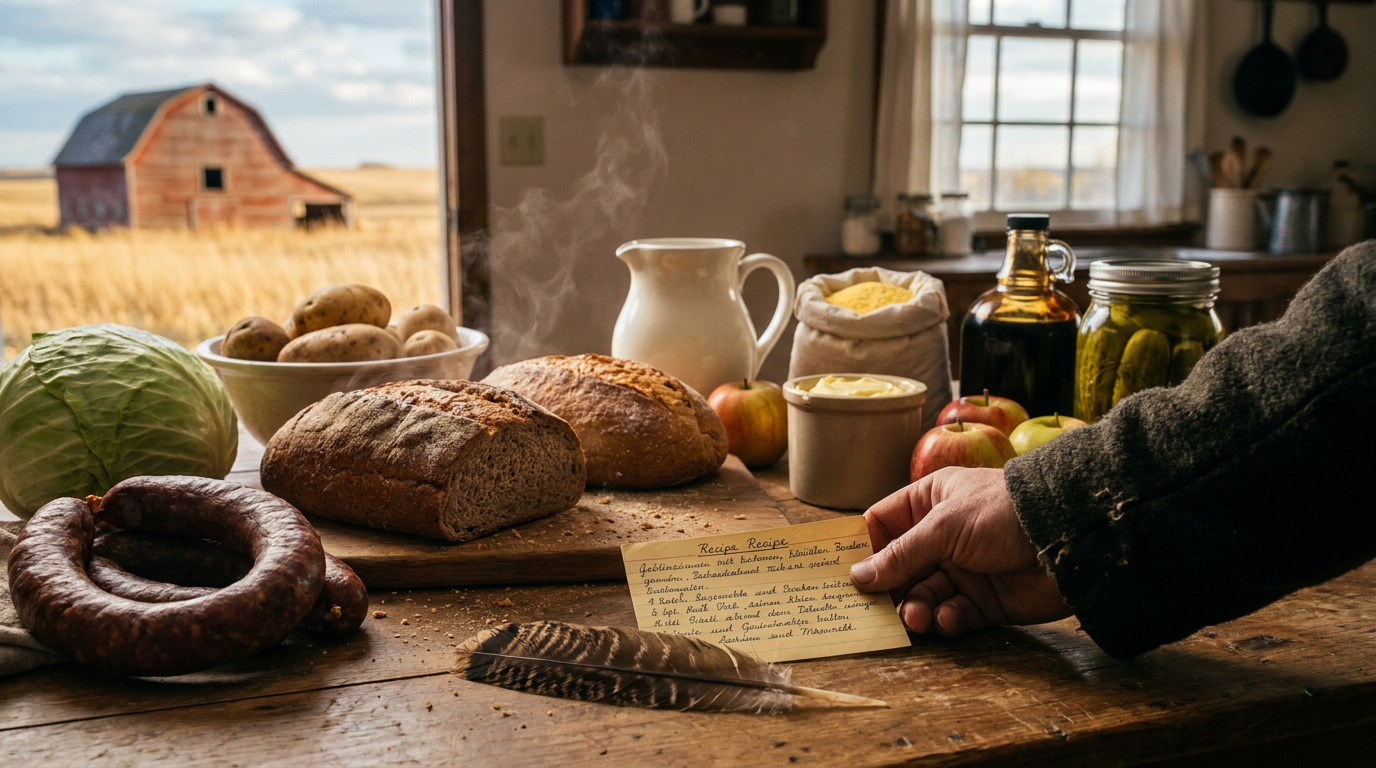
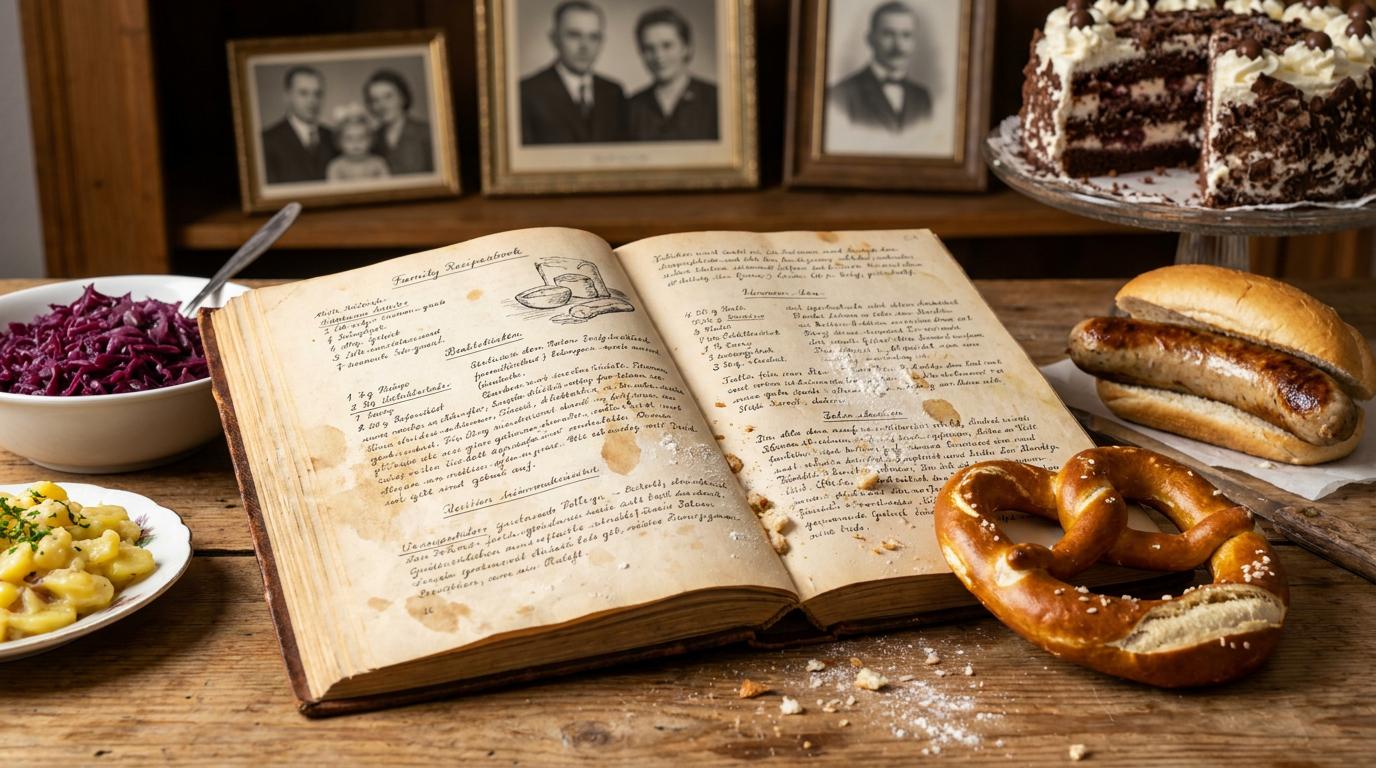
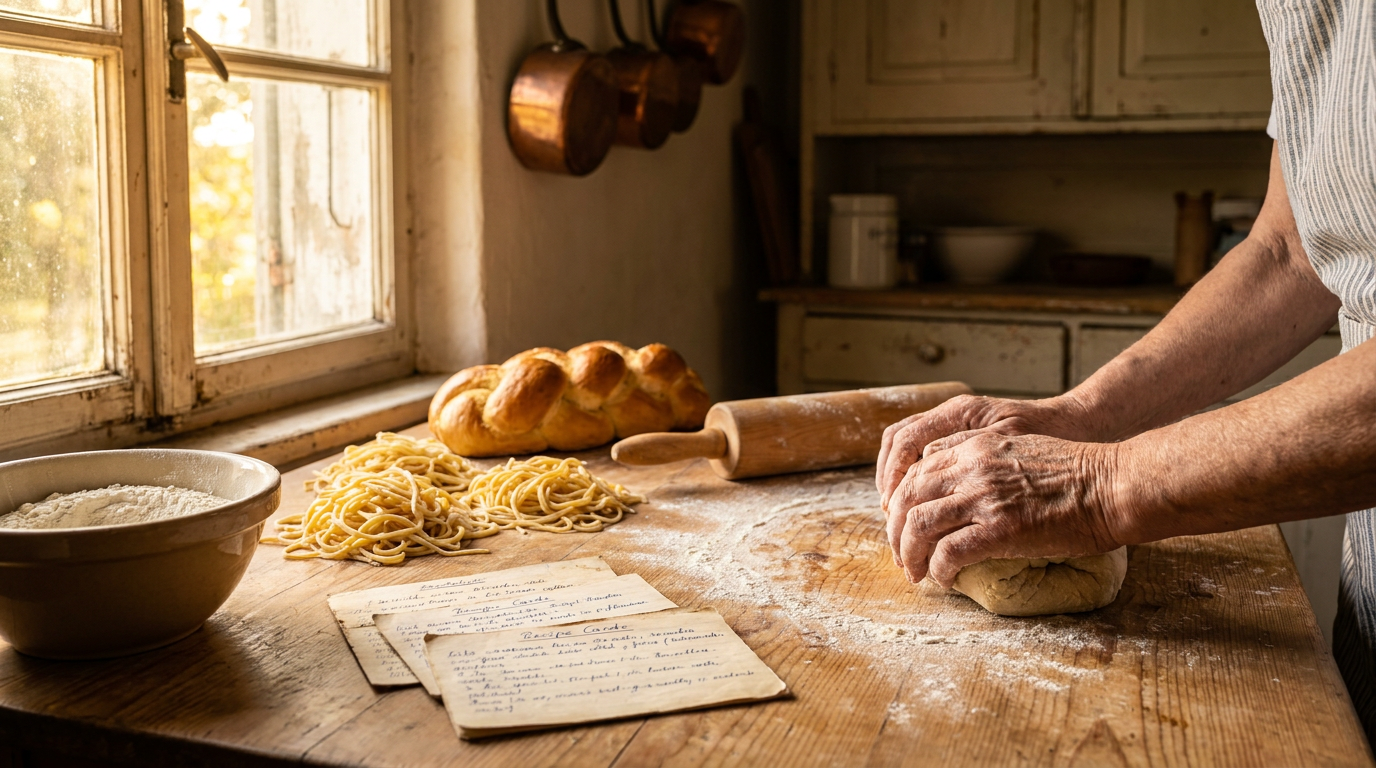
The card inside may be stained with butter. The measurements may include the highly scientific instruction “until it looks right.” The recipe may be written in English, German or a determined mixture of both. Nobody remembers exactly when the family began making it—but everybody knows who is supposed to bring it.

That is the magic of German-American food. It is not simply a collection of dishes. It is a trail of clues. Rye bread may point north or east. Spätzle may whisper of Swabia. A Christmas goose may recall an Old World celebration, while the turkey beside it tells an American chapter. Apples, cabbage, pork, raisins, cinnamon, beer and wine can reveal geography, farming, trade, faith, season and social class.

So what did your German ancestors actually eat?

The honest answer is wonderfully complicated: it depended on where they lived, what they could grow, what they could afford and whether it was an ordinary Tuesday or Christmas Day.

“A family recipe is history you can smell before anyone says a word.” — GERMAN HERITAGE USA


There Was Never Just One German Table

During much of the 1800s, “Germany” was not yet the single nation we recognize today. Unification came in 1871. Before that, German-speaking families lived among kingdoms, duchies, principalities, free cities and rural territories, each with its own fields, waterways, markets and food habits.

Even within one region, the landlord, shopkeeper, farm laborer and prosperous farmer did not eat alike. A wealthy household might serve roast venison, pheasant, fine wheat rolls, imported spices and wine. A laboring family could build most meals around dark bread, potatoes, cabbage, beans or soup, with meat appearing in modest amounts. An 1887–1888 study of two working-class households found that bread absorbed the largest share of food spending; meat and sausage were important, but butter, eggs, fruit, sugar and beer varied sharply according to household means.

That distinction matters. Today’s restaurant platter of schnitzel, sausages, dumplings and cake is a celebration. It is not a photograph of every ancestor’s daily supper.

The practical German kitchen was built on seasonality and thrift. Families ate what the land, sea, farmyard, forest and cellar could provide. They salted, smoked, dried, fermented, pickled and preserved because winter did not accept excuses.

Northern Germany: Rye, Fish, Pork, Cabbage and the Coastal Pantry

Across Schleswig-Holstein, Holstein, Hamburg, Bremen, Lower Saxony, Mecklenburg and the Baltic and North Sea coasts, northern cooking reflected cooler weather, flatter farmland, maritime trade and access to rivers and sea.

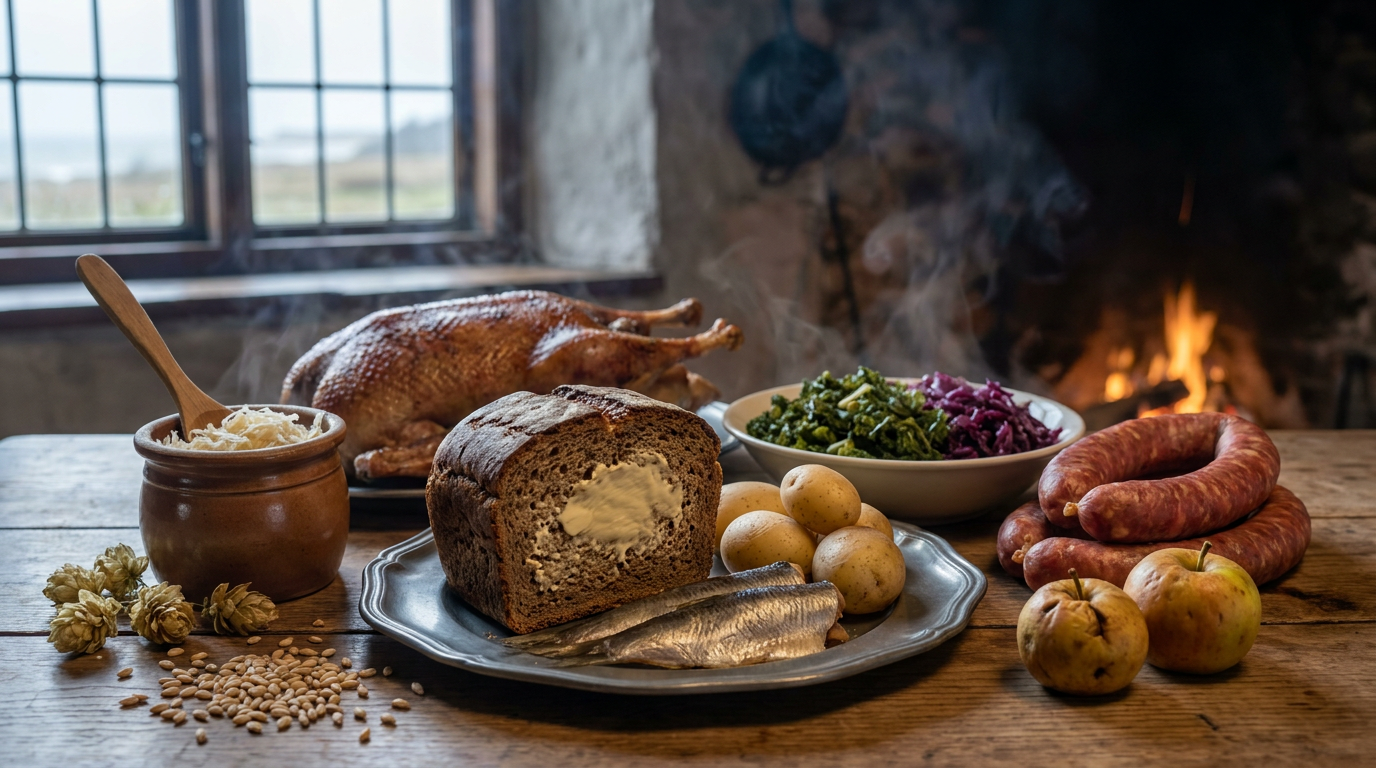
Rye was one of the great northern grains. Dense rye breads kept well, traveled well and paired naturally with butter, cheese, sausage, smoked meat or fish. Wheat existed, but a fine white wheat loaf generally required better grain and more expense. Barley and oats appeared in porridge, soup, animal feed and brewing; buckwheat was important in some districts. Potatoes became indispensable, especially among poorer families, and were boiled, mashed, fried, added to soup or served beside preserved meat.

Cabbage was a hero of the northern pantry. White cabbage could become sauerkraut, while kale, turnips, carrots, peas, beans, onions and beets helped stretch the harvest into the cold months. Pork was especially practical because nearly every part of the animal could be used. Fresh pork was a treat; bacon, ham, sausage, lard and salted or smoked cuts made the annual slaughter last. Beef was eaten too, although cattle were valuable for milk, breeding and work, so beef was not automatically an everyday food.

Near the coasts and waterways, fish changed the menu. Herring could be salted, smoked or pickled. Eel, cod, flounder and other regional catches joined freshwater fish where available. Coastal towns had greater access to seafood than inland villages, and preserved fish could travel farther than fresh fish.

Farmyards supplied eggs, milk, butter, quark and cheese. Chickens were common, while duck and goose could be both practical farm birds and festive centerpieces. Roast goose became especially connected with holiday meals. Apples and pears flourished in northern orchards—including the famous fruit-growing country along the lower Elbe—and could be eaten fresh, dried, baked or cooked into sauces and fillings.

Pheasant and venison belonged to the story, but usually not to the daily table. Hunting access, local game laws, land ownership and wealth all mattered. A farm family might eat rabbit, hare or other available game; a landed or prosperous household was more likely to present pheasant or venison as a prized roast.

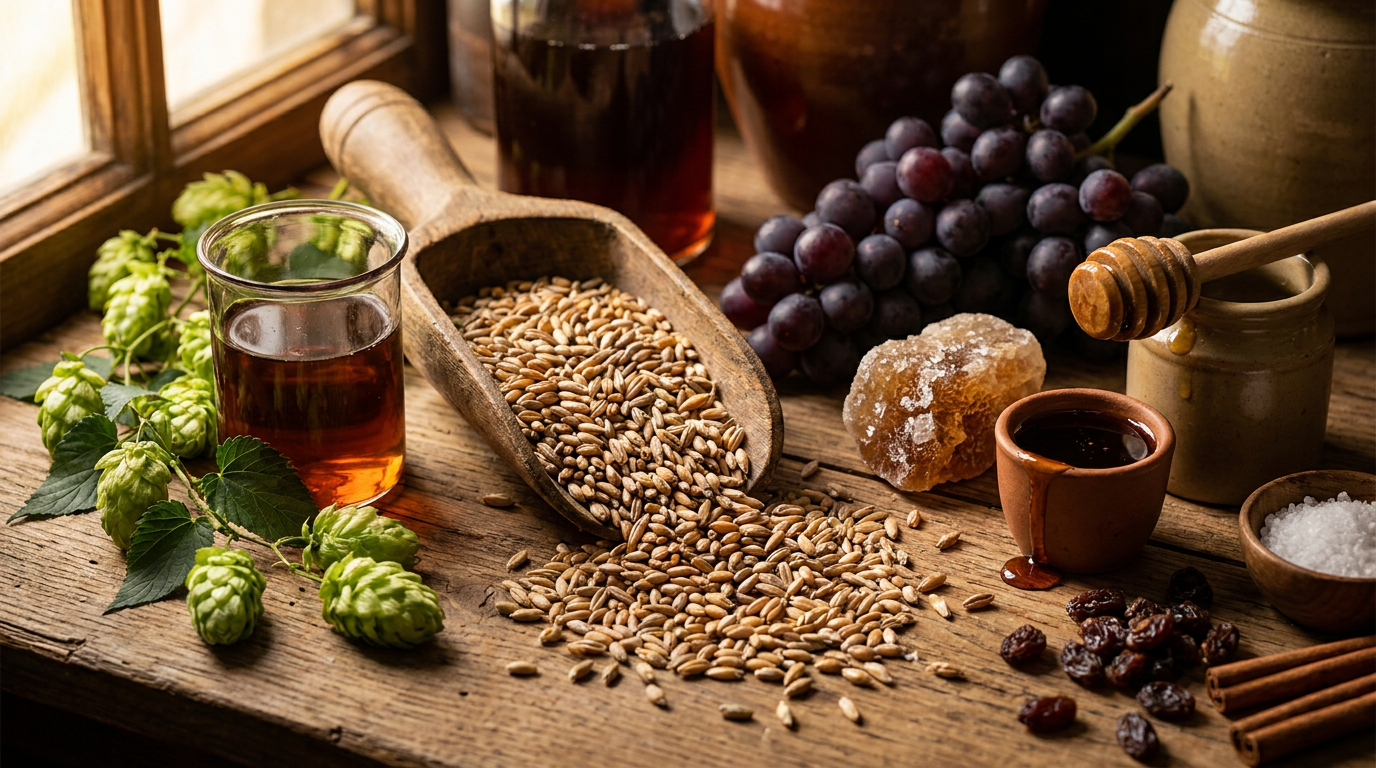
And what about raisins, sugar, honey and molasses? Honey was the older local sweetener. Raisins, cinnamon, pepper, cloves and cane sugar arrived through trade and were more likely to be reserved for baking and special meals than scattered casually into weekday food. During the 1800s, Germany’s growing beet-sugar industry gradually made sugar more accessible. Dark beet syrup was familiar in some regions, but American sorghum or cane molasses became an especially useful substitute after immigration.

Beer was brewed from barley and hops, and grain spirits were also familiar. Northern families did drink wine, especially when trade and income allowed, but vineyards and everyday wine culture were far more strongly associated with western and southern wine-growing regions.

Southern Germany: Wheat, Spelt, Dumplings, Beer and Wine Country

Move south toward Bavaria, Swabia, Baden, Württemberg, Franconia and the Alpine foothills, and the culinary landscape changes.

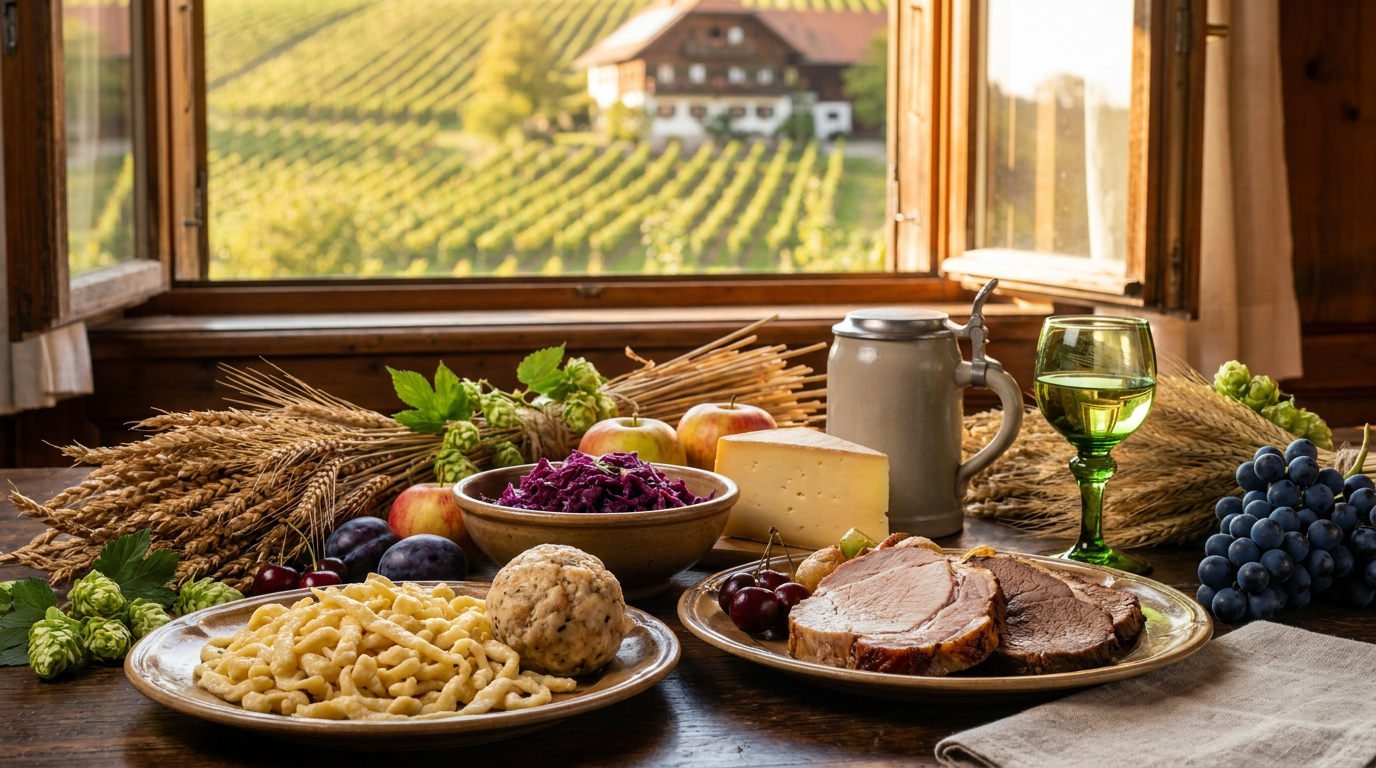
Wheat and spelt played a larger role in many southern and southwestern areas. Bakers produced breads and rolls; home cooks turned flour and eggs into noodles, dumplings and Spätzle. Potatoes still mattered, but they shared the plate with flour-based foods such as Knödel, Maultaschen and other regional preparations. Dairy farming contributed milk, butter, cream, soft cheeses and firmer Alpine cheeses.

Pork remained central. Sausages, roast pork, ham and bacon differed from town to town because seasoning and butchering were intensely local. Beef and veal appeared in soups, boiled dishes and roasts when households could afford them. Chickens, ducks and geese were raised, and woodland or mountain regions offered venison, hare and game birds. Once again, a magnificent pheasant tells us more about a feast—or privilege—than about the average noon meal.

Southern kitchens used cabbage, sauerkraut, onions, leeks, peas, beans, lentils, turnips and seasonal greens. Orchard fruits included apples, pears, plums and cherries. Fruit could be dried, preserved, folded into dumplings, baked beneath crumbs or cooked into sauces that accompanied meat.

The grape question is especially regional. In the Rhine, Moselle, Palatinate, Baden, Württemberg and Franconian wine districts, grapes and wine were woven into local agriculture and identity. A vineyard family could live in wine country while a farmer only a few ridges away lived in potato country. Bavaria, meanwhile, became famous for barley, hops and beer. Beer and wine were not rivals so much as geographic neighbors, each reflecting the soil and climate beneath it.

Bread, potatoes and soup still did the daily work. The glorious roasts, rich sauces, fruit pastries and festival foods we remember were often Sunday dishes, harvest dishes, wedding dishes or Christmas dishes. That made them more memorable—and more likely to survive in family storytelling.

The Everyday Pantry—and the Feast-Day Table

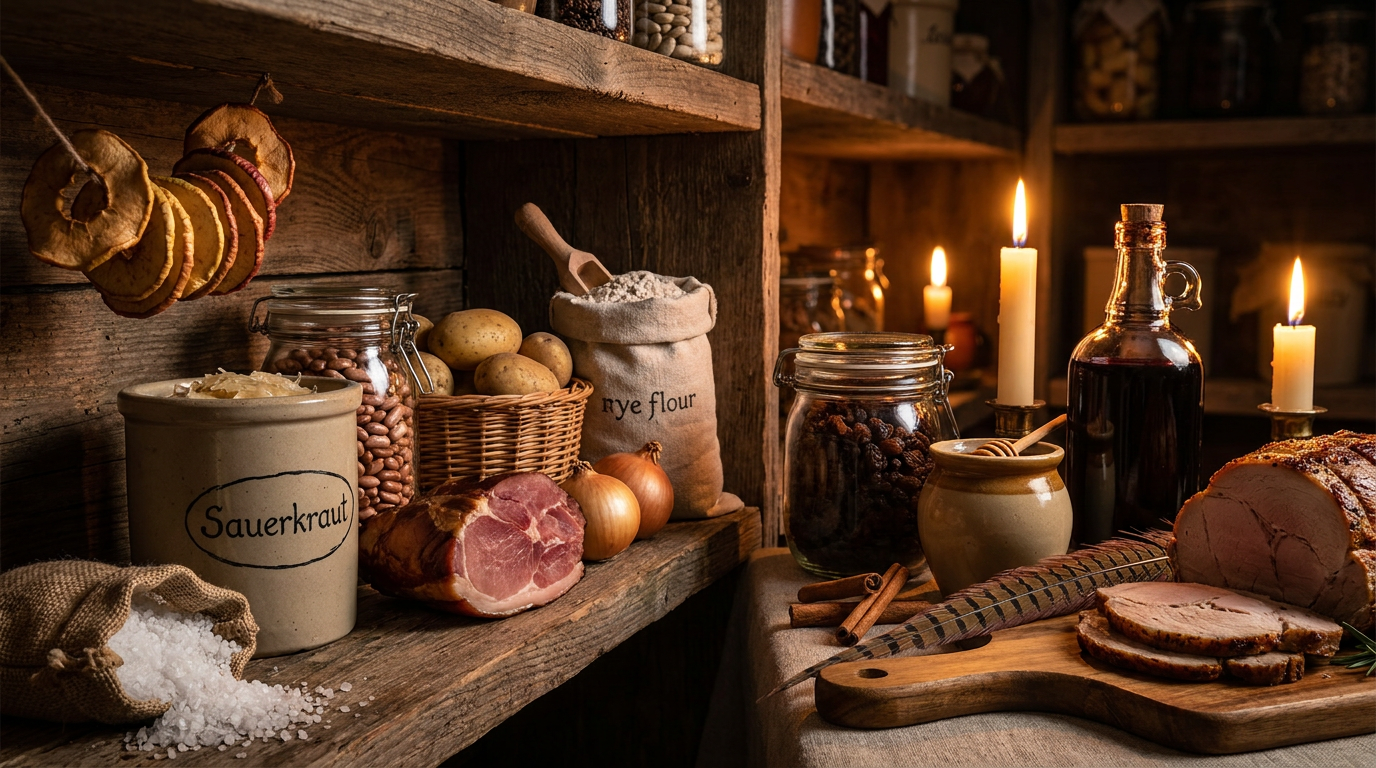
If we could open an 1800s German pantry, we might find rye, wheat, barley or oats; potatoes and dried beans; cabbage in a crock; onions hanging nearby; salt; lard or butter; dried apples, pears, plums or raisins; honey; vinegar; flour; and carefully guarded spices. A prosperous household would show greater variety. A struggling one might have bread, potatoes and little else.

Salt was essential, not decorative. It preserved pork and fish, protected food through winter and flavored meals that depended on a small number of ingredients. Fermentation transformed cabbage into sauerkraut and cucumbers into pickles. Smoking protected ham, bacon, sausage and fish. Drying preserved fruit, mushrooms, herbs and legumes.

Sugar became more affordable as beet-sugar production expanded during the century, but sweetness still meant something. A spoonful of honey, sugar, syrup or molasses could turn ordinary bread and orchard fruit into holiday food. Cinnamon and raisins carried the aroma of occasion. That is why sweet breads, fruit-filled cakes and sweet-savory stuffings made such powerful memories: they tasted different from the working week.

When German Food Crossed the Atlantic

German immigrants who settled in the Midwest during the late 1800s did not find an empty pantry waiting for them. They encountered American corn, abundant wheat flour, new varieties of apples, larger supplies of beef and pork, local fish and wild game, and farm conditions that differed from the villages they had left.

They adapted with remarkable common sense.

Rye bread continued where rye flour was available, but wheat bread became increasingly practical. Potatoes, cabbage, beans, onions, cucumbers and apples grew well across large areas of the Midwest. Families raised pigs, cattle, chickens, ducks and geese; made butter and cheese; preserved garden vegetables; butchered communally; smoked sausage; and stored fruit for winter. Deer, rabbits, fish and wild turkey could supplement the farm table. Sorghum molasses, cornmeal and other American ingredients entered kitchens without asking anyone to surrender a German identity.

The old methods survived because they worked. Sauerkraut still protected cabbage. Sausage still extended and preserved pork. Soup still made a little meat feed many people. Potato salad, dumplings, pickles, fruit butter, coffee cake and sturdy loaves still brought comfort. German immigrants also transformed American drinking culture: immigrant brewers helped lager become the country’s dominant beer style by the middle of the century, and Midwestern cities became famous for breweries, beer gardens and German conviviality.

The most interesting foods were often neither completely German nor completely American. They were immigrant foods—memories rebuilt with new ingredients.

“Your ancestors did not carry an entire kitchen across the Atlantic. They carried flavor memories—and rebuilt them with what America placed within reach.” — GERMAN HERITAGE USA

German Sweet Dressing: From Christmas Goose to American Turkey

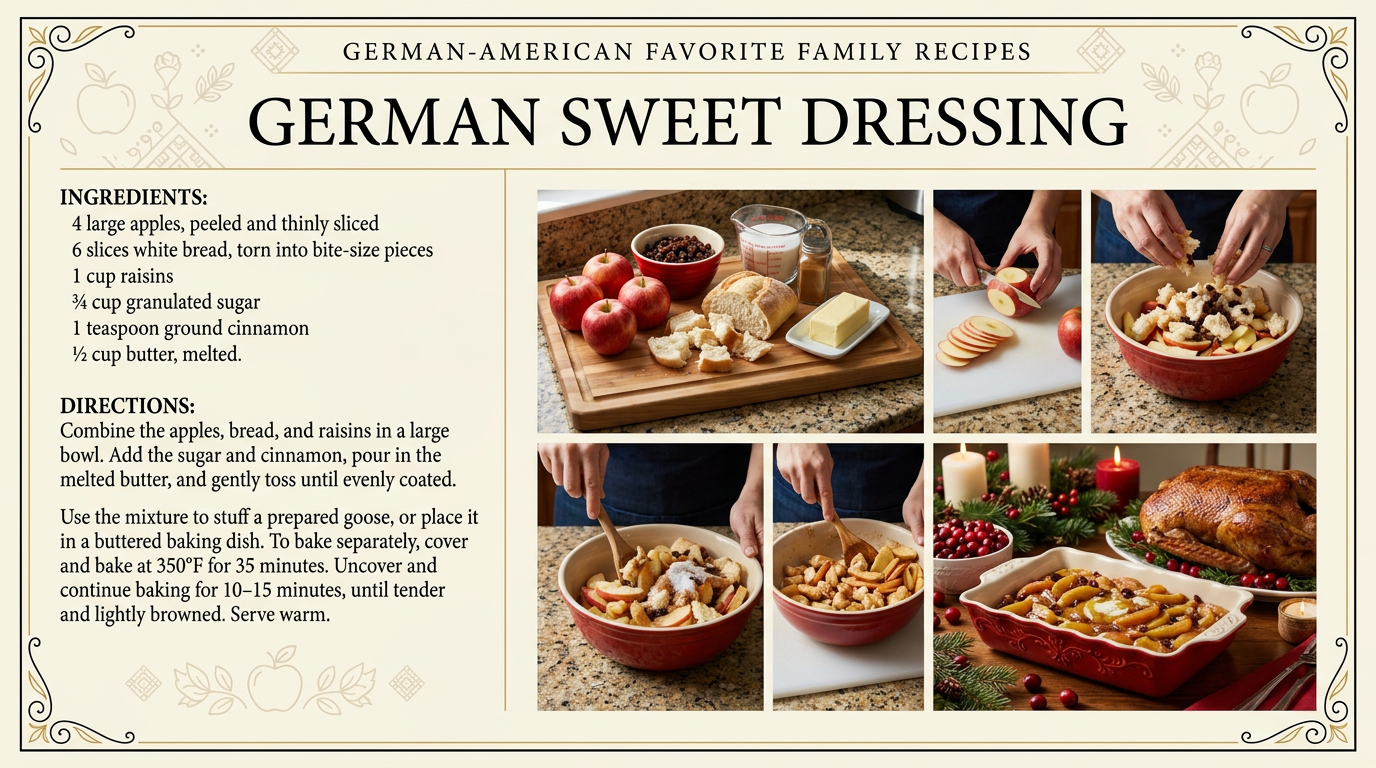
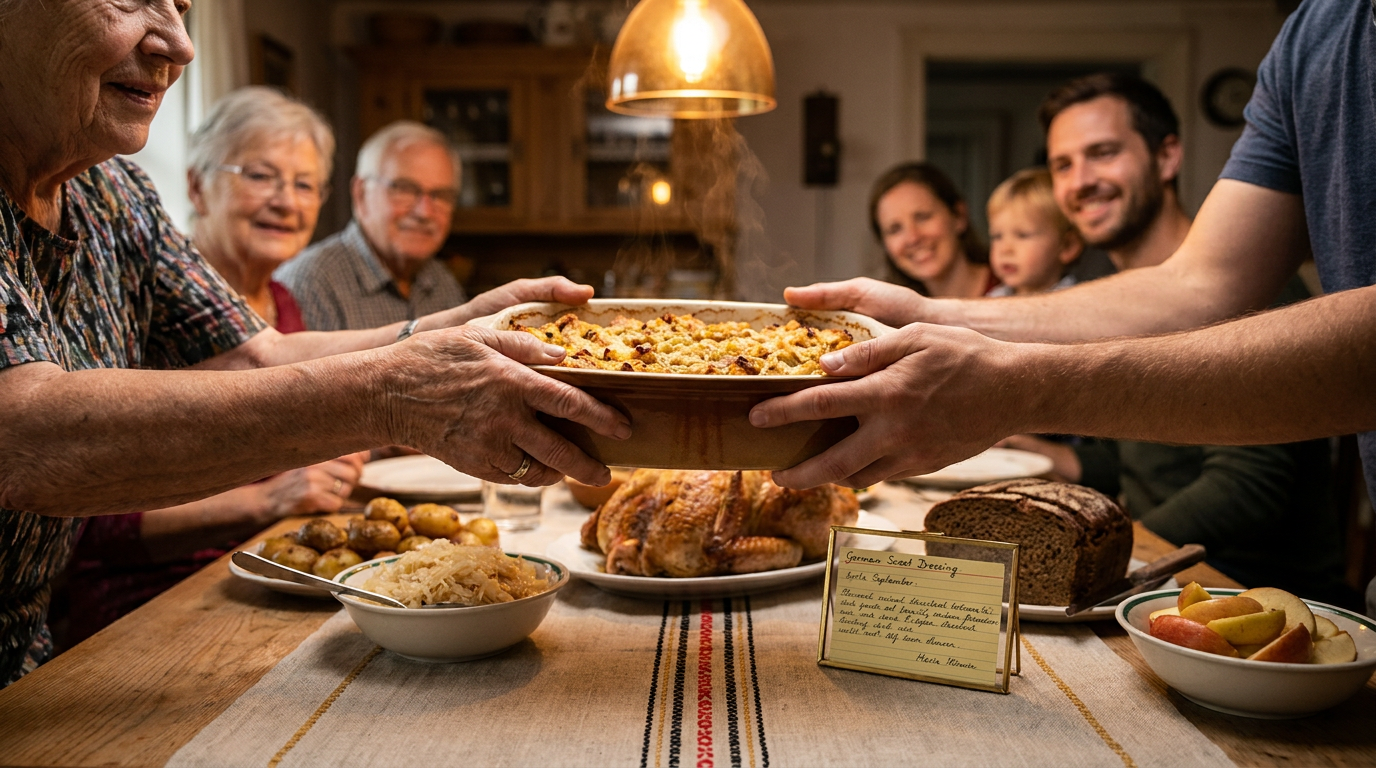
One especially meaningful example is German Sweet Dressing, a treasured Hingst family recipe with roots in Holstein in northern Germany.

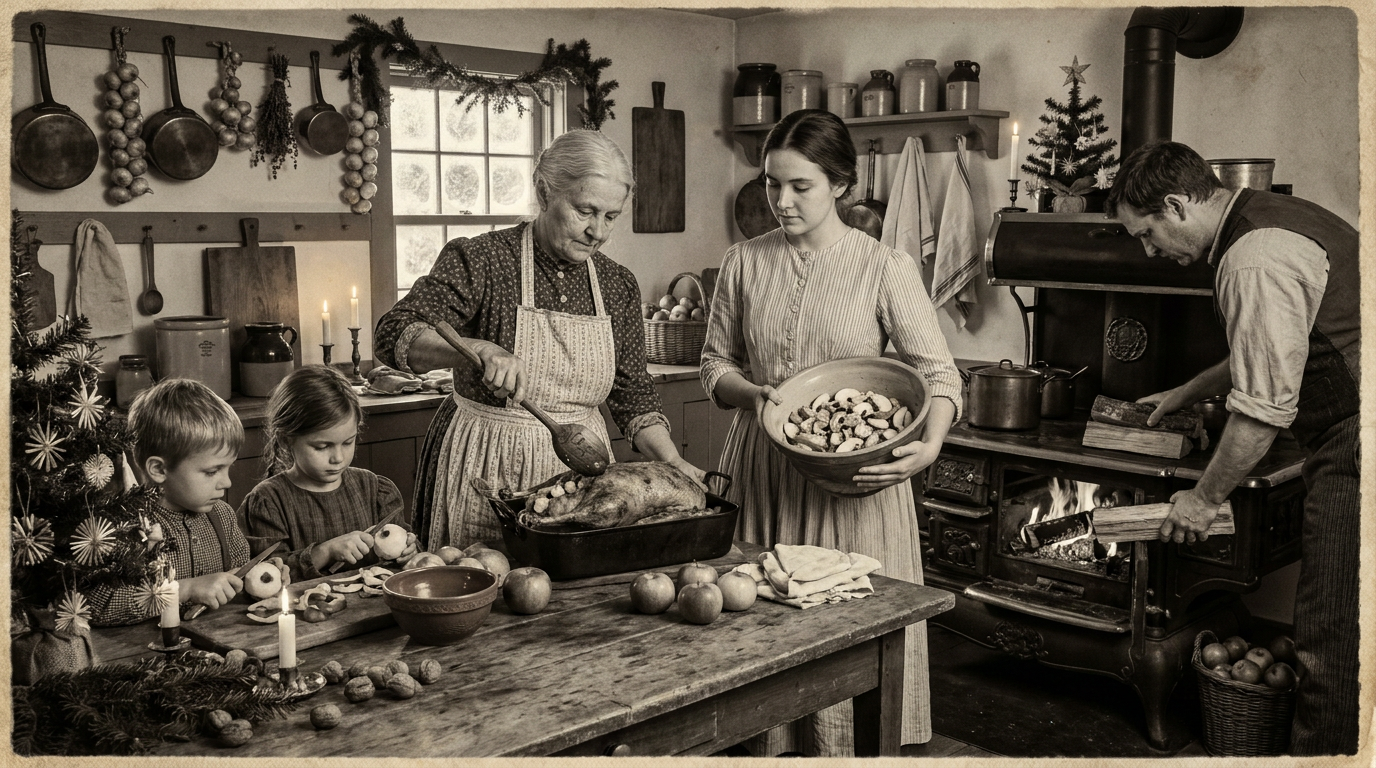
The family tradition traces the dish to farm life near Seelent, where bread, butter, orchard apples, dried raisins, cinnamon and a modest sweetener were combined for a festive stuffing. In Germany, it accompanied—or filled—the Christmas goose. When the Hingst family immigrated in 1882 and established new lives in Iowa and Nebraska, the recipe traveled with them.

Then America joined the story.

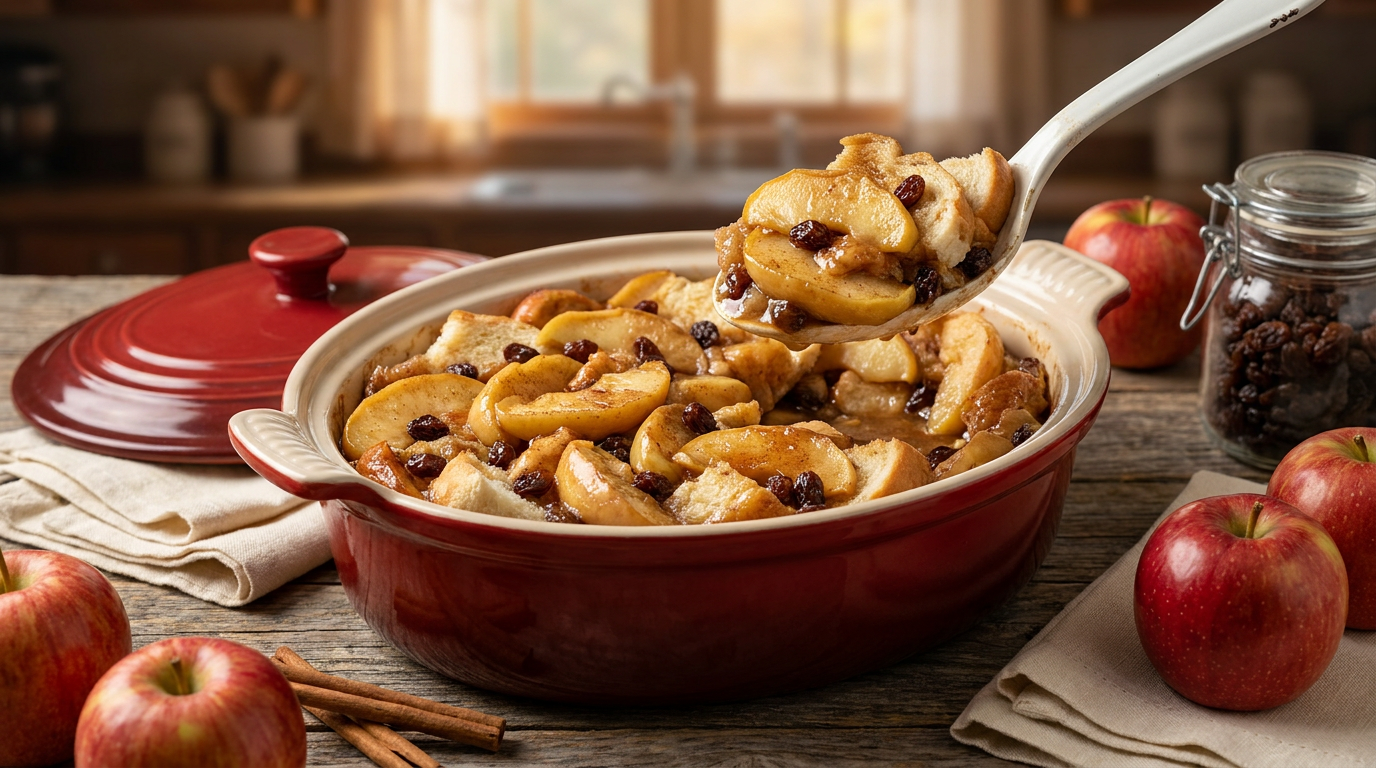
Goose remained meaningful, but turkey became a familiar holiday centerpiece. The same sweet dressing that had once filled a goose could fill a turkey. In later generations, many cooks moved it into a casserole dish and served it beside the bird. That simple change made it easier to prepare, safer to cook evenly and generous enough for everyone to claim a spoonful.

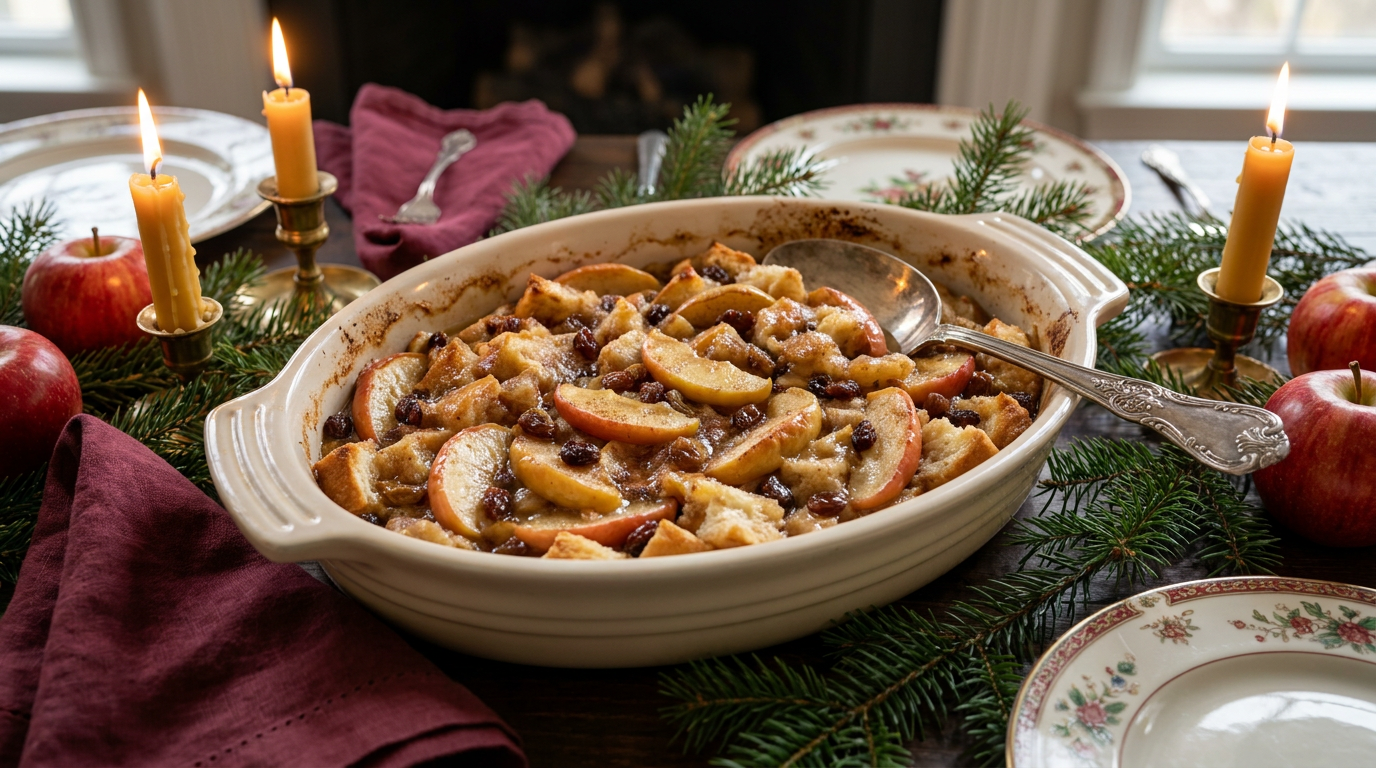
Its texture falls somewhere between traditional bread stuffing and a lightly sweet bread pudding. The apples bring moisture and brightness. Raisins provide little bursts of concentrated fruit. Butter adds richness. Cinnamon supplies the unmistakable scent of a holiday kitchen. Sugar, honey or molasses gives each family the power to choose its own accent: clean sweetness, floral warmth or dark frontier depth.

The Hingst Family German Sweet Dressing

Ingredients

8 cups cubed day-old bread

1/2 cup butter, melted

1/2 cup water

3 apples, diced

1 cup raisins

2 tablespoons sugar, honey or molasses

1 teaspoon cinnamon

1/4 teaspoon salt

Directions

Lightly toast the bread cubes so they are dry at the edges but not deeply browned.

Place the bread in a large bowl. Add the melted butter, water, diced apples, raisins, your chosen sweetener, cinnamon and salt.

Toss gently until the bread is evenly moistened and the fruit is distributed throughout.

Spoon the mixture into a buttered casserole dish. Cover and bake at 350°F for about 30 minutes, uncovering for the final 10 minutes so the top becomes lightly golden.

Serve warm beside roast goose, turkey, pork or ham.

If a family uses the mixture to stuff poultry, modern food-safety guidance should be followed: the USDA says the center of the stuffing must reach 165°F. Baking it separately preserves the tradition while giving the cook better control over texture.

This recipe is not presented as the single stuffing of northern Germany; no such universal recipe existed. It is something more personal and, in its own way, more valuable: one family’s edible record of migration, adaptation and continuity.

Why These Foods Still Bring Us Together

Traditional recipes survive for reasons that have little to do with culinary perfection. They survive because a grandmother made them without measuring. Because an uncle insisted the sauerkraut needed another hour. Because children stole raisins from the bowl. Because the smell of butter, apples and cinnamon made a new American farmhouse feel briefly like an old German home.

Some recipes remain nearly unchanged. Others trade goose for turkey, rye for wheat, honey for molasses or a bird cavity for a casserole dish. That does not make them less authentic. Adaptation is part of immigrant authenticity.

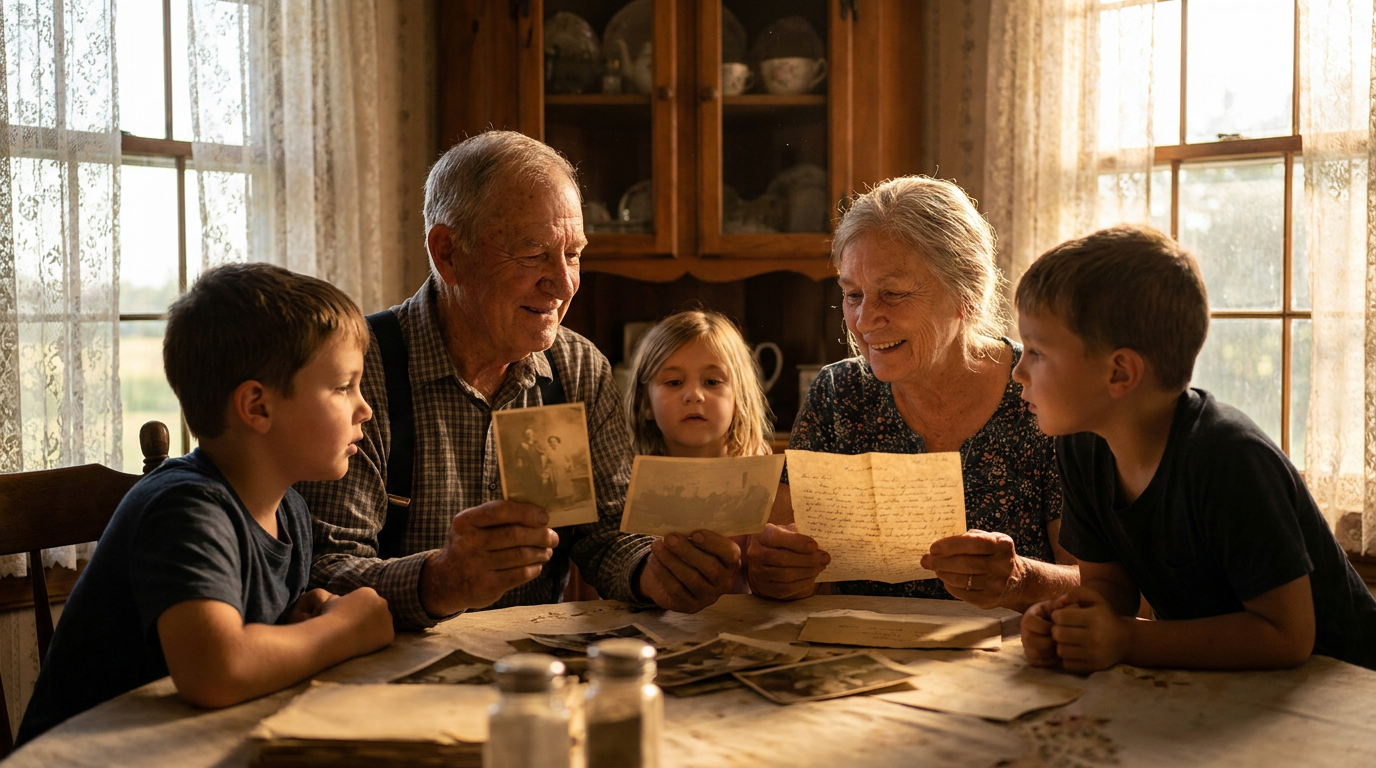
This early September, ask the oldest people in your family what appeared on their childhood tables. Photograph the handwritten card. Record the pronunciation of the dish. Write down the part everyone assumes “somebody knows.” Cook it together before the memory disappears.

Your answer to “What did my German ancestors eat?” may begin with bread, potatoes, pork, cabbage, fish, apples, beer or wine. But the deeper answer is this: they ate what their region provided, preserved what the season allowed, celebrated when they could—and passed forward the flavors that made a family feel like itself.

What German recipe still brings your family together? Share its name, region and story with GERMAN HERITAGE USA. Your family dish may be the missing clue that helps someone else recognize a tradition of their own.

Got A Little German In You? Your German Heritage Is Calling You!

Why Millions of Americans Are Rediscovering Their German Roots

There has never been a more exciting time to explore your family history.

For generations, millions of Americans knew only fragments of their ancestry. Perhaps they remembered hearing a grandparent mention that the family came from Germany.

Maybe there was an old black-and-white photograph tucked away in a box, a weathered family Bible, or a recipe that had been prepared every Christmas for as long as anyone could remember. They knew enough to say, “We’re part German,” but rarely knew much more than that.

The unanswered questions often lingered for decades.

Who was the first person in our family to come to America?

Why did they leave Germany?

Where exactly did they live?

What was their life like before they crossed the Atlantic?

Do distant relatives still live there today?

For most of the twentieth century, finding those answers required enormous patience. Research meant traveling to libraries, writing letters to historical societies, searching courthouse records, visiting cemeteries, or spending countless hours scrolling through rolls of microfilm. Many people simply didn’t have the time, resources, or opportunity to pursue the search, so their family’s story remained largely untold.

Today, everything has changed

With a few keystrokes, Americans can now search passenger manifests, census records, military documents, church registers, immigration records, historical newspapers, old maps, and millions of digitized family trees from anywhere in the world. DNA testing has opened entirely new doors, revealing cousins, ancestral regions, and surprising family connections that previous generations could never have imagined.

Yet perhaps the greatest discovery isn’t found in a database.

It’s realizing that millions of other Americans are asking the very same questions.

Every day, people from every corner of the country are rediscovering a heritage that quietly helped shape the United States. They’re researching old family surnames, identifying villages their ancestors once called home, learning traditional recipes, attending Oktoberfests, visiting historic German-American communities, and discovering customs that have survived for generations without realizing they had German origins.

What often begins as simple curiosity quickly becomes something much deeper

A search for a surname turns into an afternoon of genealogy research.

An old family photograph leads to an entire immigration story.

A DNA result inspires a visit to a local German festival.

A single question becomes a lifelong journey of discovery.

Along the way, people realize they aren’t researching strangers—they’re rediscovering the people whose courage, sacrifices, and dreams made their own lives possible.

That shared journey is exactly why GERMAN HERITAGE USA was created.

Our mission is not simply to publish articles about Germany or celebrate Oktoberfest once a year. We exist to serve as a bridge—connecting millions of Americans who share German ancestry, curiosity, traditions, and family stories.

Whether your ancestors arrived in Pennsylvania in the 1700s, settled the Midwest during the great immigration waves of the nineteenth century, established farms across Texas, or built communities throughout nearly every state in America, your family’s story is part of a much larger American story.

For many people, discovering German heritage begins with a single question.

For others, it starts with a family recipe, an old photograph, or a last name they’ve carried their entire lives without knowing its meaning.

Whatever sparks that first moment of curiosity, today’s technology makes it easier than ever to follow the trail. More importantly, it makes it possible to connect with thousands of others who are traveling the same path.

That’s what makes this moment so unique.

For the first time in history, family history isn’t something hidden away in dusty archives. It has become an interactive experience. Social media groups bring together descendants from every state.

Genealogy websites connect distant cousins separated for generations. Online archives place centuries of history at our fingertips. Videos, podcasts, digital museums, and virtual tours make learning about German heritage more engaging than ever before.
» Read more

Why Germans Love Biergartens: The Summer Tradition America Has Embraced

How a centuries-old German tradition of friendship, food, and community found a second home in America.


On a warm summer evening, something special begins to happen.

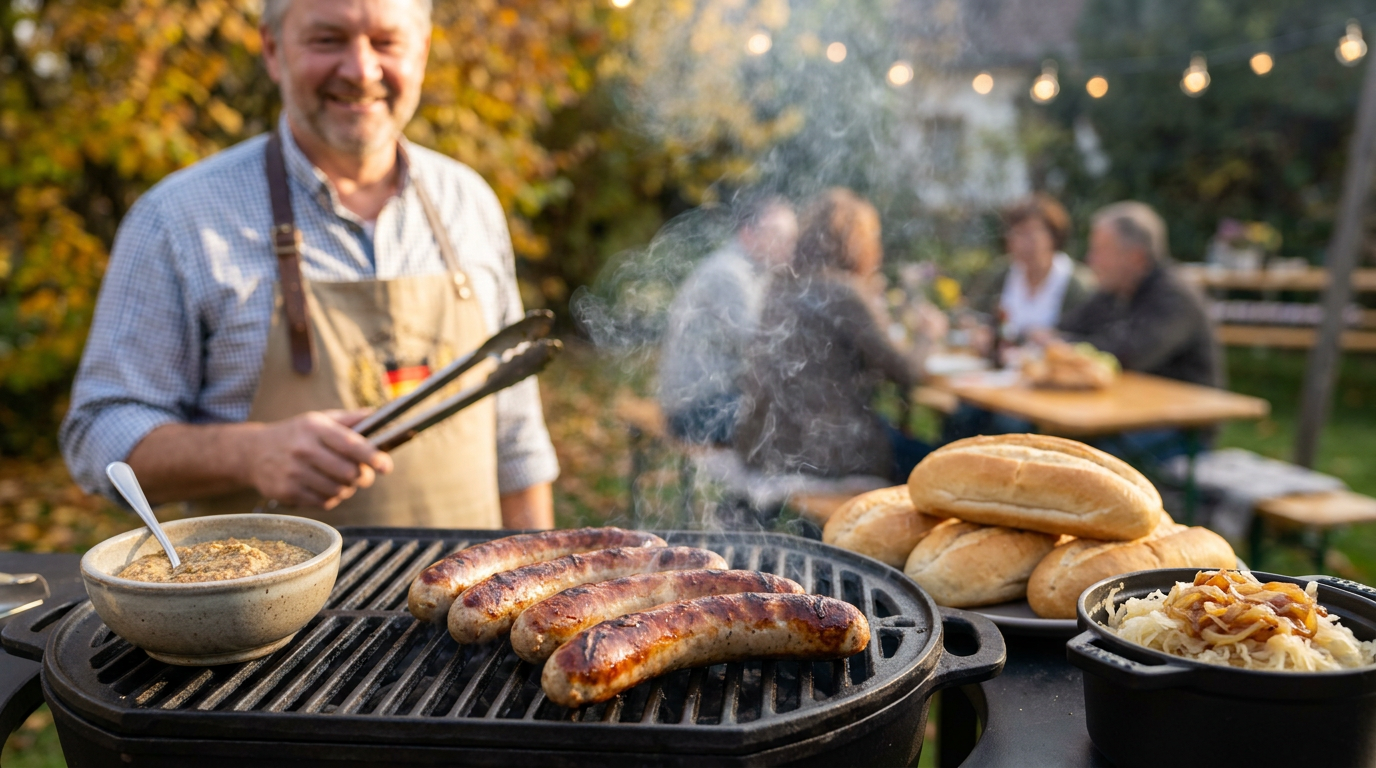
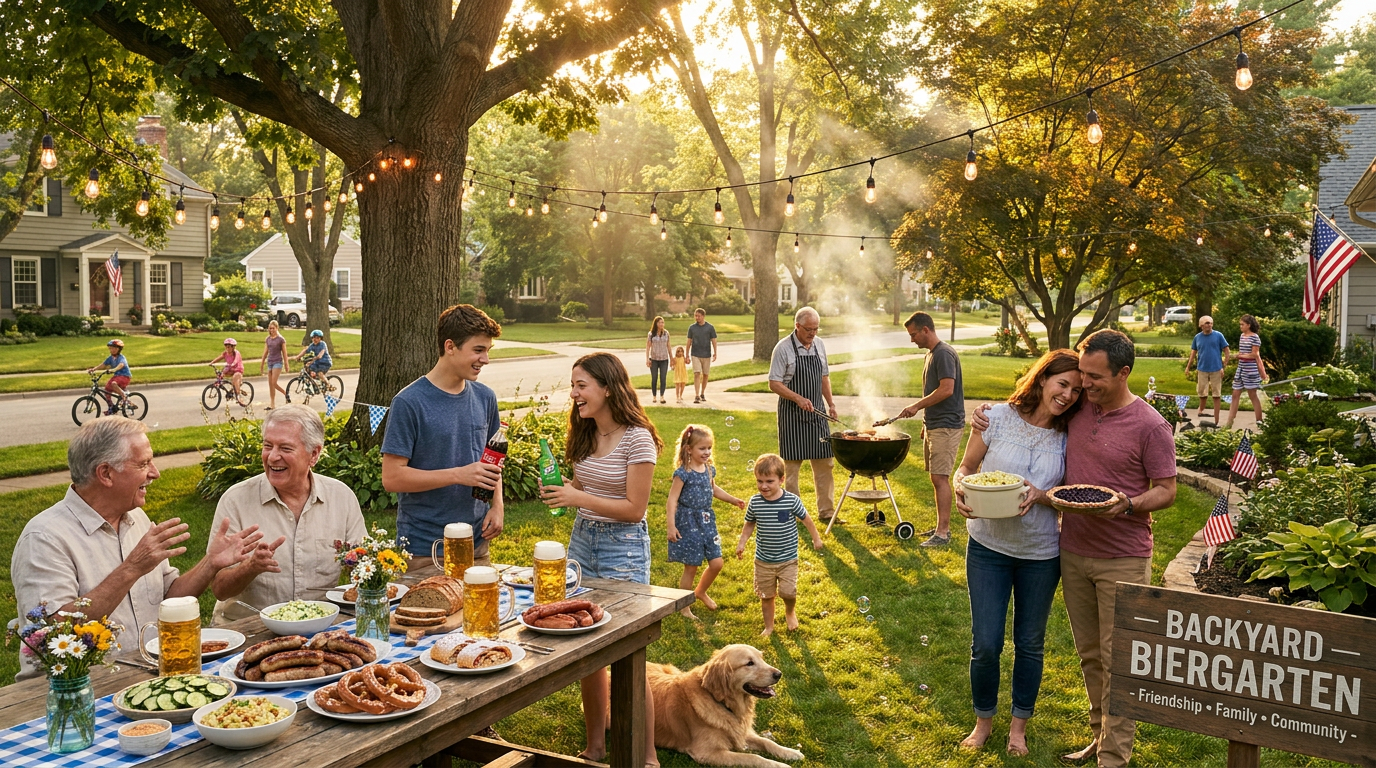
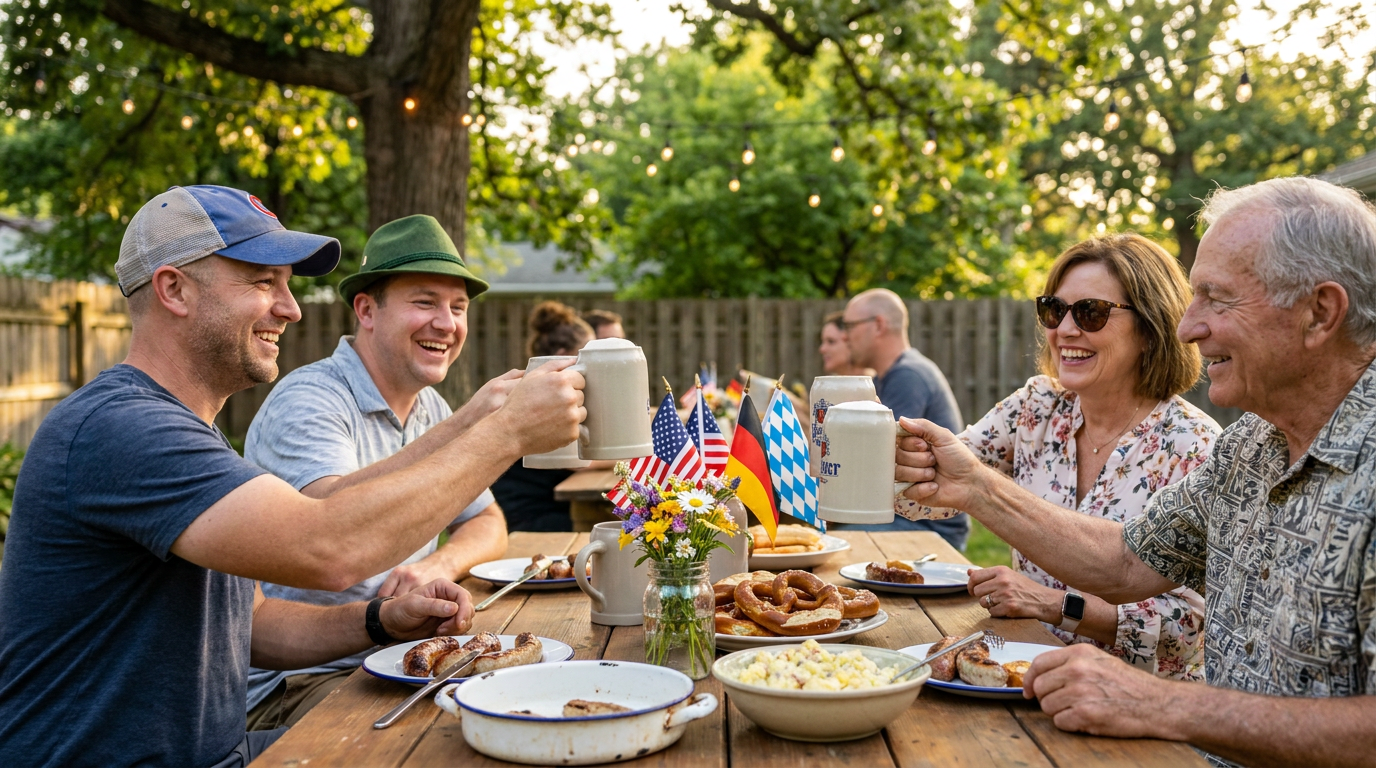
The grill starts sizzling with bratwurst. The aroma of freshly baked pretzels mingles with the scent of blooming flowers. Glasses clink together as laughter echoes beneath the shade of towering trees. Children chase one another across the lawn while grandparents exchange stories that have been told for generations. Neighbors wander over carrying homemade potato salad, desserts, or perhaps a favorite family recipe that has been passed down for decades.

Whether it’s called a backyard barbecue, a neighborhood cookout, a church picnic, or a German biergarten, the feeling is remarkably familiar.

Few people realize that one of Germany’s oldest and most cherished traditions has quietly become woven into the fabric of American life.

The biergarten is not simply a place to enjoy a cold beverage.

It is a celebration of friendship.

It is a gathering place for families.

It is where strangers become neighbors and neighbors become lifelong friends.

More than two centuries after its beginnings in Bavaria, the spirit of the biergarten continues to thrive—not only across Germany, but throughout the United States wherever people come together to enjoy good food, meaningful conversation, and the simple pleasure of spending time outdoors.

As German immigrants crossed the Atlantic during the nineteenth century, they carried much more than luggage. They brought recipes, music, traditions, craftsmanship, festivals, and a way of gathering that still influences American culture today.

The story of the biergarten is ultimately a story about people.

And perhaps that is why Americans have embraced it so enthusiastically.


A Cool Solution That Changed German Culture Forever

The story begins in Bavaria during the early nineteenth century.

Long before electricity and refrigeration, keeping beer fresh throughout the hot summer months presented a serious challenge. Beer spoiled quickly in warm weather, and brewers needed an innovative solution.

The answer came beneath the ground.

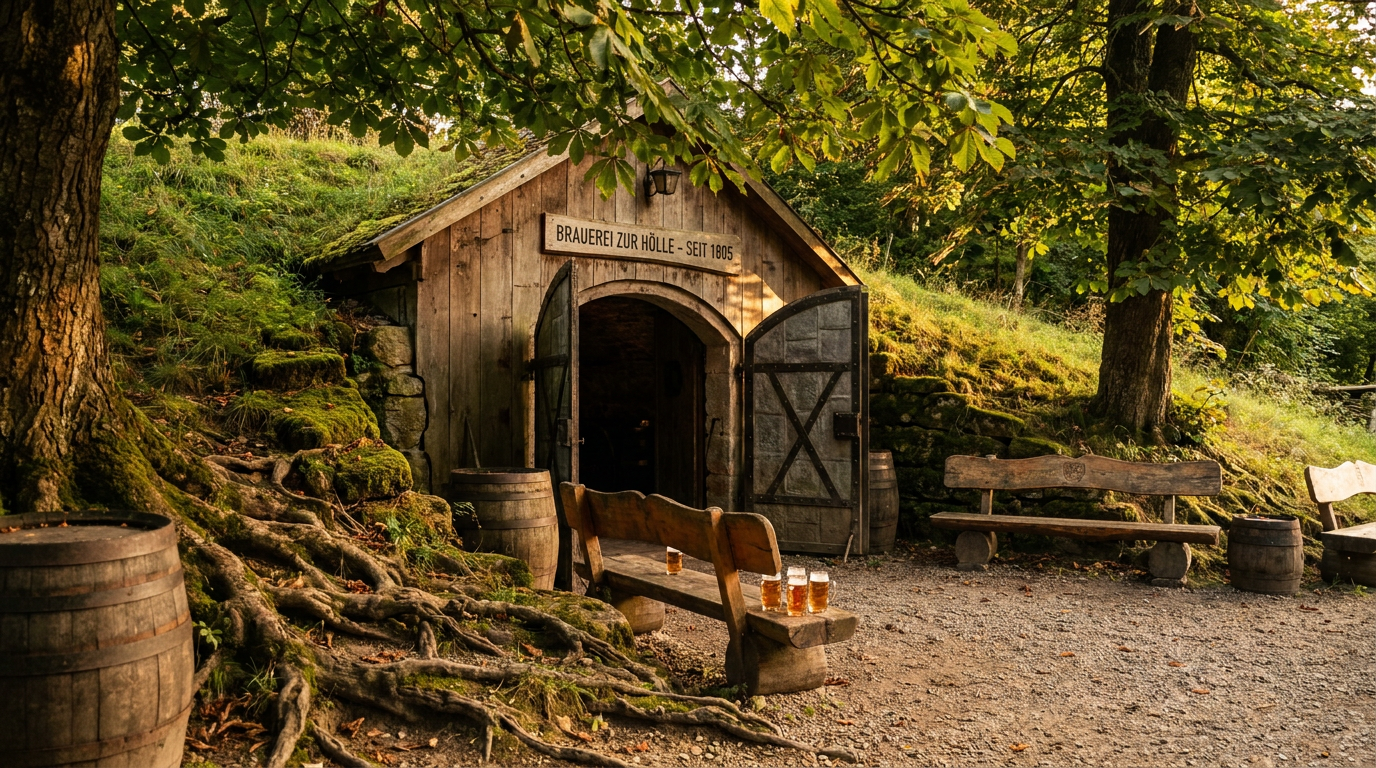
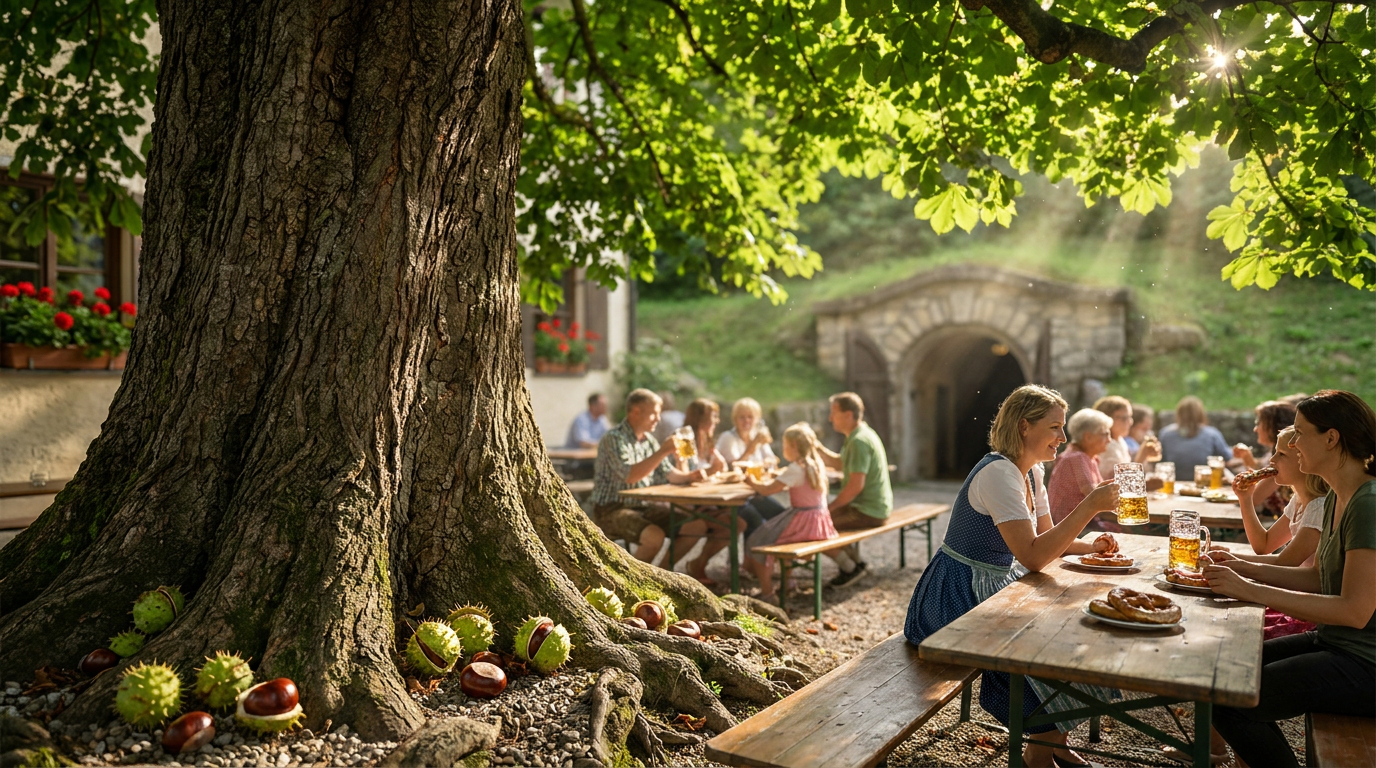
Large breweries began excavating deep storage cellars into hillsides where temperatures remained naturally cool throughout the year. These underground lager cellars provided ideal conditions for storing beer until it was ready to serve.

To protect the cellars from the summer sun, brewers planted rows of chestnut trees above them. Their broad canopies provided dense shade, while their shallow root systems helped avoid damaging the vaulted ceilings below.

The result was both practical and beautiful.

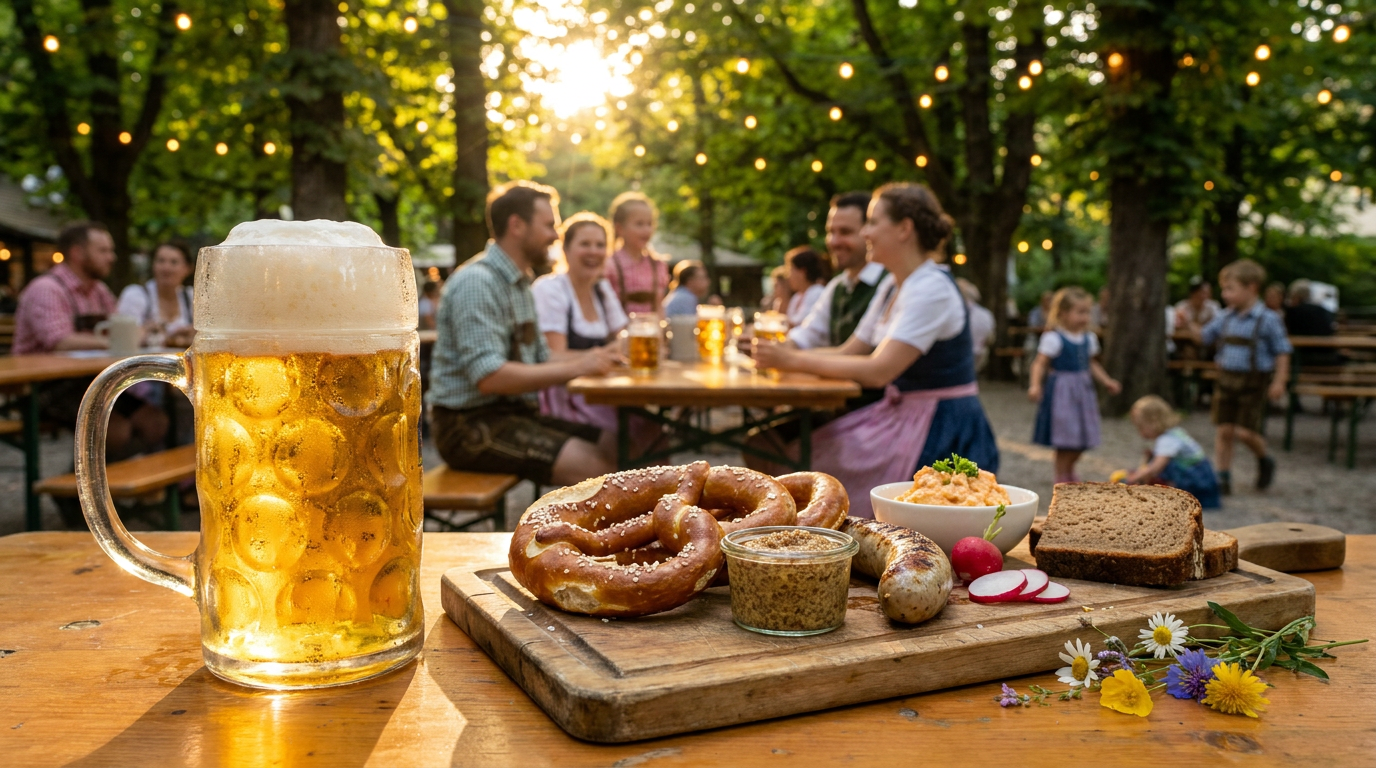
As visitors arrived to purchase fresh beer directly from the breweries, simple wooden tables and benches were placed beneath the trees.

Without intending to, Bavarian brewers had created one of the world’s most beloved outdoor gathering places.

The modern biergarten had been born.


More Than Beer—A Place for Everyone

Unlike many establishments of the time, biergartens quickly developed into places where social status mattered very little.

Farmers sat beside merchants.

Craftsmen shared tables with professors.

Musicians laughed with factory workers.

Entire families gathered together.

Children played nearby while parents enjoyed long conversations under the shade of ancient trees.

Long communal tables became one of the defining features of German biergartens.

Rather than encouraging privacy, they encouraged conversation.

If every seat was occupied, newcomers simply joined whoever had room.

Introductions happened naturally.

Friendships followed.

Many lifelong relationships began over shared tables and shared stories.

That welcoming spirit remains one of the defining characteristics of authentic biergartens today.

As the German proverb says:

“Shared joy is double joy.”

The biergarten became the perfect place to experience that simple truth.


King Ludwig and the Rise of Bavarian Biergartens

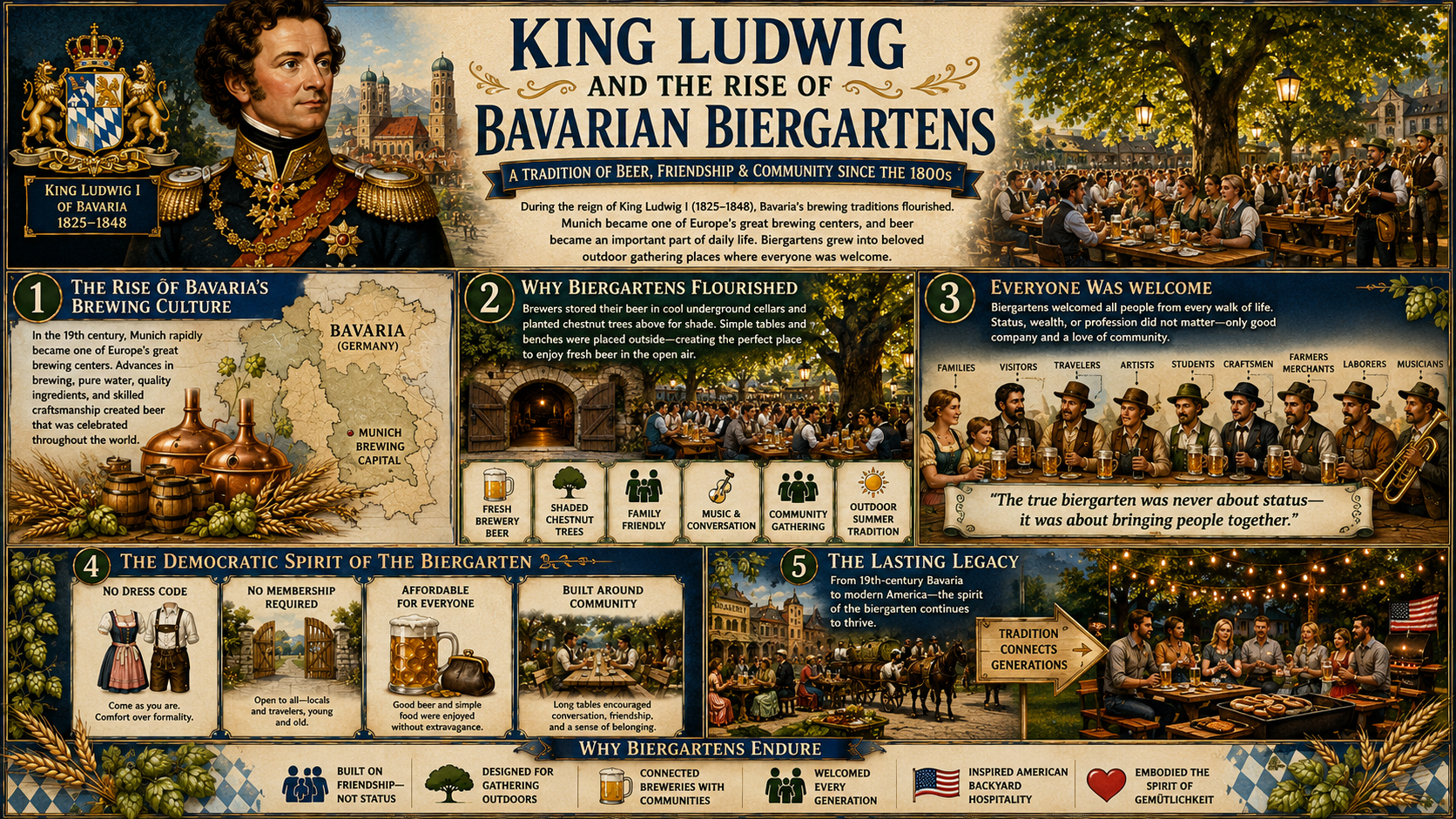
Bavaria’s brewing traditions flourished during the nineteenth century, particularly during the reign of King Ludwig I.

Munich was rapidly becoming one of Europe’s great brewing centers, and beer had become an important part of daily life.

While regulations surrounding brewing evolved over time, public appreciation for outdoor beer gardens continued to grow.

Biergartens offered something unique.

They were democratic.

Everyone was welcome.

Families.

Visitors.

Travelers.

Artists.

Students.

Laborers.

No elaborate dress code existed.

No expensive membership was required.

The focus wasn’t on luxury.

It was on community.

This welcoming philosophy helped biergartens become gathering places where every generation could enjoy summer together.


Why Chestnut Trees Became Part of the Tradition

Many visitors notice the magnificent chestnut trees that shade traditional Bavarian biergartens.

These trees were chosen for practical reasons.

Their large leaves created excellent shade during the hottest months of summer.

Equally important, their relatively shallow roots were less likely to damage the underground beer cellars.

Over time, these trees became inseparable from the biergarten experience.

Today, many of Germany’s oldest biergartens are still shaded by enormous chestnut trees planted generations ago.

They have become living witnesses to countless celebrations, reunions, engagements, weddings, and family gatherings.

In many ways, the trees symbolize the biergarten itself.

Strong roots.

Generous shade.

A place where people naturally gather.


The Tradition of Bringing Your Own Food

One of the most surprising customs for first-time visitors is that many traditional Bavarian biergartens historically encouraged guests to bring their own meals.

Families packed picnic baskets filled with homemade favorites such as:

  • Fresh rye bread
  • Pretzels
  • Obatzda cheese spread
  • Radishes
  • Pickles
  • Smoked meats
  • Bratwurst
  • Liver sausage
  • Black Forest ham
  • Potato salad
  • Homemade cakes

The brewery supplied the beer.

Families supplied the feast.

Instead of operating like a restaurant, the biergarten became a shared community dining room beneath the trees.

Everyone contributed.

Everyone participated.

Everyone belonged.

That spirit of generosity remains one of the hallmarks of authentic German hospitality.


The True Meaning of Gemütlichkeit

No discussion of biergartens would be complete without one of the most beloved words in the German language:

Gemütlichkeit.

While often translated as “coziness,” the word carries a much deeper meaning.

It describes a feeling of warmth, comfort, friendship, belonging, relaxation, hospitality, and contentment.

Gemütlichkeit cannot be purchased.

It cannot be manufactured.

It happens naturally whenever people genuinely enjoy being together.

A true biergarten is built around this idea.

The beer may attract visitors.

Gemütlichkeit is what encourages them to stay.

As author and Nobel Prize winner Thomas Mann once observed:

“Order and simplification are the first steps toward the mastery of a subject.”

In many ways, the biergarten embodies that philosophy—simple food, simple surroundings, and meaningful human connection creating something extraordinary.

» Read more

From Bratwurst to Black Forest Cake: A Delicious Journey Through German-American Food Traditions

For generations, food has been one of the most enduring ways German-Americans have preserved their heritage. Long after languages faded, family names changed, and old-country customs blended into American life, recipes remained.

A plate of bratwurst at a summer festival. A warm pretzel shared at a county fair. A holiday table featuring red cabbage, potato salad, and sauerbraten. A slice of Black Forest cake served at a family reunion.

These foods tell stories.

They tell of immigrants who crossed the Atlantic seeking opportunity. They tell of communities built across Pennsylvania, Ohio, Wisconsin, Iowa, Nebraska, Minnesota, Texas, Tennessee, and countless other states. They tell of family traditions carried from generation to generation—sometimes changing slightly with local ingredients, but always retaining a taste of home.

Today, millions of Americans may have only a trace of German ancestry, yet they still enjoy foods whose roots stretch back centuries into the villages, farms, forests, and cities of Germany. Whether you know your family’s German origins or are just beginning to explore them, one of the most enjoyable ways to connect with that heritage is through food.

After all, every recipe has a story.

The German-American Table: Where Two Cultures Meet

German immigration to America occurred in several major waves beginning in the 1700s and continuing well into the early 1900s.

Wherever German immigrants settled, they brought their culinary traditions with them.

https://images.openai.com/static-rsc-4/BZGqqG_msSt_RRjykhCGmnjy7wC0AM-I8OSOZ5AzWWQjFn50fXTN77wBhBnXG18de4_g7-Y9py9jLd3YbIcU56i2EQ82MrS41bglAtT_CQuim3beGzV2j90NrSbnJYywMrLLoxhf4AMpH7Wl7ASo4F_Z7QG8YEXsTyOqf-Wr1MK7BbqIXKTMjRk1Rjqz6qz2?purpose=fullsize
Over time, these foods adapted to local ingredients and American tastes. The result was not merely German food and not entirely American food—it became something uniquely German-American.
https://images.openai.com/static-rsc-4/1Tkjv9dwhDU0yy68QQ2MuLRFYGXaJnUg1-HvtNyVo1kZ-T4Tb9y9iY_dF8SehL0RVIikh4jF8hHOJWNfZurTZTaKS0TurJRJV15s-Xp_HA8y93p_x8G23zQbbzDTVyAE_fDeDOLINXfHNsxyBtzfrzd3eGhKGjlng2l9wQwAaHOdAL_L3rgXiCcqIiRK2-LZ?purpose=fullsize

The hearty farm cooking of Bavaria, the sausages of Franconia, the breads of Swabia, and the cakes of the Black Forest region all found new life in America.

Many dishes became so integrated into American culture that people often forget their German origins.

As food historian James Beard once observed:

“Food is our common ground, a universal experience.”

For German-Americans, that experience is often served one delicious plate at a time.


Bratwurst: America’s Favorite German Sausage

Few foods are more closely associated with German heritage than bratwurst.

The word “bratwurst” originates from Germany and refers to a finely minced sausage traditionally made from pork, veal, or beef.

https://images.openai.com/static-rsc-4/VX8KhWwn1B5acWynDBUxRDUjzTMn81GyIMLKGGGcqFmRFgxo6wUXZMKT7MxTO1b9eVoJ27IzhltDNMSxAaRxIlqfjyJQcGzabASoXdfm-MuliF9z75CLG5LOEdOCbrKZX-NN4VorRqh0zzDLcG0EdD7vfWpBgQ7UoXYoRdK_QgOLign-BRzEokka_MQf3Tem?purpose=fullsize
German immigrants brought countless regional sausage recipes to America, particularly to states such as Wisconsin, Minnesota, Nebraska, Iowa, and Ohio.

Today, bratwurst is practically a cultural institution in parts of the Midwest.

Whether served at baseball games, Oktoberfests, church picnics, county fairs, or backyard cookouts, bratwurst represents one of the most successful culinary exports Germany ever produced.

Popular toppings include:

  • Sauerkraut
  • Spicy brown mustard
  • Grilled onions
  • Pickled vegetables
  • Beer-braised cabbage

Every family seems to have its own preferred way of serving a brat.

And every German-American gathering seems to have someone insisting theirs is the “authentic” version.


Pretzels: The Twist That Conquered America

The humble pretzel may be one of Germany’s greatest gifts to American snack culture.

German immigrants introduced pretzels to Pennsylvania during the colonial era, where they eventually became a major industry.

https://images.openai.com/static-rsc-4/3GdixS-spAexLLxihpmIvo6EssJq0IRozFK5aNPS3bhU-XUT-ut9zTdusZenI1axP3xHBQGMn4zT7Keq4wMyai_YSOjWlegaLRqYfx3i_hJUyeM8a-GRrzsR1T7plbcbLyMtOZTU-B_Mn22z_v-hDh44YGwaxi4ThTLUI0EDaLygFGdgeUkcfl7smjGTIXKQ?purpose=fullsize

Today, Pennsylvania remains one of America’s pretzel capitals.

https://images.openai.com/static-rsc-4/5wB7u9pgeARumZHKjxtBfsCCL0LyJ8DFYmJ3YS_gweY4HPQeIKIHrl-pB0N8xvz9-1X8hmbZ6qKMKQycglV-8jbrHyw04Tt3vdp3zdE1hyiNa4eegA6WuzWGE_Sav5caT2z1CBlhG2uj6DaG-2pTbM_0ZT4_jxtpa_zu9kr-rJ2Fiqcb52Gyz4ZTD0ccyw_9?purpose=fullsize

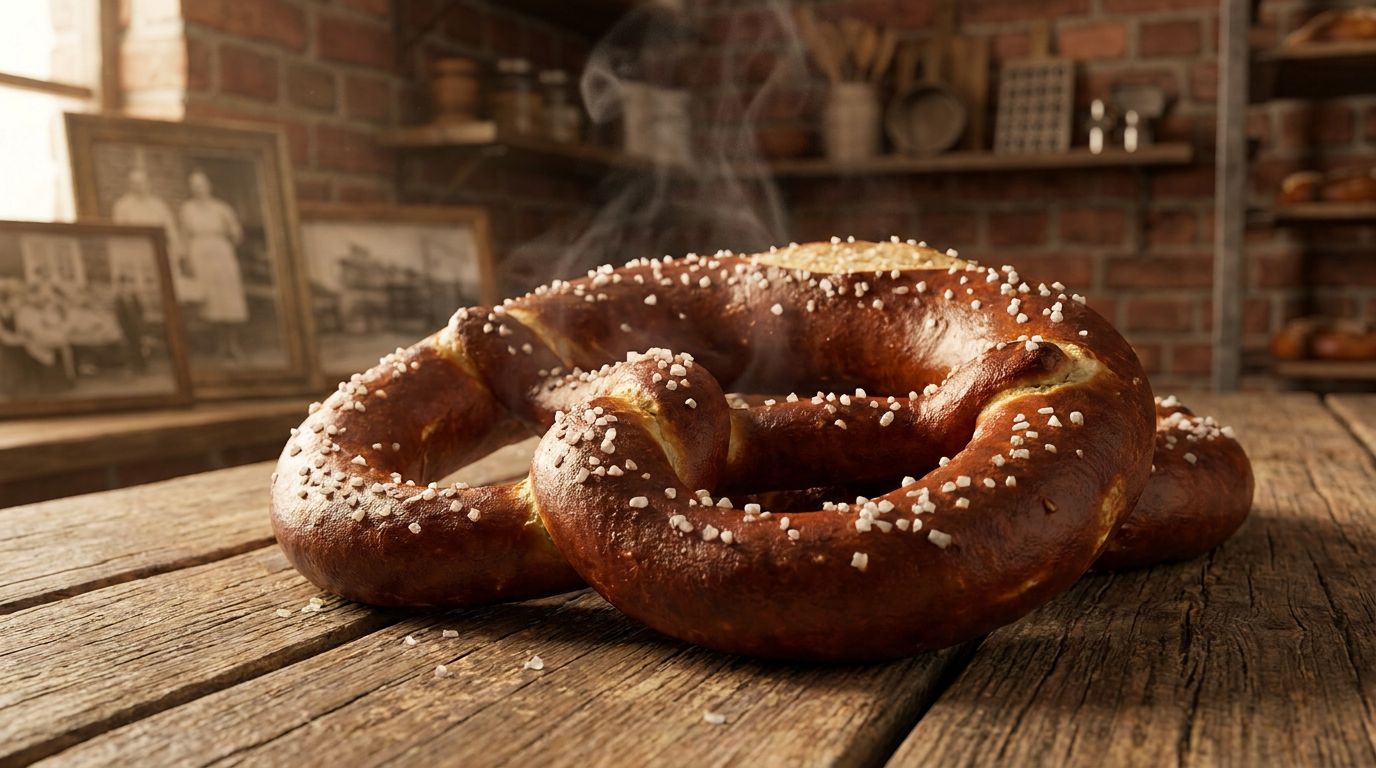
Traditional German pretzels feature:

  • A dark, glossy crust
  • Chewy interior
  • Coarse salt topping
  • Distinctive twisted shape

Modern variations include:

  • Beer cheese pretzels
  • Cinnamon sugar pretzels
  • Stuffed pretzels
  • Giant festival pretzels

No Oktoberfest feels complete without one.

And let’s be honest—few foods pair better with a cold German-style lager.


Sauerkraut: More Than Just a Condiment

For many Americans, sauerkraut is simply a hot dog topping.

For German-Americans, it’s much more.

Sauerkraut has been a staple of Central European cuisine for centuries. Made from fermented cabbage, it provided essential nutrition throughout long winters.

https://images.openai.com/static-rsc-4/xdSrI1XRkHiBaP8e42ufupf9Lnqpo-vcjAe8pI0EfKSK12JIhjxppuwKQz0i51yLvX2F-qn006Es6hJInyrjKVs5CuKX9khl6SViYjP1bWf27TKyXHhNlrZurR9w1KW5Rs8vTsSG0ThkkVWyMnXASW1jnVr6UU9DFsSaGNxeFfroOAdcdiBzfDPIo0vN9spH?purpose=fullsize

German immigrants brought fermentation traditions with them to America, where sauerkraut quickly became a practical and economical food source.

Today it remains a beloved companion to:

  • Bratwurst
  • Pork roasts
  • Kielbasa
  • Potato dishes
  • Holiday meals

Modern nutrition experts also appreciate sauerkraut for its probiotics and digestive benefits.

It turns out great-grandma was onto something all along.


The Bread Basket of German Heritage

Bread occupies a sacred place in German culinary culture.

Germany is famous for producing hundreds of varieties of bread, many of which inspired baking traditions throughout German-American communities.

https://images.openai.com/static-rsc-4/B-A_VVMGCIv3ziollKEkd322zjEhfWvhKBjyNof3vPs4gHRDcrALB_plSUM7U0Mt-ZjXsOxC3Pq7YIzb9vizAx4q-0Xm_hwq25ybUSdlybCyrvx9M6HejVJ4KCTwPCB1jDayi8Xngtty2rvcpZJ5JQpvdrnIZFWn2Fj-OshqA_1FmbRo54hXTMjfnVFBYepD?purpose=fullsize

Popular German-inspired breads include:

  • Rye bread
  • Pumpernickel
  • Bauernbrot (farmer’s bread)
  • Pretzel rolls
  • Seeded country loaves

Many German-American bakeries became community gathering places where immigrants could purchase familiar foods while maintaining connections to their heritage.

Even today, walking into a traditional German bakery can feel like stepping into another era.


The Potato: An Unexpected German-American Hero

While Germany did not invent potatoes, Germans certainly embraced them.

As German immigrants spread across America’s agricultural regions, potatoes became a cornerstone of family meals.

Some favorites include:

German Potato Salad

Unlike many American versions, traditional German potato salad often features:

  • Vinegar dressing
  • Bacon
  • Onions
  • Fresh herbs

Kartoffelpuffer

Also known as potato pancakes, these crispy treats remain festival favorites.

Potato Dumplings

A comforting side dish often served with roasts and gravies.

Potatoes offered affordability, versatility, and hearty nourishment—qualities highly valued by immigrant farming families.


Sweet Traditions: Cakes, Pastries, and Family Celebrations

German heritage isn’t only about savory dishes.

Some of the world’s most beloved desserts originated in Germany.

https://images.openai.com/static-rsc-4/yGxNAYT_3fyp70lEzDAWjEHhicES1HctLUJ0cgUXYwgYBomhXwrPPz10akZjXVjrq7Bx4go9U_LkfBhdKi3pT44vS5_d3d4LtAYp_jThyi_6-w8mRpFTyqjbUYblOlUlhy3AKc9vI3ZpNehTKmhFgix2k4woVBi1vCCtF0RlaU_TtWQdc2WsVtPLyQPnbUIx?purpose=fullsize
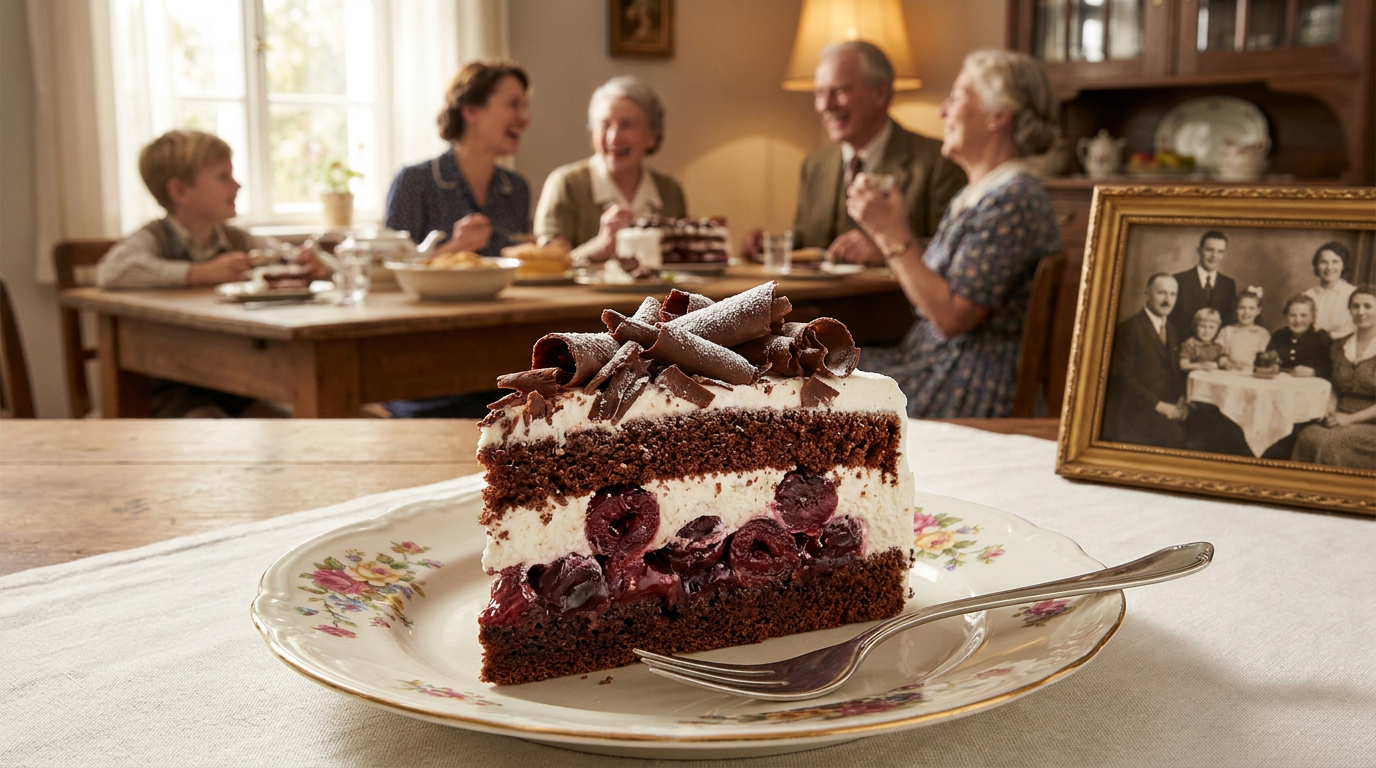
Black Forest Cake (Schwarzwälder Kirschtorte)

Perhaps Germany’s most famous dessert, this masterpiece features:

  • Chocolate cake
  • Cherries
  • Whipped cream
  • Chocolate shavings

It remains a showstopper at weddings, anniversaries, and special celebrations.

Apple Strudel

Though associated with Central Europe generally, strudel became a staple in many German-American homes.

Stollen

This fruit-filled Christmas bread remains a beloved holiday tradition.

Bee Sting Cake (Bienenstich)

A delicious combination of sweet yeast dough, cream filling, and caramelized almonds.

These desserts helped transform family gatherings into memorable celebrations.


German-American Beer and Food: A Perfect Partnership

No discussion of German food traditions would be complete without mentioning beer culture.

German immigrants helped establish many of America’s earliest brewing traditions.

German-American Favorites

Classic Pairings

Food Traditional Beverage Pairing
Bratwurst Märzen Lager
Pretzels Helles Lager
Schnitzel Pilsner
Roast Pork Dunkel
Black Forest Cake Coffee or Dark Lager

German beer gardens became social centers where families gathered, musicians performed, and communities celebrated.

Food was never just nourishment.

It was fellowship.


A Taste of German Heritage at Festivals Across America

One of the easiest ways to experience German-American culinary traditions is by attending a festival.

https://images.openai.com/static-rsc-4/nhSWSeUH5TeMZrH3E40Vao0VmaauNj7G4dSeHZNev26Tds9ypkd57vuW2LDHvlafiNsf7n-n7-nVpiOW4o8V5PhlIWHOuTesD8VsLmGDa2zz9l3M_j7oADjq5c5UdaQYL5eppTUHNAcQed3tG_WVdU8LkmKWHWoXeiVnrDuKceDce5H0vpJJfIbUSIHfBWo2?purpose=fullsize
Visitors can sample foods ranging from traditional recipes to creative modern interpretations.
https://images.openai.com/static-rsc-4/NuEgir6vtiWtfAKpSpE7TekDBFWlU-6Wnc4AHclYlznRs1nAWyRCew1c_vH1igK0M1srJiYkdH08FMiGx8FkgY4UlKvprdTO0rSV9GDuIYGzMd54Ma6mHumlgcLmysNIL1wBX2yljVfoWkkK1mv2ORc0u-tG90C0i-22FgZdGQrWXCZ5WNgb4x23W2_R5UOy?purpose=fullsize

Across America, communities host:
  • Oktoberfests
  • Maifests
  • Christkindlmarkts
  • Heritage festivals
  • County fairs with German roots

For many attendees, the food becomes the gateway to learning more about their ancestry, history, and cultural traditions.


Food as a Family Time Machine

Perhaps the most remarkable aspect of German-American food traditions is their ability to connect generations.

A recipe card handwritten by a grandmother.

A family sausage recipe passed down through decades.

A Christmas stollen baked exactly as it was 100 years ago.

These foods preserve memories in ways few other traditions can.

As author Laura Esquivel famously wrote:

“The table is a meeting place, a gathering ground, the source of sustenance and nourishment.”

For German-Americans, it is also a bridge to the past.


Bringing German Heritage to Your Own Kitchen

You don’t need to speak German or travel overseas to celebrate your heritage.

You can begin right at home.

Try:

✅ Making homemade bratwurst recipes
✅ Visiting a local German bakery
✅ Learning to bake pretzels
✅ Exploring regional German cookbooks
✅ Attending a local Oktoberfest
✅ Recreating family recipes from old recipe boxes
✅ Researching foods connected to your ancestral region in Germany

Each meal becomes an opportunity to explore your family’s story.


Final Thoughts

From sizzling bratwurst at summer festivals to elegant slices of Black Forest cake shared during family celebrations, German-American food traditions remain one of the most enjoyable ways to connect with heritage.

These dishes are more than recipes.

They are edible history.

They tell stories of courage, immigration, family, hard work, faith, community, and cultural pride. They remind us that heritage is not confined to museums or genealogy records—it lives in kitchens, bakeries, restaurants, festivals, and family dining rooms across America.

So the next time you enjoy a warm pretzel, a hearty bratwurst, or a slice of Black Forest cake, remember:

You may be tasting a small piece of the German-American story.

And that story is still being written—one delicious bite at a time.


Quick Heritage Food Fact

GERMAN-AMERICAN FOODS YOU PROBABLY EAT REGULARLY

🥨 Pretzels
🌭 Bratwurst
🥬 Sauerkraut
🍞 Rye Bread
🥔 German Potato Salad
🍰 Black Forest Cake
🍎 Apple Strudel
🍺 German-Style Lager

Heritage Insight: Many of these foods arrived with German immigrants during the 1700s–1900s and became permanent parts of American culinary culture, especially throughout Pennsylvania, the Midwest, Texas, and Tennessee.

German Heritage USA™
Discovering German Heritage Traditions, Foods, Music, and Festivals All Across America

Family-Friendly German Heritage Destinations for Your Summer Road Trip

Summer in America is road trip season—the open highway, quirky roadside attractions, local diners, and family memories made one mile at a time. But what if your next family vacation could also become a journey through German-American history?

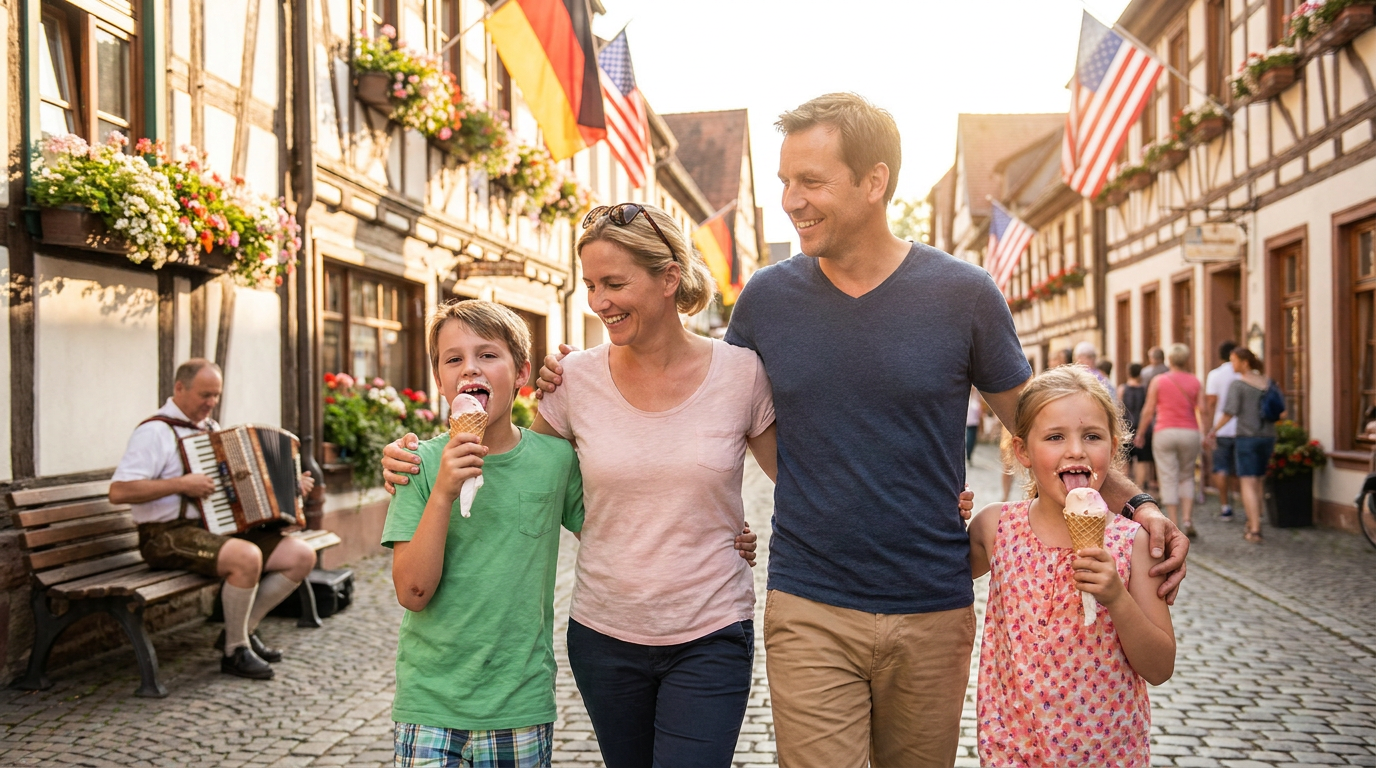
Across the United States, German Heritage is alive and thriving in towns where bratwurst sizzles on street corners, half-timbered architecture lines Main Street, and festivals celebrate traditions brought here by millions of German immigrants.

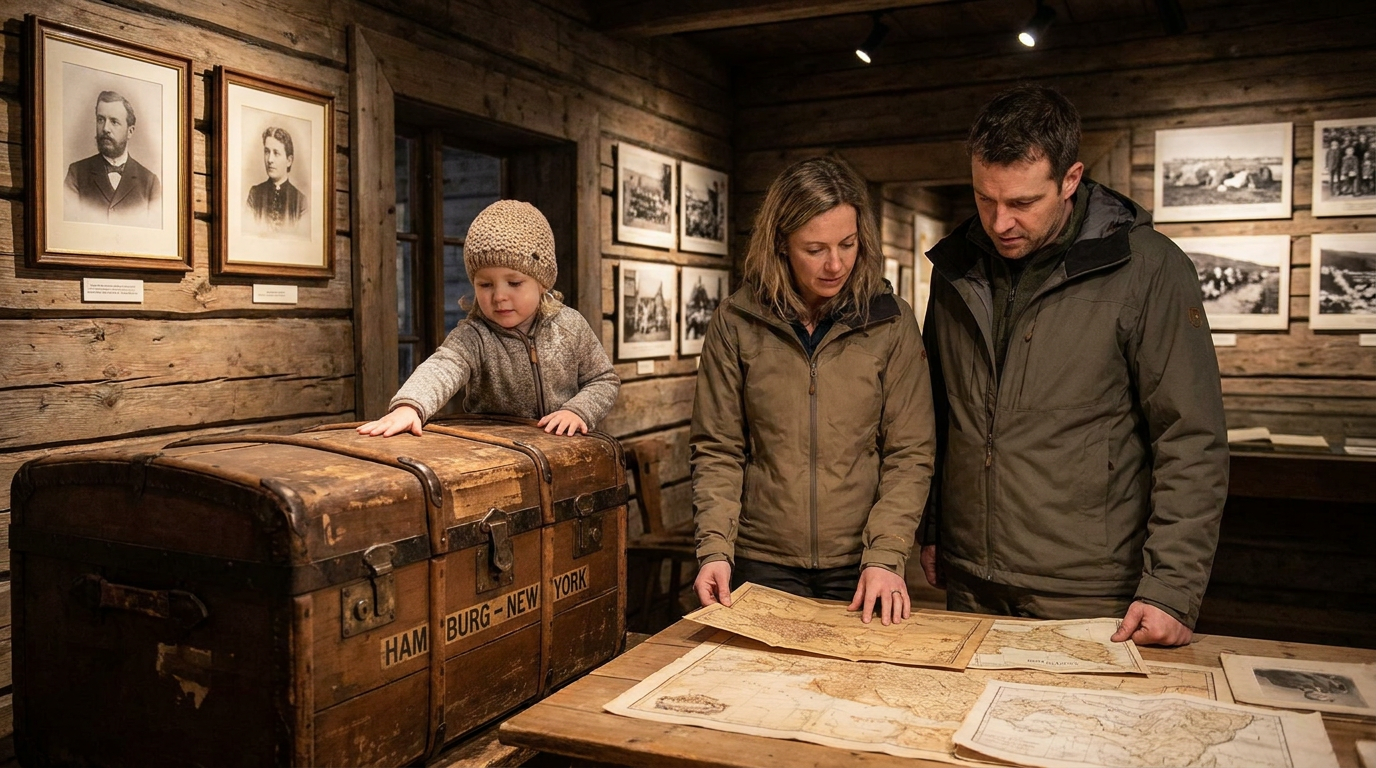
From Texas dance halls to Midwest beer gardens, from Bavarian-style mountain villages to hands-on immigrant museums, German heritage destinations offer more than beer steins and lederhosen—they offer kid-friendly fun, rich history, and unforgettable summer experiences.

German immigrants helped shape American farming, brewing, architecture, education, music, and holiday traditions. In fact, many beloved American staples—from kindergarten to Christmas trees—trace directly back to German roots.

“A people without the knowledge of their past history, origin and culture is like a tree without roots.” — Marcus Garvey

So pack the car, load up the kids, and prepare for a road trip where history meets fun. Here are some of the best family-friendly German heritage destinations across the USA.


For many families, the first surprise is discovering just how deeply German culture influenced America’s heartland from visiting various German Heritage Museaums.

In the 1800s, German immigrants became one of the largest ethnic groups in the United States, settling in Texas, Wisconsin, Missouri, Ohio, Pennsylvania, and beyond. They built breweries, churches, farms, schools, and entire towns that still reflect their roots today.

These destinations are perfect for summer because they combine culture with entertainment—think tubing rivers in Texas after schnitzel, alpine coaster rides in Washington after visiting a Bavarian village, or museum scavenger hunts before enjoying giant pretzels.

And unlike some historical destinations, German-American road trip stops often feel like mini theme parks—music, costumes, candy shops, and festivals included.

https://images.openai.com/static-rsc-4/MEm4vvtRVR1III2qvQl4x2y6a4iJ_FEO8GKUnrZQKE2FvXf_GbAYmpJGK9vdh5msjuwLTIsaFzM3UuRyTTH-v5W7HaJgG7Z9ViKsgqq0QMqQ8atA2BIgOloF03LihUZJMNKM2c0f7m5Avf3qH1-jA1Uo8Um3lZ3dyH7MrQDiNGlCusTWVWSSovOoNKlpI52Q?purpose=fullsize
1. Fredericksburg, Texas – Germany Deep in the Heart of Texas

Founded in 1846 by German settlers, Fredericksburg blends Lone Star spirit with old-world charm. Located in Texas Hill Country, this town is one of America’s most unique German heritage experiences.

Family Highlights:

  • Pioneer Museum with immersive German settler exhibits
  • Enchanted Rock hiking nearby
  • Authentic German bakeries and biergartens
  • Wildseed Farms and peach orchards
  • Main Street shopping for cuckoo clocks, toys, and sweets

Kids can learn how German immigrants adapted to frontier life, while parents enjoy schnitzel and sausage platters. Summer peach season makes this stop especially sweet.

Road Trip Bonus: Pair with nearby Luckenbach for music and dancing.


2. Leavenworth, Washington – Bavarian Alps Without the Passport

Nestled in the Cascade Mountains, Leavenworth looks like a Bavarian postcard. This transformed alpine town intentionally adopted German architecture in the 1960s and became a cultural tourism phenomenon.

Family Highlights:

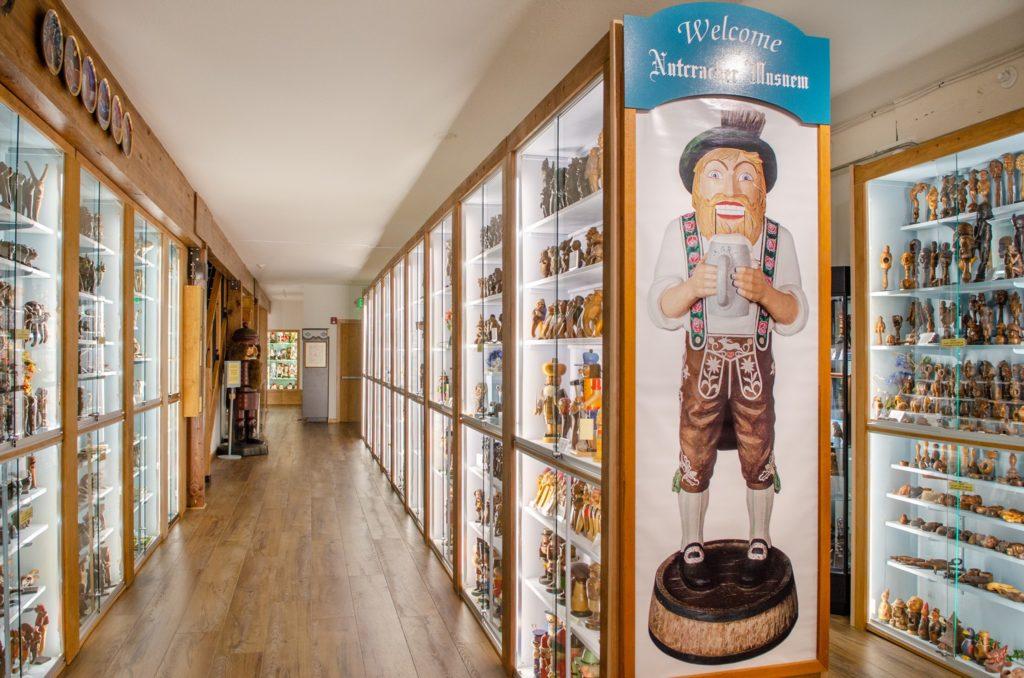
  • Nutcracker Museum
  • Alpine coaster and mountain adventures
  • River rafting and hiking
  • Bavarian candy shops
  • Summer outdoor concerts

Leavenworth is especially magical because it feels immersive—flower boxes, murals, and mountain backdrops create an almost European fantasy.

“Travel makes one modest. You see what a tiny place you occupy in the world.” — Gustave Flaubert

https://images.openai.com/static-rsc-4/bFScNPmkNqCBmnMKA4PaepGgxh7yyEcamtbrQGf-U_mChiB6wJUSf3kszAy9Xdm6yjMHX0-0fwkGVJ7BGsUXBXo6tUN9iU13roRLIZKL1nSJheQOXn7X-D5uFqZ0ibQI7OF1TgObnW3ERfRISF7iOi-1ECCr1x-_20Ipm5H6GduLgvLAPXOVyC23nl2kM678?purpose=fullsize

3. New Glarus, Wisconsin – America’s Little Switzerland with Germanic Roots

Though Swiss-inspired, New Glarus shares deep German-speaking cultural roots and offers Midwestern charm with rolling green landscapes.

Family Highlights:

  • Swiss Historical Village
  • Toy trains and local cheese shops
  • New Glarus Woods State Park
  • Family festivals with folk music
  • Root beer and brewery tours for older family members

Nearby Wisconsin communities also showcase German Heritage through food, architecture, and summer festivals.


4. Amana Colonies, Iowa – Old World Craftsmanship Meets Family Fun

Founded by German Pietists, the Amana Colonies preserve communal living traditions, craftsmanship, and foodways.

Family Highlights:

  • Traditional woodworking shops
  • Family-style German meals
  • Woolen mills and craft demonstrations
  • Ox Yoke Inn
  • Seasonal festivals and village strolls

This stop feels educational without being boring—children can watch artisans at work while parents enjoy handmade goods.

» Read more

Curiosity to German Heritage Pride: Why Even a Trace of German Roots Can Inspire a Lifetime of Travel

There’s something quietly powerful about heritage—especially the kind you didn’t grow up fully understanding. For many Americans with German ancestry, the connection often begins not with language or travel, but with curiosity.

A last name, a grandparent’s recipe, an old photograph, or even a family rumor can spark a desire to explore “that German side” of the family tree. And even if they’ve never spoken German or set foot in Germany, the pull is real—and growing.

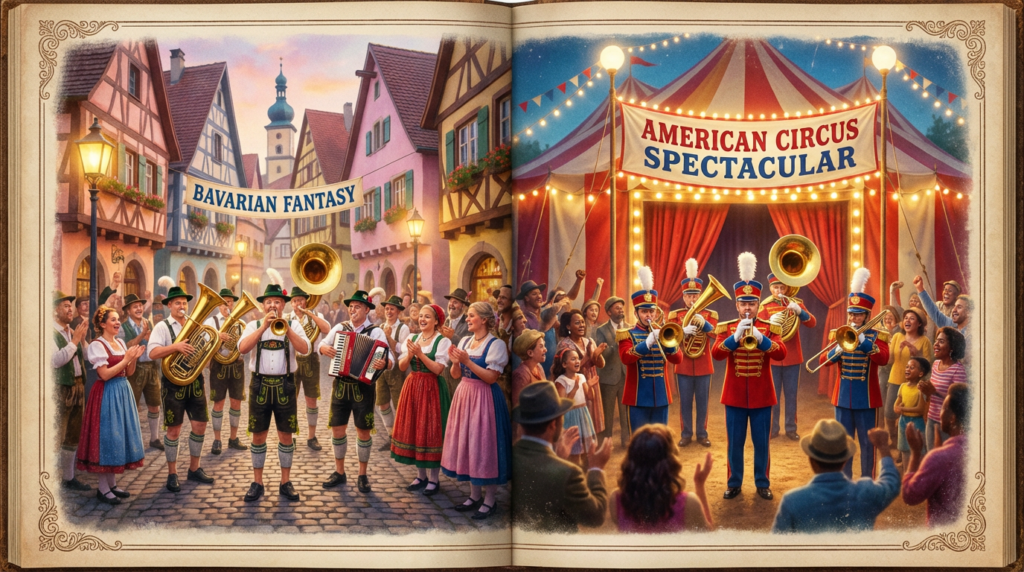
Part of that fascination comes from how Germany has been culturally “packaged” in the American imagination. For generations, Americans have associated Germany—perhaps more specifically Bavaria—with a joyful, colorful identity: Oktoberfest celebrations, bratwurst sizzling on the grill, steins overflowing with beer, oompah bands, accordions, lederhosen, and dirndls. It’s festive, welcoming, and easy to embrace.

It feels like a celebration of life. So when someone discovers German roots, it’s often this version of Germany they first connect with—a warm, approachable gateway into a deeper heritage.

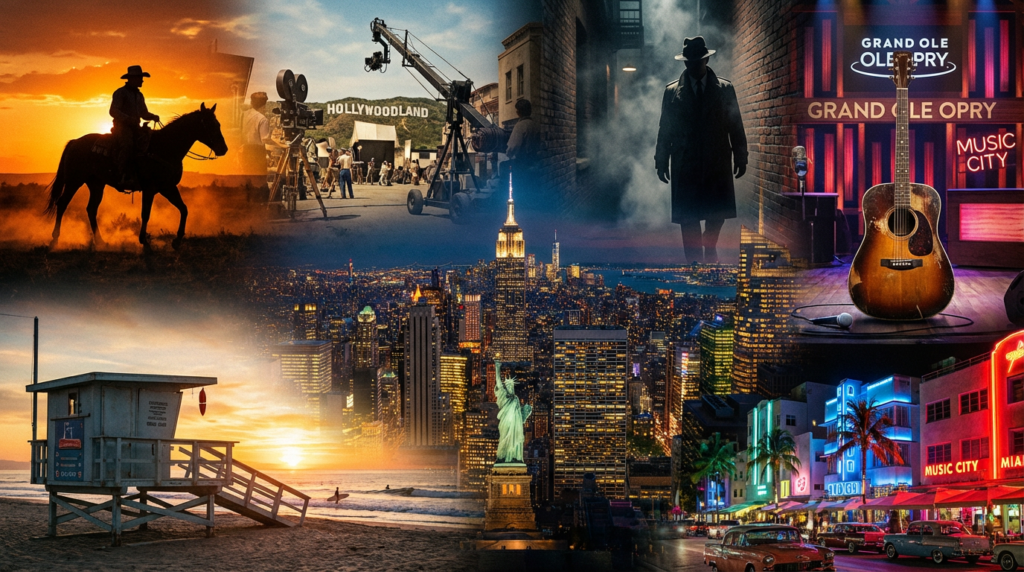
But just as Americans simplify Germany into Bavarian imagery, Germans—and much of the world—often view America through their own cultural shorthand. To some, America is Texas-sized: cowboy hats, wide-open plains, and oil tycoons reminiscent of Dallas and J.R. Ewing. Others picture Hollywood icons like John Wayne or Clint Eastwood, embodying rugged independence.

Then there’s California’s sun-soaked beaches shaped by the carefree spirit of the Beach Boys or the lifeguard drama of Baywatch. Add in New York’s fast-paced glamour, Chicago’s gangster-era lore, Nashville’s country music roots, and Miami’s neon-lit nightlife, and you begin to see the same pattern—we all tend to understand other cultures through their most iconic, simplified snapshots.

And yet, there’s nothing wrong with that starting point. In fact, it may be essential.

The Bavarian “first impression” works because it’s vibrant and inviting—it sparks imagination. Some even argue that early American storytelling helped shape this perception.

When L. Frank Baum published The Wonderful Wizard of Oz and later when the film The Wizard of Oz debuted starring Judy Garland, audiences were introduced to a whimsical, colorful world filled with pageantry, music, and almost storybook-European aesthetics.

While not directly German, the visual elements—the costumes, village charm, festive tone—echoed a kind of old-world Central European fantasy that many Americans subconsciously linked to places like Bavaria.

The Munchkins, the theatrical staging, even the musical elements carried a certain “storybook Europe” energy that blended into America’s perception of German culture over time.

There’s also an interesting parallel in the world of entertainment. The bold colors, costumes, and lively brass sounds of Bavarian oompah bands share a surprising kinship with the grand spectacle of traveling circuses—both designed to delight, gather crowds, and create unforgettable experiences. That sense of joy, rhythm, and visual celebration has made Bavarian culture especially “exportable” and memorable.

Of course, Germany itself is far more diverse than this single lens. Northern Germany offers coastal charm, fresh seafood, and maritime traditions. Central Germany reveals rolling hills, castles perched above winding rivers, and vineyard-covered valleys.

Cities like Berlin, Hamburg, and Frankfurt pulse with modern energy, history, and innovation. But for many Americans just beginning their heritage journey, Bavaria becomes the gateway—the first chapter in a much larger story.

And maybe that’s exactly how it’s meant to be.

Because once curiosity is sparked—whether by a bratwurst at a festival, a polka tune, or a family name etched in history—it often leads to something deeper: genealogy research, travel plans, cultural exploration, and a renewed appreciation for where one’s story began.

The initial attraction may be predictable. But what follows is often personal, meaningful, and lasting.

» Read more

Winter’s Last Pour: Traditional German Beers to Enjoy Before Spring Arrives

Late February in Germany is a season suspended between worlds. Snow still clings to the edges of cobblestone streets, gathering in quiet corners beneath timber-framed houses and along the roofs of centuries-old beer halls. The air carries the sharp, clean bite of winter, and church bells echo through the frosty morning like a slow heartbeat of tradition. Smoke curls gently from chimney stacks, and the warm glow of tavern windows spills onto the icy streets, inviting travelers inside for one more taste of winter’s comfort.

Yet beneath the gray Bavarian sky, something quieter—and far more hopeful—is taking place. In cool cellars and historic breweries, golden lagers are quietly fermenting. Barrels rest patiently in the dim light, slowly transforming grain, water, hops, and yeast into the promise of the coming season. Brewers know what the landscape already senses: winter’s grip is loosening. While the snow still lingers outside, inside the brewery tanks a brighter future is beginning to take shape.

For centuries, Germans have understood that beer follows the rhythm of the seasons. During the long, cold months, darker and stronger brews warm both body and spirit. Rich Bocks and velvety Doppelbocks offer deep notes of caramel, toasted bread, and dark fruit—liquid comfort against the winter chill. But as the sun climbs slightly higher in the sky and Lent approaches, those bold winter lagers begin making room for something lighter, brighter, and more hopeful.

This quiet transformation—from Bock to Helles, from Doppelbock to Maibock—is more than a change in flavor. It is a ritual woven into the fabric of German life. Each glass marks the turning of the calendar, a farewell toast to winter and a welcoming nod to spring. In beer halls across Bavaria, locals lift their steins not just to good drink, but to the seasons themselves—celebrating winter’s final warmth while raising a golden promise to the brighter days ahead. 🍺

This transition—from Bock to Helles, from Doppelbock to Maibock—is more than a change in flavor. It is a ritual. A celebration. A farewell toast to winter’s last pour.

As one old Bavarian saying goes:

“Der Winter braucht Stärke, der Frühling braucht Licht.”
Winter needs strength; spring needs light.

Let’s explore the traditional German beers that define this magical late-winter moment—and why February may be the most fascinating month in the German brewing calendar.


The Bold Heart of Winter: Bock & Doppelbock

https://www.usatoday.com/gcdn/-mm-/1eeda088f69ac69fdd9fb56f0db7c1b8b5158adf/c%3D116-0-1931-1365/local/-/media/2017/11/14/USATODAY/USATODAY/636462370864289309-Bierhaus-beer-flight.jpg

When temperatures drop, Germany turns to Bockbier—a strong lager traditionally brewed for sustenance and celebration.

Originating in the northern town of Einbeck and later embraced by Bavarian brewers in Munich, Bock evolved into one of Germany’s most beloved winter styles. Its flavors are rich and comforting:

  • Toasted bread crust
  • Dark caramel
  • Subtle chocolate
  • A gentle warming alcohol presence

But if Bock is strong, Doppelbock is heroic.

Originally brewed by monks in Munich during Lent, Doppelbock was known as “liquid bread.” When fasting limited solid meals, these nutrient-dense beers sustained the body. The famous Salvator style brewed by monks in the 17th century became the prototype.

“Bier ist flüssiges Brot.”
Beer is liquid bread.

With alcohol levels often reaching 7–10% ABV, Doppelbock delivers deep malt sweetness, plum and raisin notes, and a velvety mouthfeel. It’s the beer of candlelit taverns, wool coats, and lingering conversations.

February is its final stand.


Starkbierzeit: Bavaria’s Strong Beer Season

https://images.openai.com/static-rsc-3/pSaoDyeE-j4iZFacVE2UlrHgtRrBfVhZsrH5NUI3bTokZk_3P63ZhWrwuyr0bDIjWo02KlCBW3QFrzw28mkXSOPgfWlLO7H0LjXotn5Lw8k?purpose=fullsize&v=1

In Munich, late winter means Starkbierzeit—“Strong Beer Time.”

Often called the “insider’s Oktoberfest,” this February–March tradition celebrates the final weeks of winter with robust, high-gravity brews. Breweries unveil seasonal Doppelbocks in massive beer halls filled with brass bands, laughter, and political satire speeches.

Unlike the tourist-packed autumn festivals, Starkbierzeit feels deeply local. Families gather. Regulars claim their tables. The atmosphere is hearty but intimate.

The strong beers of Starkbierzeit serve as a symbolic bridge:

  • They honor winter’s endurance.
  • They prepare the body for fasting season.
  • They toast the coming thaw.

This is winter’s last full roar.


Why February Favors Stronger Beers

Before refrigeration, German brewing followed nature’s calendar. Beer was safest to brew between late September and early spring when temperatures were cool enough to prevent spoilage.

By February, winter lagers had matured slowly in cold cellars (Lager literally means “to store”). Their flavors deepened. Alcohol levels climbed slightly. The result? A perfect storm of strength and smoothness.

But something subtle begins to happen as daylight lengthens.

Drinkers start craving balance over weight. Brightness over density.

And that’s when golden lagers begin their quiet ascent.

» Read more

Why German-American Culture Thrives at The End of Winter

By the time February begins to loosen its icy grip, something stirs across German-American communities from Pennsylvania to Nebraska, from Wisconsin to Texas. It’s not just the promise of spring. It’s a cultural rhythm — a centuries-old pulse that has learned how to endure winter, and even more importantly, how to emerge from it.

For German immigrants and their descendants, winter was never simply a season to survive. It was a time of gathering, storytelling, hymn-singing, sausage-smoking, bread-baking, and planning. When the frost began to fade, that stored-up energy had to go somewhere. And so it burst forth in festivals, music halls, breweries, kitchens, and church basements across America.

There is something deeply German about resilience. From the forests of Bavaria to the plains of the Midwest, German communities have always known how to make the most of cold months. In America, that instinct blended with frontier grit. The result? A culture that doesn’t just endure winter — it thrives when it ends.

“Winter prepares the soul,” wrote German poet Johann Wolfgang von Goethe, “and spring reveals what it has strengthened.” That sentiment still rings true in German-American towns where the end of winter signals more than warmer weather — it signals revival.


Cabin Fever Meets Gemeinschaft

https://cloudfront-us-east-1.images.arcpublishing.com/gray/YC5YDHRDKBFFPDKGHQ45UM4Z7U.png
The German word Gemeinschaft roughly translates to “community,” but its meaning runs deeper — shared belonging, mutual care, collective identity. After months of snowbound routines, German-American communities lean into Gemeinschaft with renewed enthusiasm.

Across the Midwest, fraternal halls and heritage centers fill up again. Choirs resume rehearsals. Brass bands dust off their instruments. Stammtisch gatherings — informal meetups over beer and conversation — expand from small winter circles to lively weekly events.

In places like New Ulm, Fredericksburg, and Hermann, the end of winter is not passive. It’s programmed. Societies schedule Maifest planning meetings. Youth dance groups begin practicing for outdoor performances. Local breweries test spring batches.

There’s a practical reason, too. Historically, German farming families used late winter to prepare for planting. Once thaw arrived, life accelerated. That rhythm carried over into American towns built by those same immigrants. Winter reflection. Spring activation.

As one Wisconsin heritage club president recently remarked,

“By March, we’re not just ready for warmer weather. We’re ready for each other again.”


Lent, Fasting, and Feasting

The end of winter often coincides with the liturgical calendar — and that matters deeply in German-American life. Many early German immigrants were Catholic or Lutheran, and their faith traditions shaped seasonal rhythms.

Before Lent begins, communities celebrate Fasching (also known as Karneval in some regions). In Pennsylvania Dutch country — descendants of German settlers — Fastnacht Day doughnuts fry in kitchens and bakeries. These rich treats were historically a way to use up lard and sugar before fasting began.

In cities with strong German Catholic roots — like Cincinnati and Milwaukee — church fish fries become Friday-night traditions. The menus may include sauerkraut sides, rye bread, and German potato salad alongside the cod.

These gatherings are more than meals. They’re intergenerational rituals. Grandparents teach grandchildren why fasting mattered in the Old Country. Choir lofts fill with hymns that echo centuries-old melodies from Bavaria or Saxony.

Winter ends not with excess — but with meaning.

» Read more

Groundhog Day’s German Roots: How Old World Folklore Created an American Tradition

Every February 2nd, a small, furry weather prophet waddles into the spotlight. Cameras flash, crowds cheer, and the fate of winter hangs on one simple question: Will he see his shadow? This charming ritual—known as Groundhog Day—feels unmistakably American, wrapped in small-town celebration and playful superstition.

But here’s the twist: Groundhog Day didn’t start in North America at all.

Its roots stretch back centuries to German villages, medieval church calendars, and the quiet wisdom of farmers watching animals and sunlight for clues about the seasons ahead. What we celebrate today is actually a living piece of German folklore—one that crossed the Atlantic, adapted to a new landscape, and somehow became one of America’s most beloved winter traditions.

So grab a warm coat (lederhosen optional), and let’s dig into the surprising German heritage behind Groundhog Day.


From Candlemas to Shadows: Germany’s Seasonal Wisdom

Long before groundhogs took center stage, February 2nd already mattered deeply in German-speaking Europe. The date marked Candlemas, a Christian feast day celebrating light returning after winter’s darkest stretch. In agrarian societies, Candlemas wasn’t just spiritual—it was practical.

Farmers believed the weather on February 2nd foretold what the rest of winter would bring.

If the day was bright and sunny, folklore warned of a “second winter”—six more weeks of cold and hardship. If the sky stayed cloudy, it meant spring would arrive early. These beliefs were passed down orally, reinforced by centuries of observation and necessity.

Adding an animal into the equation made the prophecy even more vivid.


Dachstag: When the Badger Was the Oracle

In parts of Germany, especially rural regions, Candlemas folklore merged with animal behavior. According to tradition, a badger (Dachs) would emerge from its burrow on February 2nd. If it saw its shadow in the sunlight, winter wasn’t done yet.

This observance became known informally as Dachstag—Badger Day.

The logic made sense to farming communities. Animals that hibernated were closely tied to seasonal rhythms. Their movements offered clues about soil temperatures, planting times, and the risk of frost. Watching the badger wasn’t superstition—it was survival.

And then Germans carried this tradition with them across the ocean.


From Germany to Pennsylvania: A Tradition Takes Root

In the 18th and 19th centuries, German immigrants settled heavily in what is now Pennsylvania Dutch Country. They brought language, foodways, religious customs—and folk traditions like Candlemas weather lore.

There was just one problem.

No badgers.

So the settlers adapted. The North American groundhog (woodchuck) behaved similarly: it hibernated, emerged in late winter, and lived in burrows. The symbolism translated perfectly. The animal changed, but the meaning stayed the same.

The earliest written reference to Groundhog Day in America dates to 1840, and by the late 1800s, the tradition was firmly embedded in local culture—especially in western Pennsylvania.

https://images.openai.com/static-rsc-3/Y2zi9G6f5xRlfZ-R2iceyWfMS0Pgodj36IlE655J2RiEaaVgtUBtmcpEFZyed6EvvC1YjvZtnN8-lQdjJPvhP_-_Mdsps0DXC7Sggnep4OU?purpose=fullsize

Groundhog vs. Hedgehog: Clearing Up a Common Myth

You’ll often hear people say the original German tradition involved hedgehogs. While hedgehogs did feature in European folklore, the Candlemas shadow tradition centered more on badgers in German regions.

Still, the confusion is understandable.

  • Groundhogs are large rodents, up to two feet long, herbivores with stout bodies and strong digging claws.
  • Hedgehogs are much smaller, insect-eating mammals with spiny coats, native to Europe, Africa, and Asia.

Different animals. Same idea. Both symbolized nature’s seasonal clock—translated differently depending on geography.

A Groundhog by Any Other Name? The Differences Between These Burrowers

While groundhogs and hedgehogs share a love for burrowing and slumbering, they’re distinct creatures. Groundhogs, also known as woodchucks, are larger, measuring up to 2 feet long, with short legs and stout bodies. They’re herbivores, feasting on grasses, plants, and fruits. Hedgehogs, on the other hand, are spiny insectivores native to Europe, Africa, and Asia.

They’re much smaller, typically reaching only 8 inches in length, and their prickly armor is a key identifier. So, while the German tradition used hedgehogs, the American adaptation naturally substituted the more readily available groundhog.

» Read more

The Santa Debate: Weihnachtsmann vs. Christkind — Which One Does America Follow?

For many Americans, Christmas arrives on the boots of a jolly, red-suited man with a snow-white beard, a belly laugh, and a sleigh pulled by reindeer.

He slides down chimneys, leaves gifts under the tree, and signs his name simply: Santa. But across the Atlantic—and in many German-American homes—the story of who brings Christmas joy is more nuanced, older, and far more symbolic.

Germany, Austria, Switzerland, and German-speaking regions have long debated who delivers the magic of Christmas. Is it Weihnachtsmann, the fur-clad Father Christmas figure shaped partly by folklore and partly by modern culture? Or is it the Christkind, the angelic Christ Child rooted in Christian tradition and Reformation history? When Germans immigrated to America in the 18th and 19th centuries, they didn’t just bring tools, language, and recipes—they brought their Christmas beliefs, too.

Today, America overwhelmingly celebrates Santa Claus—but beneath the surface, the echoes of Weihnachtsmann and Christkind still ring through carols, customs, and communities. So which one does America really follow? The answer is more fascinating than a simple red suit versus angel wings.


From Europe to the New World: Two Gift-Givers, Two Philosophies

The Christkind emerged in the 16th century during the Protestant Reformation. Martin Luther promoted the Christ Child as a way to refocus Christmas on the birth of Jesus rather than the veneration of saints. The Christkind—often depicted as a glowing, angelic child with golden hair—was said to quietly deliver gifts on Christmas Eve.

Weihnachtsmann, by contrast, developed later as a secular winter figure influenced by Saint Nicholas, local folklore, and eventually global commercial imagery. He was less overtly religious, more approachable, and adaptable—qualities that would later make him a perfect fit for American culture.

German immigrants carried both traditions with them when they settled in Pennsylvania, Ohio, the Midwest, and Texas. In the early days of America, it wasn’t unusual to find Christkind celebrations alongside Saint Nicholas Day (December 6) and Weihnachtsmann traditions—sometimes all within the same town.

“Christmas traditions don’t disappear when people migrate—they evolve.”
— Dr. Ingrid Bauer, German-American Cultural Historian


How Santa Claus Won America’s Heart

By the early 19th century, something remarkable happened in the United States. Different European traditions began blending into a uniquely American figure—Santa Claus.

The Dutch brought Sinterklaas to New Amsterdam (New York). Germans contributed Weihnachtsmann imagery and Christmas trees. English traditions added Father Christmas. Writers like Washington Irving and Clement Clarke Moore (“’Twas the Night Before Christmas”) fused these influences into a single, lovable character. Later, illustrators like Thomas Nast—and yes, commercial advertising—cemented Santa’s modern look.

https://www.meisterdrucke.us/kunstwerke/1260px/Unknown_artist_-_Santa_Claus_preparing_gifts_-_Christmas_card_American_greeting_card_sd_late_19th_-_%28MeisterDrucke-1027106%29.jpg?utm_source=chatgpt.com
https://th-thumbnailer.cdn-si-edu.com/ME0LpD7QIHr0-YPHm68t0H9Wjm4%3D/fit-in/1072x0/filters%3Afocal%28400x499%3A401x500%29/https%3A//tf-cmsv2-smithsonianmag-media.s3.amazonaws.com/filer/4f/c6/4fc6c2d9-8721-4253-9567-ab7167b7a01f/merry_old_santa_claus_by_thomas_nast.jpg?utm_source=chatgpt.com

Santa was adaptable. He wasn’t tied to a specific church doctrine. He fit perfectly into America’s growing emphasis on family, childhood wonder, and generosity. Weihnachtsmann’s secular flexibility helped Santa thrive—while Christkind, deeply spiritual and symbolic, struggled to maintain mainstream visibility.


Christkind Lives On—Just Not Everywhere

Despite Santa’s dominance, the Christkind never vanished completely. In fact, it thrives in pockets of America where German heritage remains strong.

Cities like Bethlehem, Pennsylvania, Frankenmuth, Michigan, and New Ulm, Minnesota still celebrate Christkind traditions through Christmas markets (Christkindlmärkte), angelic imagery, and gift-giving customs centered on Christmas Eve rather than Christmas morning.

https://mymerrymessygermanlife.com/wp-content/uploads/2023/02/christkind-angel-with-toys-jpeg.webp?utm_source=chatgpt.com

In these communities, children may still hear bells signaling that the Christkind has come and gone—never seen, only felt. The focus is quieter, more reverent, and deeply rooted in German storytelling.

“The Christkind teaches patience and humility—virtues harder to market, but no less meaningful.”
— Rev. Markus Schneider, Lutheran Pastor


The Christmas Tree: A Silent Winner for German Heritage

If Santa won the spotlight, Germany quietly won the living room.

The Christmas tree—der Tannenbaum—is undeniably one of Germany’s greatest cultural exports. Popularized in America by German immigrants and later embraced by Queen Victoria and Prince Albert in England, the decorated evergreen became a universal symbol of Christmas across the U.S.

https://www.christmasmagazine.com/wp-content/uploads/2019/04/Christmas-tree-decorated-05.jpg?utm_source=chatgpt.com
https://www.ashmolean.org/sites/default/files/styles/mt_image_large/public/ashmolean/images/media/802px-christmas_tree_1848.jpg?itok=3GO2W3z9&utm_source=chatgpt.com

Trees were originally associated with Christkind celebrations, not Santa. Presents were placed beneath them for Christmas Eve, aligning with Christkind’s visit. Even today, when Santa fills the role of gift-giver, the German structure of Christmas remains firmly in place.


Dates Matter: December 6 vs. December 24 vs. December 25

German Christmas traditions don’t revolve around a single magical morning.

  • December 6 – St. Nicholas Day: Shoes by the door, small gifts, moral lessons.
  • December 24 – Heiligabend (Christmas Eve): Main celebration, gift-giving, church.
  • December 25 – Christmas Day: Family, rest, reflection.

America condensed these layered traditions into December 25, aligning with Santa’s overnight visit. Efficiency replaced ritual—but traces of German timing still appear in church services, Advent calendars, and candlelight traditions.


Commercial Christmas vs. Cultural Christmas

There’s no denying that commercialization played a role in Santa’s rise. Weihnachtsmann adapted easily into ads, parades, and films. Christkind—ethereal, religious, and unseen—did not.

But the resurgence of German-style Christmas markets across America suggests a renewed hunger for authenticity. From Chicago to Denver to San Antonio, Americans are sipping Glühwein, buying hand-carved nutcrackers, and rediscovering Old World charm.

This isn’t a rejection of Santa—it’s an expansion of the story.


So… Which One Does America Follow?

Officially? Santa Claus.
Culturally? A German hybrid.
Spiritually? It depends on the household.

America follows Santa in image and timing—but follows Christkind and Weihnachtsmann in structure, symbolism, and soul. The Christmas tree, Advent season, candles, carols, markets, and even the idea of a benevolent gift-bringer are deeply German at their roots.

Perhaps the real winner of the Santa Debate isn’t a single figure at all—but the German-American fusion that created a holiday bigger than either tradition alone.

“Christmas in America isn’t German or American—it’s German-American.”

And that may be the greatest Christmas gift Germany ever gave the United States.


Frohe Weihnachten from German Heritage USA!

» Read more

O Tannenbaum: German Roots of the American Christmas Tree Tradition Shaped America’s Christmas Spirit

For many Americans, the Christmas tree arrives in the home like an old and cherished friend—dragged through the doorway with laughter, settling into its stand with a sigh, and slowly coming to life as lights and ornaments transform it from simple evergreen to seasonal centerpiece.

But few pause to wonder why this ritual feels so essential, so foundational to the holiday itself. The answer reaches far deeper than most expect—deep into German history, German folklore, and the story of German immigrants whose traditions quietly reshaped an entire nation’s understanding of Christmas.

Imagine those early December evenings in colonial America when German families lit candles on their trees for the very first time. Their neighbors whispered about the strange glowing evergreens in these new settlers’ homes—were they decorations? Religious symbols? Fire hazards waiting to happen? Yet curiosity soon melted into admiration, and admiration soon became imitation. What began as a cultural curiosity soon blossomed into a nationwide phenomenon.

Across generations, the Christmas tree did more than mark the season. It became a symbol of togetherness and optimism—a reminder that even in the darkest days of winter, beauty could flourish and light could prevail. This symbolism resonated powerfully in a young America that was still forming its identity. When the German Tannenbaum landed on American shores, it did not remain a foreign tradition for long. It adapted, evolved, and ultimately became one of the most cherished customs in the United States.

It’s no exaggeration to say that the American Christmas—its imagery, its warmth, its spirit—owes a great deal to German craftsmanship, German imagination, and German devotion to family-centered celebration.

And as America layered its own innovations onto the evergreen tradition, the Christmas tree grew into a cultural icon recognized around the world. The story of the Tannenbaum is ultimately a story of cultural exchange—a tree planted in European soil that grew into an emblem of American joy.

So as we look at the millions of twinkling trees that fill American homes each year, it’s worth stepping back and remembering the journey that brought this tradition across the Atlantic. The Christmas tree is more than decoration. It is heritage made visible—German roots that continue to shape America’s holiday spirit in every glowing light and every evergreen branch.


https://victorianchristmaslady.com/wp-content/uploads/2022/09/victoria-and-albert-christmas-tree-1848-480x574.jpg
https://i.pinimg.com/474x/f3/70/4e/f3704e5ce27c4e8d505922883b51bf9c.jpg
4

Introduction — A Tree That Traveled Across an Ocean and Grew Into a Nation’s Heart

Every December, millions of American families gather around a single glowing symbol of Christmas joy: the Christmas tree. Twinkling lights, evergreen branches, shimmering ornaments, a star or angel crowning the top—these sights feel timelessly American. Yet the roots of this beloved tradition stretch deeply into German soil, nourished by centuries of folklore, feast days, and family rituals that eventually crossed the Atlantic and flourished in a new land.

The German Christmas tree—Der Tannenbaum—did more than decorate colonial parlors.
It helped shape America’s holiday identity, weaving German customs into the cultural tapestry of a young nation hungry for joy, warmth, and ceremony.

This is the epic tale of how a humble evergreen became the centerpiece of the American Christmas spirit.

» Read more