The Ultimate Homemade Bratwurst Guide: German Traditions, Secret Spices & Sausage-Making Made Easy!

Discover the delicious history of German bratwurst, traditional sausage-making secrets, and how to create your very own homemade brats!

There’s Nothing Quite Like Homemade German Bratwurst!

Picture this: It’s a beautiful Saturday afternoon. The grill is heating up, the aroma of sizzling sausage fills your backyard, and family and friends are gathering around.

But here’s the difference. These aren’t ordinary grocery-store bratwursts.

You made them yourself!

You selected the meat, measured the spices, prepared the casings, and created your very own German-style bratwurst from scratch.

And when someone asks, “Where did you buy these amazing brats?” you can proudly respond:

“I didn’t buy them. I made them!”

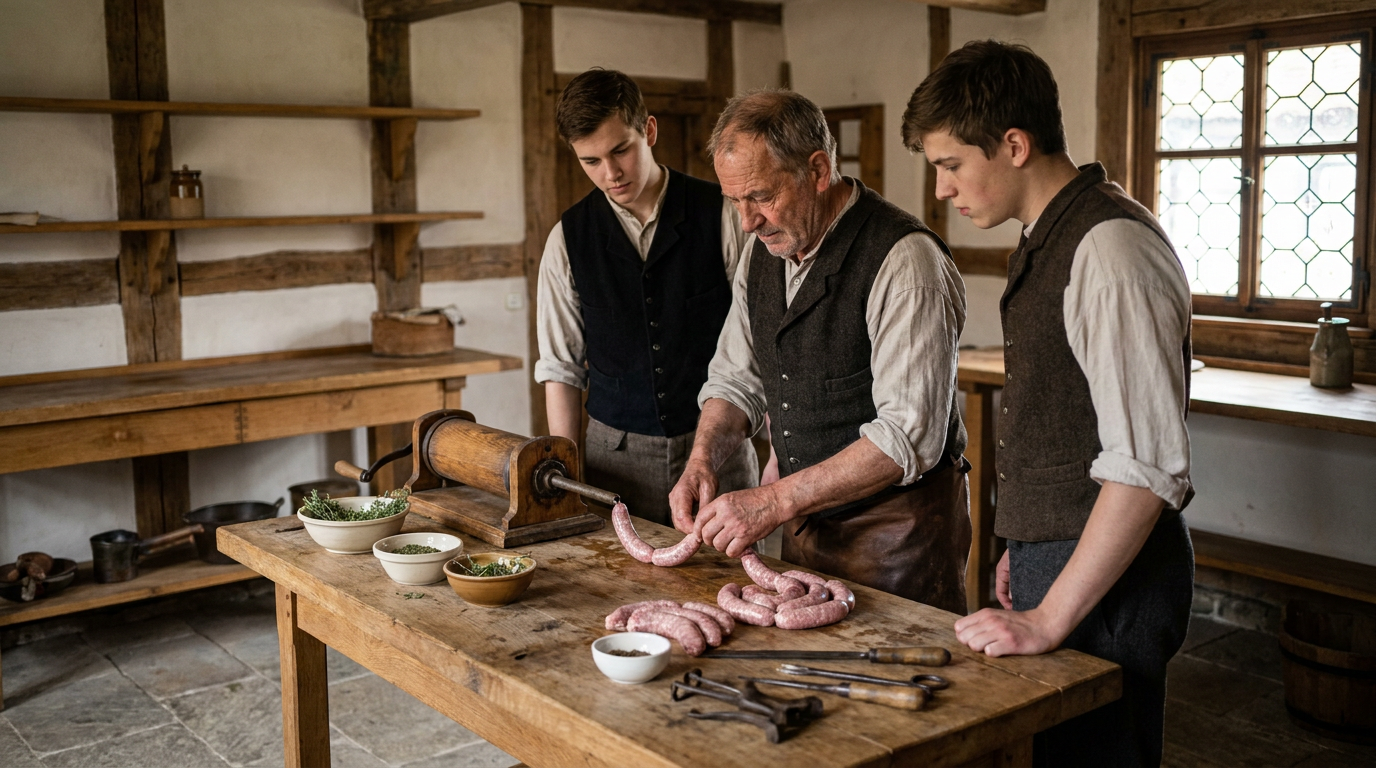
For centuries, German families have passed down sausage-making traditions that transform simple ingredients into extraordinary meals.

Whether your ancestors came from Bavaria, Thuringia, Franconia, or elsewhere in Germany, bratwurst represents a delicious connection to German heritage.

Best of all, you don’t need to be a professional butcher!

With fresh pork, traditional spices, basic equipment, and a little patience, you can create homemade bratwurst that would make any sausage-loving German-American proud.

So grab your apron. We’re bringing a little Germany into your American kitchen!


1. A Delicious History: Germany’s Love Affair with Bratwurst

Germany’s relationship with sausage stretches back centuries.

Historical records from Nuremberg document sausage-making regulations dating to 1313, while Thuringian records reference bratwurst as early as 1404.

Over generations, regional butchers developed distinctive recipes using different combinations of pork, veal, herbs, and spices.

Some preferred coarse-ground sausage. Others created finer textures. Certain regions emphasized marjoram, while others featured caraway, nutmeg, garlic, or pepper.

Interestingly, the German word Wurst means sausage. The Brat portion historically relates to chopped meat, although modern German speakers also associate it with braten, meaning to fry or roast.

Today, bratwurst remains a favorite at German Christmas markets, beer gardens, festivals, and family gatherings.

Bratwurst isn’t just one sausage. It’s an entire culinary tradition!

Three Famous German Bratwurst Varieties

Nürnberger Rostbratwurst — Nuremberg’s Little Legend

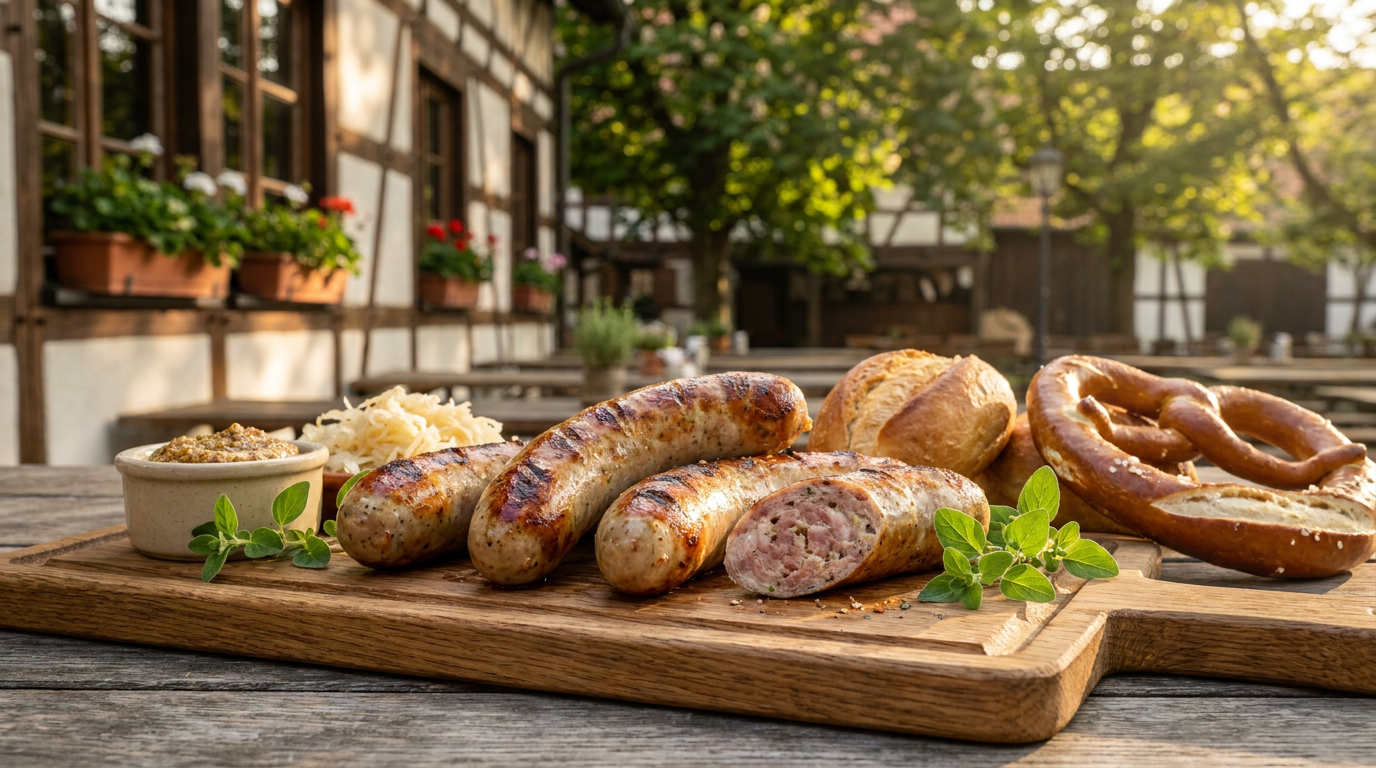
These famous little sausages typically measure just 3–3½ inches long. Made primarily with pork and seasoned with marjoram, they’re traditionally grilled and served with mustard, horseradish, sauerkraut, or bread.

Order Drei im Weggla in Nuremberg, and you’ll receive three small sausages tucked into a bread roll.

Thüringer Rostbratwurst — A Grilling Favorite

Originating in Thuringia, these longer sausages feature aromatic seasonings that may include marjoram, caraway, garlic, and pepper.

Grilled over charcoal, they’re especially popular at outdoor festivals.

Fränkische Bratwurst — Franconian Comfort Food

Franconian bratwursts vary by locality, often featuring a coarser texture and rich pork flavor.

They’re commonly enjoyed with sauerkraut, bread, potatoes, and mustard.

Of course, German immigrants brought their sausage-making knowledge to America, helping establish the beloved bratwurst traditions found throughout Wisconsin and the Midwest.


2. Five Secrets to Making Incredible Homemade Bratwurst

Before making your first batch, remember these traditional sausage-making principles.

Secret #1: Choose the Right Meat

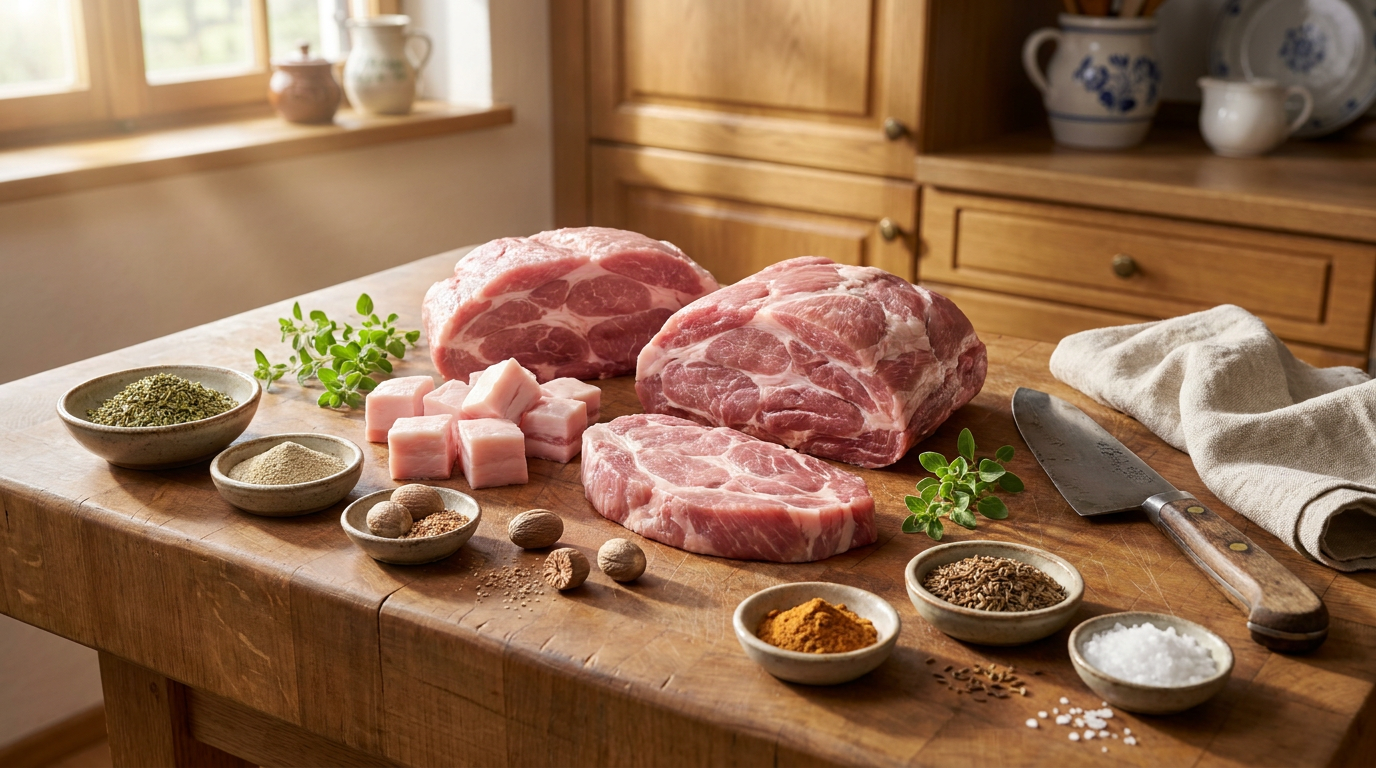
Pork shoulder provides excellent flavor and natural marbling. For juicy sausages, many recipes aim for approximately 20–30% fat.

Too little fat creates dry bratwurst. Too much can produce a greasy sausage.

Secret #2: Keep Everything Cold

Cold meat and equipment are essential. Chilling prevents fat from smearing during grinding and produces better sausage texture.

Secret #3: Don’t Overpower the Meat

Traditional German bratwurst is generally savory and aromatic rather than intensely spicy.

Marjoram, white pepper, nutmeg, mace, and caraway are wonderful choices.

Secret #4: Use Natural Casings

Natural hog casings create the familiar bratwurst shape and satisfying bite.

They’re available through specialty butcher shops and sausage-making suppliers.

Secret #5: Take Your Time

Great sausage-making combines technique, patience, and a little experimentation.

Remember: Making bratwurst should be almost as much fun as eating it!


3. Let’s Make Bratwurst! Your Homemade German Recipe

Here’s an approachable, German-inspired recipe featuring pork, marjoram, white pepper, and nutmeg.

Recipe at a Glance

  • Yield: Approximately 8–10 bratwursts
  • Preparation: 75–120 minutes
  • Cooking: Approximately 15–25 minutes
  • Difficulty: Beginner to intermediate
  • Style: Fresh German-inspired pork bratwurst

Ingredients

Meat

  • 750 grams (1 lb 10½ oz) lean, trimmed pork shoulder
  • 250 grams (approximately 9 oz) chilled pork back fat

Traditional Spice Blend

  • 18 grams salt
  • 2 teaspoons dried marjoram
  • 1 teaspoon ground white pepper
  • ¼ teaspoon freshly grated nutmeg
  • ½ teaspoon crushed caraway seeds (optional)
  • ⅛ teaspoon ground mace (optional)
  • 90 milliliters ice-cold water

Casings

  • Approximately 6–8 feet natural hog casings, 30–32 millimeters in diameter

Equipment

You’ll need a meat grinder, sausage stuffer, sharp knife, mixing bowl, kitchen scale, digital food thermometer, and refrigerator.

Beginner’s tip: Don’t have a sausage stuffer? Make bratwurst patties instead! You’ll enjoy the same delicious seasonings without needing casings.


4. Step-by-Step: Crafting Your Homemade Bratwurst

STEP 1 — Prepare and Chill the Meat

Cut the pork shoulder and fat into approximately 1-inch cubes.

Place them in the freezer for 20–30 minutes until very cold and slightly firm, but not frozen solid.

Chill your grinder components, too.

Keeping everything cold helps maintain the proper sausage texture.

STEP 2 — Grind the Meat

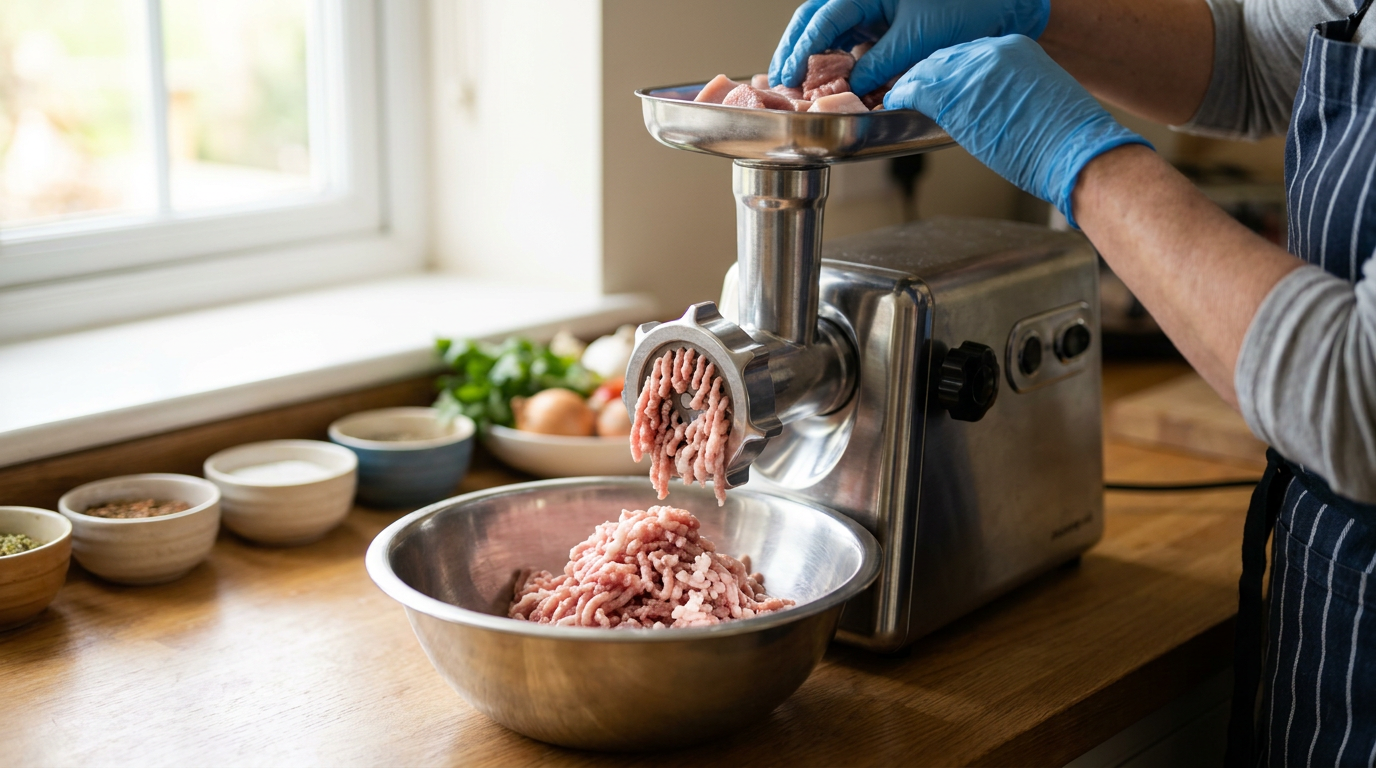
Using a medium grinding plate, approximately 4.5–6 millimeters, grind the pork and fat into a chilled mixing bowl.

For a finer texture, grind again through a smaller plate while keeping everything cold.

STEP 3 — Add the Traditional German Spices

Combine the ground meat with salt, marjoram, white pepper, nutmeg, optional caraway and mace, and ice-cold water.

Mix thoroughly until the meat develops a cohesive, slightly sticky consistency.

Here’s a sausage-making secret!

Before stuffing the entire batch, cook a small test patty thoroughly in a skillet.

Taste it!

Want more marjoram? A little extra pepper? Now’s the time to adjust your seasonings.

One tiny test patty can save an entire batch of disappointing brats!

STEP 4 — Prepare the Casings

Follow your casing supplier’s instructions for rinsing and soaking.

Salt-packed casings generally need a thorough rinse and soak in cool water.

Gently flush water through the interiors and inspect for holes.

Handle carefully to prevent tearing.

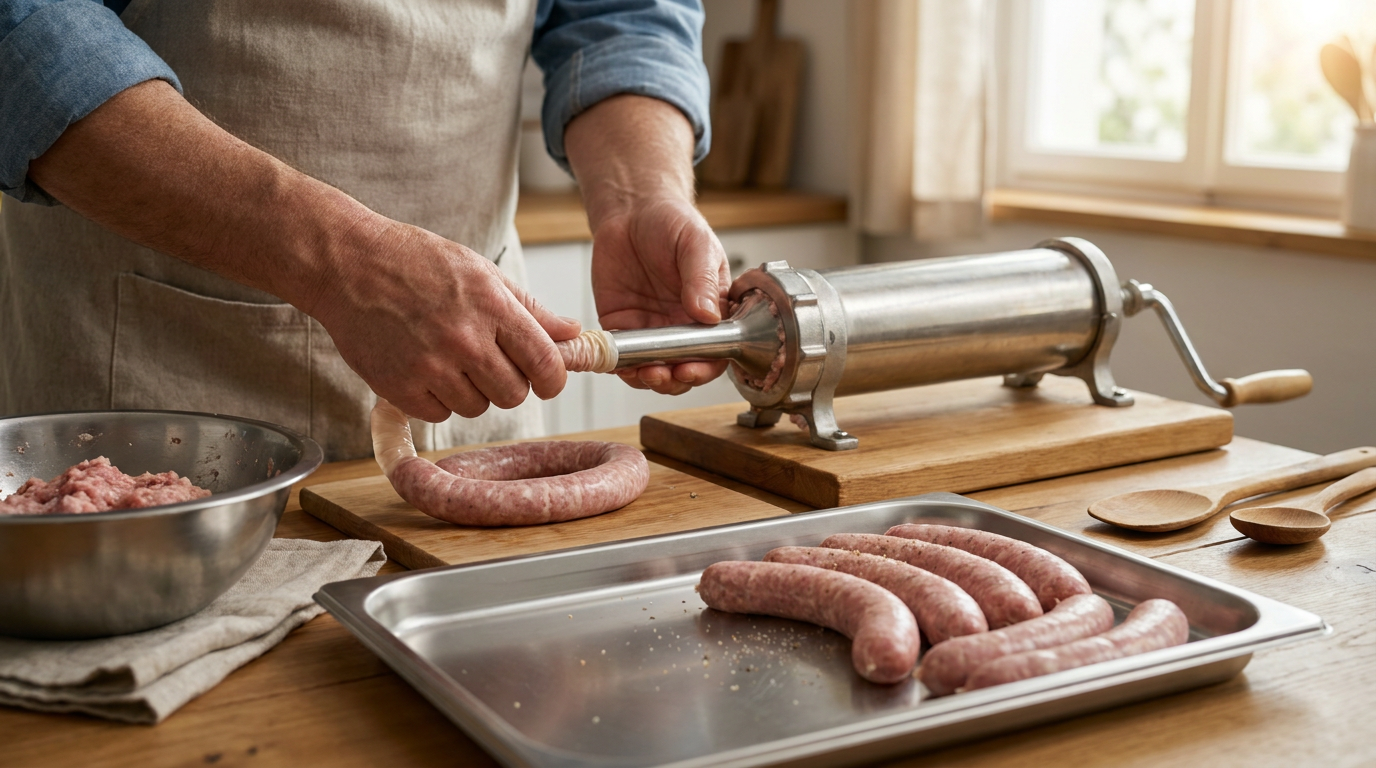
STEP 5 — Stuff Your Bratwursts

Slide the prepared casing onto your sausage-stuffing tube.

Slowly feed the seasoned meat into the casing, filling it evenly without packing too tightly.

Shape into approximately 5–6-inch links, twisting alternating links in opposite directions.

Avoid overstuffing, which can cause casings to burst.

Congratulations! You’ve just created your own homemade German-style bratwurst!

STEP 6 — Refrigerate Before Cooking

Place your finished sausages on a clean tray, cover, and refrigerate for approximately 30–60 minutes.

This helps them firm up before cooking.

Keep raw sausage refrigerated at 40°F (4°C) or below, and use within 1–2 days or freeze promptly.

» Read more

Oktoberfest Isn’t Over! How to Throw an Unforgettable Backyard Oktoberfest Before Halloween

GERMAN HERITAGE USA | TRADITIONS, FOOD, FESTIVALS & ENTERTAINMENT

Bratwurst, beer, Bavarian music, football, friendly neighbors, and a whole lot of Gemütlichkeit! Who says Oktoberfest has to end just because Munich’s beer tents have closed? Wait a Minute!

Who Says Oktoberfest Is Over?

The giant beer tents in Munich have closed. The brass bands have packed away their tubas. Millions of visitors have returned home, and the last empty beer steins have been collected.

But hold on a minute!

It’s not even the middle of October yet!

Here in America, we’re still enjoying beautiful autumn afternoons, college football Saturdays, NFL Sundays, colorful falling leaves, and that unmistakable smell of backyard grills firing up for another weekend.

And guess what? There are still Oktoberfest celebrations happening throughout the United States!
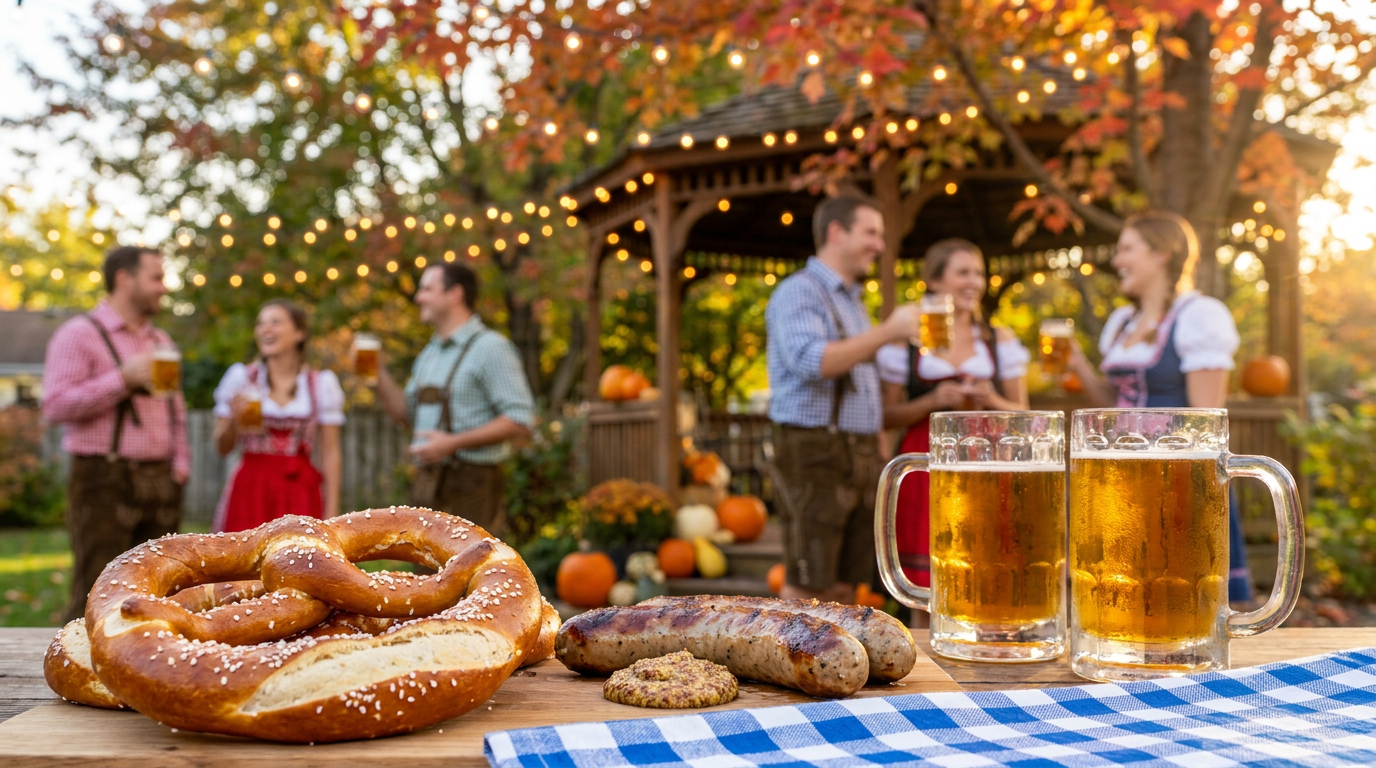
America has embraced Oktoberfest so enthusiastically that celebrations can be found in communities from coast to coast. From German-American clubs and neighborhood breweries to small-town festivals and enormous citywide events, the Oktoberfest spirit has become a beloved part of America’s autumn calendar.

You may even have heard that America hosts more organized public Oktoberfest celebrations than Germany. While comparable nationwide counts are difficult to establish, there’s no question that Americans have made Oktoberfest their own.

But here’s a thought.

Why should you have to travel somewhere to celebrate Oktoberfest when you can bring Oktoberfest right into your own backyard?

That’s right. Your backyard. Your neighbors. Your friends. Your family.

A grill full of bratwurst, some German-inspired food and decorations, a few picnic tables, lively music, ridiculous contests, and maybe even Uncle Fred attempting the Chicken Dance after his second brat.

Now THAT sounds like an Oktoberfest worth celebrating!

And with Halloween just around the corner, late October offers a wonderful opportunity for one more neighborhood gathering before the holiday season arrives.

First Things First: Give Your Oktoberfest a Name!

Every great festival deserves a memorable name.

Munich has Oktoberfest. Cincinnati has Oktoberfest Zinzinnati. Your neighborhood deserves something equally entertaining—even if your festival only attracts 18 people, three dogs, and one neighbor who insists he can yodel.

The trick? Combine your family surname, subdivision, street, or neighborhood name with Oktoberfest.
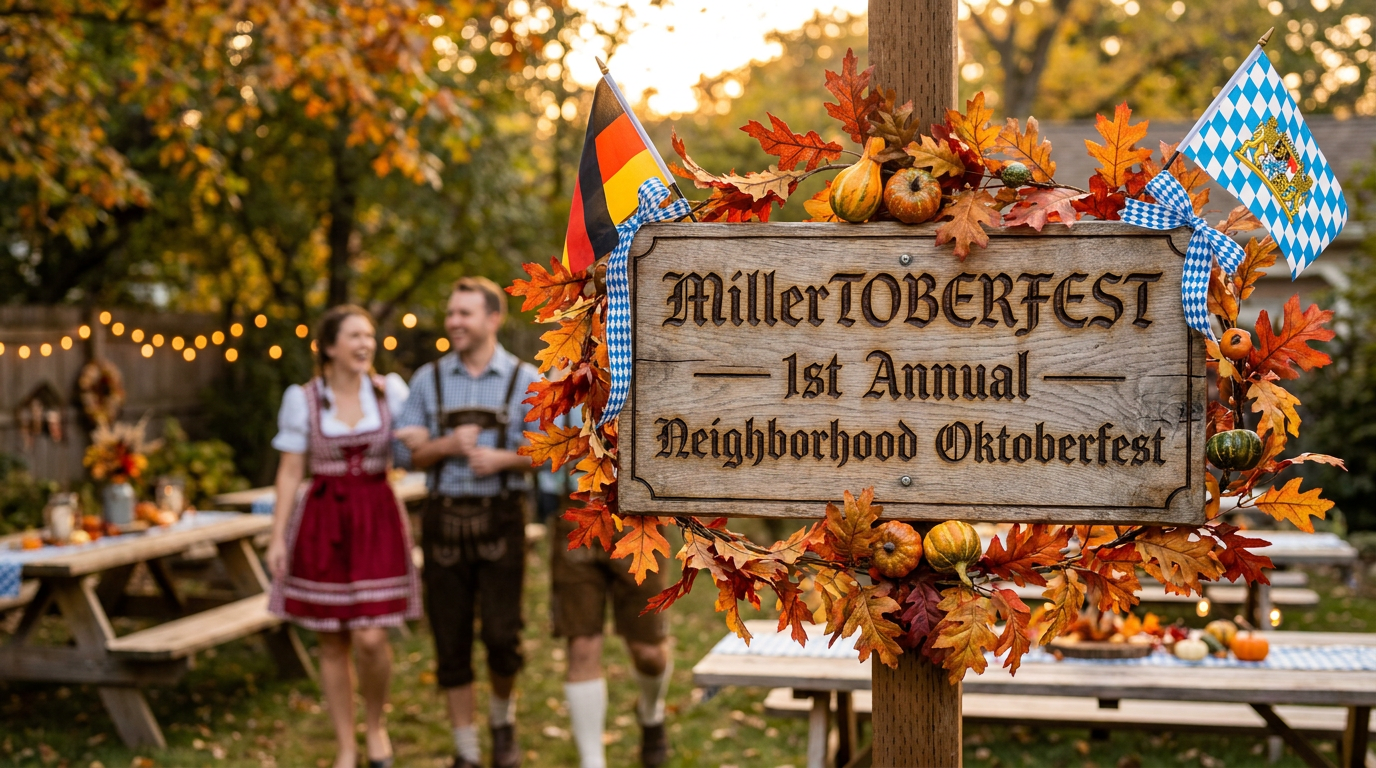
Here are a few ideas to get those creative juices flowing:

Your inspiration Your festival name
Miller family MillerTOBERFEST
Tingle family TingleTOBERFEST
Shady Acres subdivision ShadyAcresOBERFEST
Hingst family HingstTOBERFEST
Maplewood neighborhood MaplewoodTOBERFEST
Oak Ridge subdivision OakRidgeOBERFEST
Smith family SmithTOBERFEST
Willow Creek neighborhood WillowCreekTOBERFEST
Johnson family JohnsonBRATFEST
Cedar Grove neighborhood CedarGroveBIERFEST
Pine Hollow subdivision PineHollowPROSTFEST
The entire cul-de-sac CulDeSacTOBERFEST

Our personal favorite for a neighborhood gathering?

CulDeSacTOBERFEST — Where the Street Ends and the Gemütlichkeit Begins!

Make a homemade festival banner, create a little welcome sign, and announce the First Annual celebration.

Who knows? Ten years from now, the neighborhood might be planning its tenth annual Oktoberfest, complete with matching shirts and a trophy that nobody remembers purchasing.

Your Backyard. Your Biergarten. Your Rules!

You don’t need a giant Bavarian festival tent or a professional event planner to create a festive atmosphere.

Start with what you already have.

A patio, deck, lawn, driveway, or shared neighborhood green space can become your very own German-inspired Biergarten.

Set up folding tables, picnic benches, or lawn chairs. Add blue-and-white Bavarian-style tablecloths, a few festive banners, autumn pumpkins, and strings of warm lights.

Have some decorative beer steins? Put them out. An old German flag? Display it. A collection of Oktoberfest souvenirs from previous celebrations? Perfect!
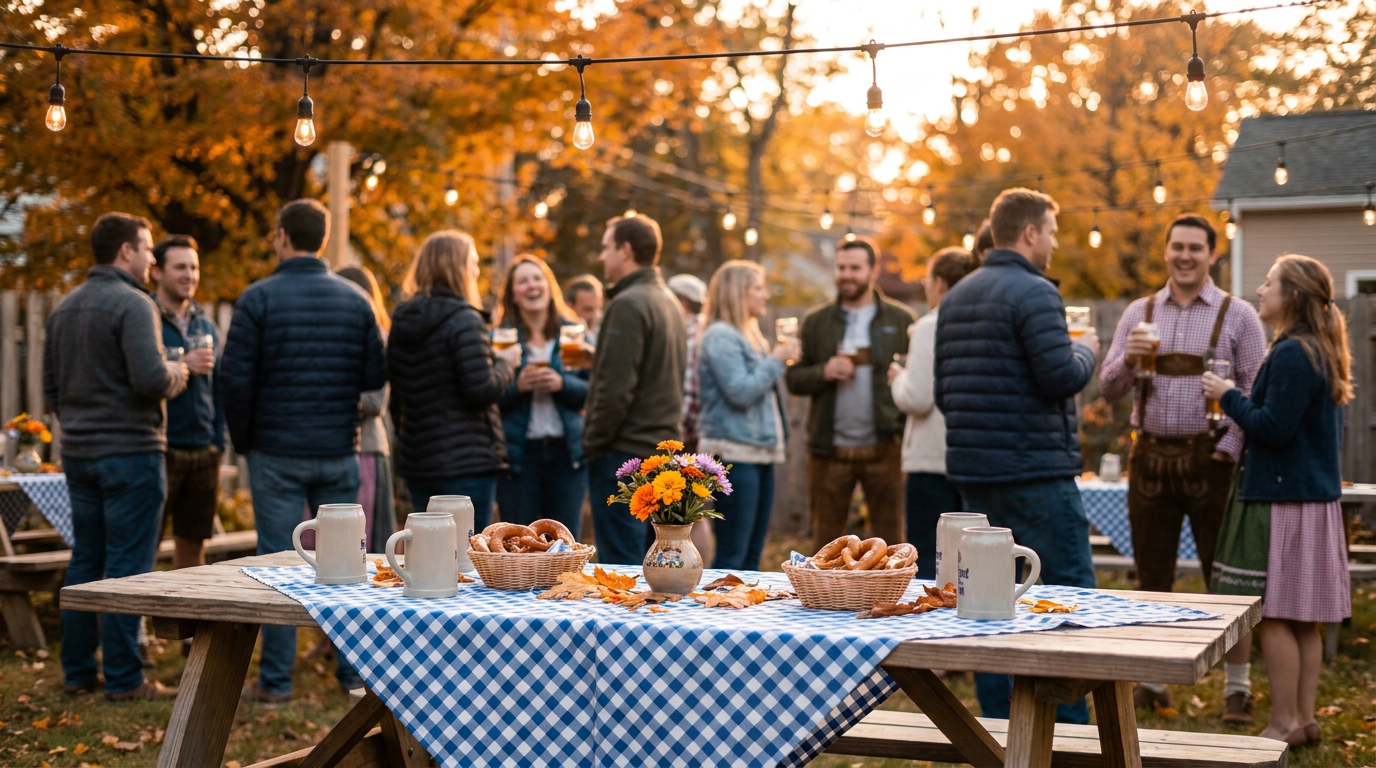
And don’t worry if your decorations include a few Halloween pumpkins. After all, you’re celebrating in late October.

A smiling jack-o’-lantern wearing a Bavarian alpine hat might just become your festival mascot.

The goal isn’t to recreate Munich’s Theresienwiese. It’s to create a welcoming place where neighbors can relax, laugh, share stories, and enjoy themselves.

The Germans have a wonderful word for this feeling: Gemütlichkeit.

It describes a sense of warmth, comfort, friendliness, and belonging.

“The best Oktoberfest isn’t necessarily the biggest one. Sometimes it’s the one where everybody knows your name—and somebody remembers to bring the mustard.”

That’s the spirit we’re after!

Everybody Pitches In! The Great Neighborhood German Potluck

Here’s where your backyard Oktoberfest becomes especially fun—and affordable.

Don’t try to do everything yourself!

Invite the neighbors to participate. After all, this is a neighborhood celebration, not a catering assignment.

One family can bring bratwurst. Another might volunteer to grill. Someone else can contribute soft pretzels, sauerkraut, German potato salad, or a homemade dessert.

You could even organize a voluntary neighborhood party fund to help cover shared expenses such as decorations, supplies, and beverages, with any alcohol arrangements following local laws.

Better yet, make it a German-inspired potluck!
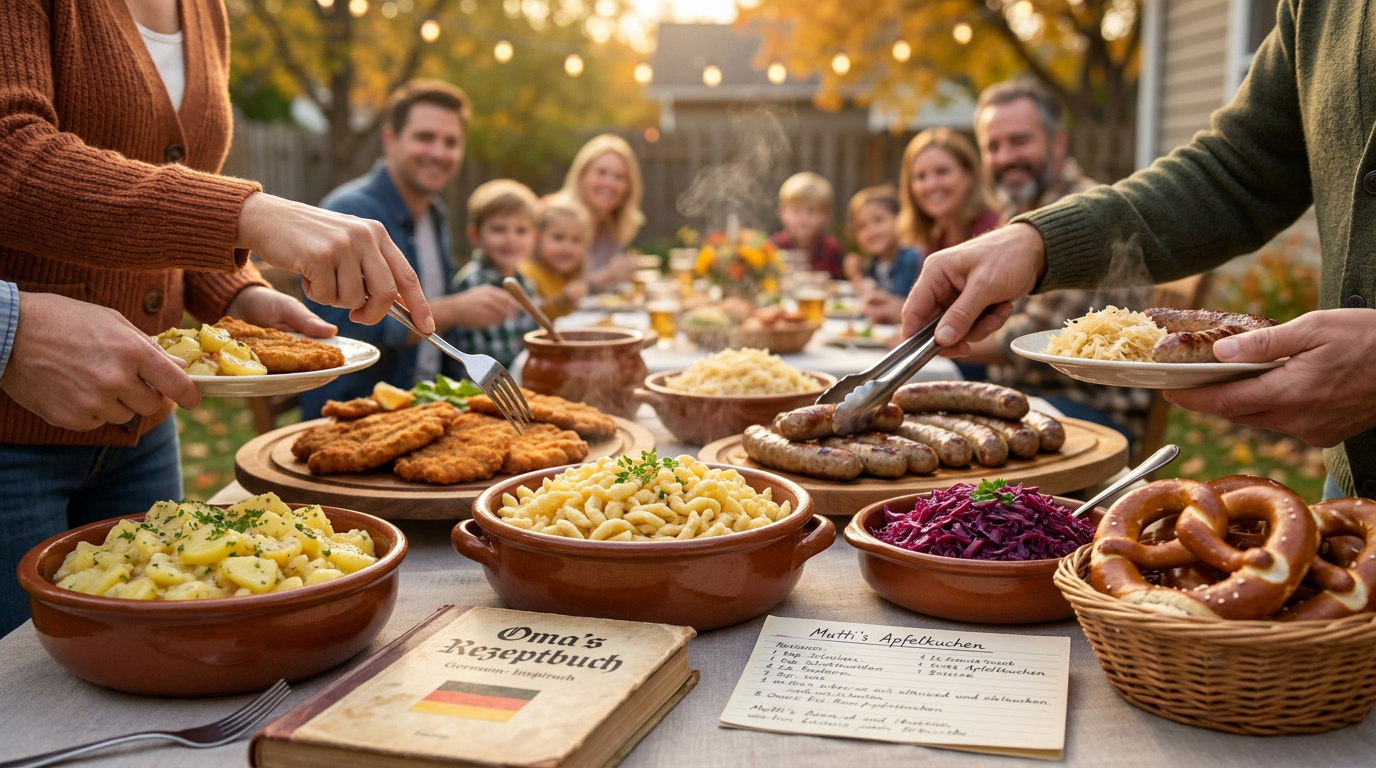
Challenge each household to prepare one dish from a German cookbook, a treasured family recipe, or a trusted recipe website.

Imagine the possibilities:

  • Bratwurst with spicy German mustard and sauerkraut.
  • Warm German potato salad with bacon and vinegar.
  • Homemade spaetzle with butter and herbs.
  • Rotkohl, the delicious sweet-and-sour red cabbage.
  • Bavarian pretzels with mustard or cheese dip.
  • Currywurst with its famous seasoned tomato sauce.
  • Schnitzel served with lemon.
  • Apple strudel, German apple cake, or Black Forest cake.

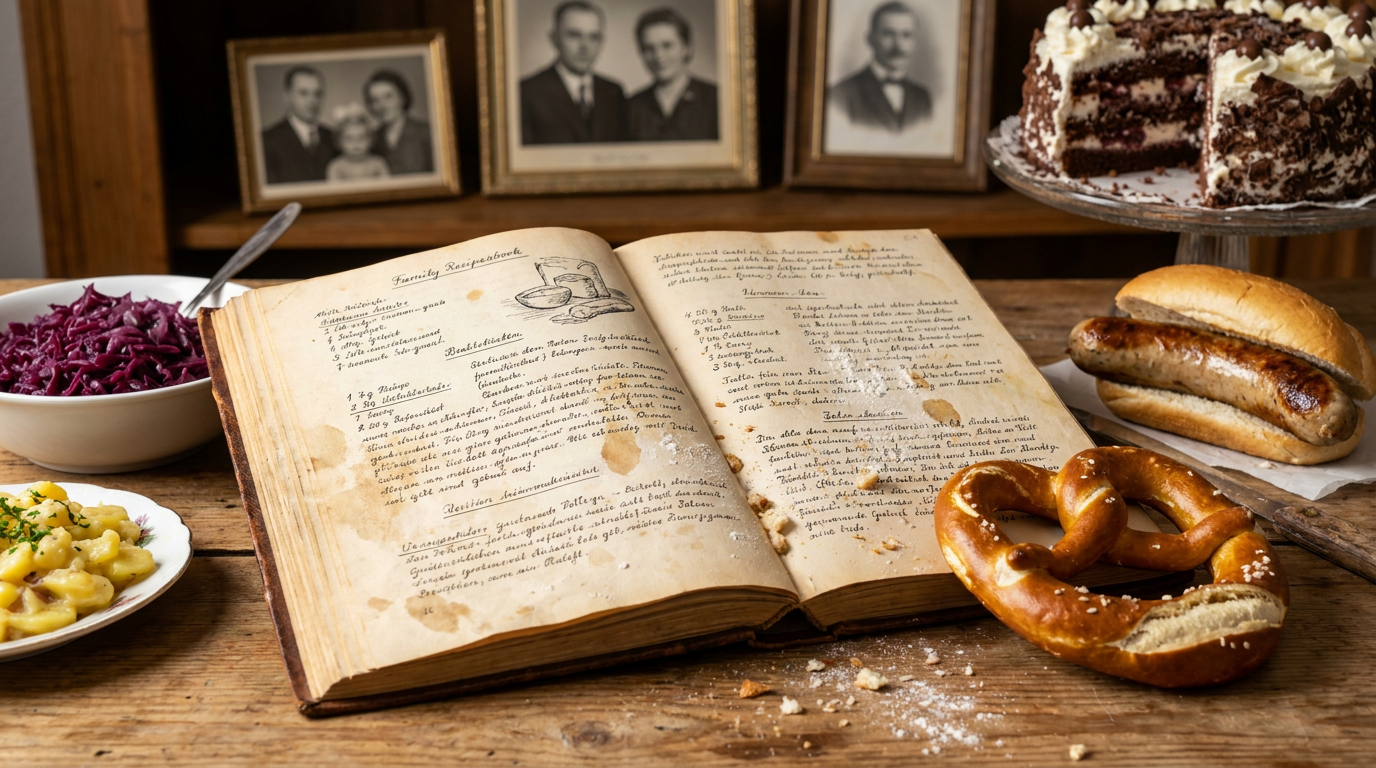
And here’s a fun twist: encourage guests to bring a little recipe card identifying their dish, where it comes from, and whether it has a special family connection.

Grandma’s handwritten recipe? Even better!

Don’t forget to label ingredients and allergens, keep perishable foods at safe temperatures, and make sure the grill team knows who’s responsible for cooking.

Fire Up the Grill! Brats, Brews and Backyard Favorites

Let’s face it. For many Americans, Oktoberfest means one thing before anything else.

BRATWURST!

And there’s absolutely nothing wrong with that.

Make the grill a central attraction. Offer several varieties of German-style sausage, along with rolls, sauerkraut, grilled onions, and a selection of mustards.

A simple build-your-own-brat station makes serving easy.
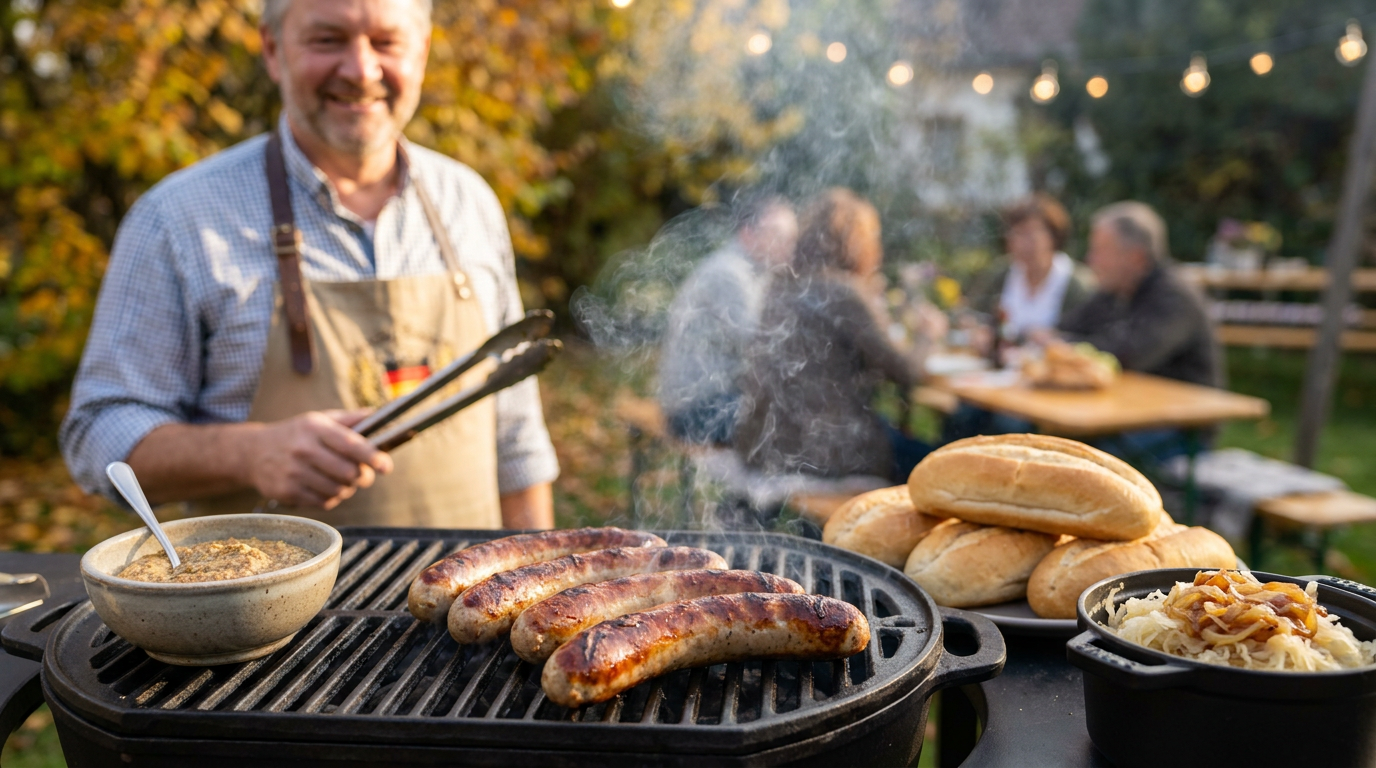
For drinks, consider Oktoberfest-style Märzen or Festbier for adults who enjoy beer, alongside German-inspired nonalcoholic beers, sparkling apple drinks, cider, lemonade, and plenty of water.

You can even create a little beverage station labeled The Neighborhood Biergarten.

If you’re serving alcohol, keep it responsible. Have food and nonalcoholic options available, don’t serve minors, and help guests arrange safe rides when needed.

And don’t forget a special German-inspired appetizer!

GERMAN HERITAGE USA has even explored the delicious possibilities of Bavarian Bier & Mustard Glazed Chicken Wings, which would make a fantastic addition to your Oktoberfest spread.

Because who says Oktoberfest and football-season chicken wings can’t get along?

Let the Games Begin! The Great Backyard Oktoberfest Championships

Now we’re getting to the really entertaining part.

Every great Oktoberfest needs a little competition.

Not the serious kind, of course. We’re talking about the kind of competition where someone wins a plastic golden bratwurst and proudly displays it on the mantel until Christmas.

Create a few homemade awards and let your guests vote.

The Golden Bratwurst Award: Best homemade German main dish.

Oma’s Golden Spoon: Best German side dish.

The Strudelmeister Award: Best German dessert.

Herr Oktoberfest and Frau Oktoberfest: Best traditional German-inspired outfits, including lederhosen and dirndls.

The Golden Chicken Award: Most entertaining Chicken Dance performance.

The Alpine Echo Award: Best yodeling performance, whether genuinely impressive or hilariously terrible.

The Gemütlichkeit Award: The guest who brings the most warmth, friendliness, and festive spirit to the party.
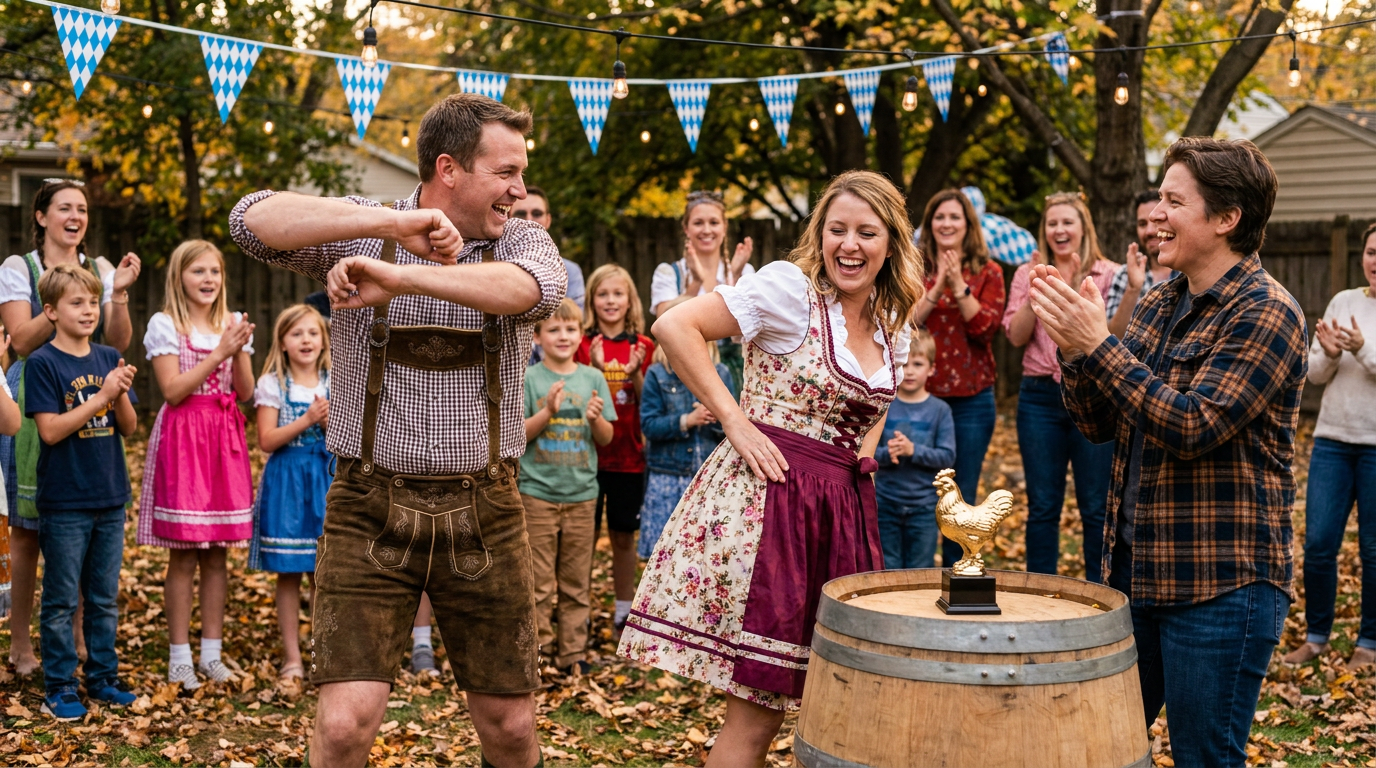
A little German candy, a decorative stein, a printed certificate, or a homemade trophy is plenty.

And please—make sure someone records the Chicken Dance competition.

With everyone’s permission, of course.

Because watching your normally reserved neighbor attempt a synchronized Chicken Dance with six children and a golden retriever might become the most memorable moment of the entire evening.

Turn Up the Oompah! Music, Dancing and a Little Yodeling

You cannot have an unforgettable Oktoberfest without music.

Well, technically you can, but why would you?

Put together a playlist featuring German brass bands, polkas, Bavarian folk music, waltzes, and popular Oktoberfest sing-along favorites.

Be sure to include Ein Prosit der Gemütlichkeit, the traditional Oktoberfest toast song that encourages everyone to raise a glass and celebrate together.

And naturally, no backyard Oktoberfest would be complete without the Chicken Dance.

The familiar beak, wing, wiggle, and clap routine is practically irresistible once the music starts.

You might also host a yodeling challenge.

No experience required. In fact, the less experience, the funnier it might become.

Just remember that you’re still in a neighborhood. Keep music at considerate levels and respect local quiet hours.

Your goal is to make the neighbors wish they’d been invited—not wish you’d move to Munich.

Touchdowns, Tubas and Bratwurst: Oktoberfest Meets Football Season!

Here’s something wonderfully American about celebrating Oktoberfest in late October.

It’s football season!

Why not combine two great fall traditions?

Set up an outdoor television or projector for a college football Saturday or NFL Sunday gathering.

Invite guests to wear their favorite team jerseys with lederhosen, dirndls, or Bavarian-inspired accessories.

Serve German-style tailgate snacks, organize a football toss, and schedule the Chicken Dance for halftime.

Picture it: one neighbor cheering for a touchdown while another raises a pretzel and shouts, “PROST!”

The combination may not be historically Bavarian, but it certainly captures the spirit of German-American celebration.

After all, traditions stay alive partly because each generation finds new ways to enjoy them.

Brrr! It’s Late Oktober—Keep Everybody Warm!

Depending on where you live in the United States, late October can mean very different things.

In Florida, your guests might still be wearing shorts.

In Wisconsin, Minnesota, Michigan, or upstate New York, they might be wondering why nobody suggested moving the party indoors.

Even here in the South, a sunny afternoon can turn into a surprisingly chilly evening.

Plan accordingly.

Provide blankets, warm cider, hot chocolate, coffee, and comfortable seating. If you’re using a fire pit or patio heater, follow safety guidelines and keep children and decorations at a safe distance.
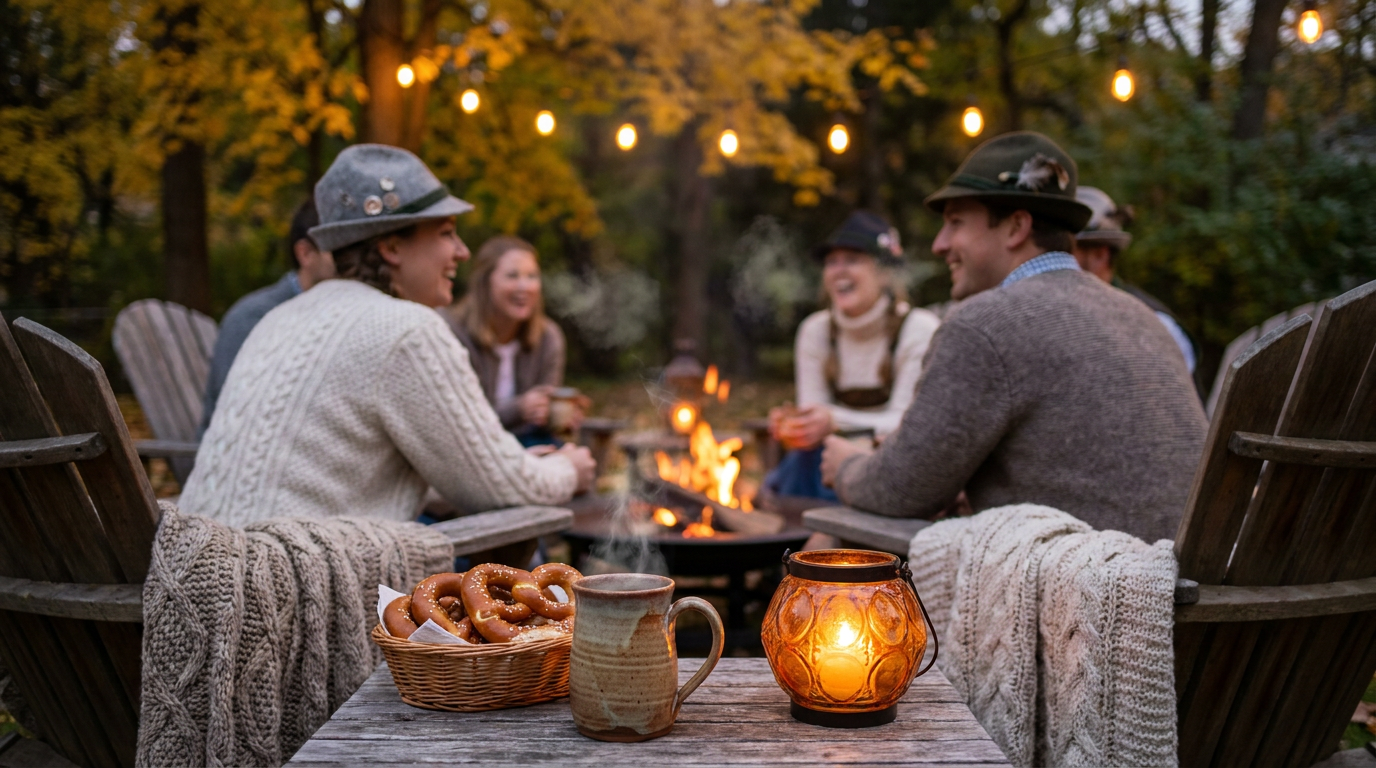
Never operate outdoor fuel-burning heaters inside a garage or enclosed tent.

Consider a covered area for light rain and an indoor backup plan if temperatures drop too far.

And remember, a little autumn chill can actually enhance the atmosphere.

There’s something especially inviting about warm pretzels, glowing string lights, and friendly conversation on a crisp October evening.

Don’t Forget the Kinder! Oktoberfest Fun for the Kids

A neighborhood Oktoberfest should be enjoyable for the entire family.

And children can be some of the most enthusiastic participants.

Set up a little Kinderfest activity corner featuring pumpkin decorating, German-themed coloring pages, pretzel decorating, ring toss, beanbag games, and a simple backyard scavenger hunt.
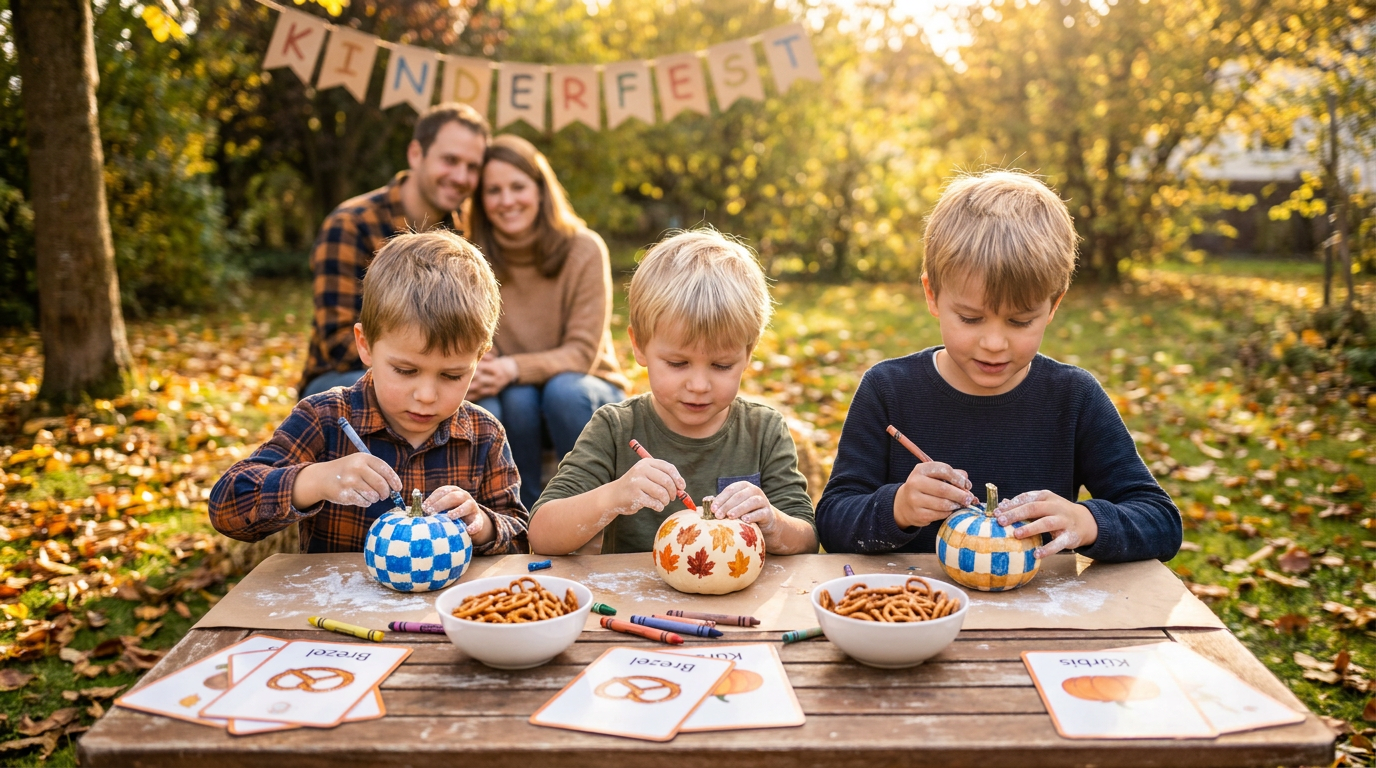
Teach them a few German words:

Hallo! — Hello!

Danke! — Thank you!

Bitte! — Please or you’re welcome, depending on context.

Wunderbar! — Wonderful!

Prost! — Cheers!

Create a simple German Heritage Explorer Passport, where children collect stamps for participating in different activities.

And of course, let the kids lead the Chicken Dance.

They’ll probably do it better than the adults anyway.

A Little German Heritage Makes the Celebration Even Better

At GERMAN HERITAGE USA, we believe Oktoberfest is about more than bratwurst, beer, and lederhosen.

It’s also an opportunity to discover the traditions, stories, and cultural influences that German immigrants brought to America.

Did you know that millions of Americans have German ancestry, even if their families no longer speak German or actively observe German customs?

Perhaps your great-grandmother came from Bavaria. Maybe your family name has German origins. Or perhaps you recently discovered a distant German ancestor while researching your family tree.

You might be surprised how many neighbors have similar stories.

Consider setting up a small German heritage table featuring a map of Germany, old family photographs, German-American trivia, or a few fascinating facts about immigration.

Invite guests to share family recipes, memories, and traditions.

And if someone says, “I’m not German,” that’s perfectly fine, too.

You don’t need German ancestry to enjoy German-American hospitality.

Sometimes curiosity about another culture is the beginning of a lifelong interest.

Your Simple Backyard Oktoberfest Party Plan

The secret to a successful neighborhood Oktoberfest is planning just enough to keep things running smoothly without turning the celebration into a full-time job.

Here’s an easy schedule for a Saturday afternoon gathering.

Time Activity
3:00 PM Welcome guests, appetizers and music
4:00 PM Bratwurst grilling and German potluck
5:00 PM German food and dessert judging
5:45 PM Lederhosen and dirndl costume competition
6:15 PM The Great Chicken Dance Showdown
6:45 PM Yodeling contest and awards
7:15 PM Football, music, conversation and Gemütlichkeit
8:30 PM Final Prost! and friendly wrap-up

Start planning a couple of weeks ahead. Invite your neighbors, organize potluck assignments, check the weather, and recruit a few volunteers.

That’s really all it takes.

The most important thing isn’t getting every detail perfect.

It’s getting everyone together.

The Best Oktoberfest Might Be the One in Your Own Backyard!

Munich’s Oktoberfest may have ended for another year.

The biggest American Oktoberfest celebrations may be winding down.

Halloween pumpkins and fall colored mums are appearing on front porches, the football season is in full swing, and the holiday season is getting closer.

But none of that means the Oktoberfest spirit has to disappear.

Sometimes the most memorable celebration isn’t held beneath an enormous festival tent surrounded by thousands of visitors.

Sometimes it’s a few folding tables in the backyard, a grill full of bratwurst, a neighbor’s homemade apple strudel, children dancing to a silly accordion tune, and friends laughing together beneath the autumn stars.

“Oktoberfest may have a place on the calendar, but Gemütlichkeit doesn’t need an ending date.”

So give your celebration a name. Invite the neighbors. Fire up the grill. Turn on the music.

And who knows?

Your little MillerTOBERFEST, TingleTOBERFEST, HingstTOBERFEST, or ShadyAcresOBERFEST might just become the neighborhood tradition everyone looks forward to year after year.
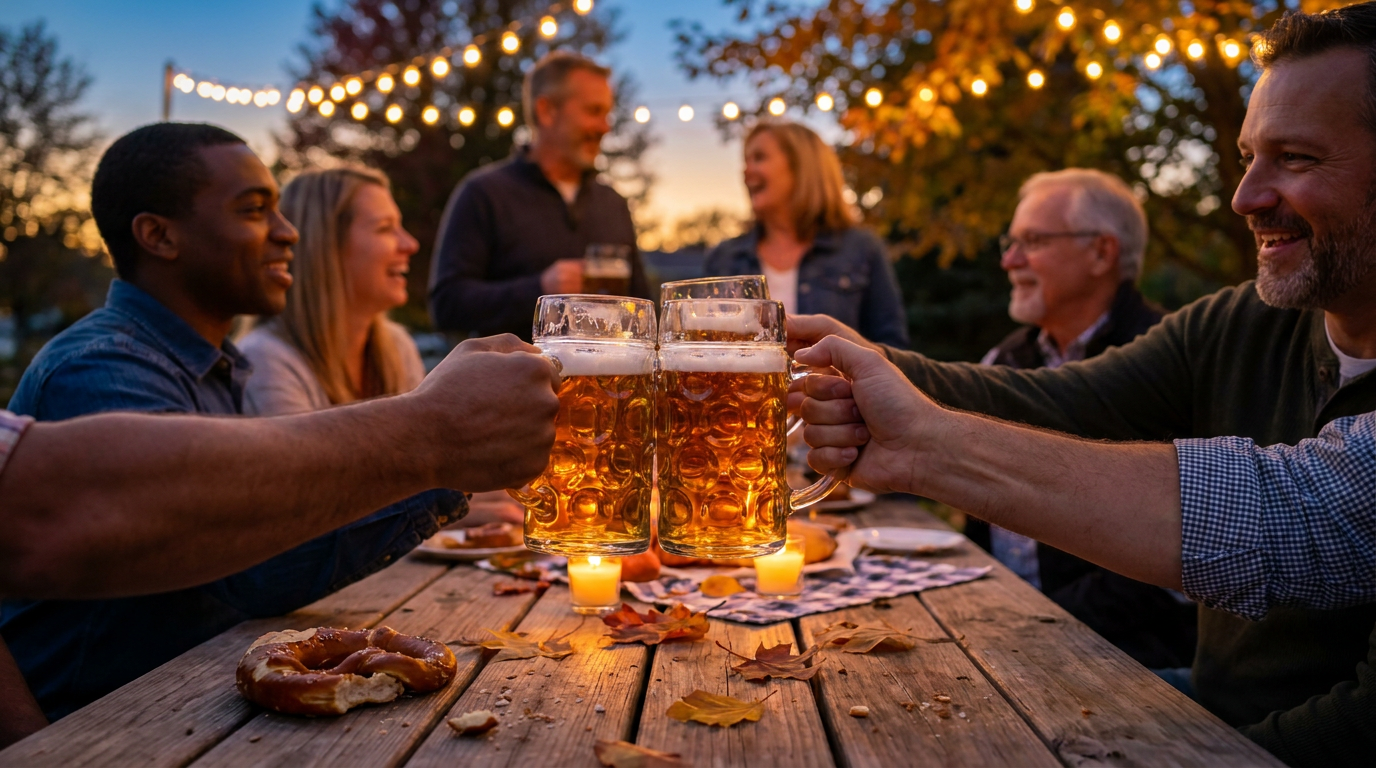
From all of us at GERMAN HERITAGE USA, here’s to German-American traditions, wonderful food, lasting friendships, and creating new memories.

PROST! And happy Backyard Oktoberfest!

We’d Love to Hear About Your Oktoberfest!

Have you ever hosted a backyard Oktoberfest or neighborhood German potluck? What’s your favorite German dish, Oktoberfest game, or family tradition?

Share your ideas and stories with the GERMAN HERITAGE USA community—and if you’re planning your own celebration this October, tell us what you’re naming it!

Discover more German-American traditions, recipes, festivals, and heritage adventures at www.GermanHeritageUSA.com.

From Bratwurst to Black Forest Cake: A Delicious Journey Through German-American Food Traditions

For generations, food has been one of the most enduring ways German-Americans have preserved their heritage. Long after languages faded, family names changed, and old-country customs blended into American life, recipes remained.

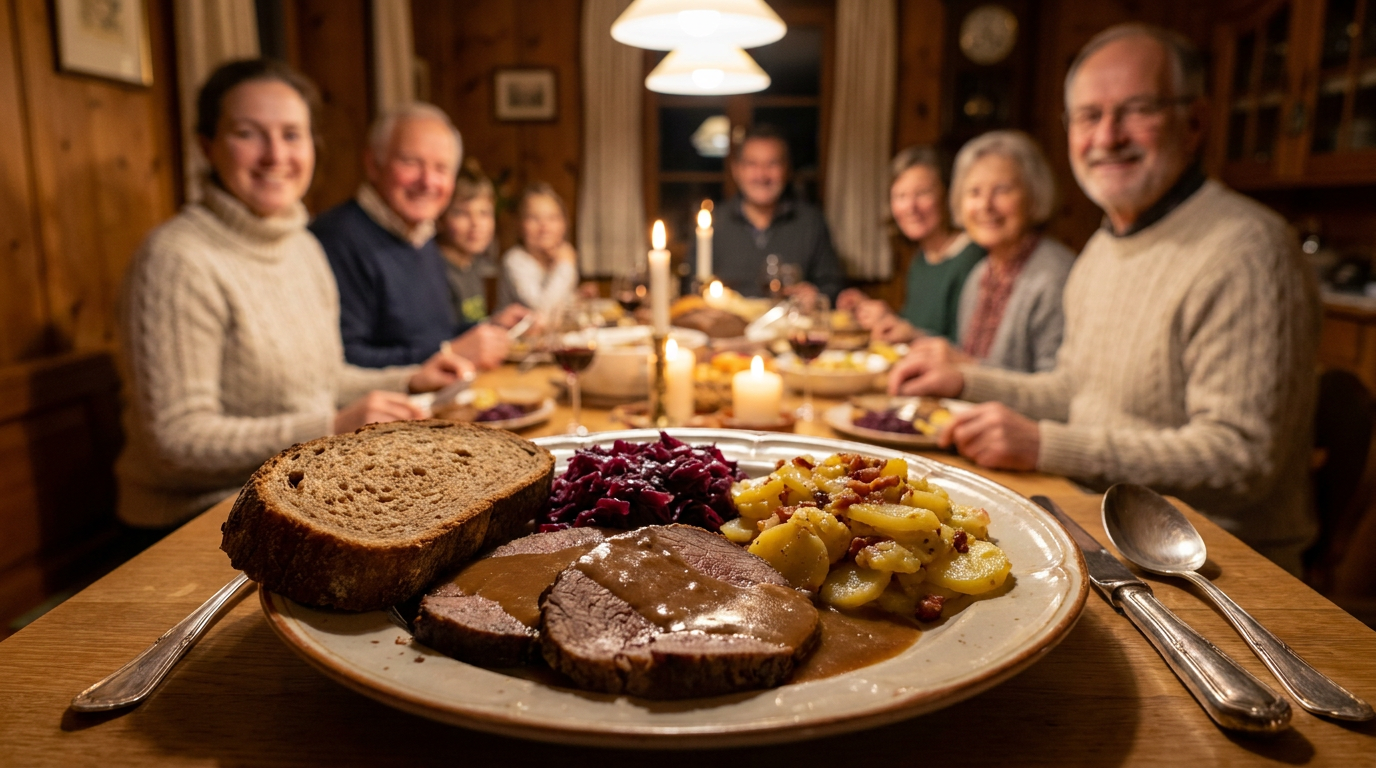
A plate of bratwurst at a summer festival. A warm pretzel shared at a county fair. A holiday table featuring red cabbage, potato salad, and sauerbraten. A slice of Black Forest cake served at a family reunion.

These foods tell stories.

They tell of immigrants who crossed the Atlantic seeking opportunity. They tell of communities built across Pennsylvania, Ohio, Wisconsin, Iowa, Nebraska, Minnesota, Texas, Tennessee, and countless other states. They tell of family traditions carried from generation to generation—sometimes changing slightly with local ingredients, but always retaining a taste of home.

Today, millions of Americans may have only a trace of German ancestry, yet they still enjoy foods whose roots stretch back centuries into the villages, farms, forests, and cities of Germany. Whether you know your family’s German origins or are just beginning to explore them, one of the most enjoyable ways to connect with that heritage is through food.

After all, every recipe has a story.

The German-American Table: Where Two Cultures Meet

German immigration to America occurred in several major waves beginning in the 1700s and continuing well into the early 1900s.

Wherever German immigrants settled, they brought their culinary traditions with them.

https://images.openai.com/static-rsc-4/BZGqqG_msSt_RRjykhCGmnjy7wC0AM-I8OSOZ5AzWWQjFn50fXTN77wBhBnXG18de4_g7-Y9py9jLd3YbIcU56i2EQ82MrS41bglAtT_CQuim3beGzV2j90NrSbnJYywMrLLoxhf4AMpH7Wl7ASo4F_Z7QG8YEXsTyOqf-Wr1MK7BbqIXKTMjRk1Rjqz6qz2?purpose=fullsize
Over time, these foods adapted to local ingredients and American tastes. The result was not merely German food and not entirely American food—it became something uniquely German-American.
https://images.openai.com/static-rsc-4/1Tkjv9dwhDU0yy68QQ2MuLRFYGXaJnUg1-HvtNyVo1kZ-T4Tb9y9iY_dF8SehL0RVIikh4jF8hHOJWNfZurTZTaKS0TurJRJV15s-Xp_HA8y93p_x8G23zQbbzDTVyAE_fDeDOLINXfHNsxyBtzfrzd3eGhKGjlng2l9wQwAaHOdAL_L3rgXiCcqIiRK2-LZ?purpose=fullsize

The hearty farm cooking of Bavaria, the sausages of Franconia, the breads of Swabia, and the cakes of the Black Forest region all found new life in America.

Many dishes became so integrated into American culture that people often forget their German origins.

As food historian James Beard once observed:

“Food is our common ground, a universal experience.”

For German-Americans, that experience is often served one delicious plate at a time.


Bratwurst: America’s Favorite German Sausage

Few foods are more closely associated with German heritage than bratwurst.

The word “bratwurst” originates from Germany and refers to a finely minced sausage traditionally made from pork, veal, or beef.

https://images.openai.com/static-rsc-4/VX8KhWwn1B5acWynDBUxRDUjzTMn81GyIMLKGGGcqFmRFgxo6wUXZMKT7MxTO1b9eVoJ27IzhltDNMSxAaRxIlqfjyJQcGzabASoXdfm-MuliF9z75CLG5LOEdOCbrKZX-NN4VorRqh0zzDLcG0EdD7vfWpBgQ7UoXYoRdK_QgOLign-BRzEokka_MQf3Tem?purpose=fullsize
German immigrants brought countless regional sausage recipes to America, particularly to states such as Wisconsin, Minnesota, Nebraska, Iowa, and Ohio.

Today, bratwurst is practically a cultural institution in parts of the Midwest.

Whether served at baseball games, Oktoberfests, church picnics, county fairs, or backyard cookouts, bratwurst represents one of the most successful culinary exports Germany ever produced.

Popular toppings include:

  • Sauerkraut
  • Spicy brown mustard
  • Grilled onions
  • Pickled vegetables
  • Beer-braised cabbage

Every family seems to have its own preferred way of serving a brat.

And every German-American gathering seems to have someone insisting theirs is the “authentic” version.


Pretzels: The Twist That Conquered America

The humble pretzel may be one of Germany’s greatest gifts to American snack culture.

German immigrants introduced pretzels to Pennsylvania during the colonial era, where they eventually became a major industry.

https://images.openai.com/static-rsc-4/3GdixS-spAexLLxihpmIvo6EssJq0IRozFK5aNPS3bhU-XUT-ut9zTdusZenI1axP3xHBQGMn4zT7Keq4wMyai_YSOjWlegaLRqYfx3i_hJUyeM8a-GRrzsR1T7plbcbLyMtOZTU-B_Mn22z_v-hDh44YGwaxi4ThTLUI0EDaLygFGdgeUkcfl7smjGTIXKQ?purpose=fullsize

Today, Pennsylvania remains one of America’s pretzel capitals.

https://images.openai.com/static-rsc-4/5wB7u9pgeARumZHKjxtBfsCCL0LyJ8DFYmJ3YS_gweY4HPQeIKIHrl-pB0N8xvz9-1X8hmbZ6qKMKQycglV-8jbrHyw04Tt3vdp3zdE1hyiNa4eegA6WuzWGE_Sav5caT2z1CBlhG2uj6DaG-2pTbM_0ZT4_jxtpa_zu9kr-rJ2Fiqcb52Gyz4ZTD0ccyw_9?purpose=fullsize

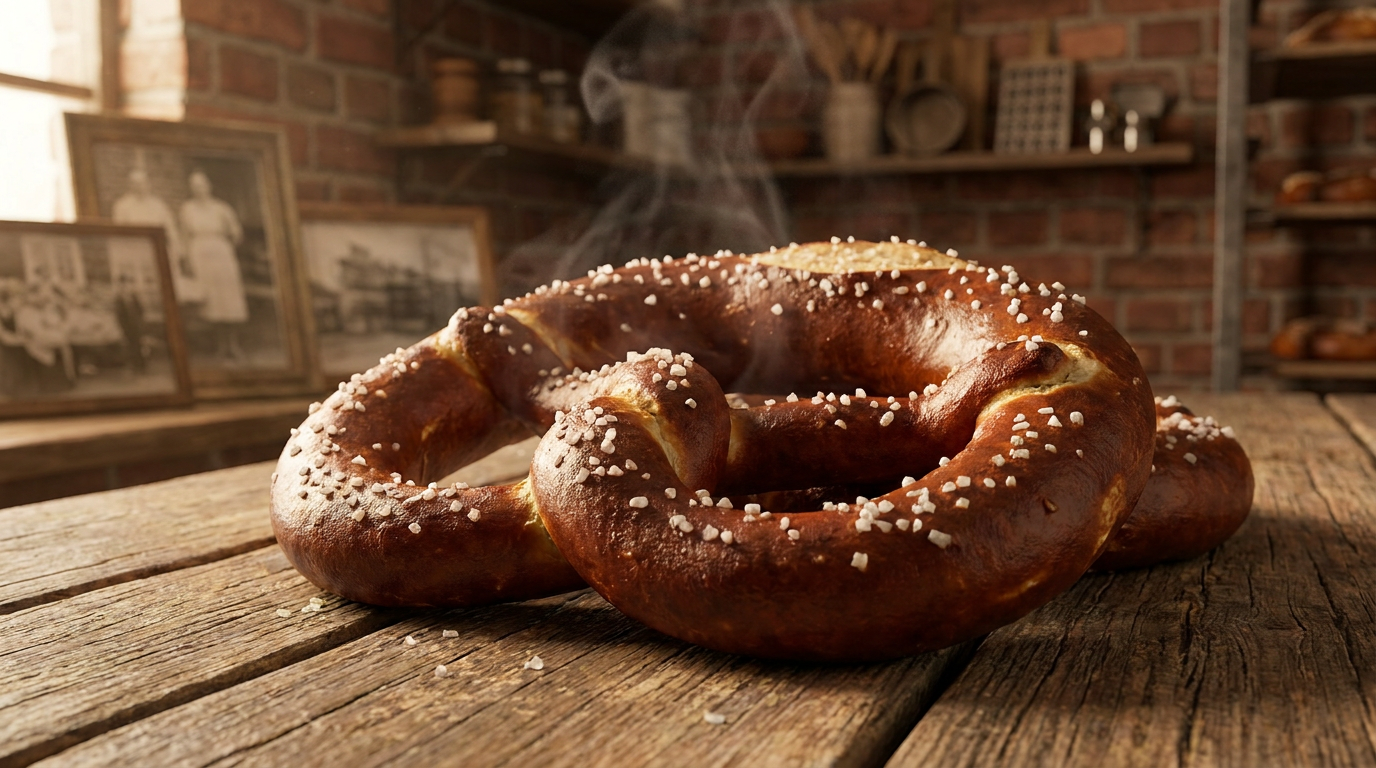
Traditional German pretzels feature:

  • A dark, glossy crust
  • Chewy interior
  • Coarse salt topping
  • Distinctive twisted shape

Modern variations include:

  • Beer cheese pretzels
  • Cinnamon sugar pretzels
  • Stuffed pretzels
  • Giant festival pretzels

No Oktoberfest feels complete without one.

And let’s be honest—few foods pair better with a cold German-style lager.


Sauerkraut: More Than Just a Condiment

For many Americans, sauerkraut is simply a hot dog topping.

For German-Americans, it’s much more.

Sauerkraut has been a staple of Central European cuisine for centuries. Made from fermented cabbage, it provided essential nutrition throughout long winters.

https://images.openai.com/static-rsc-4/xdSrI1XRkHiBaP8e42ufupf9Lnqpo-vcjAe8pI0EfKSK12JIhjxppuwKQz0i51yLvX2F-qn006Es6hJInyrjKVs5CuKX9khl6SViYjP1bWf27TKyXHhNlrZurR9w1KW5Rs8vTsSG0ThkkVWyMnXASW1jnVr6UU9DFsSaGNxeFfroOAdcdiBzfDPIo0vN9spH?purpose=fullsize

German immigrants brought fermentation traditions with them to America, where sauerkraut quickly became a practical and economical food source.

Today it remains a beloved companion to:

  • Bratwurst
  • Pork roasts
  • Kielbasa
  • Potato dishes
  • Holiday meals

Modern nutrition experts also appreciate sauerkraut for its probiotics and digestive benefits.

It turns out great-grandma was onto something all along.


The Bread Basket of German Heritage

Bread occupies a sacred place in German culinary culture.

Germany is famous for producing hundreds of varieties of bread, many of which inspired baking traditions throughout German-American communities.

https://images.openai.com/static-rsc-4/B-A_VVMGCIv3ziollKEkd322zjEhfWvhKBjyNof3vPs4gHRDcrALB_plSUM7U0Mt-ZjXsOxC3Pq7YIzb9vizAx4q-0Xm_hwq25ybUSdlybCyrvx9M6HejVJ4KCTwPCB1jDayi8Xngtty2rvcpZJ5JQpvdrnIZFWn2Fj-OshqA_1FmbRo54hXTMjfnVFBYepD?purpose=fullsize

Popular German-inspired breads include:

  • Rye bread
  • Pumpernickel
  • Bauernbrot (farmer’s bread)
  • Pretzel rolls
  • Seeded country loaves

Many German-American bakeries became community gathering places where immigrants could purchase familiar foods while maintaining connections to their heritage.

Even today, walking into a traditional German bakery can feel like stepping into another era.


The Potato: An Unexpected German-American Hero

While Germany did not invent potatoes, Germans certainly embraced them.

As German immigrants spread across America’s agricultural regions, potatoes became a cornerstone of family meals.

Some favorites include:

German Potato Salad

Unlike many American versions, traditional German potato salad often features:

  • Vinegar dressing
  • Bacon
  • Onions
  • Fresh herbs

Kartoffelpuffer

Also known as potato pancakes, these crispy treats remain festival favorites.

Potato Dumplings

A comforting side dish often served with roasts and gravies.

Potatoes offered affordability, versatility, and hearty nourishment—qualities highly valued by immigrant farming families.


Sweet Traditions: Cakes, Pastries, and Family Celebrations

German heritage isn’t only about savory dishes.

Some of the world’s most beloved desserts originated in Germany.

https://images.openai.com/static-rsc-4/yGxNAYT_3fyp70lEzDAWjEHhicES1HctLUJ0cgUXYwgYBomhXwrPPz10akZjXVjrq7Bx4go9U_LkfBhdKi3pT44vS5_d3d4LtAYp_jThyi_6-w8mRpFTyqjbUYblOlUlhy3AKc9vI3ZpNehTKmhFgix2k4woVBi1vCCtF0RlaU_TtWQdc2WsVtPLyQPnbUIx?purpose=fullsize
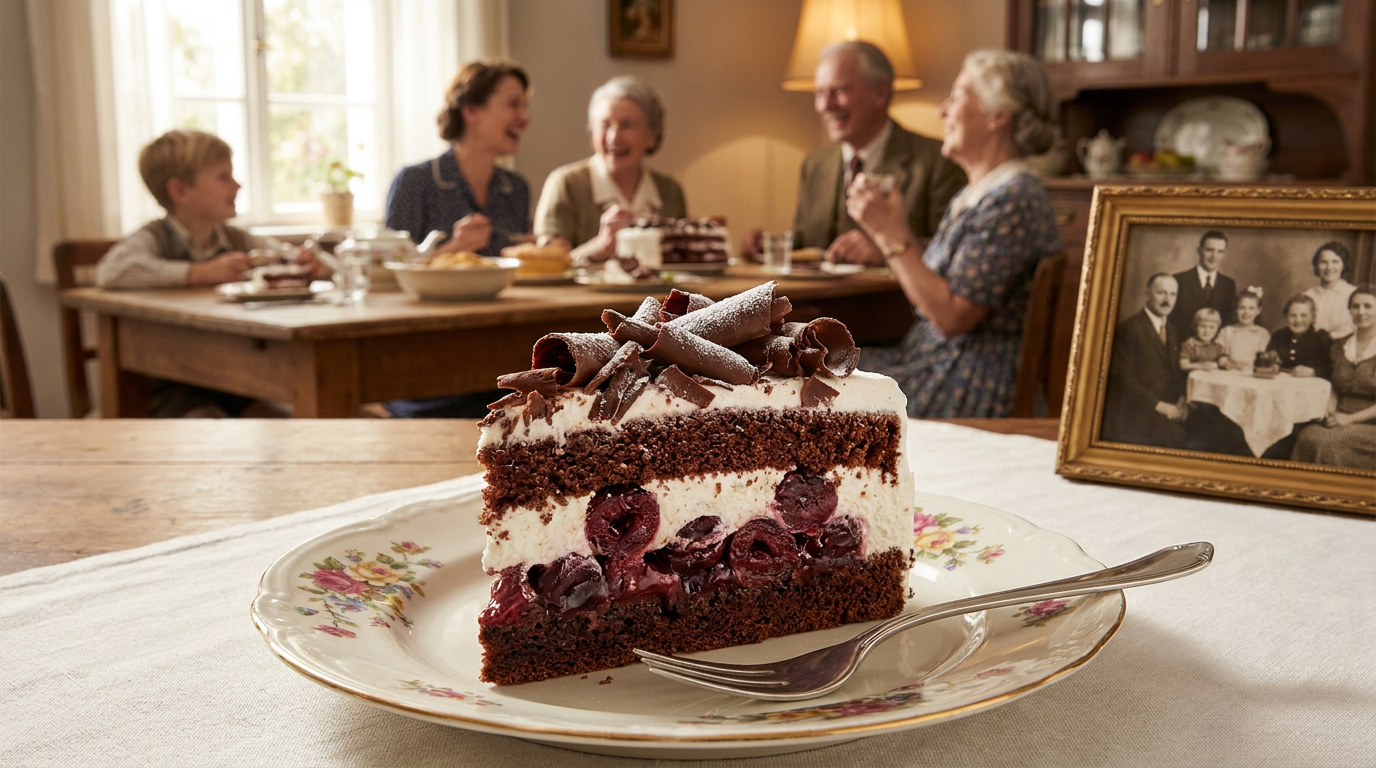
Black Forest Cake (Schwarzwälder Kirschtorte)

Perhaps Germany’s most famous dessert, this masterpiece features:

  • Chocolate cake
  • Cherries
  • Whipped cream
  • Chocolate shavings

It remains a showstopper at weddings, anniversaries, and special celebrations.

Apple Strudel

Though associated with Central Europe generally, strudel became a staple in many German-American homes.

Stollen

This fruit-filled Christmas bread remains a beloved holiday tradition.

Bee Sting Cake (Bienenstich)

A delicious combination of sweet yeast dough, cream filling, and caramelized almonds.

These desserts helped transform family gatherings into memorable celebrations.


German-American Beer and Food: A Perfect Partnership

No discussion of German food traditions would be complete without mentioning beer culture.

German immigrants helped establish many of America’s earliest brewing traditions.

German-American Favorites

Classic Pairings

Food Traditional Beverage Pairing
Bratwurst Märzen Lager
Pretzels Helles Lager
Schnitzel Pilsner
Roast Pork Dunkel
Black Forest Cake Coffee or Dark Lager

German beer gardens became social centers where families gathered, musicians performed, and communities celebrated.

Food was never just nourishment.

It was fellowship.


A Taste of German Heritage at Festivals Across America

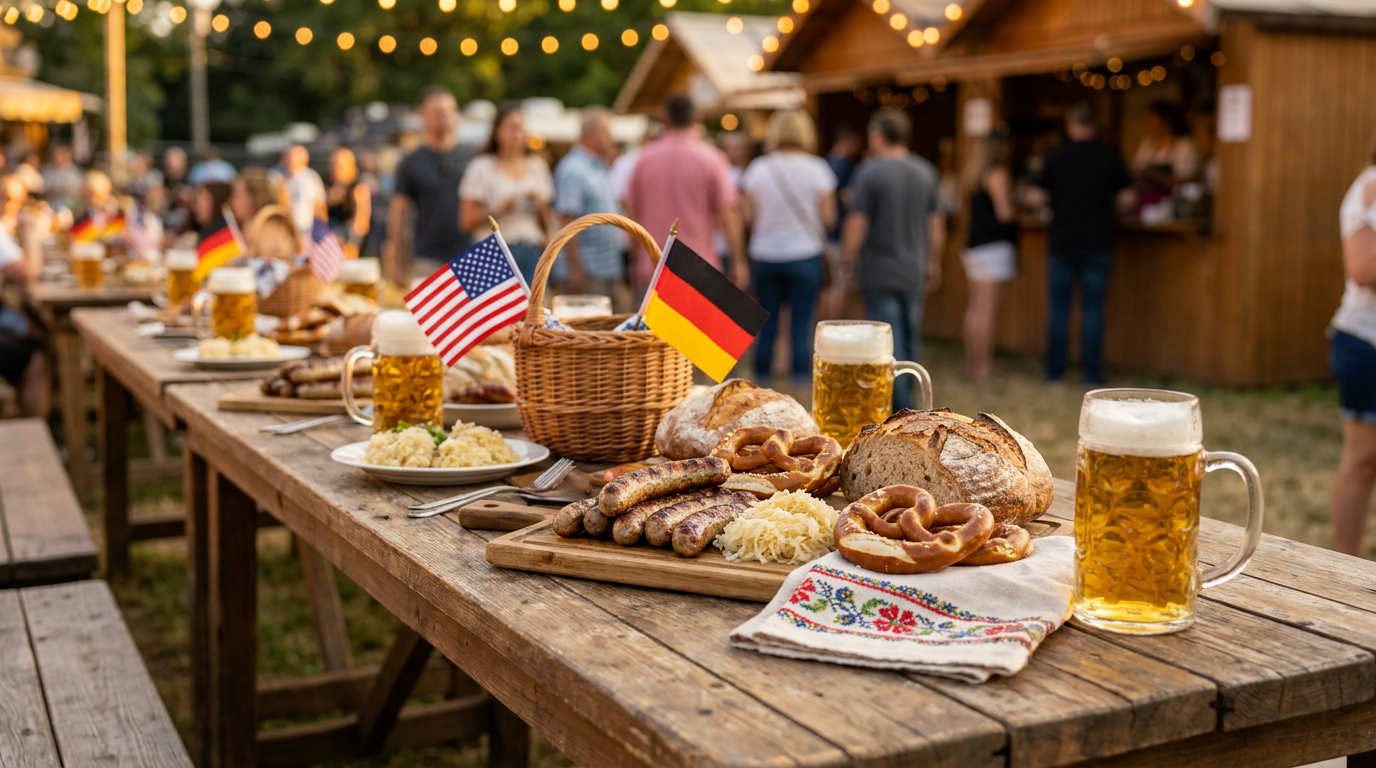
One of the easiest ways to experience German-American culinary traditions is by attending a festival.

https://images.openai.com/static-rsc-4/nhSWSeUH5TeMZrH3E40Vao0VmaauNj7G4dSeHZNev26Tds9ypkd57vuW2LDHvlafiNsf7n-n7-nVpiOW4o8V5PhlIWHOuTesD8VsLmGDa2zz9l3M_j7oADjq5c5UdaQYL5eppTUHNAcQed3tG_WVdU8LkmKWHWoXeiVnrDuKceDce5H0vpJJfIbUSIHfBWo2?purpose=fullsize
Visitors can sample foods ranging from traditional recipes to creative modern interpretations.
https://images.openai.com/static-rsc-4/NuEgir6vtiWtfAKpSpE7TekDBFWlU-6Wnc4AHclYlznRs1nAWyRCew1c_vH1igK0M1srJiYkdH08FMiGx8FkgY4UlKvprdTO0rSV9GDuIYGzMd54Ma6mHumlgcLmysNIL1wBX2yljVfoWkkK1mv2ORc0u-tG90C0i-22FgZdGQrWXCZ5WNgb4x23W2_R5UOy?purpose=fullsize

Across America, communities host:
  • Oktoberfests
  • Maifests
  • Christkindlmarkts
  • Heritage festivals
  • County fairs with German roots

For many attendees, the food becomes the gateway to learning more about their ancestry, history, and cultural traditions.


Food as a Family Time Machine

Perhaps the most remarkable aspect of German-American food traditions is their ability to connect generations.

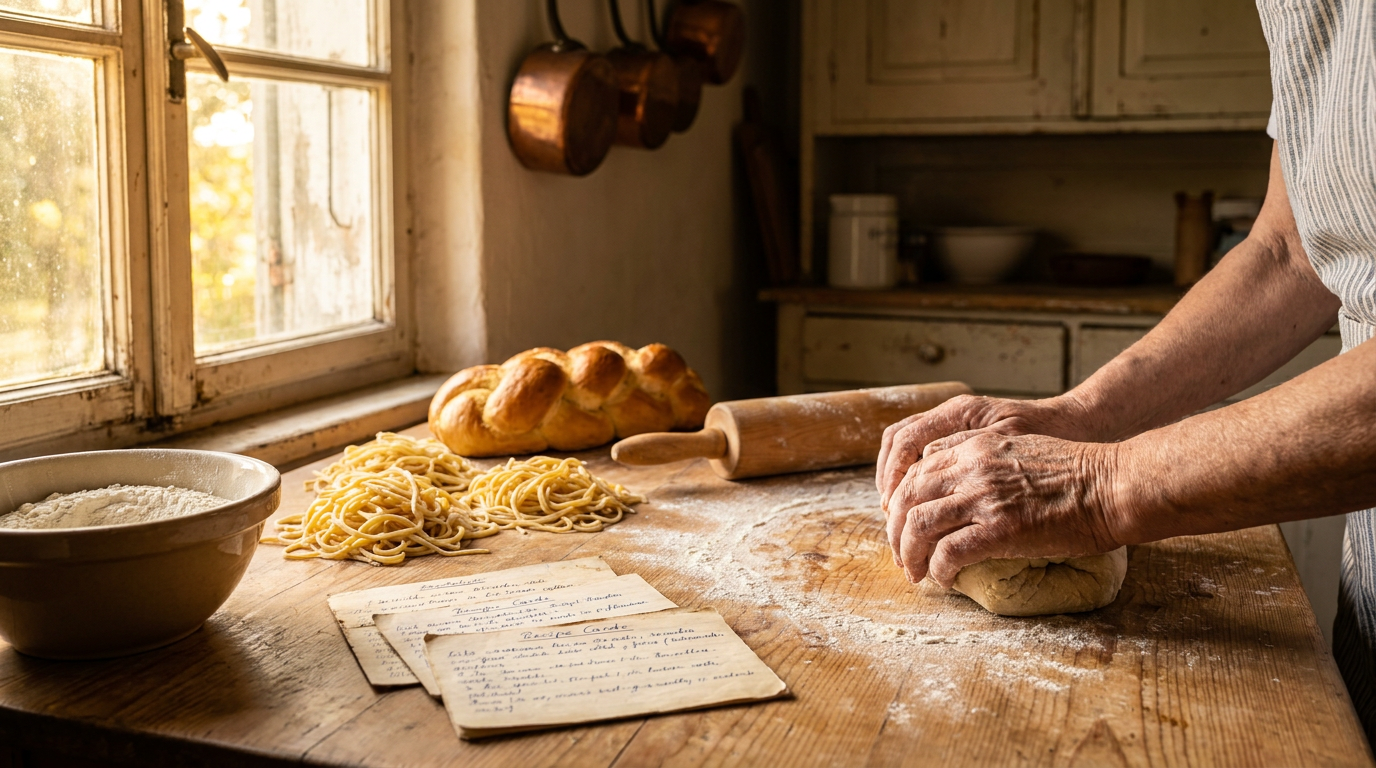
A recipe card handwritten by a grandmother.

A family sausage recipe passed down through decades.

A Christmas stollen baked exactly as it was 100 years ago.

These foods preserve memories in ways few other traditions can.

As author Laura Esquivel famously wrote:

“The table is a meeting place, a gathering ground, the source of sustenance and nourishment.”

For German-Americans, it is also a bridge to the past.


Bringing German Heritage to Your Own Kitchen

You don’t need to speak German or travel overseas to celebrate your heritage.

You can begin right at home.

Try:

✅ Making homemade bratwurst recipes
✅ Visiting a local German bakery
✅ Learning to bake pretzels
✅ Exploring regional German cookbooks
✅ Attending a local Oktoberfest
✅ Recreating family recipes from old recipe boxes
✅ Researching foods connected to your ancestral region in Germany

Each meal becomes an opportunity to explore your family’s story.


Final Thoughts

From sizzling bratwurst at summer festivals to elegant slices of Black Forest cake shared during family celebrations, German-American food traditions remain one of the most enjoyable ways to connect with heritage.

These dishes are more than recipes.

They are edible history.

They tell stories of courage, immigration, family, hard work, faith, community, and cultural pride. They remind us that heritage is not confined to museums or genealogy records—it lives in kitchens, bakeries, restaurants, festivals, and family dining rooms across America.

So the next time you enjoy a warm pretzel, a hearty bratwurst, or a slice of Black Forest cake, remember:

You may be tasting a small piece of the German-American story.

And that story is still being written—one delicious bite at a time.


Quick Heritage Food Fact

GERMAN-AMERICAN FOODS YOU PROBABLY EAT REGULARLY

🥨 Pretzels
🌭 Bratwurst
🥬 Sauerkraut
🍞 Rye Bread
🥔 German Potato Salad
🍰 Black Forest Cake
🍎 Apple Strudel
🍺 German-Style Lager

Heritage Insight: Many of these foods arrived with German immigrants during the 1700s–1900s and became permanent parts of American culinary culture, especially throughout Pennsylvania, the Midwest, Texas, and Tennessee.

German Heritage USA™
Discovering German Heritage Traditions, Foods, Music, and Festivals All Across America