Oktoberfest Isn’t Over! How to Throw an Unforgettable Backyard Oktoberfest Before Halloween
GERMAN HERITAGE USA | TRADITIONS, FOOD, FESTIVALS & ENTERTAINMENT

Bratwurst, beer, Bavarian music, football, friendly neighbors, and a whole lot of Gemütlichkeit! Who says Oktoberfest has to end just because Munich’s beer tents have closed? Wait a Minute!

Who Says Oktoberfest Is Over?

The giant beer tents in Munich have closed. The brass bands have packed away their tubas. Millions of visitors have returned home, and the last empty beer steins have been collected.

But hold on a minute!

It’s not even the middle of October yet!

Here in America, we’re still enjoying beautiful autumn afternoons, college football Saturdays, NFL Sundays, colorful falling leaves, and that unmistakable smell of backyard grills firing up for another weekend.

And guess what? There are still Oktoberfest celebrations happening throughout the United States!
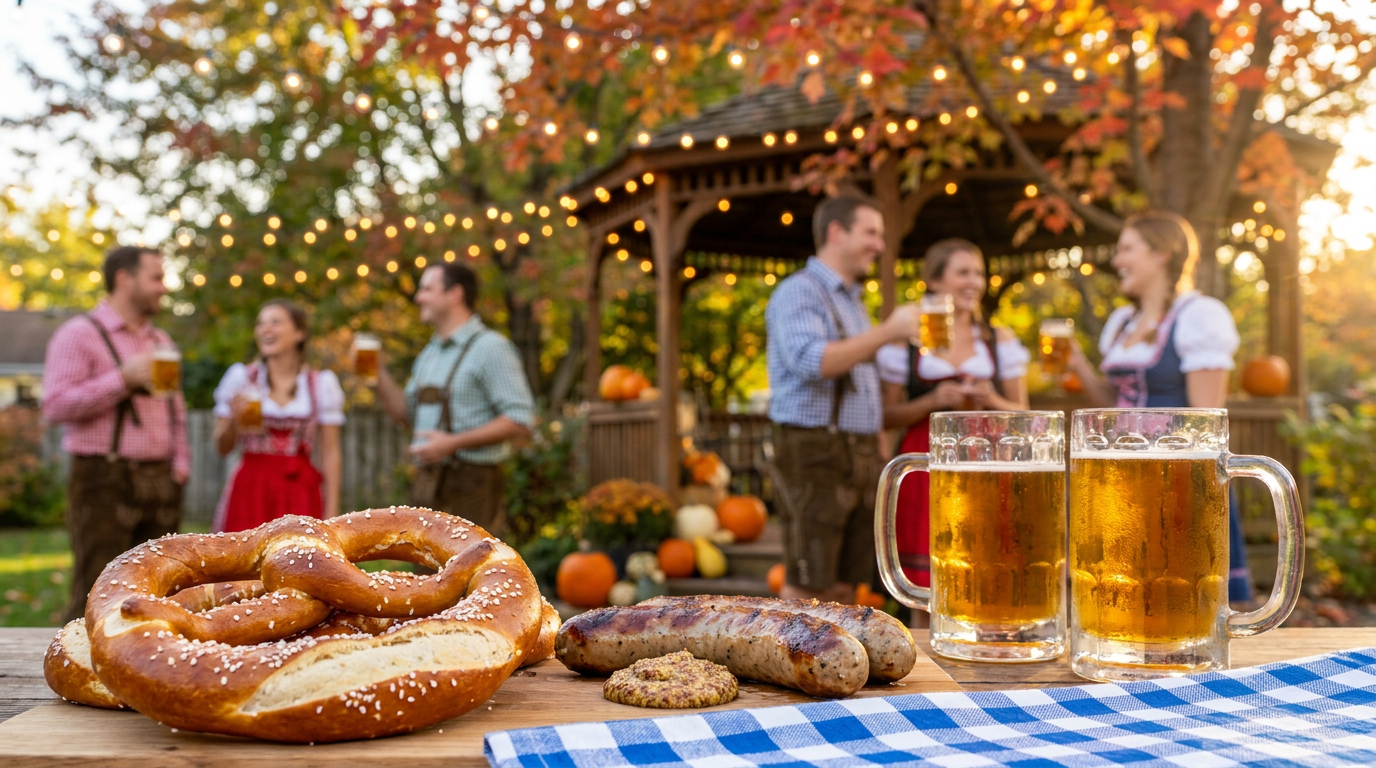
America has embraced Oktoberfest so enthusiastically that celebrations can be found in communities from coast to coast. From German-American clubs and neighborhood breweries to small-town festivals and enormous citywide events, the Oktoberfest spirit has become a beloved part of America’s autumn calendar.

You may even have heard that America hosts more organized public Oktoberfest celebrations than Germany. While comparable nationwide counts are difficult to establish, there’s no question that Americans have made Oktoberfest their own.

But here’s a thought.

Why should you have to travel somewhere to celebrate Oktoberfest when you can bring Oktoberfest right into your own backyard?

That’s right. Your backyard. Your neighbors. Your friends. Your family.

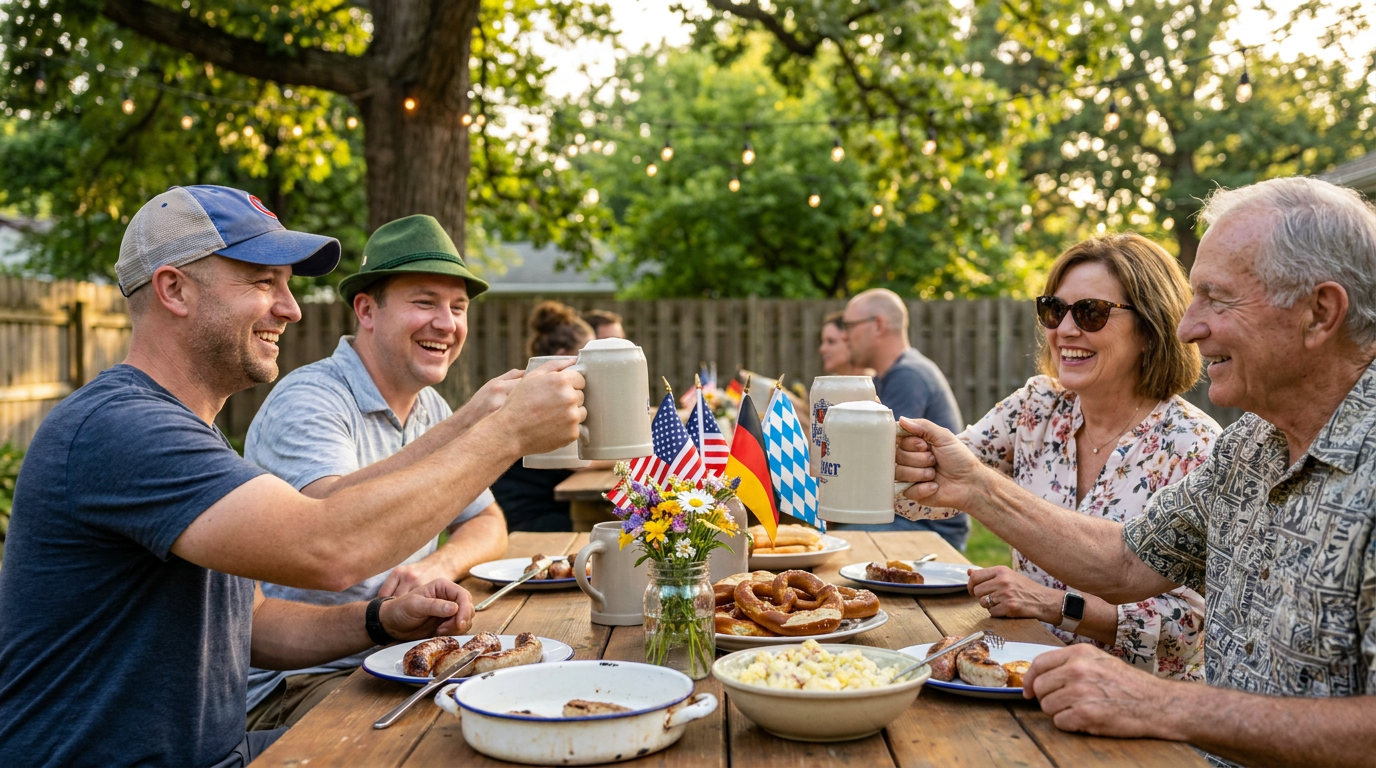
A grill full of bratwurst, some German-inspired food and decorations, a few picnic tables, lively music, ridiculous contests, and maybe even Uncle Fred attempting the Chicken Dance after his second brat.

Now THAT sounds like an Oktoberfest worth celebrating!

And with Halloween just around the corner, late October offers a wonderful opportunity for one more neighborhood gathering before the holiday season arrives.

First Things First: Give Your Oktoberfest a Name!

Every great festival deserves a memorable name.

Munich has Oktoberfest. Cincinnati has Oktoberfest Zinzinnati. Your neighborhood deserves something equally entertaining—even if your festival only attracts 18 people, three dogs, and one neighbor who insists he can yodel.

The trick? Combine your family surname, subdivision, street, or neighborhood name with Oktoberfest.
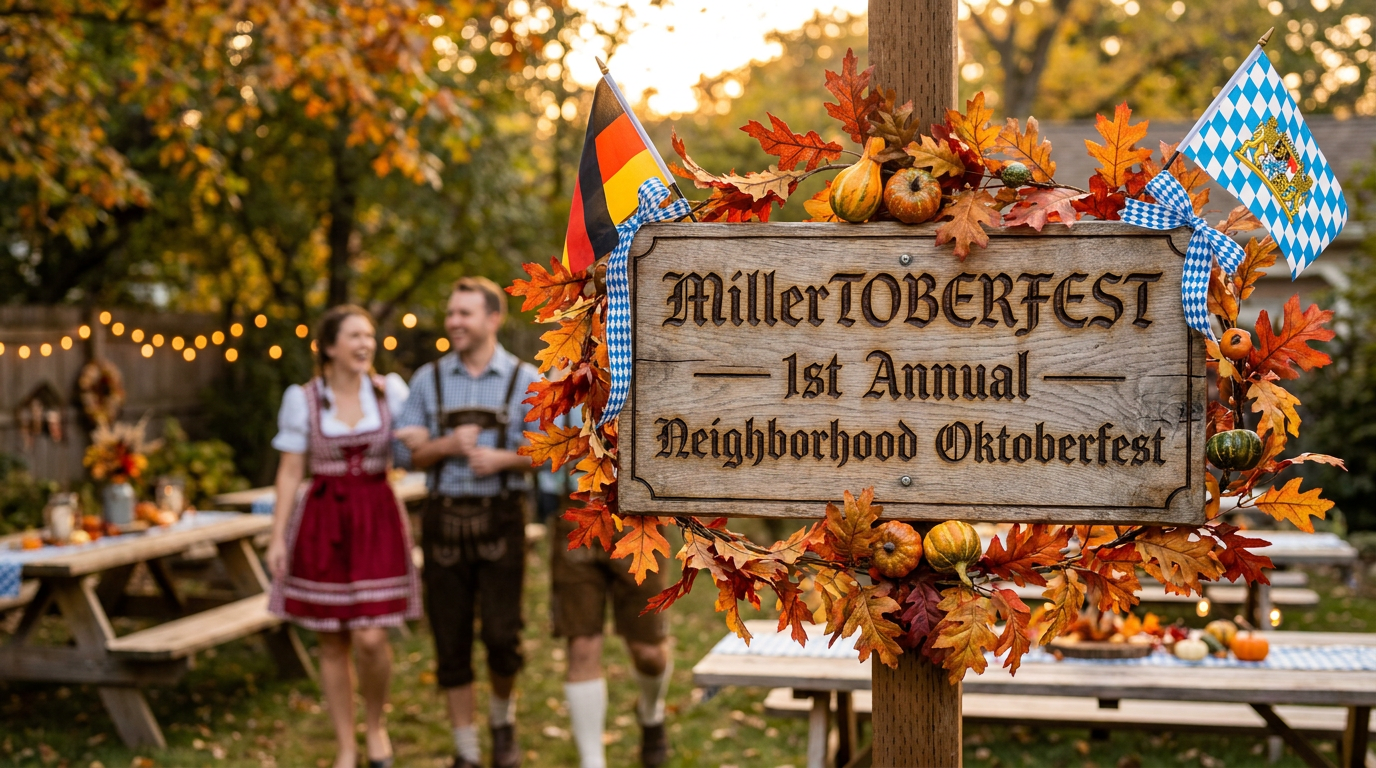
Here are a few ideas to get those creative juices flowing:

Your inspiration Your festival name
Miller family MillerTOBERFEST
Tingle family TingleTOBERFEST
Shady Acres subdivision ShadyAcresOBERFEST
Hingst family HingstTOBERFEST
Maplewood neighborhood MaplewoodTOBERFEST
Oak Ridge subdivision OakRidgeOBERFEST
Smith family SmithTOBERFEST
Willow Creek neighborhood WillowCreekTOBERFEST
Johnson family JohnsonBRATFEST
Cedar Grove neighborhood CedarGroveBIERFEST
Pine Hollow subdivision PineHollowPROSTFEST
The entire cul-de-sac CulDeSacTOBERFEST

Our personal favorite for a neighborhood gathering?

CulDeSacTOBERFEST — Where the Street Ends and the Gemütlichkeit Begins!

Make a homemade festival banner, create a little welcome sign, and announce the First Annual celebration.

Who knows? Ten years from now, the neighborhood might be planning its tenth annual Oktoberfest, complete with matching shirts and a trophy that nobody remembers purchasing.

Your Backyard. Your Biergarten. Your Rules!

You don’t need a giant Bavarian festival tent or a professional event planner to create a festive atmosphere.

Start with what you already have.

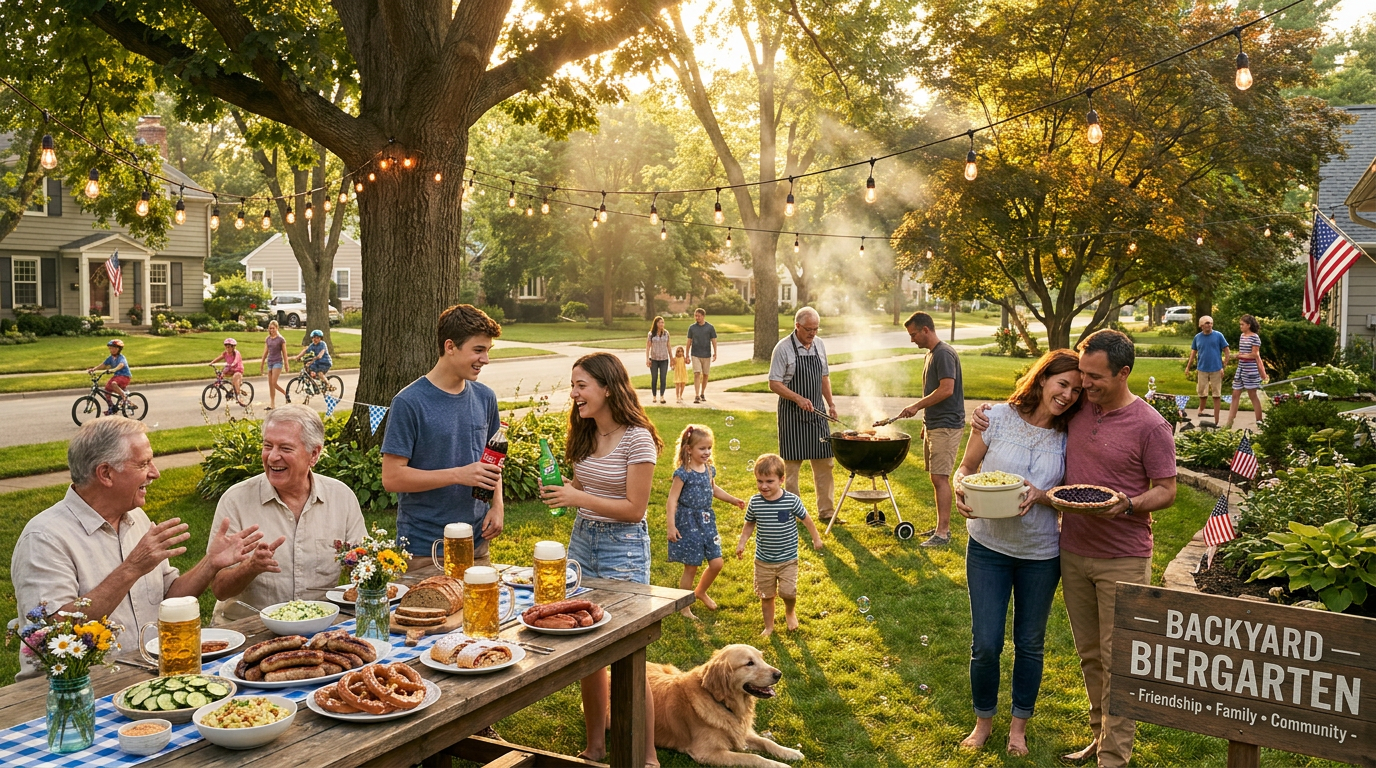
A patio, deck, lawn, driveway, or shared neighborhood green space can become your very own German-inspired Biergarten.

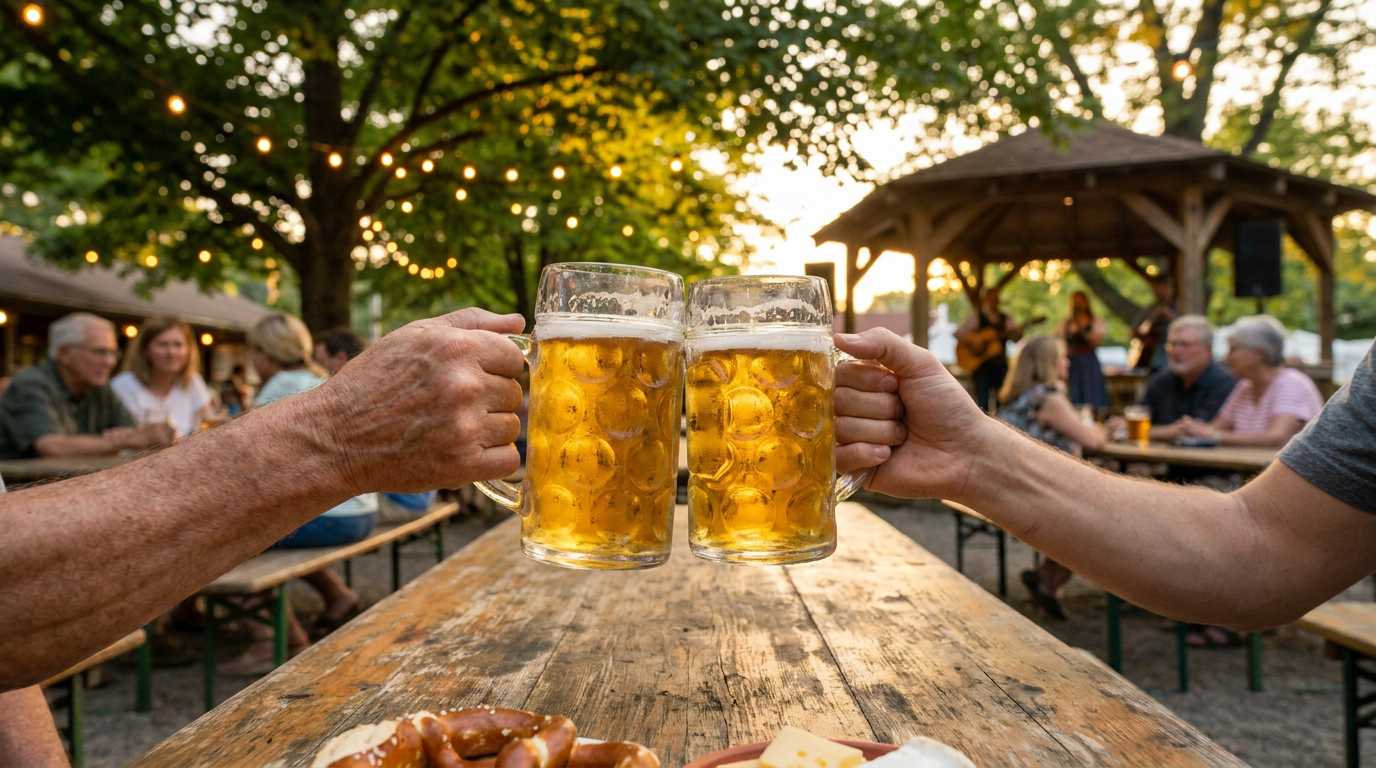
Set up folding tables, picnic benches, or lawn chairs. Add blue-and-white Bavarian-style tablecloths, a few festive banners, autumn pumpkins, and strings of warm lights.

Have some decorative beer steins? Put them out. An old German flag? Display it. A collection of Oktoberfest souvenirs from previous celebrations? Perfect!
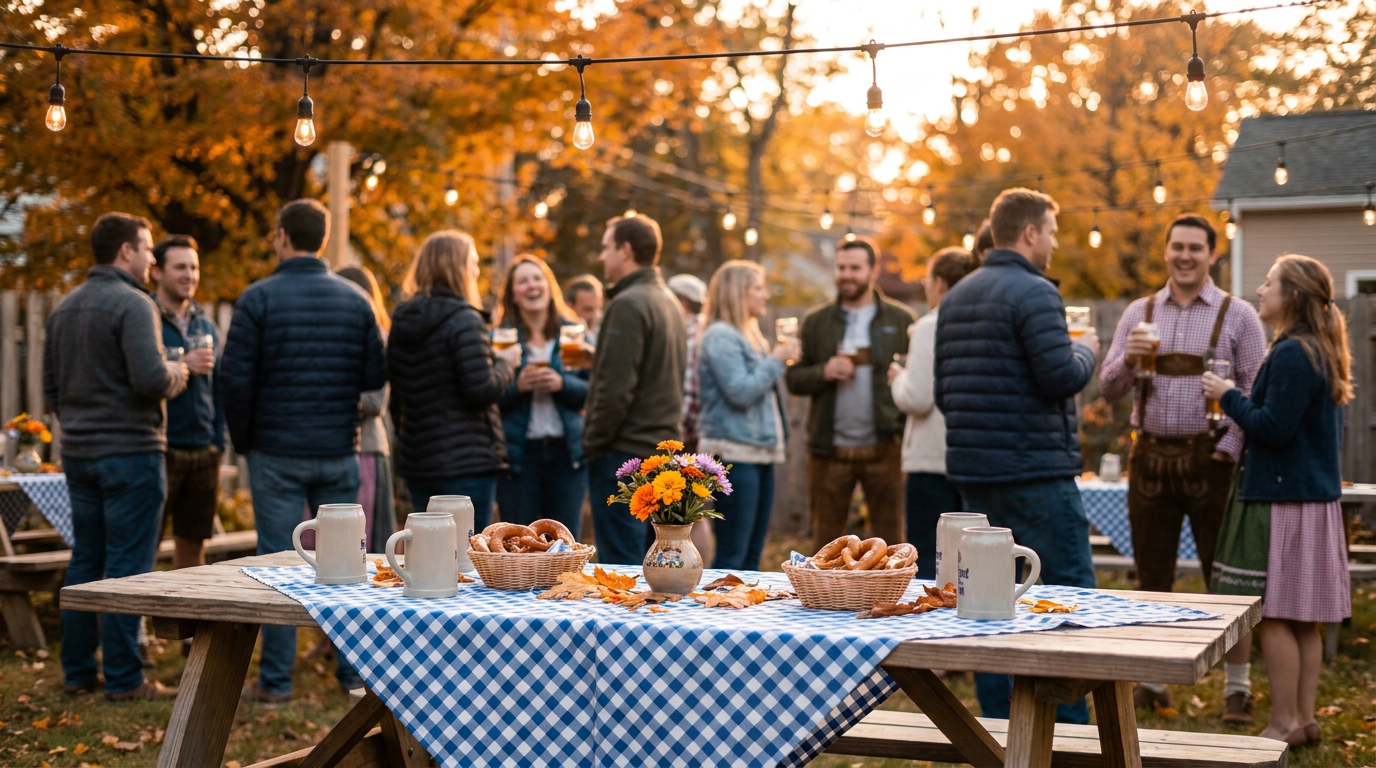
And don’t worry if your decorations include a few Halloween pumpkins. After all, you’re celebrating in late October.

A smiling jack-o’-lantern wearing a Bavarian alpine hat might just become your festival mascot.

The goal isn’t to recreate Munich’s Theresienwiese. It’s to create a welcoming place where neighbors can relax, laugh, share stories, and enjoy themselves.

The Germans have a wonderful word for this feeling: Gemütlichkeit.

It describes a sense of warmth, comfort, friendliness, and belonging.

“The best Oktoberfest isn’t necessarily the biggest one. Sometimes it’s the one where everybody knows your name—and somebody remembers to bring the mustard.”

That’s the spirit we’re after!

Everybody Pitches In! The Great Neighborhood German Potluck

Here’s where your backyard Oktoberfest becomes especially fun—and affordable.

Don’t try to do everything yourself!

Invite the neighbors to participate. After all, this is a neighborhood celebration, not a catering assignment.

One family can bring bratwurst. Another might volunteer to grill. Someone else can contribute soft pretzels, sauerkraut, German potato salad, or a homemade dessert.

You could even organize a voluntary neighborhood party fund to help cover shared expenses such as decorations, supplies, and beverages, with any alcohol arrangements following local laws.

Better yet, make it a German-inspired potluck!
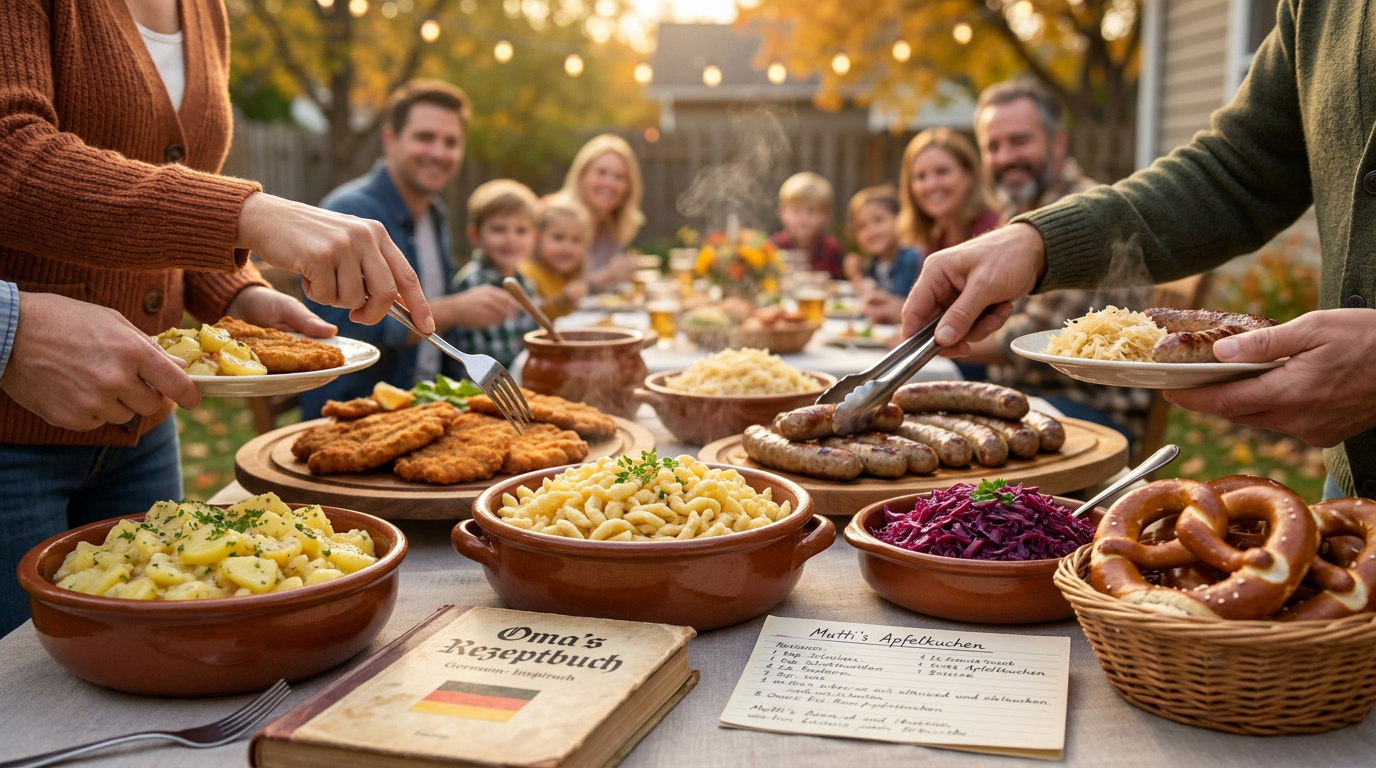
Challenge each household to prepare one dish from a German cookbook, a treasured family recipe, or a trusted recipe website.

Imagine the possibilities:

  • Bratwurst with spicy German mustard and sauerkraut.
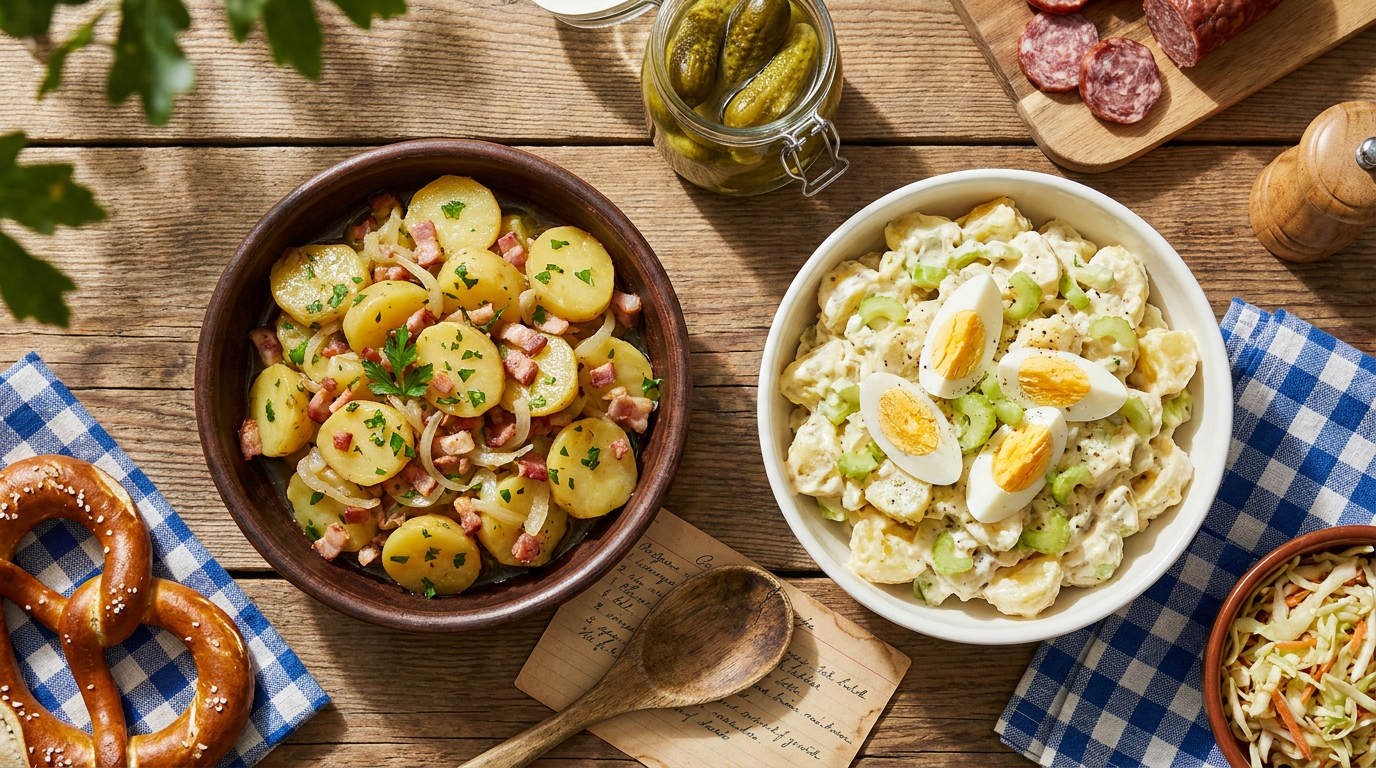
  • Warm German potato salad with bacon and vinegar.
  • Homemade spaetzle with butter and herbs.
  • Rotkohl, the delicious sweet-and-sour red cabbage.
  • Bavarian pretzels with mustard or cheese dip.
  • Currywurst with its famous seasoned tomato sauce.
  • Schnitzel served with lemon.
  • Apple strudel, German apple cake, or Black Forest cake.

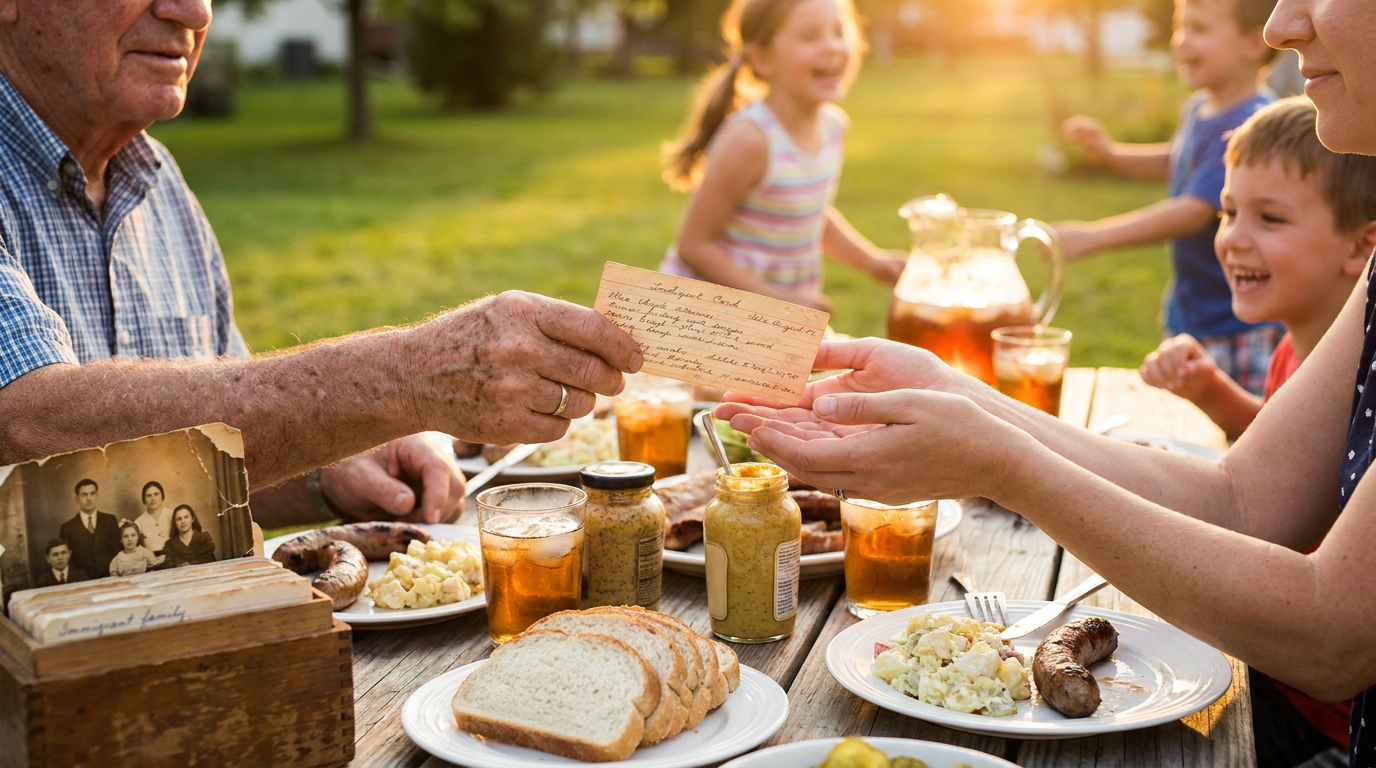
And here’s a fun twist: encourage guests to bring a little recipe card identifying their dish, where it comes from, and whether it has a special family connection.

Grandma’s handwritten recipe? Even better!

Don’t forget to label ingredients and allergens, keep perishable foods at safe temperatures, and make sure the grill team knows who’s responsible for cooking.

Fire Up the Grill! Brats, Brews and Backyard Favorites

Let’s face it. For many Americans, Oktoberfest means one thing before anything else.

BRATWURST!

And there’s absolutely nothing wrong with that.

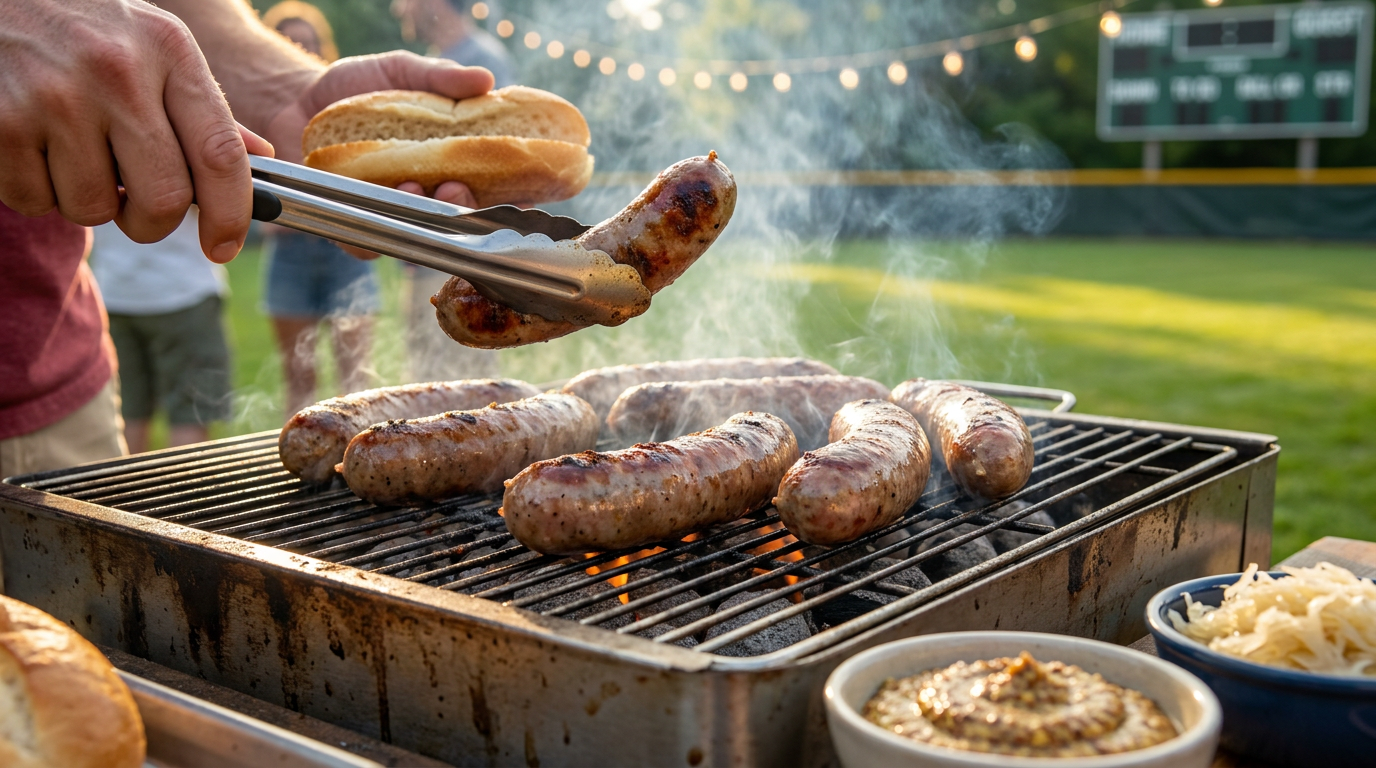
Make the grill a central attraction. Offer several varieties of German-style sausage, along with rolls, sauerkraut, grilled onions, and a selection of mustards.

A simple build-your-own-brat station makes serving easy.
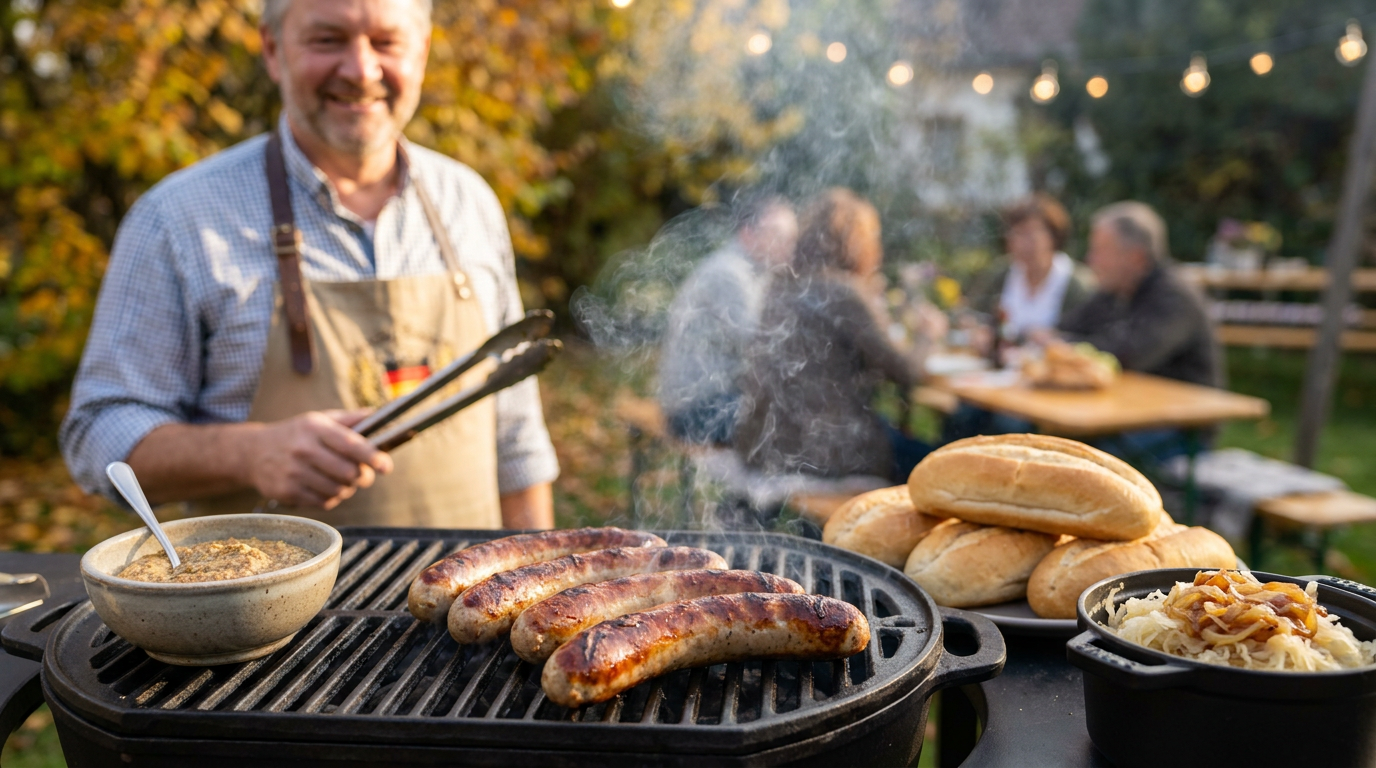
For drinks, consider Oktoberfest-style Märzen or Festbier for adults who enjoy beer, alongside German-inspired nonalcoholic beers, sparkling apple drinks, cider, lemonade, and plenty of water.

You can even create a little beverage station labeled The Neighborhood Biergarten.

If you’re serving alcohol, keep it responsible. Have food and nonalcoholic options available, don’t serve minors, and help guests arrange safe rides when needed.

And don’t forget a special German-inspired appetizer!

GERMAN HERITAGE USA has even explored the delicious possibilities of Bavarian Bier & Mustard Glazed Chicken Wings, which would make a fantastic addition to your Oktoberfest spread.

Because who says Oktoberfest and football-season chicken wings can’t get along?

Let the Games Begin! The Great Backyard Oktoberfest Championships

Now we’re getting to the really entertaining part.

Every great Oktoberfest needs a little competition.

Not the serious kind, of course. We’re talking about the kind of competition where someone wins a plastic golden bratwurst and proudly displays it on the mantel until Christmas.

Create a few homemade awards and let your guests vote.

The Golden Bratwurst Award: Best homemade German main dish.

Oma’s Golden Spoon: Best German side dish.

The Strudelmeister Award: Best German dessert.

Herr Oktoberfest and Frau Oktoberfest: Best traditional German-inspired outfits, including lederhosen and dirndls.

The Golden Chicken Award: Most entertaining Chicken Dance performance.

The Alpine Echo Award: Best yodeling performance, whether genuinely impressive or hilariously terrible.

The Gemütlichkeit Award: The guest who brings the most warmth, friendliness, and festive spirit to the party.
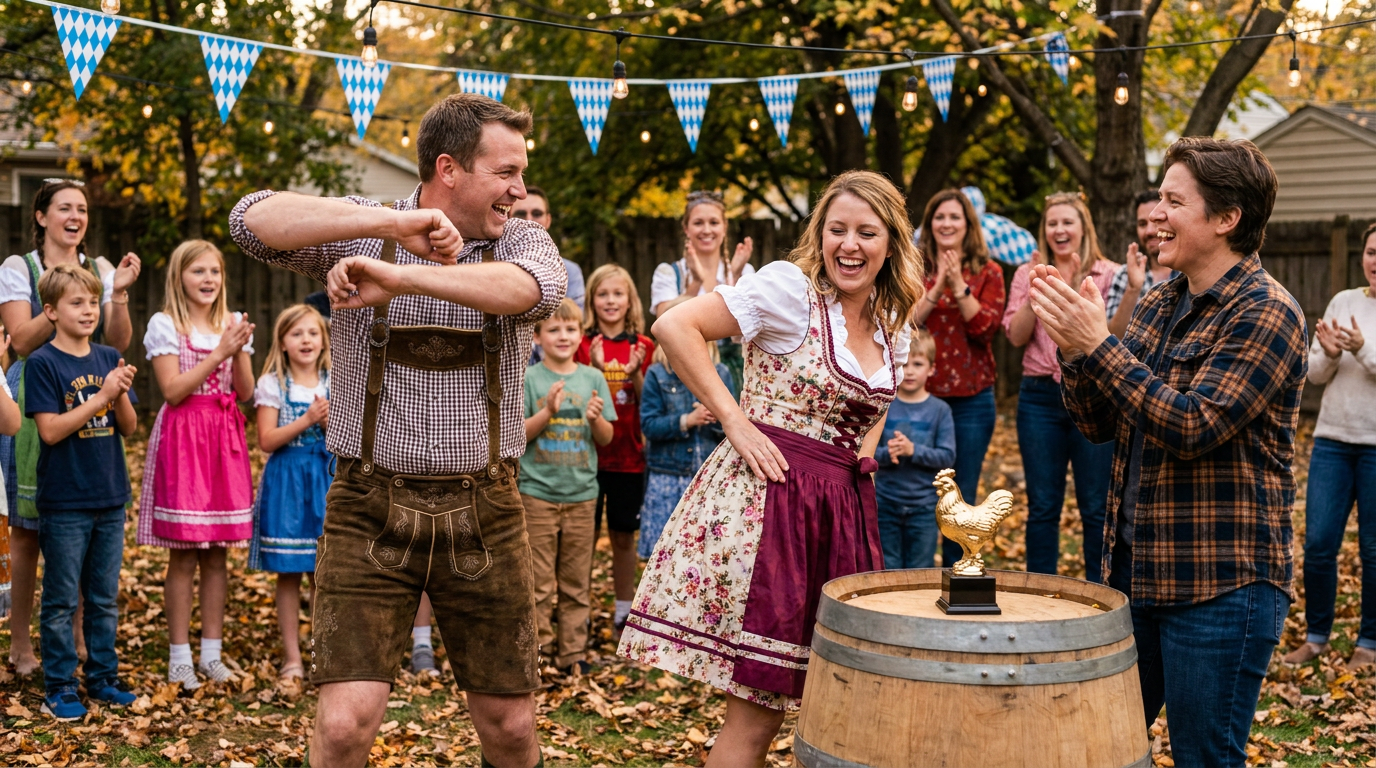
A little German candy, a decorative stein, a printed certificate, or a homemade trophy is plenty.

And please—make sure someone records the Chicken Dance competition.

With everyone’s permission, of course.

Because watching your normally reserved neighbor attempt a synchronized Chicken Dance with six children and a golden retriever might become the most memorable moment of the entire evening.

Turn Up the Oompah! Music, Dancing and a Little Yodeling

You cannot have an unforgettable Oktoberfest without music.

Well, technically you can, but why would you?

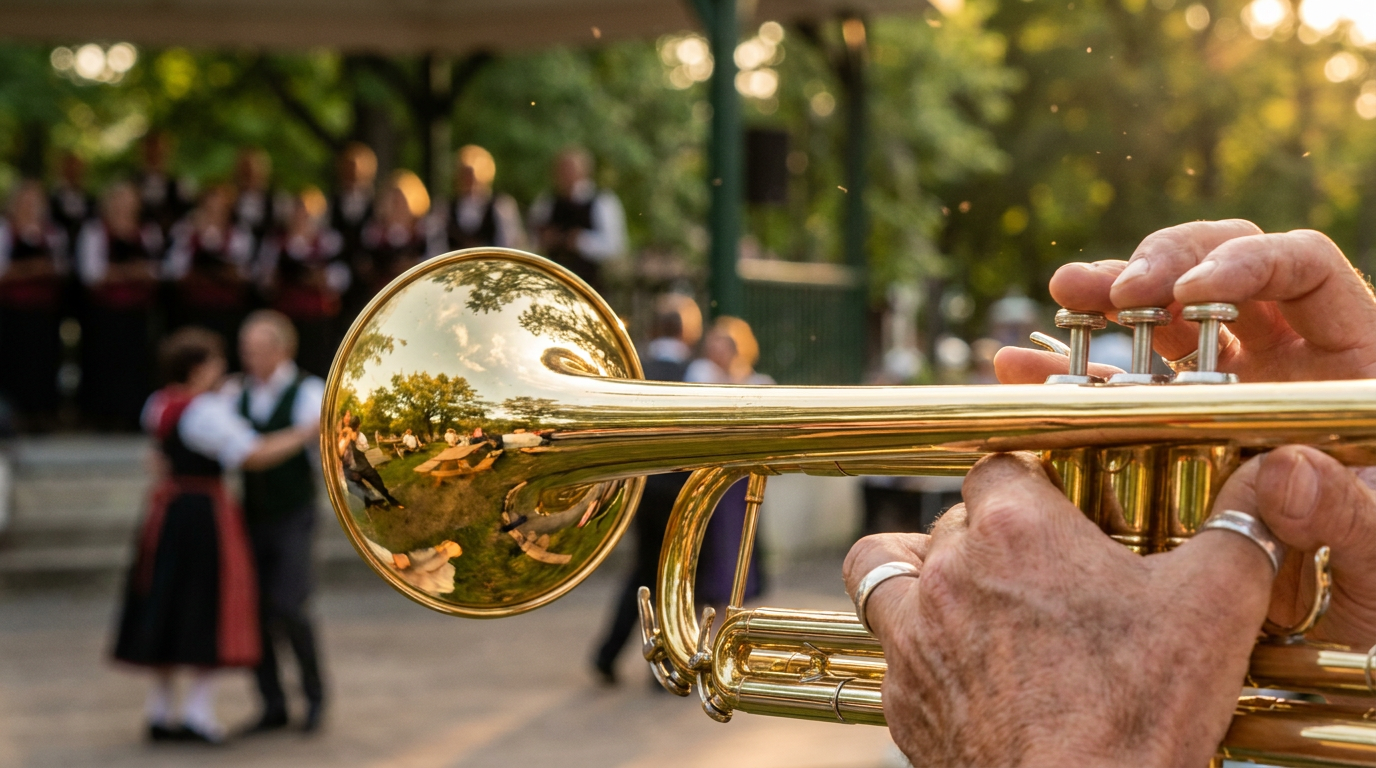
Put together a playlist featuring German brass bands, polkas, Bavarian folk music, waltzes, and popular Oktoberfest sing-along favorites.

Be sure to include Ein Prosit der Gemütlichkeit, the traditional Oktoberfest toast song that encourages everyone to raise a glass and celebrate together.

And naturally, no backyard Oktoberfest would be complete without the Chicken Dance.

The familiar beak, wing, wiggle, and clap routine is practically irresistible once the music starts.

You might also host a yodeling challenge.

No experience required. In fact, the less experience, the funnier it might become.

Just remember that you’re still in a neighborhood. Keep music at considerate levels and respect local quiet hours.

Your goal is to make the neighbors wish they’d been invited—not wish you’d move to Munich.

Touchdowns, Tubas and Bratwurst: Oktoberfest Meets Football Season!

Here’s something wonderfully American about celebrating Oktoberfest in late October.

It’s football season!

Why not combine two great fall traditions?

Set up an outdoor television or projector for a college football Saturday or NFL Sunday gathering.

Invite guests to wear their favorite team jerseys with lederhosen, dirndls, or Bavarian-inspired accessories.
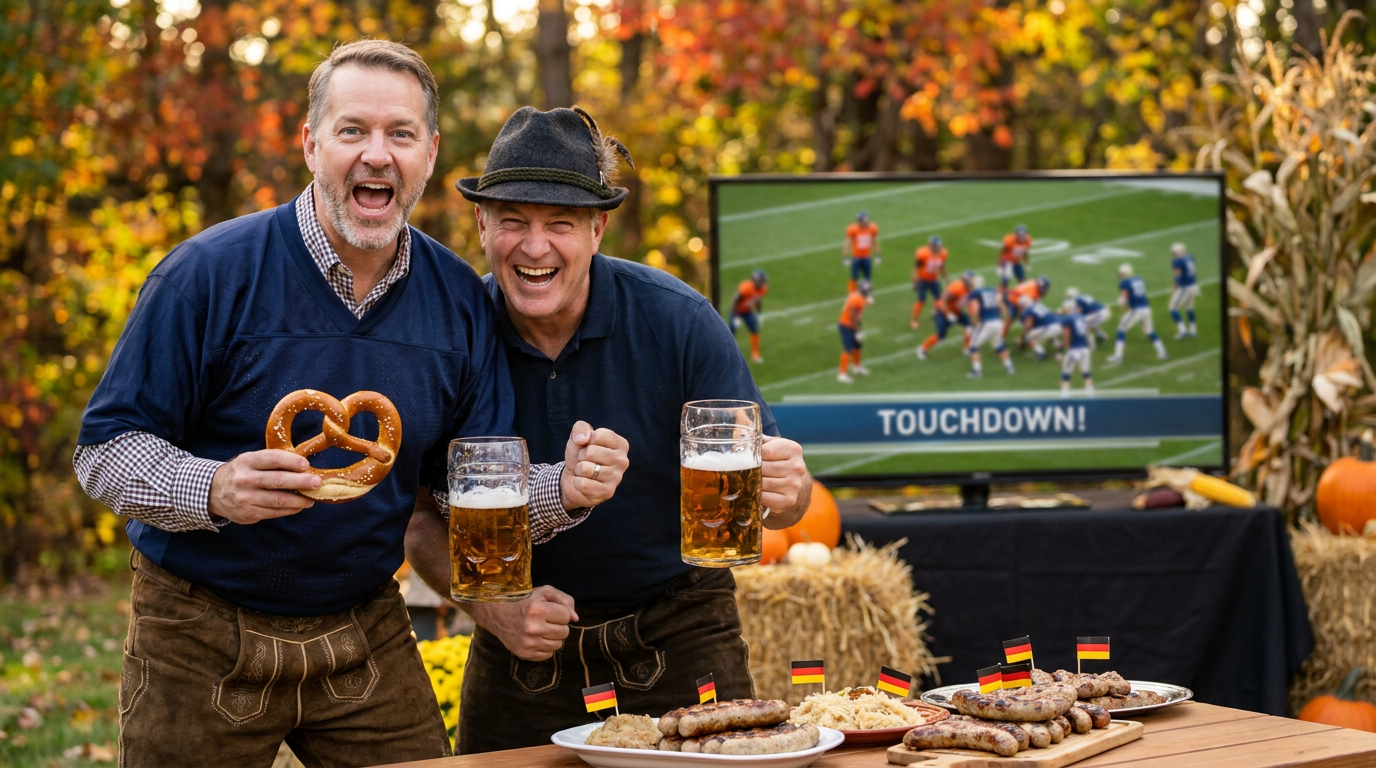
Serve German-style tailgate snacks, organize a football toss, and schedule the Chicken Dance for halftime.

Picture it: one neighbor cheering for a touchdown while another raises a pretzel and shouts, “PROST!”

The combination may not be historically Bavarian, but it certainly captures the spirit of German-American celebration.

After all, traditions stay alive partly because each generation finds new ways to enjoy them.

Brrr! It’s Late Oktober—Keep Everybody Warm!

Depending on where you live in the United States, late October can mean very different things.

In Florida, your guests might still be wearing shorts.

In Wisconsin, Minnesota, Michigan, or upstate New York, they might be wondering why nobody suggested moving the party indoors.

Even here in the South, a sunny afternoon can turn into a surprisingly chilly evening.

Plan accordingly.

Provide blankets, warm cider, hot chocolate, coffee, and comfortable seating. If you’re using a fire pit or patio heater, follow safety guidelines and keep children and decorations at a safe distance.
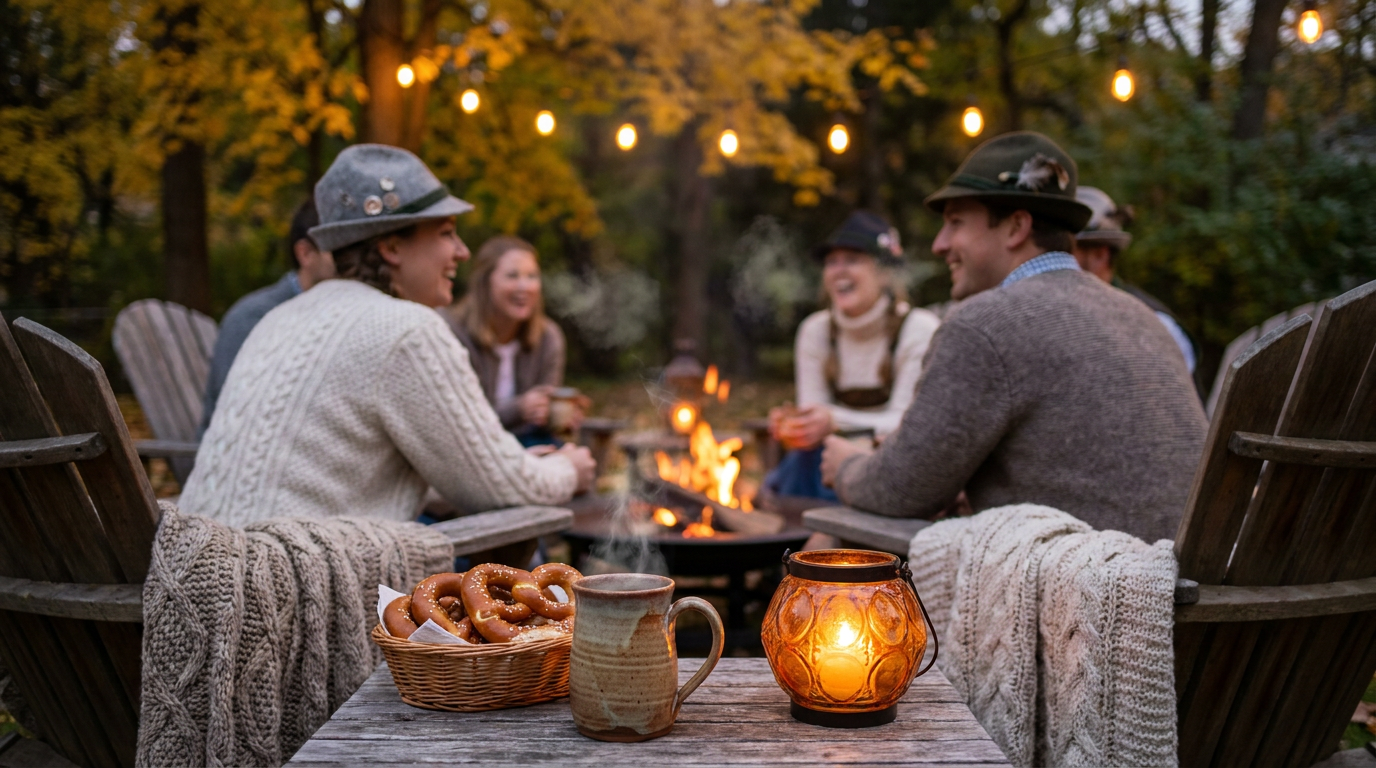
Never operate outdoor fuel-burning heaters inside a garage or enclosed tent.

Consider a covered area for light rain and an indoor backup plan if temperatures drop too far.

And remember, a little autumn chill can actually enhance the atmosphere.

There’s something especially inviting about warm pretzels, glowing string lights, and friendly conversation on a crisp October evening.

Don’t Forget the Kinder! Oktoberfest Fun for the Kids

A neighborhood Oktoberfest should be enjoyable for the entire family.

And children can be some of the most enthusiastic participants.

Set up a little Kinderfest activity corner featuring pumpkin decorating, German-themed coloring pages, pretzel decorating, ring toss, beanbag games, and a simple backyard scavenger hunt.
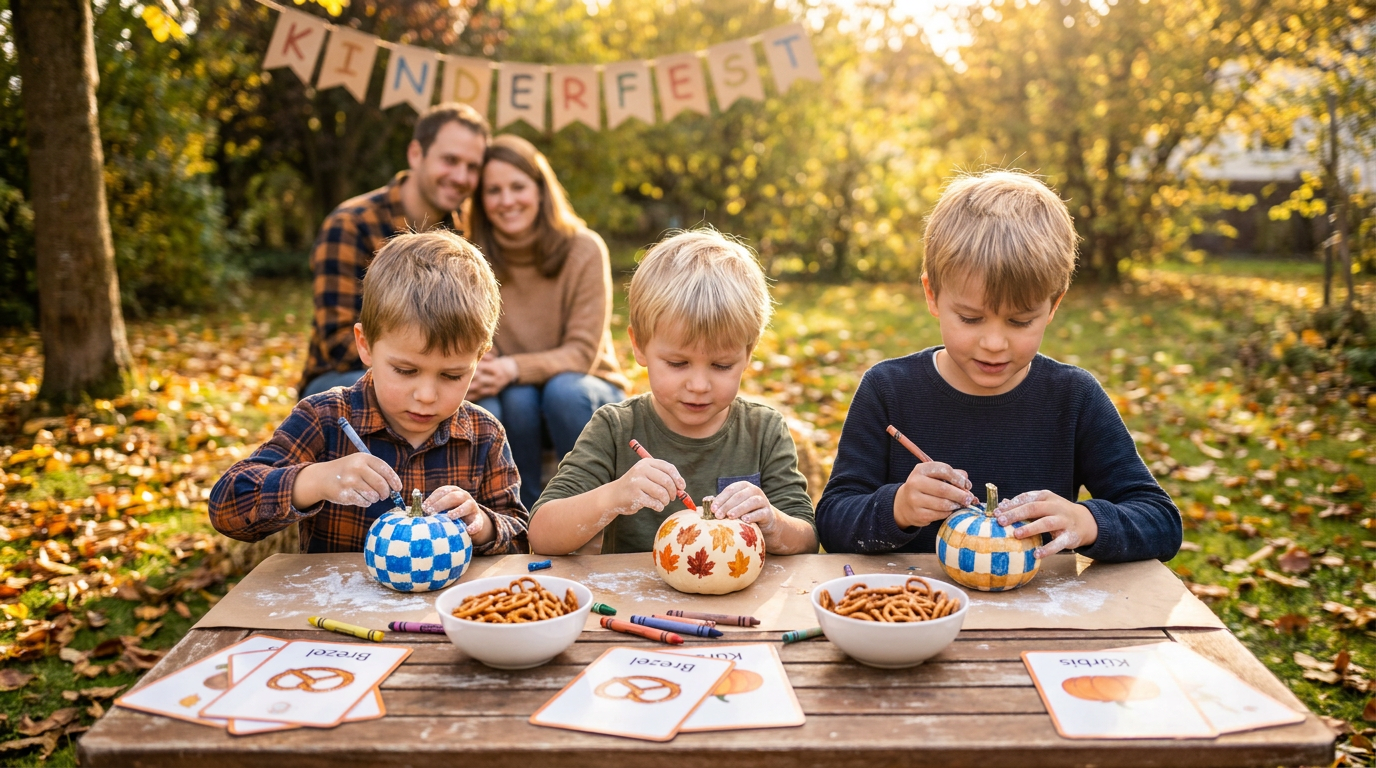
Teach them a few German words:

Hallo! — Hello!

Danke! — Thank you!

Bitte! — Please or you’re welcome, depending on context.

Wunderbar! — Wonderful!

Prost! — Cheers!

Create a simple German Heritage Explorer Passport, where children collect stamps for participating in different activities.

And of course, let the kids lead the Chicken Dance.

They’ll probably do it better than the adults anyway.

A Little German Heritage Makes the Celebration Even Better

At GERMAN HERITAGE USA, we believe Oktoberfest is about more than bratwurst, beer, and lederhosen.

It’s also an opportunity to discover the traditions, stories, and cultural influences that German immigrants brought to America.

Did you know that millions of Americans have German ancestry, even if their families no longer speak German or actively observe German customs?

Perhaps your great-grandmother came from Bavaria. Maybe your family name has German origins. Or perhaps you recently discovered a distant German ancestor while researching your family tree.

You might be surprised how many neighbors have similar stories.

Consider setting up a small German heritage table featuring a map of Germany, old family photographs, German-American trivia, or a few fascinating facts about immigration.

Invite guests to share family recipes, memories, and traditions.

And if someone says, “I’m not German,” that’s perfectly fine, too.

You don’t need German ancestry to enjoy German-American hospitality.

Sometimes curiosity about another culture is the beginning of a lifelong interest.

Your Simple Backyard Oktoberfest Party Plan

The secret to a successful neighborhood Oktoberfest is planning just enough to keep things running smoothly without turning the celebration into a full-time job.

Here’s an easy schedule for a Saturday afternoon gathering.

Time Activity
3:00 PM Welcome guests, appetizers and music
4:00 PM Bratwurst grilling and German potluck
5:00 PM German food and dessert judging
5:45 PM Lederhosen and dirndl costume competition
6:15 PM The Great Chicken Dance Showdown
6:45 PM Yodeling contest and awards
7:15 PM Football, music, conversation and Gemütlichkeit
8:30 PM Final Prost! and friendly wrap-up

Start planning a couple of weeks ahead. Invite your neighbors, organize potluck assignments, check the weather, and recruit a few volunteers.

That’s really all it takes.

The most important thing isn’t getting every detail perfect.

It’s getting everyone together.

The Best Oktoberfest Might Be the One in Your Own Backyard!

Munich’s Oktoberfest may have ended for another year.

The biggest American Oktoberfest celebrations may be winding down.

Halloween pumpkins and fall colored mums are appearing on front porches, the football season is in full swing, and the holiday season is getting closer.

But none of that means the Oktoberfest spirit has to disappear.

Sometimes the most memorable celebration isn’t held beneath an enormous festival tent surrounded by thousands of visitors.

Sometimes it’s a few folding tables in the backyard, a grill full of bratwurst, a neighbor’s homemade apple strudel, children dancing to a silly accordion tune, and friends laughing together beneath the autumn stars.

“Oktoberfest may have a place on the calendar, but Gemütlichkeit doesn’t need an ending date.”

So give your celebration a name. Invite the neighbors. Fire up the grill. Turn on the music.

And who knows?

Your little MillerTOBERFEST, TingleTOBERFEST, HingstTOBERFEST, or ShadyAcresOBERFEST might just become the neighborhood tradition everyone looks forward to year after year.
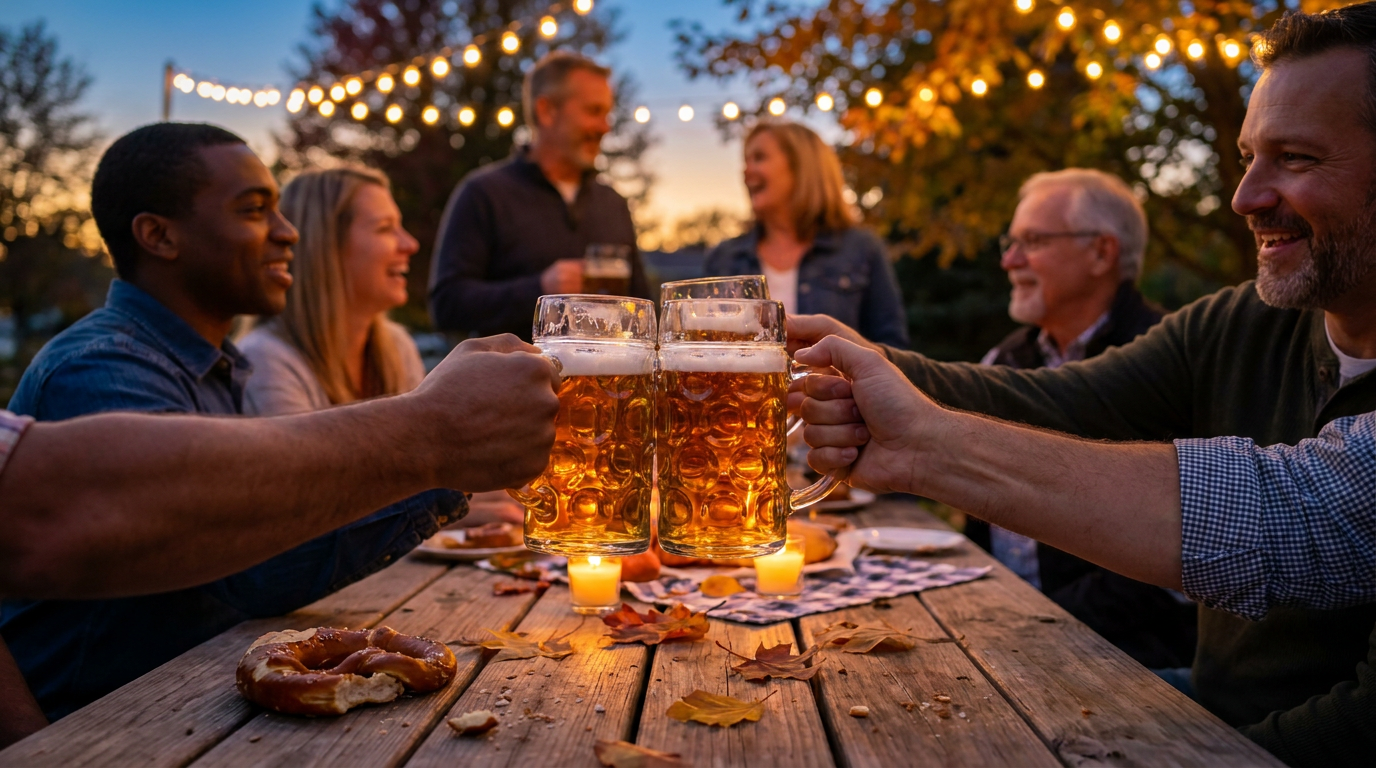
From all of us at GERMAN HERITAGE USA, here’s to German-American traditions, wonderful food, lasting friendships, and creating new memories.

PROST! And happy Backyard Oktoberfest!

We’d Love to Hear About Your Oktoberfest!

Have you ever hosted a backyard Oktoberfest or neighborhood German potluck? What’s your favorite German dish, Oktoberfest game, or family tradition?

Share your ideas and stories with the GERMAN HERITAGE USA community—and if you’re planning your own celebration this October, tell us what you’re naming it!

Discover more German-American traditions, recipes, festivals, and heritage adventures at www.GermanHeritageUSA.com.
German Summer Traditions That Quietly Became American Traditions

From beer gardens and sizzling sausages to picnic tables, outdoor concerts and festival weekends, some of America’s most familiar warm-weather pleasures carry a distinctly German-American echo.

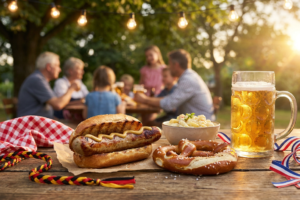
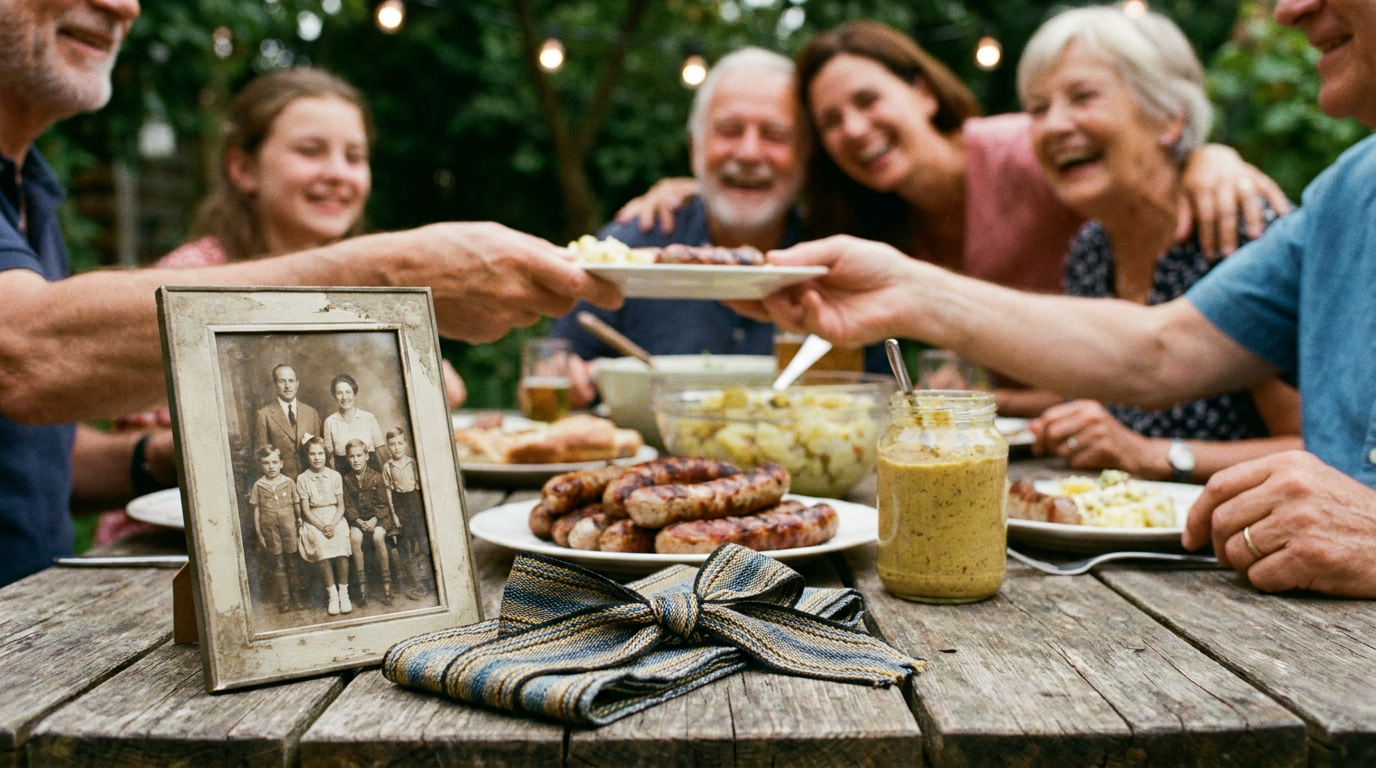
Late August has its own soundtrack in America. A grill crackles somewhere beyond the backyard fence. Glasses clink beneath patio lights. A brass band warms up at a community festival. Potato salad waits under a sheet of foil while someone asks whether the mustard is in the cooler. Children race across the grass, adults claim the shady tables, and nobody is in a hurry to go home.

It all feels thoroughly American.

And it is. But some of it is also quietly German.

Over generations, German-speaking immigrants brought more than recipes and holiday customs to the United States. They brought ways of gathering: long shared tables, family-friendly beer gardens, singing societies, athletic clubs, Sunday outings, sausage-centered meals and festivals designed to turn an ordinary patch of ground into a temporary village.

The remarkable part is not that Americans copied these customs exactly. They did something more interesting. They mixed them with traditions carried by other immigrant communities, adapted them to local climates and ingredients, and made them part of a shared summer culture. Names changed. Recipes wandered. German words disappeared from signs. Yet the rhythm remained.

“Traditions rarely cross an ocean wearing name tags. Sometimes they simply pull up a chair, pass the mustard and become part of the family.” — GERMAN HERITAGE USA

So, before summer slips into Oktoberfest season, let us look at several warm-weather traditions that traveled from German lands, grew in German-American communities—and became so familiar that many Americans no longer notice their roots.

1. The Biergarten Became America’s Favorite Kind of Patio

The traditional German Biergarten was never merely an outdoor bar. At its best, it was a social landscape: shade, shared tables, simple food, conversation, music and the wonderful permission to linger. Families and friends could gather without turning every visit into a formal occasion.

German immigrants carried that idea into American cities and towns. Nineteenth-century beer gardens became important social spaces in places with large German populations, including New York, Cincinnati, Milwaukee, St. Louis, Chicago, New Orleans and cities across Texas. Some were modest courtyards. Others were elaborate entertainment grounds with trees, pavilions, orchestras, dancing and special events.

Austin’s historic Scholz Garten offers a vivid example. Founded by German immigrant August Scholz in 1866, its Sunday concerts grew from a German tradition of convivial music and beer but attracted the broader public as well. The garden did not remain sealed inside an immigrant enclave; it became part of the city’s identity.

That pattern repeated across the country. The German sign might eventually vanish, but the appealing formula survived: put refreshments outside, add shade and music, invite groups to sit together, and let the evening unfold.

Today we call it a brewery patio, a courtyard, a rooftop garden, a food-hall lawn or an outdoor taproom. We string lights overhead, order something cold and search for the longest table. The setting looks modern, but the social instinct behind it would feel familiar to generations of German Americans.

The real inheritance may be one untranslatable word: Gemütlichkeit—a sense of warmth, belonging, good cheer and comfortable togetherness. It is not the furniture that makes a beer garden. It is the feeling that there is room for one more person at the table.

2. Wurst on the Grill Became the Sound of Summer

Few aromas announce an American summer gathering faster than sausages hitting a hot grill.

German-speaking Europe has an extraordinary sausage tradition: Bratwurst, Frankfurter, Wiener, Knackwurst, Weisswurst and many more. Immigrants brought recipes, butchering knowledge and regional preferences with them. In America, those traditions met industrial cities, street carts, baseball crowds, amusement resorts, backyard grills and a growing appetite for portable food.

Then the family tree becomes delightfully messy.

The hot dog clearly has European sausage ancestors, especially within German-speaking food culture, but its precise American origin story is famously difficult to prove. Competing legends credit different vendors, cities and moments. The Smithsonian’s food-history reporting has wisely described hot-dog history as a thicket of myths, promotion and incomplete evidence.

That uncertainty is part of the fun. The hot dog is not simply a German food that Americans renamed. It is an American creation shaped by immigrant sausage traditions. The same is true of the summer grill itself: German wurst joined Southern barbecue, Indigenous food knowledge, Caribbean techniques, Central European smokehouses and countless family preferences.

Still, when Americans grill bratwurst, pile sauerkraut onto a frankfurter, add spicy mustard or argue about the proper toppings for a ballpark dog, they are participating in a food story with unmistakable German chapters.

And there is one rule that survived every translation: make more than you think you need.

3. The German-American Picnic Plate Hid in Plain Sight

Look closely at a classic American picnic table and the clues begin to gather.

There is potato salad—sometimes warm and tangy with vinegar, onions and bacon; sometimes cool and creamy with mayonnaise and mustard. There are pretzels, pickles, rolls, sliced sausages, cabbage slaw and a mustard bottle that somehow becomes the center of attention.

Not every dish on that table is exclusively German, of course. Potatoes, pickling, cabbage dishes and sausages belong to many cultures. But German and German-American cooking played a major role in the way these foods entered the American mainstream.

Potato salad is a particularly tasty example of cultural blending. Germany has never had only one potato-salad recipe. Regional and family variations abound. In the United States, those traditions interacted with American ingredients, commercial mayonnaise, local tastes and recipes shared across community lines. A Mississippi State University study devoted to German-American culinary assimilation uses potato salad to show how immigrant and native-born cooks exchanged ideas and helped create a new American food identity.

That means the bowl at your reunion may not match a recipe from Bavaria, Westphalia or Schleswig-Holstein—and it does not have to. The American version is evidence of the journey. Recipes change when neighbors taste them, daughters-in-law adapt them, grocery products replace hard-to-find ingredients, and someone decides that Grandma’s “pinch” should become half a teaspoon.

Food traditions survive because people keep making them, not because they remain frozen in time.

4. The Vereins Picnic Became the Community Get-Together

German immigrants were enthusiastic builders of Vereine—clubs or associations organized around singing, gymnastics, mutual aid, trades, religion, marksmanship, politics, hometown connections and social life.

There were Sängerbünde for singers, Turnvereine for gymnastics and physical culture, Schützenvereine for target shooting, and many other groups with banners, bylaws, committees and calendars. If that sounds serious, remember that many clubs also knew how to throw a splendid picnic.

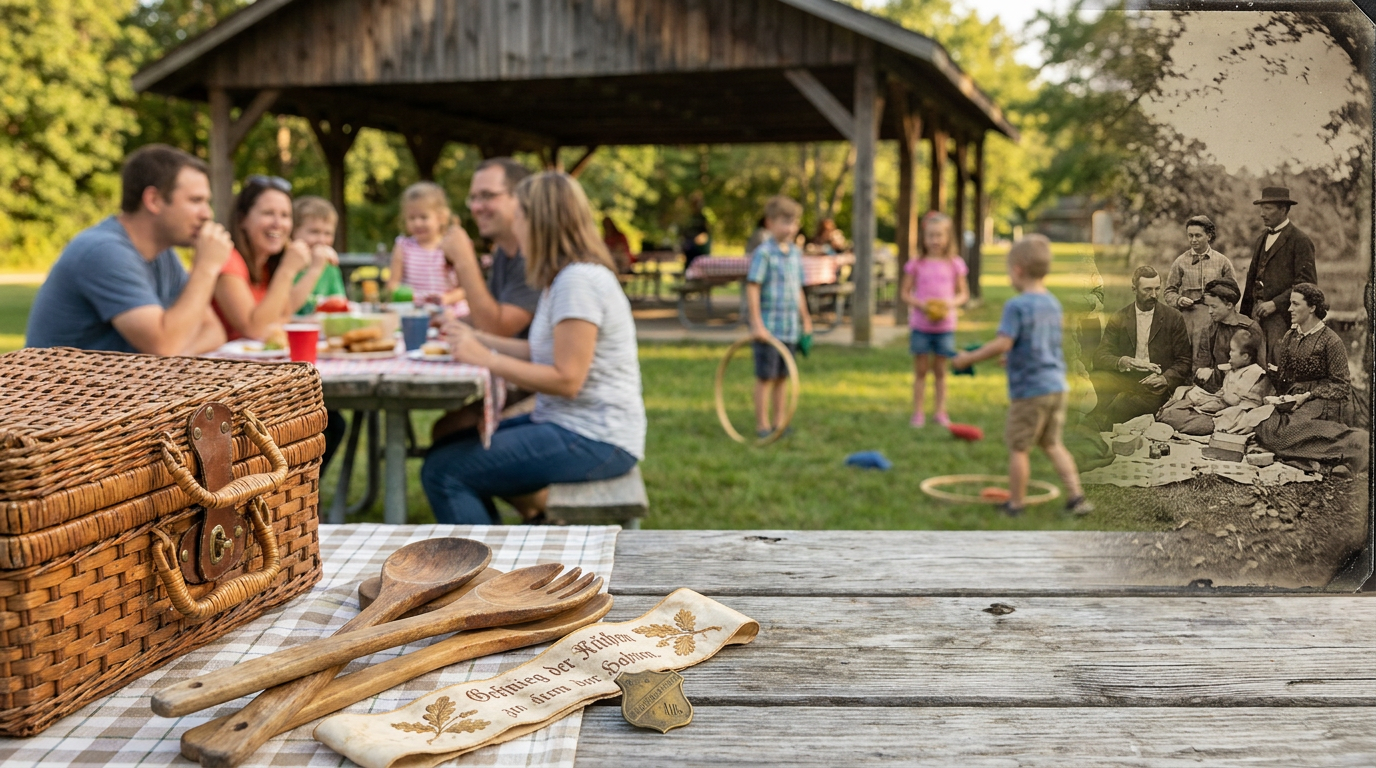
Summer outings allowed members to leave crowded neighborhoods, bring their families, eat outdoors, hear music, play games and renew friendships. A picnic might include a procession, speeches, children’s activities, athletic demonstrations, dancing and enough food to make the journey worthwhile. German-American parks and picnic groves became gathering places where culture was practiced rather than merely remembered.

The broader American community embraced the same social architecture. Churches, labor unions, fire companies, schools, veterans’ groups, businesses and extended families all developed their own summer picnics. Their traditions came from many sources, but German-American club culture helped demonstrate how a voluntary organization could create belonging through recurring public gatherings.

We can still see the pattern at company picnics, church socials, family reunions and civic cookouts: reserve a shelter, assign the side dishes, organize games, locate folding chairs and hope the person carrying the ice actually arrives.

Some customs become American not through a grand announcement, but through a signup sheet.

5. Singing Societies Helped Put Music in the Summer Air

Long before amplified festival stages, German-American communities were filling halls, parks and streets with song.

Singing societies were a major part of nineteenth- and early twentieth-century German-American life. Local choirs joined regional organizations, and large Sängerfeste brought multiple groups together for ambitious musical celebrations. Archival records from Philadelphia document a particularly extensive network. These events could include formal choral works, parades, banquets, informal singing, dancing and outdoor concerts.

The movement was culturally specific, but it was not always culturally closed. Historical records from Philadelphia show how extensive the singing-society network became, while accounts of festivals describe non-German spectators joining concerts and picnics. Music made the boundary between “their festival” and “our town’s festival” wonderfully porous.

German musicians and conductors were only part of America’s developing concert culture, but they were an influential part. Brass ensembles, community bands, choral festivals and park performances became expected ingredients of civic celebration. Add a dance floor or pavilion, and the evening could move easily from listening to participation.

You can hear the descendant of that tradition whenever a municipal band plays in a park, a polka spills from a festival tent, a community choir performs outdoors or a summer concert invites strangers to share the same lawn.

The songs may change. The folding chairs do not.

6. The Turner Spirit Made Recreation a Community Project

The American Turners grew from the German Turnverein movement, which combined physical fitness with education, civic participation and social life. Turner halls appeared in communities across the United States, offering gymnastics and other activities while also serving as important gathering places.

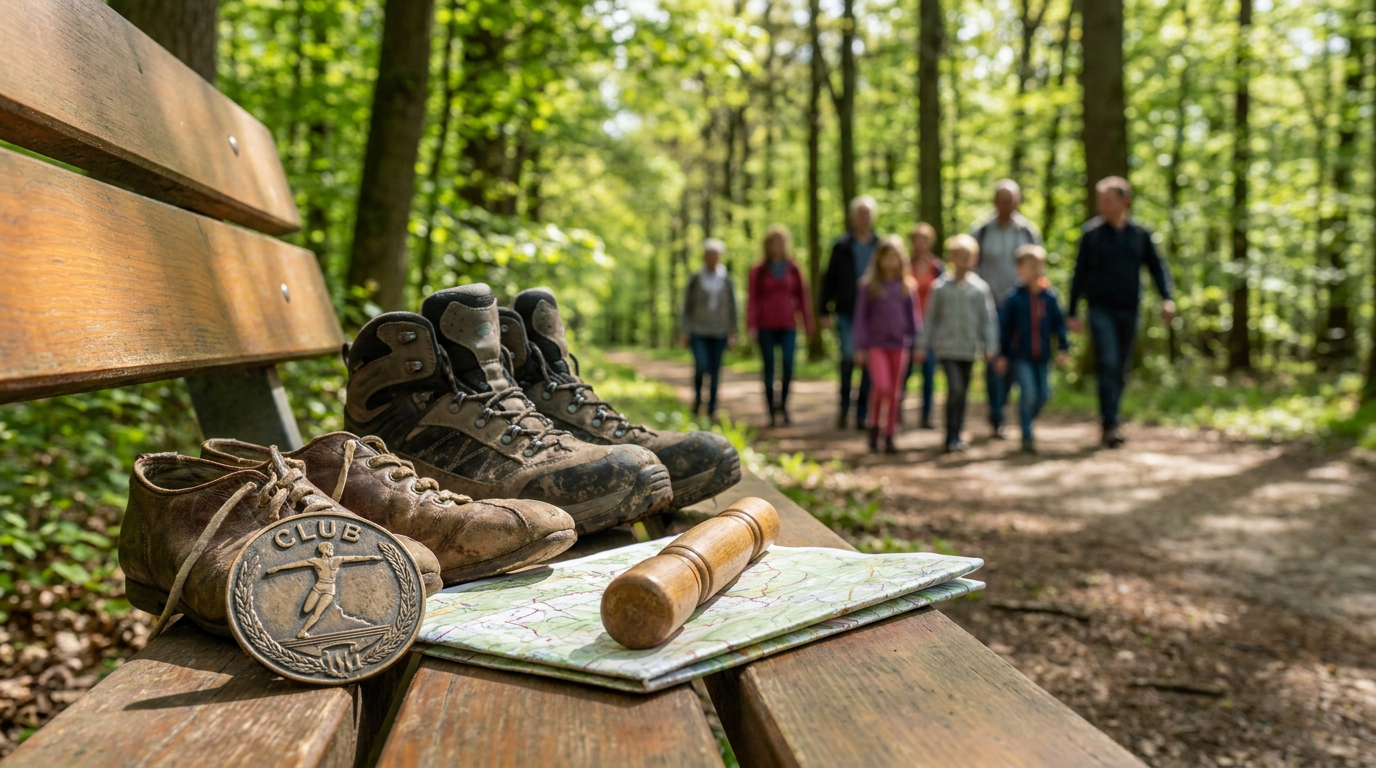
The American Turners did not invent American exercise, hiking or outdoor recreation. Those practices have many origins. But they helped advance the idea that physical activity could be organized, communal, educational and open to families—not merely military training or private competition.

In summer, that spirit naturally moved outdoors. Club excursions, field days, demonstrations, games and picnics connected fresh air with fellowship. The result feels surprisingly current. Think of recreation leagues, community fitness events, charity walks, park programs and family field days. The activities differ, but the larger belief is familiar: a healthy community should create places where people move together.

Even the German phrase frische Luft—fresh air—carries an entire philosophy in two words. Go outside. Walk. Stretch. Let the children run. Meet someone. Come home pleasantly tired.

That may be the most practical summer tradition on this list, and it requires no translation at all.

7. Volksfest Energy Became Part of American Festival DNA

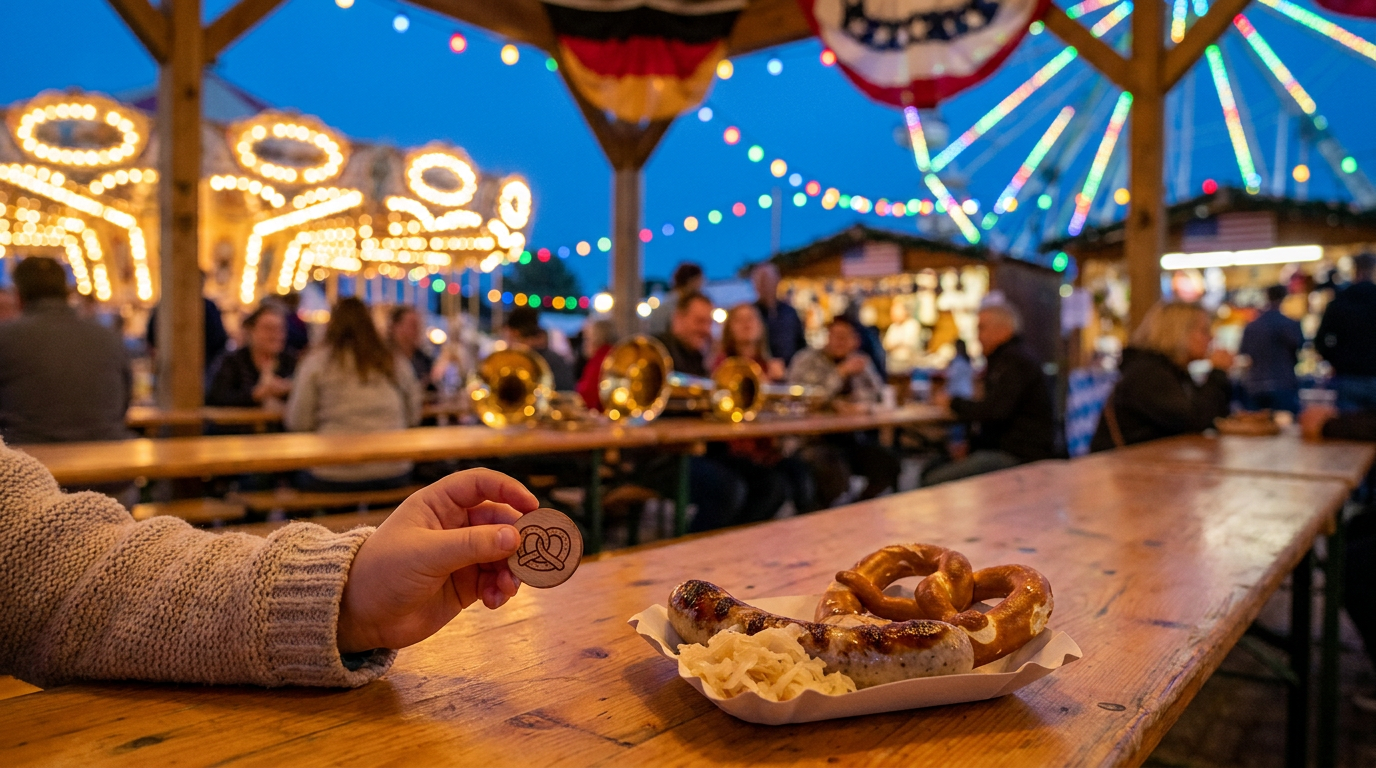
A German Volksfest is, literally, a people’s festival. The form varies, but the essential ingredients are recognizable: food, drink, music, games, decorated grounds, rides or amusements, local pride and a crowd that temporarily turns public space into a shared celebration.

America already had fairs, market days, harvest gatherings, religious celebrations and public entertainments from many cultural sources. German immigrants did not invent the American county fair or street festival. What they contributed was a powerful festival vocabulary—beer gardens, music pavilions, club processions, sausage stands, communal tables and a style of organized merriment that traveled well.

This is why German-American summer festivals can feel both distinctive and completely familiar. A visitor may arrive for the bratwurst or polka and recognize the larger format immediately: wristbands, food booths, children’s games, craft vendors, live music, old friends and a volunteer committee quietly solving seventeen problems behind the scenes.

By late August, that festival energy begins leaning toward Oktoberfest. Although Munich’s famous Oktoberfest starts in September, American celebrations often stretch across the early fall calendar. The transition feels natural because the groundwork was laid all summer: gather outside, invite the community, feed everyone and give them a reason to stay for one more song.

8. Why the German Roots Became So Easy to Miss

If these influences are so widespread, why do they often go unnoticed?

Success is one reason. A tradition can become almost invisible when the larger culture adopts it. “German-American potato salad” shortens to “potato salad.” A Biergarten becomes “the patio.” A sausage shaped by Old World knowledge becomes a hot dog at an American ballpark.

Assimilation also played a role. German surnames were Anglicized. Families intermarried. Recipes were rewritten in English. German-language institutions declined. During the First World War, intense anti-German pressure led many communities and families to suppress language, names and public expressions of heritage. Some customs disappeared; others survived by shedding their labels.

That is why German Heritage discovery can feel less like finding something foreign and more like recognizing something familiar. The evidence may be on a recipe card, in a club photograph, inside a picnic basket or in the way your family automatically gathers around the longest table.

“America did not simply preserve German traditions under glass. It welcomed them to the picnic, changed the recipe and carried the best parts forward.” — GERMAN HERITAGE USA

Before Summer Ends, Put Your Heritage on the Table

Late August is a perfect time to conduct a little family-history experiment.

At your next cookout, reunion, festival or patio evening, look around. Is there a recipe with a German surname attached to it? A preference for bratwurst over burgers? A family story from Milwaukee, Cincinnati, St. Louis, Texas, Pennsylvania or another German-American center? An old photograph of a singing society, Turner hall, brewery picnic or summer gathering?

Ask the oldest person present what summer looked like when they were young. Record the answer. Photograph the recipe card. Write down the name of the town, club, church or picnic grove they mention. Heritage often returns through small details.

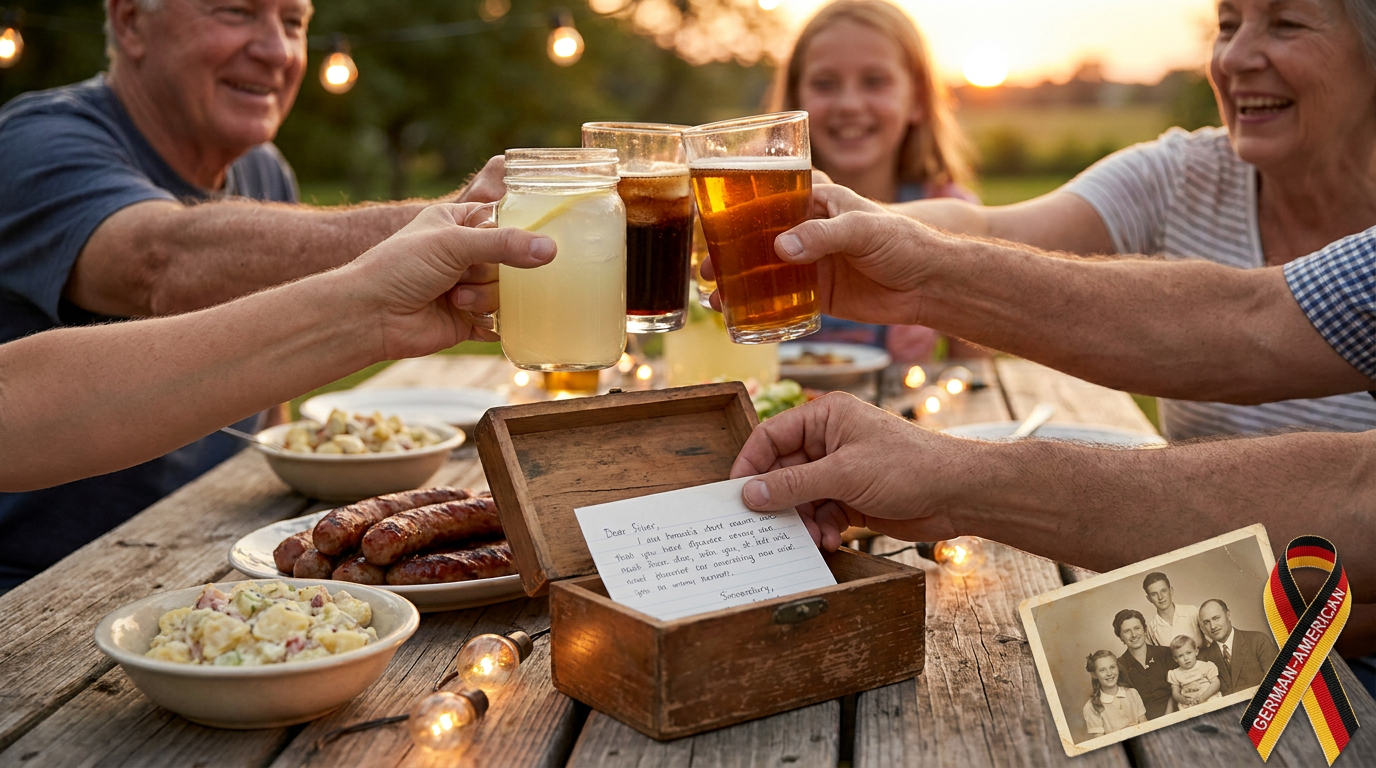
Then create a tradition of your own. Set up a long table. Grill sausages. Serve two kinds of potato salad and let everyone debate them. Play music. Invite a neighbor. Teach the children one German word—perhaps Gemütlichkeit—and show them what it means by making room for them in the celebration.

Because German-American heritage is not limited to a museum case, a passenger list or a once-a-year festival. It lives in the ways people gather, eat, sing, laugh and welcome one another.

You may have been celebrating it all summer.

Got A Little German In You? Your German Heritage Is Calling You!

GERMAN HERITAGE USA — Discovering German Heritage Traditions, Foods, Music and Festivals All Across America.

Why Germans Love Biergartens: The Summer Tradition America Has Embraced

How a centuries-old German tradition of friendship, food, and community found a second home in America.


On a warm summer evening, something special begins to happen.

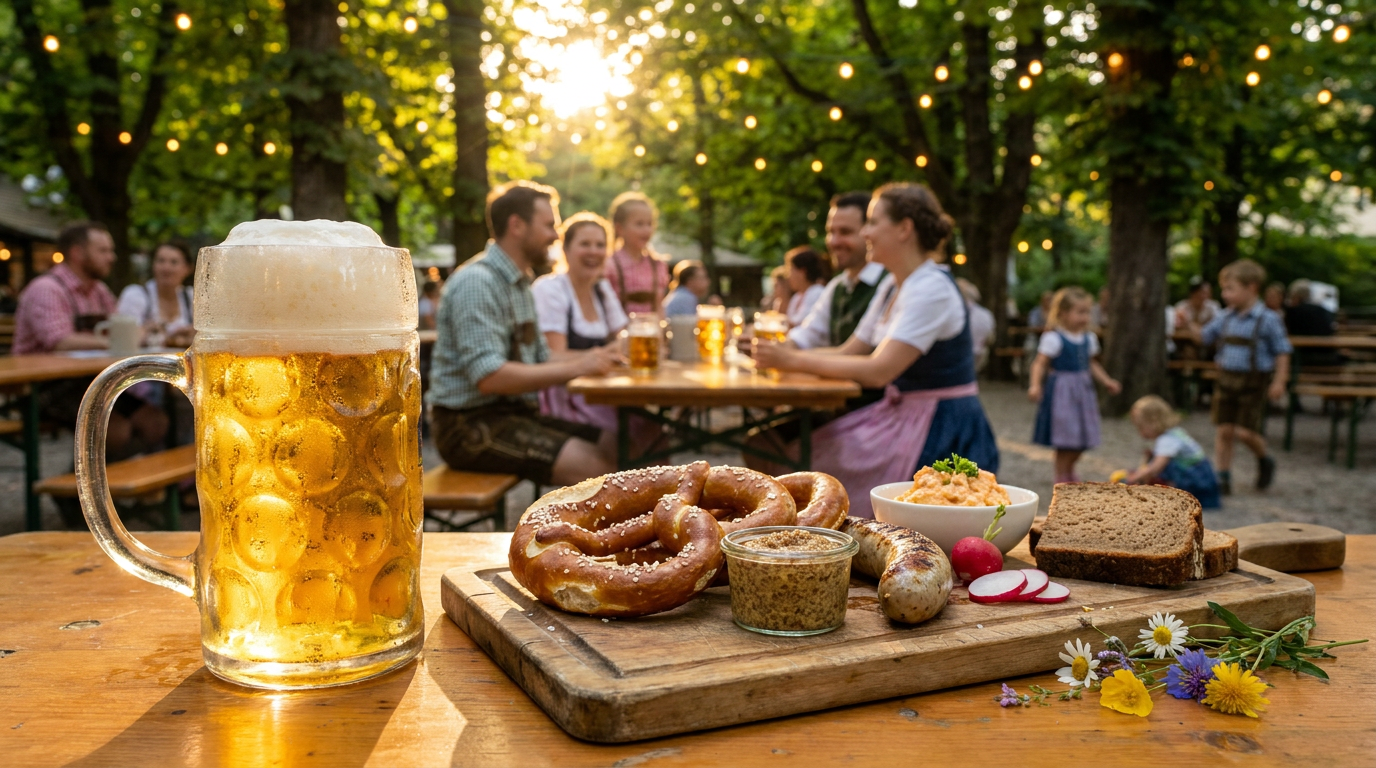
The grill starts sizzling with bratwurst. The aroma of freshly baked pretzels mingles with the scent of blooming flowers. Glasses clink together as laughter echoes beneath the shade of towering trees. Children chase one another across the lawn while grandparents exchange stories that have been told for generations. Neighbors wander over carrying homemade potato salad, desserts, or perhaps a favorite family recipe that has been passed down for decades.

Whether it’s called a backyard barbecue, a neighborhood cookout, a church picnic, or a German biergarten, the feeling is remarkably familiar.

Few people realize that one of Germany’s oldest and most cherished traditions has quietly become woven into the fabric of American life.

The biergarten is not simply a place to enjoy a cold beverage.

It is a celebration of friendship.

It is a gathering place for families.

It is where strangers become neighbors and neighbors become lifelong friends.

More than two centuries after its beginnings in Bavaria, the spirit of the biergarten continues to thrive—not only across Germany, but throughout the United States wherever people come together to enjoy good food, meaningful conversation, and the simple pleasure of spending time outdoors.

As German immigrants crossed the Atlantic during the nineteenth century, they carried much more than luggage. They brought recipes, music, traditions, craftsmanship, festivals, and a way of gathering that still influences American culture today.

The story of the biergarten is ultimately a story about people.

And perhaps that is why Americans have embraced it so enthusiastically.


A Cool Solution That Changed German Culture Forever

The story begins in Bavaria during the early nineteenth century.

Long before electricity and refrigeration, keeping beer fresh throughout the hot summer months presented a serious challenge. Beer spoiled quickly in warm weather, and brewers needed an innovative solution.

The answer came beneath the ground.

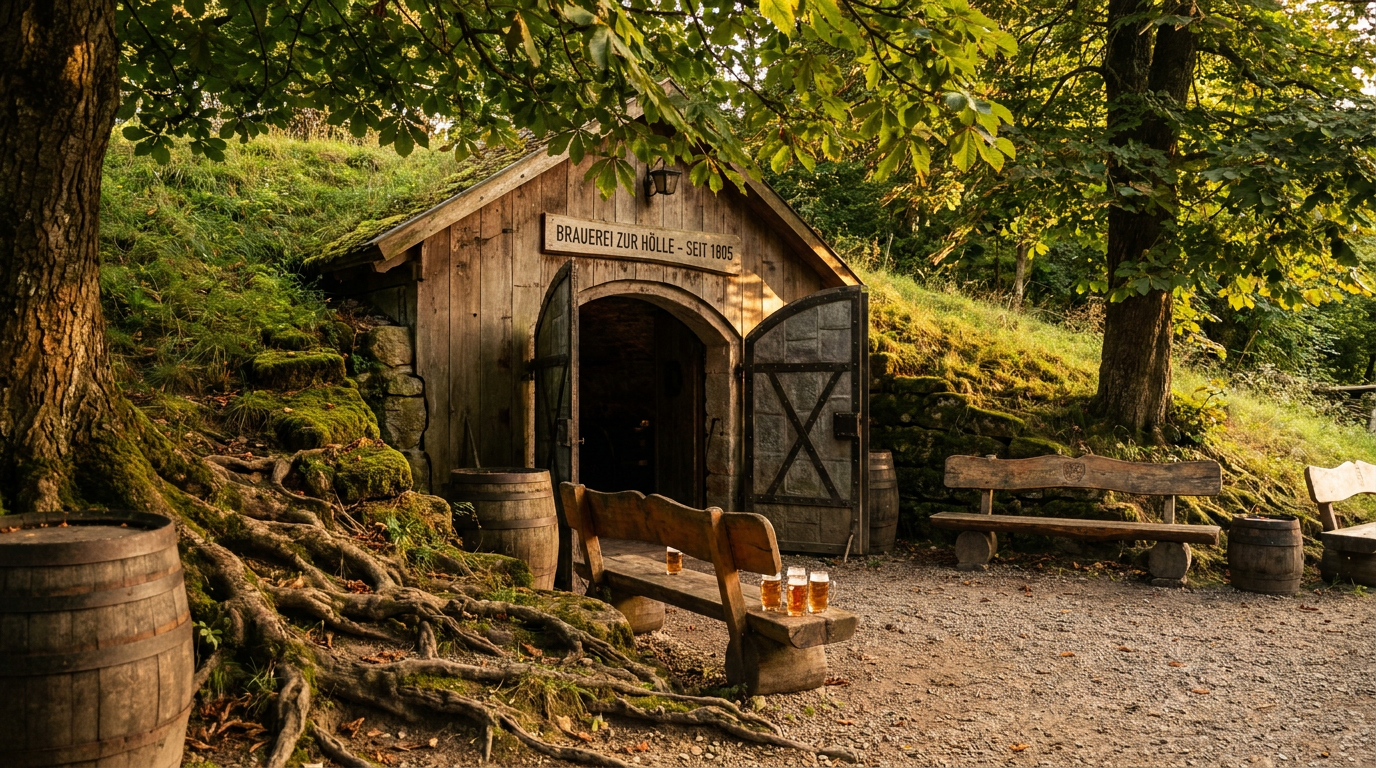
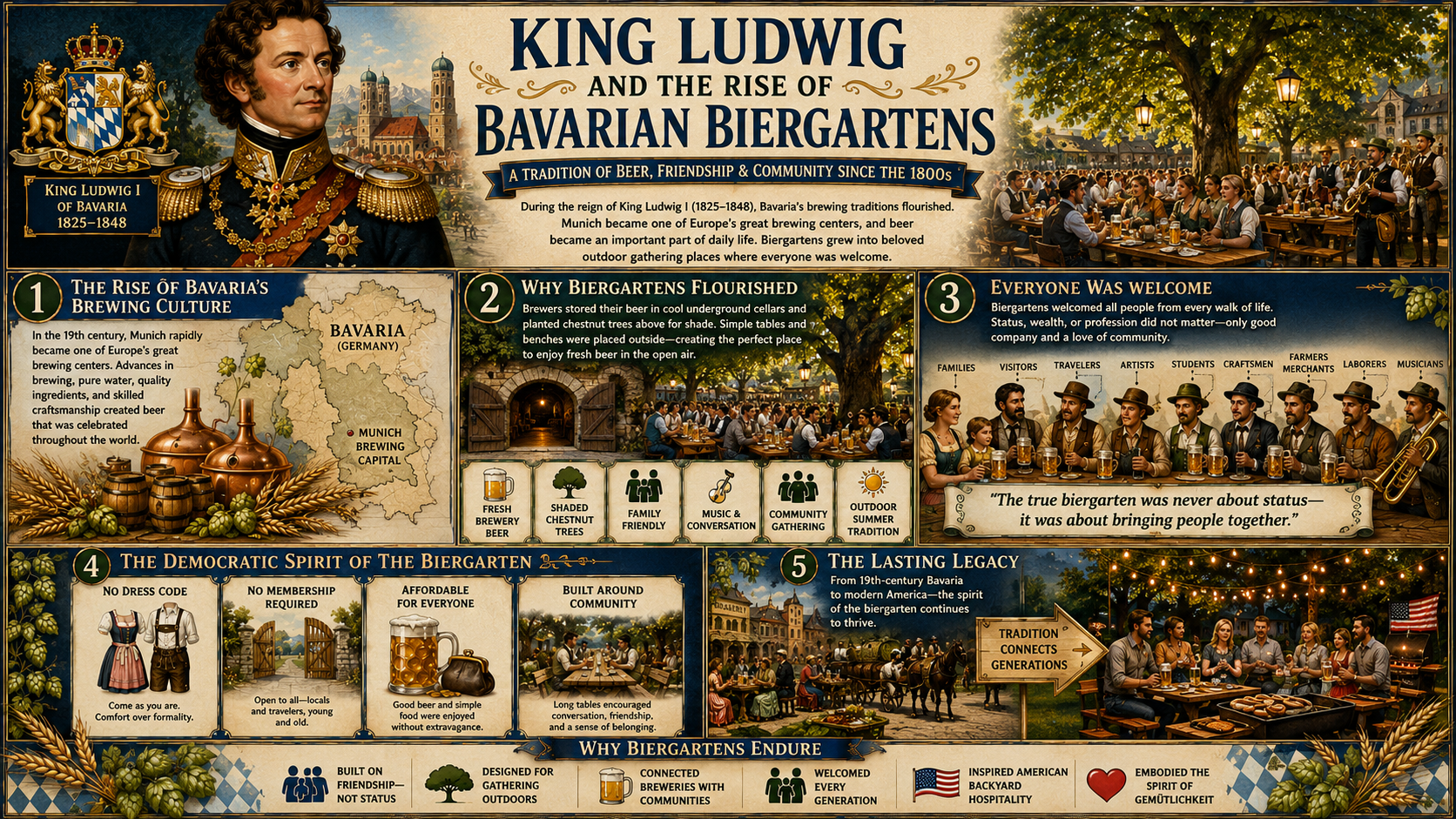
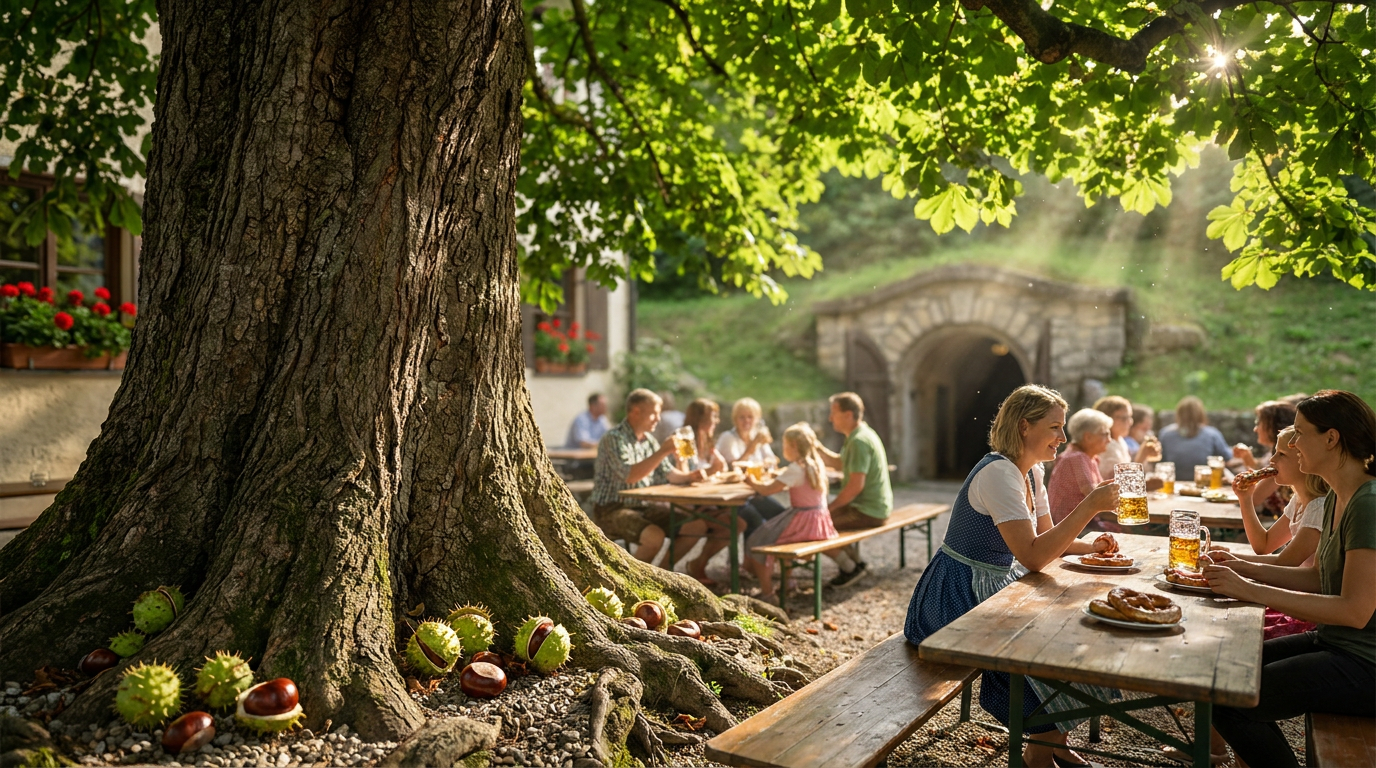
Large breweries began excavating deep storage cellars into hillsides where temperatures remained naturally cool throughout the year. These underground lager cellars provided ideal conditions for storing beer until it was ready to serve.

To protect the cellars from the summer sun, brewers planted rows of chestnut trees above them. Their broad canopies provided dense shade, while their shallow root systems helped avoid damaging the vaulted ceilings below.

The result was both practical and beautiful.

As visitors arrived to purchase fresh beer directly from the breweries, simple wooden tables and benches were placed beneath the trees.

Without intending to, Bavarian brewers had created one of the world’s most beloved outdoor gathering places.

The modern biergarten had been born.


More Than Beer—A Place for Everyone

Unlike many establishments of the time, biergartens quickly developed into places where social status mattered very little.

Farmers sat beside merchants.

Craftsmen shared tables with professors.

Musicians laughed with factory workers.

Entire families gathered together.

Children played nearby while parents enjoyed long conversations under the shade of ancient trees.

Long communal tables became one of the defining features of German biergartens.

Rather than encouraging privacy, they encouraged conversation.

If every seat was occupied, newcomers simply joined whoever had room.

Introductions happened naturally.

Friendships followed.

Many lifelong relationships began over shared tables and shared stories.

That welcoming spirit remains one of the defining characteristics of authentic biergartens today.

As the German proverb says:

“Shared joy is double joy.”

The biergarten became the perfect place to experience that simple truth.


King Ludwig and the Rise of Bavarian Biergartens

Bavaria’s brewing traditions flourished during the nineteenth century, particularly during the reign of King Ludwig I.

Munich was rapidly becoming one of Europe’s great brewing centers, and beer had become an important part of daily life.

While regulations surrounding brewing evolved over time, public appreciation for outdoor beer gardens continued to grow.

Biergartens offered something unique.

They were democratic.

Everyone was welcome.

Families.

Visitors.

Travelers.

Artists.

Students.

Laborers.

No elaborate dress code existed.

No expensive membership was required.

The focus wasn’t on luxury.

It was on community.

This welcoming philosophy helped biergartens become gathering places where every generation could enjoy summer together.


Why Chestnut Trees Became Part of the Tradition

Many visitors notice the magnificent chestnut trees that shade traditional Bavarian biergartens.

These trees were chosen for practical reasons.

Their large leaves created excellent shade during the hottest months of summer.

Equally important, their relatively shallow roots were less likely to damage the underground beer cellars.

Over time, these trees became inseparable from the biergarten experience.

Today, many of Germany’s oldest biergartens are still shaded by enormous chestnut trees planted generations ago.

They have become living witnesses to countless celebrations, reunions, engagements, weddings, and family gatherings.

In many ways, the trees symbolize the biergarten itself.

Strong roots.

Generous shade.

A place where people naturally gather.


The Tradition of Bringing Your Own Food

One of the most surprising customs for first-time visitors is that many traditional Bavarian biergartens historically encouraged guests to bring their own meals.

Families packed picnic baskets filled with homemade favorites such as:

  • Fresh rye bread
  • Pretzels
  • Obatzda cheese spread
  • Radishes
  • Pickles
  • Smoked meats
  • Bratwurst
  • Liver sausage
  • Black Forest ham
  • Potato salad
  • Homemade cakes

The brewery supplied the beer.

Families supplied the feast.

Instead of operating like a restaurant, the biergarten became a shared community dining room beneath the trees.

Everyone contributed.

Everyone participated.

Everyone belonged.

That spirit of generosity remains one of the hallmarks of authentic German hospitality.


The True Meaning of Gemütlichkeit

No discussion of biergartens would be complete without one of the most beloved words in the German language:

Gemütlichkeit.

While often translated as “coziness,” the word carries a much deeper meaning.

It describes a feeling of warmth, comfort, friendship, belonging, relaxation, hospitality, and contentment.

Gemütlichkeit cannot be purchased.

It cannot be manufactured.

It happens naturally whenever people genuinely enjoy being together.

A true biergarten is built around this idea.

The beer may attract visitors.

Gemütlichkeit is what encourages them to stay.

As author and Nobel Prize winner Thomas Mann once observed:

“Order and simplification are the first steps toward the mastery of a subject.”

In many ways, the biergarten embodies that philosophy—simple food, simple surroundings, and meaningful human connection creating something extraordinary.

» Read more