The Actual Real Story of How the Chicken Dance Originated

From an Alpine accordion tune to a missing duck costume in Oklahoma, the true story is even more entertaining than the dance.

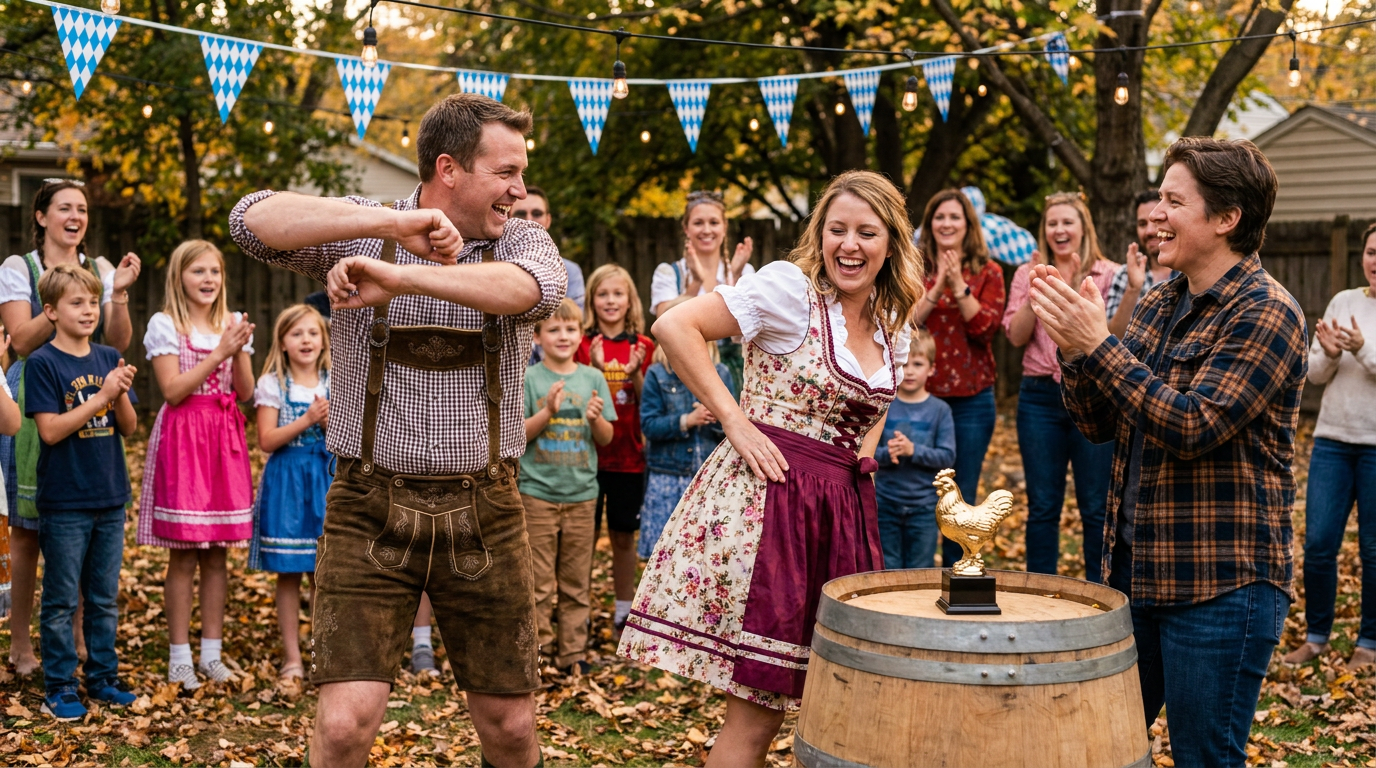
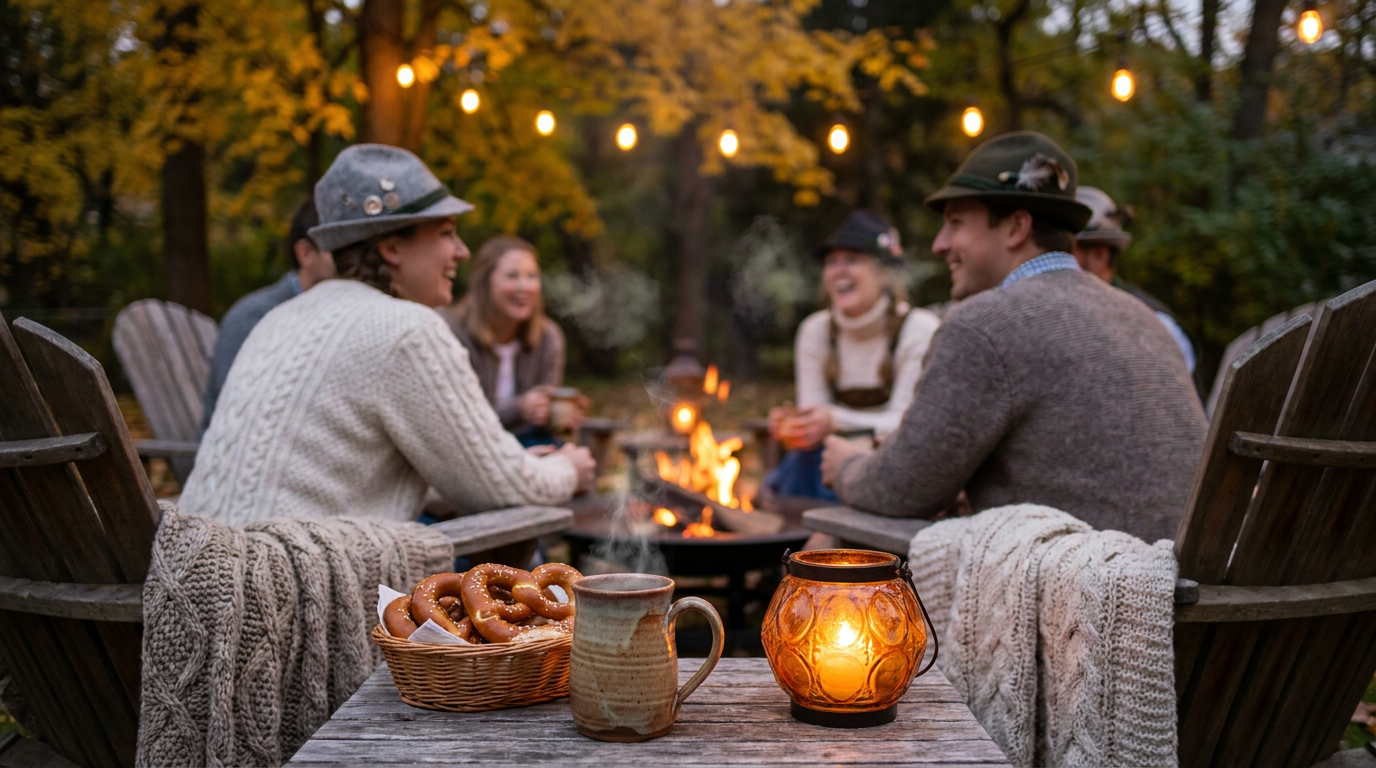
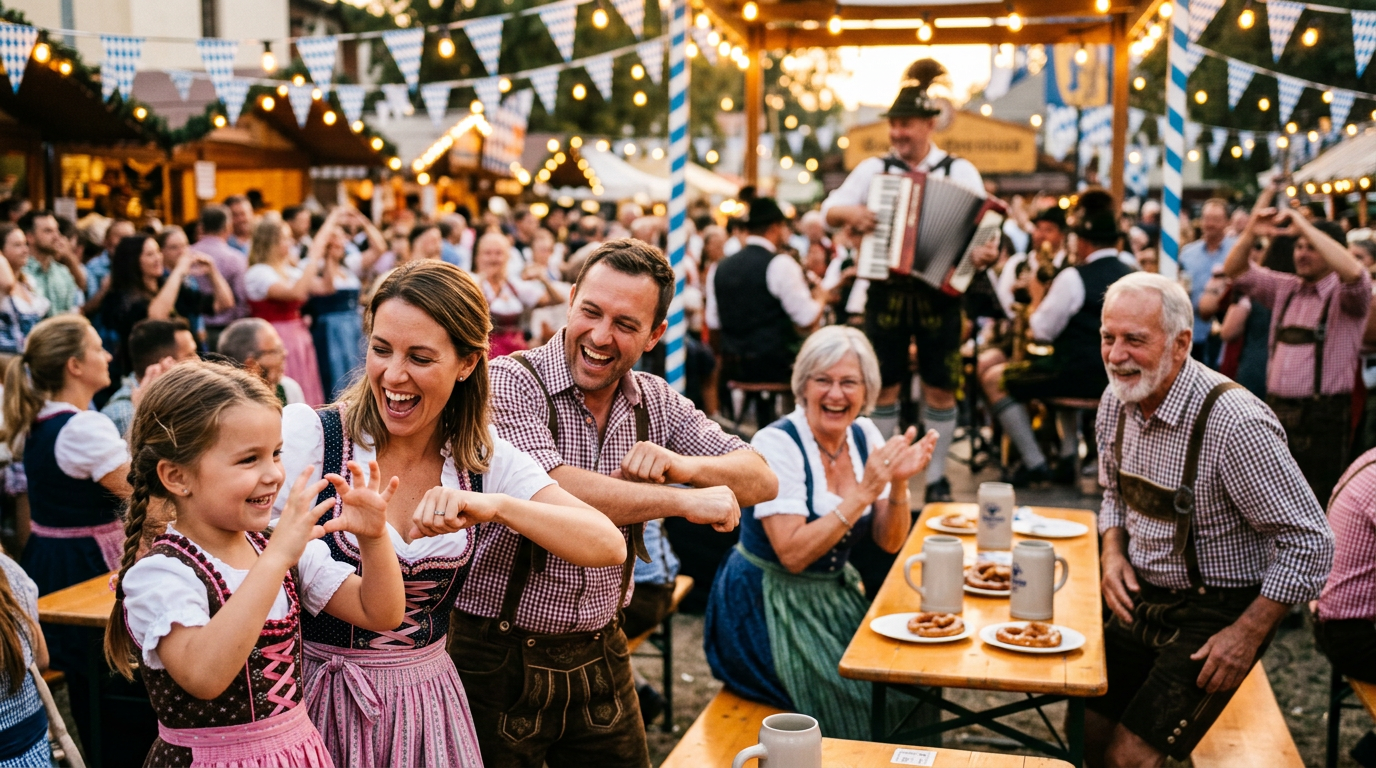
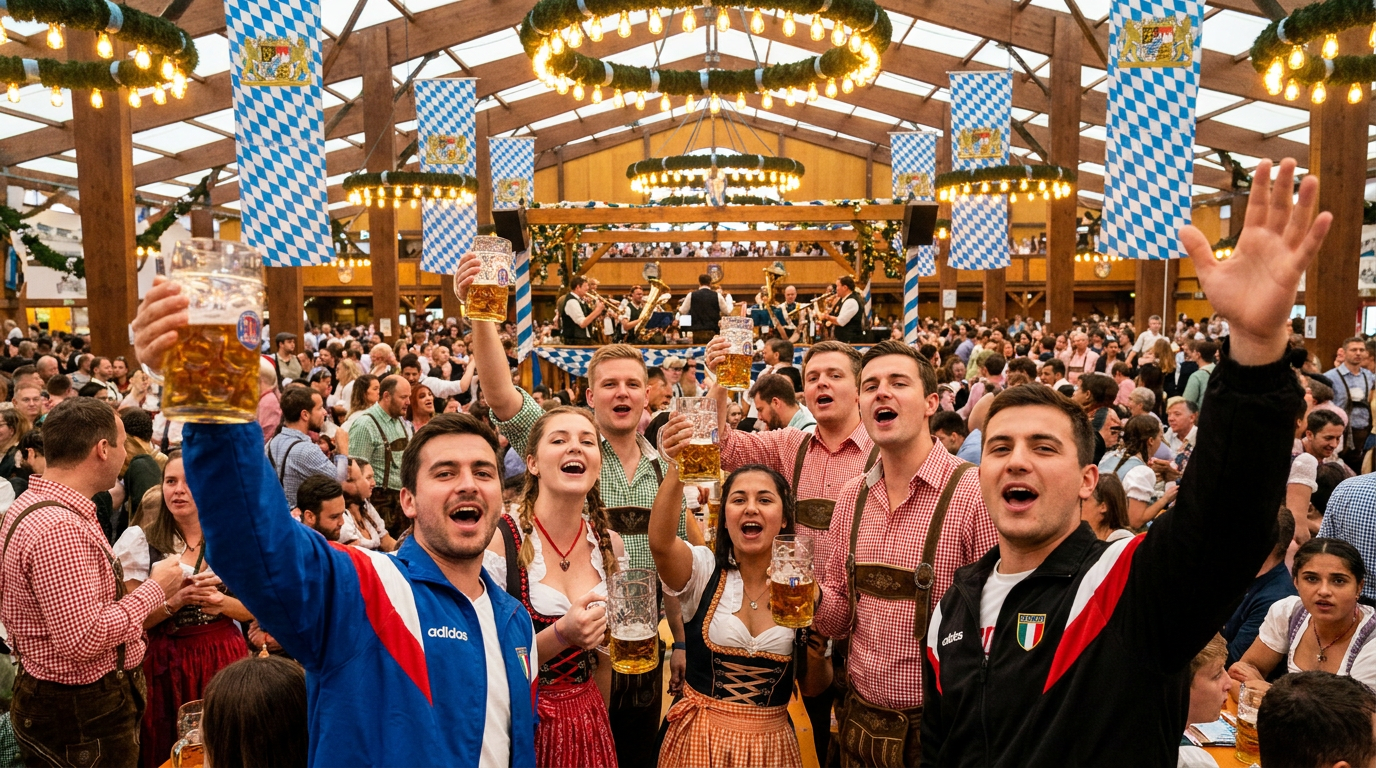
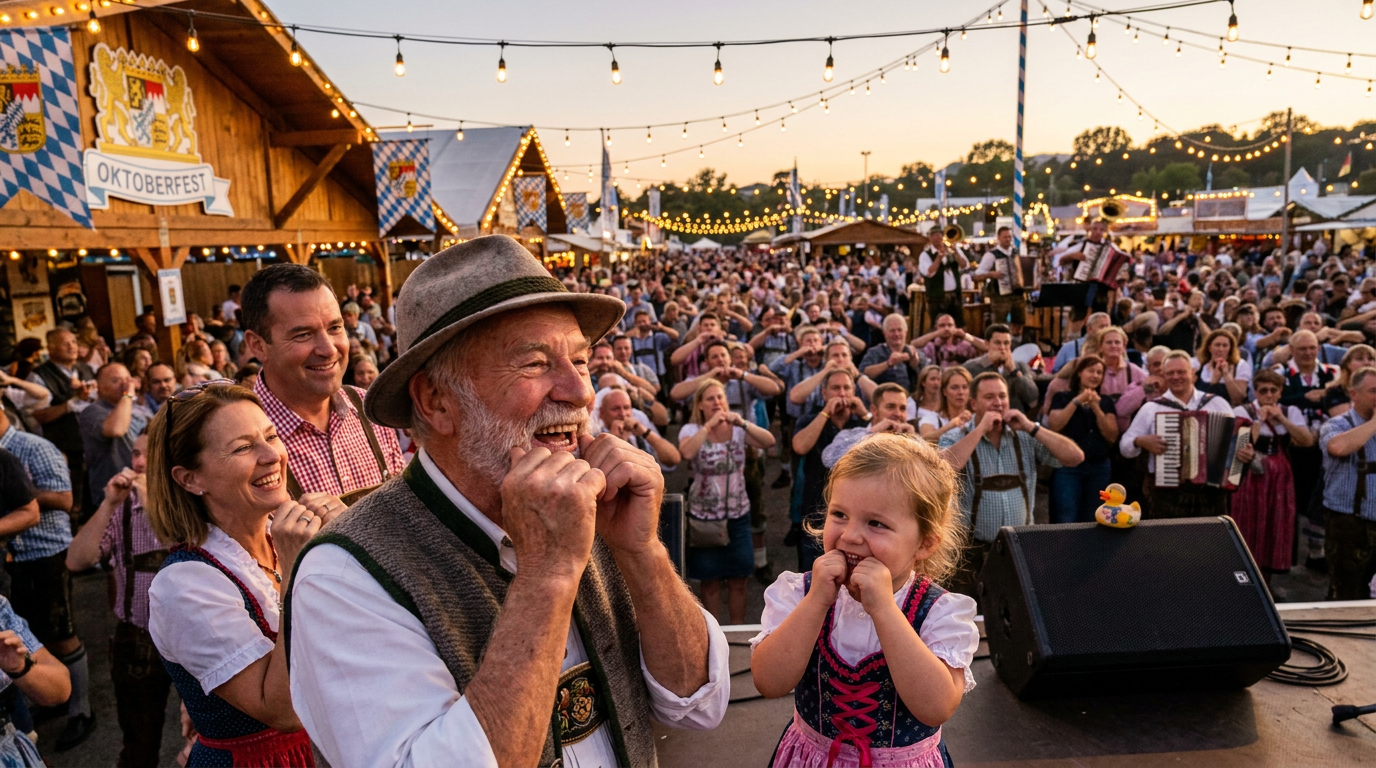
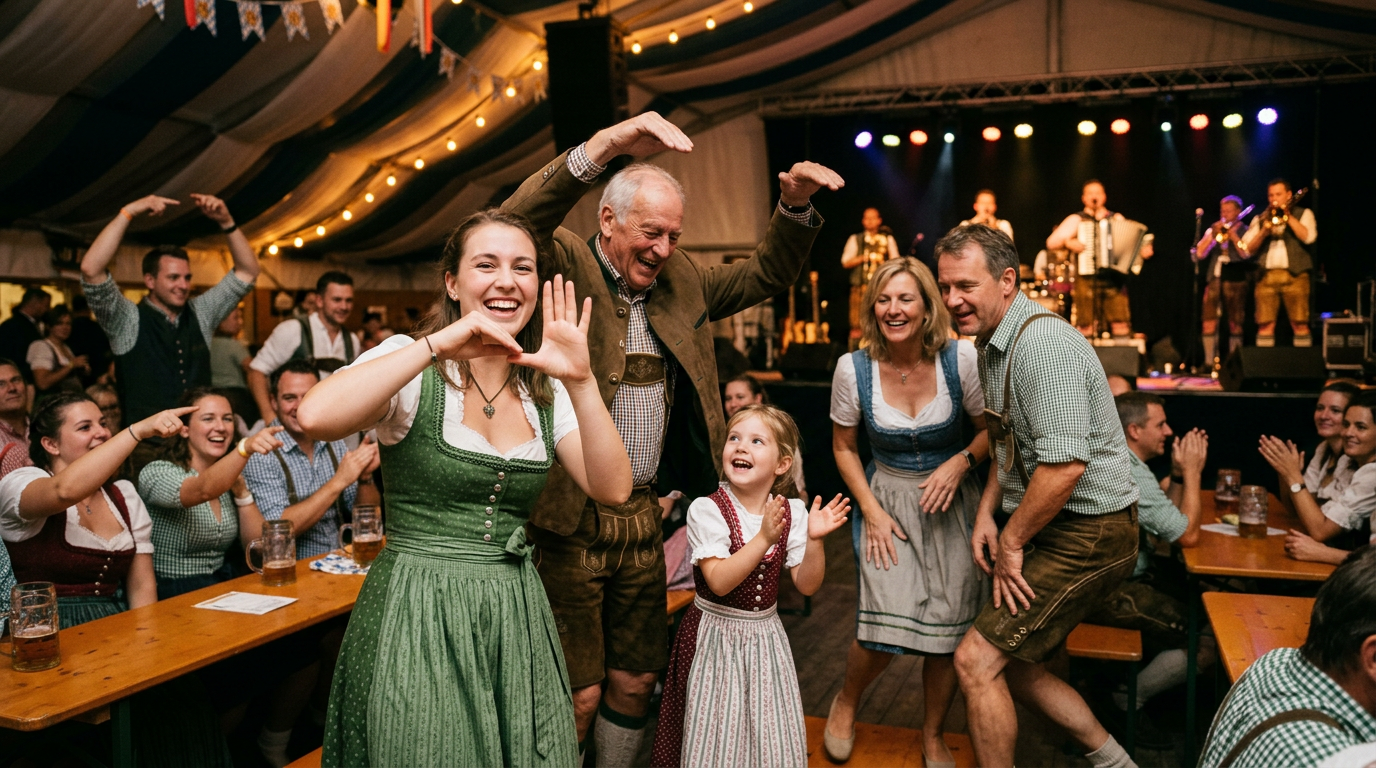
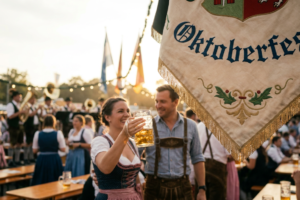
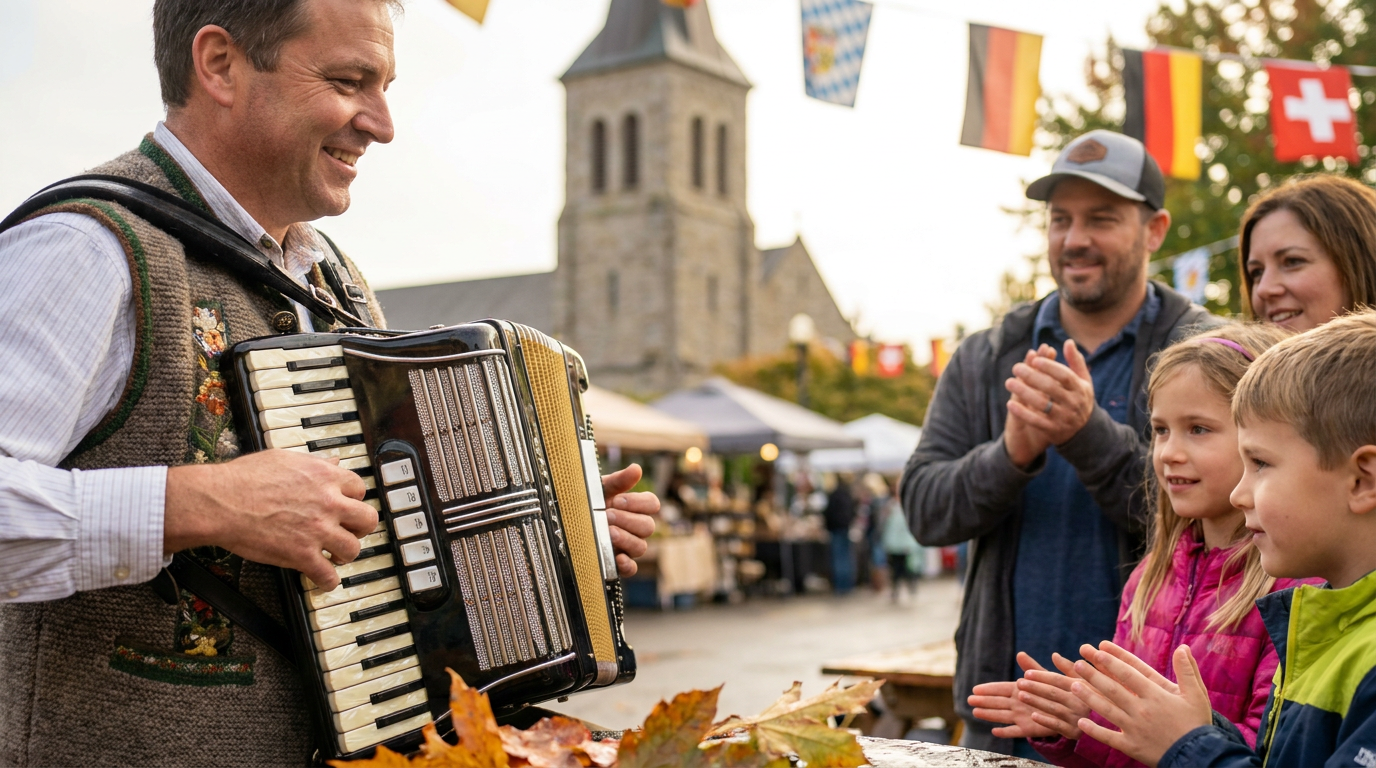
You know the moment. A few bright notes rise above the chatter at an Oktoberfest, wedding reception, or community festival. Someone lifts both hands to their face and starts opening and closing their fingers. A child copies them. Then an uncle who swore he wasn’t going to dance pushes back his chair.

Beaks. Wings. A wiggle. A clap.

The Chicken Dance is underway.

It asks almost nothing of its dancers. You don’t need a partner, a lesson, or even much coordination. A five-year-old and an eighty-five-year-old can join the same circle and understand each other instantly. The movements are deliberately silly, which is precisely why they work: nobody has to worry about looking like the best dancer in the room.
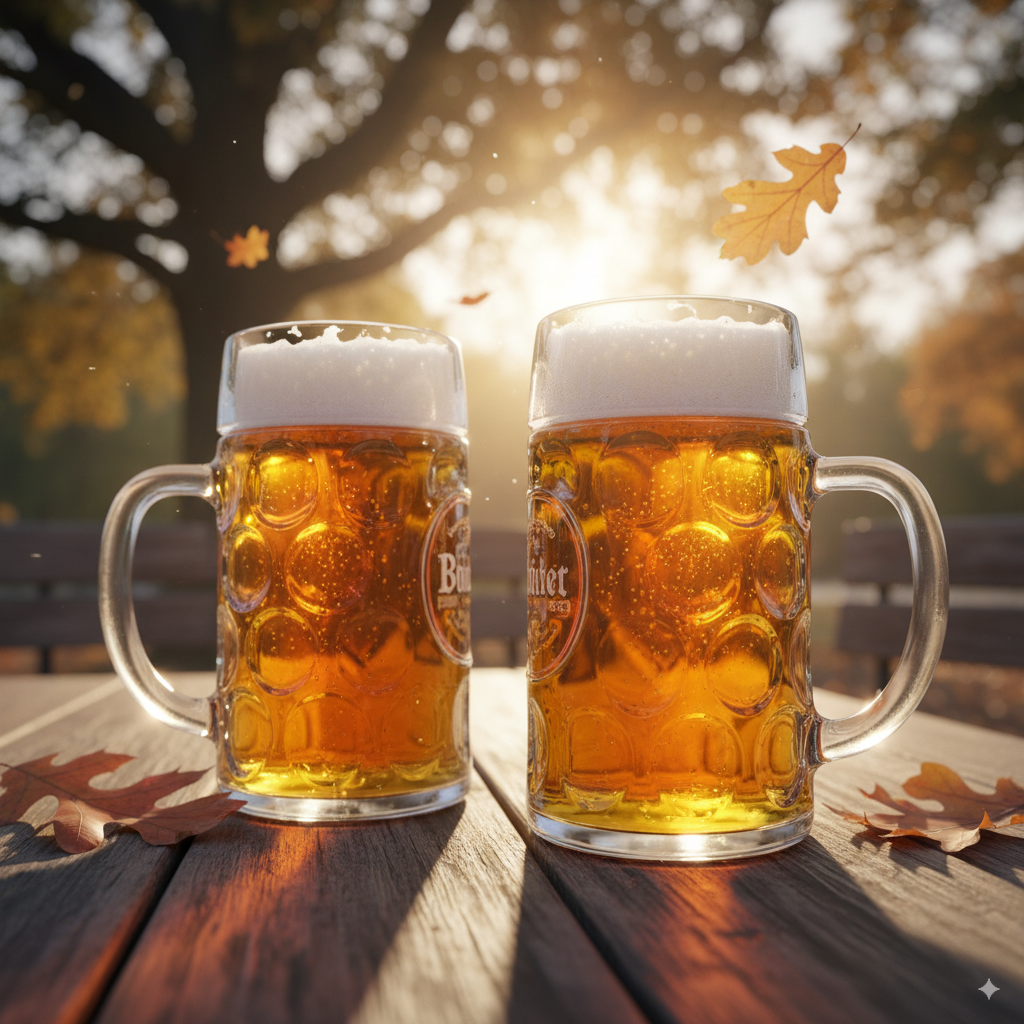
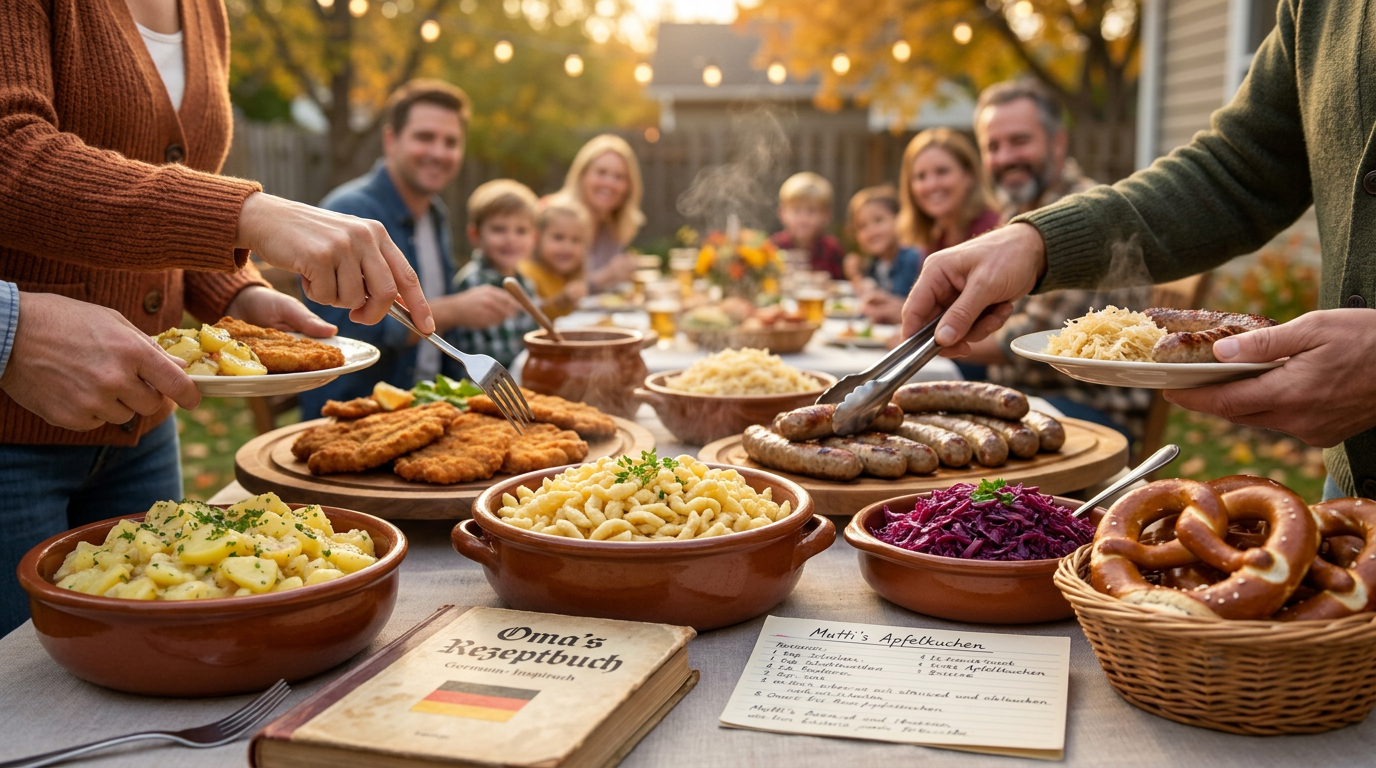
For many Americans, this familiar scene feels inseparable from German heritage celebrations. Play the tune near an accordion, a bratwurst stand, and a blue-and-white tent, and it seems to have arrived directly from Bavaria.

But the melody was composed in Switzerland. Its first bird was a duck. And the story of how it became an American chicken runs through Belgium, Britain, Oklahoma, and Ohio. The route is wonderfully tangled—and it says something useful about how traditions actually grow.

A duck waddles out of the Swiss Alps

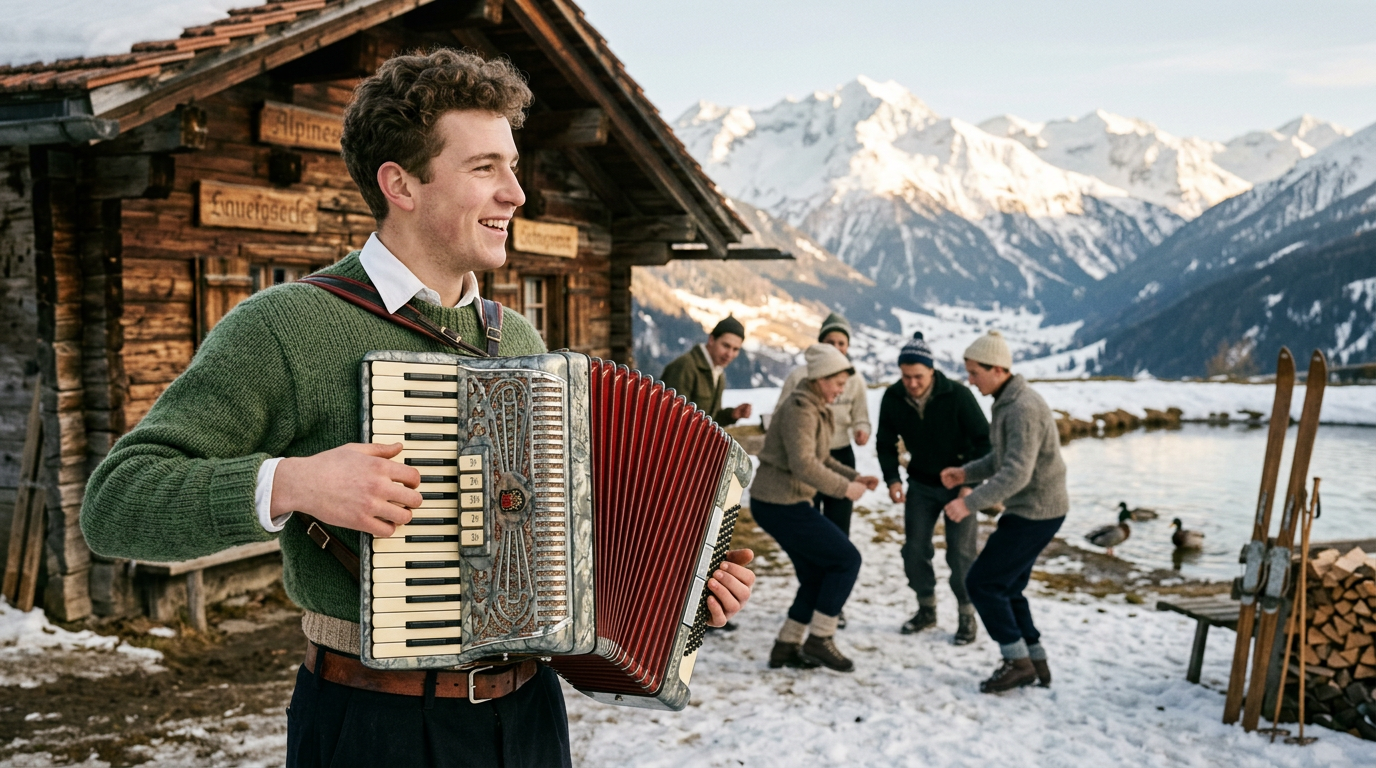
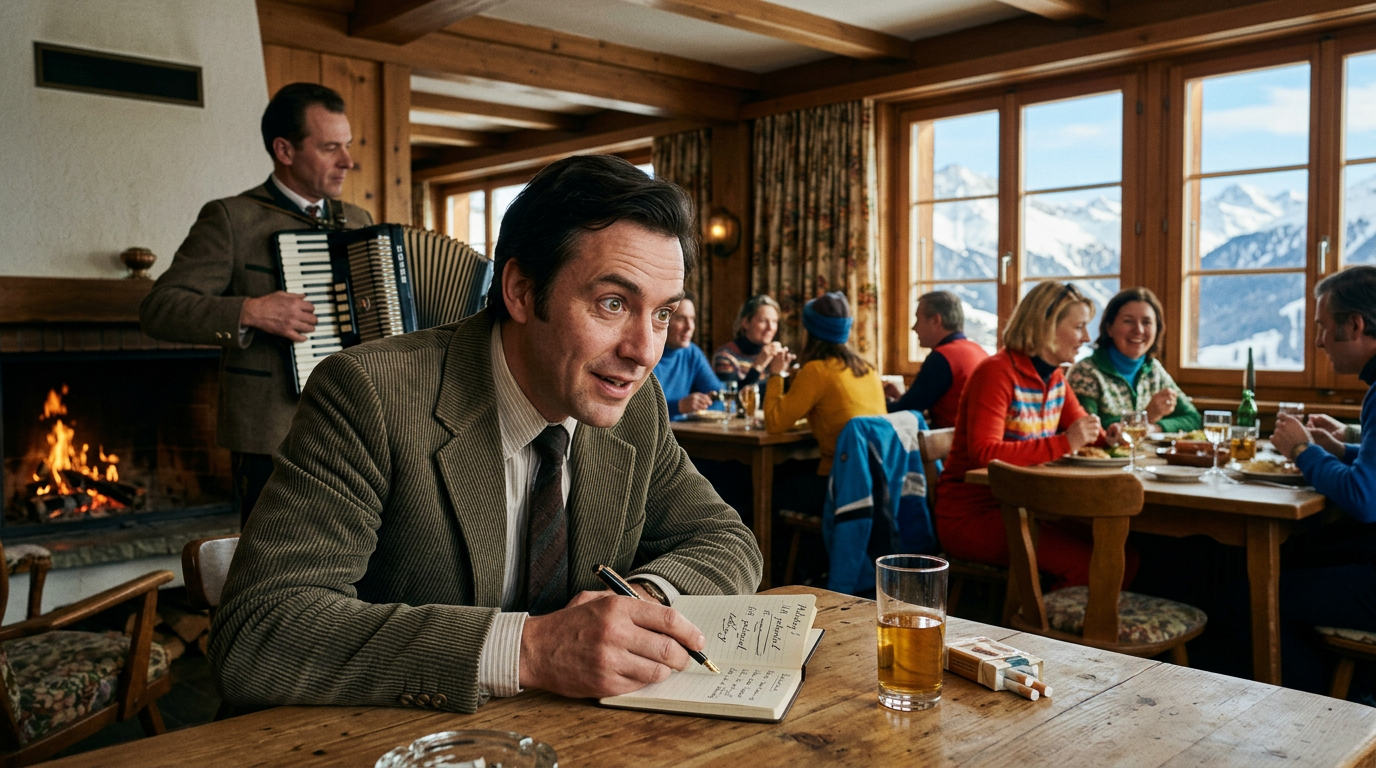
In the 1950s, Werner Thomas was entertaining guests in the Alpine resorts of eastern Switzerland. An accordionist from the canton of Thurgau, he performed in restaurants and après-ski settings around places such as Davos. He developed a short, cheerful instrumental melody, initially something he could use between parts of a performance. Sources commonly place its beginnings in the mid-1950s; 1957 is the year often attached to it.

Thomas had something more memorable than an ordinary musical interlude. Guests recognized the tune. Its bouncy phrases invited movement, and over time the music became linked to a dance called Der Ententanz, German for “The Duck Dance.”

Now picture the familiar choreography with a duck in mind. The fingers make a bill. Bent elbows become wings. The knees dip, the backside wiggles, and the body starts to waddle. Suddenly the movements that Americans call “chicken” look suspiciously ducklike.

Thomas later said his inspiration came partly from birds and partly from the skiers he watched around the resorts. The knee-bending motion of people on skis worked its way into the dance. Its unlikely ingredients were an Alpine musician, a simple melody, birds, and people preparing to glide down a snowy slope. Swissinfo’s account of Werner Thomas’s career draws on interviews and reporting about the composer.

For years, Thomas played the piece live without the world treating it as a potential hit. Then a Belgian music producer went on vacation.

A producer hears more than a little interlude

In the early 1970s, Louis van Rijmenant heard Thomas’s tune while visiting Davos. He recognized that its instantly memorable melody might travel beyond the mountains. The Belgian group Cash & Carry released a synthesizer-driven recording in 1973 called “Tchip Tchip.”

Thomas was reportedly disappointed when he first heard the electronic arrangement. The sound was a long way from the accordion music he had imagined. Listeners, however, took to it. The recording became a success in Belgium and Switzerland, and van Rijmenant helped take the tune to the wider music industry. Swissinfo traces that early recording history.

From there, the melody migrated through new recordings and new names. A version by the Dutch group De Electronica’s became a major hit in Germany. The British group The Tweets released “The Birdie Song,” which reached No. 2 on the UK singles chart in 1981. Their bird costumes on television made the movements hard to forget. Elsewhere, dancers knew versions such as France’s La Danse des Canards and Italy’s Il ballo del qua qua. The Official Charts Company confirms the Tweets’ chart peak.

Duck, bird, little bird, chicken: the name changed with the country and the performer. The appeal stayed remarkably constant. You could hear the tune once, watch somebody do the motions, and join in before it ended. Even without knowing a word of another language, you were part of the dance.

The scale of its travels is surprising, too. Swiss reporting counts roughly 400 recorded versions and estimates sales of more than 50 million copies across over 40 countries. Those are broad retrospective estimates, but they convey how far the tune moved from Thomas’s restaurant performances. The same melody could be a synthesizer novelty in one place, a children’s party song in another, and a familiar festival cue somewhere else. Each new arrangement gave listeners a different way into essentially the same joke: a room full of people agreeing, for a minute or two, to act like birds. Swissinfo surveys its international recordings.

The melody had become an international traveler. America was about to give it a particularly memorable new identity.

The missing duck costume in Tulsa

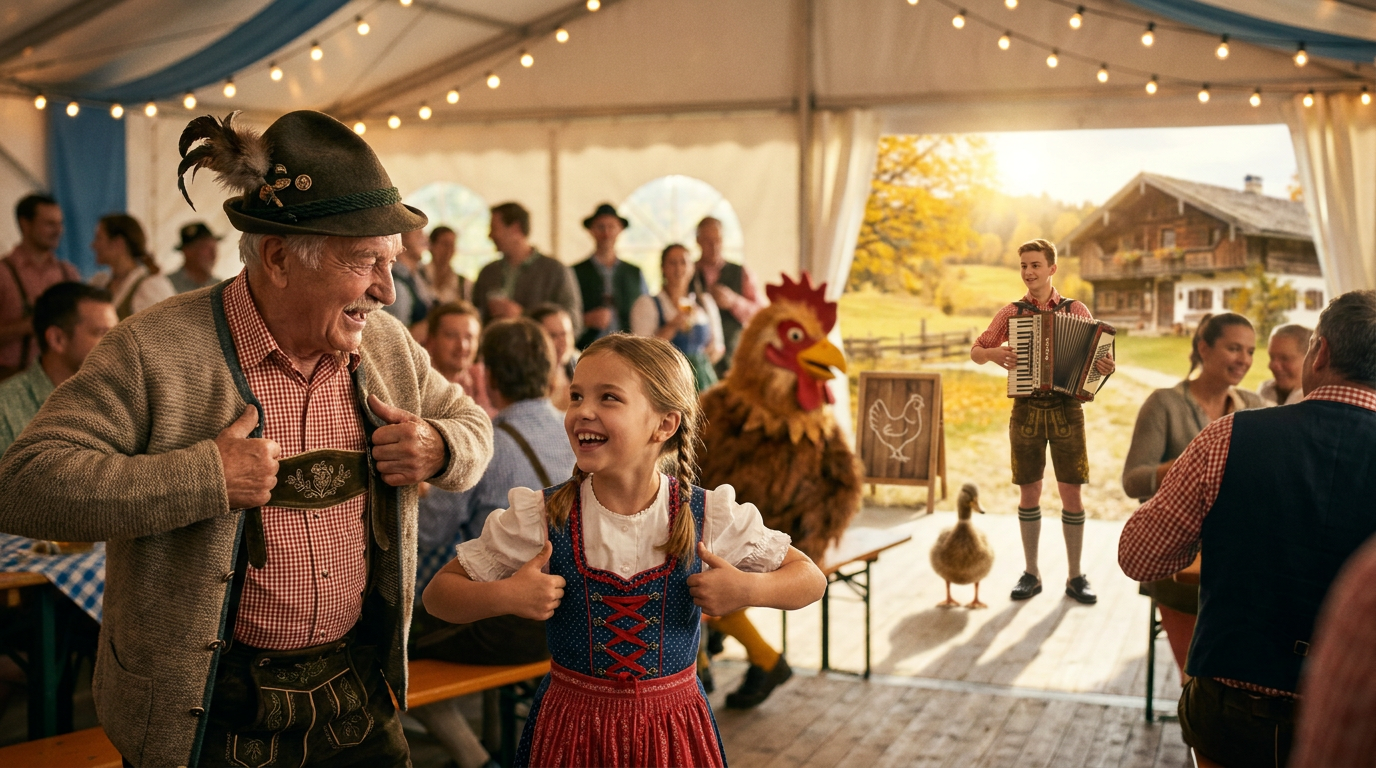
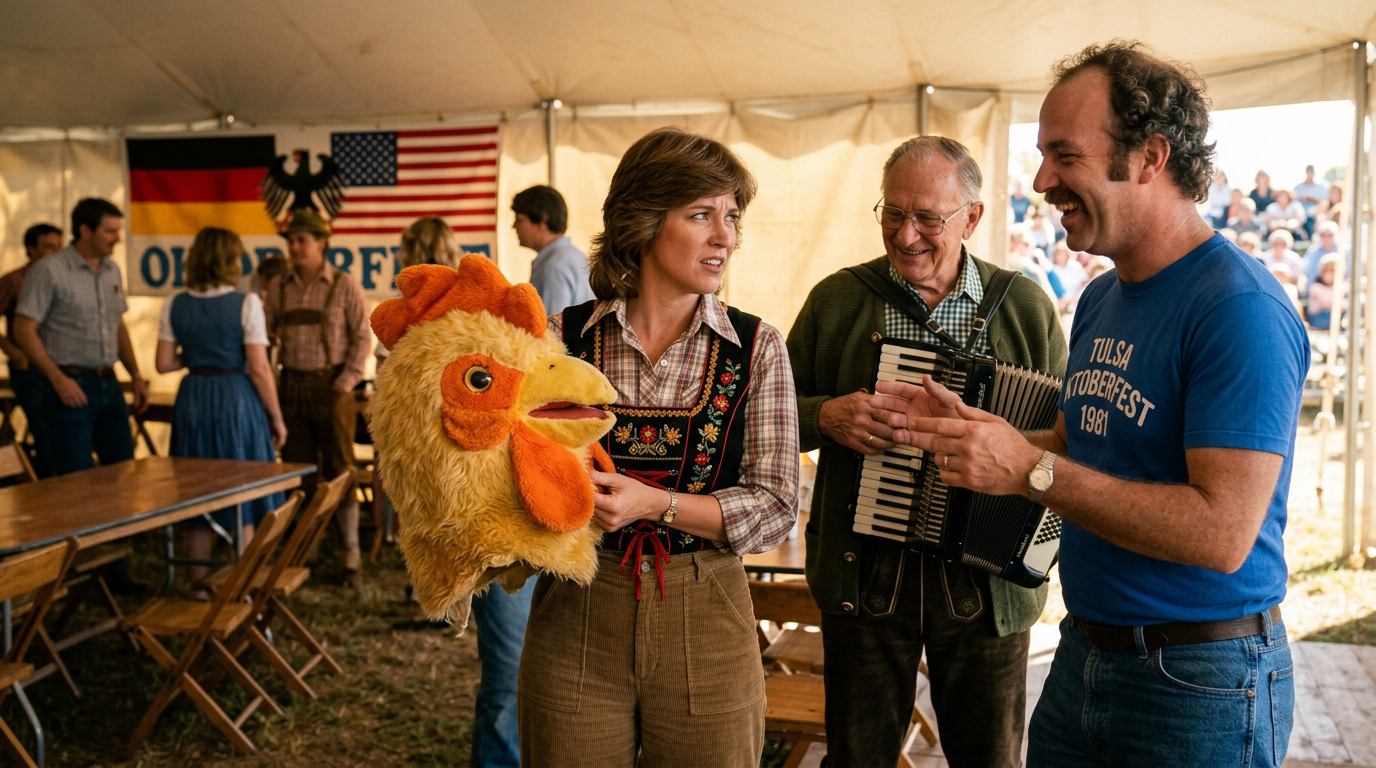
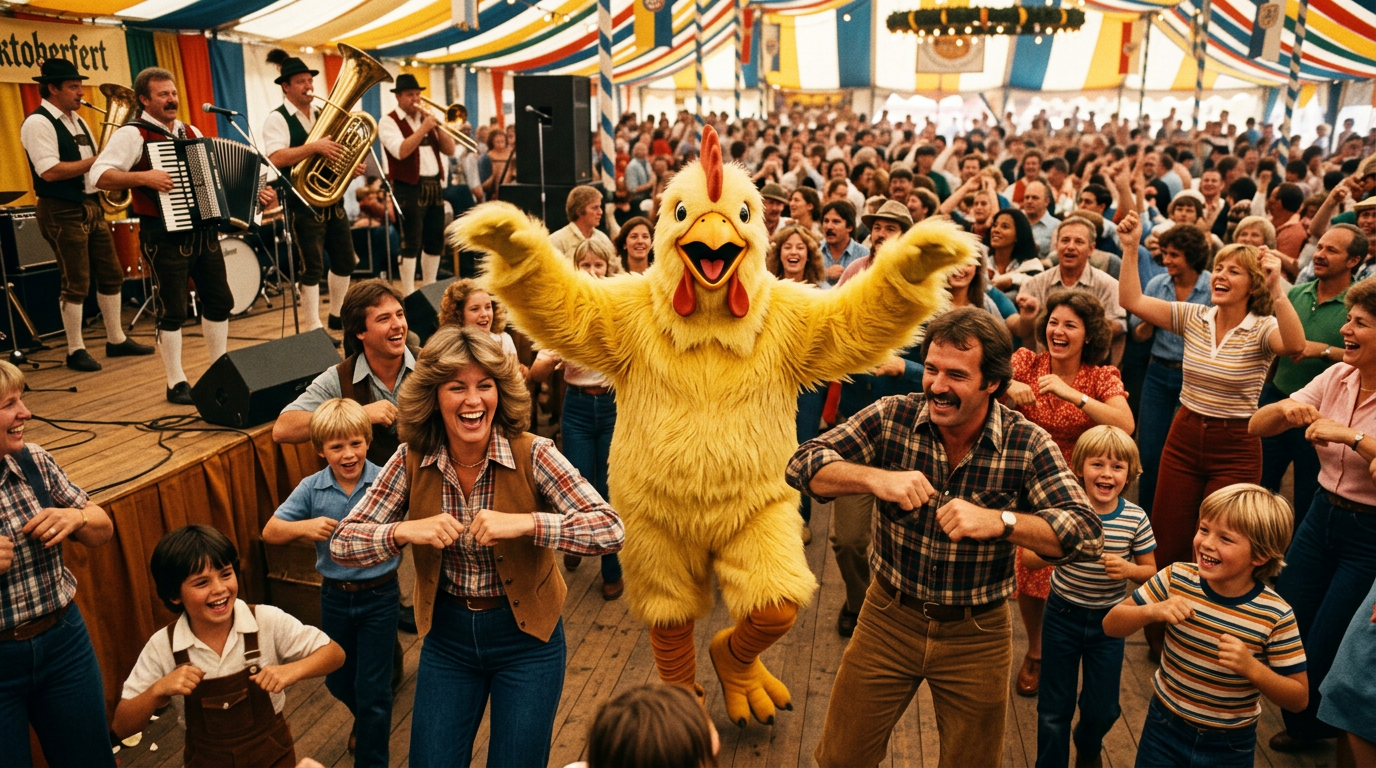
The most famous American naming story takes place at Tulsa Oktoberfest in 1981. A visiting band introduced the Duck Dance. Festival participants wanted someone in a duck costume to demonstrate it, but they couldn’t find one. A local television station did, however, have a chicken costume.

So the organizers used what they had.

Imagine seeing the dance for the first time under those circumstances. A costumed chicken appears. The music starts. The bird onstage opens its “beak,” flaps its wings, wiggles, and claps. If someone asks what the crowd is watching, the answer seems obvious: the Chicken Dance.

This is more than a charming tale copied from one festival brochure. In an Oklahoma public-radio investigation, Carol Wright, who attended the muddy 1981 festival and later led Tulsa’s German-American folk dance group, recalled the missing duck costume and the chicken outfit borrowed from Channel 2. She also recalled that the festival kept promoting its chicken connection.

Tulsa deserves its place in the story. It does not follow that every American first encountered the melody there. The same radio investigation found memories of polka musicians playing it in the United States during the late 1970s. Musicologist Jonathan Kregor has also cautioned that the tune likely arrived by more than one route. Touring performers, families, DJs, ethnic dance halls, and recordings could all carry a song from one place to another. Cincinnati Public Radio explored those parallel paths.

The careful version is also the most interesting one: Tulsa gave an already traveling bird a terrific chicken story, a visible costume, and a festival eager to keep the joke going.

Why Americans hear it as “German”

If a Swiss musician wrote the melody, why does it feel so at home at a German-American Oktoberfest?

Because a celebration’s soundtrack is shaped by what its guests embrace. The dance traveled through European recordings and community musicians. Accordion-led versions fit the atmosphere of German-American festivals. Polka bands and other entertainers found that the tune could fill a dance floor in seconds. It gave families a way to participate together, regardless of age, dance experience, or ancestry.

There is a distinction here that makes the story richer. A musicologist at the University of Cincinnati notes that the melody has polka-like qualities, while the polka itself is a different dance. Calling the Chicken Dance an ancient German polka skips the surprising journey it really took. At an American Oktoberfest, though, the tune’s decades of use have made it a recognizable part of the celebration.

An example from Munich turns this journey around.

Neil Diamond’s “Sweet Caroline” is an American pop song. It was not written for Oktoberfest and has no connection to its nineteenth-century origins. Yet Munich’s official Oktoberfest website lists it among songs heard in today’s beer tents. When that chorus reaches the crowd, visitors from Germany, America, and far beyond can answer together with the familiar “Bah! Bah! Bah!” Munich’s Oktoberfest music guide includes “Sweet Caroline”.

That is the Chicken Dance story in reverse. Munich can welcome an American song into its modern festival soundtrack. German-American celebrations can welcome a Swiss melody into theirs. The song’s birthplace remains part of its history; the shared experience gives it another chapter.

And the Chicken Dance is unusually good at creating that experience. It doesn’t ask the audience merely to listen. It gives everybody a part.

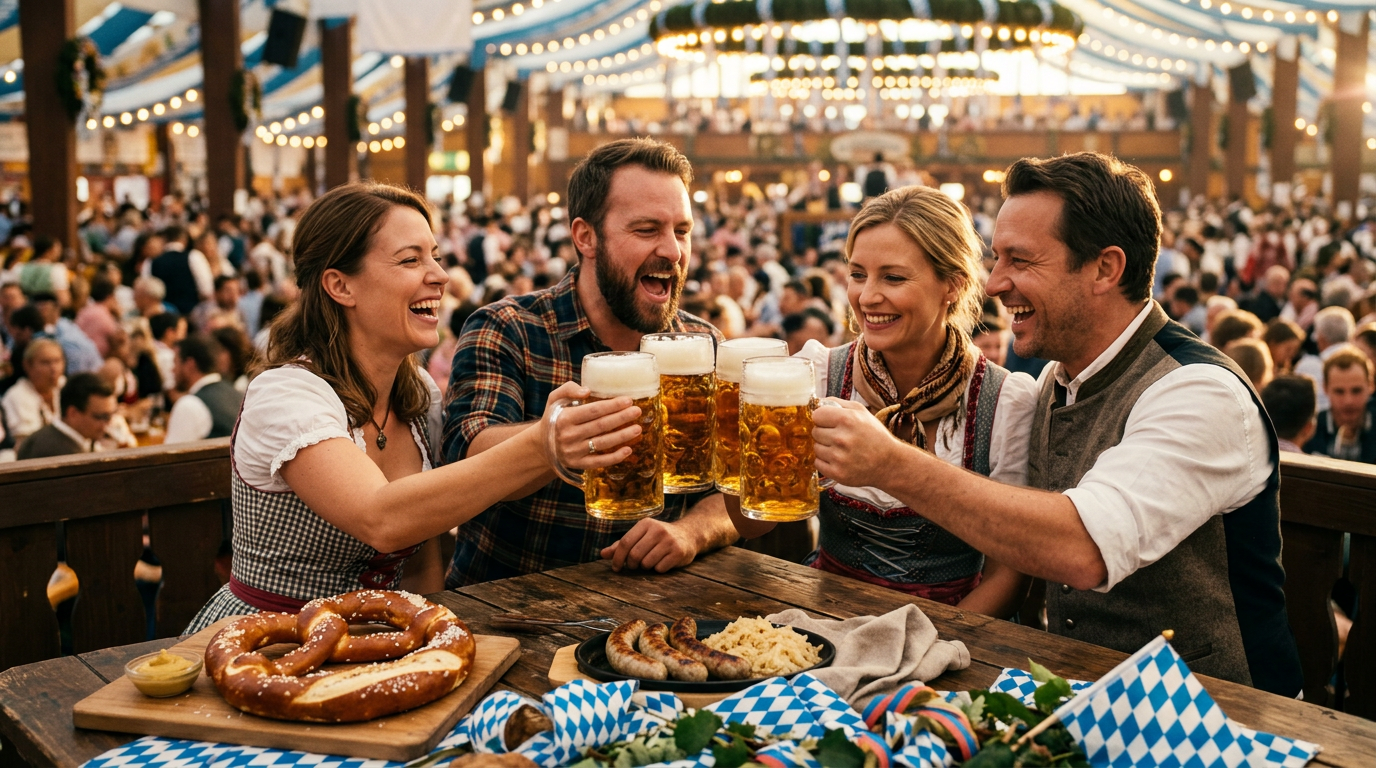
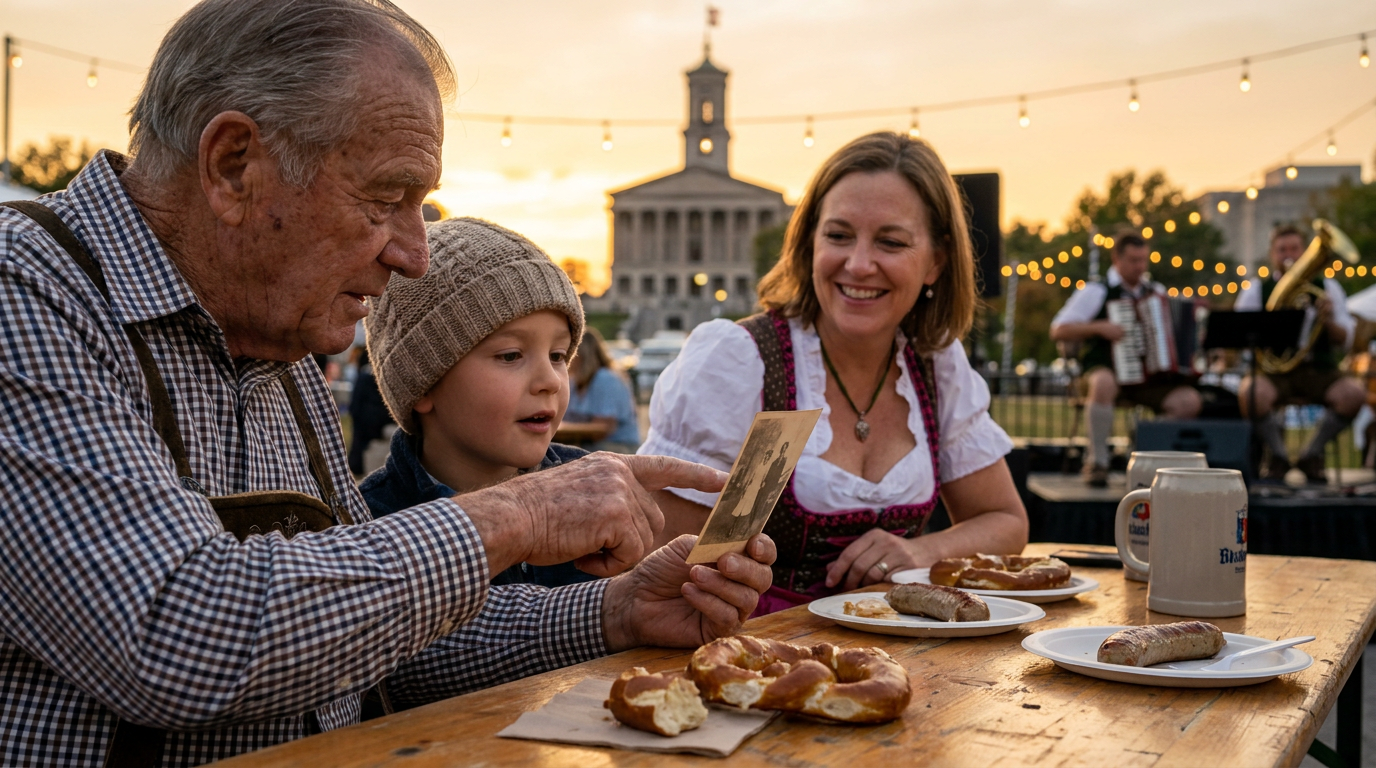
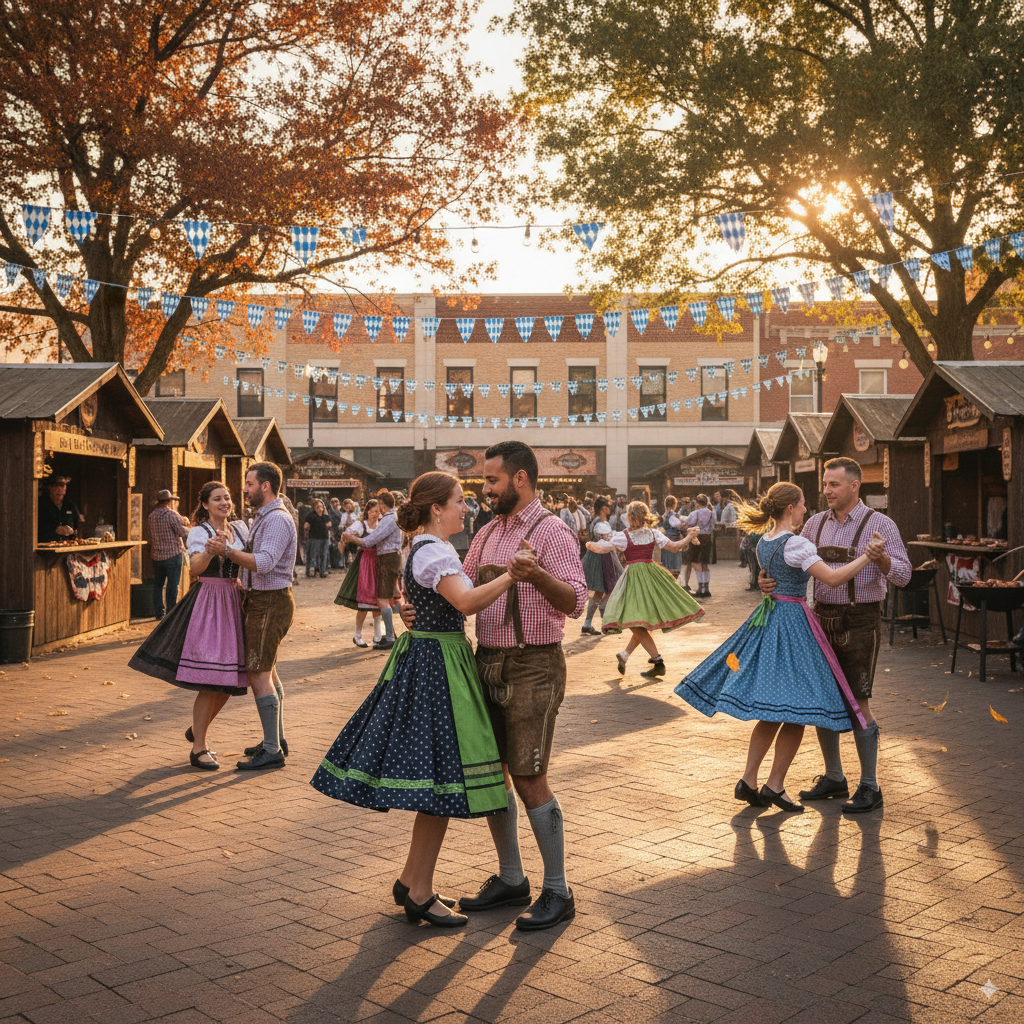
Picture an Oktoberfest tent with several generations at one table. The grandparents recognize the opening notes. The children learn the beak movement by watching. Someone halfway through a conversation starts flapping without leaving their seat. Another person tries to resist and is soon laughing at everyone else. By the first clap, the boundary between spectators and dancers has begun to disappear.

That is why bands keep returning to the tune. The crowd makes the moment together.

Was it played at the first Oktoberfest?

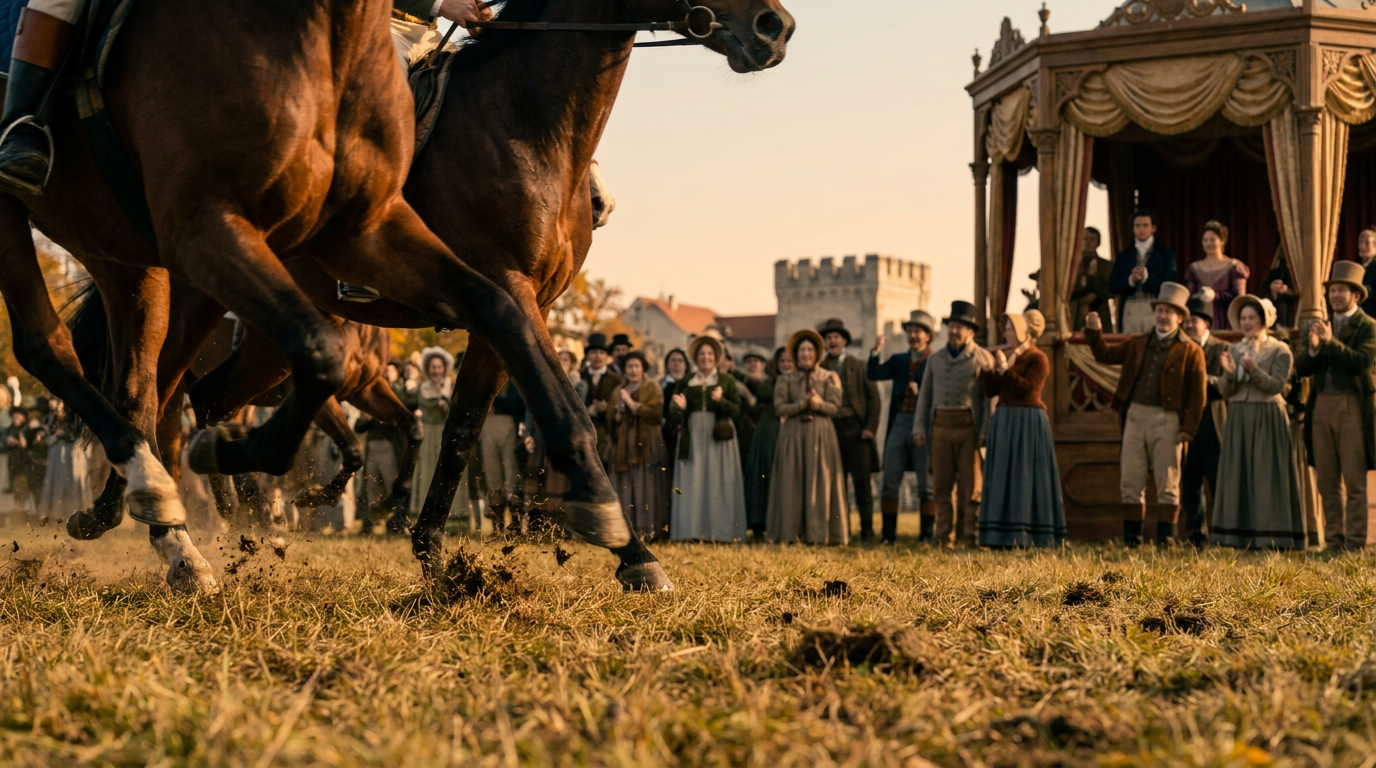
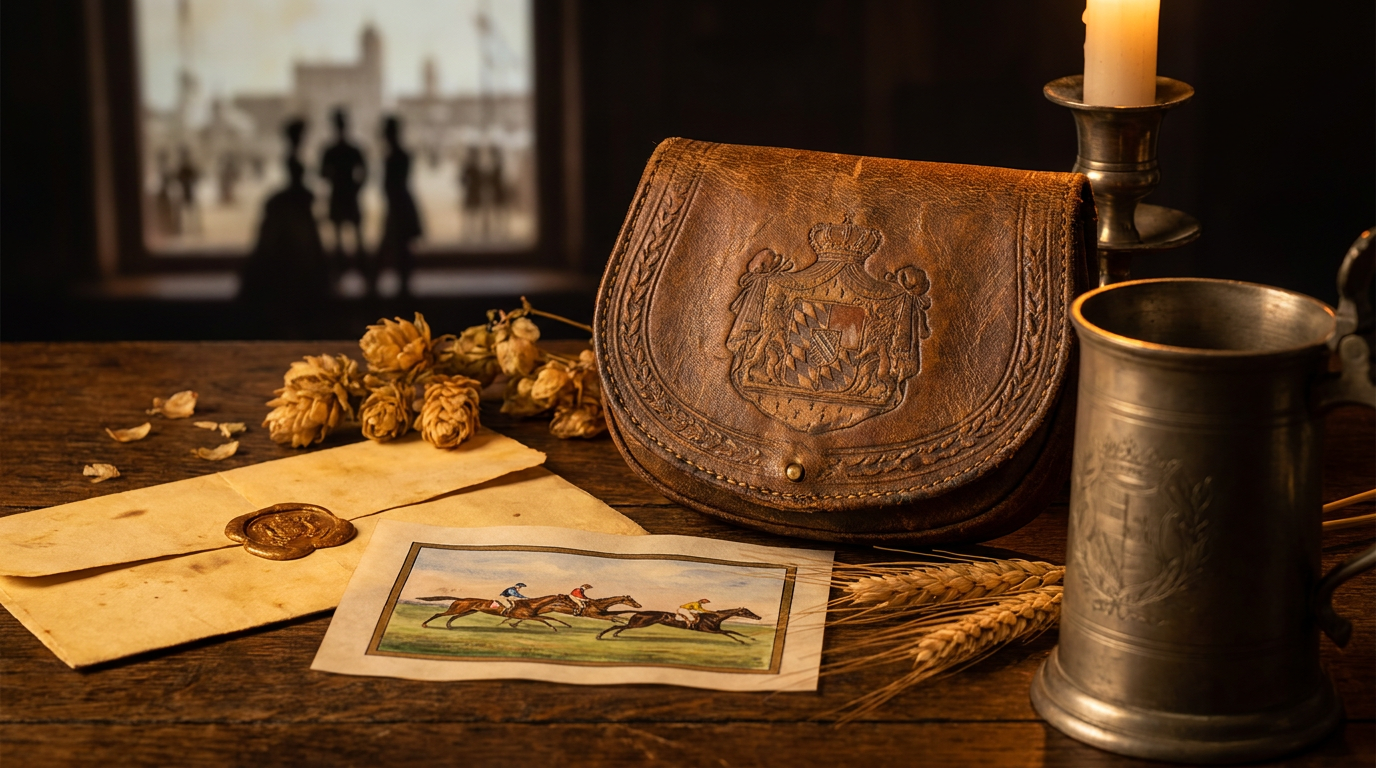
Absolutely not. The first Munich Oktoberfest grew out of the 1810 wedding celebrations for Crown Prince Ludwig of Bavaria and Princess Therese of Saxe-Hildburghausen. The couple married on October 12. Five days later, on October 17, 1810, a horse race outside Munich concluded the public celebrations and became the starting point for the recurring festival. The City of Munich describes the wedding and race in its festival history.

Thomas’s melody appeared roughly a century and a half later. Nobody at the royal race was making beaks with their fingers. The dance belongs to the modern history of festivals, music recordings, and German-American community life.

There is no need to move it back to 1810 to make it meaningful. Heritage celebrations carry old customs forward and acquire new favorites along the way. Some songs arrive with immigrant families. Some come from neighboring cultures. Some make their way in through a record, a wedding band, or a borrowed chicken suit.

Cincinnati raises 48,000 pairs of wings

If Tulsa supplied the American dance with a marvelous origin story, Cincinnati showed how big that story could become. The Ohio city, shaped deeply by German immigration, made the Chicken Dance a signature moment at Oktoberfest Zinzinnati.

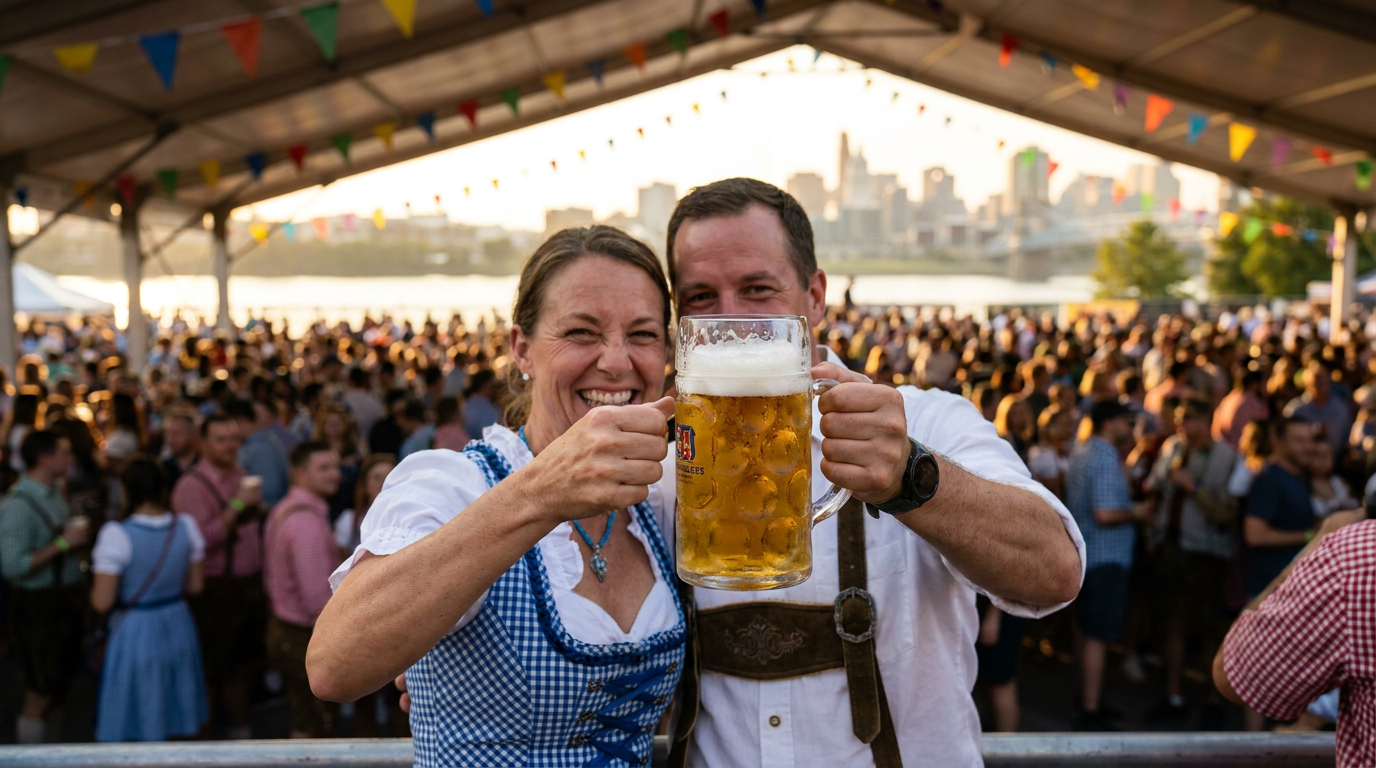
In 1994, an estimated 48,000 participants danced together, setting a record reported in editions of the Guinness Book of World Records. Helping lead them was Luitpold Prinz von Bayern, a member of Bavaria’s Wittelsbach family—the dynasty of the Ludwig whose wedding had set Munich’s Oktoberfest tradition in motion. Ohio Magazine records the 48,000 figure, and a Cincinnati retrospective identifies Luitpold as the leader.

Think of the route to that moment. A Swiss accordionist creates a duck dance. A Belgian producer makes it a record. Performers and audiences across Europe give it new names. A Tulsa festival borrows a chicken costume. Then a Bavarian prince helps lead tens of thousands of Americans through the motions in Cincinnati.

Even 48,000 dancers didn’t end the competition. Guinness currently lists an estimated 72,000 participants at the Canfield Fair in Ohio on September 1, 1996. Ohio apparently has a remarkable talent for organizing enormous flocks.

The secret ingredient is everybody

Why has a small Alpine tune outlasted so many novelty songs? Its melody is easy to recognize, but the answer is on the dance floor.

At most dances, somebody worries about getting the steps wrong. At the Chicken Dance, the person beside you is making a beak with their hands. Nobody expects elegance. Everyone gets permission to be ridiculous at the same time.

The movements also create a story families can tell afterward. A child may forget the name of the band but remember watching Grandpa flap his elbows. Wedding guests may forget the order of the songs but remember the entire party wiggling in formal clothes. A parent may start the music for a toddler and end up dancing with three generations.

The joke also renews itself. At five, you are delighted to know the moves. At fifteen, you may act too embarrassed to try them. Years later, you might be the adult who starts the dance because a child at your table wants company. The steps have barely changed, but your place in the story has. That is a powerful advantage for a tradition passed from one celebration to the next.
It is easy to describe that as “just a silly song.” Try to think of another piece of music that so reliably persuades strangers to do the same ridiculous thing together.

For German Heritage USA, that is the heart of this unlikely tradition. Its composition is Swiss. Its recordings crossed borders. Its American chicken identity has a memorable Tulsa chapter. Its enormous gatherings include a Bavarian prince in Cincinnati. The dance belongs to all those histories—and to the families who keep choosing it at their celebrations.

So the next time the opening notes begin, take a moment before you flap. Picture Thomas at his accordion in the Swiss Alps. Picture the duck. Picture the borrowed Oklahoma costume. Picture a sea of Cincinnati dancers making their own beaks.

Then join them.

Beak. Wings. Wiggle. Clap.

Somewhere underneath that American chicken is still a Swiss duck.

Prost!

1810 Oktoberfest: The Incredible Story Behind Germany’s First Oktoberfest That Most Americans Never Learned

The royal wedding, horse race, and Bavarian story behind the world’s most famous folk festival. Picture Munich on an October afternoon in 1810.

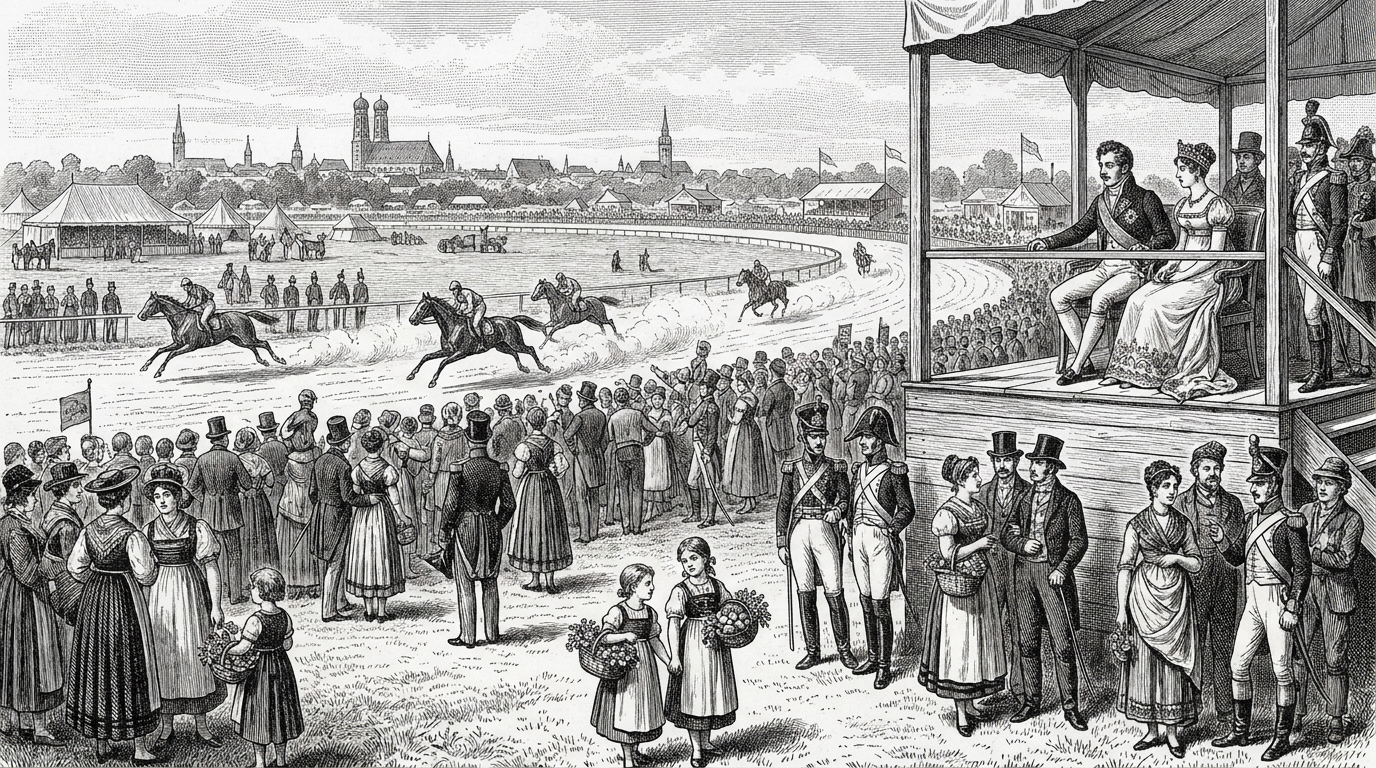
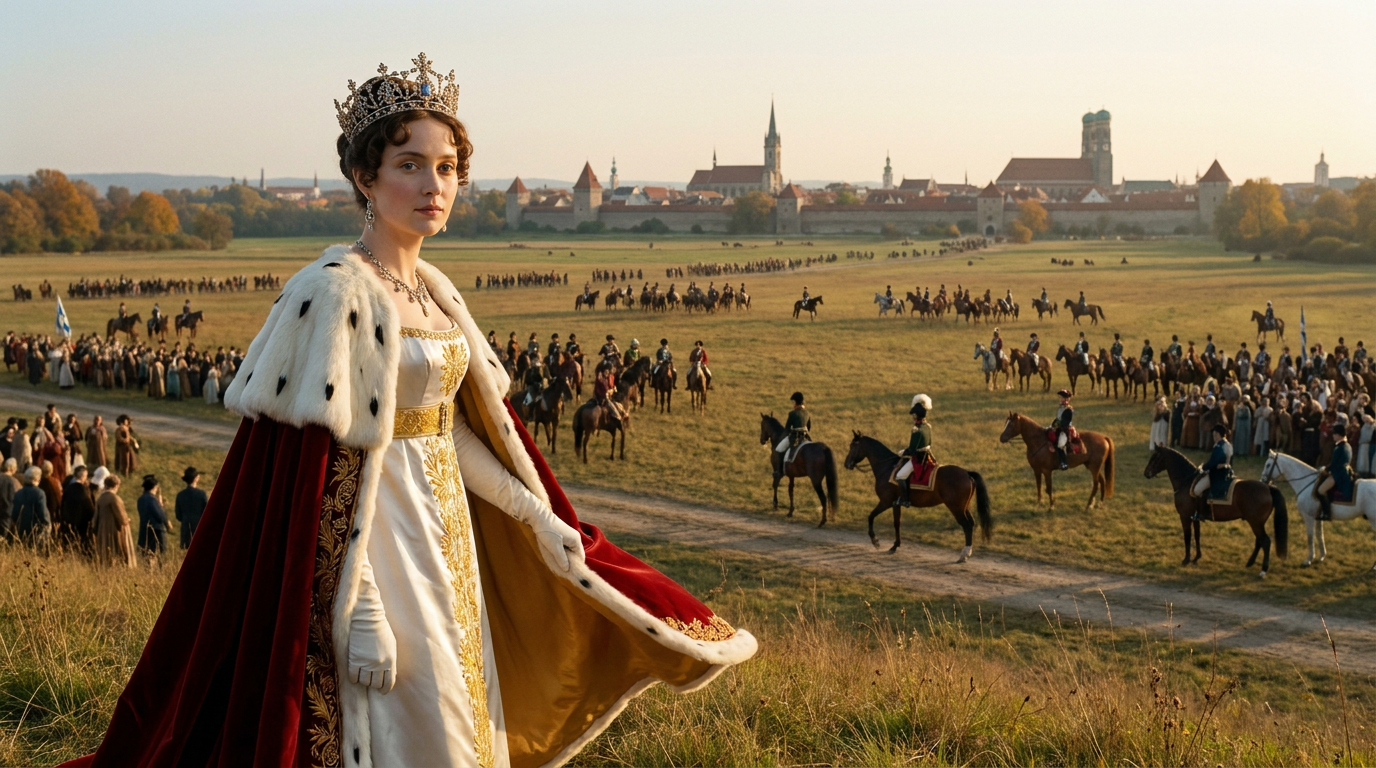
There are no electric lights, no Ferris wheels, no vast beer tents, and no brass band launching into “Ein Prosit.” Instead, thousands of people are moving beyond the city gates toward an open meadow. Horses stamp the ground. Soldiers of the civic militia keep order. Children in regional clothing carry flowers and fruit. On a raised place of honor sit Bavaria’s crown prince and his new bride.

Then the race begins.

That scene, not a beer hall, marks the beginning of Oktoberfest.

Most Americans know the modern images: one-liter beer mugs, pretzels as wide as dinner plates, roast chicken, dirndls, lederhosen, music, and crowded festival tents. Those are genuine parts of today’s Wiesn, as Munich residents call the festival. But the original event was created for a different reason. It celebrated a royal wedding, introduced a young crown princess to the public, and helped a newly enlarged kingdom present a shared Bavarian identity.

The first Oktoberfest was romantic, theatrical, political, and surprisingly modern. It also began with an idea simple enough to sound familiar today: give the public a celebration worth repeating.

“Before Oktoberfest became a beer festival, it was a royal wedding celebration with a finish line.” — GERMAN HERITAGE USA

A Royal Wedding in a Young Kingdom

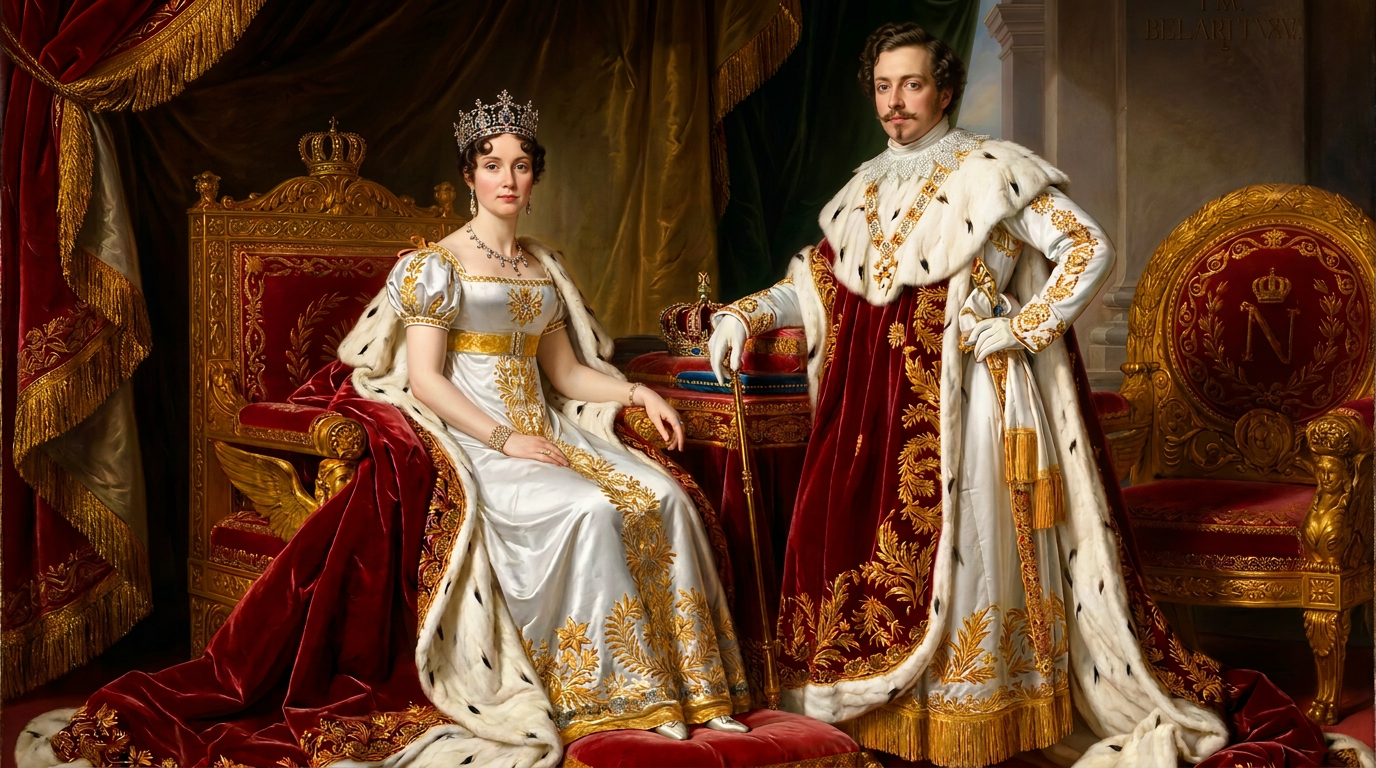
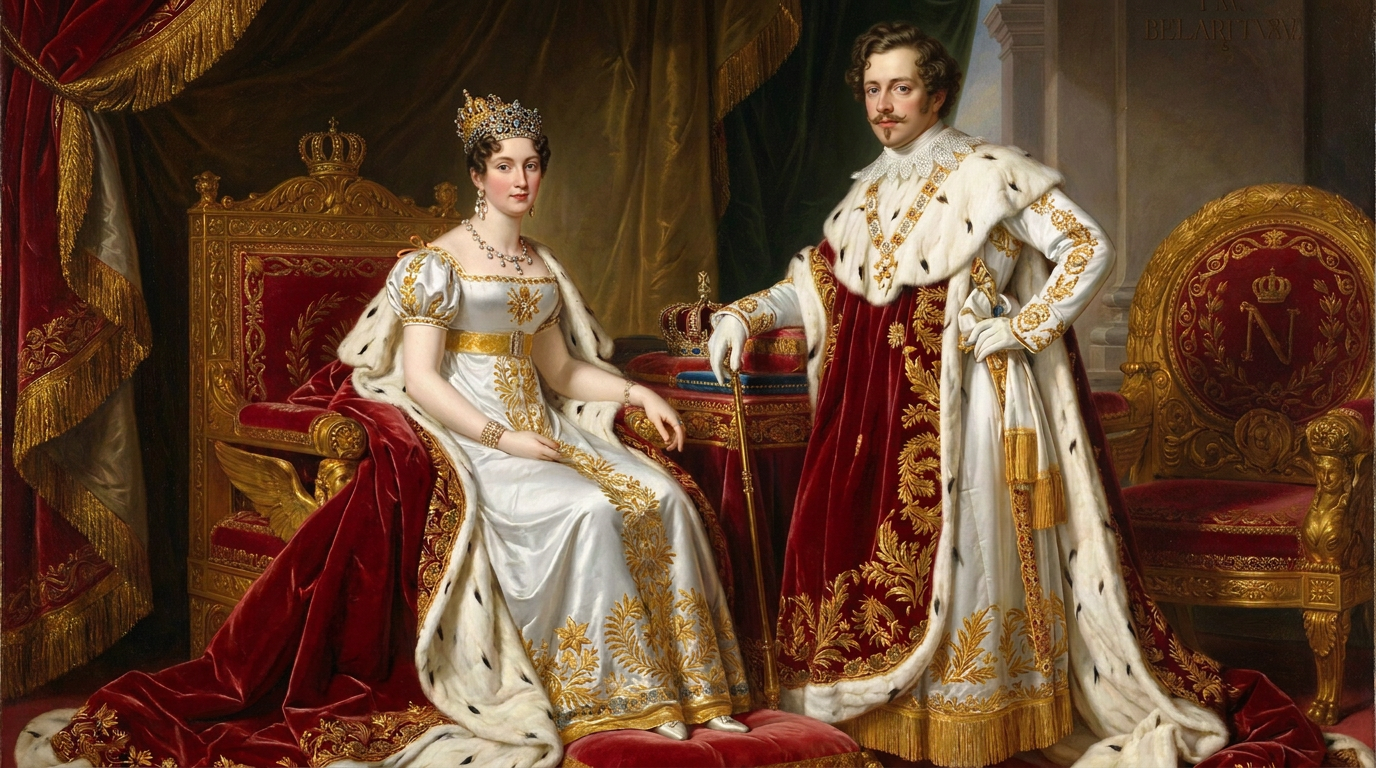
On October 12, 1810, Crown Prince Ludwig of Bavaria married Princess Therese of Saxe-Hildburghausen in Munich. Ludwig would later rule as King Ludwig I. Therese would become Queen of Bavaria, but in 1810 she was an 18-year-old Protestant princess arriving in a Catholic kingdom whose political map had recently changed.

Bavaria itself was new as a kingdom. Napoleon had elevated it from an electorate to a kingdom in 1806. Political settlements and territorial changes brought large parts of Franconia and Swabia under Bavarian rule. Many of the people living in those regions did not automatically think of themselves as members of one unified Bavarian nation.

That made the wedding more than a private family event. It gave the royal house an opportunity to display stability, welcome the public, and celebrate the idea of Bavaria as one kingdom.

The marriage was the first princely wedding held in Munich since 1722. The city was decorated and illuminated. The five-day celebration included public festivities, a free opera, theatrical performances, music, and a ball. For residents who lived before mass media, the occasion offered a rare chance to see the royal family and take part in an event meant for the whole city.

And the grand finale was waiting outside the gates.

The Man Who Helped Put Munich on Horseback

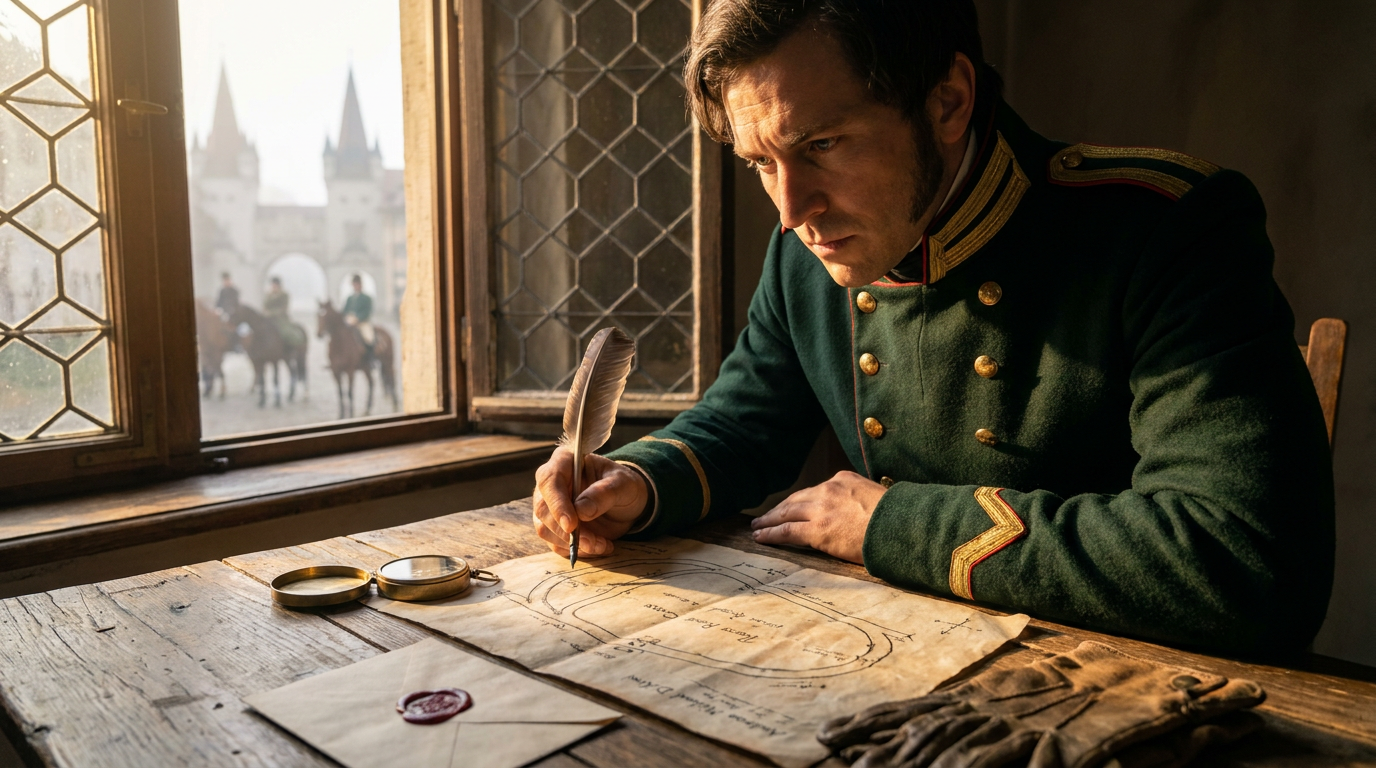
Andreas Michael Dall’Armi is usually credited with proposing and organizing the horse race that closed the wedding celebration. He was a businessman and banker who served as a major in Munich’s civic militia. That combination of commerce, military organization, and civic standing made him well suited to turn a festive idea into a public spectacle.

On October 17, five days after the wedding, the cavalry of Munich’s civic militia staged the race in honor of Ludwig and Therese. The course was laid out on open land beyond the city, near the road leading south toward Italy. The natural rise beside the meadow gave spectators a place from which to watch.

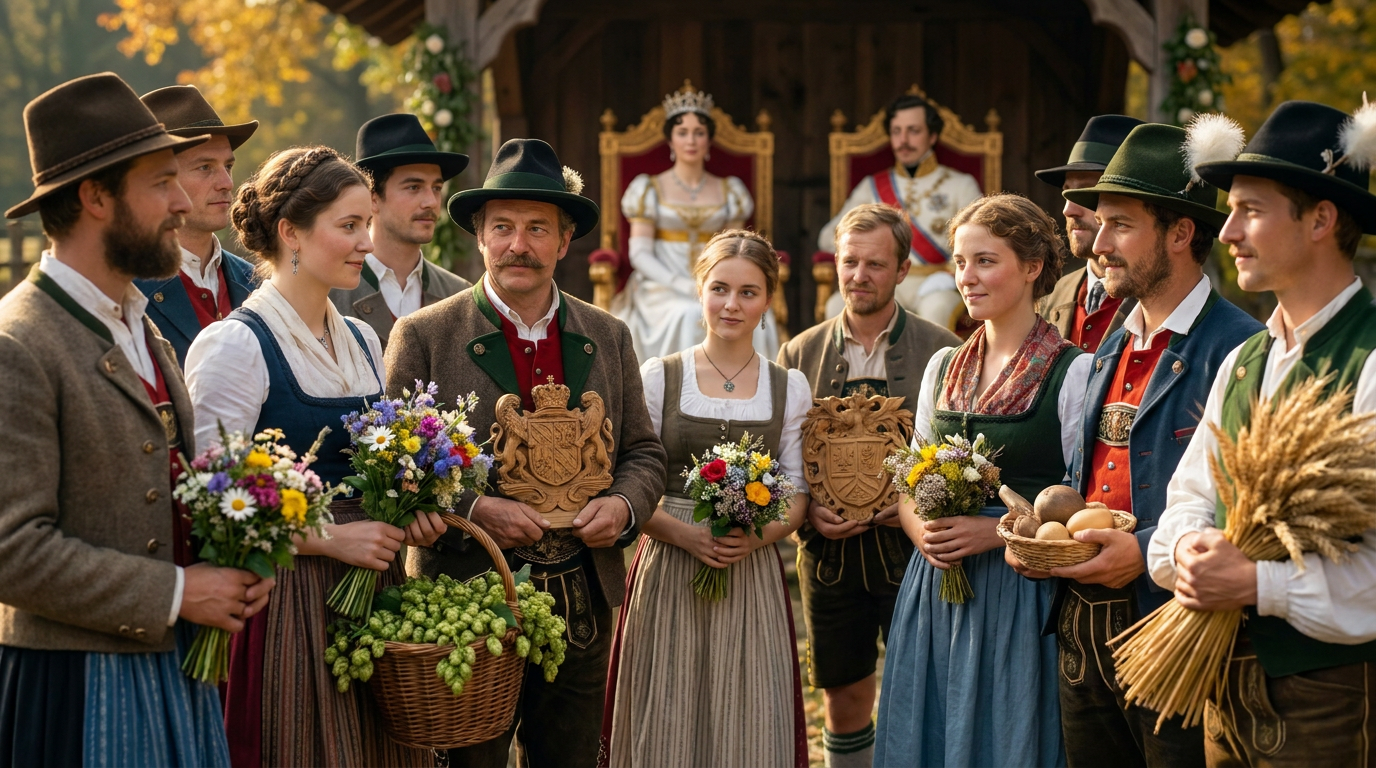
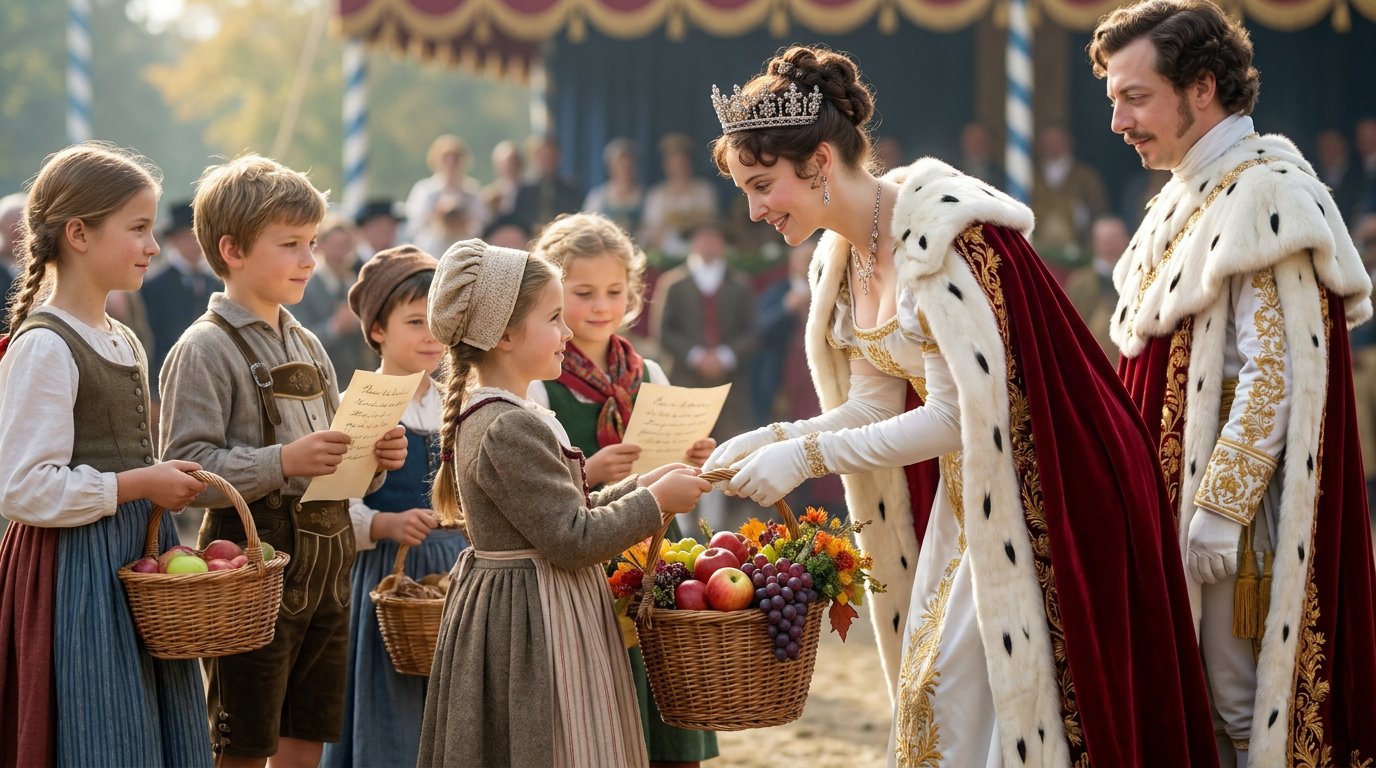
Accounts of the day describe children and representatives from Bavaria’s regions greeting the newlyweds in local clothing. They presented poems, flowers, and fruit. The imagery mattered. This was not merely a contest between fast horses. The celebration placed the royal couple at the center of a colorful display of regional identity.

The race drew an enormous public response. Later histories commonly estimate the crowd at roughly 40,000 people, an astonishing gathering for Munich at the time. Whatever the exact count, the excitement was strong enough that Dall’Armi soon asked the royal house to repeat the festival. King Maximilian I Joseph approved another celebration for 1811.

With that decision, a one-time wedding event became a tradition.

The Meadow That Took Therese’s Name

The festival grounds were named Theresienwiese, meaning “Therese’s Meadow,” in honor of the bride. More than two centuries later, Oktoberfest is still held on the same site.

Munich residents eventually shortened Theresienwiese to die Wiesn. Americans sometimes hear “Wiesn” and assume it means Oktoberfest itself. Strictly speaking, it comes from the meadow, although the nickname now embraces the entire festival. When a Münchner says, “Auf geht’s zur Wiesn,” the sense is, “Let’s go to the Oktoberfest.”

Therese’s name survived in plain sight while her role in the story often faded from popular memory. She was not a decorative footnote. The land was named for her, the celebration honored her marriage, and the annual gathering grew out of the welcome extended to her in 1810.

That gives the word Theresienwiese a deeper meaning. Every modern tent, ride, parade, and toast still stands on a place named for the young woman at the center of the original celebration.

The First Oktoberfest Was Not the Beer Festival You Imagine

Here is the detail that surprises many Americans: the first Oktoberfest was not built around giant beer tents.

Beer was available in the festival’s early years, and visitors drank outdoors, but the immense halls associated with Oktoberfest came much later. Wooden refreshment booths grew during the nineteenth century. Munich’s major breweries began erecting large temporary beer halls in the 1890s, and the festival’s identity as a beer-centered celebration solidified around that period.

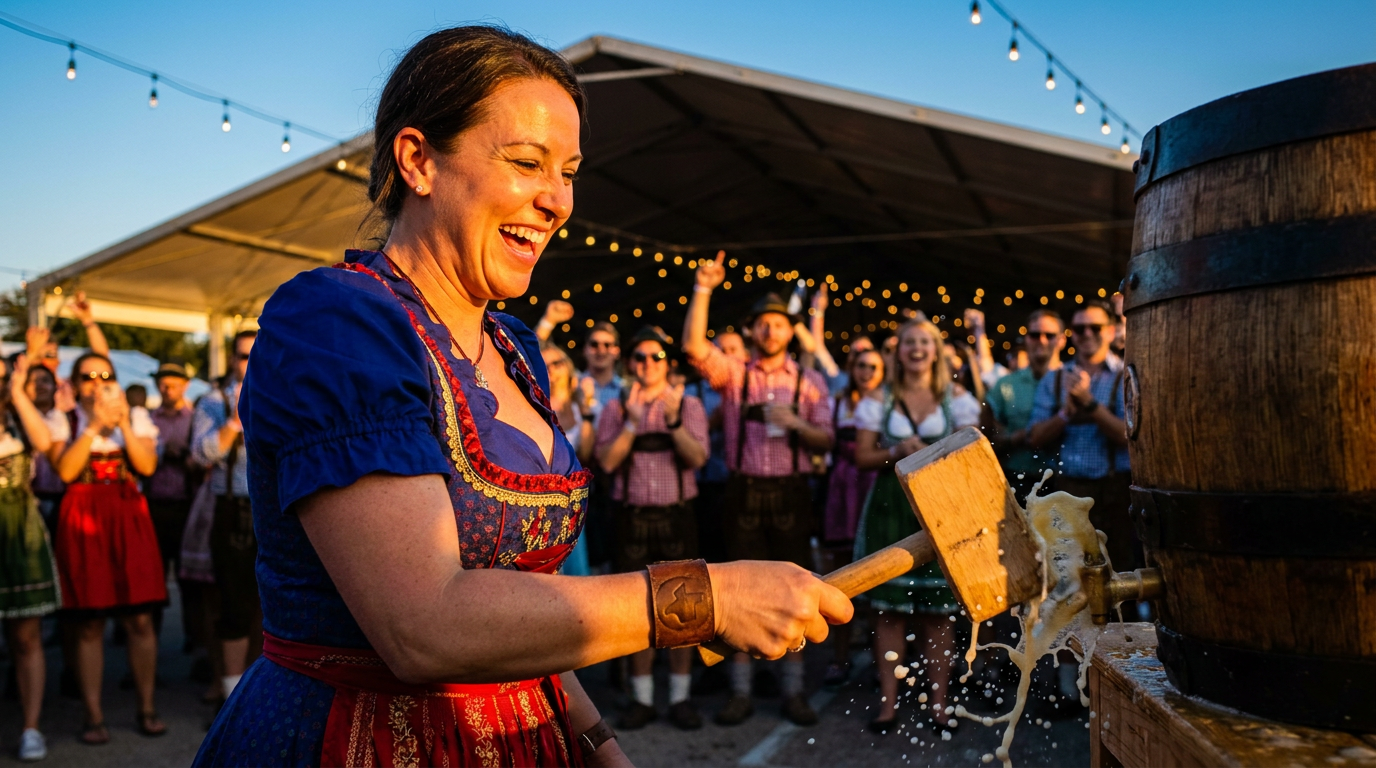
The opening ceremony familiar today is newer still. Since 1950, Munich’s mayor has officially opened Oktoberfest by tapping the first keg and declaring “O’zapft is!”—Bavarian dialect for “It is tapped.” The famous ritual is beloved tradition, but it is almost a century and a half younger than the festival itself.

The same is true of many visual symbols Americans treat as timeless. Large amusement rides, electrified attractions, brewery halls, formal processions, and the tightly organized opening ceremonies accumulated over generations. Oktoberfest did not arrive fully formed. Munich kept adding to it.

The horse race was the original anchor. Racing remained part of the program for much of the nineteenth century and continued through 1913, with brief later revivals. The founding spectacle eventually disappeared, while the food, drink, music, and amusements around it became the main event.

In other words, Oktoberfest changed by keeping what people loved and making room for what they loved next.

The Second Oktoberfest Changed Everything

The repeat festival in 1811 did more than confirm that Munich wanted another party. Bavaria’s Agricultural Association added a livestock market and agricultural exhibition. Farmers displayed animals and products, prizes rewarded achievement, and the festival became a showcase for the kingdom’s rural economy.

This addition reveals how quickly Oktoberfest developed a practical purpose. The celebration could honor the monarchy, encourage agriculture, reward innovation, bring regions together, and entertain the public at the same time.

Agricultural exhibitions remained closely connected with the festival. The Central Agricultural Festival continues to share the Theresienwiese periodically, preserving a link to the earliest years that many international visitors never notice.

Other attractions followed. Shooting competitions became part of the program in 1816. A carousel appeared in 1818. In 1819, the City of Munich assumed responsibility for organizing and financing the festival. The royal wedding had created the spark; civic management turned it into an institution.

Oktoberfest Was Also an Exercise in Building Bavaria

The cheerful story of a wedding and a horse race is true, but it is only part of the explanation. Oktoberfest also helped a young kingdom tell a story about itself.

The Bavaria of 1810 included territories with different histories, dialects, loyalties, and customs. A public festival allowed those differences to appear together. Regional clothing, agricultural products, music, royal ceremony, and popular entertainment all occupied the same space.

The message did not need to be printed on a banner. People from different parts of the kingdom could see themselves represented while sharing one celebration. The royal family gained public visibility, Munich gained a major civic occasion, and Bavaria gained an annual stage on which to rehearse a common identity.

That helps explain why the festival endured. It offered more than diversion. It created belonging.

For German Americans, that part of the story feels familiar. Immigrant communities also preserved identity through gatherings that combined music, food, language, club life, worship, sport, and family reunion. The exact customs varied, but the purpose was recognizable: bring people together so heritage could be experienced rather than merely remembered.

Why Oktoberfest Usually Begins in September

Another American question practically asks itself: If it is called Oktoberfest, why does most of it happen in September?

The answer is weather and gradual evolution. The earliest celebrations occurred in October. As the festival expanded, organizers learned that Munich’s warmer September days and longer daylight hours were better for an outdoor gathering. The schedule moved earlier during the late nineteenth century. By the early twentieth century, the familiar pattern of beginning in September and ending around the first Sunday in October had taken hold.

The name stayed because traditions often keep their names after their calendars change. Oktoberfest remained Oktoberfest even when September became its busiest month.

A Tradition That Survived by Changing

Oktoberfest has never been an uninterrupted annual event. Wars, cholera epidemics, hyperinflation, and the COVID-19 pandemic forced cancellations. The festival also outlived the Bavarian monarchy it once celebrated.

That survival tells us something important. Oktoberfest did not endure because every detail remained frozen in 1810. It endured because Munich preserved a recognizable core while allowing the event to change.

The horse race gave way to beer halls and amusement rides. Royal ceremony gave way to civic leadership. A wedding celebration became an agricultural fair, then a major folk festival, then an international symbol of Bavarian culture. Even the dates moved.

Yet several founding ideas remain visible. The festival is still held on Therese’s Meadow. It still combines public celebration with regional identity. It still invites people to gather around food, music, spectacle, and shared memory.

“Tradition survives when each generation finds a reason to return.” — GERMAN HERITAGE USA

What Most Americans Never Learned

The real surprise is not simply that Oktoberfest began with a wedding. It is that the festival Americans often treat as an ancient beer custom is a documented tradition with a specific bride, groom, date, organizer, place, and opening event.

On October 12, 1810, Ludwig married Therese. On October 17, Munich gathered beyond the city gates for a horse race. The crowd loved it. The celebration returned the next year, acquired an agricultural mission, came under city management, and kept evolving until the little word “Wiesn” became famous around the world.

So the next time you raise a stein, hear an oompah band, or see an Oktoberfest sign in an American town, remember what stands behind the familiar picture.

Somewhere beneath the beer tents, brass music, roasted chicken, and bright carnival lights is the sound of horses racing across an open meadow in 1810—and a princess named Therese watching the celebration that would carry her name for centuries.

The Ultimate Guide to America’s Biggest Oktoberfests: Where to Celebrate German Heritage This Fall

From Cincinnati’s enormous riverfront celebration to Bavarian-style towns in Georgia and Washington, these unforgettable festivals invite German-Americans—and everyone who loves the culture—to eat, dance, explore and raise a cheerful “Prost!” in fall 2026.

September arrives with a wonderful change in the air. The evenings grow cooler. Brass music seems to sound a little better. Pretzels suddenly look larger, sausages smell more tempting, and somewhere in America a dachshund is being fitted for its racing number.

Oktoberfest season is here.

For German-Americans, an Oktoberfest can be much more than a beer festival. It can be a joyful doorway into family history—a place where a familiar surname appears on a banner, an old melody awakens a memory, or a grandparent’s stories begin to feel real. For visitors without German ancestry, it offers the same invitation: pull up a bench, share a table and discover why Gemütlichkeit—the warm feeling of welcome, comfort and good fellowship—may be Germany’s most irresistible export.

America now hosts hundreds of Oktoberfest celebrations, from neighborhood church picnics to citywide gatherings. This guide focuses on events that stand out through some combination of size, longevity, national reputation, cultural depth and destination atmosphere. It is not a rigid attendance ranking. Crowd estimates vary, and a month-long town celebration cannot be measured fairly against a concentrated four-day festival.

What these celebrations share is something more important: they turn heritage into an experience.

“An Oktoberfest is not merely a place to drink a beer. It is a place to hear history singing at the next table.” — GERMAN HERITAGE USA

Before the Road Trip: What Are We Actually Celebrating?

The original Oktoberfest began in Munich in 1810 with festivities honoring the marriage of Bavarian Crown Prince Ludwig and Princess Therese of Saxe-Hildburghausen. A public horse race helped conclude the celebration on grounds that became known as the Theresienwiese—“Therese’s Meadow.” The celebration returned, evolved and eventually became the enormous Munich festival recognized around the world.

Why does Oktoberfest often begin in September? The event gradually moved earlier to take advantage of longer days and milder weather while still finishing in early October. In 2026, Munich’s official Oktoberfest runs September 19 through October 4.

It is also worth remembering that Oktoberfest is specifically Bavarian in origin. Germany contains many regional cultures, foods, dialects and traditions. A family from Schleswig-Holstein, Hesse, Saxony or the Rhineland may not have inherited lederhosen or dirndls as ancestral dress. Still, Oktoberfest has become a lively international celebration of German and German-American culture. Enjoy the Bavarian traditions—and let them inspire you to discover your family’s own regional story.

America’s Oktoberfest Calendar at a Glance

Celebration Location 2026 dates Best for
Oktoberfest Zinzinnati Cincinnati, Ohio Sept. 17–20 The biggest crowds and enormous citywide energy
Mount Angel Oktoberfest Mount Angel, Oregon Sept. 17–20 German-Swiss tradition and a community-wide festival
Addison Oktoberfest Addison, Texas Sept. 17–20 Bavarian celebration with a Texas personality
Denver Oktoberfest Denver, Colorado Sept. 18–20 and 25–27 Urban excitement, games and two full weekends
Helen Oktoberfest Helen, Georgia Sept. 10–Nov. 1 The longest festival season and Alpine-town atmosphere
Nashville Oktoberfest Nashville, Tennessee Oct. 1–4 A large Southern city celebration with music and contests
Leavenworth Oktoberfest Leavenworth, Washington Oct. 2–3, 9–10 and 16–17 Mountain scenery and a Bavarian-style destination town
Zeeco Oktoberfest Tulsa Tulsa, Oklahoma Oct. 22–25 A high-energy grand finale patterned after Munich

Dates and details were checked against official 2026 event information. Always confirm hours, admission rules and schedules before traveling.

1. Oktoberfest Zinzinnati — Cincinnati, Ohio

Best for: Experiencing America’s attendance giant

If your Oktoberfest dream includes a riverfront filled with music, food, beer and a crowd large enough to qualify as its own city, begin in Cincinnati. The official event calls Oktoberfest Zinzinnati America’s largest Oktoberfest, and more than 800,000 people attended in 2025. The 2026 celebration marks its 50th anniversary at Sawyer Point Park and Yeatman’s Cove.

Cincinnati’s German roots run deep. Nineteenth-century German immigration shaped local neighborhoods, brewing, food, music and civic life. That history helps the celebration feel less like an imported theme and more like a city turning up the volume on part of its identity.

Admission is free, making it especially approachable for families and first-time visitors. Expect giant tents, stages, beer gardens, abundant German-inspired food and wonderfully unserious spectacle. The famous mass participation and exuberant atmosphere are part of the point: this is heritage with its sleeves rolled up.

Do not miss: The ceremonial events, live music and sheer thrill of seeing Cincinnati’s German-American pride take over the Ohio Riverfront.

2. Mount Angel Oktoberfest — Mount Angel, Oregon

Best for: Old-world community atmosphere in the Pacific Northwest

Mount Angel brings a distinctive German-Swiss character to Oregon’s Willamette Valley. Rather than containing the celebration inside one isolated hall, the festival fills the streets and multiple venues across town. In 2026, it runs September 17–20.

This is a rewarding choice for travelers who want far more than an evening beer tent. The celebration combines music and dancing with food, family activities, races, arts and crafts, and community institutions. More than 120 artisans are scheduled for the 2026 arts-and-crafts show alone.

Mount Angel’s appeal is intimacy at festival scale. Bells, Alpine design, friendly volunteers and a strong sense of local ownership give the weekend a personality that cannot be manufactured.

Do not miss: Exploring the different festival venues instead of staying in one tent—each corner of town adds another chapter to the experience.

3. Addison Oktoberfest — Addison, Texas

Best for: Bavarian tradition served with Texas hospitality

In North Texas, Addison Circle Park becomes a four-day celebration of beer, brats, music, dancing and playful competition. Addison Oktoberfest runs September 17–20 in 2026 and deliberately pairs Bavarian festival customs with a confident Texas twist.

That combination makes Addison accessible to newcomers without losing the visual excitement people hope to find at Oktoberfest. Visitors can move between performance areas, food experiences and family activities, then join the official keg tapping or simply settle in and listen to the music.

The practical advantage is location. Travelers can build the festival into a Dallas-area weekend, while local families can enjoy a major cultural event without an interstate expedition.

Do not miss: The ceremonial keg tapping and the delightful moment when polka rhythm, Texas friendliness and a packed Partyhalle become one celebration.

4. Denver Oktoberfest — Denver, Colorado

Best for: A high-energy urban street festival

Denver has celebrated Oktoberfest since 1969, and its 56th annual edition fills two weekends in the Ballpark District: September 18–20 and September 25–27. The setting on Larimer Street creates a different experience from a small heritage town. This one feels like an urban block party wearing lederhosen.

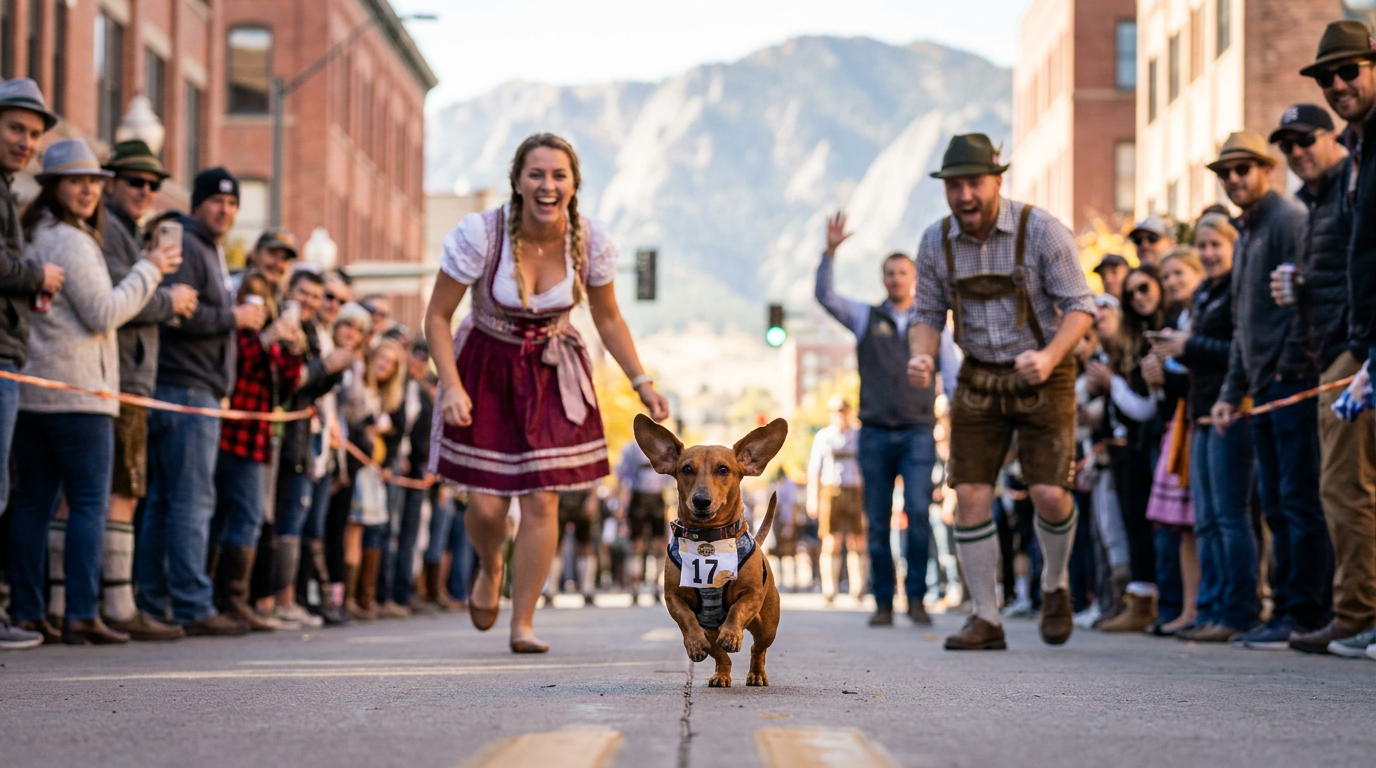
Along with food, beer and music, Denver leans enthusiastically into American Oktoberfest games. The 2026 schedule includes the Long Dog Derby on both Sundays and a sausage-eating contest on September 26. It is spirited, funny and built for groups of friends who want action between songs.

Denver also works well for travelers who prefer choices. Spend part of the day at the festival, then explore the city’s breweries, museums, restaurants or nearby mountain scenery.

Do not miss: The dachshund races—because few things unite a crowd faster than very short legs chasing very large glory.

5. Helen Oktoberfest — Helen, Georgia

Best for: Turning Oktoberfest into an extended Alpine getaway

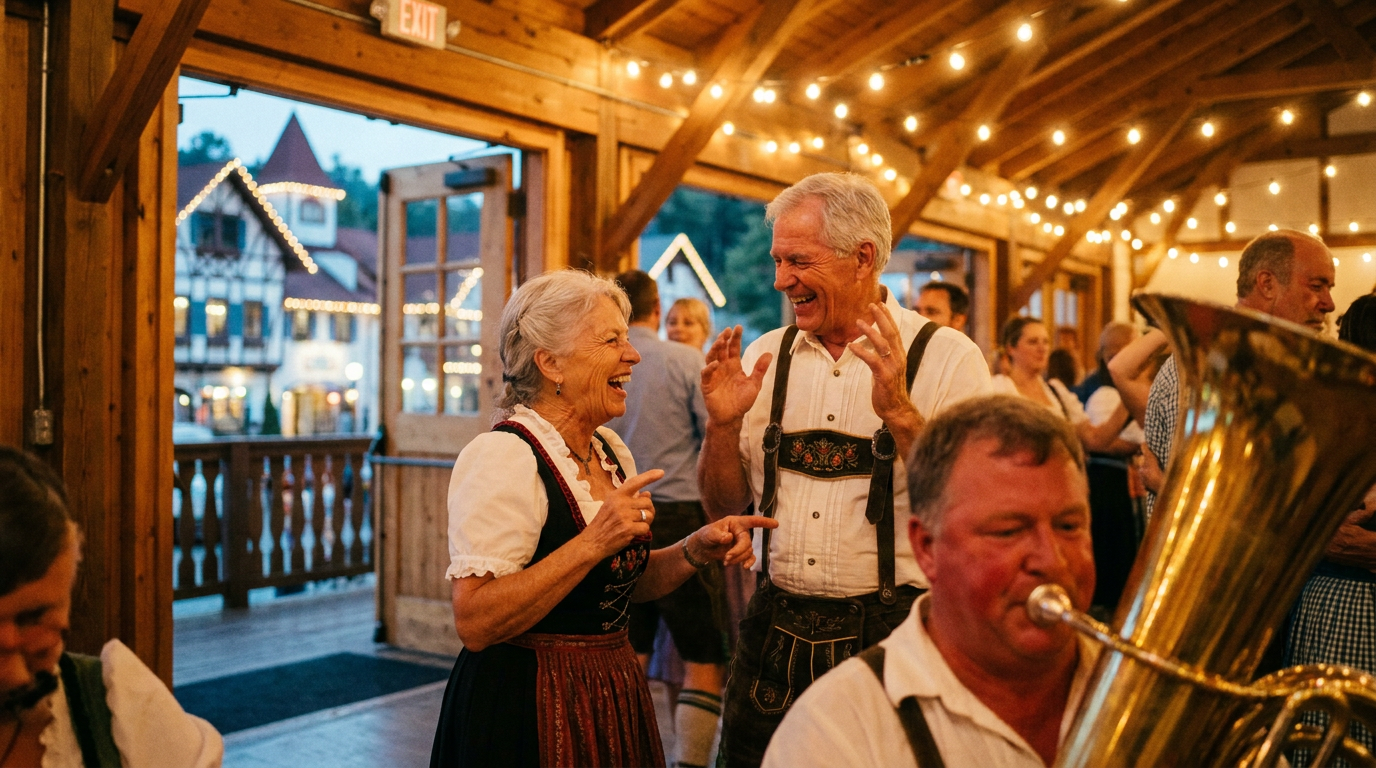
Helen offers one of the most visually distinctive Oktoberfest trips in America. The North Georgia mountain town adopted a Bavarian-inspired architectural identity decades ago, so the celebration continues beyond the doors of its Festhalle and into the surrounding streets, shops and scenery.

The 56th annual Helen Oktoberfest begins September 10. It operates Thursday through Sunday during September, then nightly from October 1 through November 1. That extraordinary run gives visitors unusual flexibility and makes Helen the choice for anyone who wants fall foliage, a cabin weekend and German music in one itinerary.

The opening parade takes place September 12, followed by the first keg tapping. Inside the Festhalle, bands, dancing, food and drink supply the classic experience. Outside, the Blue Ridge foothills provide the backdrop.

Do not miss: Pairing an afternoon scenic drive or waterfall walk with an evening of dancing at the Festhalle.

6. Nashville Oktoberfest — Nashville, Tennessee

Best for: German heritage with a Music City pulse

Nashville’s celebration has run consecutively since 1980 and returns October 1–4, 2026, at Bicentennial Capitol Mall State Park. It combines live music, German fare, beer, a 5K Bier Run, competitions and a pup parade in a setting close to downtown.

For Middle Tennessee families, this is proof that meaningful heritage discovery does not always require a cross-country trip. A festival afternoon can become the beginning of a larger family conversation: Which part of Germany did our ancestors leave? What recipes survived? Which names were changed or Anglicized? What should we preserve next?

Nashville also demonstrates how German-American traditions continue to evolve. The music and contests feel distinctly American, yet the communal tables, food, toasts and fellowship still point toward the festival’s Bavarian source.

Do not miss: Arrive for the cultural programming, stay for the music, and use the experience to start one new family-heritage tradition.

7. Leavenworth Oktoberfest — Leavenworth, Washington

Best for: The most cinematic setting

Leavenworth sits against the Cascade Mountains, and its Bavarian-style downtown gives Oktoberfest an almost storybook backdrop. The official 2026 celebration runs on October 2–3, 9–10 and 16–17, with three stages across the Festhalle and Front Street Park venues.

This is the Oktoberfest to choose when the journey matters as much as the tent. Mountain views, autumn color, local businesses and walkable streets turn a festival ticket into a full destination weekend. The programmed beer gardens offer local and German beers, food, bands and dancing, while the Kinderplatz gives families a dedicated area.

Lodging can fill quickly, so planning ahead matters here more than at many single-day city events.

Do not miss: The contrast of a lively brass band in the foreground and the quiet Cascades rising behind the town.

8. Zeeco Oktoberfest Tulsa — Tulsa, Oklahoma

Best for: Ending the season with one enormous “Prost!”

Tulsa saves one of America’s most energetic celebrations for late October. Running October 22–25, 2026, at River West Festival Park, Zeeco Oktoberfest Tulsa describes itself as an authentic Bavarian celebration patterned after Munich.

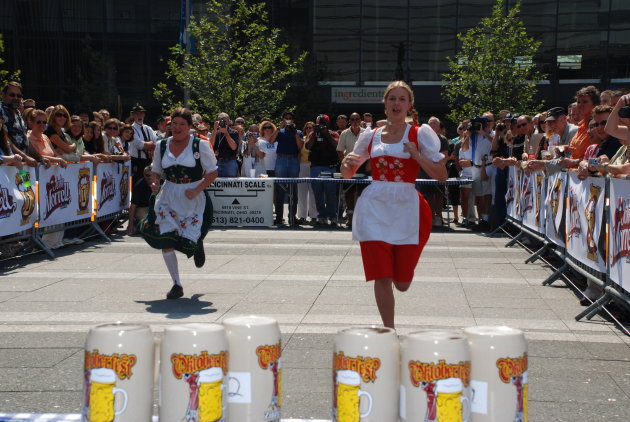
Large tents, bands, German-inspired food, beer and an enthusiastic schedule of competitions create the immersive atmosphere. The games include stein holding, a MassKrug relay, dachshund racing and a beer-barrel race. The Markthaus adds more than 60 arts-and-crafts booths with handmade items and German wares.

Because Tulsa arrives after many September festivals have packed away their banners, it makes a natural season finale. By then, your stein-holding arm should be properly trained.

Do not miss: Move between the tents, watch a competition and stay long enough to experience the evening crowd at full song.

Four More Celebrations Worth the Detour

The American Oktoberfest map is too rich to stop at eight. Consider these heritage destinations as well:

  • New Ulm, Minnesota — October 2–3 and 9–10: A city with unusually visible German heritage, multiple celebration sites, music, food, parades and a strong community identity.
  • Fredericksburg, Texas — October 2–4: German-Texan history, five stages of continuous music, artisan vendors, children’s activities, beer and Texas wine in the Hill Country.
  • Hermann, Missouri — weekends throughout October: A relaxed, town-wide celebration pairing German heritage with Missouri wine country, autumn scenery, food, music and historic streets.
  • South Florida: Oktoberfest Miami and the American German Club of the Palm Beaches offer long-running, club-based celebrations where German-American organizations remain at the heart of the experience.

How to Choose—and Enjoy—Your Oktoberfest

Start with the kind of memory you want to make. Choose Cincinnati for scale, Helen or Leavenworth for a destination escape, Mount Angel or New Ulm for a community-centered heritage experience, Denver or Nashville for city energy, Addison or Fredericksburg for Texas flair, and Tulsa for the late-season grand finale.

Then plan like a seasoned festival traveler:

  • Check the official site immediately before leaving; schedules, weather policies and entry rules can change.
  • Reserve lodging early in destination towns, especially Helen and Leavenworth.
  • Use shuttles or public transportation when available, and always arrange a sober ride.
  • Visit earlier in the day for a calmer, more family-focused atmosphere.
  • Wear a dirndl or lederhosen if you enjoy it—but remember that participation matters more than costume.
  • Try something beyond the first bratwurst. Look for regional sausages, schnitzel, potato pancakes, red cabbage, strudel, tortes and local specialties.
  • Ask musicians, cooks, craftspeople and heritage organizations about the traditions they preserve.
  • Bring home a story, recipe, family photograph or new German word—not only a souvenir mug.

“The best Oktoberfest souvenir is the moment your group of friends or family decides, ‘We should do this together again next year.’”
— GERMAN HERITAGE USA

America’s Oktoberfests are not replicas of Munich, and they do not need to be. They are German-American creations: part inheritance, part reinvention and part open invitation. Each city adds its own landscape, accent and personality. Together, they show that heritage stays alive when people gather around it.

So choose your city. Mark the calendar. Invite the relatives who always say, “We need to get together more often.” Learn the story behind one family name or recipe before you go. Then step beneath the festival banners and listen for that flare in the darkness—the old culture shining into a new generation.

Discover it. Celebrate it. Preserve it.

Got A Little German In You? Your German Heritage Is Calling You!

When Munich Ends, America Begins: From Munich to Main Street USA

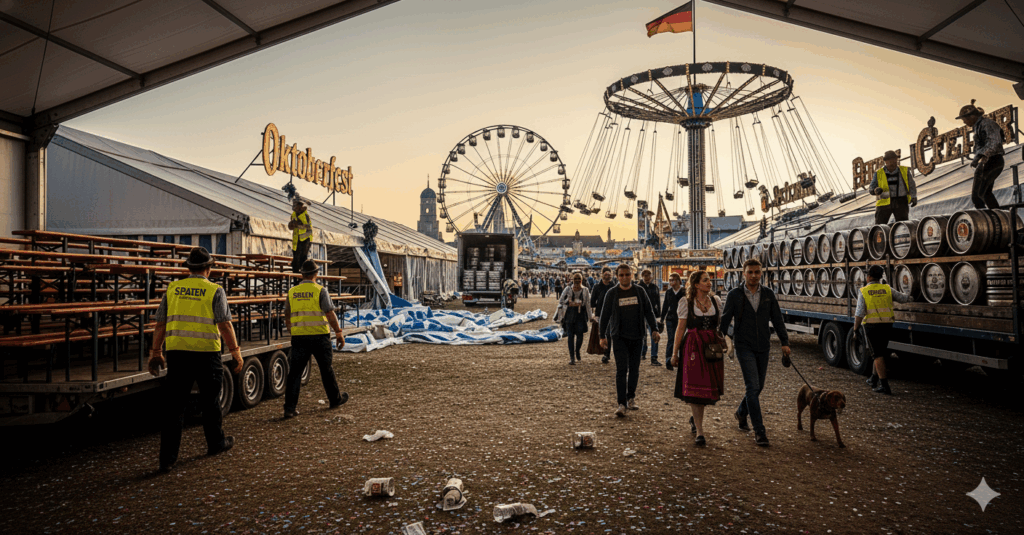
The final steins have been raised, the brass bands have played their last note, and the sweeping grounds of Theresienwiese are slowly returning to silence. After weeks of revelry, laughter, and centuries-old tradition, Oktoberfest in Munich has come to a close once more. For the thousands of visitors who made the journey from around the world, the return home is filled with that unmistakable post-festival glow — part joy, part exhaustion, and part reluctance to let it end.

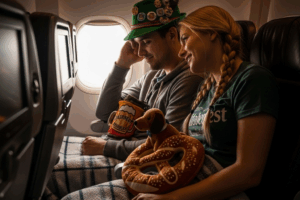
One can imagine the mood on the red-eye flights leaving Munich. Couples and friends seated side by side, quietly replaying the moments that made it all unforgettable — the taste of fresh pretzels, the sound of clinking steins, the energy of crowded beer tents beneath Bavarian flags. A man in a feathered green fedora, its brim heavy with souvenir pins, rests against the window with a contented smile. His hoodie still carries the scent of roasted nuts and smoky sausages. Somewhere near him, a woman in a worn Oktoberfest tee leans back, her braid still tightly tied from a day of dancing. The plane is quiet, but their minds are alive with memory.

How to Celebrate Oktoberfest All Over Again — American Edition!

Your guide to local festivals, clubs, and restaurants still raising their steins this October

For many, there’s a hesitation to let go. The end of Oktoberfest in Munich doesn’t necessarily mean the end of the celebration. As travelers make their way back across the Atlantic, some may already be checking calendars and local event listings, curious to see if the spirit of Oktoberfest lives on closer to home. And across the United States — in small towns, bustling cities, German clubs, and local breweries — it often does. The kegs may be tapped out in Munich, but in America, Oktoberfest is still pouring.


O’zapft Is… Again?!

The last keg has been tapped in Munich this year on Sunday, October 5th. The tents have closed. The brass bands have played their final polkas. And just like that — the world’s most famous Oktoberfest is over for another year.

You’re back from Bavaria, your suitcase stuffed with pretzels, pins, and a questionable wool hat that seemed like a good idea after your fifth Maß of beer. Your head has cleared, your bank account has not, and your flight home? Delayed three hours. Oof.

But here’s the thing no one tells you: when Munich ends, America begins.

That’s right — while Oktoberfest in Germany technically wraps up in early October, here in the United States, we like to stretch the celebration well into fall. From local Main Street parades and heritage clubs to breweries and backyard blowouts, Americans with German roots (and plenty without) keep the party rolling deep into October.

So shake off your jet lag, unpack that stein, and get ready. We’re going on a post-prost Munich Oktoberfest adventure — American style.


Why America Keeps Celebrating Oktoberfest After Munich Ends

Here’s the deal: Oktoberfest started in 1810 as a royal wedding celebration in Munich. Today, it’s a global cultural phenomenon.

But in the United States — home to over 60 million people of German ancestry. In America — Oktoberfest is more than just a party. It’s a tribute to German Heritage, a salute to immigrant roots, and a golden opportunity to bring communities together over Ompah pah, pilsner, and pork schnitzel.

And unlike the strict schedule in Germany, Americans are a little more… shall we say… flexible with our party timelines. We extend Oktoberfest celebrations all the way through Halloween and even into November in some locations.


🥨 From Main Street to Maifest Halls: Where to Celebrate Oktoberfest in America

Let’s hit the road — from coast to coast — and explore the many ways Main Street USA is still raising its stein long after Munich’s tents come down.


🎉 1. Main Street Celebrations: Small Towns, Big Heart

Across America, small towns with German roots come alive in October with homegrown Oktoberfest celebrations. Think brass bands in the park, beer tents in the square, and grandma’s apple strudel at the community bake sale.

Must-Visit Towns:

Some of the most charming and authentic Oktoberfest experiences in America take place not in big cities, but in storybook towns with strong German heritage — where bratwursts sizzle, polka music echoes down main street, and Bavarian architecture sets the mood. These are the towns where Oktoberfest spirit lingers long after Munich’s tents have closed.

  • Leavenworth, Washington – Tucked in the Cascade Mountains, Leavenworth looks like it was plucked straight out of the Bavarian Alps. The entire town transforms into a festive alpine wonderland throughout October. With dirndl-clad dancers, oompah bands echoing through the mountains, and local breweries serving up authentic Märzens, Leavenworth’s Oktoberfest is one of the most visually immersive and energetic celebrations in the country.
  • Helen, Georgia – A small southern town with a big Bavarian personality, Helen hosts one of the longest-running Oktoberfests in the U.S., stretching from mid-September through late October. Nestled in the North Georgia mountains, this Alpine-styled village boasts nightly music at the Festhalle, authentic German food and beer, and a festive atmosphere that draws visitors from across the region.

  • New Ulm, Minnesota – Often called the “most German town in America,” New Ulm’s Oktoberfest stretches across multiple venues and weekends in October.
  • Frankenmuth, Michigan – This Bavarian-themed village hosts Oktoberfest events well into the fall. Don’t miss the Frankenmuth Brewery and iconic chicken dinners at Zehnder’s!
  • Hermann, Missouri – Nestled in Missouri’s wine country, Hermann turns into a fall fairy tale with weekends full of beer, brats, and vineyard views.

These Main Street fests may not rival Munich’s size, but they overflow with heart, heritage, and hospitality.

» Read more

Beer Gardens and Bratwurst: German-American September Favorites

There’s something magical about September in America. The days are still warm, the nights turn crisp, and towns across the country come alive with the sound of polka music, the laughter of families, and the clinking of frosty beer steins.

For German Americans—and anyone who loves a good time—September means one thing: Oktoberfest season.

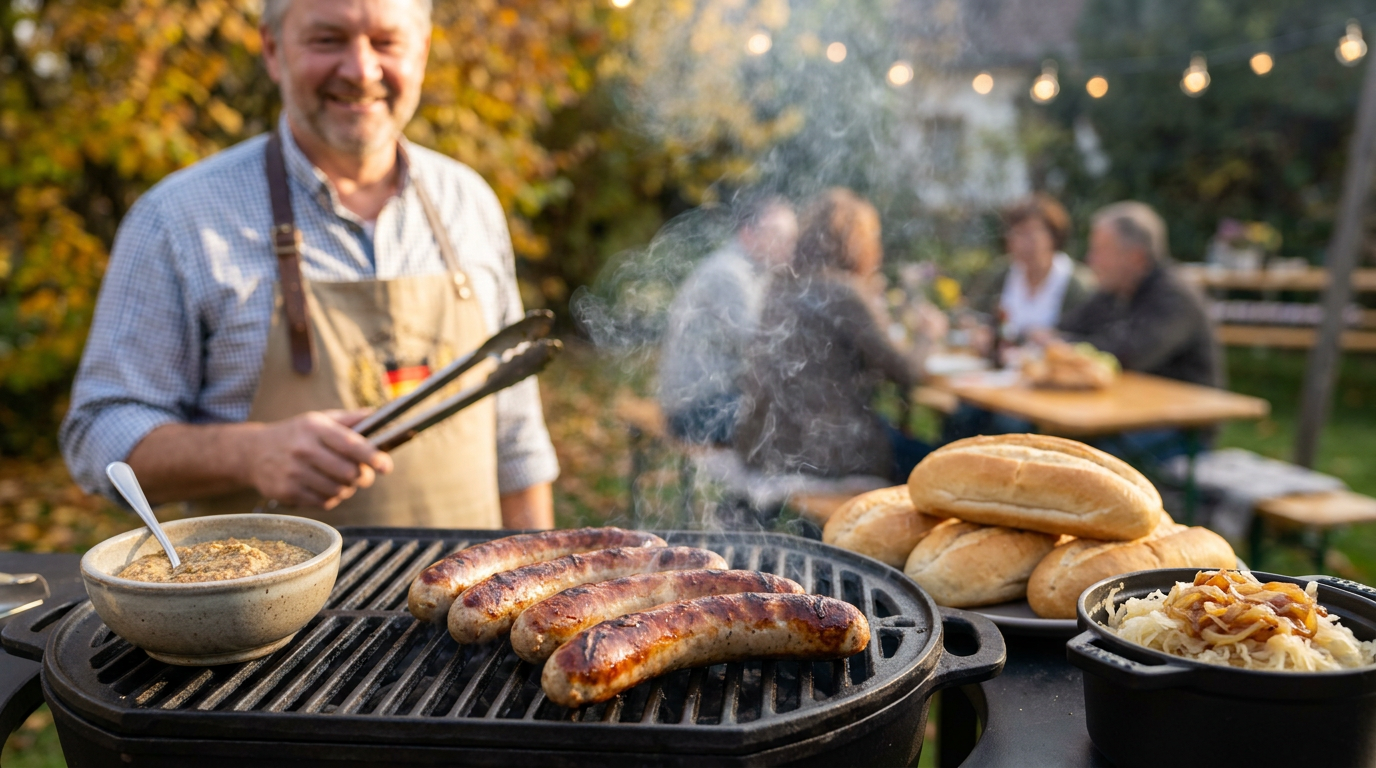
Across big cities and small towns alike, festival tents go up, beer gardens fill with music, and the savory aroma of bratwurst sizzling on the grill drifts through the air. It’s a time when communities gather not only to celebrate German traditions but also to share them with neighbors and friends, creating a joyful blend of old-world culture and new-world hospitality.

Beyond the festivities, Oktoberfest is also a reminder of heritage and history. Each stein raised and each polka danced carries with it generations of immigrant stories—of resilience, hope, and the simple joy of bringing people together. September becomes more than a month on the calendar; it’s a season of pride, connection, and celebration.

But Oktoberfest is just the beginning. Across America, German heritage shines brightest in September through beer gardens, bratwurst festivals, polka dances, and community gatherings that bring Old World traditions into New World celebrations.

This is the story of why beer gardens and bratwurst remain two of the most cherished September favorites, and how they represent much more than food and drink—they are symbols of community, heritage, and joy.


From Munich to Main Street: The Oktoberfest Tradition

Oktoberfest began in Munich, Germany, in 1810, celebrating the marriage of Crown Prince Ludwig to Princess Therese of Saxe-Hildburghausen. What started as a royal wedding party grew into the world’s largest folk festival.

When German immigrants came to America, they brought this joyful tradition with them. By the late 1800s, Oktoberfest celebrations were popping up in places like Cincinnati, Milwaukee, St. Louis, and New Braunfels, Texas.

Today, September in America is dotted with Oktoberfests both big and small:

  • Oktoberfest Zinzinnati (Cincinnati, Ohio): The largest Oktoberfest in the U.S., drawing half a million visitors.
  • Milwaukee Oktoberfest (Wisconsin): A city built by German brewers, celebrating its heritage with beer, bratwurst, and bands.
  • Wurstfest (New Braunfels, Texas): A November festival with September-style spirit, honoring Texas-German heritage.
  • Leavenworth, Washington: A Bavarian-themed town that transforms into a postcard of Germany each fall.

Wherever you go, the combination of beer, bratwurst, and gemütlichkeit (coziness and good cheer) is always the same.

» Read more

GermanNationUSA – Your German Heritage Is Calling You…

About GermanNationUSA – Your German Heritage Is Calling You…

If you are of German ancestry, you will really come to love visiting our ever populating German Heritage website named, “GermanNationUSA”. It is here where you will always discover new and interesting stories, videos, pictures, commentary and facts regarding your German heritage. It is always a fun German Heritage related “Hub” to frequent!

German Heritage in the USA!

Your German Heritage Is Calling You...

www.GermanNationUSA.com

The GermanNationUSA website is designed to be informative, educational, entertaining and quite a captivating for anyone of German Heritage and other people with German related interest and passion.

The primary focal point for GermanNationUSA will certainly be structured around the presentation of German related heritage, tourism & commerce within the confines of the USA and parts of Canada too.

We will showcase everything from German restaurants, deli’s and bakeries to German influenced tourism destinations and special events like Oktoberfest all across the USA!


As one would observe it from a German-American perspective, it seems to be somewhat of an emotional destiny quest for thousands of German-Americans that are both curious and anxious to get back in touch with their Germanic roots to seek out and experience anything German… it’s truly a genuine attraction phenomenon.

Although GermanNationUSA is still in its early stages of development, consider it an ever evolving effort as its pages are continually being populated and updated with relevant fresh content, pictures, videos, music, widgets, advertising and multiple viral social features as well to ensure mass visitor traffic and visitor interactive participation too!

Come explore www.GermanNationUSA.com and The Guten Tag Times newsletter as we continue to expand on your German Heritage experience in the USA and create a lot of fun and entertainment doing it!

~ Prost!

GermanNationUSA is the Official Site of German heritage, tourism and commerce within the USA.

Discover Amerika… visit Germany stateside!

Soulard Oktoberfest starts Friday evening

St Louis knows how to party "Oktoberfest Style" every fall!

Soulard Oktoberfest starts Friday evening

"The goal of the annual festival's founder, John McKinstry, is to throw the biggest and most authentic German Oktoberfest celebration in the United States …"
http://www.thetelegraph.com/arts_and_entertainment/article_27a66426-11a8-11e2-9547-0019bb30f31a.html


 Absolutely one of the best Oktoberfest celebrations in the USA!
 

Frankenmuth's Oktoberfest gets set to raise a cup to tradition


And so the early season of "Oktoberst across America" is underway!

Frankenmuth's Oktoberfest gets set to raise a cup to tradition

"Of course, that's not all on tap at this year's Oktoberfest, … worked at various breweries around the United States since moving to this country in 1963."
http://www.mlive.com/entertainment/saginaw/index.ssf/2012/09/frankenmuth_oktoberfest_raises.html

Frankenmuth Oktoberfest


See postings for all Oktoberfest daily at: www.facebook.com/GermanHeritageUSA
 

Just in time for Octoberfest: America's best beer festivals – Yahoo …

Oktoberfest Zinzinnatti, one of the biggest and best in the USA…

Just in time for Octoberfest: America's best beer festivals – Yahoo …

"From Yahoo! Travel: Tap into one of the fall season's most spirited traditions by raising a stein, beer mug or glass to toast the world's best beers.travel.yahoo.com/…/just-in-time-for-octoberfest–america-s-be…"
http://travel.yahoo.com/ideas/just-in-time-for-octoberfest–america-s-best-beer-festivals.html

GermanHeritageUSA

Keep pace with other Oktoberfest celebrations across America by visiting 

www.facebook.com/GermanHeritageUSA