What Foods Did Your German Ancestors Eat? Traditional Recipes That Still Bring Families Together
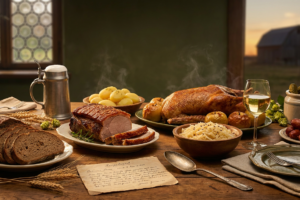
An early-September journey from the farm kitchens and coastal tables of 1800s Germany to the German-American suppers, holiday recipes and treasured family traditions of the Midwest.
Early September is a delicious time to think about family history. Gardens are still offering tomatoes, beans and late-summer herbs. Apple trees are beginning to bend under their fruit. Kitchens are slowly shifting from quick summer meals to breads, roasts, soups and recipes that seem to belong to cooler evenings.
And somewhere in America, someone is opening an old recipe box.
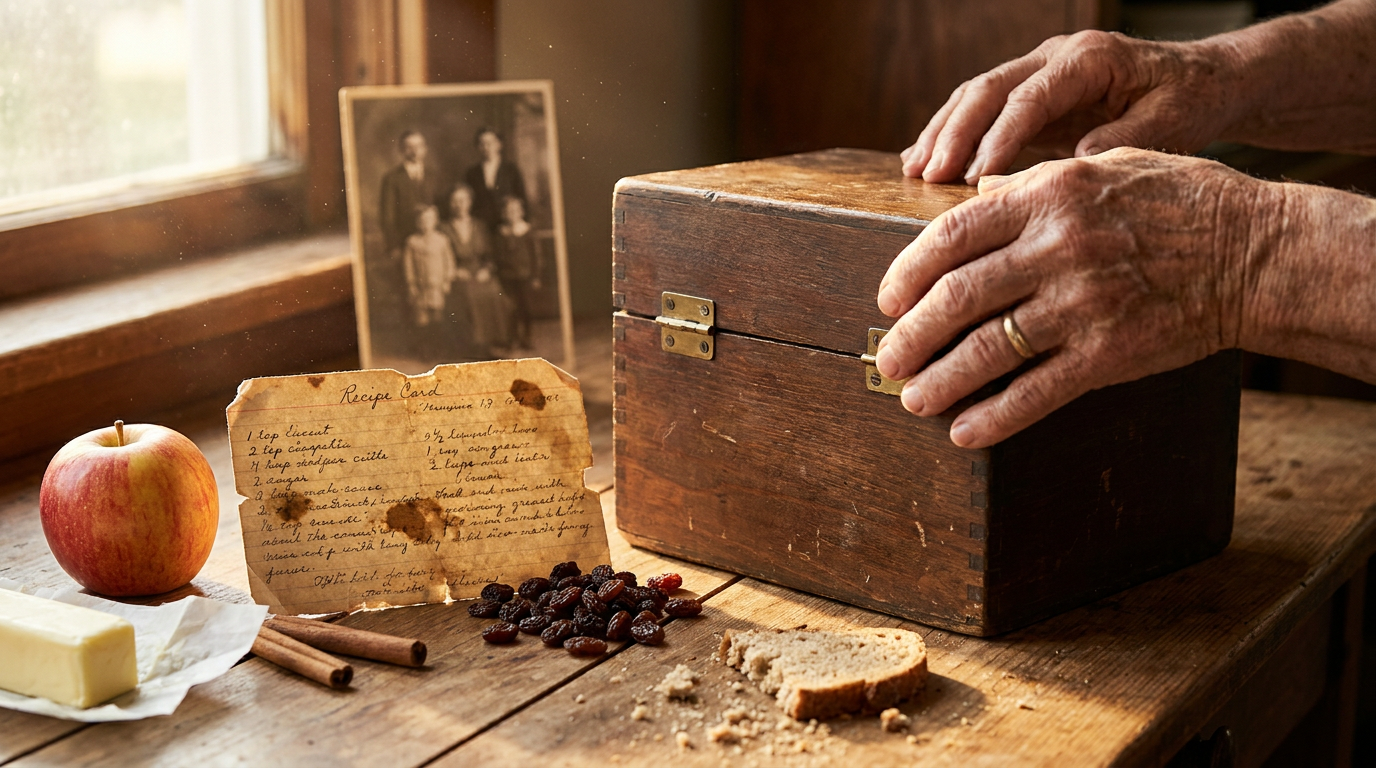
The card inside may be stained with butter. The measurements may include the highly scientific instruction “until it looks right.” The recipe may be written in English, German or a determined mixture of both. Nobody remembers exactly when the family began making it—but everybody knows who is supposed to bring it.
That is the magic of German-American food. It is not simply a collection of dishes. It is a trail of clues. Rye bread may point north or east. Spätzle may whisper of Swabia. A Christmas goose may recall an Old World celebration, while the turkey beside it tells an American chapter. Apples, cabbage, pork, raisins, cinnamon, beer and wine can reveal geography, farming, trade, faith, season and social class.
So what did your German ancestors actually eat?
The honest answer is wonderfully complicated: it depended on where they lived, what they could grow, what they could afford and whether it was an ordinary Tuesday or Christmas Day.
| “A family recipe is history you can smell before anyone says a word.” — GERMAN HERITAGE USA |
There Was Never Just One German Table
During much of the 1800s, “Germany” was not yet the single nation we recognize today. Unification came in 1871. Before that, German-speaking families lived among kingdoms, duchies, principalities, free cities and rural territories, each with its own fields, waterways, markets and food habits.
Even within one region, the landlord, shopkeeper, farm laborer and prosperous farmer did not eat alike. A wealthy household might serve roast venison, pheasant, fine wheat rolls, imported spices and wine. A laboring family could build most meals around dark bread, potatoes, cabbage, beans or soup, with meat appearing in modest amounts. An 1887–1888 study of two working-class households found that bread absorbed the largest share of food spending; meat and sausage were important, but butter, eggs, fruit, sugar and beer varied sharply according to household means.
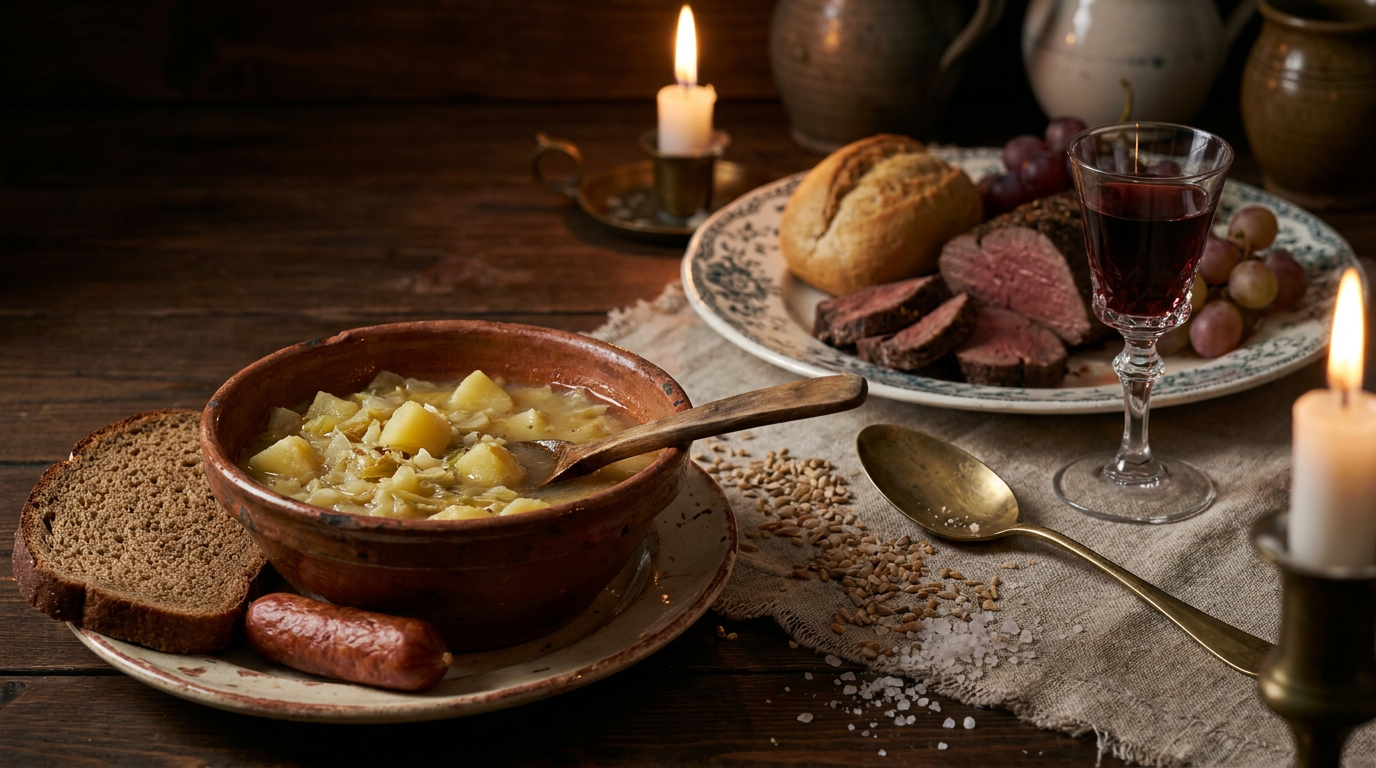
That distinction matters. Today’s restaurant platter of schnitzel, sausages, dumplings and cake is a celebration. It is not a photograph of every ancestor’s daily supper.
The practical German kitchen was built on seasonality and thrift. Families ate what the land, sea, farmyard, forest and cellar could provide. They salted, smoked, dried, fermented, pickled and preserved because winter did not accept excuses.
Northern Germany: Rye, Fish, Pork, Cabbage and the Coastal Pantry
Across Schleswig-Holstein, Holstein, Hamburg, Bremen, Lower Saxony, Mecklenburg and the Baltic and North Sea coasts, northern cooking reflected cooler weather, flatter farmland, maritime trade and access to rivers and sea.
Rye was one of the great northern grains. Dense rye breads kept well, traveled well and paired naturally with butter, cheese, sausage, smoked meat or fish. Wheat existed, but a fine white wheat loaf generally required better grain and more expense. Barley and oats appeared in porridge, soup, animal feed and brewing; buckwheat was important in some districts. Potatoes became indispensable, especially among poorer families, and were boiled, mashed, fried, added to soup or served beside preserved meat.
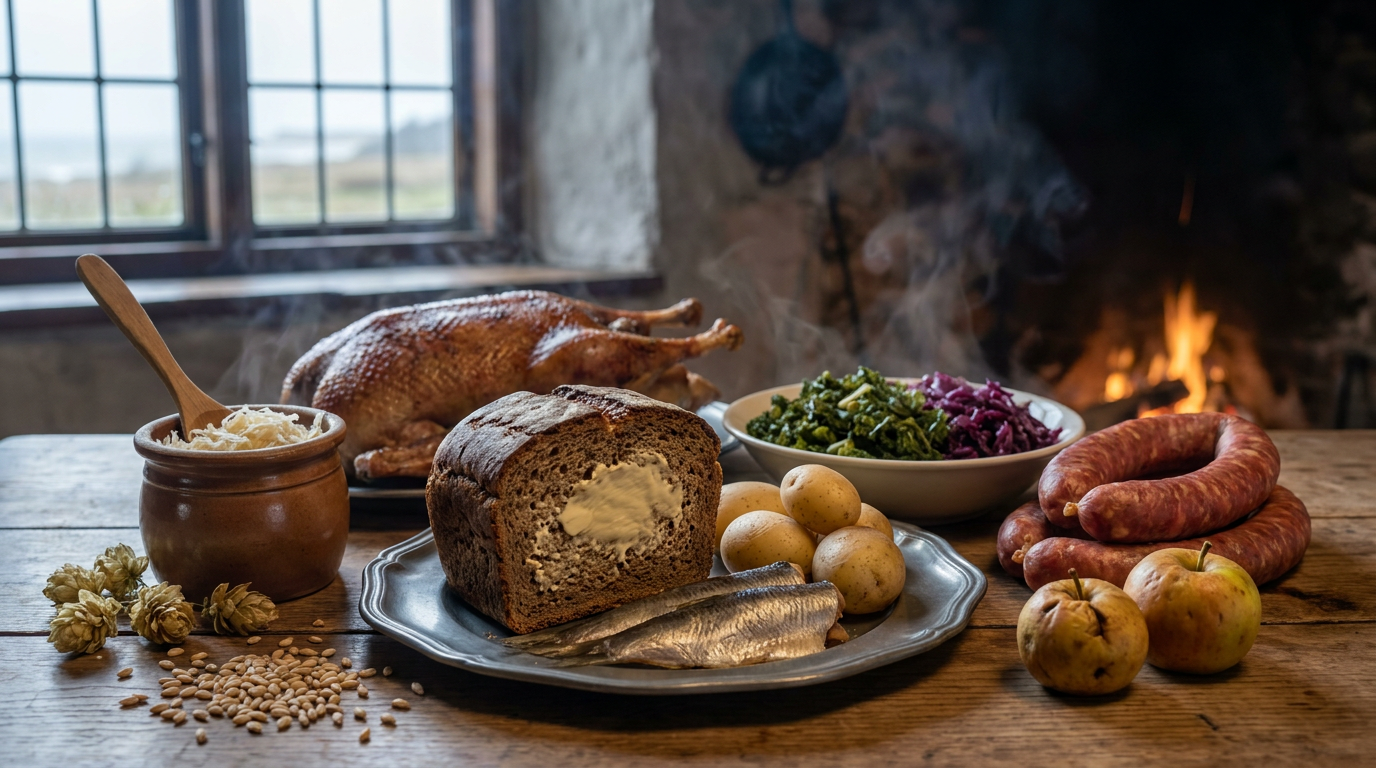
Cabbage was a hero of the northern pantry. White cabbage could become sauerkraut, while kale, turnips, carrots, peas, beans, onions and beets helped stretch the harvest into the cold months. Pork was especially practical because nearly every part of the animal could be used. Fresh pork was a treat; bacon, ham, sausage, lard and salted or smoked cuts made the annual slaughter last. Beef was eaten too, although cattle were valuable for milk, breeding and work, so beef was not automatically an everyday food.
Near the coasts and waterways, fish changed the menu. Herring could be salted, smoked or pickled. Eel, cod, flounder and other regional catches joined freshwater fish where available. Coastal towns had greater access to seafood than inland villages, and preserved fish could travel farther than fresh fish.
Farmyards supplied eggs, milk, butter, quark and cheese. Chickens were common, while duck and goose could be both practical farm birds and festive centerpieces. Roast goose became especially connected with holiday meals. Apples and pears flourished in northern orchards—including the famous fruit-growing country along the lower Elbe—and could be eaten fresh, dried, baked or cooked into sauces and fillings.
Pheasant and venison belonged to the story, but usually not to the daily table. Hunting access, local game laws, land ownership and wealth all mattered. A farm family might eat rabbit, hare or other available game; a landed or prosperous household was more likely to present pheasant or venison as a prized roast.
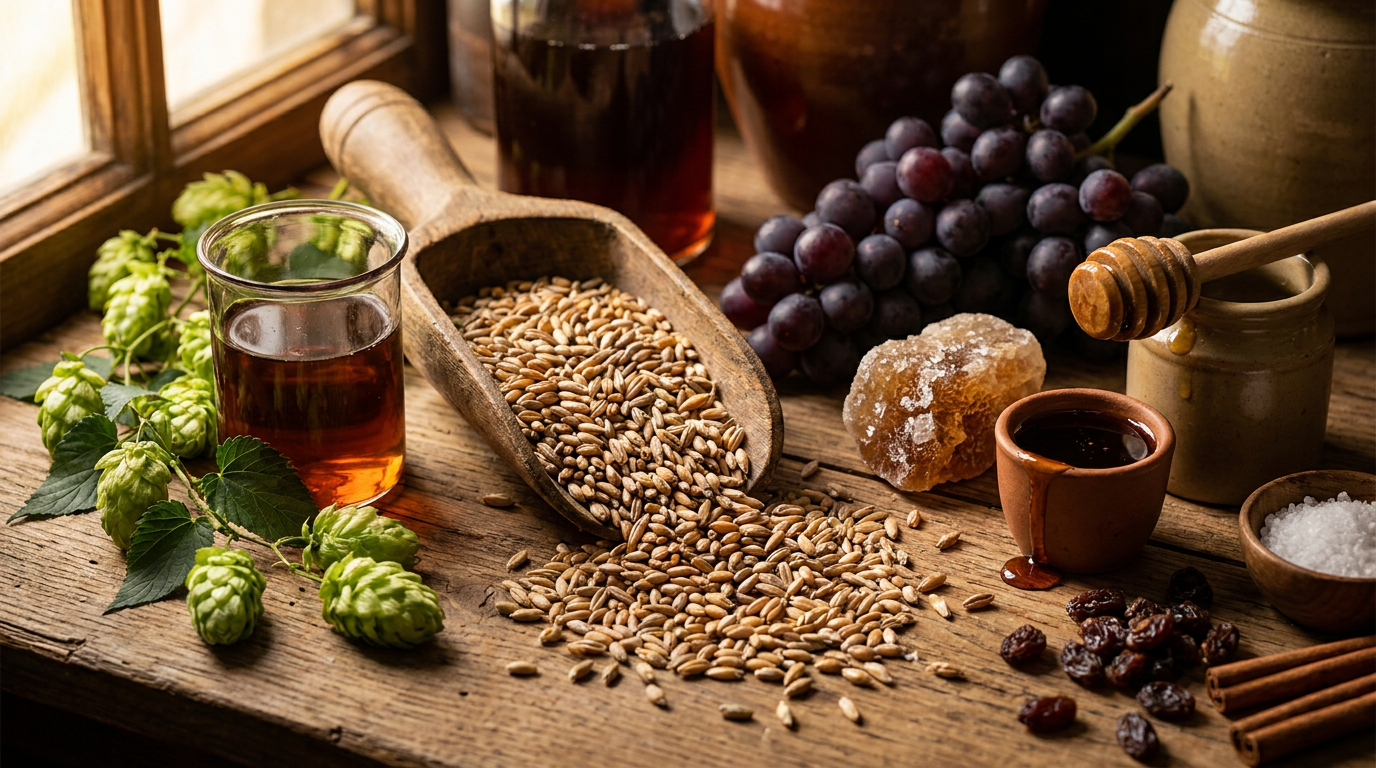
And what about raisins, sugar, honey and molasses? Honey was the older local sweetener. Raisins, cinnamon, pepper, cloves and cane sugar arrived through trade and were more likely to be reserved for baking and special meals than scattered casually into weekday food. During the 1800s, Germany’s growing beet-sugar industry gradually made sugar more accessible. Dark beet syrup was familiar in some regions, but American sorghum or cane molasses became an especially useful substitute after immigration.
Beer was brewed from barley and hops, and grain spirits were also familiar. Northern families did drink wine, especially when trade and income allowed, but vineyards and everyday wine culture were far more strongly associated with western and southern wine-growing regions.
Southern Germany: Wheat, Spelt, Dumplings, Beer and Wine Country
Move south toward Bavaria, Swabia, Baden, Württemberg, Franconia and the Alpine foothills, and the culinary landscape changes.
Wheat and spelt played a larger role in many southern and southwestern areas. Bakers produced breads and rolls; home cooks turned flour and eggs into noodles, dumplings and Spätzle. Potatoes still mattered, but they shared the plate with flour-based foods such as Knödel, Maultaschen and other regional preparations. Dairy farming contributed milk, butter, cream, soft cheeses and firmer Alpine cheeses.
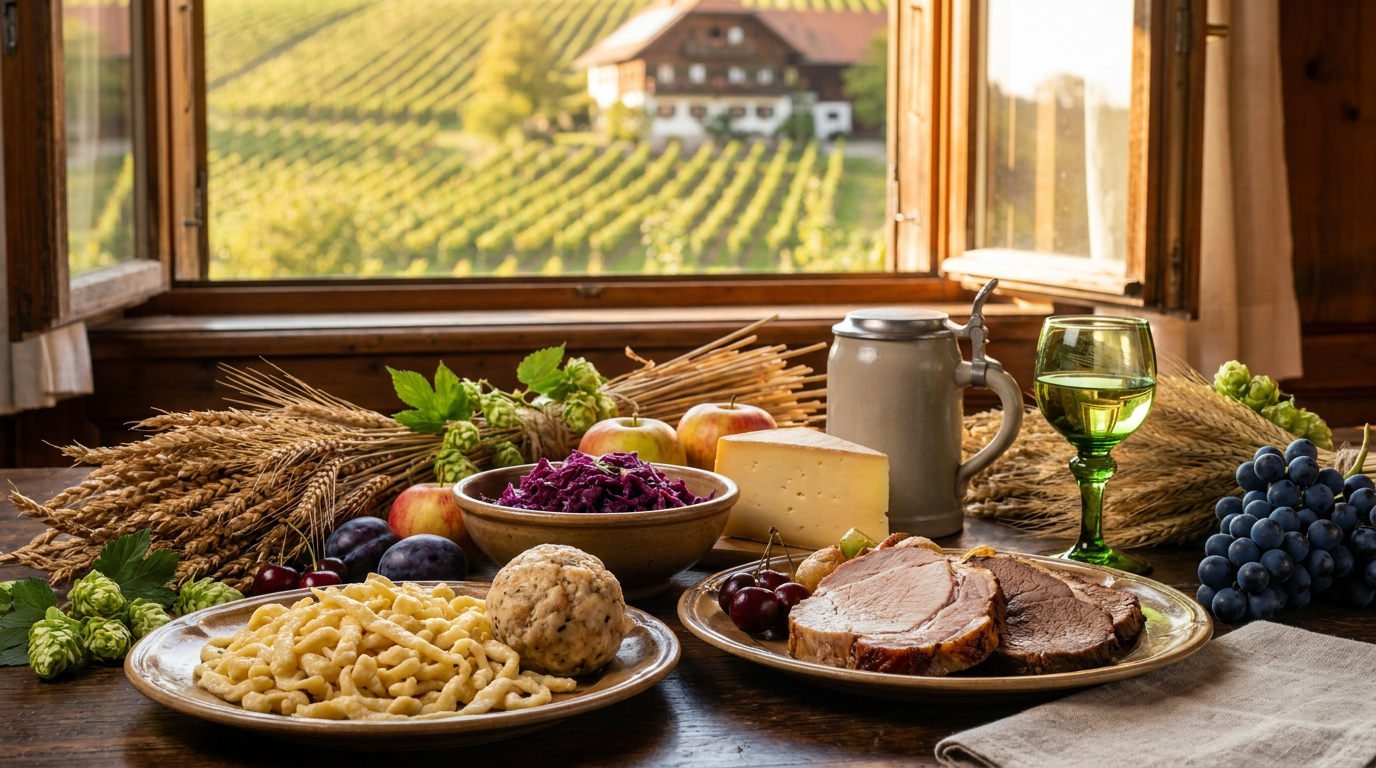
Pork remained central. Sausages, roast pork, ham and bacon differed from town to town because seasoning and butchering were intensely local. Beef and veal appeared in soups, boiled dishes and roasts when households could afford them. Chickens, ducks and geese were raised, and woodland or mountain regions offered venison, hare and game birds. Once again, a magnificent pheasant tells us more about a feast—or privilege—than about the average noon meal.
Southern kitchens used cabbage, sauerkraut, onions, leeks, peas, beans, lentils, turnips and seasonal greens. Orchard fruits included apples, pears, plums and cherries. Fruit could be dried, preserved, folded into dumplings, baked beneath crumbs or cooked into sauces that accompanied meat.
The grape question is especially regional. In the Rhine, Moselle, Palatinate, Baden, Württemberg and Franconian wine districts, grapes and wine were woven into local agriculture and identity. A vineyard family could live in wine country while a farmer only a few ridges away lived in potato country. Bavaria, meanwhile, became famous for barley, hops and beer. Beer and wine were not rivals so much as geographic neighbors, each reflecting the soil and climate beneath it.
Bread, potatoes and soup still did the daily work. The glorious roasts, rich sauces, fruit pastries and festival foods we remember were often Sunday dishes, harvest dishes, wedding dishes or Christmas dishes. That made them more memorable—and more likely to survive in family storytelling.
The Everyday Pantry—and the Feast-Day Table
If we could open an 1800s German pantry, we might find rye, wheat, barley or oats; potatoes and dried beans; cabbage in a crock; onions hanging nearby; salt; lard or butter; dried apples, pears, plums or raisins; honey; vinegar; flour; and carefully guarded spices. A prosperous household would show greater variety. A struggling one might have bread, potatoes and little else.
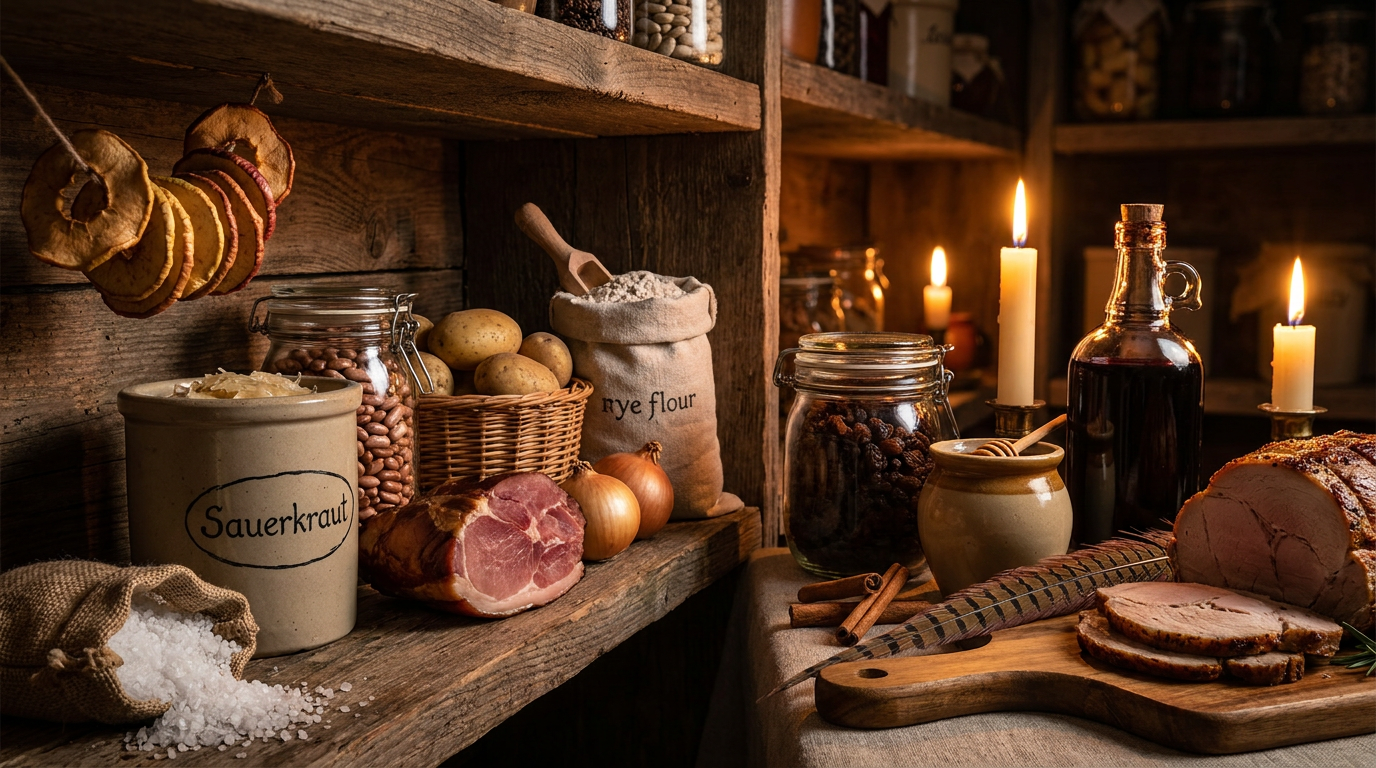
Salt was essential, not decorative. It preserved pork and fish, protected food through winter and flavored meals that depended on a small number of ingredients. Fermentation transformed cabbage into sauerkraut and cucumbers into pickles. Smoking protected ham, bacon, sausage and fish. Drying preserved fruit, mushrooms, herbs and legumes.
Sugar became more affordable as beet-sugar production expanded during the century, but sweetness still meant something. A spoonful of honey, sugar, syrup or molasses could turn ordinary bread and orchard fruit into holiday food. Cinnamon and raisins carried the aroma of occasion. That is why sweet breads, fruit-filled cakes and sweet-savory stuffings made such powerful memories: they tasted different from the working week.
When German Food Crossed the Atlantic
German immigrants who settled in the Midwest during the late 1800s did not find an empty pantry waiting for them. They encountered American corn, abundant wheat flour, new varieties of apples, larger supplies of beef and pork, local fish and wild game, and farm conditions that differed from the villages they had left.
They adapted with remarkable common sense.
Rye bread continued where rye flour was available, but wheat bread became increasingly practical. Potatoes, cabbage, beans, onions, cucumbers and apples grew well across large areas of the Midwest. Families raised pigs, cattle, chickens, ducks and geese; made butter and cheese; preserved garden vegetables; butchered communally; smoked sausage; and stored fruit for winter. Deer, rabbits, fish and wild turkey could supplement the farm table. Sorghum molasses, cornmeal and other American ingredients entered kitchens without asking anyone to surrender a German identity.
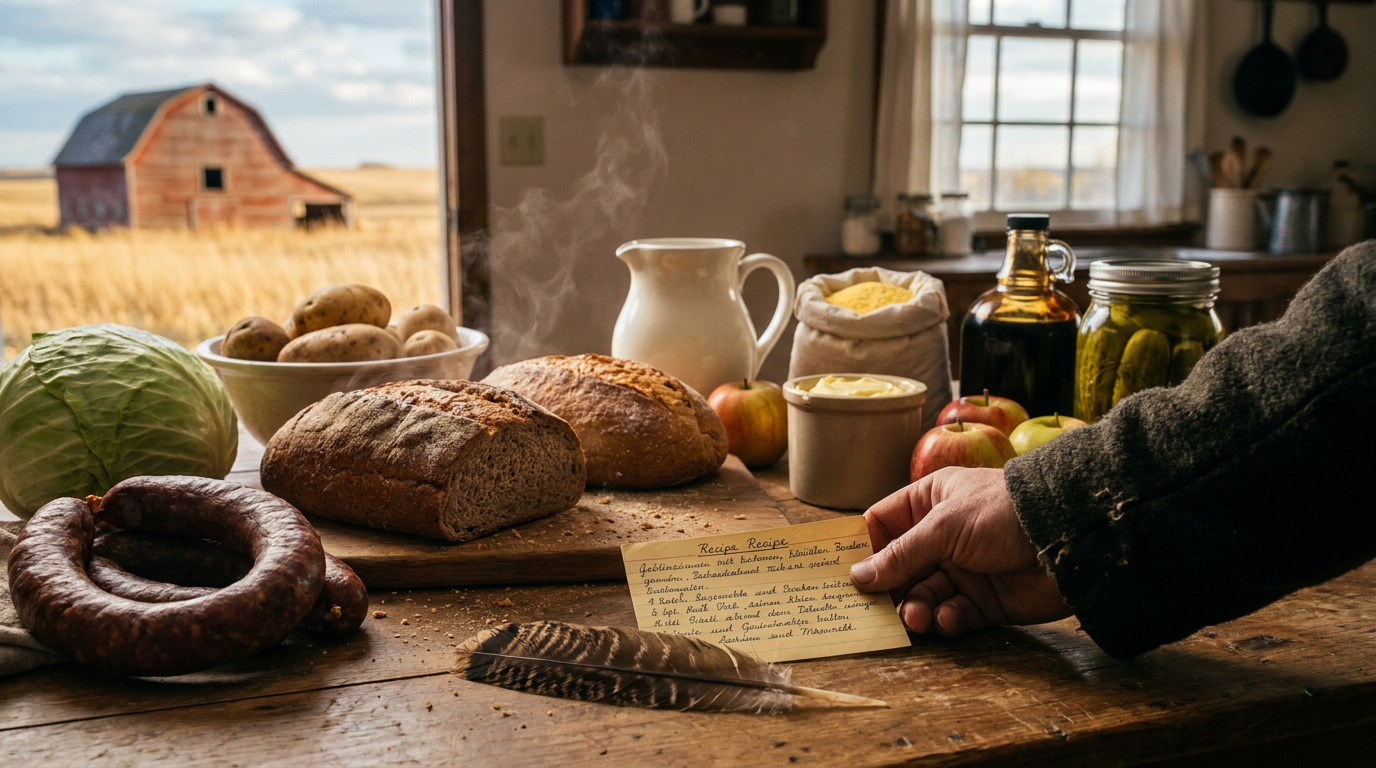
The old methods survived because they worked. Sauerkraut still protected cabbage. Sausage still extended and preserved pork. Soup still made a little meat feed many people. Potato salad, dumplings, pickles, fruit butter, coffee cake and sturdy loaves still brought comfort. German immigrants also transformed American drinking culture: immigrant brewers helped lager become the country’s dominant beer style by the middle of the century, and Midwestern cities became famous for breweries, beer gardens and German conviviality.
The most interesting foods were often neither completely German nor completely American. They were immigrant foods—memories rebuilt with new ingredients.
| “Your ancestors did not carry an entire kitchen across the Atlantic. They carried flavor memories—and rebuilt them with what America placed within reach.” — GERMAN HERITAGE USA |
German Sweet Dressing: From Christmas Goose to American Turkey
One especially meaningful example is German Sweet Dressing, a treasured Hingst family recipe with roots in Holstein in northern Germany.
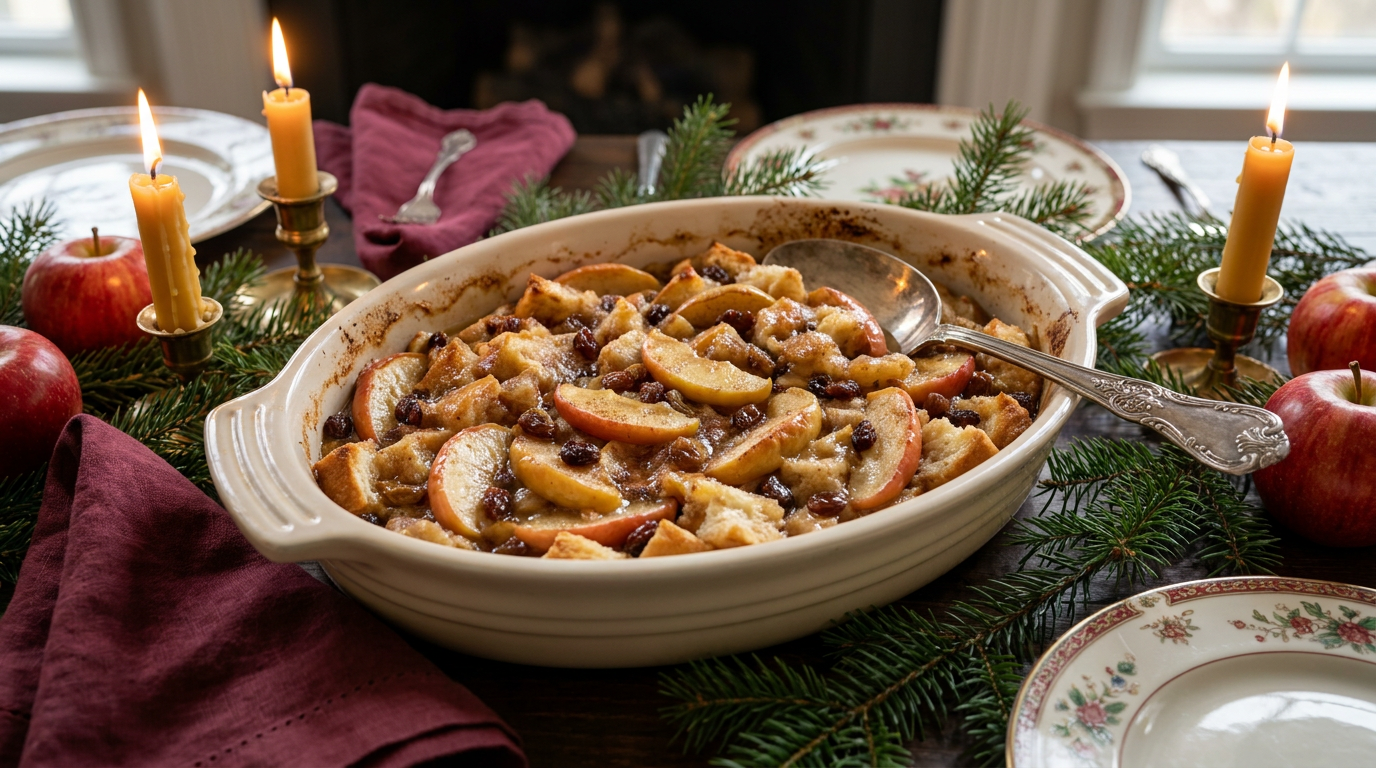
The family tradition traces the dish to farm life near Seelent, where bread, butter, orchard apples, dried raisins, cinnamon and a modest sweetener were combined for a festive stuffing. In Germany, it accompanied—or filled—the Christmas goose. When the Hingst family immigrated in 1882 and established new lives in Iowa and Nebraska, the recipe traveled with them.
Then America joined the story.
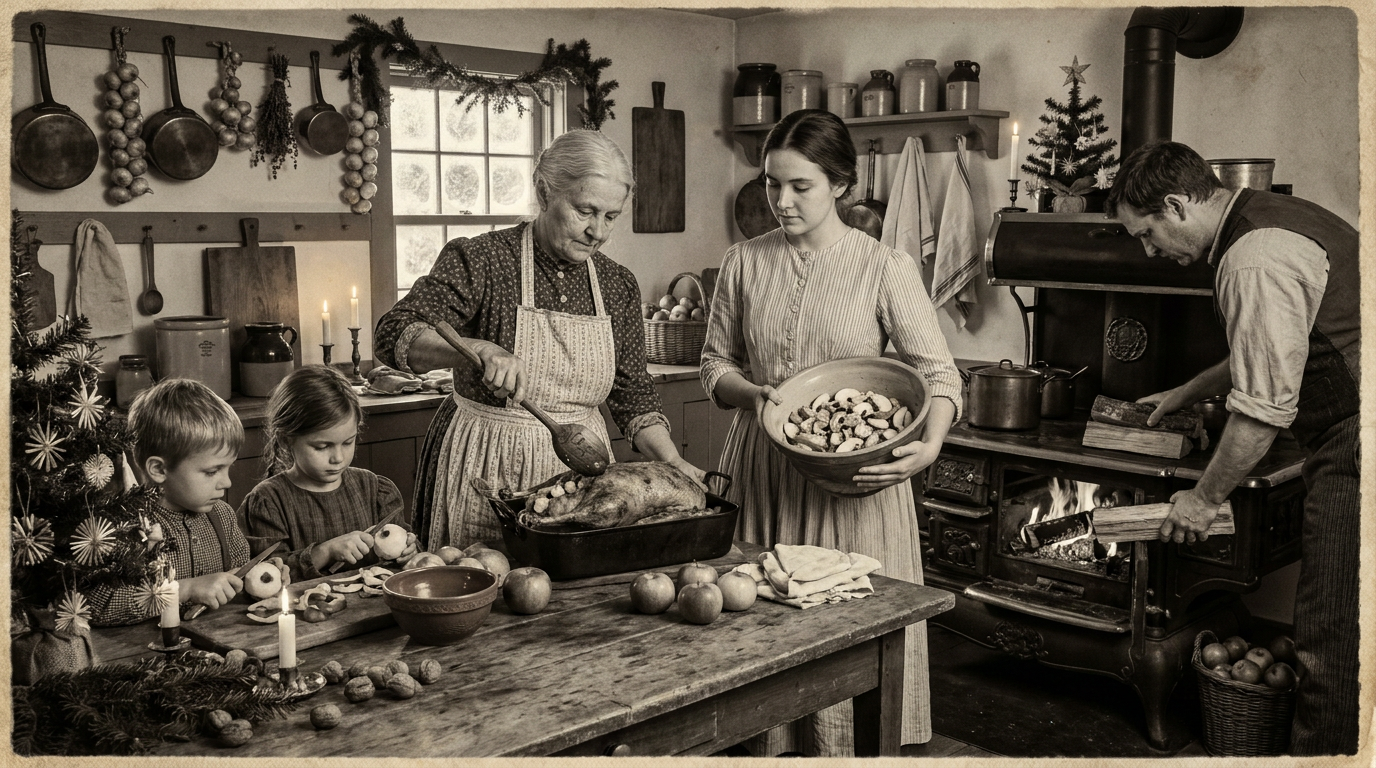
Goose remained meaningful, but turkey became a familiar holiday centerpiece. The same sweet dressing that had once filled a goose could fill a turkey. In later generations, many cooks moved it into a casserole dish and served it beside the bird. That simple change made it easier to prepare, safer to cook evenly and generous enough for everyone to claim a spoonful.
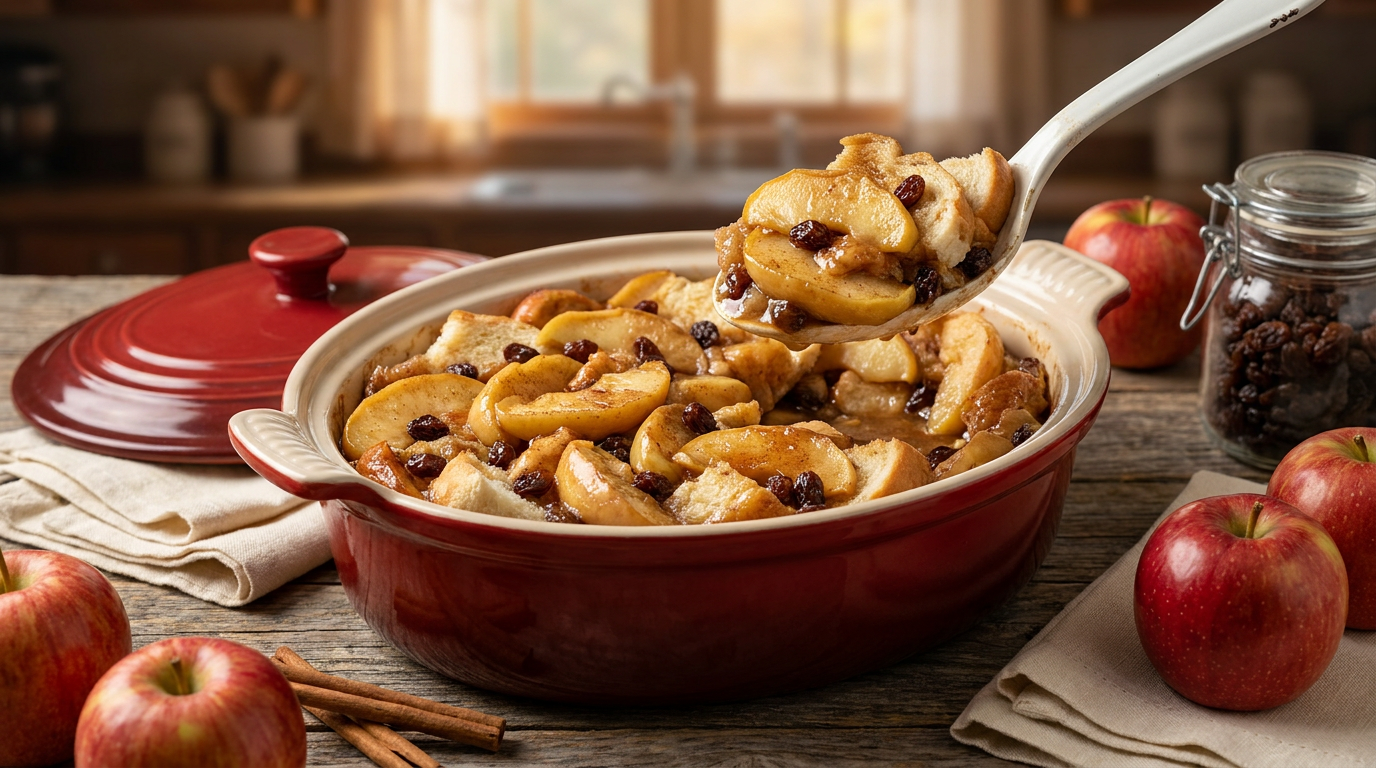
Its texture falls somewhere between traditional bread stuffing and a lightly sweet bread pudding. The apples bring moisture and brightness. Raisins provide little bursts of concentrated fruit. Butter adds richness. Cinnamon supplies the unmistakable scent of a holiday kitchen. Sugar, honey or molasses gives each family the power to choose its own accent: clean sweetness, floral warmth or dark frontier depth.
The Hingst Family German Sweet Dressing
Ingredients
8 cups cubed day-old bread
1/2 cup butter, melted
1/2 cup water
3 apples, diced
1 cup raisins
2 tablespoons sugar, honey or molasses
1 teaspoon cinnamon
1/4 teaspoon salt
Directions
Lightly toast the bread cubes so they are dry at the edges but not deeply browned.
Place the bread in a large bowl. Add the melted butter, water, diced apples, raisins, your chosen sweetener, cinnamon and salt.
Toss gently until the bread is evenly moistened and the fruit is distributed throughout.
Spoon the mixture into a buttered casserole dish. Cover and bake at 350°F for about 30 minutes, uncovering for the final 10 minutes so the top becomes lightly golden.
Serve warm beside roast goose, turkey, pork or ham.
If a family uses the mixture to stuff poultry, modern food-safety guidance should be followed: the USDA says the center of the stuffing must reach 165°F. Baking it separately preserves the tradition while giving the cook better control over texture.
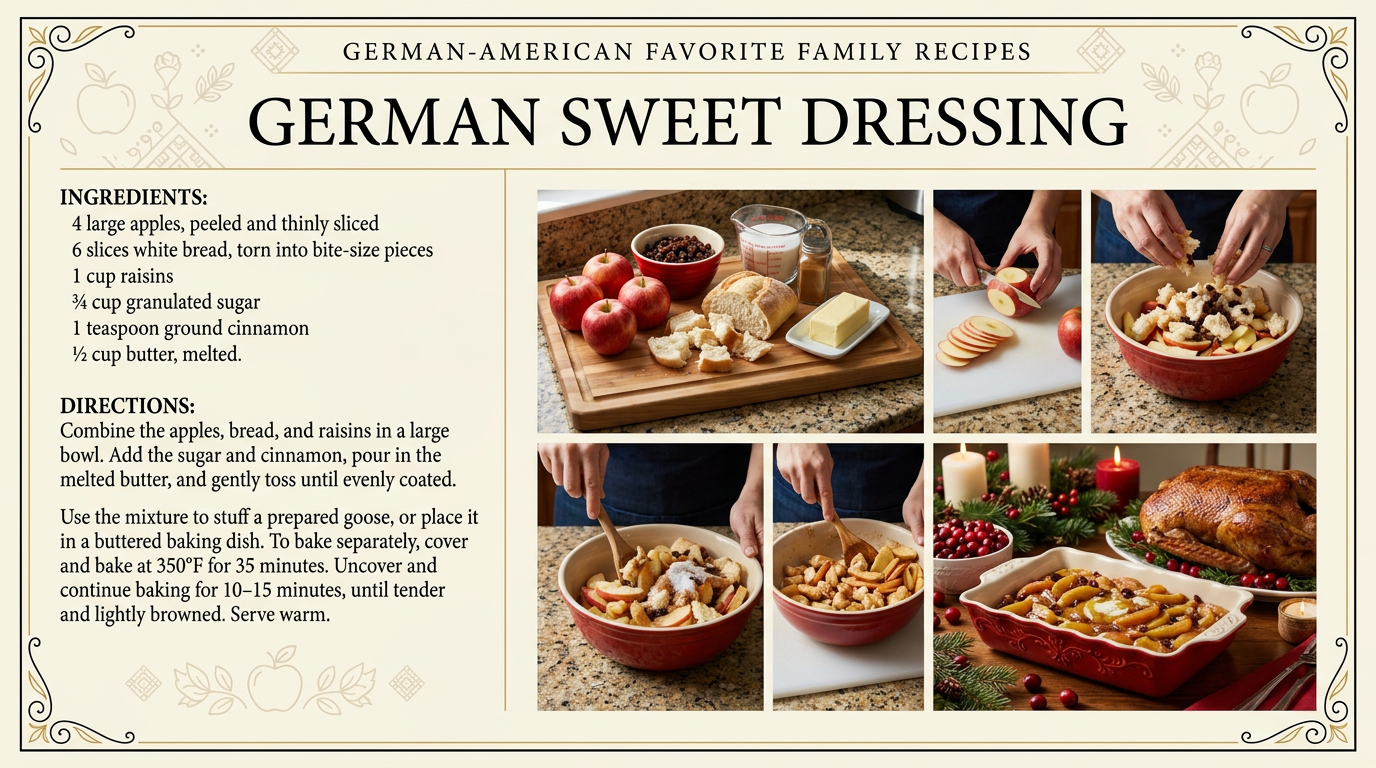
This recipe is not presented as the single stuffing of northern Germany; no such universal recipe existed. It is something more personal and, in its own way, more valuable: one family’s edible record of migration, adaptation and continuity.
Why These Foods Still Bring Us Together
Traditional recipes survive for reasons that have little to do with culinary perfection. They survive because a grandmother made them without measuring. Because an uncle insisted the sauerkraut needed another hour. Because children stole raisins from the bowl. Because the smell of butter, apples and cinnamon made a new American farmhouse feel briefly like an old German home.
Some recipes remain nearly unchanged. Others trade goose for turkey, rye for wheat, honey for molasses or a bird cavity for a casserole dish. That does not make them less authentic. Adaptation is part of immigrant authenticity.
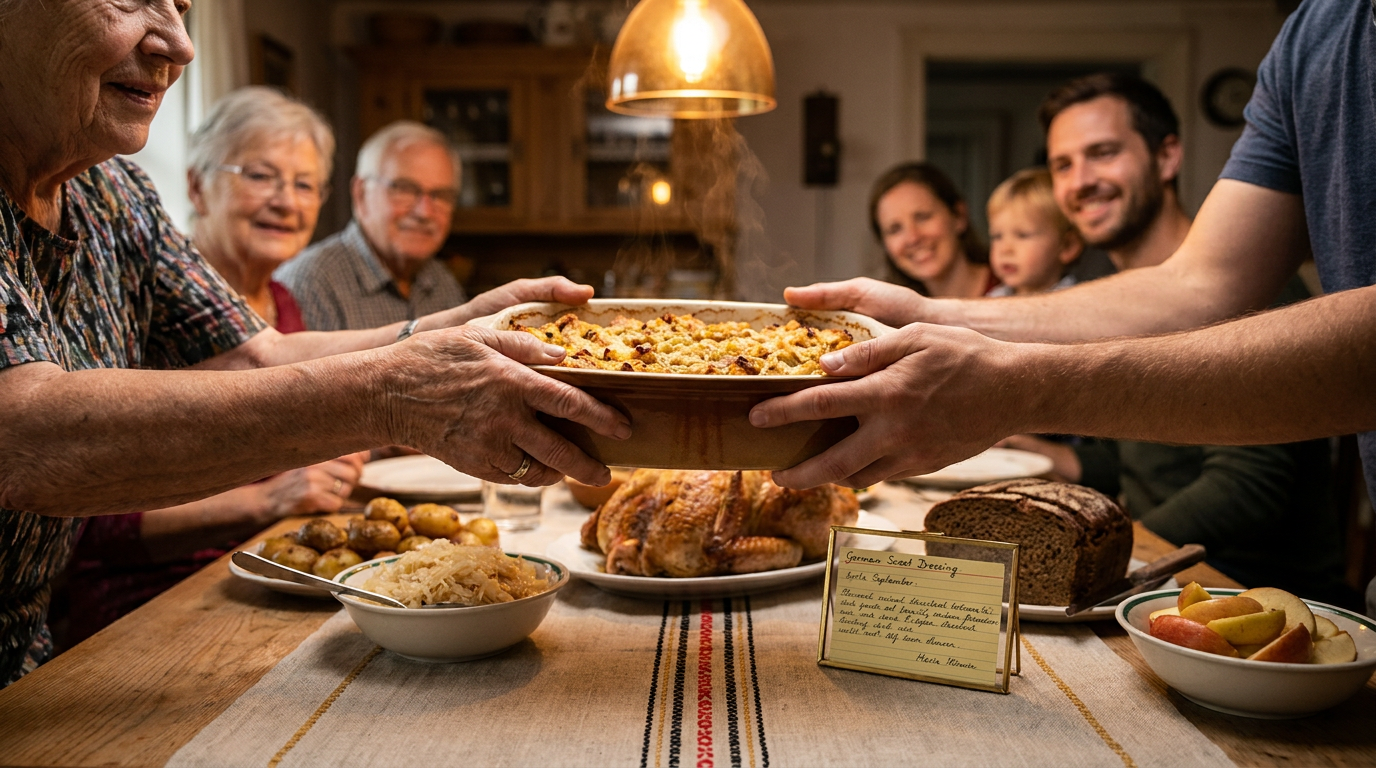
This early September, ask the oldest people in your family what appeared on their childhood tables. Photograph the handwritten card. Record the pronunciation of the dish. Write down the part everyone assumes “somebody knows.” Cook it together before the memory disappears.
Your answer to “What did my German ancestors eat?” may begin with bread, potatoes, pork, cabbage, fish, apples, beer or wine. But the deeper answer is this: they ate what their region provided, preserved what the season allowed, celebrated when they could—and passed forward the flavors that made a family feel like itself.
What German recipe still brings your family together? Share its name, region and story with GERMAN HERITAGE USA. Your family dish may be the missing clue that helps someone else recognize a tradition of their own.
Got A Little German In You? Your German Heritage Is Calling You!