Oktoberfest Isn’t Over! How to Throw an Unforgettable Backyard Oktoberfest Before Halloween
GERMAN HERITAGE USA | TRADITIONS, FOOD, FESTIVALS & ENTERTAINMENT
Bratwurst, beer, Bavarian music, football, friendly neighbors, and a whole lot of Gemütlichkeit! Who says Oktoberfest has to end just because Munich’s beer tents have closed? Wait a Minute!
Who Says Oktoberfest Is Over?
The giant beer tents in Munich have closed. The brass bands have packed away their tubas. Millions of visitors have returned home, and the last empty beer steins have been collected.
But hold on a minute!
It’s not even the middle of October yet!
Here in America, we’re still enjoying beautiful autumn afternoons, college football Saturdays, NFL Sundays, colorful falling leaves, and that unmistakable smell of backyard grills firing up for another weekend.
And guess what? There are still Oktoberfest celebrations happening throughout the United States!
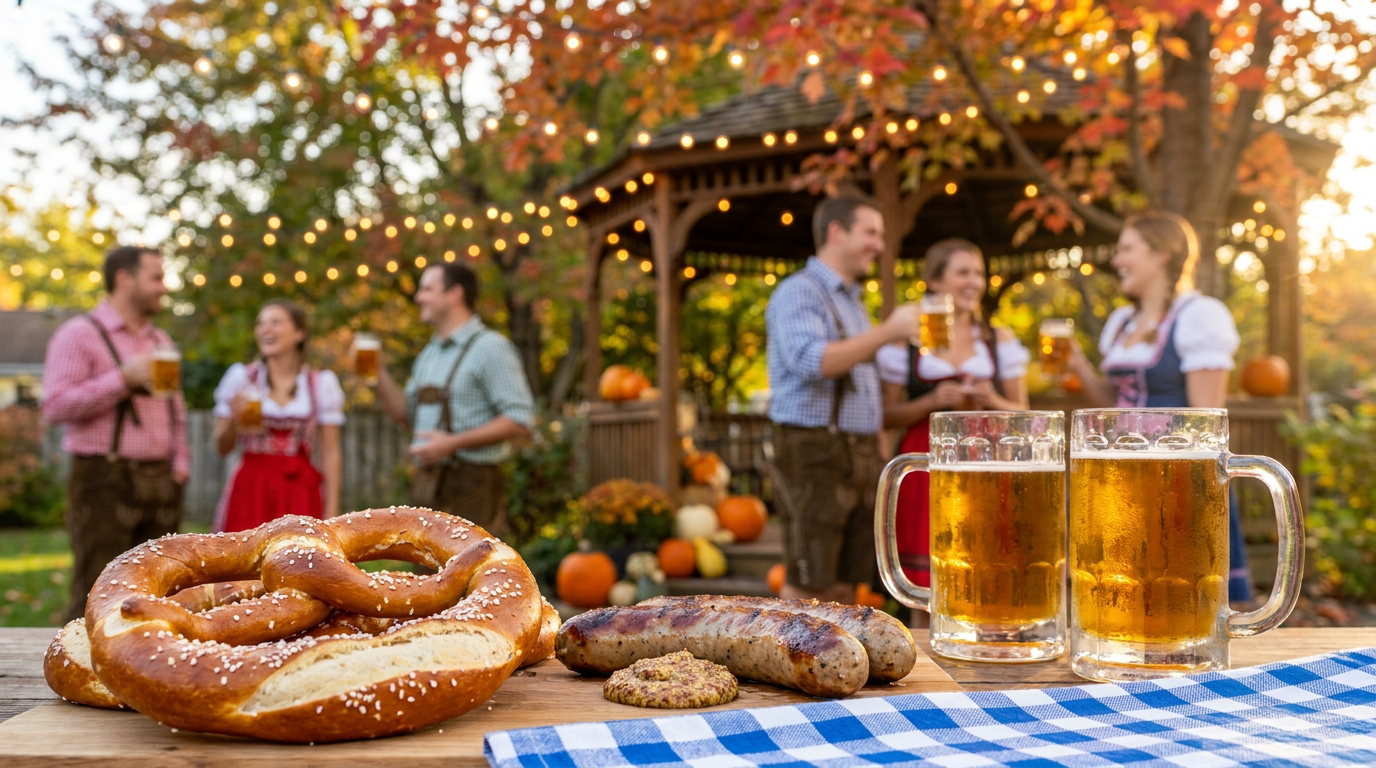
America has embraced Oktoberfest so enthusiastically that celebrations can be found in communities from coast to coast. From German-American clubs and neighborhood breweries to small-town festivals and enormous citywide events, the Oktoberfest spirit has become a beloved part of America’s autumn calendar.
You may even have heard that America hosts more organized public Oktoberfest celebrations than Germany. While comparable nationwide counts are difficult to establish, there’s no question that Americans have made Oktoberfest their own.
But here’s a thought.
Why should you have to travel somewhere to celebrate Oktoberfest when you can bring Oktoberfest right into your own backyard?
That’s right. Your backyard. Your neighbors. Your friends. Your family.
A grill full of bratwurst, some German-inspired food and decorations, a few picnic tables, lively music, ridiculous contests, and maybe even Uncle Fred attempting the Chicken Dance after his second brat.
Now THAT sounds like an Oktoberfest worth celebrating!
And with Halloween just around the corner, late October offers a wonderful opportunity for one more neighborhood gathering before the holiday season arrives.
First Things First: Give Your Oktoberfest a Name!
Every great festival deserves a memorable name.
Munich has Oktoberfest. Cincinnati has Oktoberfest Zinzinnati. Your neighborhood deserves something equally entertaining—even if your festival only attracts 18 people, three dogs, and one neighbor who insists he can yodel.
The trick? Combine your family surname, subdivision, street, or neighborhood name with Oktoberfest.
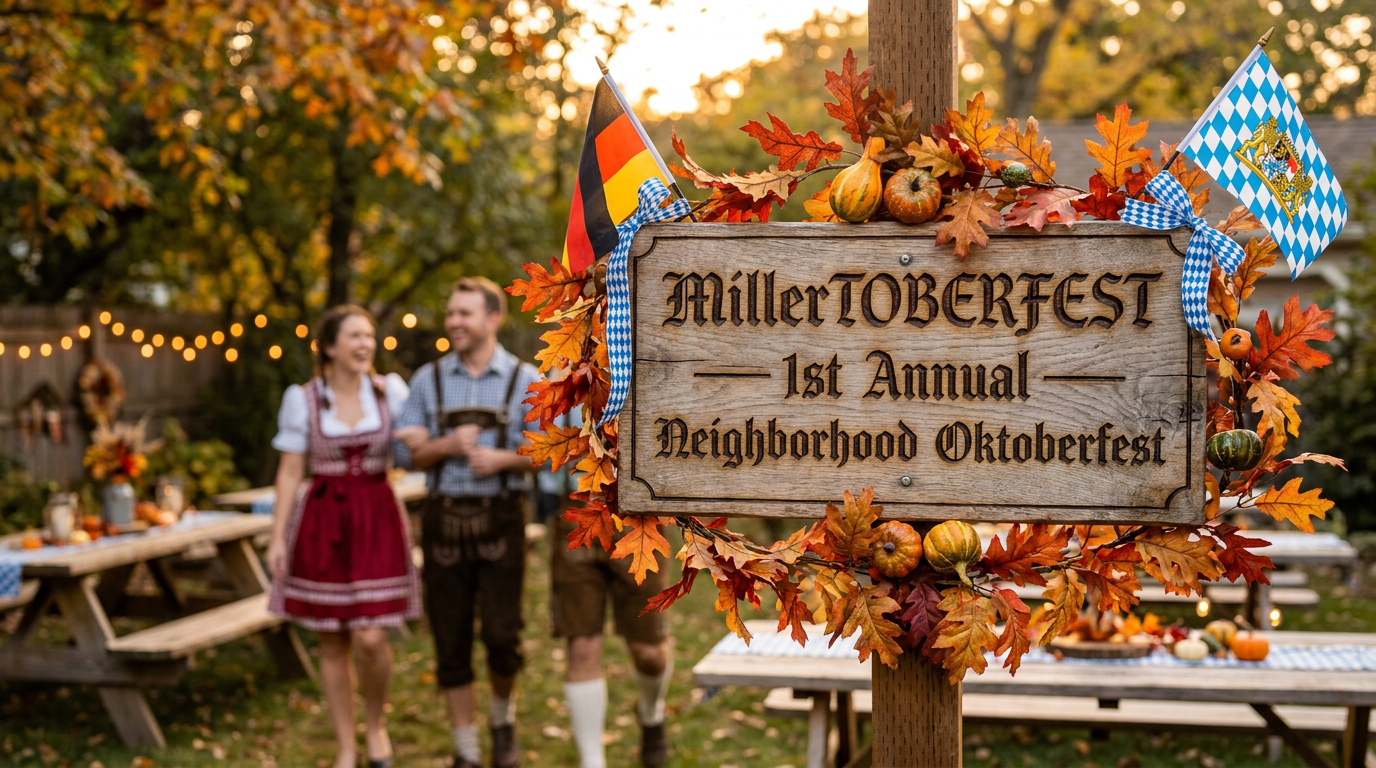
Here are a few ideas to get those creative juices flowing:
| Your inspiration | Your festival name |
|---|---|
| Miller family | MillerTOBERFEST |
| Tingle family | TingleTOBERFEST |
| Shady Acres subdivision | ShadyAcresOBERFEST |
| Hingst family | HingstTOBERFEST |
| Maplewood neighborhood | MaplewoodTOBERFEST |
| Oak Ridge subdivision | OakRidgeOBERFEST |
| Smith family | SmithTOBERFEST |
| Willow Creek neighborhood | WillowCreekTOBERFEST |
| Johnson family | JohnsonBRATFEST |
| Cedar Grove neighborhood | CedarGroveBIERFEST |
| Pine Hollow subdivision | PineHollowPROSTFEST |
| The entire cul-de-sac | CulDeSacTOBERFEST |
Our personal favorite for a neighborhood gathering?
CulDeSacTOBERFEST — Where the Street Ends and the Gemütlichkeit Begins!
Make a homemade festival banner, create a little welcome sign, and announce the First Annual celebration.
Who knows? Ten years from now, the neighborhood might be planning its tenth annual Oktoberfest, complete with matching shirts and a trophy that nobody remembers purchasing.
Your Backyard. Your Biergarten. Your Rules!
You don’t need a giant Bavarian festival tent or a professional event planner to create a festive atmosphere.
Start with what you already have.
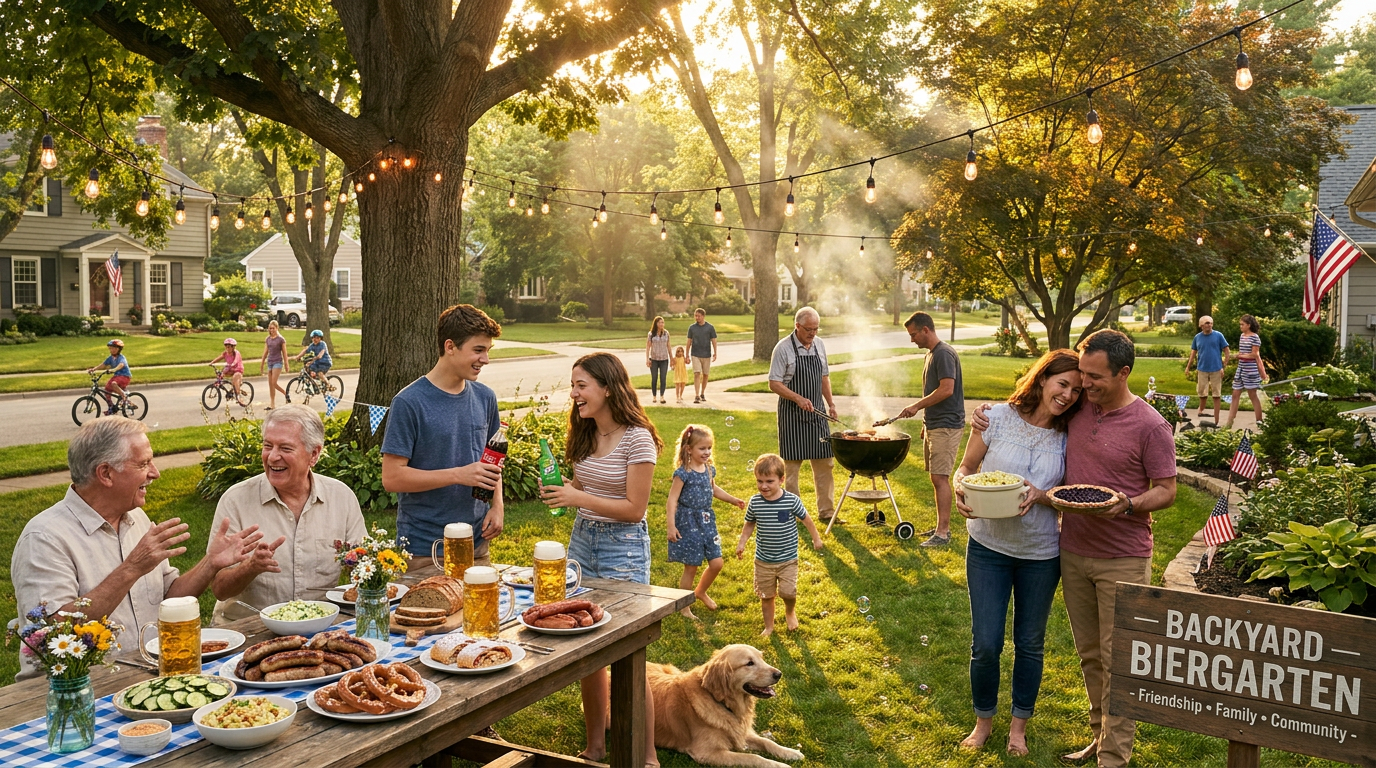
A patio, deck, lawn, driveway, or shared neighborhood green space can become your very own German-inspired Biergarten.
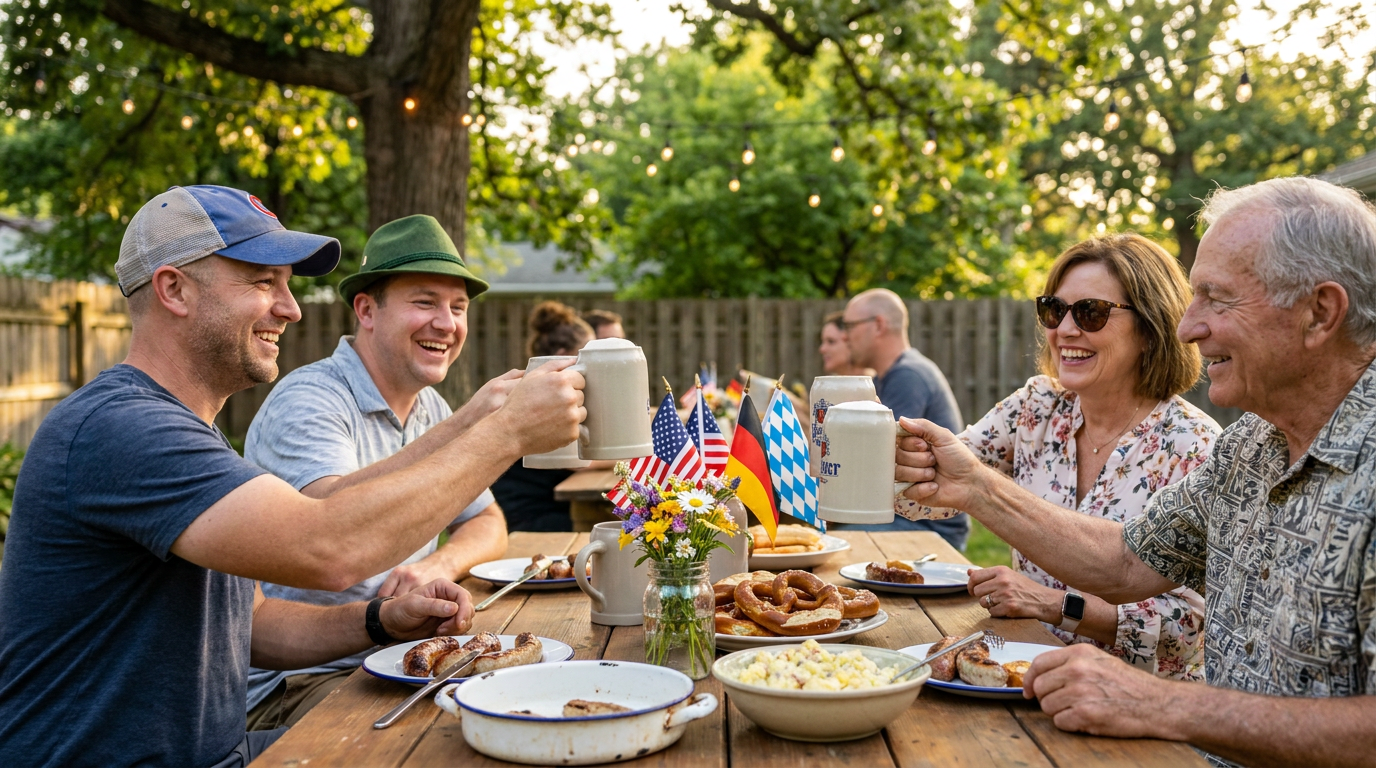
Set up folding tables, picnic benches, or lawn chairs. Add blue-and-white Bavarian-style tablecloths, a few festive banners, autumn pumpkins, and strings of warm lights.
Have some decorative beer steins? Put them out. An old German flag? Display it. A collection of Oktoberfest souvenirs from previous celebrations? Perfect!
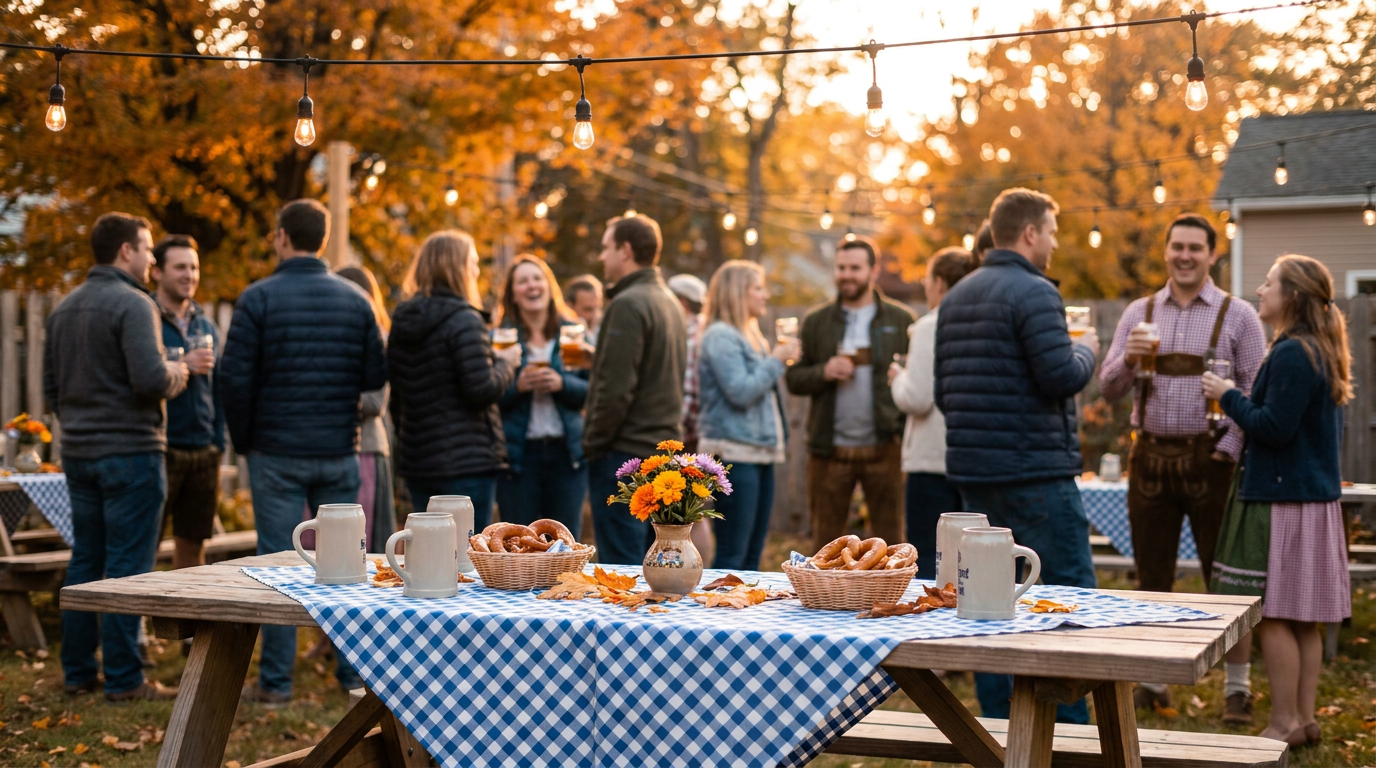
And don’t worry if your decorations include a few Halloween pumpkins. After all, you’re celebrating in late October.
A smiling jack-o’-lantern wearing a Bavarian alpine hat might just become your festival mascot.
The goal isn’t to recreate Munich’s Theresienwiese. It’s to create a welcoming place where neighbors can relax, laugh, share stories, and enjoy themselves.
The Germans have a wonderful word for this feeling: Gemütlichkeit.
It describes a sense of warmth, comfort, friendliness, and belonging.
“The best Oktoberfest isn’t necessarily the biggest one. Sometimes it’s the one where everybody knows your name—and somebody remembers to bring the mustard.”
That’s the spirit we’re after!
Everybody Pitches In! The Great Neighborhood German Potluck
Here’s where your backyard Oktoberfest becomes especially fun—and affordable.
Don’t try to do everything yourself!
Invite the neighbors to participate. After all, this is a neighborhood celebration, not a catering assignment.
One family can bring bratwurst. Another might volunteer to grill. Someone else can contribute soft pretzels, sauerkraut, German potato salad, or a homemade dessert.
You could even organize a voluntary neighborhood party fund to help cover shared expenses such as decorations, supplies, and beverages, with any alcohol arrangements following local laws.
Better yet, make it a German-inspired potluck!
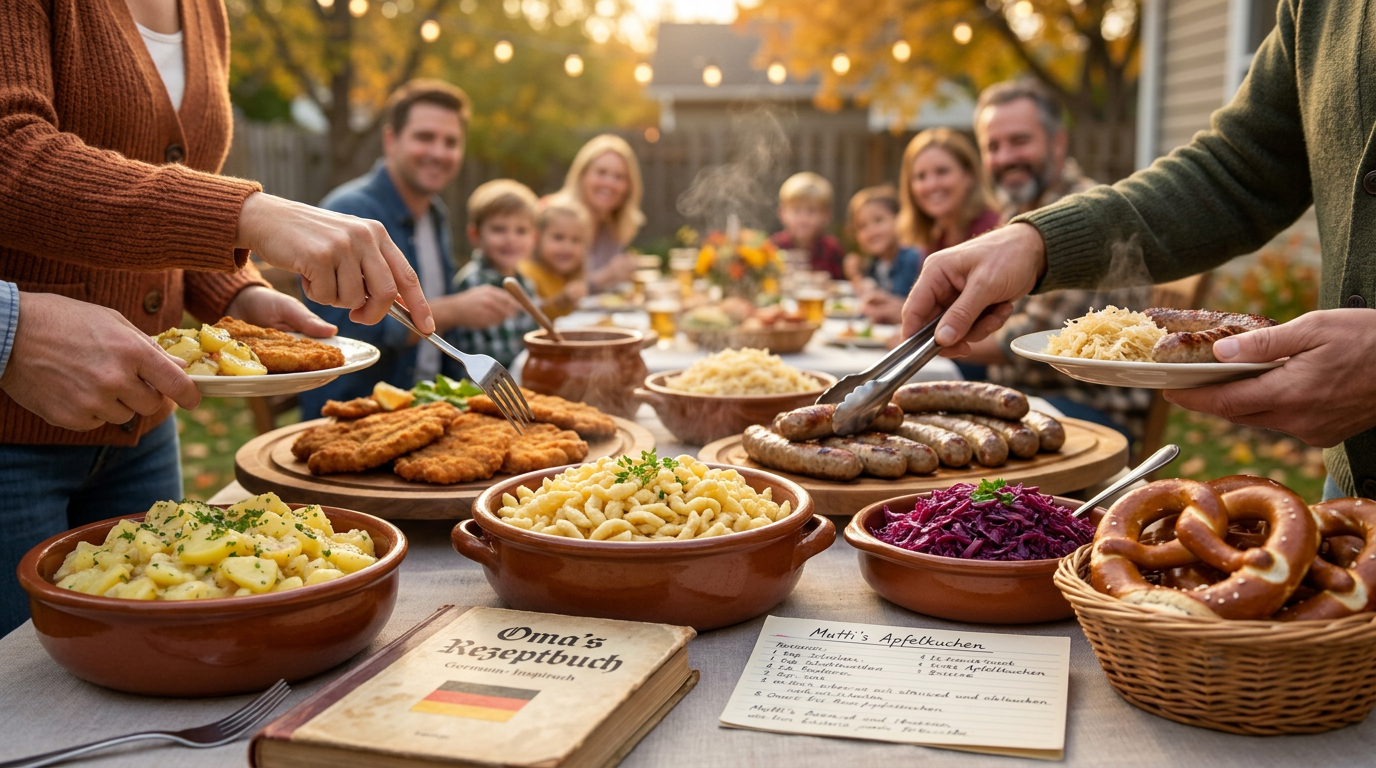
Challenge each household to prepare one dish from a German cookbook, a treasured family recipe, or a trusted recipe website.
Imagine the possibilities:
- Bratwurst with spicy German mustard and sauerkraut.
- Warm German potato salad with bacon and vinegar.
- Homemade spaetzle with butter and herbs.
- Rotkohl, the delicious sweet-and-sour red cabbage.
- Bavarian pretzels with mustard or cheese dip.
- Currywurst with its famous seasoned tomato sauce.
- Schnitzel served with lemon.
- Apple strudel, German apple cake, or Black Forest cake.
And here’s a fun twist: encourage guests to bring a little recipe card identifying their dish, where it comes from, and whether it has a special family connection.
Grandma’s handwritten recipe? Even better!
Don’t forget to label ingredients and allergens, keep perishable foods at safe temperatures, and make sure the grill team knows who’s responsible for cooking.
Fire Up the Grill! Brats, Brews and Backyard Favorites
Let’s face it. For many Americans, Oktoberfest means one thing before anything else.
BRATWURST!
And there’s absolutely nothing wrong with that.
Make the grill a central attraction. Offer several varieties of German-style sausage, along with rolls, sauerkraut, grilled onions, and a selection of mustards.
A simple build-your-own-brat station makes serving easy.
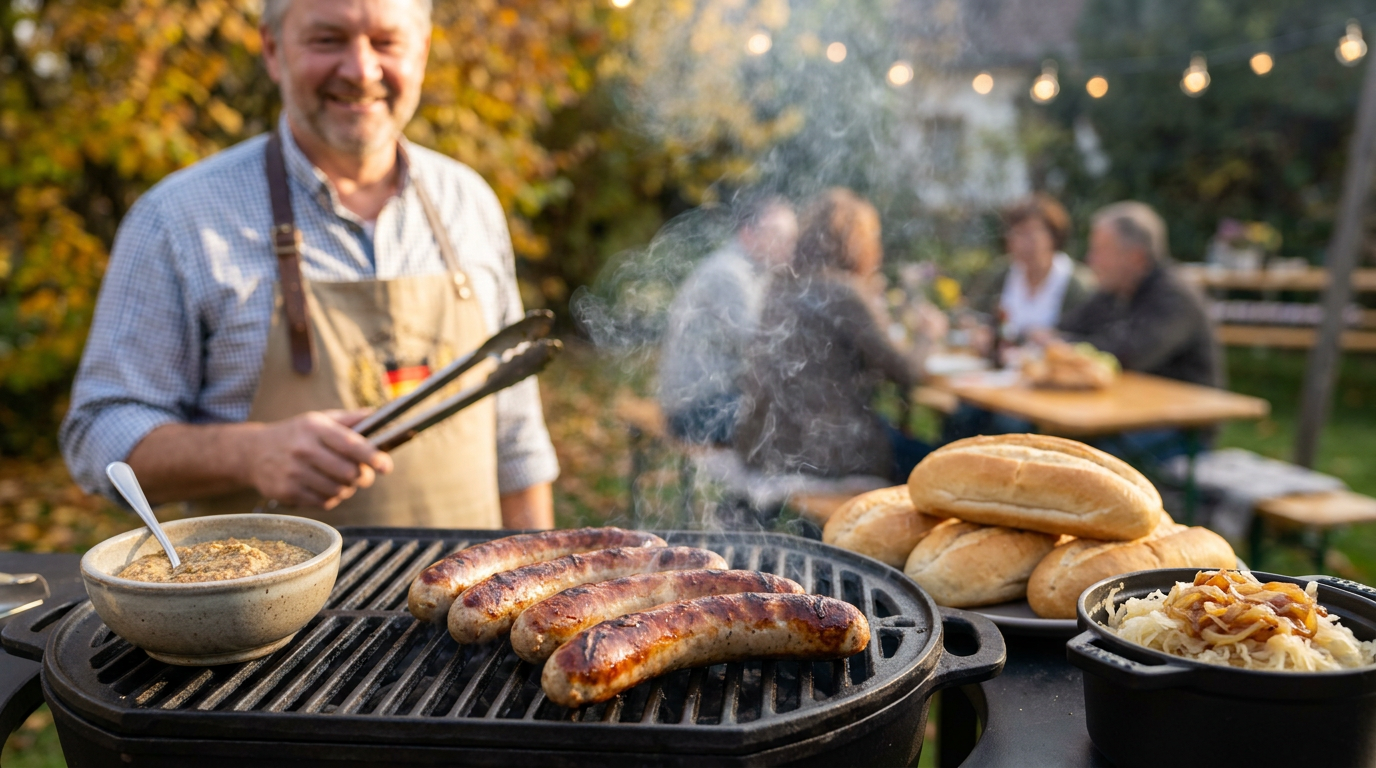
For drinks, consider Oktoberfest-style Märzen or Festbier for adults who enjoy beer, alongside German-inspired nonalcoholic beers, sparkling apple drinks, cider, lemonade, and plenty of water.
You can even create a little beverage station labeled The Neighborhood Biergarten.
If you’re serving alcohol, keep it responsible. Have food and nonalcoholic options available, don’t serve minors, and help guests arrange safe rides when needed.
And don’t forget a special German-inspired appetizer!
GERMAN HERITAGE USA has even explored the delicious possibilities of Bavarian Bier & Mustard Glazed Chicken Wings, which would make a fantastic addition to your Oktoberfest spread.
Because who says Oktoberfest and football-season chicken wings can’t get along?
Let the Games Begin! The Great Backyard Oktoberfest Championships
Now we’re getting to the really entertaining part.
Every great Oktoberfest needs a little competition.
Not the serious kind, of course. We’re talking about the kind of competition where someone wins a plastic golden bratwurst and proudly displays it on the mantel until Christmas.
Create a few homemade awards and let your guests vote.
The Golden Bratwurst Award: Best homemade German main dish.
Oma’s Golden Spoon: Best German side dish.
The Strudelmeister Award: Best German dessert.
Herr Oktoberfest and Frau Oktoberfest: Best traditional German-inspired outfits, including lederhosen and dirndls.
The Golden Chicken Award: Most entertaining Chicken Dance performance.
The Alpine Echo Award: Best yodeling performance, whether genuinely impressive or hilariously terrible.
The Gemütlichkeit Award: The guest who brings the most warmth, friendliness, and festive spirit to the party.
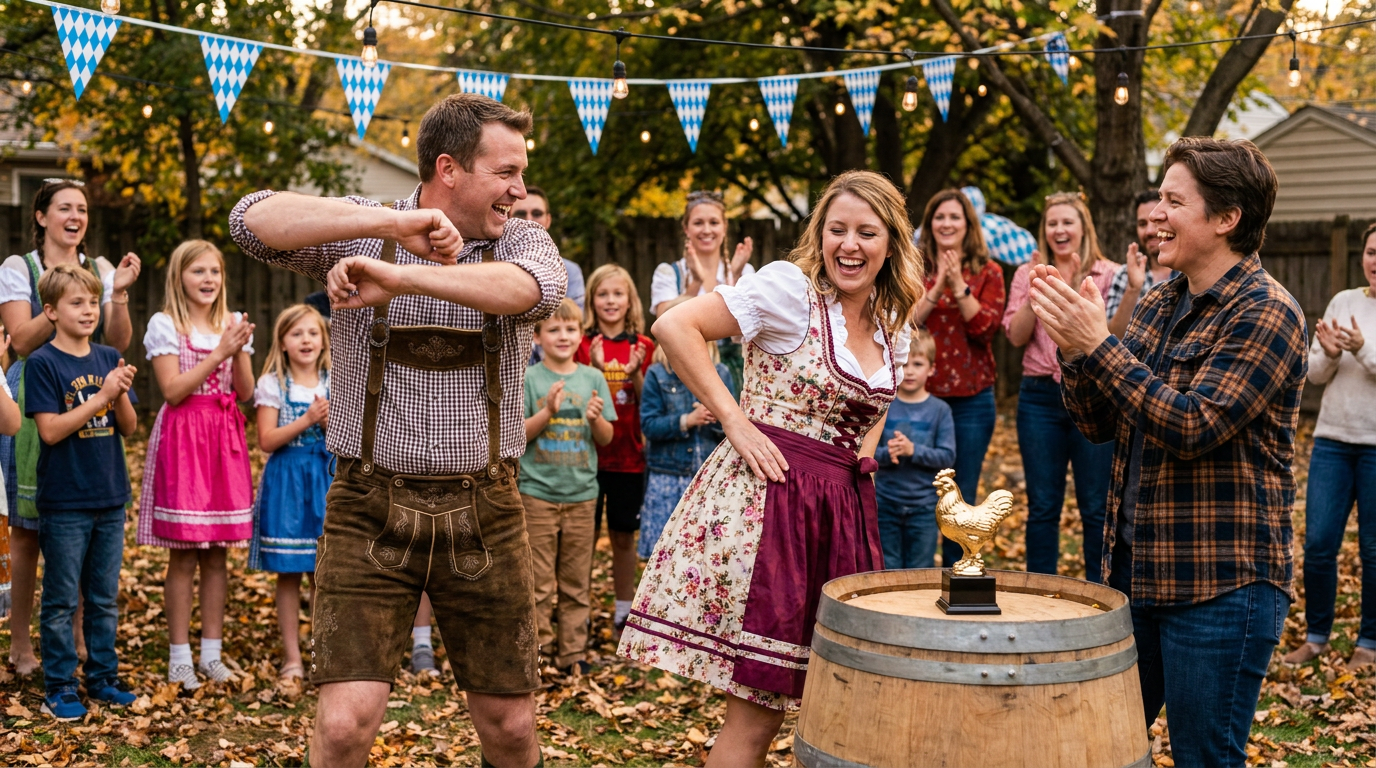
A little German candy, a decorative stein, a printed certificate, or a homemade trophy is plenty.
And please—make sure someone records the Chicken Dance competition.
With everyone’s permission, of course.
Because watching your normally reserved neighbor attempt a synchronized Chicken Dance with six children and a golden retriever might become the most memorable moment of the entire evening.
Turn Up the Oompah! Music, Dancing and a Little Yodeling
You cannot have an unforgettable Oktoberfest without music.
Well, technically you can, but why would you?
Put together a playlist featuring German brass bands, polkas, Bavarian folk music, waltzes, and popular Oktoberfest sing-along favorites.
Be sure to include Ein Prosit der Gemütlichkeit, the traditional Oktoberfest toast song that encourages everyone to raise a glass and celebrate together.
And naturally, no backyard Oktoberfest would be complete without the Chicken Dance.
The familiar beak, wing, wiggle, and clap routine is practically irresistible once the music starts.
You might also host a yodeling challenge.
No experience required. In fact, the less experience, the funnier it might become.
Just remember that you’re still in a neighborhood. Keep music at considerate levels and respect local quiet hours.
Your goal is to make the neighbors wish they’d been invited—not wish you’d move to Munich.
Touchdowns, Tubas and Bratwurst: Oktoberfest Meets Football Season!
Here’s something wonderfully American about celebrating Oktoberfest in late October.
It’s football season!
Why not combine two great fall traditions?
Set up an outdoor television or projector for a college football Saturday or NFL Sunday gathering.
Invite guests to wear their favorite team jerseys with lederhosen, dirndls, or Bavarian-inspired accessories.
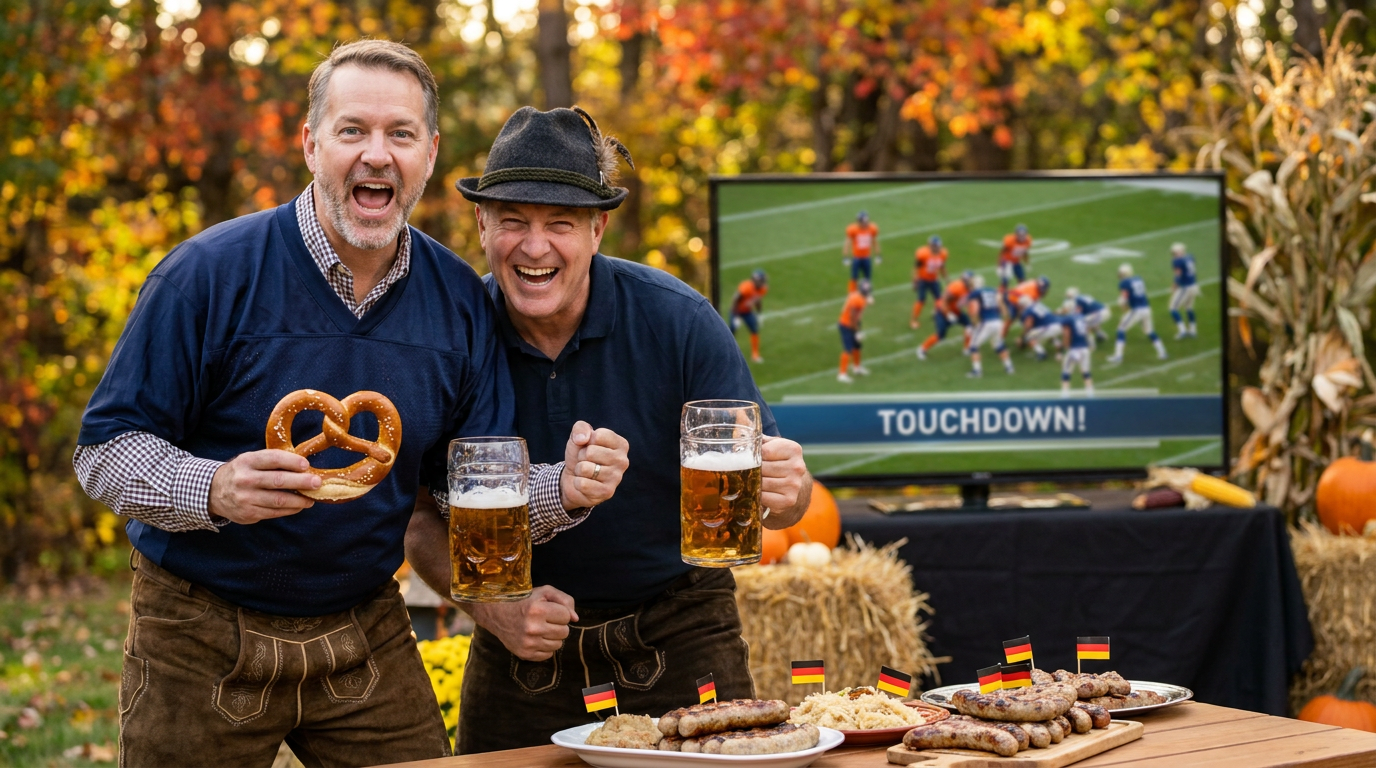
Serve German-style tailgate snacks, organize a football toss, and schedule the Chicken Dance for halftime.
Picture it: one neighbor cheering for a touchdown while another raises a pretzel and shouts, “PROST!”
The combination may not be historically Bavarian, but it certainly captures the spirit of German-American celebration.
After all, traditions stay alive partly because each generation finds new ways to enjoy them.
Brrr! It’s Late Oktober—Keep Everybody Warm!
Depending on where you live in the United States, late October can mean very different things.
In Florida, your guests might still be wearing shorts.
In Wisconsin, Minnesota, Michigan, or upstate New York, they might be wondering why nobody suggested moving the party indoors.
Even here in the South, a sunny afternoon can turn into a surprisingly chilly evening.
Plan accordingly.
Provide blankets, warm cider, hot chocolate, coffee, and comfortable seating. If you’re using a fire pit or patio heater, follow safety guidelines and keep children and decorations at a safe distance.
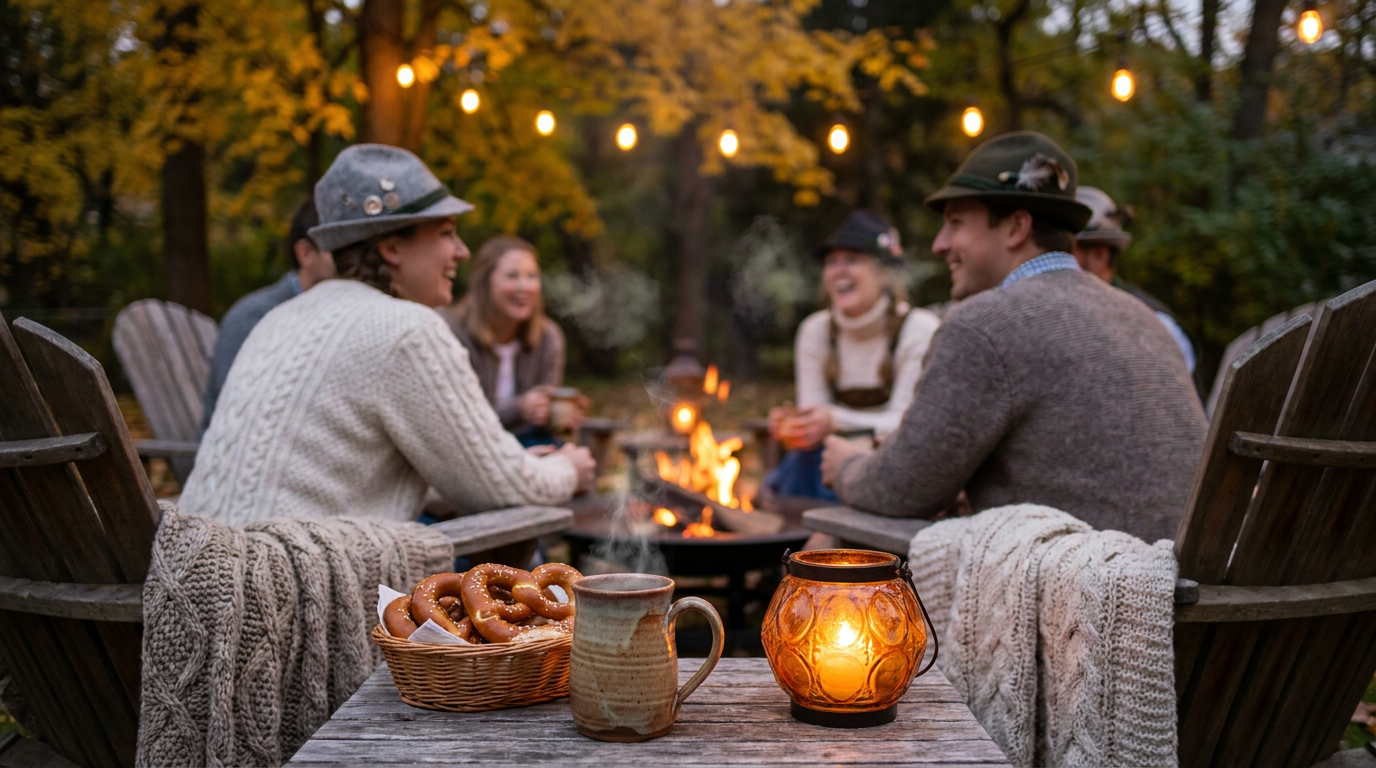
Never operate outdoor fuel-burning heaters inside a garage or enclosed tent.
Consider a covered area for light rain and an indoor backup plan if temperatures drop too far.
And remember, a little autumn chill can actually enhance the atmosphere.
There’s something especially inviting about warm pretzels, glowing string lights, and friendly conversation on a crisp October evening.
Don’t Forget the Kinder! Oktoberfest Fun for the Kids
A neighborhood Oktoberfest should be enjoyable for the entire family.
And children can be some of the most enthusiastic participants.
Set up a little Kinderfest activity corner featuring pumpkin decorating, German-themed coloring pages, pretzel decorating, ring toss, beanbag games, and a simple backyard scavenger hunt.
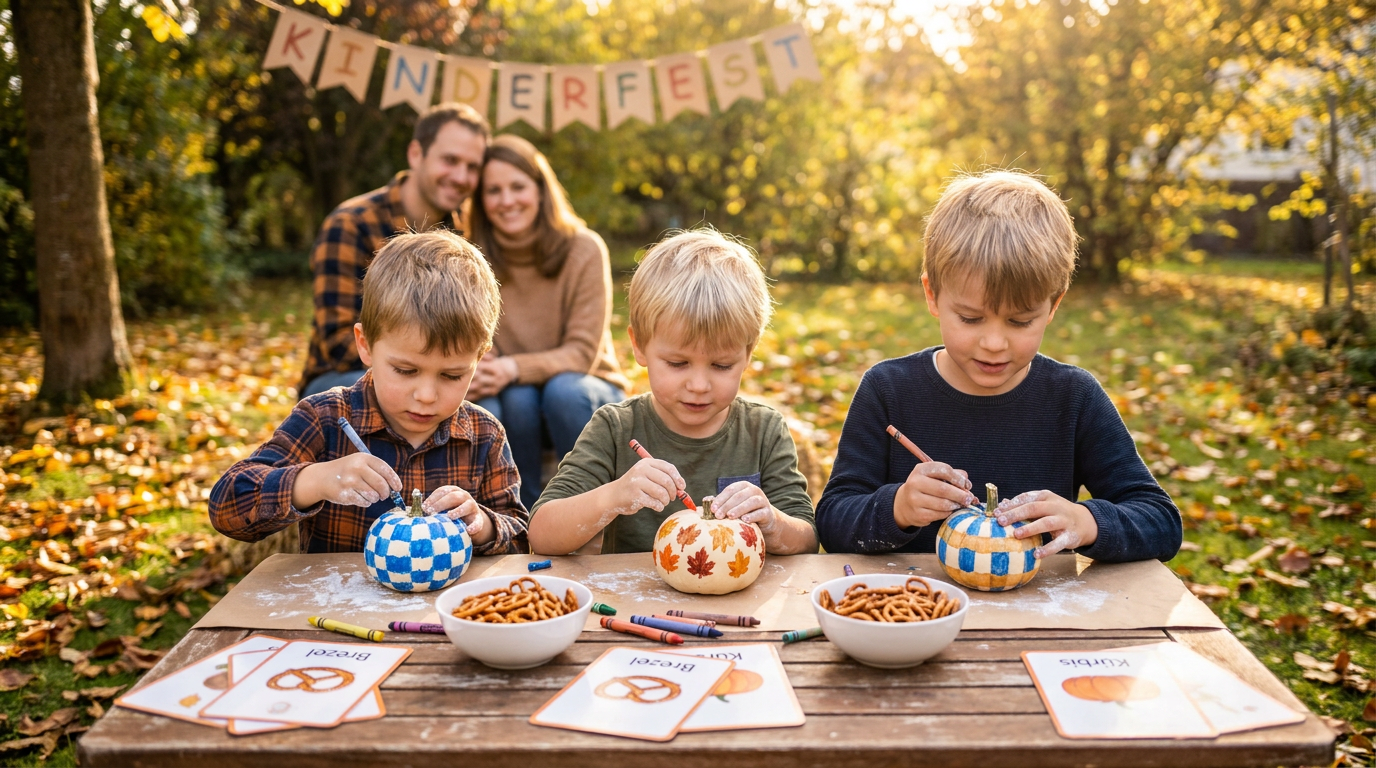
Teach them a few German words:
Hallo! — Hello!
Danke! — Thank you!
Bitte! — Please or you’re welcome, depending on context.
Wunderbar! — Wonderful!
Prost! — Cheers!
Create a simple German Heritage Explorer Passport, where children collect stamps for participating in different activities.
And of course, let the kids lead the Chicken Dance.
They’ll probably do it better than the adults anyway.
A Little German Heritage Makes the Celebration Even Better
At GERMAN HERITAGE USA, we believe Oktoberfest is about more than bratwurst, beer, and lederhosen.
It’s also an opportunity to discover the traditions, stories, and cultural influences that German immigrants brought to America.
Did you know that millions of Americans have German ancestry, even if their families no longer speak German or actively observe German customs?
Perhaps your great-grandmother came from Bavaria. Maybe your family name has German origins. Or perhaps you recently discovered a distant German ancestor while researching your family tree.
You might be surprised how many neighbors have similar stories.
Consider setting up a small German heritage table featuring a map of Germany, old family photographs, German-American trivia, or a few fascinating facts about immigration.
Invite guests to share family recipes, memories, and traditions.
And if someone says, “I’m not German,” that’s perfectly fine, too.
You don’t need German ancestry to enjoy German-American hospitality.
Sometimes curiosity about another culture is the beginning of a lifelong interest.
Your Simple Backyard Oktoberfest Party Plan
The secret to a successful neighborhood Oktoberfest is planning just enough to keep things running smoothly without turning the celebration into a full-time job.
Here’s an easy schedule for a Saturday afternoon gathering.
| Time | Activity |
|---|---|
| 3:00 PM | Welcome guests, appetizers and music |
| 4:00 PM | Bratwurst grilling and German potluck |
| 5:00 PM | German food and dessert judging |
| 5:45 PM | Lederhosen and dirndl costume competition |
| 6:15 PM | The Great Chicken Dance Showdown |
| 6:45 PM | Yodeling contest and awards |
| 7:15 PM | Football, music, conversation and Gemütlichkeit |
| 8:30 PM | Final Prost! and friendly wrap-up |
Start planning a couple of weeks ahead. Invite your neighbors, organize potluck assignments, check the weather, and recruit a few volunteers.
That’s really all it takes.
The most important thing isn’t getting every detail perfect.
It’s getting everyone together.
The Best Oktoberfest Might Be the One in Your Own Backyard!
Munich’s Oktoberfest may have ended for another year.
The biggest American Oktoberfest celebrations may be winding down.
Halloween pumpkins and fall colored mums are appearing on front porches, the football season is in full swing, and the holiday season is getting closer.
But none of that means the Oktoberfest spirit has to disappear.
Sometimes the most memorable celebration isn’t held beneath an enormous festival tent surrounded by thousands of visitors.
Sometimes it’s a few folding tables in the backyard, a grill full of bratwurst, a neighbor’s homemade apple strudel, children dancing to a silly accordion tune, and friends laughing together beneath the autumn stars.
“Oktoberfest may have a place on the calendar, but Gemütlichkeit doesn’t need an ending date.”
So give your celebration a name. Invite the neighbors. Fire up the grill. Turn on the music.
And who knows?
Your little MillerTOBERFEST, TingleTOBERFEST, HingstTOBERFEST, or ShadyAcresOBERFEST might just become the neighborhood tradition everyone looks forward to year after year.
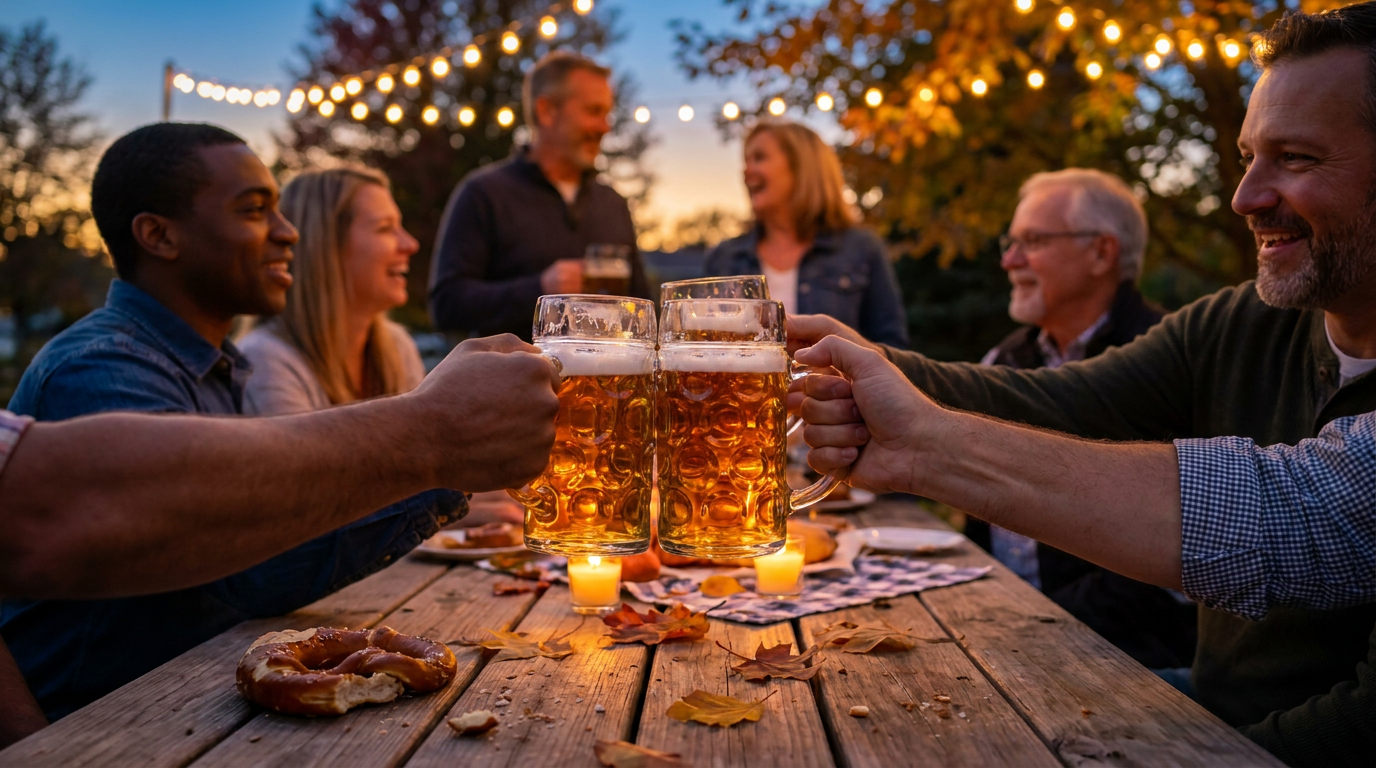
From all of us at GERMAN HERITAGE USA, here’s to German-American traditions, wonderful food, lasting friendships, and creating new memories.
PROST! And happy Backyard Oktoberfest!
We’d Love to Hear About Your Oktoberfest!
Have you ever hosted a backyard Oktoberfest or neighborhood German potluck? What’s your favorite German dish, Oktoberfest game, or family tradition?
Share your ideas and stories with the GERMAN HERITAGE USA community—and if you’re planning your own celebration this October, tell us what you’re naming it!
Discover more German-American traditions, recipes, festivals, and heritage adventures at www.GermanHeritageUSA.com.