
The Ultimate Homemade Bratwurst Guide: German Traditions, Secret Spices & Sausage-Making Made Easy!
Discover the delicious history of German bratwurst, traditional sausage-making secrets, and how to create your very own homemade brats!
There’s Nothing Quite Like Homemade German Bratwurst!
Picture this: It’s a beautiful Saturday afternoon. The grill is heating up, the aroma of sizzling sausage fills your backyard, and family and friends are gathering around.
But here’s the difference. These aren’t ordinary grocery-store bratwursts.
You made them yourself!
You selected the meat, measured the spices, prepared the casings, and created your very own German-style bratwurst from scratch.
And when someone asks, “Where did you buy these amazing brats?” you can proudly respond:
“I didn’t buy them. I made them!”
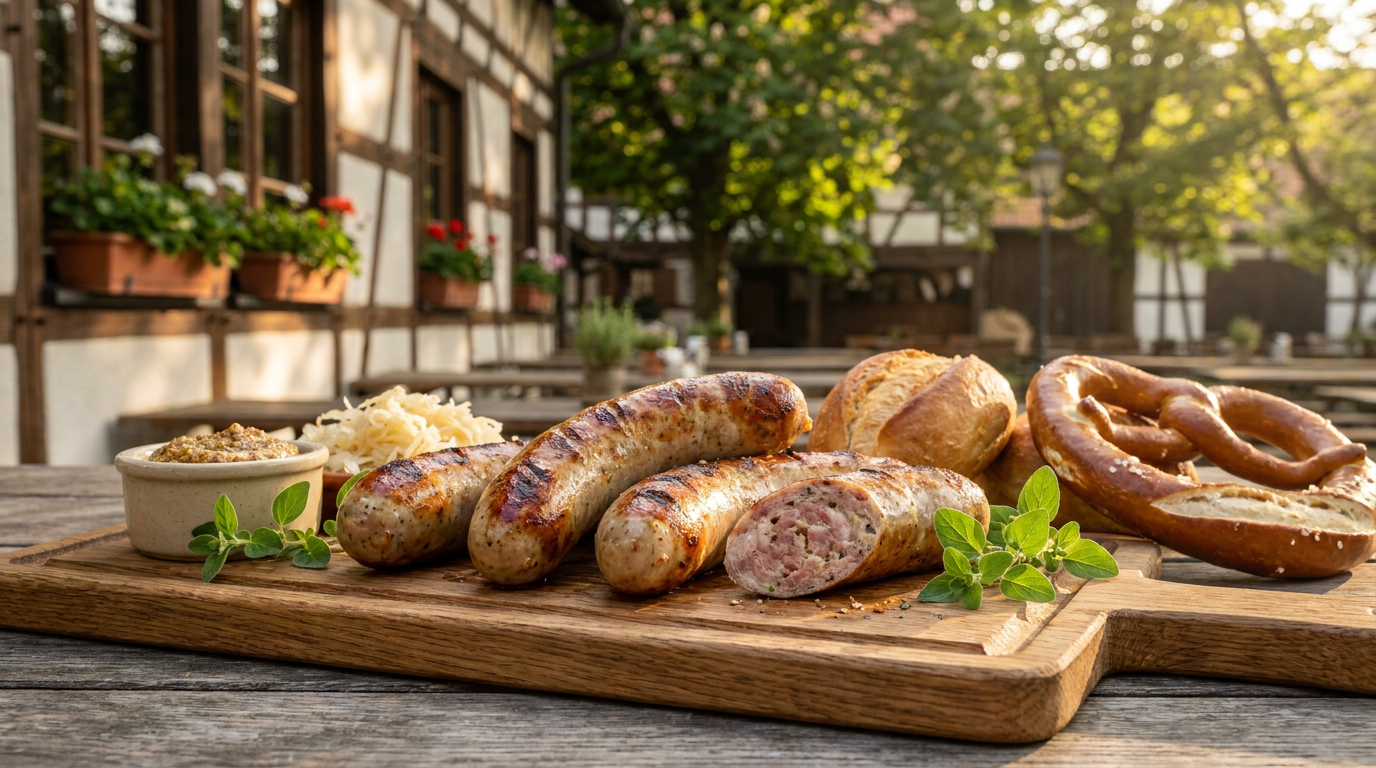
For centuries, German families have passed down sausage-making traditions that transform simple ingredients into extraordinary meals.
Whether your ancestors came from Bavaria, Thuringia, Franconia, or elsewhere in Germany, bratwurst represents a delicious connection to German heritage.
Best of all, you don’t need to be a professional butcher!
With fresh pork, traditional spices, basic equipment, and a little patience, you can create homemade bratwurst that would make any sausage-loving German-American proud.
So grab your apron. We’re bringing a little Germany into your American kitchen!
1. A Delicious History: Germany’s Love Affair with Bratwurst
Germany’s relationship with sausage stretches back centuries.
Historical records from Nuremberg document sausage-making regulations dating to 1313, while Thuringian records reference bratwurst as early as 1404.
Over generations, regional butchers developed distinctive recipes using different combinations of pork, veal, herbs, and spices.
Some preferred coarse-ground sausage. Others created finer textures. Certain regions emphasized marjoram, while others featured caraway, nutmeg, garlic, or pepper.
Interestingly, the German word Wurst means sausage. The Brat portion historically relates to chopped meat, although modern German speakers also associate it with braten, meaning to fry or roast.
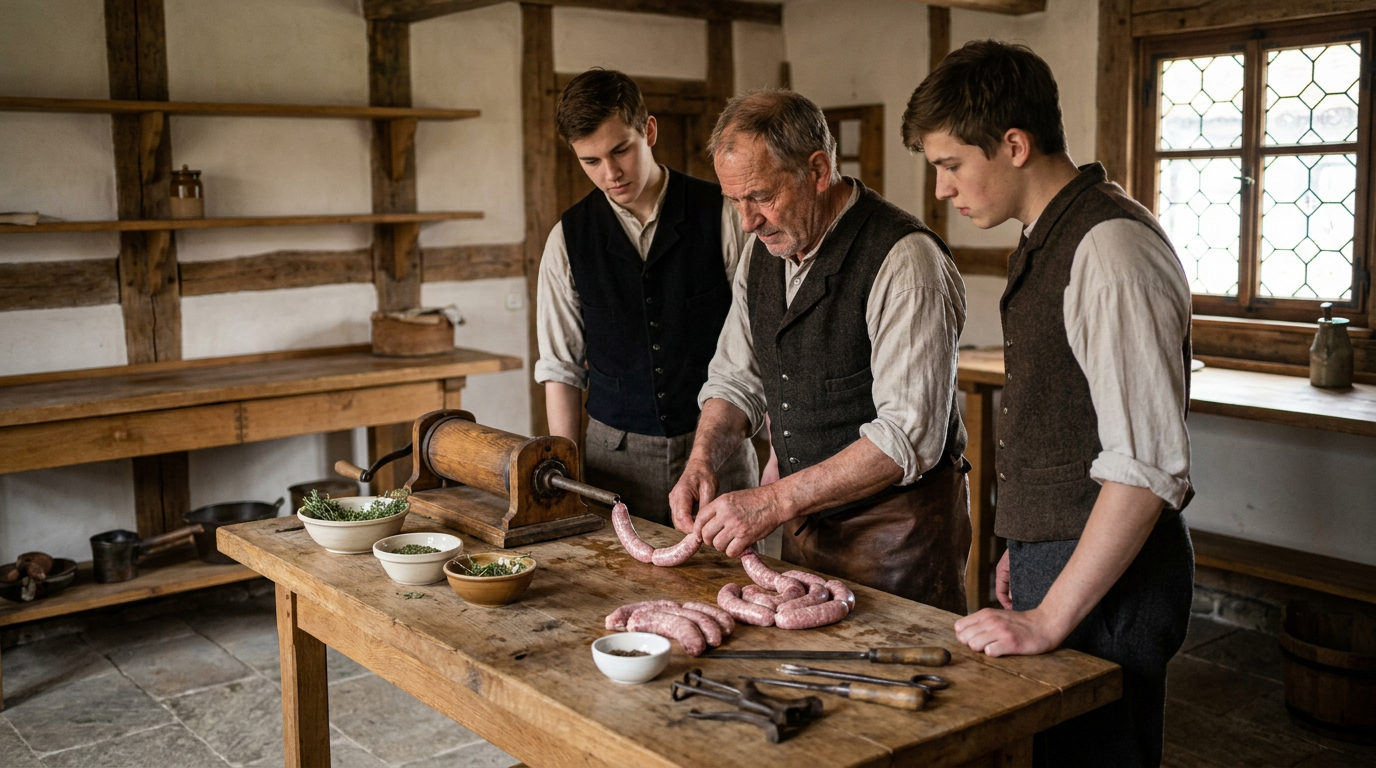
Today, bratwurst remains a favorite at German Christmas markets, beer gardens, festivals, and family gatherings.
Bratwurst isn’t just one sausage. It’s an entire culinary tradition!
Three Famous German Bratwurst Varieties
Nürnberger Rostbratwurst — Nuremberg’s Little Legend
These famous little sausages typically measure just 3–3½ inches long. Made primarily with pork and seasoned with marjoram, they’re traditionally grilled and served with mustard, horseradish, sauerkraut, or bread.
Order Drei im Weggla in Nuremberg, and you’ll receive three small sausages tucked into a bread roll.
Thüringer Rostbratwurst — A Grilling Favorite
Originating in Thuringia, these longer sausages feature aromatic seasonings that may include marjoram, caraway, garlic, and pepper.
Grilled over charcoal, they’re especially popular at outdoor festivals.
Fränkische Bratwurst — Franconian Comfort Food
Franconian bratwursts vary by locality, often featuring a coarser texture and rich pork flavor.
They’re commonly enjoyed with sauerkraut, bread, potatoes, and mustard.
Of course, German immigrants brought their sausage-making knowledge to America, helping establish the beloved bratwurst traditions found throughout Wisconsin and the Midwest.
2. Five Secrets to Making Incredible Homemade Bratwurst
Before making your first batch, remember these traditional sausage-making principles.
Secret #1: Choose the Right Meat
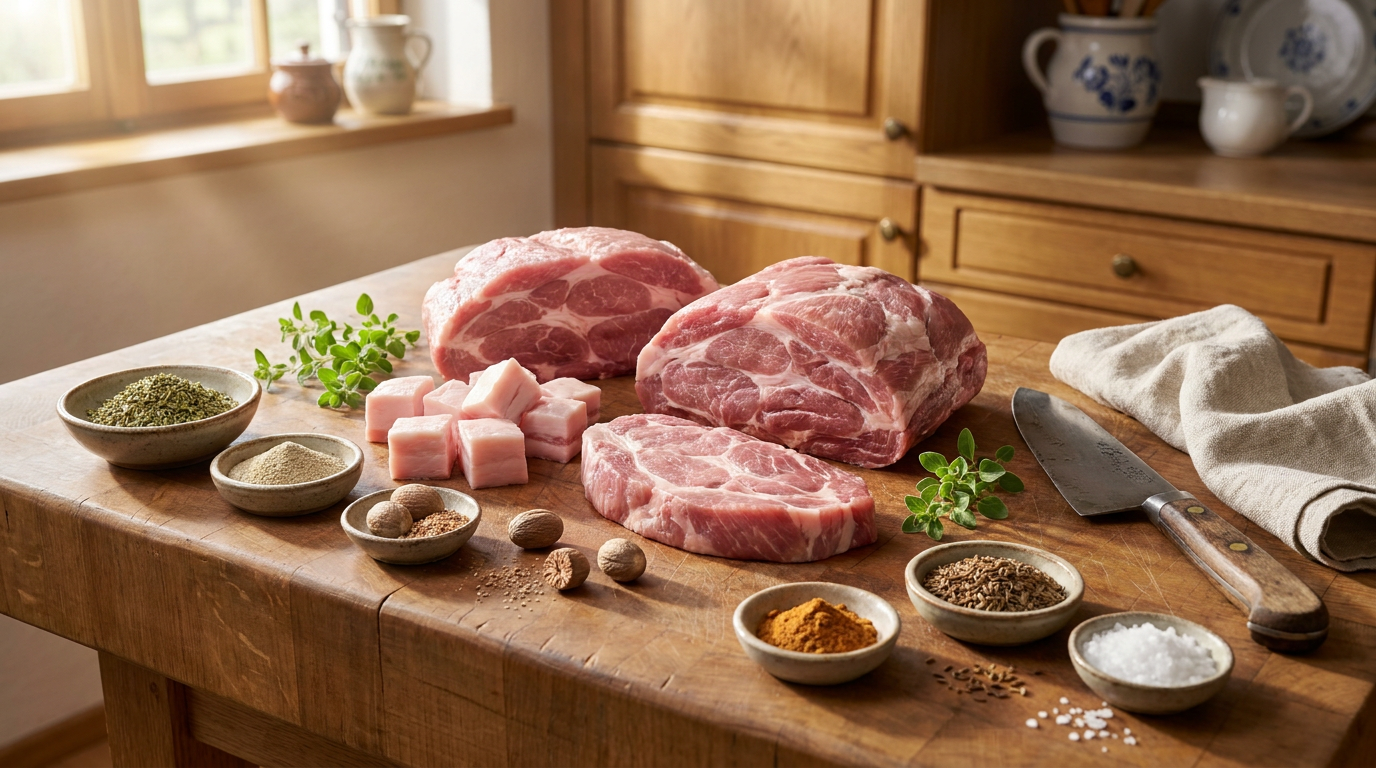
Pork shoulder provides excellent flavor and natural marbling. For juicy sausages, many recipes aim for approximately 20–30% fat.
Too little fat creates dry bratwurst. Too much can produce a greasy sausage.
Secret #2: Keep Everything Cold
Cold meat and equipment are essential. Chilling prevents fat from smearing during grinding and produces better sausage texture.
Secret #3: Don’t Overpower the Meat
Traditional German bratwurst is generally savory and aromatic rather than intensely spicy.
Marjoram, white pepper, nutmeg, mace, and caraway are wonderful choices.
Secret #4: Use Natural Casings
Natural hog casings create the familiar bratwurst shape and satisfying bite.
They’re available through specialty butcher shops and sausage-making suppliers.
Secret #5: Take Your Time
Great sausage-making combines technique, patience, and a little experimentation.
Remember: Making bratwurst should be almost as much fun as eating it!
3. Let’s Make Bratwurst! Your Homemade German Recipe
Here’s an approachable, German-inspired recipe featuring pork, marjoram, white pepper, and nutmeg.
Recipe at a Glance
- Yield: Approximately 8–10 bratwursts
- Preparation: 75–120 minutes
- Cooking: Approximately 15–25 minutes
- Difficulty: Beginner to intermediate
- Style: Fresh German-inspired pork bratwurst
Ingredients
Meat
- 750 grams (1 lb 10½ oz) lean, trimmed pork shoulder
- 250 grams (approximately 9 oz) chilled pork back fat
Traditional Spice Blend
- 18 grams salt
- 2 teaspoons dried marjoram
- 1 teaspoon ground white pepper
- ¼ teaspoon freshly grated nutmeg
- ½ teaspoon crushed caraway seeds (optional)
- ⅛ teaspoon ground mace (optional)
- 90 milliliters ice-cold water
Casings
- Approximately 6–8 feet natural hog casings, 30–32 millimeters in diameter
Equipment
You’ll need a meat grinder, sausage stuffer, sharp knife, mixing bowl, kitchen scale, digital food thermometer, and refrigerator.
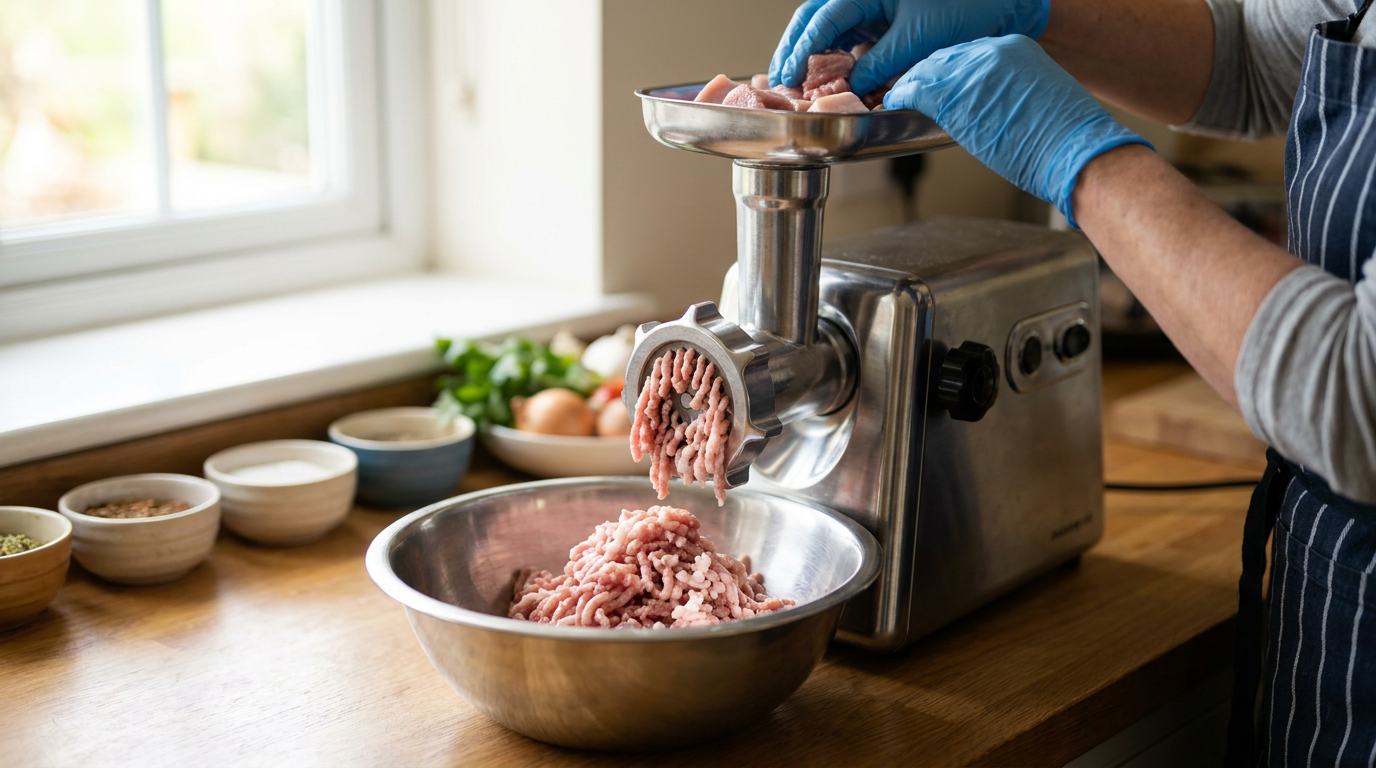
Beginner’s tip: Don’t have a sausage stuffer? Make bratwurst patties instead! You’ll enjoy the same delicious seasonings without needing casings.
4. Step-by-Step: Crafting Your Homemade Bratwurst
STEP 1 — Prepare and Chill the Meat
Cut the pork shoulder and fat into approximately 1-inch cubes.
Place them in the freezer for 20–30 minutes until very cold and slightly firm, but not frozen solid.
Chill your grinder components, too.
Keeping everything cold helps maintain the proper sausage texture.
STEP 2 — Grind the Meat
Using a medium grinding plate, approximately 4.5–6 millimeters, grind the pork and fat into a chilled mixing bowl.
For a finer texture, grind again through a smaller plate while keeping everything cold.
STEP 3 — Add the Traditional German Spices
Combine the ground meat with salt, marjoram, white pepper, nutmeg, optional caraway and mace, and ice-cold water.
Mix thoroughly until the meat develops a cohesive, slightly sticky consistency.
Here’s a sausage-making secret!
Before stuffing the entire batch, cook a small test patty thoroughly in a skillet.
Taste it!
Want more marjoram? A little extra pepper? Now’s the time to adjust your seasonings.
One tiny test patty can save an entire batch of disappointing brats!
STEP 4 — Prepare the Casings
Follow your casing supplier’s instructions for rinsing and soaking.
Salt-packed casings generally need a thorough rinse and soak in cool water.
Gently flush water through the interiors and inspect for holes.
Handle carefully to prevent tearing.
STEP 5 — Stuff Your Bratwursts
Slide the prepared casing onto your sausage-stuffing tube.
Slowly feed the seasoned meat into the casing, filling it evenly without packing too tightly.
Shape into approximately 5–6-inch links, twisting alternating links in opposite directions.
Avoid overstuffing, which can cause casings to burst.
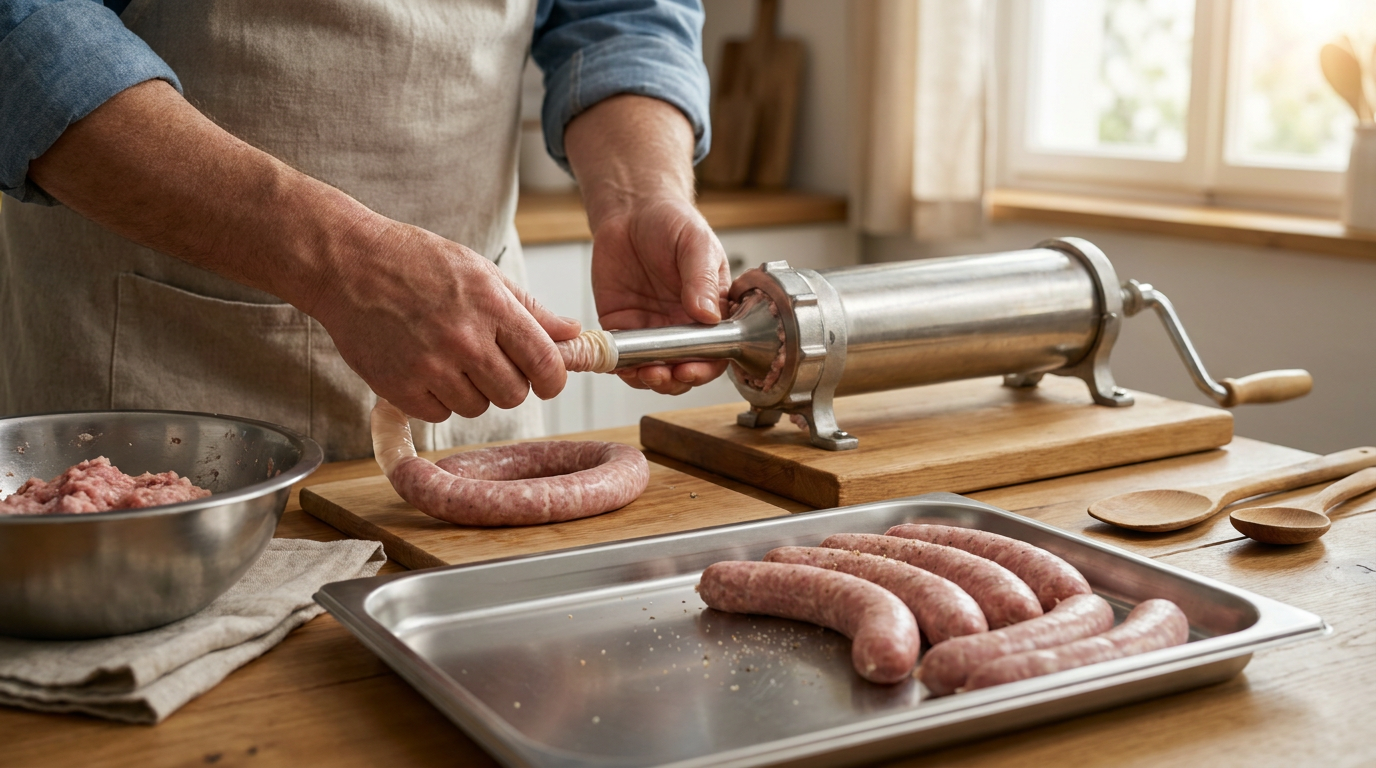
Congratulations! You’ve just created your own homemade German-style bratwurst!
STEP 6 — Refrigerate Before Cooking
Place your finished sausages on a clean tray, cover, and refrigerate for approximately 30–60 minutes.
This helps them firm up before cooking.
Keep raw sausage refrigerated at 40°F (4°C) or below, and use within 1–2 days or freeze promptly.