The Actual Real Story of How the Chicken Dance Originated
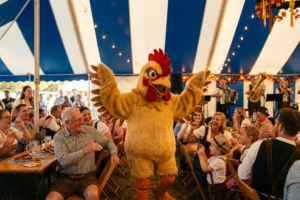
From an Alpine accordion tune to a missing duck costume in Oklahoma, the true story is even more entertaining than the dance.
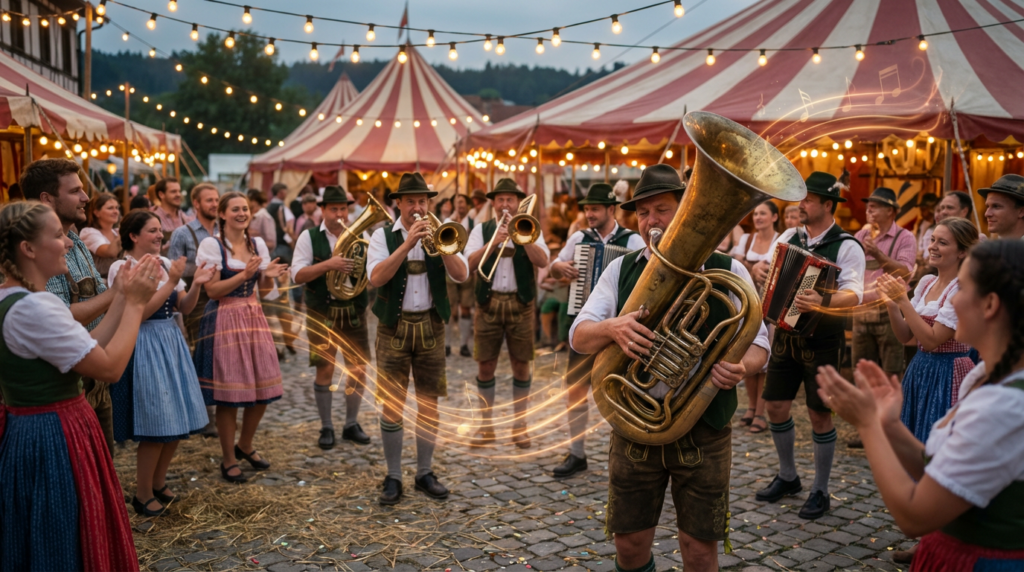
You know the moment. A few bright notes rise above the chatter at an Oktoberfest, wedding reception, or community festival. Someone lifts both hands to their face and starts opening and closing their fingers. A child copies them. Then an uncle who swore he wasn’t going to dance pushes back his chair.
Beaks. Wings. A wiggle. A clap.
The Chicken Dance is underway.
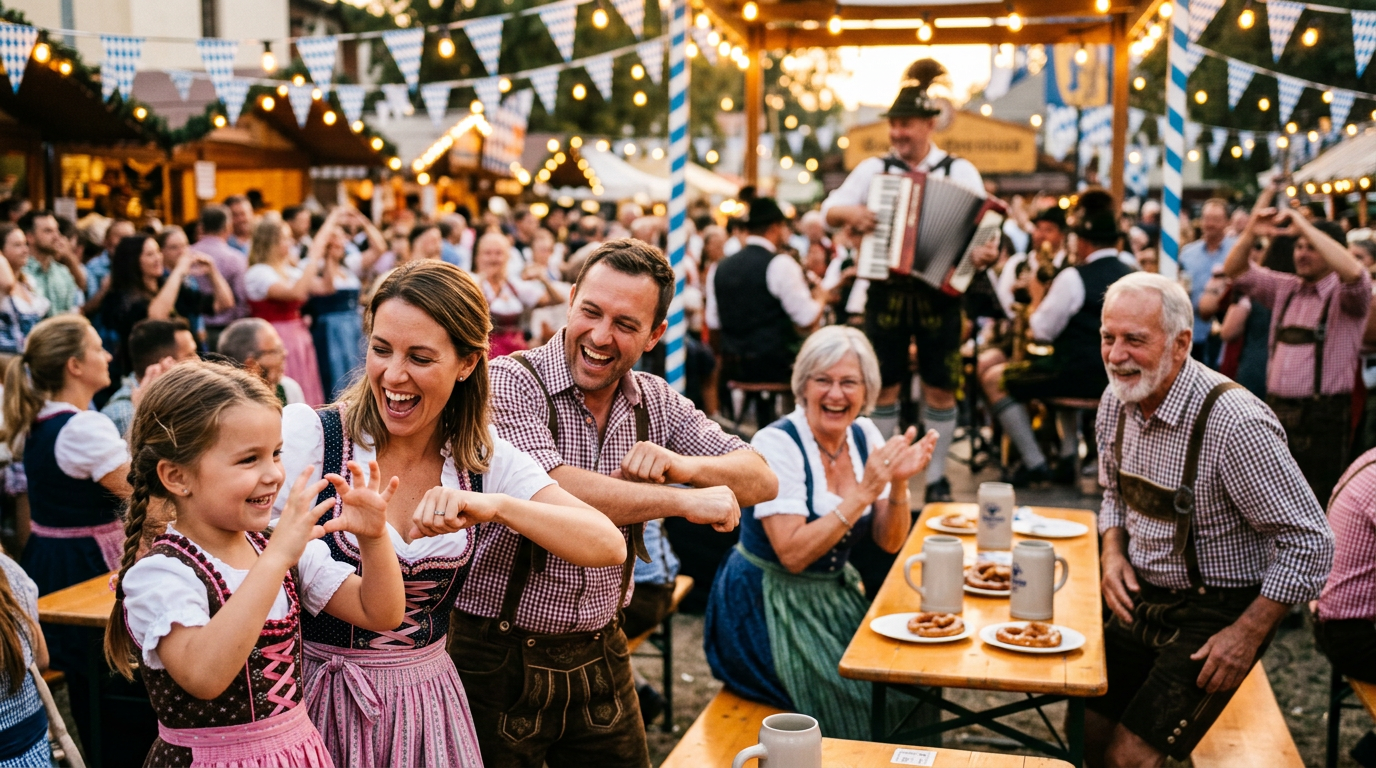
It asks almost nothing of its dancers. You don’t need a partner, a lesson, or even much coordination. A five-year-old and an eighty-five-year-old can join the same circle and understand each other instantly. The movements are deliberately silly, which is precisely why they work: nobody has to worry about looking like the best dancer in the room.
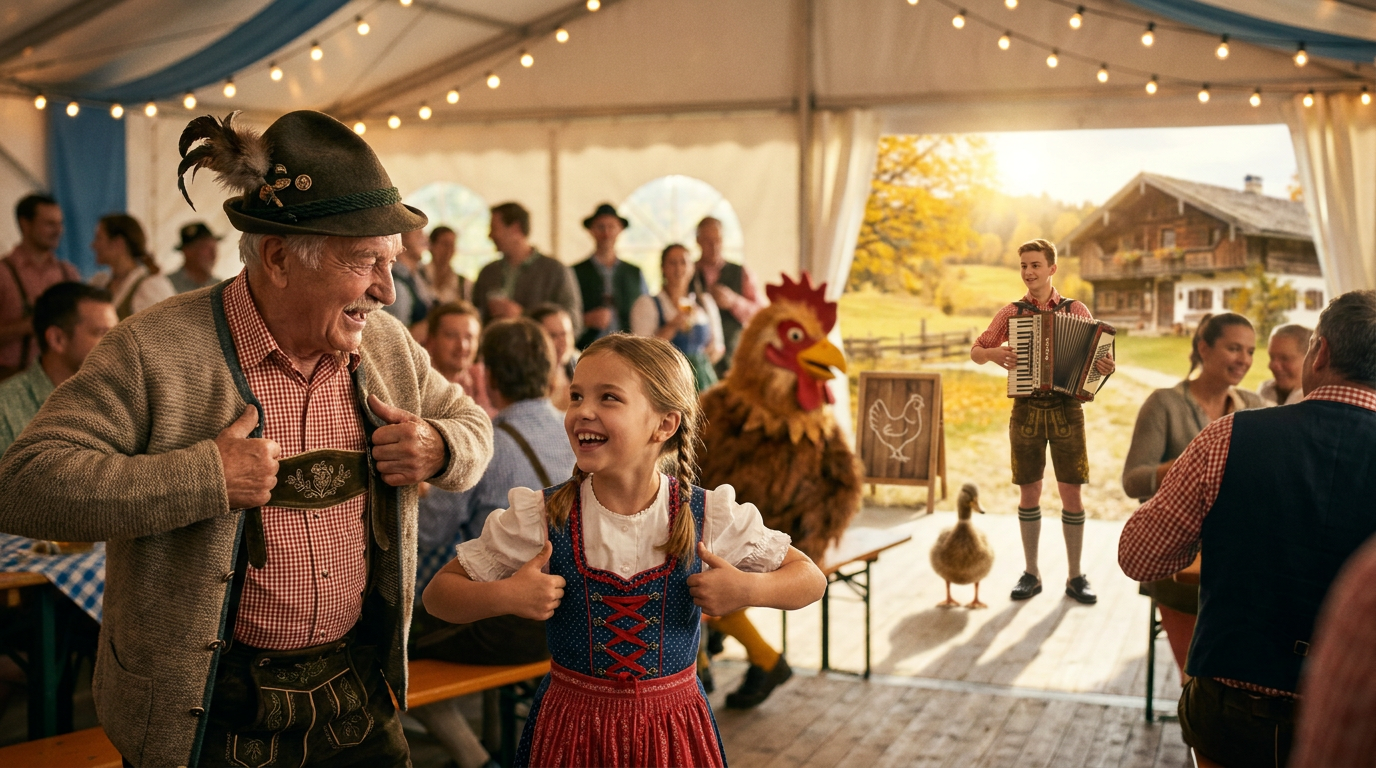
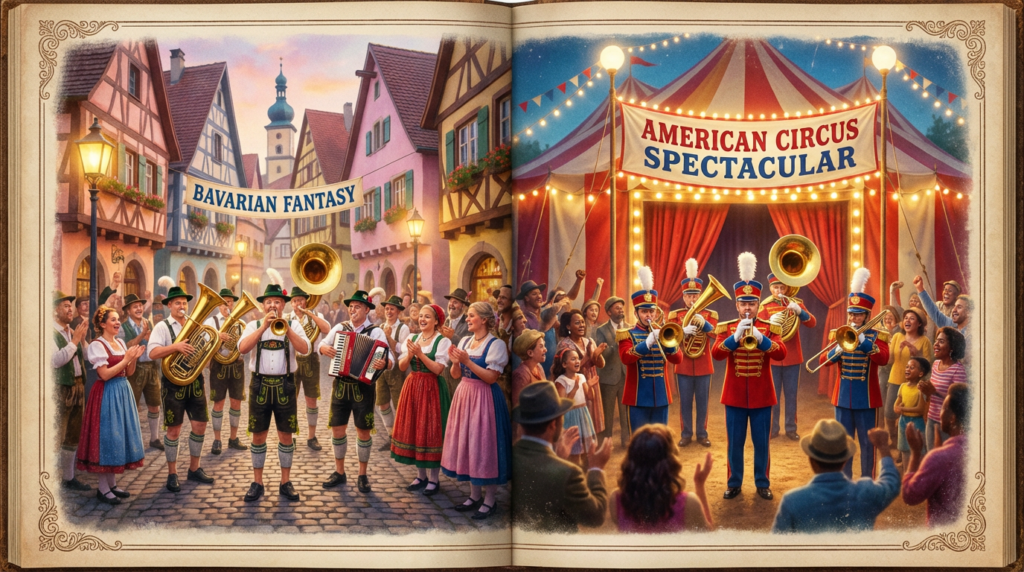
For many Americans, this familiar scene feels inseparable from German heritage celebrations. Play the tune near an accordion, a bratwurst stand, and a blue-and-white tent, and it seems to have arrived directly from Bavaria.
But the melody was composed in Switzerland. Its first bird was a duck. And the story of how it became an American chicken runs through Belgium, Britain, Oklahoma, and Ohio. The route is wonderfully tangled—and it says something useful about how traditions actually grow.
A duck waddles out of the Swiss Alps
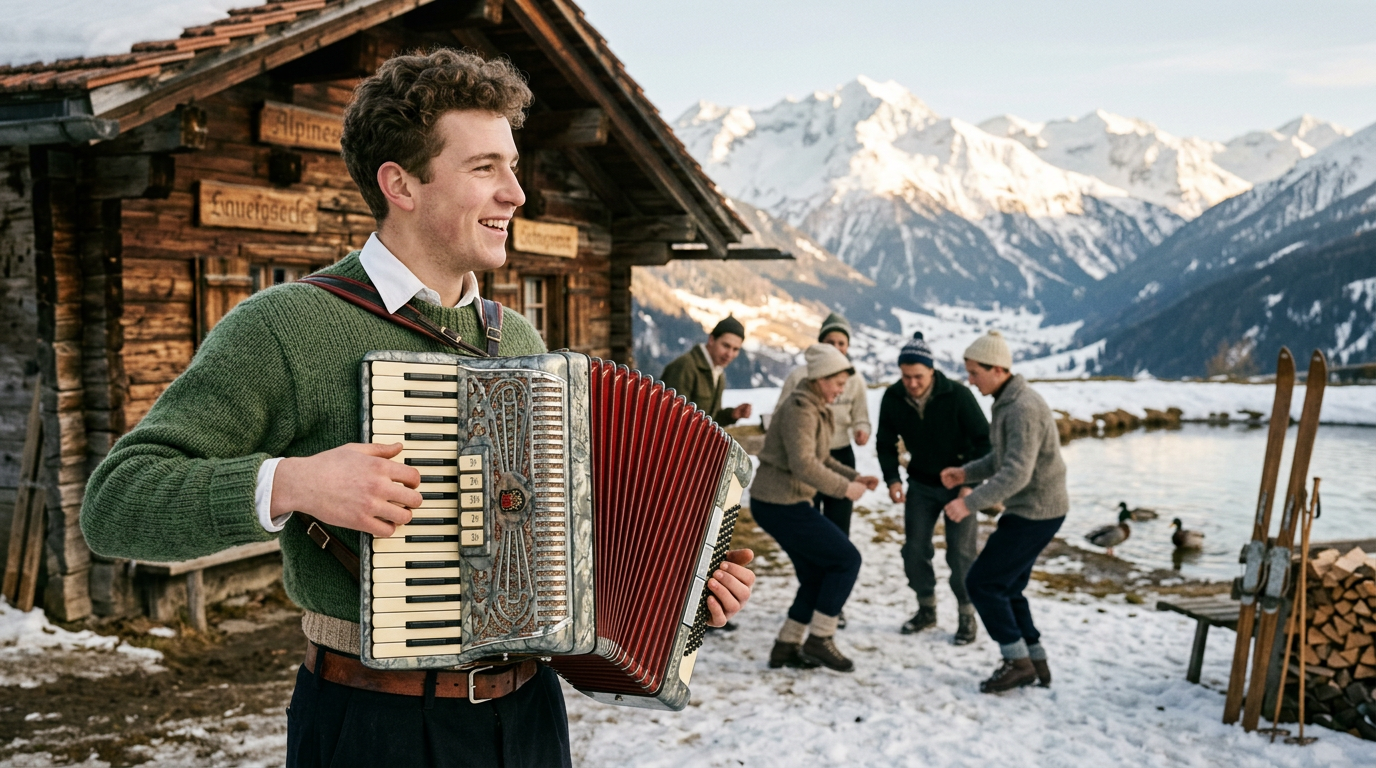
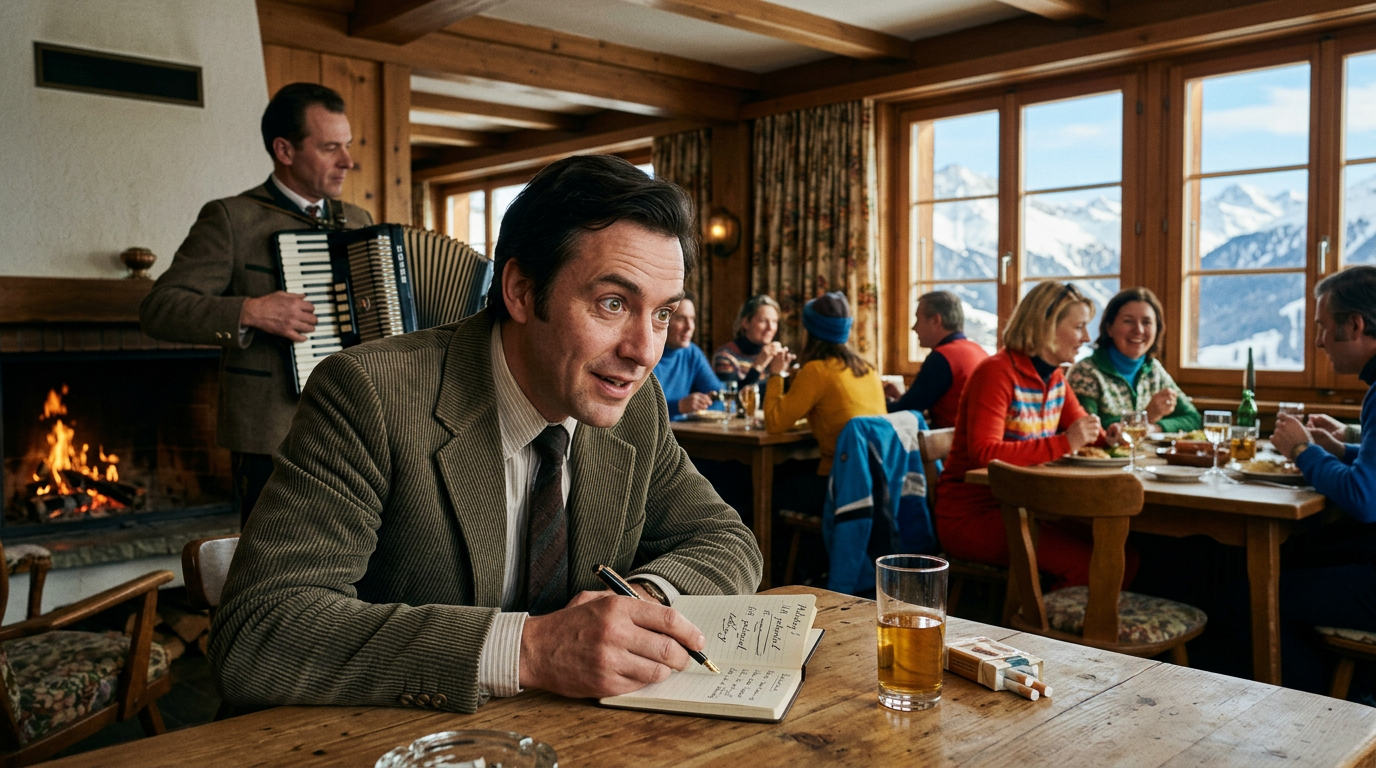
In the 1950s, Werner Thomas was entertaining guests in the Alpine resorts of eastern Switzerland. An accordionist from the canton of Thurgau, he performed in restaurants and après-ski settings around places such as Davos. He developed a short, cheerful instrumental melody, initially something he could use between parts of a performance. Sources commonly place its beginnings in the mid-1950s; 1957 is the year often attached to it.
Thomas had something more memorable than an ordinary musical interlude. Guests recognized the tune. Its bouncy phrases invited movement, and over time the music became linked to a dance called Der Ententanz, German for “The Duck Dance.”
Now picture the familiar choreography with a duck in mind. The fingers make a bill. Bent elbows become wings. The knees dip, the backside wiggles, and the body starts to waddle. Suddenly the movements that Americans call “chicken” look suspiciously ducklike.
Thomas later said his inspiration came partly from birds and partly from the skiers he watched around the resorts. The knee-bending motion of people on skis worked its way into the dance. Its unlikely ingredients were an Alpine musician, a simple melody, birds, and people preparing to glide down a snowy slope. Swissinfo’s account of Werner Thomas’s career draws on interviews and reporting about the composer.
For years, Thomas played the piece live without the world treating it as a potential hit. Then a Belgian music producer went on vacation.
A producer hears more than a little interlude
In the early 1970s, Louis van Rijmenant heard Thomas’s tune while visiting Davos. He recognized that its instantly memorable melody might travel beyond the mountains. The Belgian group Cash & Carry released a synthesizer-driven recording in 1973 called “Tchip Tchip.”
Thomas was reportedly disappointed when he first heard the electronic arrangement. The sound was a long way from the accordion music he had imagined. Listeners, however, took to it. The recording became a success in Belgium and Switzerland, and van Rijmenant helped take the tune to the wider music industry. Swissinfo traces that early recording history.
From there, the melody migrated through new recordings and new names. A version by the Dutch group De Electronica’s became a major hit in Germany. The British group The Tweets released “The Birdie Song,” which reached No. 2 on the UK singles chart in 1981. Their bird costumes on television made the movements hard to forget. Elsewhere, dancers knew versions such as France’s La Danse des Canards and Italy’s Il ballo del qua qua. The Official Charts Company confirms the Tweets’ chart peak.
Duck, bird, little bird, chicken: the name changed with the country and the performer. The appeal stayed remarkably constant. You could hear the tune once, watch somebody do the motions, and join in before it ended. Even without knowing a word of another language, you were part of the dance.
The scale of its travels is surprising, too. Swiss reporting counts roughly 400 recorded versions and estimates sales of more than 50 million copies across over 40 countries. Those are broad retrospective estimates, but they convey how far the tune moved from Thomas’s restaurant performances. The same melody could be a synthesizer novelty in one place, a children’s party song in another, and a familiar festival cue somewhere else. Each new arrangement gave listeners a different way into essentially the same joke: a room full of people agreeing, for a minute or two, to act like birds. Swissinfo surveys its international recordings.
The melody had become an international traveler. America was about to give it a particularly memorable new identity.
The missing duck costume in Tulsa
The most famous American naming story takes place at Tulsa Oktoberfest in 1981. A visiting band introduced the Duck Dance. Festival participants wanted someone in a duck costume to demonstrate it, but they couldn’t find one. A local television station did, however, have a chicken costume.
So the organizers used what they had.
Imagine seeing the dance for the first time under those circumstances. A costumed chicken appears. The music starts. The bird onstage opens its “beak,” flaps its wings, wiggles, and claps. If someone asks what the crowd is watching, the answer seems obvious: the Chicken Dance.
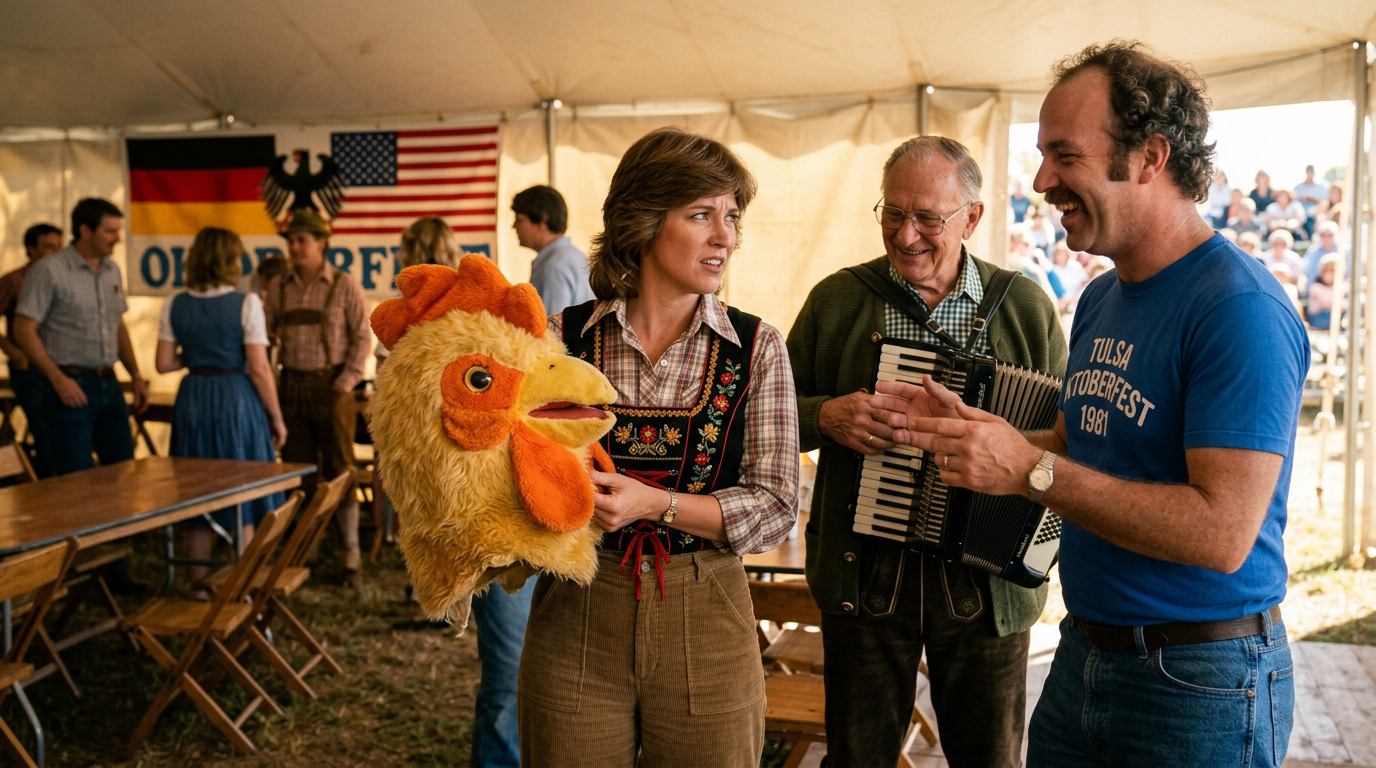
This is more than a charming tale copied from one festival brochure. In an Oklahoma public-radio investigation, Carol Wright, who attended the muddy 1981 festival and later led Tulsa’s German-American folk dance group, recalled the missing duck costume and the chicken outfit borrowed from Channel 2. She also recalled that the festival kept promoting its chicken connection.
Tulsa deserves its place in the story. It does not follow that every American first encountered the melody there. The same radio investigation found memories of polka musicians playing it in the United States during the late 1970s. Musicologist Jonathan Kregor has also cautioned that the tune likely arrived by more than one route. Touring performers, families, DJs, ethnic dance halls, and recordings could all carry a song from one place to another. Cincinnati Public Radio explored those parallel paths.
The careful version is also the most interesting one: Tulsa gave an already traveling bird a terrific chicken story, a visible costume, and a festival eager to keep the joke going.
Why Americans hear it as “German”
If a Swiss musician wrote the melody, why does it feel so at home at a German-American Oktoberfest?
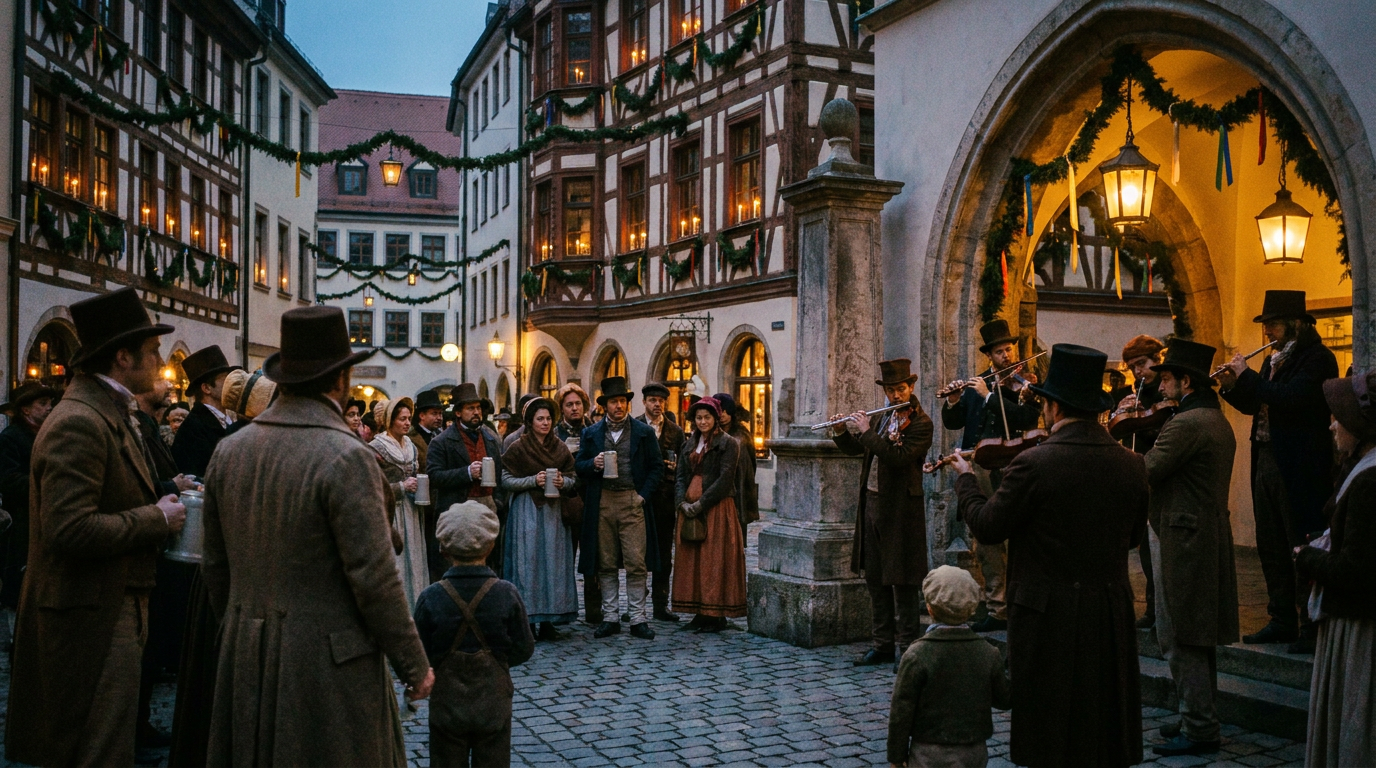
Because a celebration’s soundtrack is shaped by what its guests embrace. The dance traveled through European recordings and community musicians. Accordion-led versions fit the atmosphere of German-American festivals. Polka bands and other entertainers found that the tune could fill a dance floor in seconds. It gave families a way to participate together, regardless of age, dance experience, or ancestry.
There is a distinction here that makes the story richer. A musicologist at the University of Cincinnati notes that the melody has polka-like qualities, while the polka itself is a different dance. Calling the Chicken Dance an ancient German polka skips the surprising journey it really took. At an American Oktoberfest, though, the tune’s decades of use have made it a recognizable part of the celebration.
An example from Munich turns this journey around.
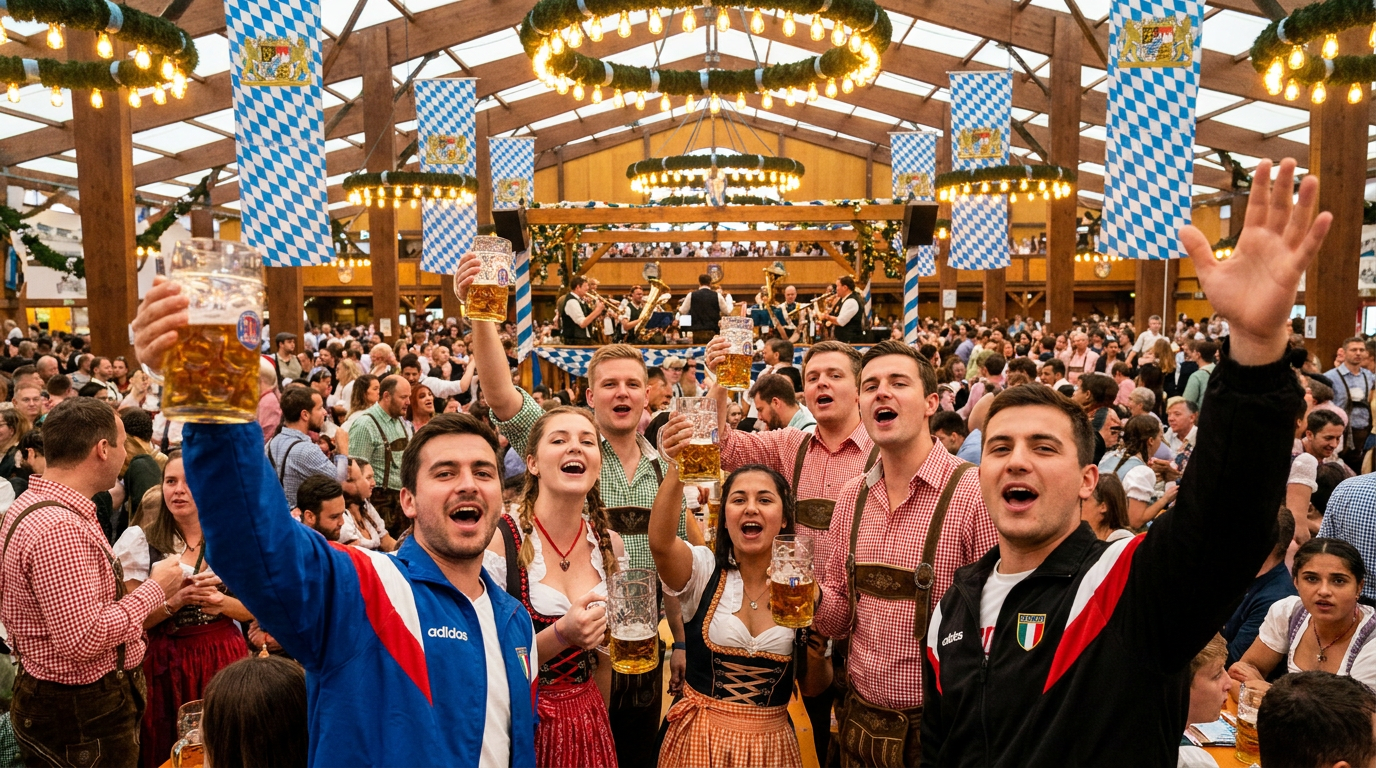
Neil Diamond’s “Sweet Caroline” is an American pop song. It was not written for Oktoberfest and has no connection to its nineteenth-century origins. Yet Munich’s official Oktoberfest website lists it among songs heard in today’s beer tents. When that chorus reaches the crowd, visitors from Germany, America, and far beyond can answer together with the familiar “Bah! Bah! Bah!” Munich’s Oktoberfest music guide includes “Sweet Caroline”.
That is the Chicken Dance story in reverse. Munich can welcome an American song into its modern festival soundtrack. German-American celebrations can welcome a Swiss melody into theirs. The song’s birthplace remains part of its history; the shared experience gives it another chapter.
And the Chicken Dance is unusually good at creating that experience. It doesn’t ask the audience merely to listen. It gives everybody a part.
Picture an Oktoberfest tent with several generations at one table. The grandparents recognize the opening notes. The children learn the beak movement by watching. Someone halfway through a conversation starts flapping without leaving their seat. Another person tries to resist and is soon laughing at everyone else. By the first clap, the boundary between spectators and dancers has begun to disappear.
That is why bands keep returning to the tune. The crowd makes the moment together.
Was it played at the first Oktoberfest?
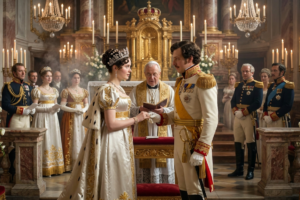
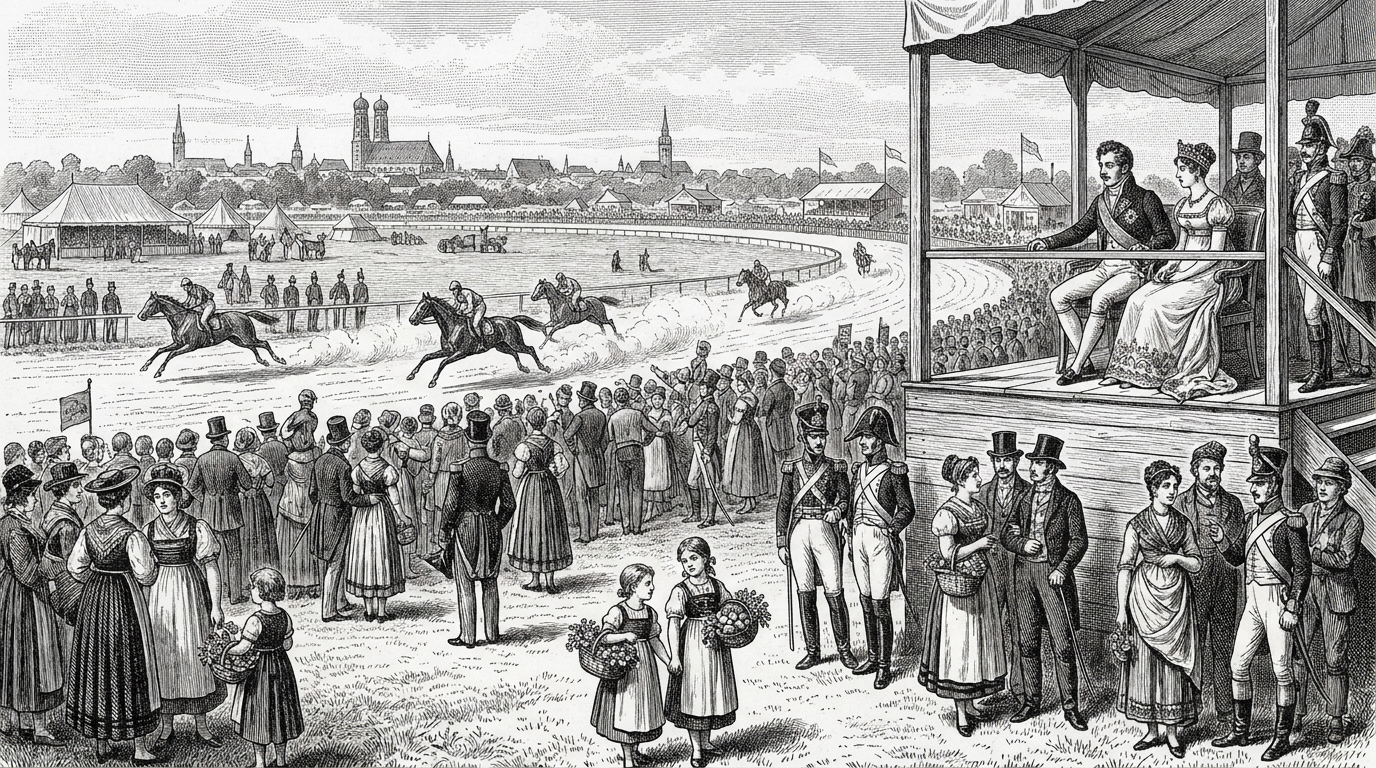
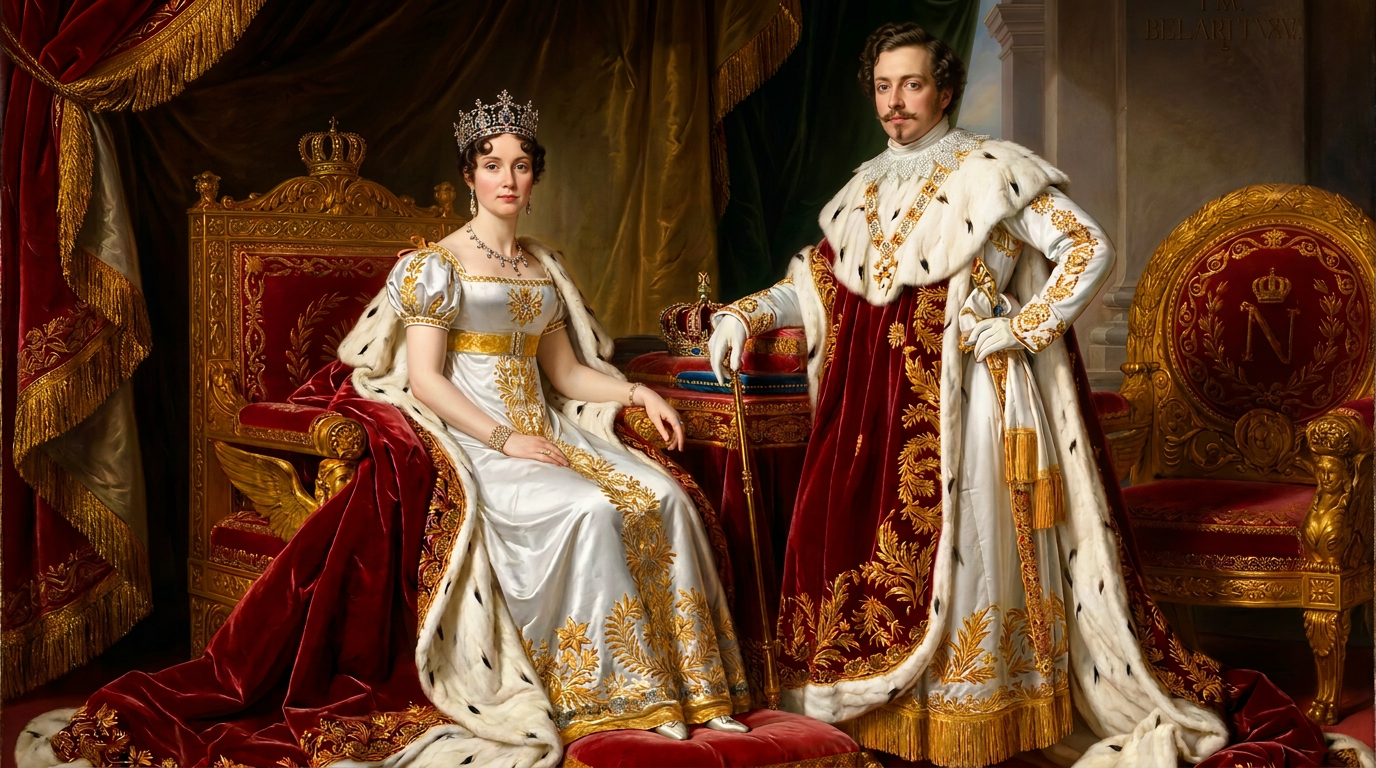
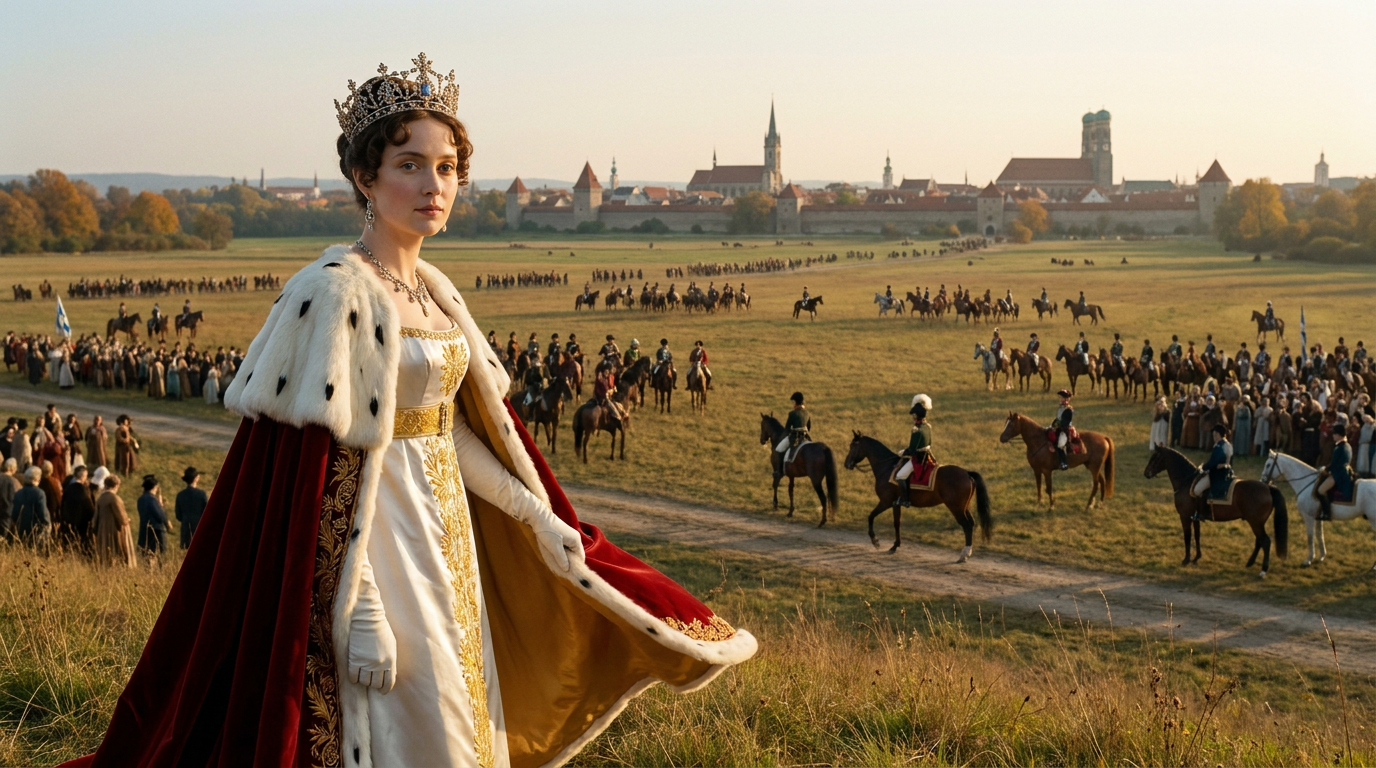
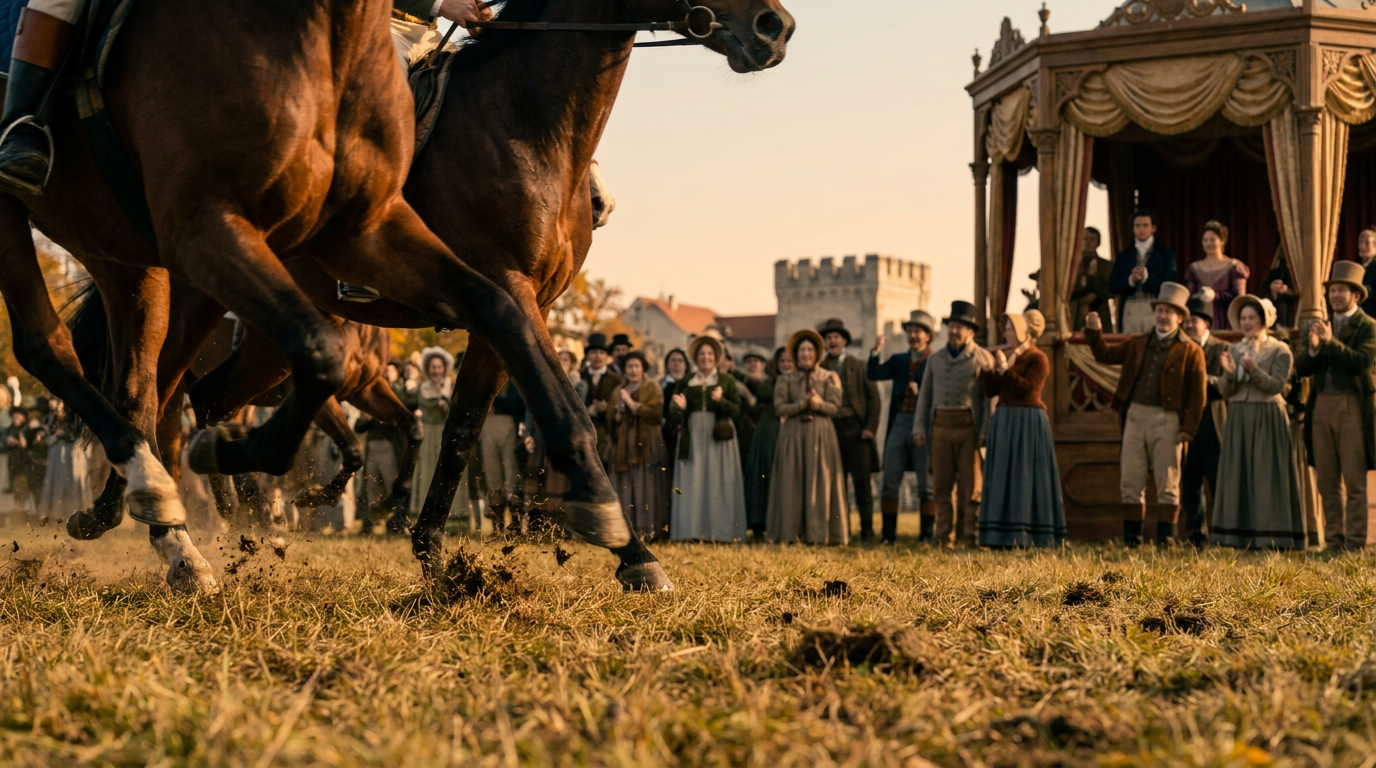
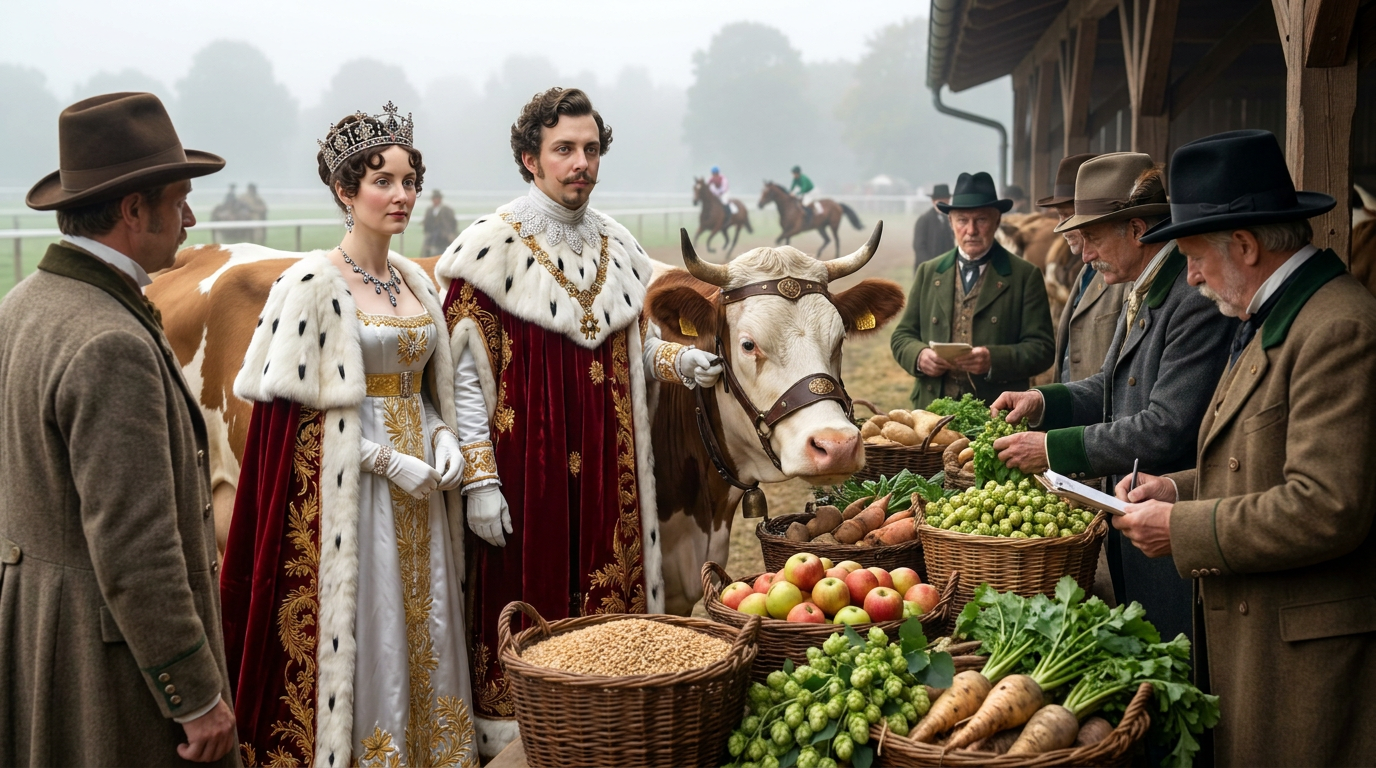
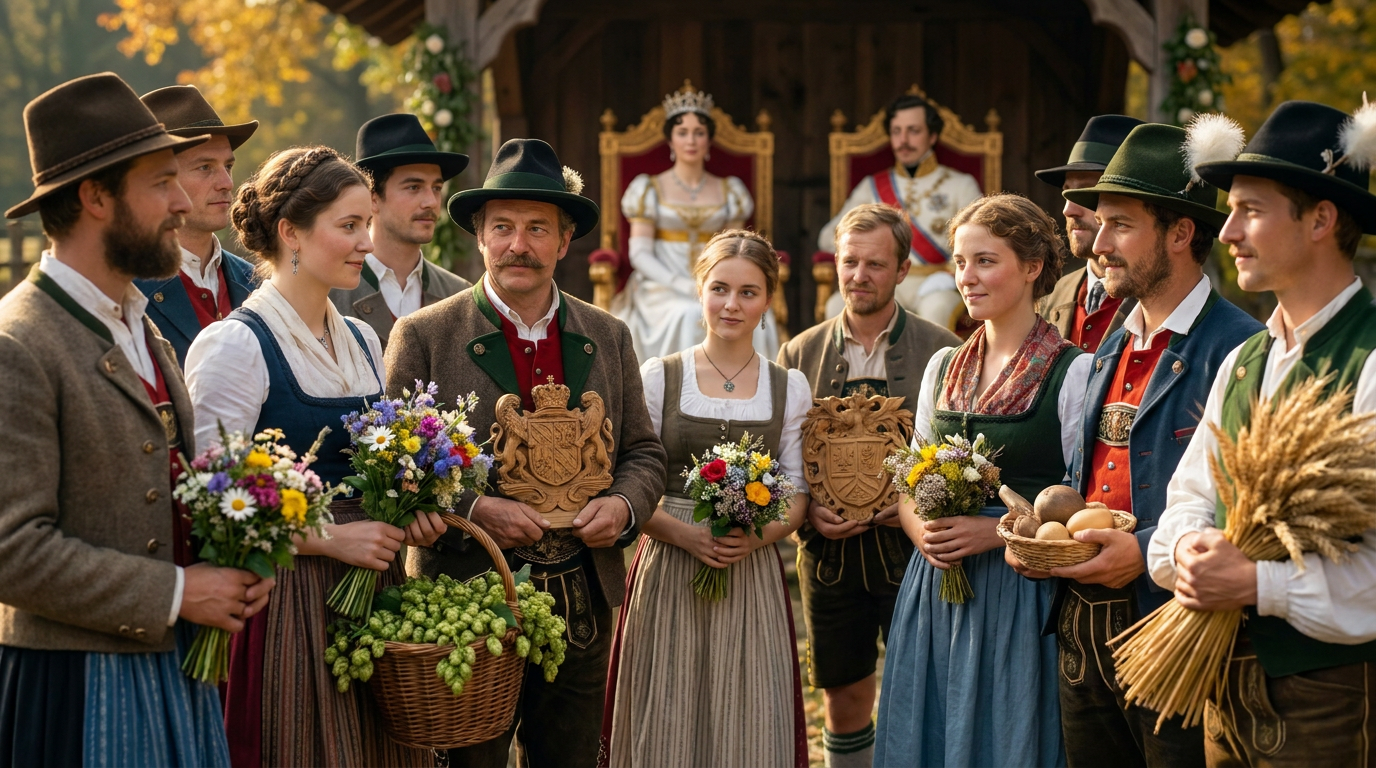
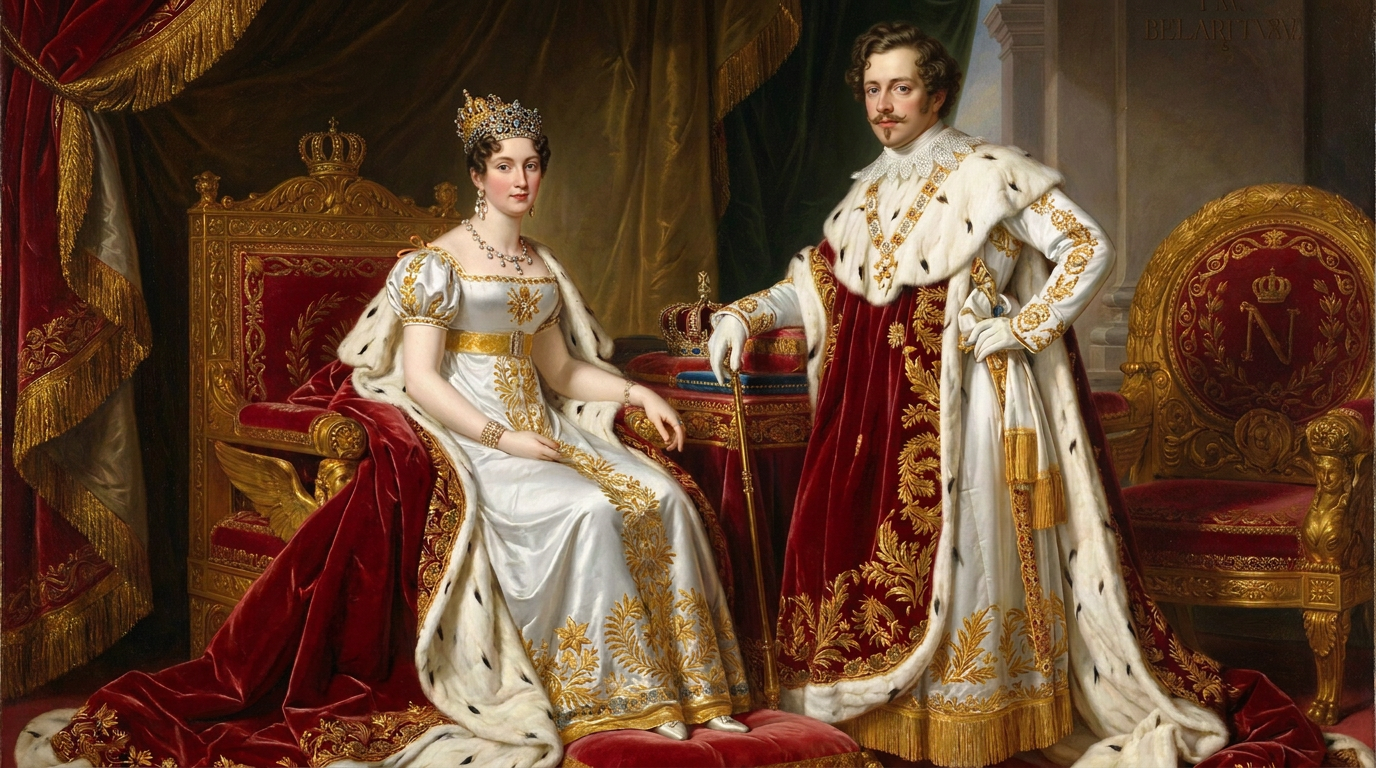
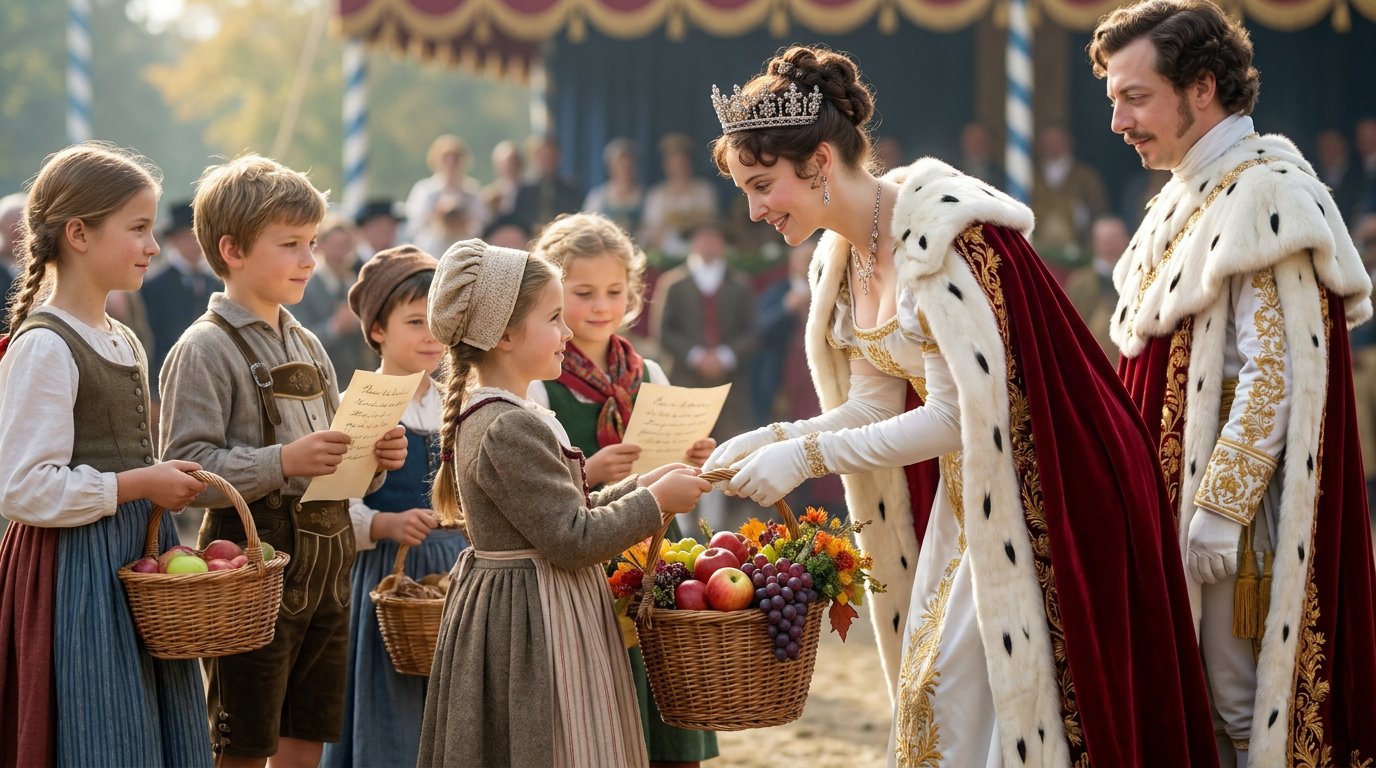
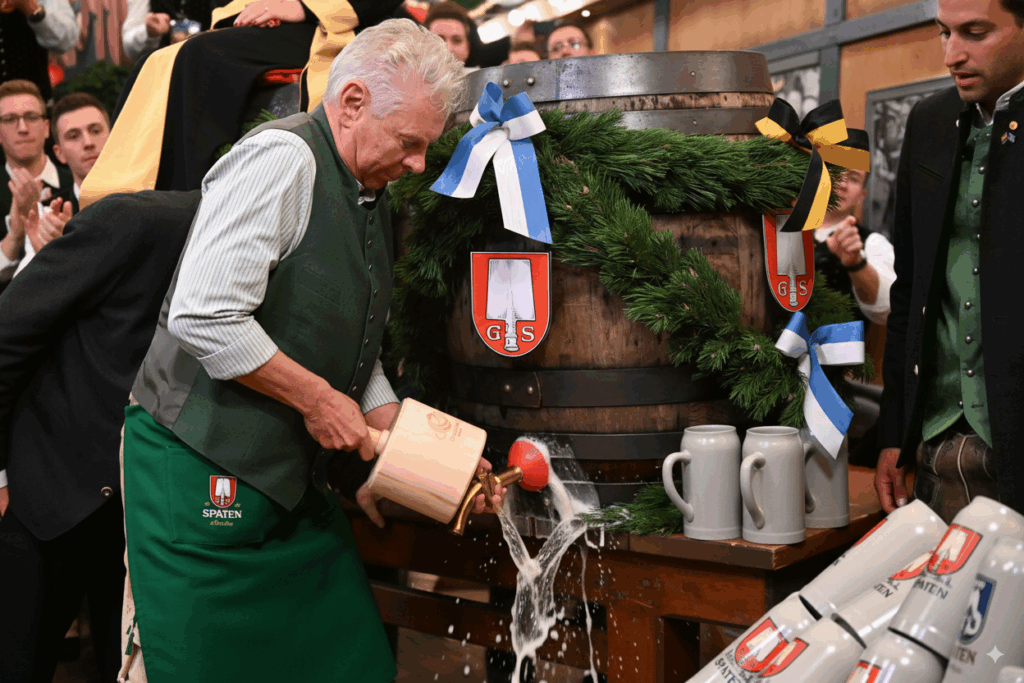
Absolutely not. The first Munich Oktoberfest grew out of the 1810 wedding celebrations for Crown Prince Ludwig of Bavaria and Princess Therese of Saxe-Hildburghausen. The couple married on October 12. Five days later, on October 17, 1810, a horse race outside Munich concluded the public celebrations and became the starting point for the recurring festival. The City of Munich describes the wedding and race in its festival history.
Thomas’s melody appeared roughly a century and a half later. Nobody at the royal race was making beaks with their fingers. The dance belongs to the modern history of festivals, music recordings, and German-American community life.
There is no need to move it back to 1810 to make it meaningful. Heritage celebrations carry old customs forward and acquire new favorites along the way. Some songs arrive with immigrant families. Some come from neighboring cultures. Some make their way in through a record, a wedding band, or a borrowed chicken suit.
Cincinnati raises 48,000 pairs of wings
If Tulsa supplied the American dance with a marvelous origin story, Cincinnati showed how big that story could become. The Ohio city, shaped deeply by German immigration, made the Chicken Dance a signature moment at Oktoberfest Zinzinnati.
In 1994, an estimated 48,000 participants danced together, setting a record reported in editions of the Guinness Book of World Records. Helping lead them was Luitpold Prinz von Bayern, a member of Bavaria’s Wittelsbach family—the dynasty of the Ludwig whose wedding had set Munich’s Oktoberfest tradition in motion. Ohio Magazine records the 48,000 figure, and a Cincinnati retrospective identifies Luitpold as the leader.
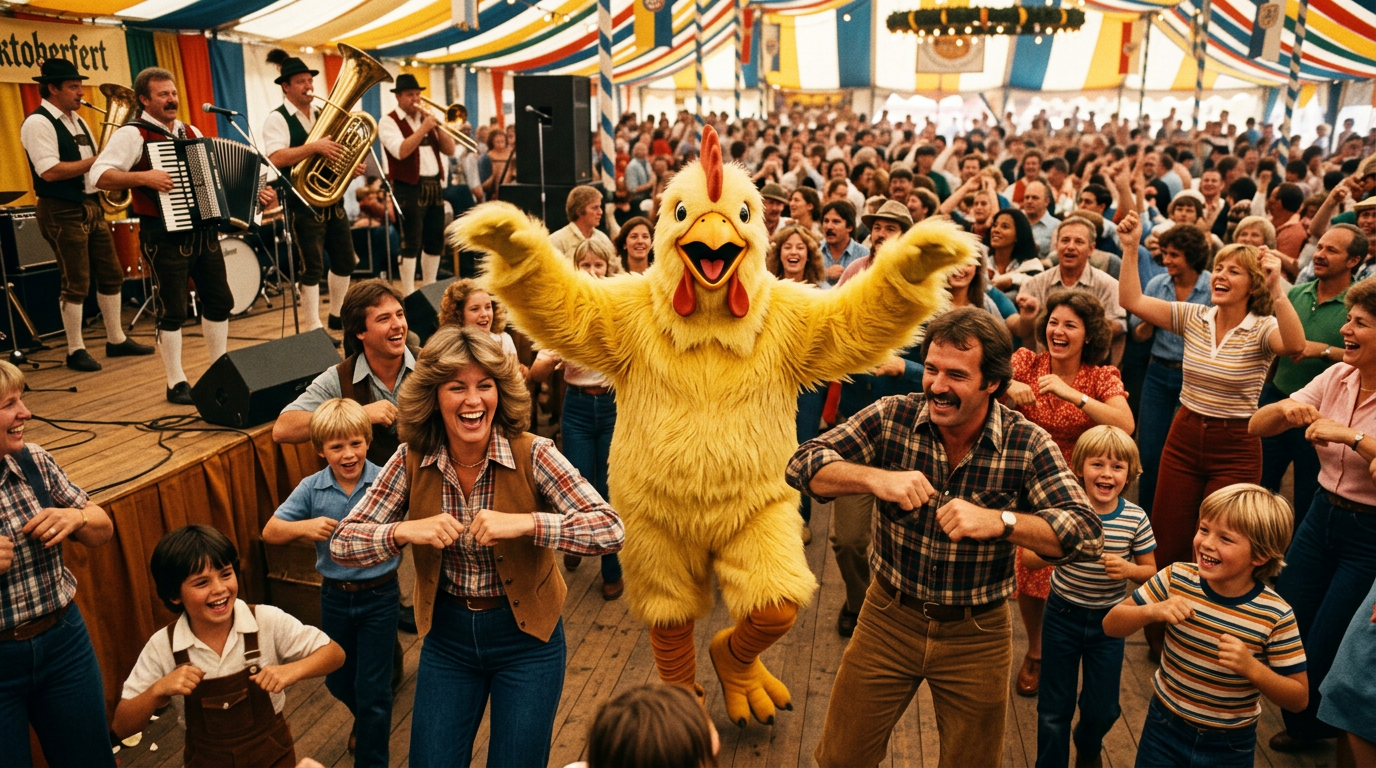
Think of the route to that moment. A Swiss accordionist creates a duck dance. A Belgian producer makes it a record. Performers and audiences across Europe give it new names. A Tulsa festival borrows a chicken costume. Then a Bavarian prince helps lead tens of thousands of Americans through the motions in Cincinnati.
Even 48,000 dancers didn’t end the competition. Guinness currently lists an estimated 72,000 participants at the Canfield Fair in Ohio on September 1, 1996. Ohio apparently has a remarkable talent for organizing enormous flocks.
The secret ingredient is everybody
Why has a small Alpine tune outlasted so many novelty songs? Its melody is easy to recognize, but the answer is on the dance floor.
At most dances, somebody worries about getting the steps wrong. At the Chicken Dance, the person beside you is making a beak with their hands. Nobody expects elegance. Everyone gets permission to be ridiculous at the same time.
The movements also create a story families can tell afterward. A child may forget the name of the band but remember watching Grandpa flap his elbows. Wedding guests may forget the order of the songs but remember the entire party wiggling in formal clothes. A parent may start the music for a toddler and end up dancing with three generations.
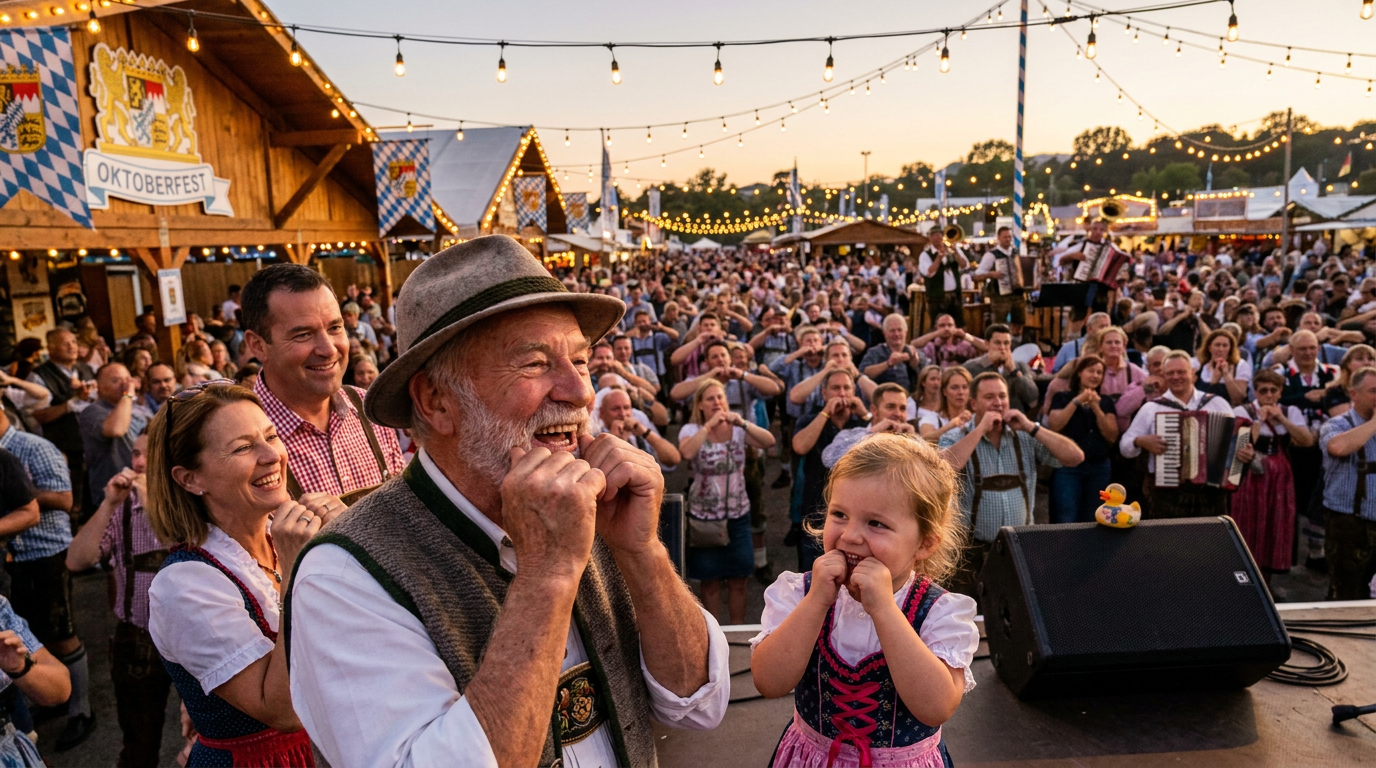
The joke also renews itself. At five, you are delighted to know the moves. At fifteen, you may act too embarrassed to try them. Years later, you might be the adult who starts the dance because a child at your table wants company. The steps have barely changed, but your place in the story has. That is a powerful advantage for a tradition passed from one celebration to the next.
It is easy to describe that as “just a silly song.” Try to think of another piece of music that so reliably persuades strangers to do the same ridiculous thing together.
For German Heritage USA, that is the heart of this unlikely tradition. Its composition is Swiss. Its recordings crossed borders. Its American chicken identity has a memorable Tulsa chapter. Its enormous gatherings include a Bavarian prince in Cincinnati. The dance belongs to all those histories—and to the families who keep choosing it at their celebrations.
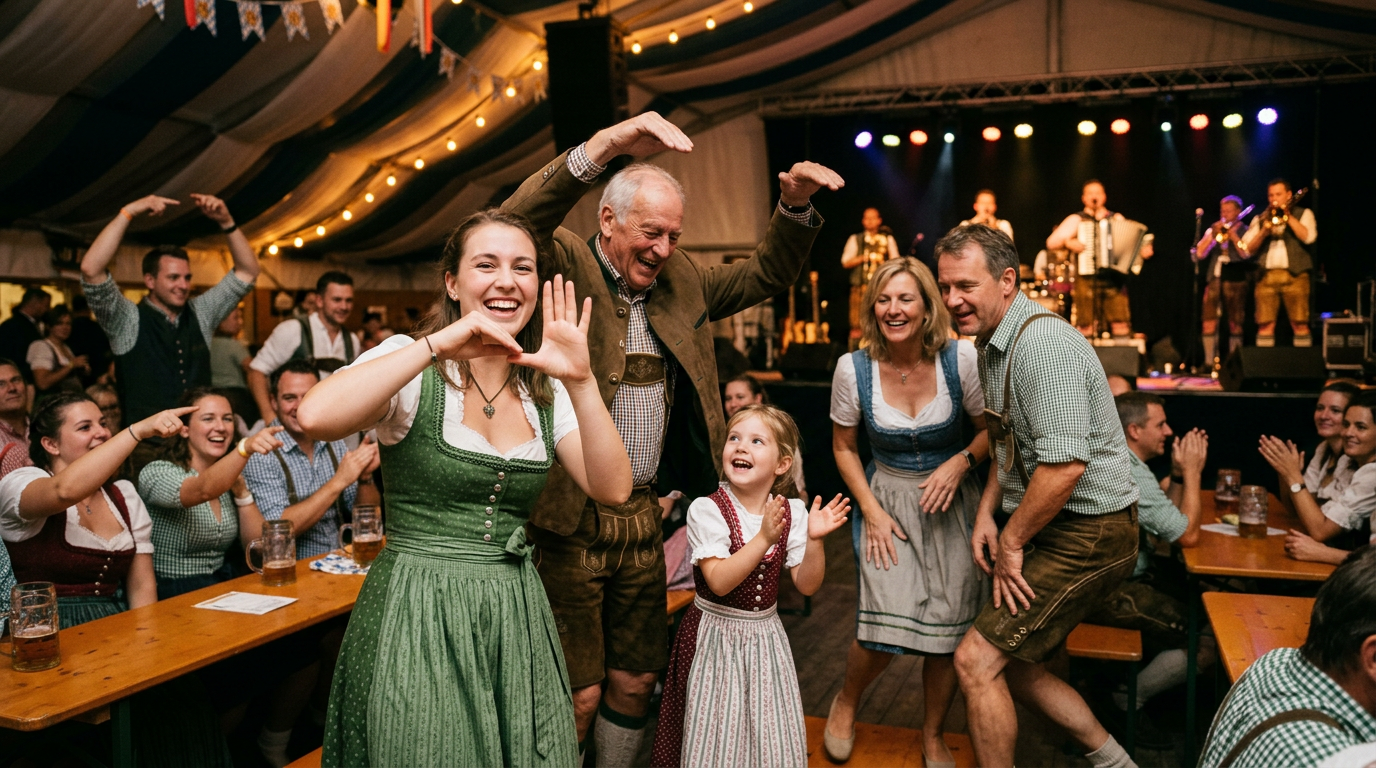
So the next time the opening notes begin, take a moment before you flap. Picture Thomas at his accordion in the Swiss Alps. Picture the duck. Picture the borrowed Oklahoma costume. Picture a sea of Cincinnati dancers making their own beaks.
Then join them.
Beak. Wings. Wiggle. Clap.
Somewhere underneath that American chicken is still a Swiss duck.
Prost!