
From Castles to Communities: Where to Experience German Architecture in America
GERMAN HERITAGE USA | AFFILIATE DISCLAIMER: This post may or may not contain affiliate links which means we may receive a commission for purchases made through links. We will only recommend products that we have personally used or that we truly trust. Learn more on our Private Policy and Disclaimer Page located under our Terms Of Service tab above.
For many Americans, German Heritage often first arrives through food—bratwurst sizzling at Oktoberfest, pretzels bigger than your plate, or a frothy stein raised beneath brass-band music. But beyond the beer halls and biergartens lies something even more enduring: architecture.
German immigrants didn’t just bring recipes and traditions to America—they brought building styles, village planning, craftsmanship, and a cultural love for structures that were meant to last. Across the United States, from half-timbered inns to Bavarian alpine villages, Gothic churches to storybook castles, German architectural influence has shaped communities in surprising and unforgettable ways.
Whether you’re a proud German-American tracing family roots, a traveler searching for old-world charm, or simply someone who wants to feel like they’ve stepped into Bavaria without crossing the Atlantic, America offers a rich landscape of German-inspired places.
As architect Ludwig Mies van der Rohe—one of Germany’s greatest design minds who profoundly influenced American architecture—famously said:
“Architecture starts when you carefully put two bricks together.”
In German-American communities, those bricks often became cathedrals, breweries, town squares, and castles.
From Pennsylvania Dutch country to Texas Hill Country, here’s your passport to experiencing German architecture in America.
Why German Architecture Took Root in America
Beginning in the 17th century and accelerating through the 19th century, millions of Germans immigrated to America. They settled heavily in Pennsylvania, Ohio, Wisconsin, Missouri, Texas, and the Midwest, often recreating pieces of home.
Their building traditions reflected:
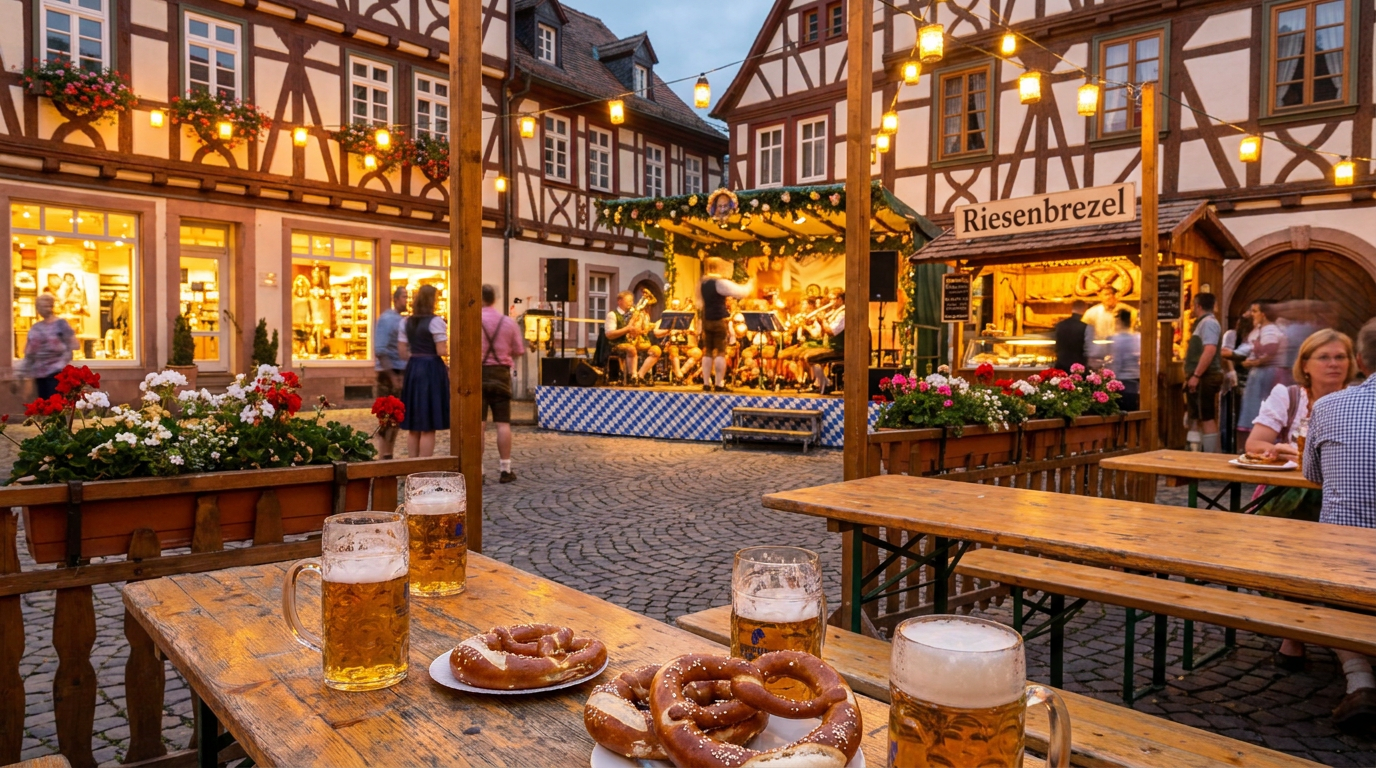
- Fachwerk (half-timbered) construction
- Bavarian alpine chalet styles
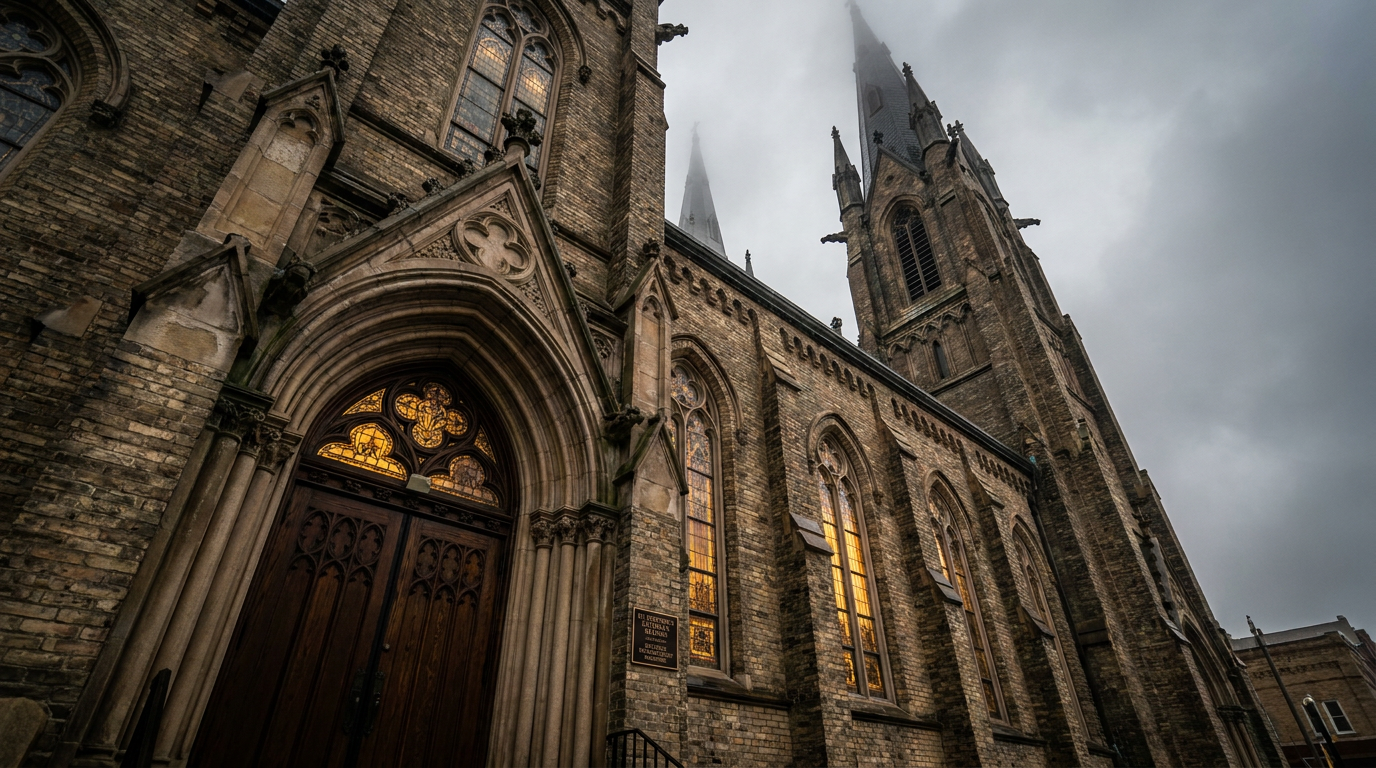
- Romanesque and Gothic Revival churches
- Craftsmanship-centered stone masonry
- Village-centered public squares
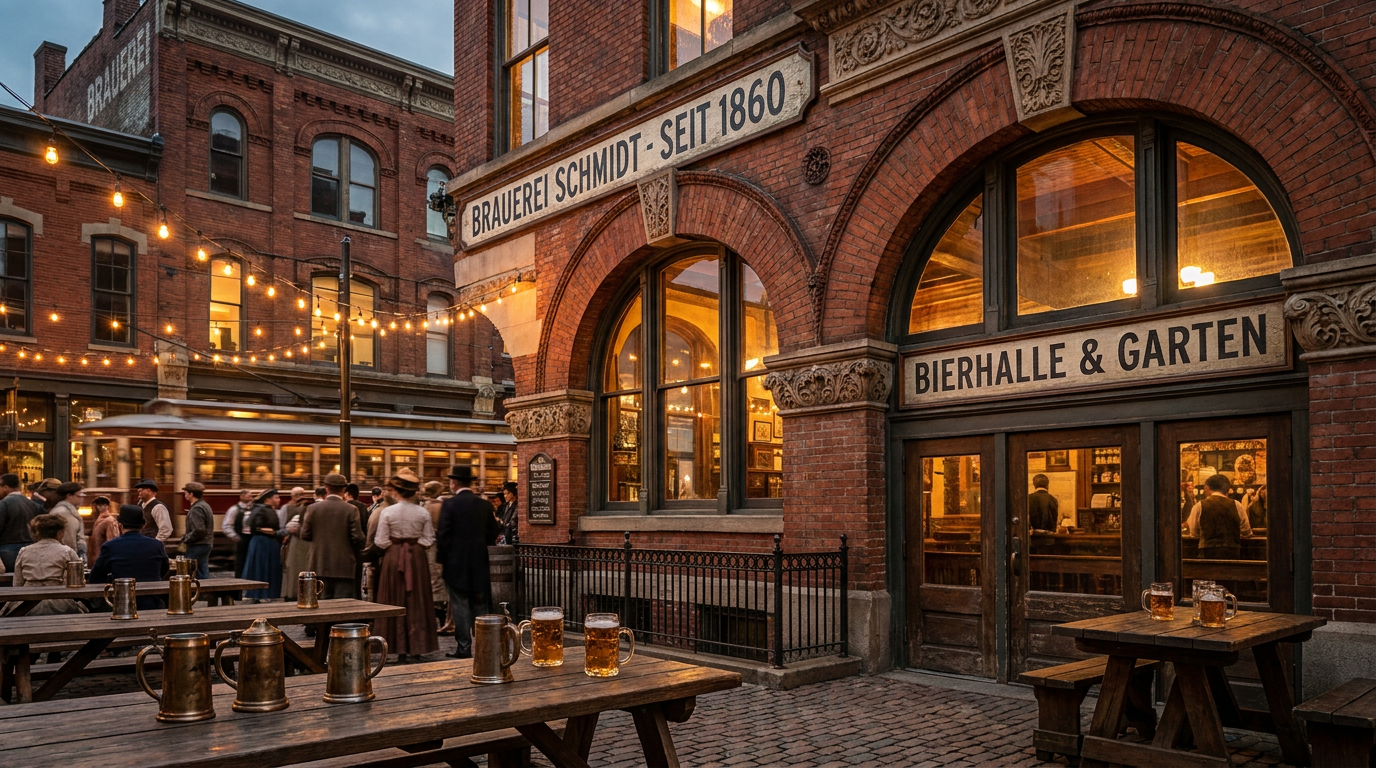
- Beer halls, breweries, and communal gathering spaces
These communities weren’t random—they were intentional cultural anchors.
German settlers often built:
Church first. School second. Brewery third.
That practical yet community-centered philosophy still shapes many towns today.

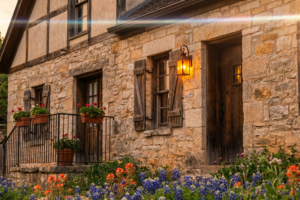
Deep in Texas Hill Country sits one of America’s most authentic German-founded towns: Fredericksburg.
Established in 1846 by German immigrants, Fredericksburg combines limestone frontier practicality with unmistakable European touches:
- Sunday houses
- Vereins Kirche (community church-fort structure)
- Fachwerk buildings
- Biergartens
- Stone cottages
The Vereins Kirche, reconstructed in the town center, is especially symbolic—a blend of church, school, and fortress.
Walking Main Street feels like Germany met the Wild West.
Don’t Miss:
- Pioneer Museum
- Marktplatz
- Historic Sunday Houses
- Oktoberfest Fredericksburg
Fun Fact: Texas German was once a widely spoken dialect here, blending old German with Texan English.
2. Leavenworth, Washington – Bavaria Beneath the Cascades
If you’ve ever wanted to feel transported to the Alps, Leavenworth delivers.
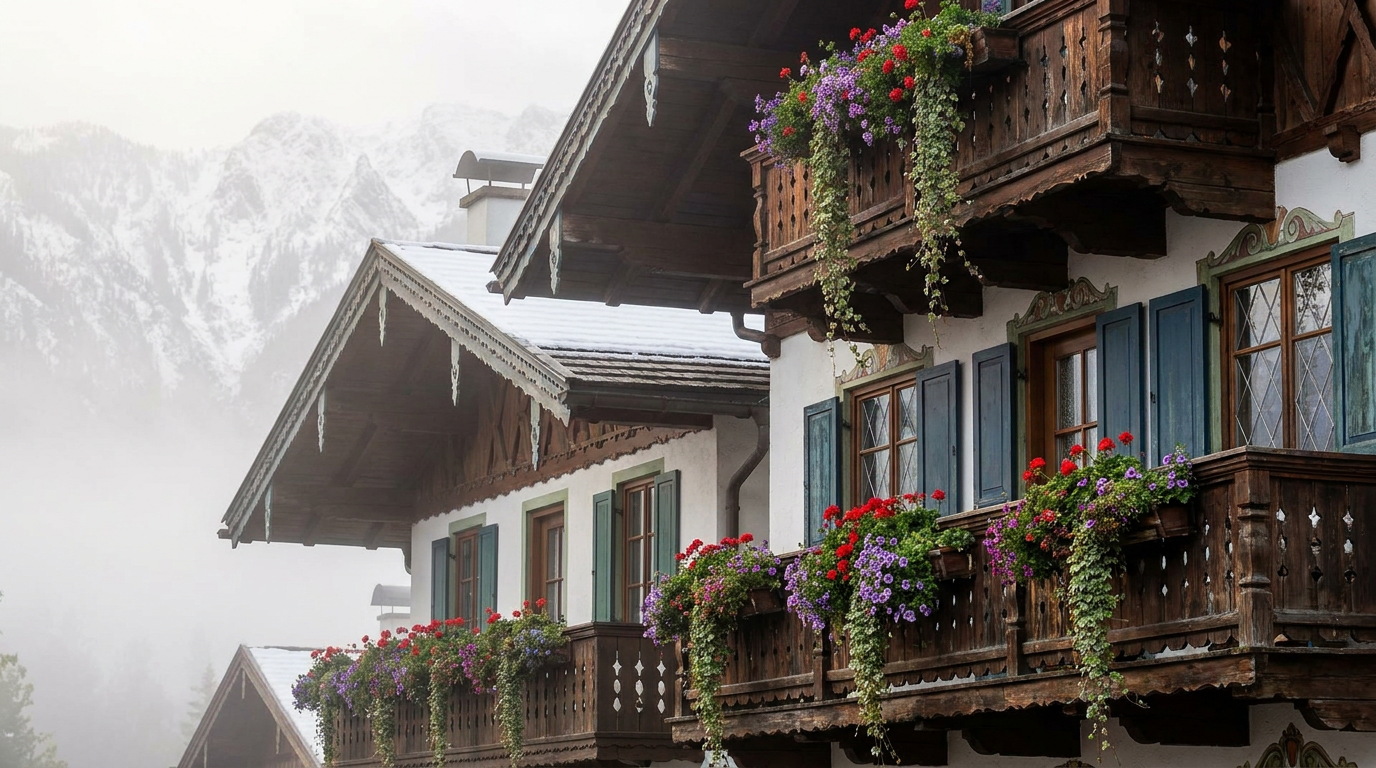
Originally a logging town, Leavenworth reinvented itself in the 1960s into a Bavarian-style village, complete with:
- Painted timber facades
- Decorative balconies
- Alpine rooflines
- Clock towers
- Mountain chalet aesthetics
While more themed than historic immigrant-built, it’s one of America’s most visually immersive German architectural experiences.
Seasonal Highlights:
- Christmas Lighting Festival
- Maifest
- Oktoberfest
- Nutcracker Museum
“The joy is in the details.”
And in Leavenworth, every flower box and carved beam proves it.

New Ulm proudly embraces its German identity with perhaps unmatched enthusiasm.
Founded by German immigrants in 1854, New Ulm features:
- Glockenspiel
- Hermann Heights Monument
- Turner Hall
- German park planning
- Steep-roofed architecture
- Decorative civic buildings
The Hermann Monument, inspired by Germany’s Hermannsdenkmal, celebrates Arminius, the Germanic tribal leader.
This city doesn’t just preserve architecture—it preserves identity.
Signature Experience:
Visit Schell’s Brewery, one of America’s oldest family-owned breweries, where architecture and brewing tradition beautifully intersect.
4. Milwaukee, Wisconsin – Beer Barons and Brick Grandeur
German immigrants transformed Milwaukee into one of America’s brewing capitals.
Architecture here ranges from practical worker housing to breathtaking mansions.
Highlights:
- Pabst Mansion
- Turner Hall
- Old World Third Street
- Gothic churches
- Cream City brick structures
Milwaukee’s German legacy is visible in:
- Decorative brewery complexes
- Neo-Renaissance facades
- Romanesque public buildings
The Pabst Mansion especially reflects how German-American prosperity translated into architectural ambition.
5. Pennsylvania Dutch Country – America’s Oldest German Building Traditions
Despite the “Dutch” label (from Deutsch), these communities preserve some of the oldest Germanic architectural influence in the nation.
In Lancaster County and beyond, you’ll find:
- Bank barns
- Stone farmhouses
- Half-timbered homes
- Springhouses
- Lutheran churches
This is where German practicality shaped America’s agricultural landscape.
Architectural Signature:
Pennsylvania bank barns—built into hillsides for multi-level efficiency—became one of the most distinctive German-American rural innovations.

Nestled along the Missouri River, Hermann was founded to recreate the Rhine Valley.
Its architecture reflects:
- Hillside vineyards
- Brick German homes
- Wineries
- Narrow streets
- Stone cellars
Hermann’s wine culture and architecture work hand in hand, echoing Germany’s wine regions.
Must See:
- Deutschheim State Historic Site
- Stone Hill Winery
- Historic district homes
7. Cincinnati’s Over-the-Rhine – Urban German America
Named after the Miami-Erie Canal (the “Rhine”), Cincinnati’s Over-the-Rhine district became one of the largest German immigrant neighborhoods in America.
Its dense 19th-century urban architecture includes:
- Italianate-German hybrids
- Beer tunnels
- Brewery structures
- Music halls
- Public markets
Today, restored buildings reveal how German immigrants shaped urban life—not just rural settlements.
8. Amana Colonies, Iowa – Simplicity and Shared Purpose
Founded by German Pietists, the Amana Colonies showcase communal German architecture focused on function over ornament.
Expect:
- Brick communal kitchens
- Workshop buildings
- Churches
- Modest homes
- Durable craftsmanship
This isn’t castle Germany—it’s practical, faith-centered Germany.
And that simplicity tells its own powerful story.
Castles in America? Yes—German Inspiration Lives On
While immigrant communities often built practical structures, wealthy Americans also borrowed German castle aesthetics.
Famous Examples:
- Boldt Castle (German Rhineland influence)
- Hearst Castle’s Bavarian decorative elements
- Rhinebeck and Hudson Valley estates inspired by German romanticism
Many of these structures borrowed from:
- Neuschwanstein
- Rhineland fortresses
- Medieval German towers
German Architectural Features to Look For
Spot These Hallmarks:
Fachwerk (Half-Timbering):
Wood framing with exposed beams and infill.
Steep Gabled Roofs:
Snow-conscious design from alpine regions.
Stone Masonry:
Durability and permanence.
Decorative Wood Carving:
Balconies, trim, and signage.
Town Squares / Marktplatz:
Community-centered planning.
German Architecture Across America
East Coast: Pennsylvania Dutch farms & stone homes
Midwest: Breweries, churches, civic halls
Texas: Limestone frontier-German fusion
Pacific Northwest: Bavarian revival villages
Missouri: Rhine-style wineries
Why It Matters Today
German architecture in America isn’t just about aesthetics—it’s about cultural memory.
These buildings tell stories of:
- Immigration
- Adaptation
- Community
- Faith
- Industry
- Celebration
They remind us that heritage isn’t only spoken—it’s built.
As communities modernize, preserving these places ensures future generations can physically walk through history.

From Texas dance halls to Midwestern breweries, Pennsylvania barns to Bavarian mountain villages, German architecture has helped shape America’s physical and cultural landscape.
So the next time you see a steep-roofed inn, a half-timbered storefront, or a beer hall crowned with old-world detail, pause for a moment.
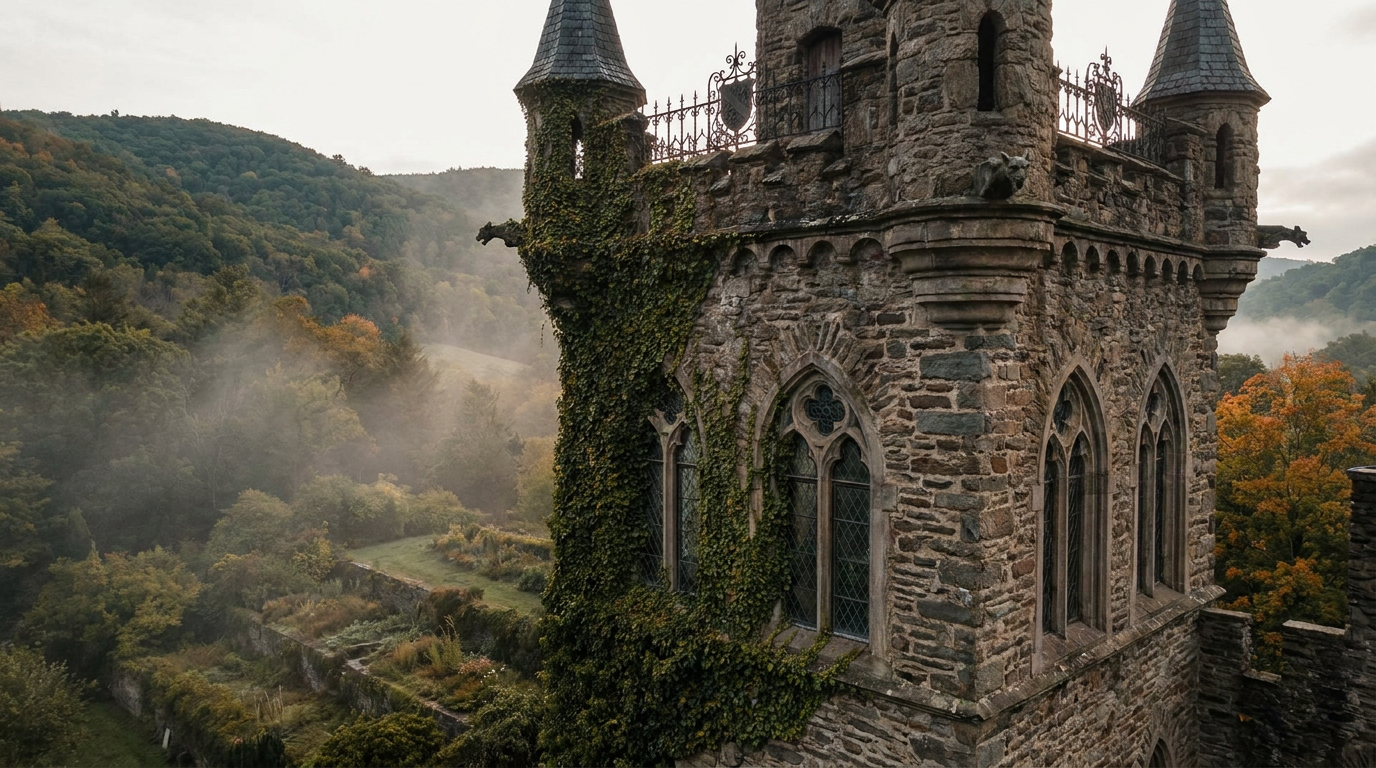
You may just be looking at a piece of Germany—carefully rebuilt in America.
Because sometimes, heritage isn’t hidden in museums.
Sometimes, it’s standing right on Main Street.
Traveler’s Bucket List:
Top German Architectural Destinations in America
- Fredericksburg, Texas
- Leavenworth, Washington
- New Ulm, Minnesota
- Milwaukee, Wisconsin
- Lancaster, Pennsylvania
- Hermann, Missouri
- Cincinnati Over-the-Rhine, Ohio
- Amana Colonies, Iowa
Auf Wiedersehen—and happy exploring!