
Erntedankfest vs. Thanksgiving: Two Nations, Two Traditions, One Beautiful Reason to Celebrate!
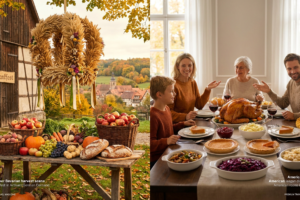
From Germany’s golden harvest fields to America’s Thanksgiving dinner tables, discover the fascinating histories, cherished customs, delicious foods, and German-American family traditions that celebrate gratitude across generations.
Two Countries, Two Celebrations, and One Beautiful Connection
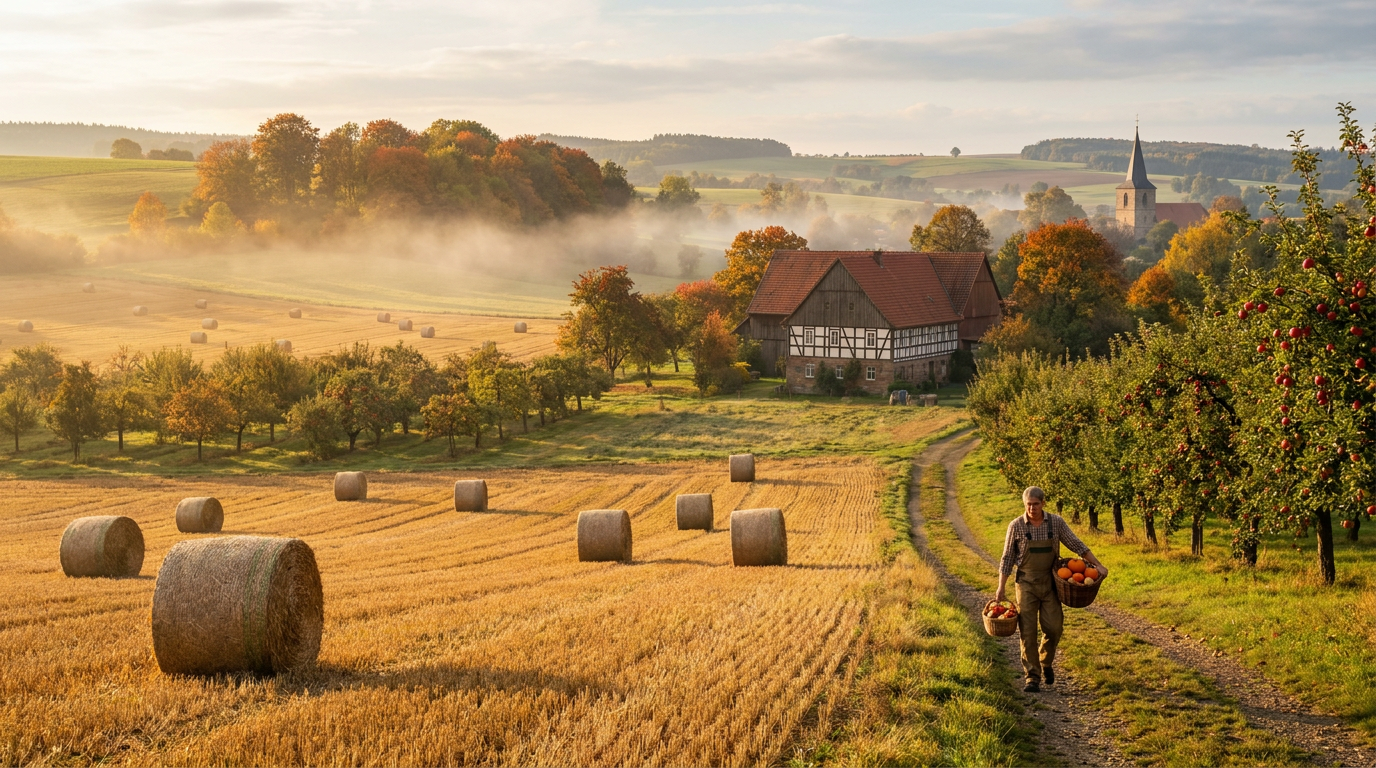
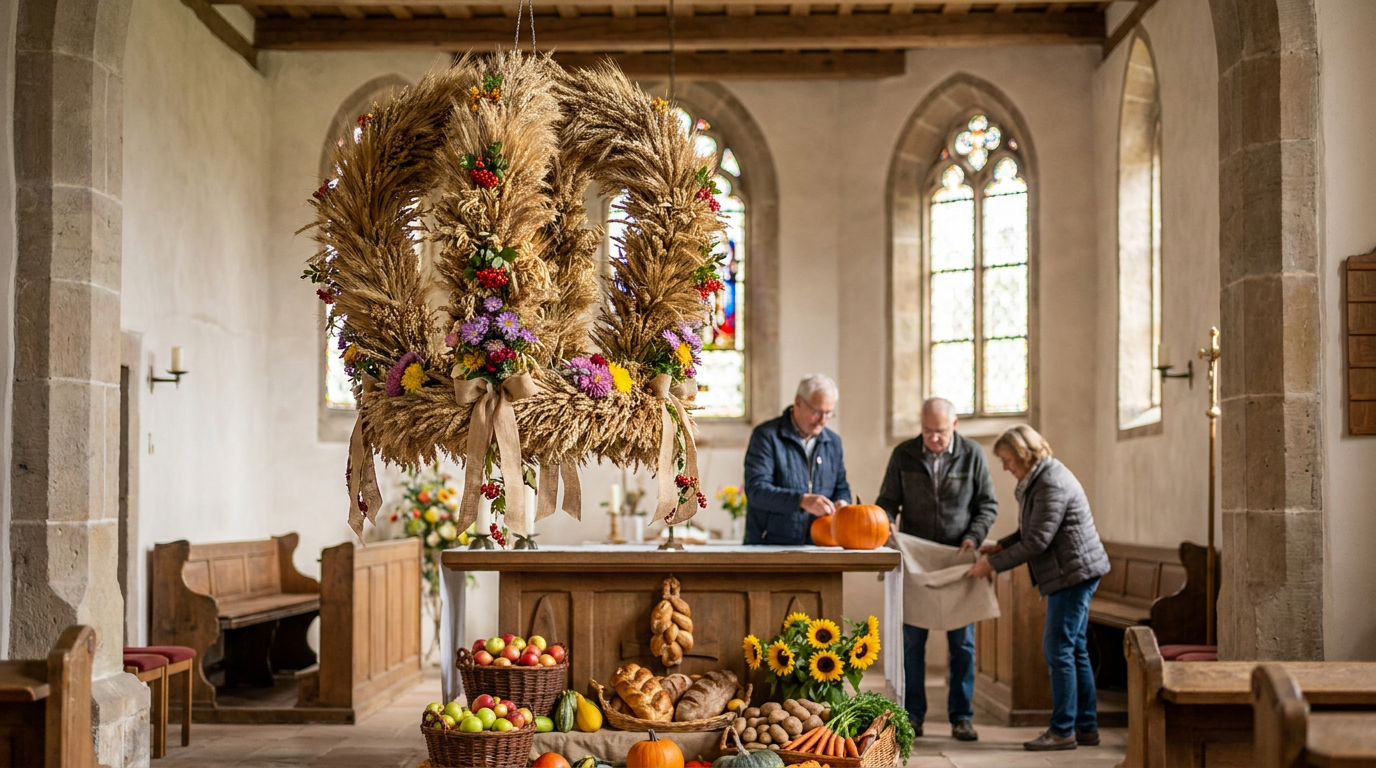
Imagine a picturesque German village on a crisp October morning. Golden leaves drift through the streets, church bells ring in the distance, and baskets overflow with freshly harvested apples, pumpkins, vegetables, and fragrant loaves of bread. Inside the village church, a magnificent crown woven from golden stalks of grain stands as a symbol of gratitude for another successful harvest.
Now imagine an American home several weeks later.
It’s Thanksgiving morning. A turkey is roasting in the oven, pumpkin pies are cooling on the counter, and family members are gathering around a beautifully decorated dining table. In a German-American household, perhaps there’s also a bowl of homemade sauerkraut, German red cabbage, or a beloved potato dish prepared from Grandma’s handwritten recipe.
Two countries. Two different celebrations. Yet one unmistakable connection: the importance of giving thanks for life’s blessings.
Germany celebrates Erntedankfest, its traditional harvest thanksgiving festival. America celebrates Thanksgiving, one of its most cherished national holidays.
Although these celebrations have distinct histories, they share themes of gratitude, community, family, food, and appreciation for the harvest.
And when generations of German immigrants made America their new home, something wonderful happened: German customs and American traditions began finding places together in the lives of German-American families.
Let’s explore the history, the differences, the similarities, and the delicious cultural connections that make these two celebrations so special.
1. What Exactly Is Erntedankfest? Germany’s Beautiful Harvest Thanksgiving
The German word Erntedankfest (approximately pronounced EHRN-tuh-dahnk-fest) translates to “harvest thanksgiving festival.”
Break the word into three parts:
- Ernte — Harvest
- Dank — Thanks or gratitude
- Fest — Festival or celebration
Put them together and you have a celebration devoted to expressing appreciation for the harvest and the blessings that sustain everyday life.
For generations, farming communities throughout German-speaking regions have recognized the importance of successful crops, healthy livestock, and the people whose labor provides food for everyone.
Today, Erntedankfest is primarily associated with Christian thanksgiving services, particularly in Protestant and Catholic communities.
Church altars are adorned with colorful produce, freshly baked bread, wheat, flowers, and other symbols of agricultural abundance.
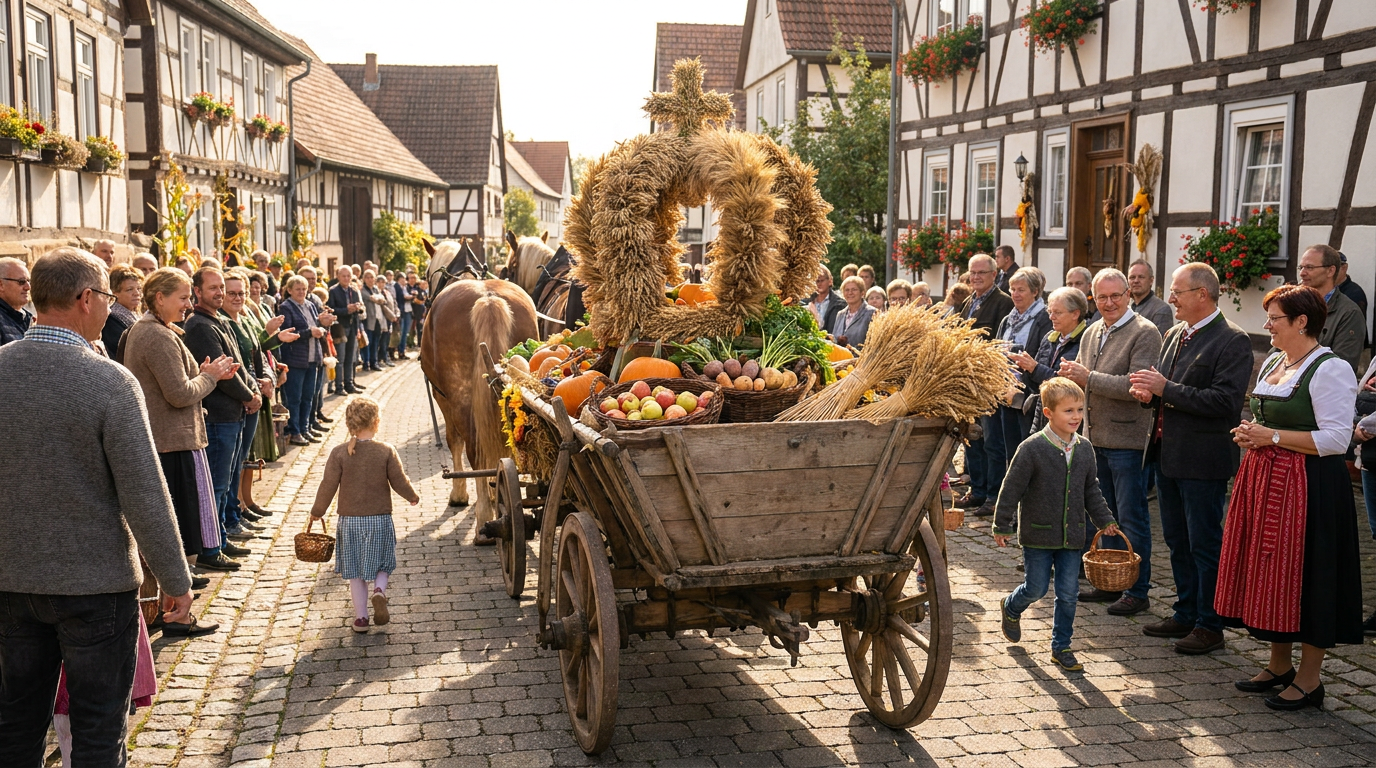
In some communities, celebrations extend beyond the church to include processions, music, festivals, and shared meals.
When is Erntedankfest celebrated?
Traditionally, many German communities observe the festival on the first Sunday in October, although regional practices vary. In wine-growing regions, celebrations may take place later in the harvest season.
In 2026, the commonly observed date was Sunday, October 4.
Unlike Thanksgiving in the United States, Erntedankfest is not a nationwide public holiday in Germany.
That distinction reveals something interesting: Germany’s harvest thanksgiving is traditionally rooted in religious and community life rather than a nationally mandated day of celebration.