German Heritage Bucket List: 9 Experiences Every German-American Should Do
From finding the village behind your surname to raising a stein at Oktoberfest, these nine experiences will help turn German ancestry into a heritage you can see, taste, hear, explore and pass forward.
Late August has a way of making us look both backward and forward. Summer is still holding on, but fall is beginning to whisper. Festival tents will soon rise, kitchens will fill with the scent of warm bread and spices, and Oktoberfest calendars will start appearing on refrigerators across America.
It is also an ideal time to ask a wonderfully simple question:
What have I actually experienced of my German Heritage?
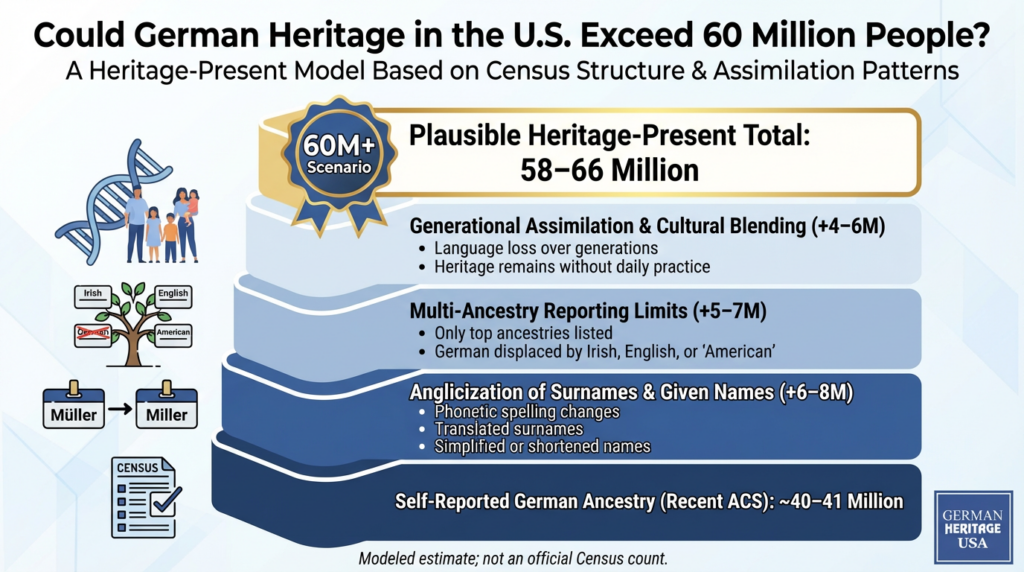
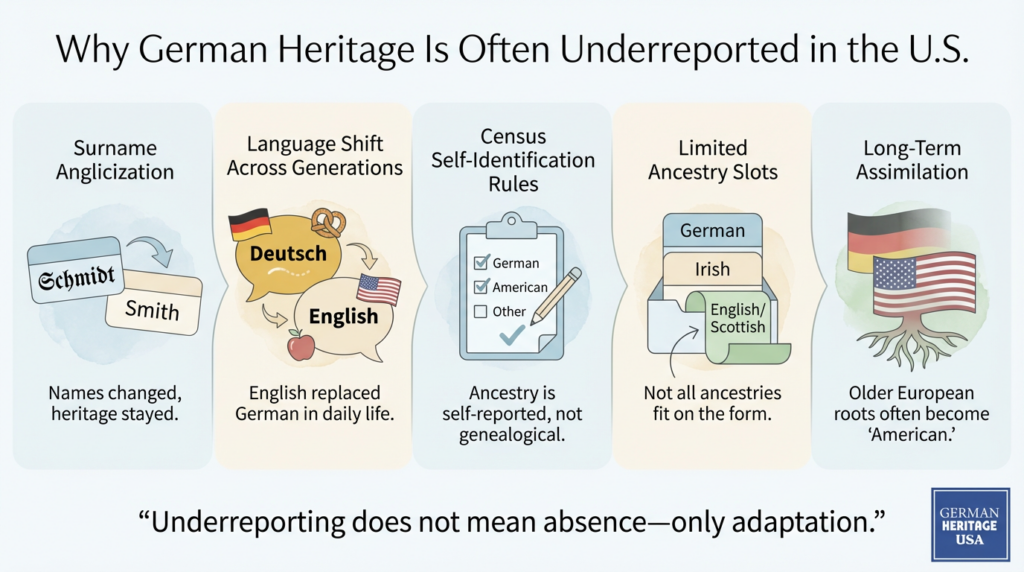
More than 40 million Americans report German ancestry, according to the U.S. Census Bureau, yet German-American identity rarely looks the same from one family to the next. One family may still make a grandmother’s potato salad exactly as she taught them. Another may have an old photograph labeled only “Germany.” Some know the precise village their ancestors left. Others inherited an Anglicized surname, a few family sayings and a feeling that an important chapter has gone missing.
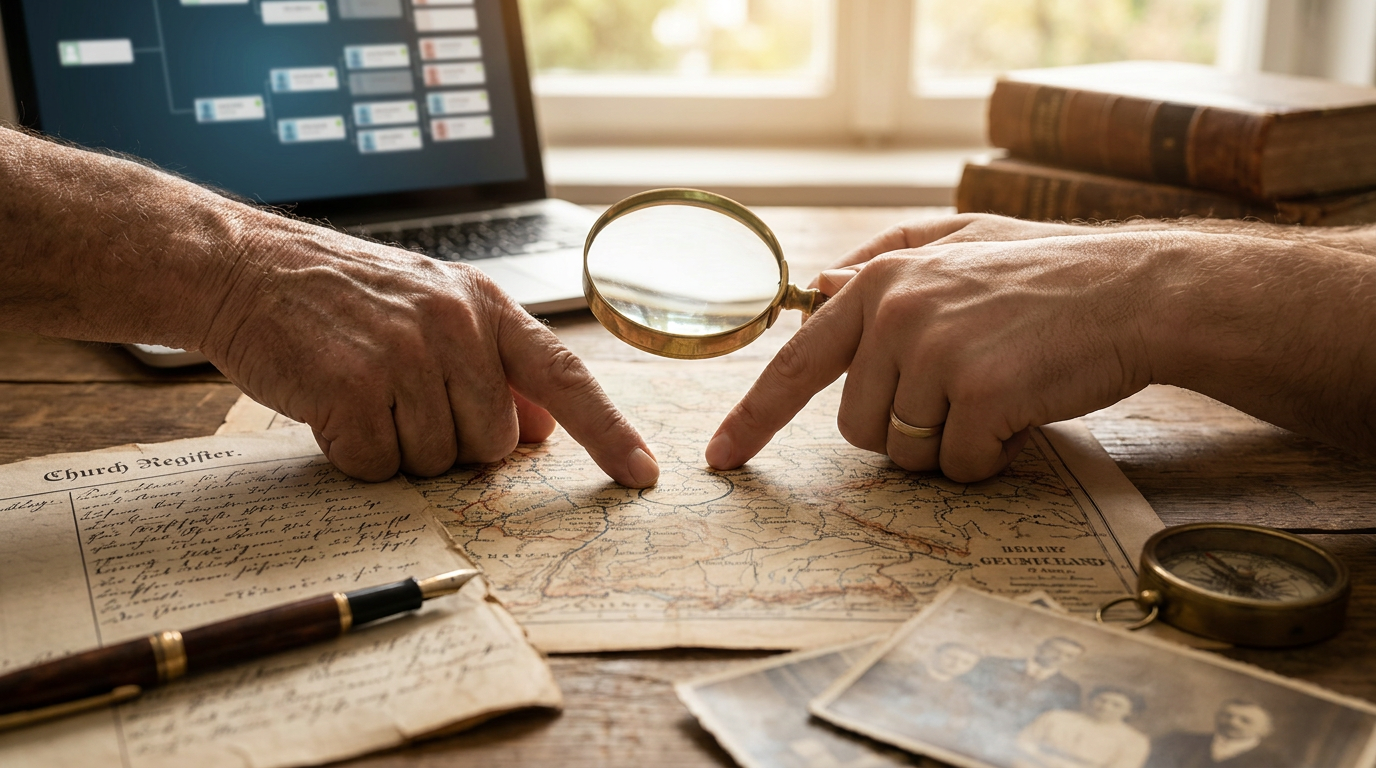
That is what makes a German heritage bucket list so much fun. It is not a test of how “German” you are. You do not need to speak fluent German, own Lederhosen or know the proper number of turns in a polka. The goal is to move heritage out of the attic and into real life.
“Heritage is not only something we inherit. It is something we experience, preserve and pass forward.” — German Heritage USA
Whether your family arrived in the 1700s, stepped off a ship in the 1880s or came to America much more recently, here are nine meaningful—and genuinely enjoyable—experiences to put on your list.
1. Find the German Place Behind Your Family Name
A surname is a clue. A hometown is a doorway.
One of the most rewarding moments in family research is discovering the actual village, town or region where an ancestor lived. Before Germany became a unified nation in 1871, records might identify a person with Prussia, Bavaria, Saxony, Württemberg, Hesse, Hanover or one of many smaller states and territories. Borders shifted. Town spellings changed. Handwriting can look as if it were produced during a bumpy wagon ride.
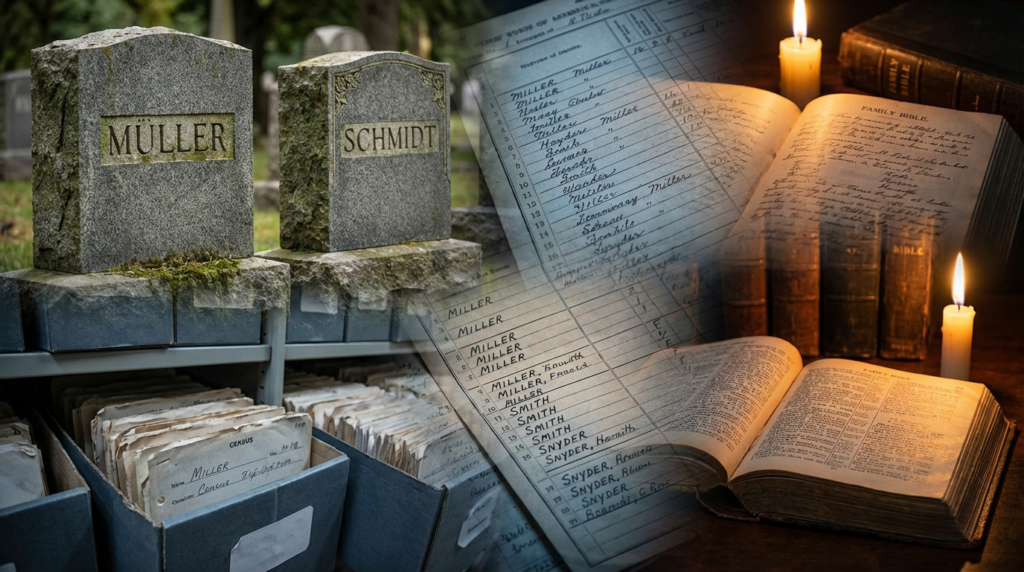
Begin with what your family already knows. Interview the oldest relatives. Examine the backs of photographs. Gather birth, marriage, church, census, military and naturalization records. Then look for passenger manifests and records from the ancestor’s American church or county. The National Archives recommends many of these same record groups—including census, immigration, naturalization, military and land records—as starting points for genealogy.
The breakthrough detail is often not “Germany,” but a precise place: a village near Kiel, a parish outside Stuttgart or a farm community along the Rhine. Once you find it, mark it on a map. Look at the landscape. Learn what the region ate, built, celebrated and sounded like.
Bucket-list moment: Locate one ancestral hometown and say its name aloud. That dot on the map may change the way your entire family story feels.
2. Hold an Immigration Record—and Visit a Gateway if You Can
There is something electric about seeing an ancestor’s name on a passenger list or naturalization petition. Suddenly, history has handwriting.
Search for the ship, departure port, arrival date, occupation, traveling companions and final destination. A single line may reveal that an ancestor crossed with a sibling no one remembered, carried only a modest amount of money or was headed toward a relative already established in America.
If the journey included New York, visit Ellis Island and the National Museum of Immigration. From 1892 to 1924, more than 12 million immigrants were processed there. But do not force every German-American story through Ellis Island. Large numbers of German-speaking immigrants arrived before it opened, and families also entered through ports such as Baltimore, Philadelphia, New Orleans and Galveston.
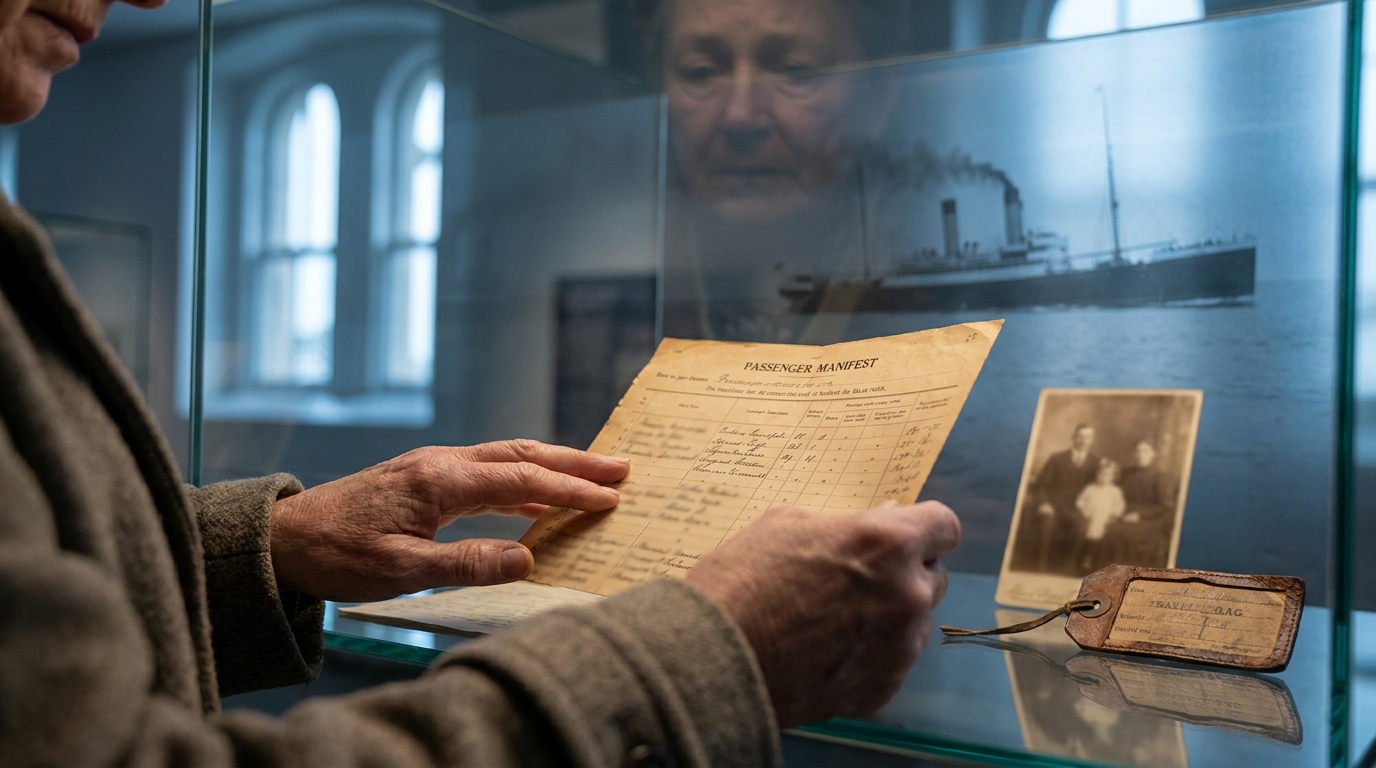
If travel is not possible, create the experience at home. Print a copy of the manifest. Find an image of the vessel. Map the route across the Atlantic. Read about conditions aboard ships during that era. Then imagine the mixture of relief, fear and expectation your relatives may have felt as land came into view.
Bucket-list moment: Hold a copy of an original immigration document and trace the journey from the old home to the new one.
3. Spend a Weekend in a German-American Town
You can travel through German-American history without crossing the Atlantic.
Choose a community where immigrant culture is still visible in streets, churches, architecture, food and local traditions. Walk through Hermann, Missouri, where the Deutschheim State Historic Site preserves buildings from the German settlement of the Missouri River Valley. Visit New Ulm, Minnesota, and its towering Hermann Monument. Explore Fredericksburg, Texas, founded by German settlers in 1846. Wander through Columbus’s German Village, Cincinnati’s Over-the-Rhine or the Amana Colonies in Iowa. For a playful Bavarian-style getaway, Frankenmuth, Michigan, adds festivals, food and plenty of gemütlich atmosphere.
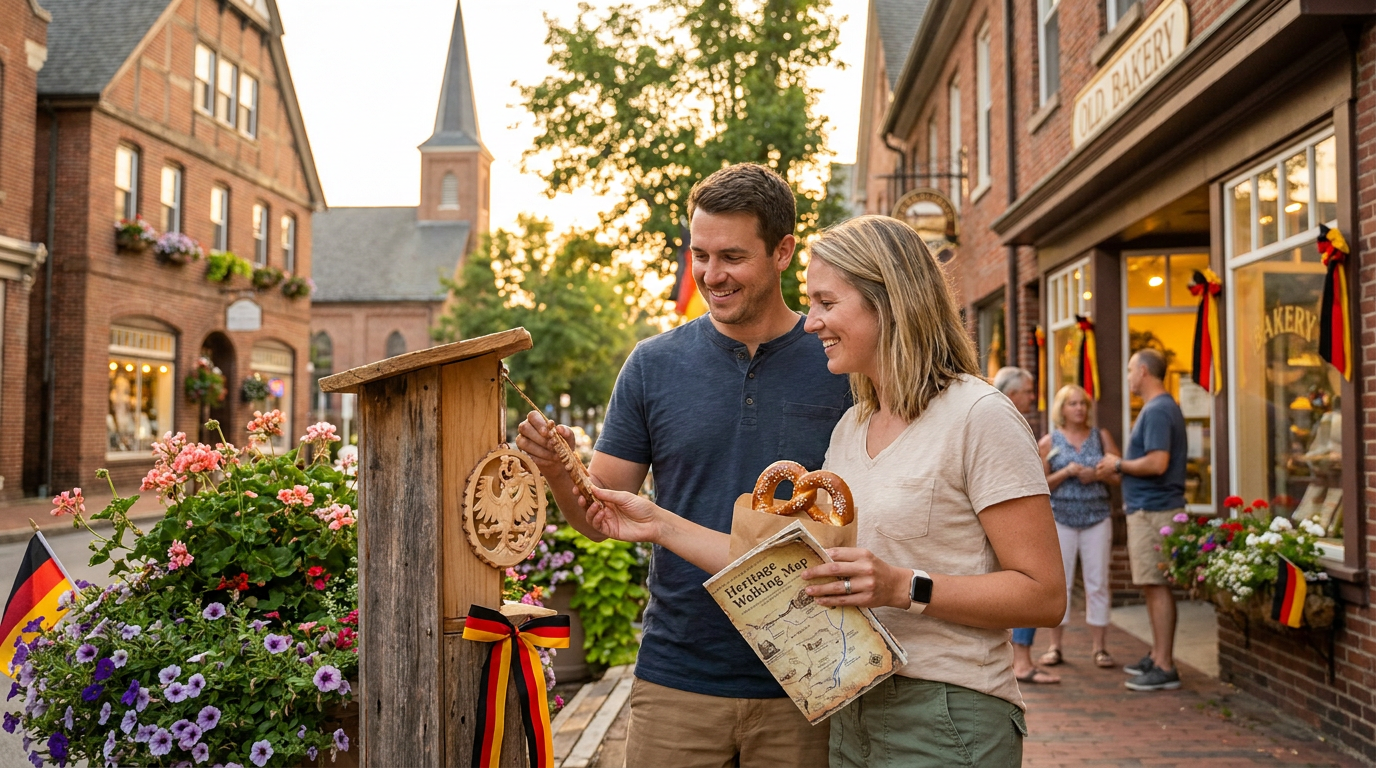
Do more than shop. Take a walking tour. Visit the local history museum. Read cemetery stones. Notice church architecture. Ask a baker or shopkeeper how the town’s traditions changed over time. Order something you have never tried instead of the safest item on the menu.
The most interesting discovery may be how German customs blended with the local landscape. German-Texan culture is not German-Minnesotan culture—and neither is a museum piece. Each tells a different American story.
Bucket-list moment: Plan one heritage weekend and leave room for an unplanned conversation with someone who helps keep the town’s story alive.
4. Attend an Oktoberfest—and Experience More Than the Beer
Yes, raise a stein. But first, raise your curiosity.
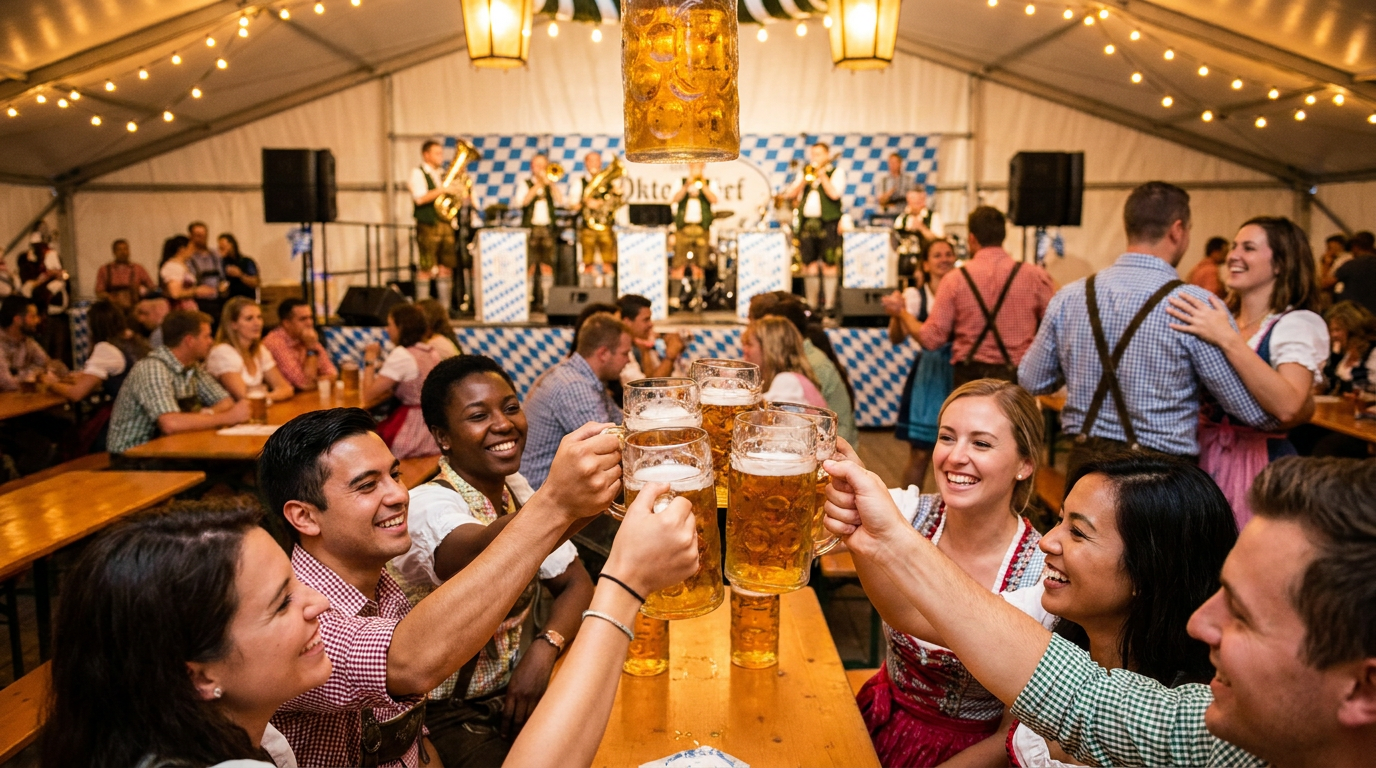
Munich’s Oktoberfest began in 1810 with festivities celebrating the marriage of Bavarian Crown Prince Ludwig and Princess Therese. A horse race helped launch what became the world’s most famous Volksfest. Today, communities across the United States transform that spirit into local celebrations filled with music, food, dancing, parades, crafts and family traditions.
Attend a festival run by a German-American club, cultural society, church or town with genuine German roots. Listen to the brass band. Watch a dance performance. Learn the words to Ein Prosit. Try a regional dish. Ask about the organization behind the celebration, then support it by buying from local vendors or becoming a member.
Traditional clothing can add to the fun, but remember that Dirndl and Lederhosen are rooted primarily in Alpine and Bavarian traditions; they are not a uniform for every part of Germany. Wear Tracht respectfully if you choose—or simply arrive ready to participate.
Bucket-list moment: Join the communal toast, meet someone new and learn one tradition that existed long before the souvenir tent opened.
5. Cook One Heritage Meal Completely From Scratch
Food may be the shortest route between generations.
Choose one family recipe or one dish from your ancestors’ region and make the entire meal an experience. Roll Rouladen. Cut fresh Spätzle. Fold Maultaschen. Bake a proper Apfelkuchen. Try Königsberger Klopse, Sauerbraten, Labskaus, Thüringer-style sausage or a North German fish dish. Germany is not one kitchen, and discovering regional differences is half the pleasure.
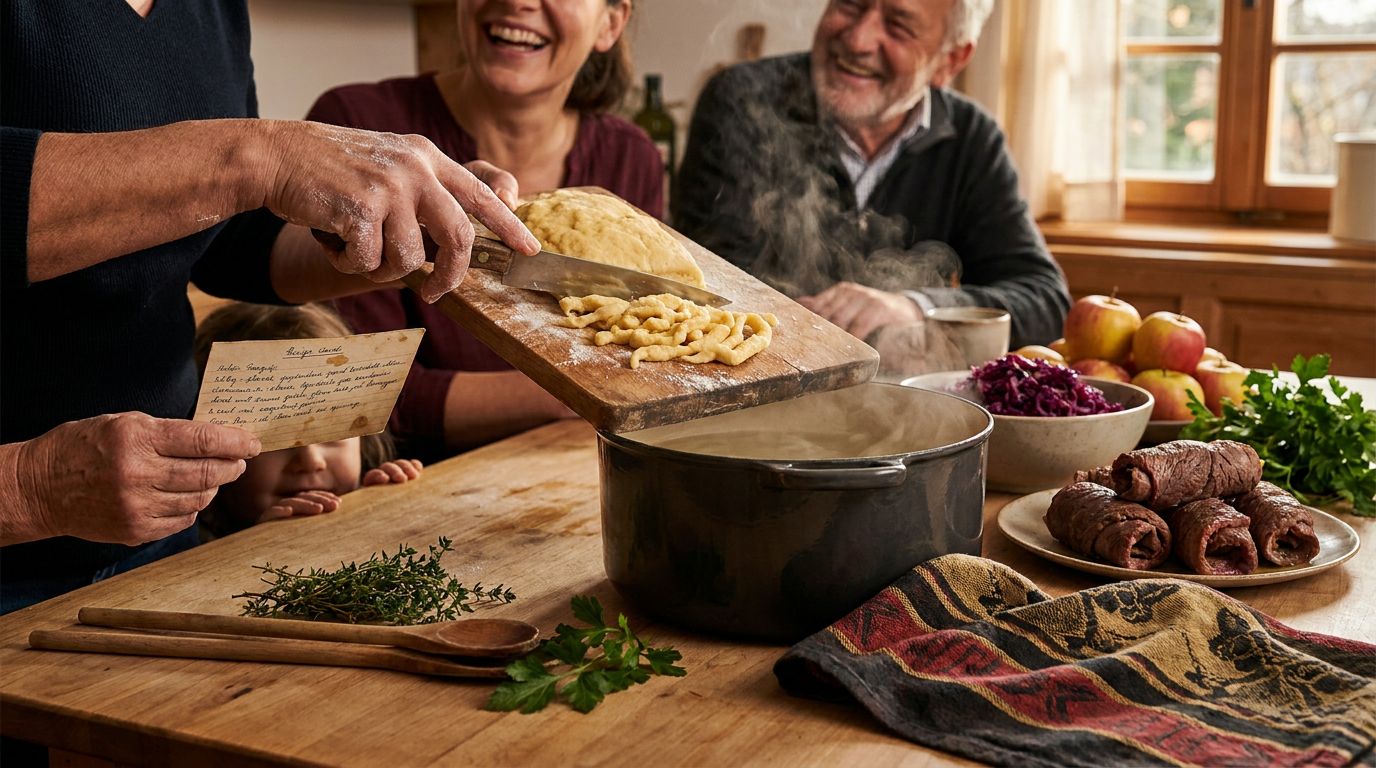
Invite relatives to cook with you. Set the table properly. Play German music. Tell the story of the person connected to the recipe. If the instructions say “add flour until it feels right,” stop and measure what “right” means so the next generation has a fighting chance.
No inherited recipe? Adopt one thoughtfully. Research where it comes from, learn how it was traditionally served and write down what you changed. A tradition does not have to be ancient to become meaningful; it simply has to be repeated with intention.
Bucket-list moment: Host a German heritage supper at which every guest brings either a dish, a photograph or a family story.
6. Learn Enough German to Open a Door
Fluency is wonderful, but connection begins much earlier—sometimes with only five brave words and a smile.
Learn how to introduce yourself, pronounce your family name and explain where your ancestors came from. Practice useful phrases such as Guten Tag (good day), Woher kommt Ihre Familie? (Where does your family come from?), Meine Familie kommt aus … (My family comes from …), Danke schön (thank you) and Auf Wiedersehen (goodbye).
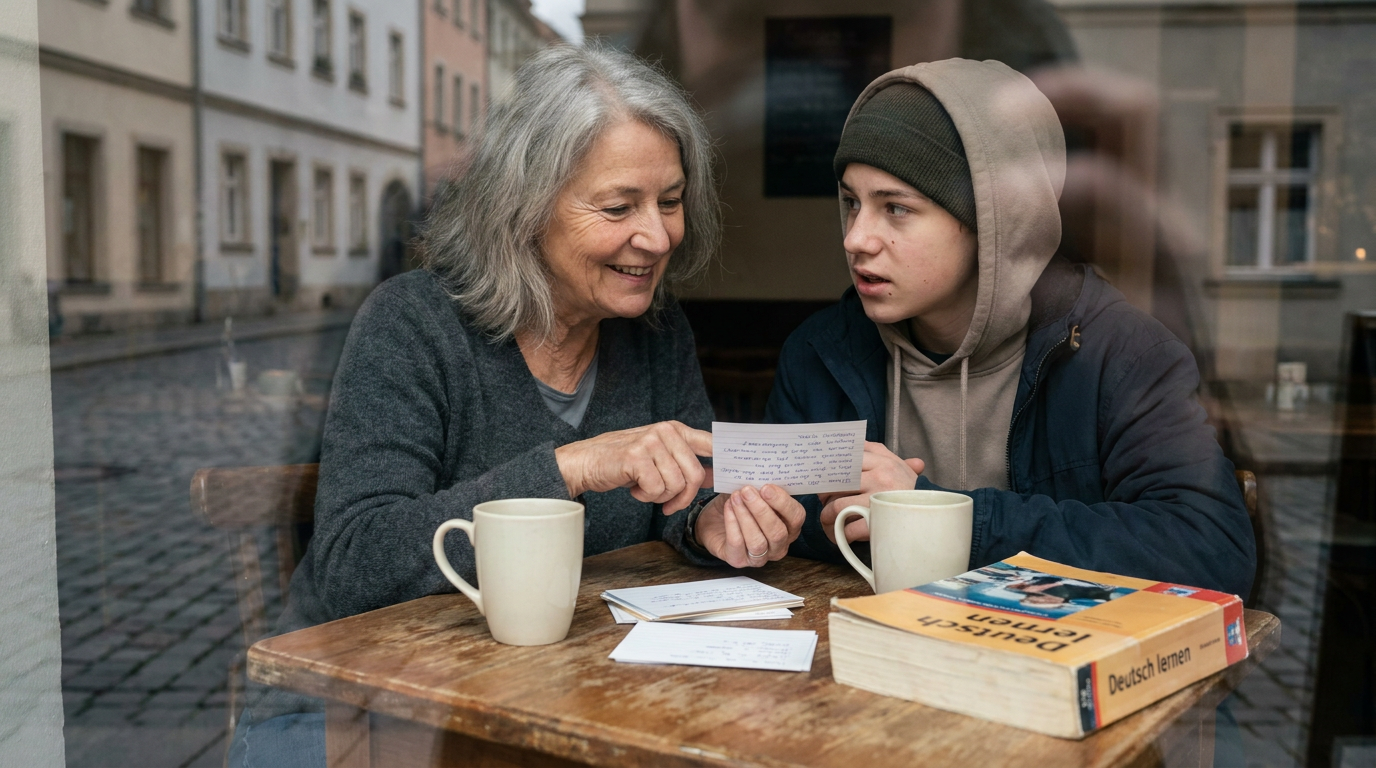
Label a few objects around your home. Learn the words to a traditional song. Watch a German film with subtitles. Join a conversation group or take a beginner course. Most importantly, allow yourself to sound imperfect. Every new speaker has to cross that bridge.
Johann Wolfgang von Goethe wrote:
“Wer fremde Sprachen nicht kennt, weiß nichts von seiner eigenen.”
It is often translated as:
“Those who know nothing of foreign languages know nothing of their own.”
Learning German can reveal patterns, meanings and family-name clues that an English translation alone cannot provide.
Bucket-list moment: Have one short conversation in German—even if you rehearse every line beforehand.
7. Experience a Living Tradition With Your Own Hands and Feet
Heritage becomes memorable when it moves.
Attend a Sängerfest or German choir concert. Learn a folk dance from a cultural group. Watch a woodcarver, brewer, baker, glassworker or instrument maker demonstrate a traditional craft. Visit a Christmas market and speak with the artisans. Try decorative egg painting, paper cutting, embroidery, bread baking or wreath making. If your family came from a particular region, look for a tradition connected specifically to that place.
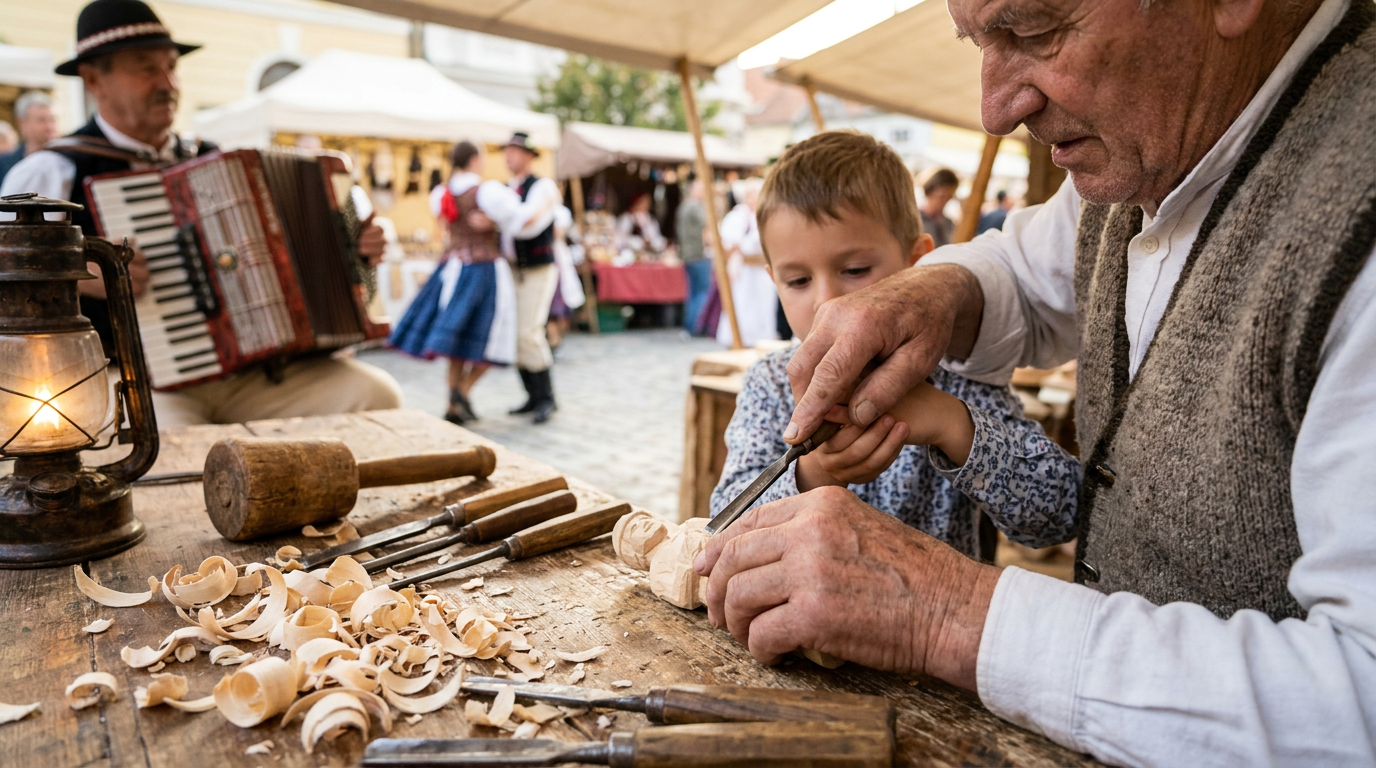
The point is not to pretend it is still 1850. Living culture survives because each generation adapts it. A young accordionist can bring new energy to an old melody. A baker may preserve a grandmother’s method while using a modern kitchen. A festival can honor its founders while welcoming neighbors whose families came from everywhere.
Do not remain at the edge taking pictures. Ask to try. Sing the chorus. Take the dance lesson. Make the ornament. Volunteer for setup. The fastest route from spectator to community is often carrying a folding table.
Bucket-list moment: Participate in one tradition instead of merely watching it.
8. Make the Ancestral Journey to Germany
This is the dream trip—the one that can make a century collapse in a single afternoon.
Once you have identified a hometown or region, build the journey around it rather than squeezing it between famous attractions. Contact the local archive, parish or historical society before you arrive. Learn whether the family church, home, workshop or cemetery still exists. Hire a local guide or genealogist if old handwriting, language or access rules create barriers.
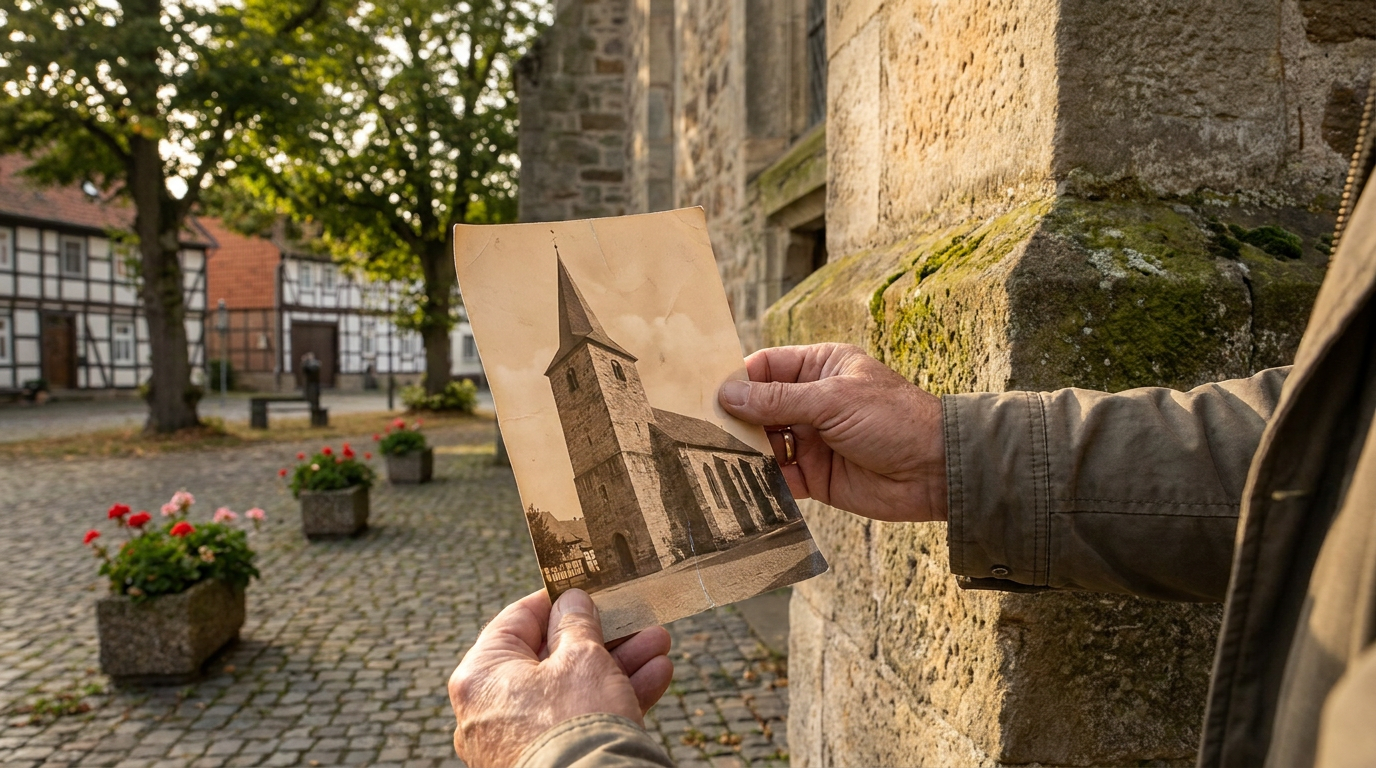
Then slow down. Sit in the town square. Hear the church bells. Walk the road toward the fields. Eat what the region actually eats. Germany stretches from North Sea harbors and Schleswig-Holstein lakes to Rhineland vineyards, central forests, eastern cities and the Bavarian Alps. Your family’s Germany may not resemble the castle-and-Lederhosen image on a travel poster—and that is precisely why it is worth finding.
Leave space for emotion, but also for ordinary life. The grocery store, bus stop and weather are part of the experience. You are not entering a frozen ancestral world; you are meeting a real place that continued living after your family left.
Bucket-list moment: Stand in your ancestors’ community, take one quiet photograph and write down exactly how the moment feels before the details fade.
9. Become the Ancestor Future Generations Will Thank
The final experience is not about looking backward. It is about deciding what travels forward.
Create a small family archive. Scan photographs at high resolution. Label every person, place and approximate date you can identify. Record grandparents, parents, aunts and uncles telling their stories in their own voices. Save recipes, letters, military records, baptism certificates, immigration documents and translations in more than one secure location.
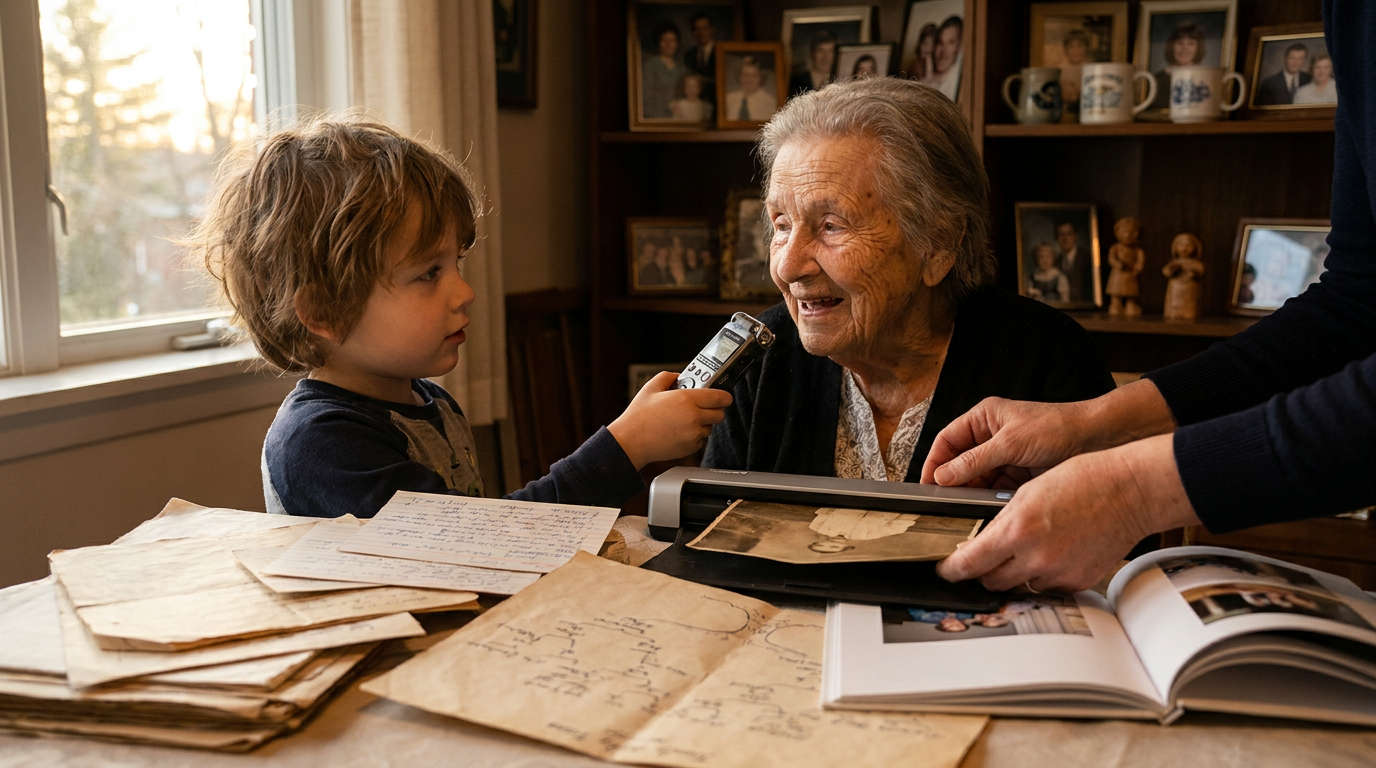
Then make the history enjoyable. Build a photo book. Create a short family documentary. Start an annual German supper. Celebrate German-American Day on October 6. Take children or grandchildren to a festival and let them choose the dessert. Give each person a copy of the family tree rather than keeping the only version on one laptop.
Most family history is not lost in a fire or flood. It disappears quietly when no one writes a name on the back of a photograph. Your contribution does not have to be perfect or complete. It simply needs to give the next curious person a place to begin.
Bucket-list moment: Record one 20-minute family interview this month and ask, “What do you remember that you never want us to forget?”
Your German Heritage Is Calling—What Will You Do First?
A bucket list works best when it leaves the page.
Circle the experience that excites you most. If a trip to Germany is years away, begin with a recipe. If the family tree feels overwhelming, interview one relative. If you already know the ancestral village, learn five German sentences you could use when you arrive. Small acts accumulate into living heritage.
Late August is an especially good time to begin. Fall festivals are approaching. Families will soon gather around holiday tables. Archives, museums, language courses and cultural clubs can turn a spark of curiosity into a year of discovery.
And remember: there is no single correct way to be German-American. Your heritage may be loud with brass music and festival laughter, or quiet as an ancestor’s name written on a ship manifest. It may live in a Lutheran church record, a Jewish family archive, a Catholic cemetery, a farmhouse recipe, a union song, a Texas town, a Midwestern workshop or a photograph from a Baltic village.
The important thing is to experience it—and then help someone else experience it too.
Got A Little German In You? Your German Heritage Is Calling You!