Ancestry Meets Adventure: Using Modern Technology to Discover Your German-American Story
For millions of Americans, German heritage is hiding in plain sight. Maybe it’s a family surname passed down through generations. Perhaps it’s an old black-and-white photograph tucked away in a shoebox. It could be a recipe for sauerbraten, a cherished Christmas tradition, or simply a family story that begins with, “Your great-great-grandfather came from Germany.”

Yet for many people, the details remain a mystery.

Where exactly did their ancestors come from? Why did they leave? What was life like in the German village they once called home? And how did their family become part of the American story?
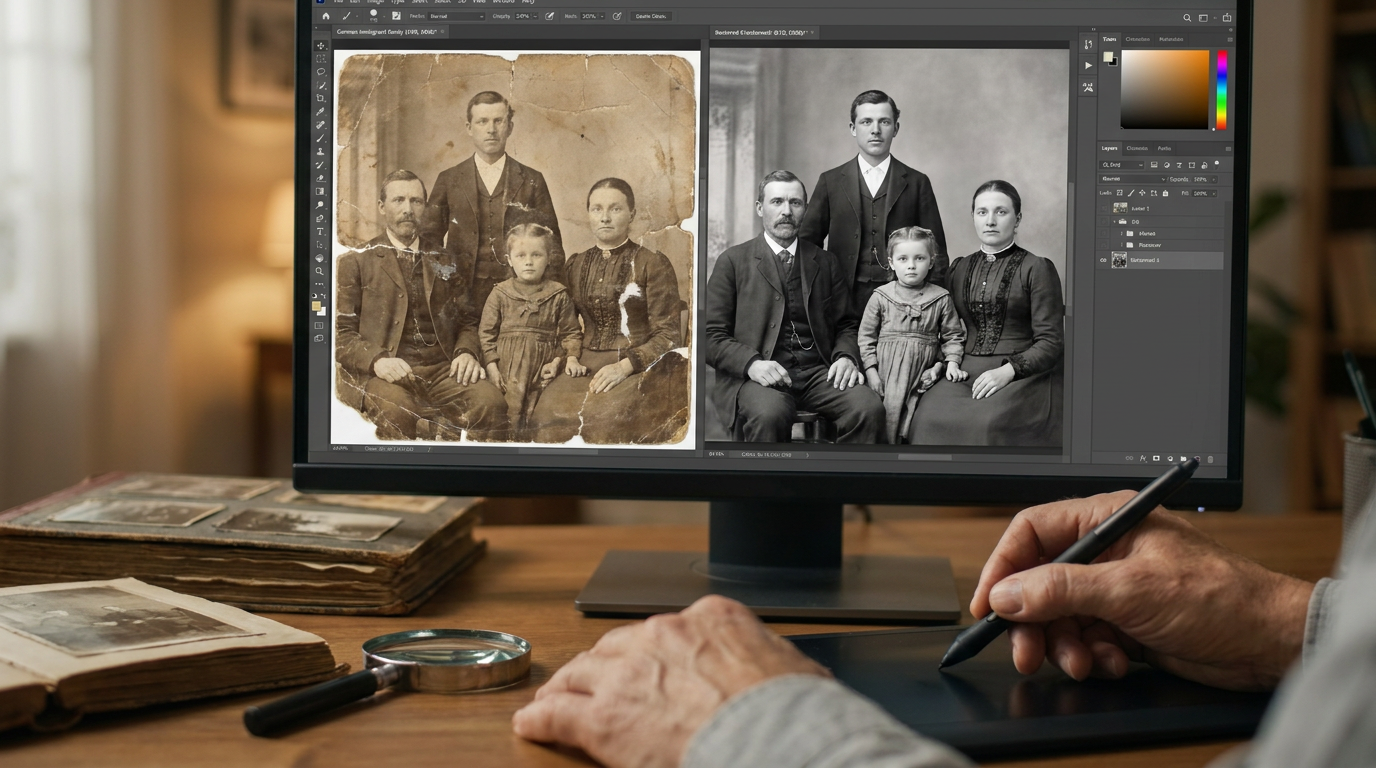
Today, something remarkable is happening. Modern technology is making it easier than ever to uncover those answers. What once required years of research, expensive travel, and countless hours searching dusty archives can now begin with a smartphone, a computer, or even a simple DNA test.

Whether you’re 100% German-American or only recently discovered a German ancestor somewhere in your family tree, technology has opened the door to an exciting journey of discovery.
And perhaps best of all, that journey can become an adventure.

After all, heritage isn’t just about looking backward. It’s about understanding who you are today.


The Digital Revolution in Family History Research

Just a few decades ago, genealogy was a slow and often frustrating process.

Researchers spent hours writing letters to courthouses, churches, libraries, and government agencies. Weeks—or months—might pass before a response arrived.

Today, millions of historical records are available with a few clicks.

https://images.openai.com/static-rsc-4/SxR4ObgoYQRXQrUTxXK5thmbS3hq6gOiogNMasqIOinZbSHLengh7vFIPxXsRYMMxuOx9C0oWC1u8K0mt2LPp4TDSF32WEBPuC9gOrE-Rsv7Dk_MumDie3YEz1EGsgUUfF58z7q8iZRzxgwu6ux0IFKx6YVPzzPI0Vf4U5x_xdKTDu7tRGcFBMtT-yz03j7D?purpose=fullsize
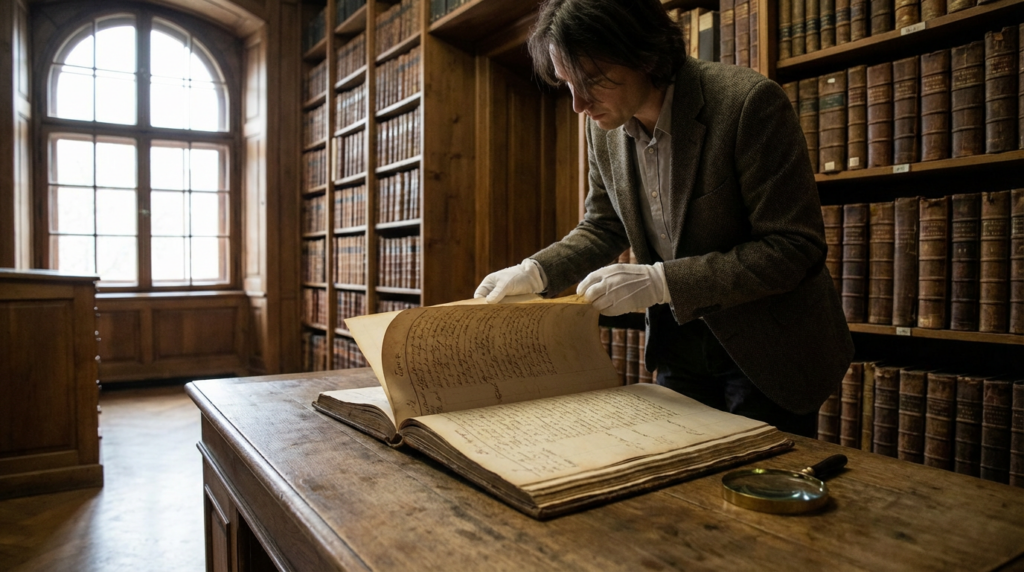
Birth certificates, marriage records, immigration documents, military records, ship manifests, census records, newspaper archives, and church registers can now be searched online from the comfort of your home.

Many Americans are discovering family connections they never knew existed.

A great-grandmother’s hometown in Bavaria.

A farming community in Schleswig-Holstein.

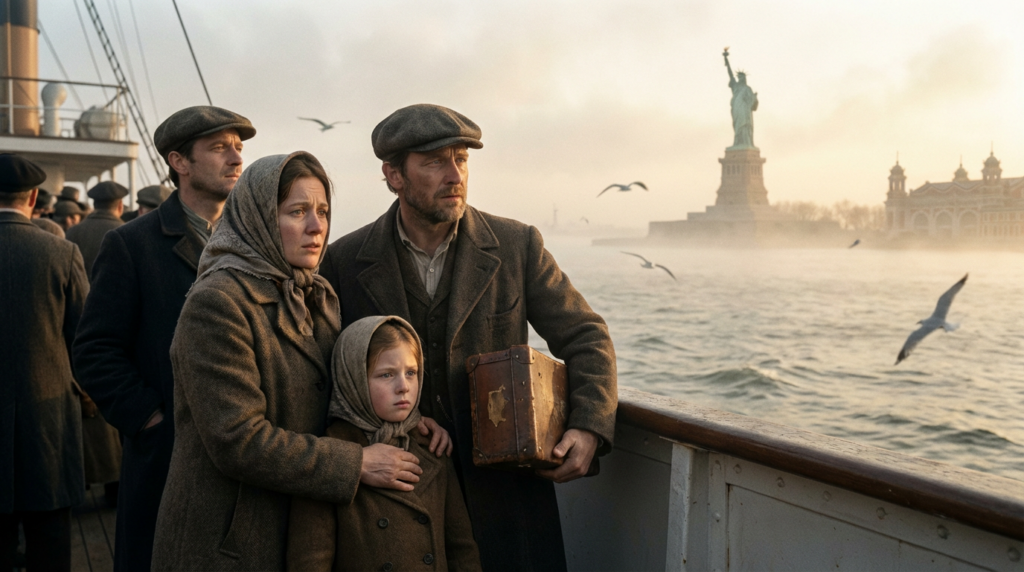
An immigrant ancestor who arrived through New York in the 1880s.

A forgotten branch of the family that settled in Nebraska, Wisconsin, Iowa, Pennsylvania, or Tennessee.

The information is out there—and technology is helping bring it to light.


DNA Testing: A Time Machine in a Test Tube

Perhaps no technological advancement has transformed family history research more dramatically than consumer DNA testing.

For many people, the results are surprising.

Some discover they have far more German ancestry than they realized. Others find German roots mixed with English, Irish, Scandinavian, Czech, Polish, Swiss, or Dutch heritage.
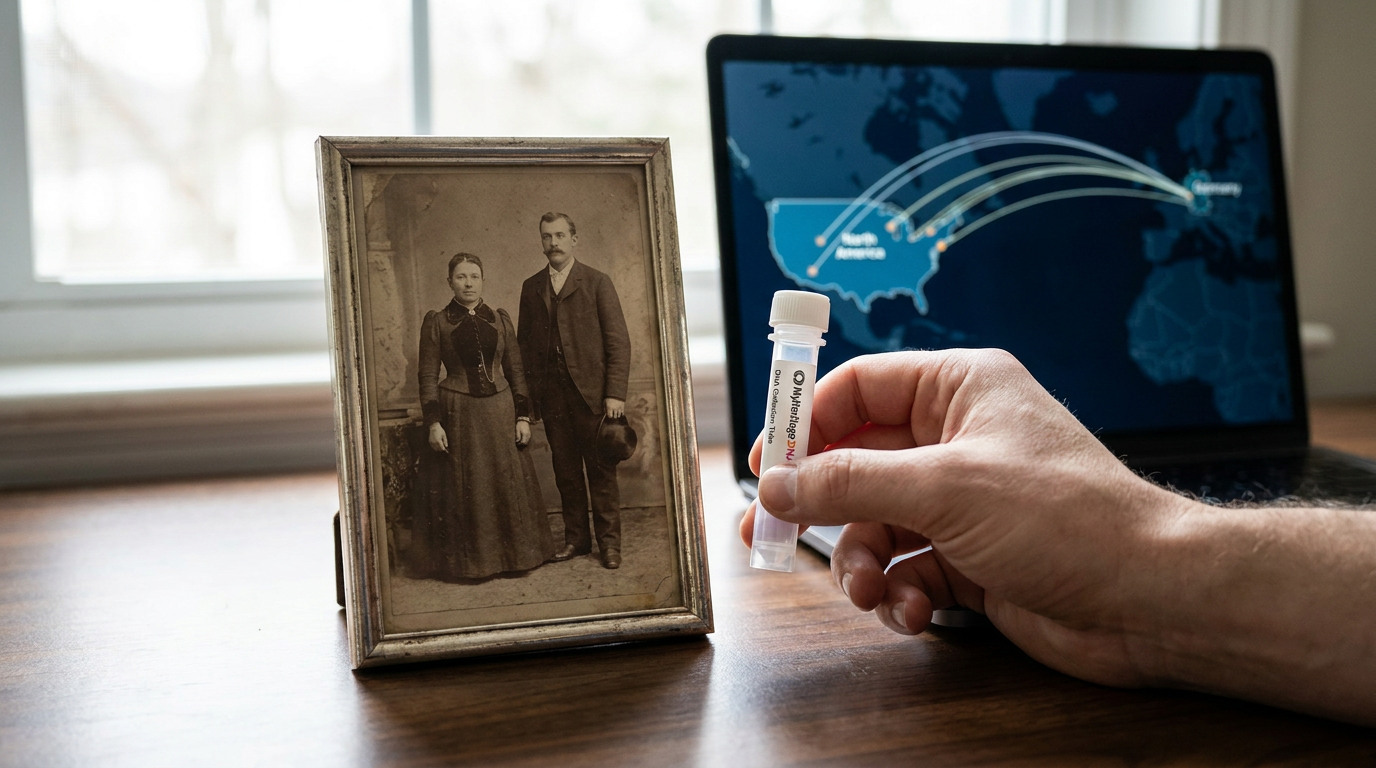
DNA testing can also connect living relatives who never knew each other existed.

Imagine receiving a message from a distant cousin living in Germany whose family still resides near the village your ancestors left generations ago.

That scenario is becoming increasingly common.

For German-Americans, DNA testing often provides clues that help narrow research into specific regions of Germany, making future searches much more focused and productive.

“The past is never truly lost—it simply waits to be rediscovered.”


Finding Your Ancestors’ Village

One of the biggest breakthroughs in modern genealogy is the ability to pinpoint the exact town or village where your family originated.

This matters because Germany wasn’t always the unified nation we know today.

For centuries, the region consisted of kingdoms, duchies, principalities, free cities, and independent states.

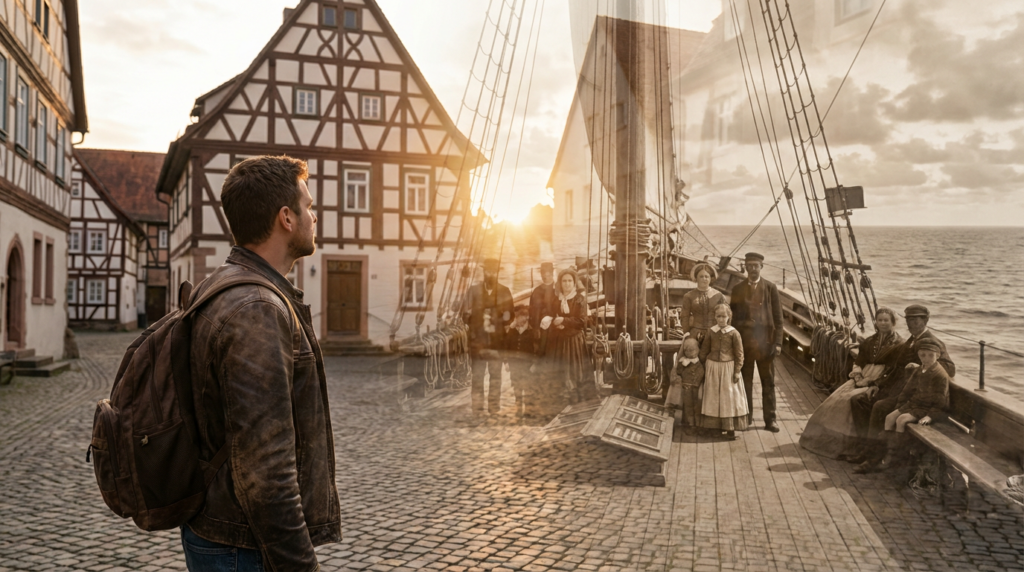
https://images.openai.com/static-rsc-4/HL0dTiVkBn2eedE8bsOD4pF2k6QqrYl95ekU6FFVcsxZYs5BcuDixCyyS2F26z3bShdxBKI6n1k4bLeZzA2XicxayiZFw_dM3W1PKlXT4HxXRQJxRmkJ-F8RLDih9QjNK4Y5leHYXiAbNDOOCuSP3qpfkmxqJ1AwLa2mkRdUuM6-kbEVtoALRZ6egsrn1GQz?purpose=fullsize
Knowing whether your ancestors came from Bavaria, Prussia, Saxony, Baden-Württemberg, Hesse, or Schleswig-Holstein can unlock entirely new layers of family history.

Many online databases now include:

  • Parish records
  • Baptism records
  • Marriage records
  • Burial records
  • Military records
  • Land ownership records
  • Passenger manifests

Once a village is identified, your family story suddenly becomes much more personal.

Instead of saying:

“My ancestors came from Germany.”

You can say:

“My great-great-grandparents left a farming village near Lübeck in Schleswig-Holstein in 1882 and settled in Nebraska.”

That level of detail transforms history into something real.
» Read more

Tracing the German Coast: Exploring Louisiana’s Hidden Heritage Near New Orleans

Long before jazz floated through the French Quarter and before Mardi Gras beads glittered in the Louisiana sun, German-speaking farmers were carving out a life along the Mississippi River. Their story is one of resilience, adaptation, and quiet influence — a heritage woven into the soil, cuisine, architecture, and even the surnames of southern Louisiana.

Today, just west of New Orleans, a stretch of river communities still echoes with this legacy. Known historically as the German Coast, this region tells a lesser-known but deeply American story: how German immigrants in the early 1700s helped feed a struggling French colony and laid foundations that endure nearly three centuries later.

For readers of German Heritage USA, this is more than a history lesson — it’s a travel invitation. Whether you’re a genealogy enthusiast tracing family roots, a foodie seeking authentic flavors, or simply a heritage traveler looking for your next meaningful getaway, Louisiana’s German Coast offers something uniquely unforgettable.

“Heritage isn’t always loud,” as one local historian once said. “Sometimes it whispers through recipes, riverbanks, and family names.”

Let’s follow that whisper.


The Origins: Germans on the Mississippi

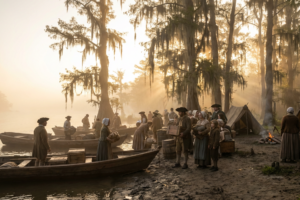
In 1721, ships carrying German-speaking settlers — many from the Rhineland and Swiss cantons — arrived in French Louisiana. They had been recruited to strengthen the struggling colony and provide agricultural expertise. Conditions were harsh, but the settlers adapted quickly.

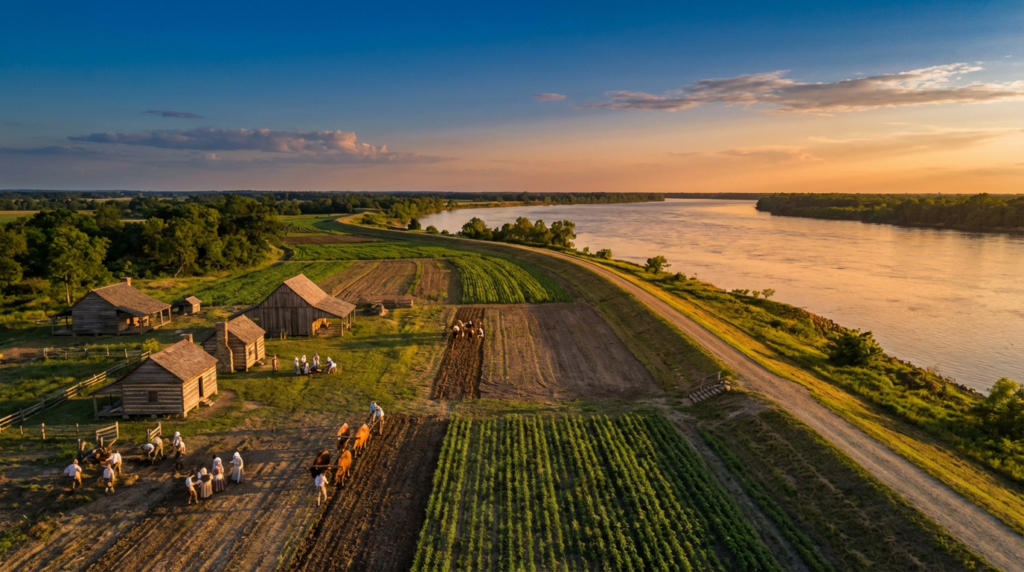
They established farming communities along the Mississippi River in what is now St. Charles Parish and St. John the Baptist Parish, transforming swampy terrain into productive farmland. Their crops — especially vegetables and grains — sustained early Louisiana settlements and even saved the colony from famine.

This region became known as the German CoastLa Côte des Allemands.

Their surnames — Waguespack, Schexnayder, Zeringue, Trosclair — still appear across southeastern Louisiana today.


Walking the River Road: A Journey Through Time

https://upload.wikimedia.org/wikipedia/commons/thumb/9/9f/Mapofgermancoast-1775.jpg/500px-Mapofgermancoast-1775.jpg
Driving west from New Orleans along River Road feels like entering a living museum. Towering oaks arch over historic homes. Sugarcane fields ripple in the breeze. The Mississippi flows thick and steady, just as it did 300 years ago.

While much of the River Road is known for grand plantation homes, the German Coast story is quieter and more agrarian. These settlers were small farmers, not plantation elites. Their strength was community cooperation, craftsmanship, and agricultural skill.

Today, visitors can explore:

  • Local parish museums
  • Historic cemeteries with German surnames
  • Preserved churches rooted in 18th-century Catholic traditions
  • Community heritage festivals celebrating German ancestry

This is heritage tourism at its most authentic — less commercial, more personal.


St. Charles Parish: Where the Story Began

In Destrehan, located in St. Charles Parish, you’ll find some of the strongest German Coast roots.

Local Catholic churches, such as St. Charles Borromeo, became centers of community life. Baptismal and marriage records from the 1700s reveal the blending of German, French, and Spanish influences that shaped Louisiana’s identity.

The German settlers integrated into French Louisiana society while preserving elements of their language and customs. Over generations, their dialect evolved into what historians call “Louisiana German.”

Many of their traditions survive through:

  • Family-run farms
  • Parish festivals
  • Culinary heritage
  • Genealogical societies

For ancestry researchers, parish church archives are treasure troves of early colonial records.


A Culinary Legacy: From Bratwurst to Andouille

If you love German food traditions, Louisiana might surprise you.

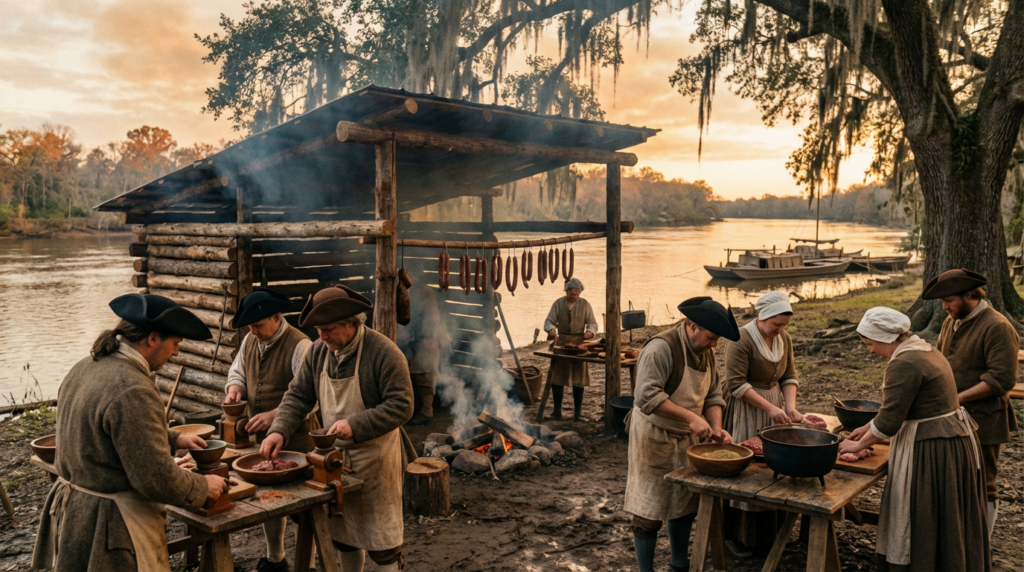
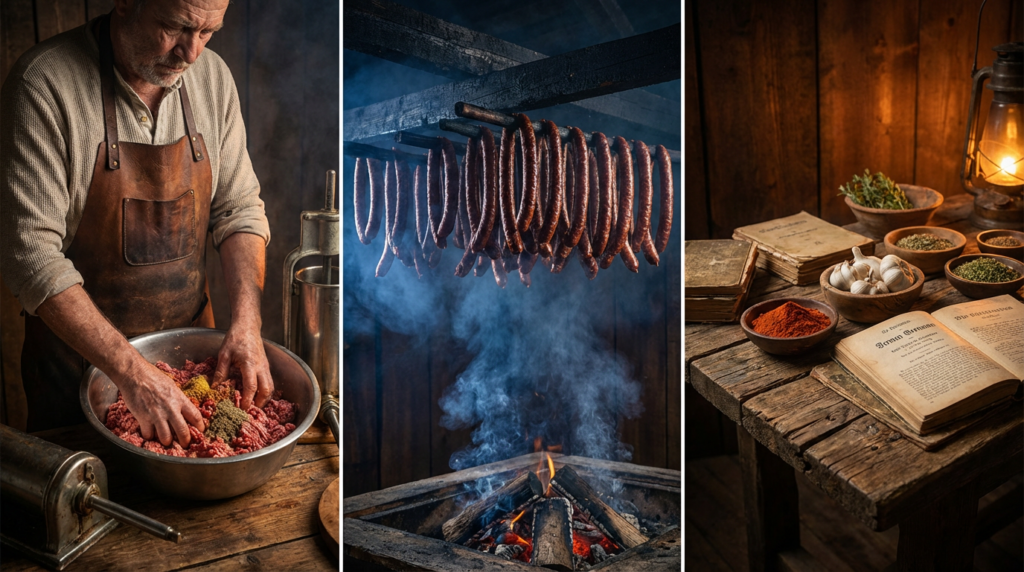
The German Coast settlers brought sausage-making techniques that heavily influenced Louisiana’s famous andouille sausage.

While Cajun and Creole flavors evolved over time, the smoking methods and spice traditions show clear European roots.

The German influence also extended to:

  • Bread baking traditions
  • Pickling methods
  • Hearty stews
  • Beer brewing (in later generations)

“Food is the most delicious form of memory,” says a chef from the River Parishes. “Every bite carries a story.”

Today, travelers can sample heritage-inspired dishes in local restaurants near New Orleans while knowing that the flavors reflect centuries of cultural blending.

» Read more

Ancestry, DNA & Discovery: Tracing Your German Roots

For millions of Americans, the journey to discover German roots begins with a simple question: “Where did my family come from?” Maybe it’s a last name that ends in -mann, -berg, or -schmidt. Maybe it’s a grandmother’s recipe for sauerbraten or a dusty Bible written in Gothic script. Or perhaps it’s a DNA test result that flashes “40% Germanic Europe” and sparks curiosity.

German Americans represent one of the largest ancestry groups in the United States. From Pennsylvania to Texas, Wisconsin to Nebraska, their influence is stitched into the American story—through farming traditions, music, architecture, Christmas customs, language, and even food staples like hot dogs and pretzels.

But tracing German ancestry can feel overwhelming. Borders changed. Names were Americanized. Records were handwritten in old German script. Entire regions shifted from kingdoms to empires to modern states. Yet, with today’s digital tools, DNA testing, and global archives, discovering your German heritage has never been more accessible—or more exciting.

“Genealogy is not about names and dates. It’s about stories, identity, and belonging.”

Let’s explore how to trace your German roots—step by step—while uncovering the rich cultural tapestry behind your family’s story.


Step 1: Start at Home – The Power of Family Stories

Before diving into DNA databases and European archives, begin with what you already have.

https://images.openai.com/static-rsc-3/-A1N5CCnGVFUa97BcVhJ69JWmVpAk7ImAkCJIVvj6Q0ROE0NOzMYa83gOUymPnsiQfiJxNF5ScOI4zMKBPB-Ll0252HEIcYYV3giyfJNWuI?purpose=fullsize&v=1
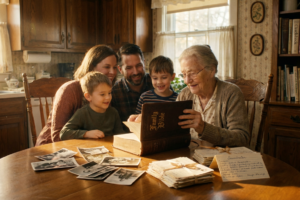
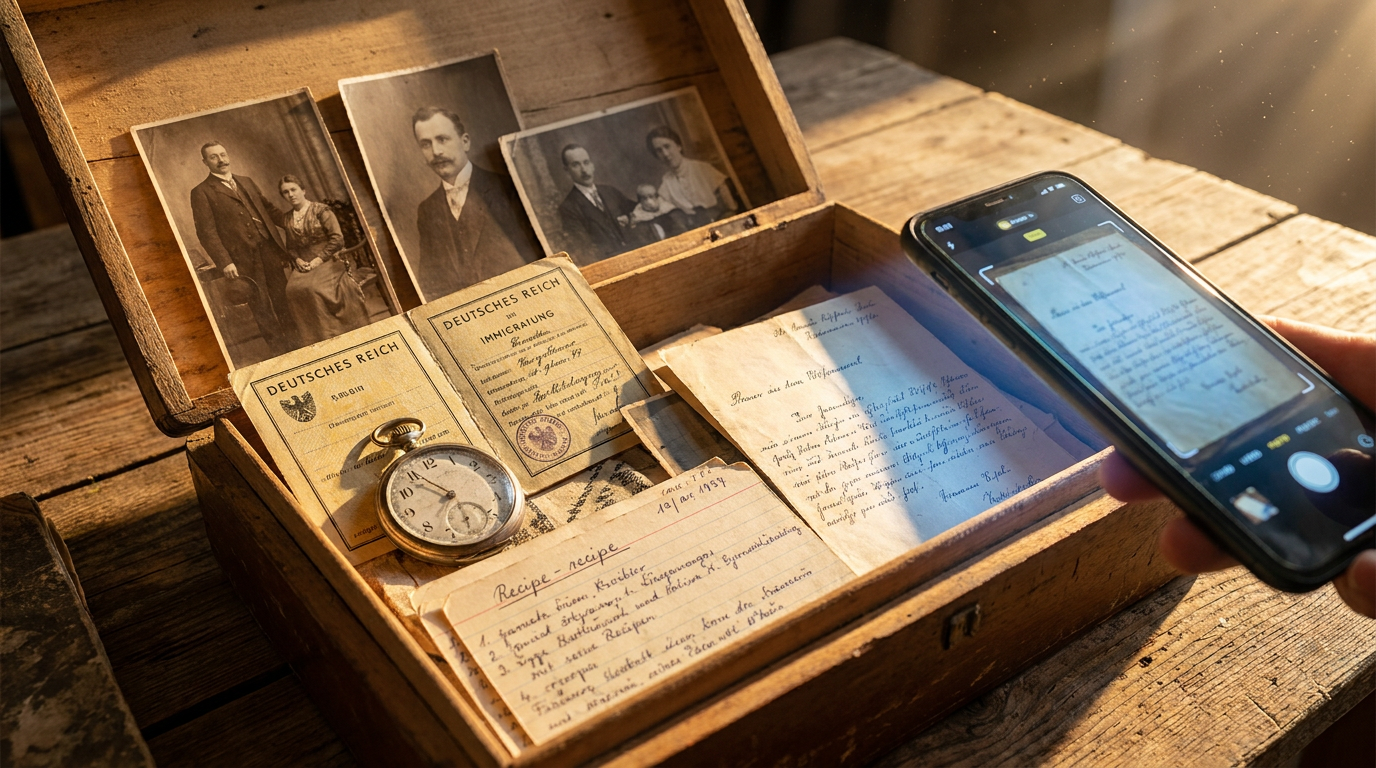
Family Bibles, immigration papers, naturalization certificates, handwritten letters, and photo albums are treasure troves. Interview older relatives. Record their stories. Ask questions like:
  • Do you remember the original spelling of our surname?
  • Was our family Catholic or Lutheran?
  • Did anyone mention a specific town in Germany?
  • When did our family come to America?

Even small details matter. A city name like “Bremen” or “Bavaria” may actually refer to a departure port or a larger region rather than a specific village. German genealogy often hinges on identifying the exact town of origin.

» Read more