The Top Ten Types of German Style Wurst Popular in the USA

German immigrants brought many gifts to America—beer gardens, Christmas traditions, kindergarten, and a love for hearty food that brings people together. But few culinary traditions have traveled across the Atlantic as successfully as German-style wurst.

From Oktoberfest celebrations in the Midwest to backyard barbecues across the country, German sausages have become a staple of American cuisine. Whether tucked inside a toasted bun at a baseball game or served alongside sauerkraut and mustard at a local German festival, these savory links carry centuries of tradition in every bite.
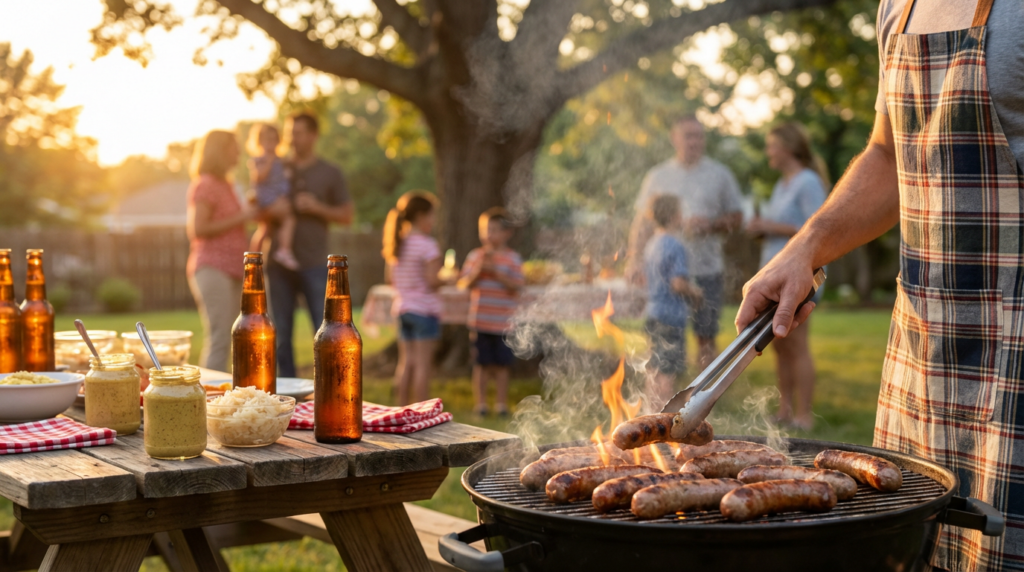
In Germany, the word Wurst” simply means sausage, but the variety is astonishing. Germany boasts more than 1,200 regional sausage varieties, each reflecting local ingredients, climate, and cooking traditions. When German immigrants arrived in the United States throughout the 1800s and early 1900s, they brought many of these recipes with them. Over time, some became household names in America.

Everything has an end—only the sausage has two.”
German proverb

Today, these sausages remain beloved across the country, especially in regions with strong German heritage such as Wisconsin, Texas, Pennsylvania, Ohio, and Missouri.

Let’s take a flavorful tour through the ten German-style wurst varieties that Americans love the most.


1. Bratwurst – America’s Backyard Favorite

https://images.openai.com/static-rsc-3/q_eS_e0_ZjwOU-K0MGK_f35dRasjDu8vZz3WT-hicOPwZNA1FTry5cst_fhuL5qaHePAhw7z90ab9jfakp0Ctzw3mCsUQ8rbrBJNBNv0oEM?purpose=fullsize&v=1

If there is one sausage that truly conquered America, it’s Bratwurst.

Originating in Germany as early as the 1300s, bratwurst is typically made from pork, though variations may include veal or beef. The seasoning often includes salt, pepper, nutmeg, marjoram, and sometimes garlic.

Brats are incredibly versatile:

  • grilled at tailgate parties
  • simmered in beer and onions
  • served with sauerkraut
  • placed inside a crusty roll with spicy mustard

Wisconsin proudly calls itself Bratwurst Country,” where brat fries and summer festivals celebrate the beloved sausage.


2. Frankfurter – The Original Hot Dog

https://images.openai.com/static-rsc-3/A6DoQoOgfvGsRWJuEHVTdXx5oP_5ziVSt2dNuP6o2Vrhnt52W94-L1hgByxHNEkxGlNqKdwe0IkhYaQ6GsqFFT7_W1kTmZ3Qc8TKXCO3WQk?purpose=fullsize&v=1
Before the American hot dog became famous, there was the Frankfurter.

This sausage originated in Frankfurt, Germany, and is made primarily from pork. The traditional version is lightly smoked and served warm with bread and mustard.

German immigrants introduced the frankfurter to America in the 1800s. Vendors began selling them in buns for easy eating—thus creating one of the most iconic foods in American culture.

Baseball stadiums, street vendors, and backyard grills all owe a culinary debt to this classic German sausage.


3. Knockwurst – The Snappy Favorite

https://images.openai.com/static-rsc-3/jb6IvO7Q7oTA1tR3sm9HAMPxMi926HKp_2kaFP3ikR0CgjYsTkeZzDUAfIYCZvIpSmWE-C62F6pSPqh8iqwqGo4QwQg6gp4T0CW3tTVVEHE?purpose=fullsize&v=1
Knockwurst (or Knackwurst) is known for its signature snap.

This shorter, plumper sausage is made with finely ground pork and garlic and is lightly smoked. When bitten, the natural casing gives a satisfying knack”which is where the name originates.

Knockwurst is often served with:

  • sauerkraut
  • potato salad
  • dark rye bread
  • strong mustard

It’s particularly popular in German-American communities across the Midwest.
» Read more

Oktoberfest in 2024: What to Expect This Year in Munich

Oktoberfest in 2024: What to Expect This Year in Munich. Ever wondered what Oktoberfest in Munich is like? It’s the world’s largest folk festival, celebrating Bavarian culture. Millions visit each year. Let’s explore why this beer festival is a top spot for German traditions and Munich events.

A vibrant scene of Oktoberfest in Munich, 2024, showcasing colorful beer tents filled with festive decorations, traditional Bavarian clothing, lively crowds enjoying large steins of beer, delicious pretzels and sausages, amusement rides in the background, and golden autumn leaves falling under a bright blue sky.


From September 21 to October 6, 2024, Munich’s Theresienwiese field will buzz with life. Over 6 million people will join in the fun. The area will host 17 big beer tents and 21 smaller ones, serving up tasty treats.

Getting into Oktoberfest is free, but you’ll need to watch your wallet. Beer will cost between €13.60 and €15.30 per liter. The Augustiner tent has the cheapest beer at €14.10. Food prices might go up, thanks to new tax rules.

Traditional events are the heart of Oktoberfest. Don’t miss the opening parade on September 21 and the marksmen parade on September 22. Music fans will love the open-air concert on the second Sunday.

Oktoberfest in 2024: What to Expect This Year in Munich – Key Takeaways

  • Oktoberfest 2024 runs from September 21 to October 6 in Munich
  • Over 6 million visitors are expected to attend
  • 17 major beer tents and 21 smaller specialty tents will be available
  • Beer prices range from €13.60 to €15.30 per liter
  • Free entry, but budget around €70 per day for food and drinks
  • Traditional parades and concerts are key attractions
  • Weekends and public holidays are busiest, plan accordingly

The History and Tradition of Munich’s Oktoberfest

Oktoberfest is a key part of Bavarian culture, starting in 1810. It has grown from a royal event to a famous festival. Every year, millions come to enjoy it.

The Royal Wedding That Started It All

The story of Oktoberfest began with Crown Prince Ludwig’s wedding to Princess Therese. The celebration included horse races and lasted five days. It was a joyous start to a long tradition.

Evolution from Horse Racing to Beer Festival

Oktoberfest changed from a royal event to a big beer festival. Beer tents were added in the late 1800s. By 1910, the biggest tent could serve 12,000 hectoliters of beer to 12,000 people.

189 Years of Bavarian Celebration

In 2024, Oktoberfest will celebrate its 189th year. It takes place at Theresienwiese, named after Princess Therese. The festival combines old traditions with new fun, like brass bands and carnival rides.

Year Milestone
1810 First Oktoberfest celebration
1910 100th anniversary: 12,000 hectoliters of beer served
1950 Introduction of the beer barrel tapping tradition
2010 200th anniversary and introduction of ‘Oide Wiesn’
2024 189th Oktoberfest, expecting 6 million visitors

Oktoberfest in 2024: What to Expect This Year in Munich. Today, Oktoberfest is a symbol of Bavarian culture. It mixes history, tradition, and fun. From its start to now, it has won the hearts of millions worldwide.

Essential Festival Information and Dates

Get ready for Oktoberfest in 2024: what to expect this year in Munich! The world’s largest beer festival starts on September 21st and ends on October 6th. This 16-day event is set to be one of the most exciting Munich events of the year.

Mark your calendars for these festival hours:

  • Weekdays: 10 am – 10:30 pm
  • Weekends: 9 am – 10:30 pm

Beer lovers, don’t miss the ceremonial tapping of the first keg at noon on opening day. Most stalls close by 11:30 pm. But, a few stay open until midnight for those who like to party late.

A vibrant scene of Oktoberfest 2024 in Munich, featuring large colorful beer tents filled with people in traditional Bavarian attire, lively folk music playing, vast beer gardens with long wooden tables, people enjoying pretzels and sausages, festive decorations with blue and white banners, iconic rides and attractions in the background, a clear blue sky, and the historic Munich skyline.

» Read more