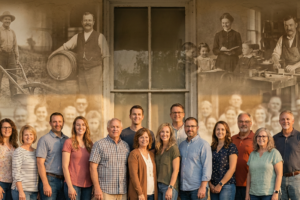
For millions of Americans, the journey to discover German roots begins with a simple question: “Where did my family come from?” Maybe it’s a last name that ends in -mann, -berg, or -schmidt. Maybe it’s a grandmother’s recipe for sauerbraten or a dusty Bible written in Gothic script. Or perhaps it’s a DNA test result that flashes “40% Germanic Europe” and sparks curiosity.
German Americans represent one of the largest ancestry groups in the United States. From Pennsylvania to Texas, Wisconsin to Nebraska, their influence is stitched into the American story—through farming traditions, music, architecture, Christmas customs, language, and even food staples like hot dogs and pretzels.
But tracing German ancestry can feel overwhelming. Borders changed. Names were Americanized. Records were handwritten in old German script. Entire regions shifted from kingdoms to empires to modern states. Yet, with today’s digital tools, DNA testing, and global archives, discovering your German heritage has never been more accessible—or more exciting.
“Genealogy is not about names and dates. It’s about stories, identity, and belonging.”
Let’s explore how to trace your German roots—step by step—while uncovering the rich cultural tapestry behind your family’s story.
Step 1: Start at Home – The Power of Family Stories
Before diving into DNA databases and European archives, begin with what you already have.
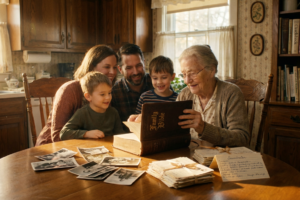
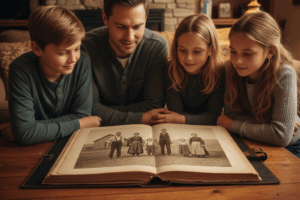
Family Bibles, immigration papers, naturalization certificates, handwritten letters, and photo albums are treasure troves. Interview older relatives. Record their stories. Ask questions like:
Do you remember the original spelling of our surname?
Was our family Catholic or Lutheran?
Did anyone mention a specific town in Germany?
When did our family come to America?
Even small details matter. A city name like “Bremen” or “Bavaria” may actually refer to a departure port or a larger region rather than a specific village. German genealogy often hinges on identifying the exact town of origin.
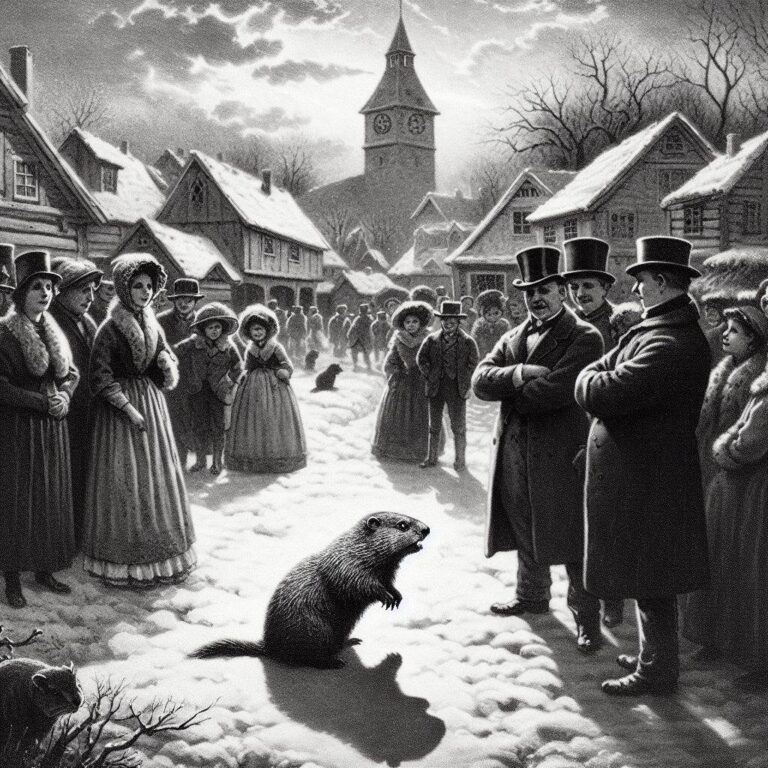
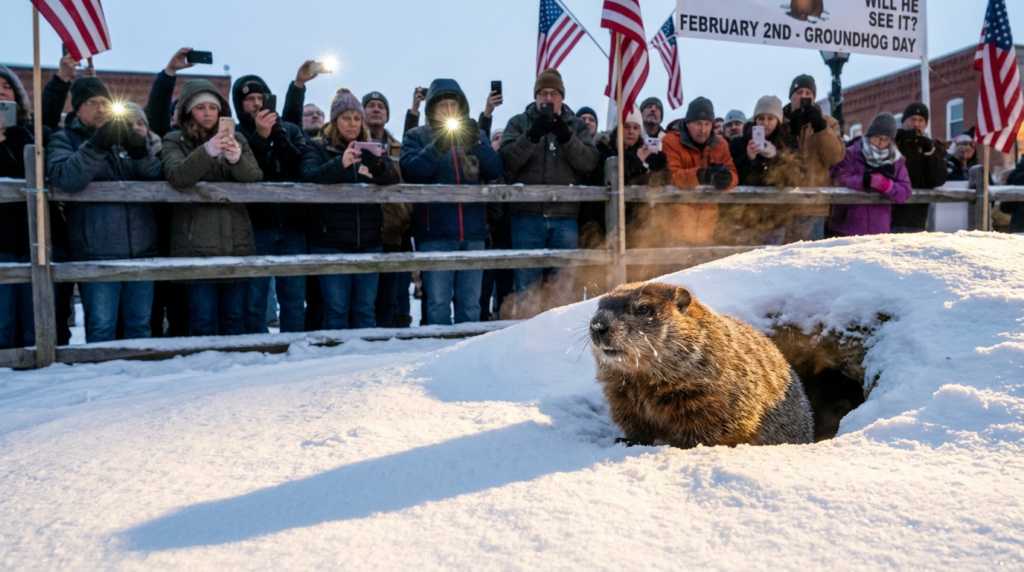
Every February 2nd, a small, furry weather prophet waddles into the spotlight. Cameras flash, crowds cheer, and the fate of winter hangs on one simple question: Will he see his shadow? This charming ritual—known as Groundhog Day—feels unmistakably American, wrapped in small-town celebration and playful superstition.
But here’s the twist: Groundhog Day didn’t start in North America at all.
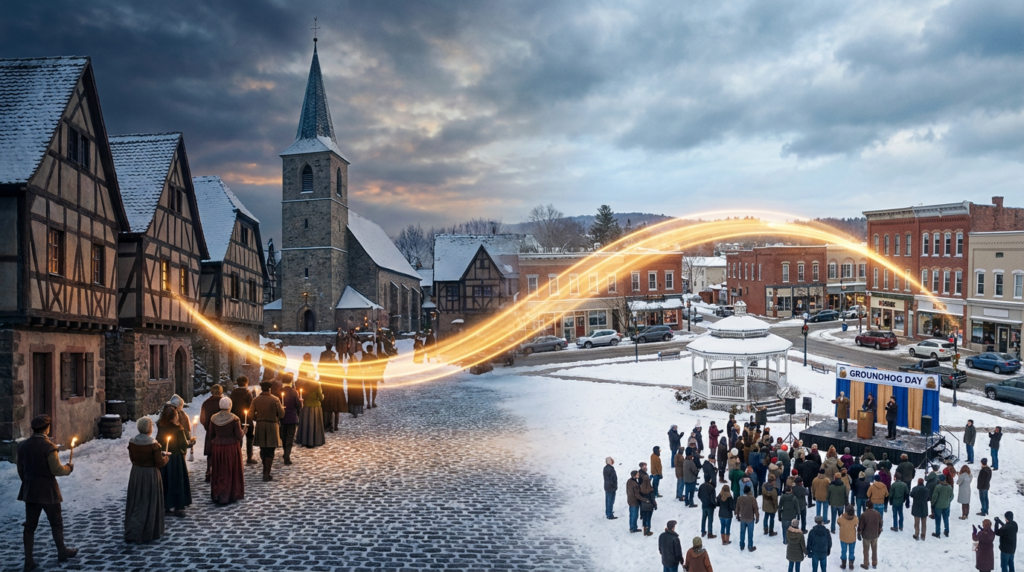
Its roots stretch back centuries to German villages, medieval church calendars, and the quiet wisdom of farmers watching animals and sunlight for clues about the seasons ahead. What we celebrate today is actually a living piece of German folklore—one that crossed the Atlantic, adapted to a new landscape, and somehow became one of America’s most beloved winter traditions.
So grab a warm coat (lederhosen optional), and let’s dig into the surprising German heritage behind Groundhog Day.
From Candlemas to Shadows: Germany’s Seasonal Wisdom
Long before groundhogs took center stage, February 2nd already mattered deeply in German-speaking Europe. The date marked Candlemas, a Christian feast day celebrating light returning after winter’s darkest stretch. In agrarian societies, Candlemas wasn’t just spiritual—it was practical.
Farmers believed the weather on February 2nd foretold what the rest of winter would bring.
If the day was bright and sunny, folklore warned of a “second winter”—six more weeks of cold and hardship. If the sky stayed cloudy, it meant spring would arrive early. These beliefs were passed down orally, reinforced by centuries of observation and necessity.
Adding an animal into the equation made the prophecy even more vivid.
Dachstag: When the Badger Was the Oracle
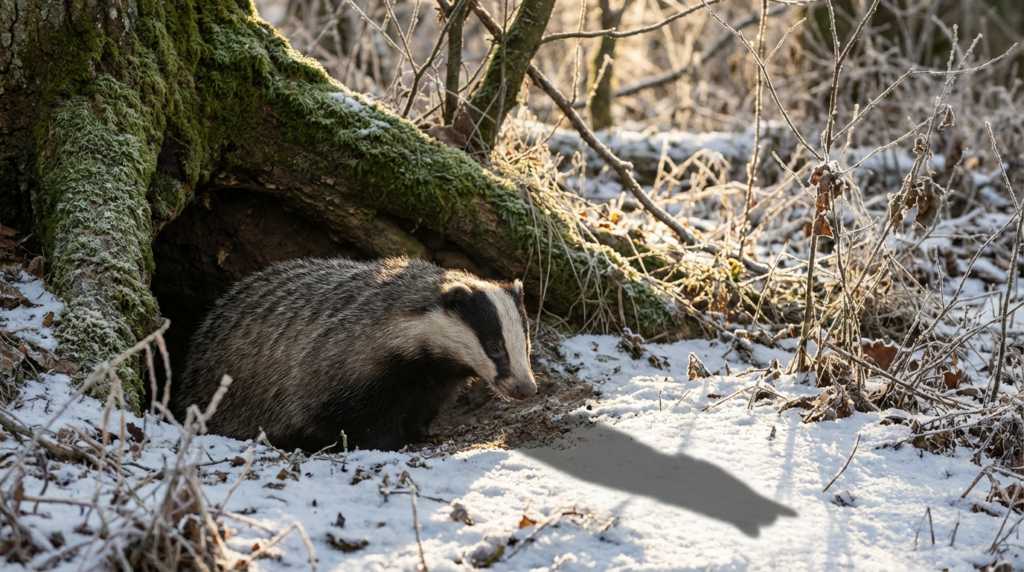
In parts of Germany, especially rural regions, Candlemas folklore merged with animal behavior. According to tradition, a badger (Dachs) would emerge from its burrow on February 2nd. If it saw its shadow in the sunlight, winter wasn’t done yet.
This observance became known informally as Dachstag—Badger Day.
The logic made sense to farming communities. Animals that hibernated were closely tied to seasonal rhythms. Their movements offered clues about soil temperatures, planting times, and the risk of frost. Watching the badger wasn’t superstition—it was survival.
And then Germans carried this tradition with them across the ocean.
From Germany to Pennsylvania: A Tradition Takes Root
In the 18th and 19th centuries, German immigrants settled heavily in what is now Pennsylvania Dutch Country. They brought language, foodways, religious customs—and folk traditions like Candlemas weather lore.
There was just one problem.
No badgers.
So the settlers adapted. The North American groundhog (woodchuck) behaved similarly: it hibernated, emerged in late winter, and lived in burrows. The symbolism translated perfectly. The animal changed, but the meaning stayed the same.
The earliest written reference to Groundhog Day in America dates to 1840, and by the late 1800s, the tradition was firmly embedded in local culture—especially in western Pennsylvania.
Groundhog vs. Hedgehog: Clearing Up a Common Myth
You’ll often hear people say the original German tradition involved hedgehogs. While hedgehogs did feature in European folklore, the Candlemas shadow tradition centered more on badgers in German regions.
Still, the confusion is understandable.
Groundhogs are large rodents, up to two feet long, herbivores with stout bodies and strong digging claws.
Hedgehogs are much smaller, insect-eating mammals with spiny coats, native to Europe, Africa, and Asia.
Different animals. Same idea. Both symbolized nature’s seasonal clock—translated differently depending on geography.
A Groundhog by Any Other Name? The Differences Between These Burrowers
While groundhogs and hedgehogs share a love for burrowing and slumbering, they’re distinct creatures. Groundhogs, also known as woodchucks, are larger, measuring up to 2 feet long, with short legs and stout bodies. They’re herbivores, feasting on grasses, plants, and fruits. Hedgehogs, on the other hand, are spiny insectivores native to Europe, Africa, and Asia.
They’re much smaller, typically reaching only 8 inches in length, and their prickly armor is a key identifier. So, while the German tradition used hedgehogs, the American adaptation naturally substituted the more readily available groundhog.
For generations, Americans of German ancestry have been everywhere—and almost nowhere at the same time.
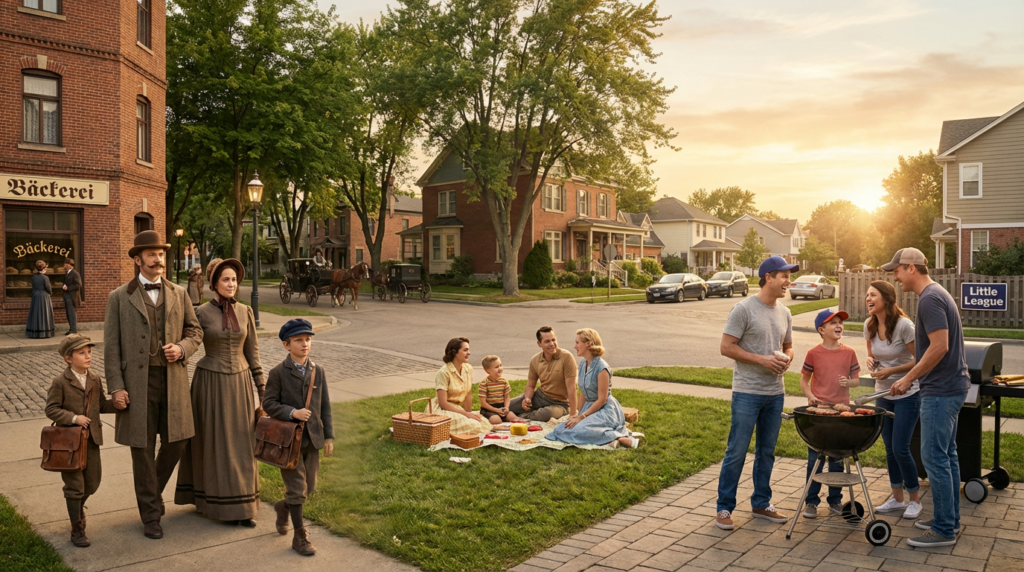
They helped build towns, farms, breweries, churches, universities, businesses, and entire regions of the United States. German words entered American English. German customs became American traditions. German family names filled phone books, gravestones, and town records—often without anyone realizing their origins.
And yet, when modern Americans are asked about ancestry, German heritage often seems quieter than expected.
But what if that quietness doesn’t reflect absence at all?
What if it reflects something far more powerful: successful assimilation, cultural blending, and identity expansion?
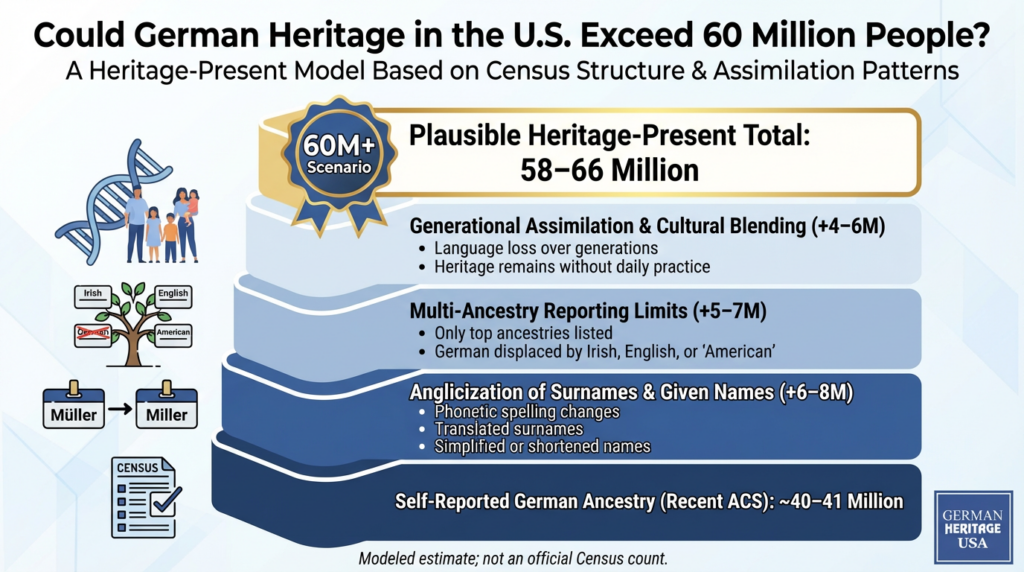
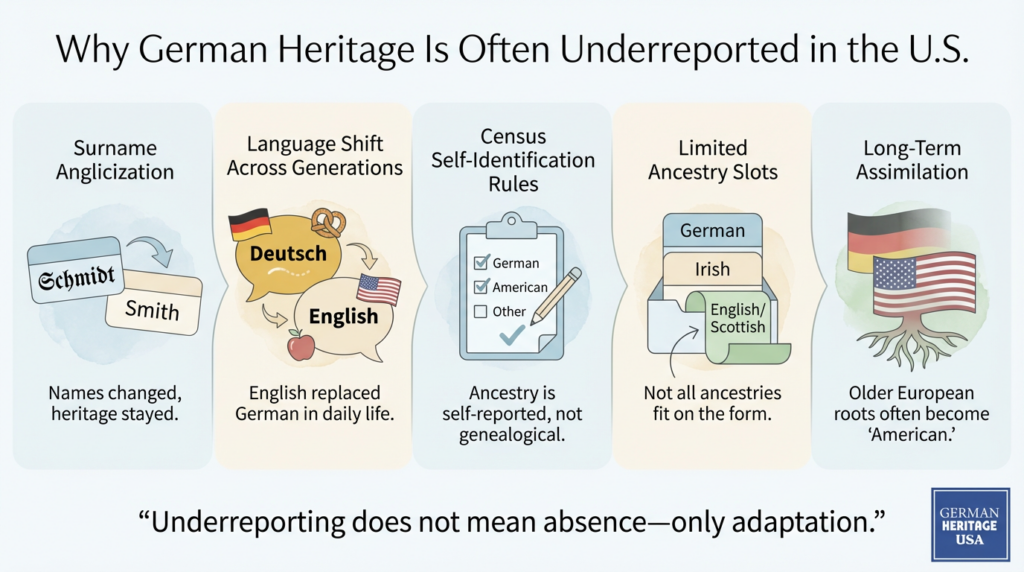
Recent self-reported U.S. Census and American Community Survey (ACS) data places Americans identifying as German at roughly 40–41 million people, already making German ancestry the single largest self-reported European heritage group in the United States.
However, when we examine how ancestry is reported, how names changed, how families blended, and how identity simplified over generations, a compelling case emerges:
Americans of German ancestry may realistically exceed 60 million people—making German heritage the largest national ancestry group in the United States.
This article explores how and why that happened—not through disappearance, but through integration.
The Starting Point: What the Census Actually Measures
Before diving deeper, it’s important to understand what U.S. ancestry data does and does not measure.
The Census and ACS rely on self-reported ancestry, not genealogical verification. Individuals answer based on:
What they know
What they were told
What feels most relevant to their identity
What fits on the form
Ancestry is not ranked by genetic percentage, nor does it capture every ancestral line. In many cases, respondents list only one or two ancestries—even when their family history is far more complex.
That matters deeply for German Americans, whose history in the U.S. stretches back centuries and intersects with nearly every other major European heritage group.
Anglicization: When Names Changed but Heritage Stayed
One of the most powerful—and least controversial—factors shaping German heritage visibility is anglicization.
German immigrants and their descendants frequently adapted names for:
Pronunciation
Employment opportunities
Social integration
Simplicity in an English-speaking society
This process was rarely about erasing heritage. More often, it was about belonging.
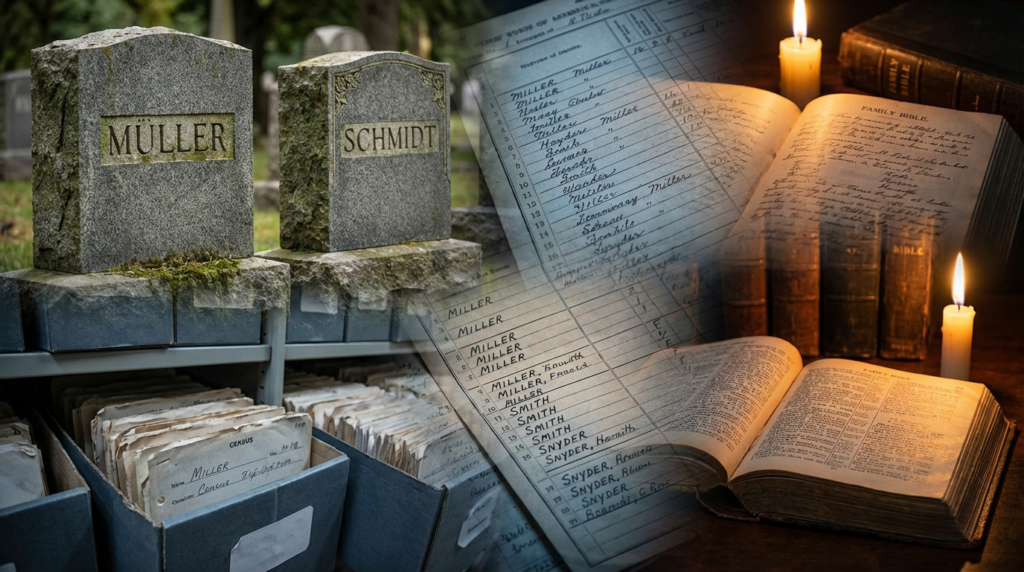
Müller became Miller Schmidt became Smith Schneider became Taylor Zimmermann became Carpenter
Over generations, those changes made German roots less immediately visible, especially to descendants who grew up with English surnames and little exposure to German language.
As one historian famously noted:
“Names didn’t disappear. They translated.”
The infographics included throughout this article visually demonstrate how millions of German descendants remain genetically and historically connected—despite name evolution.
There’s a particular kind of warmth you feel when you step into a German bakery in winter. It’s not just the heat from the ovens—it’s the aroma of butter and yeast, the quiet hum of conversation, the clink of porcelain coffee cups, and the sense that time has politely slowed down to let you stay awhile.
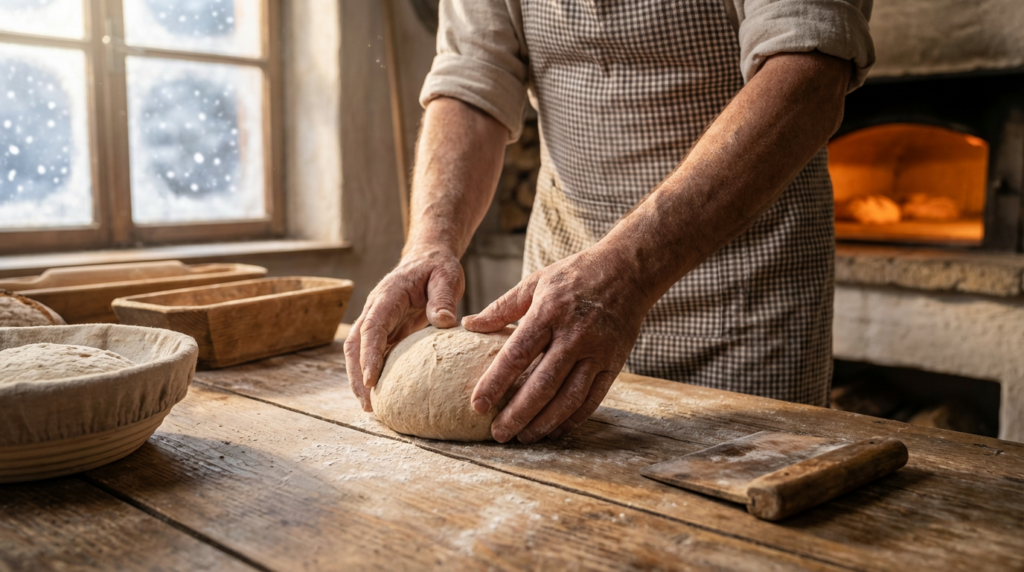
For generations, German bakers have understood winter. Long before central heating and supermarket bread aisles, baking was an act of comfort and survival. Dense rye loaves, buttery pastries, fruit-filled cakes, and spiced cookies were meant to nourish both body and spirit when days were short and the cold was relentless.
That tradition crossed the Atlantic with German immigrants, and today it lives on in bakeries scattered across the United States. These are places where winter feels like an invitation, not an inconvenience—where the cold outside makes the warmth inside all the more meaningful.
Why German Bakeries Shine in Winter
German baking culture was never meant to be rushed. It’s built around patience, fermentation, craftsmanship, and ritual—qualities that align perfectly with the slower rhythm of winter travel.
In colder months, German bakeries offer:
Hearty breads that feel substantial and grounding
Pastries rich with butter, nuts, and fruit
Seasonal specialties tied to Advent, Christmas, and Epiphany
Cozy interiors that encourage lingering
Winter is when these bakeries feel most themselves—less crowded, more personal, and deeply atmospheric.
“Bread is not fast food in German culture—it’s daily culture.” — German baking proverb
A Heritage You Can Taste
German-American bakeries are more than food stops. They are living museums of immigration, trade guilds, family recipes, and regional identity. Bavarian, Swabian, Franconian, Saxon, and Austrian influences all show up—sometimes under one roof.
Below are German bakeries across America that are absolutely worth traveling for in winter, when their ovens work hardest and their traditions shine brightest.
A Taste of Germany
Milwaukee, Wisconsin
Milwaukee’s German roots run deep, and this bakery honors them beautifully. Stepping inside on a snowy day feels like walking into a neighborhood Konditorei in southern Germany.
Why winter is perfect here: The dense breads—Vollkornbrot, Bauernbrot, and rye loaves—are built for cold weather. Pair them with a slice of Black Forest cake or a buttery apple strudel, and winter suddenly feels manageable.
Don’t miss: Seasonal cookies and pastries inspired by Advent traditions.
Schaller & Weber
New York City, New York
A German-American institution, Schaller & Weber blends bakery, butcher, and deli traditions rooted in Bavaria.
Why winter is perfect here: Cold weather brings out the best in hearty breads and pastries designed to accompany soups, sausages, and strong coffee. The atmosphere feels especially Old World when winter coats line the door.
Don’t miss: Dense rye bread and classic German pastries that feel straight out of Munich.
Old Europe Pastries
Asheville, North Carolina
This European-style bakery leans heavily into German and Austrian traditions, and it thrives during cooler months.
Why winter is perfect here: Asheville’s mountain chill makes the rich pastries—linzer tarts, cream-filled cakes, and poppy seed rolls—feel especially comforting.
Don’t miss: Layered tortes and seasonal fruit pastries paired with hot coffee or cocoa.
Winter has a way of slowing the world down. Roads quiet, crowds thin, and suddenly there’s room to linger, to listen, and to learn. For travelers who crave culture over chaos, the off-season offers one of the best opportunities to explore German-American Heritage—especially through museums that come alive when the pace softens and the stories deepen.
Across the United States, German-American museums preserve centuries of immigration, craftsmanship, faith, foodways, and traditions. In summer, these places often buzz with festivals, school groups, and tour buses. But in winter, something special happens: docents have time to talk, exhibits feel more intimate, and history unfolds without distraction.
If you’re looking for meaningful winter travel—part history, part heritage, part quiet wonder—these German-American museums are true cold-weather treasures.
Why Winter Is the Best Time to Visit Heritage Museums
The off-season doesn’t mean off. It means focused.
Winter visits often include:
Smaller crowds and unrushed galleries
More personal conversations with curators and historians
Seasonal exhibits, lectures, and holiday artifacts
Snowy landscapes that echo immigrant-era winters
For German-American museums in particular, winter aligns beautifully with themes of endurance, faith, craftsmanship, and community—values that sustained German settlers through harsh American winters long before central heating and interstates.
“German Heritage isn’t just something you see—it’s something you feel. Winter makes that feeling stronger.” — Museum Curator
A Quiet Season, a Deeper Story
German immigration shaped everything from American Christmas traditions to farming practices, brewing, architecture, music, and education. Museums dedicated to this legacy are often tucked into historic buildings, villages, or small towns—places that feel even more authentic under a blanket of snow.
Below are German-American museums that truly shine in winter, offering warmth of spirit even when temperatures drop.
German American Heritage Center & Museum
Davenport, Iowa
Housed in a beautifully restored 19th-century hotel overlooking the Mississippi River, this museum tells the story of German immigrants who settled the Midwest and transformed river towns into cultural hubs.
Why winter works here: Snow along the riverfront creates a timeless setting that mirrors the era of early German settlers. Inside, rotating exhibits on immigration, music, and domestic life feel especially intimate during quiet months. Winter lectures and genealogy workshops often take center stage.
Don’t miss:
The upper-floor galleries showcasing German craftsmanship and traditional clothing—perfect for slow, detailed viewing.
January arrives quietly. The lights of the holidays come down, the crowds thin out, and winter settles in. But for millions of Americans with German roots, January has never been an empty month. It is a time of reflection, renewal, comfort, and connection — values deeply embedded in German culture and carried across the Atlantic by generations of immigrants.
Long before New Year’s resolutions became trendy, German families practiced intentional living: gathering indoors, honoring ancestry, cooking warming foods, and planning carefully for the year ahead. Those traditions didn’t disappear in America — they adapted. Today, they still quietly shape how German-American communities experience January across the United States.
From cozy winter meals to cultural clubs, ancestry research to budget-smart travel planning, these traditions continue to influence everyday life in ways many people don’t even realize. January, in many ways, is where German heritage feels most at home.
“Traditions are not about holding onto ashes, but about passing on the fire.” — Gustav Mahler
What follows are 10 German-American traditions that still shape January in the USA, connecting old-world roots to modern American life — and reminding us that heritage doesn’t need a festival crowd to stay alive.
1. New Year Reflection & Intentional Living
In German culture, the New Year has long been a time for Besinnung — thoughtful reflection. Rather than loud declarations or instant transformation, German-American families traditionally approach January with patience and practicality.
This shows up today in:
Quiet goal setting instead of flashy resolutions
Financial planning after the holidays
Family discussions about priorities for the year ahead
German immigrants emphasized discipline, preparation, and responsibility — values that still guide how many families approach January budgeting, travel planning, and lifestyle resets.
2. The Winter Art of Gemütlichkeit
Few German words have traveled as beautifully as Gemütlichkeit. It describes warmth, belonging, comfort, and togetherness — especially during winter.
In January, Gemütlichkeit lives on through:
Home-cooked meals shared indoors
Small gatherings instead of large events
Coffee, cake, conversation, and candles
Across German-American homes — from the Midwest to Texas — winter isn’t something to escape. It’s something to settle into.
“Happiness isn’t loud — it’s warm.” — German proverb
3. Hearty Winter Comfort Foods
January is prime season for traditional German comfort food. Long before refrigeration and grocery chains, winter meals were designed to nourish, preserve, and sustain.
Still common in German-American kitchens:
Sauerkraut and sausages
Potato soups and cabbage dishes
Dumplings, rye bread, and root vegetables
These foods weren’t indulgences — they were survival recipes that became family traditions. Today, they bring comfort after the holidays and remind families of shared ancestry.
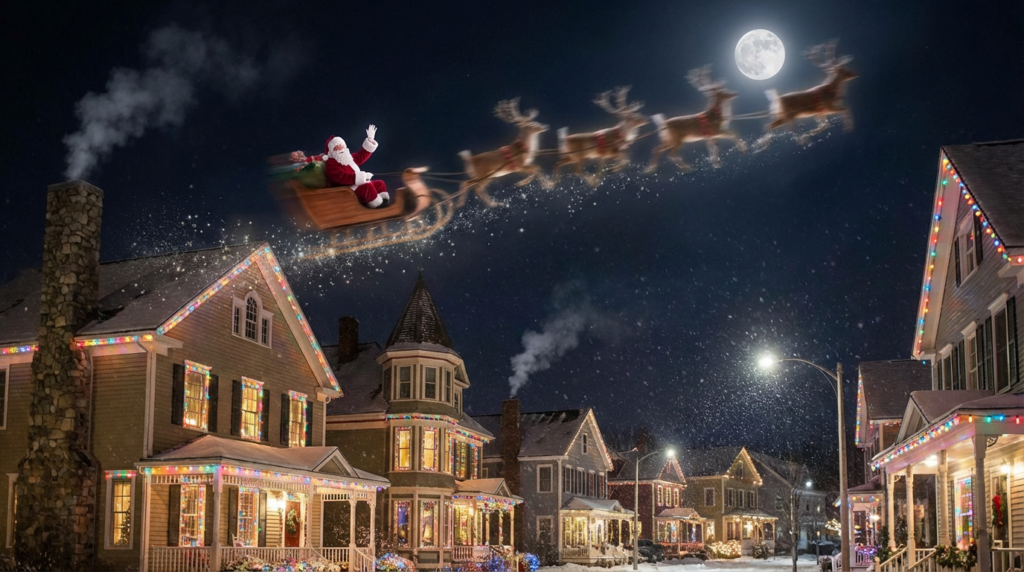
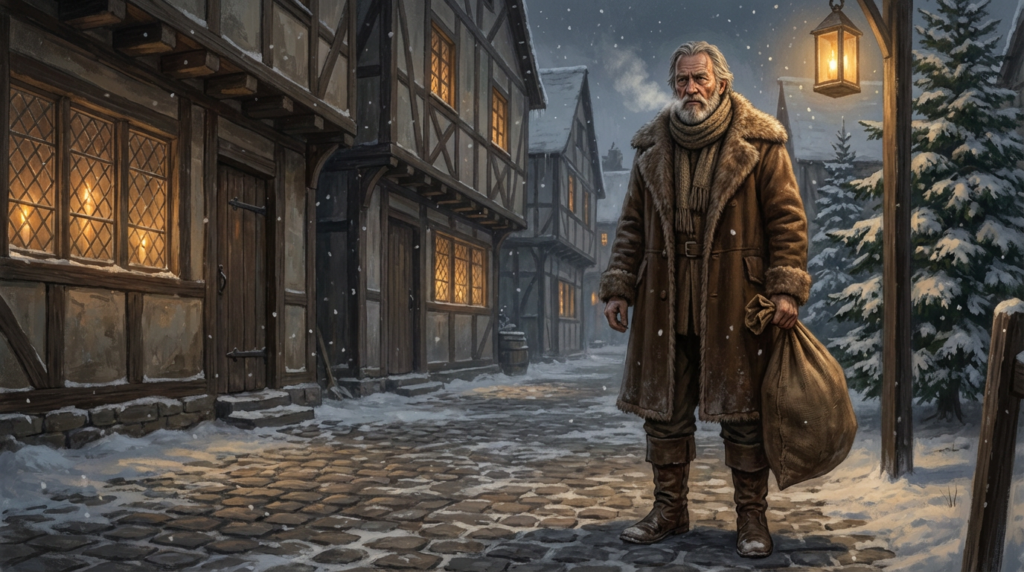
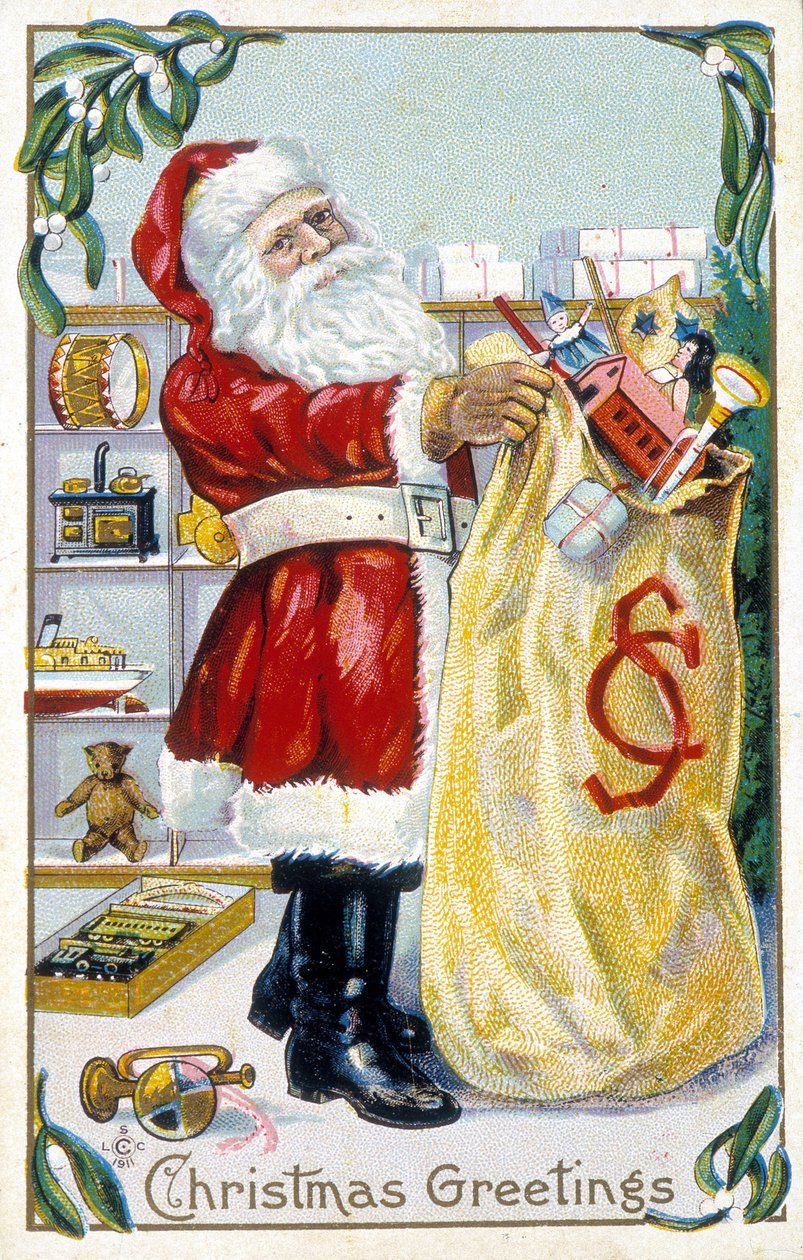
For many Americans, Christmas arrives on the boots of a jolly, red-suited man with a snow-white beard, a belly laugh, and a sleigh pulled by reindeer.
He slides down chimneys, leaves gifts under the tree, and signs his name simply: Santa. But across the Atlantic—and in many German-American homes—the story of who brings Christmas joy is more nuanced, older, and far more symbolic.
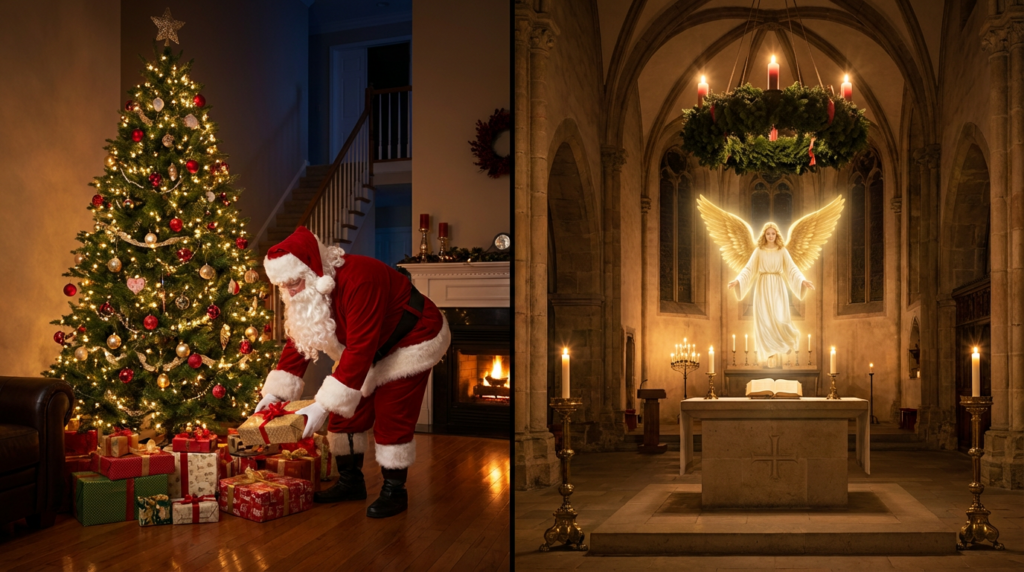
Germany, Austria, Switzerland, and German-speaking regions have long debated who delivers the magic of Christmas. Is it Weihnachtsmann, the fur-clad Father Christmas figure shaped partly by folklore and partly by modern culture? Or is it the Christkind, the angelic Christ Child rooted in Christian tradition and Reformation history? When Germans immigrated to America in the 18th and 19th centuries, they didn’t just bring tools, language, and recipes—they brought their Christmas beliefs, too.
Today, America overwhelmingly celebrates Santa Claus—but beneath the surface, the echoes of Weihnachtsmann and Christkind still ring through carols, customs, and communities. So which one does America really follow? The answer is more fascinating than a simple red suit versus angel wings.
From Europe to the New World: Two Gift-Givers, Two Philosophies
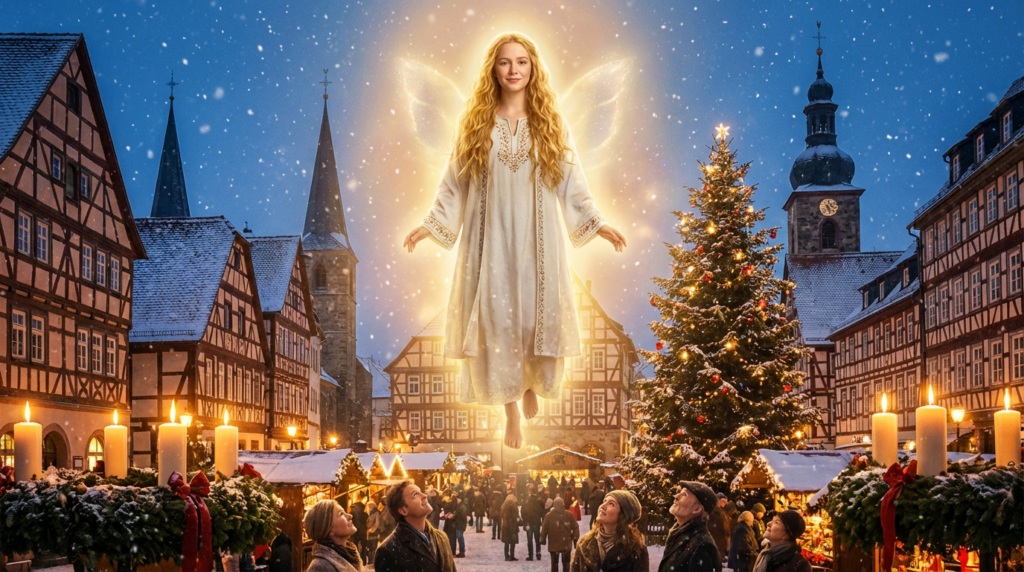
The Christkind emerged in the 16th century during the Protestant Reformation. Martin Luther promoted the Christ Child as a way to refocus Christmas on the birth of Jesus rather than the veneration of saints. The Christkind—often depicted as a glowing, angelic child with golden hair—was said to quietly deliver gifts on Christmas Eve.
Weihnachtsmann, by contrast, developed later as a secular winter figure influenced by Saint Nicholas, local folklore, and eventually global commercial imagery. He was less overtly religious, more approachable, and adaptable—qualities that would later make him a perfect fit for American culture.
German immigrants carried both traditions with them when they settled in Pennsylvania, Ohio, the Midwest, and Texas. In the early days of America, it wasn’t unusual to find Christkind celebrations alongside Saint Nicholas Day (December 6) and Weihnachtsmann traditions—sometimes all within the same town.
“Christmas traditions don’t disappear when people migrate—they evolve.” — Dr. Ingrid Bauer, German-American Cultural Historian
How Santa Claus Won America’s Heart
By the early 19th century, something remarkable happened in the United States. Different European traditions began blending into a uniquely American figure—Santa Claus.
The Dutch brought Sinterklaas to New Amsterdam (New York). Germans contributed Weihnachtsmann imagery and Christmas trees. English traditions added Father Christmas. Writers like Washington Irving and Clement Clarke Moore (“’Twas the Night Before Christmas”) fused these influences into a single, lovable character. Later, illustrators like Thomas Nast—and yes, commercial advertising—cemented Santa’s modern look.
Santa was adaptable. He wasn’t tied to a specific church doctrine. He fit perfectly into America’s growing emphasis on family, childhood wonder, and generosity. Weihnachtsmann’s secular flexibility helped Santa thrive—while Christkind, deeply spiritual and symbolic, struggled to maintain mainstream visibility.
Christkind Lives On—Just Not Everywhere
Despite Santa’s dominance, the Christkind never vanished completely. In fact, it thrives in pockets of America where German heritage remains strong.
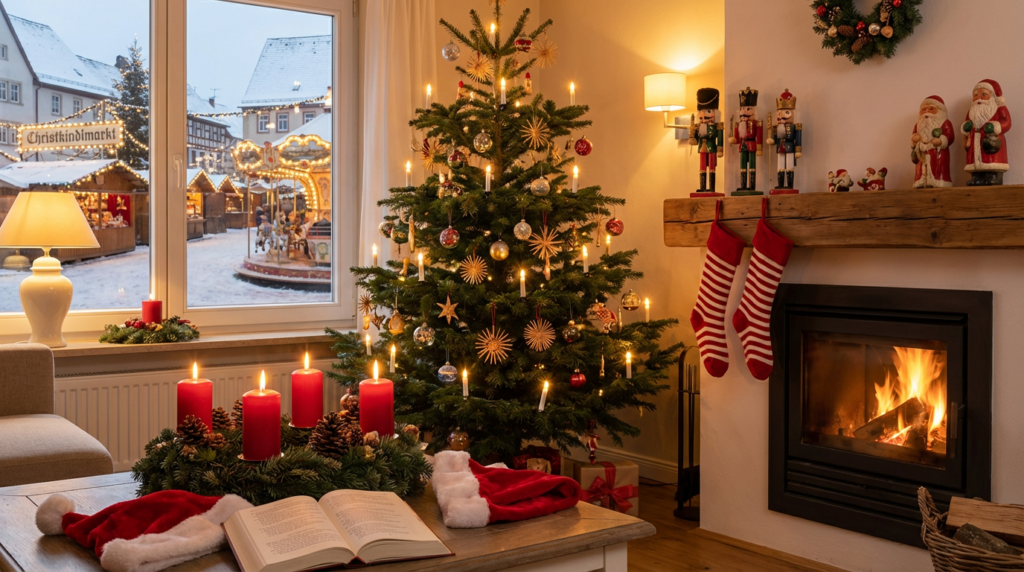
Cities like Bethlehem, Pennsylvania, Frankenmuth, Michigan, and New Ulm, Minnesota still celebrate Christkind traditions through Christmas markets (Christkindlmärkte), angelic imagery, and gift-giving customs centered on Christmas Eve rather than Christmas morning.
In these communities, children may still hear bells signaling that the Christkind has come and gone—never seen, only felt. The focus is quieter, more reverent, and deeply rooted in German storytelling.
“The Christkind teaches patience and humility—virtues harder to market, but no less meaningful.” — Rev. Markus Schneider, Lutheran Pastor
The Christmas Tree: A Silent Winner for German Heritage
If Santa won the spotlight, Germany quietly won the living room.
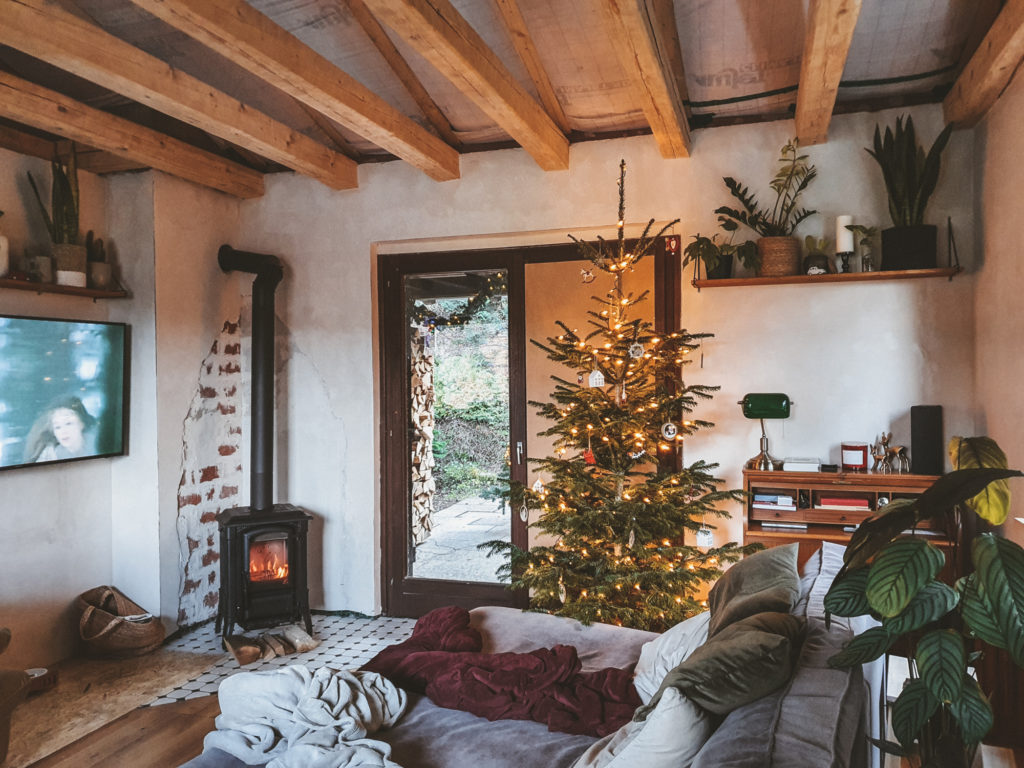
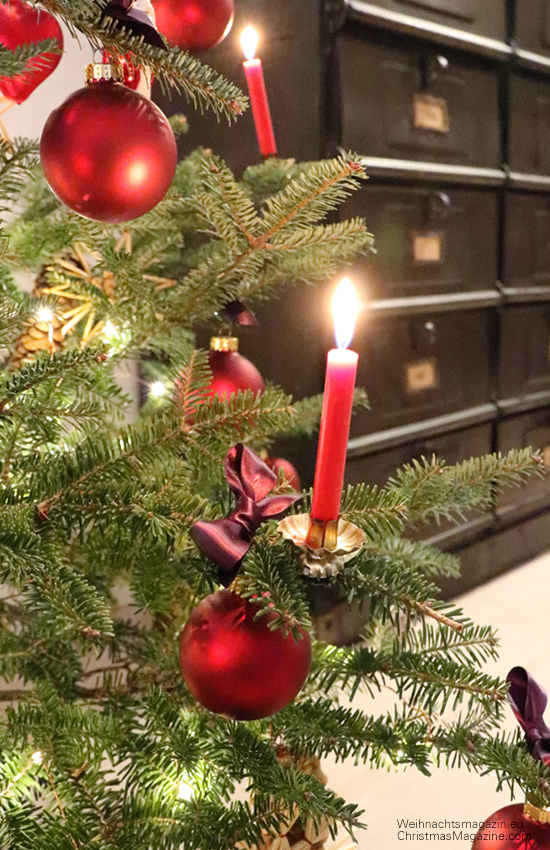
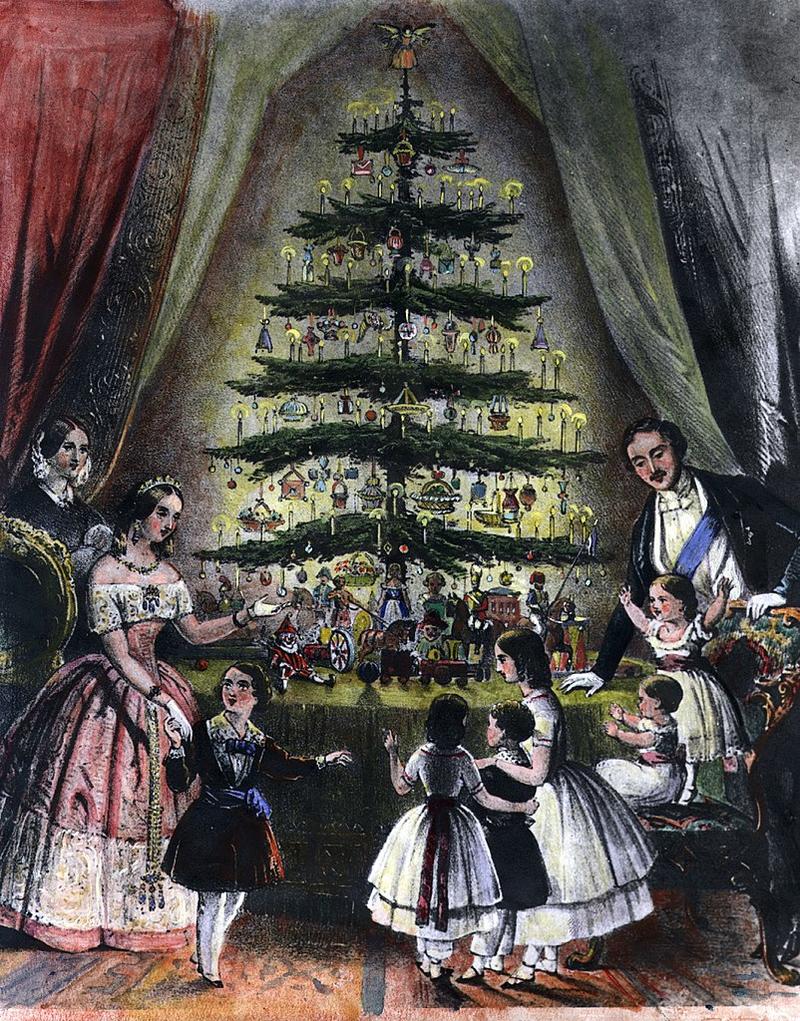
The Christmas tree—der Tannenbaum—is undeniably one of Germany’s greatest cultural exports. Popularized in America by German immigrants and later embraced by Queen Victoria and Prince Albert in England, the decorated evergreen became a universal symbol of Christmas across the U.S.
Trees were originally associated with Christkind celebrations, not Santa. Presents were placed beneath them for Christmas Eve, aligning with Christkind’s visit. Even today, when Santa fills the role of gift-giver, the German structure of Christmas remains firmly in place.
Dates Matter: December 6 vs. December 24 vs. December 25
German Christmas traditions don’t revolve around a single magical morning.
December 6 – St. Nicholas Day: Shoes by the door, small gifts, moral lessons.
December 24 – Heiligabend (Christmas Eve): Main celebration, gift-giving, church.
December 25 – Christmas Day: Family, rest, reflection.
America condensed these layered traditions into December 25, aligning with Santa’s overnight visit. Efficiency replaced ritual—but traces of German timing still appear in church services, Advent calendars, and candlelight traditions.
Commercial Christmas vs. Cultural Christmas
There’s no denying that commercialization played a role in Santa’s rise. Weihnachtsmann adapted easily into ads, parades, and films. Christkind—ethereal, religious, and unseen—did not.
But the resurgence of German-style Christmas markets across America suggests a renewed hunger for authenticity. From Chicago to Denver to San Antonio, Americans are sipping Glühwein, buying hand-carved nutcrackers, and rediscovering Old World charm.
This isn’t a rejection of Santa—it’s an expansion of the story.
So… Which One Does America Follow?
Officially? Santa Claus. Culturally? A German hybrid. Spiritually? It depends on the household.
America follows Santa in image and timing—but follows Christkind and Weihnachtsmann in structure, symbolism, and soul. The Christmas tree, Advent season, candles, carols, markets, and even the idea of a benevolent gift-bringer are deeply German at their roots.
Perhaps the real winner of the Santa Debate isn’t a single figure at all—but the German-American fusion that created a holiday bigger than either tradition alone.
“Christmas in America isn’t German or American—it’s German-American.”
And that may be the greatest Christmas gift Germany ever gave the United States.
Halloween is that magical time of year when creativity reigns, inhibitions vanish, and your alter ego gets to party with strangers in equally ridiculous getups.
While witches, vampires, and pirates have their place, the real costume champions are the ones that turn heads, raise steins, and spark side-splitting laughter.
If you’re looking to take home the top prize at your adult Halloween party this year, it’s time to go full-Bavarian.
From zombie beer drinkers to cuckoo clocks that chime on cue, German-inspired costumes are the wunderbar mix of cultural charm and outrageous comedy.
So cue the Oompah band, pour yourself a festbier, and let’s explore the most gut-busting German costume ideas that are guaranteed to bring down the haus.
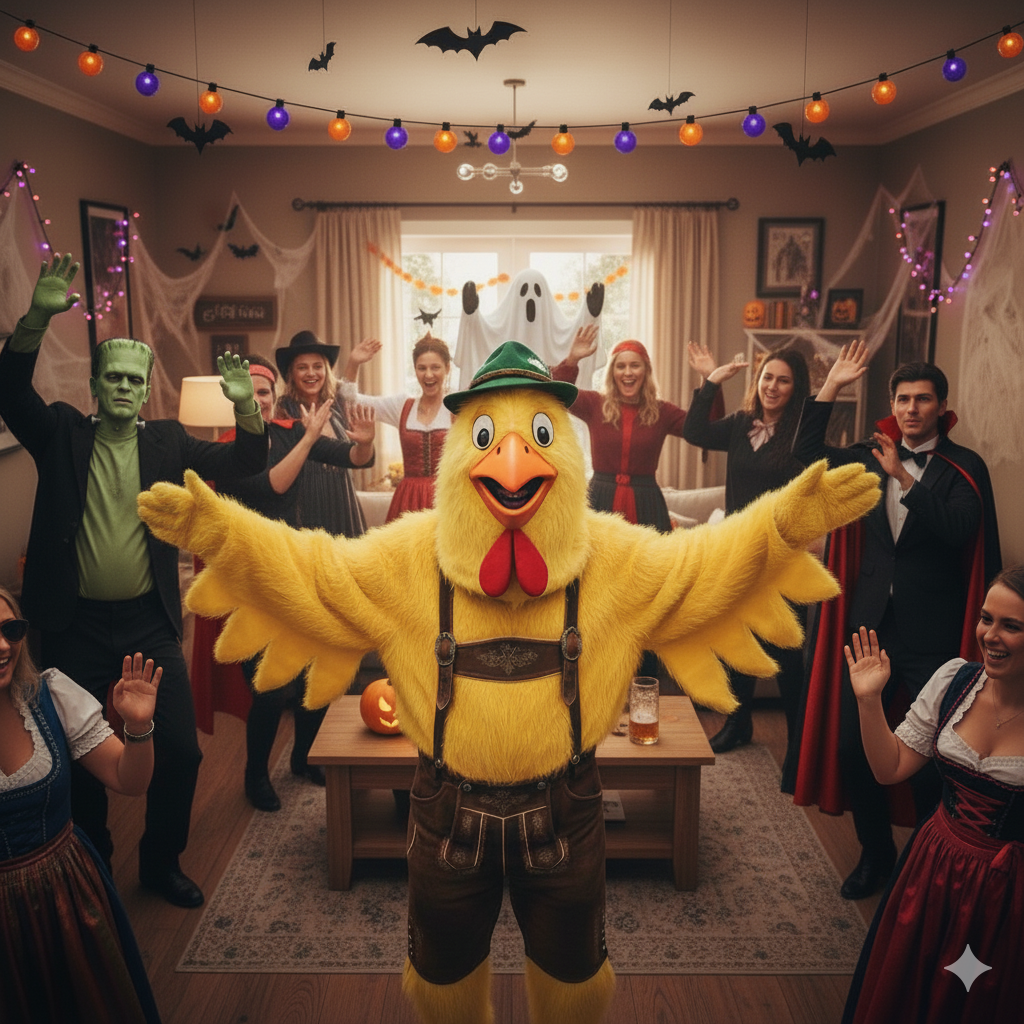
🐔 1. The Dancing Chicken in Lederhosen
Why settle for a chicken suit or lederhosen when you can wear both? This crowd-pleaser combines two festival favorites: the classic Oktoberfest outfit and the legendary “Chicken Dance.”
What You’ll Need:
A full-body chicken suit (feathers, beak, the works)
Child-sized lederhosen strapped over the belly
A tiny alpine hat perched on your chicken head
Bonus: a portable speaker playing the Chicken Dance theme on loop
Pro Party Tip:
Flap your wings on the dance floor like your costume depends on it. Organize a spontaneous Chicken Dance contest and become a Halloween legend.
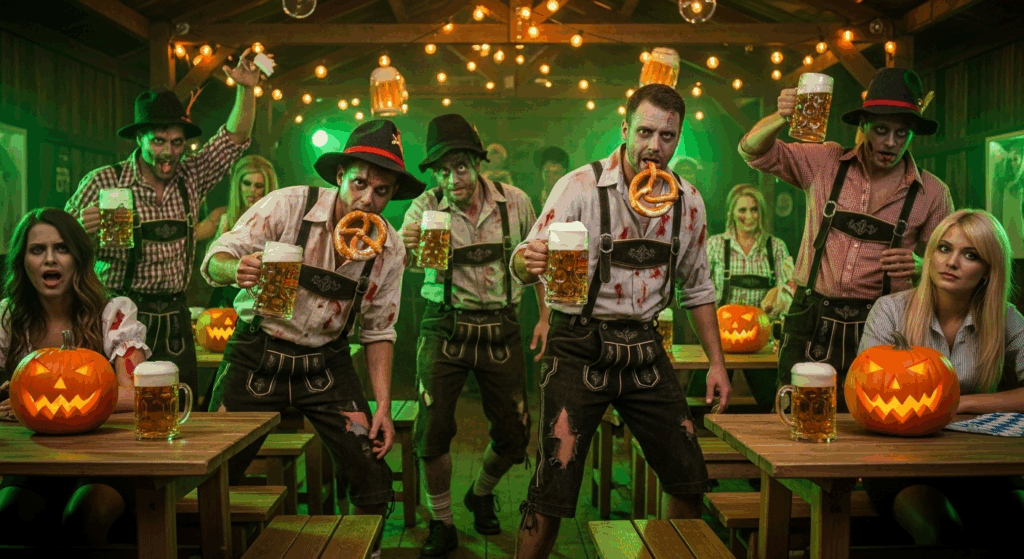
🧙♂️ 2. The Oktober-Zombie (Undead Bier Trinker)
Because even zombies deserve a good beer. The Oktober-Zombie is part horror, part hilarity, and 100% Oktoberfest.
What You’ll Need:
Torn-up lederhosen or dirndl (bonus points for beer stains)
White face makeup, fake blood, and dark eyeshadow for that undead glow
A beer stein in each hand (use one to moan and clink, zombie-style)
Fake German accent moaning “Bieeeeer…”
Pro Party Tip:
Walk in with a zombie shuffle, clinking steins with guests and offering brain-shaped bratwursts.
🧘♀️ 3. The Haunted Beer Maiden (Dirndl of the Damned)
Why be a basic barmaid when you could be a ghostly goddess of beer and doom? Hauntingly beautiful with a touch of hops.
What You’ll Need:
A white or pale dirndl dress with tattered lace and gothic accents
Pale face makeup with dark, haunting eyes
Long flowing braid or disheveled wig
Glowing LED beer stein for spooky ambiance
Pro Party Tip:
Recite ominous German toasts in a ghostly whisper, then vanish into the fog machine haze.
Forget the lightning bolts and scary moans for a moment — Frankenstein wasn’t born a monster. He was born from imagination, invention, and a good dose of German curiosity that continues to be popular with all generations, even today!
Long before he hit the silver screen, Frankenstein was a patchwork of Old World legends, scientific wonder, and a pinch of “what if?” magic that somehow made him one of America’s most beloved characters.
From the Rhine Valley to the Bright Lights
Let’s rewind to the early 1800s. Europe was buzzing with big ideas — science, discovery, and a fascination with what electricity could do. Somewhere in the mix of candlelight and castle corridors, an English teenager named Mary Shelley wrote a story that would electrify the world: Frankenstein; or, The Modern Prometheus.
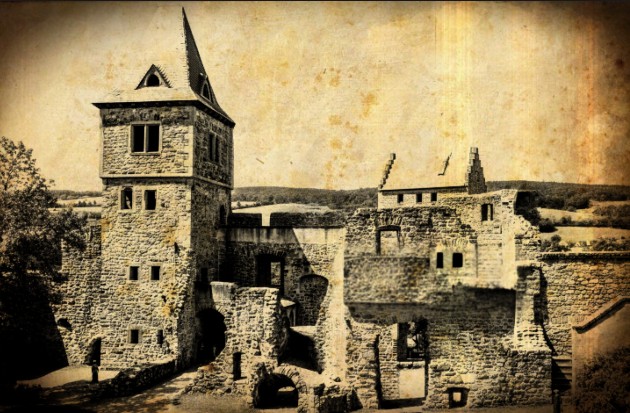
But here’s the fun twist — the name Frankenstein? Totally German. It means “Stone of the Franks,” and there’s an actual Castle Frankenstein overlooking the Rhine River near Darmstadt, Germany!
Legend says a local alchemist named Johann Konrad Dippel once conducted experiments there, chasing the secret to eternal life. Whether Mary Shelley heard about him or just liked the mysterious name, it’s safe to say the spirit of German curiosity inspired her tale.
The original Frankenstein wasn’t evil — he was a scientific pioneer, a guy who just wanted to see how far human knowledge could go. And honestly, who doesn’t love a good “what happens if I mix this with that?” experiment?
An American Dream Come to Life
Fast forward to the United States, a land bursting with invention and imagination. When Frankenstein crossed the Atlantic, Americans saw something more than a spooky tale — they saw adventure! The idea of building something incredible, even if it’s misunderstood at first, fit right in with the nation’s love of discovery and reinvention.
By the 1820s, stage shows and storybook versions of Frankenstein were touring the country, often with a wink and a laugh. By the time Thomas Edison made the first film adaptation in 1910 (yes, the light bulb guy!), the story had already evolved from creepy to curious. And then, of course, came the 1931 Universal Studios classic with Boris Karloff — turning the creature into a Hollywood icon.
Suddenly, Frankenstein wasn’t just a character — he was a celebrity.
The Monster with a Heart (and a Sense of Humor)
Over the years, Frankenstein’s image has softened and sparkled with personality. From the goofy grin of The Munsters’ lovable Herman Munster to Gene Wilder’s hilarious Young Frankenstein, the big green guy became less “ghoul” and more “gentle giant.”
In America, Frankenstein transformed into a symbol of creative curiosity — the idea that experimenting, dreaming, and maybe even failing are all part of what makes us human. He became a little bit like us: misunderstood at times, but full of potential and heart.
And let’s be honest — if Frankenstein were real, he’d probably be an inventor on a talk show today, explaining how his latest gadget “came to life after a lightning storm.”
Why the World Still Loves Him
Frankenstein’s story continues to shine because it’s about possibility. It’s about a spark — literally! — that turns an idea into something amazing. From comic books to cartoons, toy shelves to theme parks, he’s still around because his story celebrates creativity and the courage to try something new.
And deep down, his German roots remind us that great ideas often come from the curious minds and castle towers of dreamers who dare to mix science and imagination.
Conclusion: The Friendly Frankenstein
So maybe Frankenstein isn’t a monster at all. Maybe he’s the ultimate adventurer — a curious soul stitched together from creativity, courage, and a little bit of lightning.
He started as a mysterious name on a map of Germany, came to life through Mary Shelley’s imagination, and then found his forever home in America’s heart — where reinvention and second chances are always welcome.
But Frankenstein didn’t stop there. Once Hollywood brought him to life, he didn’t just conquer the screen — he conquered the marketplace! Almost overnight, the big green guy went from gothic literature to global brand. By the 1930s and ’40s, his face was plastered on movie posters, collectible cards, and comic books. When television reruns introduced Frankenstein to a new generation of kids in the 1950s and ’60s, a merchandising monster was officially born.
Frankenstein became the undisputed king of Halloween, helping transform the holiday from spooky folklore into a nationwide festival of fun. Every October, his square head and neck bolts fill costume racks, store aisles, and front-yard displays from coast to coast. He’s inspired millions of masks, from vintage latex classics to cute toddler versions, proving that you can be both creepy and cuddly at the same time.
And the branding didn’t stop there. Frankenstein danced his way into breakfast bowls as part of the 1970s “Monster Cereal” craze with Franken Berry, his cheerful pink alter ego who turned milk strawberry-sweet. His image showed up on lunchboxes, board games, toys, movie posters, cereal boxes, bubble gum cards, and even Halloween yard inflatables — a true icon of playful fright.
Marketers loved him because he was the perfect mix of scary and sympathetic — a monster you could root for. Toy companies, candy brands, and film studios all gave him new life decade after decade, each time with a little more humor, color, and heart. Even today, you’ll find Frankenstein’s friendly grin lighting up everything from kids’ pajamas to Starbucks mugs and TikTok memes.
In a way, Frankenstein helped build modern Halloween — the costumes, the collectibles, the spirit of dress-up and imagination that makes the season sparkle with excitement. He didn’t just haunt pop culture; he powered it.
After all, who else could turn a spooky science experiment into a hundred-year celebration of creativity, curiosity, and commercial genius?
Frankenstein did — and that’s one electrifying success story! ⚡
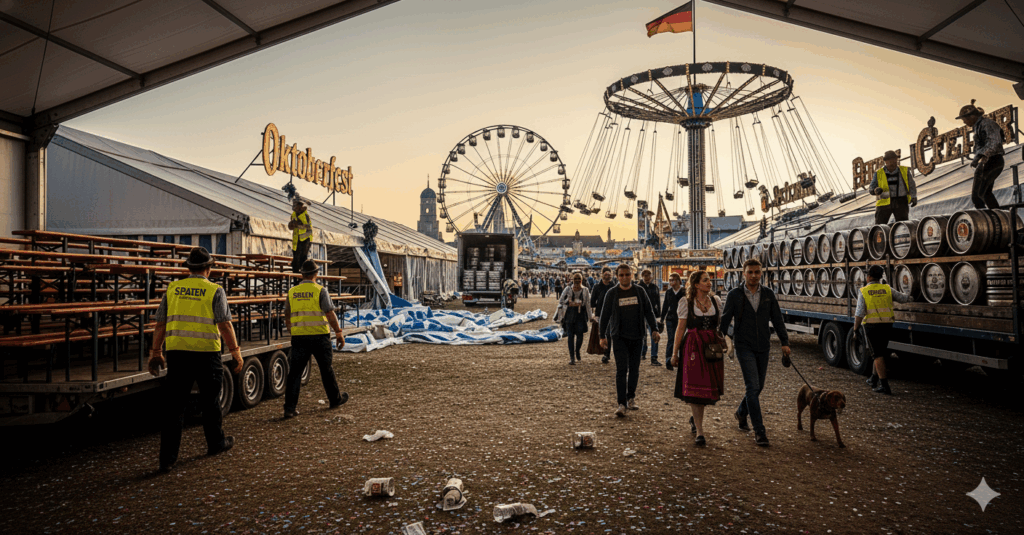
The final steins have been raised, the brass bands have played their last note, and the sweeping grounds of Theresienwiese are slowly returning to silence. After weeks of revelry, laughter, and centuries-old tradition, Oktoberfest in Munich has come to a close once more. For the thousands of visitors who made the journey from around the world, the return home is filled with that unmistakable post-festival glow — part joy, part exhaustion, and part reluctance to let it end.
One can imagine the mood on the red-eye flights leaving Munich. Couples and friends seated side by side, quietly replaying the moments that made it all unforgettable — the taste of fresh pretzels, the sound of clinking steins, the energy of crowded beer tents beneath Bavarian flags. A man in a feathered green fedora, its brim heavy with souvenir pins, rests against the window with a contented smile. His hoodie still carries the scent of roasted nuts and smoky sausages. Somewhere near him, a woman in a worn Oktoberfest tee leans back, her braid still tightly tied from a day of dancing. The plane is quiet, but their minds are alive with memory.
How to Celebrate Oktoberfest All Over Again — American Edition!
Your guide to local festivals, clubs, and restaurants still raising their steins this October
For many, there’s a hesitation to let go. The end of Oktoberfest in Munich doesn’t necessarily mean the end of the celebration. As travelers make their way back across the Atlantic, some may already be checking calendars and local event listings, curious to see if the spirit of Oktoberfest lives on closer to home. And across the United States — in small towns, bustling cities, German clubs, and local breweries — it often does. The kegs may be tapped out in Munich, but in America, Oktoberfest is still pouring.
O’zapft Is… Again?!
The last keg has been tapped in Munich this year on Sunday, October 5th. The tents have closed. The brass bands have played their final polkas. And just like that — the world’s most famous Oktoberfest is over for another year.
You’re back from Bavaria, your suitcase stuffed with pretzels, pins, and a questionable wool hat that seemed like a good idea after your fifth Maß of beer. Your head has cleared, your bank account has not, and your flight home? Delayed three hours. Oof.
But here’s the thing no one tells you: when Munich ends, America begins.
That’s right — while Oktoberfest in Germany technically wraps up in early October, here in the United States, we like to stretch the celebration well into fall. From local Main Street parades and heritage clubs to breweries and backyard blowouts, Americans with German roots (and plenty without) keep the party rolling deep into October.
So shake off your jet lag, unpack that stein, and get ready. We’re going on a post-prost Munich Oktoberfest adventure — American style.
Why America Keeps Celebrating Oktoberfest After Munich Ends
Here’s the deal: Oktoberfest started in 1810 as a royal wedding celebration in Munich. Today, it’s a global cultural phenomenon.
But in the United States — home to over 60 million people of German ancestry. In America — Oktoberfest is more than just a party. It’s a tribute to German Heritage, a salute to immigrant roots, and a golden opportunity to bring communities together over Ompah pah, pilsner, and pork schnitzel.
And unlike the strict schedule in Germany, Americans are a little more… shall we say… flexible with our party timelines. We extend Oktoberfest celebrations all the way through Halloween and even into November in some locations.
🥨 From Main Street to Maifest Halls: Where to Celebrate Oktoberfest in America
Let’s hit the road — from coast to coast — and explore the many ways Main Street USA is still raising its stein long after Munich’s tents come down.
🎉 1. Main Street Celebrations: Small Towns, Big Heart
Across America, small towns with German roots come alive in October with homegrown Oktoberfest celebrations. Think brass bands in the park, beer tents in the square, and grandma’s apple strudel at the community bake sale.
Must-Visit Towns:
Some of the most charming and authentic Oktoberfest experiences in America take place not in big cities, but in storybook towns with strong German heritage — where bratwursts sizzle, polka music echoes down main street, and Bavarian architecture sets the mood. These are the towns where Oktoberfest spirit lingers long after Munich’s tents have closed.
Leavenworth, Washington – Tucked in the Cascade Mountains, Leavenworth looks like it was plucked straight out of the Bavarian Alps. The entire town transforms into a festive alpine wonderland throughout October. With dirndl-clad dancers, oompah bands echoing through the mountains, and local breweries serving up authentic Märzens, Leavenworth’s Oktoberfest is one of the most visually immersive and energetic celebrations in the country.
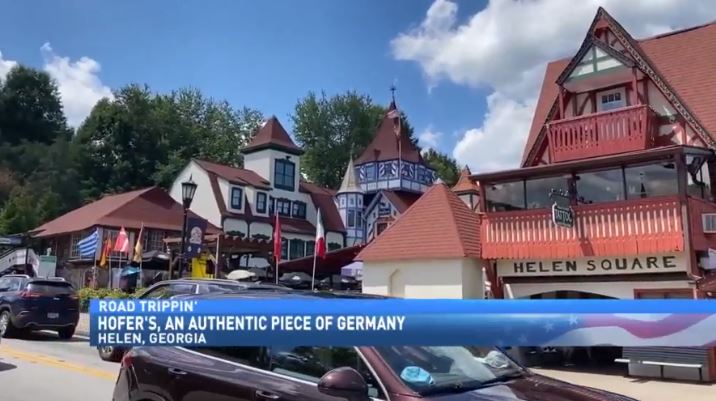
Helen, Georgia – A small southern town with a big Bavarian personality, Helen hosts one of the longest-running Oktoberfests in the U.S., stretching from mid-September through late October. Nestled in the North Georgia mountains, this Alpine-styled village boasts nightly music at the Festhalle, authentic German food and beer, and a festive atmosphere that draws visitors from across the region.
New Ulm, Minnesota– Often called the “most German town in America,” New Ulm’s Oktoberfest stretches across multiple venues and weekends in October.
Frankenmuth, Michigan – This Bavarian-themed village hosts Oktoberfest events well into the fall. Don’t miss the Frankenmuth Brewery and iconic chicken dinners at Zehnder’s!
Hermann, Missouri – Nestled in Missouri’s wine country, Hermann turns into a fall fairy tale with weekends full of beer, brats, and vineyard views.
These Main Street fests may not rival Munich’s size, but they overflow with heart, heritage, and hospitality.
There’s something special about being German American — a sense of pride that runs deep in the heart, from our strong work ethic and craftsmanship to our love of good food, hearty laughter, and family gatherings.
Every October, millions of Americans across the country pause to recognize the profound impact of German culture on our nation. From the hardworking immigrants who helped build America’s towns and farms to the enduring traditions of food, music, and craftsmanship they brought with them, German heritage runs deep in the American story.
Festivals, parades, and family gatherings fill the month with the sound of polka music, the aroma of bratwurst and pretzels, and the clinking of steins raised in celebration. It’s a time to honor the values of community, perseverance, and pride that German Americans have woven into the fabric of our nation’s history and culture.
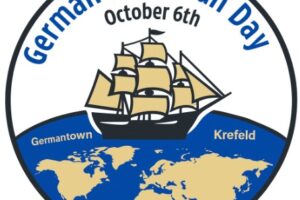
That’s right — October 6th is German American Day, and the entire month of October is German American Heritage Month.
— let’s dive into the fascinating story behind German American Day, meet some famous German Americans who helped shape the nation, and explore fun ways to celebrate your heritage (even if you’ve only got a little bit of German blood in you!).
🏛️ The Origins of German American Day
German American Day didn’t appear out of thin air — it’s rooted in a rich history that began centuries ago, when the first German immigrants set foot in the New World.
The story begins on October 6, 1683, when thirteen German families from Krefeld, near the Rhine River, arrived in Philadelphia aboard the ship Concord. They established a small settlement called Germantown, now part of modern-day Philadelphia.
These pioneering families came seeking freedom, opportunity, and a new life, bringing with them strong values that would forever shape American society — hard work, craftsmanship, faith, education, and a love of community.
Germantown flourished, becoming the birthplace of many firsts in American history:
The first paper mill in the colonies.
The first anti-slavery protest in the New World (in 1688 — nearly 100 years before the American Revolution).
And the first German-language newspaper in the colonies.
The success of Germantown inspired a steady wave of immigration throughout the 1700s and 1800s, with Germans settling across Pennsylvania, New York, Ohio, Wisconsin, the Dakotas, Iowa, Nebraska, Minnesota, Indiana, Missouri, Texas, Louisiana, and California.
By the mid-19th century, German Americans were one of the largest ethnic groups in the country — and their influence was everywhere, from farming and industry to politics, science, and culture.
President Ronald Reagan and the Revival of a Tradition
While German contributions to America had long been celebrated locally — especially through Oktoberfests and regional festivals — the formal recognition of German American Day as a national observance didn’t come until the 1980s.
In 1983, on the 300th anniversary of Germantown’s founding, President Ronald Reagan officially proclaimed October 6th as “German American Day.” The goal was to honor the achievements of German immigrants and their descendants in shaping the United States.
Then, in 1987, Congress passed a joint resolution (H.J. Resolution 108), which President Reagan signed into law — officially designating October 6th as German American Day every year.
In his proclamation, Reagan praised the German people’s “profound faith, strong family values, and deep respect for liberty and law,” noting that German Americans had played an essential role in “the building of the American nation.”
From that day forward, the annual observance became an opportunity for millions of Americans to reconnect with their German roots, share their cultural pride, and celebrate a unique bond between the two nations that continues to this day.
When most people think of Texas, they picture cowboy hats, barbecue brisket, and country music. But dig a little deeper into the heart of the Lone Star State, and you’ll discover something extraordinary — a vibrant, enduring German spirit woven into the very fabric of Texas life. From the charming towns of Fredericksburg and New Braunfels to the rolling hills of the Hill Country, German heritage doesn’t just survive here — it thrives.
The story of how this came to be is one of courage, hard work, cultural pride, and good beer — lots of it. So grab your stein, pull on your lederhosen or dirndl, and let’s explore how Texas became one of the most authentically German-influenced places in all of America.
A New World for German Settlers
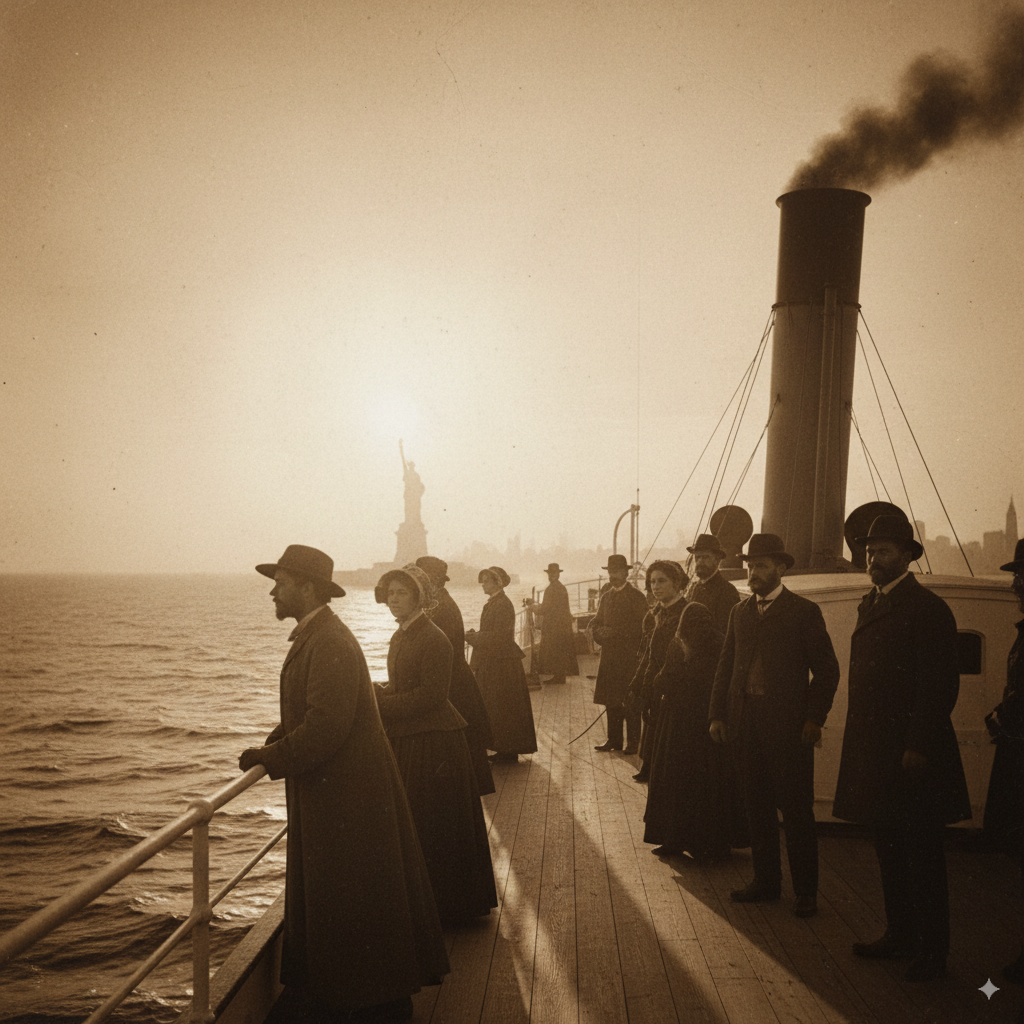
The roots of Texas’ German heritage stretch back to the early 1840s, when a group of idealistic and determined settlers from Germany began arriving in what was then a sparsely populated region of the Republic of Texas. Drawn by the promise of freedom, fertile land, and opportunity, thousands of Germans made the long, treacherous journey across the Atlantic — often taking months to arrive.
One of the most significant organized efforts came from the Adelsverein, formally known as the Society for the Protection of German Immigrants in Texas, founded in 1842 by a group of German noblemen. Their goal was to create a “New Germany” in Texas — a colony where German immigrants could thrive, own land, and preserve their traditions.
The society purchased vast tracts of land and founded several towns that remain deeply German to this day — Fredericksburg, New Braunfels, and Boerne among them. Each of these communities became a cornerstone of what would grow into a remarkable cultural legacy.
Oktoberfest 2025 will take place from Saturday, September 20th to Sunday, October 5th, 2025.
For 16 unforgettable days, the city of Munich transforms into the beating heart of Bavarian culture—overflowing with world-renowned beer, lively music, and timeless traditions. Streets and beer tents come alive with the sounds of brass bands and cheerful singing, while locals and visitors alike don traditional dirndls and lederhosen.
The air is filled with the aroma of roasted meats, freshly baked pretzels, and sweet pastries, creating a feast for all the senses. From the ceremonial tapping of the first keg to the last song sung under twinkling festival lights, Oktoberfest embodies a spirit of togetherness and celebration that has enchanted millions for generations.
Despite its name, Oktoberfest always kicks off in late September to take advantage of Munich’s milder autumn weather. The event traditionally concludes on the first Sunday in October or extends to German Unity Day (October 3rd) if it falls later, ensuring a minimum of 16 days of celebration.
In 2025, festival-goers can look forward to two full weeks plus an extended final weekend, perfect for both locals and international visitors to experience the magic.
If you’re planning to attend, here’s your complete guide to Oktoberfest 2025 dates, events, and traditions, plus everything you need to know to make the most of your Bavarian adventure.
The Official Kickoff: “O’zapft is!”
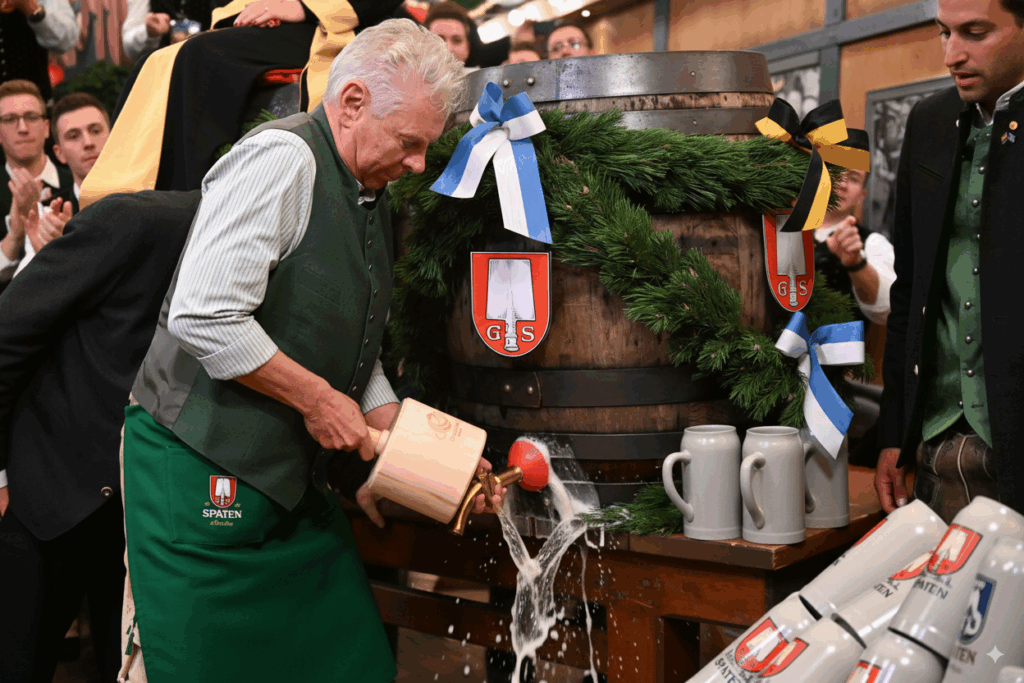
The festival begins with one of the most famous traditions: the keg-tapping ceremony. On opening day, the Mayor of Munich taps the first keg in the Schottenhamel tent, declaring “O’zapft is!”—“It is tapped!”
Only then does the beer officially begin to flow across the 14 major tents and countless smaller venues throughout the Theresienwiese fairgrounds. This moment is broadcast on German television and cheered by thousands of locals and travelers alike.
This ceremony not only marks the start of Oktoberfest—it embodies the spirit of Munich’s warm hospitality and the pride Bavaria takes in its brewing culture.
Oktoberfest 2025 Dates at a Glance
Opening Day: Saturday, September 20th, 2025
Closing Day: Sunday, October 5th, 2025
Duration: 16 days
Location: Theresienwiese, Munich, Germany
The extended schedule in 2025 includes both September’s milder climate and the special German Unity Day holiday on October 3rd, meaning crowds will be especially lively. Expect peak attendance during both weekends, particularly the final days.
The Iconic Oktoberfest Tents
One of the most defining features of Oktoberfest is its legendary beer tents—not mere temporary structures, but massive, elaborately decorated halls capable of seating thousands of guests.
German Heritage in the United States is both timeless and evolving. With roots tracing back to the earliest waves of settlers in the 17th century, German Americans have infused their traditions, culture, and industrious spirit into the very fabric of American life.
Today, nearly one in four Americans claim some German ancestry, making it the largest self-identified ancestry group in the country. From beer gardens to Oktoberfest, from polka music to pioneering agricultural innovations, German influence is everywhere.
This article celebrates that journey—how the Old World charm of Germany crossed the Atlantic and blossomed into a New World pride across America.
A Journey Across the Atlantic: German Immigration to America
The story begins in 1683, when the first permanent German settlement was established in Germantown, Pennsylvania. These settlers came seeking religious freedom, economic opportunity, and a chance to build new lives.
Over the next two centuries, millions of Germans arrived, particularly during the mid-1800s when economic hardship and political unrest in Europe spurred emigration.
Pennsylvania Germans (often called “Pennsylvania Dutch”) were known for their farming skills, craftsmanship, and frugality.
Midwestern German immigrants settled heavily in Ohio, Wisconsin, Illinois, and Missouri, bringing with them traditions that would transform America’s Midwest into the “breadbasket of the world.”
Texas Germans created unique communities blending frontier life with German language, music, and architecture.
German immigration wasn’t just about numbers—it was about building lasting communities that blended old traditions with American ideals.
Faith, Family, and Festivals: Cultural Foundations
Germans brought with them three pillars that shaped their lives in America: faith, family, and festivals.
Faith
German-speaking congregations were some of the earliest Protestant and Catholic churches in America. Lutherans, Reformed, and Mennonites established communities where worship was central to life. Many churches doubled as schools, helping preserve the German language for generations.
Family
German Americans placed strong emphasis on education, family structure, and work ethic. Family farms, passed down through generations, became the heart of rural America.
Festivals
From Oktoberfest to Christkindlmarkets, German festivals celebrated music, dance, and food. Even today, cities like Cincinnati, Milwaukee, and Frankenmuth, Michigan host annual festivals drawing crowds from around the world.
The German-American Contribution to American Life
German Americans shaped countless aspects of daily life in the U.S. Some of their most influential contributions include:
Family and Holiday Traditions
German immigrants brought with them beloved customs that soon became woven into the fabric of American life. The Christmas tree (Tannenbaum), decorated with candles, ornaments, and garlands, was popularized in the 19th century and is now an essential part of the holiday season in nearly every American home.
Traditions like Santa Claus (Kris Kringle), Easter eggs, and the Easter Bunny also arrived with German settlers, giving families cherished rituals that continue to bring joy each year. These celebrations highlight the German love of family, festivity, and togetherness—values that remain cornerstones of American culture.
Did you know the United States has many cultural experiences celebrating German Heritage? You can find them from Pennsylvania’s rolling hills to the Midwest’s lively cities.
The USA has a wide range of road trips that highlight the rich history and culture of German-American communities. Get ready for the Top 13 German Heritage Road Trips Across America to Kick Off Your Summer.
Start a journey to see the special charm of Bavarian villages, German-American cultural festivals, and historic sites across America. These 13 amazing road trips offer a summer adventure filled with history, culture, and stunning views.
Key Takeaways
Discover the top 13 road trips that celebrate German Heritage in the USA
Explore Bavarian villages and German-American cultural experiences
Visit historic landmarks and cultural festivals across the country
Enjoy a summer adventure filled with history, culture, and natural beauty
Experience the unique charm of German-American communities
America’s Rich German Heritage: A Cultural Journey
The United States is filled with German-American cultural experiences from coast to coast. It’s not just about visiting places. It’s about diving into the history, traditions, and beauty these sites have to offer.
The Impact of German Immigration on American Culture
German immigration has greatly influenced American culture. It’s seen in traditions, festivals, architecture, and food. Many German heritage sites across the country show the lasting impact of German settlers.
Key areas of influence include:
Culinary traditions, such as Oktoberfest celebrations and traditional German cuisine
Architectural styles, reflecting German design and craftsmanship
Cultural festivals and events that preserve German Heritage
Why German Heritage Sites Make Perfect Summer Road Trips
German heritage sites are perfect for summer road trips. They offer cultural experiences, historical landmarks, and beautiful scenery. Visitors can explore quaint towns, try local food, and join in on traditional festivals.
Location
Main Attraction
Cultural Experience
Leavenworth, Washington
Bavarian-themed town
Oktoberfest celebrations
Fredericksburg, Texas
Pioneer Museum
German-Texan fusion cuisine
Hermann, Missouri
German architecture
Wine tastings and traditional German cuisine
These places not only highlight German-American culture but also offer a great summer escape. Whether you love history, food, or exploring new places, German heritage sites in America have something for everyone.
Leavenworth, Washington: Bavaria in the Cascades
Leavenworth is nestled in the Cascades and has become a lively Bavarian village. It draws visitors from all corners of the globe.
The town’s change into a Bavarian-themed spot is a tale of community spirit and embracing culture. It was once a logging town facing hard times. But, by adopting Bavarian traditions and buildings, it turned its fortunes around.
The Alpine Village Transformation Story
In the 1960s, Leavenworth’s residents aimed to revamp the town. They drew from Bavaria, adding German architecture, festivals, and food.
“We wanted a unique identity to draw tourists,” said a local. “Bavarian culture was the ideal choice.”
Must-Visit Attractions and Seasonal Festivals
Leavenworth offers many activities, such as:
Oktoberfest celebrations
Christmas lighting ceremonies
Traditional German cuisine
The town buzzes with festivals all year. It’s perfect for families and those who love culture.
Nearby Natural Wonders to Explore
Leavenworth is surrounded by the Cascade Mountains. It’s a gateway to outdoor fun like hiking, skiing, and scenic drives.
The Icicle Creek Center is close by. It offers nature walks and chances to see wildlife. Leavenworth is a great spot to explore the Pacific Northwest’s natural wonders.
It’s almost January in Germany, and the party is just getting started in America. While Octoberfest might be the first thing that comes to mind when considering German-American celebrations, the truth is, the rich heritage of German culture offers unique celebrations throughout the year.
January, often painted as a quiet month after the holiday flurry, holds vibrant traditions in Germany that have found a warm welcome in the hearts of German-Americans. Prepare to delve into the magic of these winter festivities, where customs from the old world intertwine with American flair, creating a truly unique experience.
Neujahr: Ringing in the New Year with German Cheer
New Year’s Day, or Neujahr in German, is a national holiday in both Germany and the United States. While Americans raise champagne flutes at midnight, German-Americans often enjoy a different kind of bubbly cheer: Feuerzangenbowle. This fiery punch, prepared with rum-soaked sugar set ablaze, brings warmth and excitement to the festivities.
German-American communities often host Bleigießen, a traditional fortune-telling ritual using melted lead poured into water. The resulting shapes are interpreted to provide glimpses into the coming year, adding a touch of playful mysticism to the celebrations.
Heilige Drei Könige: Epiphany with a Caroling Twist
Epiphany, celebrated on January 6th, holds special significance for both religious and cultural reasons. In Germany, it’s known as Heilige Drei Könige (Three Kings’ Day), marking the arrival of the Magi. While it’s not a national holiday in the US, German-American communities keep the tradition alive with unique twists.
You can lead a horse to water, but you can not make it drink merlot. That’s not quite how the saying goes, but the stunning vision that Rob Lewis created in his new winery blends the past with the present in an old livery stable overlooking the Rock River in downtown Jefferson.
The famed beer hall serves bratwursts, Reuben sandwiches and more along with beer. The beer has flowed regularly throughout the 152-year history of Beethoven Maennerchor, but as of earlier this summer, the famed German beer hall in Southtown has added food to the festivity. Beethoven is now selling bratwursts ($6) topped with sauerkraut and Reuben sandwiches ($7) daily, as well as rotating specials that include dishes like German goulash, sauerbraten, spätzle and soft pretzels. And every Wednesday, it’s offering up a “Chef’s Choice” special that will feature other authentic German dishes.
The German restaurant and “Door County’s wurst bar” in Ellison Bay has changed its Sunday routine from serving dinner to serving brunch. Every Sunday for the foreseeable future, you’ll be able to indulge in a delicious brunch, 9 am – 2 pm. The menu features a variety of classic breakfast and lunch options, plus some […]
It’s interesting. Helen, Georgia is one of those bizarre places. I’d heard about it once or twice, and was there 20 years ago, but didn’t remember much about it. I remember it being a German-themed town, embraced by the entire town, with one awesome Oktoberfest. But this is the middle of the summer, not during Oktoberfest, during a pandemic. Would Helen, Georgia still have that Germain “flair” I remembered? The answer is not so simple.
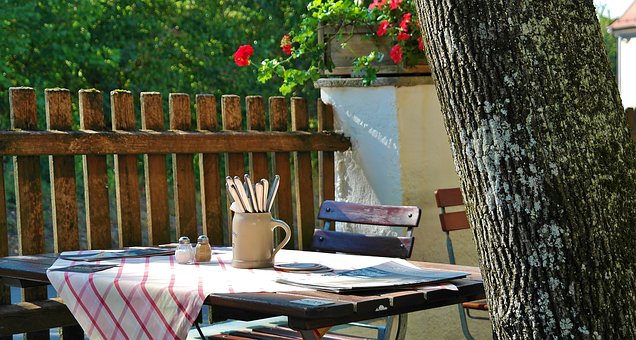
Creating your own Backyard Biergarten at your home can be tons of fun, especially when family, close friends and all your neighbors can share in the enjoyment of it all.
Your own Backyard Biergarten is a real fun project to create and you really can make it as simple or elaborate as you may wish. After all, it is your backyard.
The first part of creating a viable Biergarten in your backyard is knowing the history of Biergartens in Germany. It is true that Biergartens originated in the 19th century in Munich, the capital of the German state of Bavaria.
The large breweries back then dug cellars in the banks near rivers to keep their beer cool during storage. During both the Spring and Summer months they would bring the beer out to enjoy under shade trees in a natural setting outdoors.