
What Does Your German Last Name Mean? The Fascinating Stories Behind America’s German Surnames
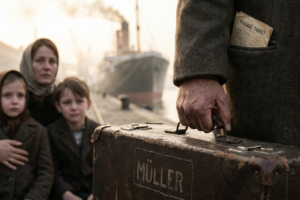
GERMAN HERITAGE USA | AFFILIATE DISCLAIMER: This post may or may not contain affiliate links which means we may receive a commission for purchases made through links. We will only recommend products that we have personally used or that we truly trust. Learn more on our Private Policy and Disclaimer Page located under our Terms Of Service tab above.
If your last name is Schmidt, Müller, Schneider, Fischer, Weber, Becker, Wagner, Meyer, Bauer, Hoffmann—or something that doesn’t look nearly as German as it once did—your surname may be carrying a story hundreds of years old.
It may tell you what one of your ancestors did for a living.
It might describe the village where your family lived, the landscape surrounding their home, a physical characteristic, or even the name of a father who lived centuries before anyone imagined crossing the Atlantic.
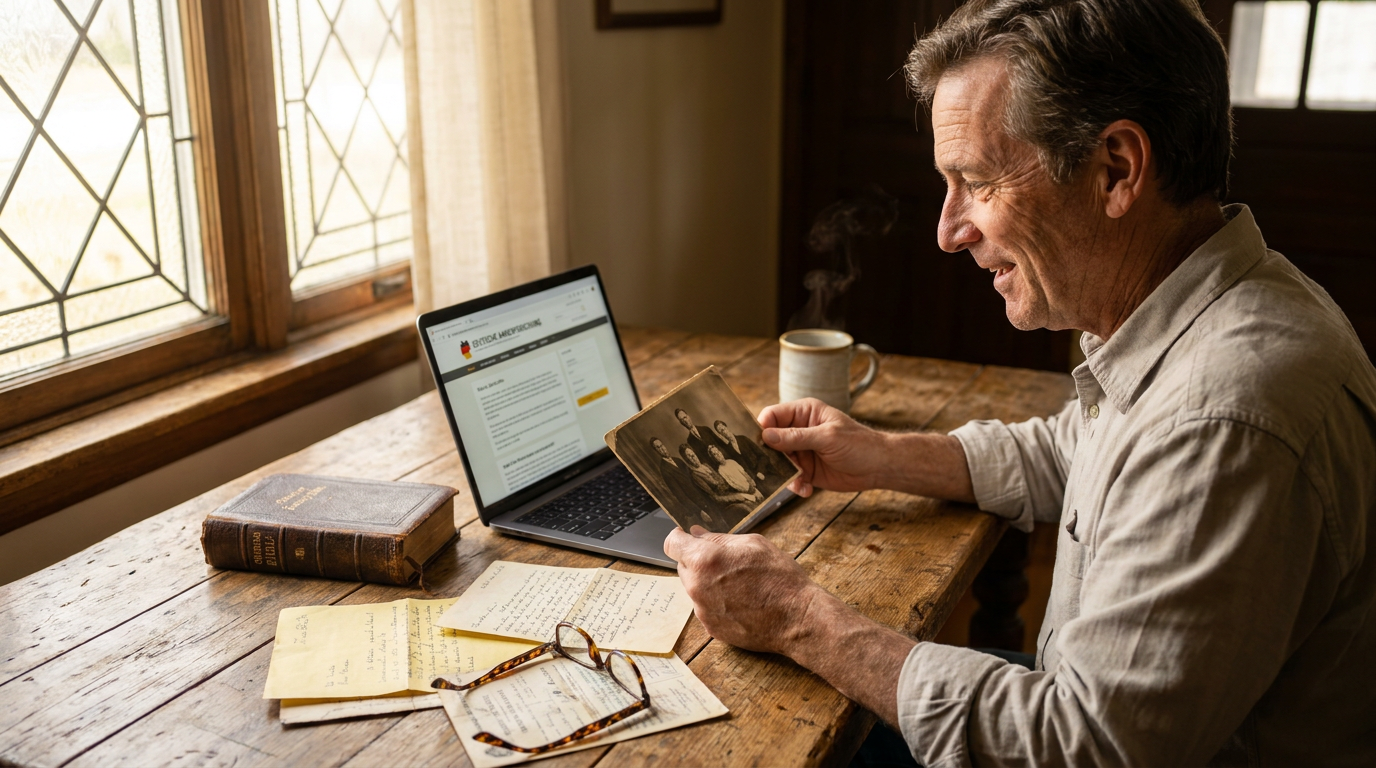
And sometimes, the surname Americans know today isn’t quite the surname their German ancestors originally used.
For millions of Americans exploring their German heritage, a last name can be one of the most fascinating clues connecting the present to the past.
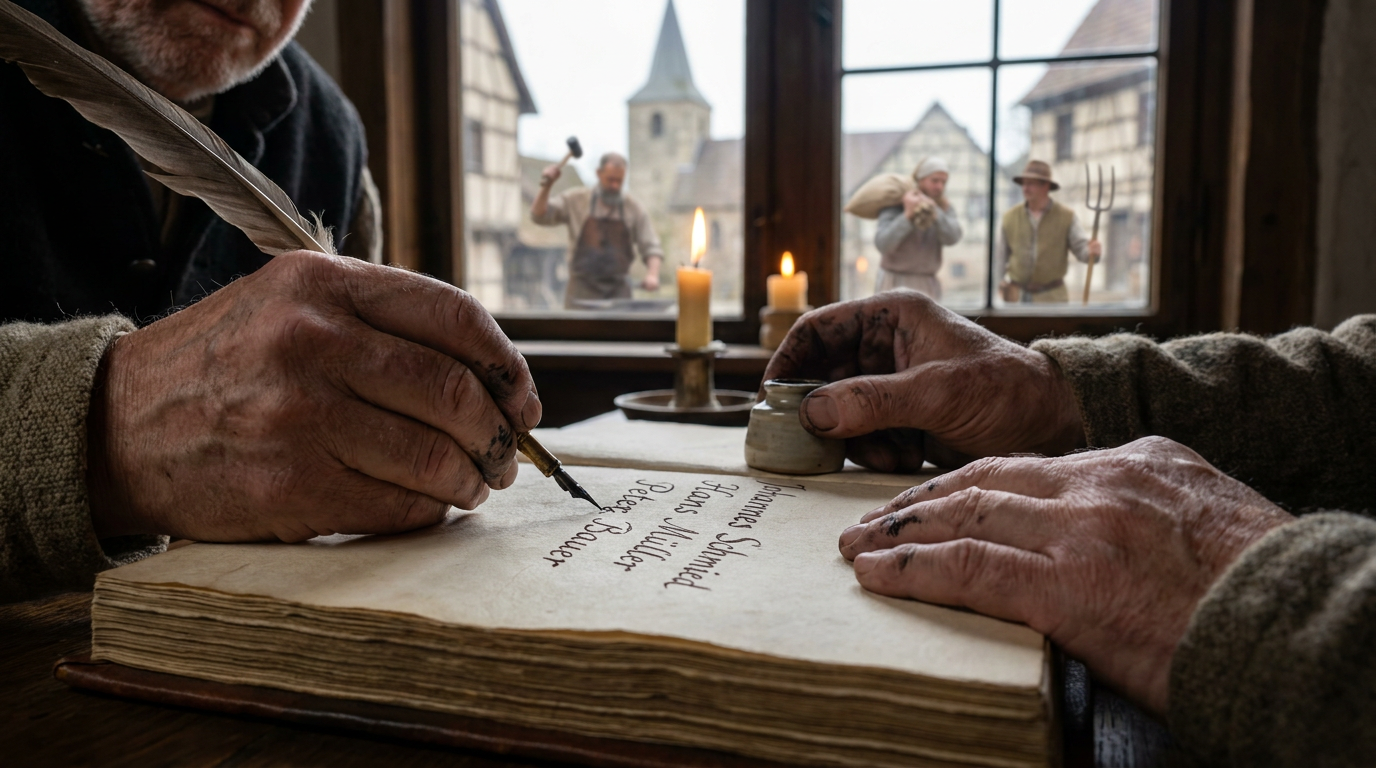
Your surname isn’t necessarily a complete family history—but it can be a wonderful place to begin discovering one.
“Every family name is a doorway. Sometimes all it takes is learning what the name meant to begin discovering the people who carried it.”
So grab your family tree, pull out those old photographs, and take another look at the name printed across the top.
There may be more history hiding there than you ever imagined.
Your German Last Name May Be a 500-Year-Old Clue
Today, we rarely think about why people have surnames.
They’re simply part of who we are.
But travel backward into medieval Europe and surnames become much more interesting.
As communities grew and populations became increasingly mobile, identifying someone simply as Johann or Heinrich wasn’t always sufficient. Which Johann? Which Heinrich?
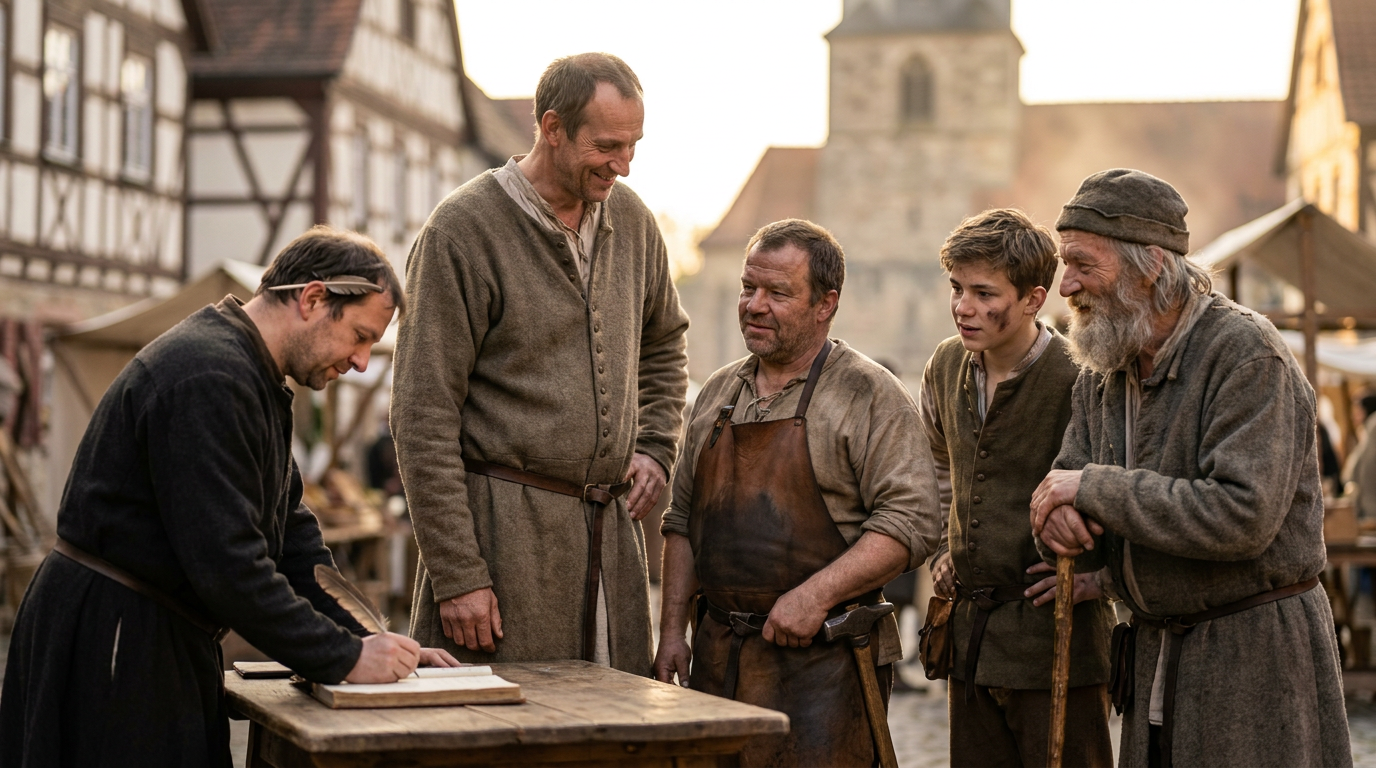
People began distinguishing one person from another by adding descriptions.
Johann might become Johann the smith.
Another could be Johann from the hill.
Someone else might be Johann, Heinrich’s son.
Over generations, many of those descriptions developed into hereditary family names.
German surnames therefore frequently developed from several broad categories:
Occupations • Locations • Geography • Personal characteristics • Family relationships
That means your surname could contain a tiny historical snapshot of an ancestor’s life.
1. Occupational Names: What Did Your Ancestors Do?
Some of Germany’s most familiar surnames originated from occupations.
Imagine walking into a German village centuries ago.
You would probably encounter a blacksmith, miller, baker, carpenter, farmer, weaver and wagon maker.
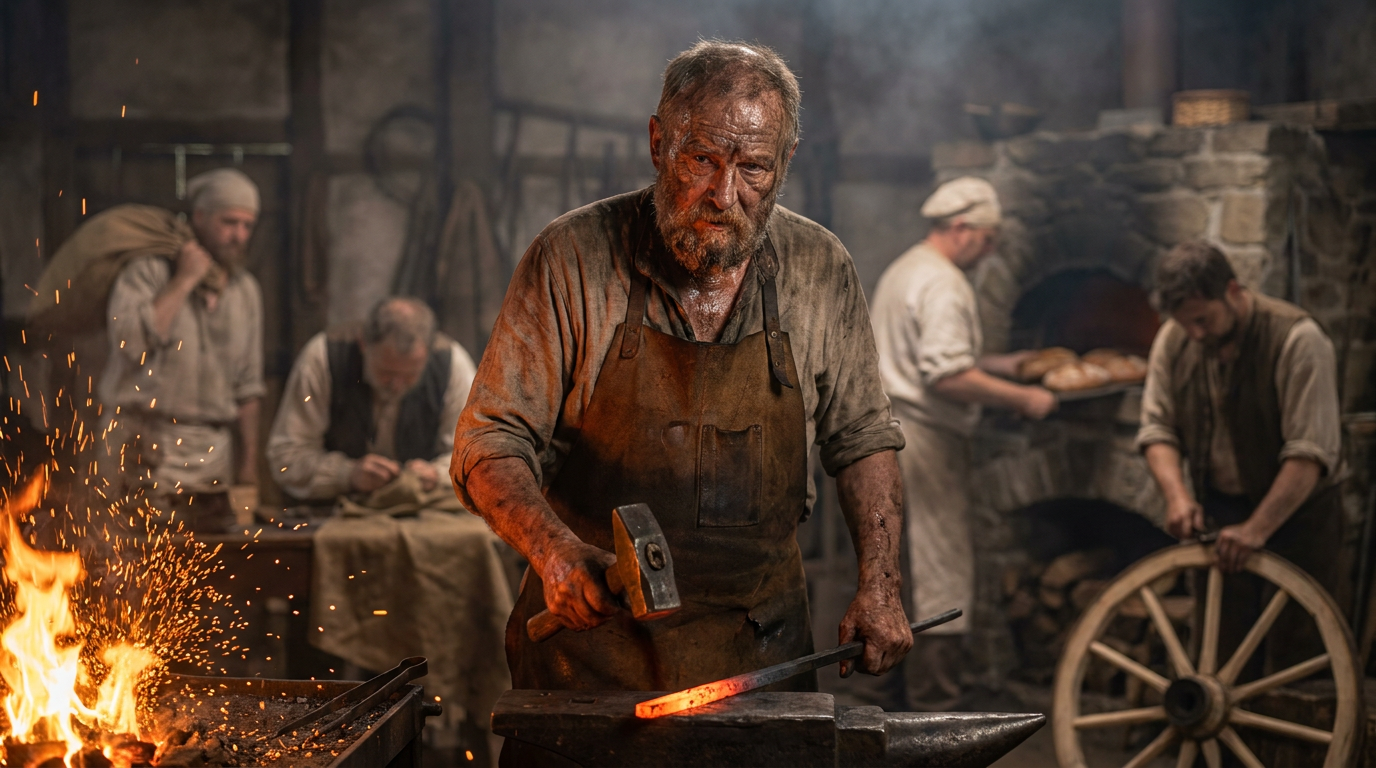
Their professions were essential to everyday life—and eventually many occupations became family names.
Schmidt — The Smith
Schmidt, along with variations such as Schmitt and Schmid, is derived from the German word associated with a smith.
The village smith was an important craftsman who produced and repaired tools, horseshoes and other metal goods.
It is essentially the German cousin of the English surname Smith.
Müller — The Miller
Müller originally referred to someone who operated or worked in a mill.
Mills were crucial economic centers where grain was processed into flour, making the miller an important member of the community.
In America, Müller might become Mueller, Muller, Miller, or another variation.
Schneider — The Tailor
Schneider comes from the German verb schneiden, meaning “to cut.”
A Schneider was traditionally someone who cut cloth—a tailor.
Fischer — The Fisherman
This one remains fairly recognizable.
Fischer generally originated as an occupational surname for someone involved in fishing.
Weber — The Weaver
A Weber was a weaver—someone who produced cloth from yarn or thread.
Becker or Bäcker — The Baker
These names are associated with baking and the traditional occupation of baker.
Wagner — The Wagon Maker
Long before automobiles and interstate highways, wagons were indispensable.
A Wagner was traditionally associated with making wagons or wagon wheels.
Suddenly these aren’t just names.
They’re jobs.
They’re workshops.
They’re trades handed from one generation to another.
And they’re little glimpses into everyday German life centuries ago.
2. Your Surname Might Tell You Where Your Family Lived
Not every German surname described a profession.
Some described place.
Before street addresses, ZIP codes and driver’s licenses, geography was a convenient way of identifying people.
A person might be known by the town he came from or by a recognizable landscape near his home.
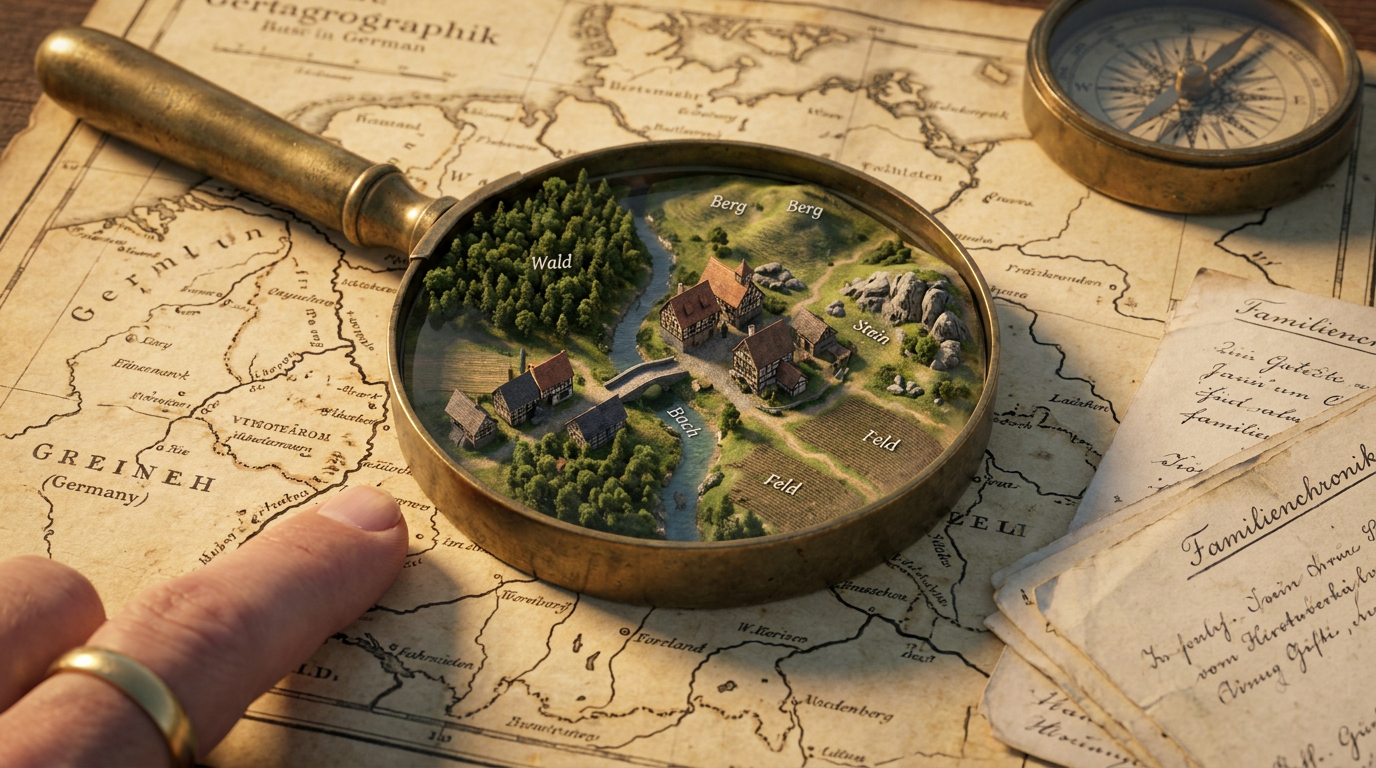
Names associated with words such as Berg (mountain or hill), Bach (stream), Wald (forest), Stein (stone), Feld (field) and Brück/Brücke (bridge) can sometimes contain geographical clues.
Consider surnames such as:
Steinberg — stone + mountain/hill
Grünwald/Grunwald — green + forest
Bachmann — associated with a stream or brook
Feldmann — associated with fields or open land
But be careful.
Surname meanings are rarely a GPS coordinate.
The same surname could have developed independently in different places, and spelling and meaning may have changed considerably over centuries.
Think of surname research as detective work rather than a simple translation exercise.
3. Some German Names Describe People
Imagine receiving your surname because your ancestor had curly hair, was particularly tall or possessed some memorable personality trait.
It happened.
Some German surnames developed from nicknames or descriptive characteristics.
Names involving words such as Klein (small), Groß/Gross (large), Lang/Lange (long or tall), Jung (young) and Alt (old) may have originated as descriptions distinguishing one individual from another.
A man called Heinrich might become “Heinrich Klein” to distinguish him from another Heinrich.
Eventually, what began as a nickname could become a hereditary surname carried by descendants who no longer shared the original characteristic.
So if your surname means “small,” don’t start measuring everyone at the next family reunion.
Your ancestor may have earned that description 600 years ago!
4. Patronymic Names: Who Was Your Father?
Some surnames developed from relationships between generations.
A person could be identified as the son or descendant of another person.
This practice was especially significant in parts of northern Germany and neighboring German-speaking or culturally connected regions.
Names could develop from personal names such as Hermann, Friedrich, Heinrich, Peters, Hansen and others.
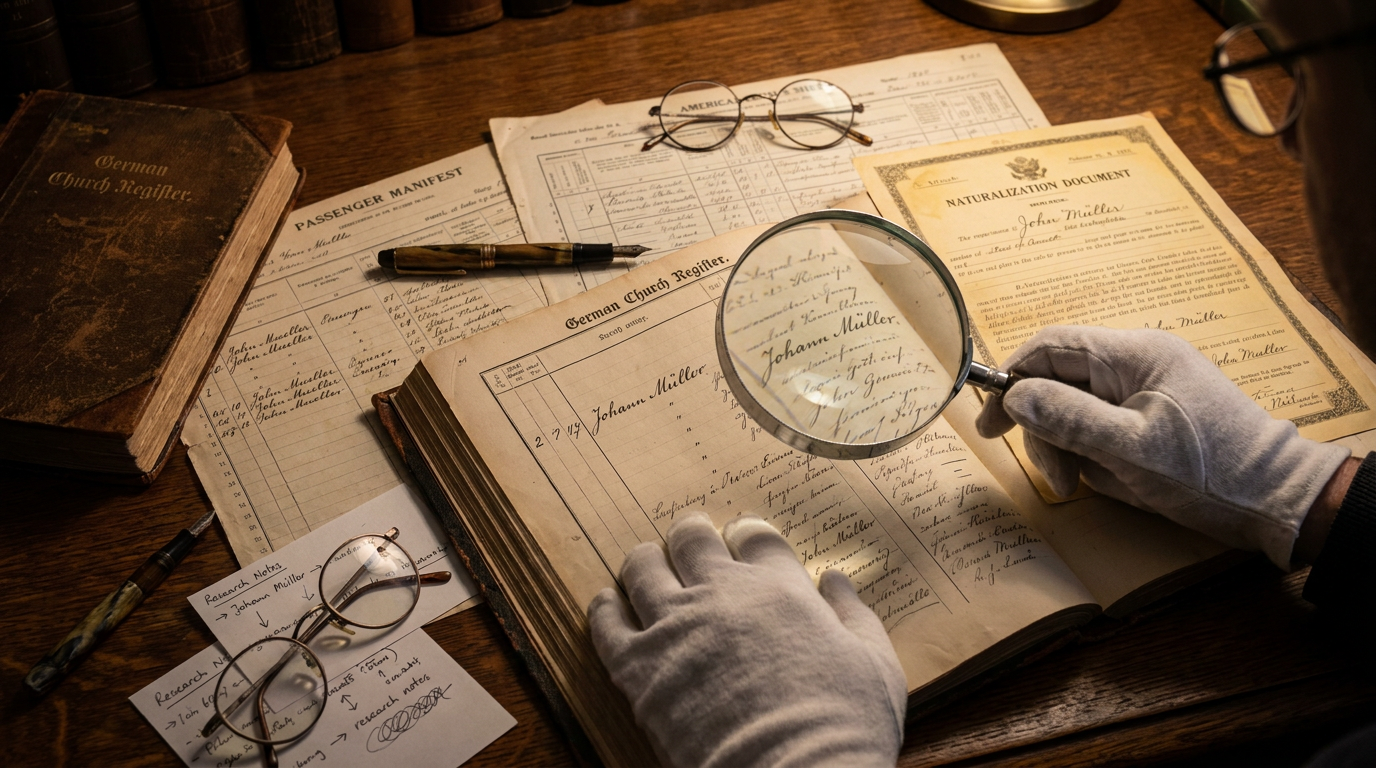
But German naming traditions varied enormously by region.
That’s an important point when researching German genealogy:
There was never just one universal “German surname system.”
Germany as a unified nation-state did not exist until 1871.
Before that, German-speaking ancestors lived within a complicated landscape of kingdoms, duchies, principalities, free cities and other territories.
A surname from Schleswig-Holstein might have evolved differently from one in Bavaria, Saxony, Württemberg or the Rhineland.
Understanding where your ancestors lived can therefore be just as important as understanding what their surname means.
5. Why Is the Same German Name Spelled Five Different Ways?
Here’s where German genealogy gets interesting.
You find Schmidt in one record.
Then Schmitt.
Then Schmid.
Later an American census record says Smith.
Are these four different families?
Maybe.
Or maybe not.
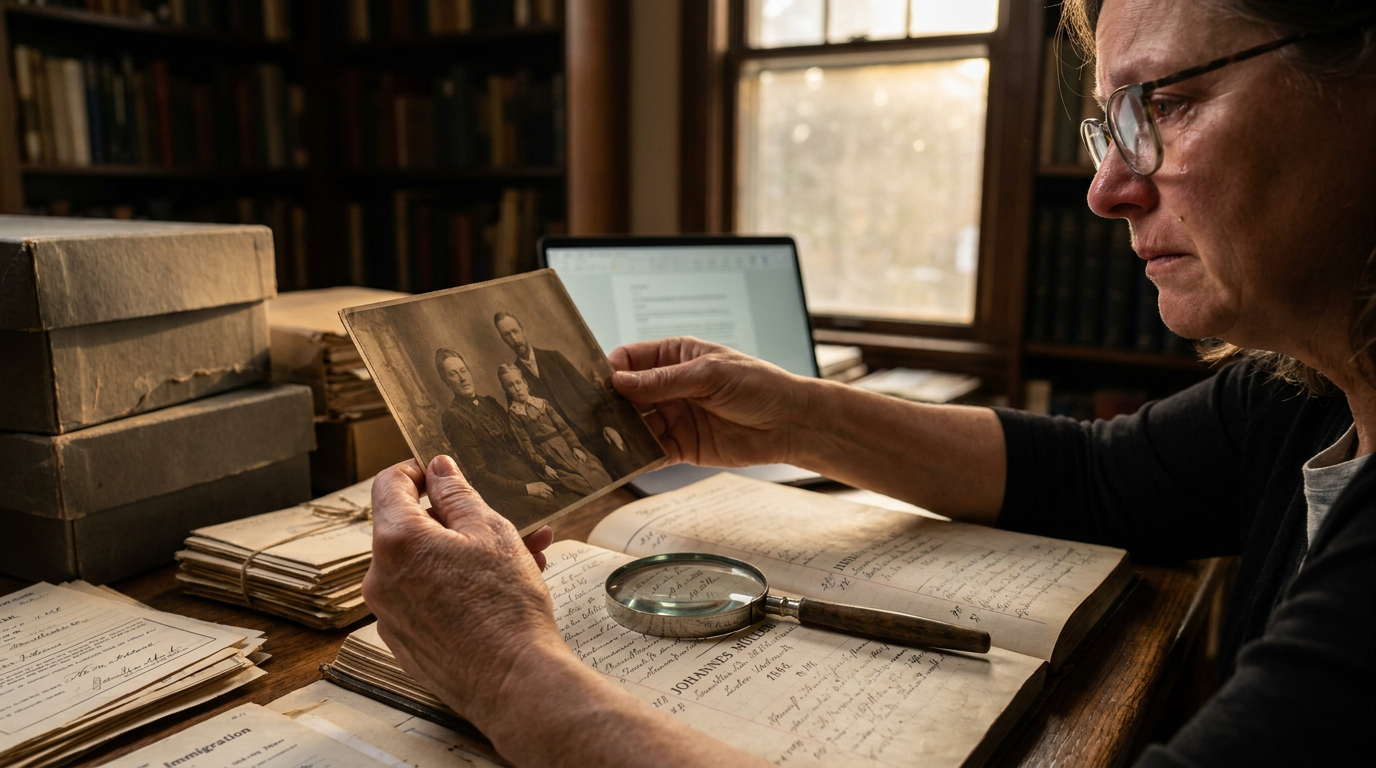
Historical spelling was far less standardized than modern Americans often assume.
A minister, census taker, immigration official or county clerk might record a surname according to how it sounded.
Handwriting could be misread.
Dialects influenced pronunciation.
And once German-speaking families settled in America, English-speaking officials sometimes recorded names differently.
The German umlauts ä, ö and ü created additional variations.
Müller could appear as Mueller or Muller.
Jäger might appear as Jaeger or Jager.
Schröder could become Schroeder or Schroder.
That tiny spelling variation could become extremely important when searching historical databases.
Genealogy Tip
When researching your German surname, never search only one spelling.
Create a list of every plausible version and search them all.
That single habit can uncover records you might otherwise never find.
6. Did Ellis Island Change Your German Family’s Name?
This is one of America’s most persistent immigration stories.
Many families have heard some version of:
“Our German name was changed at Ellis Island.”
It’s a wonderful family story—but usually not how the process worked.
Passenger manifests were generally created at the port of departure, and immigration inspectors compared arriving passengers against those records. Ellis Island officials were not routinely inventing new American surnames for immigrants.
That doesn’t mean German surnames didn’t change.
They absolutely did.
Changes frequently happened after immigrants settled in America.
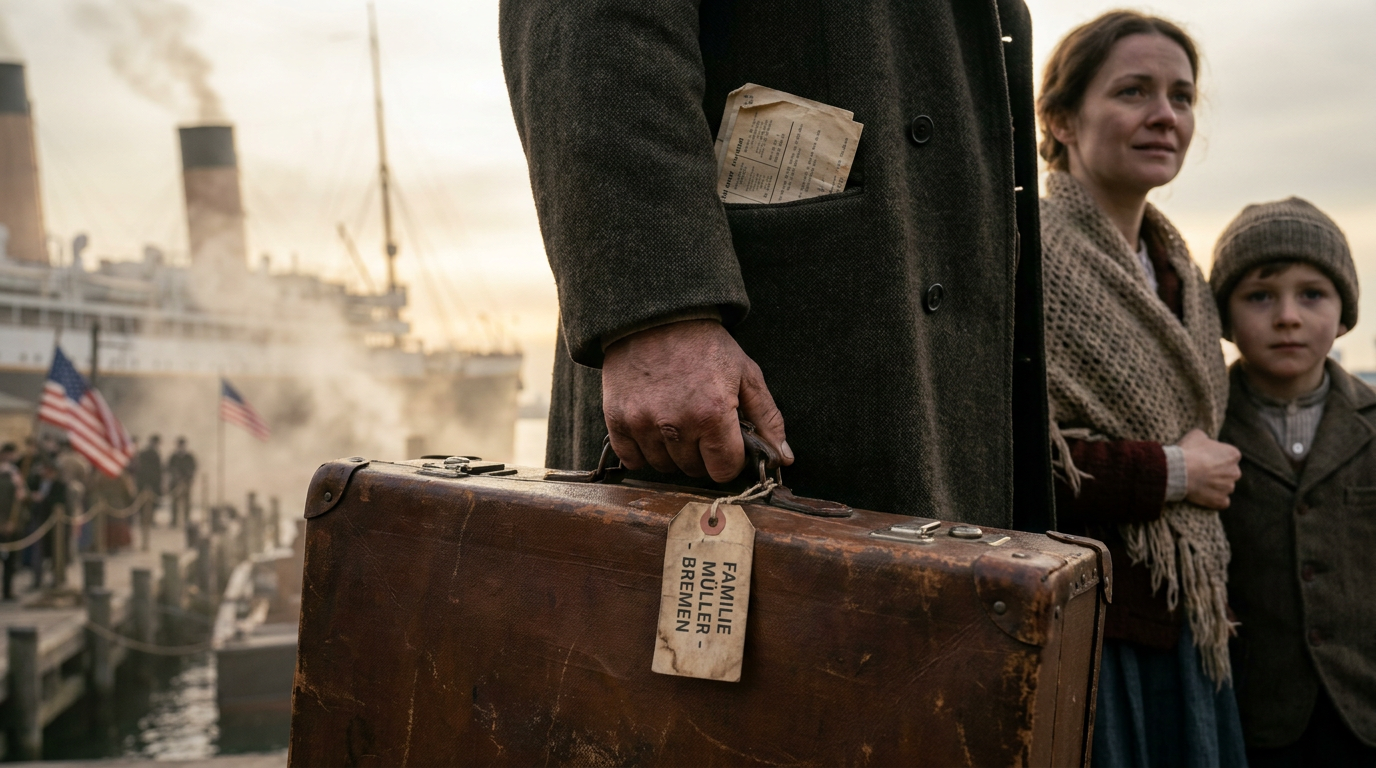
Families might simplify a difficult spelling, drop an umlaut, adopt a more English-looking version, or gradually accept whatever spelling appeared in American records.
Some names were translated or Anglicized.
Müller → Mueller → Miller
Schmidt → Smith
Braun → Brown
Sometimes changes happened gradually across generations rather than through one dramatic moment at an immigration desk.
And that makes discovering the original spelling particularly exciting.
7. Why German-American Names Sometimes Don’t Look German
Here’s another surprise.
You could have significant German ancestry and possess a surname that doesn’t immediately look German at all.
Marriage alone means surnames represent only one narrow branch of your ancestry.
Go back five generations and you can potentially have dozens of ancestral family lines contributing to your heritage while carrying the surname of only one.
German-speaking territories were also culturally and linguistically diverse.
Borders changed.
Families moved.
Regional dialects differed.
And some German immigrants deliberately or naturally Americanized their names.
Historical events also influenced German-American identity.
During periods of anti-German sentiment—especially around World War I—some families deemphasized German language and culture, and in certain cases German-looking names were altered or simplified.
That’s why the absence of an obviously German surname does not mean the absence of German ancestry.
Your family tree may be much more German than your modern surname suggests.
8. Your German Surname Is a Clue—Not the Answer
Typing your surname into an online translator can be fun.
But serious genealogy requires more evidence.
Two unrelated families can share the same surname.
A surname may have several possible origins.
The meaning can differ according to region.
And centuries of migration and spelling changes can complicate everything.
The better question isn’t simply:
“What does my German surname mean?”
It’s:
“Who was the earliest documented person in my family who carried this name—and where did that person live?”
Now you’re doing genealogy.
Start with yourself and work backward one generation at a time.
Look for:
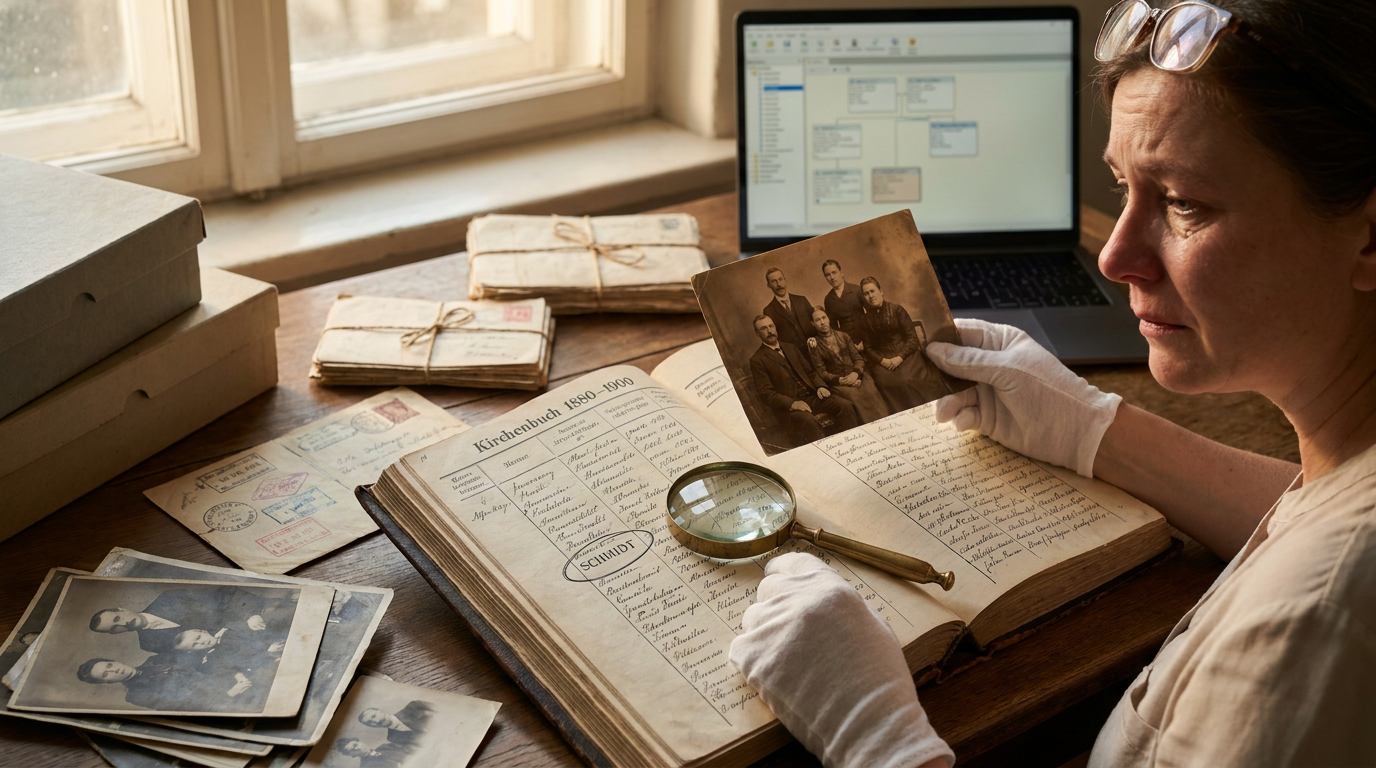
Birth records, baptismal records, marriage records, death records, church registers, census records, naturalization papers, passenger lists, military records, obituaries, cemetery records and family Bibles.
Pay special attention to the oldest documents available.
The closer you get to your immigrant ancestor, the greater your chance of finding an earlier spelling and, most importantly, a specific German hometown or region.
9. Finding the German Hometown Can Change Everything
For many German-American genealogists, discovering the ancestral hometown is the breakthrough moment.
“Germany” is enormous when you’re searching historical records.
A specific village changes the game.
Once you identify an ancestral town, parish or district, completely new research possibilities can emerge.
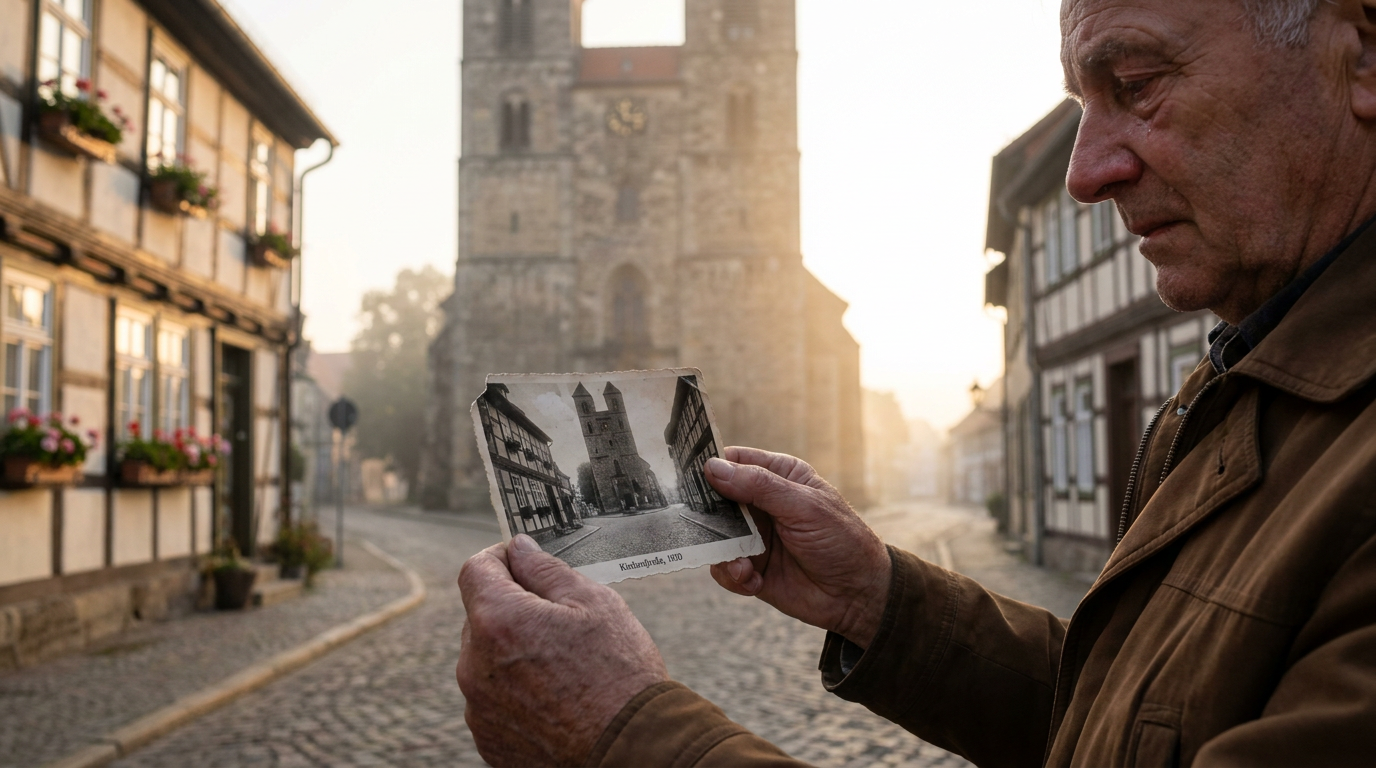
Church registers may contain baptisms, marriages and burials stretching backward for generations.
You might discover siblings who never emigrated.
Parents and grandparents may suddenly appear.
You may learn the family’s occupation.
Sometimes the same surname appears in local records century after century.
And then something remarkable happens.
The name stops being just a word.
It becomes a place.
You can look at photographs of the village.
You can locate the church.
You can see the countryside.
Perhaps someday you can stand there yourself.
Few genealogy experiences compare with walking through the community where your ancestors once walked.
10. Turn Your Last Name Into a Family Adventure
You don’t need to become a professional genealogist to explore your surname.
Make it fun.
Ask the oldest members of your family what they remember.
Pull out the old photo albums.
Turn photographs over—you may be amazed how often names and dates were written on the back.
Search old trunks, boxes and family Bibles.
Visit cemeteries.
Compare census records.
Search passenger manifests.
Look at naturalization records.
Ask relatives whether anyone remembers the original German spelling.
And don’t overlook stories simply because they seem uncertain.
Grandma’s story about an ancestor coming from “somewhere near Hamburg” might not be perfectly accurate—but it could contain the clue that eventually leads you to the correct place.
Record those stories now.
Future generations may someday be incredibly grateful that you did.
So… What Does YOUR German Last Name Mean?
That’s the fun part.
Maybe your ancestors were millers.
Maybe they were blacksmiths.
Maybe they lived beside a forest, stream or mountain.
Maybe your surname points toward an ancestor’s father.
Maybe the original German spelling disappeared generations ago and is waiting to be rediscovered in an old church register.
Or perhaps your German heritage comes through a grandmother or great-grandmother whose surname isn’t the one you carry today.
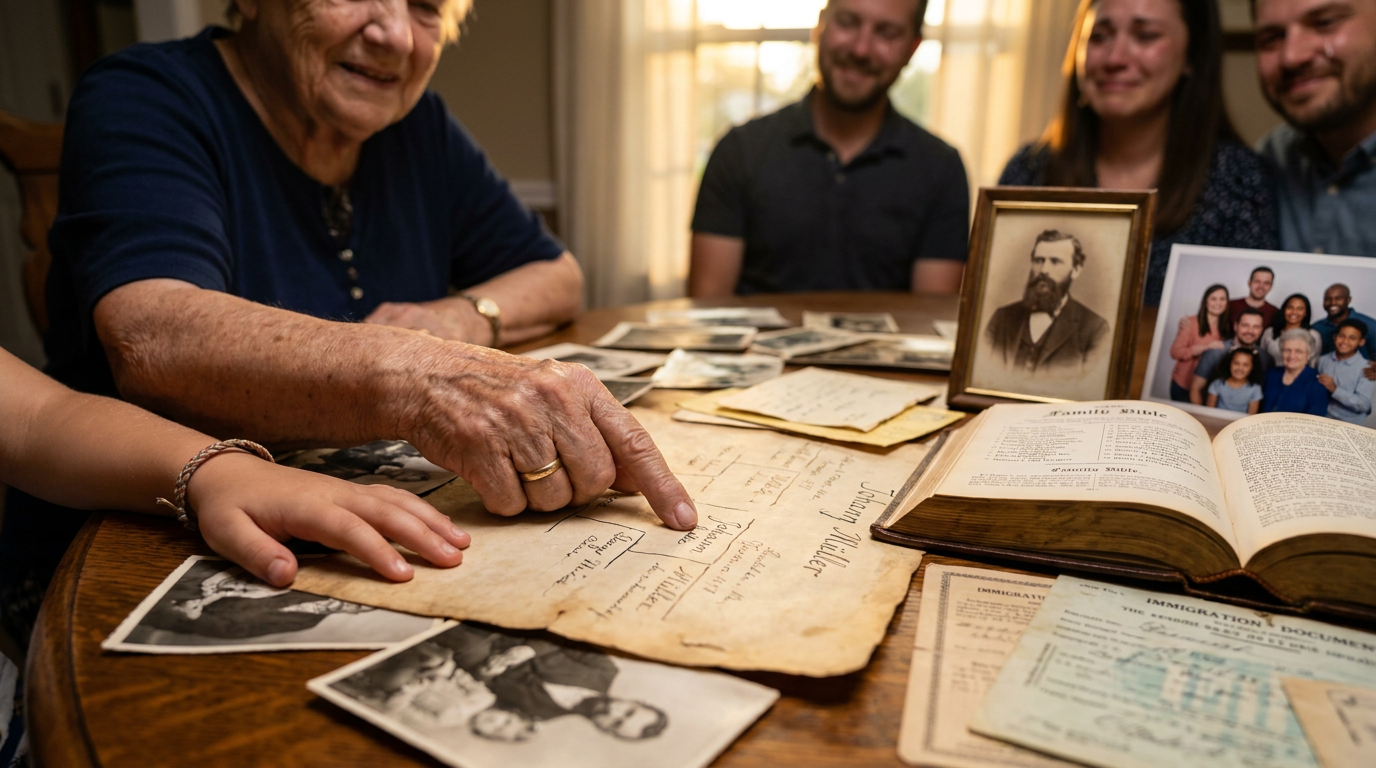
Whatever you discover, remember that your surname is only the beginning.
Behind every family name were real people.
People who worked.
Married.
Raised children.
Survived difficult times.
Celebrated holidays.
Left familiar villages.
Crossed an ocean.
And built new lives in America.
Their names traveled with them—sometimes unchanged, sometimes transformed—but their stories became part of the larger German-American story.
“A surname may tell you what your ancestors were called. Genealogy helps you discover who they actually were.”
So the next time someone asks:
“What’s your last name?”
You might hear the question a little differently.
Because that name isn’t merely printed on your driver’s license.
It could be a tiny piece of history passed from generation to generation for hundreds of years.
And somewhere behind it may be a German village, an old occupation, a forgotten ancestor—and an incredible family story waiting for you to discover.
Your German Heritage is Calling You.
What will your name reveal?
Prost!
— GERMAN HERITAGE USA