The Case for 60 Million: How Anglicization and Assimilation Expanded German Heritage
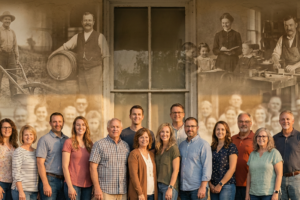
For generations, Americans of German ancestry have been everywhere—and almost nowhere at the same time.
They helped build towns, farms, breweries, churches, universities, businesses, and entire regions of the United States. German words entered American English. German customs became American traditions. German family names filled phone books, gravestones, and town records—often without anyone realizing their origins.
And yet, when modern Americans are asked about ancestry, German heritage often seems quieter than expected.
But what if that quietness doesn’t reflect absence at all?
What if it reflects something far more powerful: successful assimilation, cultural blending, and identity expansion?
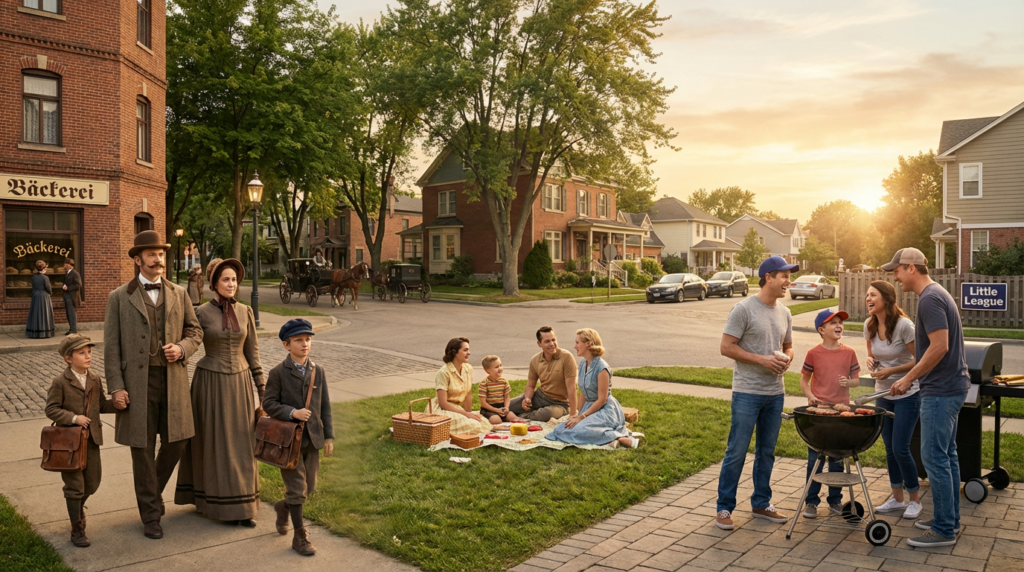
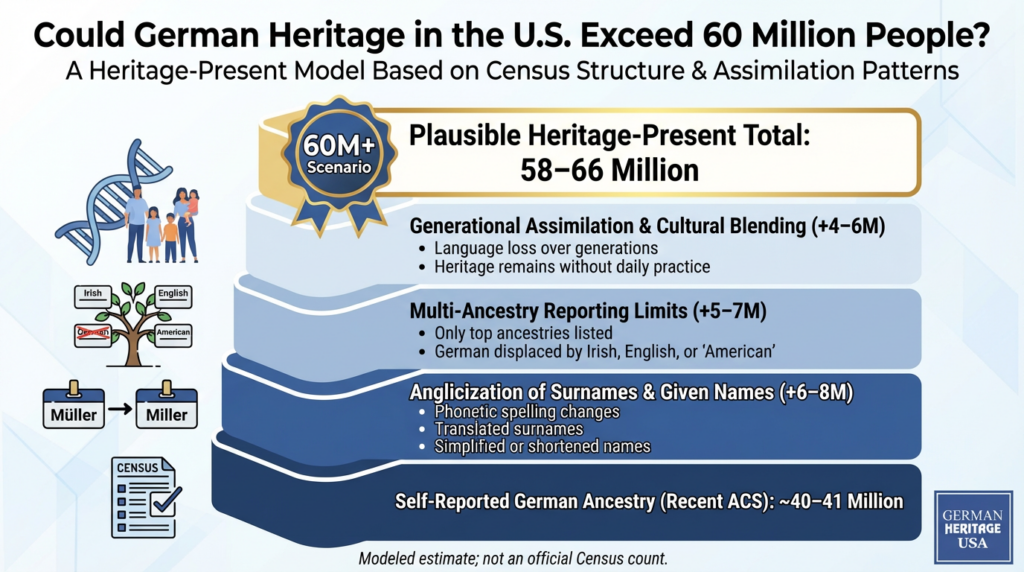
Recent self-reported U.S. Census and American Community Survey (ACS) data places Americans identifying as German at roughly 40–41 million people, already making German ancestry the single largest self-reported European heritage group in the United States.
However, when we examine how ancestry is reported, how names changed, how families blended, and how identity simplified over generations, a compelling case emerges:
Americans of German ancestry may realistically exceed 60 million people—making German heritage the largest national ancestry group in the United States.
This article explores how and why that happened—not through disappearance, but through integration.
The Starting Point: What the Census Actually Measures
Before diving deeper, it’s important to understand what U.S. ancestry data does and does not measure.
The Census and ACS rely on self-reported ancestry, not genealogical verification. Individuals answer based on:
- What they know
- What they were told
- What feels most relevant to their identity
- What fits on the form
Ancestry is not ranked by genetic percentage, nor does it capture every ancestral line. In many cases, respondents list only one or two ancestries—even when their family history is far more complex.
That matters deeply for German Americans, whose history in the U.S. stretches back centuries and intersects with nearly every other major European heritage group.
Anglicization: When Names Changed but Heritage Stayed

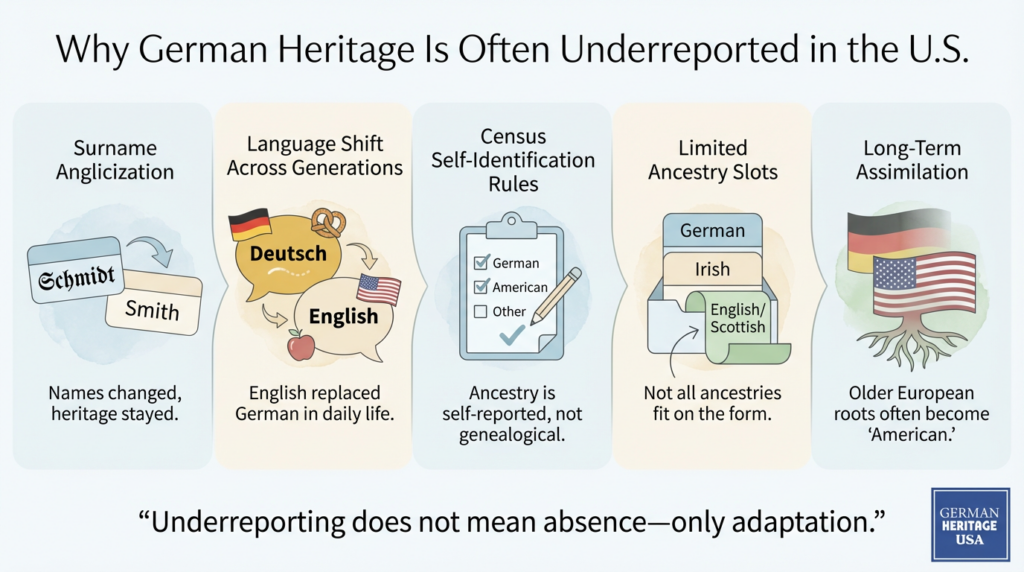
German immigrants and their descendants frequently adapted names for:
- Pronunciation
- Employment opportunities
- Social integration
- Simplicity in an English-speaking society
This process was rarely about erasing heritage. More often, it was about belonging.
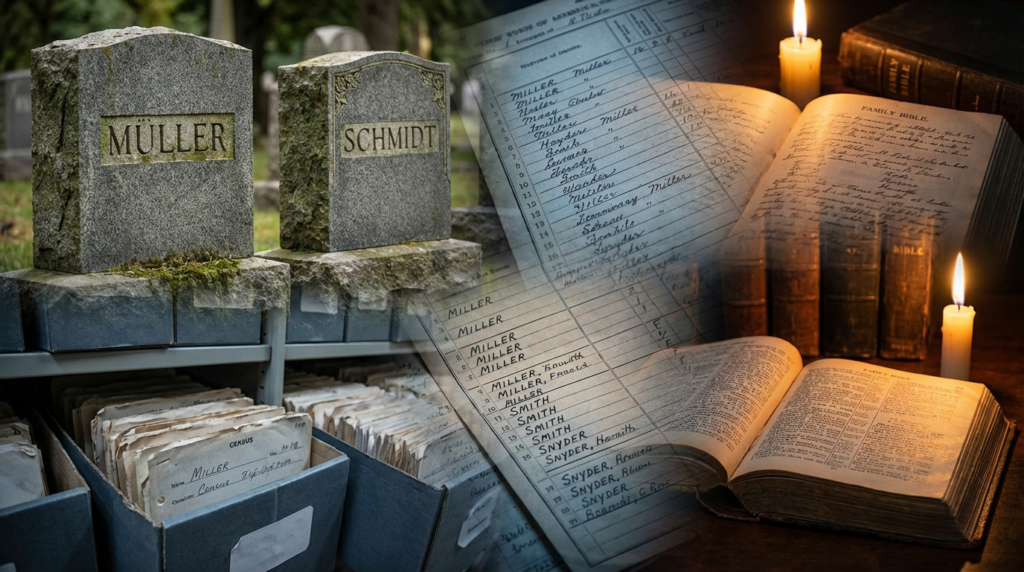
Müller became Miller
Schmidt became Smith
Schneider became Taylor
Zimmermann became Carpenter
Over generations, those changes made German roots less immediately visible, especially to descendants who grew up with English surnames and little exposure to German language.
As one historian famously noted:
“Names didn’t disappear. They translated.”
The infographics included throughout this article visually demonstrate how millions of German descendants remain genetically and historically connected—despite name evolution.