
Erntedankfest vs. Thanksgiving: Two Nations, Two Traditions, One Beautiful Reason to Celebrate!
GERMAN HERITAGE USA | AFFILIATE DISCLAIMER: This post may or may not contain affiliate links which means we may receive a commission for purchases made through links. We will only recommend products that we have personally used or that we truly trust. Learn more on our Private Policy and Disclaimer Page located under our Terms Of Service tab above.
From Germany’s golden harvest fields to America’s Thanksgiving dinner tables, discover the fascinating histories, cherished customs, delicious foods, and German-American family traditions that celebrate gratitude across generations.
Two Countries, Two Celebrations, and One Beautiful Connection
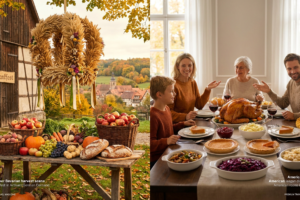
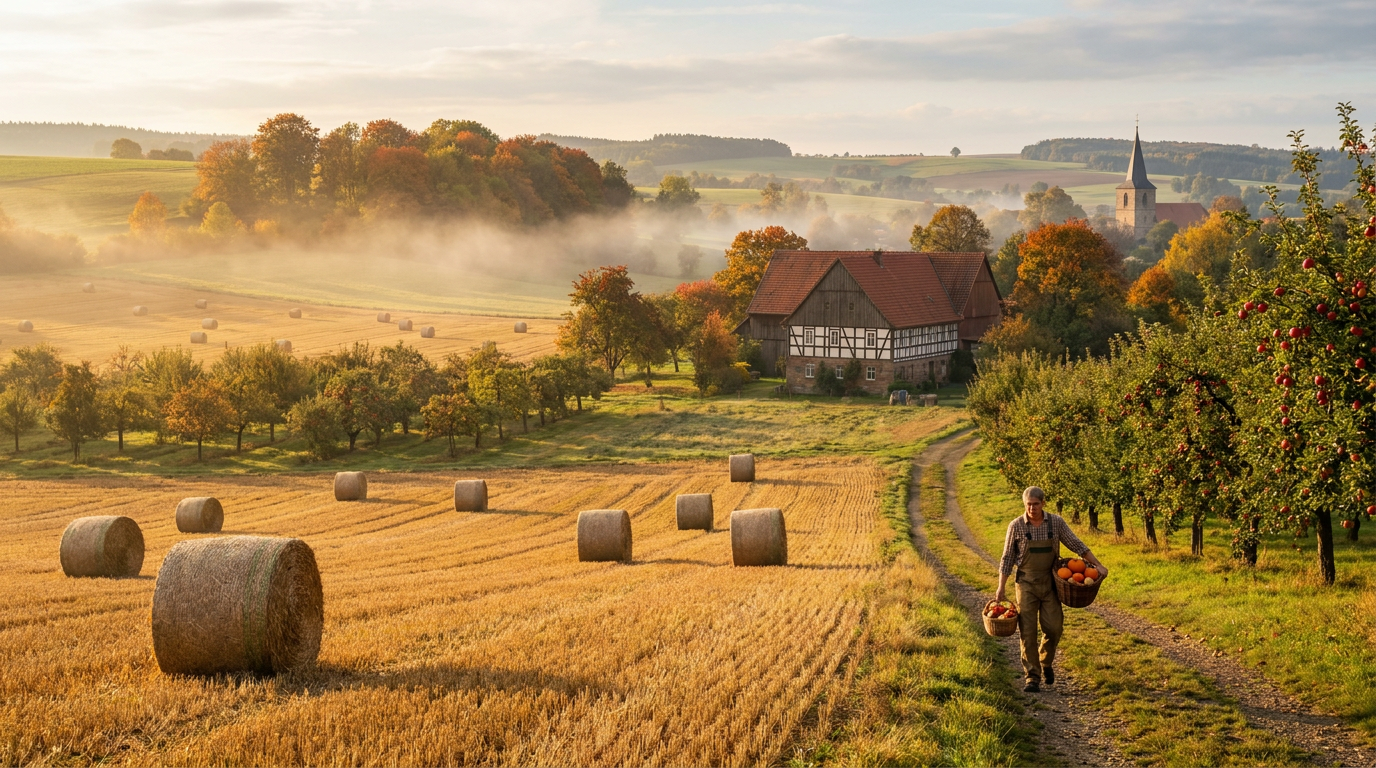
Imagine a picturesque German village on a crisp October morning. Golden leaves drift through the streets, church bells ring in the distance, and baskets overflow with freshly harvested apples, pumpkins, vegetables, and fragrant loaves of bread. Inside the village church, a magnificent crown woven from golden stalks of grain stands as a symbol of gratitude for another successful harvest.
Now imagine an American home several weeks later.
It’s Thanksgiving morning. A turkey is roasting in the oven, pumpkin pies are cooling on the counter, and family members are gathering around a beautifully decorated dining table. In a German-American household, perhaps there’s also a bowl of homemade sauerkraut, German red cabbage, or a beloved potato dish prepared from Grandma’s handwritten recipe.
Two countries. Two different celebrations. Yet one unmistakable connection: the importance of giving thanks for life’s blessings.
Germany celebrates Erntedankfest, its traditional harvest thanksgiving festival. America celebrates Thanksgiving, one of its most cherished national holidays.
Although these celebrations have distinct histories, they share themes of gratitude, community, family, food, and appreciation for the harvest.
And when generations of German immigrants made America their new home, something wonderful happened: German customs and American traditions began finding places together in the lives of German-American families.
Let’s explore the history, the differences, the similarities, and the delicious cultural connections that make these two celebrations so special.
1. What Exactly Is Erntedankfest? Germany’s Beautiful Harvest Thanksgiving
The German word Erntedankfest (approximately pronounced EHRN-tuh-dahnk-fest) translates to “harvest thanksgiving festival.”
Break the word into three parts:
- Ernte — Harvest
- Dank — Thanks or gratitude
- Fest — Festival or celebration
Put them together and you have a celebration devoted to expressing appreciation for the harvest and the blessings that sustain everyday life.
For generations, farming communities throughout German-speaking regions have recognized the importance of successful crops, healthy livestock, and the people whose labor provides food for everyone.
Today, Erntedankfest is primarily associated with Christian thanksgiving services, particularly in Protestant and Catholic communities.
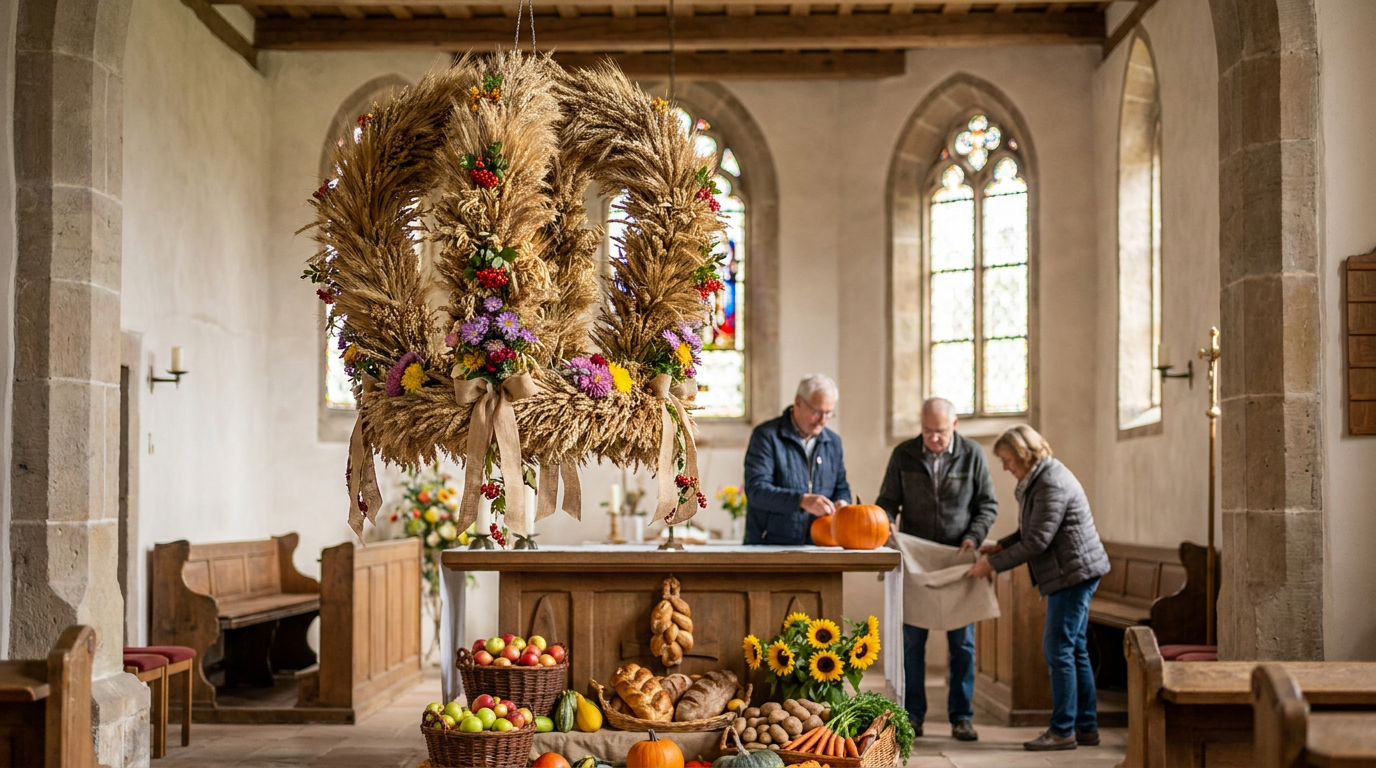
Church altars are adorned with colorful produce, freshly baked bread, wheat, flowers, and other symbols of agricultural abundance.
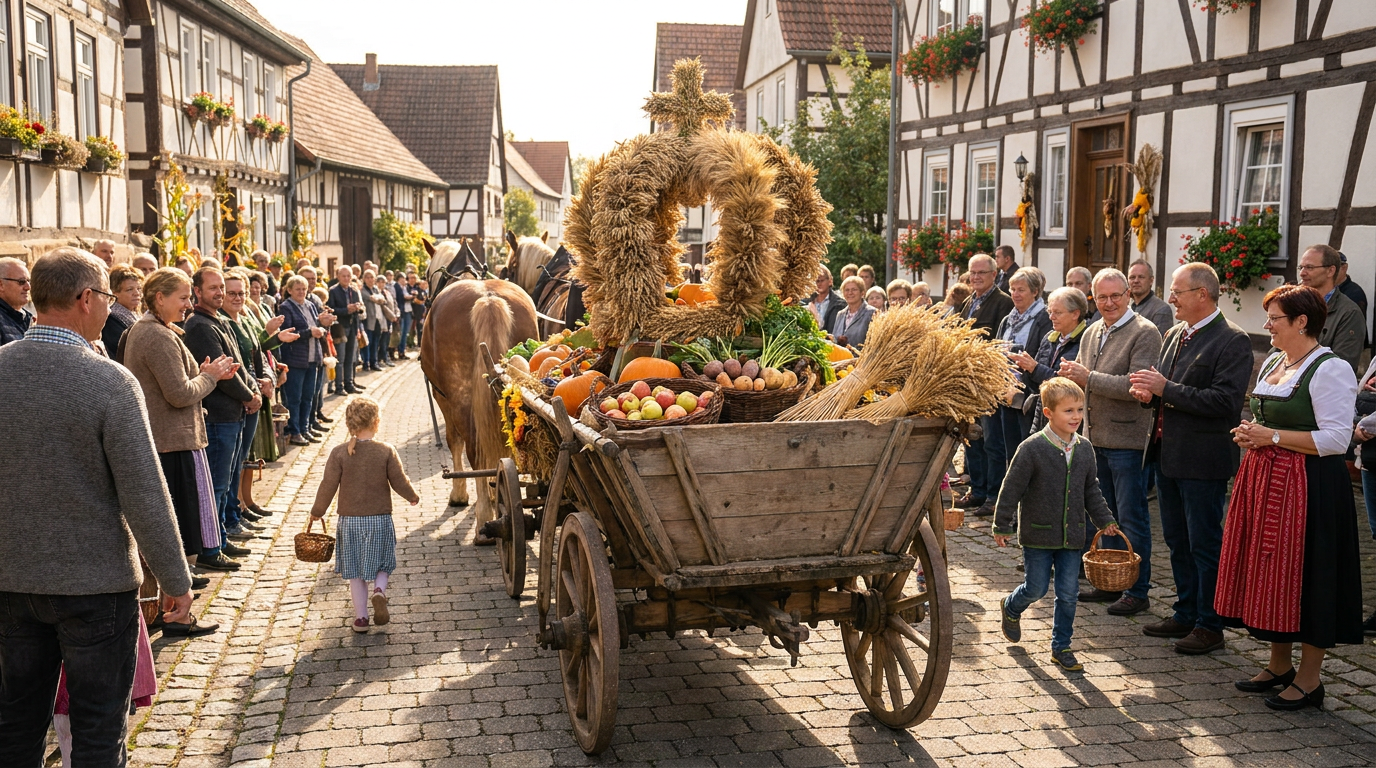
In some communities, celebrations extend beyond the church to include processions, music, festivals, and shared meals.
When is Erntedankfest celebrated?
Traditionally, many German communities observe the festival on the first Sunday in October, although regional practices vary. In wine-growing regions, celebrations may take place later in the harvest season.
In 2026, the commonly observed date was Sunday, October 4.
Unlike Thanksgiving in the United States, Erntedankfest is not a nationwide public holiday in Germany.
That distinction reveals something interesting: Germany’s harvest thanksgiving is traditionally rooted in religious and community life rather than a nationally mandated day of celebration.
2. Ancient Harvest Gratitude and the Christian Traditions of Germany
Long before supermarkets, refrigeration, and convenient year-round food supplies, a successful harvest could determine whether a family or community had enough food to survive the winter.
For agricultural societies, the changing seasons were more than beautiful scenery. They represented the rhythms of life itself.
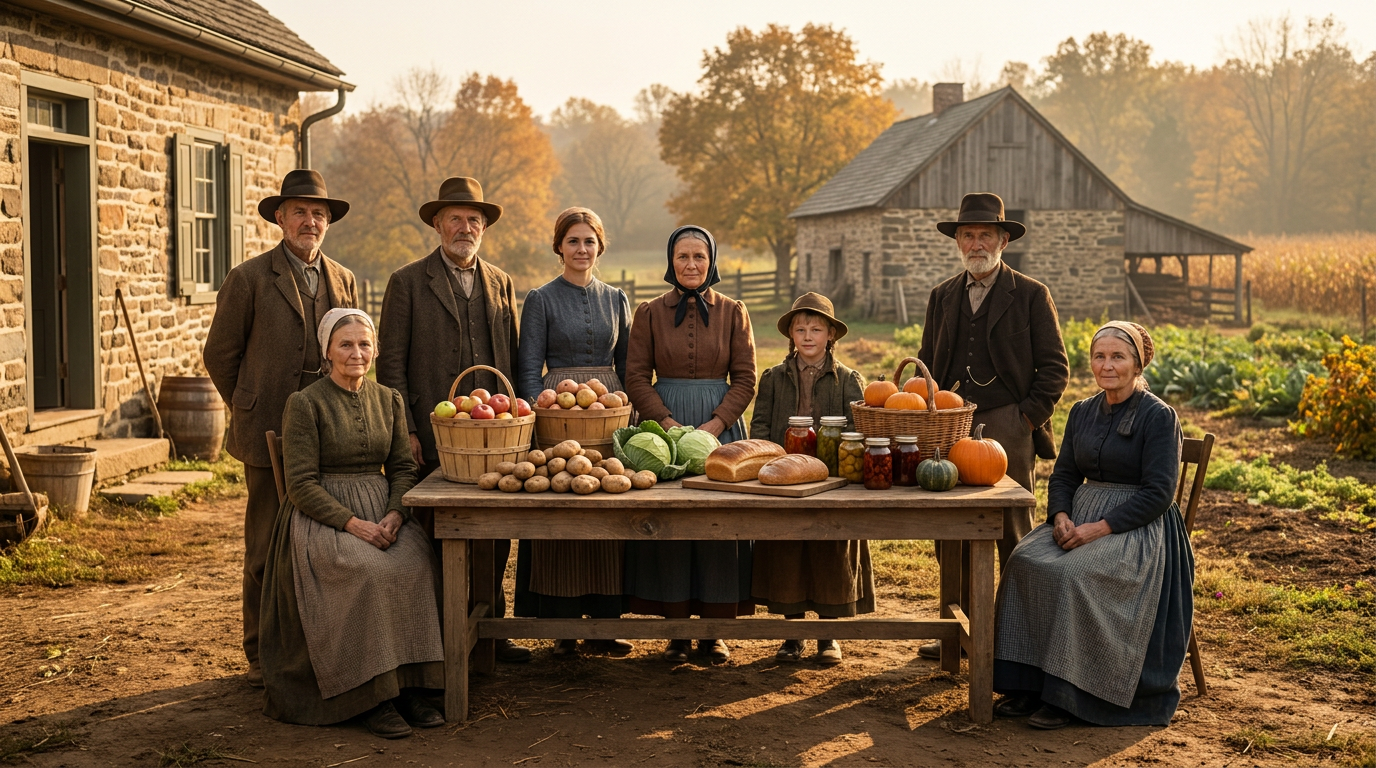
Across Europe, people observed harvest-related ceremonies long before modern national holidays existed.
In what is now Germany, customs of thanking divine powers for the harvest preceded Christianity. Over time, Christian communities developed their own harvest thanksgiving observances, expressing gratitude to God for the fruits of the earth.
These practices evolved across different regions and centuries. There was never one single ancient German ceremony from which every modern Erntedankfest custom descended.
As the Evangelical Church in Germany explains, Erntedank also reminds believers of humanity’s dependence on nature and the responsibility to care for its resources.
This gives the celebration a meaning that reaches beyond an abundant table.
It recognizes farmers, gardeners, agricultural workers, and all those whose contributions help feed communities.
For many participants, it is also an opportunity to remember neighbors facing hardship and to share food with people who need assistance.
What began as expressions of harvest gratitude continues to encourage generosity, humility, and appreciation for everyday necessities.
3. The Erntekrone: Germany’s Magnificent Harvest Crown
One of the most beautiful and recognizable symbols of Erntedankfest is the Erntekrone, or harvest crown.
Traditionally fashioned from bundles of grain such as wheat, rye, barley, or oats, these elaborate decorations can resemble enormous golden crowns suspended above a church altar or displayed in a village celebration.
Some feature four graceful arches rising from a circular base, while others incorporate ribbons, seasonal flowers, and additional decorations.
Creating an Erntekrone can require considerable skill, patience, and cooperation.
Imagine several generations working together: older residents sharing traditional techniques, adults carefully binding stalks of grain, and children helping arrange flowers and ribbons.
The finished crown represents more than a decorative centerpiece.
It recognizes the harvest, the work behind it, and the community’s appreciation for nature’s abundance.
Other traditional Erntedank decorations may include:
- Baskets overflowing with apples, pears, and vegetables.
- Freshly baked rustic breads.
- Sunflowers, wheat sheaves, and autumn foliage.
- Pumpkins, grapes, nuts, and seasonal produce.
- Decorated wagons and handmade harvest wreaths.
These displays remind participants that food does not simply appear on grocery store shelves.
Some congregations distribute donated harvest offerings to people in need after their services.
The beauty of Erntedankfest lies not only in celebrating abundance, but also in remembering the responsibility to share it.
4. How Germans Celebrate: Church Bells, Village Festivals, Food, and Fellowship
Erntedankfest celebrations differ from one German community to another.
In rural areas, where the agricultural calendar remains a visible part of local life, harvest festivals may feature decorated wagons, community gatherings, music, regional costumes, and seasonal markets.
In churches, worshippers may sing thanksgiving hymns, offer prayers, and participate in services recognizing the blessings of the harvest.
Families sometimes gather afterward for a meal featuring seasonal ingredients.
And what wonderful ingredients Germany’s autumn harvest provides!
Apples become Apfelkuchen or Apfelstrudel. Potatoes appear in hearty dishes. Pumpkins become warming soups. Fresh bread accompanies savory meals, and cabbage, root vegetables, and other regional produce make their way into home kitchens.
There is no single nationwide Erntedankfest dinner menu comparable to America’s familiar Thanksgiving turkey dinner.
Instead, Germany’s celebration reflects the country’s regional food traditions.
A family in Bavaria might prepare something different from a household in northern Germany or a wine-growing community along the Moselle.
That regional variety is part of its charm.
Whether celebrated with an elaborate community festival or a modest church service, Erntedankfest invites people to appreciate the often-overlooked blessings of ordinary life.
5. America’s Thanksgiving: A Different History With Deep Harvest Connections
To understand how German and American traditions eventually intersected, we need to explore Thanksgiving’s own history.
And it is a richer, more complicated story than the familiar classroom image of Pilgrims and Native Americans happily sharing a turkey dinner.
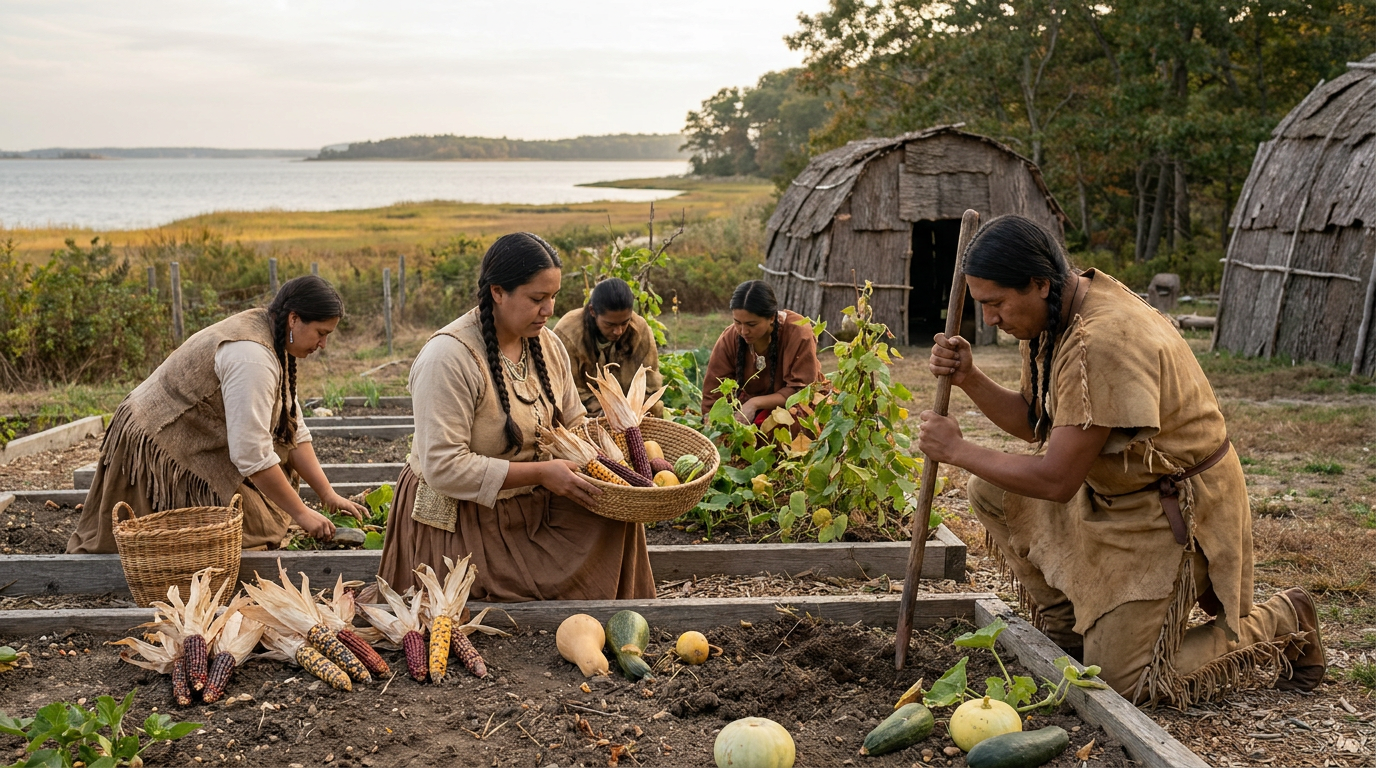
Long before European colonization, Indigenous peoples throughout North America practiced seasonal harvest celebrations and traditions of thanksgiving.
For the Wampanoag people of present-day New England, gratitude was already an important part of cultural and spiritual life.
In 1621, English colonists at Plymouth and Wampanoag participants took part in a harvest gathering that later became closely associated with the American Thanksgiving story.
However, the circumstances surrounding that gathering involved political alliances, Indigenous knowledge, survival, and complicated relationships between the Wampanoag and English settlers.
The popular portrayal of that event as a simple, harmonious founding celebration overlooks much of the history, including the conflict and dispossession that followed.
The Smithsonian National Museum of the American Indian encourages Americans to understand these fuller historical perspectives.
How Thanksgiving Became a National American Holiday
During the nineteenth century, Thanksgiving increasingly developed into a celebration of family, gratitude, and national identity.
Writer and editor Sarah Josepha Hale campaigned for a nationally recognized Thanksgiving holiday.
In 1863, during the Civil War, President Abraham Lincoln proclaimed a national day of thanksgiving for the last Thursday in November.
The modern date was established by federal legislation in 1941, setting Thanksgiving on the fourth Thursday of November.
In 2026, American Thanksgiving falls on Thursday, November 26.
Over generations, Thanksgiving became a holiday shaped by regional cooking, religious and secular practices, changing family customs, and the contributions of many communities.
For some Americans, it also carries solemn meaning as a time to reflect on Indigenous history and the consequences of colonization.
Recognizing those different experiences makes the holiday’s history more complete.
6. Erntedankfest vs. Thanksgiving: What Makes These Celebrations Different?
At first glance, the two celebrations may seem nearly identical.
Both occur during the autumn harvest season. Both are associated with food, gratitude, and human connection.
But their traditions are not interchangeable.
| Tradition | Germany’s Erntedankfest | America’s Thanksgiving |
|---|---|---|
| Usual date | September or October, often the first Sunday in October | Fourth Thursday in November |
| Holiday status | Not a nationwide public holiday | Federal holiday |
| Primary emphasis | Harvest gratitude, church, and community | Family, gratitude, history, and national tradition |
| Typical gathering | Religious service or community harvest celebration | Family or friends sharing a holiday meal |
| Food traditions | Regional harvest foods and baked goods | Turkey, stuffing, potatoes, cranberry sauce, and pies |
| Recognizable symbols | Harvest crowns, grain, produce, decorated altars | Turkeys, pumpkins, autumn decorations, and harvest imagery |
Of course, these are general patterns rather than strict rules.
Some Germans celebrate Erntedankfest quietly. Others enjoy major community festivals. Some Americans spend Thanksgiving in religious services, while others volunteer, visit friends, or simply enjoy a relaxing day.
The holidays also have different historical foundations.
Erntedankfest is not simply America’s Thanksgiving celebrated earlier, and American Thanksgiving did not originate from Germany’s Erntedankfest.
They are distinct observances that express related human experiences.
And this is precisely what makes the German-American connection so interesting.
When immigrants encountered American Thanksgiving, they already understood the language of harvest gratitude—even if the American holiday’s history and customs were different from their own.
7. When German Immigrants Encountered American Thanksgiving
Now we arrive at one of the most fascinating chapters of our German-American heritage story!
For centuries, German-speaking immigrants made new lives in America.
They established farms, churches, businesses, schools, and communities while carrying familiar customs from the places they had left behind.
Among these immigrants were the ancestors of today’s Pennsylvania German communities, often called the Pennsylvania Dutch.
Despite the name, “Dutch” in this cultural context generally refers to German-speaking heritage, not immigration from the Netherlands.
Families brought food-preservation skills, baking traditions, farming knowledge, regional recipes, religious practices, and customs surrounding the changing seasons.
In Pennsylvania, some communities maintained autumn Harvest Home services.
These gatherings featured harvest produce, religious gratitude, and community participation—traditions with clear parallels to European harvest observances.
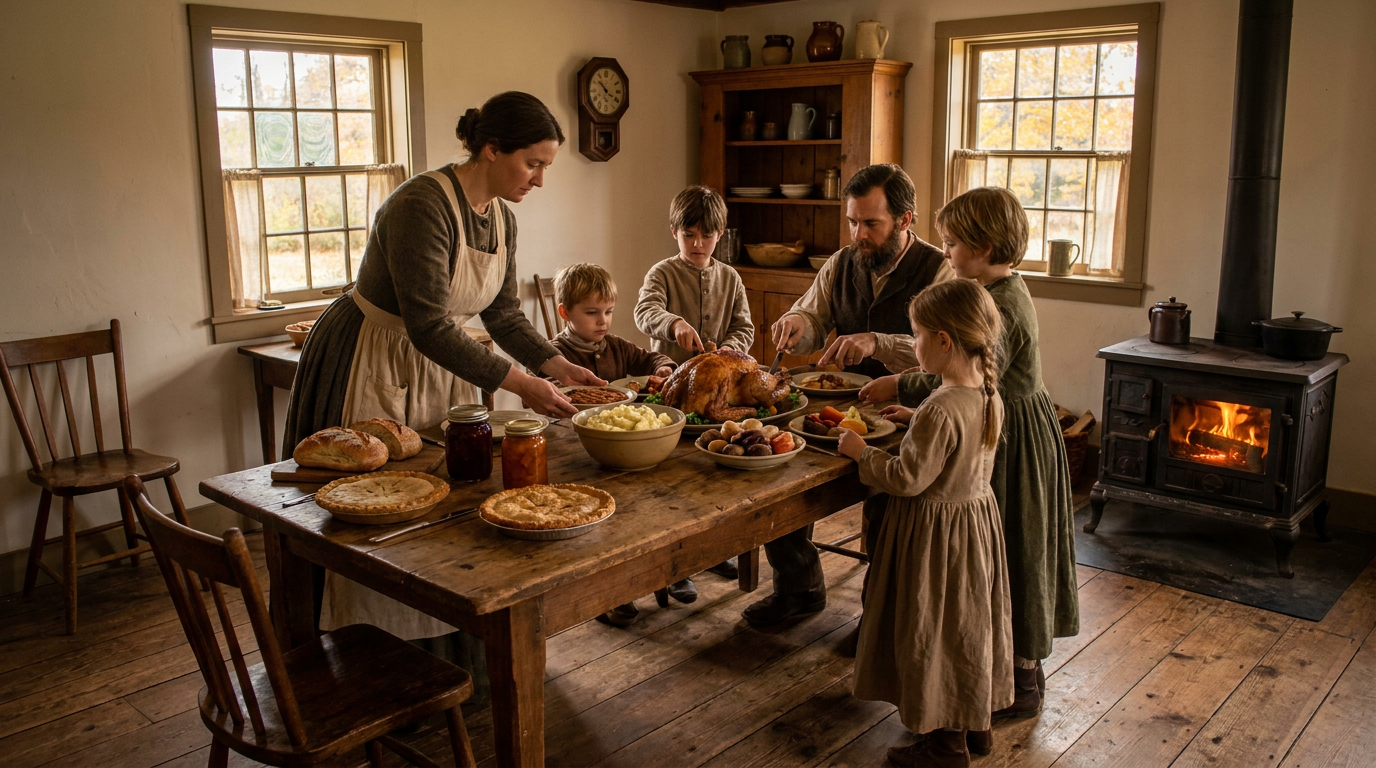
According to regional historical accounts gathered by Visit Central Pennsylvania, Pennsylvania German Harvest Home customs included decorating with produce and distributing harvest offerings.
As American Thanksgiving became more firmly established during the nineteenth century, German-American families participated in the evolving national holiday.
They did not need to abandon their familiar foods or customs to do so.
Instead, different families adapted in different ways.
An American holiday turkey could be accompanied by German-style side dishes. A family prayer might reflect the religious customs passed down from German ancestors. A cherished recipe could find a permanent place in a Thanksgiving meal.
There was no single moment when German Erntedankfest and American Thanksgiving officially merged.
Their convergence happened gradually and differently within communities, households, and generations.
That is how living heritage often works.
8. When Turkey Met Sauerkraut: German-American Thanksgiving Foods
Here’s a question for your next Thanksgiving dinner:
Does sauerkraut belong next to the turkey?
If your family has German-American roots—or comes from certain parts of Pennsylvania or Maryland—the answer might be an enthusiastic YES!
In Baltimore, for example, sauerkraut became a recognizable holiday side dish through the influence of German and other European immigrant communities.
Over time, this tradition spread beyond families of German ancestry.
That makes Baltimore’s Thanksgiving sauerkraut a wonderful example of how immigrant food traditions can become part of a broader regional identity.
The story is explored in the Maryland food-history publication Old Line Plate.
German-American Favorites Worth Bringing to Thanksgiving
Sauerkraut — The Tangy Thanksgiving Surprise
Slow-cooked sauerkraut, sometimes prepared with apples, onions, or savory seasonings, offers a delicious contrast to rich roasted meats.
Pennsylvania Dutch Potato Filling — The Best of Two Holiday Favorites
Imagine mashed potatoes meeting traditional bread stuffing!
Potato filling blends potatoes, bread, onions, celery, and seasonings into a comforting side dish associated with Pennsylvania German holiday tables.
Rotkohl — Sweet and Sour German Red Cabbage
Often cooked with apples, vinegar, and warming spices, red cabbage adds beautiful color and a distinctly German flavor to a holiday meal.
Kartoffelklöße — German Potato Dumplings
Soft potato dumplings can be served with turkey and gravy as a German-inspired alternative to conventional Thanksgiving potatoes.
Apfelkuchen or Apfelstrudel — A German Touch for Dessert
Who says pumpkin pie has to be the only dessert?
German apple cakes and strudels make delicious additions to a Thanksgiving dessert selection.
Fresh German-Style Bread and Rolls
Crusty country breads, rye breads, and soft rolls can give the American holiday meal another flavorful connection to European baking traditions.
Not every one of these dishes is a traditional Erntedankfest requirement, nor does every German-American family serve them.
But they demonstrate how old-world recipes can complement an American holiday feast.
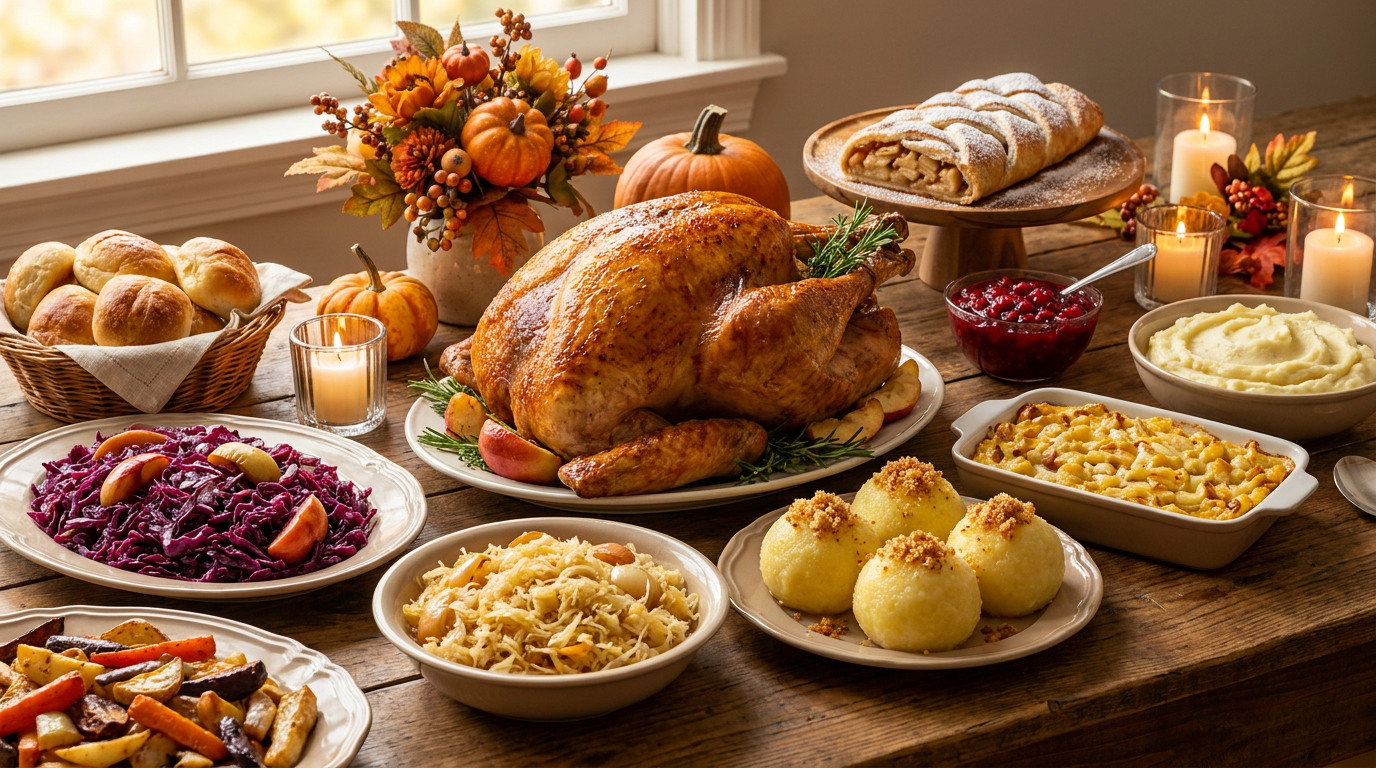
The Reading and Berks County tourism organization also documents Pennsylvania Dutch Thanksgiving favorites such as creamed dried corn, pickled beets, apple butter, and potato filling.
And that brings us to the best part of immigrant food heritage:
Once a treasured recipe becomes part of the family holiday table, it can remain there long after the original immigration story has faded from memory.
9. The Traditions That Survive: Grandparents, Family Recipes, and German-American Memories
For many German-American families, cultural heritage is not something discussed only in history books.
Sometimes it is found in an old recipe box.
Sometimes it is a surname recorded in a family Bible, a photograph of relatives standing beside a farmhouse, or the familiar aroma of a dish prepared every Thanksgiving.
Perhaps a grandmother always made red cabbage.
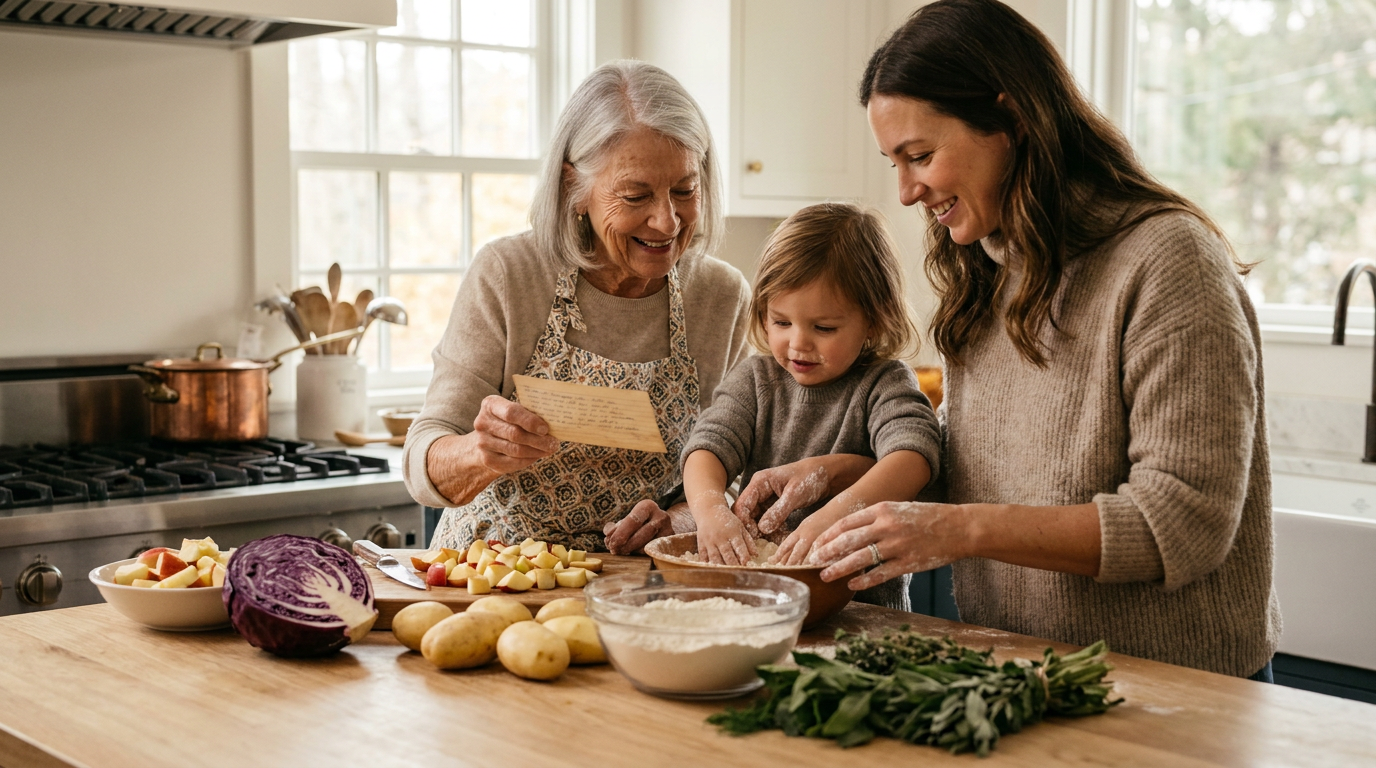
Perhaps an uncle insisted that the holiday meal wasn’t complete without homemade potato filling.
Perhaps the Thanksgiving dessert table featured a German apple cake because that was simply what the family had always served.
Not every tradition comes with a perfectly documented explanation.
Over generations, recipes change. Measurements become approximate. Ingredients are substituted. Children grow up, move away, and prepare familiar dishes in new kitchens.
And yet, the tradition continues.
This is one of the most meaningful aspects of German-American cultural identity.
Heritage isn’t always preserved through elaborate ceremonies. Sometimes it survives through the ordinary things families continue doing together.
A holiday meal offers an opportunity to ask questions.
Where did this recipe come from? Who first made it? Was it brought from Germany, created in America, or adapted somewhere along the way?
These conversations can turn Thanksgiving dinner into a beautiful opportunity for family-history discovery.
In many cases, the real story may be more fascinating than anyone expected.
10. Celebrate Both Traditions: Bring a Little Erntedankfest to Your American Thanksgiving!
You don’t have to live in Germany—or recreate an entire historical festival—to appreciate the spirit of Erntedankfest.
There are simple ways to bring German harvest customs into your American Thanksgiving celebration.
Create a German-Inspired Harvest Centerpiece
Arrange wheat stalks, apples, miniature pumpkins, seasonal flowers, and fresh bread on your holiday table.
Explain the symbolism of the Erntekrone and Germany’s traditional harvest displays to younger family members.
Add One German Family Recipe
Serve Rotkohl, German potato dumplings, sauerkraut, or a favorite apple dessert alongside your usual Thanksgiving dishes.
Better yet, ask a relative to teach the family a recipe that has been handed down for generations.
Share a German Expression of Gratitude
Before the meal, introduce everyone to a simple German phrase:
“Wir sind dankbar.” — “We are thankful.”
Or say:
“Danke für alles.” — “Thank you for everything.”
Small cultural traditions can help children develop an interest in their German Ancestry.
Celebrate the Farmers and Food Producers
Erntedankfest is a reminder that every holiday meal begins long before anyone enters the kitchen.
Take a moment to appreciate the farmers, growers, transport workers, and food producers whose work makes our celebrations possible.
Make Generosity Part of Your Celebration
Consider donating to a food bank, supporting a community food drive, or helping a neighbor who might otherwise spend the holiday alone.
Sharing the harvest is a meaningful way to honor the values reflected in German Erntedankfest.
And perhaps most importantly, encourage family members to share memories, stories, and traditions around the table.
Because the most treasured family heritage is often the heritage we pass along.
Conclusion: Two Nations, Two Traditions, One Beautiful Reason to Celebrate!
From the golden wheat fields of Germany to the Thanksgiving tables of America, the traditions of Erntedankfest and Thanksgiving remind us that gratitude knows no national borders.
Their histories are different. Their celebrations are distinctive. Their foods and customs reflect the places and communities that shaped them.
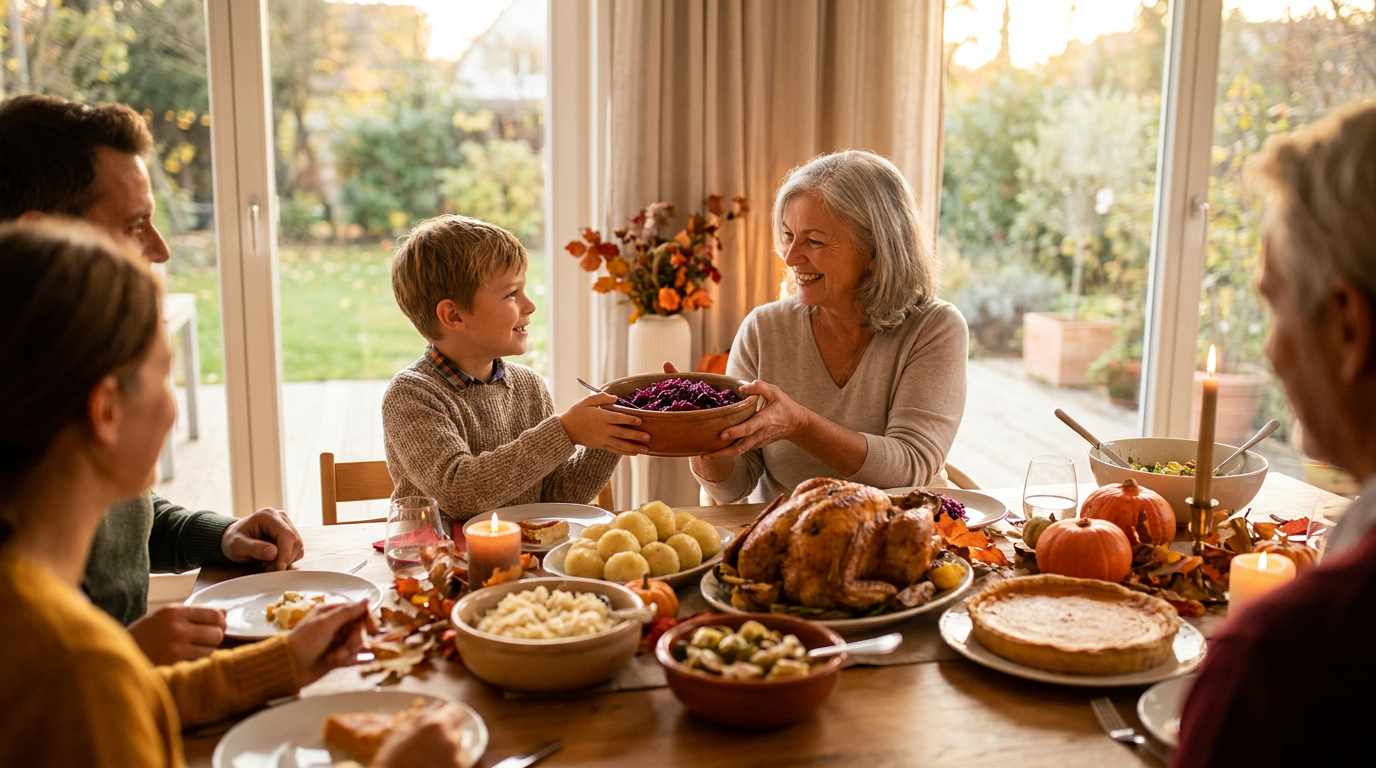
Yet both offer opportunities to appreciate the people, resources, and relationships that sustain our lives.
For German-Americans, these celebrations also reveal something especially meaningful about cultural heritage.
Our ancestors did not simply leave every familiar custom behind when they crossed the Atlantic.
They carried languages, recipes, skills, memories, and traditions that could take on new meaning in an American home.
Some survived largely unchanged. Others blended with regional American practices to become something new.
And many continue to enrich family celebrations today.
As Thanksgiving approaches, perhaps this is the perfect time to rediscover an old German recipe, ask a relative about a family tradition, or simply appreciate the generations who helped shape the lives we enjoy today.
At GERMAN HERITAGE USA, we believe that celebrating German Heritage also means discovering the wonderful ways it has become part of the American story.
So whether your Thanksgiving table features turkey and pumpkin pie, sauerkraut and potato dumplings, or a delicious combination of them all, may the season bring gratitude, togetherness, and cherished memories.
Frohes Erntedankfest und ein schönes Thanksgiving!
Happy Harvest Thanksgiving and a Wonderful American Thanksgiving!
Now We’d Love to Hear From YOU!
Does your German-American family have a special Thanksgiving tradition? Do you serve sauerkraut, German red cabbage, potato dumplings, apple strudel, or another recipe passed down through generations?
And did you know that Germany celebrates its own harvest thanksgiving tradition?
Tell us in the comments! Share your memories, favorite German-American holiday dishes, or family traditions. Your story might inspire someone else to rediscover a wonderful piece of their own German Heritage.
Help us celebrate and promote German Heritage across America by sharing this article with your family and friends!
GERMAN HERITAGE USA — Celebrating German Heritage, German Ancestry, and the German-American Story.