
The Ultimate Homemade Bratwurst Guide: German Traditions, Secret Spices & Sausage-Making Made Easy!
GERMAN HERITAGE USA | AFFILIATE DISCLAIMER: This post may or may not contain affiliate links which means we may receive a commission for purchases made through links. We will only recommend products that we have personally used or that we truly trust. Learn more on our Private Policy and Disclaimer Page located under our Terms Of Service tab above.
Discover the delicious history of German bratwurst, traditional sausage-making secrets, and how to create your very own homemade brats!
There’s Nothing Quite Like Homemade German Bratwurst!
Picture this: It’s a beautiful Saturday afternoon. The grill is heating up, the aroma of sizzling sausage fills your backyard, and family and friends are gathering around.
But here’s the difference. These aren’t ordinary grocery-store bratwursts.
You made them yourself!
You selected the meat, measured the spices, prepared the casings, and created your very own German-style bratwurst from scratch.
And when someone asks, “Where did you buy these amazing brats?” you can proudly respond:
“I didn’t buy them. I made them!”
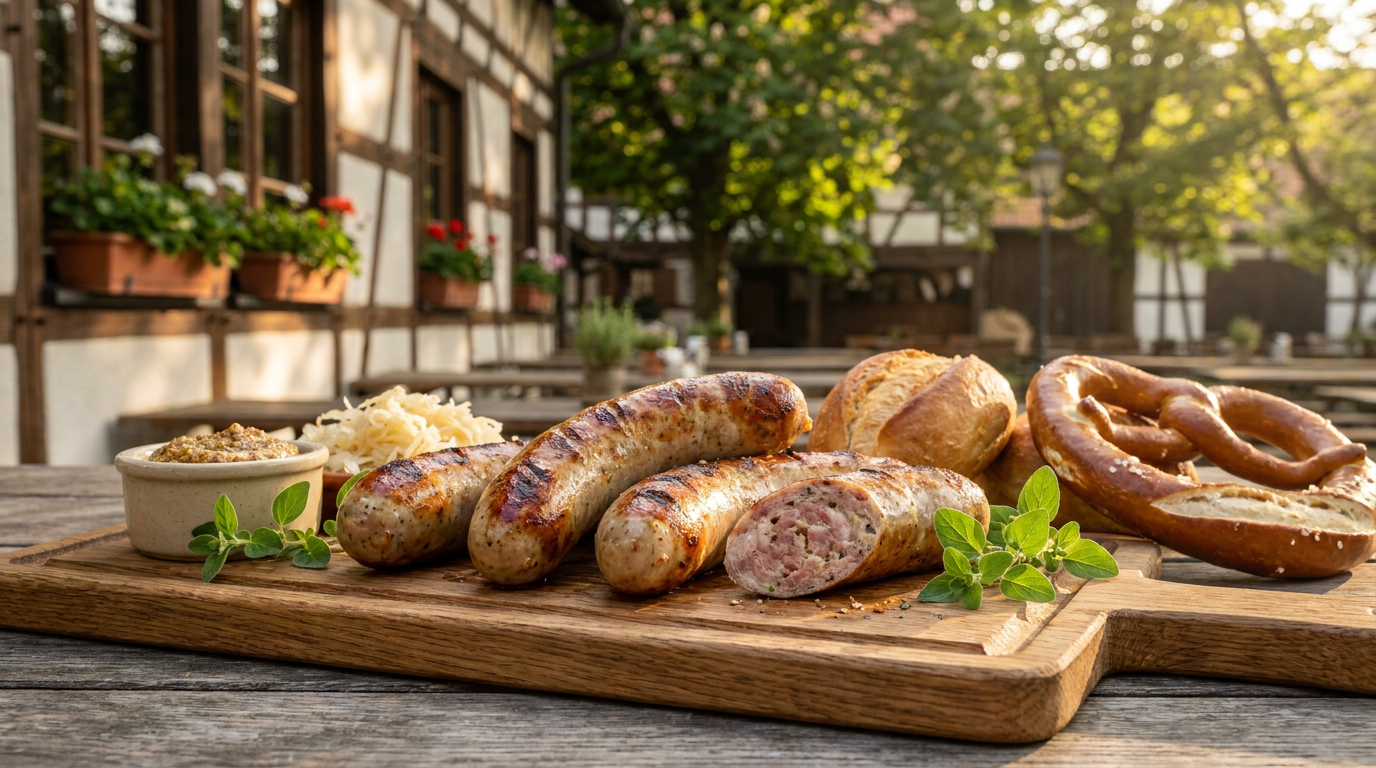
For centuries, German families have passed down sausage-making traditions that transform simple ingredients into extraordinary meals.
Whether your ancestors came from Bavaria, Thuringia, Franconia, or elsewhere in Germany, bratwurst represents a delicious connection to German heritage.
Best of all, you don’t need to be a professional butcher!
With fresh pork, traditional spices, basic equipment, and a little patience, you can create homemade bratwurst that would make any sausage-loving German-American proud.
So grab your apron. We’re bringing a little Germany into your American kitchen!
1. A Delicious History: Germany’s Love Affair with Bratwurst
Germany’s relationship with sausage stretches back centuries.
Historical records from Nuremberg document sausage-making regulations dating to 1313, while Thuringian records reference bratwurst as early as 1404.
Over generations, regional butchers developed distinctive recipes using different combinations of pork, veal, herbs, and spices.
Some preferred coarse-ground sausage. Others created finer textures. Certain regions emphasized marjoram, while others featured caraway, nutmeg, garlic, or pepper.
Interestingly, the German word Wurst means sausage. The Brat portion historically relates to chopped meat, although modern German speakers also associate it with braten, meaning to fry or roast.
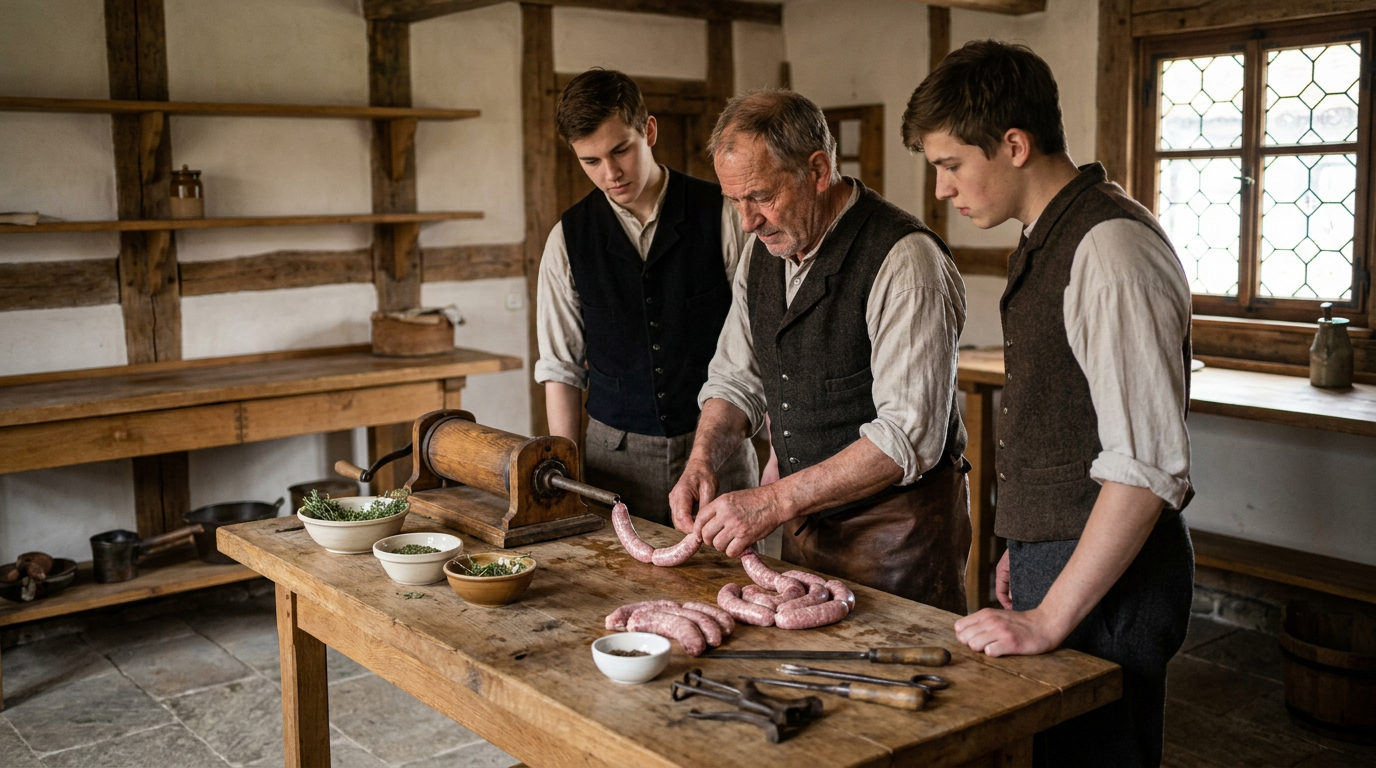
Today, bratwurst remains a favorite at German Christmas markets, beer gardens, festivals, and family gatherings.
Bratwurst isn’t just one sausage. It’s an entire culinary tradition!
Three Famous German Bratwurst Varieties
Nürnberger Rostbratwurst — Nuremberg’s Little Legend
These famous little sausages typically measure just 3–3½ inches long. Made primarily with pork and seasoned with marjoram, they’re traditionally grilled and served with mustard, horseradish, sauerkraut, or bread.
Order Drei im Weggla in Nuremberg, and you’ll receive three small sausages tucked into a bread roll.
Thüringer Rostbratwurst — A Grilling Favorite
Originating in Thuringia, these longer sausages feature aromatic seasonings that may include marjoram, caraway, garlic, and pepper.
Grilled over charcoal, they’re especially popular at outdoor festivals.
Fränkische Bratwurst — Franconian Comfort Food
Franconian bratwursts vary by locality, often featuring a coarser texture and rich pork flavor.
They’re commonly enjoyed with sauerkraut, bread, potatoes, and mustard.
Of course, German immigrants brought their sausage-making knowledge to America, helping establish the beloved bratwurst traditions found throughout Wisconsin and the Midwest.
2. Five Secrets to Making Incredible Homemade Bratwurst
Before making your first batch, remember these traditional sausage-making principles.
Secret #1: Choose the Right Meat
Pork shoulder provides excellent flavor and natural marbling. For juicy sausages, many recipes aim for approximately 20–30% fat.
Too little fat creates dry bratwurst. Too much can produce a greasy sausage.
Secret #2: Keep Everything Cold
Cold meat and equipment are essential. Chilling prevents fat from smearing during grinding and produces better sausage texture.
Secret #3: Don’t Overpower the Meat
Traditional German bratwurst is generally savory and aromatic rather than intensely spicy.
Marjoram, white pepper, nutmeg, mace, and caraway are wonderful choices.
Secret #4: Use Natural Casings
Natural hog casings create the familiar bratwurst shape and satisfying bite.
They’re available through specialty butcher shops and sausage-making suppliers.
Secret #5: Take Your Time
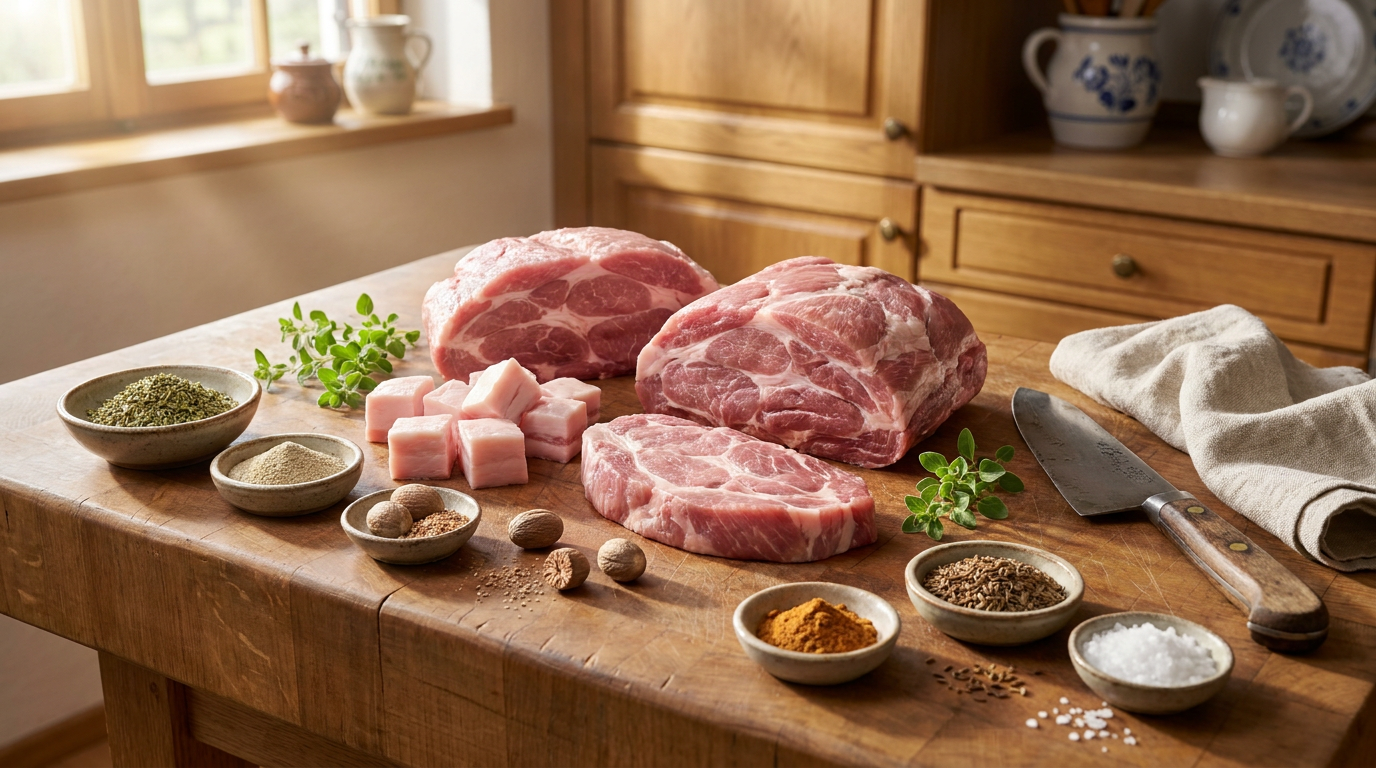
Great sausage-making combines technique, patience, and a little experimentation.
Remember: Making bratwurst should be almost as much fun as eating it!
3. Let’s Make Bratwurst! Your Homemade German Recipe
Here’s an approachable, German-inspired recipe featuring pork, marjoram, white pepper, and nutmeg.
Recipe at a Glance
- Yield: Approximately 8–10 bratwursts
- Preparation: 75–120 minutes
- Cooking: Approximately 15–25 minutes
- Difficulty: Beginner to intermediate
- Style: Fresh German-inspired pork bratwurst
Ingredients
Meat
- 750 grams (1 lb 10½ oz) lean, trimmed pork shoulder
- 250 grams (approximately 9 oz) chilled pork back fat
Traditional Spice Blend
- 18 grams salt
- 2 teaspoons dried marjoram
- 1 teaspoon ground white pepper
- ¼ teaspoon freshly grated nutmeg
- ½ teaspoon crushed caraway seeds (optional)
- ⅛ teaspoon ground mace (optional)
- 90 milliliters ice-cold water
Casings
- Approximately 6–8 feet natural hog casings, 30–32 millimeters in diameter
Equipment
You’ll need a meat grinder, sausage stuffer, sharp knife, mixing bowl, kitchen scale, digital food thermometer, and refrigerator.
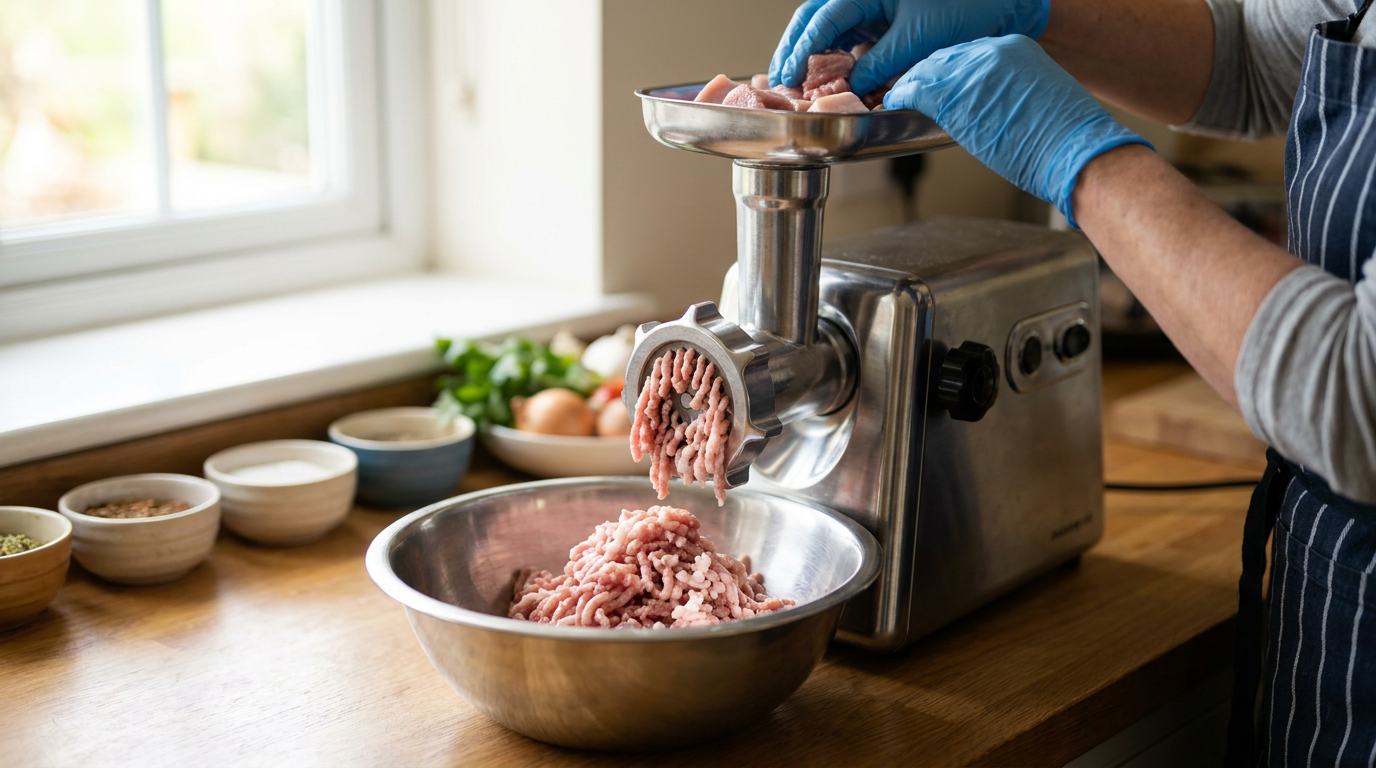
Beginner’s tip: Don’t have a sausage stuffer? Make bratwurst patties instead! You’ll enjoy the same delicious seasonings without needing casings.
4. Step-by-Step: Crafting Your Homemade Bratwurst
STEP 1 — Prepare and Chill the Meat
Cut the pork shoulder and fat into approximately 1-inch cubes.
Place them in the freezer for 20–30 minutes until very cold and slightly firm, but not frozen solid.
Chill your grinder components, too.
Keeping everything cold helps maintain the proper sausage texture.
STEP 2 — Grind the Meat
Using a medium grinding plate, approximately 4.5–6 millimeters, grind the pork and fat into a chilled mixing bowl.
For a finer texture, grind again through a smaller plate while keeping everything cold.
STEP 3 — Add the Traditional German Spices
Combine the ground meat with salt, marjoram, white pepper, nutmeg, optional caraway and mace, and ice-cold water.
Mix thoroughly until the meat develops a cohesive, slightly sticky consistency.
Here’s a sausage-making secret!
Before stuffing the entire batch, cook a small test patty thoroughly in a skillet.
Taste it!
Want more marjoram? A little extra pepper? Now’s the time to adjust your seasonings.
One tiny test patty can save an entire batch of disappointing brats!
STEP 4 — Prepare the Casings
Follow your casing supplier’s instructions for rinsing and soaking.
Salt-packed casings generally need a thorough rinse and soak in cool water.
Gently flush water through the interiors and inspect for holes.
Handle carefully to prevent tearing.
STEP 5 — Stuff Your Bratwursts
Slide the prepared casing onto your sausage-stuffing tube.
Slowly feed the seasoned meat into the casing, filling it evenly without packing too tightly.
Shape into approximately 5–6-inch links, twisting alternating links in opposite directions.
Avoid overstuffing, which can cause casings to burst.
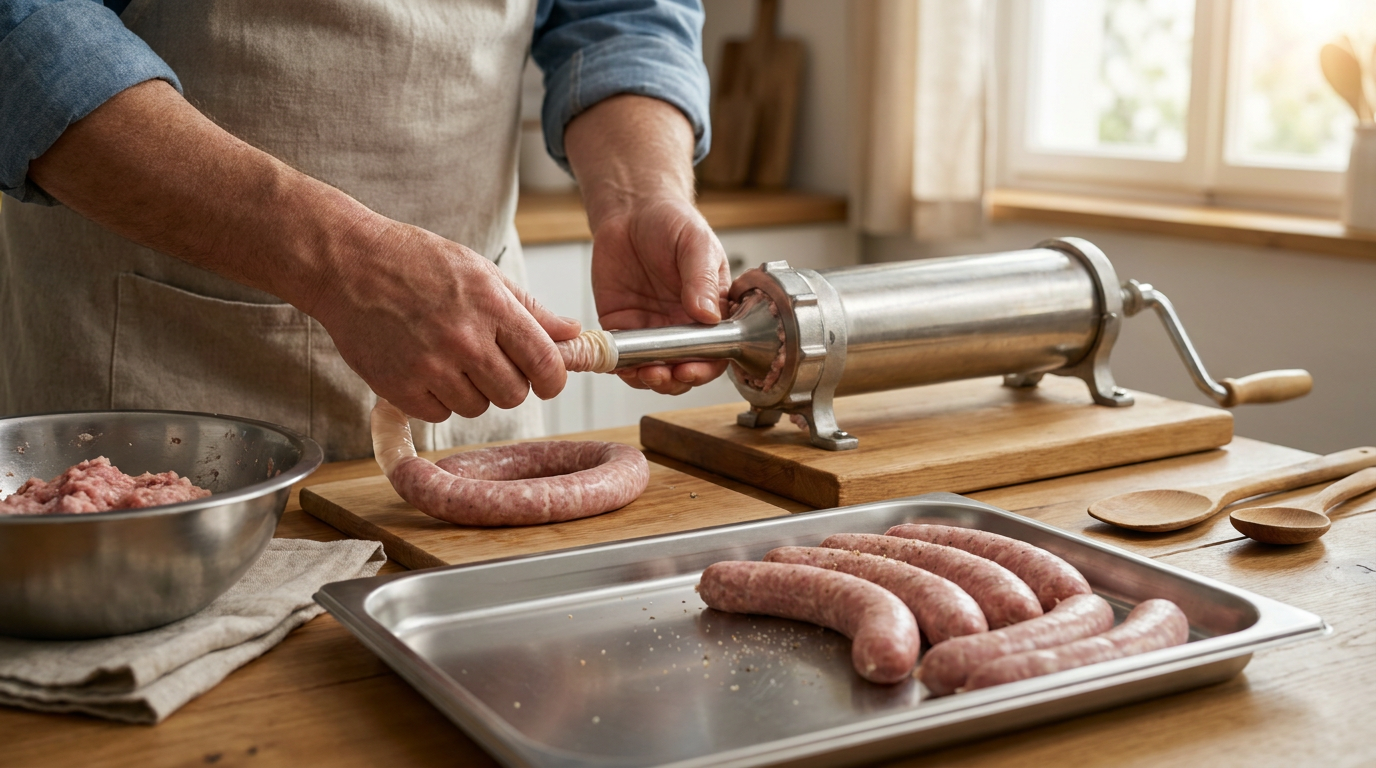
Congratulations! You’ve just created your own homemade German-style bratwurst!
STEP 6 — Refrigerate Before Cooking
Place your finished sausages on a clean tray, cover, and refrigerate for approximately 30–60 minutes.
This helps them firm up before cooking.
Keep raw sausage refrigerated at 40°F (4°C) or below, and use within 1–2 days or freeze promptly.
5. Fire Up the Grill! Cooking Your Homemade Bratwurst
Now comes the moment everyone’s been waiting for!
You’ve selected the meat, blended the spices, and created beautiful homemade sausages.
It’s grilling time!
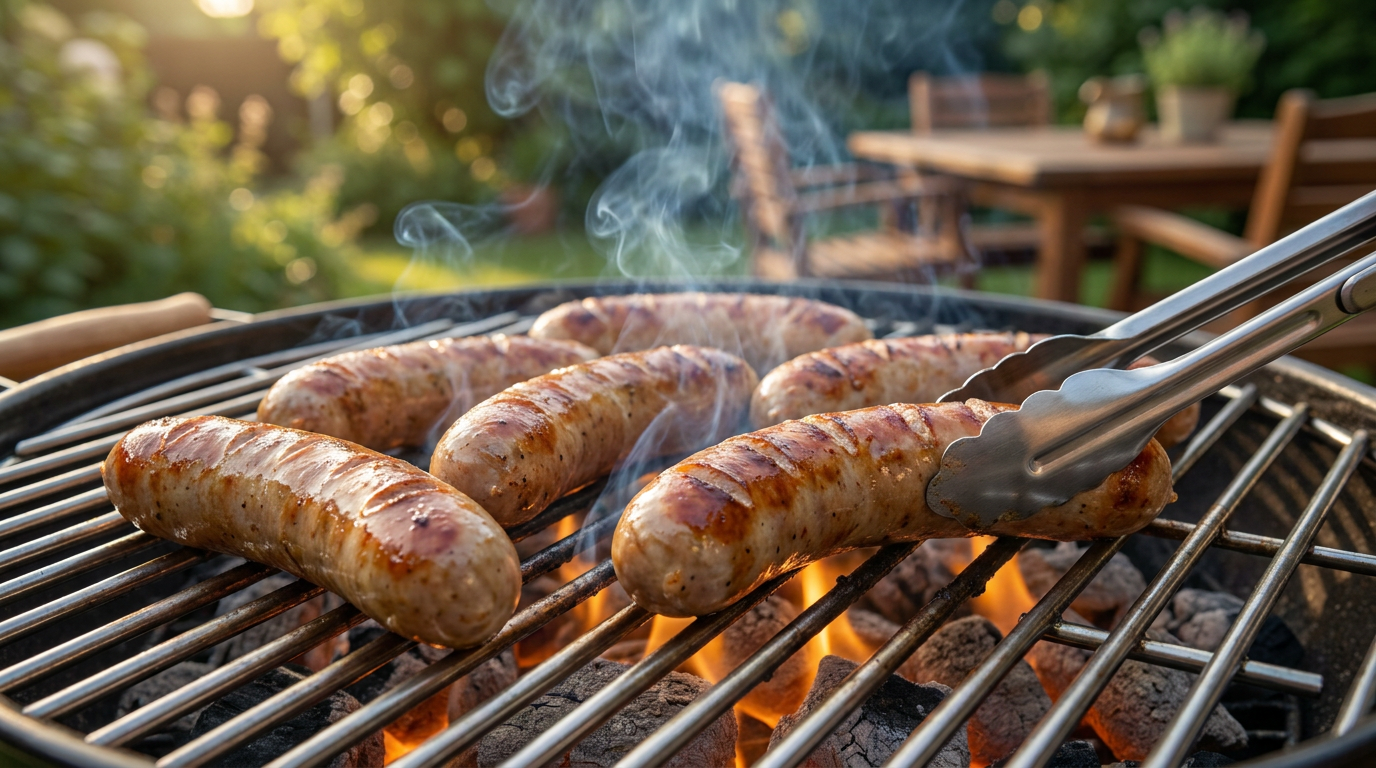
The Perfect Grilled Bratwurst
For a deliciously browned exterior and juicy interior, try this two-zone grilling method.
1. Preheat your grill. Create a moderate-heat area and a cooler, indirect-heat area.
2. Start gently. Place your bratwursts over indirect heat to cook gradually.
3. Turn occasionally. Rotate your sausages for even cooking.
4. Check the temperature. Fresh pork bratwurst must reach an internal temperature of 160°F (71°C).
5. Finish over direct heat. Briefly brown the sausages until beautifully golden, if needed.
Never rely on appearance alone to determine doneness. Use a food thermometer.
Can You Cook Bratwurst in a Skillet?
Absolutely!
Cook over moderate heat, turning regularly. A splash of water can help the sausages cook gently before finishing them with a golden-brown exterior.
Again, confirm an internal temperature of 160°F.
What About Wisconsin Beer Brats?
Now we’re talking German-American tradition!
Wisconsin-style beer brats often feature grilled sausages served with onions cooked in beer.
For an easy variation, grill your homemade bratwursts until fully cooked and beautifully browned.
Then serve them with beer-braised onions, spicy mustard, and a fresh roll.
A delicious meeting of German heritage and American backyard creativity!
6. What Goes Best with Homemade German Bratwurst?
A great bratwurst deserves equally delicious accompaniments.
Sauerkraut: Warm, tangy sauerkraut provides a wonderful contrast to savory sausage. Try adding sautéed onions, apple slices, or caraway.
German Mustard: Spicy brown mustard, traditional German mustard, or sweet Bavarian-style mustard all offer distinctive flavors.
Kartoffelsalat: German potato salad, particularly the warm vinegar-based variety, makes an excellent side dish.
Fresh Brötchen: A crusty German bread roll stuffed with bratwurst and mustard proves that simple food can be extraordinary.
Soft Pretzels: Freshly baked pretzels are a wonderful addition to your German-inspired meal.
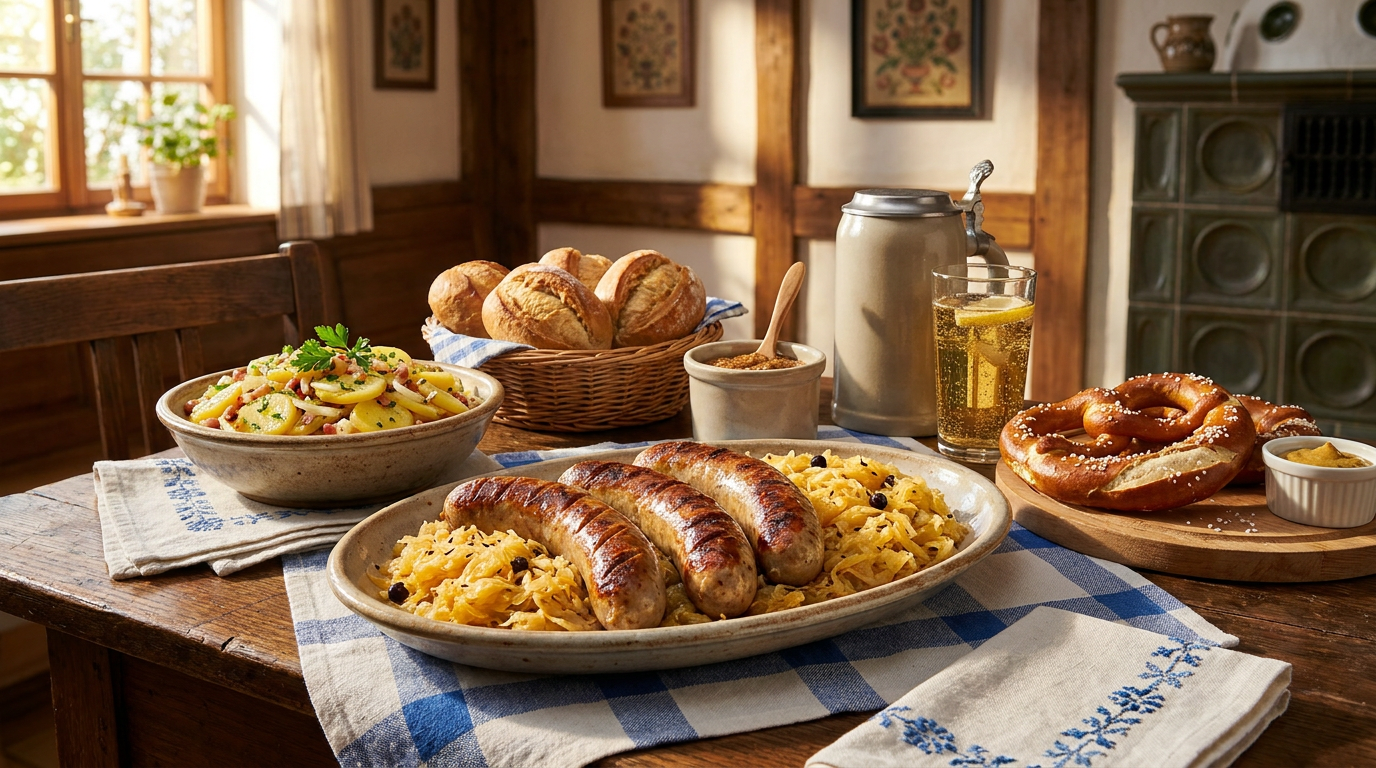
And for beverages?
Try a refreshing German-style lager, apple spritzer, or sparkling mineral water.
Guten Appetit!
7. Five Homemade Bratwurst Variations Worth Trying
Once you’ve mastered the basics, start creating your own sausage recipes.
1. Bavarian-Inspired Bratwurst
A mild, fragrant combination of pork, white pepper, nutmeg, and a touch of lemon zest.
2. Thuringian-Inspired Bratwurst
A more aromatic sausage emphasizing marjoram, with optional caraway and garlic.
3. Wisconsin Beer-Garden Brat
Your homemade bratwurst served with beer-braised onions and spicy brown mustard.
4. Garlic-Lover’s Bratwurst
Add a little freshly minced garlic for a richer, more robust flavor.
5. Your Family Signature Bratwurst
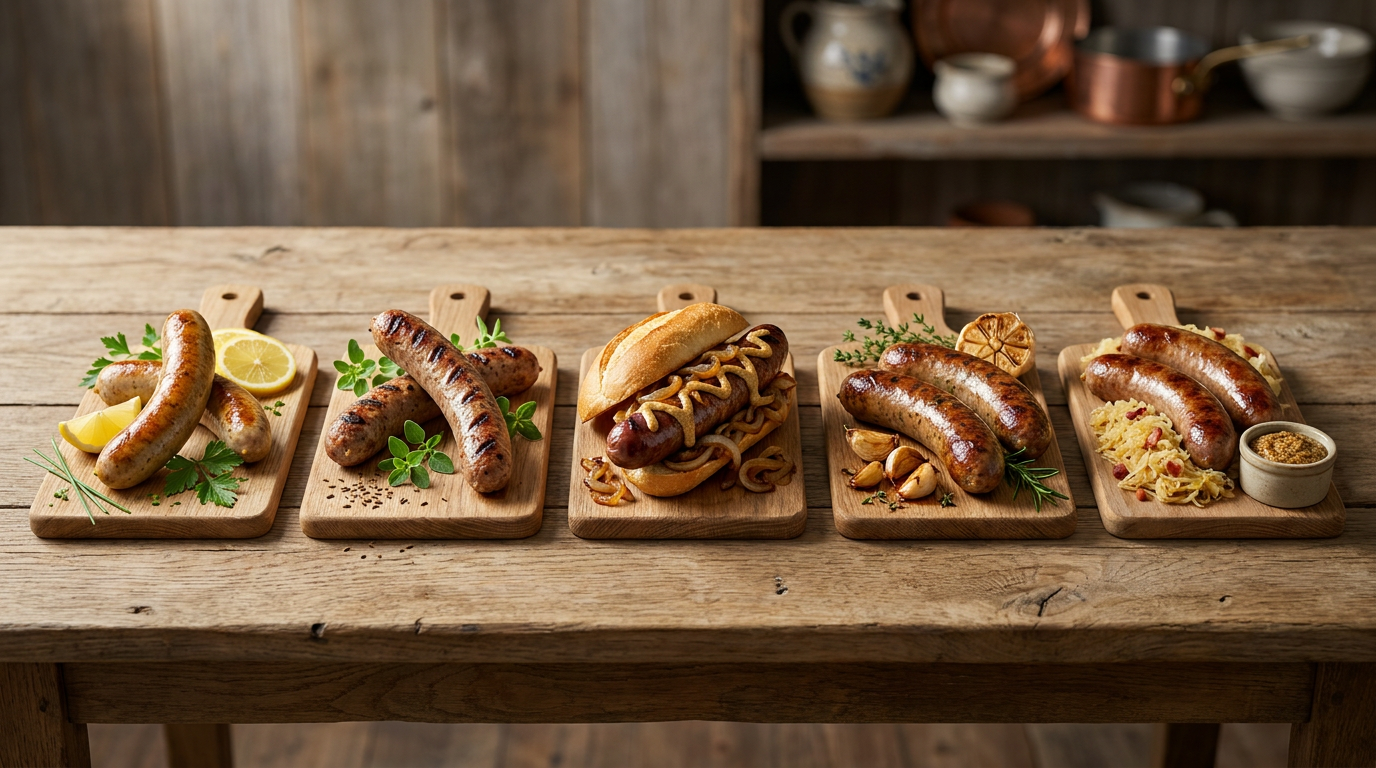
Create your own combination of herbs and spices.
You could even name your creation!
Schmidt’s Secret Sausage.
Oma’s Sunday Bratwurst.
The Miller Family Griller.
Who knows? Your homemade recipe might become something your grandchildren enjoy generations from now.
8. Common Bratwurst-Making Mistakes to Avoid
Even experienced sausage makers occasionally encounter challenges.
Fortunately, most are preventable.
Using Meat That’s Too Lean: Adequate fat helps create a juicy, flavorful sausage.
Allowing Meat to Warm Up: Keep ingredients and equipment cold to prevent fat smearing.
Under-Mixing: Mix until the meat develops a cohesive, sticky consistency.
Overstuffing Casings: Fill firmly, but leave enough flexibility to shape the links without splitting them.
Grilling Too Hot: Excessively high heat can burn the exterior before the center is fully cooked.
Neglecting Food Safety: Keep raw meat chilled, prevent cross-contamination, and cook fresh pork sausages to 160°F.
For storage, USDA guidance generally recommends refrigerating uncooked fresh sausage for no more than 1–2 days, freezing it for longer storage, and using refrigerated cooked sausage within 3–4 days.
Great flavor and good food safety always go together!
9. From German Butcher Shops to American Backyards
There’s something especially meaningful about making bratwurst when you have German ancestry.
Think about the generations who came before us.
When German immigrants arrived in America, they carried more than clothing, personal belongings, and dreams of a better future.
They brought their knowledge, skills, recipes, and traditions.
Some were farmers. Others were bakers or professional butchers. Many were ordinary families who simply knew how to prepare the foods they had enjoyed in Germany.
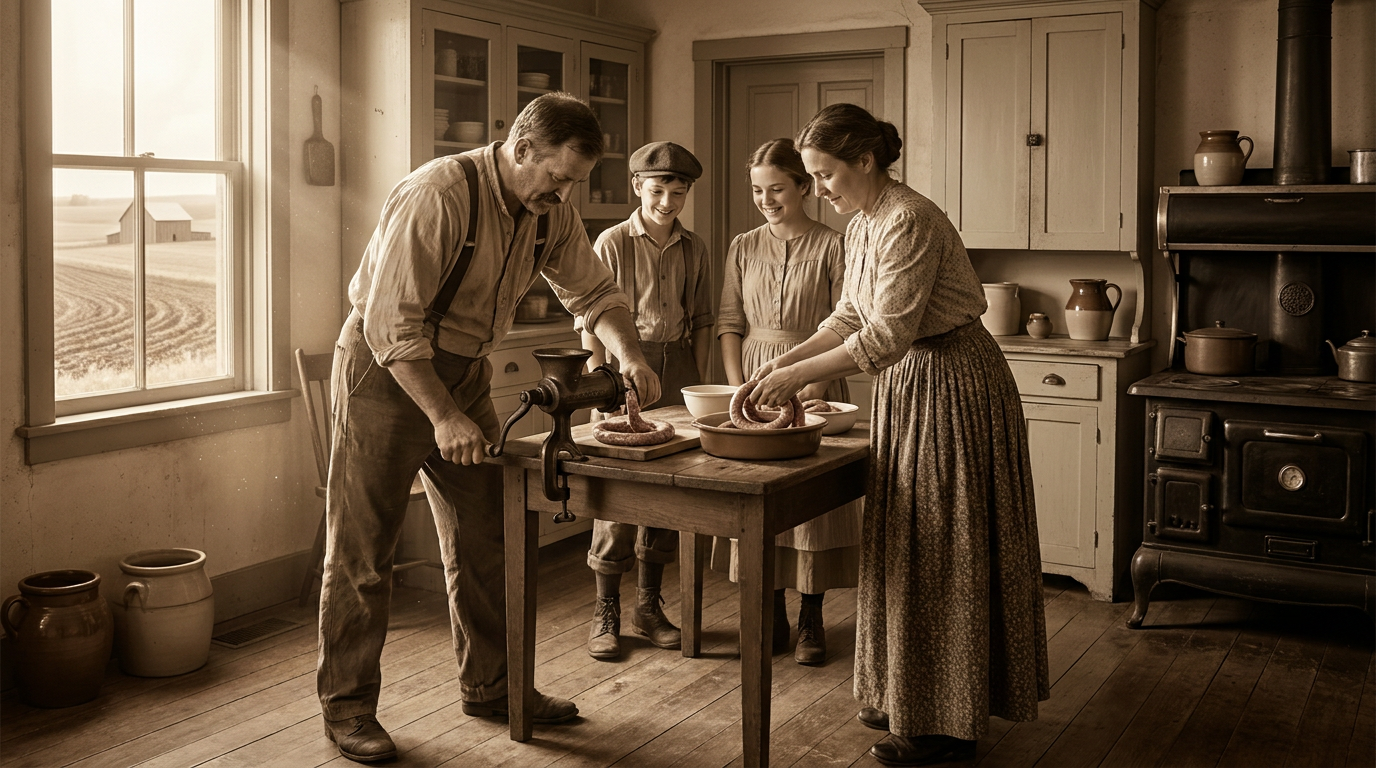
Throughout Wisconsin, Nebraska, Iowa, Minnesota, Ohio, Pennsylvania, and countless other communities, those traditions helped shape American food culture.
Today, bratwurst is a favorite at Oktoberfest celebrations, football tailgates, summer cookouts, and family gatherings.
But for German-Americans, bratwurst can represent something more.
It’s an opportunity to celebrate our ancestors while creating new memories of our own.
Maybe your great-grandfather once worked in a German butcher shop.
Maybe your grandmother prepared bratwurst with sauerkraut every Sunday.
Or perhaps nobody in your family has ever made sausage from scratch.
Every family tradition has to begin somewhere. Why not begin one today?
10. Start a New Tradition: Family Bratwurst-Making Day!
Here’s a fun idea for your next family gathering.
Instead of buying sausages for the grill, organize your very own Family Bratwurst-Making Day!
Invite relatives and friends to participate.
Someone can prepare the spices, another can grind the meat, and someone else can help stuff the casings.
Experiment with two or three recipes, then conduct a friendly taste test after cooking.
Award prizes for:
- Best Traditional German Bratwurst
- Best Original Family Recipe
- Best Spicy Bratwurst
- Best German-American Creation
- People’s Choice Bratwurst Champion
Write down your favorite recipes and preserve them for future generations.
Who knows?
A family tradition you begin this weekend could become part of your family’s story for decades!
A Final Thought: Your German Heritage Is Worth Celebrating!
Bratwurst may seem like a simple sausage, but behind every delicious bite lies centuries of German culinary heritage.
It’s a tradition shaped by historic towns, family kitchens, skilled butchers, and generations of people who understood the value of good ingredients and time-tested recipes.
Today, you can bring some of that heritage into your own home.

Whether you’re preparing bratwurst for Oktoberfest, a neighborhood cookout, or an ordinary Saturday afternoon, remember that you’re participating in a wonderful German culinary tradition.
And the best part?
You get to make it your own!
As a familiar German saying goes:
“Alles hat ein Ende, nur die Wurst hat zwei.”
Everything has an end — only the sausage has two.
So gather your ingredients, prepare your favorite German spices, and discover the satisfaction of creating your own bratwurst.
Your next great family tradition might begin with a single sausage!
PROST! UND GUTEN APPETIT!
Cheers! And enjoy your meal!
GERMAN HERITAGE USA
Celebrating German Heritage, Traditions, Culture, History & the German-American Experience.
We’d Love to Hear From You!
Did your parents or grandparents ever make homemade bratwurst? Does your family have a secret German sausage recipe?
And what’s your favorite way to enjoy a bratwurst — grilled with mustard, topped with sauerkraut, or served alongside German potato salad?
Share your family traditions, favorite recipes, and bratwurst memories in the comments below!