O Tannenbaum: German Roots of the American Christmas Tree Tradition Shaped America’s Christmas Spirit

For many Americans, the Christmas tree arrives in the home like an old and cherished friend—dragged through the doorway with laughter, settling into its stand with a sigh, and slowly coming to life as lights and ornaments transform it from simple evergreen to seasonal centerpiece.

But few pause to wonder why this ritual feels so essential, so foundational to the holiday itself. The answer reaches far deeper than most expect—deep into German history, German folklore, and the story of German immigrants whose traditions quietly reshaped an entire nation’s understanding of Christmas.
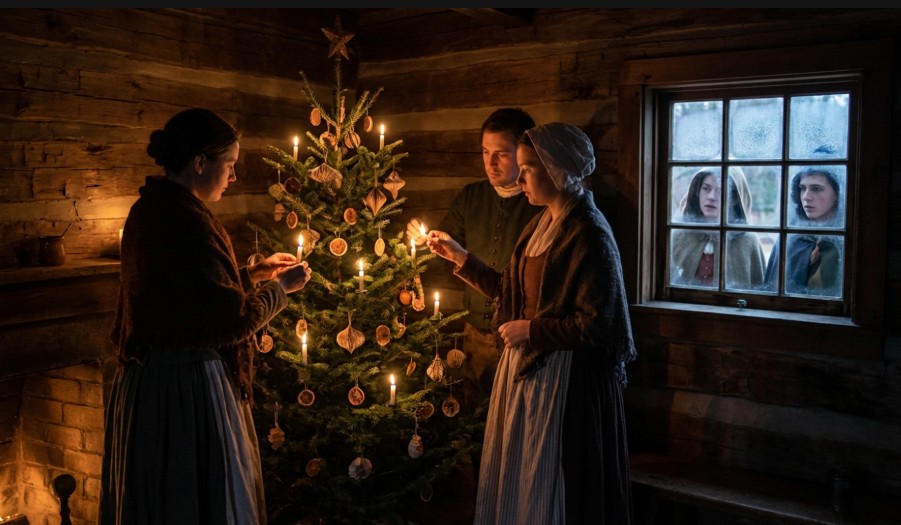
Imagine those early December evenings in colonial America when German families lit candles on their trees for the very first time. Their neighbors whispered about the strange glowing evergreens in these new settlers’ homes—were they decorations? Religious symbols? Fire hazards waiting to happen? Yet curiosity soon melted into admiration, and admiration soon became imitation. What began as a cultural curiosity soon blossomed into a nationwide phenomenon.

Across generations, the Christmas tree did more than mark the season. It became a symbol of togetherness and optimism—a reminder that even in the darkest days of winter, beauty could flourish and light could prevail. This symbolism resonated powerfully in a young America that was still forming its identity. When the German Tannenbaum landed on American shores, it did not remain a foreign tradition for long. It adapted, evolved, and ultimately became one of the most cherished customs in the United States.

It’s no exaggeration to say that the American Christmas—its imagery, its warmth, its spirit—owes a great deal to German craftsmanship, German imagination, and German devotion to family-centered celebration.

And as America layered its own innovations onto the evergreen tradition, the Christmas tree grew into a cultural icon recognized around the world. The story of the Tannenbaum is ultimately a story of cultural exchange—a tree planted in European soil that grew into an emblem of American joy.

So as we look at the millions of twinkling trees that fill American homes each year, it’s worth stepping back and remembering the journey that brought this tradition across the Atlantic. The Christmas tree is more than decoration. It is heritage made visible—German roots that continue to shape America’s holiday spirit in every glowing light and every evergreen branch.


https://victorianchristmaslady.com/wp-content/uploads/2022/09/victoria-and-albert-christmas-tree-1848-480x574.jpg
https://i.pinimg.com/474x/f3/70/4e/f3704e5ce27c4e8d505922883b51bf9c.jpg
4

Introduction — A Tree That Traveled Across an Ocean and Grew Into a Nation’s Heart

Every December, millions of American families gather around a single glowing symbol of Christmas joy: the Christmas tree. Twinkling lights, evergreen branches, shimmering ornaments, a star or angel crowning the top—these sights feel timelessly American. Yet the roots of this beloved tradition stretch deeply into German soil, nourished by centuries of folklore, feast days, and family rituals that eventually crossed the Atlantic and flourished in a new land.

The German Christmas tree—Der Tannenbaum—did more than decorate colonial parlors.
It helped shape America’s holiday identity, weaving German customs into the cultural tapestry of a young nation hungry for joy, warmth, and ceremony.

This is the epic tale of how a humble evergreen became the centerpiece of the American Christmas spirit.

» Read more

When Munich Ends, America Begins: From Munich to Main Street USA

The final steins have been raised, the brass bands have played their last note, and the sweeping grounds of Theresienwiese are slowly returning to silence. After weeks of revelry, laughter, and centuries-old tradition, Oktoberfest in Munich has come to a close once more. For the thousands of visitors who made the journey from around the world, the return home is filled with that unmistakable post-festival glow — part joy, part exhaustion, and part reluctance to let it end.

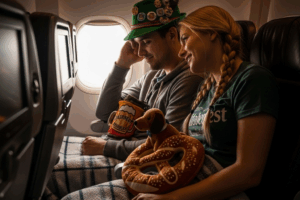
One can imagine the mood on the red-eye flights leaving Munich. Couples and friends seated side by side, quietly replaying the moments that made it all unforgettable — the taste of fresh pretzels, the sound of clinking steins, the energy of crowded beer tents beneath Bavarian flags. A man in a feathered green fedora, its brim heavy with souvenir pins, rests against the window with a contented smile. His hoodie still carries the scent of roasted nuts and smoky sausages. Somewhere near him, a woman in a worn Oktoberfest tee leans back, her braid still tightly tied from a day of dancing. The plane is quiet, but their minds are alive with memory.

How to Celebrate Oktoberfest All Over Again — American Edition!

Your guide to local festivals, clubs, and restaurants still raising their steins this October

For many, there’s a hesitation to let go. The end of Oktoberfest in Munich doesn’t necessarily mean the end of the celebration. As travelers make their way back across the Atlantic, some may already be checking calendars and local event listings, curious to see if the spirit of Oktoberfest lives on closer to home. And across the United States — in small towns, bustling cities, German clubs, and local breweries — it often does. The kegs may be tapped out in Munich, but in America, Oktoberfest is still pouring.


O’zapft Is… Again?!

The last keg has been tapped in Munich this year on Sunday, October 5th. The tents have closed. The brass bands have played their final polkas. And just like that — the world’s most famous Oktoberfest is over for another year.

You’re back from Bavaria, your suitcase stuffed with pretzels, pins, and a questionable wool hat that seemed like a good idea after your fifth Maß of beer. Your head has cleared, your bank account has not, and your flight home? Delayed three hours. Oof.

But here’s the thing no one tells you: when Munich ends, America begins.

That’s right — while Oktoberfest in Germany technically wraps up in early October, here in the United States, we like to stretch the celebration well into fall. From local Main Street parades and heritage clubs to breweries and backyard blowouts, Americans with German roots (and plenty without) keep the party rolling deep into October.

So shake off your jet lag, unpack that stein, and get ready. We’re going on a post-prost Munich Oktoberfest adventure — American style.


Why America Keeps Celebrating Oktoberfest After Munich Ends

Here’s the deal: Oktoberfest started in 1810 as a royal wedding celebration in Munich. Today, it’s a global cultural phenomenon.

But in the United States — home to over 60 million people of German ancestry. In America — Oktoberfest is more than just a party. It’s a tribute to German Heritage, a salute to immigrant roots, and a golden opportunity to bring communities together over Ompah pah, pilsner, and pork schnitzel.

And unlike the strict schedule in Germany, Americans are a little more… shall we say… flexible with our party timelines. We extend Oktoberfest celebrations all the way through Halloween and even into November in some locations.


🥨 From Main Street to Maifest Halls: Where to Celebrate Oktoberfest in America

Let’s hit the road — from coast to coast — and explore the many ways Main Street USA is still raising its stein long after Munich’s tents come down.


🎉 1. Main Street Celebrations: Small Towns, Big Heart

Across America, small towns with German roots come alive in October with homegrown Oktoberfest celebrations. Think brass bands in the park, beer tents in the square, and grandma’s apple strudel at the community bake sale.

Must-Visit Towns:

Some of the most charming and authentic Oktoberfest experiences in America take place not in big cities, but in storybook towns with strong German heritage — where bratwursts sizzle, polka music echoes down main street, and Bavarian architecture sets the mood. These are the towns where Oktoberfest spirit lingers long after Munich’s tents have closed.

  • Leavenworth, Washington – Tucked in the Cascade Mountains, Leavenworth looks like it was plucked straight out of the Bavarian Alps. The entire town transforms into a festive alpine wonderland throughout October. With dirndl-clad dancers, oompah bands echoing through the mountains, and local breweries serving up authentic Märzens, Leavenworth’s Oktoberfest is one of the most visually immersive and energetic celebrations in the country.
  • Helen, Georgia – A small southern town with a big Bavarian personality, Helen hosts one of the longest-running Oktoberfests in the U.S., stretching from mid-September through late October. Nestled in the North Georgia mountains, this Alpine-styled village boasts nightly music at the Festhalle, authentic German food and beer, and a festive atmosphere that draws visitors from across the region.

  • New Ulm, Minnesota – Often called the “most German town in America,” New Ulm’s Oktoberfest stretches across multiple venues and weekends in October.
  • Frankenmuth, Michigan – This Bavarian-themed village hosts Oktoberfest events well into the fall. Don’t miss the Frankenmuth Brewery and iconic chicken dinners at Zehnder’s!
  • Hermann, Missouri – Nestled in Missouri’s wine country, Hermann turns into a fall fairy tale with weekends full of beer, brats, and vineyard views.

These Main Street fests may not rival Munich’s size, but they overflow with heart, heritage, and hospitality.

» Read more