America’s Best German Biergartens to Visit This July
GERMAN HERITAGE USA | AFFILIATE DISCLAIMER: This post may or may not contain affiliate links which means we may receive a commission for purchases made through links. We will only recommend products that we have personally used or that we truly trust. Learn more on our Private Policy and Disclaimer Page located under our Terms Of Service tab above.
Great Food, Live Music, and Authentic Traditions. There is something almost magical about a German biergarten on a summer evening.
Maybe it is the sound of a lively band drifting across rows of wooden tables. Perhaps it is the aroma of bratwurst sizzling nearby, the sight of an oversized pretzel arriving with mustard, or the cheerful clinking of heavy glass steins. More likely, it is the combination of all those things—plus the feeling that everyone has been invited to slow down, share a table, and enjoy the moment.
That welcoming feeling is known as Gemütlichkeit, a German word associated with warmth, friendliness, comfort, belonging, and good cheer. It is difficult to translate perfectly, but it is easy to recognize once you experience it.
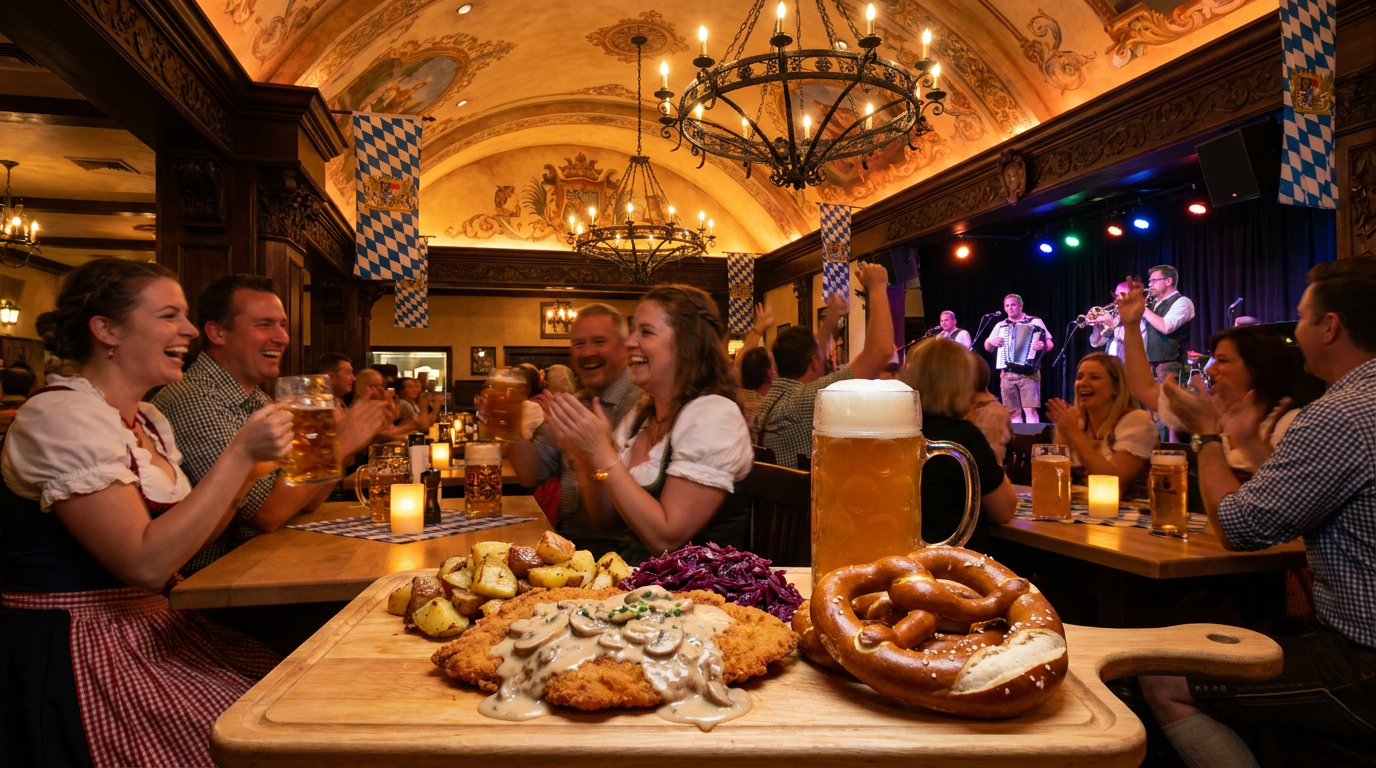
A real biergarten is not simply an outdoor bar with German beer on the menu. Its roots reach back to Bavaria, where breweries traditionally served beer beneath shady chestnut trees. Long communal tables encouraged guests to sit together, and many traditional gardens allowed visitors to bring their own food while purchasing beer from the brewery.
Today, America’s German-inspired biergartens range from historic immigrant gathering places to sprawling brewery campuses, festive restaurants, public park gardens, and energetic entertainment venues. Some follow Bavarian customs closely. Others blend German traditions with local music, regional cuisine, and distinctly American personality.
July is an excellent time to experience them. The evenings are long, outdoor entertainment calendars are active, and many gardens are filled with families, travelers, musicians, heritage groups, and friends meeting for a cold beverage and a hearty meal.
So loosen your belt one notch, practice saying Prost!, and join GERMAN HERITAGE USA on a summer journey through some of America’s most enjoyable German biergartens.
“A great biergarten is not simply a place where beer is served. It is a place where community is invited to pull up a chair.”
What Makes a Great German Biergarten?
Before beginning our tour, it helps to understand what separates a memorable German-style biergarten from an ordinary restaurant patio.
The first ingredient is communal seating. Long tables are not merely a decorative choice. They encourage interaction. You may arrive with two friends and leave having met a family from another state, a retired brewer, three polka enthusiasts, and someone who insists his grandmother made the world’s greatest sauerbraten.
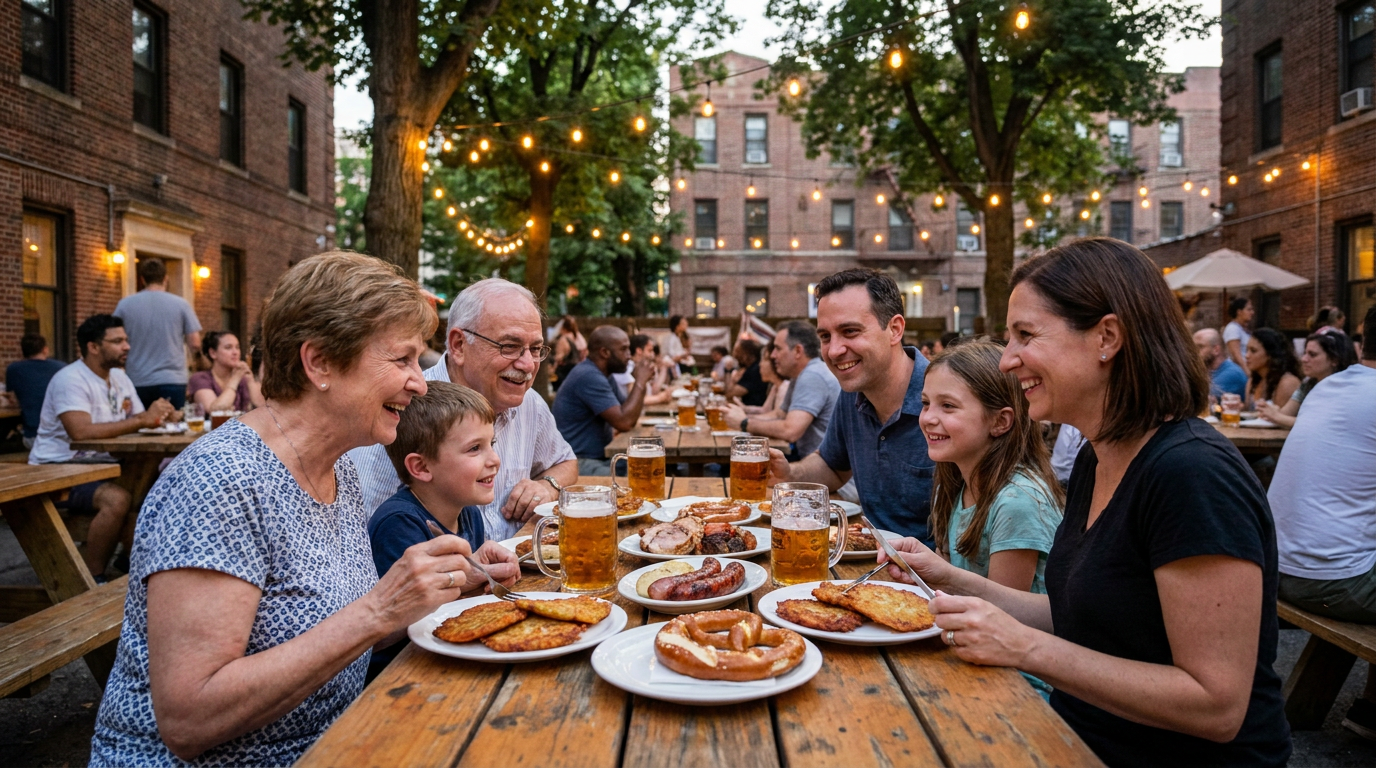
The second ingredient is German-inspired food and drink. Bratwurst, schnitzel, potato pancakes, pretzels, sauerkraut, spaetzle, roast pork, currywurst, and imported or locally brewed German-style beers all help build the experience.
The third is atmosphere. Shade trees, open-air stages, traditional decorations, live music, family activities, and enough room to relax matter just as much as what is being served.
Finally, the best biergartens preserve some connection to German, Austrian, Czech, Slovak, or broader Central European heritage. That connection might come through recipes, architecture, brewing methods, immigrant history, cultural organizations, music, or ownership.
Not every destination on this list is identical, and that is part of the fun. Together, they demonstrate how German traditions have been preserved, reinterpreted, and welcomed into communities across the United States.
1. Estabrook Beer Garden
Milwaukee, Wisconsin
Milwaukee is one of America’s great brewing cities, making Estabrook Beer Garden a natural place to begin.
Located in Estabrook Park, this public beer garden was created as a modern revival of the traditional gardens found in Munich. Its operators describe it as the first truly public beer garden opened in America in nearly a century following Prohibition. The setting combines Milwaukee’s brewing heritage with trees, parkland, long tables, German beer, casual food, and an atmosphere designed to bring people together.
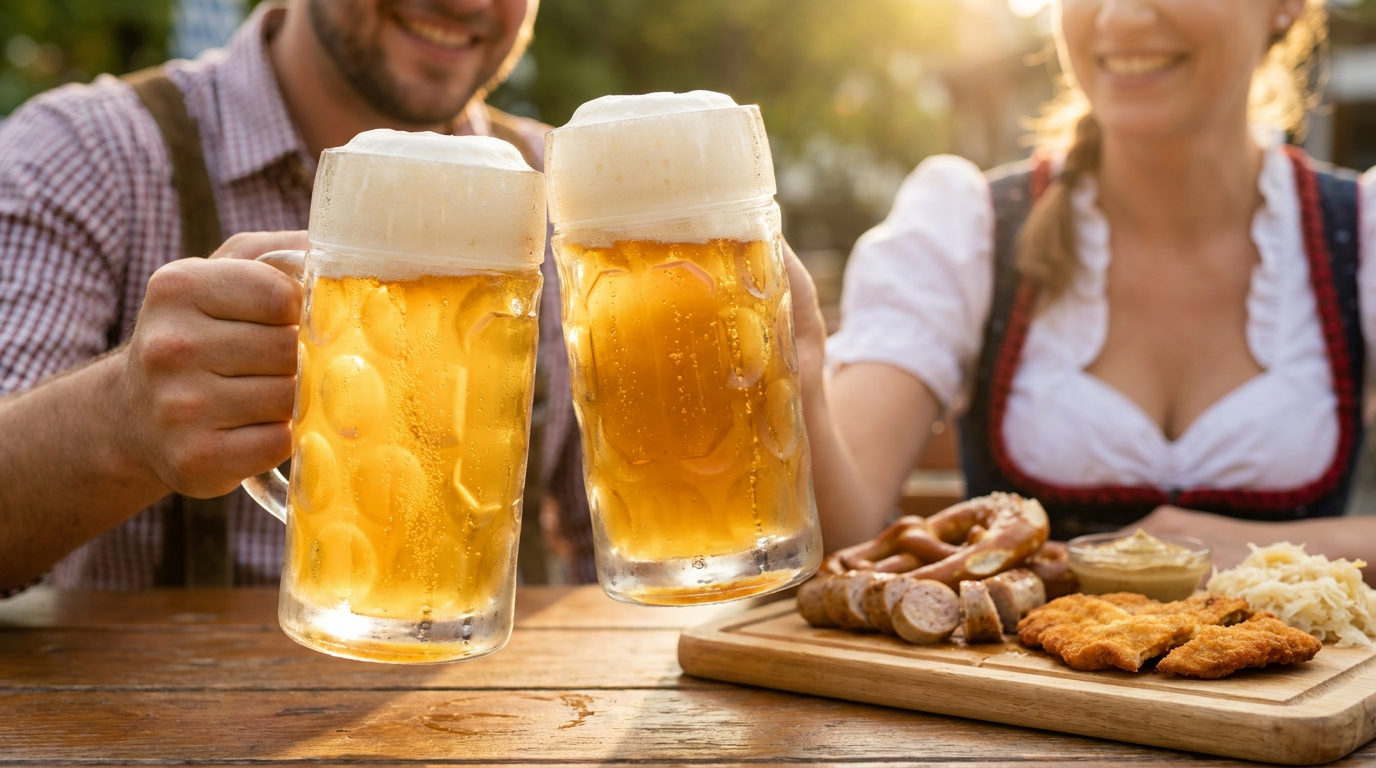
Estabrook is not a formal dining experience—and that is precisely its charm. Guests order a beer, find a seat beneath the trees, and settle in for an unhurried afternoon or evening. Traditional biergarten fare includes bratwurst, pretzels, and other casual favorites, while the park setting makes it especially comfortable for groups and families. The venue is also listed as family-friendly and offers patio-style dining near the water.
One of Estabrook’s most authentic customs is its picnic-friendly approach. Guests may bring food while purchasing beverages from the garden, echoing the Bavarian tradition of families packing their own meals for an afternoon beneath the chestnut trees.
Why it belongs on your July list
Milwaukee summers seem made for outdoor beer gardens. Estabrook offers abundant shade, a relaxed park setting, regular entertainment, and a refreshing lack of pretension. It feels less like visiting an attraction and more like being welcomed into a citywide neighborhood picnic.
Order this: A German lager, bratwurst, and oversized pretzel.
Best for: Families, first-time biergarten visitors, traditionalists, and travelers exploring Milwaukee’s brewing history.
2. The Bavarian Bierhaus and Old Heidelberg Park
Glendale, Wisconsin
Just outside Milwaukee, The Bavarian Bierhaus provides a larger, more festival-driven experience.
The complex combines a Bavarian-style restaurant, brewery, fest hall, entertainment spaces, and Old Heidelberg Park. Its calendar features German comfort food, house and imported beers, live music, cultural celebrations, family events, and plenty of opportunities to hear traditional polka. It is also home to Milwaukee’s Original Oktoberfest, a long-running celebration rooted in the city’s German-American heritage.
Even outside Oktoberfest season, the venue maintains an energetic German identity. Communal seating, decorative Bavarian elements, live weekend entertainment, sausages, roast meats, pretzels, schnitzel, and generous steins create an experience that can feel like a warm-up for September—even in the middle of July. The venue regularly promotes Friday and Saturday live music throughout the year.
This is a particularly good stop for travelers who want more activity than a quiet garden usually provides. Depending on the date, you might encounter a band, a themed dinner, a family celebration, a pig roast, or a gathering organized by one of Milwaukee’s German cultural groups.
Why it belongs on your July list
The Bavarian Bierhaus offers enough space and entertainment to turn dinner into an evening-long outing. It preserves the spirit of a traditional festival hall while remaining casual enough for families, tourists, and groups of friends.
Order this: Schnitzel, sausage, roast chicken, or a Bavarian pretzel with a house-brewed beer.
Best for: Live-music fans, larger groups, German-American families, and travelers who enjoy an Oktoberfest atmosphere year-round.
3. Hofbräuhaus Las Vegas
Las Vegas, Nevada
Las Vegas is not known for doing anything halfway, and Hofbräuhaus Las Vegas is no exception.
The venue was built as a detailed replica of Munich’s famous Hofbräuhaus, complete with painted ceilings, long wooden tables, Bavarian architecture, imported Hofbräu beer, a large beer hall, and a garden-style dining area. Its main hall can accommodate hundreds of guests, creating the lively communal environment associated with Bavaria’s most famous beer halls.
Daily live entertainment is a major part of the experience. Bavarian-style bands perform traditional tunes and party favorites, often encouraging visitors to sing, clap, dance, and participate rather than sit quietly. The restaurant currently promotes live music every day, with later performances on Friday and Saturday nights.
The menu features familiar German classics such as schnitzel, sausages, sauerbraten, pretzels, sauerkraut, and hearty platters intended for visitors who have temporarily abandoned all thoughts of calorie counting.
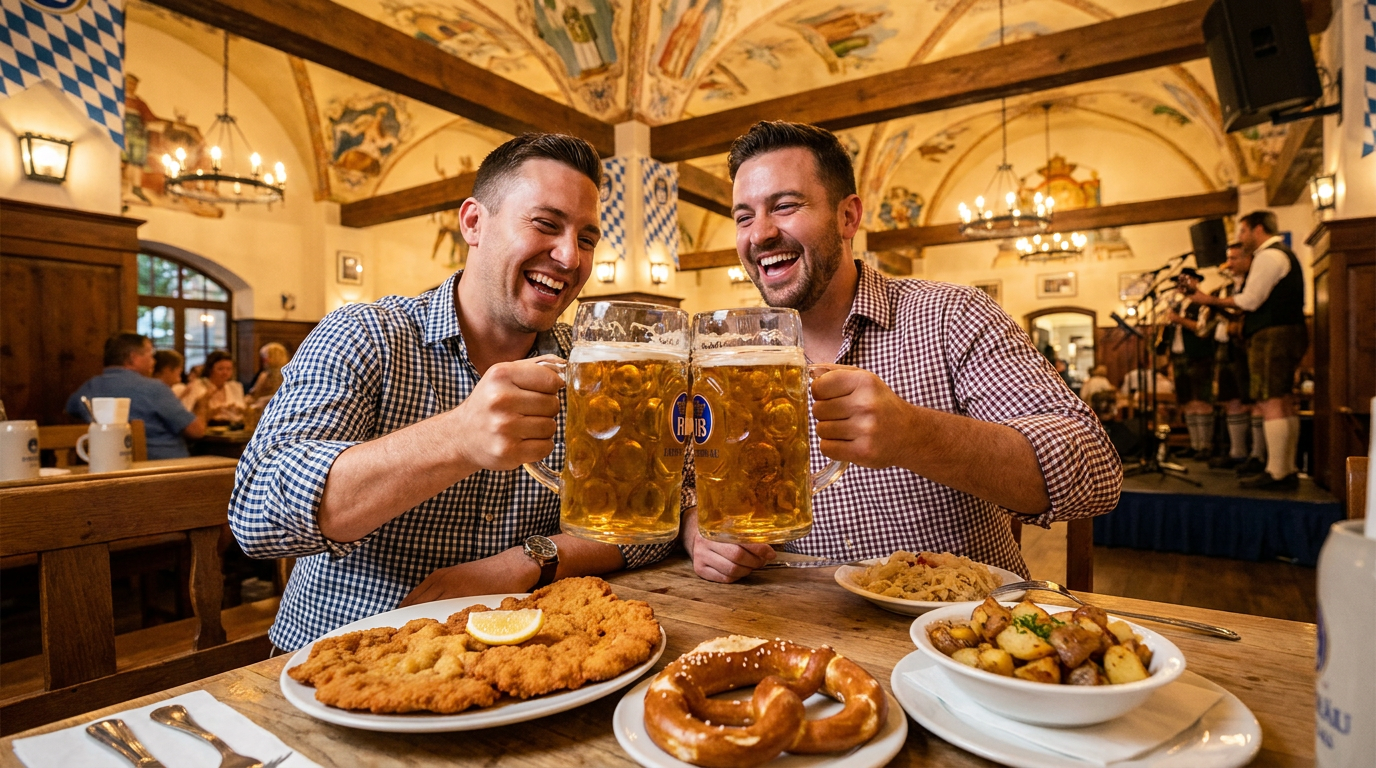
The garden is also climate-controlled, which is no small advantage during a Las Vegas July. Guests can enjoy the appearance and energy of a Bavarian courtyard without attempting to endure the full force of the Nevada afternoon heat.
Why it belongs on your July list
This is the place for travelers who want spectacle, music, large portions, audience participation, and a celebration that feels more like an event than a meal.
Order this: A schnitzel platter, pretzel, and Hofbräu Original or Hefeweizen.
Best for: Las Vegas travelers, birthday groups, bachelor or bachelorette parties, music lovers, and anyone who believes dinner should include a brass band.
4. The Rathskeller Biergarten
Indianapolis, Indiana
Located inside the historic Athenaeum in downtown Indianapolis, The Rathskeller combines German architecture, food, history, and one of the Midwest’s most active outdoor music calendars.
The restaurant serves German favorites alongside steaks, seafood, pork, chicken, and vegetarian selections. Traditional dishes include jägerschnitzel and other hearty Central European specialties.
Behind the building is a large outdoor biergarten featuring bar huts, dancing areas, and a substantial bandshell. The space can seat approximately 500 guests and was designed for live entertainment and social gatherings.
Music is central to The Rathskeller experience. Performances commonly run Wednesday through Saturday and on selected Sundays, with styles ranging from polka and acoustic music to rock, blues, country, and local cover bands.
This broader entertainment mix makes The Rathskeller an excellent example of how a German-American biergarten can preserve its cultural foundation while continuing to evolve. One evening may feel traditionally German; another may feature yacht rock, country, or blues. The connecting thread is the communal outdoor celebration.
Why it belongs on your July list
Few destinations combine a historic German-American building, substantial food menu, spacious garden, and frequent live entertainment as successfully as The Rathskeller.
Order this: Jägerschnitzel, bratwurst, German potato salad, and an imported lager.
Best for: Concertgoers, history lovers, couples, groups of friends, and visitors spending a weekend in Indianapolis.
5. Scholz Garten
Austin, Texas
Long before Austin became known for food trucks, technology companies, college football, and the phrase “Keep Austin Weird,” German immigrant August Scholz opened a gathering place in the Texas capital.
Scholz Garten was established in 1866 and developed into an important social center for Austin’s German community. Over the decades, it hosted musicians, political gatherings, celebrations, community organizations, and generations of Texans looking for food, conversation, and cold beer. The property is now associated with the Austin Saengerrunde, a historic German singing society that has helped preserve the site and its cultural role.
Today, Scholz Garten blends German heritage with Austin personality. Visitors can enjoy sausages, schnitzel-inspired dishes, beer, cocktails, live music, special events, and the relaxed energy of one of Texas’ oldest hospitality landmarks. Its official calendar continues to feature music, reunions, community functions, private events, and university-related gatherings.
The result is not a museum frozen in the nineteenth century. Scholz remains alive because it has changed with Austin while protecting the history that makes it special.
Why it belongs on your July list
Scholz Garten offers something deeper than decorative Bavarian flags. It represents the long story of German immigrants building businesses, cultural organizations, and community gathering places across Texas.
July visitors should plan for Austin heat, choose a later afternoon or evening arrival, and check the music and event schedule beforehand.
Order this: Sausage, schnitzel, a pretzel, and a refreshing German-style beer.
Best for: German-American history enthusiasts, live-music travelers, Texas road-trippers, and visitors exploring downtown Austin.
6. The Olde Mecklenburg Brewery
Charlotte, North Carolina
The Olde Mecklenburg Brewery brings German brewing philosophy together with Southern hospitality.
Known locally as OMB, the brewery produces German-style beers using traditional methods and emphasizes brewing principles associated with the historic Reinheitsgebot, or German beer purity tradition. Its main Charlotte campus includes a large, tree-filled biergarten designed for communal gatherings, casual dining, outdoor events, and relaxed afternoons with friends.
The setting is one of OMB’s greatest strengths. Large trees provide shade over picnic tables, while families, couples, groups, and leashed dogs spread throughout the garden. German-inspired food options commonly include pretzels, sausages, schnitzel, sauerkraut, and other dishes suited to the brewery’s lagers and wheat beers.
Live music is another summer attraction. OMB states that it generally hosts local performers on Friday and Saturday evenings during spring and summer, with occasional Sunday appearances.
OMB now operates more than one Charlotte-area destination, including its Ballantyne location, giving visitors multiple ways to experience the brand’s brewing tradition and outdoor hospitality.
Why it belongs on your July list
The Olde Mecklenburg Brewery offers one of the South’s most complete combinations of German-style brewing, shaded outdoor seating, family-friendly recreation, food, and weekend entertainment.
Order this: A Hefeweizen or lager with schnitzel, sausage, sauerkraut, and a pretzel.
Best for: Families, dog owners, craft-beer enthusiasts, weekend travelers, and groups wanting plenty of outdoor space.
7. Bohemian Hall and Beer Garden
Astoria, Queens, New York
Although its cultural identity is primarily Czech and Slovak rather than strictly German, Bohemian Hall deserves a place on any serious American biergarten journey.
Established in 1910 by the Bohemian Citizens’ Benevolent Society of Astoria, the hall has served generations of immigrants, descendants, neighbors, and New Yorkers. Its mission historically included supporting Czech and Slovak culture, education, drama, libraries, and a community home in which Old World traditions could be blended with American life.
Bohemian Hall survived Prohibition and remains one of New York City’s classic outdoor public gathering spaces. The property honors its founders through Czech and Slovak beer, food, décor, cultural programming, and community events.
The outdoor garden offers rows of communal tables, mature trees, casual dining, and the unmistakable energy of New York. The crowd may include longtime neighborhood residents, young professionals, international travelers, families, Mets fans, musicians, and visitors who simply followed the sound of conversation into the courtyard.
German, Czech, Slovak, Austrian, and other Central European beer cultures overlap in many American communities. Including Bohemian Hall reminds us that the biergarten tradition was carried to the United States by several immigrant groups—not only Bavarians.
Why it belongs on your July list
Bohemian Hall combines immigrant history, urban diversity, communal seating, hearty Central European food, and an atmosphere that feels impossible to manufacture artificially.
Order this: Czech or Central European lager, kielbasa, potato pancakes, or another traditional house specialty.
Best for: New York visitors, heritage travelers, food explorers, history lovers, and anyone who prefers an authentic neighborhood institution over a polished theme experience.
8. Bavarian Bierhaus
Nashville, Tennessee
For GERMAN HERITAGE USA readers in Middle Tennessee, Bavarian Bierhaus offers an accessible taste of Munich without boarding an airplane.
Located at Opry Mills in Nashville, the veteran-owned restaurant describes its mission as bringing “Munich to Music City” through beer, German food, live music, and themed entertainment. Its founder’s appreciation for Bavaria inspired a restaurant designed to deliver more than a standard dining experience.
The large indoor beer-hall environment includes communal tables, a performance stage, German decorations, hearty portions, imported and domestic beer, and frequent live entertainment. While it is not a traditional outdoor garden beneath chestnut trees, it captures many of the same social traditions: shared seating, music, singing, celebration, and a menu built around Bavarian comfort food.
That indoor setting is also helpful in July, when Nashville heat and humidity can make an air-conditioned bier hall every bit as appealing as an outdoor patio.
Depending on the entertainment schedule, guests may hear German standards, accordion music, polka, party songs, and familiar American favorites. It is an especially approachable destination for families who want to introduce younger generations to German food, music, and hospitality.
Why it belongs on your July list
Bavarian Bierhaus proves that German traditions can fit naturally into Music City. It offers visitors a fun, accessible experience close to the Grand Ole Opry, area hotels, shopping, and other Nashville attractions.
Order this: Bratwurst, schnitzel, pretzel, potato salad, and a German lager or wheat beer.
Best for: Middle Tennessee families, Nashville tourists, veterans, Opry visitors, groups, and diners seeking an indoor escape from the July heat.
The Unwritten Rules of the Biergarten
You do not need lederhosen, fluent German, or extensive beer knowledge to enjoy a biergarten. A few simple customs, however, will make the experience even better.
Share the table
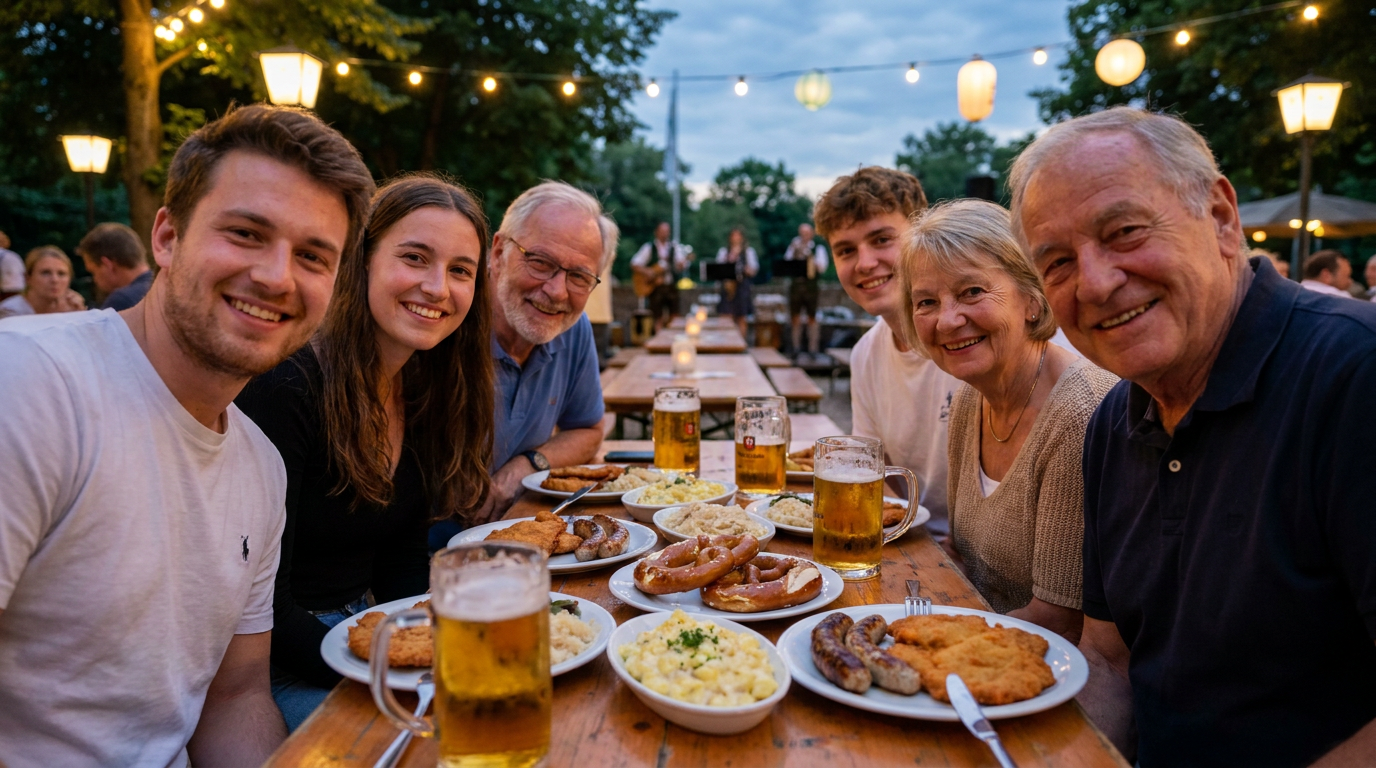
Communal seating is part of the tradition. Do not be surprised when another group joins your table. A polite greeting can quickly lead to an enjoyable conversation.
Say “Prost!”
When raising your glass, say Prost! and make friendly eye contact. You are not signing a contract. You are simply participating in one of the world’s easiest cultural traditions.
Explore the menu
A biergarten is an excellent place to try something beyond an ordinary hamburger. Sample schnitzel, bratwurst, currywurst, spaetzle, sauerbraten, potato pancakes, red cabbage, or a regional specialty.
Respect the music
Some venues feature traditional German bands, while others present rock, blues, country, or acoustic performers. Either way, the entertainment is part of the atmosphere. Support the musicians and be mindful of posted cover charges.
Pace yourself
German beer is often served in generous glasses or steins. Eat a full meal, drink water, know your limits, and arrange safe transportation.
Check before traveling
Outdoor hours, live entertainment, menus, age restrictions, reservations, and weather policies can change. Verify the official schedule before making a long drive.
THE PERFECT JULY BIERGARTEN CHECKLIST
GREAT FOOD
Bratwurst • Schnitzel • Pretzels • Potato Pancakes • Sauerkraut
COLD BIER
Lager • Pilsner • Hefeweizen • Dunkel • Märzen
LIVE MUSIC
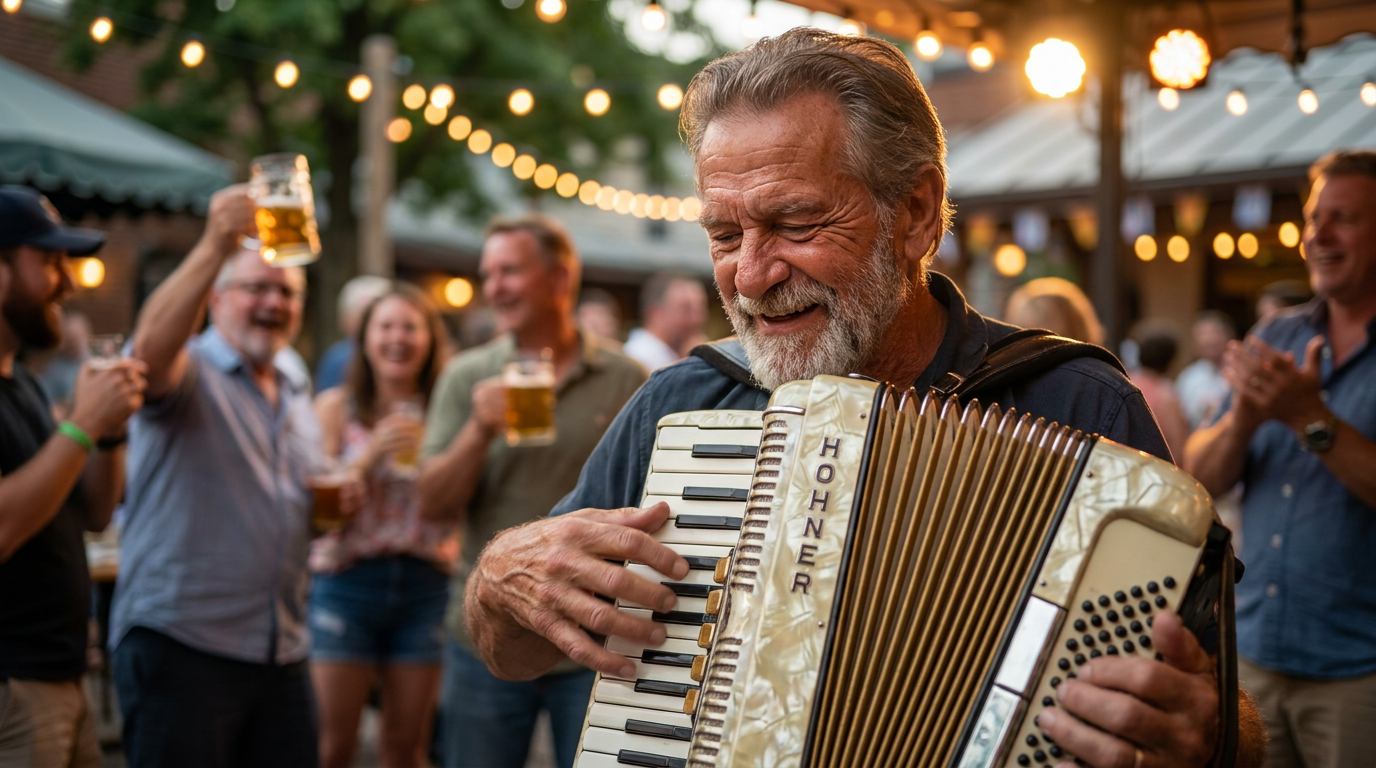
Polka • Accordion • Brass Bands • Folk Music • Local Favorites
AUTHENTIC ATMOSPHERE
Communal Tables • Shade Trees • Festive Décor • Friendly Conversation
GERMAN SPIRIT
Tradition • Hospitality • Heritage • Gemütlichkeit
PULL UP A CHAIR. RAISE A STEIN. MAKE A NEW FRIEND.
More Than Beer: Why Biergartens Still Matter
The most important thing about a biergarten may not be found on the menu.
German-American gathering places once helped immigrants adjust to life in a new country while maintaining connections to language, music, food, family customs, and community organizations. Singing societies, athletic clubs, benevolent associations, breweries, restaurants, picnic grounds, and beer gardens became places where cultural identity could be preserved and shared.
Over time, these gathering places welcomed neighbors from every background. German traditions became part of the broader American story.
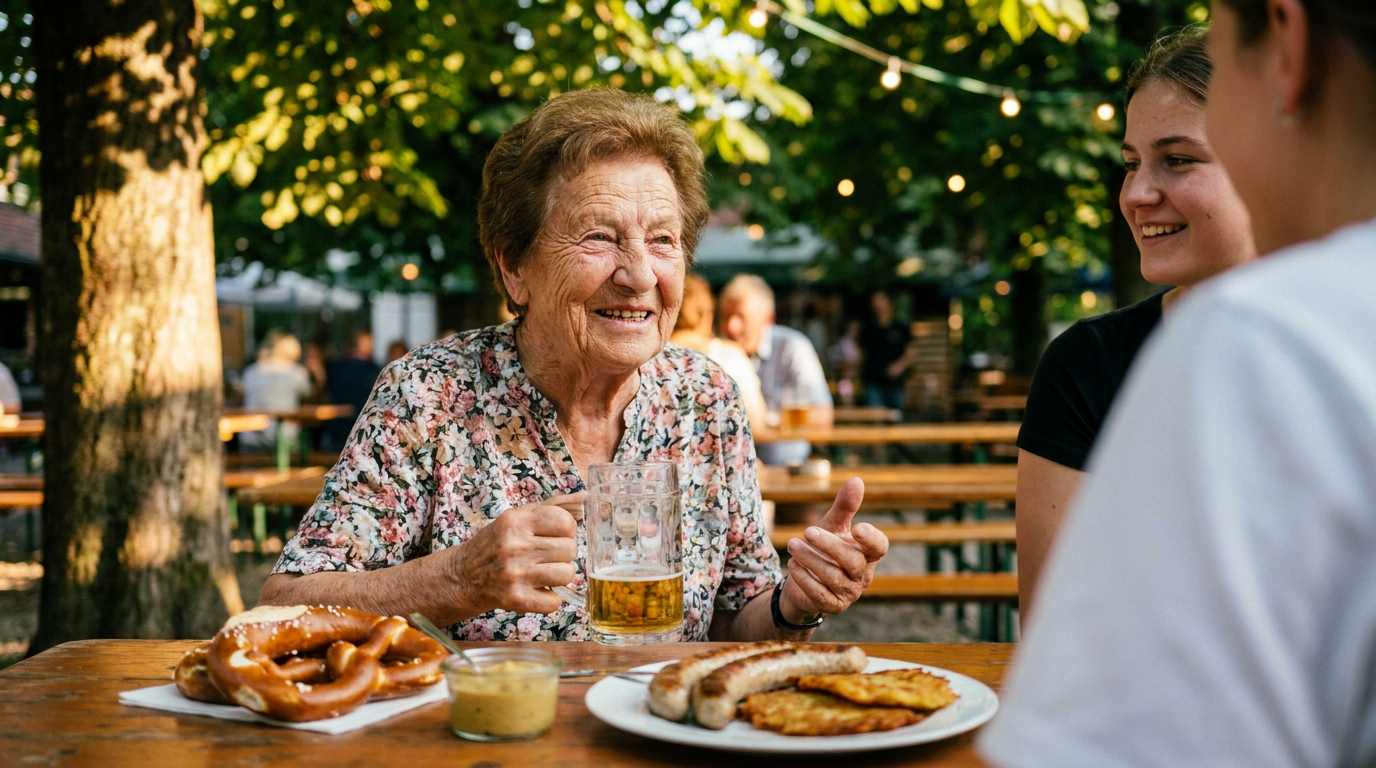
That pattern continues today. Walk into a successful biergarten and you will see people of different ages, occupations, backgrounds, and family histories occupying the same tables. Some arrive because their grandparents spoke German. Others come for the music. Some are interested in brewing. Others simply heard there were giant pretzels.
All are welcome.
“The stein may bring people to the table, but Gemütlichkeit is what persuades them to stay.”
This is why the traditional biergarten remains relevant in an age of fast food, private screens, home delivery, and hurried schedules. It asks us to do something increasingly unusual: sit beside other people, share a physical space, listen to live music, and allow an ordinary meal to become a communal experience.
Plan Your July Biergarten Adventure
A biergarten visit can become the centerpiece of an entire weekend.
In Milwaukee, combine Estabrook Beer Garden or The Bavarian Bierhaus with a brewery tour and a visit to the city’s German-American landmarks.
In Indianapolis, enjoy dinner and music at The Rathskeller after exploring the historic Athenaeum and downtown cultural attractions.
In Austin, visit Scholz Garten as part of a broader journey through the German history of Central Texas.
In Charlotte, make The Olde Mecklenburg Brewery an evening stop following a day of museums, shopping, or family attractions.
In New York, pair Bohemian Hall with an afternoon exploring Astoria’s international neighborhoods.
In Nashville, combine Bavarian Bierhaus with the Grand Ole Opry, area attractions, and a Music City weekend.
And in Las Vegas, let Hofbräuhaus provide a delightfully Bavarian break from casinos, shows, and the summer heat.
Reservations may be useful for larger groups, but some of the best biergarten moments happen spontaneously. Arrive, look for an open seat, order something unfamiliar, and allow the evening to unfold.
A Summer Toast to German-American Tradition
America’s best German biergartens are not identical copies of Munich.
They are something more interesting: American gathering places shaped by German and Central European traditions. Each one reflects its own city. Milwaukee brings its brewing legacy. Austin contributes Texas history and live music. New York provides immigrant culture and urban energy. Charlotte adds Southern hospitality. Nashville mixes Bavaria with Music City. Indianapolis combines German architecture with a packed concert calendar. Las Vegas turns the entire tradition into a show.
Yet they all share a familiar spirit.
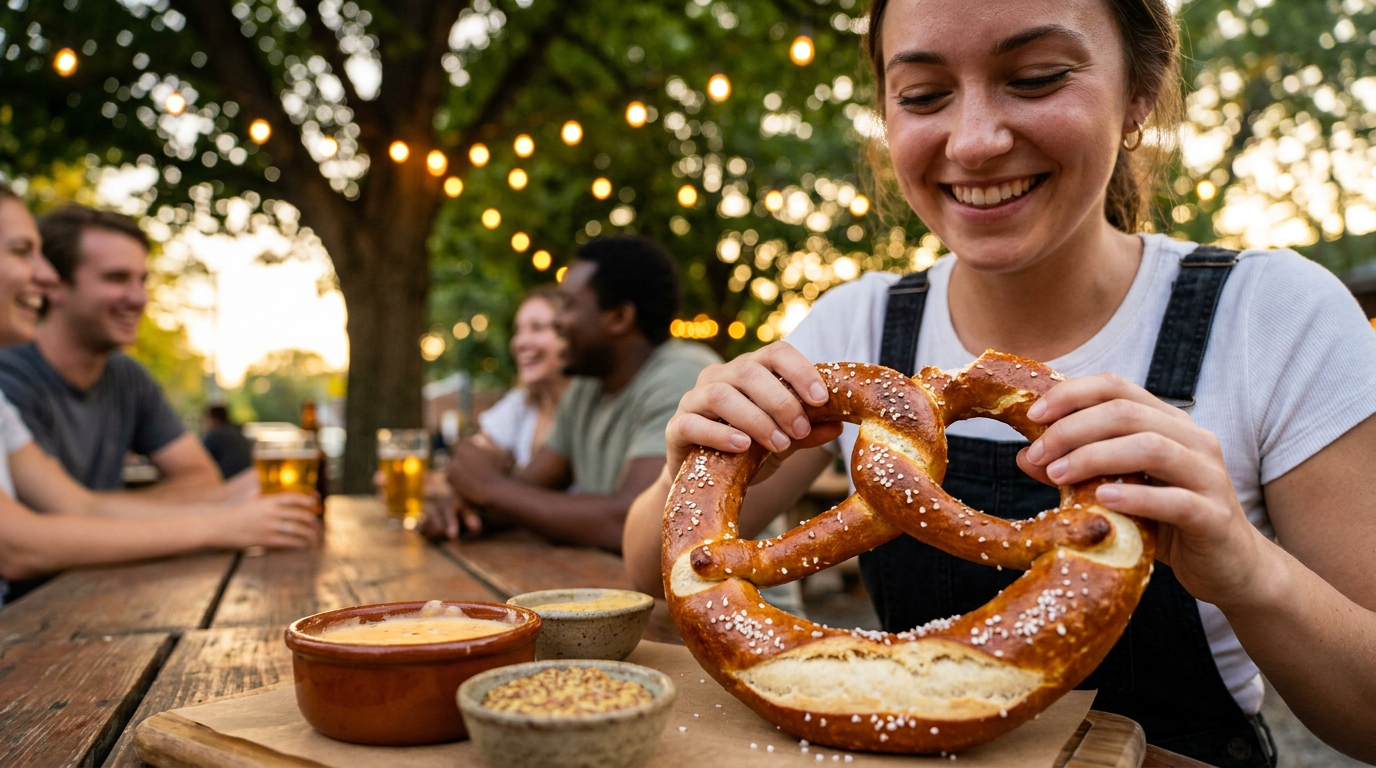
There is food meant to be enjoyed slowly, music meant to be heard together, and seating designed to turn strangers into temporary neighbors. There are stories of immigrants, entrepreneurs, brewers, musicians, clubs, and families who kept traditions alive by sharing them.
That may be the greatest lesson of the biergarten.
Heritage does not survive by remaining locked away. It survives when it is served, sung, brewed, celebrated, and passed around the table.
So this July, find a biergarten. Bring your family. Invite a friend. Order the pretzel that appears far too large for one person—and then discover that it disappears anyway.
Raise your glass responsibly and offer the simplest German toast: