
Tracing the German Coast: Exploring Louisiana’s Hidden Heritage Near New Orleans
GERMAN HERITAGE USA | AFFILIATE DISCLAIMER: This post may or may not contain affiliate links which means we may receive a commission for purchases made through links. We will only recommend products that we have personally used or that we truly trust. Learn more on our Private Policy and Disclaimer Page located under our Terms Of Service tab above.
Long before jazz floated through the French Quarter and before Mardi Gras beads glittered in the Louisiana sun, German-speaking farmers were carving out a life along the Mississippi River. Their story is one of resilience, adaptation, and quiet influence — a heritage woven into the soil, cuisine, architecture, and even the surnames of southern Louisiana.
Today, just west of New Orleans, a stretch of river communities still echoes with this legacy. Known historically as the German Coast, this region tells a lesser-known but deeply American story: how German immigrants in the early 1700s helped feed a struggling French colony and laid foundations that endure nearly three centuries later.
For readers of German Heritage USA, this is more than a history lesson — it’s a travel invitation. Whether you’re a genealogy enthusiast tracing family roots, a foodie seeking authentic flavors, or simply a heritage traveler looking for your next meaningful getaway, Louisiana’s German Coast offers something uniquely unforgettable.
“Heritage isn’t always loud,” as one local historian once said. “Sometimes it whispers through recipes, riverbanks, and family names.”
Let’s follow that whisper.
The Origins: Germans on the Mississippi
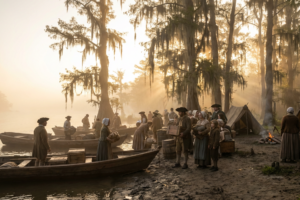
In 1721, ships carrying German-speaking settlers — many from the Rhineland and Swiss cantons — arrived in French Louisiana. They had been recruited to strengthen the struggling colony and provide agricultural expertise. Conditions were harsh, but the settlers adapted quickly.
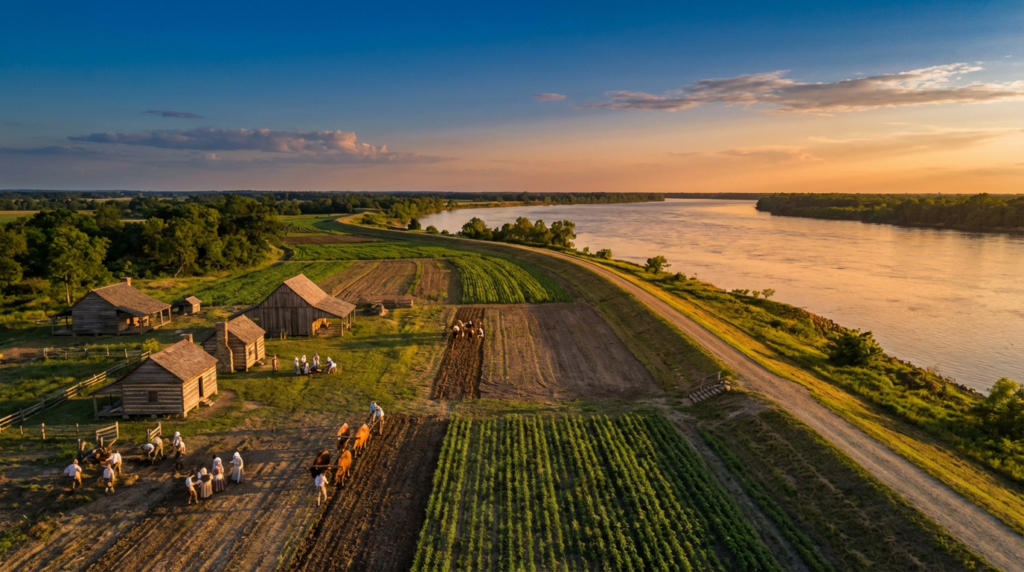
They established farming communities along the Mississippi River in what is now St. Charles Parish and St. John the Baptist Parish, transforming swampy terrain into productive farmland. Their crops — especially vegetables and grains — sustained early Louisiana settlements and even saved the colony from famine.
This region became known as the German Coast — La Côte des Allemands.
Their surnames — Waguespack, Schexnayder, Zeringue, Trosclair — still appear across southeastern Louisiana today.
Walking the River Road: A Journey Through Time

While much of the River Road is known for grand plantation homes, the German Coast story is quieter and more agrarian. These settlers were small farmers, not plantation elites. Their strength was community cooperation, craftsmanship, and agricultural skill.
Today, visitors can explore:
- Local parish museums
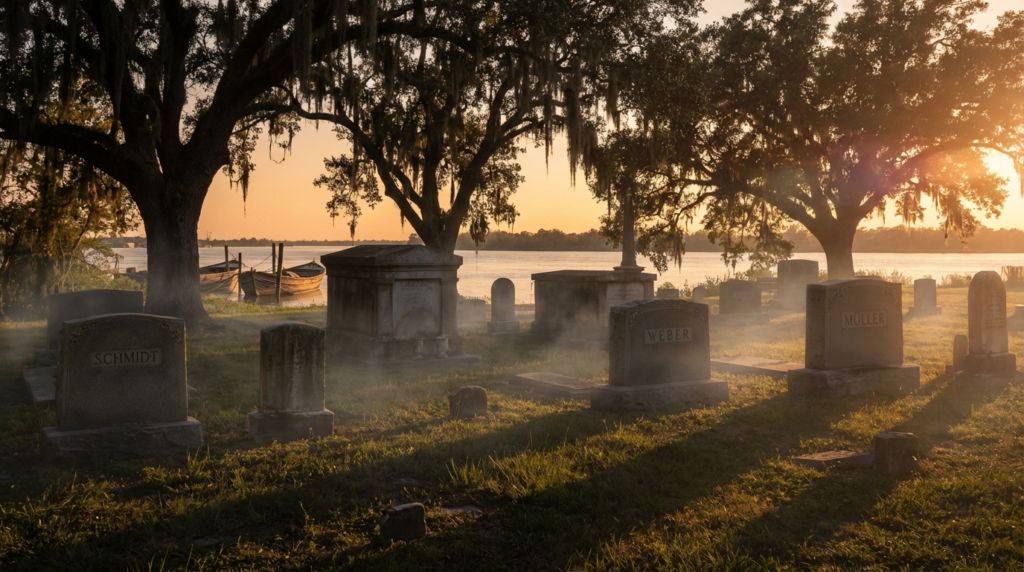
- Historic cemeteries with German surnames
- Preserved churches rooted in 18th-century Catholic traditions
- Community heritage festivals celebrating German ancestry
This is heritage tourism at its most authentic — less commercial, more personal.
St. Charles Parish: Where the Story Began
Local Catholic churches, such as St. Charles Borromeo, became centers of community life. Baptismal and marriage records from the 1700s reveal the blending of German, French, and Spanish influences that shaped Louisiana’s identity.
The German settlers integrated into French Louisiana society while preserving elements of their language and customs. Over generations, their dialect evolved into what historians call “Louisiana German.”
Many of their traditions survive through:
- Family-run farms
- Parish festivals
- Culinary heritage
- Genealogical societies
For ancestry researchers, parish church archives are treasure troves of early colonial records.
A Culinary Legacy: From Bratwurst to Andouille
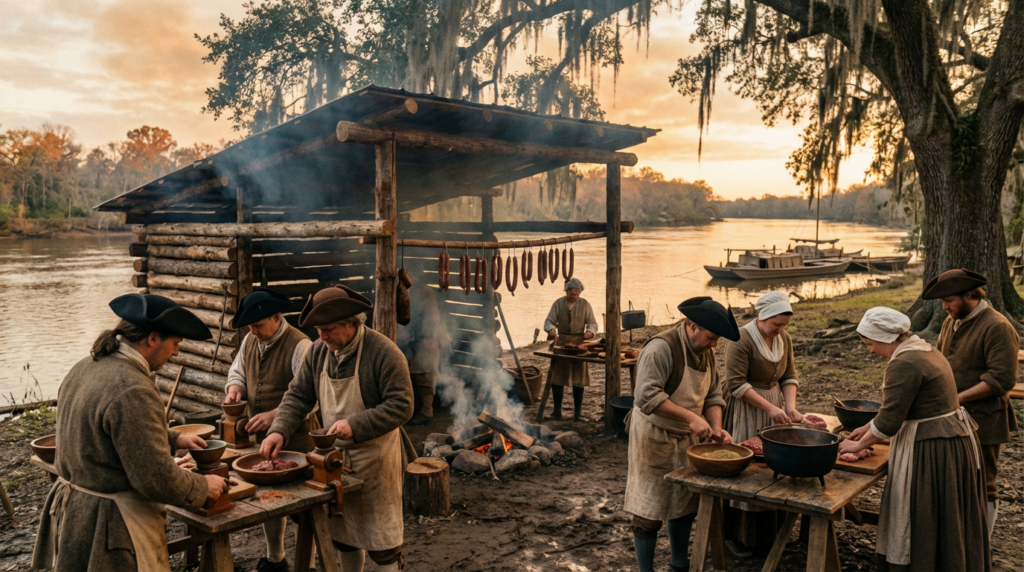
The German Coast settlers brought sausage-making techniques that heavily influenced Louisiana’s famous andouille sausage.
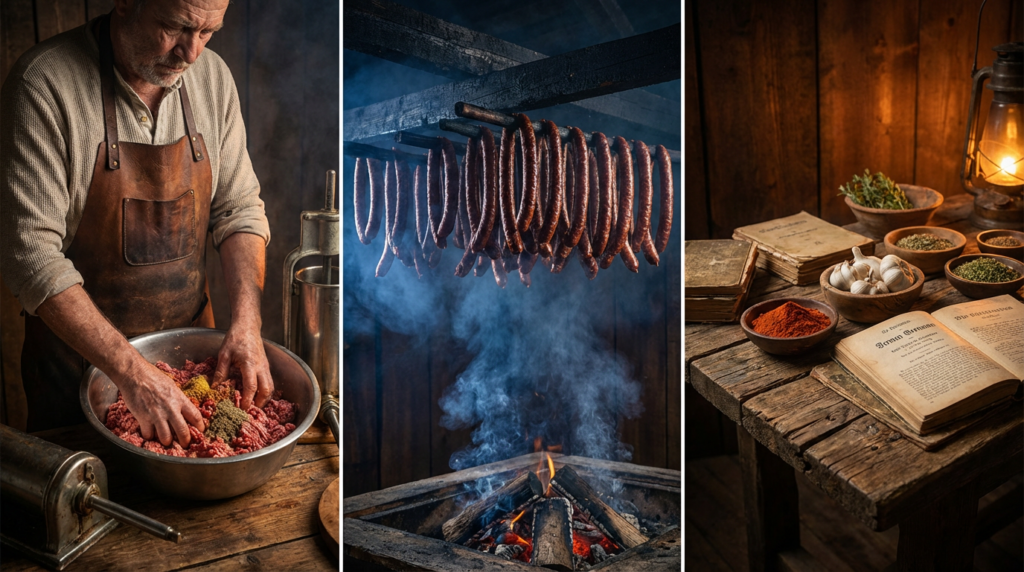
While Cajun and Creole flavors evolved over time, the smoking methods and spice traditions show clear European roots.
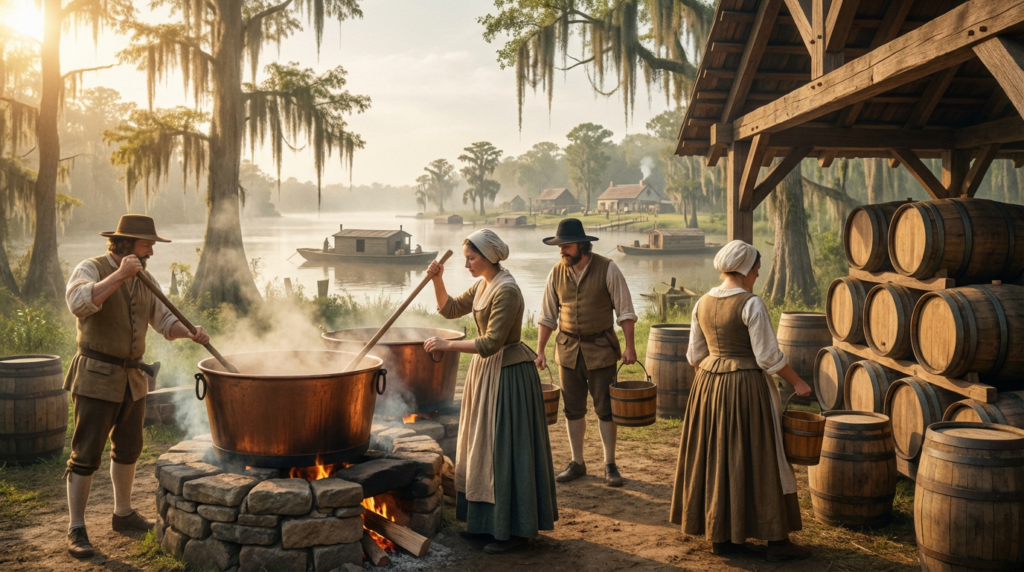
The German influence also extended to:
- Bread baking traditions
- Pickling methods
- Hearty stews
- Beer brewing (in later generations)
“Food is the most delicious form of memory,” says a chef from the River Parishes. “Every bite carries a story.”
Today, travelers can sample heritage-inspired dishes in local restaurants near New Orleans while knowing that the flavors reflect centuries of cultural blending.
The 1811 German Coast Uprising: A Defining Chapter
The German Coast was the site of one of the largest slave uprisings in U.S. history — the 1811 German Coast Uprising. Along the Mississippi River just upriver from New Orleans, enslaved Africans marched in pursuit of freedom within a plantation-based society. Though the revolt was ultimately suppressed, it remains one of Louisiana’s most sobering and significant historical events.
By 1811, the original 18th-century German settlers had largely blended into Louisiana’s diverse Creole society, living alongside French, Spanish, African, and Caribbean communities. While the uprising was led by enslaved people seeking liberation, the region’s German-descended farmers were often small landholders rather than large plantation elites. Many early Germans had themselves arrived as indentured laborers, enduring harsh voyages and years of servitude — experiences that shaped a culture rooted in perseverance and communal labor.
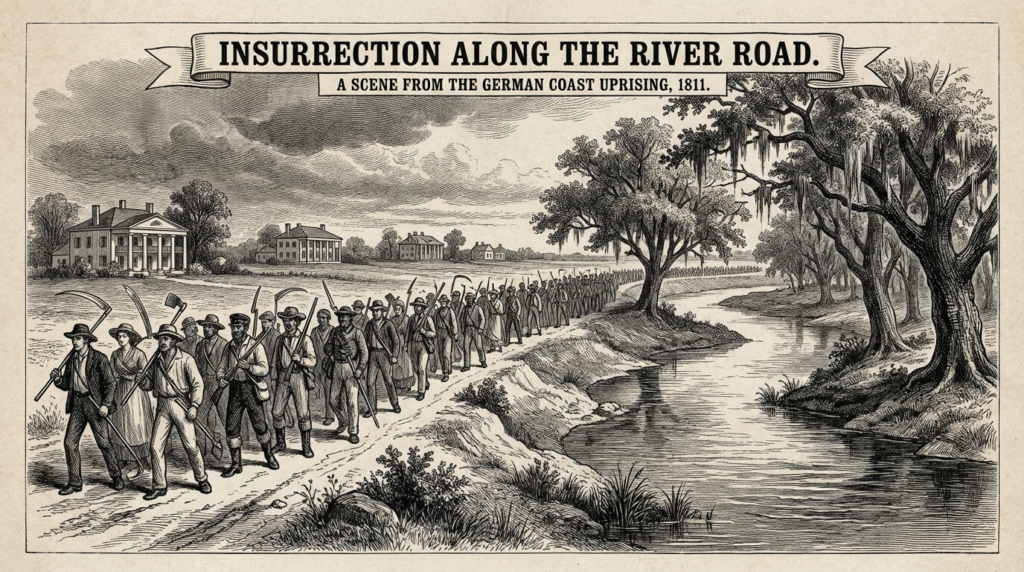
Historical records suggest that German Coast communities were generally more agrarian and less aristocratic than the grand plantation culture elsewhere along River Road. Though some German-descended families participated in the slaveholding system, others expressed discomfort with its brutality. Parish accounts and oral histories indicate that certain residents showed quiet sympathy or offered small acts of assistance, reflecting the moral tensions of the time. The full historical picture is complex, but it reveals a community not uniformly aligned with plantation power structures.
The uprising unfolded in this culturally blended landscape, transforming the German Coast into a crossroads of resistance and reckoning. Today, sites such as the Whitney Plantation interpret this layered history with honesty and depth. To understand the German Coast fully is to recognize both its agricultural legacy and its connection to the broader American struggle for freedom — a story marked by hope, hardship, contradiction, and the enduring pursuit of liberty.
Festivals & Heritage Events
Late winter and early spring are wonderful times to visit. While Mardi Gras often dominates attention in New Orleans, smaller communities host heritage-focused gatherings celebrating:
- German ancestry
- Traditional music
- Folk dancing
- Sausage cook-offs
- Church fairs
Many German-descended families still participate in parish celebrations that blend Cajun rhythm with Old World roots.
For heritage travelers seeking authenticity over spectacle, these events are pure gold.
Oompah on the River: When the German Coast Found Its Rhythm
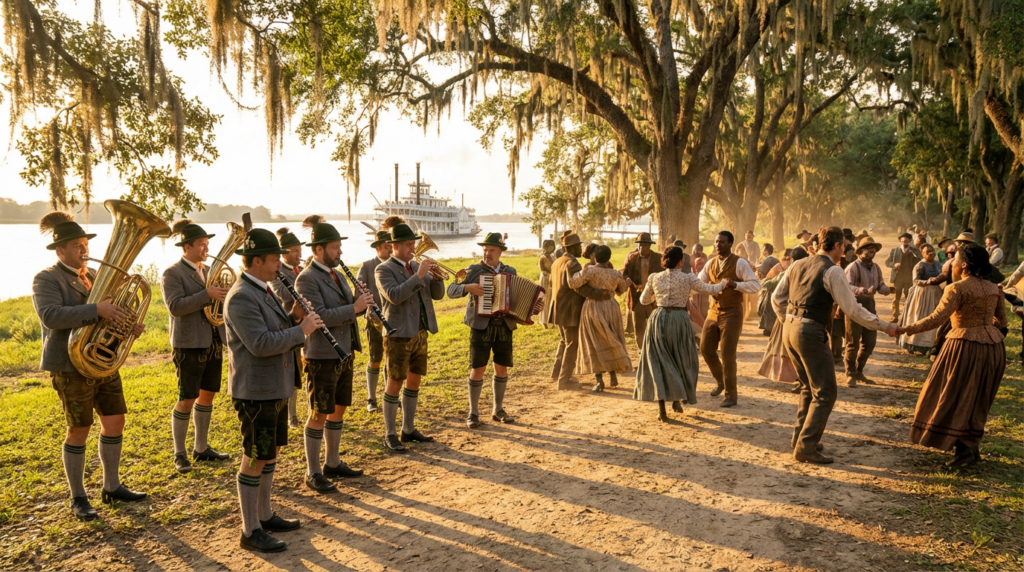
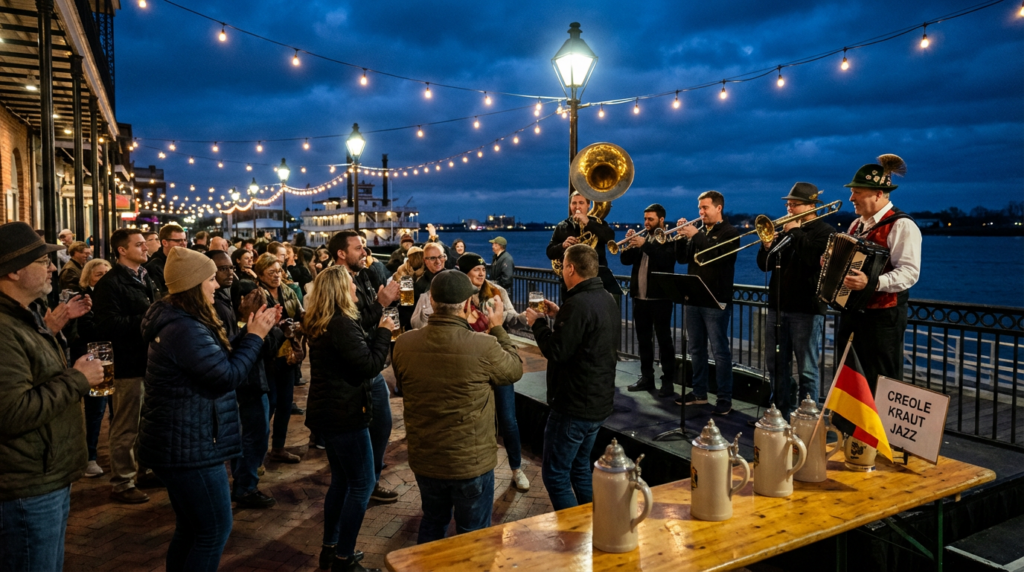
Tubas laid down the steady bass line. Trumpets and clarinets carried bright, melodic phrases. An accordion often led the rhythm, binding Old World harmonies to New World air. These weren’t formal concert halls — they were open fields, parish yards, and riverbank clearings. Children danced. Families shared sausage and bread. Beer flowed. Music connected the community.
German brass traditions emphasized structure, harmony, and strong rhythmic patterns — elements that would quietly influence the broader musical culture of southern Louisiana. The settlers may not have realized it at the time, but those festive gatherings along the Mississippi were contributing to the evolving musical DNA of the region.
As one music historian observed:
“Before jazz improvised, brass bands organized. And the German Coast knew how to organize sound.”
🎷 From Oompah to Jazz: A Cultural Fusion on the Mississippi
By the late 19th and early 20th centuries, brass instruments were central to parades, funerals, and celebrations throughout the Crescent City. While jazz was born from African American creativity and resilience, the instrumentation — trumpets, trombones, clarinets, tubas — reflected a broader transatlantic lineage that included German village bands and military ensembles.
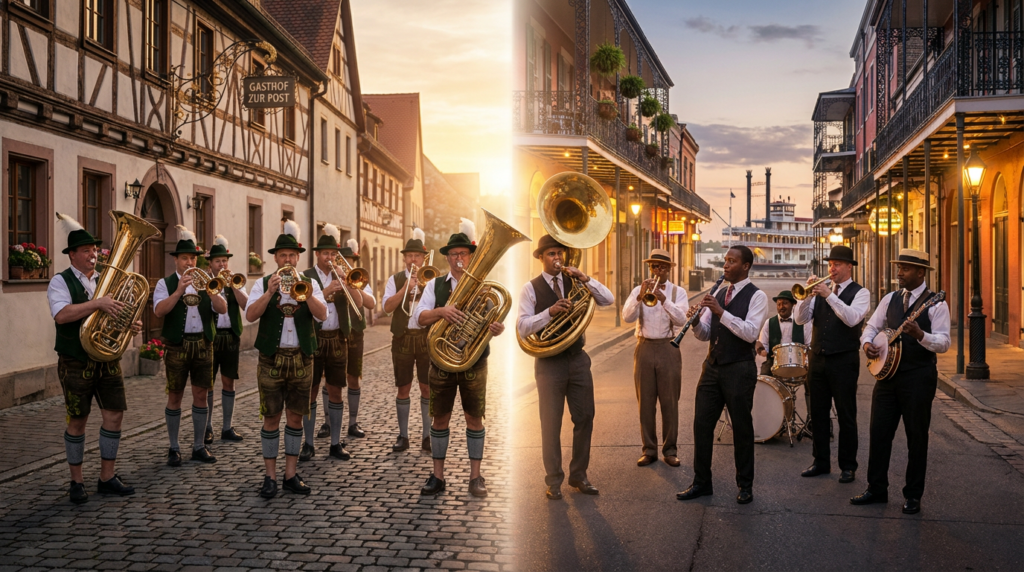
Today, along the Mississippi River at night, modern jazz bands play under warm streetlights. The music is freer, hotter, more syncopated — but listen closely and you can still hear echoes of structured brass harmony beneath the improvisation. Occasionally, an accordion slips into a set. A beer stein clinks on a nearby table. The past isn’t gone — it’s layered into the present.
From oompah to jazz, the German Coast didn’t just feed Louisiana’s body. It helped shape its soundtrack.
Genealogy & Tech-Savvy Heritage Travel
February is a perfect month to dive into ancestry research. Before your trip:
- Explore digitized church archives
- Search immigration manifests
- Connect with local historical societies
- Use DNA ancestry platforms to trace regional matches
When you visit, photograph headstones, scan archival documents, and interview local historians.
German Coast Quick Facts
- Founded: 1721
- Location: Along the Mississippi River west of New Orleans
- Key Parishes: St. Charles & St. John the Baptist
- Cultural Blend: German, French, Spanish, African
- Legacy: Agriculture, sausage-making, Catholic traditions
Combining modern tech with on-the-ground exploration turns a weekend getaway into a generational discovery.
Why the German Coast Matters Today

The German Coast reminds us that German-American heritage isn’t confined to the Midwest. It stretches deep into the South, blending with French, Spanish, and African traditions to create something uniquely American.
This region symbolizes:
- Adaptation
- Agricultural innovation
- Cultural blending
- Quiet resilience
It also reinforces the mission of German Heritage USA: to celebrate German traditions wherever they took root across the country.
As you stand along the Mississippi at sunset, it’s easy to imagine those early settlers — hopeful, uncertain, determined — shaping a new life in unfamiliar terrain.
Their story flows on, like the river itself.
Planning Your Visit
Best Time to Go: Late winter and early spring (February–April)
Nearest Hub: New Orleans
Drive Time to German Coast Communities: 30–45 minutes west
Combine Your Trip With:
- French Quarter exploration
- River Road historic tours
- Local seafood and sausage tastings
- Parish museum visits
For readers balancing budgets and bucket lists, the German Coast offers an affordable, meaningful heritage journey without crossing the Atlantic.
Final Reflections
German heritage in America is not a single story. It’s a mosaic — from the beer halls of the Midwest to the alpine streets of Bavarian-themed towns, and yes, even to the humid riverbanks of Louisiana.
The German Coast may not advertise itself loudly. But for those willing to look beyond Mardi Gras beads and Bourbon Street lights, it offers something deeper: continuity.
“Every place has layers,” a River Parish guide once said. “The German Coast is one of Louisiana’s oldest — and most surprising.”
For heritage travelers, food lovers, historians, and families curious about their roots, tracing the German Coast near New Orleans is more than a trip.
It’s a rediscovery.
And like all meaningful journeys, it begins with curiosity — and maybe a really good sausage.