
Winter’s Last Pour: Traditional German Beers to Enjoy Before Spring Arrives
GERMAN HERITAGE USA | AFFILIATE DISCLAIMER: This post may or may not contain affiliate links which means we may receive a commission for purchases made through links. We will only recommend products that we have personally used or that we truly trust. Learn more on our Private Policy and Disclaimer Page located under our Terms Of Service tab above.
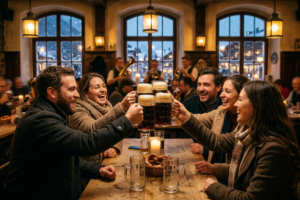
Late February in Germany is a season suspended between worlds. Snow still clings to the edges of cobblestone streets, gathering in quiet corners beneath timber-framed houses and along the roofs of centuries-old beer halls. The air carries the sharp, clean bite of winter, and church bells echo through the frosty morning like a slow heartbeat of tradition. Smoke curls gently from chimney stacks, and the warm glow of tavern windows spills onto the icy streets, inviting travelers inside for one more taste of winter’s comfort.
Yet beneath the gray Bavarian sky, something quieter—and far more hopeful—is taking place. In cool cellars and historic breweries, golden lagers are quietly fermenting. Barrels rest patiently in the dim light, slowly transforming grain, water, hops, and yeast into the promise of the coming season. Brewers know what the landscape already senses: winter’s grip is loosening. While the snow still lingers outside, inside the brewery tanks a brighter future is beginning to take shape.
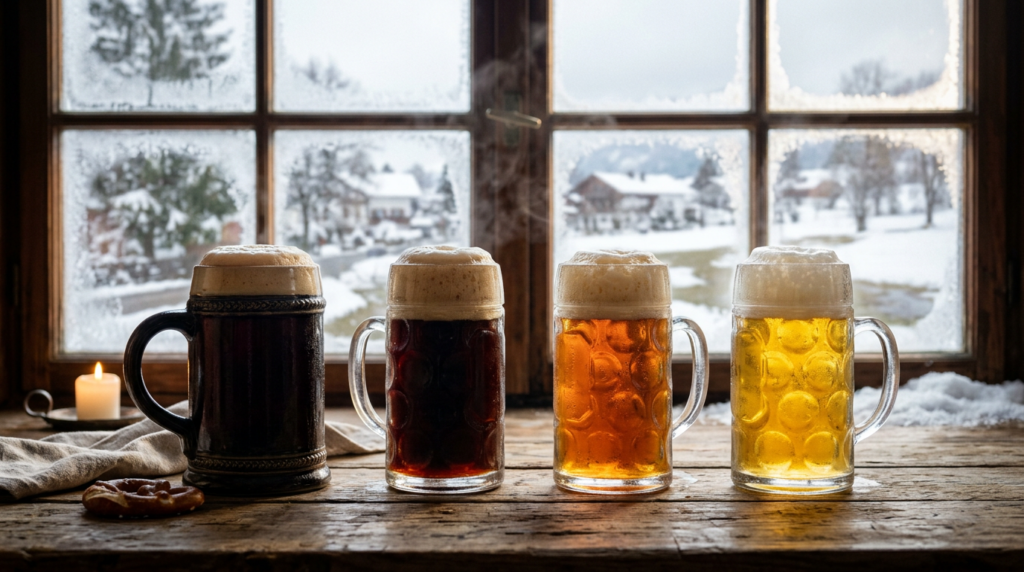
For centuries, Germans have understood that beer follows the rhythm of the seasons. During the long, cold months, darker and stronger brews warm both body and spirit. Rich Bocks and velvety Doppelbocks offer deep notes of caramel, toasted bread, and dark fruit—liquid comfort against the winter chill. But as the sun climbs slightly higher in the sky and Lent approaches, those bold winter lagers begin making room for something lighter, brighter, and more hopeful.
This quiet transformation—from Bock to Helles, from Doppelbock to Maibock—is more than a change in flavor. It is a ritual woven into the fabric of German life. Each glass marks the turning of the calendar, a farewell toast to winter and a welcoming nod to spring. In beer halls across Bavaria, locals lift their steins not just to good drink, but to the seasons themselves—celebrating winter’s final warmth while raising a golden promise to the brighter days ahead. 🍺
This transition—from Bock to Helles, from Doppelbock to Maibock—is more than a change in flavor. It is a ritual. A celebration. A farewell toast to winter’s last pour.
As one old Bavarian saying goes:
“Der Winter braucht Stärke, der Frühling braucht Licht.”
Winter needs strength; spring needs light.
Let’s explore the traditional German beers that define this magical late-winter moment—and why February may be the most fascinating month in the German brewing calendar.
The Bold Heart of Winter: Bock & Doppelbock

When temperatures drop, Germany turns to Bockbier—a strong lager traditionally brewed for sustenance and celebration.
Originating in the northern town of Einbeck and later embraced by Bavarian brewers in Munich, Bock evolved into one of Germany’s most beloved winter styles. Its flavors are rich and comforting:
- Toasted bread crust
- Dark caramel
- Subtle chocolate
- A gentle warming alcohol presence
But if Bock is strong, Doppelbock is heroic.
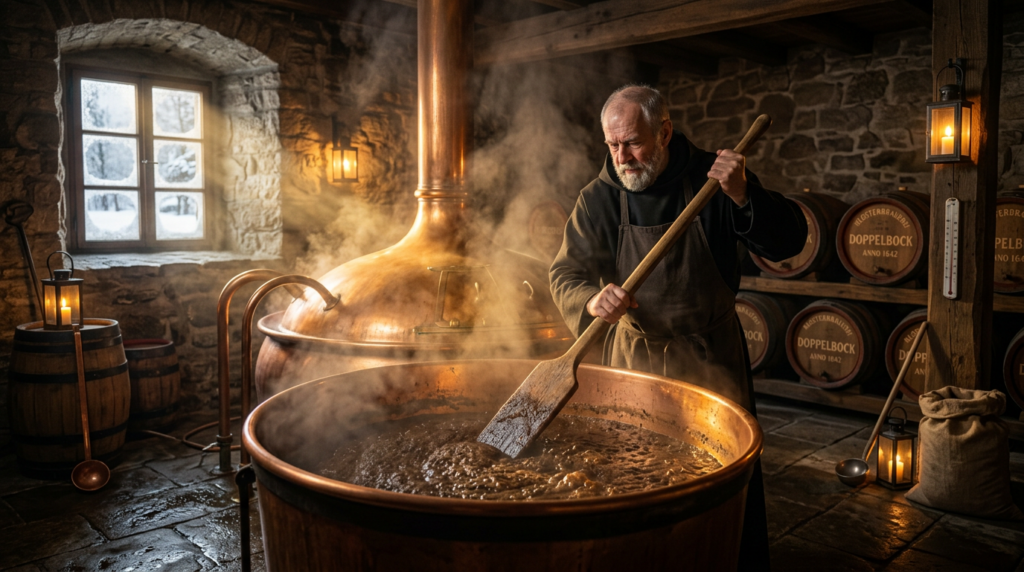
Originally brewed by monks in Munich during Lent, Doppelbock was known as “liquid bread.” When fasting limited solid meals, these nutrient-dense beers sustained the body. The famous Salvator style brewed by monks in the 17th century became the prototype.
“Bier ist flüssiges Brot.”
Beer is liquid bread.
With alcohol levels often reaching 7–10% ABV, Doppelbock delivers deep malt sweetness, plum and raisin notes, and a velvety mouthfeel. It’s the beer of candlelit taverns, wool coats, and lingering conversations.
February is its final stand.
Starkbierzeit: Bavaria’s Strong Beer Season

In Munich, late winter means Starkbierzeit—“Strong Beer Time.”
Often called the “insider’s Oktoberfest,” this February–March tradition celebrates the final weeks of winter with robust, high-gravity brews. Breweries unveil seasonal Doppelbocks in massive beer halls filled with brass bands, laughter, and political satire speeches.
Unlike the tourist-packed autumn festivals, Starkbierzeit feels deeply local. Families gather. Regulars claim their tables. The atmosphere is hearty but intimate.
The strong beers of Starkbierzeit serve as a symbolic bridge:
- They honor winter’s endurance.
- They prepare the body for fasting season.
- They toast the coming thaw.
This is winter’s last full roar.
Why February Favors Stronger Beers
Before refrigeration, German brewing followed nature’s calendar. Beer was safest to brew between late September and early spring when temperatures were cool enough to prevent spoilage.
By February, winter lagers had matured slowly in cold cellars (Lager literally means “to store”). Their flavors deepened. Alcohol levels climbed slightly. The result? A perfect storm of strength and smoothness.
But something subtle begins to happen as daylight lengthens.
Drinkers start craving balance over weight. Brightness over density.
And that’s when golden lagers begin their quiet ascent.
Maibock on the Horizon: Winter Turns to Gold

If Doppelbock is winter’s fireplace, Maibock is the first open window of spring.
“Mai” means May—but Maibock often appears in late March and April, signaling the official shift toward warmer days. Unlike darker winter Bocks, Maibock gleams golden in the glass.
Flavor profile:
- Honeyed malt sweetness
- Toasted biscuit
- Mild herbal hop finish
- A bright, warming strength
It maintains the higher alcohol of Bock but replaces heavy roasted tones with sunshine.
This is the golden bridge between seasons.
From Dunkel to Märzen: Understanding the Shift
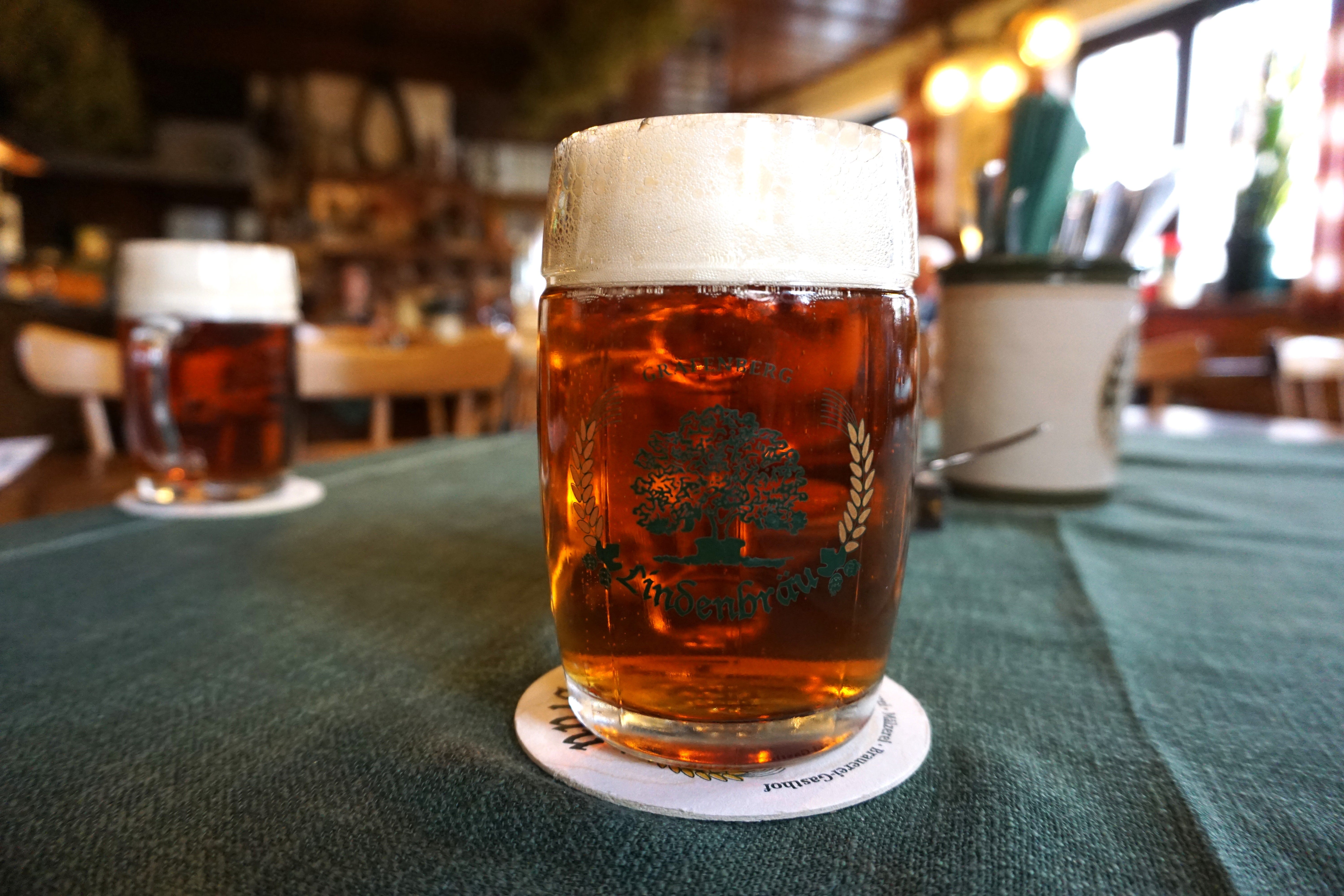
Another winter staple is Dunkel—Munich’s traditional dark lager. Smooth, malty, and bread-forward, it feels tailor-made for February evenings.
But as March approaches, Märzen waits in the wings.
Though most Americans associate Märzen exclusively with Oktoberfest, historically it was brewed in March (März) and lagered throughout summer. Its amber hue and balanced malt character made it the ideal seasonal transition beer.
Think of it this way:
- Dunkel = Dark winter comfort
- Doppelbock = Late-winter strength
- Maibock = Early spring brightness
- Märzen = The balanced middle
Germany’s beer calendar isn’t random—it’s agricultural, climatic, and cultural.
Infographic: Germany’s Seasonal Beer Shift

Winter (Dec–Feb)
Dunkel • Bock • Doppelbock • Weihnachtsbier
Late Winter (Feb–March)
Starkbier • Doppelbock • Early Maibock
Spring (March–May)
Maibock • Helles • Kölsch • Märzen (brewed)
Notice the visual transformation—from dark mahogany browns to luminous gold.
It mirrors the sky itself.
Kölsch vs. Helles: The Light Returns

As winter recedes, lighter beers reclaim dominance.
Kölsch
Brewed in Cologne, Kölsch is delicate, crisp, slightly fruity, and served in slender Stange glasses. It feels like spring rain—clean and refreshing.
Helles
Munich’s answer to pale lager perfection. Soft malt sweetness, restrained hops, brilliant clarity. Helles is the everyday sunshine beer of Bavaria.
If Doppelbock demands a heavy coat, Helles invites you to roll up your sleeves.
The Flavor Science: From Malt-Forward to Hop-Balanced
Why does this transition feel so natural?
Because winter beers emphasize:
- Dark roasted malts
- Caramelization
- Higher alcohol warmth
- Fuller body
Spring beers shift toward:
- Lighter pilsner malts
- Subtle floral or herbal hops
- Crisp carbonation
- Brighter finish
It’s sensory evolution tied directly to daylight, temperature, and psychology.
Humans crave what matches their environment.
February in Munich: What Locals Are Really Drinking
Walk into a Munich beer hall in late February and you’ll likely see:
- Doppelbock flowing generously
- Starkbier specials on chalkboards
- Regulars discussing politics with theatrical flair
- Brass bands warming the rafters
But you may also notice something telling—one or two golden lagers appearing at nearby tables.
The shift has begun.
Winter isn’t over, but spring has entered the conversation.
Top 7 Traditional German Beers to Drink in Late February
- Doppelbock
- Starkbier
- Dunkel
- Classic Bock
- Early Maibock
- Kellerbier (unfiltered rustic lager)
- Helles (for sunny afternoons)
Each offers a slightly different interpretation of the seasonal handoff.
From Snow to Sun: A Cultural Tradition
Germany’s beer calendar is inseparable from its agricultural past. Before refrigeration, brewing paused during the hot months. Stronger beers were crafted to endure storage and travel.
By late winter, those cellared treasures were ready.
Today, modern refrigeration has removed necessity—but tradition remains. Germans still honor the rhythm of strength to light, warmth to freshness.
It’s a living heritage ritual.
Why Märzen Isn’t Just for Oktoberfest
Märzen may be famous for autumn festivals, but its roots lie in spring brewing practices. Brewed in March, it was lagered through summer caves and tapped during harvest festivals.
In many ways, Märzen symbolizes the full circle of seasonal brewing.
Winter strength becomes spring balance.
Spring balance becomes autumn celebration.
The Great German Beer Shift
The transformation from dark to golden beer is one of the most poetic evolutions in brewing culture.
In February, you can taste both seasons in a single week:
- The deep resonance of Doppelbock.
- The rising brightness of Maibock.
- The clean promise of Helles.
It’s not just about alcohol content or malt bill.
It’s about hope.
As one Bavarian brewer famously remarked:
“You don’t rush the seasons. You let the beer tell you when it’s time.”
And by late February, the beer begins to glow.
Final Toast: Winter’s Last Pour
So before you trade your wool scarf for a light jacket…
Before beer gardens reopen under blooming chestnut trees…
Take a moment to savor winter’s last pour.
Lift a stein of Doppelbock. Appreciate its warmth. Honor the monks who perfected it. Celebrate Starkbierzeit if you can.
Then, as the days lengthen, watch the golden Maibock rise.
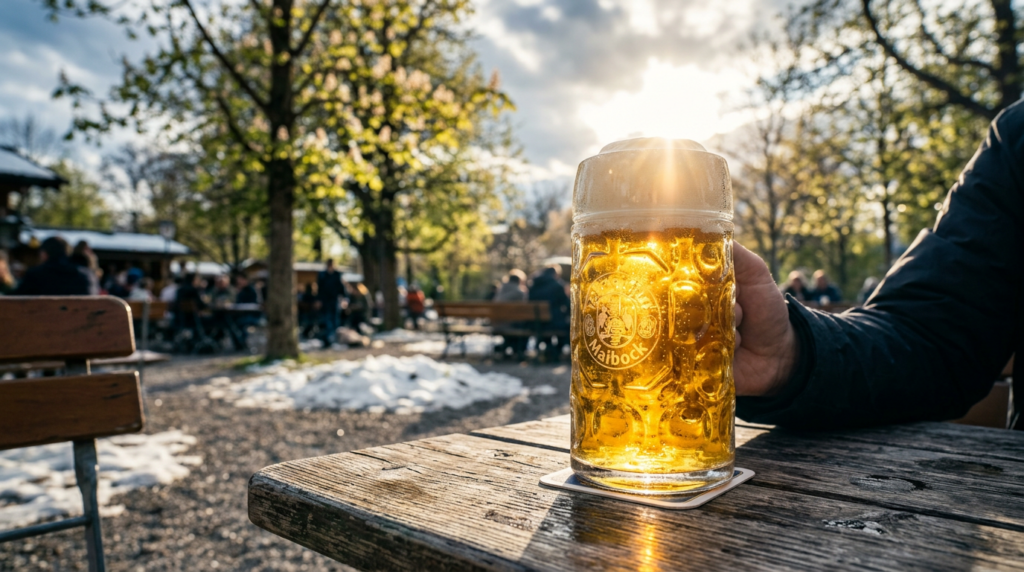
Because in Germany, beer doesn’t just mark the seasons.
It is the seasons.
Prost to winter’s farewell—and spring’s first light. 🍻