
The Top Ten Types of German Style Wurst Popular in the USA

GERMAN HERITAGE USA | AFFILIATE DISCLAIMER: This post may or may not contain affiliate links which means we may receive a commission for purchases made through links. We will only recommend products that we have personally used or that we truly trust. Learn more on our Private Policy and Disclaimer Page located under our Terms Of Service tab above.
German immigrants brought many gifts to America—beer gardens, Christmas traditions, kindergarten, and a love for hearty food that brings people together. But few culinary traditions have traveled across the Atlantic as successfully as German-style wurst.
From Oktoberfest celebrations in the Midwest to backyard barbecues across the country, German sausages have become a staple of American cuisine. Whether tucked inside a toasted bun at a baseball game or served alongside sauerkraut and mustard at a local German festival, these savory links carry centuries of tradition in every bite.

In Germany, the word “Wurst” simply means sausage, but the variety is astonishing. Germany boasts more than 1,200 regional sausage varieties, each reflecting local ingredients, climate, and cooking traditions. When German immigrants arrived in the United States throughout the 1800s and early 1900s, they brought many of these recipes with them. Over time, some became household names in America.
“Everything has an end—only the sausage has two.”
— German proverb
Today, these sausages remain beloved across the country, especially in regions with strong German heritage such as Wisconsin, Texas, Pennsylvania, Ohio, and Missouri.
Let’s take a flavorful tour through the ten German-style wurst varieties that Americans love the most.
1. Bratwurst – America’s Backyard Favorite

If there is one sausage that truly conquered America, it’s Bratwurst.
Originating in Germany as early as the 1300s, bratwurst is typically made from pork, though variations may include veal or beef. The seasoning often includes salt, pepper, nutmeg, marjoram, and sometimes garlic.
Brats are incredibly versatile:
- grilled at tailgate parties
- simmered in beer and onions
- served with sauerkraut
- placed inside a crusty roll with spicy mustard
Wisconsin proudly calls itself “Bratwurst Country,” where brat fries and summer festivals celebrate the beloved sausage.
2. Frankfurter – The Original Hot Dog

This sausage originated in Frankfurt, Germany, and is made primarily from pork. The traditional version is lightly smoked and served warm with bread and mustard.
German immigrants introduced the frankfurter to America in the 1800s. Vendors began selling them in buns for easy eating—thus creating one of the most iconic foods in American culture.
Baseball stadiums, street vendors, and backyard grills all owe a culinary debt to this classic German sausage.
3. Knockwurst – The Snappy Favorite

This shorter, plumper sausage is made with finely ground pork and garlic and is lightly smoked. When bitten, the natural casing gives a satisfying “knack”—which is where the name originates.
Knockwurst is often served with:
- sauerkraut
- potato salad
- dark rye bread
- strong mustard
It’s particularly popular in German-American communities across the Midwest.
4. Weisswurst – Bavaria’s Breakfast Sausage

Weisswurst, or “white sausage,” originated in Munich in the 1800s.
Made from finely minced veal and pork back fat, it is flavored with parsley, lemon zest, onion, and cardamom. Unlike many sausages, Weisswurst is not smoked, which keeps its pale color.
Traditionally served before noon, the Bavarian breakfast includes:
- Weisswurst
- sweet mustard
- soft pretzels
- wheat beer
Though less common in everyday American cuisine, it’s widely featured at Oktoberfest events and German beer halls throughout the United States.
5. Bockwurst – The Beer Garden Classic

The Bockwurst is closely tied to springtime beer celebrations.
Traditionally enjoyed alongside Bock beer, this mild sausage combines ground veal and pork with herbs like chives and parsley.
Bockwurst is typically:
- lightly smoked
- gently simmered
- served with mustard and bread
Its delicate flavor makes it a favorite at beer gardens and spring festivals.
6. Thuringer – Germany’s Legendary Grilled Sausage

Originating in the state of Thuringia, this sausage dates back more than 600 years. It is typically seasoned with marjoram, garlic, caraway, and pepper.
Traditionally grilled over charcoal, Thuringer sausages are served in a roll with mustard. German street vendors often serve them wrapped in paper with steam rising on a cold day.
German immigrants brought this style to the United States, where it remains popular at festivals and specialty butcher shops.
7. Landjäger – The Hunter’s Sausage

Historically carried by hunters and hikers, this rectangular sausage is packed with protein and flavor. Its smoky, slightly tangy taste makes it an ideal snack for outdoor adventures.
Today in America, Landjäger is often found in:
- butcher shops
- deli counters
- specialty meat markets
- Oktoberfest snack platters
8. Leberwurst – The Spreadable Favorite

Made with pork liver and spices, this sausage is typically soft and spreadable. It’s commonly served on rye bread with mustard, pickles, or onions.
German delis and butcher shops across the United States still produce traditional recipes, keeping the old-world flavor alive.
9. Currywurst – Germany’s Street Food Icon

One of Germany’s most famous street foods is Currywurst.
Invented in Berlin after World War II, this dish features sliced sausage topped with a curry-flavored ketchup sauce and served with fries.
While not as common in traditional American cooking, Currywurst has gained popularity in:
- German restaurants
- beer festivals
- specialty food trucks
Its bold flavor makes it unforgettable.
10. Beer Brats – The German-American Evolution

Popularized in Wisconsin and the Midwest, bratwursts are simmered in beer and onions before being grilled.
The result is a juicy, flavorful sausage bursting with malty aroma.
Beer brats have become synonymous with:
- tailgating
- summer cookouts
- Oktoberfest celebrations
- college football weekends
Why German Wurst Thrives in America
German sausage traditions fit perfectly into American food culture. They are hearty, flavorful, and perfect for gatherings.
German immigrants established butcher shops and breweries across the country in the 1800s. Their recipes quickly became local favorites.
Today, many communities celebrate these traditions with festivals, including:
- Oktoberfest events
- German heritage festivals
- beer garden celebrations
- local sausage-making competitions
The result is a culinary heritage that continues to grow.
Germany’s Sausage Legacy
Germany produces over 1,200 types of sausage, making it one of the most diverse sausage cultures in the world.
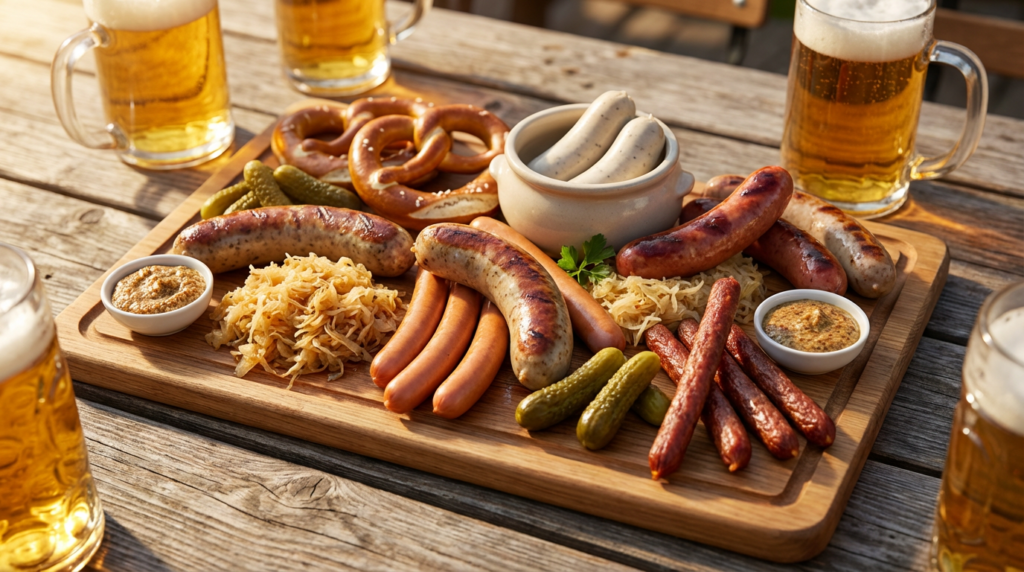
Popular American favorites include:
- Bratwurst
- Frankfurter
- Knockwurst
- Weisswurst
- Bockwurst
- Thuringer
- Landjäger
- Leberwurst
- Currywurst
Each tells a story about regional traditions, local ingredients, and centuries of craftsmanship.
A Final Bite of Heritage
German-style sausages are more than just delicious food—they are edible history.
Every brat sizzling on the grill, every frankfurter served at a baseball game, and every Weisswurst enjoyed at Oktoberfest carries a piece of German heritage across generations.
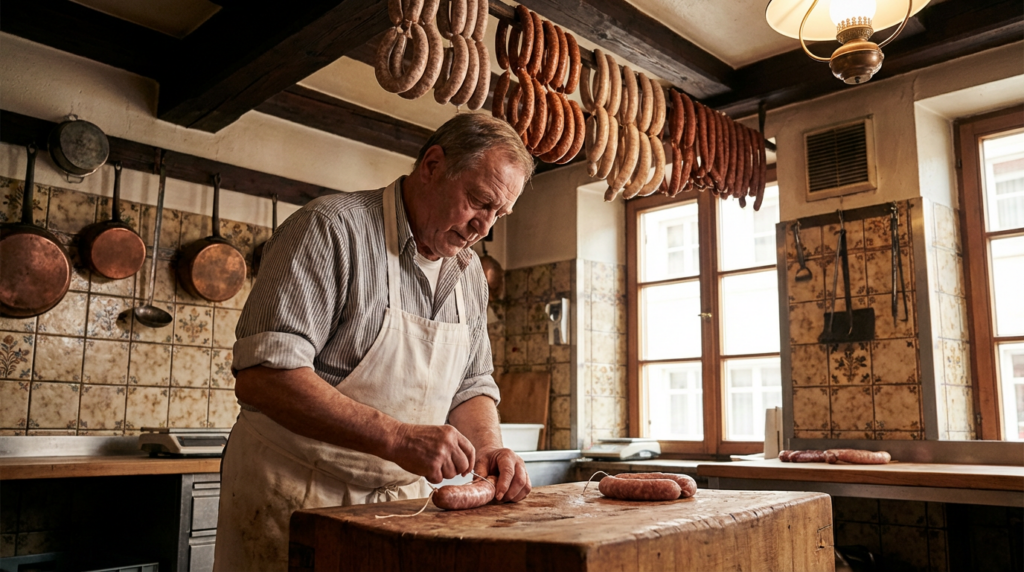
And as long as Americans gather around grills, beer gardens, and festival tables, these beloved sausages will continue connecting past and present—one savory bite at a time.
“Sausage is proof that the simplest ingredients, when crafted with care, can create something unforgettable.”
So next time you raise a beer and take a bite of bratwurst, remember—you’re tasting centuries of tradition.
Prost—and pass the mustard. 🌭🍺