
O Tannenbaum: German Roots of the American Christmas Tree Tradition Shaped America’s Christmas Spirit

For many Americans, the Christmas tree arrives in the home like an old and cherished friend—dragged through the doorway with laughter, settling into its stand with a sigh, and slowly coming to life as lights and ornaments transform it from simple evergreen to seasonal centerpiece.
But few pause to wonder why this ritual feels so essential, so foundational to the holiday itself. The answer reaches far deeper than most expect—deep into German history, German folklore, and the story of German immigrants whose traditions quietly reshaped an entire nation’s understanding of Christmas.
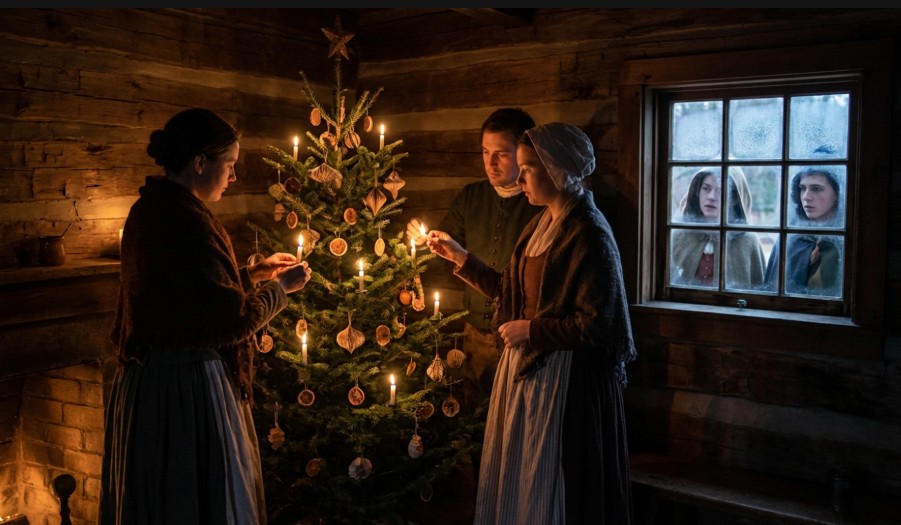
Imagine those early December evenings in colonial America when German families lit candles on their trees for the very first time. Their neighbors whispered about the strange glowing evergreens in these new settlers’ homes—were they decorations? Religious symbols? Fire hazards waiting to happen? Yet curiosity soon melted into admiration, and admiration soon became imitation. What began as a cultural curiosity soon blossomed into a nationwide phenomenon.
Across generations, the Christmas tree did more than mark the season. It became a symbol of togetherness and optimism—a reminder that even in the darkest days of winter, beauty could flourish and light could prevail. This symbolism resonated powerfully in a young America that was still forming its identity. When the German Tannenbaum landed on American shores, it did not remain a foreign tradition for long. It adapted, evolved, and ultimately became one of the most cherished customs in the United States.

It’s no exaggeration to say that the American Christmas—its imagery, its warmth, its spirit—owes a great deal to German craftsmanship, German imagination, and German devotion to family-centered celebration.
And as America layered its own innovations onto the evergreen tradition, the Christmas tree grew into a cultural icon recognized around the world. The story of the Tannenbaum is ultimately a story of cultural exchange—a tree planted in European soil that grew into an emblem of American joy.
So as we look at the millions of twinkling trees that fill American homes each year, it’s worth stepping back and remembering the journey that brought this tradition across the Atlantic. The Christmas tree is more than decoration. It is heritage made visible—German roots that continue to shape America’s holiday spirit in every glowing light and every evergreen branch.


Introduction — A Tree That Traveled Across an Ocean and Grew Into a Nation’s Heart
Every December, millions of American families gather around a single glowing symbol of Christmas joy: the Christmas tree. Twinkling lights, evergreen branches, shimmering ornaments, a star or angel crowning the top—these sights feel timelessly American. Yet the roots of this beloved tradition stretch deeply into German soil, nourished by centuries of folklore, feast days, and family rituals that eventually crossed the Atlantic and flourished in a new land.
The German Christmas tree—Der Tannenbaum—did more than decorate colonial parlors.
It helped shape America’s holiday identity, weaving German customs into the cultural tapestry of a young nation hungry for joy, warmth, and ceremony.
This is the epic tale of how a humble evergreen became the centerpiece of the American Christmas spirit.