From Pilgrims to Pioneers: Tracing German Roots in America’s Thanksgiving Story
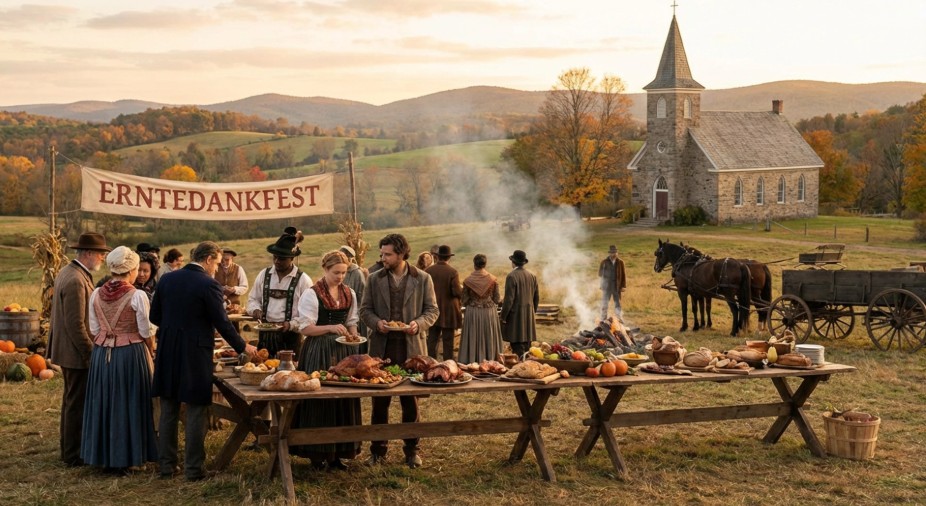
While English colonial narratives tend to dominate the Thanksgiving mythos, German-Americans brought with them an old-world appreciation for harvest festivals—Erntedankfest, their traditional celebration of thanks.
This autumn observance emphasized gratitude, community gatherings, hearty foods, and church services focused on blessings received throughout the year. When German settlers arrived in Pennsylvania, the Midwest, and the Great Plains, they carried these customs with them and naturally blended them into local American life. Over time, their rhythms of giving thanks—rooted in family, faith, and the fruits of the soil—helped guide the emerging American spirit of harvest celebration.
Beyond celebrations, German farming know-how dramatically shaped the agricultural backbone of the young nation. German immigrants introduced advanced crop rotation, efficient barn designs, new food-preservation methods, and hardy livestock breeds that improved both yields and food security.
Their meticulous, almost scientific approach to agriculture spread rapidly across frontier settlements. These innovations didn’t just feed growing communities—they laid essential groundwork for the agricultural abundance modern Americans now associate with Thanksgiving tables overflowing with produce, breads, sausages, and seasonal desserts.
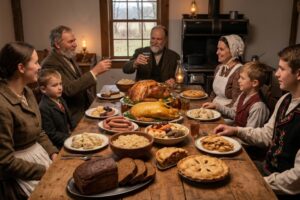
And then there’s the food—because no discussion of Thanksgiving is complete without it. German-Americans expanded America’s palate long before the holiday had a set menu. They contributed sausages, smoked meats, spiced breads, apple dishes, sweet rolls, and the kind of root-vegetable comfort foods that feel right at home beside turkey and stuffing.
In many regions, early Thanksgiving dinners featured sauerkraut alongside roast fowl, a tradition that still survives today in pockets of Pennsylvania and the Midwest. These German culinary fingerprints helped shape an American feast that is richer, heartier, and far more diverse than the simplified storybook version we often imagine.
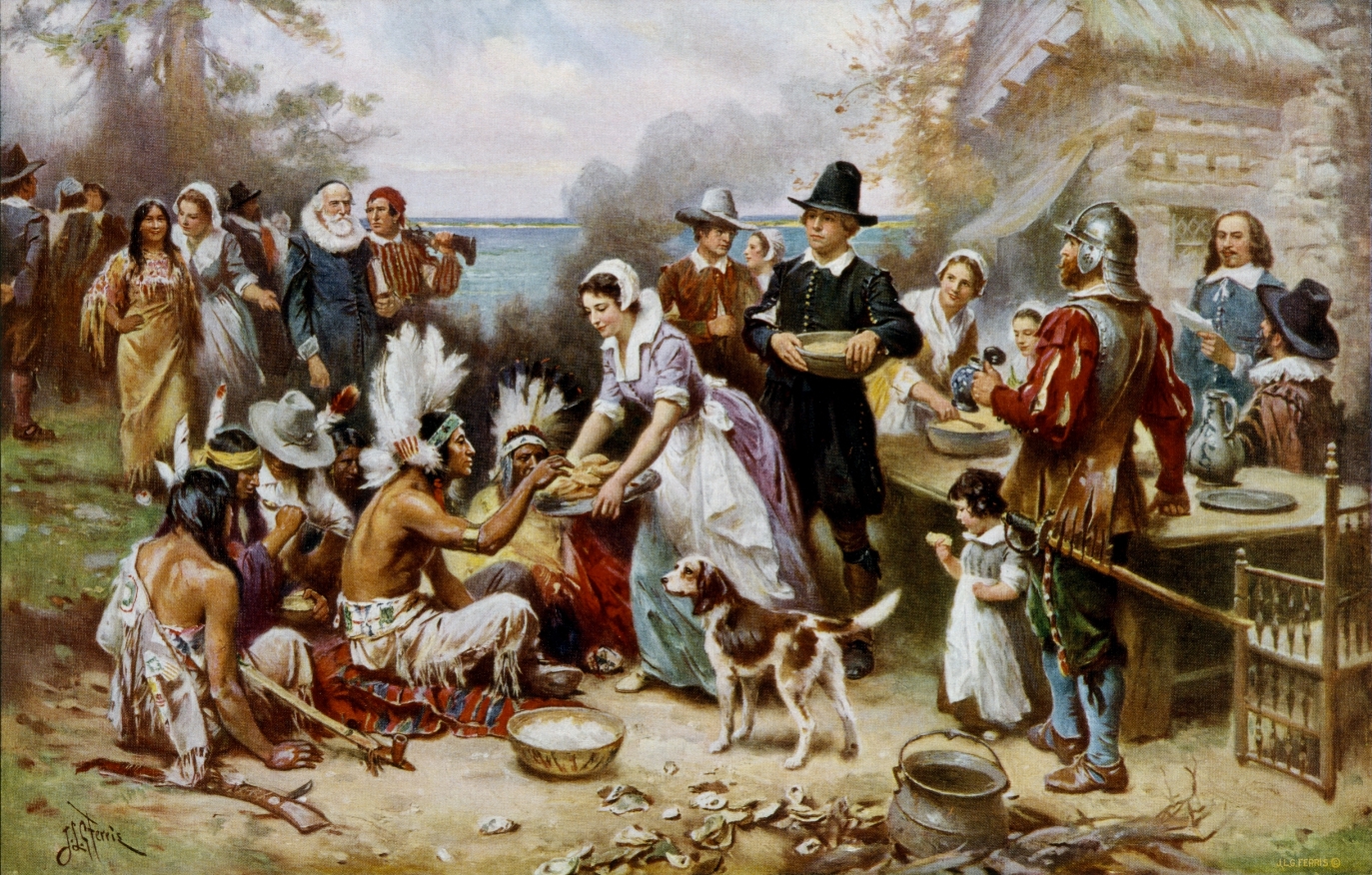

Most Americans picture Thanksgiving as a uniquely English-American tradition—Pilgrims in buckled hats, Native Americans, a harvest feast, and a legendary turkey. But behind the familiar story lies a surprising truth: German immigrants played a remarkable, often overlooked role in shaping America’s Thanksgiving customs, foods, farming techniques, and attitudes toward gratitude.
Long before pumpkin pie crowned the dessert table and football dominated the afternoon, German pioneers were planting crops, building communities, and sharing traditions that blended into what we now celebrate as Thanksgiving. Their influence is woven quietly but deeply into America’s cultural fabric—one hearty feast, one farmstead, and one frontier settlement at a time.
So grab a plate, pour a mug of cider (or maybe a crisp Oktoberfest brew), and let’s time-travel through how German roots helped cultivate America’s thanksgiving spirit long before Thanksgiving became a holiday.
The Pilgrim Story We Know… and What’s Missing
We all know the basics: In 1621, English Pilgrims and Wampanoag people shared an autumn harvest meal in Plymouth—a symbolic moment of cooperation and survival. But here’s what textbooks often skip: the Pilgrims were not the only Europeans contributing to early American harvest traditions.
In fact, while the Pilgrims were building Plymouth Colony, German-speaking settlers were already living, farming, and worshipping in parts of what is now the United States, especially in New York, Pennsylvania, and along the East Coast. Their agricultural know-how, communal feasts, and deep spiritual focus on gratitude paralleled many themes later associated with Thanksgiving.