
A German Twist on Thanksgiving: 7 Traditional German Dishes to Bring to Your American Table

Thanksgiving is one of America’s most beloved holidays, but who says your Thanksgiving dinner can’t include a little German Heritage? From traditional German potato dumplings and sweet-and-sour red cabbage to homemade Spätzle and warm apple strudel, adding a few German dishes to your holiday menu can create a delicious celebration of family, food, and ancestry.
For millions of German-Americans, Thanksgiving offers a wonderful opportunity to blend familiar American traditions with the flavors their ancestors brought across the Atlantic.
And you don’t need to have grown up in a German household, speak the language, or even have visited Germany to enjoy these foods. Whether your family has deep German roots or you’ve recently discovered a small percentage of German ancestry, traditional German cooking offers plenty of inspiration for your Thanksgiving table.
So, before you finalize this year’s holiday menu, consider giving that turkey dinner a little Old World personality.
After all, there’s always room for one more dish on the Thanksgiving table. Especially when it’s German!
Thanksgiving and German Heritage: A Delicious Connection Between Two Traditions
Long before Thanksgiving became an American national holiday, communities throughout Germany celebrated the autumn harvest through a tradition called Erntedankfest, meaning Harvest Thanksgiving Festival.
Erntedankfest is generally celebrated in late September or early October, although the precise date varies by region and community. Traditionally, it is associated with church services, harvest decorations, seasonal foods, and expressions of gratitude for the year’s agricultural bounty.
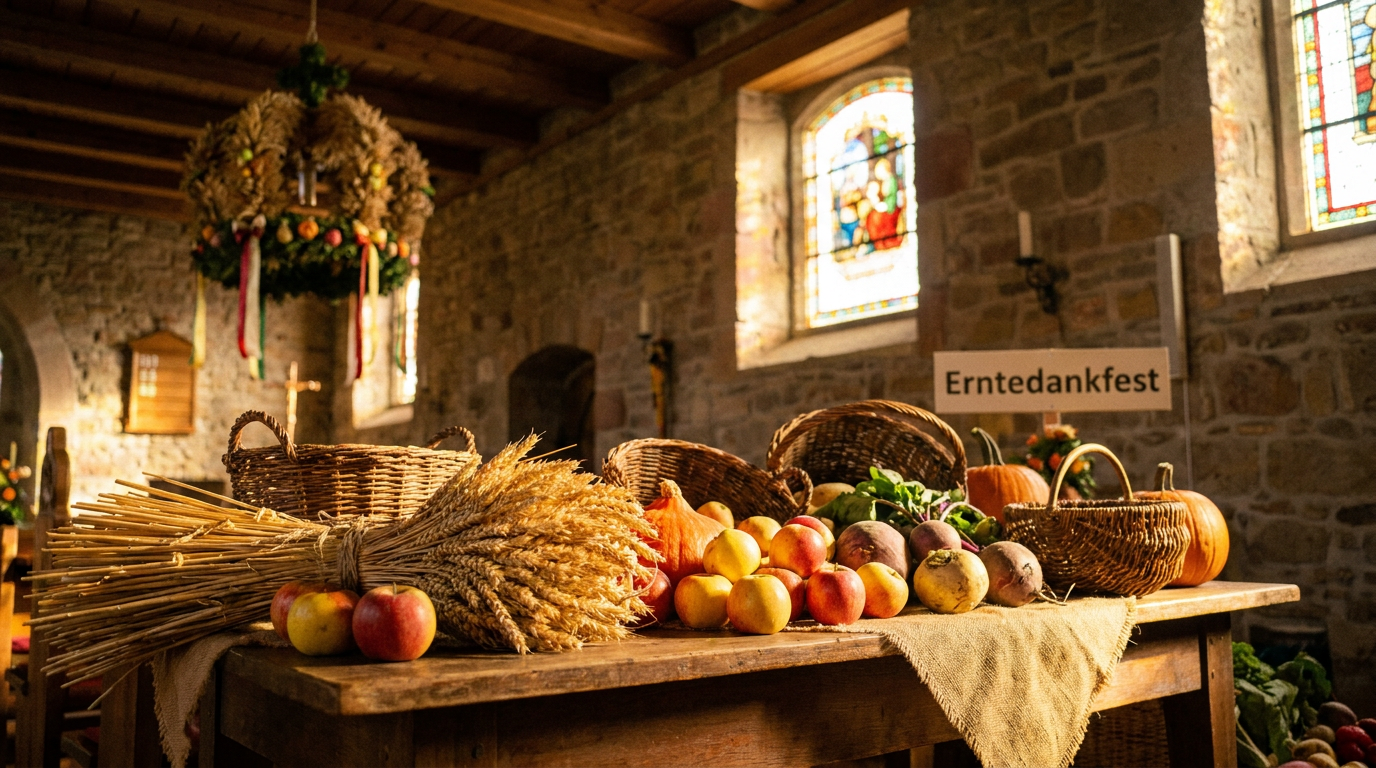
Churches are sometimes decorated with baskets of vegetables, fruits, grains, and elaborate harvest crowns called Erntekronen. Communities may organize music, parades, or gatherings that recognize the importance of farming and the blessings of a successful growing season.
Although Erntedankfest and American Thanksgiving developed from different historical traditions, their underlying messages have much in common: gratitude, family, community, and appreciation for the food that sustains us.
When German immigrants established new lives in America, they gradually adopted American customs while continuing to prepare many of their traditional family recipes.
A Thanksgiving turkey might become the centerpiece of the holiday meal, but the side dishes could still reflect the family’s ancestral homeland.
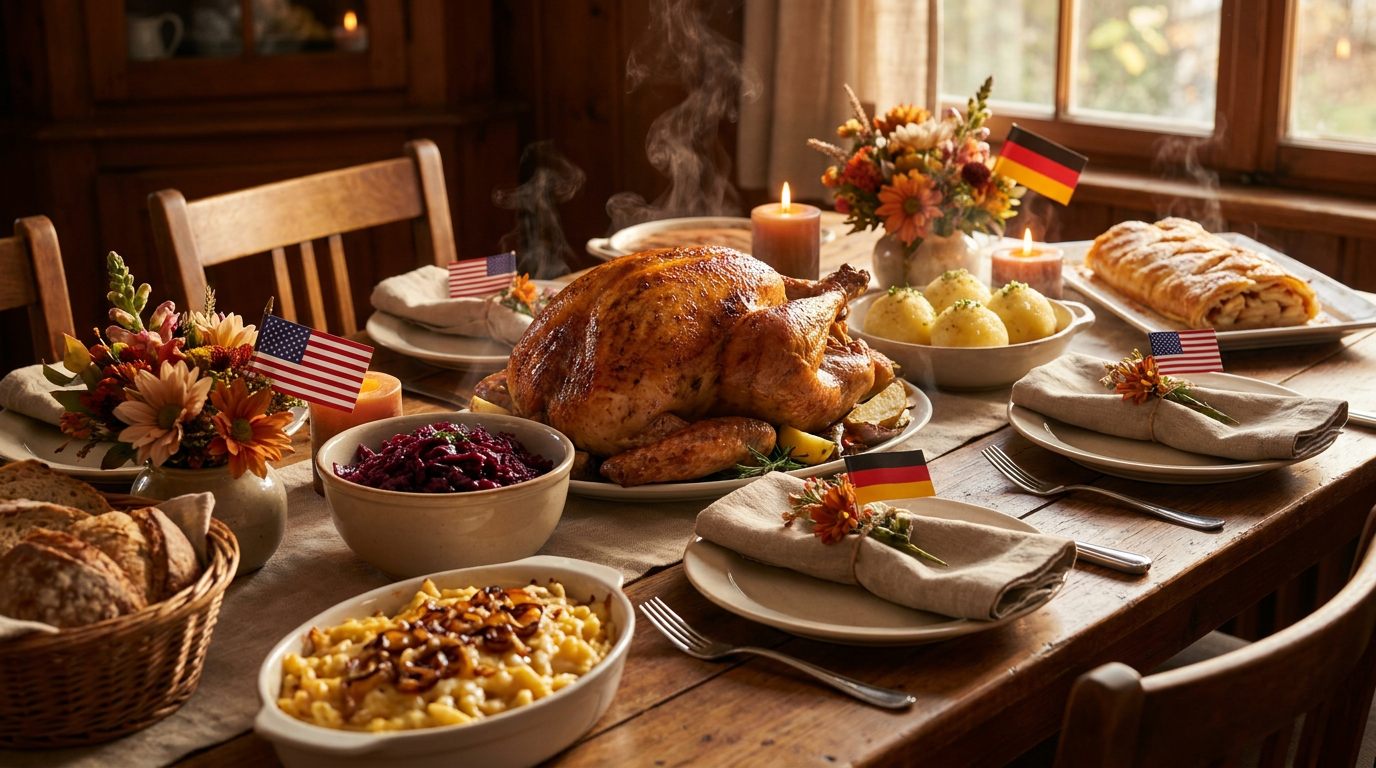
Imagine a German-American farmhouse kitchen in the Midwest generations ago. The turkey is roasting, potatoes are cooking, fresh bread is cooling on the counter, and a pot of sweet-and-sour cabbage is simmering on the stove.
Perhaps Grandma is preparing dumplings using a recipe she learned from her mother. Someone else is rolling out dough for an apple dessert, while children eagerly await the announcement that dinner is ready.
These scenes represent the kind of culinary blending that helped shape German-American food traditions.
The wonderful thing about Thanksgiving is that it has always provided families with opportunities to create their own customs.
And what better way to celebrate German ancestry than by introducing a few authentic German dishes to an American holiday feast?
Here are seven traditional favorites worth considering.
1. Rotkohl: Sweet-and-Sour German Red Cabbage
If there’s one traditional German side dish that deserves a place alongside Thanksgiving turkey, it might be Rotkohl, Germany’s famous braised red cabbage.
Known regionally as Rotkraut or Blaukraut, this colorful dish has been a longtime favorite throughout German-speaking Europe.
Traditional Rotkohl combines finely shredded red cabbage with apples, onions, vinegar, sugar, and aromatic spices. Depending on the family recipe, seasonings may include cloves, bay leaves, juniper berries, or a touch of cinnamon.
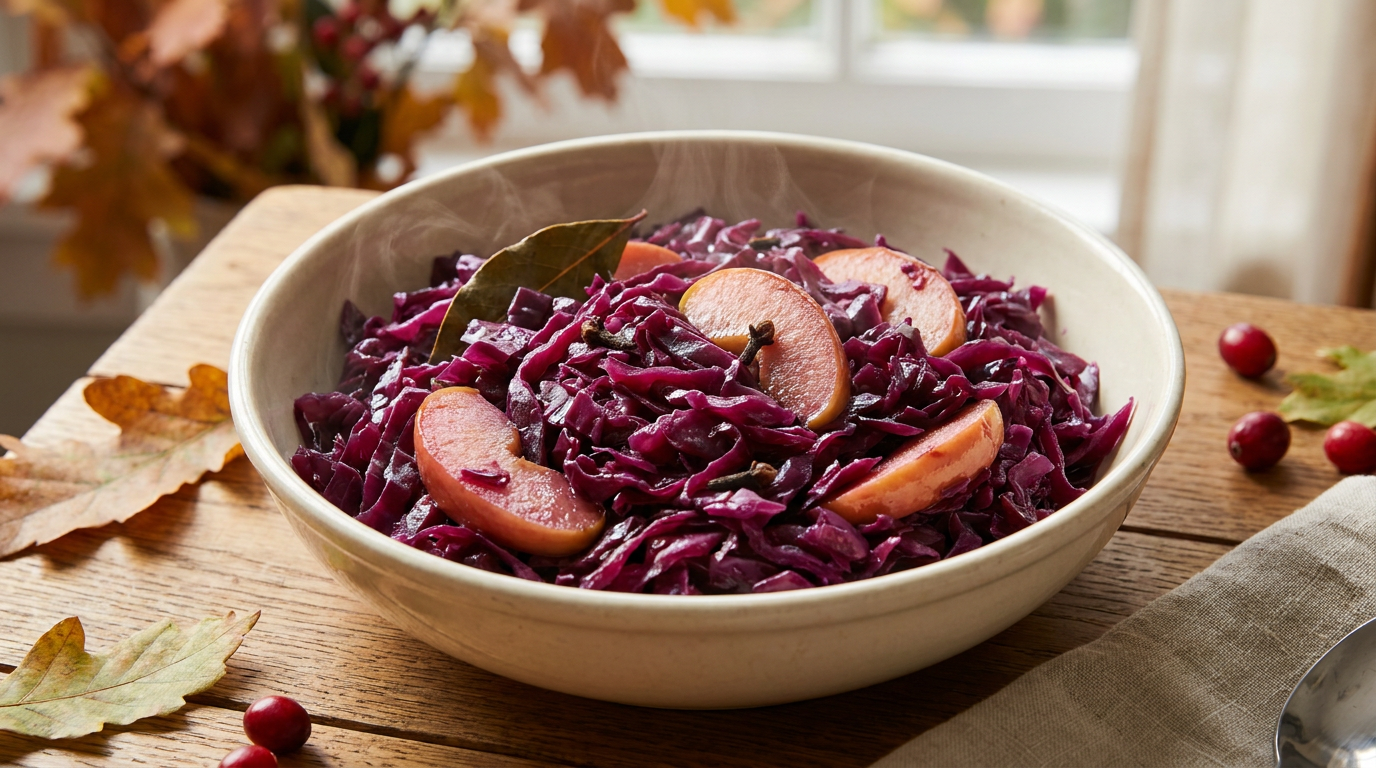
The ingredients simmer slowly until the cabbage becomes tender and develops a wonderful balance of sweet, tangy, and savory flavors.
That combination makes Rotkohl a particularly good companion to Thanksgiving dinner.
The gentle acidity balances the richness of roasted turkey, gravy, mashed potatoes, and stuffing. Its beautiful purple-red color also adds a festive touch to the holiday table.
Why it works for Thanksgiving: Rotkohl can be prepared a day or two ahead, and many cooks find that its flavor improves after resting overnight in the refrigerator.
Try serving it alongside turkey and cranberry sauce. The flavors complement each other surprisingly well.
For an extra autumn twist, use tart apples and a splash of apple cider.
You might discover that German red cabbage becomes a new family Thanksgiving tradition.
2. Kartoffelklöße: Traditional German Potato Dumplings
Americans love mashed potatoes, especially when they’re covered with homemade turkey gravy.
But in many German households, a different kind of potato dish has long occupied an honored place at the dinner table.
Meet Kartoffelklöße, also known as Kartoffelknödel — traditional German potato dumplings.
These comforting dumplings are especially associated with central and southern German cooking, although recipes vary considerably by region.
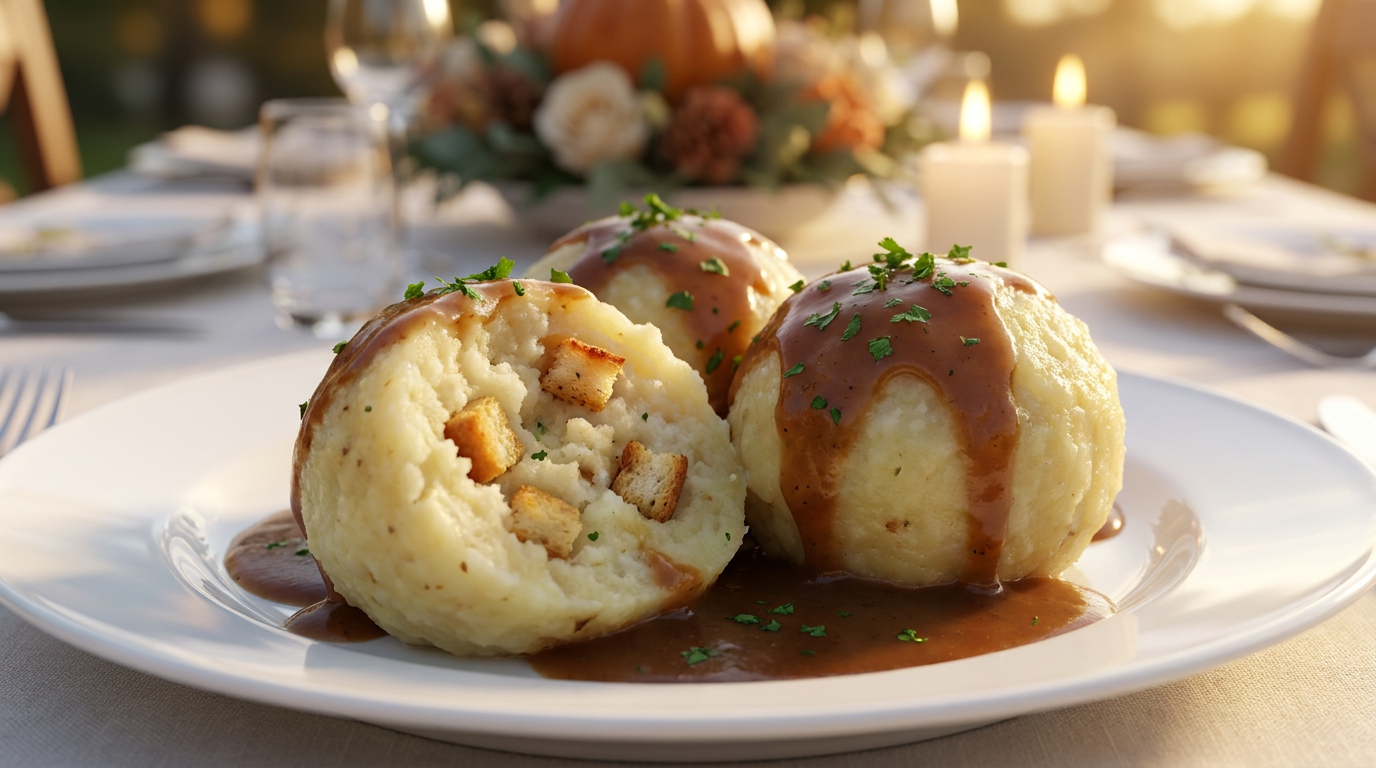
Some preparations use cooked potatoes, others incorporate raw grated potatoes, and certain traditional recipes combine both. Potato starch helps hold the ingredients together, while butter, salt, and occasionally nutmeg contribute flavor.
The potato mixture is formed into round dumplings and gently cooked in hot water until tender.
The result is a soft, satisfying side dish that seems almost designed to absorb rich gravy.
In Germany, Kartoffelklöße frequently accompany roasted meats, including pork, beef, goose, and duck. Their connection to hearty holiday meals makes them a natural choice for Thanksgiving.
Why they work for Thanksgiving: Potato dumplings provide a delicious alternative to ordinary mashed potatoes without introducing flavors that conflict with an American holiday menu.
Serve them with roasted turkey and plenty of gravy.
Some traditional versions even include toasted bread cubes in the center, adding an unexpected bit of texture.
One suggestion: Don’t eliminate the mashed potatoes entirely, especially if you have family members who consider them essential.
Simply offer both.
It’s Thanksgiving. Nobody is counting the potatoes.
3. Käsespätzle: Germany’s Delicious Answer to Macaroni and Cheese
If your Thanksgiving dinner includes macaroni and cheese, you might want to introduce its German culinary cousin.
Käsespätzle is a rich, comforting dish made with tender German egg noodles, melted cheese, and often a generous topping of golden caramelized onions.
Spätzle itself is a traditional egg-based pasta or noodle particularly associated with Swabia in southwestern Germany and neighboring Alpine regions.
The dough typically contains flour, eggs, water or milk, and salt. It is pressed or scraped into simmering water, creating small, irregularly shaped noodles.
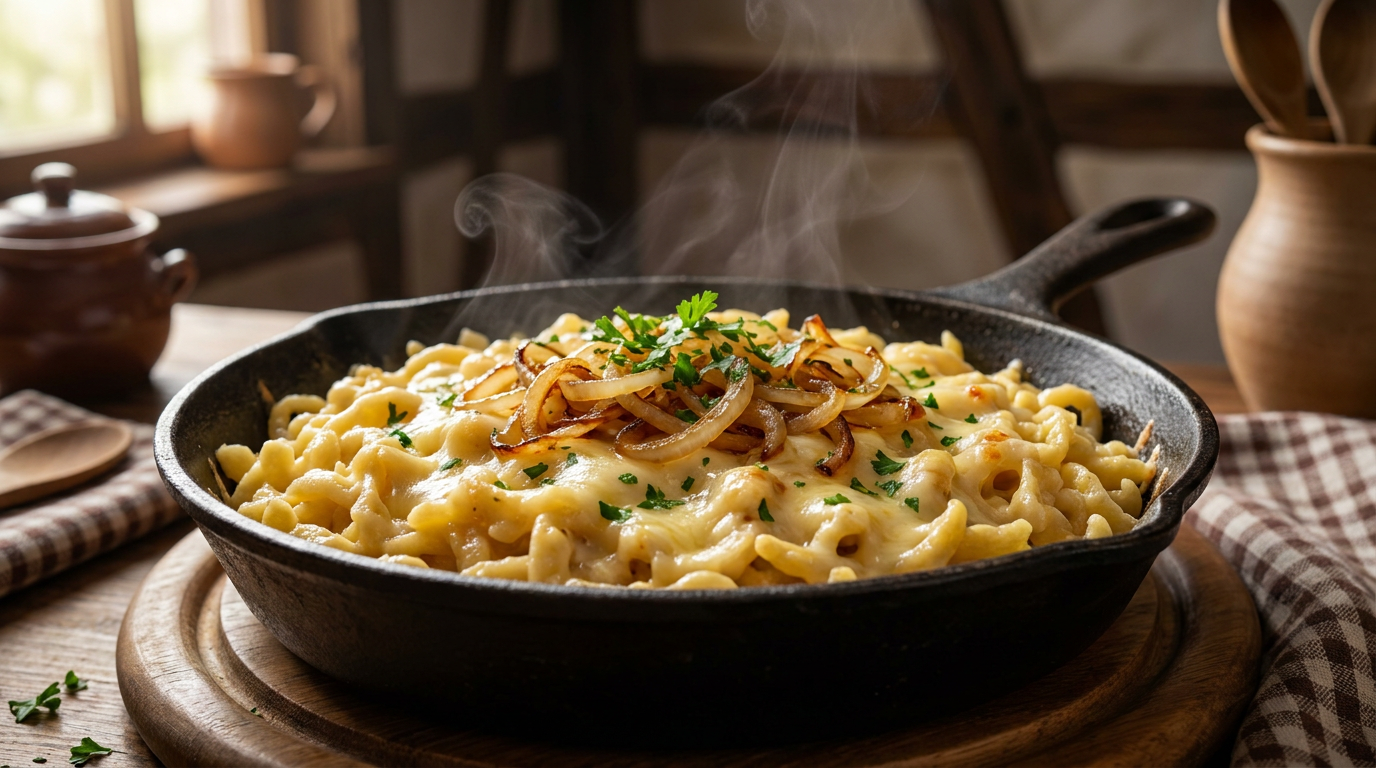
The cooked Spätzle can be served with butter, gravy, or a variety of sauces.
But Käsespätzle takes things a delicious step further.
The noodles are layered or tossed with cheese, creating a warm and satisfying dish that’s sometimes compared to American macaroni and cheese.
Traditional regional cheeses may include Allgäuer Bergkäse or Emmentaler, although combinations vary by recipe and availability.
A topping of slowly browned onions provides a savory finishing touch.
Why it works for Thanksgiving: Käsespätzle is familiar enough to appeal to American diners but distinctive enough to introduce authentic German character to the holiday menu.
It pairs well with turkey, roasted vegetables, and other savory side dishes.
You can prepare the noodles ahead of time and finish the dish shortly before dinner.
And here’s a little prediction: If there are children at your Thanksgiving table, the Käsespätzle might disappear faster than the pumpkin pie.