A Toast to Tradition: How Glühwein Became Germany’s Wintertime Classic

Few beverages capture the magic of winter quite like Glühwein—that steaming, fragrant, ruby-red elixir that transforms chilly evenings into cozy celebrations. Whether you’re wandering through a German Weihnachtsmarkt, gathered with friends around a crackling fire, or recreating European holiday charm at home, Glühwein is more than a drink. It’s a tradition, a memory-maker, and a warm hug in a mug.

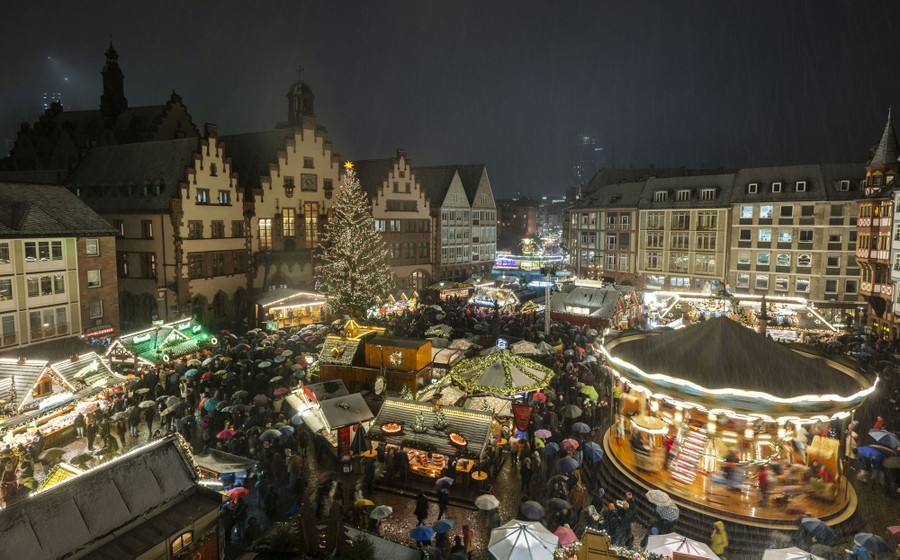
But Glühwein’s charm doesn’t stop at its flavor. It carries the unmistakable scent of the season—spiced citrus, cinnamon, cloves, and a whisper of sweetness that drifts through snowy streets and festive plazas. One whiff can transport you instantly to a glowing Christmas market lined with wooden stalls, twinkling lights, and the soft sound of carols echoing between centuries-old buildings. The aroma alone seems to warm your hands before you ever hold the mug.
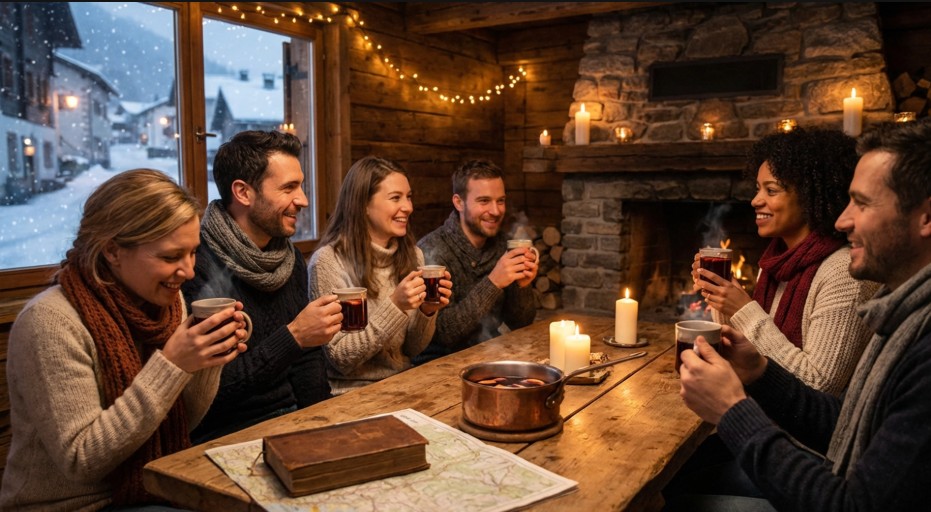
It’s also one of the few drinks that invites people to slow down. In a season that often feels rushed and over-scheduled, Glühwein encourages lingering conversations, shared laughter, and simple moments of joy. Whether enjoyed outdoors amid gently falling snow or indoors with candles flickering in the background, the ritual of sipping something warm and spiced creates an atmosphere of comfort that transcends geography and generations.

And as with all great traditions, Glühwein comes wrapped in stories—stories of ancient empires, medieval marketplaces, regional pride, and evolving holiday customs. The drink has traveled through time, adapting and flourishing while preserving its essence: warmth, community, and celebration. Its journey from humble spiced wine to iconic holiday symbol is as rich and flavorful as the beverage itself.

But how did this spiced wine become Germany’s undisputed wintertime classic?
Let’s raise a mug and enjoy the story.

https://www.kitchentreaty.com/wp-content/uploads/2020/11/gluhwein-recipe-mulled-wine-1-680x951.jpg
https://cdn.theatlantic.com/thumbor/mXGPzuT9gPjGowuEK6cMLhpstmM%3D/900x560/media/img/photo/2023/11/christmas/a01_1816976097/original.jpg

Few beverages capture the magic of winter quite like Glühwein—that steaming, fragrant, ruby-red elixir that transforms chilly evenings into cozy celebrations. Whether you’re wandering through a German Weihnachtsmarkt, gathered with friends around a crackling fire, or recreating European holiday charm at home, Glühwein is more than a drink. It’s a tradition, a memory-maker, and a warm hug in a mug.

But how did this spiced wine become Germany’s undisputed wintertime classic?
Let’s raise a mug and enjoy the story.


What Exactly Is Glühwein?

At its simplest, Glühwein is mulled red wine gently heated with spices like cinnamon, cloves, orange, star anise, and sometimes a splash of brandy. The name literally means “glow wine”, referencing both the warm metal pokers once used to heat it—and the happy glow it gives those who sip it.

https://www.mariaushakova.com/wp-content/uploads/2014/12/How-to-Make-Gluhwein.jpg

If pumpkin spice rules autumn, Glühwein reigns supreme from Advent through New Year’s Eve.


A Recipe Rooted in Ancient Rome

Glühwein may be a beloved German icon today, but its ancestry actually begins with the Romans, who heated and spiced wine as early as the 2nd century. When Roman soldiers marched across Europe, they brought the tradition with them—especially into the cold territories we now know as Germany.

The Romans believed mulled wine was not just tasty but health-boosting, capable of warding off cold, improving digestion, and even preventing illness. That sounds like wishful thinking, but one thing is for sure:
It made winter infinitely more enjoyable.


From Medieval Monks to Modern Markets

By the Middle Ages, warmed wine had become popular across German-speaking regions. Monks brewed it in monasteries, nobles served it at banquets, and merchants sold early versions in city squares. Each group added their own twist—more spices, fruit, honey, or herbs.

But the earliest documented recipe of what resembles modern Glühwein appeared in Germany in 1616, handwritten by Count Johann Kasimir of Pfalz-Zweibrücken. His version included wine, sugar, an assortment of spices… and, in true nobility fashion, the encouragement to enjoy it frequently.

He even commissioned a special silver Glühwein tankard, which still exists today.

The tradition only grew from there.

» Read more

The German Side of Frankenstein — How a Curious Creation Became an American Superstar

Forget the lightning bolts and scary moans for a moment — Frankenstein wasn’t born a monster. He was born from imagination, invention, and a good dose of German curiosity that continues to be popular with all generations, even today!

Long before he hit the silver screen, Frankenstein was a patchwork of Old World legends, scientific wonder, and a pinch of “what if?” magic that somehow made him one of America’s most beloved characters.


From the Rhine Valley to the Bright Lights

Let’s rewind to the early 1800s. Europe was buzzing with big ideas — science, discovery, and a fascination with what electricity could do. Somewhere in the mix of candlelight and castle corridors, an English teenager named Mary Shelley wrote a story that would electrify the world: Frankenstein; or, The Modern Prometheus.

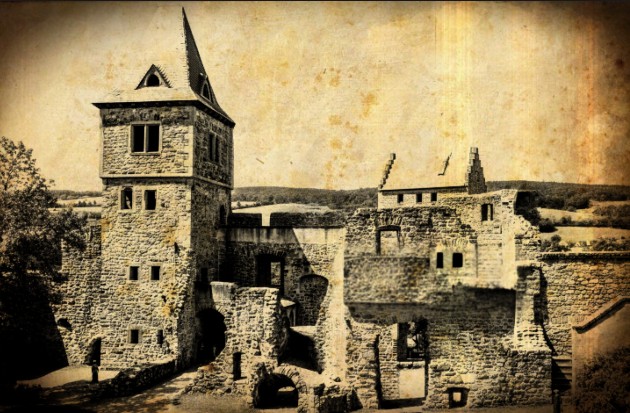
But here’s the fun twist — the name Frankenstein? Totally German. It means “Stone of the Franks,” and there’s an actual Castle Frankenstein overlooking the Rhine River near Darmstadt, Germany!

Legend says a local alchemist named Johann Konrad Dippel once conducted experiments there, chasing the secret to eternal life. Whether Mary Shelley heard about him or just liked the mysterious name, it’s safe to say the spirit of German curiosity inspired her tale.

The original Frankenstein wasn’t evil — he was a scientific pioneer, a guy who just wanted to see how far human knowledge could go. And honestly, who doesn’t love a good “what happens if I mix this with that?” experiment?


An American Dream Come to Life

Fast forward to the United States, a land bursting with invention and imagination. When Frankenstein crossed the Atlantic, Americans saw something more than a spooky tale — they saw adventure! The idea of building something incredible, even if it’s misunderstood at first, fit right in with the nation’s love of discovery and reinvention.

By the 1820s, stage shows and storybook versions of Frankenstein were touring the country, often with a wink and a laugh. By the time Thomas Edison made the first film adaptation in 1910 (yes, the light bulb guy!), the story had already evolved from creepy to curious. And then, of course, came the 1931 Universal Studios classic with Boris Karloff — turning the creature into a Hollywood icon.

Suddenly, Frankenstein wasn’t just a character — he was a celebrity.


The Monster with a Heart (and a Sense of Humor)

Over the years, Frankenstein’s image has softened and sparkled with personality. From the goofy grin of The Munsters’ lovable Herman Munster to Gene Wilder’s hilarious Young Frankenstein, the big green guy became less “ghoul” and more “gentle giant.”

In America, Frankenstein transformed into a symbol of creative curiosity — the idea that experimenting, dreaming, and maybe even failing are all part of what makes us human. He became a little bit like us: misunderstood at times, but full of potential and heart.

And let’s be honest — if Frankenstein were real, he’d probably be an inventor on a talk show today, explaining how his latest gadget “came to life after a lightning storm.”


Why the World Still Loves Him

Frankenstein’s story continues to shine because it’s about possibility. It’s about a spark — literally! — that turns an idea into something amazing. From comic books to cartoons, toy shelves to theme parks, he’s still around because his story celebrates creativity and the courage to try something new.

And deep down, his German roots remind us that great ideas often come from the curious minds and castle towers of dreamers who dare to mix science and imagination.


Conclusion: The Friendly Frankenstein

So maybe Frankenstein isn’t a monster at all. Maybe he’s the ultimate adventurer — a curious soul stitched together from creativity, courage, and a little bit of lightning.

He started as a mysterious name on a map of Germany, came to life through Mary Shelley’s imagination, and then found his forever home in America’s heart — where reinvention and second chances are always welcome.

But Frankenstein didn’t stop there. Once Hollywood brought him to life, he didn’t just conquer the screen — he conquered the marketplace! Almost overnight, the big green guy went from gothic literature to global brand. By the 1930s and ’40s, his face was plastered on movie posters, collectible cards, and comic books. When television reruns introduced Frankenstein to a new generation of kids in the 1950s and ’60s, a merchandising monster was officially born.

Frankenstein became the undisputed king of Halloween, helping transform the holiday from spooky folklore into a nationwide festival of fun. Every October, his square head and neck bolts fill costume racks, store aisles, and front-yard displays from coast to coast. He’s inspired millions of masks, from vintage latex classics to cute toddler versions, proving that you can be both creepy and cuddly at the same time.

And the branding didn’t stop there. Frankenstein danced his way into breakfast bowls as part of the 1970s “Monster Cereal” craze with Franken Berry, his cheerful pink alter ego who turned milk strawberry-sweet. His image showed up on lunchboxes, board games, toys, movie posters, cereal boxes, bubble gum cards, and even Halloween yard inflatables — a true icon of playful fright.

Marketers loved him because he was the perfect mix of scary and sympathetic — a monster you could root for. Toy companies, candy brands, and film studios all gave him new life decade after decade, each time with a little more humor, color, and heart. Even today, you’ll find Frankenstein’s friendly grin lighting up everything from kids’ pajamas to Starbucks mugs and TikTok memes.

In a way, Frankenstein helped build modern Halloween — the costumes, the collectibles, the spirit of dress-up and imagination that makes the season sparkle with excitement. He didn’t just haunt pop culture; he powered it.

After all, who else could turn a spooky science experiment into a hundred-year celebration of creativity, curiosity, and commercial genius?

Frankenstein did — and that’s one electrifying success story! ⚡

» Read more

Celebrate St Nicholas Day on December 6th: German-American Style

St. Nicholas Day: A Magical German Tradition

December 6th holds a special place in the hearts of many, particularly those with German heritage. This day, known as St. Nicholas Day or Nikolaustag, is a time of excitement, anticipation, and a touch of magic. Let’s delve into the rich history and traditions associated with this beloved holiday, celebrated both in Germany and among German-Americans in the United States.

The Legend of St. Nicholas

The origins of St. Nicholas Day can be traced back to the 4th century. Saint Nicholas, the real-life inspiration behind the modern-day Santa Claus, was a kind and generous bishop known for his charitable deeds. He was particularly fond of children and often left gifts for them secretly.

The legend of St. Nicholas has evolved over centuries, and in many parts of Germany, he is accompanied by a somewhat fearsome figure known as Krampus. Krampus, a half-goat, half-demon creature, punishes naughty children with switches or even takes them away. This stark contrast between the benevolent St. Nicholas and the menacing Krampus serves as a powerful reminder for children to behave well.

St. Nicholas Day Traditions in Germany

In Germany, St. Nicholas Day is a significant event, especially for children. On the evening of December 5th, children leave their shoes or boots by the door or window, hoping to find them filled with treats the next morning. Good children are rewarded with sweets, small toys, or oranges, while naughty children may receive a bundle of twigs or a piece of coal from Krampus.

The day itself is often celebrated with festive traditions. Families gather to enjoy special treats like St. Nicholas cookies, a type of gingerbread cookie decorated with colorful icing. In some regions, children may dress up as St. Nicholas or Krampus and go door-to-door singing songs and collecting candy.

St. Nicholas Day in the United States

German-Americans have brought the traditions of St. Nicholas Day to the United States, where it continues to be celebrated in various forms. Many families exchange small gifts on this day, and children may write letters to St. Nicholas expressing their hopes and wishes.

» Read more

Backyard Biergarten – How To Create for Summertime Fun

Creating your own Backyard Biergarten at your home can be tons of fun, especially when family, close friends and all your neighbors can share in the enjoyment of it all. 

beer-garden

Your own Backyard Biergarten is a real fun project to create and you really can make it as simple or elaborate as you may wish. After all, it is your backyard.

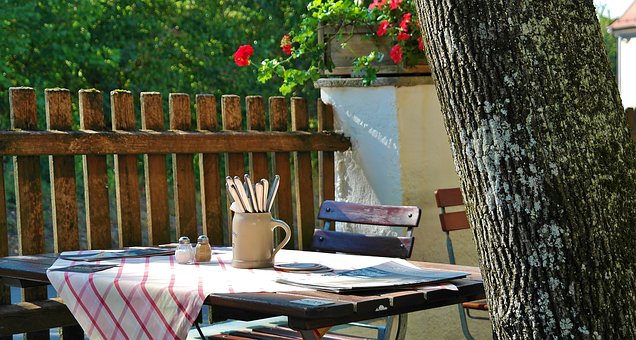
The first part of creating a viable Biergarten in your backyard is knowing the history of Biergartens in Germany. It is true that Biergartens originated in the 19th century in Munich, the capital of the German state of Bavaria.

The large breweries back then dug cellars in the banks near rivers to keep their beer cool during storage. During both the Spring and Summer months they would bring the beer out to enjoy under shade trees in a natural setting outdoors.

» Read more