
O Tannenbaum: German Roots of the American Christmas Tree Tradition Shaped America’s Christmas Spirit

GERMAN HERITAGE USA | AFFILIATE DISCLAIMER: This post may or may not contain affiliate links which means we may receive a commission for purchases made through links. We will only recommend products that we have personally used or that we truly trust. Learn more on our Private Policy and Disclaimer Page located under our Terms Of Service tab above.
For many Americans, the Christmas tree arrives in the home like an old and cherished friend—dragged through the doorway with laughter, settling into its stand with a sigh, and slowly coming to life as lights and ornaments transform it from simple evergreen to seasonal centerpiece.
But few pause to wonder why this ritual feels so essential, so foundational to the holiday itself. The answer reaches far deeper than most expect—deep into German history, German folklore, and the story of German immigrants whose traditions quietly reshaped an entire nation’s understanding of Christmas.
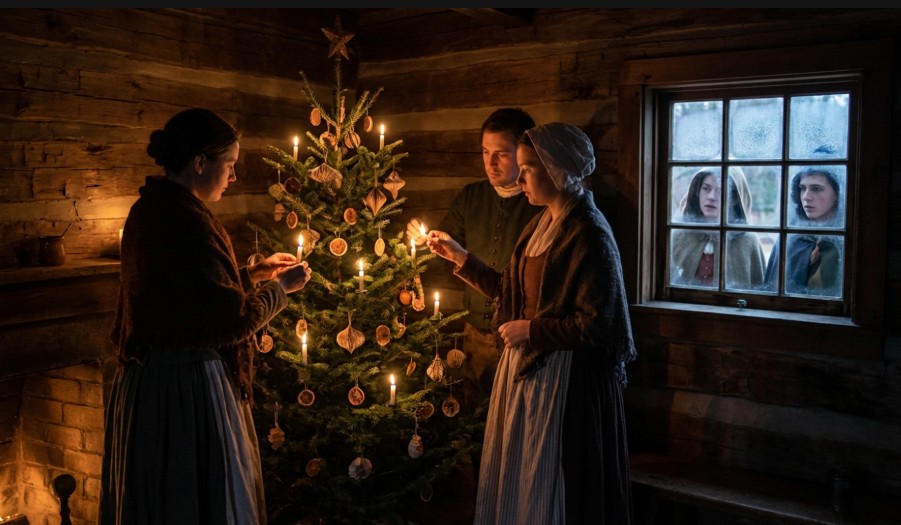
Imagine those early December evenings in colonial America when German families lit candles on their trees for the very first time. Their neighbors whispered about the strange glowing evergreens in these new settlers’ homes—were they decorations? Religious symbols? Fire hazards waiting to happen? Yet curiosity soon melted into admiration, and admiration soon became imitation. What began as a cultural curiosity soon blossomed into a nationwide phenomenon.
Across generations, the Christmas tree did more than mark the season. It became a symbol of togetherness and optimism—a reminder that even in the darkest days of winter, beauty could flourish and light could prevail. This symbolism resonated powerfully in a young America that was still forming its identity. When the German Tannenbaum landed on American shores, it did not remain a foreign tradition for long. It adapted, evolved, and ultimately became one of the most cherished customs in the United States.

It’s no exaggeration to say that the American Christmas—its imagery, its warmth, its spirit—owes a great deal to German craftsmanship, German imagination, and German devotion to family-centered celebration.
And as America layered its own innovations onto the evergreen tradition, the Christmas tree grew into a cultural icon recognized around the world. The story of the Tannenbaum is ultimately a story of cultural exchange—a tree planted in European soil that grew into an emblem of American joy.
So as we look at the millions of twinkling trees that fill American homes each year, it’s worth stepping back and remembering the journey that brought this tradition across the Atlantic. The Christmas tree is more than decoration. It is heritage made visible—German roots that continue to shape America’s holiday spirit in every glowing light and every evergreen branch.


Introduction — A Tree That Traveled Across an Ocean and Grew Into a Nation’s Heart
Every December, millions of American families gather around a single glowing symbol of Christmas joy: the Christmas tree. Twinkling lights, evergreen branches, shimmering ornaments, a star or angel crowning the top—these sights feel timelessly American. Yet the roots of this beloved tradition stretch deeply into German soil, nourished by centuries of folklore, feast days, and family rituals that eventually crossed the Atlantic and flourished in a new land.
The German Christmas tree—Der Tannenbaum—did more than decorate colonial parlors.
It helped shape America’s holiday identity, weaving German customs into the cultural tapestry of a young nation hungry for joy, warmth, and ceremony.
This is the epic tale of how a humble evergreen became the centerpiece of the American Christmas spirit.
Deep Roots in the Old World — Where the Tannenbaum Began


Pagan Echoes and Evergreen Magic
Long before Christmas trees were “Christmas trees,” Germanic tribes held sacred the evergreen, which they saw as a symbol of eternal life in the coldest, darkest days of winter. Pine and fir branches appeared in early Yule celebrations, brought indoors to ward off evil spirits, illness, and misfortune.
While these evergreens were not yet Christmas trees, they set the stage—culturally, spiritually, visually—for what would come.
Medieval Mystery Plays and the Paradise Tree
The earliest recognizable ancestor of the Christmas tree appears in the late Middle Ages.
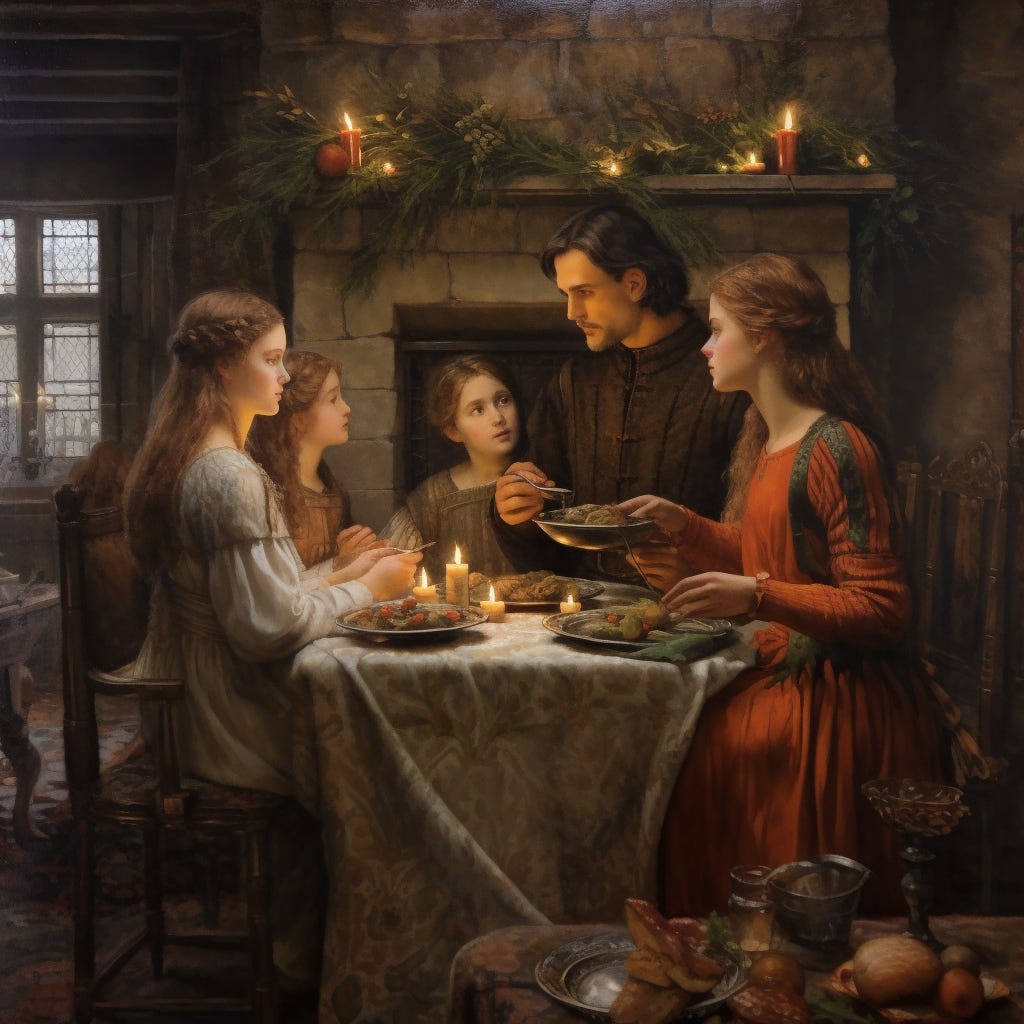
During December 24th Paradise Plays—religious dramas depicting Adam and Eve’s story—a “Paradise Tree” representing the Garden of Eden stood at center stage.
It was decorated with apples (symbolizing the forbidden fruit) and wafers (symbolizing redemption).
When families began recreating these plays at home, they brought the Paradise Tree with them, and slowly, the tradition took root in German households.
The First Written Christmas Tree in History
The first record of a decorated Christmas tree dates to Strasbourg, 1605, noting:
“At Christmas they set up fir trees in the parlor and hang thereon roses cut out of many-colored paper, apples, wafers, gold foil, sweets, etc.”
This single sentence—simple, descriptive, unassuming—marks the birth of a tradition the world would soon embrace.
The Tannenbaum Grows Up — Germany Refines the Tradition
Candles of Light, Symbol of Hope
By the 1700s, German homes featured illuminated trees sparkling with candles. This was no small feat—imagine balancing open flames on wax drips atop evergreen branches!
The meaning ran deep:
The candles symbolized Christ as the “light of the world.”
Families gathered to admire the glowing tree in silence and awe, a ritual preserved in German households for centuries.


Music and Poetry: “O Tannenbaum” Takes the Stage
By the 1800s, the Christmas tree had become a cultural icon—and the famous carol “O Tannenbaum” helped solidify its place in German hearts.

🎶 Not Originally a Christmas Song!
Though the melody is joyful, the lyrics were originally a folksong about loyalty, not Christmas. Only later did it become associated with holiday cheer.
Still, its refrain is unmistakably festive:
“O Tannenbaum, O Tannenbaum,
Wie treu sind deine Blätter.”
(“O Christmas tree, O Christmas tree, how faithful are your branches.”)
This song, like the tree itself, would soon cross the Atlantic.
A Tradition Takes Sail — The German Christmas Tree Comes to America

The Germans Arrive — and Bring Their Tree With Them
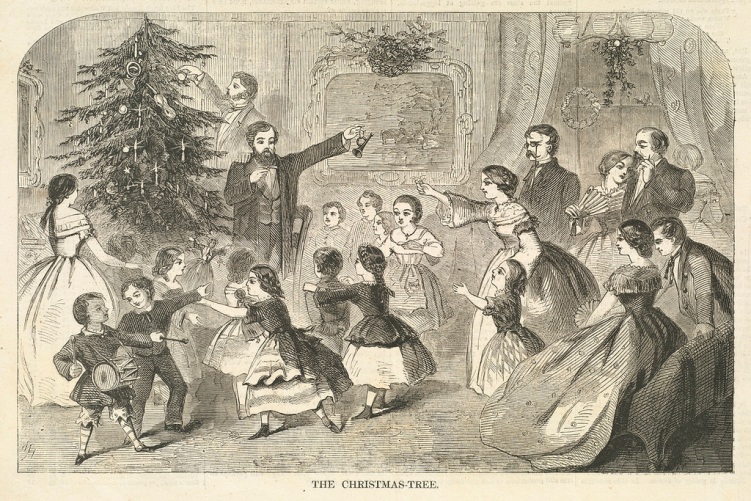
Starting in the early 1700s, waves of German immigrants—especially the Pennsylvania Dutch—brought with them their language, foods, customs, and festive holiday trees.
Early German-American families decorated with:
- Apples
- Nuts
- Candle
- Hand-cut paper
- Cookies and gingerbread
- Small toys
To outsiders, the tree was seen as exotic, unusual, even startling. But for German-Americans, it was home.
America First Notices the Tree in the 1830s
While Germans embraced the Christmas tree quietly, American newspapers began reporting on the “curious German custom” of indoor holiday trees.
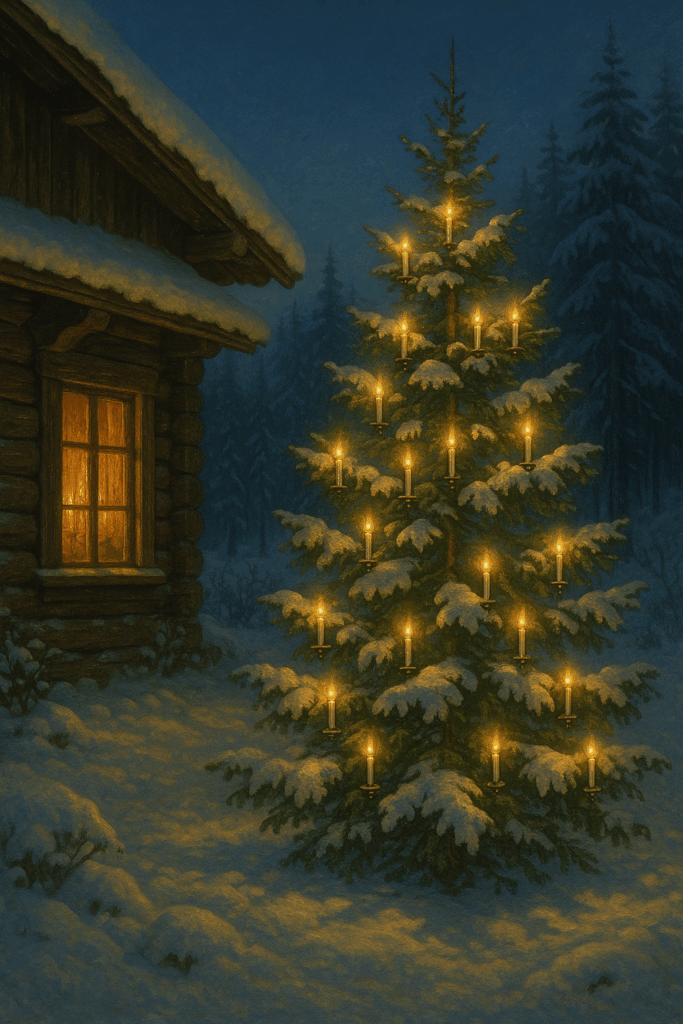
A Baltimore newspaper from 1836 even noted that decorated trees were common “among our German families.”
The Watershed Moment: Queen Victoria and Prince Albert
The moment that transformed the Christmas tree into a national sensation didn’t happen in America—it happened in England. And it involved a German prince.
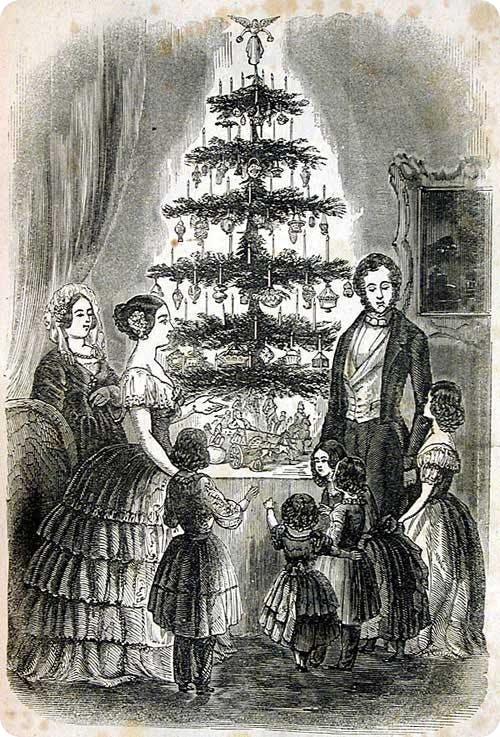
In 1848, The Illustrated London News published a sketch of Queen Victoria and her German husband, Prince Albert, gathered around a Christmas tree with their children.
American magazines reprinted the scene, and suddenly the Christmas tree became:
- fashionable
- modern
- respectable
- and deeply desirable
This single image converted curiosity into universal acceptance.
America Adopts and Reinvents the Christmas Tree
From German Tradition to American Style
As the Christmas tree spread across the United States, it blended with other cultures and innovations.
Germany gave America:
- The decorated evergreen
- Candle lighting
- Handcrafted ornaments
- Christmas music and verse
- Family-centered celebration
America added:
- Electric lights
- Tinsel and mass-produced ornaments
- Giant department-store trees
- Tree farms
- The Rockefeller Center tradition
Thomas Edison and the Electrified Tree
In 1882, Edison’s colleague Edward Johnson lit the first electric Christmas tree in New York. It featured 80 glowing bulbs, mesmerizing crowds and eliminating fire hazards from candles.
This innovation—another German-American fusion—made Christmas safer and more spectacular.
The Rise of American Ornament Craftsmanship
By the late 1800s, German-made blown-glass ornaments (from Lauscha, Thuringia) dominated American markets. But World Wars disrupted imports.
American companies like Shiny Brite stepped in, blending German techniques with American manufacturing, creating ornaments still cherished today.
Modern Christmas in America — A German Legacy in Every Home


German Traditions Still Alive in American Homes
Many Christmas rituals Americans consider “just Christmas” began as German customs:
- Advent wreaths (Adventskranz)
- Christmas stockings (popularized through German tales)
- Gingerbread houses (Lebkuchenhäuser)
- Nutcrackers
- Stollen
- Christmas markets (Christkindlmarkt)
- And, of course, the tree
Even Santa Claus has Germanic roots, blending St. Nicholas with the wintery gift-bringer Kris Kringle (Christkind).
The Christmas Tree as an American Symbol
Today, over 95 million American homes display Christmas trees—real, artificial, small, towering, rustic, modern, themed, or traditional.
The Rockefeller Center tree draws over 125 million visitors annually.
And in nearly every community across the nation, tree-lighting ceremonies unite families with a sense of wonder.
Why the Tree Endures
The Christmas tree is more than decoration. It is:
- a symbol of hope
- a celebration of family
- a sign of generosity
- a tribute to light in darkness
These meanings echo the winter traditions of German ancestors who first carried evergreens across icy forests and snow-covered hills.
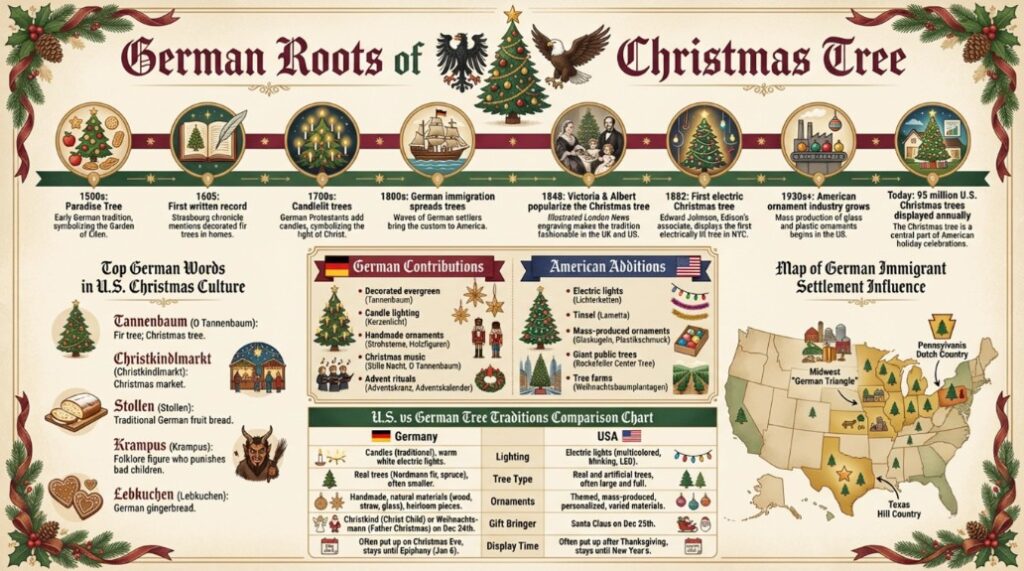
The Story in Visual Form
TITLE: “German Roots of America’s Christmas Tree”
Sections to include in infographic:
Timeline
- 1500s: Paradise Tree
- 1605: First written record
- 1700s: Candlelit trees
- 1800s: German immigration spreads trees
- 1848: Victoria & Albert popularize
- 1882: First electric tree
- 1930s+: American ornament industry
- Today: 95M U.S. trees annually
- German → American Contributions
- Top German Words in U.S. Christmas Culture
- Map of German Immigrant Settlement Influence
- U.S. vs German Tree Traditions Comparison Chart
A Cinematic Look — How to Visualize This Story
To enhance the article for your blog, here are suggested artwork and cinematic illustration moments:
- Black Forest candlelit Tannenbaum
- Medieval Paradise Play scene
- German immigrant ships arriving
- Victorian family portrait with tree
- Split screen: German 1800s tree vs modern American tree
A Final Quote — A Perfect Closing Note
“May your evergreen spirit guide us through winter’s darkest days, reminding us that hope endures.”
Conclusion — How the German Tannenbaum Became America’s Christmas Heartbeat
From snowy German forests to bustling American living rooms, from candlelit branches to dazzling electric displays, the Christmas tree tells a story of heritage, migration, innovation, and heart.
German immigrants didn’t intend to transform American culture—they simply celebrated as they always had. But in doing so, they shared something magical, tender, and universal:
The joy of gathering around a glowing evergreen that whispers comfort, warmth, hope, and the promise of light returning.