
A German Twist on Thanksgiving: 7 Traditional German Dishes to Bring to Your American Table

GERMAN HERITAGE USA | AFFILIATE DISCLAIMER: This post may or may not contain affiliate links which means we may receive a commission for purchases made through links. We will only recommend products that we have personally used or that we truly trust. Learn more on our Private Policy and Disclaimer Page located under our Terms Of Service tab above.
Thanksgiving is one of America’s most beloved holidays, but who says your Thanksgiving dinner can’t include a little German Heritage? From traditional German potato dumplings and sweet-and-sour red cabbage to homemade Spätzle and warm apple strudel, adding a few German dishes to your holiday menu can create a delicious celebration of family, food, and ancestry.
For millions of German-Americans, Thanksgiving offers a wonderful opportunity to blend familiar American traditions with the flavors their ancestors brought across the Atlantic.
And you don’t need to have grown up in a German household, speak the language, or even have visited Germany to enjoy these foods. Whether your family has deep German roots or you’ve recently discovered a small percentage of German ancestry, traditional German cooking offers plenty of inspiration for your Thanksgiving table.
So, before you finalize this year’s holiday menu, consider giving that turkey dinner a little Old World personality.
After all, there’s always room for one more dish on the Thanksgiving table. Especially when it’s German!
Thanksgiving and German Heritage: A Delicious Connection Between Two Traditions
Long before Thanksgiving became an American national holiday, communities throughout Germany celebrated the autumn harvest through a tradition called Erntedankfest, meaning Harvest Thanksgiving Festival.
Erntedankfest is generally celebrated in late September or early October, although the precise date varies by region and community. Traditionally, it is associated with church services, harvest decorations, seasonal foods, and expressions of gratitude for the year’s agricultural bounty.
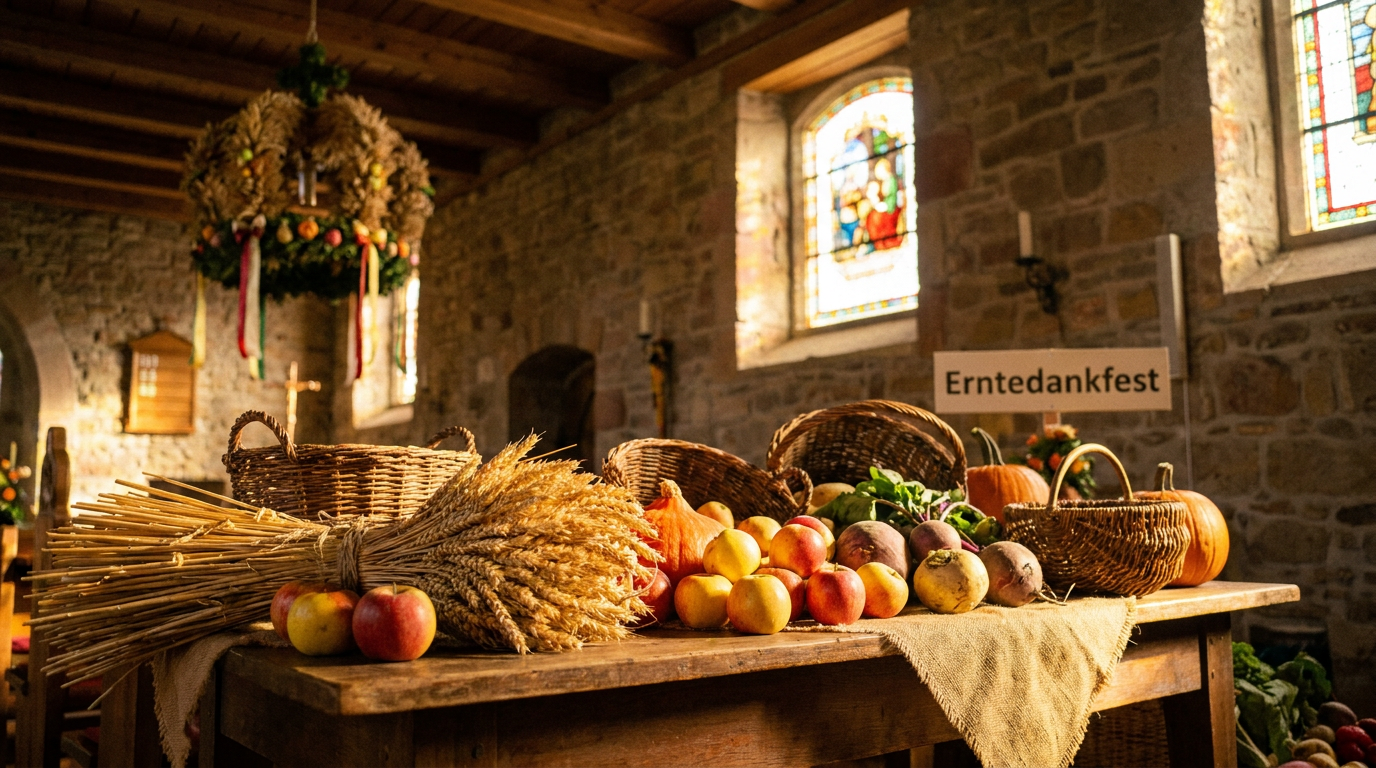
Churches are sometimes decorated with baskets of vegetables, fruits, grains, and elaborate harvest crowns called Erntekronen. Communities may organize music, parades, or gatherings that recognize the importance of farming and the blessings of a successful growing season.
Although Erntedankfest and American Thanksgiving developed from different historical traditions, their underlying messages have much in common: gratitude, family, community, and appreciation for the food that sustains us.
When German immigrants established new lives in America, they gradually adopted American customs while continuing to prepare many of their traditional family recipes.
A Thanksgiving turkey might become the centerpiece of the holiday meal, but the side dishes could still reflect the family’s ancestral homeland.
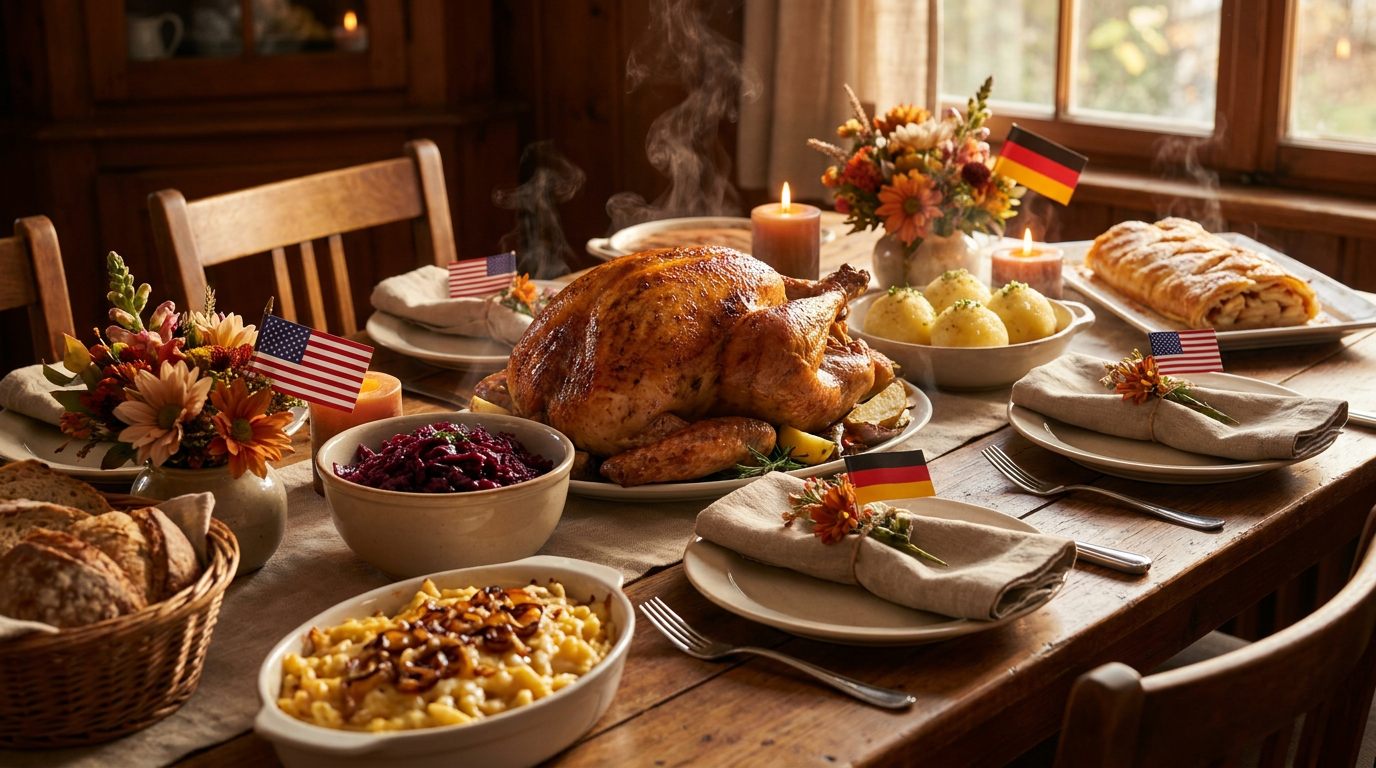
Imagine a German-American farmhouse kitchen in the Midwest generations ago. The turkey is roasting, potatoes are cooking, fresh bread is cooling on the counter, and a pot of sweet-and-sour cabbage is simmering on the stove.
Perhaps Grandma is preparing dumplings using a recipe she learned from her mother. Someone else is rolling out dough for an apple dessert, while children eagerly await the announcement that dinner is ready.
These scenes represent the kind of culinary blending that helped shape German-American food traditions.
The wonderful thing about Thanksgiving is that it has always provided families with opportunities to create their own customs.
And what better way to celebrate German ancestry than by introducing a few authentic German dishes to an American holiday feast?
Here are seven traditional favorites worth considering.
1. Rotkohl: Sweet-and-Sour German Red Cabbage
If there’s one traditional German side dish that deserves a place alongside Thanksgiving turkey, it might be Rotkohl, Germany’s famous braised red cabbage.
Known regionally as Rotkraut or Blaukraut, this colorful dish has been a longtime favorite throughout German-speaking Europe.
Traditional Rotkohl combines finely shredded red cabbage with apples, onions, vinegar, sugar, and aromatic spices. Depending on the family recipe, seasonings may include cloves, bay leaves, juniper berries, or a touch of cinnamon.
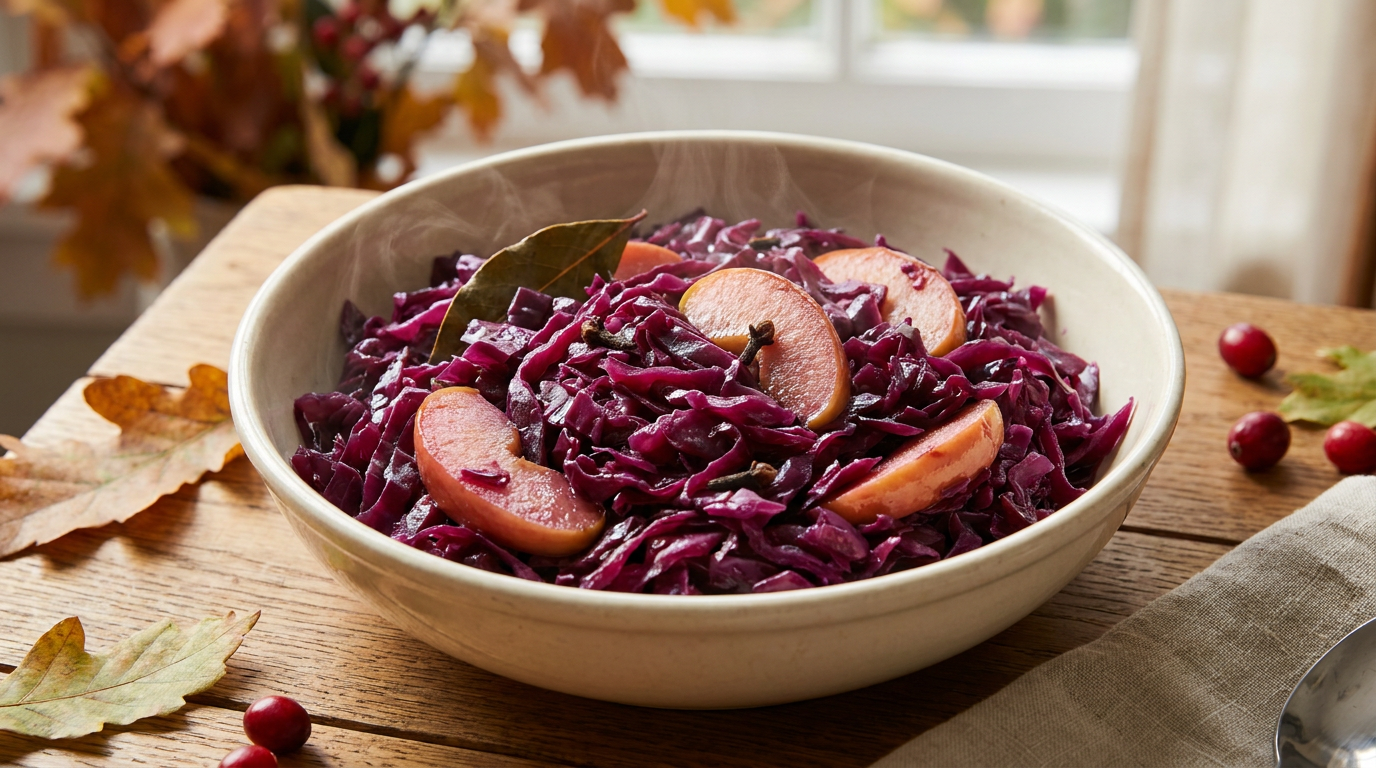
The ingredients simmer slowly until the cabbage becomes tender and develops a wonderful balance of sweet, tangy, and savory flavors.
That combination makes Rotkohl a particularly good companion to Thanksgiving dinner.
The gentle acidity balances the richness of roasted turkey, gravy, mashed potatoes, and stuffing. Its beautiful purple-red color also adds a festive touch to the holiday table.
Why it works for Thanksgiving: Rotkohl can be prepared a day or two ahead, and many cooks find that its flavor improves after resting overnight in the refrigerator.
Try serving it alongside turkey and cranberry sauce. The flavors complement each other surprisingly well.
For an extra autumn twist, use tart apples and a splash of apple cider.
You might discover that German red cabbage becomes a new family Thanksgiving tradition.
2. Kartoffelklöße: Traditional German Potato Dumplings
Americans love mashed potatoes, especially when they’re covered with homemade turkey gravy.
But in many German households, a different kind of potato dish has long occupied an honored place at the dinner table.
Meet Kartoffelklöße, also known as Kartoffelknödel — traditional German potato dumplings.
These comforting dumplings are especially associated with central and southern German cooking, although recipes vary considerably by region.
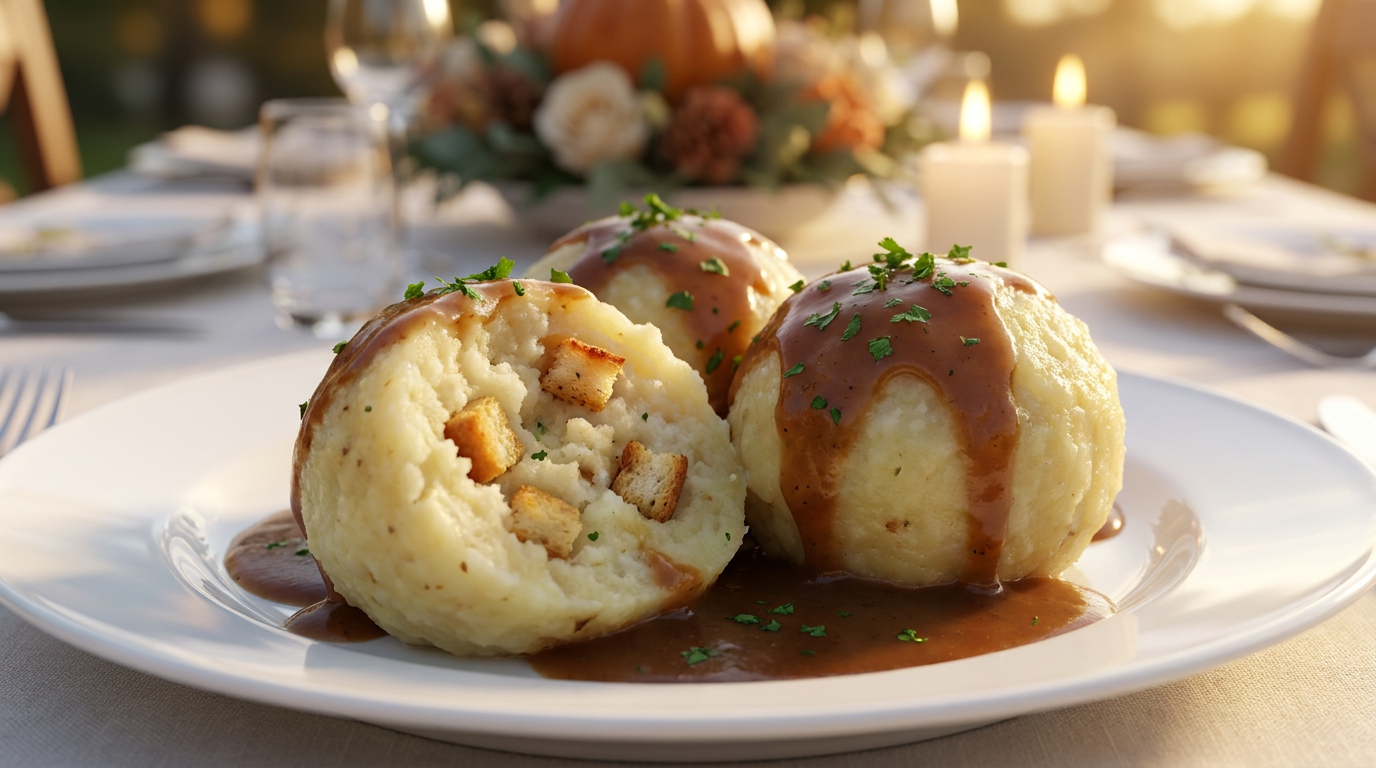
Some preparations use cooked potatoes, others incorporate raw grated potatoes, and certain traditional recipes combine both. Potato starch helps hold the ingredients together, while butter, salt, and occasionally nutmeg contribute flavor.
The potato mixture is formed into round dumplings and gently cooked in hot water until tender.
The result is a soft, satisfying side dish that seems almost designed to absorb rich gravy.
In Germany, Kartoffelklöße frequently accompany roasted meats, including pork, beef, goose, and duck. Their connection to hearty holiday meals makes them a natural choice for Thanksgiving.
Why they work for Thanksgiving: Potato dumplings provide a delicious alternative to ordinary mashed potatoes without introducing flavors that conflict with an American holiday menu.
Serve them with roasted turkey and plenty of gravy.
Some traditional versions even include toasted bread cubes in the center, adding an unexpected bit of texture.
One suggestion: Don’t eliminate the mashed potatoes entirely, especially if you have family members who consider them essential.
Simply offer both.
It’s Thanksgiving. Nobody is counting the potatoes.
3. Käsespätzle: Germany’s Delicious Answer to Macaroni and Cheese
If your Thanksgiving dinner includes macaroni and cheese, you might want to introduce its German culinary cousin.
Käsespätzle is a rich, comforting dish made with tender German egg noodles, melted cheese, and often a generous topping of golden caramelized onions.
Spätzle itself is a traditional egg-based pasta or noodle particularly associated with Swabia in southwestern Germany and neighboring Alpine regions.
The dough typically contains flour, eggs, water or milk, and salt. It is pressed or scraped into simmering water, creating small, irregularly shaped noodles.
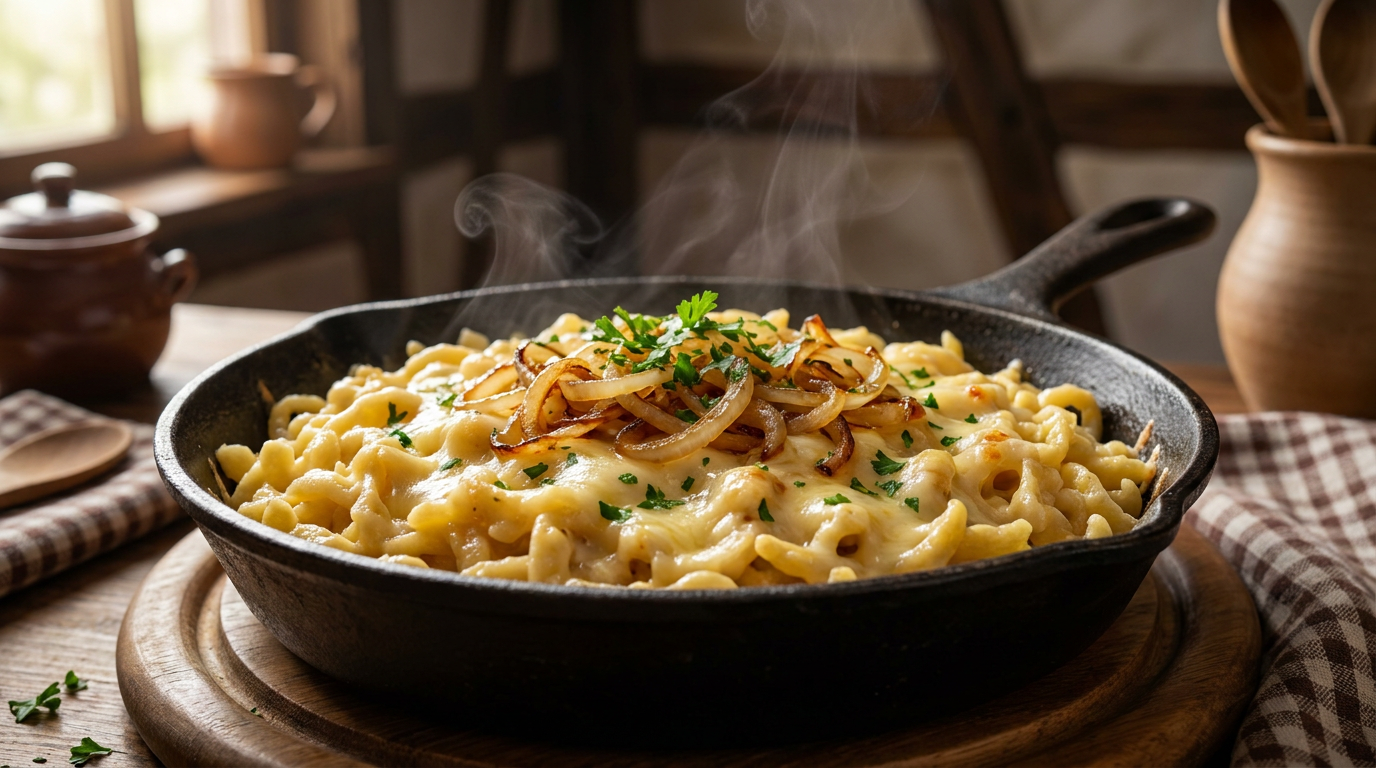
The cooked Spätzle can be served with butter, gravy, or a variety of sauces.
But Käsespätzle takes things a delicious step further.
The noodles are layered or tossed with cheese, creating a warm and satisfying dish that’s sometimes compared to American macaroni and cheese.
Traditional regional cheeses may include Allgäuer Bergkäse or Emmentaler, although combinations vary by recipe and availability.
A topping of slowly browned onions provides a savory finishing touch.
Why it works for Thanksgiving: Käsespätzle is familiar enough to appeal to American diners but distinctive enough to introduce authentic German character to the holiday menu.
It pairs well with turkey, roasted vegetables, and other savory side dishes.
You can prepare the noodles ahead of time and finish the dish shortly before dinner.
And here’s a little prediction: If there are children at your Thanksgiving table, the Käsespätzle might disappear faster than the pumpkin pie.
4. Semmelknödel: German Bread Dumplings That Give Stuffing Some Competition
Stuffing is practically a Thanksgiving institution.
Whether your family prepares it with cornbread, sausage, herbs, onions, or traditional cubed bread, it often ranks among the most anticipated dishes on the holiday menu.
Germany offers another delicious way to transform bread into a savory side dish.
Semmelknödel, traditional German bread dumplings, are especially popular in Bavaria and other southern German regions.
They’re generally prepared using stale bread rolls, warm milk, eggs, sautéed onions, parsley, and seasonings.
The ingredients are combined into a moist mixture, shaped into round dumplings, and gently simmered until cooked through.
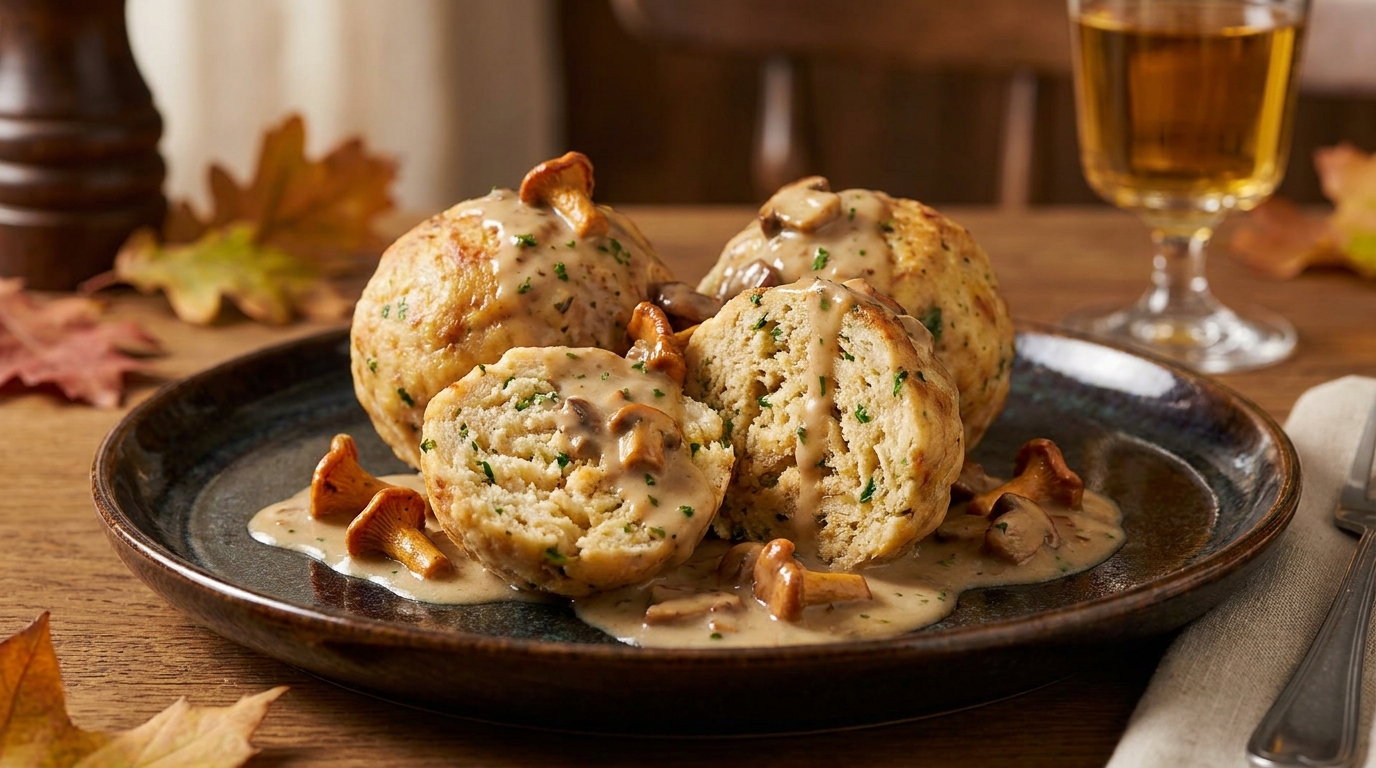
Unlike American stuffing, which is generally baked in a casserole dish or cooked inside poultry, Semmelknödel are individual dumplings traditionally served with roasted meats, mushroom sauces, or rich gravies.
The texture is tender yet substantial, and the mild seasoning makes them particularly versatile.
Why they work for Thanksgiving: Bread dumplings complement turkey and gravy while offering a different presentation from conventional stuffing.
They also represent a practical tradition in European cooking: making excellent use of bread that might otherwise go to waste.
If your Thanksgiving menu already includes stuffing, consider serving a small platter of Semmelknödel as an additional side dish.
For an especially delicious variation, serve them with a creamy mushroom gravy.
Between the traditional stuffing and German bread dumplings, your guests will have plenty of choices.
And perhaps a spirited debate about which deserves a second helping.
5. German-Style Roasted Brussels Sprouts with Bacon and Onions
Brussels sprouts aren’t exclusively German, but they’re widely enjoyed in Germany, where they’re known as Rosenkohl.
Traditional German preparations include boiling, steaming, sautéing, or roasting the small green vegetables, often with butter, nutmeg, onions, or bacon.
For Thanksgiving, a German-style Rosenkohl dish featuring crispy bacon and caramelized onions can be a wonderful addition.
Roasting Brussels sprouts gives them a lightly crisp exterior while retaining a tender interior. The bacon adds savory richness, and the onions provide natural sweetness.
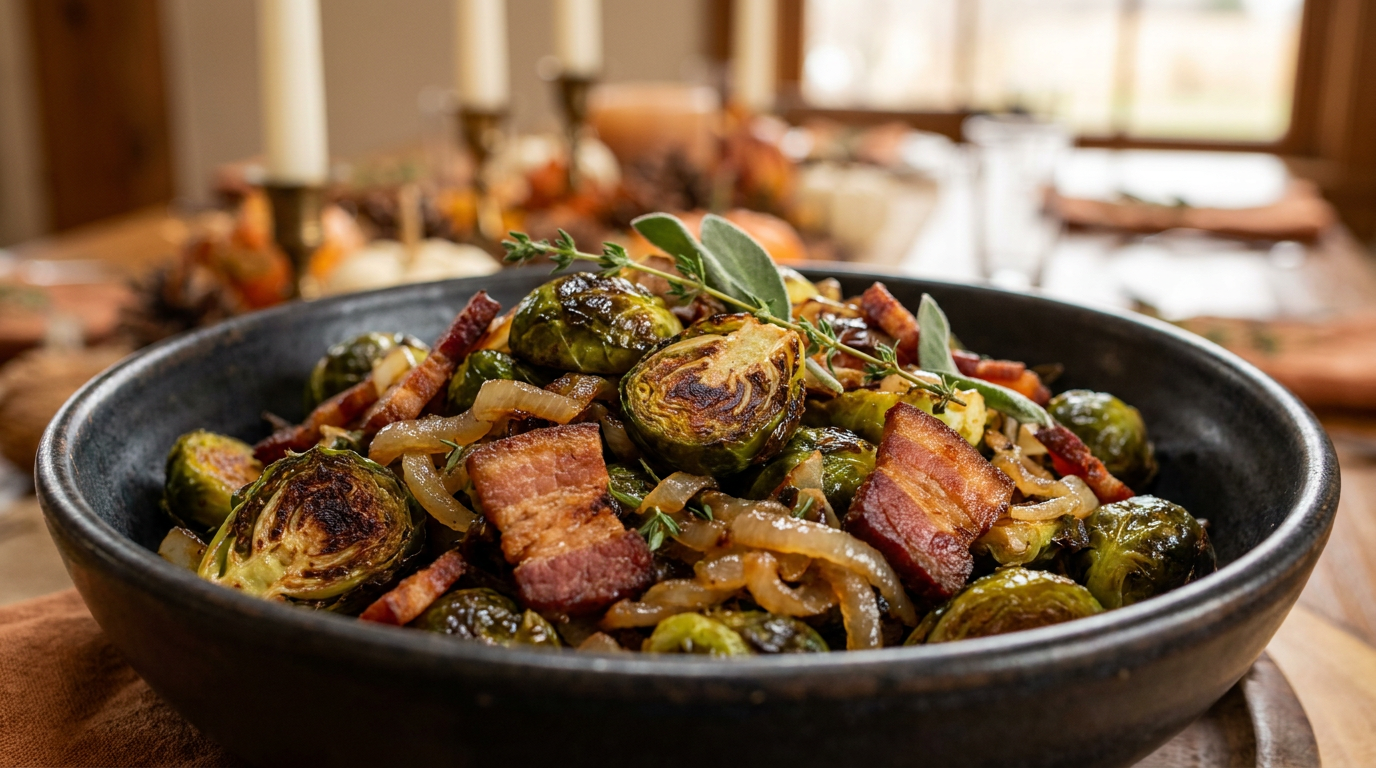
A little freshly grated nutmeg, commonly used in German vegetable cooking, brings an additional layer of warmth.
Although this particular roasted combination is a modern holiday-friendly adaptation rather than a single standardized historical German recipe, its ingredients and flavors are well established in German home cooking.
Why it works for Thanksgiving: This dish adds a flavorful green vegetable to a meal frequently dominated by potatoes, bread, and casseroles.
It pairs especially well with turkey, Rotkohl, and potato dumplings.
For additional flavor, finish the sprouts with a small splash of apple cider vinegar.
And for those family members who claim they don’t like Brussels sprouts?
Don’t mention the vegetables immediately.
Let the bacon and caramelized onions introduce themselves first.
6. Sauerbraten: Germany’s Famous Marinated Pot Roast
Now we’re introducing something a little more ambitious.
Sauerbraten is one of Germany’s best-known traditional meat dishes, celebrated for its distinctive marinade and deeply developed flavors.
The name translates roughly to sour roast, although the finished dish is much more complex and delicious than that simple description suggests.
Sauerbraten is generally prepared by marinating a suitable cut of meat in a mixture containing vinegar or wine, water, onions, spices, and aromatics.
The meat is then slowly braised until tender.
Regional recipes vary significantly, and the dish has historically been prepared with different meats.
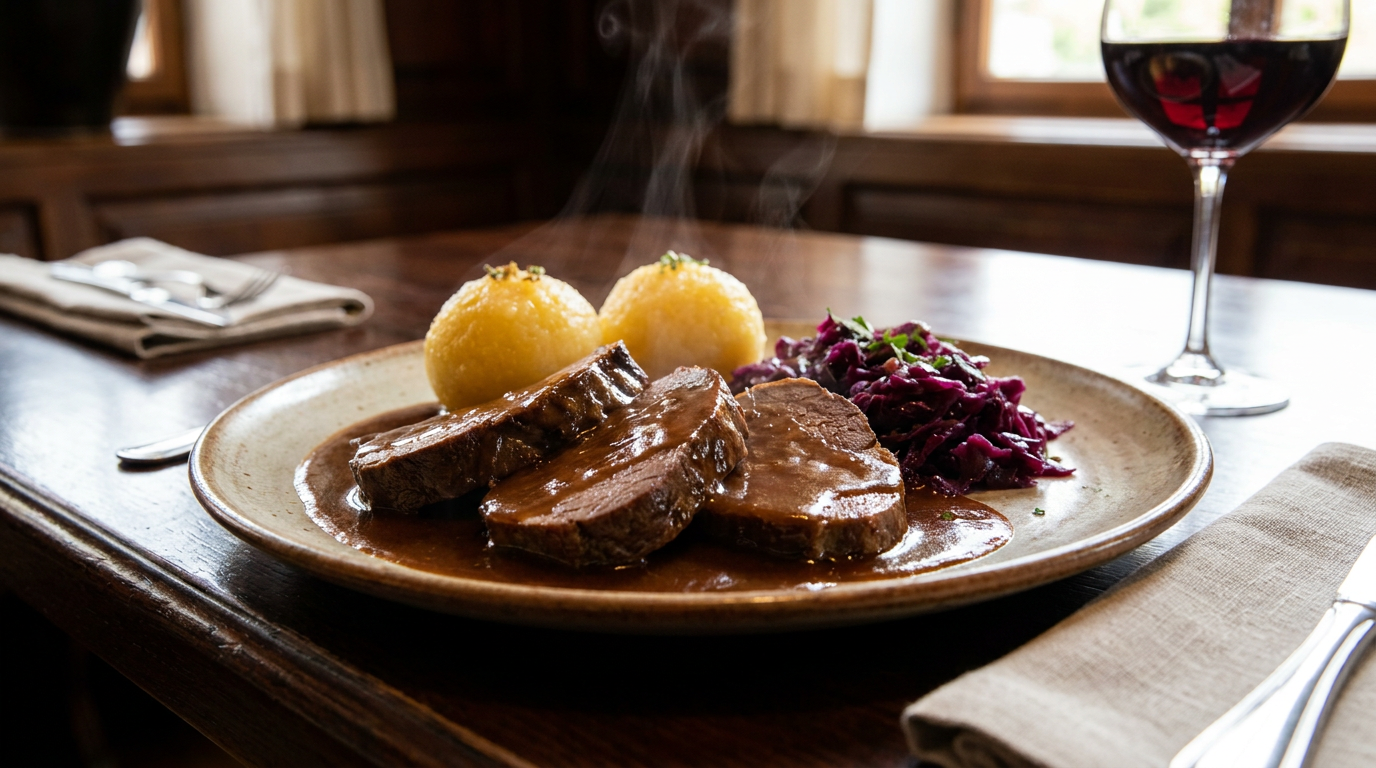
One especially famous variation, Rheinischer Sauerbraten from the Rhineland, may feature a sweet-and-sour gravy traditionally thickened or flavored with ingredients such as raisins and gingerbread-style Printen.
Sauerbraten is commonly served with potato dumplings, red cabbage, or other hearty accompaniments.
Does it belong on Thanksgiving?
Absolutely — particularly if you’re hosting a large family gathering or want to offer an alternative to turkey.
Why it works for Thanksgiving: Sauerbraten provides a flavorful second entrée that celebrates German culinary heritage while complementing the traditional American feast.
It can also be especially appealing to guests who prefer beef to poultry.
Since the meat requires advance marinating and slow cooking, Sauerbraten is best planned several days before Thanksgiving.
You don’t necessarily need a large roast, either.
A modest serving platter can give guests an opportunity to enjoy a traditional German specialty without overwhelming the menu.
Just imagine the conversation when you announce that this year’s Thanksgiving dinner includes both American turkey and authentic German Sauerbraten.
That’s a holiday menu with some serious international personality.
7. Apfelstrudel: Traditional German-Speaking Europe’s Favorite Apple Dessert
No Thanksgiving feast would be complete without dessert.
Pumpkin pie, pecan pie, and traditional American apple pie are familiar favorites, but there’s another classic that deserves a place on the holiday dessert table.
Apfelstrudel, or apple strudel.
Although apple strudel is especially associated with Austria and Vienna, it has long been enjoyed throughout southern Germany and other German-speaking regions.
This beloved pastry combines thinly stretched dough with a filling of sliced apples, sugar, cinnamon, and frequently raisins and toasted breadcrumbs.
Once rolled and baked, the pastry develops a beautifully crisp exterior surrounding a warm, fragrant apple filling.
A dusting of powdered sugar adds the finishing touch.
Apfelstrudel can be served on its own, with whipped cream, vanilla ice cream, or a warm vanilla sauce.
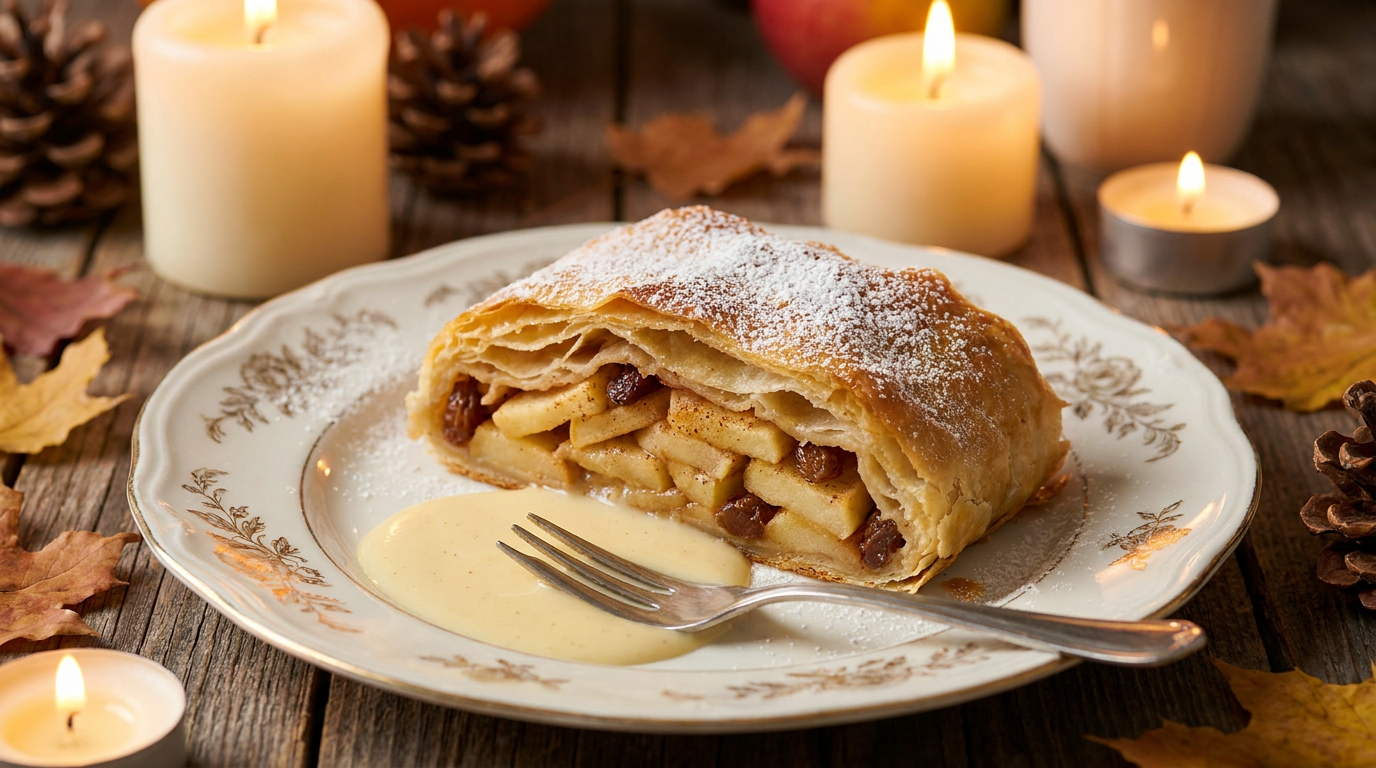
For Thanksgiving, its combination of apples, cinnamon, and buttery pastry makes it especially appropriate for the season.
Why it works for Thanksgiving: Apple strudel introduces a familiar autumn fruit in a distinctive Old World dessert.
It’s an excellent alternative to traditional apple pie, and guests can enjoy small slices alongside their favorite Thanksgiving desserts.
The pastry can be assembled ahead of time, although it is especially delicious when served warm and freshly baked.
For a festive presentation, place the strudel on a large serving platter, dust it lightly with powdered sugar, and surround it with a few decorative autumn leaves.
And if anyone asks whether they should choose pumpkin pie or apple strudel?
The answer is simple.
Both.
It’s Thanksgiving, after all.
Bringing German Traditions Into an American Thanksgiving Celebration
You don’t have to replace your family’s cherished Thanksgiving recipes to celebrate German heritage.
In fact, the most enjoyable approach may be to introduce just one or two German dishes each year.
Start with a bowl of Rotkohl alongside your turkey. Perhaps prepare Kartoffelklöße instead of one of your usual potato dishes. Or surprise everyone with homemade Käsespätzle.
You might even organize a Thanksgiving gathering where family members contribute dishes inspired by different branches of their ancestry.
For German-American families, this can become a particularly meaningful way to discuss family history.
Where did your German ancestors come from? Did they live in Bavaria, Prussia, Schleswig-Holstein, Württemberg, Saxony, or another historic German region?
Were they farmers, bakers, craftsmen, merchants, or tradespeople?
Did they settle in Pennsylvania, Ohio, Wisconsin, Nebraska, Kansas, Texas, or another part of America?
And perhaps most interestingly, did they bring family recipes that survived long after the original immigrants had passed away?
Sometimes an old recipe card, a handwritten cookbook, or a dish remembered from childhood can provide an unexpected connection to a family’s past.
The smell of simmering red cabbage or freshly baked apple pastry might remind someone of a grandmother’s kitchen.
A homemade dumpling recipe might inspire an older relative to share stories that younger family members have never heard.
Those moments can be just as valuable as the meal itself.
As the familiar German saying reminds us:
“Liebe geht durch den Magen.”
Love goes through the stomach.
In other words, food and affection have a wonderful way of finding each other.
That sentiment fits Thanksgiving beautifully.
A Little German Thanksgiving Menu Inspiration
If you’re thinking about giving your Thanksgiving table a German-American twist this year, here’s one possible menu that brings both culinary traditions together.
Main dishes: Traditional American roasted turkey with homemade gravy, accompanied by a smaller serving of German Sauerbraten.
Potatoes and dumplings: Creamy mashed potatoes alongside traditional Kartoffelklöße.
Savory sides: German Rotkohl, buttery Käsespätzle, Semmelknödel with mushroom gravy, and roasted Rosenkohl with bacon and onions.
American holiday favorites: Traditional stuffing, cranberry sauce, dinner rolls, and your family’s favorite green bean casserole.
Desserts: Pumpkin pie, pecan pie, and warm Apfelstrudel with vanilla sauce.
Of course, preparing every dish would create a substantial holiday cooking project. For a typical family gathering, choosing two or three German additions is likely to be the more practical approach.
And remember, Thanksgiving isn’t a competition to see who can prepare the most elaborate meal.
The most important ingredients are the people who gather around your table.
Thanksgiving, German Ancestry, and the Traditions We Pass Along
One of the remarkable things about German-American heritage is the way traditions can survive for generations, even as families become increasingly connected to American life.
Many descendants of German immigrants no longer speak the German language. Some have never traveled to Germany, while others are only beginning to discover their ancestral surnames or investigate where their families originally lived.
Yet food has a special ability to bridge those generations.
A familiar dish can inspire questions about an ancestor’s homeland. A holiday meal can encourage children and grandchildren to explore their family history. And an old recipe can become a treasured tradition that continues for decades.
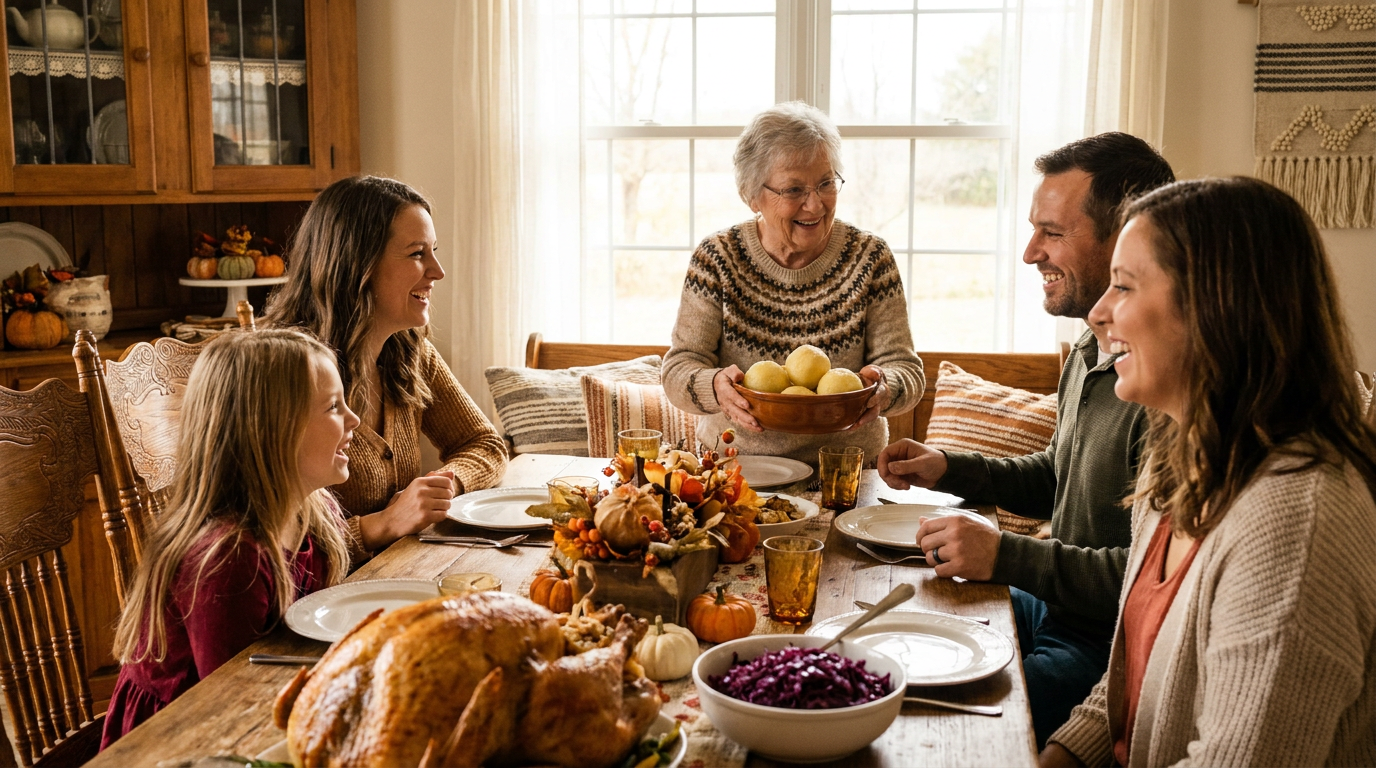
For Americans who recently discovered German ancestry through family research or DNA testing, preparing a traditional German dish can be an enjoyable first step toward exploring that heritage.
You don’t need an elaborate celebration or a perfectly reconstructed historical recipe.
Sometimes all it takes is a bowl of red cabbage, a plate of homemade dumplings, or the wonderful aroma of apples and cinnamon drifting from the oven.
Those little experiences help make ancestry feel personal.
At GERMAN HERITAGE USA, we believe discovering your German roots can be as simple as visiting a German restaurant, attending an Oktoberfest celebration, exploring a historic German-American community, or trying a traditional recipe in your own kitchen.
Every experience becomes another opportunity to appreciate the remarkable cultural contributions German immigrants and their descendants have made to America.
And Thanksgiving provides a particularly fitting occasion to celebrate that shared history.
Frohes Thanksgiving! A Holiday Worth Sharing Across Generations
As Thanksgiving approaches, kitchens across America will once again fill with the familiar sights, sounds, and aromas of the season.
Turkeys will roast, pies will bake, families will travel, and dining room tables will become gathering places for stories, laughter, gratitude, and perhaps a few friendly disagreements about the proper way to prepare stuffing.
This year, consider making room for a little German tradition among your American holiday favorites.
Maybe it’s Rotkohl prepared from a family recipe, Kartoffelklöße covered in rich turkey gravy, or an Apfelstrudel served alongside Grandma’s pumpkin pie.
Perhaps it becomes an opportunity to tell your children about their German great-grandparents or explore the European village where your ancestors once lived.
Whatever you choose, remember that heritage isn’t simply about looking backward.
It’s also about deciding which traditions are worth carrying forward.
And sometimes, the most meaningful family traditions begin with something as simple as sharing a delicious meal.
From all of us at GERMAN HERITAGE USA, we wish you and your family a wonderful Thanksgiving filled with gratitude, good food, treasured memories, and perhaps a delicious little taste of Germany.
Frohes Thanksgiving und guten Appetit!
Happy Thanksgiving and enjoy your meal!
GERMAN HERITAGE USA
Discovering German Heritage Traditions, Foods, Music and Festivals All Across America.
What’s your favorite traditional German dish? Does your family include any German recipes in its Thanksgiving celebration? Share your family food traditions with us!