German Holiday Baking: Lebkuchen, Stollen, and Sweet Traditions
GERMAN HERITAGE USA | AFFILIATE DISCLAIMER: This post may or may not contain affiliate links which means we may receive a commission for purchases made through links. We will only recommend products that we have personally used or that we truly trust. Learn more on our Private Policy and Disclaimer Page located under our Terms Of Service tab above.
The holiday season in German households has always smelled like something magical. Even before the first candle is lit or the Advent wreath is hung, the kitchen becomes the heart of Christmas—warm, flour-dusted, and alive with tradition.
Generations gather around wooden tables, rolling dough, grinding spices, and retelling stories that feel as old as the recipes themselves.
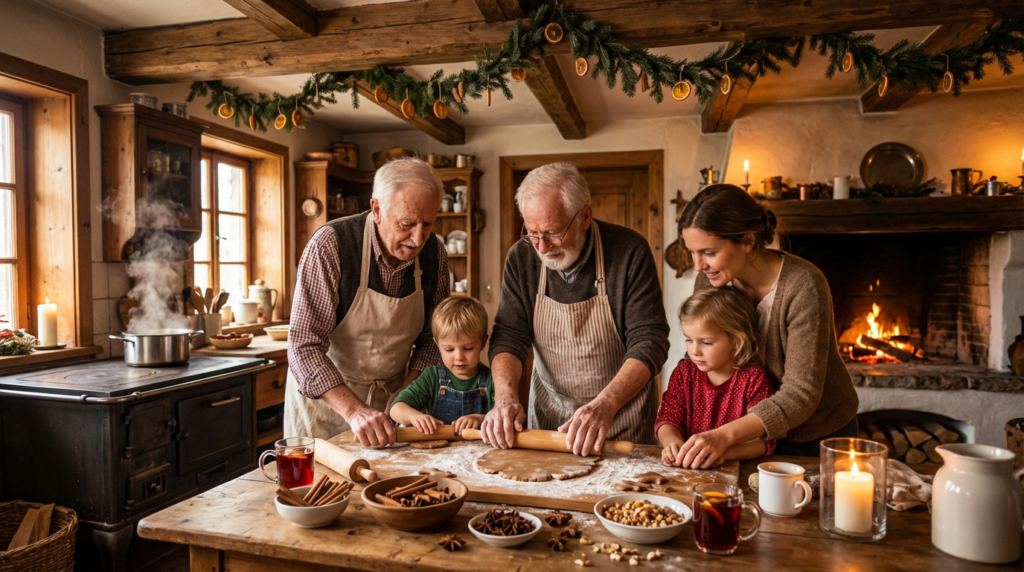
German holiday baking is not just about desserts; it is about memory, rhythm, and ritual. Recipes are rarely written in modern measurements. Instead, they are passed down as instructions like “until it feels right” or “bake until it smells like Christmas.”
These sweets marked the seasons long before electric ovens and store-bought spice mixes, reminding families that winter was a time to slow down, gather close, and celebrate together.
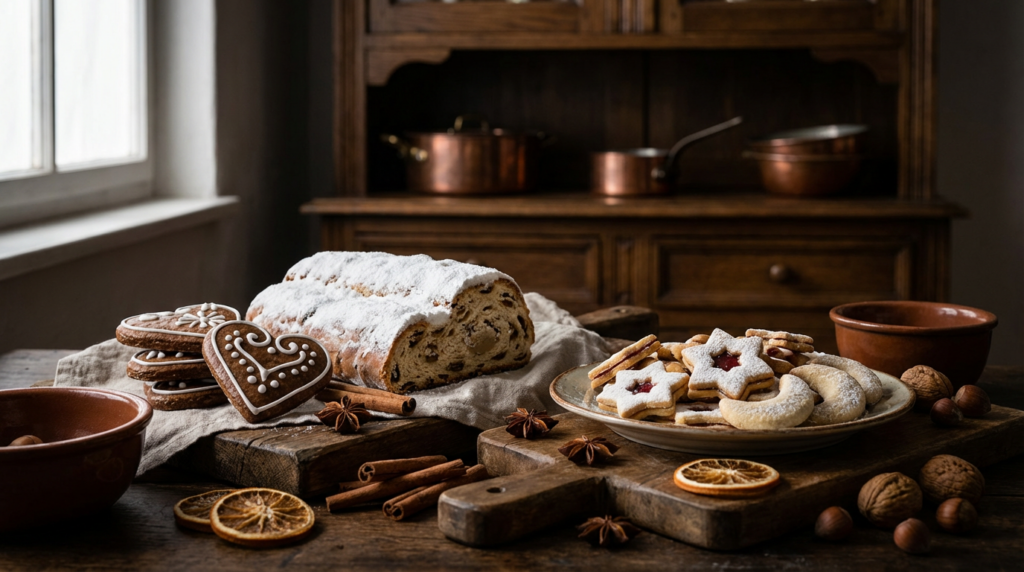
Three baked goods stand above all others in the German Christmas tradition: Lebkuchen, Stollen, and a constellation of regional cookies known collectively as Weihnachtsplätzchen. Each tells a story—not just of flavor, but of geography, faith, migration, and family.
As one old German saying goes:
“Backen ist Liebe, die man essen kann.”
“Baking is love you can eat.”
The Sacred Spice of Christmas: Lebkuchen

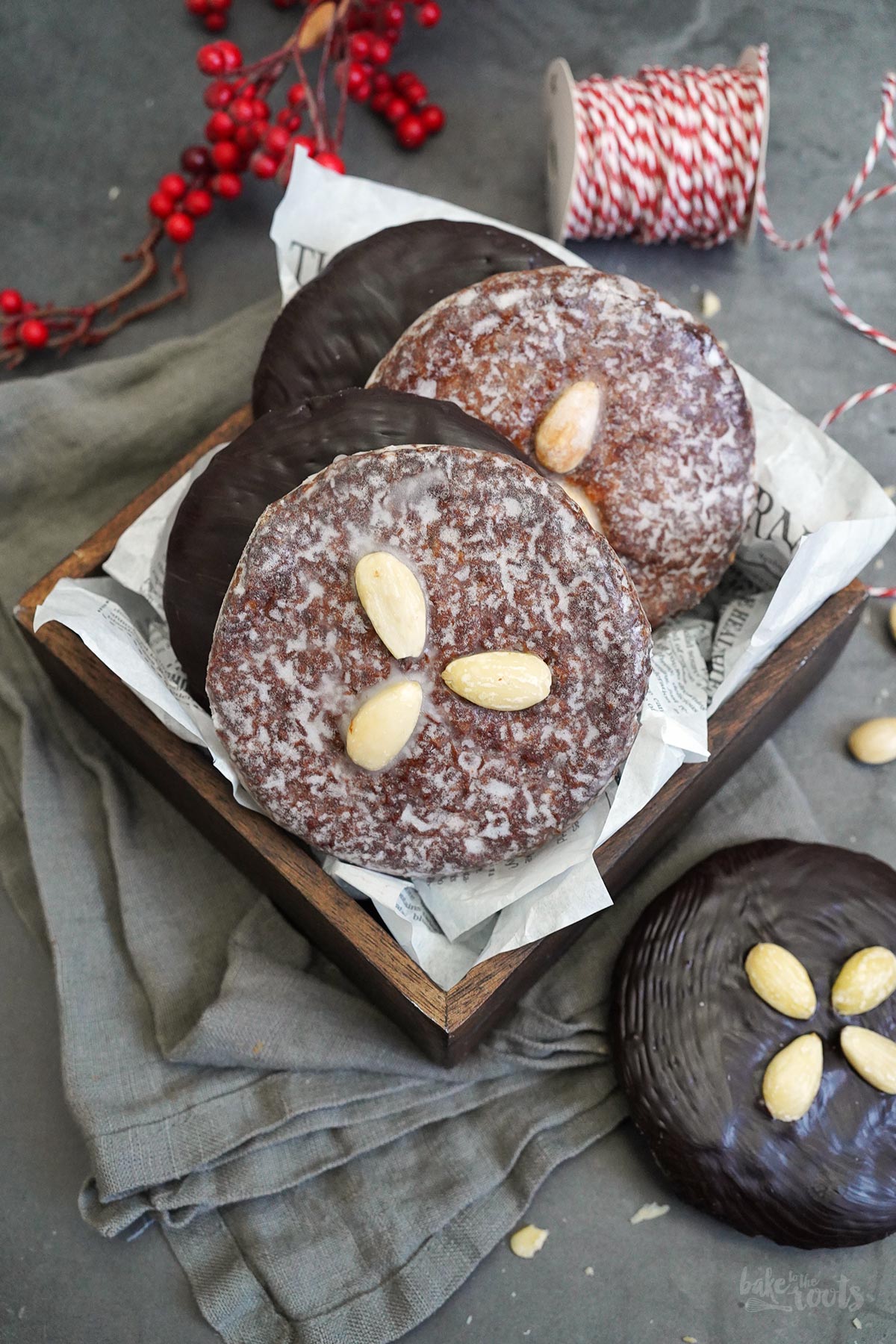
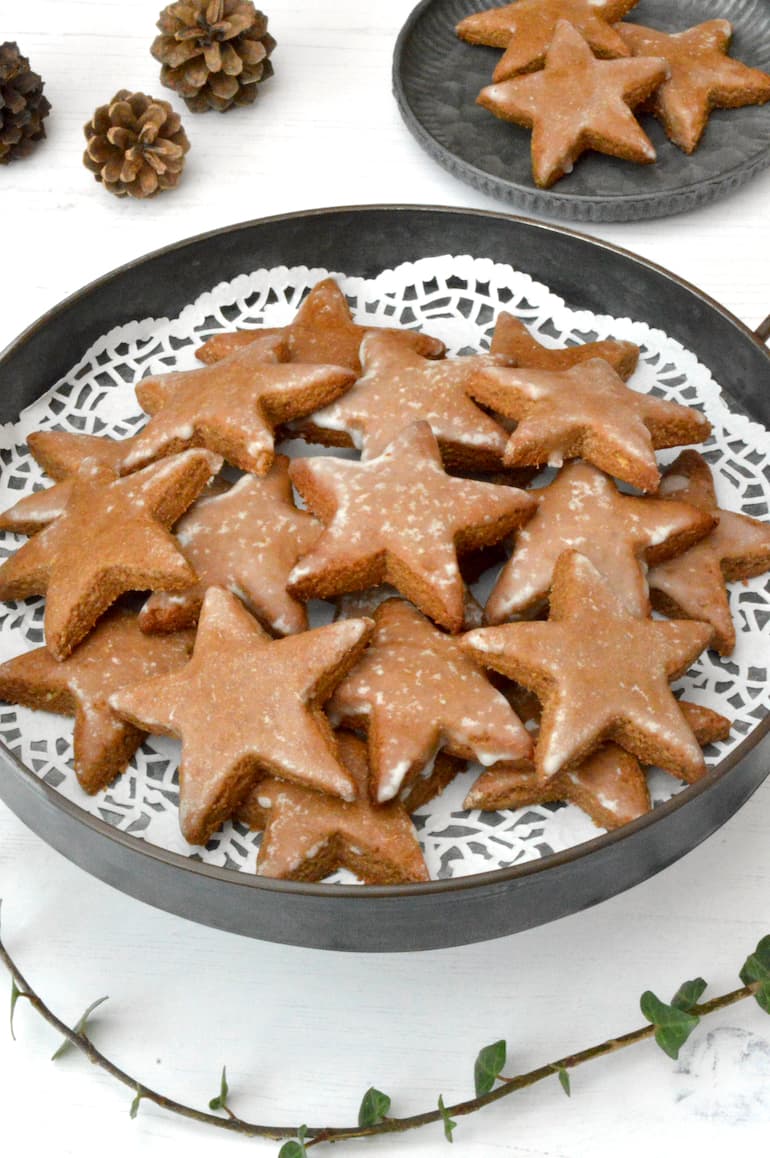
Lebkuchen is often described as German gingerbread, but that comparison hardly does it justice. Dating back to the Middle Ages, Lebkuchen emerged in monastery kitchens, where monks blended honey, nuts, and imported spices believed to have medicinal qualities. These spices—cinnamon, cloves, cardamom, nutmeg, ginger, and anise—were precious commodities, making Lebkuchen a luxury reserved for sacred seasons.
The most famous Lebkuchen comes from Nuremberg, where the city’s location along medieval spice trade routes ensured access to exotic flavors. Authentic Nürnberger Lebkuchen often contains little to no flour, relying instead on ground almonds or hazelnuts for structure. The result is soft, aromatic, and deeply complex.
Lebkuchen isn’t rushed. Dough often rests for days or even weeks, allowing flavors to deepen. Baking Lebkuchen became an Advent ritual—made early, stored carefully, and brought out slowly as Christmas approached. Some families brush them with sugar glaze; others dip them in dark chocolate. Some shape them as simple rounds, while others form hearts with piped messages of love.
“When the Lebkuchen come out, Christmas is no longer a promise—it’s here.”
Stollen: The Bread That Became a Symbol

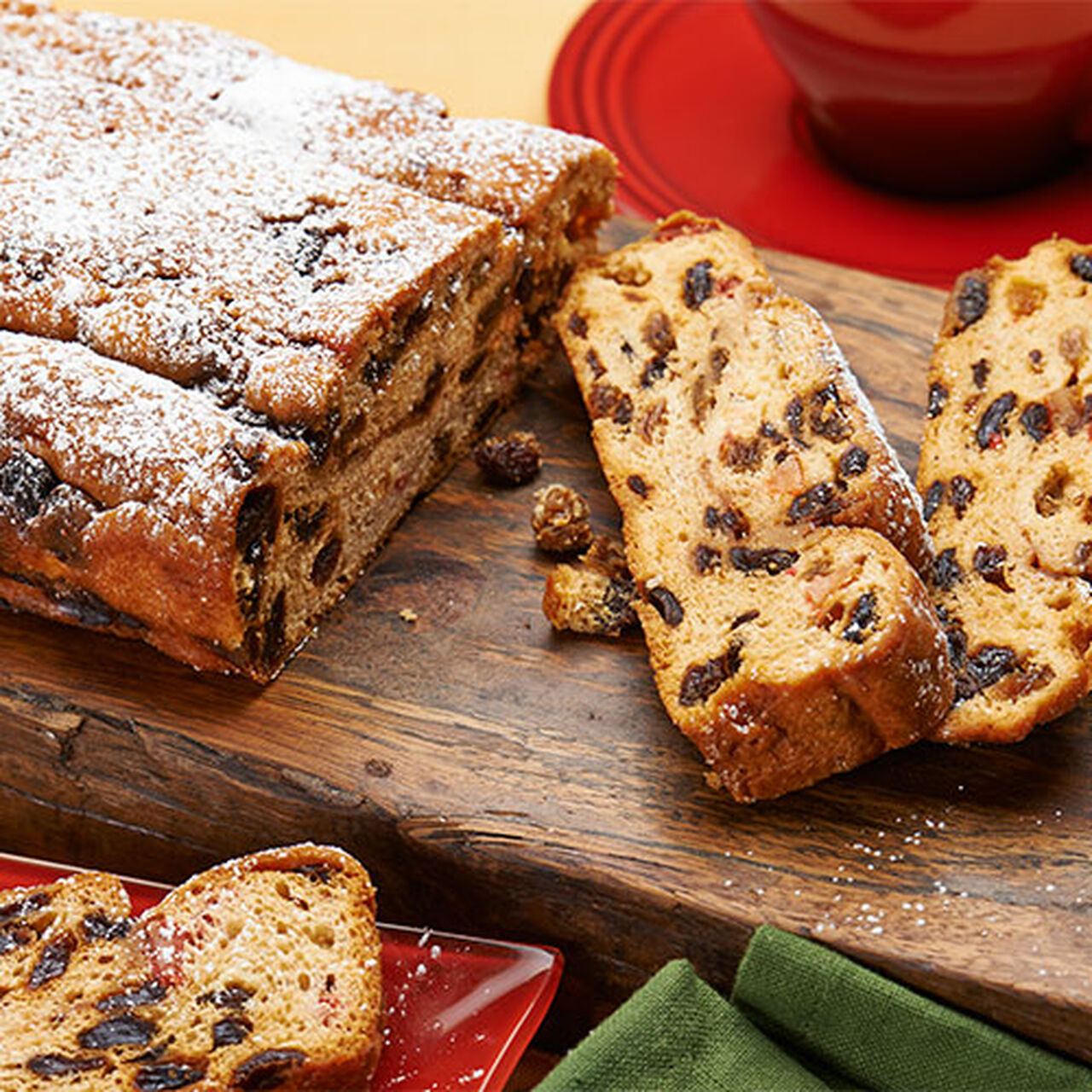
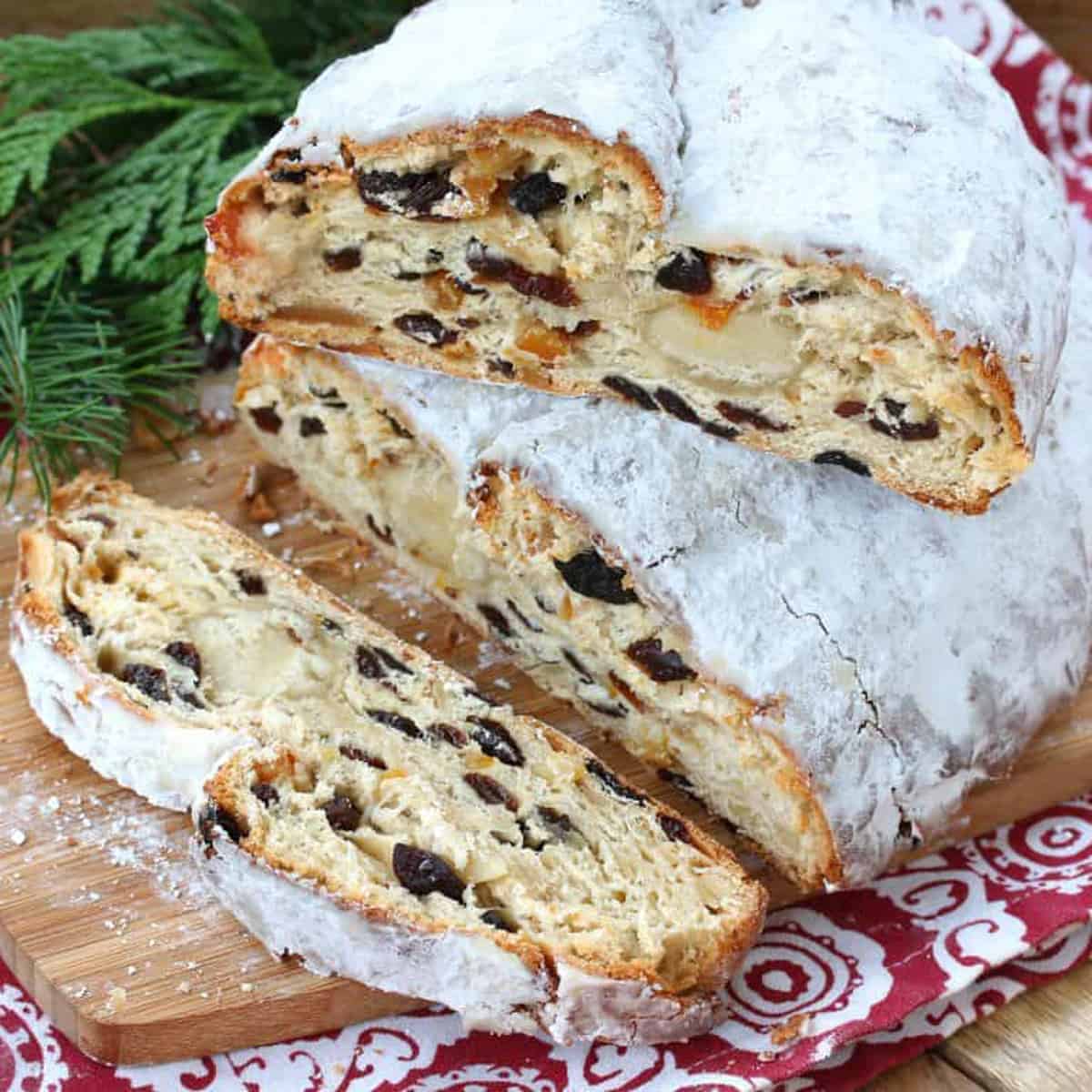
If Lebkuchen is spice and mystery, Stollen is richness and symbolism. This fruit-studded yeast bread originated in Dresden in the 15th century and was originally a humble Advent bread made with water, oats, and oil. Church fasting rules forbade butter—but Saxon bakers petitioned the Pope, eventually receiving the famous Butter Letter, allowing butter to be used. Stollen was transformed forever.
Modern Stollen is dense and luxurious, filled with raisins soaked in rum, candied citrus peel, toasted almonds, and often a hidden core of marzipan. After baking, the loaf is drenched in melted butter and buried under powdered sugar—creating its signature snowy appearance.
The shape of Stollen is intentional. Wrapped and folded, it symbolizes the Christ Child swaddled in cloth. For many families, slicing the first Stollen is almost ceremonial. It is baked weeks before Christmas, improving with age as flavors meld.
Stollen traveled widely with German immigrants, becoming a beloved tradition in German-American households from Pennsylvania to the Midwest. Many families still wrap their Stollen tightly in parchment and foil, storing it in cool pantries—waiting patiently, just as their ancestors did.
Weihnachtsplätzchen: A Thousand Cookies, One Season
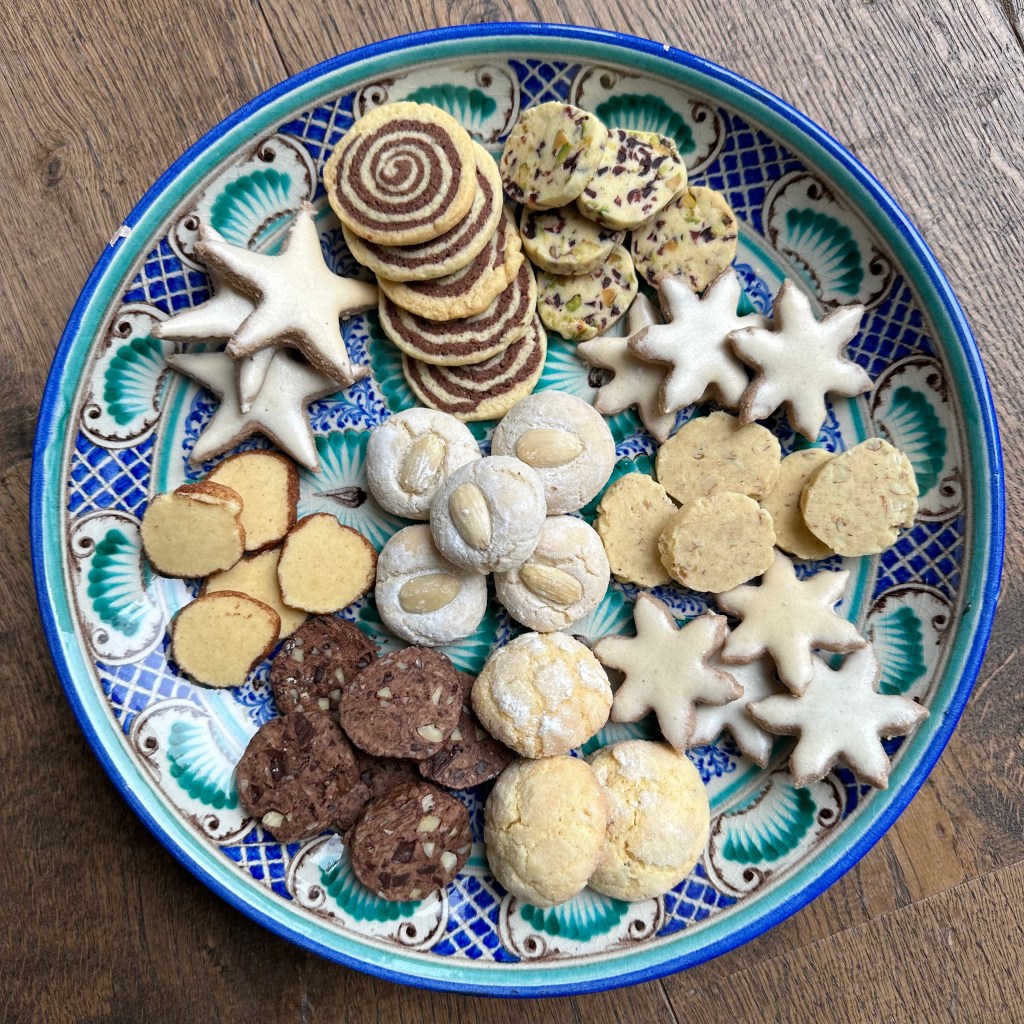
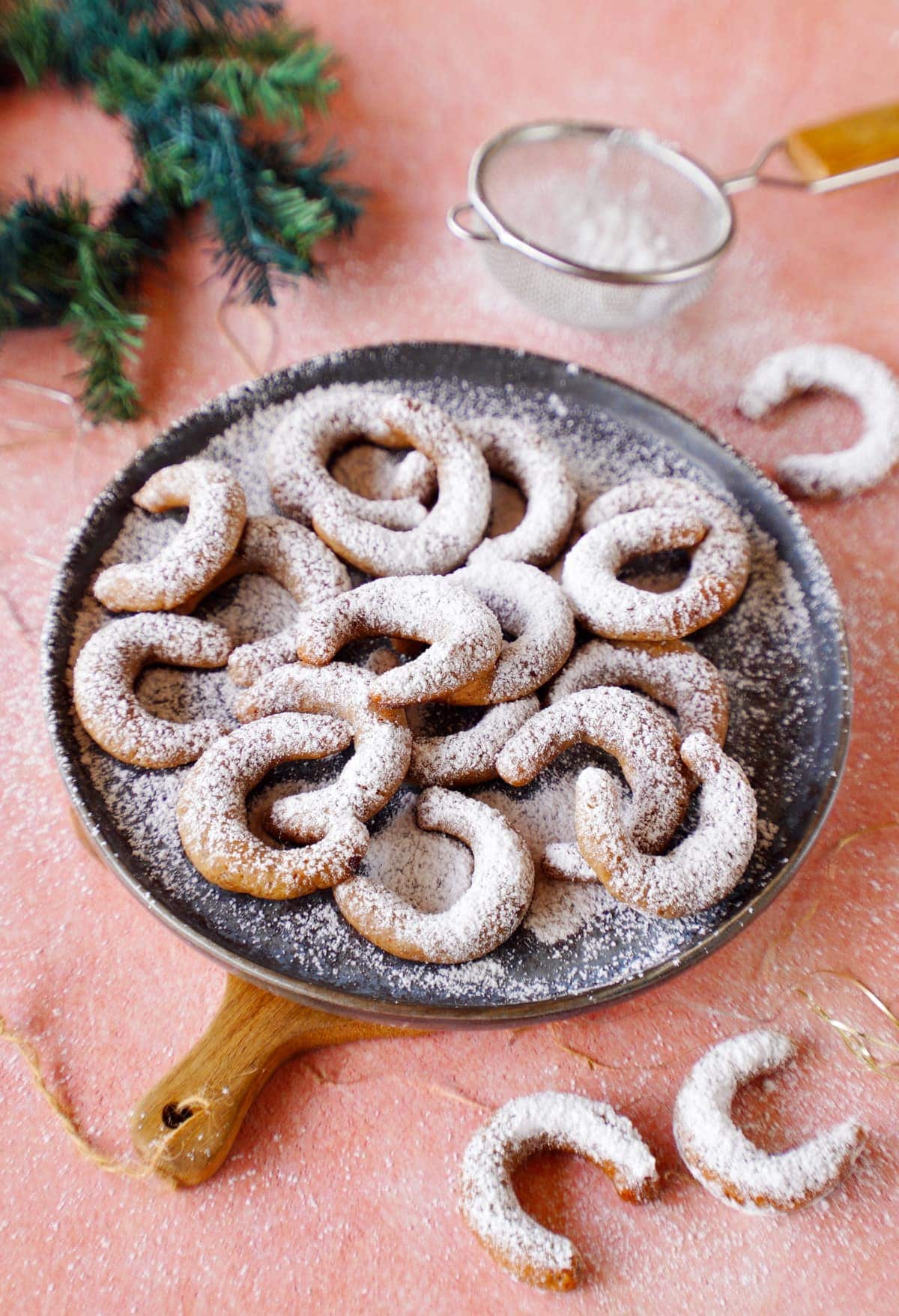
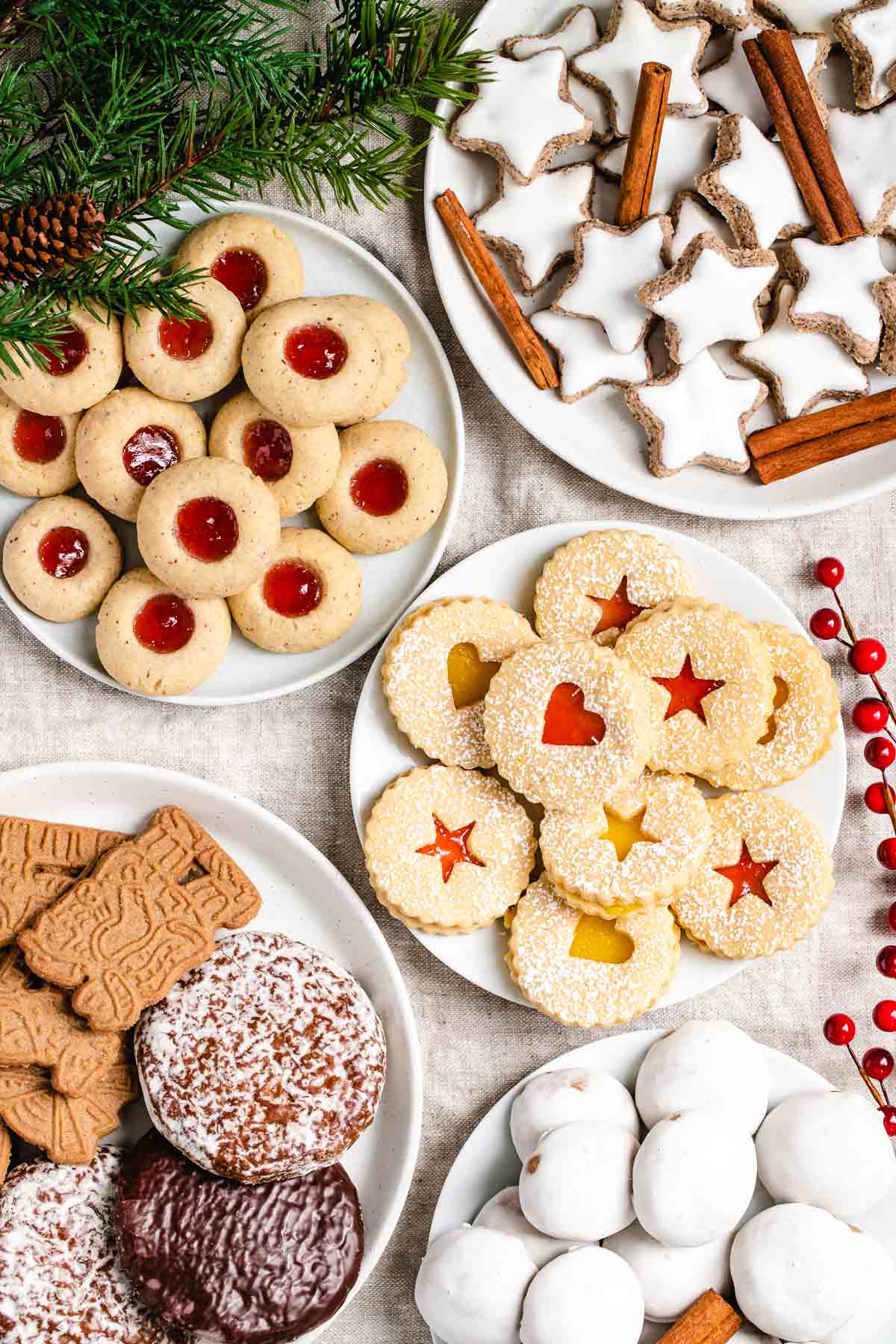
Favorites include:
- Vanillekipferl – delicate crescent cookies dusted with vanilla sugar
- Zimtsterne – chewy almond cookies topped with cinnamon icing
- Spritzgebäck – buttery pressed cookies, often dipped in chocolate
- Linzer Plätzchen – jam-filled sandwich cookies with cutout centers
Cookie baking days are communal events. Children cut shapes, grandparents supervise ovens, and recipes are debated loudly and lovingly. Cookies are stored in tins, layered with wax paper, and shared with neighbors, teachers, and church friends.
In many families, the number of cookie varieties is a quiet competition. Twelve is traditional, symbolizing the months of the year or the apostles. More is always better.
“A Christmas without cookies is like winter without snow.”
Baking as Faith, Family, and Folklore

German holiday baking is deeply tied to faith and folklore. Many recipes were once baked only on specific saints’ days. Others were believed to bring luck or protection. Honey symbolized abundance, nuts represented fertility, and spices warded off illness during long winters.
The kitchen became a classroom. Children learned patience waiting for dough to rest. They learned generosity by baking for others. And they learned identity—who they were, and where they came from—through flavors that crossed oceans.
When German immigrants arrived in America, they carried these recipes with them. Even when ingredients changed, the rituals remained. Baking was a way to preserve language, memory, and belonging in a new land.
A Tradition That Still Rises
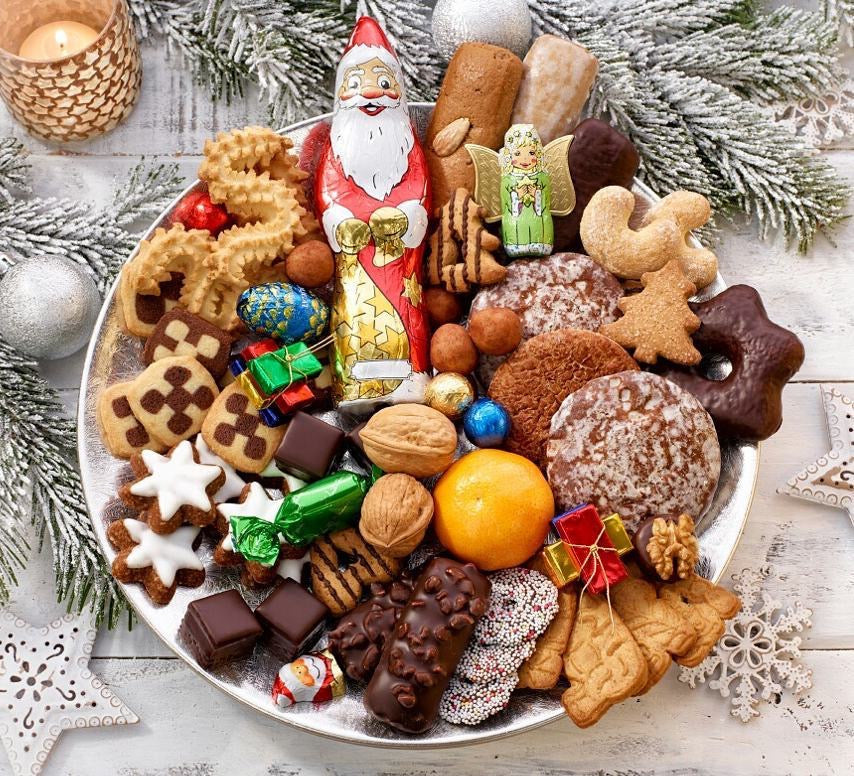
Baking slows us down. It brings us together. It reminds us that the holidays are not something to rush through—but something to prepare for, thoughtfully and joyfully.
Whether you bake one batch or twelve, whether your Lebkuchen is glazed or chocolate-dipped, whether your Stollen has marzipan or not—when you bake these treats, you are participating in a story centuries old.
And in every bite, you taste more than sugar and spice.
You taste heritage.
German Heritage USA – Preserving the stories, flavors, and traditions that shaped America.