
Celebrate German American Day: Honoring Heritage and Tradition
GERMAN HERITAGE USA | AFFILIATE DISCLAIMER: This post may or may not contain affiliate links which means we may receive a commission for purchases made through links. We will only recommend products that we have personally used or that we truly trust. Learn more on our Private Policy and Disclaimer Page located under our Terms Of Service tab above.
There’s something special about being German American — a sense of pride that runs deep in the heart, from our strong work ethic and craftsmanship to our love of good food, hearty laughter, and family gatherings.
Every October, millions of Americans across the country pause to recognize the profound impact of German culture on our nation. From the hardworking immigrants who helped build America’s towns and farms to the enduring traditions of food, music, and craftsmanship they brought with them, German heritage runs deep in the American story.
Festivals, parades, and family gatherings fill the month with the sound of polka music, the aroma of bratwurst and pretzels, and the clinking of steins raised in celebration. It’s a time to honor the values of community, perseverance, and pride that German Americans have woven into the fabric of our nation’s history and culture.
That’s right — October 6th is German American Day, and the entire month of October is German American Heritage Month.

— let’s dive into the fascinating story behind German American Day, meet some famous German Americans who helped shape the nation, and explore fun ways to celebrate your heritage (even if you’ve only got a little bit of German blood in you!).
🏛️ The Origins of German American Day
German American Day didn’t appear out of thin air — it’s rooted in a rich history that began centuries ago, when the first German immigrants set foot in the New World.
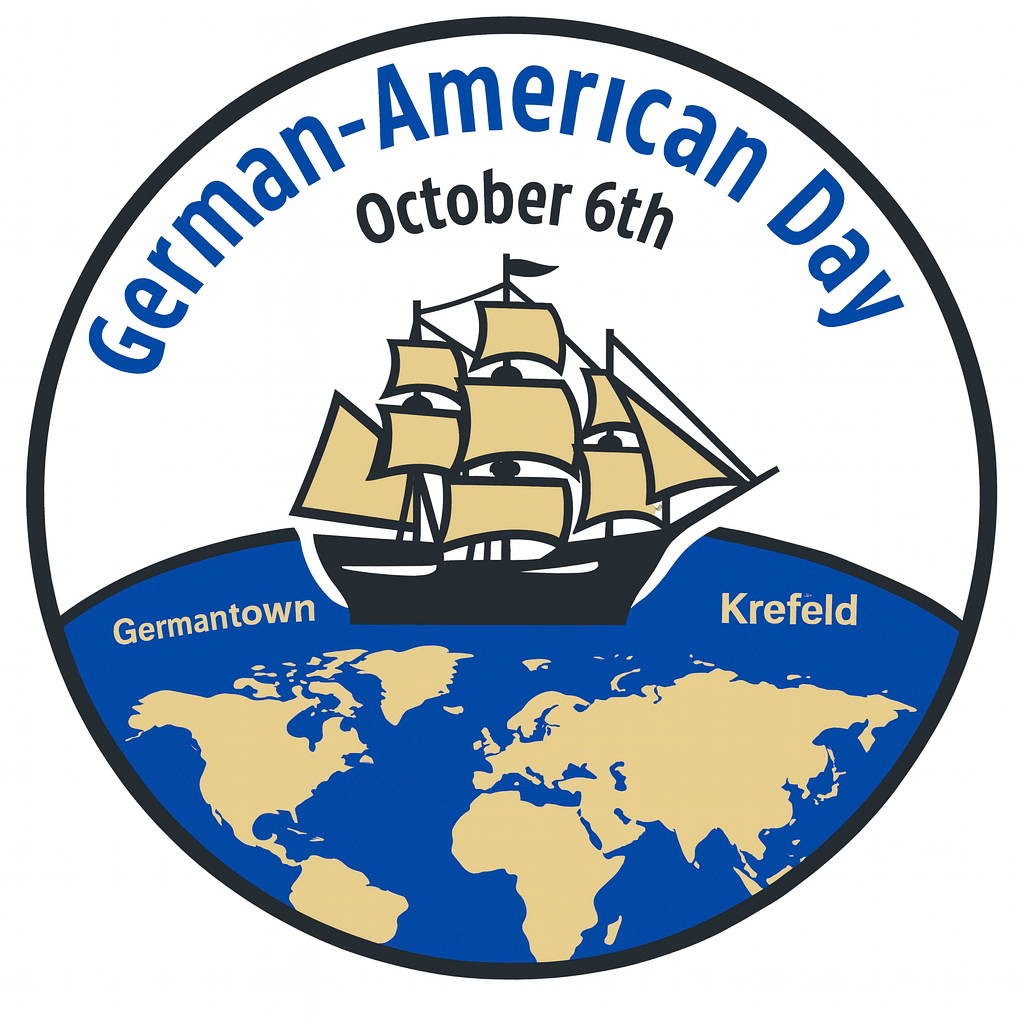
The story begins on October 6, 1683, when thirteen German families from Krefeld, near the Rhine River, arrived in Philadelphia aboard the ship Concord. They established a small settlement called Germantown, now part of modern-day Philadelphia.
These pioneering families came seeking freedom, opportunity, and a new life, bringing with them strong values that would forever shape American society — hard work, craftsmanship, faith, education, and a love of community.

Germantown flourished, becoming the birthplace of many firsts in American history:
- The first paper mill in the colonies.
- The first anti-slavery protest in the New World (in 1688 — nearly 100 years before the American Revolution).
- And the first German-language newspaper in the colonies.
The success of Germantown inspired a steady wave of immigration throughout the 1700s and 1800s, with Germans settling across Pennsylvania, New York, Ohio, Wisconsin, the Dakotas, Iowa, Nebraska, Minnesota, Indiana, Missouri, Texas, Louisiana, and California.
By the mid-19th century, German Americans were one of the largest ethnic groups in the country — and their influence was everywhere, from farming and industry to politics, science, and culture.
President Ronald Reagan and the Revival of a Tradition
While German contributions to America had long been celebrated locally — especially through Oktoberfests and regional festivals — the formal recognition of German American Day as a national observance didn’t come until the 1980s.
In 1983, on the 300th anniversary of Germantown’s founding, President Ronald Reagan officially proclaimed October 6th as “German American Day.” The goal was to honor the achievements of German immigrants and their descendants in shaping the United States.
Then, in 1987, Congress passed a joint resolution (H.J. Resolution 108), which President Reagan signed into law — officially designating October 6th as German American Day every year.
In his proclamation, Reagan praised the German people’s “profound faith, strong family values, and deep respect for liberty and law,” noting that German Americans had played an essential role in “the building of the American nation.”
From that day forward, the annual observance became an opportunity for millions of Americans to reconnect with their German roots, share their cultural pride, and celebrate a unique bond between the two nations that continues to this day.
🍂 October: German American Heritage Month
While October 6th is the official German American Day, the entire month of October has since become German American Heritage Month — a time to celebrate not only German contributions to the U.S., but also the vibrant living traditions that continue to thrive in communities across the country.
October was a fitting choice for one major reason: Oktoberfest!
The timing couldn’t be better — the spirit of Oktoberfest fills the air in towns big and small, from Milwaukee and Cincinnati to New Braunfels, Texas, and Leavenworth, Washington. These festivals honor the centuries-old Bavarian tradition of good beer, good food, and joyful camaraderie — perfectly mirroring the warmth and hospitality found in both Germany and America.

So whether you attend a grand Oktoberfest event or just celebrate at home, October is your chance to live your heritage — proudly and joyfully.
🥨 A Nation Built with German Hands and Hearts
It’s nearly impossible to overstate how much German Americans have contributed to the growth and identity of the United States.
Over 60 million Americans today claim German ancestry — including the Anglicised names, that’s nearly one in every seven people!
Anglicized means “made to sound or look more English.” So, a German Anglicized name is a German name that has been modified — in spelling, pronunciation, or translation — to fit English language norms.
🧬 Why Germans Anglicized Their Names
German immigrants began arriving in large numbers during the 1700s–1800s.
They often changed their names to:
- Blend in more easily with English-speaking Americans
- Avoid discrimination during anti-German periods
- Simplify pronunciation for English speakers
- Fit English naming customs
📖 Common Examples
Here are a few examples of German names and their Anglicized (Americanized) versions:
| Original German Name | Anglicized / American Version | Explanation |
|---|---|---|
| Schmidt | Smith | “Schmidt” means “smith” in German |
| Müller | Miller | “Müller” means “miller” (a grain grinder) |
| Schneider | Taylor | “Schneider” means “tailor” |
| Weiss | White | “Weiss” means “white” |
| Klein | Small | Direct translation of “klein” |
| Zimmermann | Carpenter | “Zimmermann” literally means “room man” or “carpenter” |
| Baumann | Farmer | “Bau” = build/farm, “mann” = man |
| Krause | Crouse | Simplified spelling for easier pronunciation |
| Johann | John | Common given name translation |
| Heinrich | Henry | Another direct Anglicization |
From the Revolutionary War to the modern era, German immigrants and their descendants have shaped nearly every aspect of American life. Here are a few examples of their lasting legacy:
🌾 Agriculture and Industry
German farmers were among the most skilled and hardworking in the early colonies. They introduced efficient plowing techniques, innovative barns, and hearty crops that became staples of the American diet. Many of America’s most prosperous farming regions — especially in the Midwest — were shaped by German agricultural knowledge.
German Americans also played key roles in building the nation’s railroads, breweries, and factories, laying the foundation for America’s rise as an industrial power.
🎵 Music, Arts, and Culture
Think of the names Steinway, Busch, and Heinz — all of them founded by German immigrants who brought their craftsmanship and creativity to the U.S.
German Americans helped popularize brass bands, waltzes, and polka music, which would later influence country and western styles. And when it comes to Christmas traditions, we can thank German immigrants for introducing the Christmas tree, Advent calendars, Santa Claus (St. Nicholas), and Christmas markets to America!
🧠 Science, Innovation, and Education
German-born Americans have made world-changing contributions to science, medicine, and education.
- Albert Einstein revolutionized physics after immigrating to the U.S. in 1933.
- Werner von Braun led the team that built NASA’s Apollo rockets, helping land a man on the moon.
- German educators also introduced the concept of kindergarten — the “children’s garden” — a cornerstone of early childhood education in America.
🎖️ Public Service and Politics
German Americans have served with distinction in every war and every branch of government.
- Dwight D. Eisenhower, the 34th President of the United States, was the son of German immigrants.
- Herbert Hoover, Carl Schurz, and Henry Kissinger also share German heritage, each leaving a profound mark on U.S. history and global affairs.
From small-town mayors to national leaders, German Americans have helped guide America’s growth with integrity and strength.
🎉 How to Celebrate German American Day
You don’t have to travel to Munich or be fluent in German to celebrate your heritage. Whether your ancestors arrived in 1700 or you’ve just discovered your roots through a DNA test, German American Day is your time to join the celebration!
Here are some fun and meaningful ways to honor the day and enjoy the rich traditions of German culture:
🍺 1. Visit a Local Oktoberfest
Oktoberfest isn’t just for Munich anymore — it’s one of America’s most beloved fall festivals!
From Cincinnati’s Oktoberfest Zinzinnati, which attracts hundreds of thousands of visitors, to smaller community celebrations across the Midwest, South, and West, Oktoberfest offers something for everyone:
- Authentic bratwurst and schnitzel
- Lively Oompah bands and polka dancing
- Local craft beers and imported German brews
- Fun games like stein-holding contests and chicken dances
So grab your dirndl or lederhosen and get ready to shout “Prost!” with your neighbors.
🍽️ 2. Dine at a German Restaurant
If your town has a local German restaurant or beer garden, October is the perfect time to visit.
Order a platter of bratwurst with sauerkraut, spaetzle, schnitzel, or German potato salad, and wash it down with a cold Shiner Bock, Spaten, or Weihenstephaner.
Many German restaurants across the U.S. — from Milwaukee to Nashville — host special Oktoberfest menus, complete with live accordion music and themed decor.
🏡 3. Host a Backyard Cookout — German Style!
If you’d rather celebrate at home, throw a backyard German American cookout with family, friends, and neighbors.
Decorate your patio with German, American, and Bavarian flags, hang string lights, and bring out your beer steins for a festive evening.
Here’s what you’ll need for the perfect menu:
- Bratwurst and hot dogs fresh off the grill
- Grilled onions and sauerkraut on top
- Soft pretzels with mustard or cheese dip
- German potato salad with bacon and vinegar
- Apple strudel or Black Forest cake for dessert
Don’t forget the drinks! Serve German beers like Paulaner, Hofbräu, or Shiner Bock — or offer non-alcoholic apple cider for the kids.
And of course, turn on a polka playlist or a little country music to get everyone two-stepping under the stars.
🎶 4. Celebrate with Music and Dance
Music is at the heart of German American culture. Create a lively atmosphere with traditional Bavarian folk tunes, brass band music, or even classic Texas polka.
If you’re feeling adventurous, learn the Schuhplattler (the traditional Bavarian slap dance) — or grab your partner and try a Texas two-step. It’s a fun way to blend both cultures!
🕯️ 5. Learn About Your Heritage
German American Day is also a great opportunity to connect with your family roots.
Ask older relatives to share stories about your ancestors, or explore genealogy websites like Ancestry and FamilySearch to discover where your family came from in Germany.
You might even find that your ancestors hailed from regions like Bavaria, Rhineland, or Prussia — or that their town still celebrates ties with its American descendants today.
🌎 German Heritage in Every Corner of America
German culture can be found almost everywhere in the U.S.
- Milwaukee, Wisconsin, is often called the “German Athens of America” for its strong heritage and love of beer and bratwurst.
- Fredericksburg and New Braunfels, Texas, preserve their German roots with festivals, half-timbered architecture, and traditional food.
- Cincinnati, Ohio, boasts one of the biggest Oktoberfests outside of Germany.
- Leavenworth, Washington, is a Bavarian-themed alpine village nestled in the mountains.
- And in Pennsylvania Dutch Country, descendants of early settlers still carry forward traditions that date back to the 1700s.
Wherever you go, you’ll find German pride woven into the local culture — from bakeries and breweries to churches and family-owned shops.
💪 A Legacy That Lives On
Being German American isn’t just about ancestry — it’s about the values that have shaped generations:
- Hard work and craftsmanship
- Faith and family
- Education and discipline
- Celebration and joy
From the first settlers of Germantown to today’s vibrant German American communities, that spirit continues to shine through.
And whether you speak fluent German or just know how to say “Prost,” this heritage connects millions of Americans across states, cities, and generations.
🥂 Prost to the Future!
As you celebrate German American Day and German Heritage Month, remember — this isn’t just about looking back. It’s about carrying those traditions forward.
So raise your glass high — whether it’s filled with Shiner Bock, Hofbräu, or your favorite local brew — and make a toast:
“Prost, y’all!”
To family.
To friendship.
To freedom.
To the German American spirit that helped shape the heart of America.