
Texas Bavarian Roots: Why German Heritage Thrives in the Lone Star State
GERMAN HERITAGE USA | AFFILIATE DISCLAIMER: This post may or may not contain affiliate links which means we may receive a commission for purchases made through links. We will only recommend products that we have personally used or that we truly trust. Learn more on our Private Policy and Disclaimer Page located under our Terms Of Service tab above.
When most people think of Texas, they picture cowboy hats, barbecue brisket, and country music. But dig a little deeper into the heart of the Lone Star State, and you’ll discover something extraordinary — a vibrant, enduring German spirit woven into the very fabric of Texas life. From the charming towns of Fredericksburg and New Braunfels to the rolling hills of the Hill Country, German heritage doesn’t just survive here — it thrives.

The story of how this came to be is one of courage, hard work, cultural pride, and good beer — lots of it. So grab your stein, pull on your lederhosen or dirndl, and let’s explore how Texas became one of the most authentically German-influenced places in all of America.
A New World for German Settlers
The roots of Texas’ German heritage stretch back to the early 1840s, when a group of idealistic and determined settlers from Germany began arriving in what was then a sparsely populated region of the Republic of Texas. Drawn by the promise of freedom, fertile land, and opportunity, thousands of Germans made the long, treacherous journey across the Atlantic — often taking months to arrive.

One of the most significant organized efforts came from the Adelsverein, formally known as the Society for the Protection of German Immigrants in Texas, founded in 1842 by a group of German noblemen. Their goal was to create a “New Germany” in Texas — a colony where German immigrants could thrive, own land, and preserve their traditions.
The society purchased vast tracts of land and founded several towns that remain deeply German to this day — Fredericksburg, New Braunfels, and Boerne among them. Each of these communities became a cornerstone of what would grow into a remarkable cultural legacy.
Building a Bavarian-Style Home in the Heart of Texas
Life in 1840s Texas was far from easy. The early settlers faced blistering heat, wild terrain, and occasional conflict with Native tribes. But Germans were resilient, disciplined, and exceptionally resourceful. They brought with them a strong sense of community, craftsmanship, and faith that helped them endure the challenges of frontier life.
German settlers quickly established churches, schools, breweries, and farms that mirrored the structure of small towns back home in Bavaria, Prussia, and the Rhineland. They built half-timbered houses, stone churches, and biergartens, introducing architectural and cultural elements that felt like Europe transplanted into the Texas hills.
Even their farming practices changed the local landscape. Germans were known for their meticulous care of the land, cultivating vineyards and introducing fruit orchards that transformed the region’s agriculture. Over time, many of these practices evolved into the thriving Texas Hill Country wine industry we know today.
But what truly set these settlers apart was their determination to keep their culture alive — from their language to their food to their festivals.
Language, Faith, and Education: The Pillars of German Texas
Unlike many immigrant groups who quickly assimilated, German Texans built communities where the German language and traditions were actively preserved for generations. For nearly a century, many towns in Texas were bilingual — with German spoken in churches, schools, and local government meetings.
In Fredericksburg, for instance, Sunday church services were conducted in German well into the 20th century. Schools established by German immigrants emphasized both languages, giving students a deep appreciation for their heritage.
Religion was another anchor for these communities. Most German settlers were Lutheran or Catholic, and their churches remain architectural landmarks to this day. The steeples of St. Mary’s Catholic Church in Fredericksburg or St. Peter’s Lutheran Church in New Braunfels stand as proud symbols of the faith and perseverance of early German pioneers.
Their communities weren’t just built for survival — they were built for the soul.
The Taste of Tradition: German-Texan Food and Drink
No story of German Texas would be complete without mentioning food — and of course, beer.
Germans brought their hearty Old World cuisine to Texas, blending it over time with local flavors and ingredients. The result? A mouthwatering cultural mash-up that you can still taste today across the state.
At traditional restaurants and festivals, you’ll find classics like bratwurst, sauerkraut, schnitzel, and potato salad — often served alongside Texan staples like smoked sausage, pickles, and cornbread.
And then there’s the beer.
German immigrants were instrumental in founding Texas’s first breweries, setting the stage for a brewing culture that remains strong today. Many of the early brewers came from Bavaria, bringing with them centuries of brewing knowledge.
One of the most famous examples is the Pearl Brewery in San Antonio, whose founders were of German descent. The brewery became a cornerstone of Texas beer culture and a testament to how Germans transformed the state’s social life with the creation of biergartens — outdoor spaces for music, conversation, and celebration.
In small towns like Fredericksburg, you can still enjoy authentic beer brewed according to German purity laws, paired with giant pretzels and a friendly “Prost!” from the locals.
Oktoberfest in Texas: A Bavarian Celebration with Southern Hospitality
When autumn arrives, Texas transforms into a sea of Bavarian blue and white. Oktoberfest celebrations sweep across the state, blending German gemütlichkeit (good cheer) with Texas-sized enthusiasm.
Nowhere is this spirit more alive than in Fredericksburg’s Oktoberfest, a three-day festival that feels like stepping straight into Munich — but with a Texas twist. Traditional brass Oompah bands fill the air with music, while locals and tourists alike dance the polka, drink steins of Märzen, and feast on bratwurst.
The event also features arts and crafts, German folk dancing, and children’s parades — proving that the German spirit in Texas isn’t just about beer, but about family, culture, and community.
Other towns like New Braunfels host their own massive celebrations. The Wurstfest — affectionately nicknamed “The Best Ten Days in Sausage History” — draws hundreds of thousands every year. It’s a joyful fusion of music, food, and fellowship, showcasing everything that makes German-Texan heritage so special.
Music, Dance, and the Joy of Gemütlichkeit
From polka to waltzes, from brass bands to alphorns, German-Texan culture has always had music at its heart.
Oompah bands are still a beloved sight at festivals across the state, their lively tunes turning city squares and small-town parks into spontaneous dance floors. Folk dance troupes, often dressed in colorful dirndls and lederhosen, perform traditional dances like the Schuhplattler, clapping and stomping in rhythm to the beat.
Beyond the festivals, German influence can even be found in Texas country music — an unexpected connection. Early German settlers brought with them folk music traditions that would later influence Western swing and the accordion-based sounds of Texas polka and Tejano music.
This blend of cultures — German, Mexican, and American — is uniquely Texan, and a perfect example of how heritage continues to evolve while staying true to its roots.
Architecture and Town Planning: The German Mark on the Texas Landscape
Take a stroll through Fredericksburg or New Braunfels, and you’ll notice immediately that these towns feel… different. There’s something European about their structure and rhythm. That’s no coincidence.
German settlers designed their towns with central plazas, sturdy limestone buildings, and symmetrical layouts, reflecting the urban planning styles of 19th-century Bavaria.
In Fredericksburg, many of the original fachwerk (half-timbered) houses are still standing. The town’s Main Street, with its cozy shops and biergartens, looks like something out of a storybook. Even the barns and homesteads of the surrounding Hill Country carry architectural hints of German craftsmanship — clean lines, practical design, and attention to beauty and function.
These buildings aren’t just relics — they’re living history, lovingly preserved by generations who understand the value of heritage.
German-Texan Values: Faith, Family, and Hard Work
Beyond the physical remnants of their culture, the most enduring legacy of German settlers is found in their values.
From the very beginning, German Texans were known for their strong work ethic, discipline, and commitment to education. They prized independence and personal responsibility — traits that fit perfectly with Texas’ rugged individualism.
They also valued community and family, creating tightly knit societies that supported one another through hardship. Their churches, social clubs, and choirs became the heartbeat of these communities.
Even today, these qualities define the spirit of towns like Fredericksburg, where respect for tradition blends seamlessly with Texan hospitality. It’s no wonder that so many visitors fall in love with the German-Texan way of life — it’s a perfect harmony of heart, heritage, and home.
Modern Texas, Timeless Traditions
Nearly two centuries after those first settlers arrived, German culture in Texas is as alive as ever.
Drive through the Hill Country, and you’ll see biergartens next to barbecue joints, historic churches standing tall beside wineries, and locals who can switch from “Howdy” to “Guten Tag” without missing a beat.
Cultural preservation societies, German clubs, and heritage festivals ensure that future generations stay connected to their roots. The Sophienburg Museum in New Braunfels and the Pioneer Museum in Fredericksburg are rich resources for learning about the people and traditions that helped shape Texas into the state we know today.
And every Oktoberfest season, the next generation of Texans — whether of German descent or not — joins in the celebration, raising a glass to honor those who came before them.
Why German Heritage Thrives in Texas
So why does German heritage flourish so naturally in Texas, even after all these years?
The answer lies in shared values — a love of freedom, self-reliance, and hard work. Texans and Germans alike appreciate good food, good drink, and good company. Both cultures are known for their hospitality, humor, and deep appreciation for tradition.
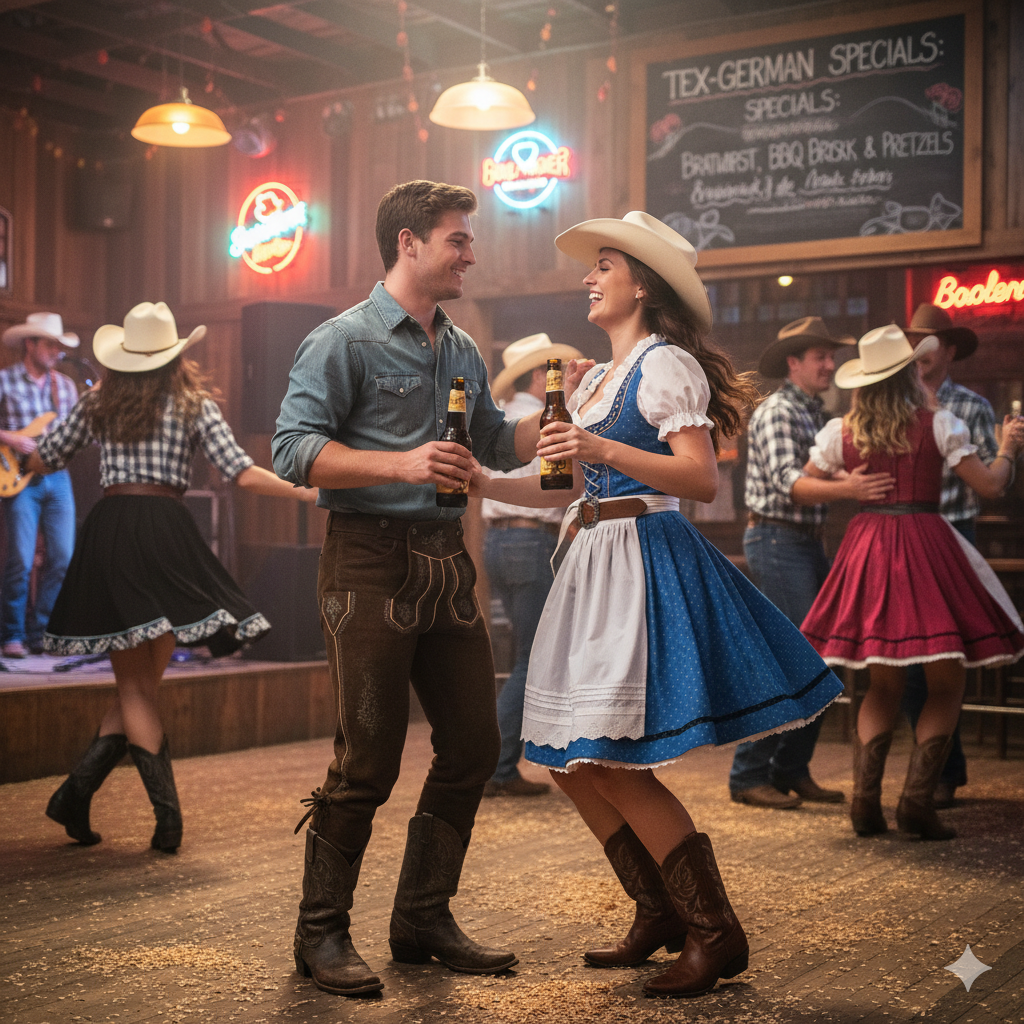
More importantly, German settlers didn’t just adapt to Texas — they helped define it. Their influence can be seen in the architecture, the music, the cuisine, and even the state’s community spirit.
Texas, in many ways, gave German immigrants the space to be themselves — and they, in turn, gave Texas a legacy that continues to enrich its identity today.
A Toast to Texas’ German Heart
From the old-world charm of Fredericksburg to the lively parades of Wurstfest in New Braunfels, the German soul of Texas beats strong. It’s a story of perseverance, pride, and cultural fusion — one that continues to be written with every new celebration, every polka tune, and every raised stein.
So next time you find yourself in the Texas Hill Country, follow the sound of brass music and laughter. Step into a biergarten, savor a bratwurst, and raise your glass high.
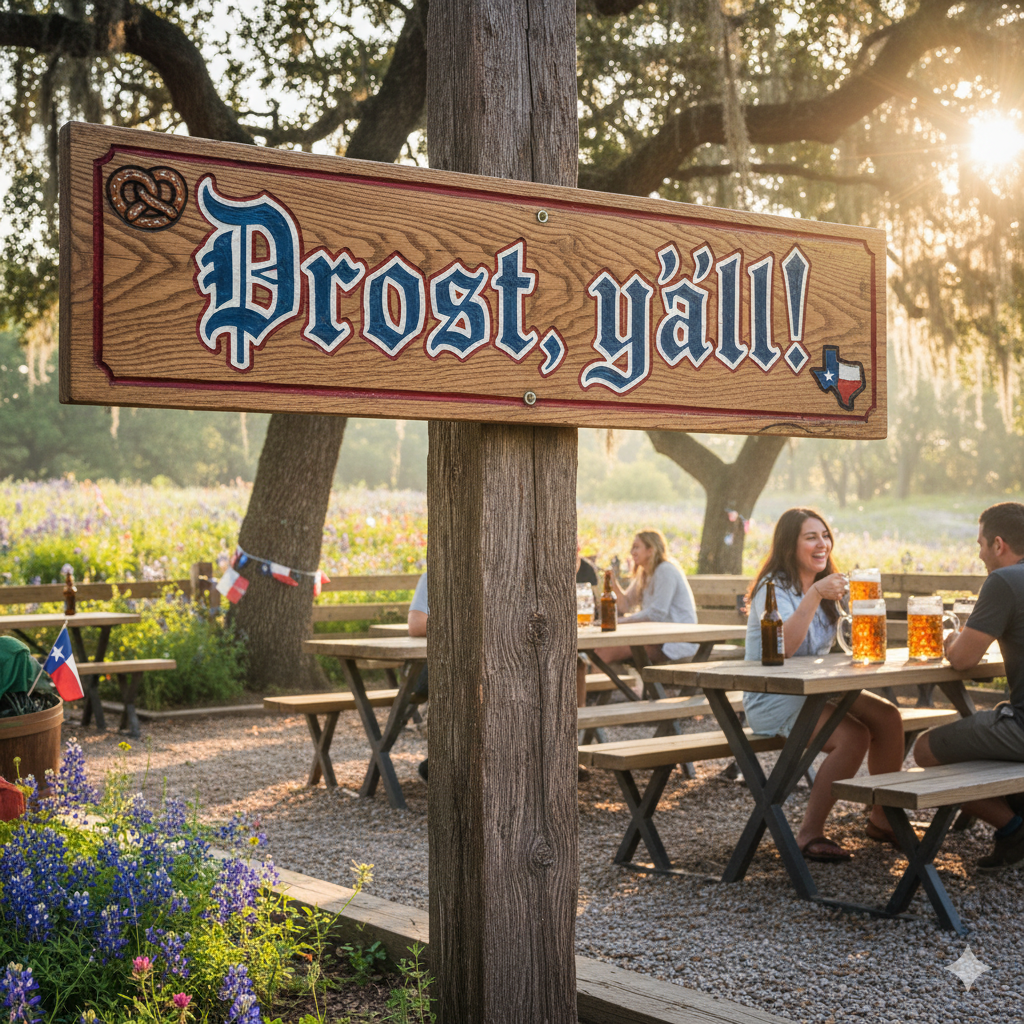
With one hearty shout of “Prost, y’all!”, you’ll be celebrating not just a festival — but nearly two centuries of Texas-sized German heritage.