
Frankenstein, Candy Corn & Gummy Bears: 10 Surprising German Connections to Halloween!
From haunted castles and headless horsemen to witches, gummy bears, and America’s most controversial Halloween candy, discover the fascinating German and German-American stories hiding in plain sight every October!
Halloween Has a German Side — And It’s Spookier (and Sweeter!) Than You Might Think!
What could Frankenstein’s monster, candy corn, a headless horseman, wicked witches, and a colorful bag of HARIBO gummy bears possibly have in common?
More German connections than you might imagine!
Every October, millions of Americans decorate their homes with pumpkins, dress up in spooky costumes, watch their favorite monster movies, and fill candy bowls with delicious treats.
But behind some of these familiar Halloween favorites are fascinating stories involving German castles, centuries-old folklore, immigrant entrepreneurs, legendary filmmakers, and candy makers whose creations became household names.
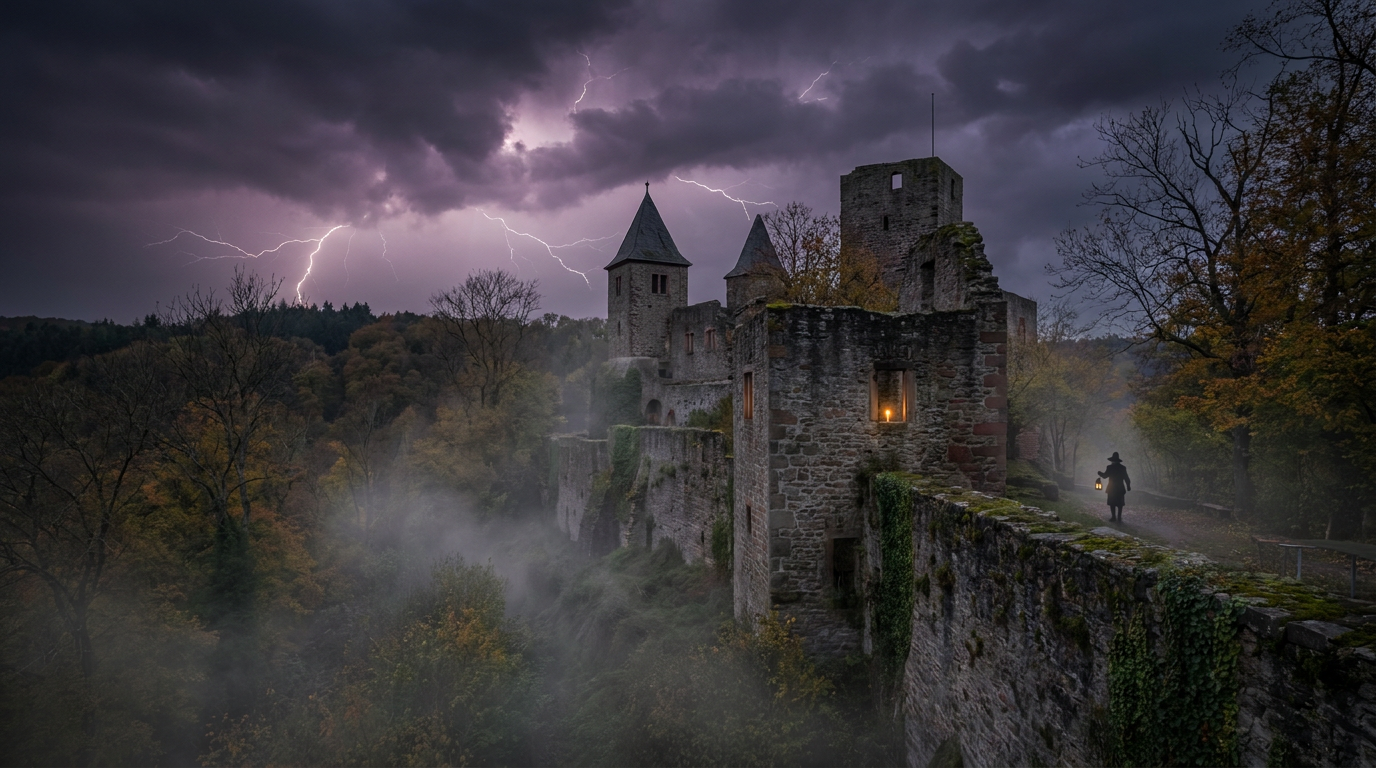
Did you know there’s a real Frankenstein Castle in Germany?
Or that a German immigrant family helped turn candy corn into one of America’s most recognizable Halloween sweets?
How about the fact that the terrifying Headless Horseman of Sleepy Hollow is described as the ghost of a Hessian soldier?
And those colorful gummy bears that appear in American candy bowls? Their story begins in a tiny German kitchen more than a century ago!
Now, one important distinction: Halloween itself did not originate in Germany. Its evolution involved traditions from Ireland, Britain, continental Europe, Christianity, and eventually American popular culture.
However, Germany has contributed its own remarkable chapters to the stories, characters, movies, and sweets that Americans associate with the Halloween season.
So grab your favorite candy, turn down the lights, and join GERMAN HERITAGE USA for a fun-filled journey through 10 surprising German connections to Halloween!
1. Frankenstein: The Real German Castle Behind the Monster Mystery!
Yes, Virginia, there really is a Frankenstein Castle in Germany!
And its history might be even more fascinating than the fictional monster associated with its name.
High above the countryside near Darmstadt, in the German state of Hesse, stand the ruins of Burg Frankenstein, or Frankenstein Castle.
The castle’s origins reach back to the Middle Ages, long before English author Mary Shelley published her famous novel Frankenstein; or, The Modern Prometheus in 1818.
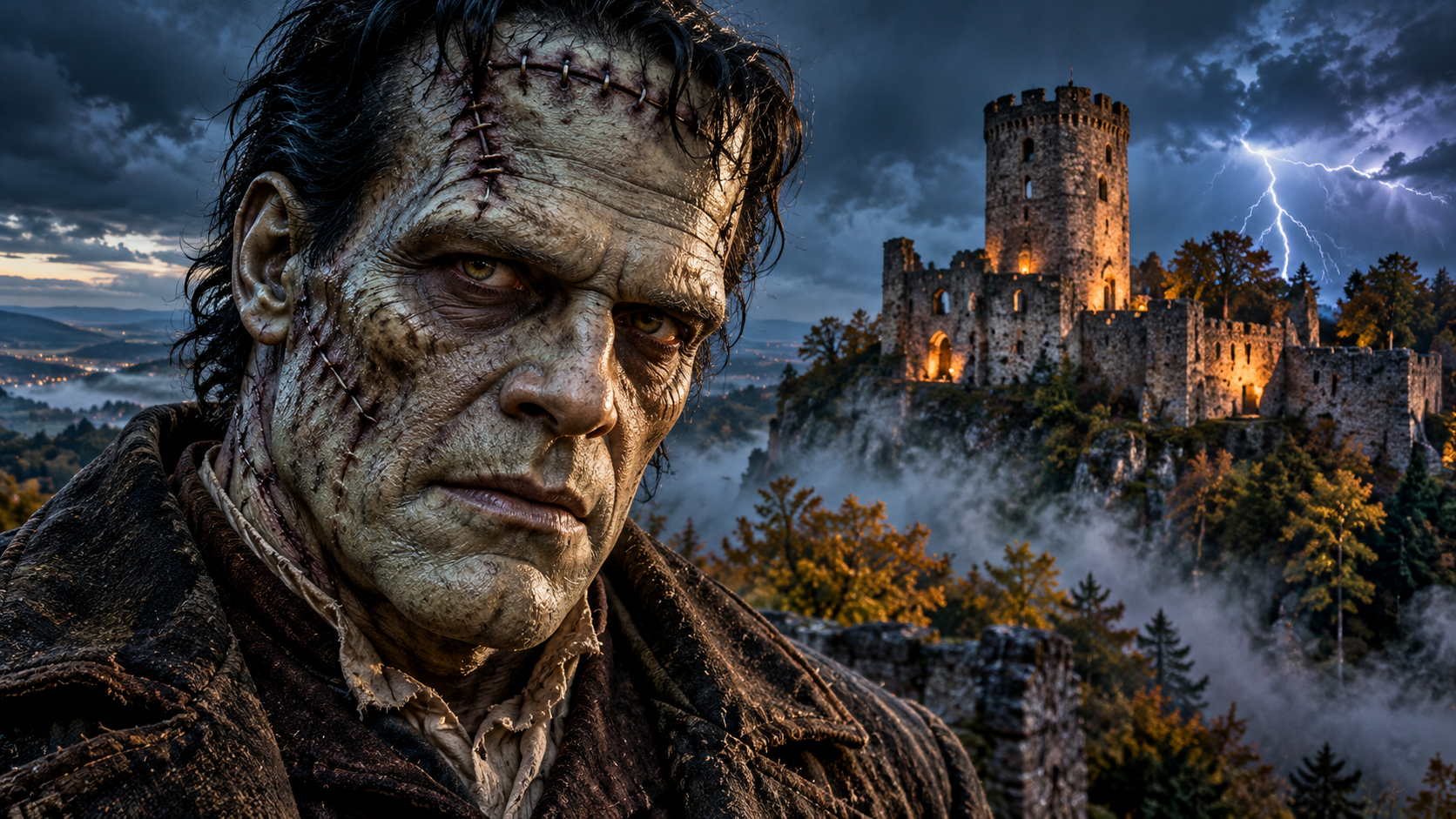
The name Frankenstein was associated with a noble family and a real historic place. It wasn’t invented by Hollywood!
But here’s where the mystery gets especially interesting.
In 1673, a man named Johann Konrad Dippel was born at Frankenstein Castle.
Dippel became a theologian, physician, and alchemist whose unusual interests and experiments later contributed to his mysterious reputation.
Over the centuries, imaginative stories developed linking Dippel’s activities to the fictional experiments of Victor Frankenstein.
Could Mary Shelley have heard about the castle or the strange alchemist before writing her novel?
It’s possible. Shelley traveled through the Rhine region in 1814, and speculation about potential connections has persisted.
But historians have not established convincing evidence that Frankenstein Castle or Dippel directly inspired Shelley’s novel.
That leaves us with a wonderful historical mystery rather than a proven origin story.
And another fun fact: Frankenstein is the name of the scientist in Shelley’s novel, not originally the name of his creature!
The real castle became associated with Halloween entertainment much later, helping turn a medieval landmark into a destination for fans of the spooky season.
THE GERMAN CONNECTION: A genuine German castle, a real alchemist, and an enduring literary mystery share the Frankenstein name.
2. The Headless Horseman: America’s Legendary Ghost Was a German Soldier!
Imagine riding along a lonely country road on a cold autumn night.
The wind rustles through the trees. Hooves pound in the distance.
Suddenly, out of the darkness emerges a mysterious horseman galloping toward you.
And there’s one terrifying detail.
He has no head!
Few American Halloween legends are as memorable as the Headless Horseman from Washington Irving’s The Legend of Sleepy Hollow, published in 1819–1820.
But many people don’t realize that Irving’s ghostly rider has a distinctly German connection.
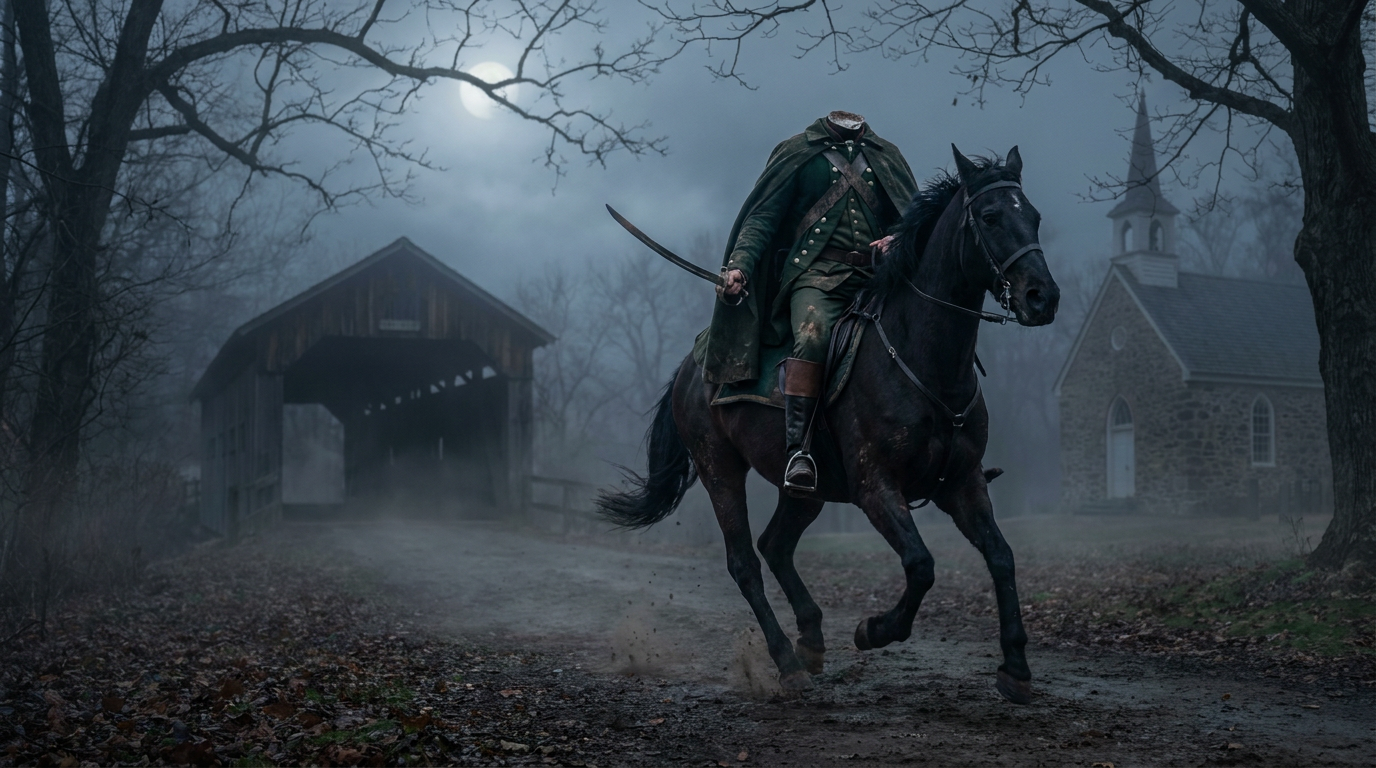
According to the story’s local legend, the horseman was a Hessian soldier who fought during the American Revolutionary War and lost his head to a cannonball.
The German-speaking territories of Hesse and neighboring regions supplied thousands of auxiliary troops to Britain during the conflict.
Americans commonly referred to these German troops as Hessians.
Irving transformed the image of a fallen Hessian soldier into one of the most unforgettable figures in American ghost-story history.
There’s an additional literary connection worth exploring.
German and wider European folklore featured supernatural huntsmen, spectral riders, and headless figures long before Irving wrote his famous tale.
One possible influence discussed by historians is Gottfried August Bürger’s German poem Der wilde Jäger (The Wild Huntsman), which circulated in English translation.
Of course, the Headless Horseman is a literary ghost, not a verified historical apparition.
But the Hessian military connection in Irving’s story is unmistakable.
The next time someone mentions Sleepy Hollow, remember that one of America’s most recognizable Halloween legends features a ghostly German soldier!
THE GERMAN CONNECTION: German troops in Revolutionary America and elements of European folklore helped shape an enduring American ghost story.
3. The Brothers Grimm: Germany’s Fairy Tales Were Sometimes Truly Terrifying!
When you hear the words fairy tale, what comes to mind?
Beautiful princesses? Enchanted castles? Magical creatures? Happily-ever-after endings?
Well, the Brothers Grimm might have a few surprises for you!
Jacob and Wilhelm Grimm, two German scholars and collectors of folklore, published the first volume of their famous Children’s and Household Tales in 1812.
Their collection helped preserve stories told across German-speaking communities and from other European storytelling traditions.
But many of these tales were considerably darker than the cheerful versions familiar to modern audiences.
Consider Hansel and Gretel.
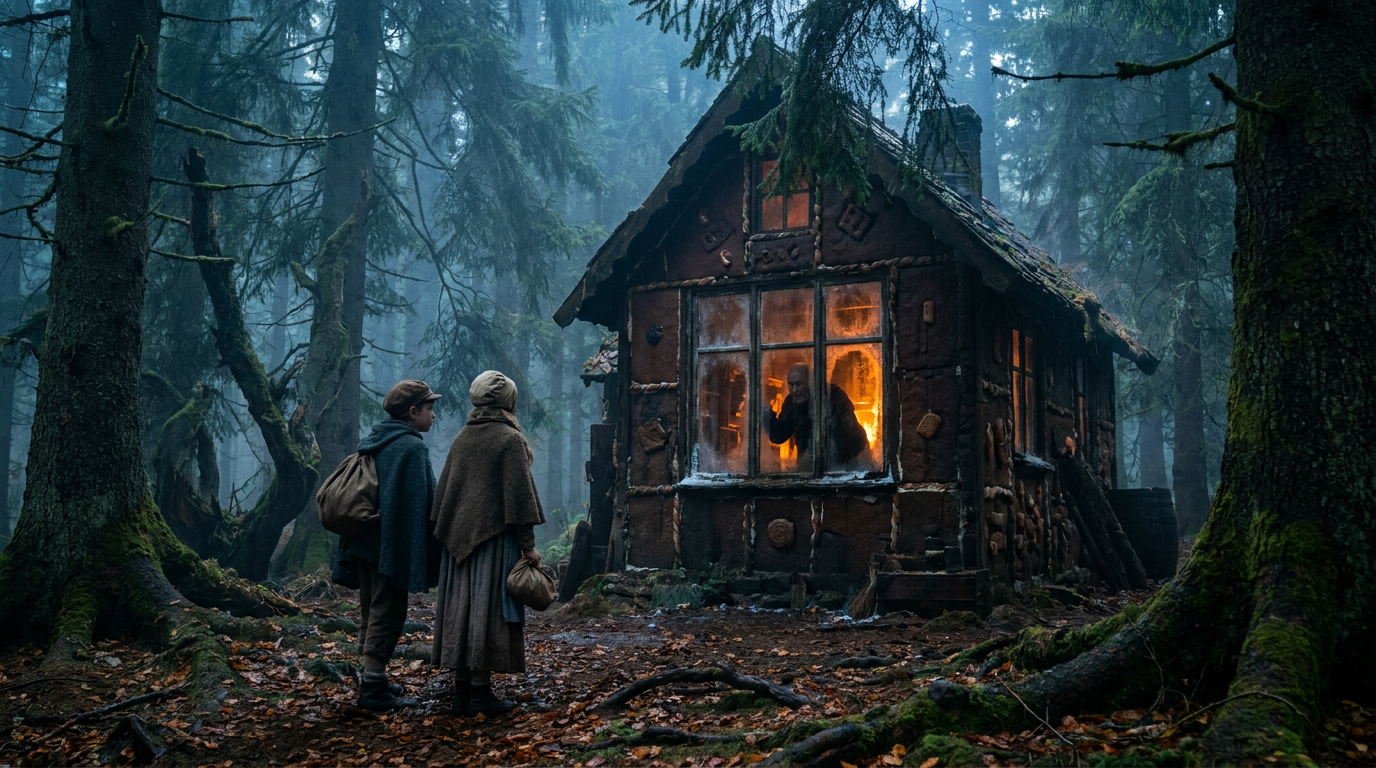
Two children are abandoned in a forest, discover a house made of sweets, and encounter a witch who intends to eat them.
That’s hardly a relaxing bedtime story!
Or take Snow White, with its jealous queen, attempted murder, magical disguises, and gruesome punishments in some versions.
Then there’s Little Red Riding Hood, whose encounter with a dangerous wolf has frightened generations of children.
The Grimm brothers weren’t simply inventing horror stories. They collected, adapted, and edited traditional tales over multiple editions, and their versions changed over time.
Many stories had served as warnings about danger, deception, greed, cruelty, and the frightening unknown.
Their magical forests were not always friendly places.
And the witches weren’t necessarily interested in handing out candy!
Today, these tales continue to influence Halloween costumes, haunted attractions, movies, and spooky seasonal storytelling.
THE GERMAN CONNECTION: The Brothers Grimm helped preserve and popularize some of the world’s most recognizable frightening fairy-tale characters.
