
A Toast to Tradition: How Glühwein Became Germany’s Wintertime Classic

GERMAN HERITAGE USA | AFFILIATE DISCLAIMER: This post may or may not contain affiliate links which means we may receive a commission for purchases made through links. We will only recommend products that we have personally used or that we truly trust. Learn more on our Private Policy and Disclaimer Page located under our Terms Of Service tab above.
Few beverages capture the magic of winter quite like Glühwein—that steaming, fragrant, ruby-red elixir that transforms chilly evenings into cozy celebrations. Whether you’re wandering through a German Weihnachtsmarkt, gathered with friends around a crackling fire, or recreating European holiday charm at home, Glühwein is more than a drink. It’s a tradition, a memory-maker, and a warm hug in a mug.
But Glühwein’s charm doesn’t stop at its flavor. It carries the unmistakable scent of the season—spiced citrus, cinnamon, cloves, and a whisper of sweetness that drifts through snowy streets and festive plazas. One whiff can transport you instantly to a glowing Christmas market lined with wooden stalls, twinkling lights, and the soft sound of carols echoing between centuries-old buildings. The aroma alone seems to warm your hands before you ever hold the mug.
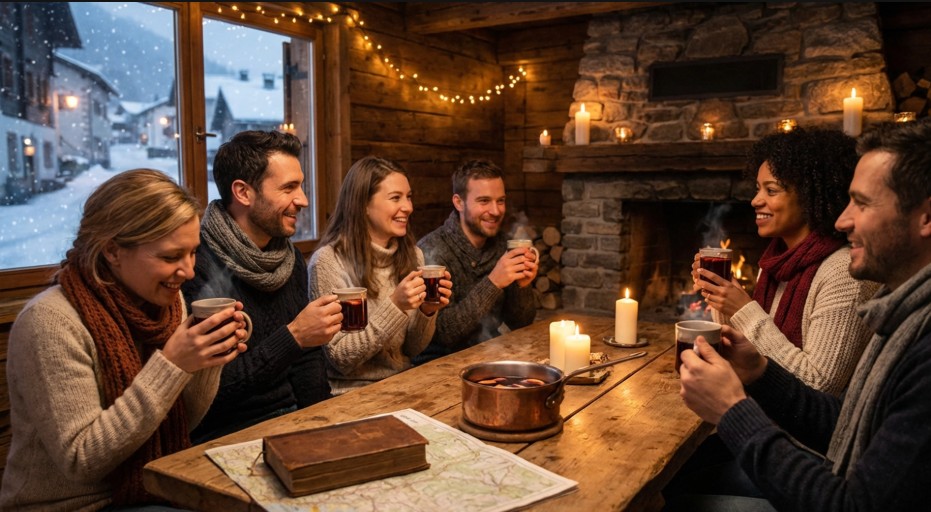
It’s also one of the few drinks that invites people to slow down. In a season that often feels rushed and over-scheduled, Glühwein encourages lingering conversations, shared laughter, and simple moments of joy. Whether enjoyed outdoors amid gently falling snow or indoors with candles flickering in the background, the ritual of sipping something warm and spiced creates an atmosphere of comfort that transcends geography and generations.
And as with all great traditions, Glühwein comes wrapped in stories—stories of ancient empires, medieval marketplaces, regional pride, and evolving holiday customs. The drink has traveled through time, adapting and flourishing while preserving its essence: warmth, community, and celebration. Its journey from humble spiced wine to iconic holiday symbol is as rich and flavorful as the beverage itself.
But how did this spiced wine become Germany’s undisputed wintertime classic?
Let’s raise a mug and enjoy the story.
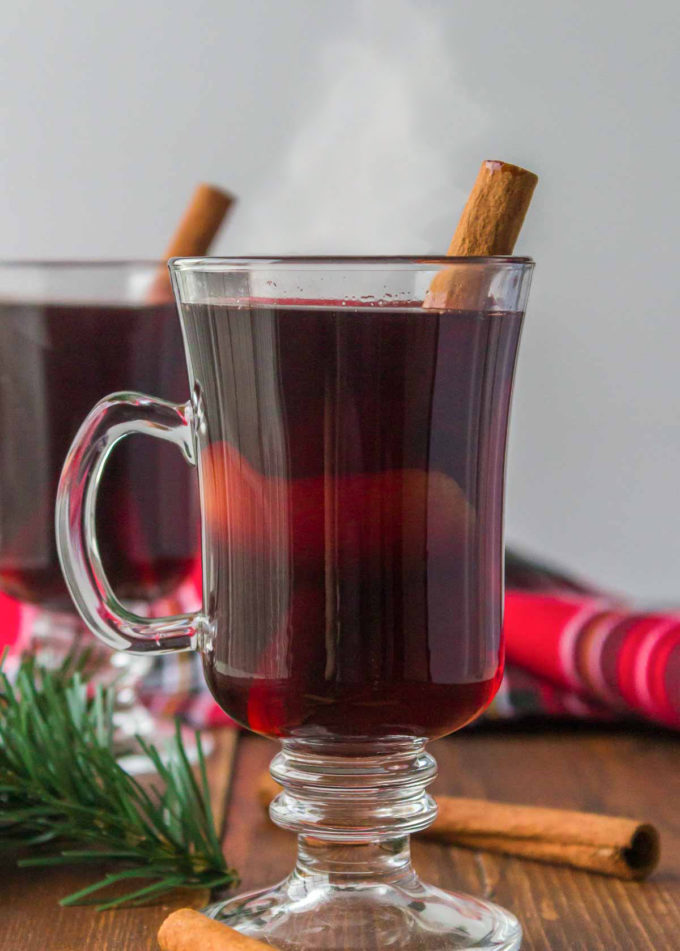
Few beverages capture the magic of winter quite like Glühwein—that steaming, fragrant, ruby-red elixir that transforms chilly evenings into cozy celebrations. Whether you’re wandering through a German Weihnachtsmarkt, gathered with friends around a crackling fire, or recreating European holiday charm at home, Glühwein is more than a drink. It’s a tradition, a memory-maker, and a warm hug in a mug.
But how did this spiced wine become Germany’s undisputed wintertime classic?
Let’s raise a mug and enjoy the story.
What Exactly Is Glühwein?
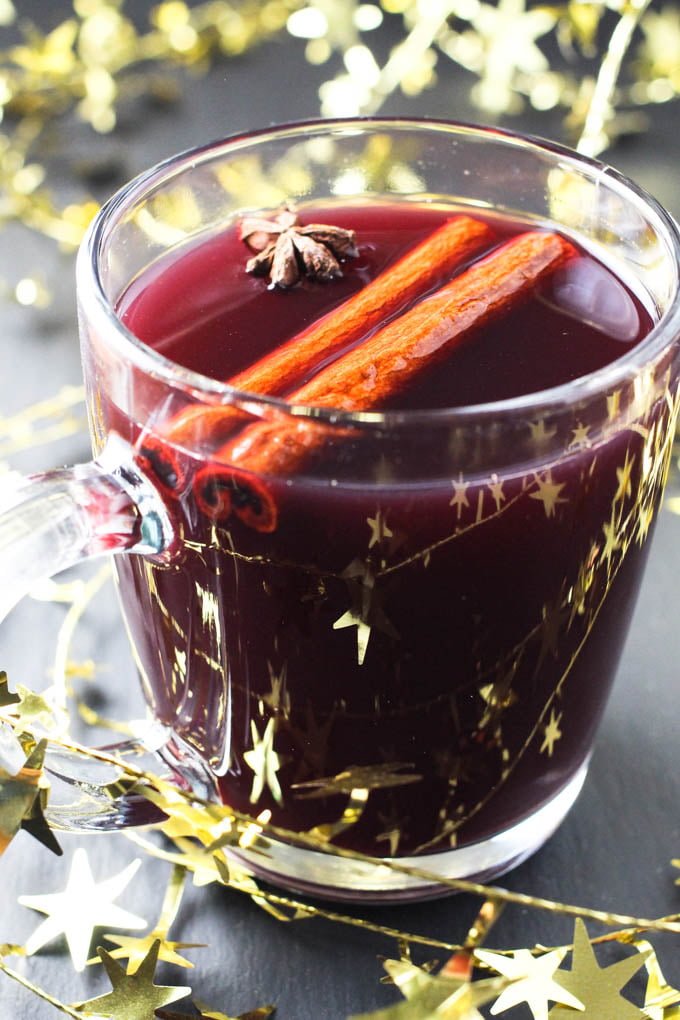
At its simplest, Glühwein is mulled red wine gently heated with spices like cinnamon, cloves, orange, star anise, and sometimes a splash of brandy. The name literally means “glow wine”, referencing both the warm metal pokers once used to heat it—and the happy glow it gives those who sip it.
If pumpkin spice rules autumn, Glühwein reigns supreme from Advent through New Year’s Eve.
A Recipe Rooted in Ancient Rome
Glühwein may be a beloved German icon today, but its ancestry actually begins with the Romans, who heated and spiced wine as early as the 2nd century. When Roman soldiers marched across Europe, they brought the tradition with them—especially into the cold territories we now know as Germany.
The Romans believed mulled wine was not just tasty but health-boosting, capable of warding off cold, improving digestion, and even preventing illness. That sounds like wishful thinking, but one thing is for sure:
It made winter infinitely more enjoyable.
From Medieval Monks to Modern Markets
By the Middle Ages, warmed wine had become popular across German-speaking regions. Monks brewed it in monasteries, nobles served it at banquets, and merchants sold early versions in city squares. Each group added their own twist—more spices, fruit, honey, or herbs.
But the earliest documented recipe of what resembles modern Glühwein appeared in Germany in 1616, handwritten by Count Johann Kasimir of Pfalz-Zweibrücken. His version included wine, sugar, an assortment of spices… and, in true nobility fashion, the encouragement to enjoy it frequently.
He even commissioned a special silver Glühwein tankard, which still exists today.
The tradition only grew from there.
Enter the Weihnachtsmarkt: The True Home of Glühwein
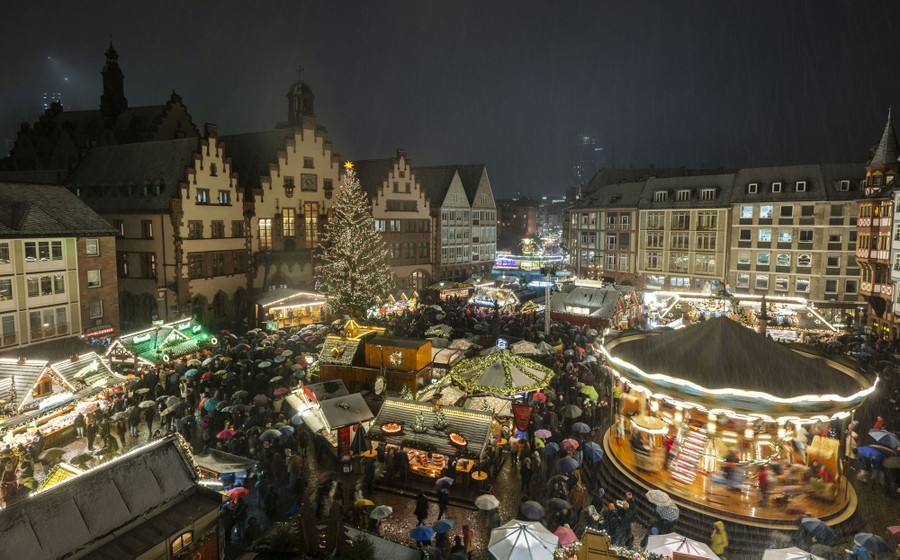
Today, nothing says “German Christmas” like strolling through a Weihnachtsmarkt—lights twinkling, music playing, and the unmistakable aroma of hot mulled wine swirling in the air.
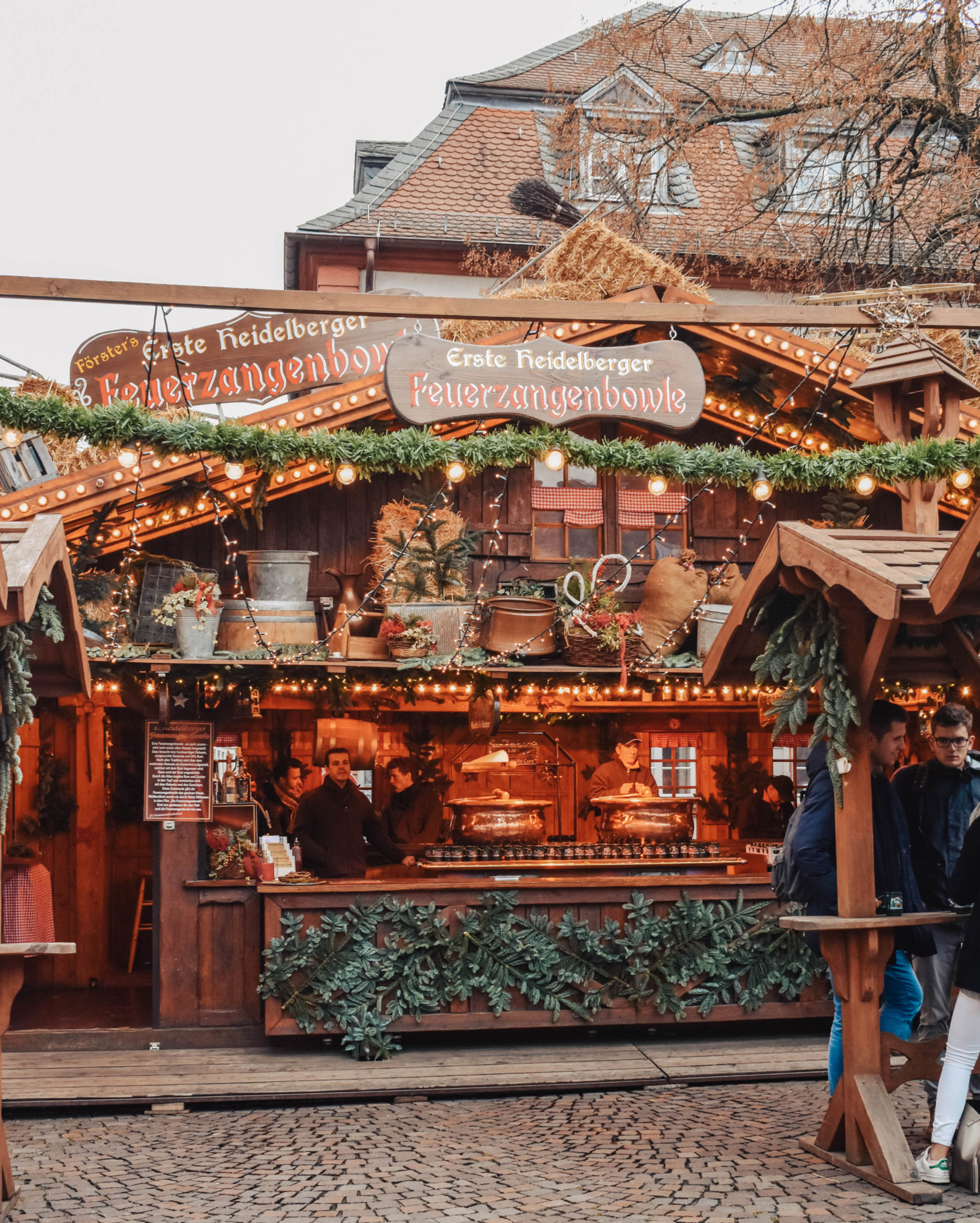
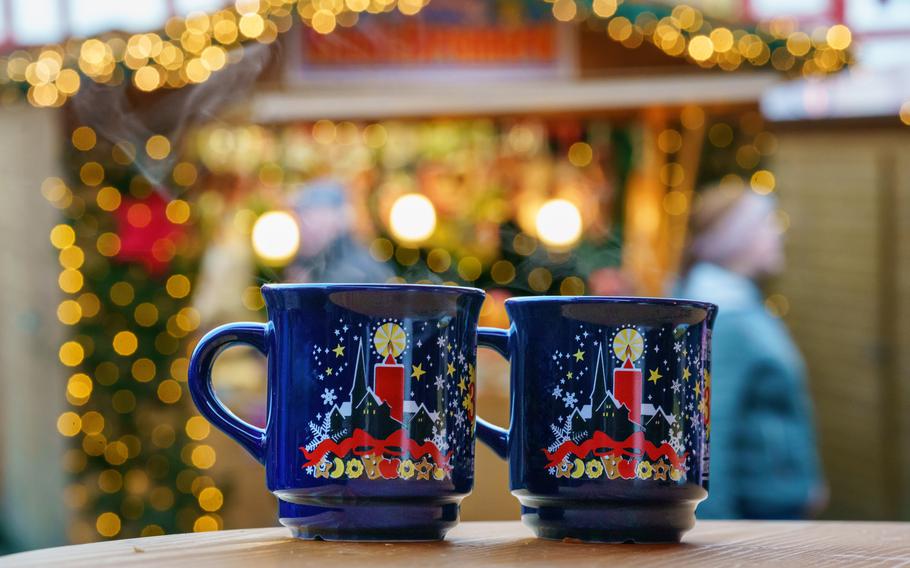
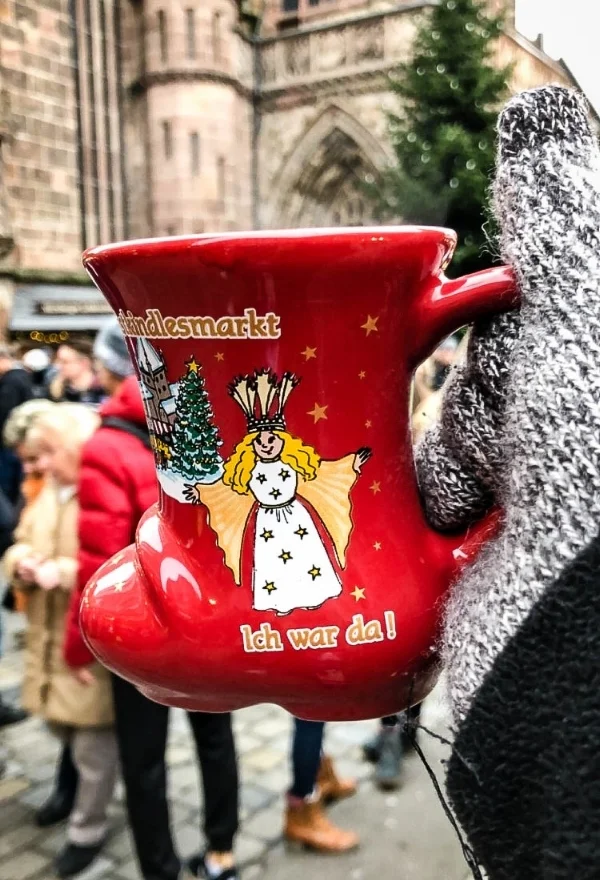
Christmas markets have existed since the 1400s, but Glühwein didn’t become a staple until the 19th century. Since then, it has become the most beloved drink of the season, available in every region, every market, every festive gathering—and always served in a collectible ceramic mug unique to each town and year.
Drinking Glühwein outdoors, bundled in scarves, surrounded by wood carvings, gingerbread, and Christmas music?
That’s German winter at its finest.
The Famous Glühwein Mug Tradition
Ask any seasoned Christmas-market visitor and they’ll tell you the real treasure isn’t only the drink—it’s the mug.
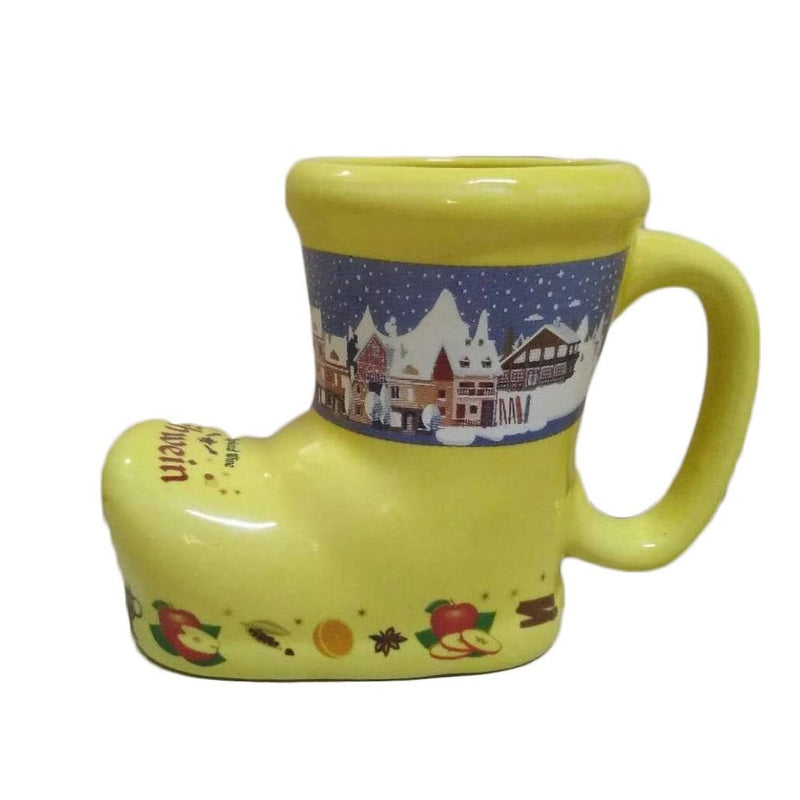
Every market issues a new design annually. You pay a small Pfand (deposit), return the mug if you want your money back… or, like many people, keep it as a souvenir.
The designs vary wildly:
🎄 Santa mugs
🍷 Red ceramic boots
❄️ Snowflakes
🏰 Castle silhouettes
🎁 City landmarks
Collecting them is practically a German pastime.


Regional Variations: Not All Glühwein is Created Equal
Germany is wonderfully diverse, and so is its Glühwein! Here are the most notable regional styles:
1. Traditional Red Glühwein (Nationwide)
The classic: dry red wine + cinnamon + cloves + citrus + sugar.
Simple, aromatic, and always satisfying.
2. White Glühwein (Mostly in Franconia & Bavaria)
Made with white wine, it’s lighter, floral, and slightly fruitier.
3. Heidelbeerglühwein (Blueberry Mulled Wine)
Popular in northern markets—deep purple, sweet, vibrant.
4. Kirschglühwein (Cherry Mulled Wine)
A crowd favorite in the Black Forest region, where cherries thrive.
5. Feuerzangenbowle (The Flaming Showstopper)
The theatrical cousin of Glühwein.
A rum-soaked sugar loaf is lit on fire as it drips molten caramel into the wine.

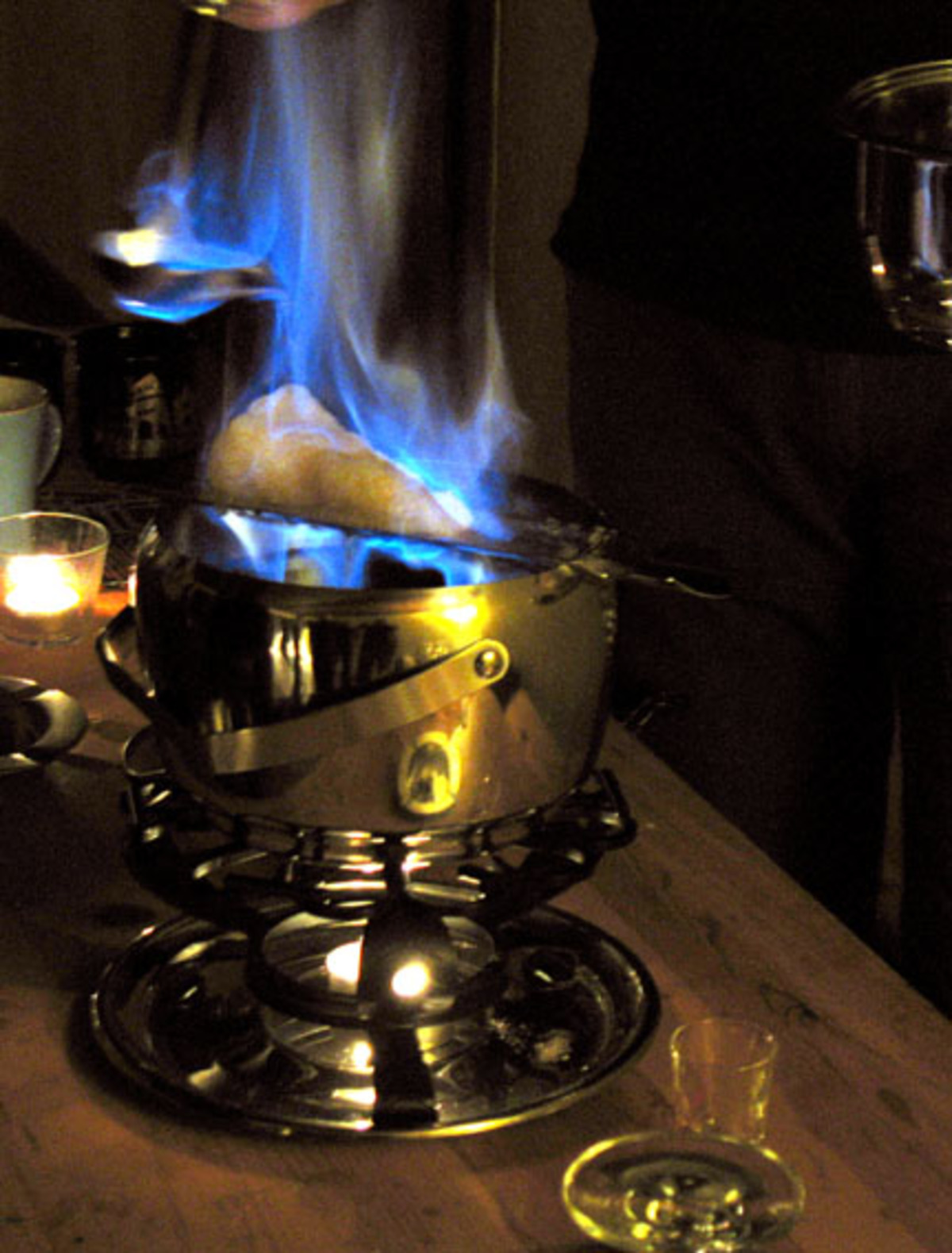
It’s a true crowd-pleaser—part drink, part spectacle.
The Secret to Perfect Glühwein
German grandmothers (Omas) will tell you the same thing:
“Glühwein must never boil—only simmer.”
Boiling destroys the wine’s nuances, evaporates alcohol, and makes the spices bitter.
Instead, warm the ingredients slowly and gently, letting the flavors infuse like a tea.
Here’s the classic formula:
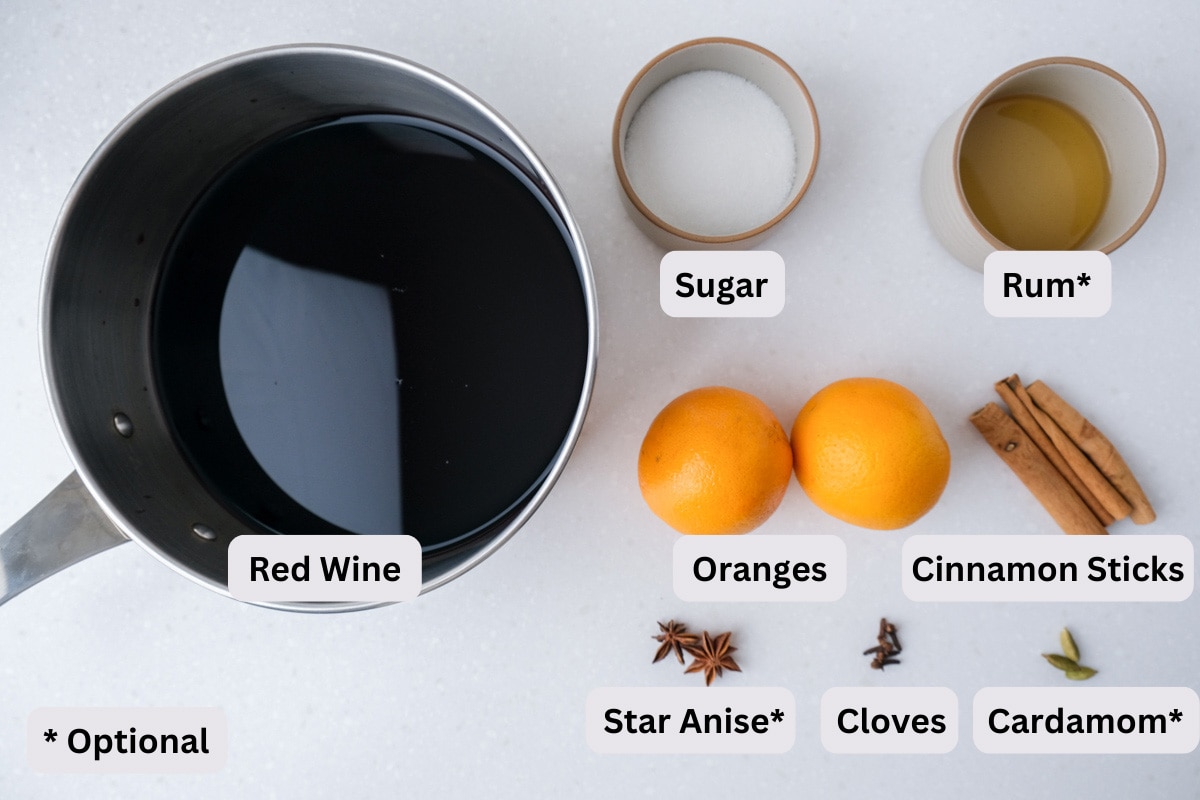
Basic German Glühwein Recipe
- 1 bottle of dry red wine
- 1 orange, sliced
- 6–8 whole cloves
- 2 cinnamon sticks
- 2–3 star anise
- 3–4 tbsp sugar or honey
Optional: shot of brandy, rum, or amaretto
Heat for 20–30 minutes. Strain. Sip. Smile.

Why Glühwein Became Germany’s Wintertime Classic
1. It’s Historically Practical
Alcohol was safer to drink than water for centuries. Warming it helped fight the winter chill.
2. The Aromas Are Pure Winter Magic
The fragrant mix of spices turns any space into a holiday wonderland.
3. It Encourages Togetherness
Germans call it Gemütlichkeit—a cozy, cheerful atmosphere shared with others.
4. It’s an Emblem of the Weihnachtsmarkt Tradition
You can’t have a German Christmas without Glühwein. Period.
5. It’s Affordable, Accessible, and Adaptable
You can make it at home, try local variants, or savor market specialties.
Glühwein in German Pop Culture
Glühwein appears everywhere during the holidays:
🎬 Movies – German holiday films nearly always include a scene with steaming mugs.
📚 Books – Romantic novels feature winter markets and mulled wine meet-cutes.
🎶 Holiday Music – Some Schlager songs even celebrate drinking it.
🎭 Festivals – Entire events—like Germany’s “Glühweinwanderungen”—celebrate hiking with mulled wine stations.
Yes, mulled-wine hiking is real.
And yes, it’s just as delightful as it sounds.
Glühwein Beyond Germany: A Global Love Story
As German immigrants spread across the world, so did Glühwein. Today you’ll find it at:
🇺🇸 American Christmas markets (especially in Chicago, Denver, Philadelphia, D.C.)
🇬🇧 The famed Winter Wonderland in London
🇦🇹 Austria’s Christkindlmarkt
🇨🇭 Switzerland’s lakeside holiday festivals
🇸🇪 Swedish Julmarknads (where it’s known as Glögg)
Every country puts its spin on things, but the heart remains the same: warmth, celebration, and heritage.
Collector Culture: The Annual Glühwein Mug Craze
Some people plan entire vacations around mug designs.
Limited editions sell out, rare mugs fetch high prices online, and families proudly display shelves of their mug collections.
It’s a small tradition that adds big joy.


How to Bring the Glühwein Tradition to Your Home
Even if you’re far from Germany, you can recreate the magic:
✔ Host a Glühwein Party
Decorate with fairy lights, play German Christmas music, and serve warm mugs around a firepit.
✔ Create a DIY Glühwein Bar
Offer different fruits, spices, and optional spirits.
✔ Craft Your Own Mugs
Paint ceramic mugs or order custom holiday keepsakes.
✔ Pair Glühwein with German Treats
- Lebkuchen
- Stollen
- Bratwurst
- Spekulatius cookies
- Pretzels
✔ Try a Non-Alcoholic Version
Heat grape juice or cranberry juice with the same spices for a family-friendly treat.
A Warm Tradition That Never Cools Off
Glühwein isn’t just a beverage. It’s a bridge between centuries, cultures, and communities. Each mug carries the warmth of tradition—rooted in history, sweetened with memories, and shared among friends and strangers alike.
As Germans like to say:
“Prost! Auf die Gemütlichkeit.”
Cheers—to coziness, warmth, and good company.
And that is why Glühwein remains Germany’s wintertime classic—and why it will always have a place in our hearts (and hands) every holiday season.