Frankenstein, Candy Corn & Gummy Bears: 10 Surprising German Connections to Halloween!
GERMAN HERITAGE USA | AFFILIATE DISCLAIMER: This post may or may not contain affiliate links which means we may receive a commission for purchases made through links. We will only recommend products that we have personally used or that we truly trust. Learn more on our Private Policy and Disclaimer Page located under our Terms Of Service tab above.
From haunted castles and headless horsemen to witches, gummy bears, and America’s most controversial Halloween candy, discover the fascinating German and German-American stories hiding in plain sight every October!
Halloween Has a German Side — And It’s Spookier (and Sweeter!) Than You Might Think!
What could Frankenstein’s monster, candy corn, a headless horseman, wicked witches, and a colorful bag of HARIBO gummy bears possibly have in common?
More German connections than you might imagine!
Every October, millions of Americans decorate their homes with pumpkins, dress up in spooky costumes, watch their favorite monster movies, and fill candy bowls with delicious treats.
But behind some of these familiar Halloween favorites are fascinating stories involving German castles, centuries-old folklore, immigrant entrepreneurs, legendary filmmakers, and candy makers whose creations became household names.
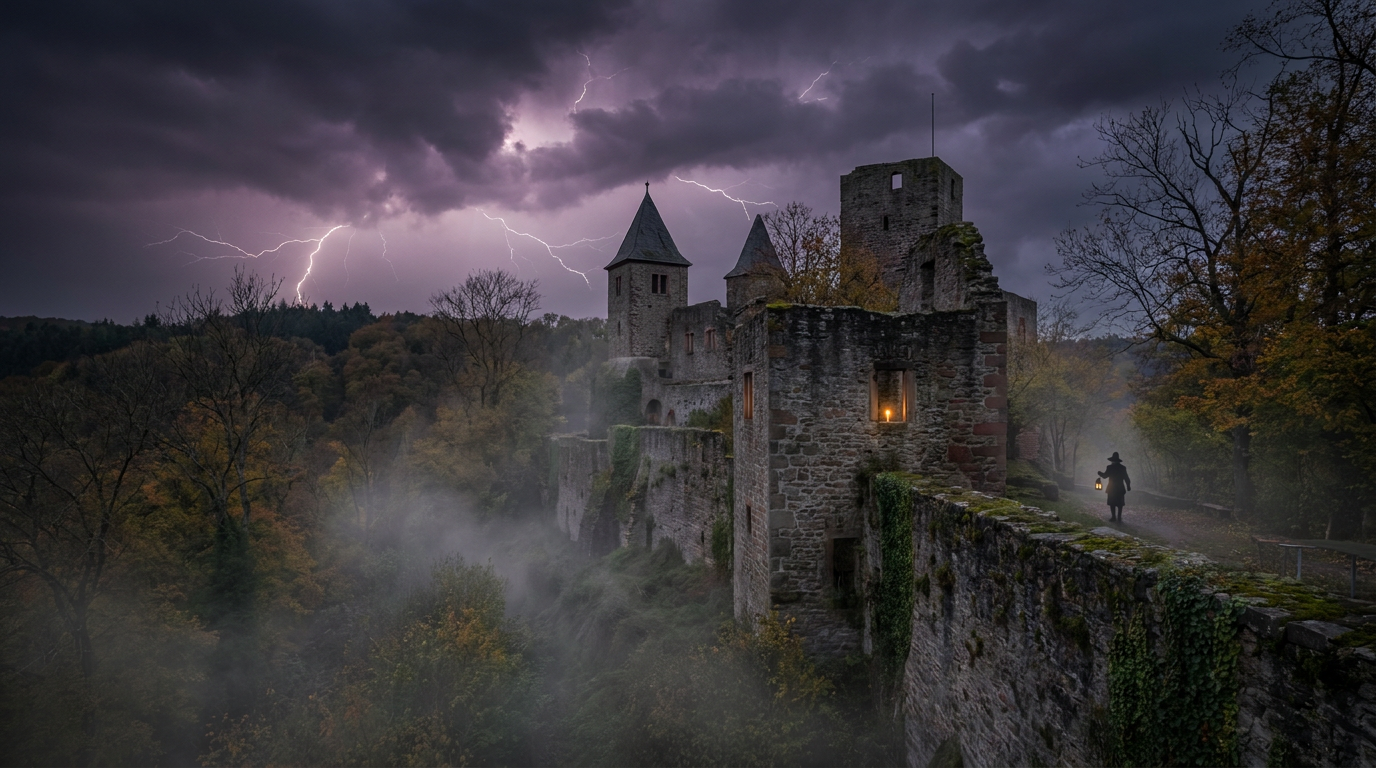
Did you know there’s a real Frankenstein Castle in Germany?
Or that a German immigrant family helped turn candy corn into one of America’s most recognizable Halloween sweets?
How about the fact that the terrifying Headless Horseman of Sleepy Hollow is described as the ghost of a Hessian soldier?
And those colorful gummy bears that appear in American candy bowls? Their story begins in a tiny German kitchen more than a century ago!
Now, one important distinction: Halloween itself did not originate in Germany. Its evolution involved traditions from Ireland, Britain, continental Europe, Christianity, and eventually American popular culture.
However, Germany has contributed its own remarkable chapters to the stories, characters, movies, and sweets that Americans associate with the Halloween season.
So grab your favorite candy, turn down the lights, and join GERMAN HERITAGE USA for a fun-filled journey through 10 surprising German connections to Halloween!
1. Frankenstein: The Real German Castle Behind the Monster Mystery!
Yes, Virginia, there really is a Frankenstein Castle in Germany!
And its history might be even more fascinating than the fictional monster associated with its name.
High above the countryside near Darmstadt, in the German state of Hesse, stand the ruins of Burg Frankenstein, or Frankenstein Castle.
The castle’s origins reach back to the Middle Ages, long before English author Mary Shelley published her famous novel Frankenstein; or, The Modern Prometheus in 1818.
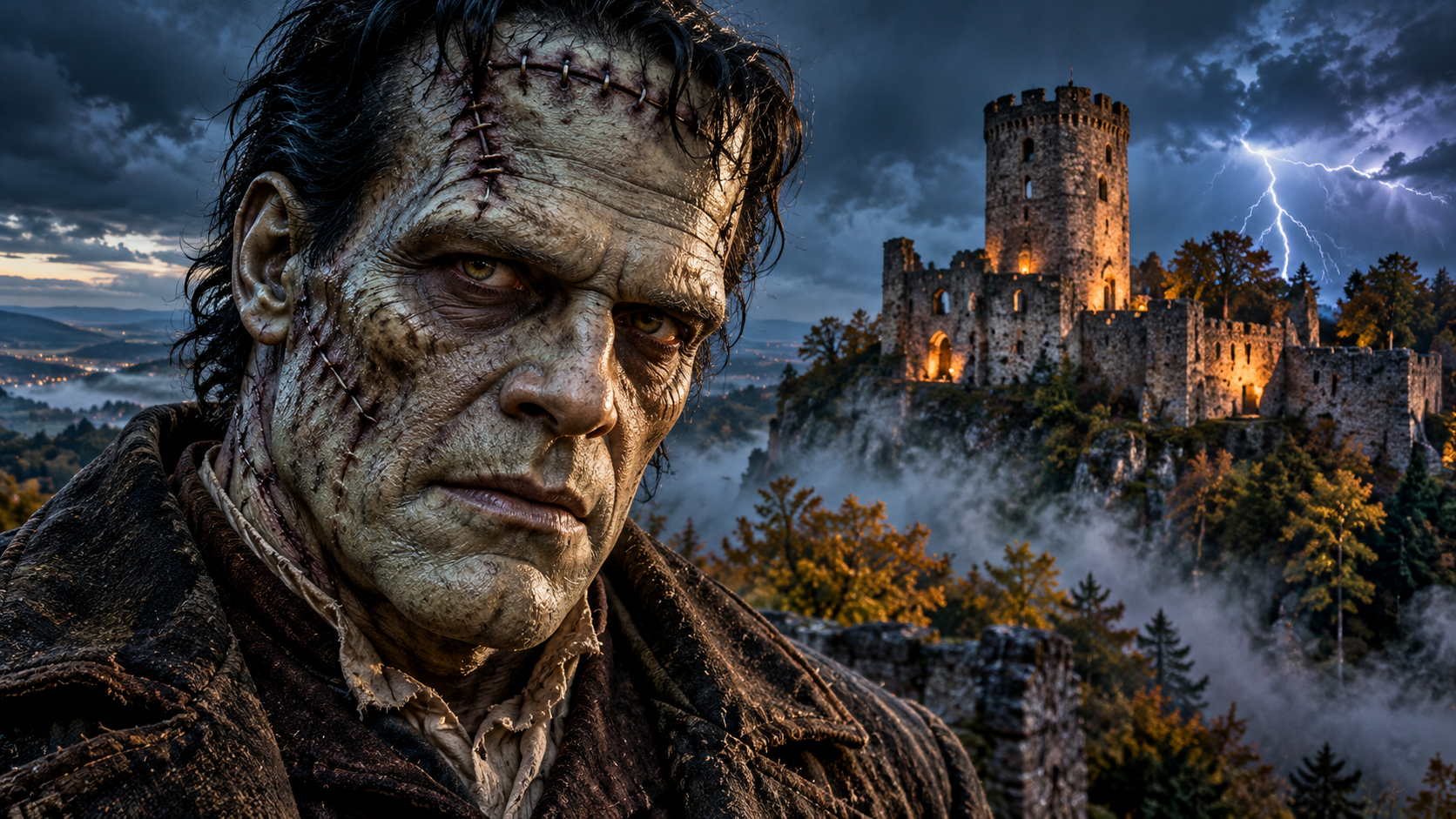
The name Frankenstein was associated with a noble family and a real historic place. It wasn’t invented by Hollywood!
But here’s where the mystery gets especially interesting.
In 1673, a man named Johann Konrad Dippel was born at Frankenstein Castle.
Dippel became a theologian, physician, and alchemist whose unusual interests and experiments later contributed to his mysterious reputation.
Over the centuries, imaginative stories developed linking Dippel’s activities to the fictional experiments of Victor Frankenstein.
Could Mary Shelley have heard about the castle or the strange alchemist before writing her novel?
It’s possible. Shelley traveled through the Rhine region in 1814, and speculation about potential connections has persisted.
But historians have not established convincing evidence that Frankenstein Castle or Dippel directly inspired Shelley’s novel.
That leaves us with a wonderful historical mystery rather than a proven origin story.
And another fun fact: Frankenstein is the name of the scientist in Shelley’s novel, not originally the name of his creature!
The real castle became associated with Halloween entertainment much later, helping turn a medieval landmark into a destination for fans of the spooky season.
THE GERMAN CONNECTION: A genuine German castle, a real alchemist, and an enduring literary mystery share the Frankenstein name.
2. The Headless Horseman: America’s Legendary Ghost Was a German Soldier!
Imagine riding along a lonely country road on a cold autumn night.
The wind rustles through the trees. Hooves pound in the distance.
Suddenly, out of the darkness emerges a mysterious horseman galloping toward you.
And there’s one terrifying detail.
He has no head!
Few American Halloween legends are as memorable as the Headless Horseman from Washington Irving’s The Legend of Sleepy Hollow, published in 1819–1820.
But many people don’t realize that Irving’s ghostly rider has a distinctly German connection.
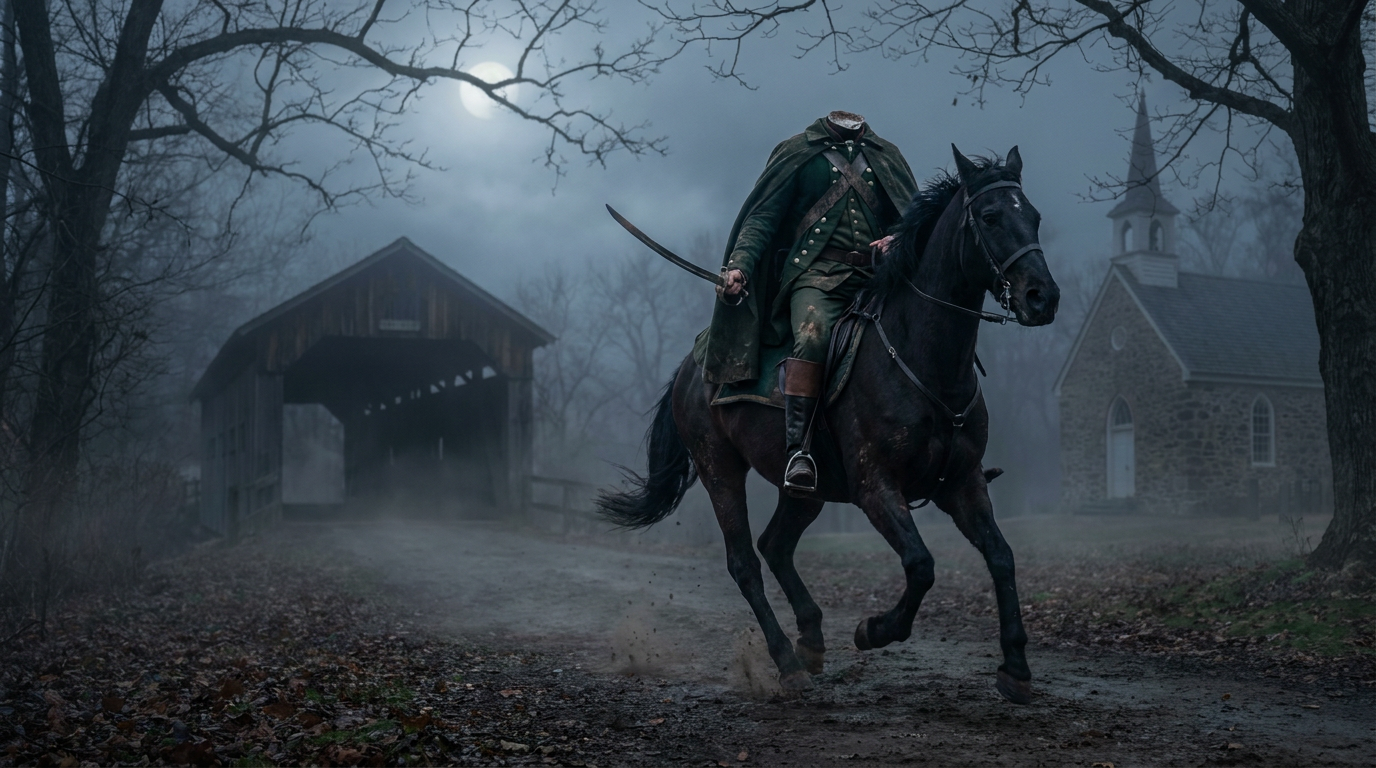
According to the story’s local legend, the horseman was a Hessian soldier who fought during the American Revolutionary War and lost his head to a cannonball.
The German-speaking territories of Hesse and neighboring regions supplied thousands of auxiliary troops to Britain during the conflict.
Americans commonly referred to these German troops as Hessians.
Irving transformed the image of a fallen Hessian soldier into one of the most unforgettable figures in American ghost-story history.
There’s an additional literary connection worth exploring.
German and wider European folklore featured supernatural huntsmen, spectral riders, and headless figures long before Irving wrote his famous tale.
One possible influence discussed by historians is Gottfried August Bürger’s German poem Der wilde Jäger (The Wild Huntsman), which circulated in English translation.
Of course, the Headless Horseman is a literary ghost, not a verified historical apparition.
But the Hessian military connection in Irving’s story is unmistakable.
The next time someone mentions Sleepy Hollow, remember that one of America’s most recognizable Halloween legends features a ghostly German soldier!
THE GERMAN CONNECTION: German troops in Revolutionary America and elements of European folklore helped shape an enduring American ghost story.
3. The Brothers Grimm: Germany’s Fairy Tales Were Sometimes Truly Terrifying!
When you hear the words fairy tale, what comes to mind?
Beautiful princesses? Enchanted castles? Magical creatures? Happily-ever-after endings?
Well, the Brothers Grimm might have a few surprises for you!
Jacob and Wilhelm Grimm, two German scholars and collectors of folklore, published the first volume of their famous Children’s and Household Tales in 1812.
Their collection helped preserve stories told across German-speaking communities and from other European storytelling traditions.
But many of these tales were considerably darker than the cheerful versions familiar to modern audiences.
Consider Hansel and Gretel.
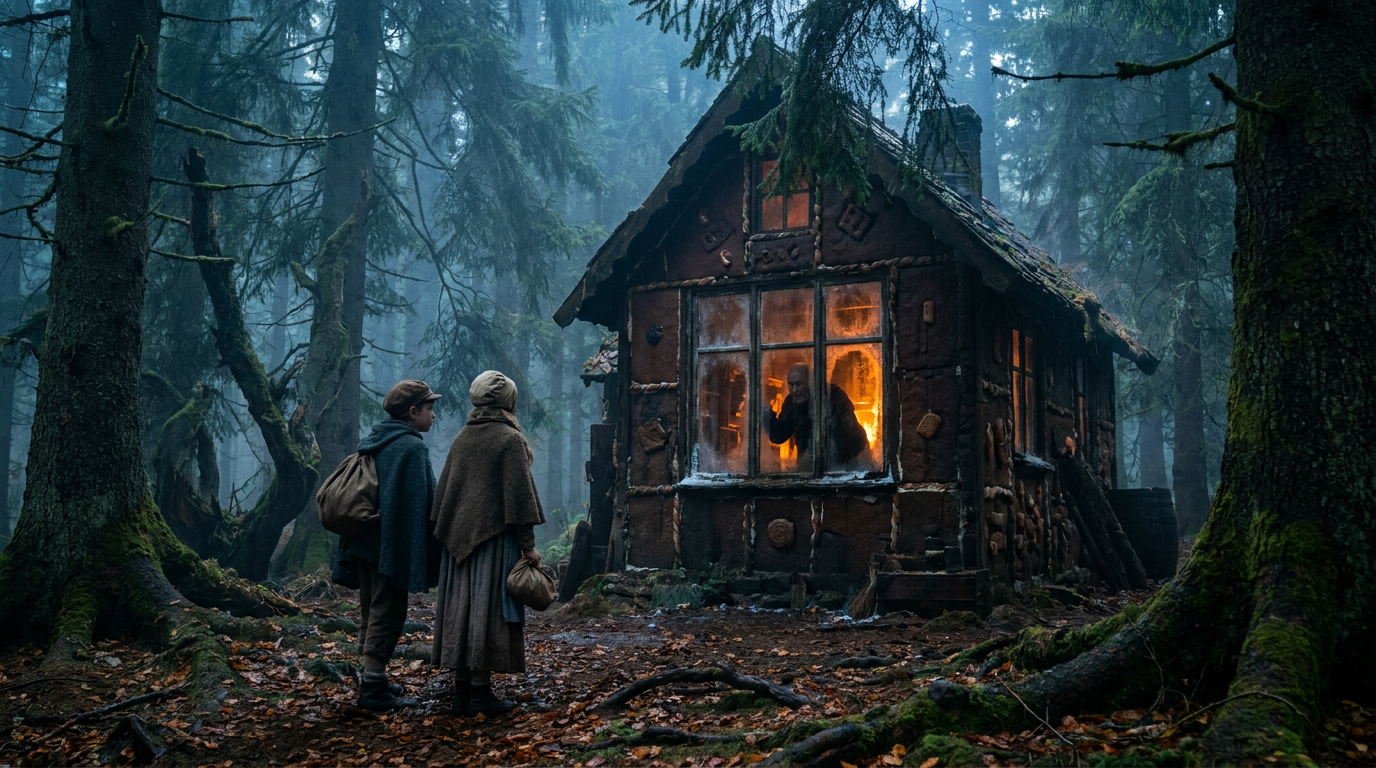
Two children are abandoned in a forest, discover a house made of sweets, and encounter a witch who intends to eat them.
That’s hardly a relaxing bedtime story!
Or take Snow White, with its jealous queen, attempted murder, magical disguises, and gruesome punishments in some versions.
Then there’s Little Red Riding Hood, whose encounter with a dangerous wolf has frightened generations of children.
The Grimm brothers weren’t simply inventing horror stories. They collected, adapted, and edited traditional tales over multiple editions, and their versions changed over time.
Many stories had served as warnings about danger, deception, greed, cruelty, and the frightening unknown.
Their magical forests were not always friendly places.
And the witches weren’t necessarily interested in handing out candy!
Today, these tales continue to influence Halloween costumes, haunted attractions, movies, and spooky seasonal storytelling.
THE GERMAN CONNECTION: The Brothers Grimm helped preserve and popularize some of the world’s most recognizable frightening fairy-tale characters.
4. Walpurgisnacht: Germany’s Legendary Night of Witches!
If you think Halloween is the only night when witches gather, Germany has another date you should circle on your calendar.
April 30!
That is the traditional celebration of Walpurgisnacht, or Walpurgis Night.
And according to German folklore, something extraordinary happens in the Harz Mountains.
High above the surrounding forests rises the Brocken, a mist-shrouded mountain that has inspired countless legends.
For centuries, stories have described witches gathering on the Brocken for mysterious nighttime celebrations.
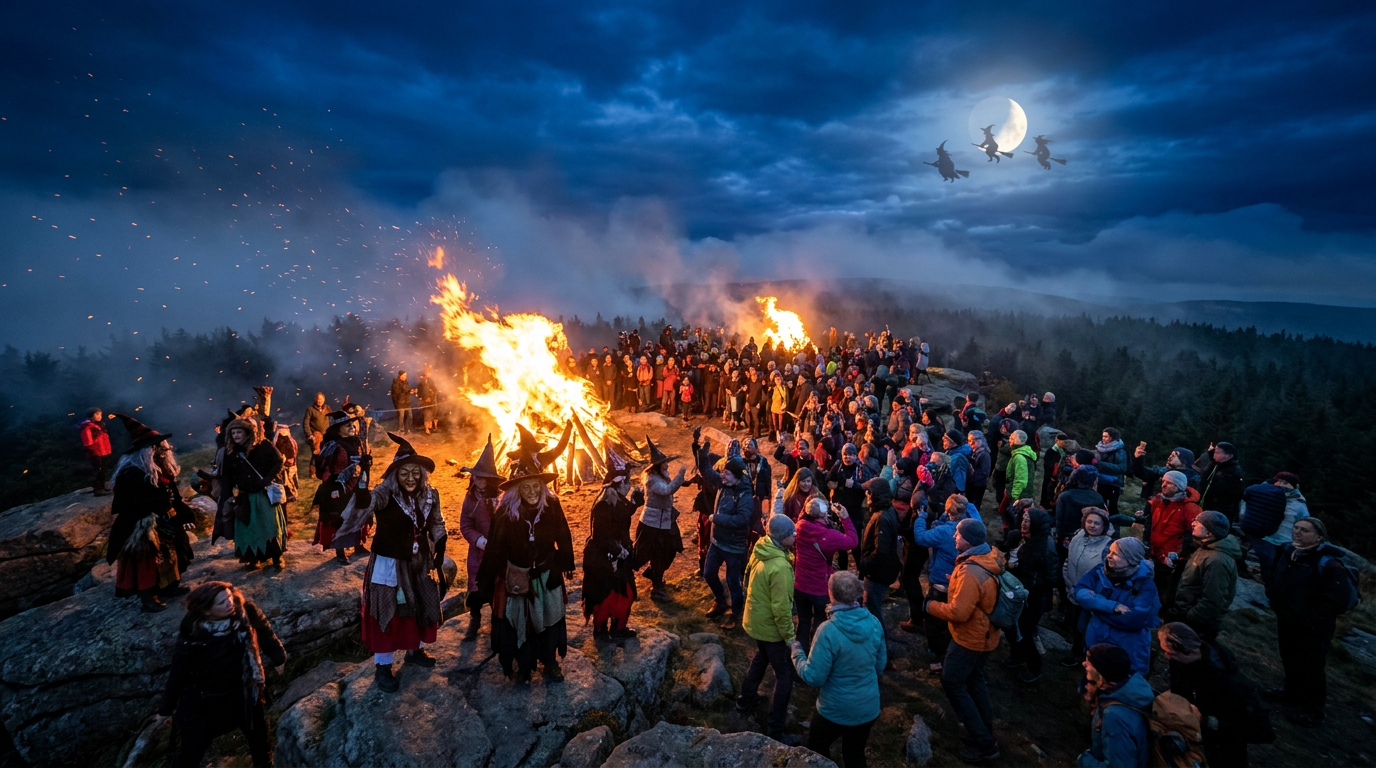
Imagine a moonlit sky filled with flying broomsticks, shadowy figures gathering around bonfires, and strange sounds echoing across the mountain.
Now that’s spooky!
The legendary association became even more famous through German writer Johann Wolfgang von Goethe, whose masterpiece Faust includes a memorable Walpurgis Night scene.
Today, communities throughout the Harz region celebrate the occasion with colorful costumes, music, bonfires, parades, and performances featuring witches and devils.
Towns such as Thale and Schierke are particularly associated with Walpurgis festivities.
But here’s the important distinction.
Walpurgisnacht is not the German version of October 31 Halloween.
It is a separate springtime observance connected to the arrival of May, Christian calendar traditions, and centuries of folklore.
Still, the witches, costumes, mysterious mountains, and playful supernatural themes make it a fascinating comparison.
Who knew Germany had a famous night of witches nearly six months before Halloween?
THE GERMAN CONNECTION: The Harz Mountains, the Brocken, and centuries of German folklore continue to inspire one of Europe’s most recognizable witch-themed celebrations.
5. Before Pumpkin Faces: Germany Had Its Own Spooky Turnip Ghosts!
Here’s one that might surprise you.
Before glowing plastic jack-o’-lanterns appeared in nearly every American store, children in parts of Germany were creating spooky faces from a very different vegetable.
Turnips!
The traditional German custom is known as Rübengeister, meaning “turnip ghosts.”
In communities particularly associated with southern Germany, children hollowed out large fodder turnips and carved frightening faces into them.
A candle placed inside transformed the ordinary vegetable into a glowing ghostly lantern.
Imagine seeing several of these strange faces flickering along a dark country lane!
In some regional customs, children carried their turnip lanterns through villages, visited neighboring homes, and asked for food or small gifts.
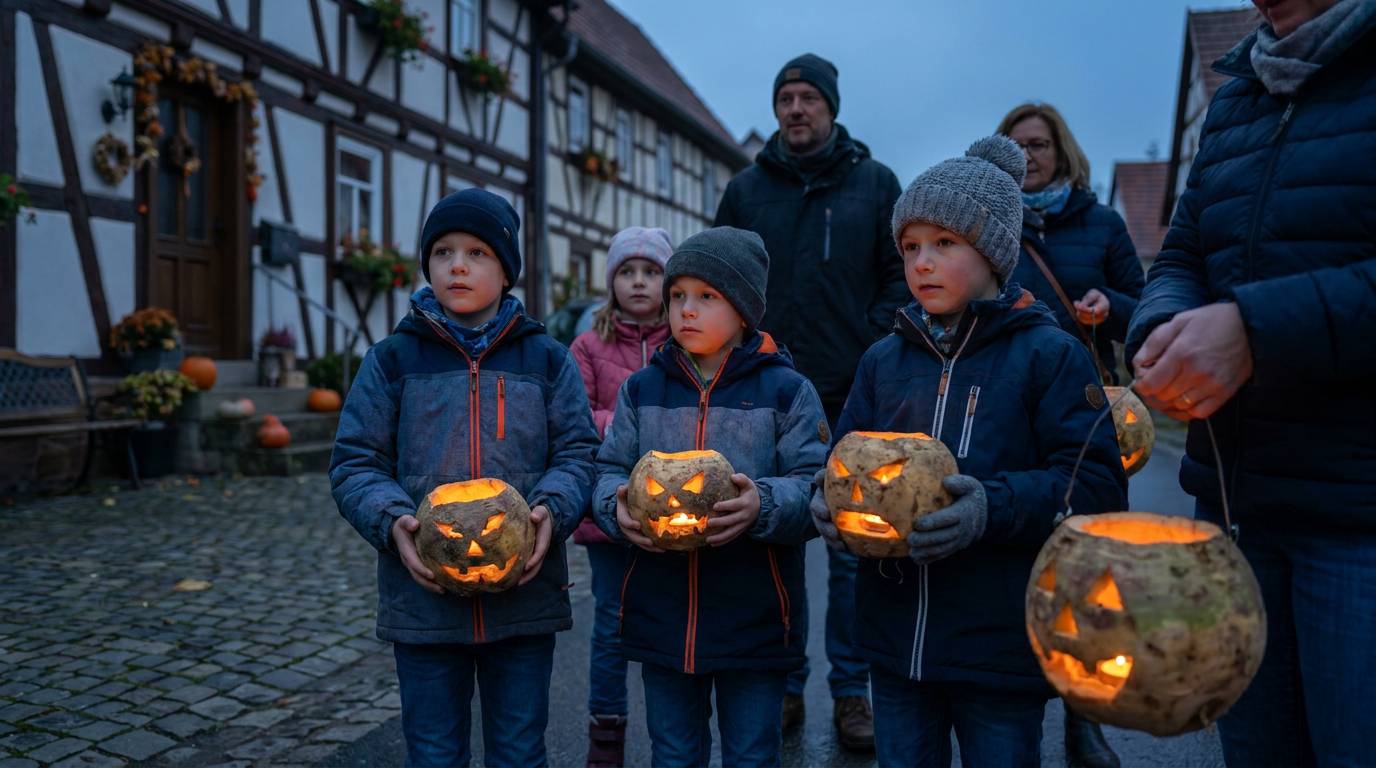
Apples, nuts, and baked goods were among the treats associated with the tradition.
Sound familiar?
There are fascinating similarities with Halloween customs, although the histories are not identical.
Turnip lantern traditions also developed in Ireland and other parts of Europe. Irish customs are particularly important to the history of the American jack-o’-lantern.
When pumpkins became widely available in North America, they proved especially suitable for carving.
Germany’s Rübengeister customs should therefore be understood as related regional harvest folklore, not as proof that Germany invented Halloween jack-o’-lanterns.
Interestingly, these traditions have survived in some communities and have experienced renewed interest.
German regional broadcaster SWR has documented the continuing practice of creating spooky turnip lanterns in southwestern Germany.
Perhaps the next time you carve a Halloween pumpkin, you could try creating a German-style turnip ghost too!
THE GERMAN CONNECTION: Traditional German turnip lanterns demonstrate how similar autumn customs developed across different European communities.
6. Nosferatu: How German Filmmakers Helped Shape Hollywood Horror!
Long before modern horror movies filled theaters with computerized monsters and elaborate special effects, German filmmakers were creating terrifying images using little more than shadows, strange sets, and imagination.
And some of those images remain unforgettable more than a century later.
In 1920, German director Robert Wiene released The Cabinet of Dr. Caligari.
The film featured distorted buildings, unnatural angles, dramatic lighting, and an unsettling atmosphere that made ordinary surroundings appear frightening.
Two years later came another landmark.
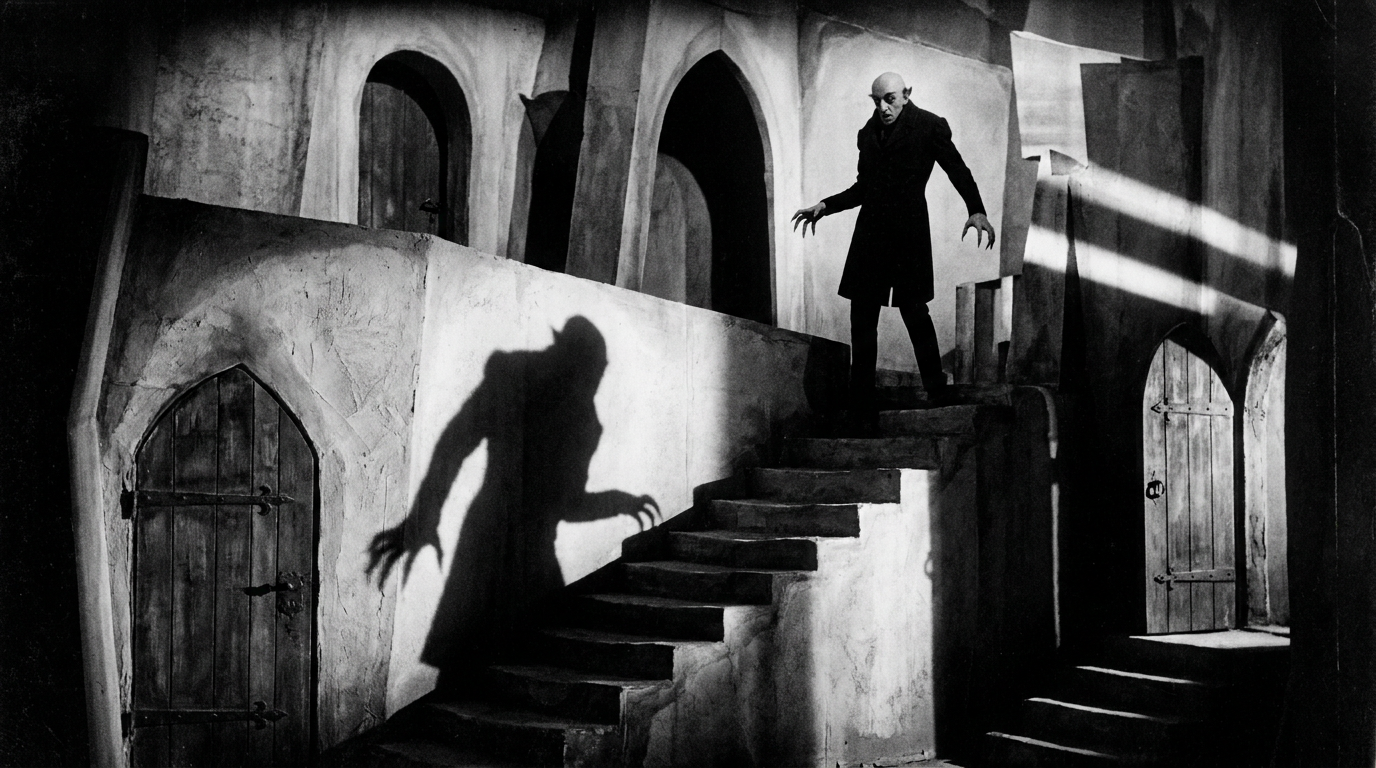
Nosferatu: A Symphony of Horror (1922).
Directed by F. W. Murnau, the silent German film introduced audiences to Count Orlok, one of cinema’s most disturbing vampire figures.
With his bald head, sunken eyes, pointed ears, and long clawlike fingers, Orlok looked nothing like the charming vampires often seen in later movies.
His looming shadow became one of horror cinema’s most recognizable images.
Nosferatu was an unauthorized adaptation of Bram Stoker’s Dracula, the famous novel by an Irish author.
So Germany did not invent Dracula.
But German filmmakers helped create an extraordinarily influential cinematic interpretation of the vampire.
The larger movement known as German Expressionism also influenced Hollywood directors, cinematographers, and generations of horror filmmakers.
Its techniques—dramatic shadows, distorted perspectives, disturbing imagery, and psychological tension—became powerful tools for frightening audiences.
The next time you’re watching a scary movie on Halloween night, look closely at the lighting and shadows.
You may be seeing a little German cinematic history!
THE GERMAN CONNECTION: German Expressionist filmmaking helped shape the visual language of Hollywood horror and modern supernatural cinema.
7. Candy Corn: The Halloween Favorite With Two Remarkable German-Immigrant Connections!
Now let’s move from the haunted house to the candy bowl!
And this might be the sweetest surprise of them all.
Candy corn has important German-American roots!
That’s right. The little yellow, orange, and white candy that Americans either absolutely love or completely avoid has a fascinating connection to German immigrant entrepreneurship.
Candy corn emerged in the United States during the late nineteenth century, when confectioners were experimenting with colorful, molded sugar candies.
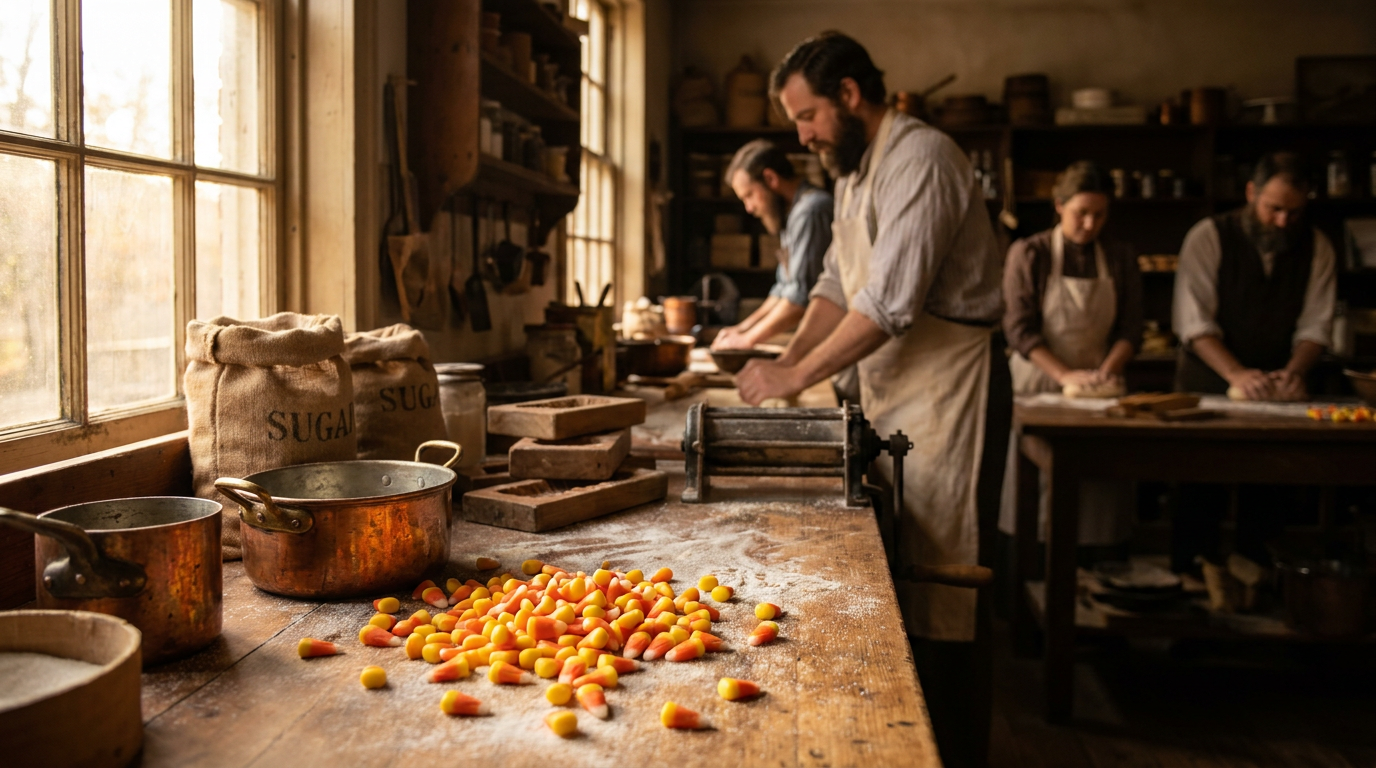
Its early production is traditionally credited to Philadelphia’s Wunderle Candy Company, with employee George Renninger frequently named as the creator.
But here’s a little-known detail.
Philip Wunderle, founder of the candy business, was himself a German immigrant.
According to the company’s historical account, Wunderle arrived in America from Gernsheim, Germany, in 1865.
The company identifies 1888 as the beginning of its candy corn production.
Then another German immigrant family’s candy business helped make the confection famous.
Enter the Goelitz Family!
Gustav Goelitz, born in Osterode am Harz in what is now Germany, immigrated to America in the nineteenth century.
In 1869, he established a confectionery business in Belleville, Illinois.
Over time, the family expanded its candy-making operations, and the next generation helped popularize candy corn around the turn of the twentieth century.
The Goelitz confectionery business eventually became part of the company history associated with today’s Jelly Belly brand.
In its early days, candy corn was marketed using agricultural imagery, including the memorable name Chicken Feed.
That might sound strange today, but candy shaped like corn kernels fit neatly into an era when America was closely connected to farms and harvests.
Originally, candy corn was sold more broadly as a seasonal or everyday sweet rather than exclusively as Halloween candy.
Its association with Halloween grew stronger during the twentieth century as trick-or-treating and candy-centered celebrations became increasingly popular.
And there’s another familiar name worth mentioning: Brach’s.
Founded in Chicago in 1904 by German-born entrepreneur Emil J. Brach, the company began producing candy corn in the 1920s and became another major name in American confectionery history.
So although candy corn was developed in America, German immigrant-founded businesses played significant roles in its story.
And here’s a fun coincidence: October 30, the publication date of this article, is also National Candy Corn Day!
Now for the really important question.
Are you TEAM CANDY CORN—or TEAM NO THANKS?
THE GERMAN CONNECTION: German immigrant entrepreneurs associated with Wunderle, Goelitz, and Brach’s helped shape the history of America’s famous candy corn.
8. HARIBO Gummy Bears: From a German Kitchen to America’s Halloween Candy Bowls!
Who hasn’t enjoyed a handful of colorful gummy bears?
Whether you’re eight years old or eighty-eight, those chewy little treats are practically irresistible to candy lovers around the world.
But did you know the story began in Germany more than a century ago?
Meet Hans Riegel, a trained confectioner from the Bonn area.
On December 13, 1920, Riegel founded a small candy company in Bonn using a name assembled from his own name and hometown.
HA — Hans
RI — Riegel
BO — Bonn
Put them together and you have HARIBO!
The operation began modestly, with simple candy-making equipment in a small kitchen.
His wife, Gertrud, became the company’s first employee.
Then, in 1922, Riegel introduced a fruit-gummy creation called the Dancing Bear, inspired by the performing bears once seen at European fairs.
These early bears were larger and slimmer than today’s familiar gummy bears.
The product eventually evolved into the world-famous HARIBO Goldbears, introduced under that name in 1960.
HARIBO expanded into the American market in 1982.
Today, gummy candies are popular treats for celebrations throughout the year, including Halloween.
Of course, the gummy bear was not originally created as a Halloween candy.
But its German origin makes it a perfect addition to our Halloween exploration.
A small German kitchen, a clever family business, and an imaginative little bear helped create a confectionery success story spanning generations.
THE GERMAN CONNECTION: The gummy bear’s famous commercial history began in Bonn, Germany, through Hans Riegel and the HARIBO company.
9. Werther’s, RIESEN & Ritter Sport: More Sweet German Treats Worth Discovering!
Gummy bears aren’t the only German sweets that have found devoted fans in America.
Germany has a remarkable confectionery tradition, with family businesses producing candies and chocolates enjoyed across the globe.

And some of those treats fit perfectly into an autumn candy bowl!
Werther’s Original: A Little Taste of German Nostalgia
Do you remember being handed a golden-wrapped caramel candy by a grandparent?
There’s a good chance it was Werther’s Original.
Its story reaches back to the German town of Werther, where confectioner Gustav Nebel developed a butter candy recipe in 1909.
The rich, creamy candy became a worldwide favorite.
For many Americans, Werther’s Original carries a special nostalgic association with grandparents, family visits, and little gifts of candy.
RIESEN: Germany’s Chocolate-Caramel Favorite
RIESEN is another German confectionery classic associated with the Storck family of candy brands.
Its combination of chewy chocolate caramel and chocolate coating has earned fans who appreciate a richer, longer-lasting candy experience.
It’s a treat for anyone who likes chocolate with a little extra chew!
Ritter Sport: The German Chocolate Bar With a Square Personality
Founded by Alfred Eugen Ritter and Clara Ritter in 1912, the German company later introduced its distinctive square chocolate bar in 1932.
The square design was intended to make a bar that could fit conveniently into a sports jacket pocket without breaking.
Now that’s German practicality meeting delicious chocolate!
And while these candies weren’t all invented specifically for Halloween, they’re wonderful examples of German confectionery creativity.
The next time you’re shopping for Halloween sweets—or looking for a little something different to share with your family—consider adding a few German favorites.
You might introduce someone to a new favorite!
THE GERMAN CONNECTION: Germany’s confectionery traditions have helped create beloved candies and chocolates enjoyed by generations of American families.
10. Halloween in Germany Today: Süßes oder Saures!
So we’ve explored German castles, witches, monsters, ghosts, and candy.
But here’s one more question.
Do Germans actually celebrate Halloween?
Yes! Although celebrations vary considerably by region and community.
Modern American-style Halloween activities became more visible in Germany during the late twentieth century, particularly during the 1990s.
Today, some German neighborhoods feature carved pumpkins, costume parties, seasonal decorations, and children going door to door collecting candy.
The familiar American expression Trick or Treat! has its German counterpart:
Süßes oder Saures!
Pronounced approximately ZUE-ses OH-der ZOW-res, the expression literally refers to something sweet or something sour.
In the context of trick-or-treating, it conveys the playful idea of asking for a treat rather than risking a trick.
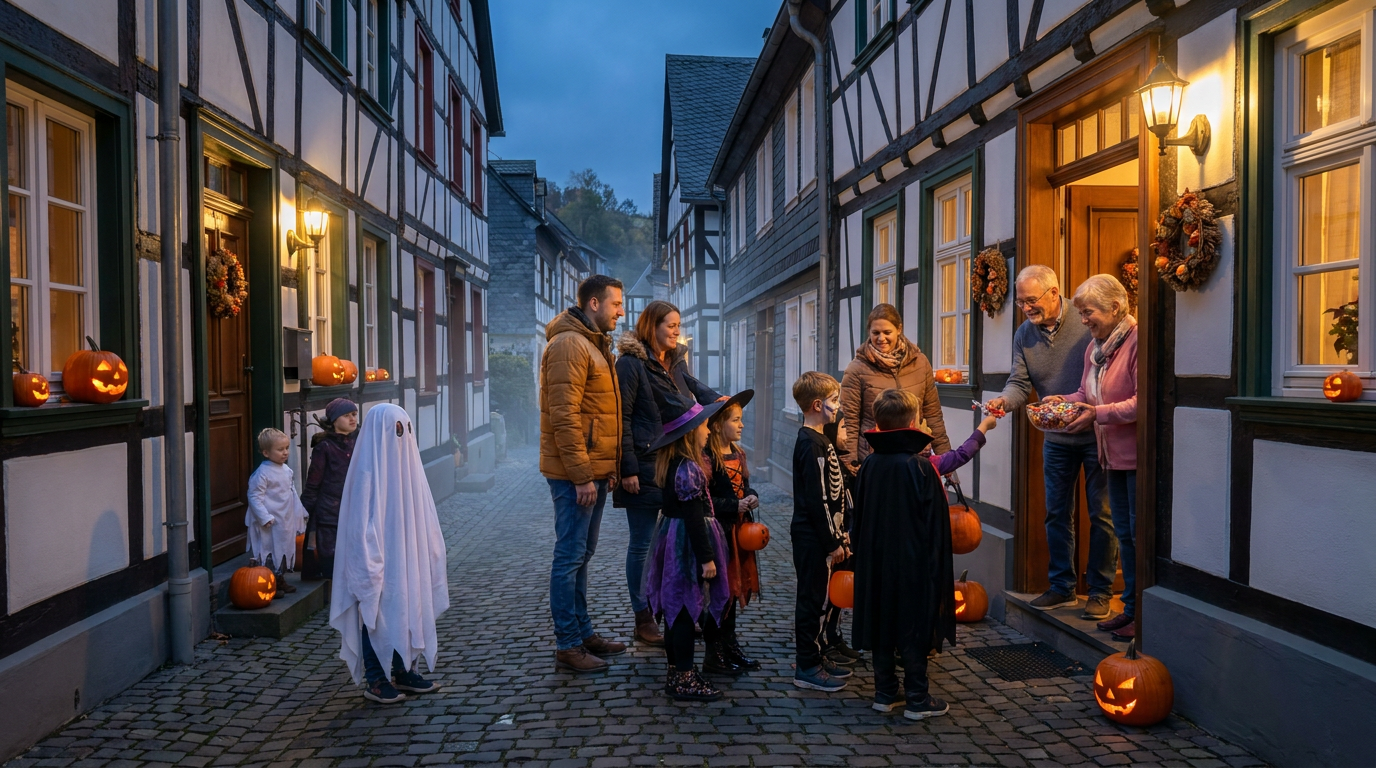
Children might dress as witches, ghosts, vampires, skeletons, or other fanciful characters.
Adults may enjoy themed parties, haunted attractions, and seasonal entertainment.
But Germany has something else happening on October 31 that makes the date particularly interesting.
October 31 Is Also Reformation Day!
In 1517, Martin Luther’s challenge to church practices became closely associated with October 31 in Wittenberg, Germany.
Today, Reformation Day, or Reformationstag, is observed in many Protestant communities and is a public holiday in several German states.
The following day, November 1, is Allerheiligen, or All Saints’ Day, observed particularly in Catholic communities and recognized as a public holiday in some states.
These religious observances have their own histories and should not be confused with Halloween.
That means an October 31 evening in Germany may look quite different depending on where you happen to be.
In one neighborhood, children might be wearing costumes and requesting candy.
In another community, families may be attending religious services or observing traditional customs.
Elsewhere, Halloween might be little more than a seasonal display at the local supermarket.
And some families simply don’t celebrate it at all.
That’s part of the fascinating cultural diversity of modern Germany.
THE GERMAN CONNECTION: Today’s Germany combines newer Halloween influences with older regional traditions and important religious observances.
From German Castles to American Candy Bowls: A Heritage Worth Discovering!
What an extraordinary journey!
We’ve traveled from a real medieval German castle to the shadowy streets of Sleepy Hollow.
We’ve encountered wicked witches in the Harz Mountains, terrifying fairy tales collected by the Brothers Grimm, glowing turnip ghosts, and chilling vampires from early German cinema.
Then we satisfied our sweet tooth with candy corn, gummy bears, and several familiar German confectionery favorites.
And perhaps the most fascinating part is how many of these stories eventually became part of American popular culture.
Some arrived through folklore and literature.
Others crossed the Atlantic through German immigrant families, their entrepreneurial ambitions, and the businesses they created.
Still others came through movies, cultural exchange, and worldwide commercial success.
None of these connections means Halloween originated in Germany.
Instead, they demonstrate something even more interesting: German Heritage has contributed to the stories, foods, entertainment, and traditions that generations of Americans enjoy.
That’s one of the wonderful things about exploring German-American history.
You never know where your next discovery might be hiding!
Sometimes it’s in an old photograph, a family recipe, a familiar surname, or a treasured tradition.
And sometimes…
It’s sitting right there in your Halloween candy bowl!
So this October 31, whether you’re decorating pumpkins, enjoying a favorite scary movie, taking the kids trick-or-treating, or sneaking one more piece of candy, remember that a little German history might be part of the fun!
From all of us at GERMAN HERITAGE USA:
Frohes Halloween!
Happy Halloween!
Now We’d Love to Hear From YOU!
Which of these ten German connections surprised you the most?
Did you know about the real Frankenstein Castle, the Headless Horseman’s Hessian origins, or the German immigrant history behind candy corn?
And let’s settle one of Halloween’s greatest debates:
CANDY CORN — LOVE IT OR LEAVE IT?
We also want to know your favorite German candy. HARIBO Goldbears? Werther’s Original? RIESEN? Ritter Sport?
Share your answers, family memories, and German-American traditions in the comments!
If you enjoyed these discoveries, please share this article with your family and friends. Help us celebrate and promote German Heritage all across America!
GERMAN HERITAGE USA — Discovering German Heritage Traditions, Foods, Music and Festivals All Across America.
Explore More German Heritage
Looking for more fascinating stories about Germany and its influence on America?
Visit GERMAN HERITAGE USA for more German-American history, traditional foods, festivals, cultural discoveries, and seasonal features.
And don’t forget to explore our GIFTS HAUS MARKTPLATZ for German Heritage-inspired merchandise and gifts for all occasions.