Sylvester Night in the USA: German New Year’s Traditions Americans Love
GERMAN HERITAGE USA | AFFILIATE DISCLAIMER: This post may or may not contain affiliate links which means we may receive a commission for purchases made through links. We will only recommend products that we have personally used or that we truly trust. Learn more on our Private Policy and Disclaimer Page located under our Terms Of Service tab above.
Long before the Times Square ball drops or champagne corks fly at midnight, German families have their own deeply rooted way of welcoming the New Year. Known as Silvester (or Sylvester Night), December 31st is not just a countdown—it’s a night rich with symbolism, superstition, food, laughter, and a hopeful look toward what lies ahead.
When German immigrants arrived in the United States, they brought these traditions with them. Over generations, many of these customs quietly blended into American New Year’s celebrations—sometimes unchanged, sometimes adapted—but always carrying the same intent and refreshing spirit that became their new normal tradition: leave the old year behind and step boldly into the new one.
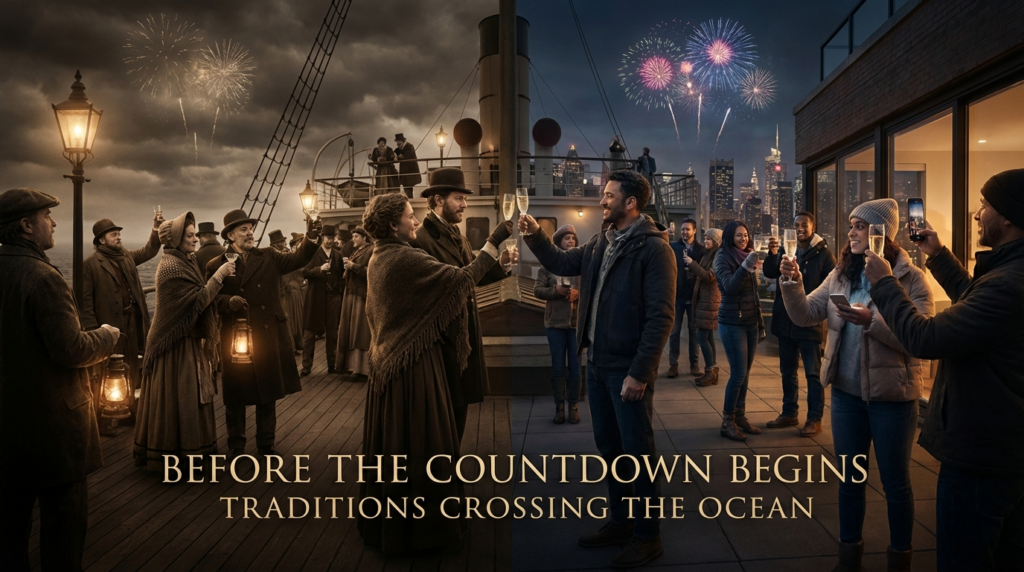
Today, from Midwest farm towns to urban neighborhoods, German-inspired New Year’s rituals are alive and well. Some Americans practice them knowingly, others without realizing their origins. Together, they form a fascinating cultural bridge between old Europe and modern America.
As the Germans say:
“Ein neues Jahr heißt neue Hoffnung, neues Licht, neue Gedanken.”
“A new year means new hope, new light, new thoughts.”
What Is Sylvester Night?
In German tradition, New Year’s Eve is called Silvester, named after Pope Sylvester I, who died on December 31 in 335 AD. Unlike Christmas, which centers on family and faith, Sylvester Night is playful, loud, and often a little mischievous.
It’s a night of:
- Noise to scare away bad spirits
- Food meant to bring luck
- Games and fortunes to predict the year ahead
- Togetherness before the clock strikes twelve
These traditions crossed the Atlantic with German immigrants throughout the 18th and 19th centuries, especially to Pennsylvania, the Midwest, Texas, and parts of the Plains. Over time, they became part of the American New Year’s experience—sometimes under different names.
A Noisy Welcome: Fireworks, Bells, and Banging Pots



If you’ve ever wondered why New Year’s Eve is so loud, you can thank German folklore.
In old European belief, loud noises chased away evil spirits lingering from the old year. Church bells rang, whips cracked, pots were banged, and eventually fireworks became the centerpiece of the night. When Germans settled in America, this love of noise followed them.
Today, fireworks are a universal American New Year’s tradition—especially in cities, riverfronts, and even rural towns. While Americans may see fireworks as pure celebration, their roots trace back to this age-old German belief: noise cleanses the future.
Good Luck on the Plate: Pork, Sauerkraut, and Lentils

One of the most enduring German traditions in America appears on the dinner table.
In German culture:
- Pork symbolizes progress and prosperity (pigs root forward, never backward)
- Sauerkraut represents long life and wealth, with its shredded strands resembling money
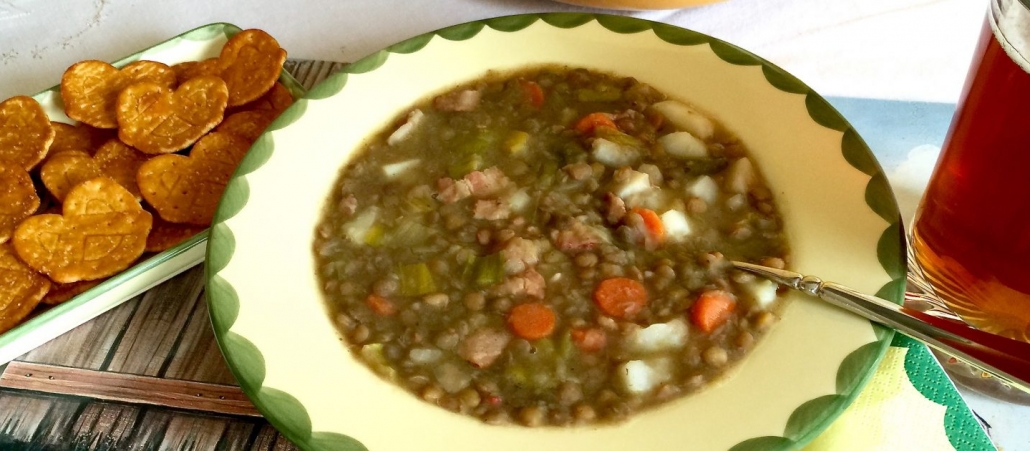
- Lentils are eaten for abundance, as they resemble coins
These foods became staples of New Year’s meals in German-American households, especially in Pennsylvania Dutch communities and the Midwest. To this day, many Americans eat pork and sauerkraut on New Year’s Day “for luck”—often without knowing why.
“How you start the year is how it will go.”
This belief is central to German New Year’s thinking—and food is one of its most powerful symbols.
Fortune-Telling Fun: From Molten Lead to Midnight Wishes

One of the most fascinating Sylvester traditions is Bleigießen, or lead pouring. Small pieces of lead (now often replaced with wax or tin for safety) are melted and poured into cold water. The resulting shapes are interpreted to predict the coming year—love, travel, success, or surprises.
While Bleigießen itself is rare in the U.S., its spirit lives on. Think of:
- Midnight resolutions
- Wish lists written on paper
- Lucky charms kept for the year
- Even the idea of “manifesting” intentions
These modern practices echo the same desire Germans held centuries ago: to peek into the future and shape it with hope.
Sweet Beginnings: Donuts, Pastries, and Sugar for Luck

In America, donuts, cakes, and desserts are common New Year’s Eve fare. While the prank version didn’t fully cross over, the belief that starting the year with sweetness brings joy certainly did.
Sugar symbolizes happiness, abundance, and comfort—something every culture can agree on.
Staying Awake Together: The Power of Shared Midnight

This communal midnight moment is now a defining part of American New Year’s Eve. Whether watching a televised countdown, clinking glasses at home, or celebrating outdoors, Americans mirror the same belief: crossing into the New Year together matters.
It’s not about where you are—it’s about who you’re with.
An Old-Year Farewell: Letting Go Before Moving Forward
Not all Sylvester traditions are loud. In many German households, the hours before midnight are reflective. People look back on the year—its losses, its lessons, its joys—and mentally close the chapter.
This reflective pause has found its place in American culture through:
- Year-in-review conversations
- Gratitude lists
- Quiet moments before celebration
- Personal resolutions
The idea is simple but powerful: you cannot begin well until you end well.
Why Americans Still Love German New Year Traditions
German New Year’s customs resonate in the U.S. because they balance celebration with meaning. They honor joy without ignoring reflection. They blend superstition with practicality. And most importantly, they focus on togetherness.
These traditions survived immigration, language loss, and modernization because they address something universal: hope.
“A Loud Goodbye. A Sweet Beginning. A Hopeful Year Ahead.”
 FIREWORKS – A German-American New Year’s Eve Tradition
Carrying Sylvester Forward
Whether you eat pork and sauerkraut, light fireworks, make resolutions, or simply toast at midnight—you are participating in a tradition shaped by centuries of German culture.
Sylvester Night reminds us that the New Year is not just a date change. It’s a ritual crossing. A shared moment. A promise that tomorrow can be better than today.
And as German Heritage USA proudly celebrates, these traditions didn’t just come to America—they became American.
Here’s to a loud goodbye, a hopeful hello, and a New Year filled with light. 🎆🍾✨